Que. The Finance Ministry recently described India’s economy as being in a “Goldilocks situation”. Critically examine this claim in the context of stagnant real wages, volatile food inflation, fiscal constraints, and income inequality.
(GS3 10 Marks, 150 words)
प्रश्न: वित्त मंत्रालय ने हाल ही में भारतीय अर्थव्यवस्था को "गोल्डीलॉक्स स्थिति" में बताया है। स्थिर वास्तविक मज़दूरी, अस्थिर खाद्य मुद्रास्फीति, राजकोषीय बाधाओं और आय असमानता के संदर्भ में इस दावे का आलोचनात्मक परीक्षण कीजिए।
(जीएस 3 10 अंक, 150 शब्द)
Approach:
-
Introduction: Define what is Goldilocks
-
Body: Impact and effects of the different aspects on the economy
-
Conclusion: Way Forward
Introduction:
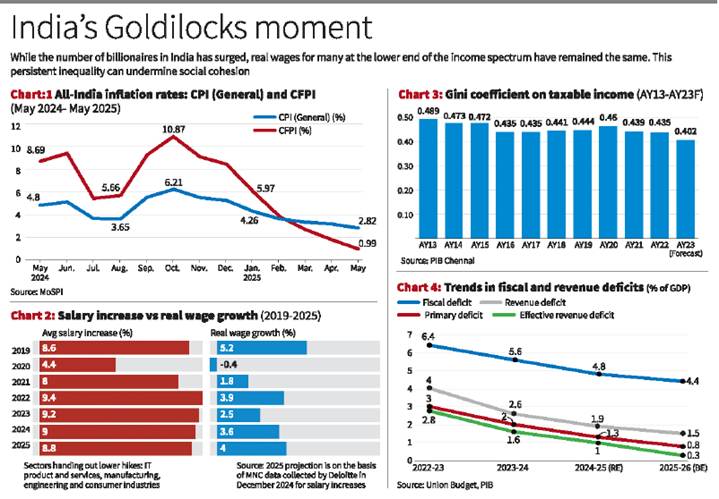
A “Goldilocks” economy refers to a state of optimal balance robust growth, low inflation, and stable macroeconomic conditions. India’s recent performance, with 7.6% GDP growth, falling CPI inflation (2.82% in May 2025), and stable interest rates, has led policymakers to claim such a scenario. However, deeper economic realities suggest a more complex picture.
Volatile Food Inflation:
The Consumer Food Price Index often outpaced general inflation, disproportionately impacting low- and middle-income households. High food prices reduce purchasing power, disrupt household budgets, and undermine perceived stability.
Stagnant Real Wages:
Despite nominal salary hikes of 8–9%, real wage growth has often remained at 2–4%, eroded by inflation. This limits consumption demand and savings, affecting long-term economic momentum.
Persistent Income Inequality:
A K-shaped recovery benefits affluent sectors, while large sections of the workforce experience wage stagnation, weakening inclusive growth.
Fiscal Constraints:
A high fiscal deficit (projected 4.4% in 2025–26) and debt-to-GDP ratio (~81%) reduce the government’s ability to invest in welfare, infrastructure, and human development.
Historical Economists Perspective:
From Keynesian principles, sustained growth requires broad-based demand, while Amartya Sen’s capability approach stresses converting growth into real human welfare gains.
Conclusion:
While headline indicators suggest short-term stability, wage stagnation, inequality, and fiscal stress reveal that India is far from perfectly balanced. Achieving a genuine “Goldilocks” state demands inclusive growth, rising real incomes, and fiscal resilience so that macro stability translates into improved living standards for all.
दृष्टिकोण:
-
परिचय: गोल्डीलॉक्स क्या है, इसकी परिभाषा दीजिए।
-
मुख्य भाग: अर्थव्यवस्था पर इसके विभिन्न पहलुओं का प्रभाव और परिणाम।
-
निष्कर्ष: आगे की राह।
परिचय:
"गोल्डीलॉक्स" अर्थव्यवस्था, मज़बूत विकास, कम मुद्रास्फीति और स्थिर समष्टि आर्थिक स्थितियों के इष्टतम संतुलन की स्थिति को दर्शाती है। भारत के हालिया प्रदर्शन, जिसमें 7.6% जीडीपी वृद्धि, घटती उपभोक्ता मूल्य सूचकांक (सीपीआई) मुद्रास्फीति (मई 2025 में 2.82%) और स्थिर ब्याज दरें शामिल हैं, ने नीति निर्माताओं को ऐसी स्थिति का दावा करने के लिए प्रेरित किया है। हालाँकि, गहन आर्थिक वास्तविकताएँ एक अधिक जटिल तस्वीर पेश करती हैं।
अस्थिर खाद्य मुद्रास्फीति:
उपभोक्ता खाद्य मूल्य सूचकांक अक्सर सामान्य मुद्रास्फीति से आगे निकल जाता है, जिसका निम्न और मध्यम आय वाले परिवारों पर असमान रूप से प्रभाव पड़ता है। उच्च खाद्य कीमतें क्रय शक्ति को कम करती हैं, घरेलू बजट को बिगाड़ती हैं और कथित स्थिरता को कमज़ोर करती हैं।
स्थिर वास्तविक वेतन:
8-9% की नाममात्र वेतन वृद्धि के बावजूद, वास्तविक वेतन वृद्धि अक्सर 2-4% पर बनी रहती है, जो मुद्रास्फीति के कारण कम हो जाती है। इससे उपभोग मांग और बचत सीमित हो जाती है, जिससे दीर्घकालिक आर्थिक गति प्रभावित होती है।
निरंतर आय असमानता:
K-आकार की रिकवरी से समृद्ध क्षेत्रों को लाभ होता है, जबकि कार्यबल के बड़े हिस्से को वेतन में स्थिरता का सामना करना पड़ता है, जिससे समावेशी विकास कमज़ोर होता है।
राजकोषीय बाधाएँ:
उच्च राजकोषीय घाटा (2025-26 में 4.4% अनुमानित) और ऋण-जीडीपी अनुपात (~81%) सरकार की कल्याण, बुनियादी ढाँचे और मानव विकास में निवेश करने की क्षमता को कम करता है।
ऐतिहासिक अर्थशास्त्रियों का दृष्टिकोण:
कीन्स के सिद्धांतों के अनुसार, सतत विकास के लिए व्यापक-आधारित माँग की आवश्यकता होती है, जबकि अमर्त्य सेन का क्षमता दृष्टिकोण विकास को वास्तविक मानव कल्याण लाभों में बदलने पर ज़ोर देता है।
निष्कर्ष:
यद्यपि प्रमुख संकेतक अल्पकालिक स्थिरता का संकेत देते हैं, वेतन में स्थिरता, असमानता और राजकोषीय तनाव दर्शाते हैं कि भारत पूरी तरह से संतुलित नहीं है। एक वास्तविक "गोल्डीलॉक्स" स्थिति प्राप्त करने के लिए समावेशी विकास, बढ़ती वास्तविक आय और राजकोषीय लचीलेपन की आवश्यकता होती है ताकि वृहद स्थिरता सभी के जीवन स्तर में सुधार ला सके।
Note:
1. Rename PDF file with your NAME and DATE, then upload it on the website to avoid any technical issues.
2. Kindly upload only a scanned PDF copy of your answer. Simple photographs of the answer will not be evaluated!
3. Write your NAME at the top of the answer sheet. Answer sheets without NAME will not be evaluated, in any case.
Choose Your Medium:
Submit your answer