
Whatsapp 88106-52225 For Details
Get Free IAS Booklet
Get Free IAS Booklet
Participation in International Efforts
India actively participates in global disaster management initiatives and is a signatory to the Sendai Framework for Disaster Risk Reduction. The country remains committed to achieving its priorities and objectives through structured and institutional efforts.
With its diverse initiatives and expertise, India plays a key role in enhancing regional cooperation among South Asian nations to minimize disaster risks.
India collaborates closely with the United Nations International Strategy for Disaster Reduction (UNISDR) as one of its participating countries.
The country has established agreements with various nations to facilitate cooperation in disaster management. India continues to engage with multiple countries to share knowledge and expertise in this field.
Accepting Foreign Assistance
As a matter of policy, the Government of India does not issue any appeal for foreign assistance in the wake of a disaster. However, if the national government of another country voluntarily offers assistance as a goodwill gesture in solidarity with the disaster victims, the Central Government may accept the offer.
The Ministry of Home Affairs, Government of India is required to coordinate with the Ministry of External Affairs, Government of India, which is primarily responsible for reviewing foreign offers of assistance and channelizing the same. In consultation with the concerned State Government, the MHA will assess the response requirements that the foreign teams can provide.
Accepting Multilateral Assistance
India will consider offers of assistance from UN agencies based on various factors and will accept them only if deemed necessary by the government. If accepted, the Government of India will direct the relevant Ministry or State Government to coordinate with the concerned UN agency.
Any financial aid from UN financial institutions that involves foreign exchange must be approved by the Department of Economic Affairs, Government of India.
UN agencies and international NGOs that were already operating in the country before the disaster will be permitted to continue providing humanitarian aid in affected areas. Their efforts must be coordinated with the relevant Central Ministries, Departments, and State Government, following established norms and protocols.
Fostering Partnerships
India is keen to share expertise and work with other countries in the areas of disaster management. India can play a major role for capacity building in the Asia Pacific region and is looking forward to build sustained regional and international partnerships under the Sendai Framework. India is committed to work with countries in the region and beyond in building resilient nations and communities, against disasters.
India is looking forward to engage with the international community in providing humanitarian assistance to other countries in need.
India and International Organisations
The Government of India has a partnership with various international and regional organizations/agencies in the field of Disaster Management such as the Global Platform for Disaster Risk Reduction (GPDRR), Asian Ministerial Conference on Disaster Risk Reduction (AMCDRR), United Nations Office for the Coordination of Humanitarian Affairs (UNOCHA), United Nations Disaster Assessment and Coordination (UNDAC), International Search and Rescue Advisory Group (INSARAG), Global Facility for Disaster Reduction and Recovery (GFDRR), SAARC Disaster Management Centre - Interim Unit (SDMC-IU), Asian Disaster Reduction Center (ADRC), Asian Disaster Preparedness Centre (ADPC), ASEAN Regional Forum (ARF) Shanghai Cooperation Organization (SCO), the Bay of Bengal Initiative for Multi-Sectoral Technical and Economic Cooperation (BIMSTEC), the Indian Ocean Rim Association (IORA) and BRICS etc. India was unanimously elected as co- chair of the Consultative Group (CG) of GFDRR for the year 2020 and continued for the year 2021.
In addition, various Meetings/ Conferences/ Exercises were hosted by the Government of India for International and Regional cooperation in the field of disaster management since 2015:
• South Asian Annual Disaster Management Exercise
(SAADMex) of 2015, in New Delhi.
• Meeting of BRICS Ministers for Disaster Management was held in 2016 in Udaipur, Rajasthan.
• Asian Ministerial Conference on Disaster Risk Reduction (AMCDRR) 2016 from 3-5 November 2016 in collaboration with the United Nations International Strategy for Disaster Reduction (UNISDR) in New Delhi.
• First Annual Disaster Management Exercise for ‘Bay of Bengal Initiative for Multi-Sectoral Technical and Economic Cooperation (BIMSTEC) countries (BIMSTEC DMEx-2017) in New Delhi
• First India-Japan Workshop on Disaster Risk Reduction
in March, 2018, New Delhi.
• Joint Urban Earthquake Search and Rescue exercise of Shanghai Cooperation Organization (SCO) and the Member States to improve collective preparedness in 2019 in New Delhi.
India on assuming the Presidency of the G20 from Indonesia established the first G20 working group on Disaster Risk Reduction, to encourage collective work by the G20, undertake multi-disciplinary research and exchange best practices on disaster risk reduction.
International Engagements In Disaster Management
Memorandum of Understanding (MoU) between India and Bangladesh on cooperation in the field of Disaster Management, Resilience and Mitigation.
Memorandum of Understanding (MoU) between India and Italy on Cooperation in the field of Disaster Risk Reduction and Management.
Agreement between the Republic of India and the Swiss Confederation on Cooperation in the event of Disasters.
Agreement between India and Russia on cooperation in the field of Emergency Management
International Disaster Management Strategies
International Decade for Natural Disaster Reduction (IDNDR)
On December 11, 1987, during its 42nd session, the United Nations General Assembly declared the 1990s as the International Decade for Natural Disaster Reduction (IDNDR).
The idea for this global initiative was first proposed by
the U.S. Academy of Sciences in 1984.
The primary objective behind designating this Decade was, and continues to be, addressing the rising and unacceptable levels of disaster-related losses while utilizing the vast scientific and engineering knowledge available to effectively mitigate these losses.
Objectives of the Decade
The general objective of the Decade is:
to reduce through concerted international actions, especially in developing countries, loss of life, property damage and economic disruption caused by natural disasters such as earthquakes, windstorms, tsunamis, floods, landslides, volcanic eruptions, wildfires and other calamities of natural origin such as grasshopper and locust infestations.
The following four goals represent the desired destinations which Decade efforts should lead to:
• Improve the capacity of each country to mitigate the effects of natural disasters expeditiously and effectively, paying special attention to assisting developing countries in the assessment of disaster damage potential and in the establishment of early warning systems and disaster- resistant structures when and where needed;
• Devise appropriate guidelines and strategies for applying existing scientific and technical knowledge, taking into account the cultural and economic diversity among nations;
• Foster scientific and engineering endeavours aimed at closing critical gaps in knowledge in order to reduce loss of life and property;
• Develop measures for the Assessment, Prediction, Prevention and Mitigation of natural disasters through programmes of technical assistance and technology transfer, demonstration projects, and education and training, tailored to specific disasters and locations, and to evaluate the effectiveness of those programmes.
Yokohama Strategy and Plan of Action 1994
• In 1994, United Nations member states met in Yokohama, Japan, for the World Conference on Natural Disaster Reduction.
• These include guidelines for Natural Disaster Prevention, Preparedness and Mitigation, containing the Principles, the Strategy, and the Plan of Action were adopted at this World Conference on Natural Disaster Reduction.
The following Ten Principles were adopted:
• Conducting a risk assessment is essential for formulating effective and appropriate disaster reduction policies and measures.
• Prioritizing disaster prevention and preparedness plays a crucial role in minimizing the reliance on disaster relief efforts.
• Disaster prevention and preparedness must be integrated into development policies and planning at national, regional, bilateral, multilateral and international levels.
• Enhancing and developing capacities to prevent, mitigate, and reduce disasters is a key priority during the Decade, ensuring a solid foundation for future disaster management initiatives.
• Timely early warnings of potential disasters and their efficient dissemination through telecommunications, including broadcast services, are crucial for effective disaster prevention and preparedness.
• The most effective preventive measures involve participation at all levels, from local communities to national governments, as well as regional and international entities.
• Reducing vulnerability requires appropriate design and development strategies targeted at specific groups, along with comprehensive education and training for the entire community.
• The global community acknowledges the importance of sharing disaster prevention, reduction and mitigation technologies. These technologies should be made available promptly and integrated into technical cooperation efforts.
• Environmental protection, as a key component of sustainable development and poverty alleviation, is essential for preventing and mitigating natural disasters.
• Each nation holds the primary responsibility for safeguarding its citizens, infrastructure and national assets from the effects of natural disasters. The international community must demonstrate strong political commitment to mobilize sufficient resources and optimize the use of financial, scientific, and technological resources, with special consideration for the needs of developing and least-developed countries.
Disaster Reduction frameworks continued to develop in December of 1999, when the United Nations International Strategy for Disaster Reduction or “UNISDR” was created to respond to the need for mainstreaming disaster risk reduction within the UN’s development and other work areas. It serves as the UN system focal point for coordination of disaster reduction and ensures synergies among UN system and regional organizations in disaster reduction activities, and socio-economic and humanitarian activity fields.
Hyogo Framework for Action 2005
• The World Conference on Disaster Reduction, held in January 2005 in Kobe, Hyogo, Japan, resulted in the adoption of a framework titled Framework for Action 2005-2015: Building the Resilience of Nations andCommunities to Disasters.
• During this conference, 168 United Nations Member States endorsed the Hyogo Framework for Action (HFA), making it the first comprehensive plan to outline, explain and specify the roles of various sectors and stakeholders in minimizing disaster-related losses.
• The framework established three strategic objectives and identified five priority areas of action, focusing on integrating disaster risk reduction (DRR) into sustainable development policies, strengthening capacity building and preparedness, and minimizing vulnerabilities.
Strategic Goals Strategic Goal Area 1
Enhancing the integration of disaster risk considerations into
sustainable development policies, planning and programs at all levels, with a strong focus on disaster prevention, mitigation, preparedness, and reducing vulnerabilities.
Strategic Goal Area 2
Establishing and reinforcing institutions, mechanisms, and capacities across all levels, particularly within communities, to systematically contribute to building resilience against hazards.
Strategic Goal Area 3
Ensuring that risk reduction strategies are systematically embedded in the planning and execution of emergency preparedness, response, and recovery efforts during the reconstruction of disaster-affected communities.
The following five Priorities for Action were adopted:
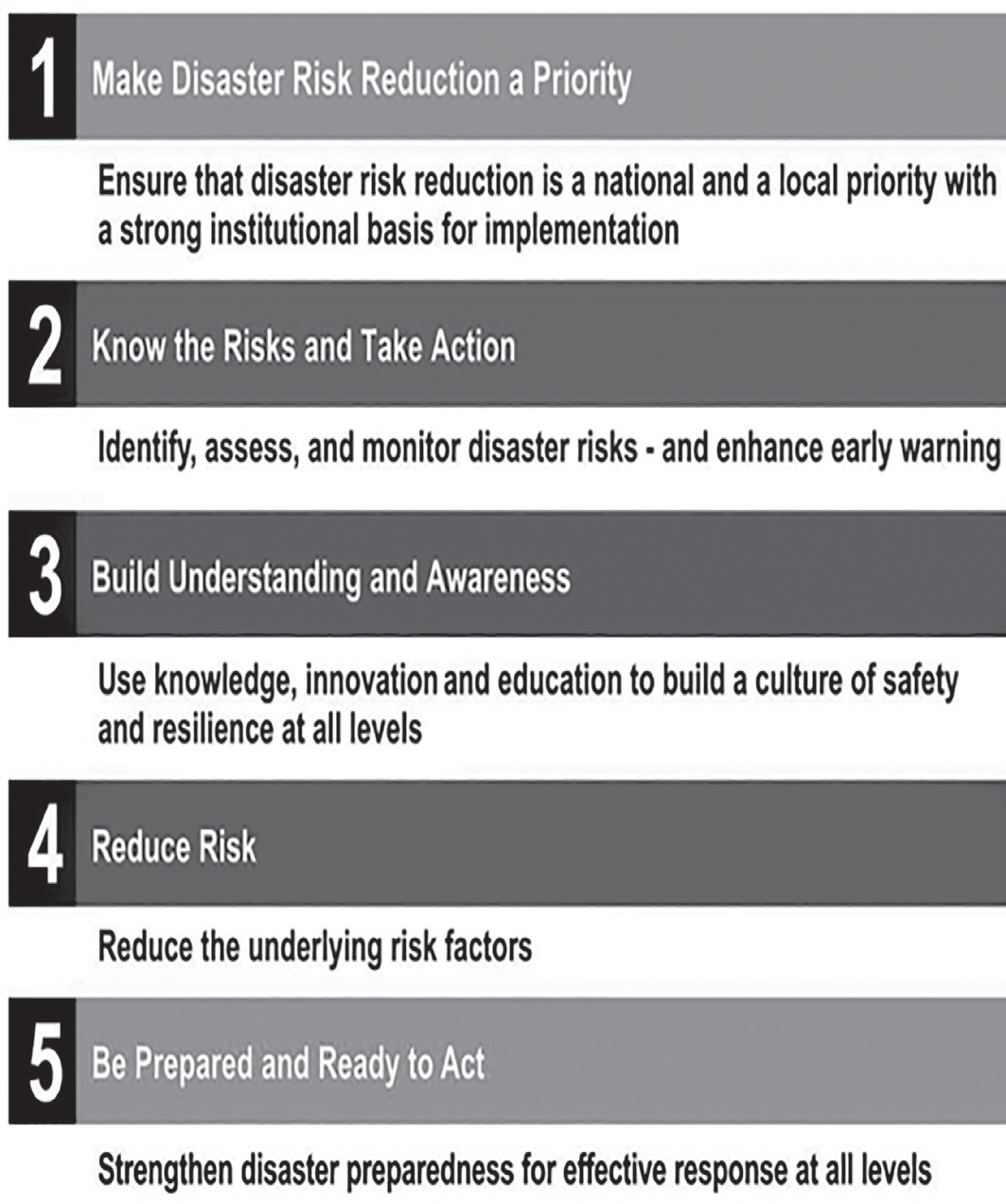
Indian Context:
• India is a signatory to the Hyogo Framework for Action, a globally adopted initiative aimed at reducing disaster- related losses, including human lives, economic stability, and environmental resources in communities and nations.
• India collaborated closely with the UNISDR to implement the key priority areas of the Hyogo Framework for Action (HFA) for Disaster Risk Reduction (DRR).
• A Working Group was established under the leadership of the Joint Secretary (Disaster Management) at the Ministry of Home Affairs (MHA). This group comprised representatives from various ministries, including Rural Development, Panchayati Raj, Urban Development, Health and Family Welfare, Environment and Forests, Women and Child Development, Earth Sciences, Science and Technology, as well as members from the Planning Commission, NIDM, and NDMA.
Sendai Framework for Disaster Risk Reduction 2015- 2030
• The Sendai Framework for Disaster Risk Reduction was officially adopted on March 18, 2015, during the Third UN World Conference on Disaster Risk Reduction held in Sendai, Japan.
• It outlines seven global targets and four priority areas for action to be achieved between 2015 and 2030.
• To monitor global progress on the Sendai Framework, the UN publishes a Global Assessment Report (GAR) every two years.
• Serving as a blueprint for enhancing community safety and resilience, the Sendai Framework aligns with other key agreements under the 2030 Agenda, including the Paris Agreement on Climate Change, the Addis Ababa Action Agenda on Financing for Development, the New Urban Agenda, and the Sustainable Development Goals (SDGs).
• India is a signatory to the Sendai Framework for Disaster Risk Reduction.
Priorities for Action
To effectively reduce disaster risks, focused actions are required at local, national, regional, and global levels across different sectors. These actions fall under four key priority areas:
• Priority 1: Understanding Disaster Risk: Disaster risk management should be rooted in a comprehensive understanding of disaster risks, taking into account various dimensions such as vulnerability, capacity, exposure of people and assets, hazard characteristics, and environmental factors.
• Priority 2: Strengthening Disaster Risk Governance: Effective governance is crucial for disaster risk reduction across all sectors. At national, regional and global levels, disaster risk governance should ensure the coherence of legal, regulatory, and policy frameworks. Clearly defining roles and responsibilities will help encourage and guide both public and private sectors in taking proactive measures to address disaster risks.
• Priority 3: Investing in Disaster Risk Reduction for Resilience: Investments from both public and private sectors in structural and non-structural disaster risk reduction measures are vital to enhancing the resilience of individuals, communities, economies and ecosystems.
These investments contribute to innovation, economic growth and job creation while also saving lives, reducing losses and ensuring efficient recovery and rehabilitation.
• Priority 4: Strengthening Disaster Preparedness for Effective Response and "Building Back Better":** Strengthening disaster preparedness is essential to ensure
a prompt and effective response. Additionally, recovery,
rehabilitation and reconstruction efforts should be planned in advance to incorporate disaster risk reduction strategies. The "Build Back Better" approach allows for improved resilience post-disaster. Women and persons with disabilities should play a key role in promoting gender-inclusive and universally accessible disaster response and recovery efforts.
Seven Global Targets
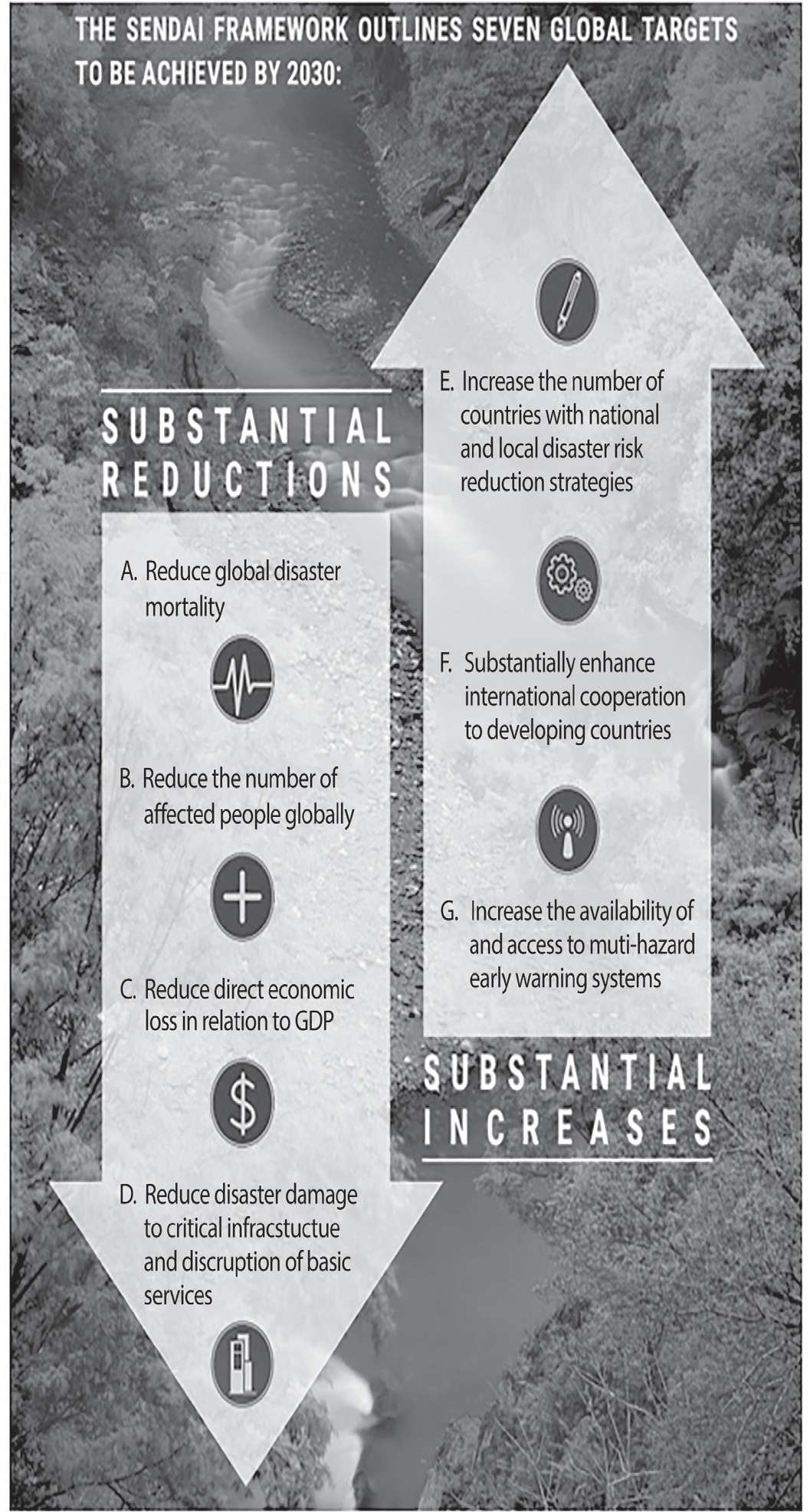
Figure: Seven Global Targets under Sendai Framework
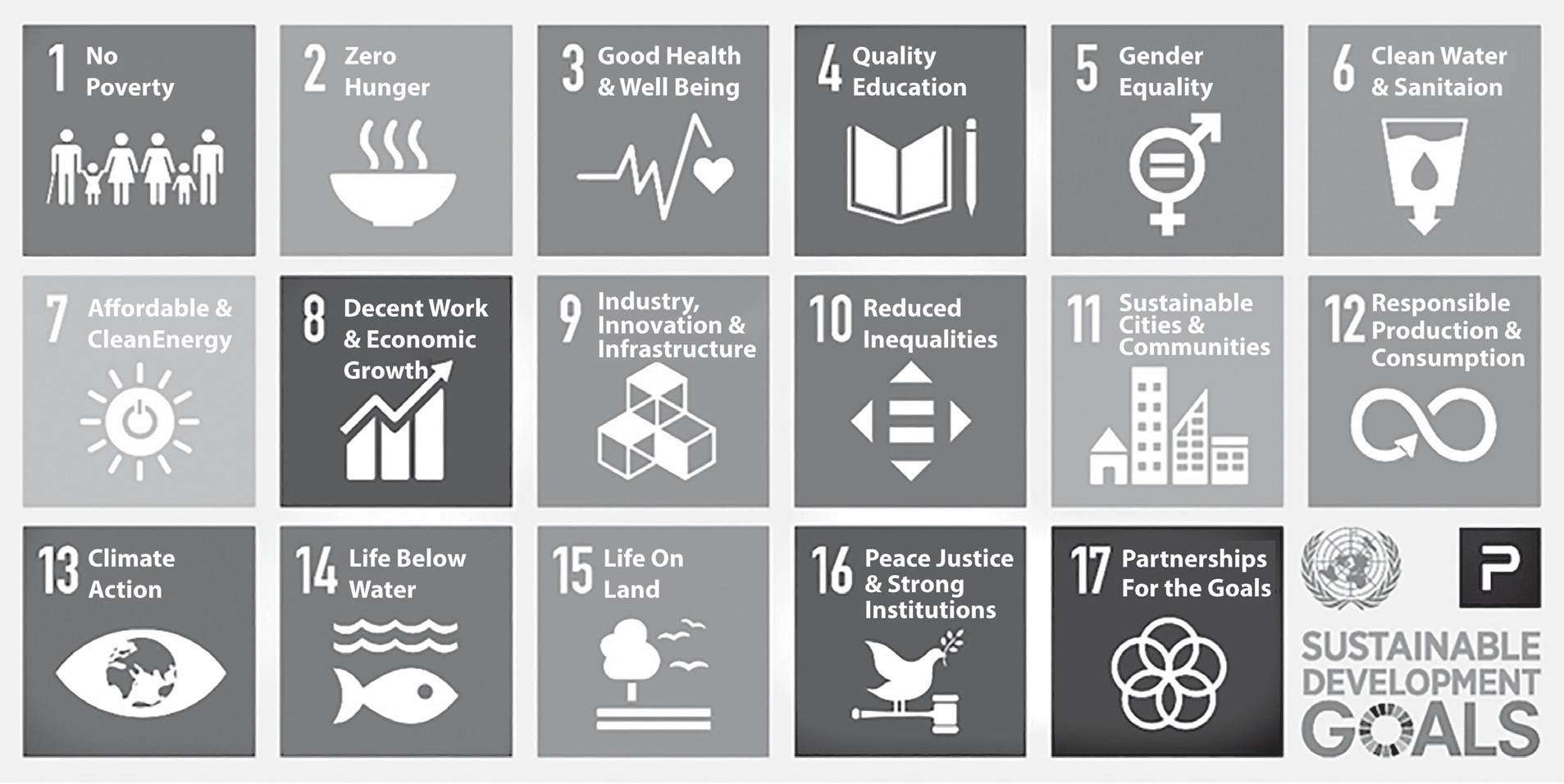
Sustainable Development Goals 2015-2030
• Goal 1: Eradicating Poverty – Target 1.5 emphasizes enhancing the resilience of impoverished populations, reinforcing disaster risk reduction as a fundamental strategy in eliminating extreme poverty.
• Goal 2: Eliminating Hunger – Target 2.4 highlights the necessity of integrating disaster risk reduction and climate adaptation within agricultural planning and investments, ensuring food security, sustainable livelihoods, and resilient ecosystems.
• Goal 3: Ensuring Health and Well-being – Target 3.d focuses on strengthening early warning systems and risk reduction strategies for national and global health threats, promoting a resilient healthcare system.
• Goal 4: Inclusive Education – Target 4.7 emphasizes the importance of upgrading educational facilities and incorporating sustainable development education, thereby contributing to resilience-building in the education sector.
• Goal 6: Sustainable Water Management – Target
6.6 stresses the protection and restoration of water- related ecosystems, playing a crucial role in enhancing community resilience to water-related hazards.
• Goal 9: Sustainable Infrastructure – Target 9.1 focuses on developing infrastructure that is sustainable and resilient, ensuring the protection of both current and future investments in infrastructure development.
• Goal 11: Sustainable Cities and Communities – Targets (11.1, 11.3, 11.4, 11.5, 11.b, and 11.c) prioritize upgrading urban slums, implementing integrated urban planning, mitigating social and economic impacts of disasters, strengthening urban resilience, and aligning urban policies with the Sendai Framework to build safer and more resilient cities globally.
•
Goal 13: Climate Action – Targets (13.1 to 13.3 and 13.a to 13.b) emphasize strengthening resilience and adaptive capacity, building institutional capabilities, integrating climate change adaptation into policies and plans, and enhancing awareness about early warning systems to create synergy between disaster risk reduction and climate resilience.
• Goal 14: Marine Life Protection – Target 14.2 focuses on the sustainable management and protection of marine and coastal ecosystems, strengthening their resilience to reduce disaster risk and maintaining the health of aquatic environments.
• Goal 15: Terrestrial Ecosystem Conservation – Targets (15.1 to 15.4 and 15.9) highlight the importance of forest conservation, combating land degradation and desertification, preserving mountain ecosystems and biodiversity, and incorporating ecosystem values into national and local planning strategies for sustainable development.
• These targets align with the Sendai Framework, emphasizing environmental resilience by integrating ecosystems into risk assessment and disaster preparedness planning.
Post Sendai Initiatives by Indian Government
To uphold its commitment to the Sendai Framework, the Government of India has undertaken several key initiatives following the Sendai Declaration:
• Firstly, as pledged during the Sendai Conference, India successfully hosted the Asian Ministerial Conference on Disaster Risk Reduction (AMCDRR) in November 2016. During this event, the New Delhi Declaration and the Regional Action Plan for implementing the Sendai Framework were adopted.
• Secondly, the Government of India has issued a set of priority actions to all State Governments, aligning them with the goals, targets, and priorities outlined in the Sendai Framework (2015-2030).
• Thirdly, in accordance with Priority 4 of the Sendai Framework, the National Disaster Response Force (NDRF) has been enhanced with state-of-the-art training and equipment, strengthening its capabilities as a professional disaster response force.
• Fourthly, India has expressed its commitment to sharing expertise in disaster response, as demonstrated during the 2011 Japan earthquake and the 2015 Nepal earthquake.
• The Indian government is actively working towards regional cooperation by hosting the SAARC Disaster Management Centre, which focuses on disaster risk reduction and knowledge-sharing among SAARC
nations.
• The SAARC Disaster Management Exercise (SAADMEX) 2015, held in Delhi, served as an essential platform for sharing best practices and reinforcing India's commitment to strengthening regional cooperation mechanisms for disaster response.
• Likewise, the Indian National Centre for Ocean Information Services (INCOIS), Hyderabad, provides early warning alerts not just for India but also for 28 Indian Ocean Rim countries.
• Fifthly, to strengthen capacity building in disaster management, the National Institute of Disaster Management (NIDM) signed a Memorandum of Understanding (MoU) with Jawaharlal Nehru University (JNU) in August 2015. This agreement facilitates financial support and academic collaboration for establishing a Centre for Excellence in Disaster Research and Resilience Building at JNU, fostering higher education and multidisciplinary research in disaster management.
Prime Minister’s 10-Point Agenda on Disaster Risk Reduction Outlined at the AMCDRR
Ensure that all development projects - airports, roads, canals, hospitals, schools, bridges – are built to appropriate Disaster Resilient Standards and contribute to the resilience of communities they seek to serve. Build a coalition to support disaster resilient infrastructure.
Work towards Risk Coverage for All – starting from poor households to small and medium enterprises to multi-national corporations to nation states.
Encourage greater involvement and leadership of women in disaster risk management.
Invest in Risk Mapping globally for all hazards.
Leverage technology to enhance the efficiency of our disaster risk management efforts.
Develop a Network of Universities to work on disaster issues.
Utilize the opportunities provided by social media and mobile technologies.
Build on local capacity and initiative.
Ensure that the opportunity to learn from a disaster is not wasted. Establish a facility for technical support to Post- Disaster Reconstruction of houses.
Bring about greater cohesion in international response to disasters.
Coalition for Disaster Resilient Infrastructure (CDRI)
• The CDRI was launched by the Hon’ble Prime Minister of India during the United Nations Climate Action Summit on the 23rd September, 2019, at New York. It is the second major global initiative launched by the Government of India and is a demonstration of India’s leadership role in climate change and disaster resilience matters, globally.
• CDRI is a global partnership of National Governments, UN agencies and programmes, multilateral development banks and financing mechanisms, the private sector, academic and knowledge institutions that aims to promote the resilience of infrastructure systems to climate and disaster risks, thereby ensuring sustainable development.
G20 DISASTER RISK REDUCTION WORKING GROUP 2023
G20 nations face significant disaster risks, with an estimated Annual Average Loss (AAL) of $218 billion, accounting for 9% of their annual infrastructure investments. While G20 Leaders’ Declarations have periodically recognized the importance of disaster risk reduction (DRR) and resilience, the issue has not been consistently or comprehensively addresse within the group.
India, upon assuming the G20 Presidency from Indonesia, initiated the first-ever G20 Working Group on Disaster Risk Reduction. This initiative aims to foster collective efforts, promote multidisciplinary research, and facilitate the exchange of best practices in DRR
among member nations.
• The increasing frequency of disasters worldwide, largely driven by climate change and exacerbated by geophysical hazards, continues to threaten millions of lives and hinder economic progress on a global scale.
• Recognizing that disasters affect all nations and pose a serious risk to our shared future, the establishment of this working group underscores India’s commitment to the G20 Presidency theme: ‘Vasudhaiva Kutumbakam’ – ‘One Earth, One Family, One Future’.
• Priorities & Expected Outcomes: Within the overarching Sendai Framework for Disaster Risk Reduction, the G20 countries are encouraged to work collaboratively towards key priorities aimed at strengthening disaster resilience and risk reduction strategies.
• Global coverage of Early Warning Systems for all hydro-meteorological disasters.
• Increasedcommitment towa rdsmaking infrastructure systems disaster and climate resilient.
• Stronger national financial frameworks for disaster risk reduction.
•
Strengthened national and global disaster response system to address the consequences of increasing frequency and intensity of disasters.
• Increased application of ecosystems-based approaches to disaster risk.