Whatsapp 88106-52225 For Details
Get Free IAS Booklet
Get Free IAS Booklet
Biodiversity
• Biodiversity encompasses the variety of plant, animal, and microbial species, as well as the diversity within their genes, species, and ecosystems in a particular habitat.
• Scientists estimate that there are about 8.7 million species on Earth, with around 6.5 million species living on land and 2.2 million species in aquatic environments.
• Surprisingly, only about 1.2 million species have been identified so far, leaving approximately 86% of all species yet to be discovered.
• Among the identified species, plants make up less than 30%, which includes algae, fungi, mosses, gymnosperms, and flowering plants. The number of plant species is estimated to be around 370,000. The remaining 70% of identified species are animals, including invertebrates like insects and mollusks, and vertebrates like mammals and reptiles.
• The majority of both identified and unidentified species are found in tropical regions, with the Amazon Rainforest in South America known to harbor the highest biodiversity on Earth.
Measurement of Biodiversity
• Major taxonomists measure biodiversity using the following two parameters: species richness, and species evenness.
Species Richness
• Species richness, also called Alpha Diversity, refers to the number of different species present in a specific area.
• Tropical rainforests on land and coral reefs in oceans have the highest species richness on Earth.
• Species richness decreases as you move away from the equator towards the poles. This is because there is less sunlight and rainfall, which affects primary productivity (the ability of plants to produce energy through photosynthesis).
• Similarly, species richness also decreases from the equator towards the poles in both terrestrial and marine ecosystems, as primary productivity decreases with distance from the equator. However, in some areas of the ocean where nutrients are brought up from deeper waters (called upwelling), productivity can be higher despite being farther from the equator.
Species Evenness
Species evenness, also called Species Abundance, refers to how evenly the individuals of different species are distributed in a specific habitat.
For example, in two different forests with the same number of species but different numbers of individuals per species, the one where each species has a more equal number of individuals has higher evenness.
Low evenness means that a few species dominate the habitat, while high evenness means that species are more evenly distributed.
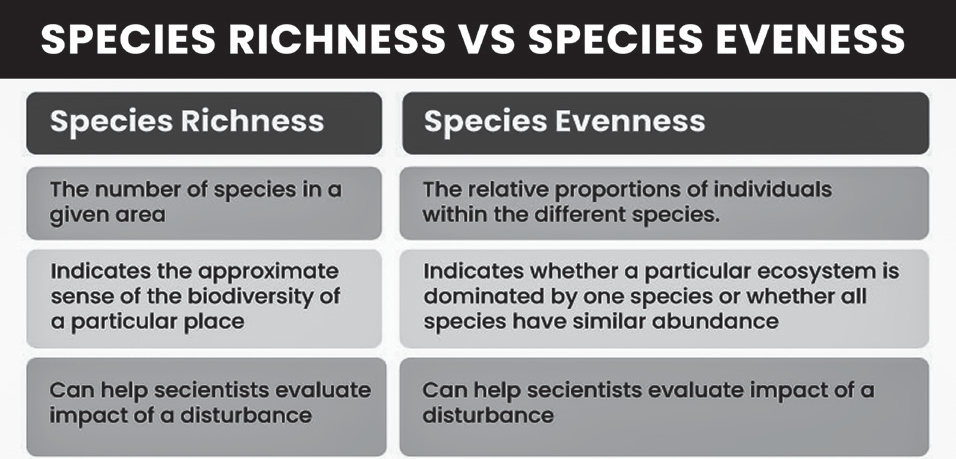
Species Richness Vs Species Evenness
Classification of Diversity
Biodiversity can be classified based upon:
• Hierarchy of Life
• Community as a Reference
Community as a Reference
Alpha diversity: This measures the number of species within a specific habitat, indicating its species richness.
Beta diversity: This is a method for comparing diversity between ecosystems by assessing the number of unique species in each.
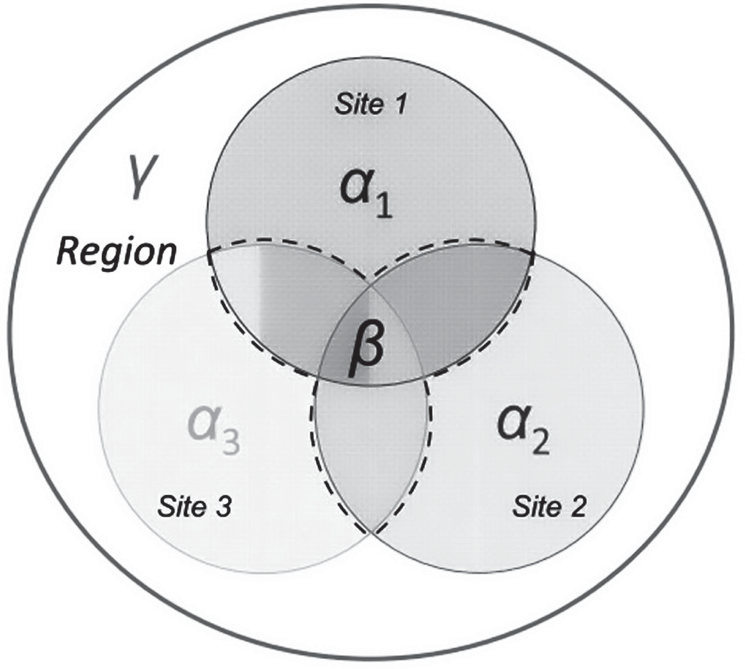
Gamma diversity: Similar to alpha diversity, this calculates the total number of species in a given region, considering all ecosystems within that region but excluding repeated species.
Hierarchy of Life
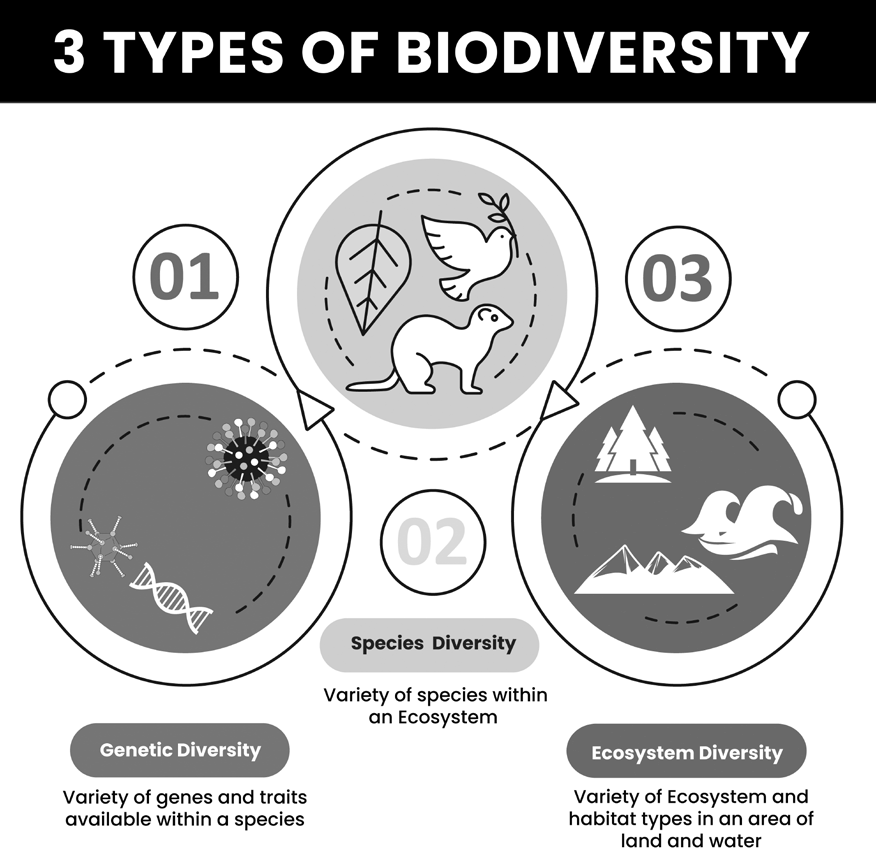
3 Types of Biodiversity
Genetic Diversity
Genetic diversity: This refers to the total number of genetic characteristics present in the genetic makeup of a species.
Genetic variations: Within a single species, there can be multiple genetic variations, as seen in the diverse strains of rice in India or the different varieties of mangoes. This concept is similar to the variations observed in humans, such as in skin color, eye color, and hair type.
Adaptation: Genetic diversity allows species to adapt to changing environments by providing a range of genetic traits. This variation helps species survive environmental changes by passing on desirable genes to future generations.
Reproduction: Species with different genetic makeups typically do not interbreed, meaning they do not produce fertile offspring.
Common evolution: Species that are closely related often share a common evolutionary history, leading to similarities in their phenotypic characteristics. For example, humans and chimpanzees share about 98.4% of their genes, indicating a close evolutionary relationship.
Species Diversity
Species diversity encompasses both species richness and evenness within a particular biome. It considers not only the number of different species present but also the
distribution of individuals among those species.
Mathematically, species diversity can be represented as the ratio of the population of one species to the total
number of organisms across all species in the biome. A value of “zero” indicates infinite diversity, meaning there is an even distribution of individuals among all species present, while a value of “one” suggests that only one species is present.
Similar to species richness and evenness, species diversity tends to decrease from the equator towards the poles. Therefore, tropical regions typically exhibit higher species diversity compared to temperate and polar regions.
Ecological Diversity
Ecological diversity refers to the different types of habitats present in a region, which are shaped by factors like climate, vegetation, and geography. These habitats include various biological zones such as wetlands, mangroves, coral reefs, deserts, and more.
For example, India has greater ecological diversity compared to a country like Norway because it has a wide range of habitats like deserts, rainforests, mangroves, coral reefs, wetlands, estuaries, and alpine meadows.
Types of Species
Keystone Species
A keystone species is like the linchpin of an ecosystem. Its presence or absence can dramatically affect the abundance of other species. Many species in that ecosystem rely on keystone species for their survival.
Top predators like lions, tigers, and crocodiles, as well as important species like elephants, corals, and pollinators, are considered keystone species because they indirectly regulate the populations of other species.
For example, certain plant species, such as the Indian laurel and ebony tree, rely on bats for pollination. A decrease in the bat population can make it harder for these plants to reproduce.
If keystone species disappear, the balance of the ecosystem can be disrupted, leading to negative consequences for other species. Therefore, conservation efforts often focus on protecting these critical species.
Foundation Species
A foundation species is like the cornerstone of an ecosystem, playing a crucial role in its structure and function. These species are usually the most abundant primary producers, meaning they create energy through photosynthesis and form the basis of the food chain.
• For example, in coral reefs, corals act as foundation species, providing structure and habitat for numerous other organisms. Similarly, in kelp forests, kelp serves as the foundation species, offering shelter and food for a wide variety of marine life.
Flagship Species
A flagship species is like an ambassador for conservation efforts, chosen to represent and draw attention to the
need for protecting certain ecosystems or habitats. These species are typically iconic, charismatic, or emblematic, making them effective symbols for environmental causes.
• For instance, the Giant Panda in China, the African elephant, the Indian tiger, and the leatherback sea turtle are all examples of flagship species. Their status as flagship species helps raise public awareness and support for conservation initiatives aimed at preserving their habitats and ensuring their survival.
Endemic Species
Endemism refers to when a species is unique to a particular geographic area, like an island or a specific country. If a species is only found in one place and nowhere else, it’s considered endemic to that area.
For example, if a type of plant is found only in a certain country and not anywhere else in the world, it’s an endemic species of that country.
This concept helps scientists understand the biodiversity of different regions and highlights the importance of protecting unique habitats. On the other hand, if a species is found in many different places around the world, it’s considered to have a cosmopolitan distribution, meaning it’s widely distributed across various geographic areas.
Indicator Species or Sentinel Species
Indicator species, also known as sentinel species, are organisms that serve as signals or warnings about the health and condition of an ecosystem. Their presence, absence, or abundance can indicate specific environmental conditions or changes within an ecosystem.
By monitoring indicator species, scientists can gain insights into the overall well-being of an ecosystem and identify any potential issues or disturbances. These species are like environmental detectives, helping us understand the state of the environment and guiding conservation efforts to protect ecosystems.
Umbrella Species
Umbrella species are selected by the conservation community to represent broader ecosystems in decision- making processes. The concept relies on the idea of the “umbrella effect,” where protecting one species also indirectly safeguards many others within the same ecosystem. These species are crucial in determining the location and size of conservation areas or reserves, as well as understanding ecosystem dynamics.
Usually, umbrella species are either flagship species, whose conservation benefits other species, or keystone species, which play a critical role in ecosystem functioning.
Invasive Species
Introduced organisms not native to a particular area.
Cause harm to the new environment ecologically and economically.
Impacts of Invasive Species:
Extinction of native plants and animals.
Reduced biodiversity by outcompeting native species for resources.
Altered habitats and disrupted food chains.
Formation of monocultures (dominated by a single species) replacing diverse ecosystems.
Examples:
Lantana: A fast-growing invasive plant that forms dense mats, depriving herbivores of food.
Fall Armyworm (FAW): A destructive agricultural pest introduced from America. It feeds on various crops, impacting maize production in India.
Characteristics of Invasive Alien Species
Rapid Reproduction and Growth
Profound Dispersal Capacity
Ability to adapt physiologically to new conditions – Phenotypic Plasticity
Having broad dietary habits
How are invasive species introduced into an ecosystem?
Human activities are a major driver in the spread of invasive species, significantly increasing the rate and scale compared
to natural causes.
Transportation: Ships can carry aquatic organisms in two ways:
• Ballast water: Ships take on water for stability, and this water can contain aquatic organisms that are then released in new locations.
• Propellers and hulls: Organisms can hitch a ride on the exterior of ships, spreading to new areas.
Wood products: Insects and other organisms can be transported hidden inside wood products like furniture or firewood.
Ornamental plants: Plants introduced for landscaping purposes can sometimes escape cultivation and become invasive in the wild.
Climate change is another factor that can aid the spread of invasive species. Changes in rain and snow patterns can create new habitats suitable for invasive plants, allowing them to expand their range.
that may be found in the bark, pods, and leaves of acacia trees.
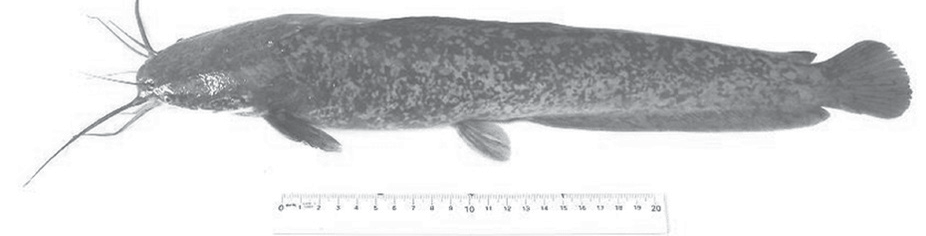
African Catfish
In Tamil Nadu and Kerala, the invasive African catfish is being illegally raised and marketed.
In 2000, the Central government banned the breeding, transportation, and sale of African catfish because of the health and environmental risks they represent. Native fish species were in danger from the ferociously hungry fish.
In addition to feeding on tiny zooplankton, it may also prey on and kill local fish species.
The African catfish, which is native to freshwater lakes, rivers, marshes, and urban sewage systems in Africa and the Middle East, was brought to aquaculture in the early 1980s and is now found all over the world.
It has an advantage over other local species because of its rapid reproduction, excellent tolerance for low oxygenated water, and prolonged survival in shallow muck.
Because they develop more quickly and sell at a decent price, inland fishermen prefer catfish.
Numerous farms contaminate the environment and water supplies by using chicken feces as feed.
Experts believe that until the current stocks are eliminated, the prohibition would not have much of an impact.
Indian Bullfrog
This huge species of frog may be found in Nepal, Bangladesh, India, and the mainland of Myanmar.
It was brought to Madagascar and the Andaman Islands of India.
It is currently a common invasive species.
They often stay away from coastal and woodland regions, favoring freshwater wetlands and aquatic environments.
The IUCN Red List has this species listed as the Least Concern.
Prosopis Juliflora
This plant is a shrub or small tree belonging to the Fabaceae family and is a type of mesquite.
It is native to Mexico, South America, and the Caribbean.
• Recognized as one of the most invasive species in arid and semi-arid regions, it was introduced to Delhi by the British during the 1920s, coinciding with the construction of the national capital.
• In India, it is known by various local names, including Bellary jaali, seemai karuvelam, seemai jaali, gando baval, and vilayati kikar. The species is highly adaptable to a wide range of ecological conditions, thriving in diverse soil types—from sand dunes to clay, and from saline to alkaline soils.
• It can grow at elevations ranging from below 200 meters to over 1500 meters above sea level and in areas receiving between 50 mm and 1500 mm of annual rainfall. Due to its rapid and aggressive growth, it often outcompetes native vegetation, making it a significant invasive threat.
• For the Kutch region’s Maldhari herders, this has resulted in a significant loss of grazing.
Congress Weed
• One species of blooming plant in the Asteraceae family is Parthenium hysterophorus.
• It comes from the tropical regions of America. Other common names for this plant include hunger weed, whitetop weed, Santa-Maria, and Santa Maria feverfew.
• It is referred to locally in India as congress grass, carrot grass, Gajar Ghas, or Dhanura. India, Australia, and several regions of Africa are home to this widespread invasive species.
South red-eared slider turtles
• Experts predict that the existence of non-native and invasive south red-eared slider turtles will cause native species to become extinct.
• 2020 research found that of the 356 recognized species of turtles globally, 29 freshwater turtle and tortoise species are found in India, and almost 80% of them are vulnerable.
• The red-eared slider is indigenous to Mexico and the southeast United States, but via the trafficking of exotic animals, it has spread around the world, including India, in order to maintain them as pets.
• The market for pets is booming with this tiny, low- maintenance species. When compared to other local turtle kinds, this species breeds more quickly.
• They no longer fit in little tanks or ponds as their size grows. Once the owners release them into the wild or adjacent waterbodies, they pose a threat to the surrounding wildlife.
• Unlike local species, the species has a broad diet and consumes nearly all plants.
• Because of its aggression, the red-eared slider drives away native species. It can also kill with its paws.
• The species represents a threat to all other species of its
Biodiversity Hot Spots
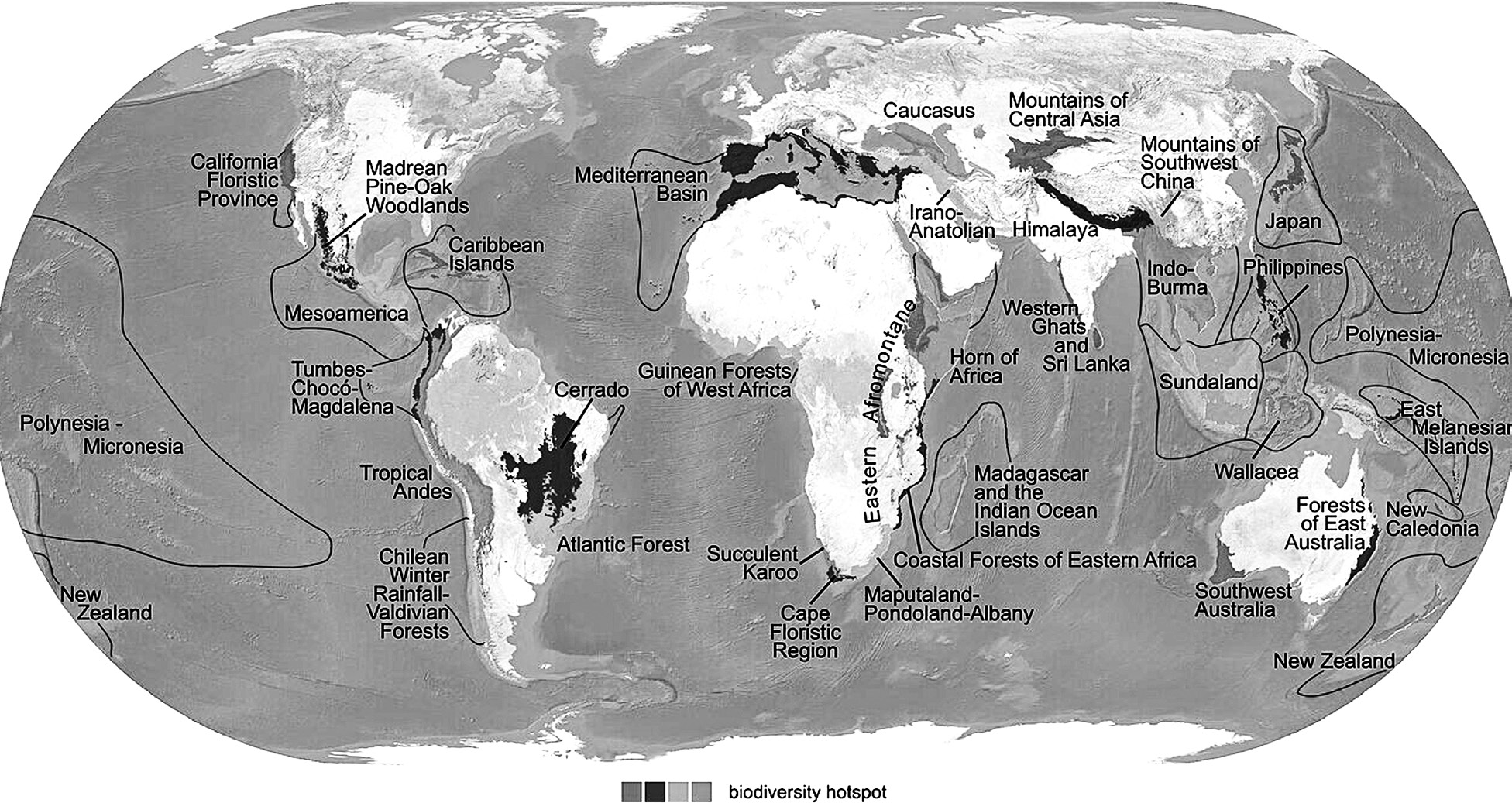
Biodiversity hotspots are areas with high levels of endemism and species richness.
Conservation International (CI) accepted Myers’ hotspots later in 1989, and in 1996 the organization decided to reevaluate the hotspots idea.
Two important criteria must be met, according to CI, for a location to be designated as a hotspot:
It must have a large proportion of plant life that is unique to this place on Earth, with at least 1,500 vascular plant species (> 0.5% of all plant species) that are endemic. In simple words, a hotspot cannot be replaced.
Its native habitat must have disappeared to the extent of at least 70%. (A minimum of 30% of the original natural vegetation must remain). Simply put, it needs to be in danger.
There are 36 biodiversity hotspot areas. Even though they only make up 24% of the planet’s geographical area, over 43% of Earth’s endemic bird, mammal, reptile, and amphibian species are found there.
The Coastal Plain area of North America was ranked as the 36th biodiversity hotspot in 2016.
GLOSSARY OF KEY TERM
Bioprospecting & Biopiracy
Bioprospecting involves the search for genetic resources and biochemicals within biodiversity that have commercial value. It’s essentially the process of identifying economically valuable items by studying the molecular, genetic, and species-level diversity in countries with rich biodiversity.
However, it’s crucial not to confuse bioprospecting with biopiracy. Biopiracy occurs when genetic resources and traditional knowledge are obtained from biodiverse developing countries without proper authorization. Moreover, the indigenous people from whom these resources and knowledge are taken often receive no compensation or benefit. Instead, the stolen traditional knowledge may be used by non-indigenous entities to gain a competitive
advantage, typically through patents or products.
There’s significant concern about multinational corporations and advanced economies engaging in biopiracy, particularly in countries like India, where genetic resources and traditional knowledge are abundant. This exploitation raises ethical and legal issues surrounding the fair and equitable sharing of benefits derived from biodiversity and indigenous knowledge.
Stable community
A stable community within an ecosystem refers to a situation where there are minimal annual fluctuations in productivity. This community is robust and resilient, able to withstand occasional disturbances caused by either human activities or natural events. Moreover, it remains relatively unaffected by the introduction of non-native species. In essence, a stable community is one that maintains a consistent level of productivity and composition over time, exhibiting resilience in the face of environmental changes and disturbances.
Bioterrorism
Bioterrorism refers to the deliberate and malicious use of biological agents, such as bacteria, viruses, or toxins, to cause harm or fear in a population. These agents can either occur naturally or be modified by humans for the purpose of causing illness, death, or economic damage. Bioterrorism can manifest in various forms, including the intentional release of pathogens in public spaces, contamination of food or water supplies, or dissemination of biologically active substances through aerosols. The goal of bioterrorism is typically to instill panic, disrupt society, or achieve political or ideological aims through the threat or actuality of biological harm.
BioWeb
BioWeb is a term describing a network of web-enabled biological devices, encompassing flora like flowers, plants, and trees. It extends the notion of the Internet of Things to include what’s termed the Internet of Living Things. This concept envisions a network of natural sensory devices. These BioWeb gadgets are capable of providing real-time ecological data insights and feedback on environmental changes. Essentially, it’s about leveraging living organisms as sensors to monitor and understand ecosystems in real- time, contributing to environmental conservation efforts and ecological research.
Biocapacity
Biocapacity refers to the ecological capacity of an area or ecosystem to provide resources such as food, water, and energy, as well as to absorb and process waste materials, including pollutants. When the demand for resources and waste absorption exceeds the capacity of the environment to sustainably provide and handle them, it leads to unsustainability. This occurs when the ecological footprint, representing human demand on nature, surpasses the biocapacity of the region or ecosystem. In essence, when human activities outstrip the Earth’s ability to regenerate
resources and absorb waste, it can lead to environmental degradation and long-term ecological imbalances.
Biobank
A biobank is indeed a physical facility equipped with cryogenic storage capabilities where biological samples, such as blood, tissue, cells, and DNA, are stored for various research purposes. These samples are typically collected from consenting individuals and are used in studies aimed at understanding diseases, developing treatments, and advancing medical research. Biobanks play a crucial role in facilitating
scientific research by providing researchers with access to a wide range of biological materials and associated data, enabling investigations into the underlying mechanisms of diseases and the development of personalized medicine approaches.
Carrying Capacity
Carrying capacity refers to the maximum number of living beings, including all species, that an environment can support without becoming strained. It’s like the “limit” of how many individuals an ecosystem can handle based on the resources available, such as food, water, and space.