Ecology and Biosphere
ECOLOGY
History of Ecology
Ecological References in Past
Throughout history, various ancient texts and scholars have provided insights into ecological concepts:
• The Vedas, Samhitas, Brahmanas, and Aranyakas- Upanishads contain ecological references.
• Indian medical texts like Charaka-Samhita and Susruta- Samhita discuss environmental influences on health.
• Hippocrates emphasized the impact of water, air, and location on human health.
• Aristotle categorised animals based on their habits and habitats.
• Theophrastus studied plants in relation to factors like altitude, moisture, and sunlight.
• Georges Buffon’s book “Natural History” (1756) attempted to organize knowledge about animals and their environments.
• Anton-van Leeuwenhoek pioneered the study of food chains and populations.
• Hanns Reiter (1868) may have coined the term “ecology.”
• Ernst Haeckel provided the first clear definition of ecology.
What is Ecology?
• Ecology is the study of how living organisms interact with each other and their environment. Derived from the Greek words “oikos” meaning “habitation” and “logos” meaning “discourse or study,” it focuses on understanding the relationships between organisms and their surroundings.
• Ecologists examine how organisms interact with one another and with their physical and biological environment.
Various levels of Ecological Organization
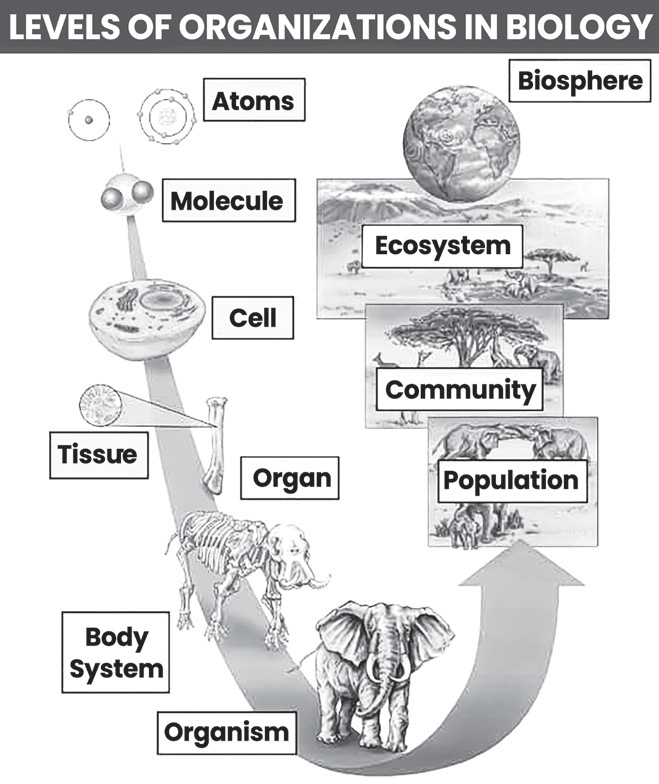
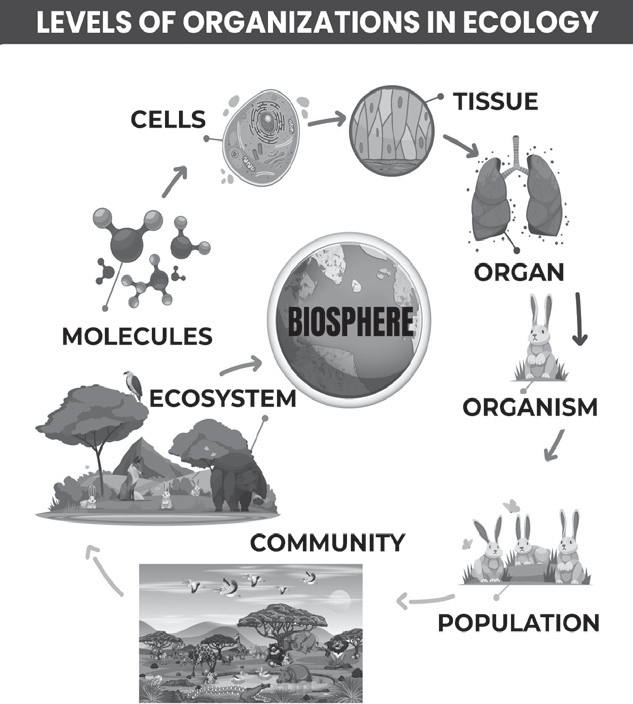
Ecological organization encompasses various levels, ranging from the smallest units like genes to the entire biosphere. In biology, the levels of organization progress from genes to organisms, while in ecology, they extend from individual organisms to the biosphere.
The levels of organization are as follows:
• Levels of organization in Biology: Genes ⭢ Cell ⭢ Tissues ⭢ Organ ⭢ Organ System ⭢ Organism/ Individual.
• Levels of organization in Ecology: Individual ⭢ Species ⭢ Population ⭢ Community ⭢ Ecosystem ⭢ Biome ⭢ Biosphere.
Individual and Species
• An individual is a single living organism that can survive and operate on its own. It goes through various stages of life, from birth to death.
• A species refers to a group of organisms that can reproduce with one another to produce fertile offspring. For instance, a single Asian Elephant is an individual, while all Asian Elephants together make up the species.
Population
• In ecology, a population refers to a collection of individuals from the same species that live in the same area. For instance, all Asian elephants in a specific region form a population.
• The population growth rate can be positive when there are births or immigration, and negative when there are deaths or emigration.
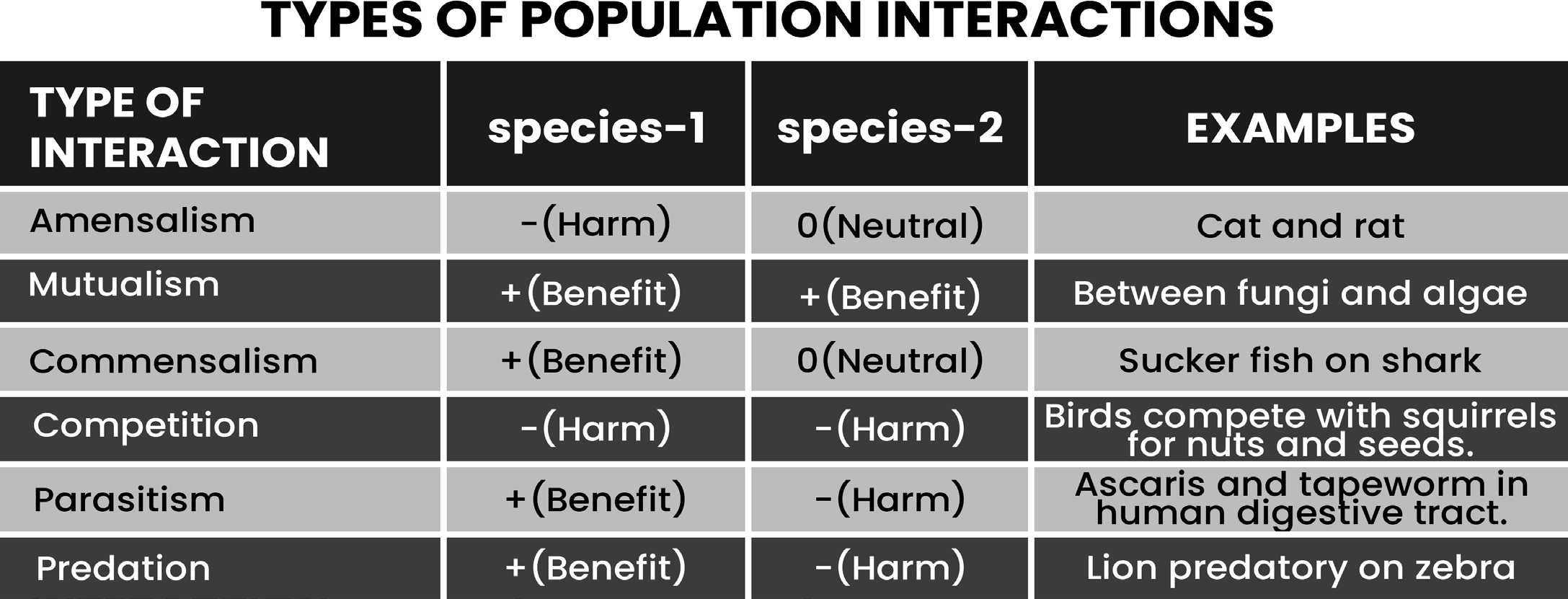
• The interactions between populations are called biotic interactions, and they include various types such as competition, mutualism, commensalism, parasitism, and predation.
Community
A community in ecology refers to a collection of individuals from different species that live in the same area and are interdependent on each other.
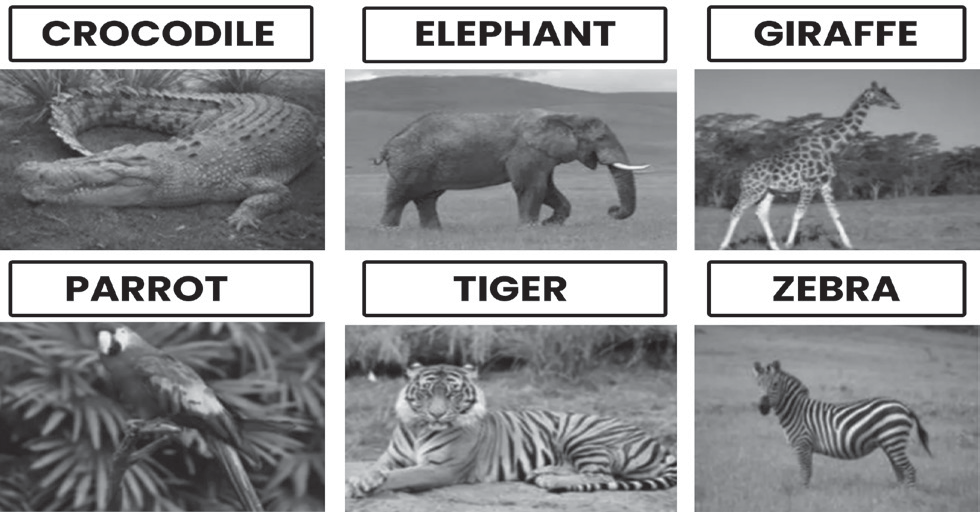
For instance, if we consider populations of different species such as elephants, crocodiles, and tigers living together in a particular area, they form a community.
Ecosystem
• The ecosystem is a natural system where living organisms, or communities, interact with each other and their physical environment. This interaction involves the exchange of energy and the recycling of nutrients.
• Living Beings + Environment = Ecosystem.
Biome
A biome is a large ecosystem characterized by the types of organisms that inhabit it. Examples include deserts, tundras, grasslands, and wetlands. A biome can encompass multiple ecosystems. For instance, an aquatic biome may include
ecosystems such as coral reefs and kelp forests.
Biosphere
The biosphere encompasses the living component of Earth, which includes the lithosphere (rocky shell), hydrosphere (upper layer of ocean and water bodies), and atmosphere (troposphere).
It comprises all living organisms and the organic matter they produce.
Life is absent in extreme environments such as the North and South poles, highest mountains, and deepest oceans due to hostile conditions.
While spores of fungi and bacteria may exist at great altitudes, they are metabolically inactive and represent dormant life.
As per the UNESCO, Total number of the biosphere reserves in the worlds are 784, which are located across 142 countries.
The importance of these Biosphere can be easily seen as they cover more than 5% of earth’s surface.
At present total 18 Biosphere Reserves are present in India out of which, 13 are recognized under UNESCO’s World Network of Biosphere Reserves (WNBR).
Recently Cold Desert Biosphere Reserve in Himachal Pradesh is designated by UNESCO under its Man and the Biosphere (MAB) Programme in September 2025.
As per the FAO (Food and Agriculture Organization)-2025, India got the 3rd rank in forest growth and 9th rank in forest area
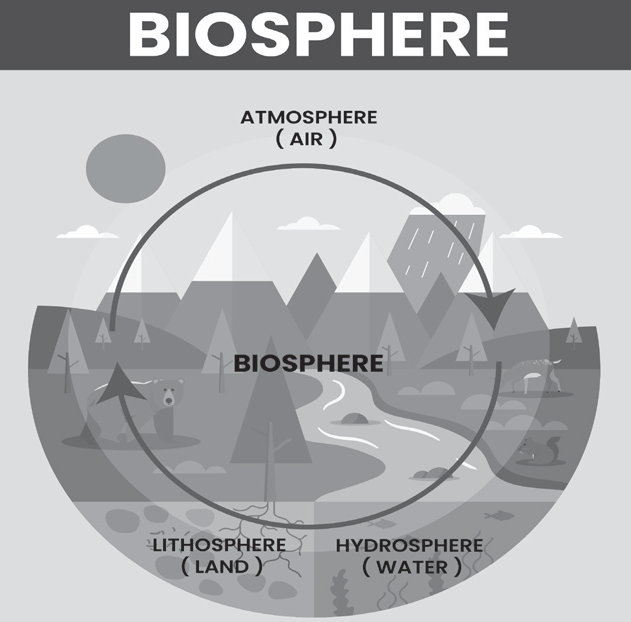
Note: Ecosphere = Biosphere + Lithosphere + Hydrosphere + Atmosphere
Biotic Interactions
Biotic Interactions
• Biotic interactions involve the interactions among different populations or biotic communities.
• These interactions comprise populations of plants, animals, microbes, and all other life forms within an ecosystem.
• Biotic interactions encompass the effects that organisms in the community have on each other, influencing their survival, growth, reproduction, and distribution.
Mutualism
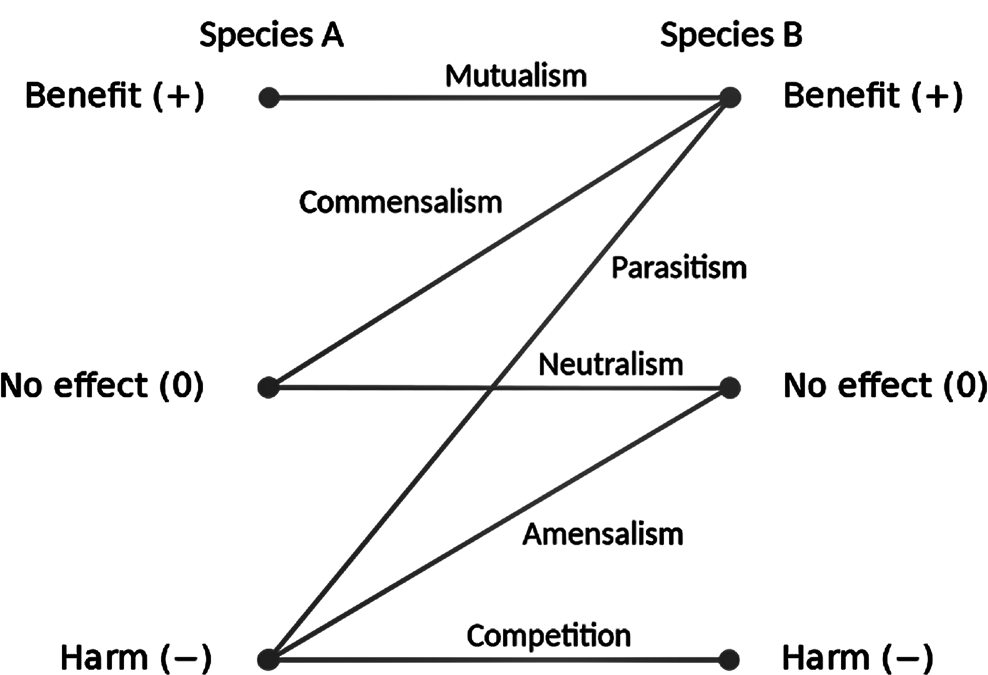
• Mutualism is a type of symbiotic association between organisms of two different species, where each organism benefits from the relationship and relies on each other for survival.
• Organisms engage in mutualistic relationships for various reasons, including the need for shelter, protection, nutrition, and reproductive assistance.
• Examples of mutualism include the relationship between sea anemones and clownfish, where the anemone provides shelter and the clownfish provide nutrients, as well as the association between fungi and algae or bacteria in lichens, where both partners exchange nutrients and protection.
Difference between Symbiotic Relationship and Symbiosis
• Symbiosis is a close and long-term biological interaction between two organisms of different species (Symbionts).
• Symbiotic relationship is just a interaction between two organisms of different species, it may or may not benefit to both.
• Symbiosis includes mutualism, where both species benefit; commensalism, where one benefits and the other is unaffected; and parasitism, where one is harmed and the other benefits.
Amensalism
Amensalism is a type of population interaction where one species is harmed while the other remains unaffected.
• Sheep or cattle trample grass: The grass is harmed when it is crushed by the hooves of the animals, but the animals are unaffected.
• Small plants under the shade of big trees: The large trees block sunlight, depriving the smaller plants underneath of the sunlight they need for photosynthesis.
Competition
• Competition occurs when organisms or species fight for limited resources like food, territory, mates, or nutrients, harming both parties involved. Even when resources aren’t scarce, competition can occur if animals interfere with each other while seeking those resources. Intraspecific competition occurs within the same species, like when two male lions fight for territory.
• Interspecific competition occurs between individuals of different species, such as when a tiger and a lion clash.
• The competitive exclusion principle suggests that species less adapted to compete for resources may either adapt or die out.
• According to evolutionary theory, this competition within and between species influences natural selection.
Commensalism
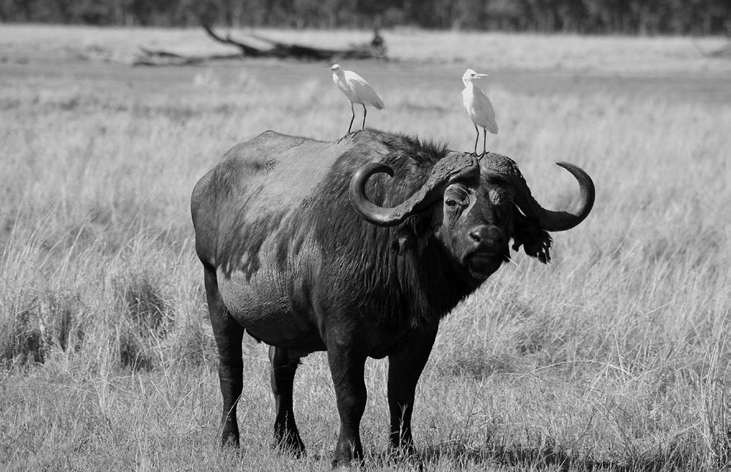
• It is the interaction where one species benefits & other species is neither benefited nor harmed.
• It occurs when one organism takes benefits by interacting with another organism by which the host organism is not affected.
• For example:
• Relationship between cattle and cattle egret – If the bird is only sitting on the cattle, then its commensalism as it doesn’t provide any benefits but if it is clean & eats small insects then, the relationship is a mutualistic one.
Parasitism (slow process)
Parasitism is when one organism benefits at the expense of another organism, which is harmed. In obligate parasitism, the parasite cannot survive without the host, like head lice on humans or viruses inside cells causing diseases. In facultative parasitism, the parasite can survive without the host, such as female mosquitoes infecting humans for a blood meal to produce eggs.
Predation (Energy Intensive Process)
Predation is when one species benefits by consuming another species, which is harmed. The species that hunts and consumes is the predator, like a lion hunting a deer, while the species being hunted and consumed is the prey.
Neutralism
• Neutralism is a type of population interaction where two species interact but do not affect each other. In true neutralism, the interactions between the species are negligible or insignificant.
• Examples of true neutralism are rare and difficult to prove, as they involve situations where the interactions between the species have no discernible impact on each other.
Antagonism
• Antagonism is a type of interaction between organisms where one organism benefits at the expense of another, leading to a decrease in the fitness of the harmed organism.
• This can occur either directly, such as in predation or parasitism, where one organism directly harms or consumes another, or indirectly, where one organism benefits by exploiting the resources or ecological services of another organism.
Examples include allelopathic antagonism, metabolic antagonism, and resource exploitation.
Principles of Ecology
Principles of Ecology
Adaptation
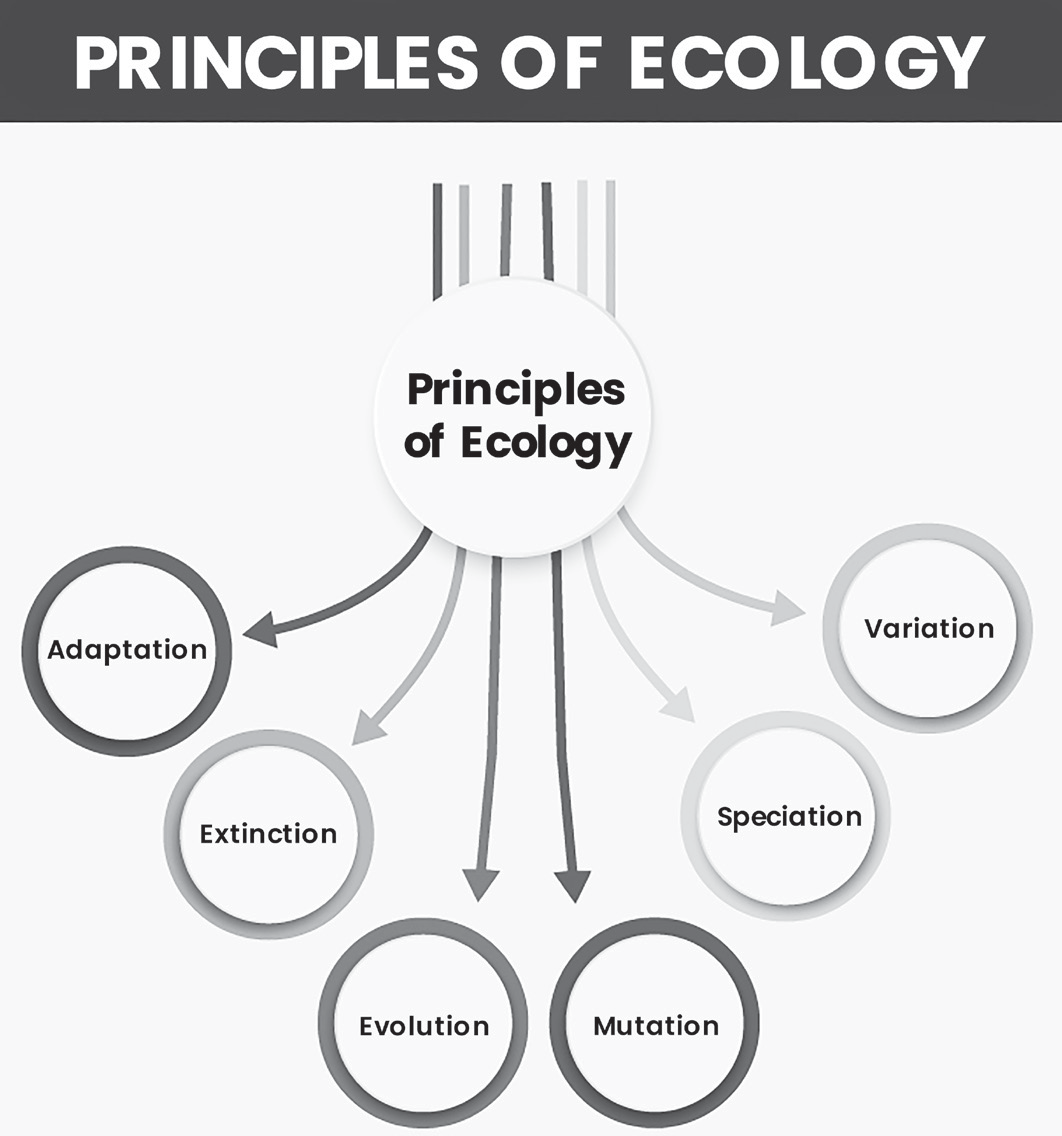
Adaptation refers to the traits, behaviors, structures, or ways of life that enable an organism to survive and thrive in a specific environment. These adaptations are typically inherited and have developed over time through the process of evolution. They allow organisms to better suit their environment, increasing their chances of survival and
reproduction.
Examples of Adaptation
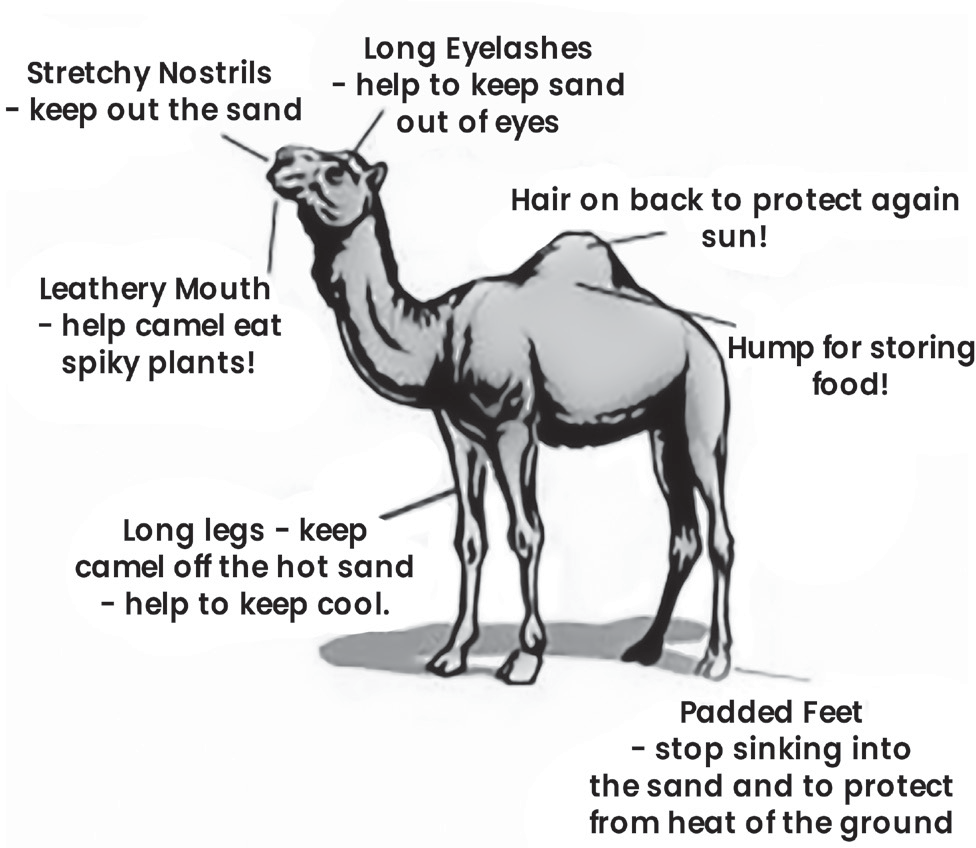
• Camel in Desert - Most of a camel’s fat is stored in its humps, which allows for better thermoregulation and feet of camels have thick, flat large soles for movement in sand.
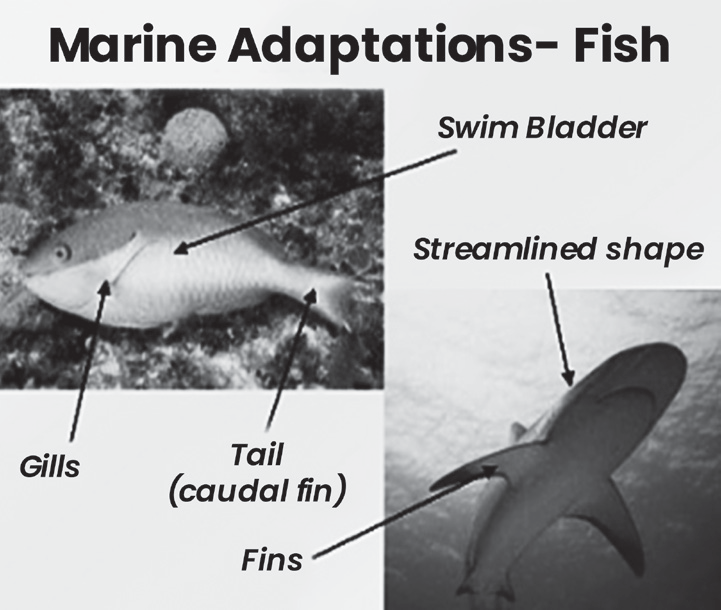
• Fish in water - Presence of gills and fins
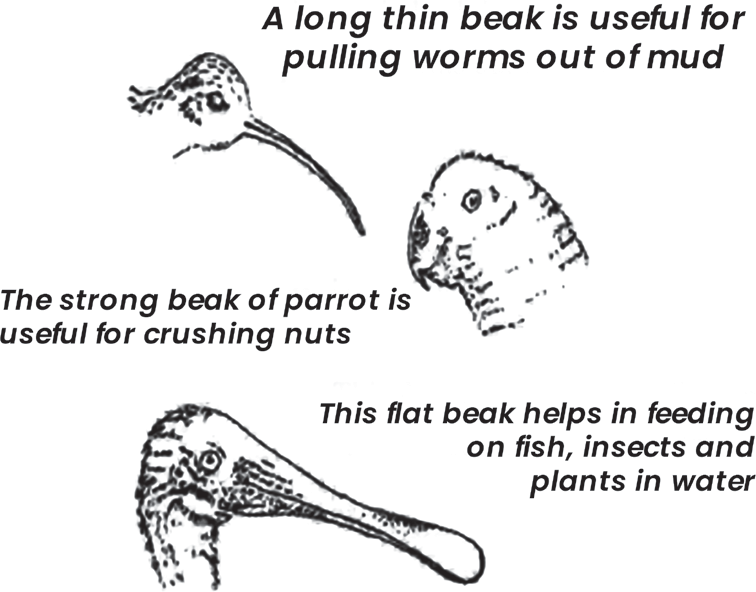
• Shape of bird’s beak - Suited to the kind of food it needs to procure.
• Plants in Desert –
Deep & well-developed roots seated in ground to suck water (sometimes it might have shallow leaves to absorb large quantities of water in short periods because desert rains are often light and brief)
Spine & waxy leaves to check transpiration
Green stems to perform photosynthesis
Sunken stomata (not directly visible to the leaf surface & found beneath the epidermis and beneath the leaves of plants) to avoid water loss.
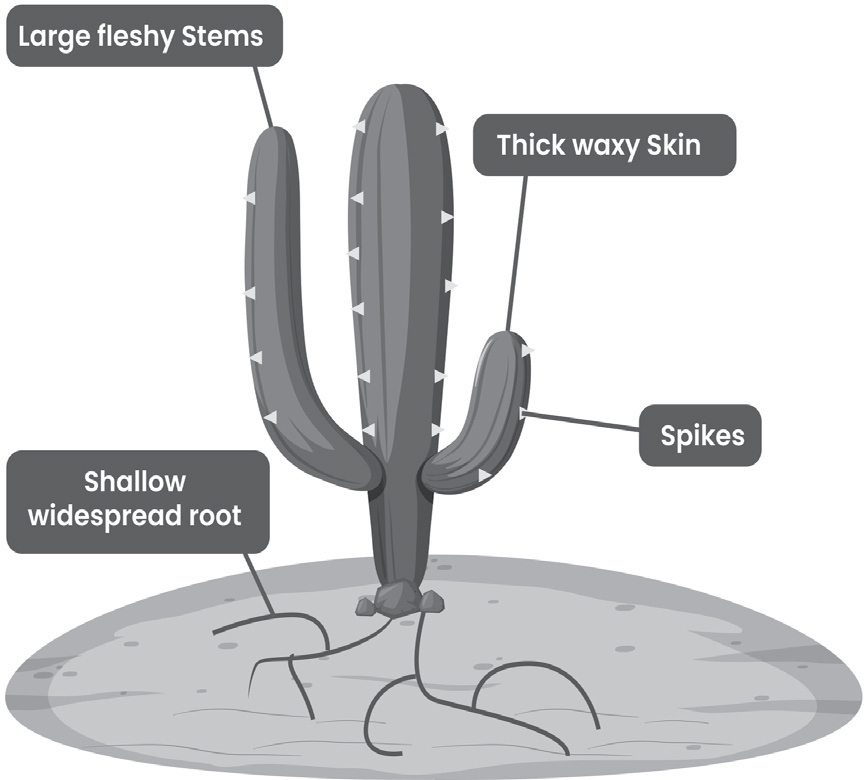
Cactus adaptation in desert
Mammals in Colder Climate - They have shorter ears and limbs to minimize heat loss. (Allen’s Rule.)
Do you Know? Allen’s Rule
• Allen’s Rule, proposed by Joel Asaph Allen in 1877, states that endothermic (warm-blooded) animals from colder climates tend to have shorter limbs compared to those from warmer climates. This is because in colder environments, a greater exposed surface area results in more heat loss, requiring organisms to conserve energy.
• By having shorter limbs, organisms can reduce their surface area relative to their volume, helping them retain heat more effectively. This adaptation aids in conserving energy and maintaining body temperature in cold climates.
• However, it’s worth noting that smaller animals, despite having lower surface area, may have a higher surface- to-volume ratio, making them more susceptible to heat loss.
Bergmann’s Rule:
Bergmann’s Rule, formulated by Carl Bergmann in 1847, suggests that within a species, individuals in colder climates tend to have larger body sizes compared to those in warmer climates. This is because larger body size results in a lower surface area-to-volume ratio, which helps minimize heat loss in colder environments. However, smaller body sizes are advantageous in warmer climates as they facilitate heat dissipation.
Allen Vs Bergmann:
Bergmann’s Rule: It’s about the size of the whole animal. In colder climates, animals tend to be larger, while in warmer climates, they’re smaller.
Allen’s Rule: This one is about specific body parts. In colder climates, animals tend to have shorter limbs, while in warmer climates, they have longer limbs.
• Enormous ears of Elephant - Elephants don’t sweat so they use their flapping ears to lose heat and keep the rest of the body cool.
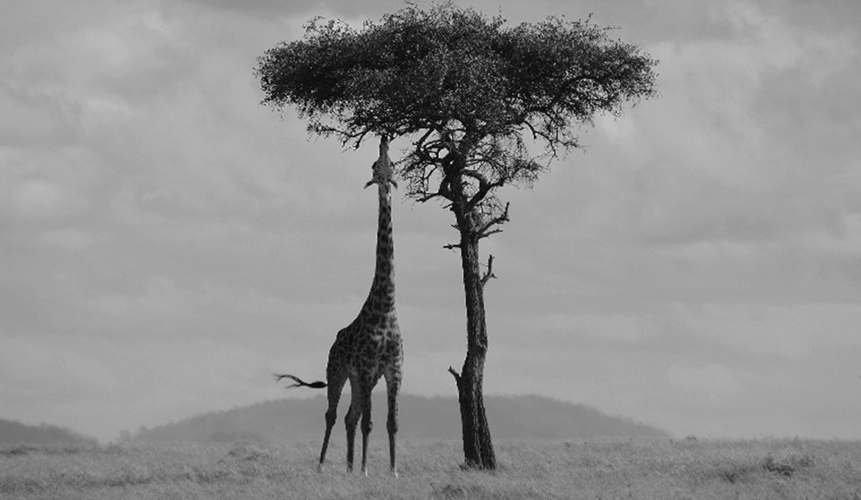
• Giraffe’s neck - Their long necks allow them to feed among treetops and spot predators.
• Coconuts in water - Fibrous outer coating that allows them to float on water.
• Hibernation (Cold Temperature): It is voluntary state of minimal activity and metabolic depression undergone by some animal species characterized by low body- temperature, slow breathing, heart-rate and low metabolic rate. It can last for weeks to months. After certain weeks, the animals wake up to eat, drink and replenish its body. This little wake up is essential to boost their immune system as they are at high risk of attack by parasites. For example: Bears, bats, frogs etc. While hibernation is most often seen as a seasonal behavior, it’s not exclusive to cold-weather critters. There are tropical hibernators that may do so to stay cool in the heat. Temperature isn’t always a factor as some species hibernate in response to food shortages also.
• The turtles enter a state of hibernation in winters called by a different name Brumation. Generally, reptiles brumate while mammals hibernate.
• Torpor: It is also called temporary hibernation (usually for shorter time than hibernation). Unlike hibernation, torpor is involuntary and can just last for few hours during a day. In other words, hibernation is an extended form of torpor.
• Aestivation (Hot temperature): State of animal dormancy, similar to hibernation, although taking place in the summer rather than the winter. For ex. snails, tortoises, and certain species of rodents.
Do You Know?
Acclimatization occurs quickly and is temporary, while adaptation occurs gradually over many generations. When we encounter sudden changes in our environment, like going to high altitudes, our body quickly adjusts to cope. For instance, at high altitudes where oxygen is low, our body responds by making more red blood cells, adjusting how hemoglobin binds oxygen, and breathing faster. These are temporary changes that help us deal with the immediate challenges of our surroundings.
Variation
• Variation refers to the differences in DNA among individuals or populations.
• This diversity arises from various sources, including mutation, which introduces new genetic changes, and genetic recombination, which involves the exchange of genetic material between different organisms.
• Genetic recombination leads to offspring with combinations of traits that may differ from those of their parents.
Speciation
• Speciation is how new species develop when groups of the same species are separated by geographic barriers like mountains or rivers.
• If there are no barriers, individuals can mate and have offsprings. But if they’re apart for a long time, they change genetically (genetic drift) and can’t reproduce together anymore.
• Even if the barriers disappear, they can’t have offsprings like before, leading to new species called ecospecies.
Mutation
A mutation is a sudden alteration in the DNA sequence, caused by errors during DNA replication or by environmental factors like UV light or fine particulate matter (PM2.5). These changes create diversity among species.
Natural Selection
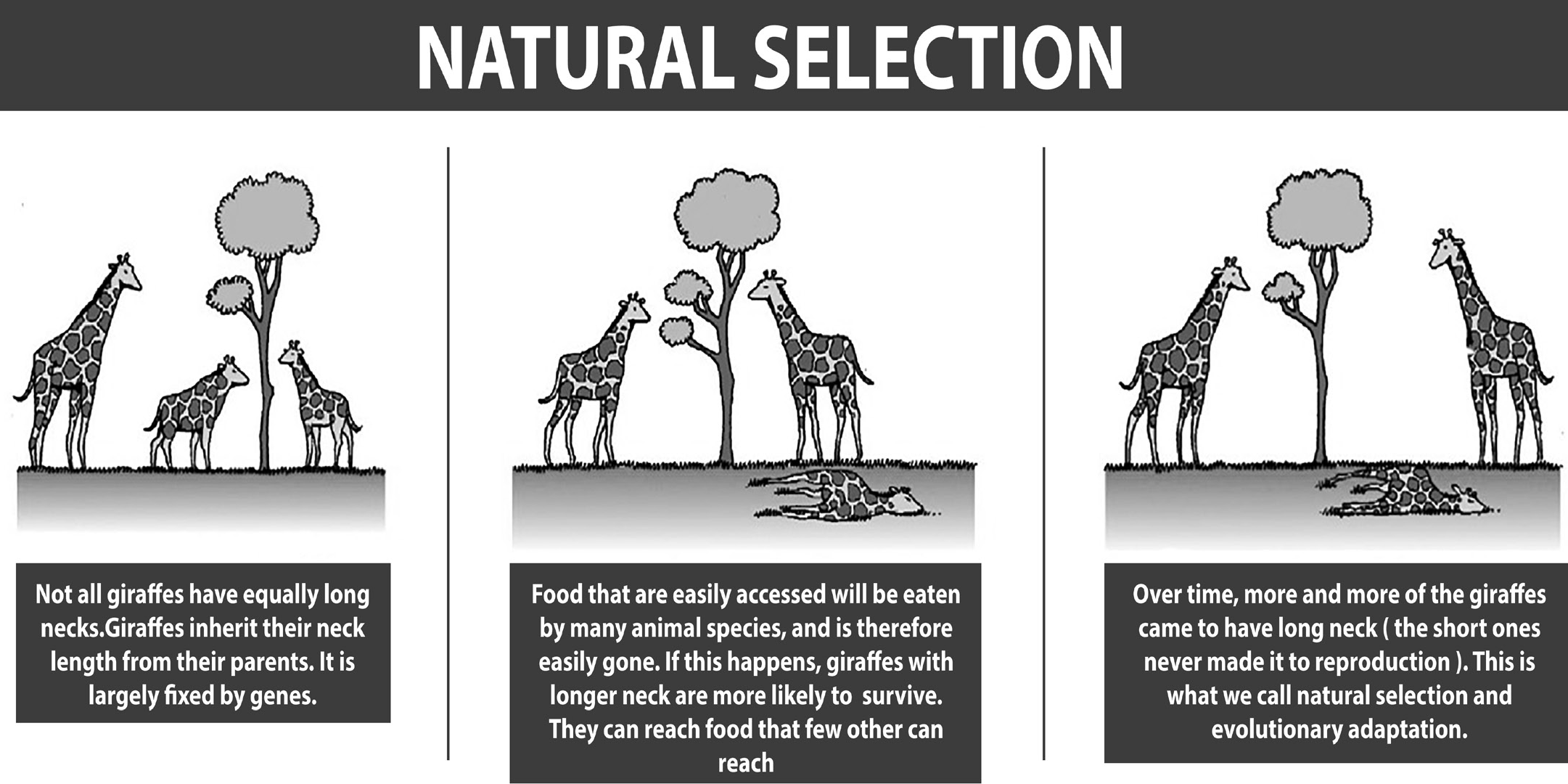
Natural selection is the process where individuals with certain traits are more likely to survive and reproduce because of their suitability to their environment. Proposed by Darwin and Alfred Russel Wallace in 1858, it leads to species evolving and adapting to their surroundings over time. This concept is
often referred to as “survival of the fittest.”
Evolution
• Evolution is the gradual change in the inherited traits of a population over generations. This change helps organisms become better suited to their environment.
• Evolution occurs through processes like natural selection and genetic drift, which act on genetic variation within populations.
• As environmental conditions change, certain traits become more common or rare, leading to a continuous change in characteristics over time.
• Evolution is responsible for the diversity of life seen at all levels, from species to individual organisms and even molecules.
Convergent Evolution
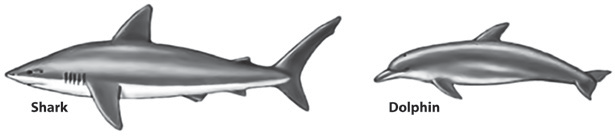
Convergent evolution occurs when unrelated organisms develop similar traits or behaviors to tackle similar challenges in their environment. These resemblances can include body shapes, colour patterns, or abilities. Different species face different pressures in their environment, like predators or available food, leading them to evolve similar solutions independently. For example, dolphins and sharks share streamlined bodies and fins, even though they’re not closely related, because they evolved these features separately to thrive in their aquatic
habitats.
Divergent Evolution
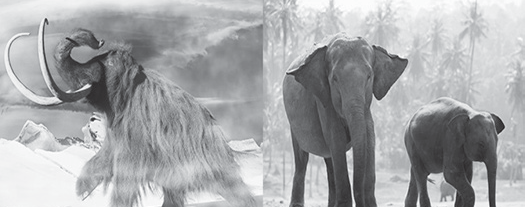
Divergent evolution occurs when two species with a common ancestor evolve different characteristics, making them distinct from each other. This happens because they encounter different environments, leading to different evolutionary paths. For example, elephants and woolly mammoths share a common ancestor but adapted differently to their environments. While elephants adapted to warmer climates, mammoths evolved features
like thick fur to survive in colder environments.
Extinction
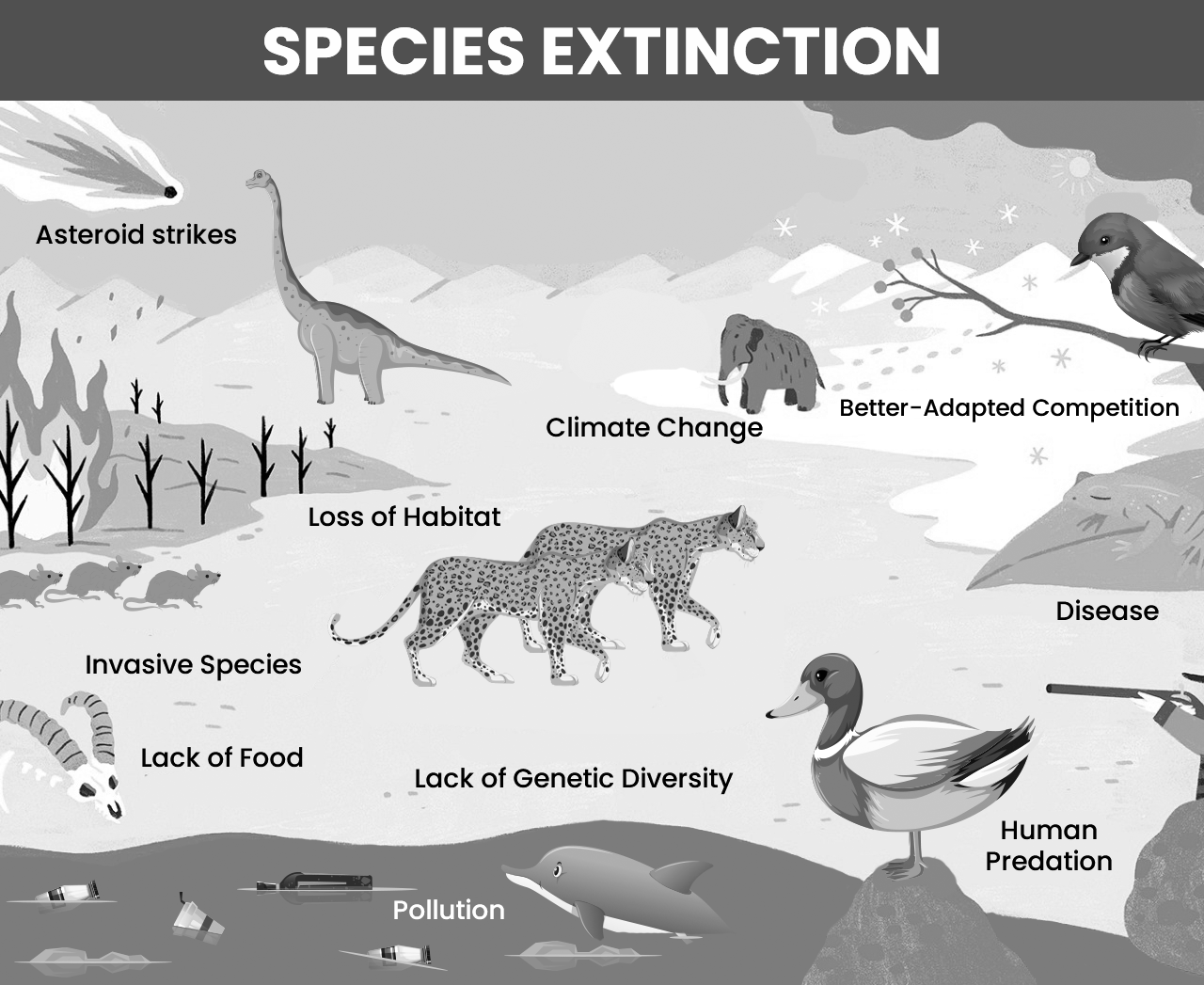
Extinction refers to the complete disappearance of a species or group of species. It occurs when the last individual of a species dies out, even though the ability to reproduce and recover may have been lost earlier. Extinction can be caused by various factors, including environmental changes such as habitat fragmentation and natural disasters, as well as human activities like overexploitation of species and habitat destruction. Currently, the world is experiencing the sixth mass extinction event, largely caused by human actions.
NOTE: Extinction can result from both deterministic processes, which involve cause-and-effect relationships like deforestation and climate change, as well as stochastic processes, which are based on chance and random events such as unpredictable weather changes, disease outbreaks, or the sudden increase of competitors, predators, or parasites.
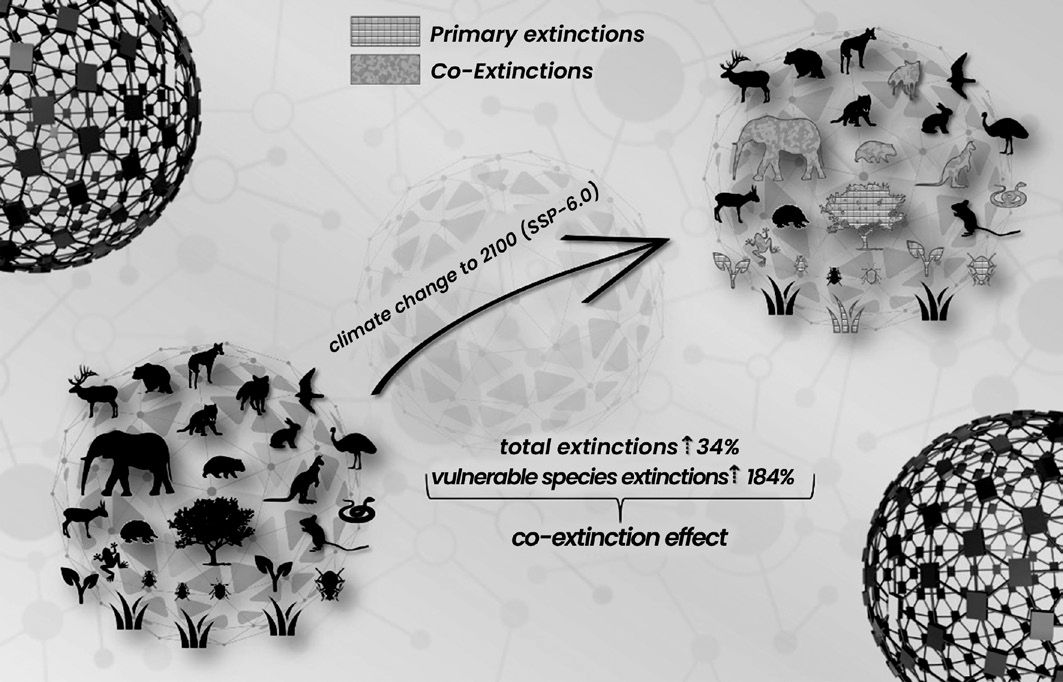
Do you Know? Co-extinctions Co-extinctions occur when the extinction of one species directly results in the extinction of another species that is dependent on it or closely linked to it. This phenomenon can lead to a loss of biodiversity and reduce overall species diversification. For example, the extinction of the passenger pigeon led to the extinction of its parasitic bird lice, demonstrating how the fate of interconnected species can be intertwined.
• Fossil records have revealed 5 unusually large extinctions, each involving the demise of vast numbers of species.
• Ordovician – Silurian Extinction
• 1st Mass Extinction
• 445-443 million years ago
• The event took place at a time when most of the life on Earth lived in its seas.
• Small organisms died out
• Devonian Extinction
• 2nd Mass Extinction
• 375 million years ago
• Many tropical marine species went extinct
• Wiped out about 75% of the world’s species.
• Permian – Triassic Extinction
• 3rd Mass Extinction
• 250 million years ago
• It is the largest mass extinction event in earth’s history - also known as the Great Dying.
• It caused the extinction of over 95% of all species.
• Triassic – Jurassic Extinction
• 4th Mass Extinction
• 200 million years ago
• The extinction of other vertebrates’ species on land allowed dinosaurs to flourish.
• It eliminated about 80% of Earth’s species, including some dinosaurs.
• Cretaceous - Tertiary Extinction
• 5th Mass Extinction
• 65 million years ago
• It wiped out dinosaur & some 50% of plants & animals
• Anthropocene/Holocene Extinction
• 6th mass extinction
• It is an ongoing extinction
• It is a result of human activities resulting into climate change.