Ecosystem and Its Components Services
ECOSYSTEM
What is an Ecosystem?
The term “ecosystem” was introduced by A.G. Tansley, an English botanist, in 1935. An ecosystem serves as the fundamental unit of ecology, embodying intricate interactions between its biotic (living) and abiotic (non- living) components.
Living organisms rely on their non-living environment for essential materials and energy, forming a self-sustaining unit known as an ecosystem.
Examples of ecosystems include ponds, lakes, deserts, grasslands, meadows, and forests. Every element within an ecosystem is interconnected and dependent on each other.
Damage or loss of one part of an ecosystem can have repercussions throughout the entire system.
Ecosystems vary in size, ranging from small entities like tree bark or tiny puddles of water to vast expanses like the entire planet Earth.
Note: Living beings (Humans, Animals, Plants, Decomposers) + physical environment —> (exchange of energy and recycling of nutrients) —> Ecosystem
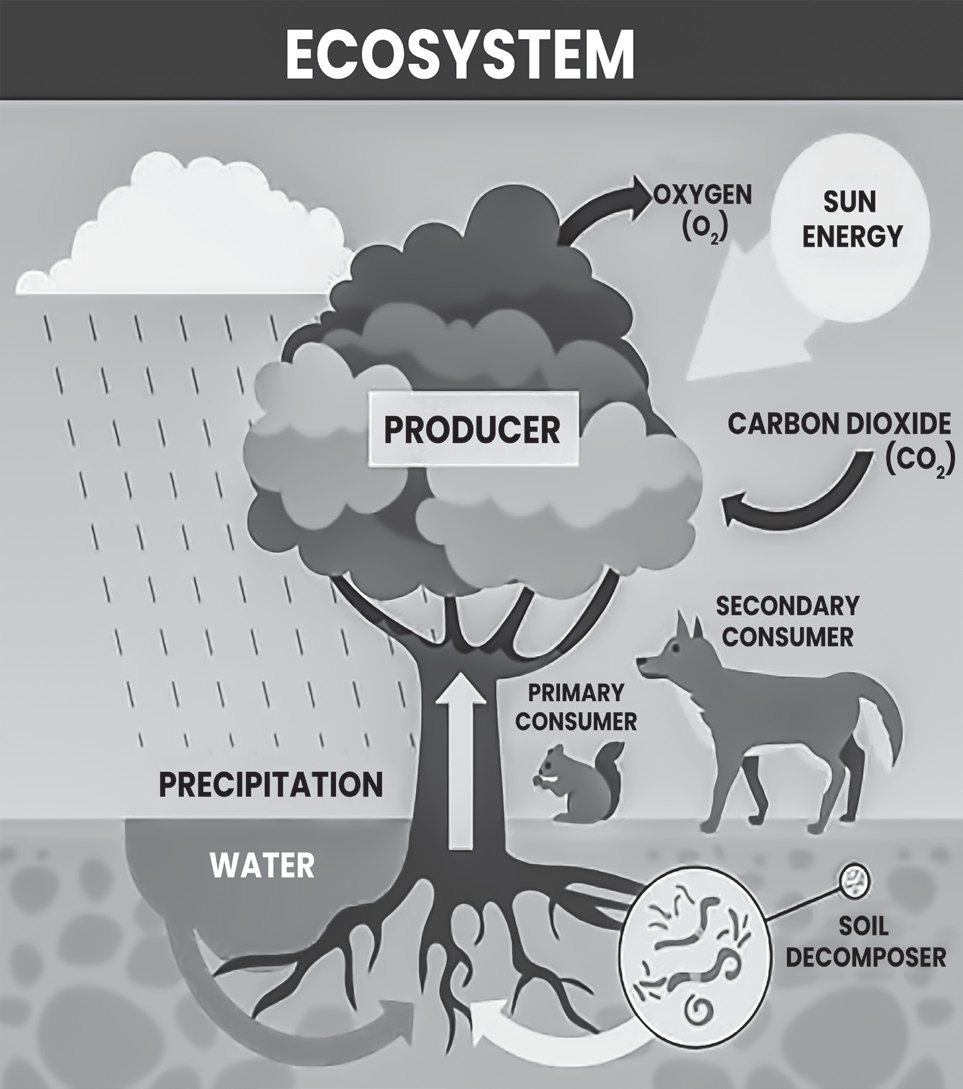
Ecosystem
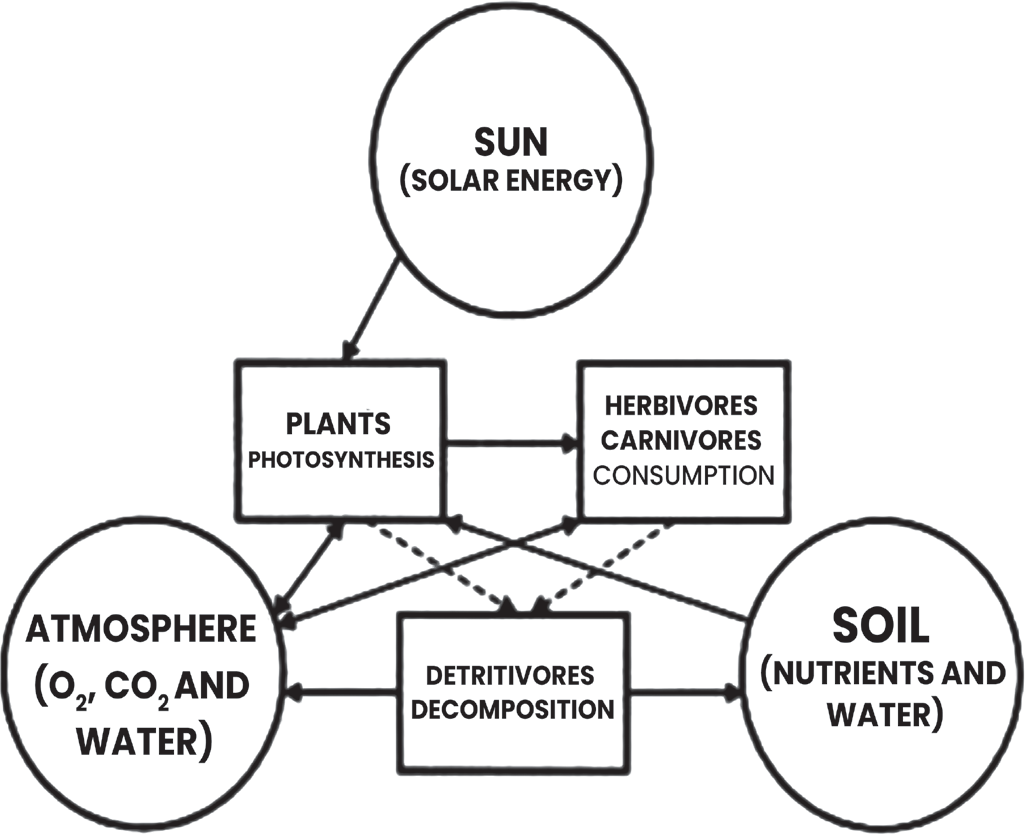
Relationship within an Ecosystem
Components of Ecosystem
Abiotic components
Abiotic components, which are non-living factors, can be categorised into climatic factors and edaphic factors:
Climatic Factors: These include elements such as rainfall, temperature, light intensity, wind speed, humidity, and substratum. Substratum refers to the underlying position
of distinct rock layers within stratified rock formations or specific layers of soil beneath the surface soil. It shares some properties with the subsoil layer.
Edaphic Factors: This category encompasses soil characteristics such as composition, pH levels, topography, and mineral content.
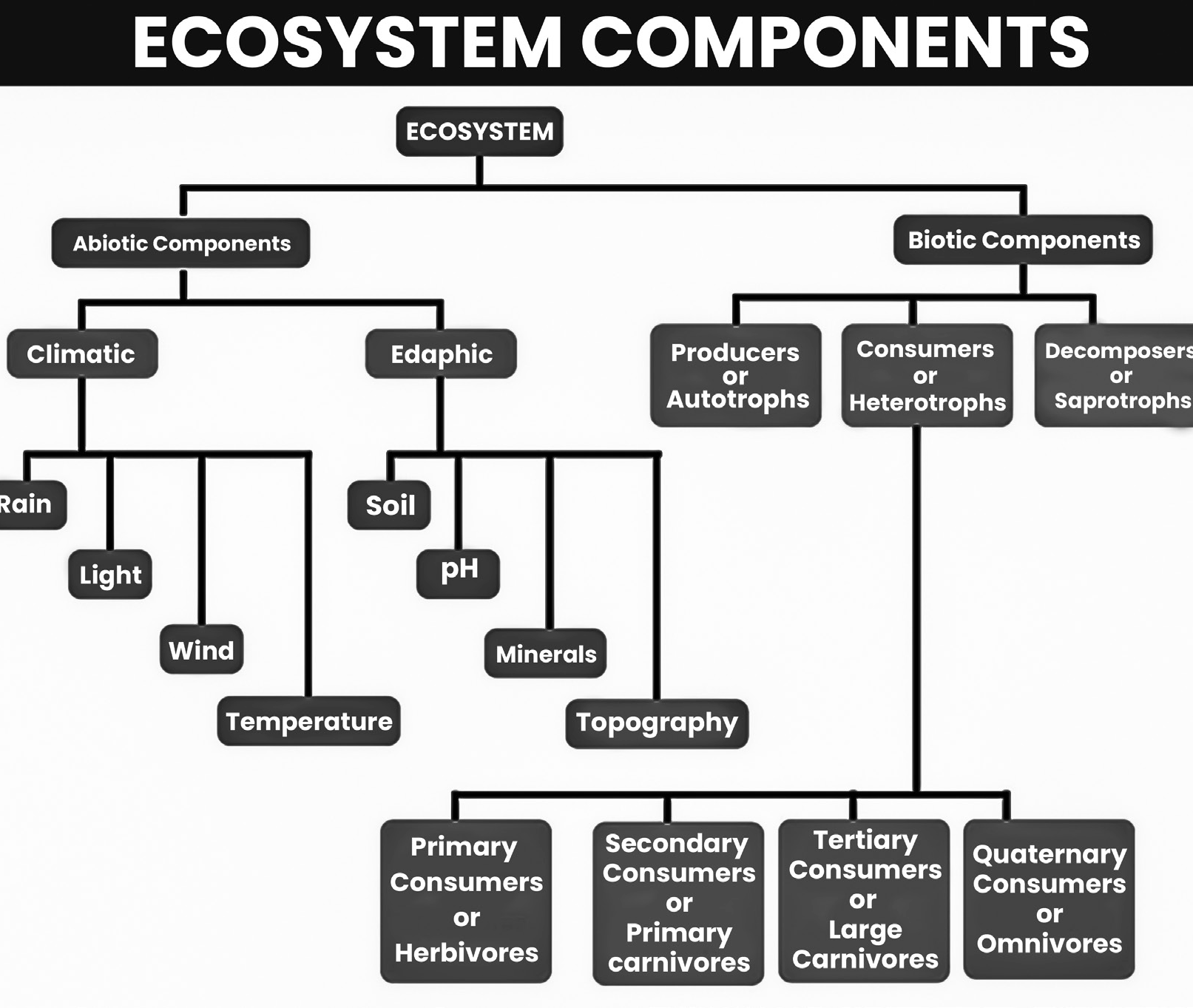
Biotic components (Living)
Biotic components, which are living organisms, include plants, animals and microorganisms:
Producers: Green plants contain chlorophyll, a pigment that enables them to capture solar energy and convert it into chemical energy in the form of carbohydrates through a process called photosynthesis. These green plants are referred to as autotrophs because they can produce their own food using simple inorganic compounds like water and carbon dioxide. The chemical energy generated through photosynthesis is used by the plants for their growth and survival, with the surplus being stored in their tissues for future use.
Consumers/Phagotrophs
Consumers, also known as phagotrophs, are organisms that lack chlorophyll and cannot produce their own food. Instead, they rely on consuming other organisms for nutrition. These consumers are referred to as heterotrophs.
There are four types of consumers:
• Primary Consumers or First Order Consumers or Herbivores: These animals feed directly on plants or producers. Examples include rabbits, deer, goats, and cattle.
• Secondary Consumers or Second Order Consumers or Primary Carnivores: These animals feed on herbivores. Examples include cats, foxes, and snakes.
• Tertiary Consumers or Third Order Consumers: These are large carnivores that prey on secondary consumers. Examples include wolves and large fishes.
• Quaternary Consumers or Fourth Order Consumers or Omnivores: These are the largest carnivores in the food chain, feeding on tertiary consumers, and are not preyed
upon by any other animal. Examples include lions and tigers.
Decomposers/Reducers/ Saprotrophs (sapros = rotten + trophos = feeder)
Decomposers, also known as reducers or saprotrophs, play a crucial role in ecosystems. Bacteria and fungi are examples of decomposers. They break down dead organic material from plants and animals for their food. Through extracellular digestion, they release simple inorganic and organic substances into the environment as by-products of their metabolism.
These substances are then reused by producers, such as plants, in a cyclic exchange of materials between the biotic community (living organisms) and the abiotic environment (non-living components) of the ecosystem. This process ensures the recycling of nutrients and the maintenance of ecosystem balance.
Detritivores
Detritivores play a vital role in ecosystems by feeding on detritus, which consists of small particles of dead plant and animal remains as well as fecal matter. Unlike decomposers, which break down organic material externally, detritivores undergo intracellular digestion, meaning they ingest and digest detritus internally.
Examples of detritivores include mites, springtails, flies, earthworms, millipedes, mollusks, and crabs.
Ecosystem Services & Goods
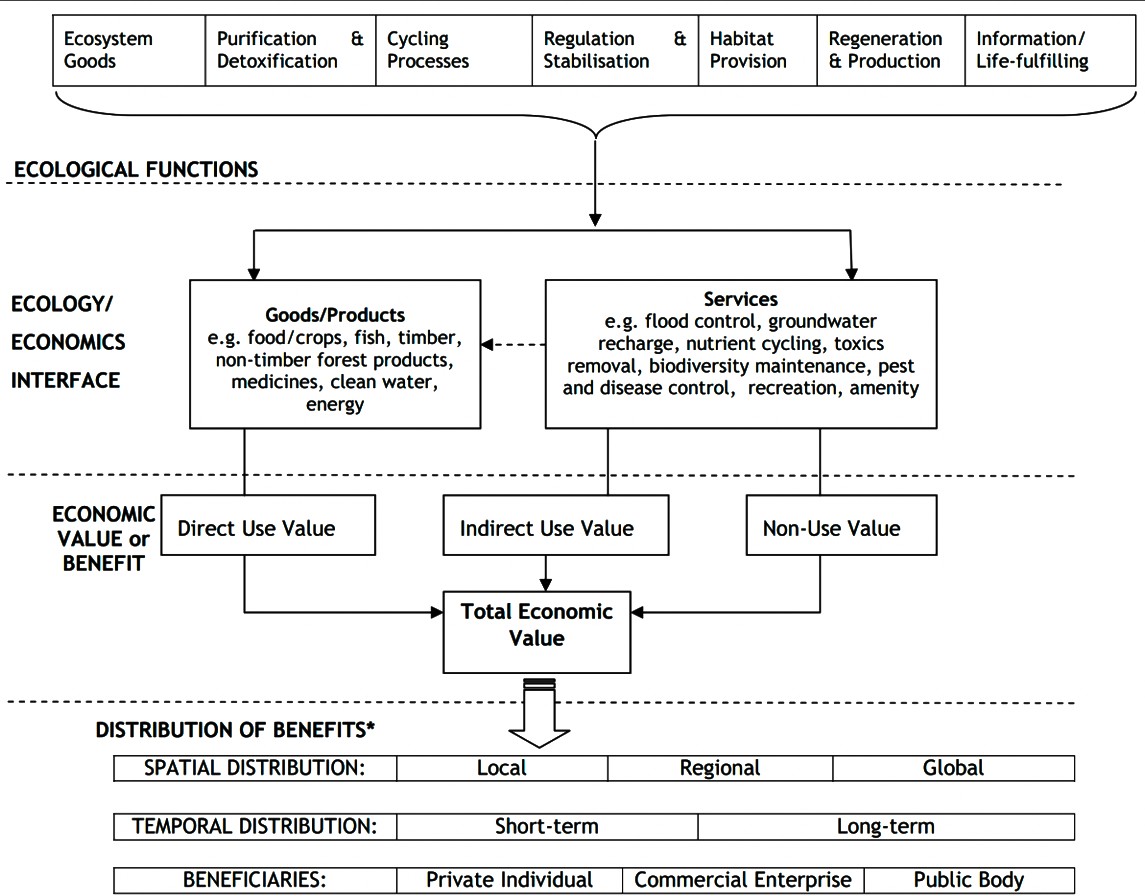
Ecosystem services refer to the benefits that humans and other living beings derive from ecosystems, directly or indirectly, which contribute to our survival and overall quality of life. These services are classified into four main categories according to the Millennium Ecosystem Assessment:
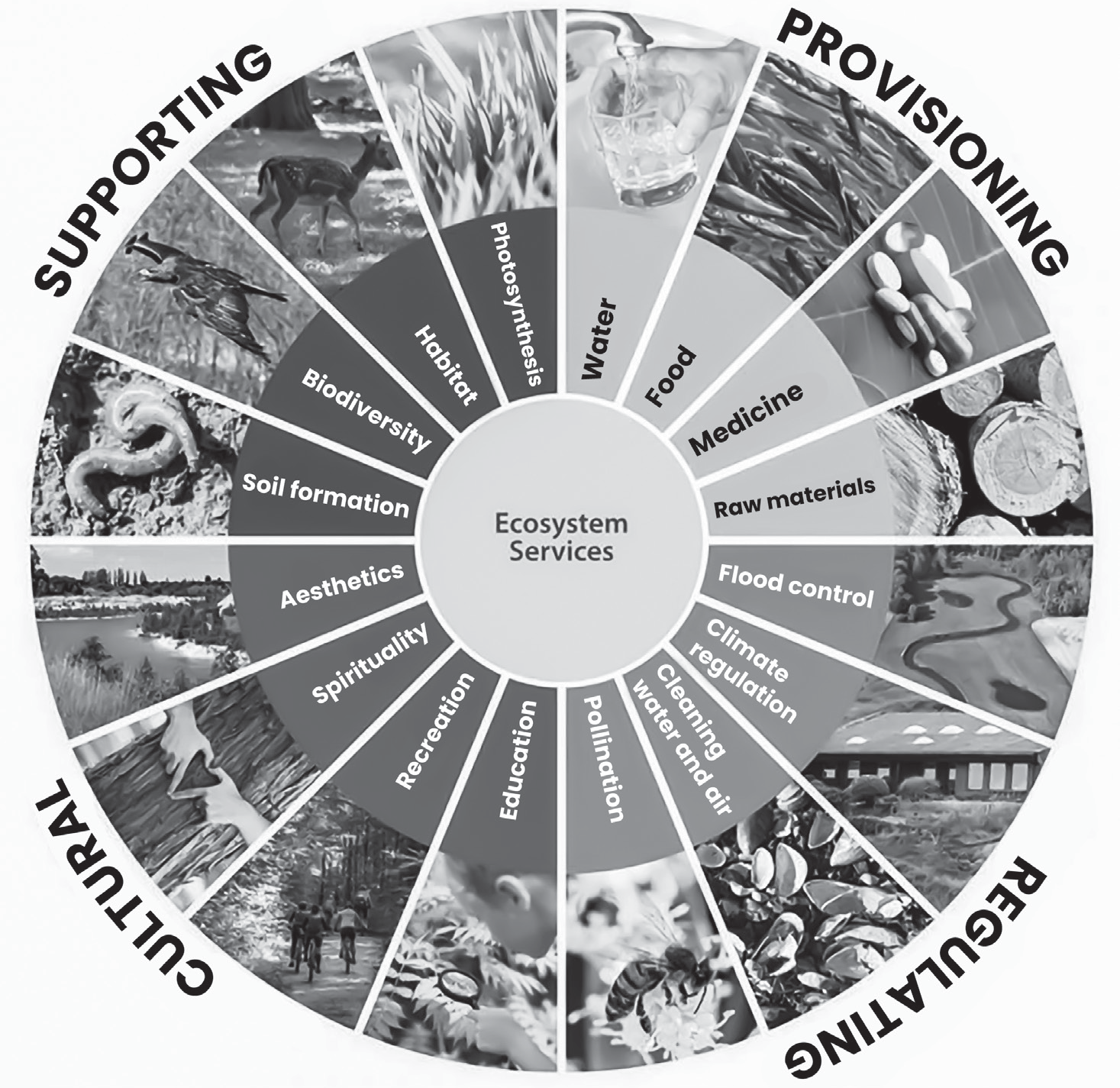
• Provisioning services: These include the tangible products obtained from ecosystems, such as food, fresh water, fuel, fiber, genetic resources, shelter, medicines, and various materials essential for human well-being.
• Regulating services: These services help to regulate and maintain environmental conditions necessary for life, such as air quality regulation, climate regulation, water and flood regulation, disease and pest control, pollination, and water purification.
• Cultural services: Cultural ecosystem services are non-
material benefits that ecosystems provide, contributing to spiritual enrichment, recreation, ecotourism, inspiration, education, and aesthetic enjoyment, enhancing human well-being and cultural identity.
• Supporting services: These are essential ecosystem processes that support all other ecosystem services, including soil formation, photosynthesis, nutrient and water cycling, biomass production, production of oxygen, water cycling, and the provision of habitat for various organisms.
Quantifying the Economic Value of Natural Ecosystems (Ecosystem valuation)
Ecosystem valuation involves assigning a monetary value to natural ecosystems and the services they provide. This economic process enables the evaluation of impacts and facilitates cost-benefit analysis of policies. Also, it contributes to the concept of Green GDP, which adjusts conventional Gross Domestic Product (GDP) by factoring in the environmental consequences of economic growth. Green GDP includes the monetization of biodiversity loss and accounts for costs associated with climate change, providing a more comprehensive measure of economic growth.
The Economics of Ecosystems and Biodiversity (TEEB)
• The Economics of Ecosystems and Biodiversity (TEEB) is a global initiative focused on highlighting the value of nature’s contributions to human well-being. It seeks to
establish global standards for natural capital accounting, which involves incorporating the environment and healthy ecosystem services into economic assessments.
• TEEB operates based on three guiding principles: recognising the value of ecosystems and biodiversity, demonstrating their economic value, and capturing this value through decision-making processes, such as implementing incentives like payments for ecosystem services.
• The initiative was launched in response to a call at the 2007 G8+5 Potsdam Meeting of Environment Ministers for a global analysis of the economic significance of biodiversity, the costs of biodiversity loss, and the benefits of effective conservation efforts. This study was led by Indian environmental economist Pavan Sukhdev.
Payment for Ecosystem Services (PES)
• Payment for Ecosystem Services (PES) is a concept that involves compensating individuals or communities for the services they provide by conserving or managing natural ecosystems. In the context of the Himalayan states in India, which have significant forest cover, PES becomes particularly relevant. These states, with forests covering around 41.5% of their geographical area, serve as important carbon sinks, storing an estimated 5.4 billion tons of forest carbon. By preserving these forests, they contribute to vital ecosystem services and mitigate climate change impacts.
• However, this conservation often comes at the expense
of economic development. Therefore, these states have been advocating for a “green bonus,” which entails receiving payments for ecosystem services in recognition of the economic sacrifices made and conservation costs incurred by them
Do You Know?
Tyler Prize for Environmental Achievement
The Tyler Prize for Environmental Achievement is an esteemed annual award that recognises outstanding contributions in environmental science, environmental health, and energy. Recipients of the Tyler Prize, known as Tyler Laureates, are honored with a $200,000 cash prize and a prestigious medallion. The administration of the prize is overseen by the University of Southern California. In 2020, the Tyler Prize for Environmental Achievement was bestowed upon Pavan Sukhdev, particularly in recognition of his pioneering work on the first report of The Economics of Ecosystems and Biodiversity (TEEB), which was published in 2008.