Electronic Waste
ELECTRONIC WASTE
What is E-Waste
Electronic waste (E-waste) refers to discarded and end-of- life electronic products, including computers, equipment, home appliances, audio and video products, and their peripherals.
Source and Health Effects
E-waste is not considered hazardous if it is safely stored, recycled using scientific methods, or transported within the formal sector, either in parts or as a whole.
However, e-waste can become hazardous if it is recycled using primitive methods.
| PARTICULARS | SOURCE | HEALTH EFFECTS |
| Lead | Lead is found in electronic devices like computer monitors and printed circuit boards, where it’s used in glass panels, gaskets, and solder. | When released into the environment, lead can accumulate and harm plants, animals, and microorganisms, causing both short-term and long- term health issues. |
| Cadmium | Cadmium is found in components like SMD chip resistors, infra-red detectors, and semiconductor chips, as well as in older cathode ray tubes. | When people are exposed to cadmium, it can accumulate in their bodies, particularly in the kidneys, and toxic compounds of cadmium can cause harm. |
| Mercury | Mercury is widely used in electrical and electronic equipment, including thermostats, sensors, switches, and batteries, among other things. It’s also used in flat panel displays, which are becoming more common. | Exposure to mercury can harm organs like the brain and kidneys, and it’s especially dangerous for developing fetuses. When mercury gets into water, it can transform into methylated mercury, which accumulates in living organisms, especially fish, and can be harmful when consumed. |
| Hexavalent Chromium/ Chromium VI 29 | Hexavalent chromium, also known as chromium VI, is commonly used to protect steel from corrosion and to harden steel housings. It’s also found in PVC, which is used in cabling and computer housings. When PVC is burned, it releases dioxins. | While some computer parts are now made from ABS plastics, which are less harmful, chromium VI can still be damaging to DNA and is highly toxic in the environment. |
| Barium | Barium is used in computers to shield users from radiation, typically in the front panel of a CRT (cathode ray tube). | Short-term exposure to barium has been linked to brain swelling. |
| Beryllium | Beryllium is often present in components like motherboards and finger clips, where it’s used as a copper-beryllium alloy to strengthen connectors and plugs without compromising electrical conductivity. | Exposure to beryllium can lead to lung cancer and a skin disease characterised by slow wound healing and wart-like bumps. |
| Toners | Toners are commonly found in plastic printer cartridges that contain black and colour toners. | Inhaling toner particles is the main way people are exposed to them, and breathing in toner dust can irritate the respiratory tract. Carbon black, which is often used in toners, has been classified as a possible carcinogen, meaning it could potentially cause cancer in humans. |
| Phosphor and additives | Phosphor is a chemical compound used to coat the inside of cathode ray tube (CRT) faceplates. | It contains heavy metals like cadmium and other rare earth metals such as zinc and vanadium as additives. These metals and compounds are highly toxic. |
E-Waste in India
According to the United Nations' Global E-Waste Monitor
2020, India now ranks as the world's third-largest e-waste generator, following only China and the USA. In 2021-
2022, India generated an estimated 1.601 million tonnes of e-waste, yet only approximately 0.52 million tonnes were collected and processed.
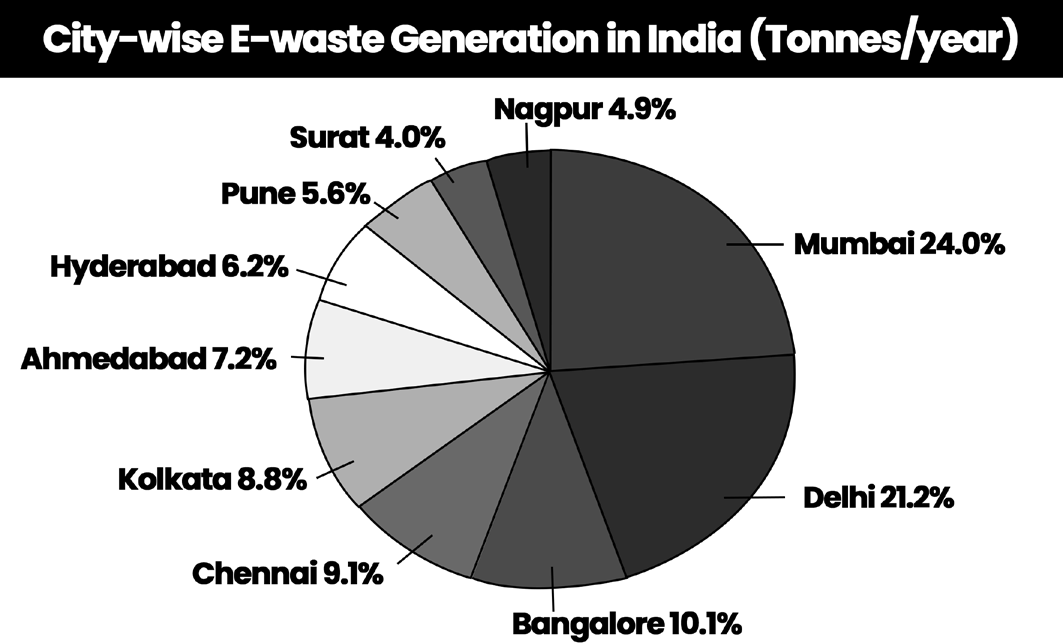
Other notable e-waste generating cities include Bangalore, Chennai, Kolkata, Ahmadabad, Hyderabad, Pune, Surat, and Nagpur.
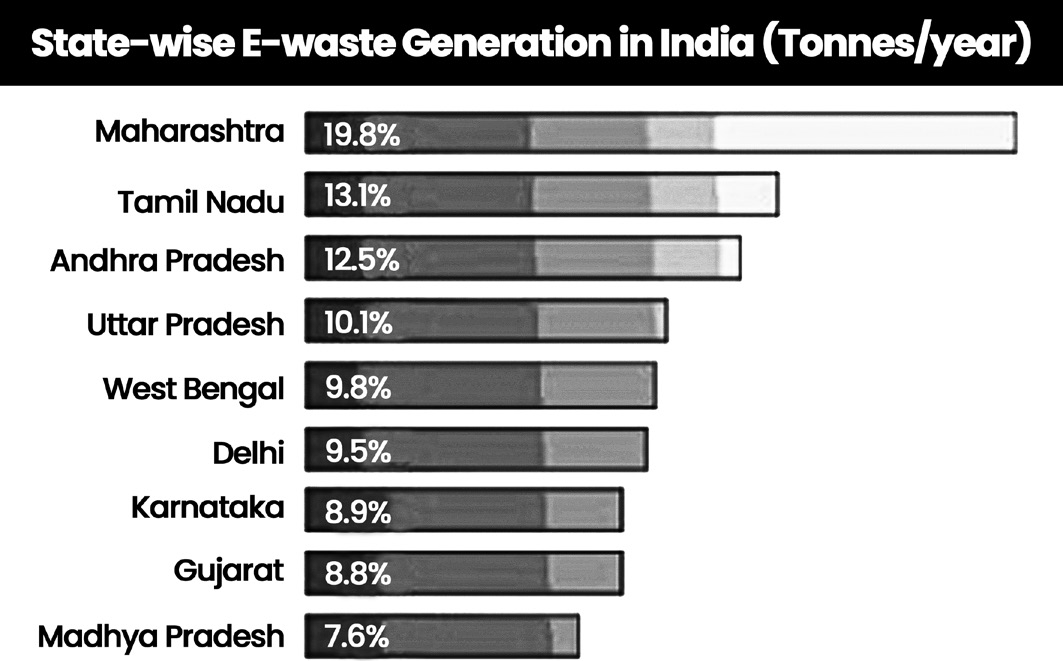
Among the top e-waste generating states, Maharashtra leads, followed by Tamil Nadu, Andhra Pradesh, Uttar Pradesh, Delhi, Gujarat, Karnataka, and West Bengal.
Developed countries export over half of their e-waste to developing nations like China, India, and Pakistan, where metals such as copper, iron, silicon, nickel, and gold are recovered during recycling.
However, unlike developed countries with specialised recycling facilities, recycling in developing nations often involves manual labour, exposing workers to hazardous substances in e-waste.
In India, there are 312 authorised e-waste recyclers, capable of treating 800 kilo tonnes annually. Despite this, the informal sector handles the majority of e-waste (over 90%) (Underutilisation of formal recycling capacity).
Heavy Metal Toxicity & Methods of Their Prevention
Heavy metal toxicity poses significant risks to human health and the environment. These toxic metals, including lead, mercury, arsenic, and chromium, are dispersed into the environment through various industrial processes such as metal smelting, burning of organic wastes, automobile emissions, and coal-based power generation.
Once released, heavy metals can travel long distances through the air and eventually settle on land and water bodies, often carried by rain.
One significant challenge with heavy metals is that they cannot be broken down or destroyed by biological processes. Instead, they persist in the environment, accumulating over time and posing risks to living organisms.
Lead
Lead is a widespread environmental pollutant found in various everyday materials like paints, cosmetics, batteries, glass, and certain toys.
While leaded gasoline was phased out globally by 2011, industrial processes and battery scrap remain significant sources of lead pollution.
India banned leaded petrol in 2000, but exposure to lead still poses serious health risks.
Lead exposure is linked to neurodegenerative diseases and central nervous system dysfunctions.
Recent studies suggest a possible connection between lead exposure and Alzheimer’s disease, the leading cause of dementia. Maternal exposure to lead during pregnancy can also increase the risk of Alzheimer’s disease in offspring later in life.
Lead exposure is particularly harmful to young children and babies, causing irreversible behavioural disturbances, neurological damage, and developmental problems. Additionally, lead is a known carcinogen, increasing the risk of lung and kidney cancer.
Lead Poisoning in Children
Lead poisoning in children is a significant global issue, highlighted in a report by UNICEF and Pure Earth titled “The Toxic Truth: Children’s exposure to lead pollution undermines a generation of potential.”
Findings from the report reveal that approximately one in three children worldwide, up to 800 million in total, have blood lead levels at or above 5 micrograms per deciliter (µg/dL), necessitating immediate action.
Alarmingly, nearly half of these affected children reside in South Asia.
Lead is identified as a potent neurotoxin that causes irreversible damage to children’s developing brains, particularly those under the age of five, resulting in lifelong neurological, cognitive, and physical impairments.
The informal recycling of lead-acid batteries emerges as a primary contributor to lead poisoning in children, especially in low- and middle-income countries, with approximately 50% of lead-acid batteries being unsafely recycled in the informal sector.
Aside from battery recycling, other sources of lead exposure include lead in water from leaded pipes, industrial activities such as mining and battery recycling, lead-based paint and pigments, leaded gasoline (though
its prevalence has declined in recent years), lead solder in food cans, and lead present in spices, cosmetics, Ayurvedic medicines, toys, and other consumer products.
Mercury
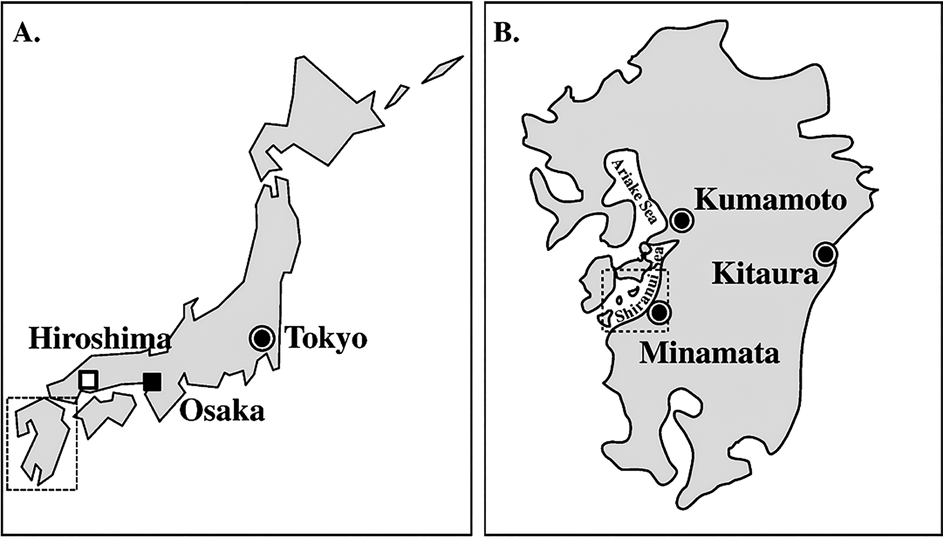
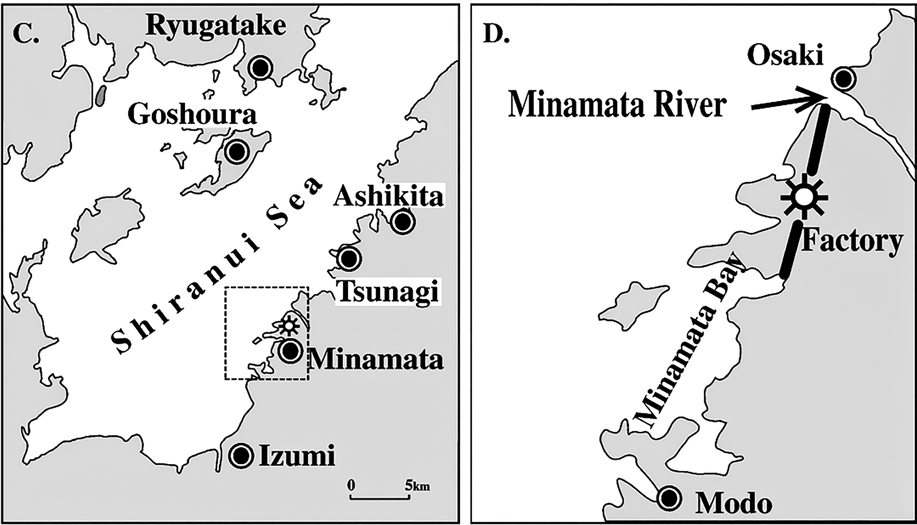
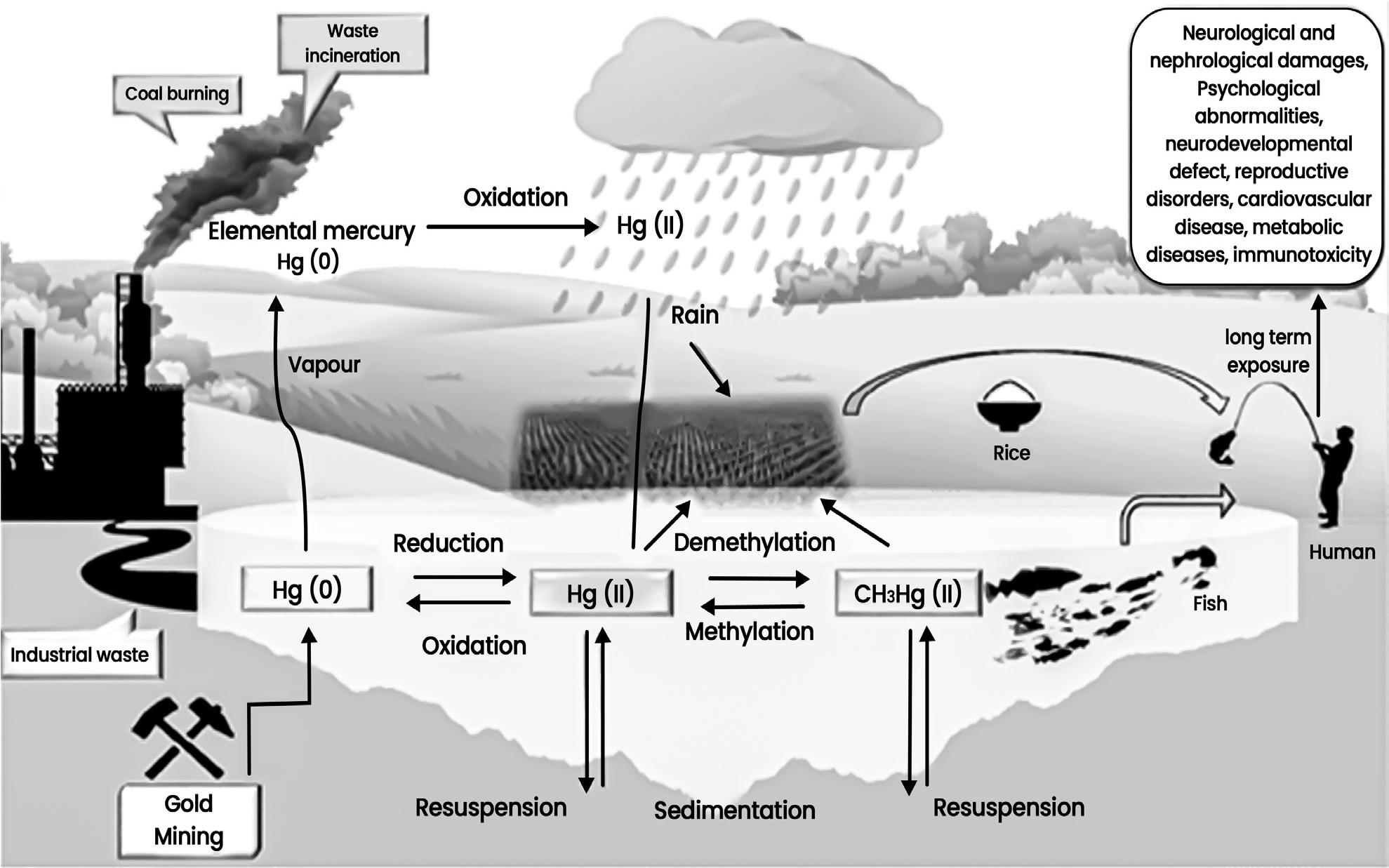
Mercury, known for its toxicity, gained infamy through the Minamata disease outbreak in Japan during the 1960s. This tragic event stemmed from the consumption of fish contaminated with methyl mercury from Minamata Bay, resulting in widespread poisoning.
Mercury poses a severe threat as it kills cells in the body and damages organs, impairing their normal function. Inhalation of mercury vapours is particularly hazardous compared to ingestion, leading to chronic exposure that manifests in mouth and skin lesions and neurological issues.
To mitigate the risks associated with mercury exposure,
traditional mercury thermometers are being phased out and replaced with safer, mercury-free alternatives. This shift towards mercury-free technology represents a crucial step in reducing the health hazards posed by mercury contamination.
More about Minamata Disease
Minamata Disease is a severe and often fatal condition resulting from exposure to elevated levels of methylmercury.
Those afflicted by Minamata disease experienced symptoms such as numbness and loss of sensation in their extremities, making walking or running difficult.
Additionally, they faced challenges with vision, hearing, and swallowing. Sadly, a significant number of individuals affected by Minamata disease succumbed to the illness.
Mercury Pollution
Mercury is a naturally occurring element, symbolised as Hg, and is one of several toxic heavy metals.
It is typically found in a liquid state, known as elemental mercury, with a silvery-white appearance.
When released into the environment, it forms compact droplets due to its high surface tension.
These droplets can evapourate quickly, posing an inhalation hazard indoors and entering the atmosphere outdoors.
In aquatic environments, microorganisms can transform mercury into methylmercury, a highly toxic compound that accumulates and magnifies in organisms through the food chain.
Methylmercury is chiefly responsible for mercury pollution in fish, shellfish, and the animals that consume them, posing risks to human health and the environment.
Mercury can enter the environment through both natural processes and human activities:
Natural sources include volcanic eruptions and the presence of mercury salts in the Earth’s crust, such as mercury sulphide. It can also be found in fossil fuels, metal ores and various minerals.
Man-made sources of mercury pollution include the mining and refining of metals like copper, gold, lead, and zinc, which release mercury as a by-product. Burning coal also releases mercury into the environment. Additionally, mercury is emitted during the manufacturing of cement and is used as catalysts or feedstocks in chemical manufacturing and various industrial processes. It is also
present in many consumer and industrial products.
Harmful Effects of Mercury
Mercury exposure can have severe and lasting effects on health:
It can kill cells and damage organs, leading to impaired functioning.
Inhaling mercury vapours is particularly dangerous, posing more risk than ingestion.
Chronic exposure can result in mouth and skin lesions, as well as neurological problems.
Forms like methylmercury and metallic mercury vapours are especially harmful as they can easily reach the brain.
High levels of exposure to metallic, inorganic, or organic mercury can permanently damage the brain and kidneys. It can also harm a developing fetus, even months after the mother’s exposure.
Due to these risks, mercury thermometers are being replaced by safer, mercury-free alternatives.
Other Heavy Metals
Other heavy metals like zinc, chromium, antimony, and tin can also pose risks:
They can enter food from inexpensive cooking utensils.
Preserved foods stored in tin cans may also lead to tin contamination.
Zinc, in particular, is known to be a skin irritant and can affect the pulmonary system.
E-Waste to Increase by 2030
According to a report by the United Nations University (UNU), a significant amount of electronic waste globally is not being properly collected and recycled.
The report predicts a 38% increase in global e-waste between 2020 and 2030.
In 2019 alone, there was 53.6 million tonnes of e-waste, marking a nearly 21% increase in just five years.
Asia generated the largest volume of e-waste in 2019, followed by the Americas and Europe.
The majority of e-waste in 2019 consisted of small equipment, large equipment, and temperature exchange equipment.
Less than 18% of the e-waste generated in 2019 was collected and recycled.
E-waste contains valuable materials like gold, silver, copper, platinum, and others, worth an estimated $57 billion, but much of it is dumped or burned rather than being properly collected for treatment and reuse.
E-Waste Management Rules, 2016
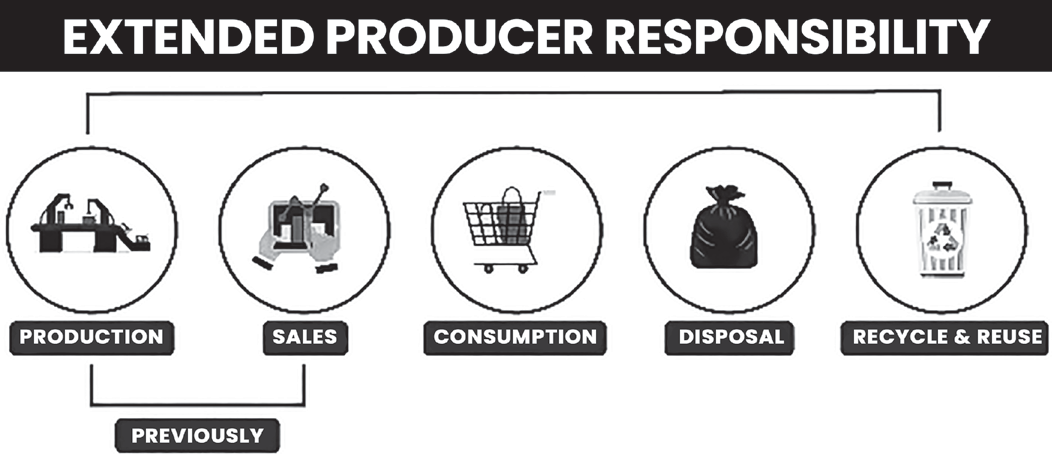
The E-Waste Management Rules of 2016 replaced the previous regulations from 2011. These rules introduced Extended Producer Responsibility (EPR), placing the responsibility on producers to manage the final stages of their product’s life in an eco-friendly manner. This entails creating norms in collaboration with state pollution control boards.
Salient Features
The E-Waste Management Rules of 2016 introduced several significant features aimed at enhancing the management of electronic waste.
Additional stakeholders: The rules introduced new stakeholders such as manufacturers, dealers, refurbishers, and Producer Responsibility Organisations (PROs) to strengthen Extended Producer Responsibility (EPR).
Producer Responsibility Organisation (PRO): PROs are professional Organisations Authorised or financed by producers to collect and channel e-waste from end-of-life products for environmentally sound management.
E-Waste Exchange and Deposit Refund Scheme: These mechanisms provide additional channels for implementing EPR, facilitating efficient e-waste channelisation and incentivising consumers to return end-of-life electronic equipment.
Inclusion of CFLs and mercury-containing lamps: The rules expanded their scope to include these products, ensuring their proper management and disposal.
Expanded product coverage: Over 21 products were included under the rules, along with their components, consumables, parts, or spares, extending the responsibility of manufacturers for take-back and disposal.
Strengthened Extended Producer Responsibility (EPR):
Manufacturers are mandated to take back sold products and
e-waste generated during manufacturing, channelising them for recycling or disposal.
Monitoring and enforcement: The Central Pollution Control Board conducts random sampling to monitor compliance with the rules, with producers bearing the cost. Provisions for financial penalties for violations and liability for
environmental damages were also introduced.
Amendment in 2019
The 2019 amendment to the E-Waste Management Rules aimed to formalise the e-waste recycling sector and enhance Extended Producer Responsibility (EPR).
Revised collection targets: Phase-wise collection targets for e-waste have been set, starting from 10% of waste generation indicated in the EPR Plan during 2017- 18, increasing by 10% annually until 2023. From 2023 onwards, the target is set at 70% of waste generation indicated in the EPR Plan.
Accounting for past collections: The quantity of e-waste collected by producers from October 2016 to September 2017 will be considered in the revised EPR targets until March 2018.
Separate targets for new producers: New producers, whose sales operation duration is less than the average lives of their products, have separate collection targets based on guidelines issued by the Central Pollution Control Board (CPCB).
Registration of Producer Responsibility Organisations (PROs): PROs need to apply to the CPCB for registration to undertake activities prescribed in the rules (enhancing accountability in e-waste management).
RoHS compliance: Under the Reduction of Hazardous Substances (RoHS) provisions, the government bears the cost for sampling and testing. If a product fails to comply with RoHS provisions, the testing cost is borne by the producers.
These amendments aim to streamline e-waste management, increase recycling rates, and ensure compliance with environmental regulations by imposing responsibilities on producers and strengthening regulatory oversight.
Efforts of NITI Aayog to reduce e-waste
NITI Aayog launched three Reports on "Enhancing Circular Economy in End-of-Life Vehicles (ELVs), Waste Tyres and E-waste and Lithium-ion Batteries in India" on 22 January, 2026.
These reports address urgent environmental and strategic imperatives linked to the Viksit Bharat 2047 vision.
Recommendations:
• End-of-Life Vehicles (ELVs): Emphasizes strengthening the EPR framework, leveraging carbon credits, and scaling formal scrapping facilities, such as Automated Testing Stations (ATS) and Registered Vehicle Scrapping Facilities (RVSFs).
• Waste Tyres: Highlights the need for revised EPR norms, setting strict standards for recovered Carbon Black and Tyre Pyrolysis Oil, and promoting retreading to extend lifespan.
• E-waste & Lithium-ion Batteries: Urges the expansion of EPR to cover critical minerals, upgrading recycling infrastructure, setting purity standards, and formalizing the workforce to ensure resource security and reduce import dependency