Whatsapp 88106-52225 For Details
Get Free IAS Booklet
Get Free IAS Booklet
Global Warming and Climate Change
Climate change refers to alterations in the Earth’s climate system, primarily resulting from human activities that modify the composition of the atmosphere.
These changes are observed over significant periods, typically spanning decades or more, and are characterized by shifts in temperature, precipitation patterns, snow cover, and wind patterns.
Human-induced climate change is primarily driven by activities such as the burning of fossil fuels (coal, oil, natural gas), which release greenhouse gases into the atmosphere, leading to the trapping of heat and subsequent warming of the planet.
Additionally, deforestation plays a significant role in climate change as forests act as carbon sinks, absorbing carbon dioxide from the atmosphere. When forests are cleared or burned, this stored carbon is released back into the atmosphere, contributing to the greenhouse effect and global warming.
Greenhouse Effect and Global Warming
Greenhouse Effect
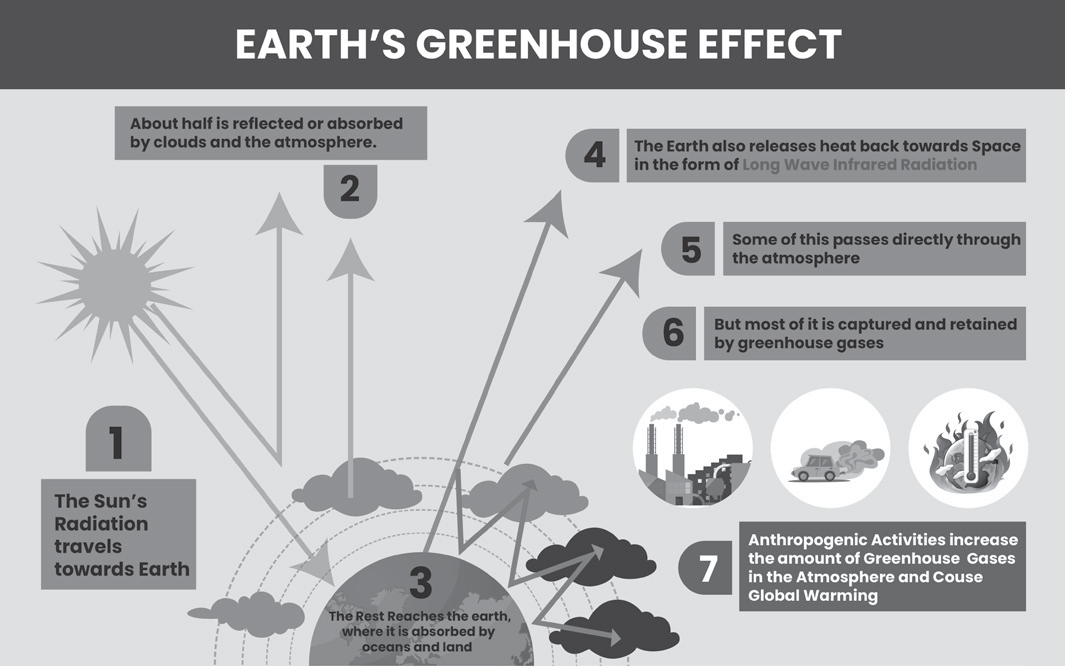
The greenhouse effect, in the context of Earth’s atmosphere, refers to the process by which certain gases trap heat radiated from the Earth’s surface, leading to an increase in temperature. While the term originates from the warming effect observed in actual greenhouses, the atmospheric greenhouse effect operates on a much larger scale and involves different mechanisms.
Sunlight, consisting of various wavelengths including visible light, ultraviolet (UV), and near-infrared, reaches the Earth’s surface.
Some of the incoming solar radiation is absorbed by the Earth’s surface, warming it. The warmed surface then emits infrared radiation (heat) back towards space.
Certain gases in the Earth’s atmosphere, such as carbon dioxide (CO2), methane (CH4), water vapor (H2O), and others, absorb and re-emit some of the infrared radiation emitted by the Earth’s surface. These gases act like a blanket, trapping heat in the lower atmosphere and preventing it from escaping directly into space.
The greenhouse gases in the atmosphere reradiate some of the absorbed heat back towards the Earth’s surface, contributing to the overall warming of the planet. This process helps maintain the Earth’s surface temperature within a range that supports life as we know it.
Importance of Natural Greenhouse Effect
The natural greenhouse effect helps regulate the Earth’s temperature by trapping heat in the atmosphere. Without this effect, the average global temperature would be much lower.
Water vapor and small particles of water in the atmosphere play a crucial role in the natural greenhouse effect, contributing to over 95% of the total greenhouse warming. These components absorb and re-emit infrared radiation, effectively trapping heat and maintaining warmth.
The natural greenhouse effect helps maintain the average global temperature at approximately 15 C. This temperature range is conducive to supporting a diverse range of ecosystems and life forms on Earth.
Without the natural greenhouse effect, average global temperatures might plummet to around -17 C. Such extreme cold would make the planet inhospitable for most forms of life, severely limiting biodiversity and ecological functioning.
The natural greenhouse effect has been operating for millions of years, contributing to the stability of Earth’s climate over geological time scales. This stability has allowed ecosystems to evolve and adapt to changing environmental conditions.
Greenhouse Gases (GHGs) and Global Warming
Greenhouse gases (GHGs) play a crucial role in the Earth’s climate system, but their increasing concentrations due to
human activities are causing global warming and associated
climate changes.
Greenhouse gases, such as carbon dioxide (CO2), methane (CH4), nitrous oxide (N2O), water vapor, and chlorofluorocarbons (CFCs), have the ability to absorb
and re-emit infrared radiation emitted by the Earth’s surface. This process traps heat in the atmosphere, leading to the greenhouse effect. Without greenhouse gases, Earth’s surface would be much colder, making it uninhabitable.
Different greenhouse gases have different abilities to trap heat and contribute to global warming. To compare their impacts, scientists use a metric called Global Warming Potential (GWP), which measures the relative effectiveness of each gas in causing warming over a specific time period compared to CO2.
The accumulation of greenhouse gases in the atmosphere has resulted in an increase in global average temperatures. If emissions continue unchecked, scientists predict that global temperatures could rise significantly by the turn of the century, with potential consequences such as more frequent and intense heatwaves, changes in precipitation patterns, and disruptions to ecosystems.
Global warming caused by greenhouse gases is driving a wide range of impacts on the environment, including melting polar ice caps and glaciers, rising sea levels, altered weather patterns, shifts in ecosystems and habitats, and increased frequency of extreme weather events. These changes pose significant risks to human societies, economies, and natural systems.
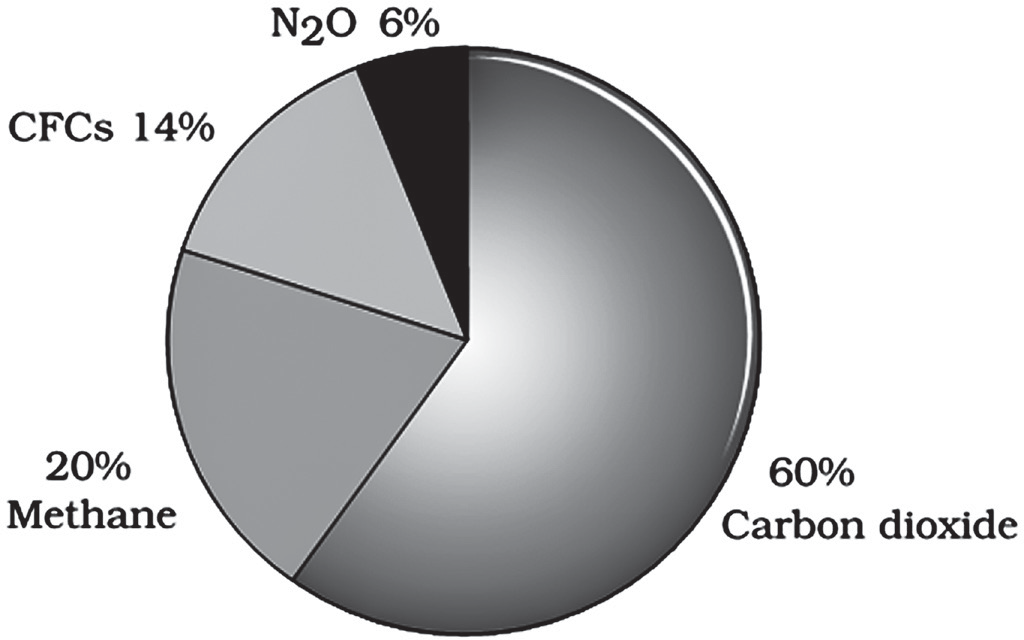
| Greenhouse Gas | Sources and Causes |
| Carbondioxide (CO2) | Refrigeration, solvents, insulation foams, aero propellants, industrial and commercial uses |
| Chlorofluorocarbons (CFCs) | Refrigeration, solvents, insulation foams, aero propellants, industrial and commercial uses |
| Methane (CH4) | Growing paddy, excreta of cattle and other livestock, termites, burning of fossil fuel, wood, landfills, wetlands, fertilizer factories. |
| Nitrous Oxide (N2O) | Burning of fossil fuels, fertilizers; burning of wood and crop residue. |
Global Warming Potential (GWP) & Lifetime of Green House Gases
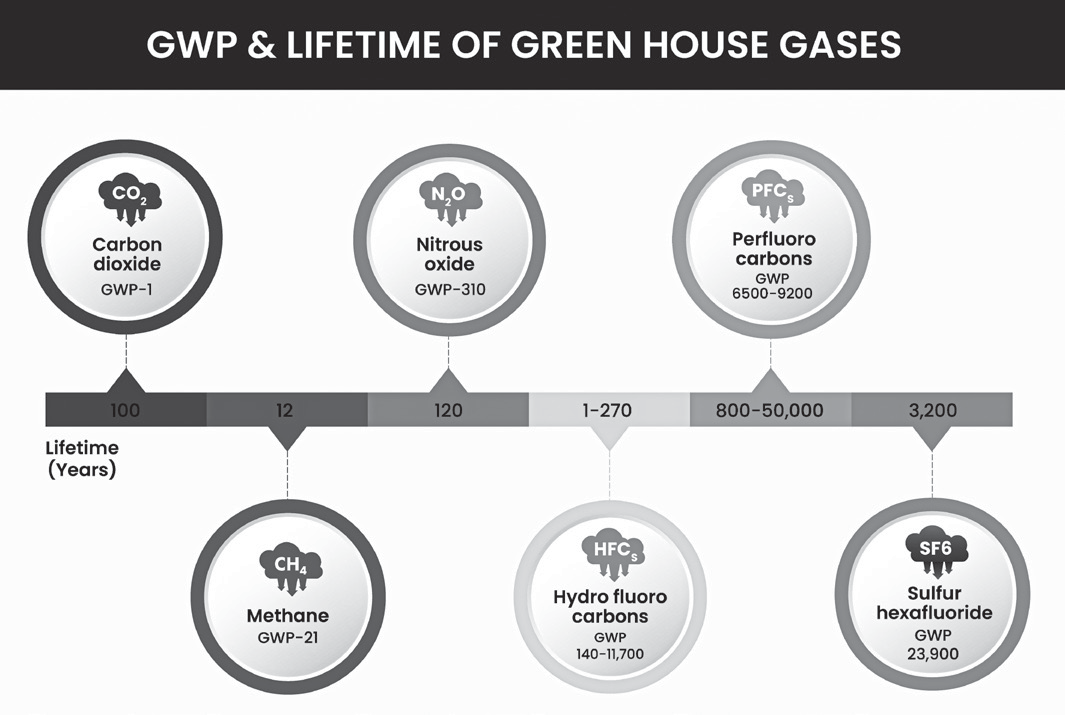
Global warming potential (GWP) is a measure used to compare the effectiveness of different greenhouse gases in trapping heat in the Earth’s atmosphere over a specific time period, typically 100 years, relative to carbon dioxide (CO2). It quantifies the potential of a greenhouse gas to contribute to global warming compared to CO2, which is often used as a reference gas with a GWP of 1.
GWP values are important for policymakers, scientists, and environmentalists to understand the relative contributions of different greenhouse gases to climate change and to develop strategies for mitigating emissions.
By considering both the potency and the lifetime of greenhouse gases in the atmosphere, GWP provides a standardized way to compare their impacts on global warming.
Carbon Dioxide
Carbon dioxide (CO2) plays a crucial role in the Earth’s atmosphere and climate system. Here’s what the provided information means:
Transparent to Solar Radiation, Opaque to Terrestrial Radiation: This means that carbon dioxide allows sunlight to pass through the atmosphere and reach the Earth’s surface. However, it absorbs and traps some of the heat energy (infrared radiation) emitted by the Earth, preventing it from escaping back into space.
CO2 is a major greenhouse gas, meaning it contributes significantly to the greenhouse effect. The greenhouse effect is essential for maintaining the Earth’s temperature within a habitable range.
CO is more concentrated near the Earth’s surface because it is emitted from various sources, including human activities like burning fossil fuels and deforestation. Its density causes it to accumulate closer to the surface.
Measuring Concentration: The measurements of CO2 concentration mentioned indicate the amount of carbon
dioxide present in the Earth’s atmosphere. Crossing the 415-ppm threshold is significant because it suggests a rapid increase in CO2 levels, which can have significant implications for climate change
The data from NOAA’s Mauna Loa Observatory in Hawaii provides crucial information about atmospheric CO2 levels. Monitoring stations like this one help scientists track changes in CO2 concentrations over time and understand the drivers behind these changes.
How much Carbon is there on the Earth?
The US National Academy of Sciences has conducted research to estimate the total amount of carbon present on Earth. This likely includes carbon stored in various reservoirs such as the atmosphere, oceans, terrestrial vegetation, soil, and rocks.
The analysis likely compares the amount of carbon dioxide (CO2) released by human activities, such as burning fossil fuels and deforestation, with the emissions from volcanic activity. It suggests that human-generated carbon emissions far exceed those from volcanic sources. While volcanoes do release carbon dioxide, human activities contribute significantly more to the total carbon emissions.
Humanity’s annual carbon emissions from activities like burning fossil fuels and clearing forests are much greater than all carbon emissions from volcanic activity combined.
| 1.85 billion Gigatons (Gt) of total carbon on Earth | |
| Below the Surface | Above the Surface |
| 1.845 billion Gt of the total carbon on Earth is below the surface. Of this, 315 million Gt of carbon is in continental andoceanic lithospheres. | 43,500 Gt of the total carbon on Earth is above the surface. 37,000 Gt in the deep ocean (85.1 %) 3,000 Gt in marine sediments (6.9%) 2,000Gtinterrestrial biosphere (4.6%) 900 GT in the surface ocean (2%) 590 Gt in the atmosphere (1.4%) |
Ozone
Ozone is acknowledged as an important greenhouse gas, although it exists in small concentrations at the Earth’s surface compared to other greenhouse gases like carbon dioxide and methane.
Most ozone is found in the stratosphere, a layer of the Earth’s atmosphere above the troposphere. In the stratosphere, ozone plays a crucial role in absorbing harmful ultraviolet (UV) radiation from the Sun, thereby protecting life on Earth from its harmful effects.
Ozone is also present at ground level, particularly in the troposphere, which is the lowest layer of the Earth’s atmosphere.
Ground-level ozone is not emitted directly into the atmosphere but forms through complex chemical reactions involving pollutants such as carbon monoxide, nitrogen dioxide, and volatile organic compounds (VOCs). These pollutants react with oxygen molecules (O2) in the presence of sunlight to produce ozone (O3).
Water Vapour
Water vapor is a highly variable component of the Earth’s atmosphere, constituting between 0.02% and 4% of the total volume of the atmosphere. The concentration of water vapor varies depending on factors such as temperature and humidity, with higher concentrations typically found in humid tropical climates and lower concentrations in cold, dry climates.
Water vapor concentration decreases with altitude in the atmosphere. Approximately 90% of the atmospheric moisture content is found within the first 6 kilometers (about 3.7 miles) above the Earth’s surface.
Water vapor concentration also varies with latitude, with higher concentrations typically found near the equator and decreasing towards the poles.
Similar to carbon dioxide, water vapor plays a significant role in the Earth’s greenhouse effect. It absorbs both long-wave terrestrial radiation (infrared or heat emitted by the Earth’s surface) and a portion of incoming short- wave solar radiation (visible and ultraviolet radiation). This absorption of radiation contributes to the warming of the Earth’s surface and the maintenance of Earth’s temperature within a habitable range for life
Methane
Methane is identified as one of the most significant greenhouse gases after carbon dioxide in terms of its contribution to global warming and climate change.
Methane is described as an odourless, colourless, and tasteless gas that is lighter than air. These properties make it difficult to detect without specialized equipment.
Methane’s global warming potential is highlighted by its GWP value, which is 84 times higher than that of carbon dioxide over a 20-year period. This means that methane is much more effective at trapping heat in the atmosphere compared to carbon dioxide, making it a potent greenhouse gas.
Despite its potent warming potential, methane has a shorter atmospheric lifetime compared to carbon dioxide. While carbon dioxide can remain in the atmosphere for hundreds to thousands of years, methane typically has a shorter lifespan before it breaks down or is removed from the atmosphere. This shorter lifespan influences its overall impact on the climate system.
Methane emissions from Global Food Systems
The global food system is identified as a major contributor to greenhouse gas emissions, accounting for one-third of the world’s total emissions. This includes emissions from
various sources such as rotting food, animal waste, and biomass, which release methane, a potent greenhouse gas with greater global warming potential than carbon dioxide.
Approximately one-third of the global food production is wasted, contributing to methane emissions as the wasted food items decompose.
Food production requires significant amounts of water, particularly groundwater, and energy, including coal electricity.
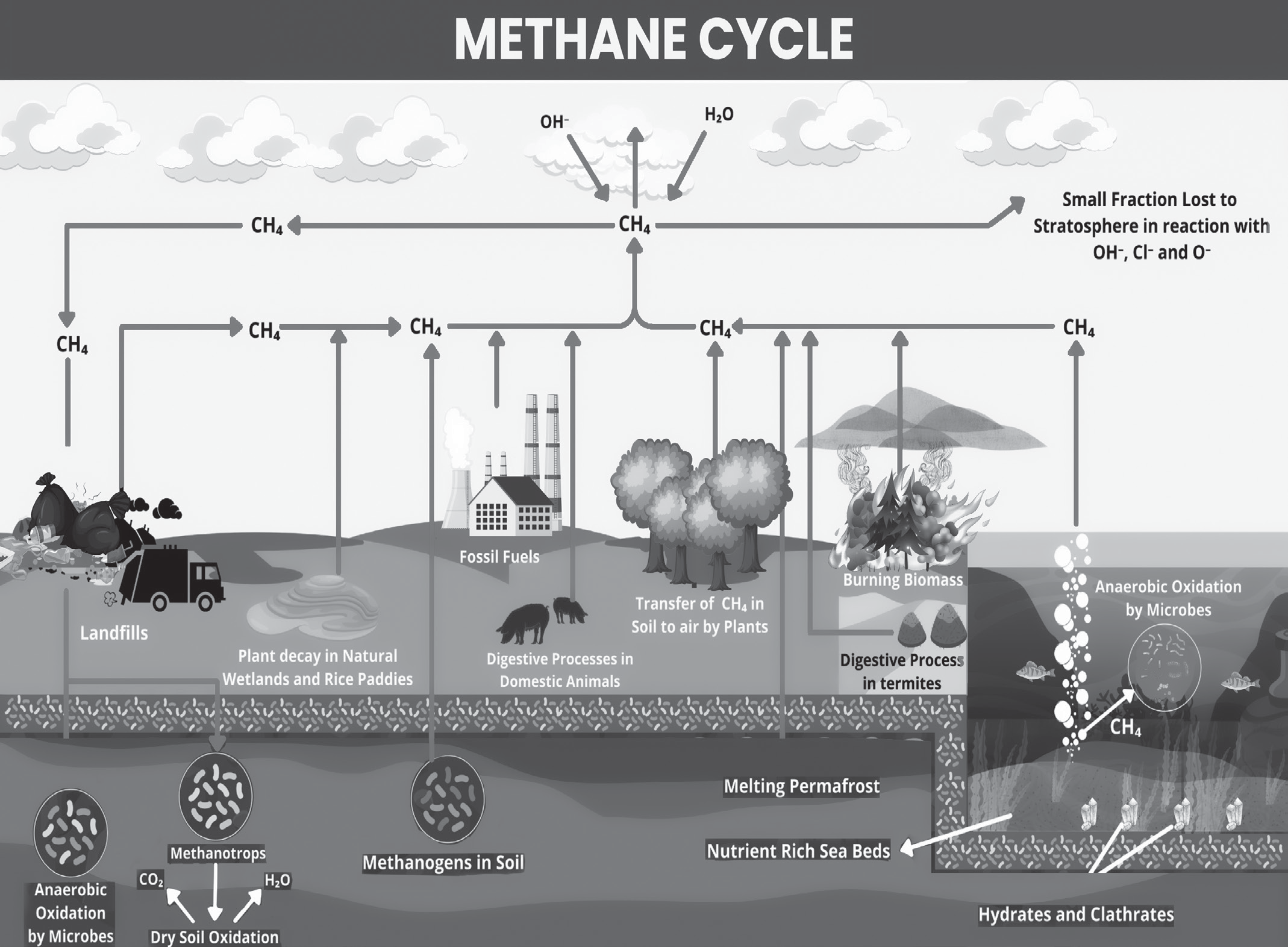
Methane is described as a compound gaseous cycle, consisting of one carbon atom and four hydrogen atoms. It is the main constituent of natural gas and is characterized by its odorless, colorless, and tasteless properties.
Methane burns in the air with a blue flame, producing carbon dioxide and water in the presence of oxygen. While methane is generally stable, mixtures of methane and air within certain concentrations can be explosive.
Nitrous Oxide (N2O)
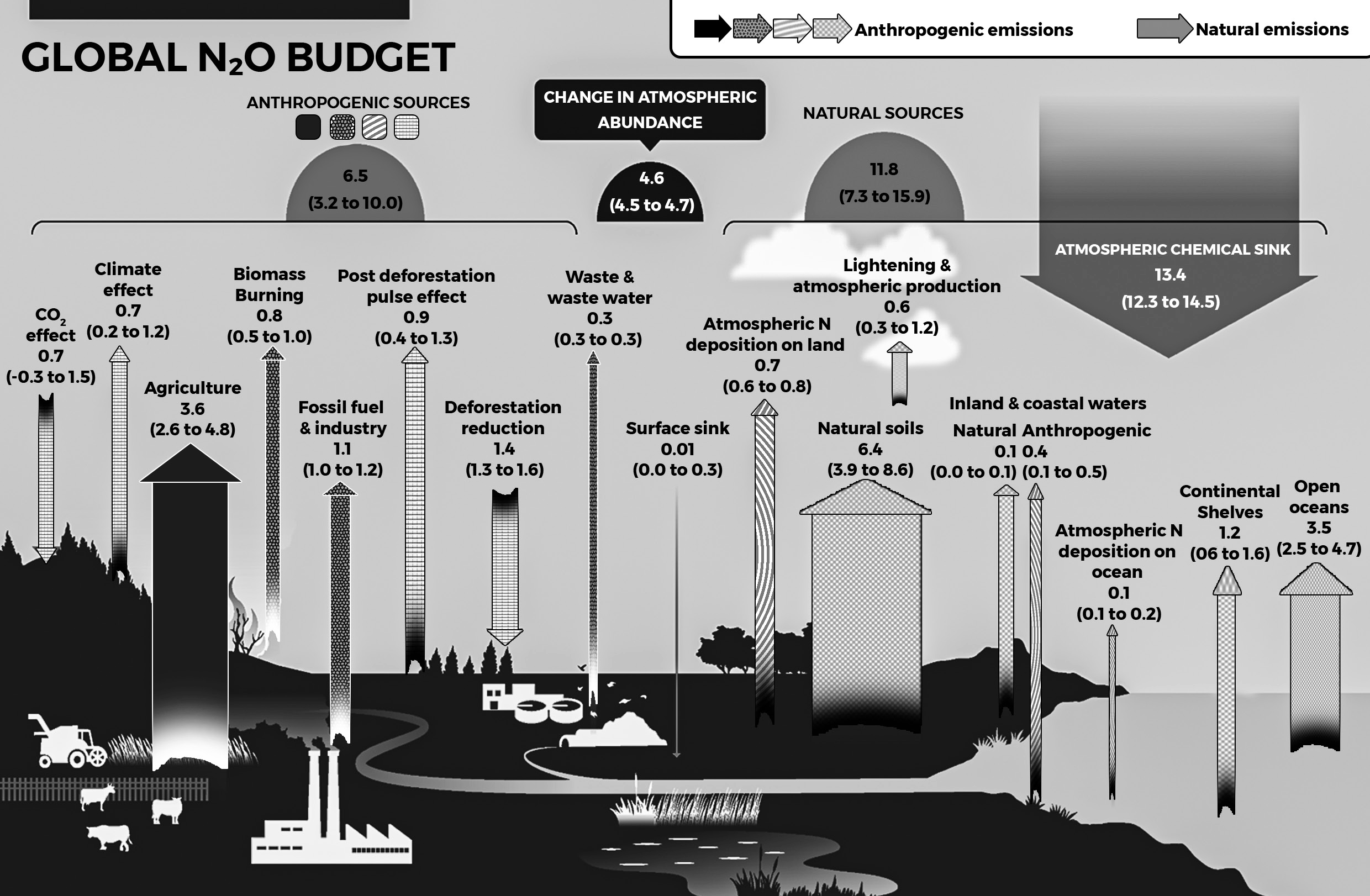
Nitrous oxide is identified as a potent greenhouse gas, being 300 times more potent than carbon dioxide (CO2). Unlike nitrogen oxide (NO) and nitrogen dioxide (NO2), which are considered global cooling gases, N2O contributes to the greenhouse effect.
Human emissions of N2O have increased significantly, with a 30% rise observed between 1980 and 2016. This increase is attributed to various human activities, particularly in the agricultural sector due to the use of nitrogen-based fertilizers.
N2O has a relatively long atmospheric lifetime of up to 125 years, similar to that of CO2.
Despite its lower concentration compared to CO2 and methane, N2O is noted as the third-highest greenhouse gas in the atmosphere responsible for global warming.
Human activities, especially in emerging countries like India, China, and Brazil, contribute significantly to N2O emissions. In India, agriculture accounts for over 70% of all nitrous oxide emissions, with a major portion attributed to nitrogen-based fertilizers, particularly urea.
N2O is seen as the remaining threat to the ozone layer, given its long-lived nature in the atmosphere.
Black Carbon (Soot)
Black carbon contributes to global warming by reducing albedo, which refers to the ability of surfaces like snow and ice to reflect sunlight. When deposited on snow and ice, black carbon reduces their reflectivity, causing them to absorb more sunlight and accelerate melting.
Black carbon is noted for its strong absorption of sunlight, making it a potent contributor to warming the atmosphere. Its ability to absorb sunlight exceeds that of carbon dioxide.
Black carbon is recognized as the second-largest contributor to climate change, following carbon dioxide (CO2). Its role in absorbing sunlight and warming the atmosphere makes it a significant factor in global warming and climate disruption.
Unlike CO2, which can persist in the atmosphere for years, black carbon has a relatively short-lived presence. It remains in the atmosphere for only days to weeks before descending as rain or snow.
Fluorinated Gases Chlorofluorocarbons (CFCs):
Banned due to ozone depletion under the Montreal Protocol.
Potent greenhouse gases, even more so than CO2.
Hydrofluorocarbons (HFCs)
Developed as a CFC replacement for refrigerants, propellants, solvents, and fire retardants.
Unfortunately, HFCs are also powerful greenhouse gases with long atmospheric lifetimes, meaning they stay in the air for a long time.
Perfluorocarbons (PFCs) (Made up of carbon and fluorine)
Introduced as an alternative to CFCs in semiconductor manufacturing.
Byproducts of aluminium production and semiconductor manufacturing.
Powerful greenhouse gas with long atmospheric lifetime.
Sulphur Hexafluoride (SF6)
Greenhouse gas used in magnesium processing, semiconductor manufacturing, leak detection, and electrical equipment.
Long atmospheric lifetime.
Carbon Monoxide (CO)
Weak direct greenhouse gas due to its low density and short lifespan in the atmosphere.
Indirectly contributes to warming by increasing methane
(CH4) and tropospheric ozone (O3), both greenhouse gases.
Eventually converted to carbon dioxide (CO2) through atmospheric processes