International Environmental Conferences
INTERNATIONAL ENVIRONMENTAL CONFERENCES, CONVENTIONS, NGOs AND LAWs
United Nations Conference on the Human Environment (1972)
The United Nations Conference on the Human Environment, also known as the Stockholm Conference, took place in Stockholm, Sweden, in 1972.
It was the beginning of international environmental law.
During the conference, the Stockholm Declaration and Action Plan for the Human Environment were adopted.
Stockholm Declaration
The Stockholm Declaration, also known as The Declaration on the Human Environment, was established during the Stockholm Conference.
It outlined principles for global environmental issues, natural resource management, pollution prevention, and the link between the environment and development.
Some key principles of the Stockholm Declaration include safeguarding natural resources, addressing poverty to protect the environment, condemning apartheid and colonialism, and advocating for the destruction of weapons of mass destruction.
The Stockholm Conference encouraged countries to establish environmental ministries and agencies, leading to the creation of departments like the Department of Environment in India in 1980, which later evolved into the Ministry of Environment and Forests (MoEF) in 1985.
This conference also laid the groundwork for the formation of the UN Environment Programme (UNEP).
United Nations Environment Programme (UNEP) or UN Environment
The United Nations Environment Programme (UNEP), also known as UN Environment, is a part of the United Nations.
Its main job is to organize environmental efforts within the UN.
It helps developing countries adopt environmentally friendly policies and practices.
UNEP is in charge of dealing with environmental issues across all UN agencies.
However, certain specific environmental concerns, like climate change or desertification, are managed by other specialized UN agencies such as the UNFCCC and the UNCCD.
UNEP deals with a broad range of issues related to the atmosphere, marine and land ecosystems, environmental governance, and promoting sustainable economic practices.
Agencies Established/Monitored/Supported/Implemented by UNEP
UN Environment collaborates with organizations like the World Meteorological Organization to create the Intergovernmental Panel on Climate Change (IPCC), which studies climate change.
It’s one of the Implementing Agencies for the Global Environment Facility (GEF) and the Multilateral Fund for the Implementation of the Montreal Protocol, helping fund environmental projects.
UN Environment is part of the United Nations Sustainable Development Group (UNSDG), working towards achieving the 17 Sustainable Development Goals.
It has been involved in successful agreements like the 1987 Montreal Protocol and the 2012 Minamata Convention, which aims to reduce mercury pollution.
UN Environment hosts the secretariats of several environmental agreements like the Convention on Biological Diversity (CBD) and the Minamata Convention on Mercury (MCM), Convention on Migratory Species (CMS) and Convention on International Trade in Endangered Species of Wild Fauna and Flora (CITES).
Additionally, it supports initiatives like the solar loan program, which helped finance solar power systems in India.
Global Environment Facility (GEF)
The Global Environment Facility (GEF) was created just before the 1992 Rio Earth Summit.
It’s a financial organization that operates independently.
Areas of Focus
GEF gives grants for projects dealing with biodiversity, sustainable forest management (REDD+), climate change, land degradation, protecting the ozone layer, dealing with persistent organic pollutants, and more.
It brings together countries, organizations, civil society, NGOs, and businesses to address major environmental issues while also supporting national sustainable development efforts.
GEF also has a Small Grants Programme, offering financial support to community-based projects.
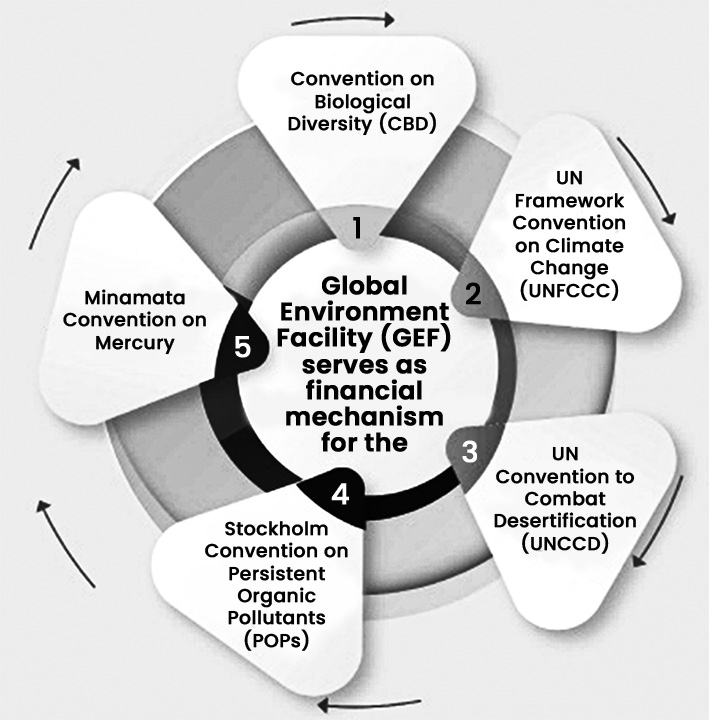
The Global Environment Facility (GEF) also acts as the financial support system for these international agreements:
Convention on Biological Diversity (CBD)
United Nations Framework Convention on Climate Change (UNFCCC)
UN Convention to Combat Desertification (UNCCD)
Stockholm Convention on Persistent Organic Pollutants (POPs)
Minamata Convention on Mercury
NOTE: Also, while not formally associated, GEF helps implement the Montreal Protocol in countries with economies transitioning.
The GEF works with 18 agencies. Notable ones among them are
United Nations Development Programme (UNDP)
United Nations Environment Programme (UNEP)
World Bank (WB)
Food and Agriculture Organization (FAO)
Asian Development Bank (ADB)
International Fund for Agricultural Development (IFAD)
World Wide Fund for Nature (World Wildlife Fund) (WWF)
Conservation International (CI)
International Union for Conservation of Nature (IUCN)
Special Climate Change Fund (SCCF) – 2001
The Special Climate Change Fund (SCCF), established in
2001, focuses on helping developing countries adapt to the effects of climate change and enhance their resilience.
It covers the extra expenses involved in addressing climate change compared to normal development activities.
The fund is managed by the Global Environment Facility (GEF) and is available to all vulnerable developing countries that are not included in Annex 1 of the Kyoto Protocol.
Least Developed Countries Fund – 2001
The Least Developed Countries Fund (LDCF) was created in 2001 to assist the Least Developed Countries (LDCs) in their efforts to combat climate change under the United Nations Framework Convention on Climate Change (UNFCCC).
The funding provided by LDCF helps these countries address their immediate, medium-term, and long-term needs to enhance resilience and reduce vulnerability to climate change impacts.
The fund is managed by the Global Environment Facility (GEF).
Multilateral Fund (MLF) for the Implementation of the Montreal Protocol
The Multilateral Fund (MLF) for the Implementation of the Montreal Protocol was created to support developing countries in fulfilling their commitments under the Montreal Protocol, which aims to phase out the use of
ozone-depleting substances (ODS).
Established in 1990 by the London Amendment to the Montreal Protocol, the MLF provides financial assistance to countries with a low annual per capita consumption of ODS (less than 0.3 kg/year), as outlined in Article 5 of the Protocol.
These countries, including India and other developing and underdeveloped nations, are known as Article 5 countries.
UNCED or Earth Summit 1992, Rio De Janeiro Brazil
The United Nations Conference on Environment and Development (UNCED), commonly known as the Earth Summit 1992, took place in Rio De Janeiro, Brazil.
This summit aimed to highlight the importance of integrating environmental concerns with development efforts (sustainable development).
Representatives from 190 countries attended the summit and pledged to work towards achieving a significant reduction in the rate of biodiversity loss globally, regionally, and locally by the year 2010.
Post UNCED
Following the UNCED, there were subsequent summits to address sustainability:
Rio+10 (World Summit on Sustainable Development): Held in Johannesburg, South Africa, in 2002, this summit aimed to review progress made since the Earth Summit 1992.
Rio+20 (United Nations Conference on Sustainable Development): Held in Rio de Janeiro, Brazil, in 2012, this summit focused on sustainable development issues. It covered topics such as reducing toxic substances, adopting alternative energy sources, improving public transportation, addressing pollution-related health issues, and managing water resources.
Significance of Earth Summit 1992
The Earth Summit 1992 was significant because it produced key documents
Rio Declaration: These are principles designed to direct countries towards sustainable development in the future.
Agenda 21: This is a non-binding action plan created by the United Nations to address sustainable development issues.
Forest Principles: These are guidelines for the conservation and sustainable development of all types of forests, although they are not legally binding.
Landmark Agreements
The Earth Summit led to several significant agreements:
Convention on Biological Diversity (CBD): This agreement aims to conserve biodiversity, ensure sustainable use of biological resources, and promote fair and equitable sharing of benefits from genetic resources.
United Nations Convention to Combat Desertification (UNCCD): This convention addresses desertification, land degradation, and drought through sustainable land
management practices.
United Nations Framework Convention on Climate Change (UNFCCC): This convention focuses on mitigating greenhouse gas emissions and adapting to climate change impacts on a global scale. It laid the groundwork for subsequent agreements like the Kyoto Protocol and the Paris Agreement.
High-level Political Forum on Sustainable Development (HLPF)
The High-level Political Forum on Sustainable Development (HLPF) is a forum established by the UN Economic and Social Council (ECOSOC) to monitor the progress of sustainable development initiatives following the 1992 Earth Summit.
It convenes every four years under the General Assembly and in other years under ECOSOC.
Its main responsibilities include reviewing the implementation progress of various sustainable development agreements such as Agenda 21, the Johannesburg Declaration (Rio+10), the Barbados
Programme of Action (Sustainable Development of Small Island Developing States), Rio+20, LDC-IV (4th United Nations Conference on the Least Developed Countries), and other relevant outcomes of UN summits and conferences.
UN Agenda 21
UN Agenda 21 is a plan created by the United Nations to promote sustainable development. It’s called “Agenda 21” because it outlines goals and actions for the 21st century.
The plan is not legally binding, but it serves as a guide for countries to work towards global sustainable development.
In 2015, the Sustainable Development Goals (SDGs) were integrated into Agenda 2030, which builds upon the principles of Agenda 21 for the next decade.
Partnership for Action on Green Economy (PAGE)
PAGE, launched in 2013, is a global initiative created in response to the Rio+20 Declaration called “The Future We Want.”
Its main aim is to help countries achieve Sustainable Development Goal 8, which focuses on fostering sustained, inclusive, and sustainable economic growth along with full and productive employment.
India became a member of PAGE in 2013.
This partnership brings together the expertise of five key UN agencies: UNEP (United Nations Environment Programme), ILO (International Labour Organization), UNIDO (UN Industrial Development Organization), UNDP (United Nations Development Programme), and UNITAR (UN Institute for Training and Research). They collaborate to support countries in transitioning to green economies and achieving sustainable development goals.
UN Agenda 2030 – Sustainable Development Goals (SDGs)
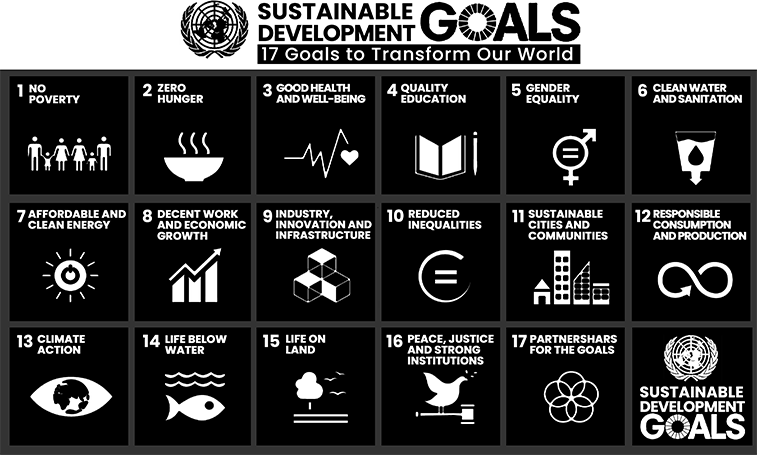
UN Agenda 2030, also known as the Sustainable Development Goals (SDGs), is a set of global goals adopted by the United Nations in 2015.
These goals aim to end poverty, protect the planet, and ensure prosperity for all by the year 2030.
There are 17 goals in total, along with 169 specific targets to achieve them.
The SDGs cover a wide range of issues including poverty, gender equality, climate action, and more, with the overall objective of improving the lives of people worldwide and promoting sustainable development.
Goal 2: Zero Hunger
This goal aims to end hunger, achieve food security, improve nutrition, and promote sustainable agriculture.
To achieve this, agricultural productivity and incomes of small-scale food producers, especially women and indigenous peoples, need to be doubled.
Sustainable food production systems should be ensured, along with progressive improvements in land and soil quality.
Other targets include maintaining genetic diversity of seeds, increasing access to land, preventing trade restrictions, eliminating food wastage, and ending malnutrition.
Goal 6: Clean Water and Sanitation
This goal aims to ensure the availability and sustainable management of water and sanitation for all.
Targets include providing safe drinking water, hygienic toilets, and sanitation facilities in schools and workplaces.
Equitable sanitation must be provided to address the specific needs of women and girls, disabled individuals, and the elderly.
Goal 7: Affordable and Clean Energy
The objective is to ensure access to affordable, reliable, sustainable, and modern energy for all.
By 2030, the target is to provide access to affordable and reliable energy while increasing the share of renewable energy sources.
Goal 8: Jobs and Growth
This goal aims to promote sustained, inclusive, and sustainable economic growth and ensure full and productive employment for all.
Goal 11: Sustainable Cities and Communities
The goal is to make cities and human settlements inclusive, safe, resilient, and sustainable.
By 2030, the target is to ensure access to safe and affordable housing for all.
Goal 12: Responsible Consumption and Production
This goal seeks to ensure sustainable consumption and production patterns.
Targets include using eco-friendly production methods, reducing waste generation, and increasing national recycling rates.
Goal 13: Climate Action
The objective is to take urgent action to combat climate change and its impacts by regulating emissions and promoting developments in renewable energy.
Goal 14: Life Below Water
This goal aims to conserve and sustainably use the oceans, seas, and marine resources for sustainable development.
Targets include preventing and reducing marine pollution and acidification, protecting marine and coastal ecosystems, and regulating fishing activities.
Goal 15: Life on Land
The goal is to protect, restore, and promote the sustainable use of terrestrial ecosystems, including forests, and combat desertification and land degradation.
Efforts should focus on preventing the invasion of introduced species and providing more protection for endangered species.
The History of Sustainable Development Goals Brundtland Commission (1983)
The United Nations established the World Commission on Environment and Development, also known as the Brundtland Commission, in 1983.
It defined sustainable development as meeting the needs of the present without compromising the ability of future generations to meet their own needs.
Rio+5 (1997)
In 1997, the UN General Assembly held a special session called Rio+5 to assess the progress of Agenda 21, a non- binding action plan related to sustainable development.
Rio+10 (2002) or Earth Summit 2002
Rio+10 reaffirmed the UN’s commitment to Agenda 21, in
conjunction with the Millennium Development Goals.
It resulted in the Johannesburg Declaration, where nations committed to sustainable development.
Rio+20 (2012) or Earth Summit 2012
Rio+20 served as a 20-year follow-up to the Earth Summit 1992 and a 10-year follow-up to the Earth Summit 2002.
The Sustainable Development Goals (SDGs) were established during Rio+20.
UN-REDD and REDD+
Millennium Development Goals (MDGs)
The SDGs replaced the MDGs in 2016.
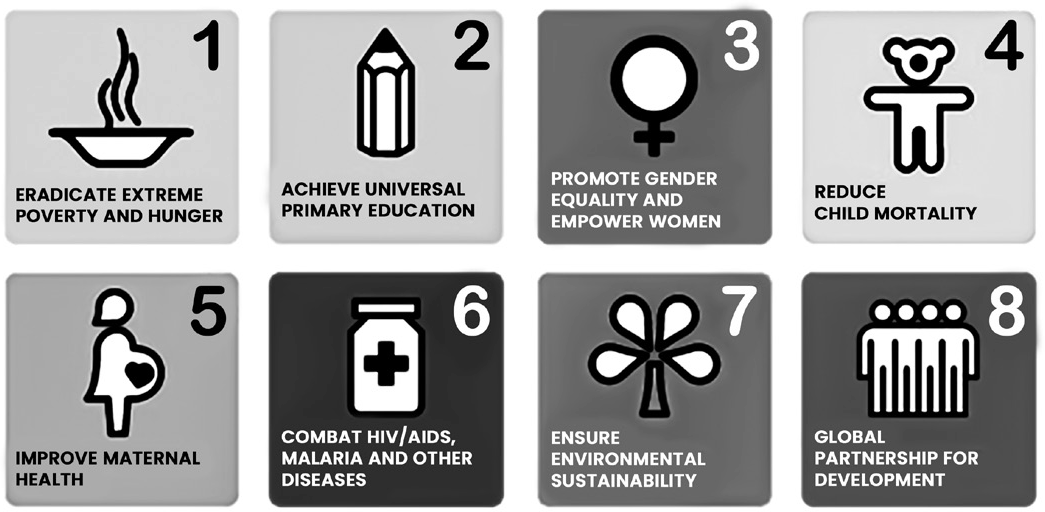
The MDGs were eight development goals set for the year 2015, established after the Millennium Summit of the United Nations in 2000.
Millennium Development Goals by 2015
• Eradicate extreme poverty and hunger
• Achieve universal primary education
• Promote gender equality and empower women
• Reduce child mortality
• Improve maternal health
• Combat HIV/AIDS, malaria, and other diseases
• Ensure environmental sustainability
• Develop a global partnership for development
| UN-REDD | REDD+ |
| UN-REDD, headquartered in Geneva, Switzerland, is the United Nations Programme focused on Reducing Emissions from Deforestation and Forest Degradation. It comprises 64 partner countries working together to combat deforestation and forest degradation, thereby reducing greenhouse gas emissions. | Reducing emissions from deforestation and forest degradation REDD+ is a method aimed at: Cutting down on the amount of greenhouse gases released by deforestation and forest degradation Focusing on conserving forests and managing them in a sustainable way Increasing the amount of carbon stored in forests in developing countries |
| UN-REDD is a joint initiative involving three organizations: Food and Agriculture Organization of the United Nations (FAO), United Nations Development Programme (UNDP), and United Nations Environment Programme (UNEP). It was established in 2008 following decisions made during the UNFCCC COP-13 regarding the Bali Action Plan and REDD. | A voluntary approach to fighting climate change: REDD+ is a choice made by countries to address climate change by protecting and managing forests better. It's a strategy developed by countries that are part of the United Nations Framework Convention on Climate Change (UNFCCC). |
| UN-REDD collaborates with developing countries to assist them in: Building the technical capacities necessary for implementing REDD+ initiatives. Meeting the requirements set by the UNFCCC for receiving results-based payments for REDD+ efforts. | REDD+ is about more than just stopping trees from being cut down. It encourages countries to protect forests, manage them carefully, and even plant new trees. The goal is to reduce the amount of pollution forests produce and keep them healthy for the future. |
Forest Carbon Partnership Facility
• The FCPF is a global collaboration involving governments, businesses, civil society, and Indigenous Peoples. Its primary focus is on reducing emissions from deforestation and forest degradation, conserving forest carbon stocks, promoting sustainable forest management, and enhancing forest carbon stocks in developing countries, commonly known as REDD+ activities.
• The World Bank serves as the trustee and secretariat for the FCPF.
• Delivery Partners under the Readiness Fund, including the World Bank, the Inter-American Development Bank, and the United Nations Development Programme, are responsible for providing support to countries in their readiness efforts for REDD+.
Objectives
• Assist countries in their REDD+ initiatives by offering financial and technical aid.
• Pilot a performance-based payment system for REDD+ activities.
• Test methods to sustain or improve the livelihoods of local communities and conserve biodiversity.
• Disseminate the knowledge acquired through Emission Reductions Programs (ERPs) widely.
Climate and Clean Air Coalition (CCAC)
• Established in 2012, the Climate and Clean Air Coalition (CCAC) was formed by a group of nations in collaboration with the United Nations Environment Programme (UNEP).
• It operates as a partnership comprising governments, public and private sectors, scientific institutions, civil society organizations, and others who are dedicated to safeguarding the climate by taking measures to reduce short-lived climate pollutants.
• The coalition focuses on addressing pollutants that have a significant impact on climate change but have shorter lifespans in the atmosphere compared to carbon dioxide.
Short-lived climate pollutants (SLCPs)
• Short-lived climate pollutants (SLCPs) are substances that remain in the atmosphere for relatively brief periods, ranging from a few days to a few decades.
• Despite their short lifetimes, these pollutants have a significant warming effect on the atmosphere, often much greater than that of carbon dioxide (CO2).
In fact, SLCPs are responsible for up to 45% of the current global warming, ranking next to CO2 in terms of their contribution.
Examples of SLCPs include black carbon, methane, tropospheric ozone, and hydrofluorocarbons.
Tropospheric or ground-level ozone (O3)
Tropospheric ozone, also known as ground-level ozone, is found in the lower portion of the Earth’s atmosphere, typically around 10 to 15 kilometers above the ground.
It has a relatively short lifespan, lasting only a few days to a few weeks.
Tropospheric ozone is not directly emitted but is formed through the sunlight-driven oxidation of pollutants such as methane, carbon monoxide (CO), non-methane volatile organic compounds (NMVOCs), and nitrogen oxides (NOX).
This type of ozone is known to contribute to reductions in crop yields and can have negative effects on vegetation.
Benefits of Reducing SLCPs
Reducing short-lived climate pollutants (SLCPs) offers several benefits
Preventing Crop Losses: Decreasing methane and black carbon emissions can help prevent significant crop losses (safeguarding food security).
Slowing Warming: Reducing SLCPs could slow down the rate of warming expected by 2050 by approximately 0.5 degrees Celsius, providing some relief from the impacts of climate change.
Contribution to Climate Goals: SLCP reduction is essential for achieving the temperature target outlined in the Paris Agreement, aiming to limit global warming to well below 2 degrees Celsius above pre-industrial levels.
BioCarbon Fund Initiative
The BioCarbon Fund Initiative for Sustainable Forest Landscapes (ISFL) is a fund managed by the World Bank, and supported by donor governments.
Its aim is to reduce greenhouse gas emissions from the land sector in developing countries.
This includes efforts to address deforestation, forest degradation, and unsustainable agriculture practices
through initiatives like REDD+ and improved land-use planning and policies.
Global Climate Change Alliance + (GCCA+)
The Global Climate Change Alliance Plus (GCCA+) is an initiative led by the European Union.
It assists vulnerable countries, particularly Small Island Developing States (SIDS) and Least Developed Countries (LDCs), in building resilience to climate change.
GCCA+ initiatives help these countries implement their commitments under the 2015 Paris Agreement on Climate Change (COP21).
Arctic Council
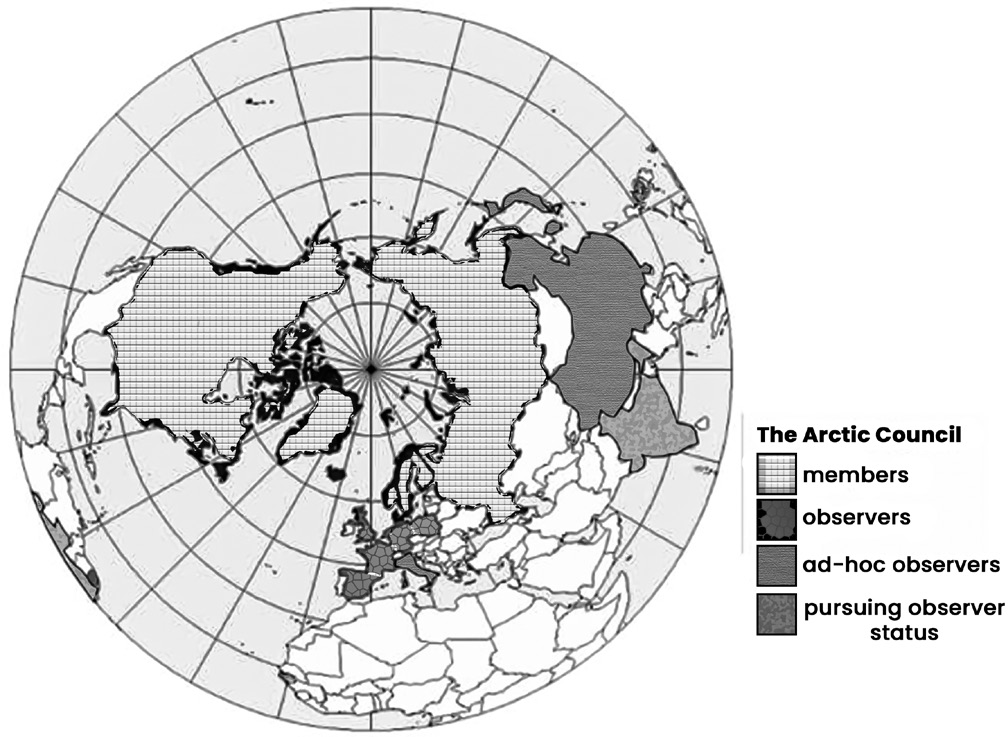
The Arctic Council is a group of eight Arctic countries— Canada, Denmark (including Greenland and the Faroe Islands), Finland, Iceland, Norway, Russia, Sweden, and the United States.
It serves as an intergovernmental forum where these nations, along with Arctic Indigenous communities and
other inhabitants, collaborate on Arctic-related issues.
The council focuses on promoting sustainable development and environmental protection in the Arctic region through cooperation and coordination among its member states.