
Whatsapp 88106-52225 For Details
Get Free IAS Booklet
Get Free IAS Booklet
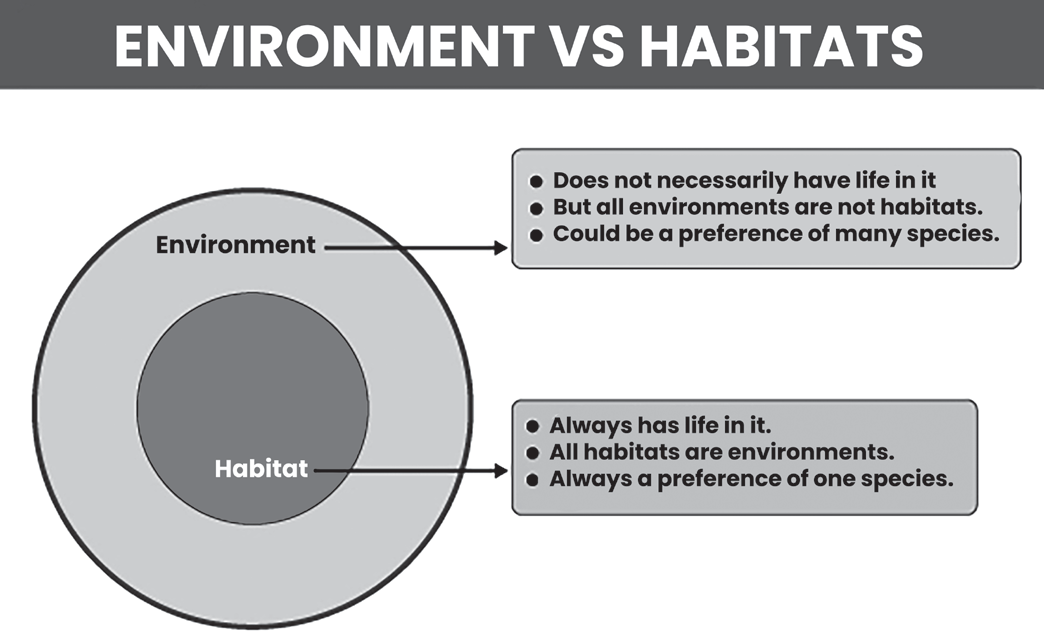
What is an Environment?
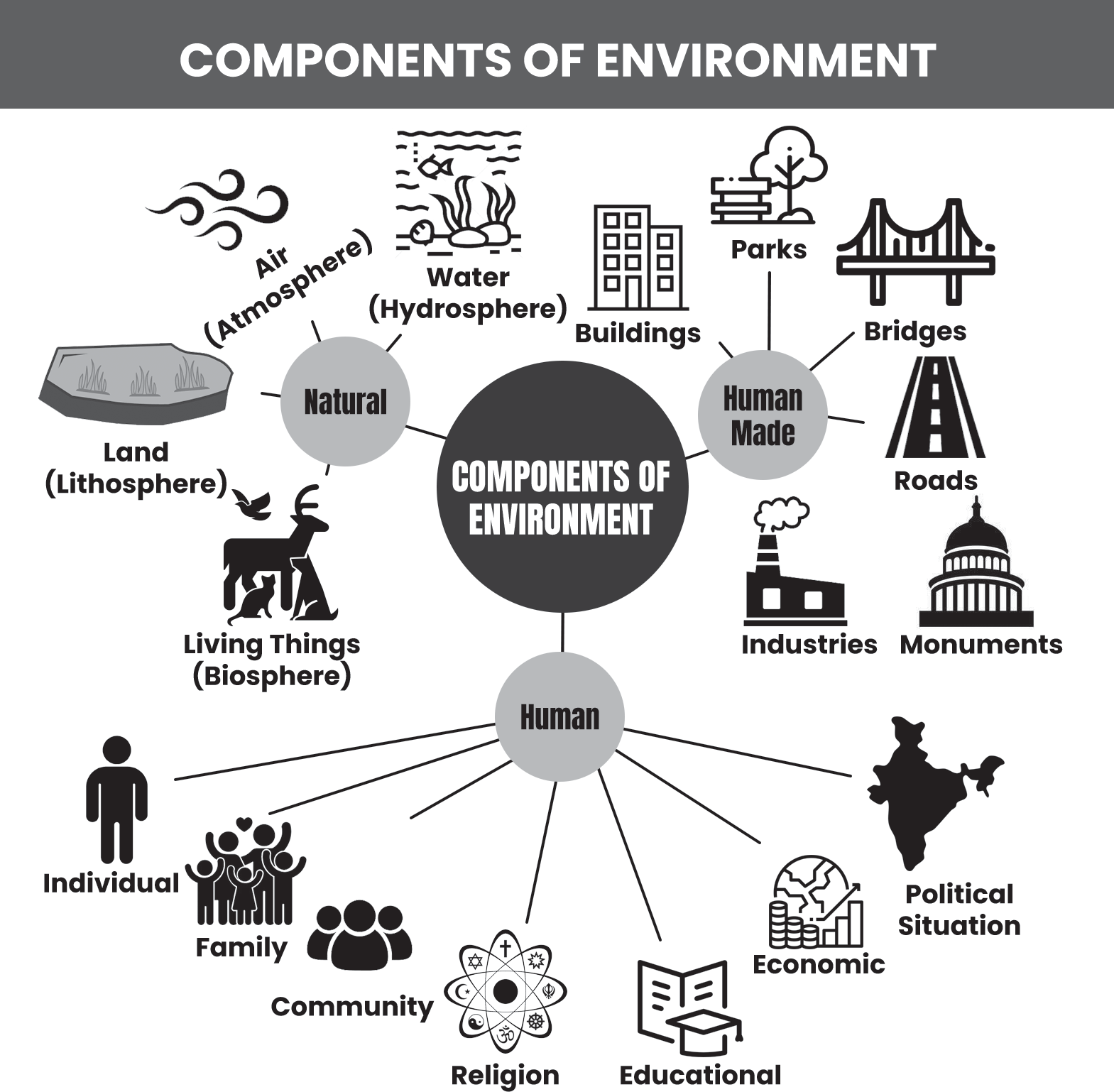
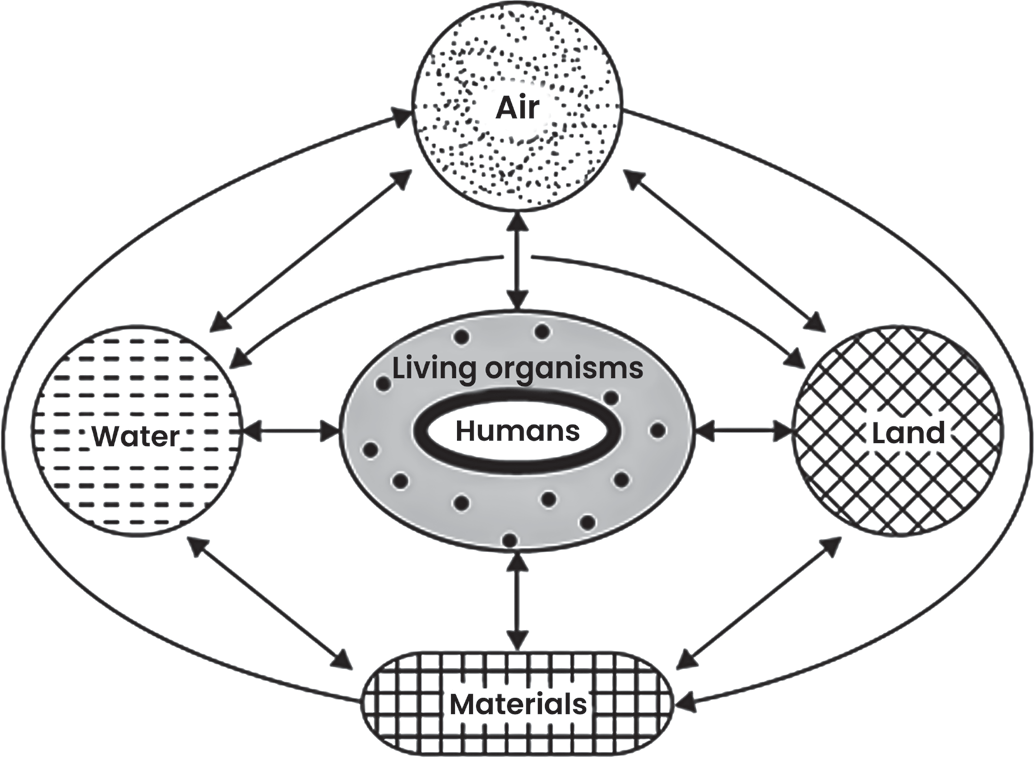
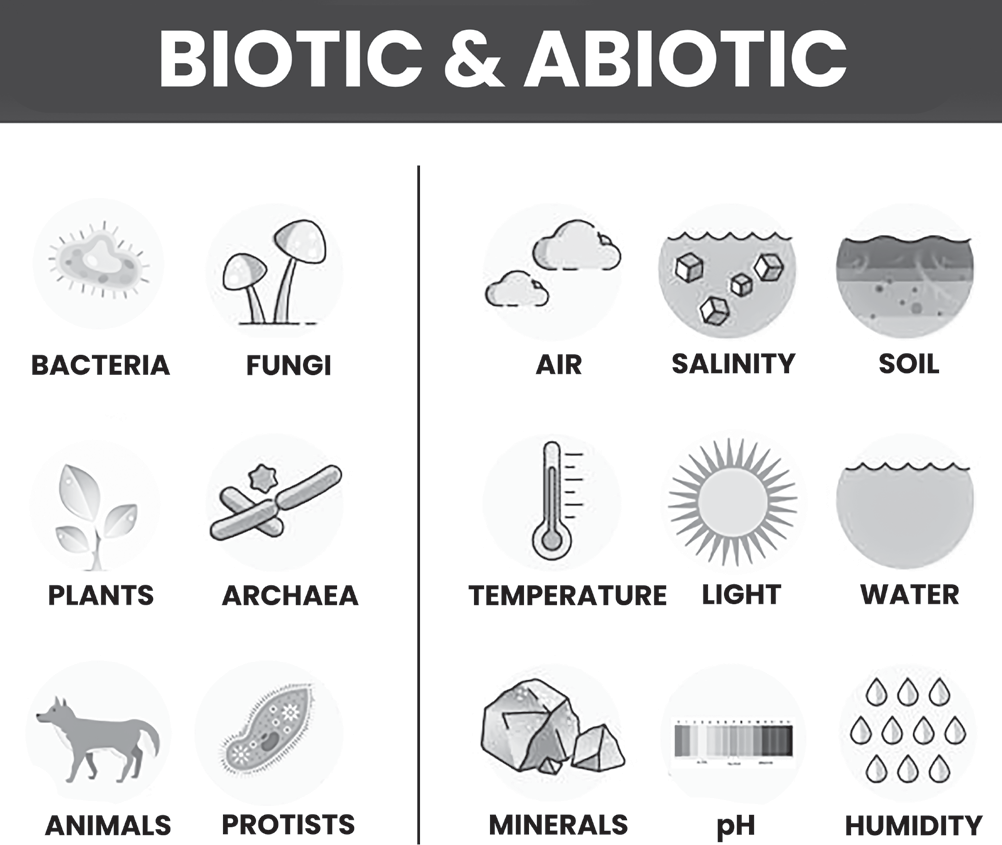
• The word “environment” comes from the French word “environment” which means ‘surroundings.’ Our environment consists of two main parts: living (biotic) and non-living (abiotic). Everything around us, including physical, biological, chemical and cultural factors, makes up our environment.
• These interactions shape the habitat and ecosystem of an organism. Therefore, the environment can be better explained as the combination of all external factors that can have both positive and negative effects on an organism’s life.
mbination of all external factors that can have both positive and negative effects on an organism’s life.
• Detailed: Ecosystem (Refer to Chapter 3)
What is a Habitat?
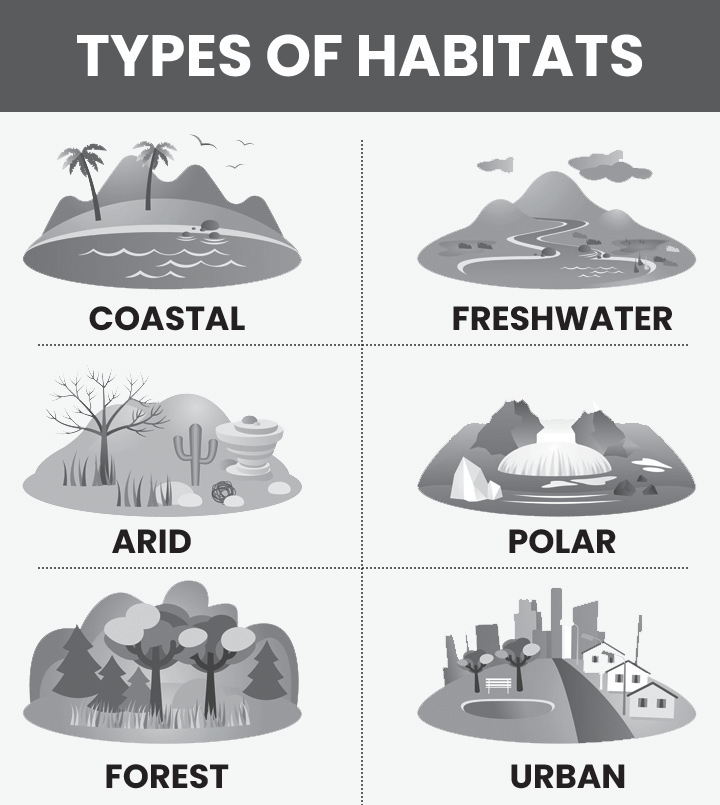
• Organisms or populations naturally choose to live in environments that provide them with the resources they need. This environment, where they find their resources, becomes their habitat.
• For example, a habitat could be a body of water, the bark of a tree, the leaf litter on the ground, a cave, or even inside another animal. Essentially, a habitat is any place where an organism or population can find the energy or nutrients they need to survive.
• A single habitat can be suitable for multiple organisms with similar needs. For example, an aquatic habitat can support various creatures like fish, frogs, crabs, and phytoplankton.
• The main factors that limit habitats are the availability of food/energy and threats like predators, competitors, and the availability of resources.
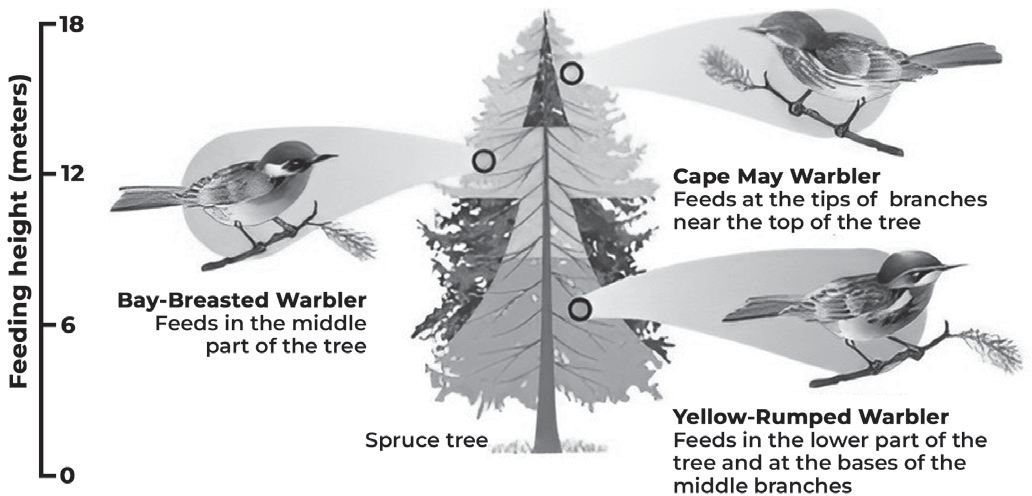
Ecological Niche
The term “niche” originates from the French word ‘nicher,’ meaning “to nest.” It describes the unique role or job of an organism within its habitat, including how it lives, what resources it utilises, and its interactions with the environment and other species.
Ecological niches enable species to live and thrive in their environment by performing unique roles. Without these niches, biodiversity would decrease, and the ecosystem would be out of balance.
For example, dung beetles play a vital role by consuming dung, which helps in nutrient recycling, improves soil structure, and aids in seed dispersal found in animal droppings.
No two species can have the exact same niche because of the Competitive Exclusion Principle, which says that if two species share the same niche, they’ll compete for resources, and one may go extinct if it doesn’t adapt.
To conserve species in their habitat, we need to understand their niche requirements.
Fundamental Niche: It’s the complete range of environmental conditions where a species can live and reproduce.
Ecological Niche
Biome
• A biome is like a big ecosystem that’s grouped based on the types of plants and animals living there. This idea was introduced by ecologists F.E. Clements and V.E. Shelford in 1939.
• A biome includes things like the plants, soil, temperature, climate, how much sunlight it gets, and the wildlife.
• Biomes aren’t limited to just one continent; they can stretch across several. For example, grasslands can be found on every continent except Antarctica.
• Inside a biome, there can be different kinds of living spaces or habitats.
• Biomes are split into two main types: those found on land and those found in water.
Biome Pyramid

Ecotone
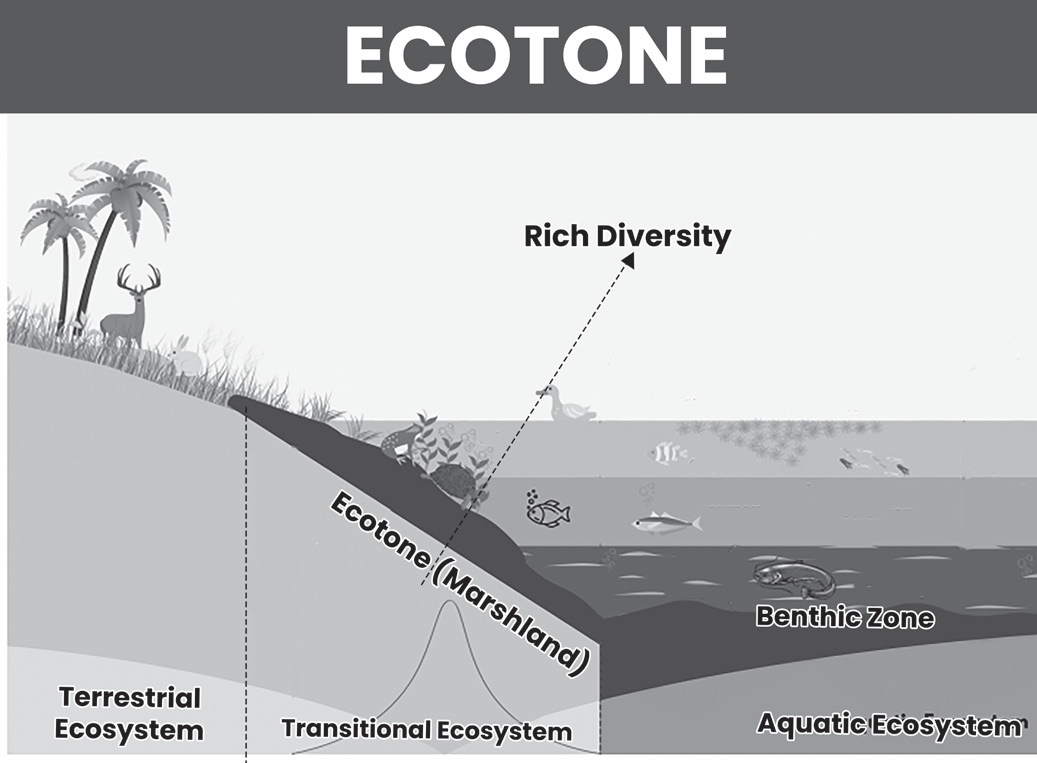
• An ecotone is like a border or a transition zone between two different ecosystems.
• It’s where two different communities come together and mix.
Characteristics of Ecotone
• Ecotones can vary in width, ranging from wide to narrow.
• They are dynamic areas, constantly changing, because they have conditions that are intermediate between the two ecosystems they border.
• Ecotones can have species that are completely different from those found in either of the adjacent ecosystems, known as the Edge Effect.
• They can be either natural, such as the transition between a forest and a grassland, or man-made, like the boundary between an agricultural field and a forest.
• Ecotones are exceptionally productive areas due to the presence of a wide variety of plant and animal species influenced by both adjacent ecosystems.
Examples of ecotones include
• Mangrove forests located between marine and terrestrial ecosystems.
• Grasslands found between forested areas and deserts.
• Estuarine environments occurring between freshwater and saltwater habitats.
• Riverbanks or marshlands situated between dry and wet environments.

Ecocline
• An ecocline represents a gradual and continuous change from one ecosystem to another, lacking a distinct boundary in terms of species composition.
• It involves variations in traits such as pH, salinity, water density, and chemical composition, leading to a gradual shift in characteristics over the zone.
Edge Effect – Edge Species
The edge effect refers to the increase in biodiversity that happens where two different ecosystems meet.
• Imagine two ecosystems, A and B, each with their own set of species.
• When these ecosystems overlap in the ecotone area, they create unique conditions that can support additional species.
• So, while ecosystems A and B each have their own species, the ecotone can have even more species, making it a
hotspot of biodiversity. This increase in species diversity is what we call the edge effect.
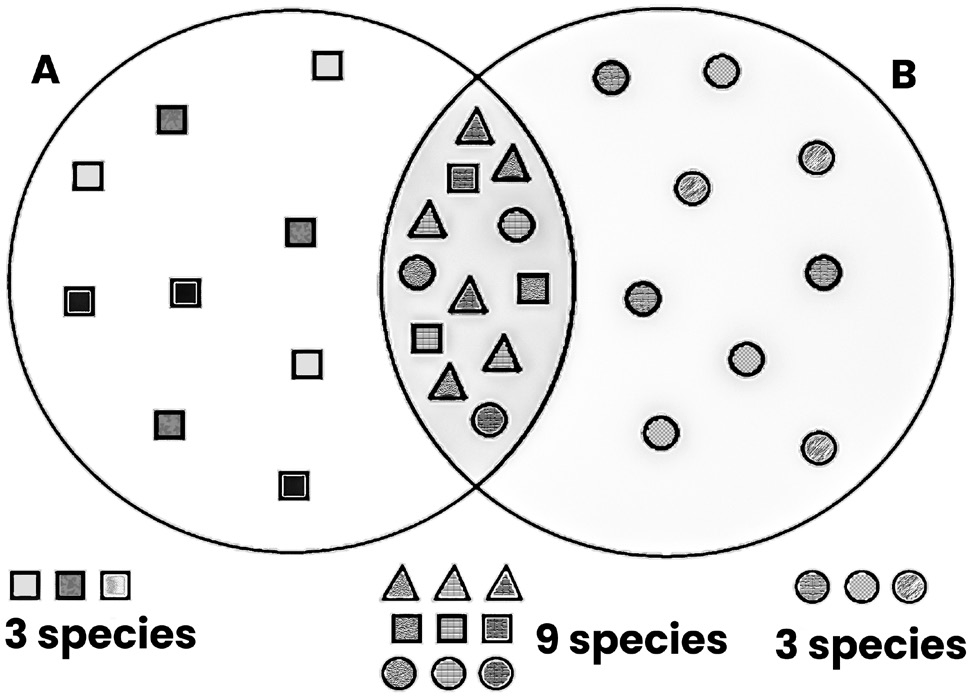
This overlapping r egion leads to greater diversity of species for a few reasons:
• More resources are available because both ecosystems contribute, so there’s plenty for different species.
• Conditions like air, temperature, and light change at the edge, creating new habitats that can support different kinds of species.
• These changes in conditions can create special microclimates that certain species thrive in.
• More light reaches plants along the edge, allowing more plants to grow. More plants mean more food for herbivores, which in turn attract more birds and predators.
Ecotopes
Ecotopes are like the building blocks of ecology. They’re the smallest parts of an ecological landscape. When you put many ecotopes together, either next to each other or on top of each other, they form larger regions called eco-regions or bigger ecological units.
Ecozones
An ecozone or biogeographic realm is the biggest division of the Earth’s surface based on where plants and animals live. These divisions are determined by the history and evolution of plant and animal distribution. Ecozones are large areas where plants and animals have developed independently for a long time, separated from each other by features like oceans, deserts, or mountains that make it hard for them to move around.
Ecological Amplitude
Ecological amplitude refers to how well a living organism can adapt to its environment, indicating its tolerance level. A wide ecological amplitude means the organism can survive in various environmental conditions, while a narrow amplitude means it has specific needs. For instance, a goldfish can tolerate a temperature range of 2°C to 34°C but would perish outside of this range. Similarly, polar bears excel in cold climates but would struggle in hot regions. Conversely, a giraffe thrives in hot climates but would struggle in cold ones. Hyperthermophiles are organisms that flourish in extremely high temperatures, around 60°C.
Ecophene/Ecads
• Ecophene, also known as ecads, refers to the immediate response of a species when it enters a new environment. It’s a temporary change in appearance, not a genetic one, and can be reversed if the species returns to its original environment.
• For example, when a person from a temperate region moves to the tropics, their skin may darken due to increased melanin production. However, if they return to their original temperate environment, their skin may gradually become lighter again.
Ecotype
• When ecophene happens for a prolonged period, species
adapt permanently leading to Ecotype.
• It’s a permanent change (irreversible) which can result in genetic variations.
• For ex: Euphorbia Hirta has 2 ecotypes

Leaves in dry conditions

Leaves in wet conditions
Biocoenosis
• Biocoenosis refers to a community of interdependent organisms that live and interact with each other in the same habitat, involving interactions between living organisms (biotic factors). The term was coined by German zoologist and ecologist Karl Möbius in 1877 to describe the organisms living together in a biotope.
• Unlike a biotope, which includes only the physical and climatic characteristics of an environment (without life), habitats encompass both abiotic and biotic factors, including interactions between organisms.
• Biocenosis can take different forms, such as zoocenosis (faunal community), phytocenosis (flora community), and microbiocenosis (microbial community).