Summary of the Key Findings of 18th Isfr 2023 Forest Cover
Summary of the Key Findings of 18th ISFR 2023 Forest Cover
Forest and Tree Cover: The total forest and tree cover
of the country is 8,27,356.95 km2 which is 25.17% of the geographical area (GA) of the country.
The total Forest Cover has an area of 7,15,342.61 km2 (21.76%) whereas the Tree Cover has an area of 1,12,014.34 km2 (3.41%).
Increase in Forest and Tree Cover: The country's forest and tree cover has increased by 1,445.81 km , with a
156.41 km rise in forest cover compared to 2021.
Maximum increase (Forest and Tree Cover): Chhattisgarh (684 sq km) followed by Uttar Pradesh (559 sq km), Odisha (559 sq km) and Rajasthan (394 sq km).
Maximum Increase (Forest Cover): Mizoram (242 sq km) followed by Gujarat (180 sq km) and Odisha (152 sq km).
Largest Decrease: Madhya Pradesh (612.41 km ) followed by Karnataka (459.36 km ), Ladakh (159.26 km ), and Nagaland (125.22 km ).
Forest & Tree Cover of India
Top Three States: Area wise top three states having largest forest cover are Madhya Pradesh (77,073 sq km) followed by Arunachal Pradesh (65,882 sq km) and Chhattisgarh (55,812 sq km).
• In terms of percentage of forest cover with respect to total geographical area, Lakshadweep (91.33%) has the highest forest cover followed by Mizoram (85.34%) and Andaman & Nicobar Island (81.62%).
High Forest Cover: 19 states/UTs have above 33% of the geographical area under forest cover.
• Out of these, eight states/UTs namely Mizoram, Lakshadweep, A & N Island, Arunachal Pradesh, Nagaland, Meghalaya, Tripura, and Manipur have forest cover above 75%.
The total growing stock of India’s forest and trees outside forests is estimated as 6430 million cum, of which 4479 million cum is inside the forests and 1951 million cum outside the forest area. There is an increase of 262 million cum of total growing stock as compared to the previous assessment which includes an increase of 91 million cum inside the forest and 171 million cum outside the forest area.
| Class | ISFR 2023 | ISFR 2021 | ||
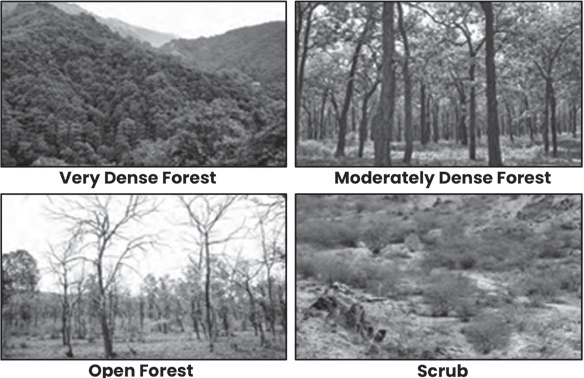
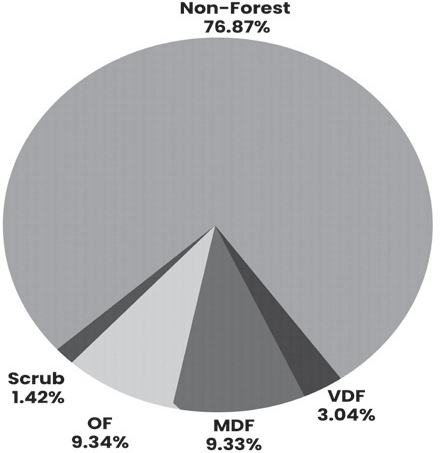
| Forest Cover Very Dense Forest Moderately Dense Forest Open Forest | Area (sq. km) | % of GA | (Area) Sq. km) | % of GA |
| a) 99,981 b) 3,06,472 c) 3,08,472 | a) 3.04 b) 9.34 c) 9.41 | a) 99,779 b) 3,06,890 c) 3,07,120 | a) 3.04 b) 9.33 c) 9.34 | |
| Total Forest Cover (Includes Mangroves) | 7,15,342.61 | 21.76 | 7,13,789 | 21.71 |
| Tree Cove | 1,12,014.34 | 3.41 | 95,748 | 2.91 |
| Total Forest & Tree Cove | 8,27,356.95 | 25.17 | 8,09,537 | 24.62 |
| Scru | 43,622.64 | 1.33 | 46,539 | 1.42 |
| Non-Forest (Includes Tree Cover) | 24,16,489.29 | 73.50 | 25,27,141 | 76.87 |
| Total Geographic Area | 32,87,468.29 | 100 | 32,87,469 | 100 |
GA: Geographical Area
| SFR Years | Total Forest Cove | Changes in forest cover w.r.t. previous ISFR | Change in % |
| ISFR 2015 | 7,01,495 | - | - |
| ISFR 2017 | 7,08,273 | 6,778 | 0.21 |
| ISFR 2019 | 7,12,249 | 3,976 | 0.56 |
| ISFR 2021 | 7,13,789 | 1,540 | 0.22 |
| ISFR 2023 | 7,15,342.61 | 1445 | 0.022 |

Mangrove Cover
India's mangrove cover is 4,991.68 km , representing 0.15% of the total geographical area, with a net decrease of 7.43 km since 2021.
Gujarat saw a decrease of 36.39 km in mangrove cover, while Andhra Pradesh and Maharashtra experienced increases of 13.01 km and 12.39 km , respectively
Forest Prone to Fires
32.06% of the forest cover is prone to forest fires
Fire incidents have also decreased, with 203,544 fire hotspots recorded in 2023-24, down from 223,333 in 2021-22.
The top three states with the most fire incidents in the 2023-24 season are Uttarakhand, Odisha, and Chhattisgarh.
Bamboo Resources of the Country
Total bamboo bearing of the country is estimated as 1,54,670 sq. km.
There is increase of 5,227 sq. km in bamboo bearing area as compared to ISFR 2021
Top 3 states having maximum bamboo bearing area:
Madhya Pradesh
Arunachal Pradesh
Maharashtra
Bamboo bearing area in Arunachal Pradesh has shown highest increase of 2,685 sq. km.
Karnataka has shown highest decrease of 1,290 sq. km
Carbon Stock in Forests
The carbon stock for 2023 has been estimated as 7,285.5 Mt. There is an increase of 81.5 Mt of carbon stock as compared to the estimates of previous assessment. The annual increase of carbon stock is estimated as 40.75 Mt, which is
149.42 Mt of CO2 equivalent.
Arunachal Pradesh has maximum carbon stock of 1,021 Mt followed by Madhya Pradesh (608 Mt), Chhattisgarh (505 Mt) and Maharashtra (465 Mt).
Jammu & Kashmir is contributing maximum per hectare carbon stock of 174.10 t/ha, followed by Sikkim (169.20 t/ha), Himachal Pradesh (163.68 t/ha) and, Andaman & Nicobar Islands (161.62 t/ha).
New Features of ISFR 2023/24
Assessment of Forest Cover in Tiger Reserves & Lion Conservation Area:
The latest ISFR continues to include an assessment of forest cover in tiger reserves, tiger corridors, and the lion conservation area of Gir. There has been variation in
forest cover across different reserves due to local gains and losses, reflecting changes in habitat conditions.
Over the recent assessment period, some tiger reserves have shown increases in forest and related habitat metrics, while others have experienced declines or minimal change, indicating uneven trends across the landscape.
New additions to the network of tiger reserves, including areas notified since the previous report, reflect ongoing efforts to strengthen conservation coverage under Project Tiger.
The thematic assessment also integrates data on forest fire alerts, carbon stock, and biomass, enhancing the understanding of habitat quality and threats within these priority conservation areas.
Above Ground Biomass
The Forest Survey of India, in collaboration with ISRO, has conducted special research to estimate Above Ground Biomass (AGB) using radar data. Forests play a vital role in ecosystems worldwide, providing various services, including absorbing CO2 from the atmosphere and converting it into biomass, which is the dry mass of living organisms in a trophic level.
Biomass is mainly carbon-based and consists of organic molecules with hydrogen, as well as other elements like oxygen and nitrogen. Plants absorb carbon dioxide from the atmosphere through photosynthesis, converting it into biomass. Animals can consume plants, turning them into animal biomass, but plants are the primary absorbers of carbon.
When plant material is not consumed, it may be burned or broken down by microorganisms. AGB is crucial for assessing a forest ecosystem’s ability to store carbon and maintain a carbon balance. It also helps understand vegetation management and ecological processes.
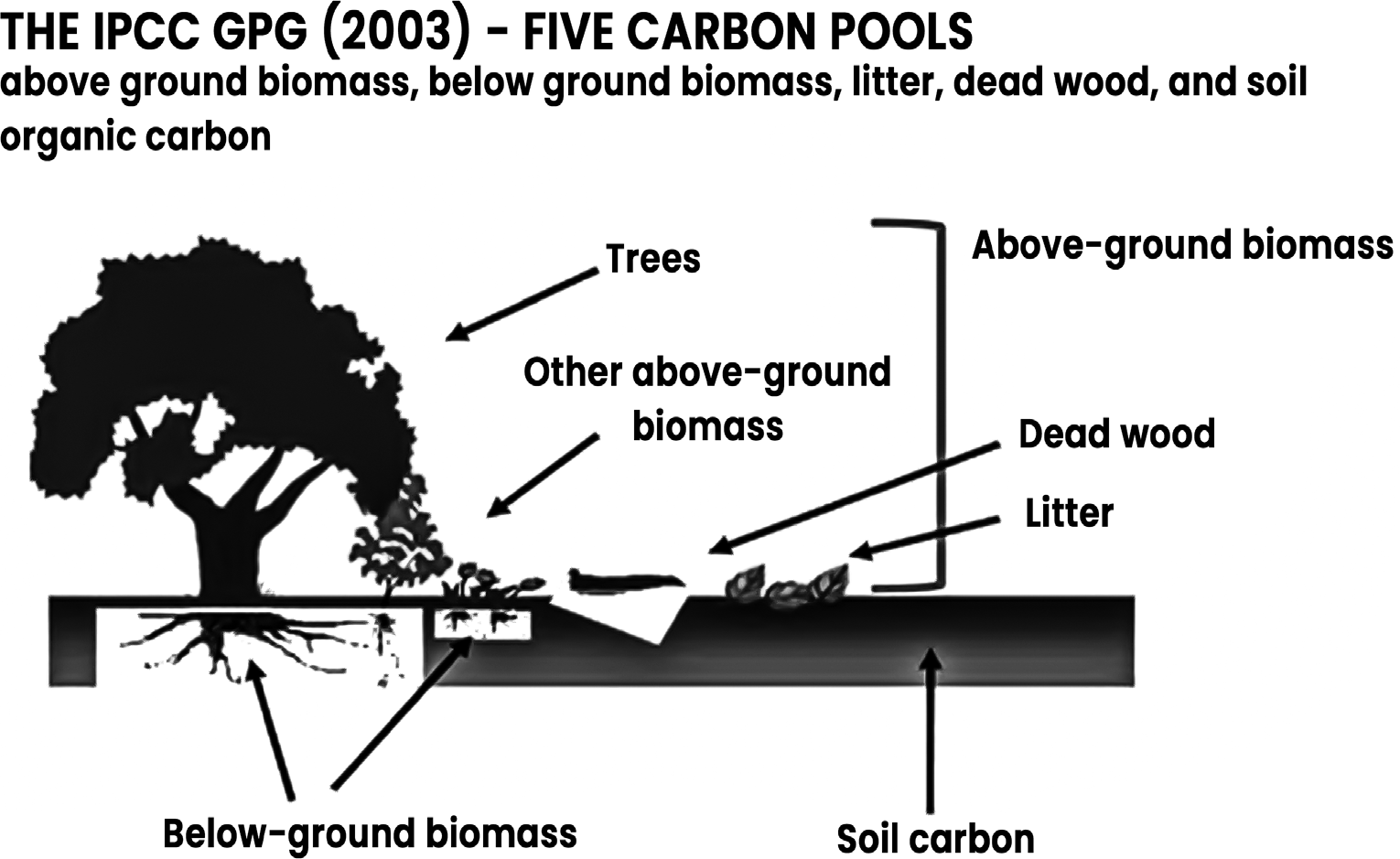
Above Ground Biomass : This refers to the portion of vegetation that is above ground, such as trees, stumps, deadwood, and trash.
Below Ground Biomass: This refers to the portion of a tree that is underground, such as its roots.
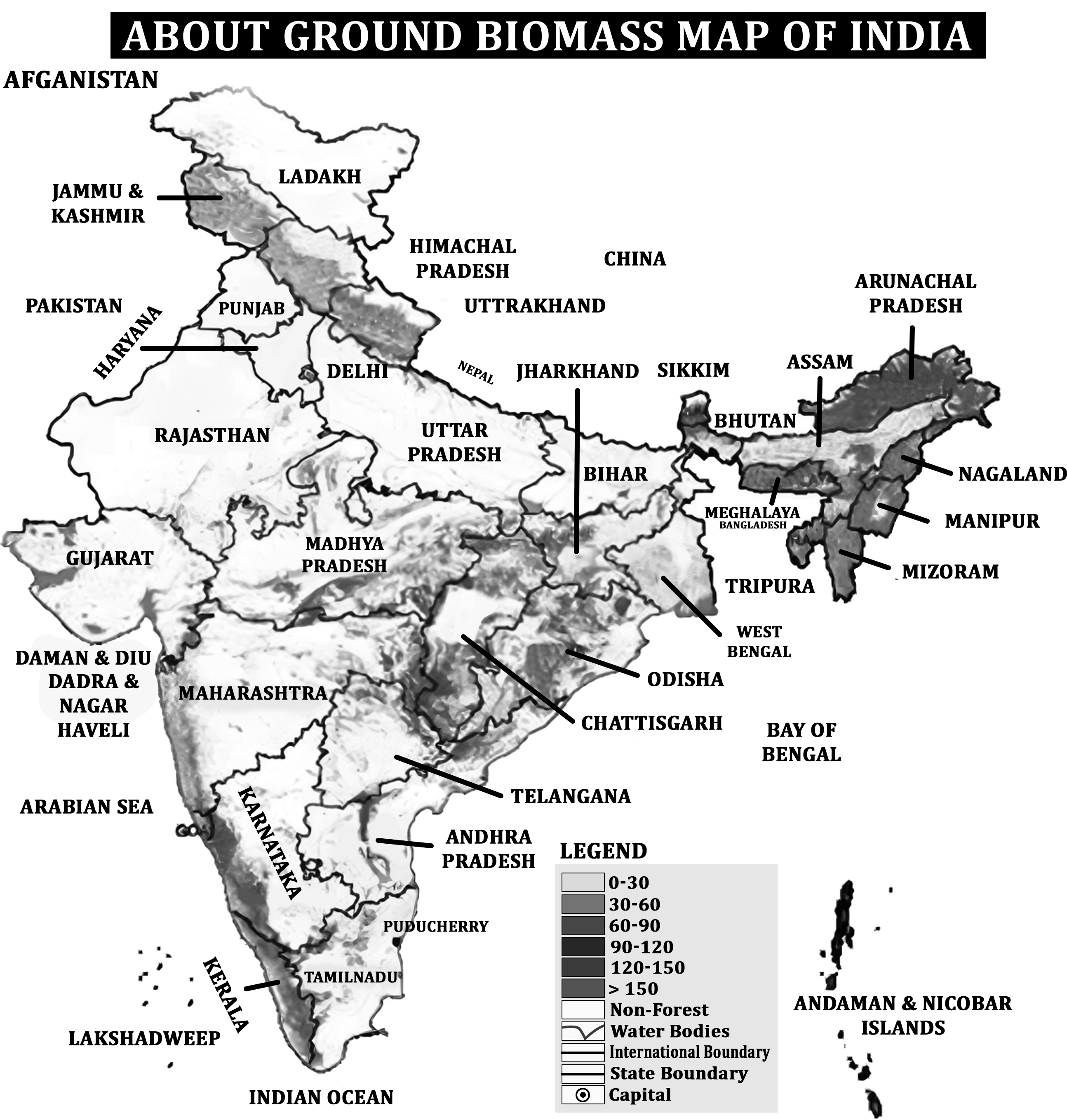
The regions with the least amount of human activity such as the Andaman and Nicobar Islands, Arunachal Pradesh, Uttarakhand, etc. Have the highest AGB.
Concerns
Decline in Natural Forests: The report reveals a major drop in dense, natural forests. India has lost roughly 3,913 sq km of dense forest since 2021 alone.
Decline in Northeast Forest Cover: Northeastern states continued their concerning, multi-year declining trend with a combined loss of 327.30 sq km in forest cover.
Criticism of FSI’s Approach
Critics argue that India’s claims of increasing forest cover over the years are not reliable. They point out that the government’s control over forests is highly centralized, leading to official reports that may not accurately reflect the true condition of the country’s forests.
The positive aspects, such as claims of increasing forest cover, are exaggerated, while the negative aspects are suppressed. For example, the reported increase in forest cover doesn’t truly reflect the situation on the ground because it includes land acquired for compensatory afforestation. This accounting method doesn’t consider the loss or diversion of forest land for activities like mining and infrastructure projects.
Even though it’s classified as forest on paper, there’s not enough tree cover to qualify it as a real forest. The data from the Indian State of Forest Report (ISFR) doesn’t provide an explanation for why 30% of the recorded forest area, which is around 215,000 square kilometers, has no actual forest cover. Understanding this information is crucial for evaluating how state development policies impact the loss and degradation of forests.
Anything green is a forest?
The ISFR primarily uses remote sensing technology to identify green objects of a certain size, which helps generate data on the amount of “green cover.” However, ecologists and foresters have long criticized the report for not distinguishing between different types of vegetation, such as commercial plantations, natural forests, orchards, and bamboo groves. They argue that simply having tree stands with over 10% canopy cover qualifies an area as a forest, regardless of its ecological suitability.
Carbon Handprint
The term “handprint” describes the positive environmental effects that businesses may accomplish and spread by offering goods that lessen consumers’ environmental imprints.
The goal of a carbon footprint assessment is to determine how a product will reduce greenhouse gas emissions when utilized by a (possible) consumer.
The foundation of the carbon handprint technique is the idea that lowering one’s own footprint is not a handprint; rather, it is a handprint attained by raising the
performance of another actor and lowering their carbon footprint.
When it comes to carbon footprints, the objective is straightforward, reduce the footprint to almost nothing. However, when it comes to handprints, the potential benefits are practically endless.
Project Bold
The “Bamboo Oasis on Lands in Drought” (BOLD) initiative, which originated in the tribal village of Nichla Mandwa in Udaipur, Rajasthan, is the first of its type of activity in India.
The Khadi and Village Industries Commission (KVIC) has launched a novel scientific project aimed at achieving the joint national goals of decreasing desertification and offering livelihood and multidisciplinary assistance for rural industries.
Project BOLD aims to establish green spaces made of bamboo in dry and semi-arid regions of the world.
Fit for 55
Under the so-called “Fit for 55 packages,” the EU is trying to update its regulations pertaining to energy, climate change, and transportation so that they are in line with the 2030 and 2050 goals.
“Fit for 55,” the proposal put out by the European Commission, mandates that its member states reduce their greenhouse gas emissions by 55% by 2030 when compared to 1990 levels.
The EU has established a legally binding goal to become carbon neutral by 2050 as part of the European Green Deal and the European carbon Law.
In the ensuing decades, there must be a significant decrease in the existing levels of greenhouse gas emissions. The EU has increased its 2030 climate ambition, pledging to reducing emissions by at least 55% by that year as a transitional step towards climate neutrality.
A package of proposals known as Fit for 55 aims to provide a coherent and balanced framework for achieving the EU’s climate objectives that is fair and socially just, maintains and strengthens innovation and competitiveness of EU industry while ensuring a level playing field vis-à-vis third country economic operators, and underpins the EU’s position as leading the way in the global fight against climate change.
The package of proposals updates and revises EU legislation and introduces new initiatives with the goal of ensuring that EU policies are in line with the climate goals agreed upon by the Council and the European Parliament.
Earth Overshoot Day
Earth Overshoot Day
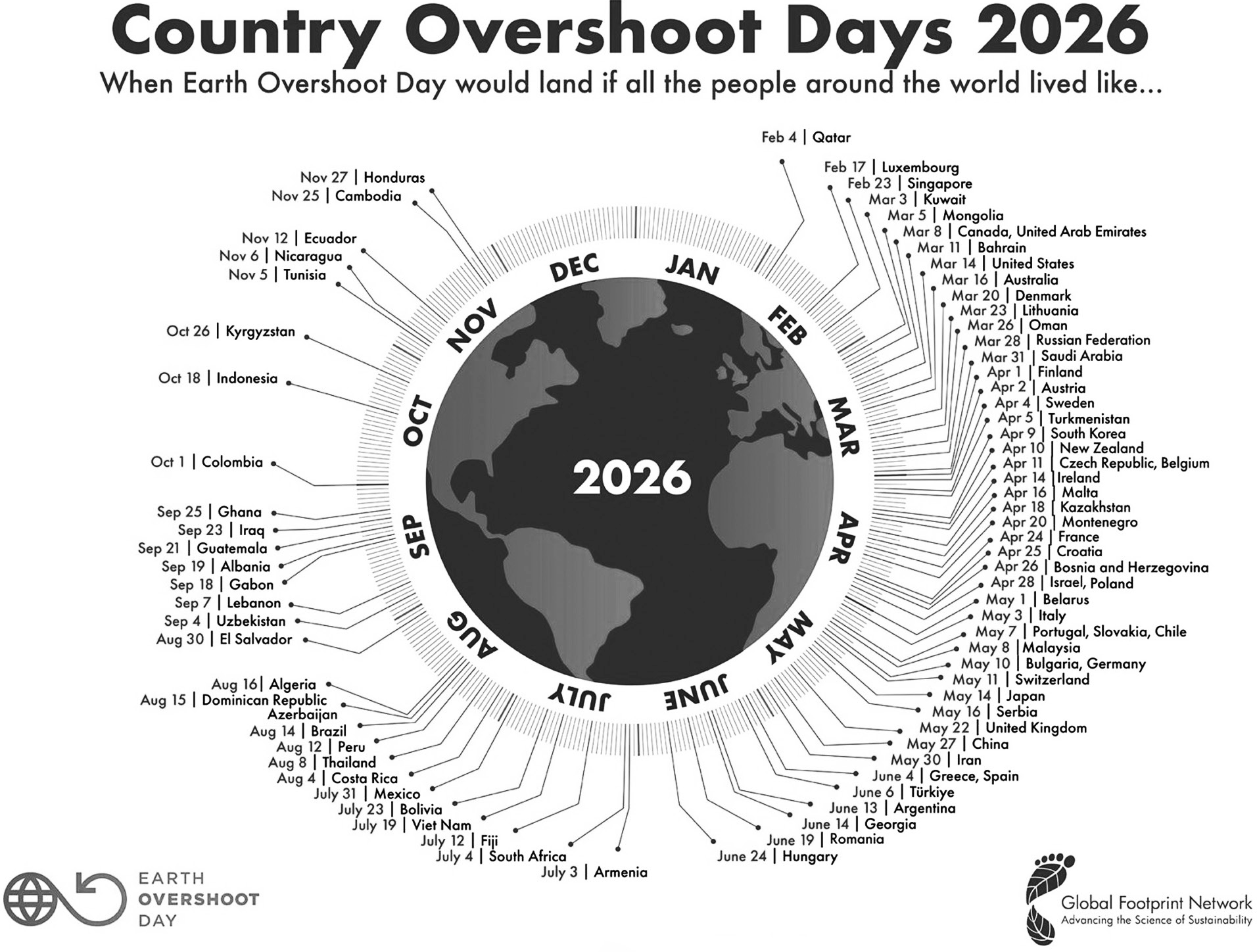
“Earth Overshoot Day” has been moved back to August 1, 2024, which means that that day we have exhausted the resources that the planet is capable of generating in a year.
Earth Overshoot Day occurred on 24th July in2025.
This means humans have consumed an entire year's worth of resources in under seven months.
Earth Overshoot Day 2026 fell on July 30, 2026
The first record, in 1970, was located on December 29. Five decades later and with more than 5 months still ahead, we have already exhausted our quota of Earth's biological resources for the year 2024.
Current Rate of Consumption: In 2025, Earth Overshoot Day arriving on July 24 indicates that humanity is using nature 1.8 times faster than Earth's ecosystems can regenerate. Put simply, we would need 1.8 Earths to sustain our current consumption levels.
Long-Term Trend: The date has gradually shifted earlier over the decades. In 1970, Overshoot Day was in December. It has now crept into mid-to-late July.
National Disparities: Not all countries consume at the same rate. If the entire world population lived like the average resident in the United States or Qatar, Overshoot Day would arrive as early as February
What is Earth Overshoot Day?
Earth Overshoot Day is the day on which the number of natural resources and services that mankind requires in a particular year exceeds what the planet can replenish that year.
Carbon dioxide in the atmosphere and the depletion of natural resource reserves serve as the major sources of waste accumulation that sustain the deficit.
The Global Footprint Network, a worldwide research organization that offers decision-makers a range of tools to assist the human economy function within Earth’s ecological bounds, hosts and calculates Earth Overshoot Day.
The Global Footprint Network counts the number of days each year when Earth’s biocapacity is sufficient to support humanity’s Ecological Footprint to estimate
the date of Earth Overshoot Day. The rest of the year is consistent with a worldwide overshoot.
Earth Overshoot Day= Earth’s Biocapacity x 365
Humanity’s Ecological Footprint
The idea for Earth Overshoot Day originated with Andrew Simms of the UK think tank New Economics Foundation, who in 2006 collaborated with Global Footprint Network to introduce the inaugural worldwide Earth Overshoot Day initiative.
Since 2007, WWF has taken part in Earth Overshoot Day. So, what caused the date to come back to what it was in 2019?
To make matters worse, WWF predicted that in 2021, deforestation will rise by 43% annually.
Overshoot Day is crucial for several reasons:
Raising Awareness: It highlights the unsustainable nature of current consumption patterns and the need for global cooperation to address environmental challenges.
Encouraging Action: By recognizing the ecological deficit, individuals, businesses, and governments are motivated to adopt more sustainable practices and policies.
Promoting Sustainability: The day serves as a platform for promoting renewable energy, conservation efforts, and sustainable resource management.
Fostering Global Cooperation: Addressing the ecological crisis requires collaboration across borders, with countries learning from each other’s successes and challenges.
Genome of Salt-secreting Mangrove Species
Genome of Salt-secreting Mangrove Species
For the first time, researchers have released the reference- grade complete genome sequence of Avicennia marina, a real mangrove species that is extremely salt-tolerant and salt-secreting.
Avicennia Marina
It is one of the most common mangrove species in all of India’s mangrove formations. It is a salt-secreting, exceptionally salt-tolerant mangrove species that grows best in 75% seawater and can withstand >250% seawater.
It is also one of the few plant species that, in addition to its remarkable ability to prevent salt from entering the roots, can excrete 40% of the salt through the salt glands in its leaves.
Importance of the Study
This work is important because abiotic stressors like salinization of soil and water and restricted water supply have an impact on agricultural output worldwide.
Water availability poses a serious threat to agricultural production in dryland regions, which make up around 40% of the world’s land area.
Salinity is predicted to inflict an annual loss of 27 billion USD and to be present in ~900 million hectares worldwide (with an estimated 6.73 million ha in India).
With 7,500 meters of shoreline and two large island systems, the coastal region is essential for India.
The genomic resources created by the study would enable researchers to explore the potential of the found genes for producing drought and salinity resistant versions of important agricultural species
Ipcc 7th Assessment Report
IPCC 7th Assessment Report
The Intergovernmental Panel on Climate Change (IPCC) convened in Hangzhou, China, to draft the Seventh Assessment Report (AR7) and a methodology report on carbon dioxide removal technologies.
This meeting is crucial, particularly after record warm temperatures last year, which were about 1.55 C above pre- industrial levels, and the U.S. withdrawal from the Paris Agreement.
Working Group I
Observation, monitoring of climate variables, reanalyses, process understanding.
Climate modelling (global, Earth System Models, regional, coupled, ocean,) and model evaluation.
Statistical climatology recent global and regional trends.
Near-termand long-term ensemble p rojections, storylines, emulators, uncertainties, carbon budget.
Climate services and decision-support tools
High-impact climate outcomes and abrupt changes including tipping points, compounding and cascading events.
Physical aspects of renewable resources (Energy, Water,
…).
Working Group II
Impacts, losses and damages on, and vulnerability and risk for natural (g. land, freshwater, biodiversity and oceans), human (e.g. human safety, mobility and migration, health, economic sectors, poverty, livelihoods, and cultural heritage), and managed human-natural systems with implications for climate resilient development.
Evaluating climate change adaptation: Methods for monitoring, setting indicators, metrics and targets, measuring observed and projected policy effectiveness at multiple temporal and spatial scales.
Scenarios and assessments of integrated adaptation, mitigation and development policies at multiple governance levels (local to multi-national) accounting for gender, equity, justice and/or Indigenous Knowledge, and local knowledges.
Working Group III
Mitigation responses in energy, industry, transport,
buildings, agriculture, forestry, land use and waste; Energy systems planning (including energy storage, demand side management, energy supply technologies, etc.).
Cross-sectoral mitigation options covering land, coastal and ocean systems, including sector coupling, Carbon Dioxide Removal, Carbon Capture and Storage, Carbon Capture and Utilization, etc.
Emission trends (consumption patterns, human behaviour and emissions trends, including economic, sociological and cultural aspects).
Scenarios and transitions at the global, national, regional and local scales.
IPCC 6th Assessment Report
The first section of the Intergovernmental Panel on Climate Change’s (IPCC) sixth assessment report (AR6) was released.
It prepares the groundwork for the November 2021 Conference of Parties (CoP) 26.
Assessing the state of the art in the physical science of climate change, including physical, chemical, and biological climate processes, as well as information from paleoclimate archives, reanalyses, observations, and climate model simulations, is the goal of the Working Group 1 report.
The Physical Science Basis of Climate Change: Key Findings
The IPCC has never said that, even under the best-case scenario, a 1.5 C rise was unavoidable.
The report backs up India’s claim that the world’s current climate catastrophe stems from previous cumulative emissions.
Over the next few decades, there will be more climate change worldwide; even with a 1.5 C rise in global temperature, there will be more heat waves, longer warm seasons, and shorter cold seasons.
Growing air pollution has decreased the frequency and intensity of monsoon rains in India and the rest of South Asia. Urbanization has increased the amount of strong rainfall in South Asian cities, as supported by several scientific studies conducted on Indian cities.
Several weather and climatic extremes are already being impacted by human-induced climate change in every part of the world.
Since the Fifth Assessment Report (AR5), there has been more evidence of observed changes in severe events, such as heat waves, heavy precipitation, droughts, and tropical cyclones, and their attribution to human activity.
Between 2021 and 2040, the average global air temperature may increase by more than 1.5 degrees Celsius over pre- industrial levels.
In actuality, the atmosphere’s carbon dioxide contents, at 416 parts per million, are the highest they have been in two million years.
In the end, the study demonstrates that human activity still has the power to influence how the climate develops in the future.
Using a low-emission scenario is the only way to keep the rise in temperature to less than 1.5 C.
To achieve this, nations would need to increase their 2015 Paris Agreement carbon reduction objectives.
It states that global warming can be halted if greenhouse gas emissions are cut in half by 2030 and reach net zero by 2050.
Previous IPCC Assessment Reports
The First Assessment Report was released in 1990 following the IPCC’s founding in 1988, and an update was issued in 1992.
New IPCC Assessment Report versions were released every six years, starting with AR2 in 1995, AR3 in 2001, AR4 in 2007, and AR5 in 2014.
1st Report (1990)
Greenhouse gas concentrations in the atmosphere are rising as a result of human-caused emissions.
In a century, the average global temperature has increased by 0.30 to 0.60 degrees.
If things continue as they are, temperatures are predicted to rise by 2 degrees Celsius by 2025 and 40 degrees Celsius by 2100.Sea level likely to increase 65cm by 2100.
This report formed basis for UNFCCC, 1992 2nd Report (1995)
It revised the previous projection for global rise in
temperature to 3oC by 2100 & sea level rise to 50 cm.
This report formed the basis for Kyoto Protocol. 3rd Report (2001)
It revised the predicted temperatures to 1.4 o C – 5.8 oC by
2100 compared to 1990.
Rainfall to increase, sea level likely to rise by 80 cm from 1990 by 2100.
Frequency, intensity & duration of extreme weather events to increase.
4th Report 2007
Greenhouse Gas Emissions rose by 70% between 1970 & 2004.
Atmospheric concentrations of CO2 in 2005 (379 ppm) the highest in 650000 years.
In the worst-case scenario, global temperatures could rise by 4.5o C by 2100 from pre industrial levels; sea levels could be 60 cm higher than in 1990.
It won Nobel Peace Prize for IPCC.
This report formed the basis for 2009 Copenhagen COP.
5th Report (2014)
Temperatures rise by 2100 could be 4.8 C from pre- industrial times.
Atmospheric Concentrations of CO2, CH4 & N2O were at unprecedented levels in the last 800000 years.
More frequent & longer heat waves “virtually certain”.
Large fraction of species faces extinction.
This report formed scientific basis for Paris Agreement 2015.
IPCC Working Group II Report
Working Group II report has been released with the title “Climate Change 2022: Impacts, Adaptation and Vulnerability”.
Impacts, Adaptation and Vulnerability: Key Findings Most populated regions are at high risk
Cities, which house more than half of the world’s population, are at the highest risk from climate change.
Poor most hurt
Although the effects of climate change transcend national boundaries, the poorest people suffer the most.
When it comes to the difference between what is being done and what is required for adaptation, low-income groups are most affected.
Every degree of rising in warming increases risks
The negative effects increase with each degree of global warming, as do the associated costs and damages. If there is a 1.5 degree Celsius ( C) increase in global warming beyond pre-industrial levels, up to 14% of species might become extinct. At 3 C and 4 C of global warming, the probability rises to 29% and 39%, respectively.
Some changes irreversible
Certain losses resulting from climate change, like the extinction of species, cannot be reversed; others are getting closer to irreversibility as climate change picks up speed. These include the melting of permafrost and the retreat of glaciers, especially in the Arctic.
Impact on health, food, agriculture
As the situation deepens, human civilization will
increasingly suffer heat stress, water scarcity, dangers to food security, and flood hazards.
Climate change has unquestionably damaged people’s physical and mental health worldwide
Plastic Waste Management Rules
Plastic Waste Management Rules, 2016
The Plastic Waste (Management and Handling) Rules, 2011 have been superseded by the Plastic Waste Management Rules, 2016, as announced by the government.
It expanded the regulations to include all villages, while they had previously only been permitted up to municipal areas.
It raised the minimum thickness of plastic carry bags from 40 to 50 microns and stipulated a minimum thickness of 50 microns for plastic sheets in order to assist the collection and recycling of plastic trash.
To include producers’ and generators’ obligations in the system for managing plastic waste and to establish a method for producers/brand owners to collect back plastic garbage in accordance with the expanded producer’s responsibility.
To develop a waste management system by requiring makers, importers, and dealers of plastic carry bags and multilayered packaging to pre-register in order to collect the plastic waste management charge (Rule 15).
In two years, the production and usage of multilayered plastic that is not recyclable should be discontinued.
Responsibility of local bodies and Gram Panchayats
The local bodies oversee establishing, coordinating, and operationalizing the waste management system as well as carrying out related tasks.
Responsibility of retailers and street vendors
Retailers and street sellers are subject to penalties if they sell or distribute goods in plastic sheet or multilayered packaging, which are not manufactured and labelled or marked, as prescribed under these rules.
Reuse of plastic waste
The possibilities for reusing plastic in a variety of applications, such as waste to electricity, waste to oil, and road building, will improve plastic recycling.
2018 Amendment
According to the revised regulations, only MLP (multi- layered plastic) that are “non-recyclable, non-energy recoverable, or with no alternate use” are subject to the phase-out of MLP.
It removed Rule 15, which called for the explicit price of carry bags as stated in the 2016 rule.
The new rules also required an automated central registration system to be developed by the Central
Pollution Control Board (CPCB) for the registration of the producer, importer, or brand owner.
Plastic Waste Management Amendment Rules 2021
Ministry of Environment has issued the draft Plastic Waste Management Rules, 2021.
Draft Rules 2021
The Ministry of Environment, Forest and Climate Change has notified the Plastic Waste Management Amendment Rules, 2021, on 12th August 2021, prohibiting identified single use plastic items, which have low utility and high littering potential, with effect from 1st July 2022.
The manufacture, import, stocking, distribution, sale and use of plastic carry bags having thickness less than thickness of one hundred and twenty microns is also prohibited with effect from 31st December, 2022.
Non-woven plastic carry bags of less than 60 gram per sqm (GSM) are also prohibited from 30th September 2021.
The Departments of Science and Technology and Biotechnology support research projects for alternatives to banned single-use plastic items, as per scheme guidelines.
The Ministry of Micro, Small and Medium Enterprises has schemes to provide support to MSME units, which include support to such units which were earlier involved in manufacturing of banned single use plastic items for switching over to alternatives / other products.
Plastic Waste Management (Amendment) Rules, 2024:
On 14-3-2024, the Ministry of Environment, Forest and Climate Change notified the Plastic Waste Management (Amendment) Rules, 2024 to amend the Plastic Waste Management Rules, 2016.
The amendment provides that the manufacture of carry bags and commodities shall be permitted to be made from compostable plastics or biodegradable plastics subject to mandatory marking and labelling laid down under these rules and the regulations of the Food Safety and Standards Authority of India for food contact applications
Pollution Assessment of Ganga
Pollution Assessment: River Ganga
The Ganga river, which flows through major cities like Haridwar, Kanpur, Varanasi, and Kolkata, receives almost all the wastewater from these urban areas.
It is heavily polluted with faecal coliform bacteria and organic pollutants, especially between Kannauj and Tarighat.
The main sources of pollution are untreated sewage, industrial wastewater, and runoff from open drains and major tributaries.
Even treated sewage struggles to disperse due to diversion by Upper and Lower Ganga canals, leading to minimal flow in the main river.
Industries like tanneries, sugar mills, and pulp and paper mills are major contributors to pollution.
The Ramganga and Kali-East rivers, carrying pollution from Uttarakhand and Uttar Pradesh, need urgent environmental monitoring to ensure compliance with regulations.
The study examined the different types of microplastics found in the Ganga in addition to quantifying their quantity.
Ehylenevinyl is particularly suited for food, drugs and cosmetic packaging.
Polyacetylene is used as a doping agent in the
electronics industry.
Polypropylene is also used in packaging, plastic sheets, fibre, fabrics, rope, etc.
Persistent Inorganic Pollutant (PIP) is mainly used in footwear and baby bottle nipples.
Polyamide commonly known as nylon, is used as a natural fibre and as metal wires in clothing and industry.
Conservation of Ganga
Ganga Mahasabha
The Ganga Mahasabha was founded by Madan Mohan Malaviya in 1905 to advocate for the preservation and uninterrupted flow of the Ganges River. On November 5, 1914, British India recognized the fundamental right of Hindu believers to have unrestricted access to the Ganges. This day in Indian history is known as ‘Aviral Ganga Samjhauta Divas’, meaning ‘Uninterrupted Ganga flow agreement day’.
Ganges Action Plan
The Ganges Action Plan, introduced in 1986, initially covered 25 Class I towns, including 6 in Uttar Pradesh, 4 in Bihar, and 15 in West Bengal. Its main goals were to prevent hazardous and industrial waste from polluting the river and to improve water quality by intercepting, diverting, and treating household sewage. Despite some delays, the plan garnered attention and served as a model for addressing pollution in other rivers. The Indian government proposed expanding this approach nationwide through a National River Action Plan (NRAP).
National River Ganga Basin Authority (NRGBA)
The National River Ganga Basin Authority (NRGBA)
was established by the Central Government of India on February 20, 2009, under Section 3(3) of the Environment Protection Act (EPA) of 1986. It designated the Ganges as India’s “National River.” In 2016, its responsibilities were assumed by the National Ganga Council.
National Ganga Council
The National Ganga Council, also known as the National Council for Rejuvenation, Protection, and Management of River Ganga, was established under the River Ganga (Rejuvenation, Protection, and Management) Authorities Order, 2016. Its main responsibility is to prevent pollution and revitalize the Ganga River Basin, which includes the Ganga River and its tributaries.
Members of National Ganga Council
The National Ganga Council includes the Prime Minister as the Chairperson and the Union Minister for Jal Shakti as the Vice-Chairperson. Other members include Union Ministers responsible for Environment, Finance, Power, Housing, Science & Technology, and State for Tourism & Shipping. Also, Chief Ministers of states through which the Ganga or its tributaries flow are also part of the council. Niti Aayog’s Vice Chairperson is also a member.
Namami Gange Programme
The Namami Gange Programme is a significant government initiative launched in 2014 to conserve and rejuvenate the Ganga River. It aims to reduce pollution and ensure the river’s long-term health. The program is managed by the National Mission for Clean Ganga (NMCG) at the national level, along with State Program Management Groups (SPMGs) at the state level.
Under Namami Gange Programme, a comprehensive set of interventions such as wastewater treatment, solid waste management, river front management (ghats and crematoria development), e-flow, afforestation, biodiversity conservation and Public Participation etc. have been taken up for rejuvenation of river Ganga and its tributaries.
The programme was subsequently extended up to 31st March, 2026.
National Mission for Clean Ganga
NMCG is the implementation wing of National Ganga Council.
NMCG have released/disbursed Rs. 15,015.26 crore to various agencies during Financial Year 2014-15 till 31st October 2023, for implementation of projects under the Programme.
It is under Ministry of Jal Shakti.
Ganga Manthan
Ganga Manthan was a national conference held in 2014 by
the National Mission for Clean Ganga. Its purpose was to bring together stakeholders to discuss the issues related to the Ganges River and develop a plan for its revitalization and cleaning.
Clean Ganga Fund
The Clean Ganga Fund was created in 2014 as a trust under the Indian Trust Act, 1882. It allows both public and private sector corporations to contribute to the fund as part of their Corporate Social Responsibility (CSR). Also, resident Indians, Non-Resident Indians (NRIs), and Persons of Indian Origin (PIOs) are also permitted to contribute to support the preservation of the Ganga River.
Utilization of funds
Cleaning up of the Ganges
Setting up of waste treatment plants
Conservation of biotic diversity of the river
Development of public amenities
Activities such as Ghat redevelopment and Research and Development and innovative projects
Way Forward
The Ganga cannot be restored by only pollution- abatement measures.
Effective policymaking needs a scientific base.
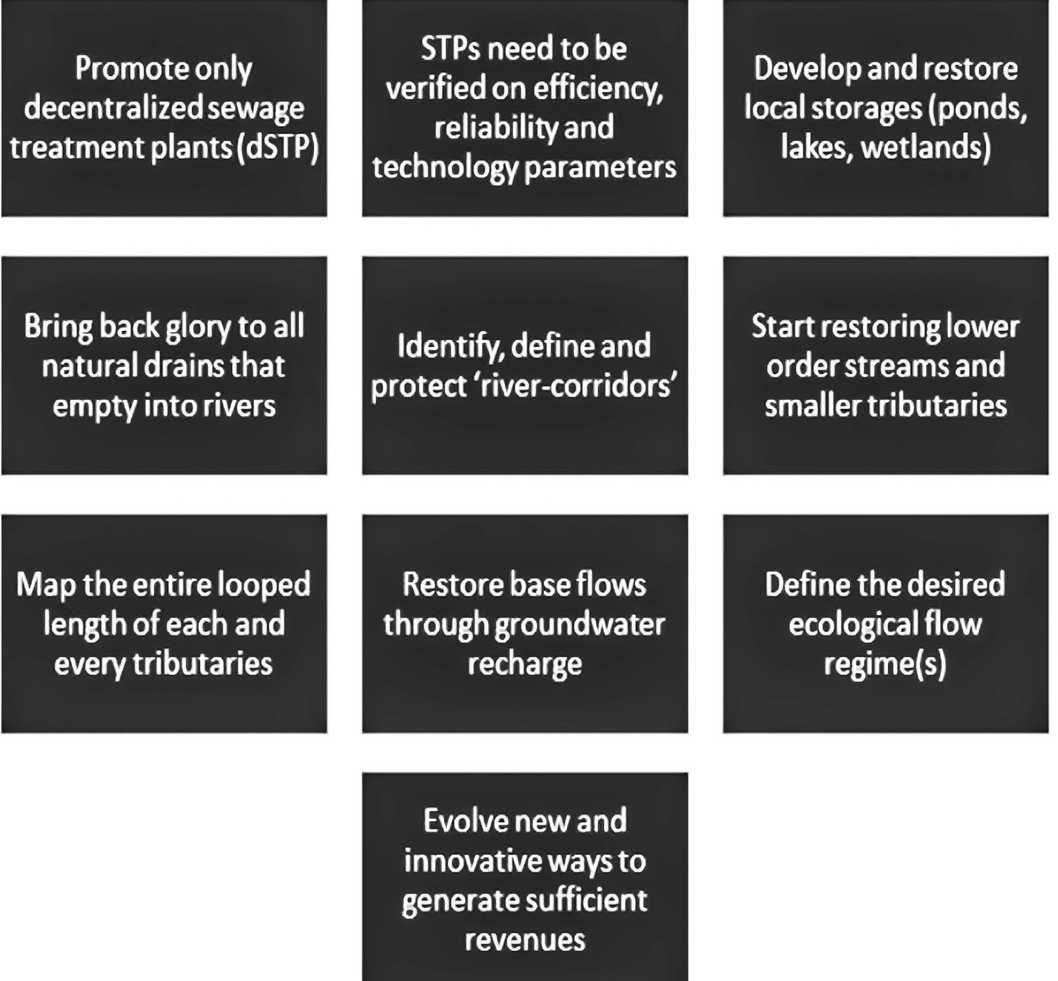
10 steps that can help in conservation of Ganga River
Waste-to-energy (wte) Guidelines 2025
Waste-to-Energy (WtE) guidelines 2025
The Ministry of New and Renewable Energy (MNRE) has updated the guidelines on ‘Waste to Energy’ and ‘Biomass’ components of the National Bioenergy Programme.
• Key Features of the Guidelines
• Staggered Subsidy: Subsidies are disbursed in two stages to improve developer cash flow.
• Disbursement Phases: 50% is released upon obtaining the Consent to Operate; the remaining 50% is issued when the plant hits 80% of its rated capacity.
• Pro-Rata Payout: Plants operating between 50% and 80% capacity can receive proportional financial assistance.
Minimum Threshold: Projects must maintain at least a 50% Plant Load Factor (PLF) to qualify for any government subsidy
Gross Environment Product
Gross Environment Product (GEP)
The government of Uttarakhand recently declared that it will begin valuing its natural resources using the Gross Environment Product (GEP), which is expected to be similar to GDP.
What is the need for Uttarakhand for such an initiative?
The state has more than 71% of its land covered by forests.
Uttarakhand provides the country with services worth Rs 95,112 crore annually thanks to its biodiversity.
It is also the location of the Himalayas, the Ganga, Yamuna, and Sharada rivers’ sources and wildlife sanctuaries including Corbett and Rajaji Tiger sanctuaries.
The state of Uttarakhand offers several environmental services, and as a result, such services naturally deteriorate with time.
What is Gross Environment Product?
The Gross Environment Product (GEP) is a system of evaluation that quantifies the biophysical and financial worth of an area’s ecosystem services.
It is among the elements of the green GDP.
Uttarakhand has became the first state in the India to assign monetary values to its natural resources, including air, water, forest, and soil and termed it as the Gross Environment Product (GEP).
Concept of Green GDP
The Green Gross Domestic Product (GGDP) measures economic growth by factoring in the effects of such growth on the environment in addition to the conventional GDP of a nation.
It accounts for the expenses associated with climate change and monetizes the loss of biodiversity.
Green GDP = GDP - Net natural capital consumption (including resource depletion + environmental degradation & protective and restorative environmental initiatives).
Advantages of Gross Environment Product (GEP)
One significant indication of sustainable development is the state of ecosystem services, which may be measured using this method.
It can assist in determining how human pressure affects our ecology and natural resources.
It may be used as a scientific foundation for governmental financial transfers and eco-compensation.
It may also be used to gauge how far eco-civilization has come.
Challenges in calculation of Gross Environment Product (GEP)
Policy Gap – There is lack of recognition of ecosystem services in economic decision-making and development planning.
Market Gap – There is an inadequate or missing traditional market for many ecosystems services & is therefore non-tradable.
Institutional Failures – There is insufficient compensation for ecosystem services.
Knowledge Gaps – The provision of ecosystem services that regulate and support activities at a profit has some difficulties. It is possible for calculations in valuation to be based on conjecture or speculative assumptions.
Kigali Amendment
India approved a significant modification to the five- year-old 1989 Montreal Protocol, which protects the ozone layer.
By 2023, a national plan will be created for the phase- down of hydrofluorocarbons in accordance with the appropriate timeline for India, following the necessary engagement with all industry players.
Kigali Amendment
The removal of ozone-depleting chemicals from cooling systems was accomplished by the Montreal Protocol, however doing so released powerful greenhouse gases (such HFCs) into the atmosphere.
Two of the main greenhouse gas emitters are power required to run cooling systems and hydrofluorocarbons (HFCs).
The only treaty that has been ratified by all countries, the Montreal Protocol, introduced the Kigali Amendment in 2016 to address this issue and broaden its scope.
Parties to the Montreal Protocol will gradually reduce their production and use of hydrofluorocarbons, or HFCs, as per the Kigali Amendment. It becomes operative on January 1st, 2019.
The non-compliance actions are part of a legally enforceable agreement between the signed parties.
Up to 2045, the parties are anticipated to cut back on the
production and consumption of hydrofluorocarbons (HFCs) by around 80–85% relative to current baseline levels.
China and the United States must reach the same goal by 2045 and 2034, respectively, while India must cut its usage of HFC by 80% by the year 2047.
Starting in 2032, India will phase down HFCs in four stages, with a cumulative reduction of 10% in 2032, 20% in 2037, 30% in 2042, and 85% in 2047.
Benefits
By 2100, this phase-down is predicted to stop the rise in the average world temperature by 0.5 C.
The phase-down of HFCs is anticipated to reduce greenhouse gas emissions, which will help stop climate change and benefit people.
In accordance with the predetermined timeline, the hydrofluorocarbon producing and consuming industries will phase them out and switch to non-HFC and low global warming potential technologies
Plastic Mixed Hand Paper Made
Plastic Mixed Hand paper Made
To lessen the threat of plastic pollution in the environment, Khadi and the Village Industries Commission (KVIC) have successfully registered a patent for their creative handmade paper that mixes plastic.
Under Project REPLAN (Reducing Plastic from Nature), the handmade paper containing a mixture of plastic was created.
This is an innovative concept that minimizes plastic waste from the environment by using degraded, diluted, and repurposed plastic trash with paper pulp to make handmade paper in India.
Project REPLAN
In this project, waste plastic is gathered, cleaned, diced, beaten, and softened. It is then combined in a pulp-to- plastic waste ratio of 80% with cotton rag pulp, the basic material used to make paper.
Micro Plastic Pollution in Ganga
At Varanasi, Haridwar, and Kanpur, the Ganga is severely contaminated with microplastics, according to the non-profit Toxic Link in Delhi.
Iucn World Conservation Congress
IUCN World Conservation Congress
The IUCN World Conservation Congress is a gathering held every four years by the International Union for
Conservation of Nature (IUCN) to bring together various stakeholders.
The goal is to discuss environmental conservation and explore how nature can help address global challenges.
This recent congress took place in Marseille, France, and included the organization’s first meeting specifically focused on cities and regions.
World Trees Report
World Trees Report
The report is launched by Botanic Garden Conservation International.
1/3rd of the world’s trees is at risk of extinction.
440 species of trees have fewer than 50 individuals remaining in the wild, and 17,500 kinds of trees roughly 30% of all species are at risk of going extinct, according to the State of the World’s Trees study.
Magnolias and dipterocarps, two tree species that are frequently found in Southeast Asian rainforests, are among the most endangered.
Threats also exist for ebonies, maple trees and oak trees.
Botanic Garden Conservation International
Botanic Garden Conservation International (BGCI)
Botanic gardens in over 100 countries are represented by Botanic Gardens Conservation International (BGCI), a membership organization.
It was founded in 1987 as an independent UK charity—not an international organization—with the goal of creating a global network for plant conservation connecting all botanic gardens worldwide.
India’s Plastic Pact
India’s Plastic Pact
The India Plastics Pact is a collaboration between WWF India and CII, supported by the global NGO WRAP. It aims to reduce plastic pollution and minimize plastic packaging in supply chains by setting deadlines and engaging various stakeholders. The ultimate goal is to create a world where plastic is valued and doesn’t harm the environment.
What are the targets under Plastic Pact?
India Plastic Pact aligns around 4 targets that are:
• Define a list of unnecessary or problematic plastic packaging & items & take measures to address through redesign & re-innovation.
• By 2030, 100% plastic packaging to be reusable & recyclable.
• By 2030, 50 % of plastic packaging to be effectively recycled.
• By 2030, 25% average recycled content across all plastic packaging.
Clean Energy Research Initiative and Shoonya Campaign
Clean Energy Research Initiative
Launched in 2009, the program seeks to enhance national research capabilities to reduce the cost of renewable energy through translational research that is pre- competitive, disruptive innovations led by research, and the development of institutional and human capacity.
CERI is similar to a nursery keeper who wants to raise as many seeds and saplings as possible in the hopes that one day they may become a fruit-bearing tree. CERI aims to support advances in science and technology to support the country’s solar energy ambition.
Support for solar-oriented basic research for solar devices, subsystems, and systems is included in the initiative’s scope.
The project encourages the feasibility evaluation of novel concepts and ideas, including a range of disruptive and emerging technologies, in order to determine if they might be developed into practical products or technologies.
Aims & Objectives
The aims and objectives include promoting advanced research beyond current industry practices, developing innovations tailored to India’s needs, fostering collaboration between industry and academia, and building a strong community of researchers in clean energy R&D.
Shoonya Campaign
The Shoonya Campaign, supported by the Rocky Mountain Institute (RMI) and RMI India, is a collaborative effort led by NITI Aayog to promote emission-free delivery trucks. Its goals include increasing consumer awareness about the benefits of zero-pollution delivery and accelerating the adoption of electric vehicles (EVs) in urban delivery services.
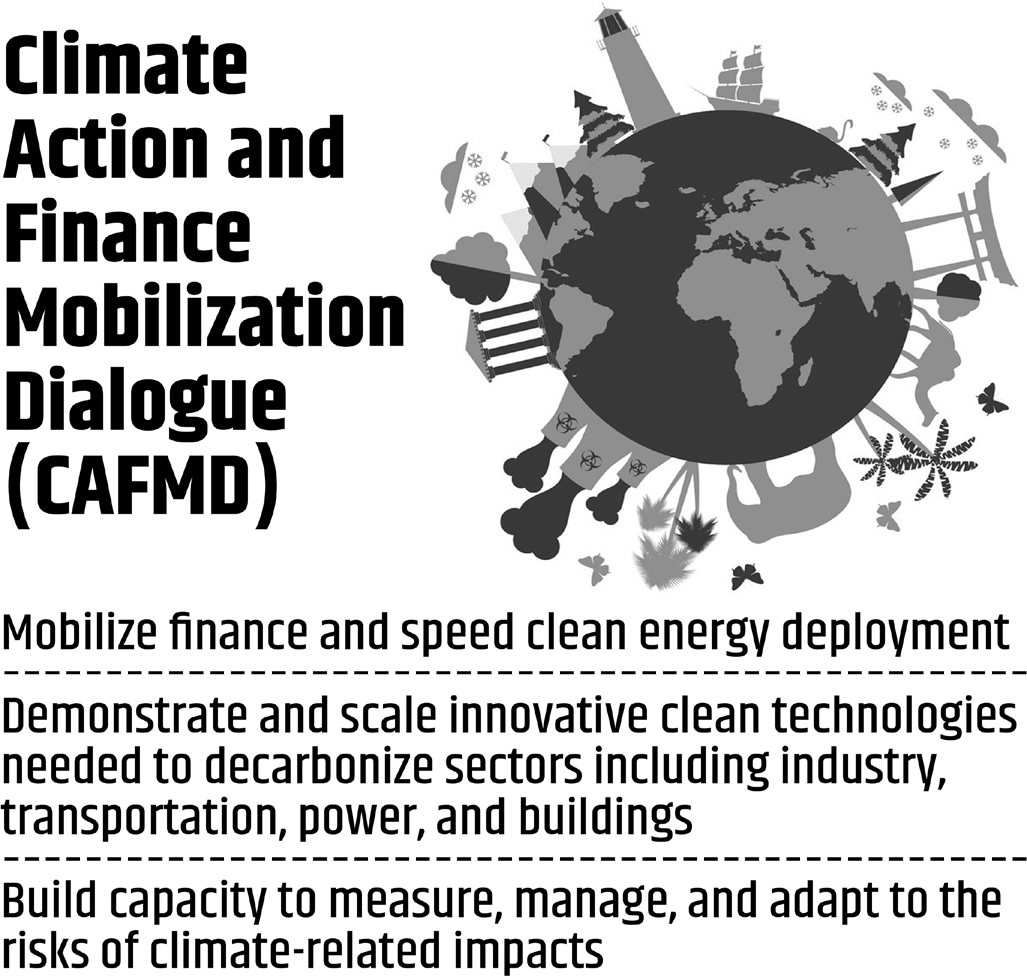
Climate Action and Finance Mobilization Dialogue (CAFMD)
The Climate Action and Finance Mobilization Dialogue (CAFMD) is a platform established as part of the U.S.- India Agenda 2030 Partnership, announced during the April 2021 Leaders’ Summit on Climate.
It aims to address financial issues related to climate action and provides an opportunity for the United States and India to enhance their collaboration on climate change.
CAFMD will focus on providing grants and concessional financing to support initiatives aligned with the goals of the Paris Agreement, aimed at strengthening climate action.
Commission on Air Quality Management
The National Capital Region has been directed to create a dependable online system to monitor and track efforts aimed at reducing dust pollution.
Commission on Air Quality Management Act
The Commission on Air Quality Management Act sets up a commission to oversee air quality in the National Capital Region and nearby areas. This commission aims to enhance collaboration, investigation, and problem- solving regarding air quality issues.
The “adjacent areas” refer to regions in neighboring states that could impact the air quality of the National Capital Region.
Composition of Commission
Chairperson: A person with at least fifteen years of experience in environmental protection or administrative experience of at least twenty-five years.
Representative of Environment Ministry: An officer not below the rank of Joint Secretary.
Ex Officio Members (5): Chief Secretaries or Secretaries responsible for environmental protection in Delhi, Punjab, Haryana, Rajasthan, and Uttar Pradesh.
Full-time Member (1): Former or current Joint Secretary to the Government of India.
Independent Technical Members (3): Experts in air pollution-related matters.
Technical Member from Central Pollution Control Board (CPCB): Representative from CPCB.
Technical Member from Indian Space Research Organization (ISRO): Nominee from ISRO.
Members from Non-Governmental Organizations (NGOs) (3): Experts in combating air pollution.
Representative of NITI Aayog: Not below the rank of Joint Secretary or Adviser.
Stakeholder Members (3): Representatives from sectors like agriculture, industry, transport, or construction.
Selection Committee
The central government will establish a selection committee to propose nominations for members of the Commission. This committee will be chaired by the Minister of Environment, Forests and Climate Change.
Functions of the Commission Includes
Developing and implementing strategies to prevent and control air pollution in the National Capital Region (NCR).
Establishing a framework for categorizing air pollutants.
Collaborating with technical institutions to conduct research and development activities.
Providing training and capacity building for addressing challenges related to air pollution.
Formulating various action plans, such as those aimed at tackling stubble burning and promoting afforestation.
Powers of the Commission
In the event of a conflict, the Commission’s orders or directions will take precedence over those of the relevant state governments, the Central Pollution Control Board (CPCB), state PCBs, and state-level statutory bodies. The Commission will be the only authority with jurisdiction over matters defined in the Act.
Limiting actions that affect the quality of the air.
Farmers that burn their stubble to cause pollution may be subject to regulations and fines by the commission for their actions. The central government will prescribe this compensation.
Penalties
Violations of the act’s provisions and the Commission’s directives may result in a fine of up to one crore rupees, five years in jail, or both.
The National Green Tribunal can consider an appeal against the Commission
Land Sinks and Carbon Sinks
Land Sinks
Land sinks can aid in addressing this dilemma as the globe is not on pace to cut GHG emissions at the rate required to prevent a 1.5 C rise in global temperature over pre-industrial levels.
GHG Emission & Land Sinks
Greenhouse gases, or GHGs, are continuously emitted
into the atmosphere and eliminated from it by means of natural “sinks” like the land and ocean.
On the one hand, ecosystems such as wetlands, forests, and grasslands are vital to the global effort to combat climate change because they operate as sinks, drawing out part of the CO2 released by human activity such as burning fossil fuels.
However, land may also produce emissions; for example, fire of forests and other disturbances can release CO2 into the sky.
Carbon Sink & Carbon Sequestration
Carbon Sink: A carbon-containing chemical substance is accumulated and stored for an infinite amount of time in a natural or manmade reservoir.
Carbon Sequestration: Carbon sinks extract carbon dioxide (CO2) from the atmosphere through this process.
Carbon sinks assist in addressing the climate problem.
Organic carbon sinks: These comprise soil, forests, and seas.
The ocean’s absorption of carbon dioxide causes acidification, endangering organisms such as corals, in contrast to other natural sinks.
Carbon Sink vs Carbon Source
Anything that emits more carbon into the atmosphere than it takes in is a carbon source, and anything that collects more carbon is a carbon sink.
Carbon is stored in forests, soils, seas, and the atmosphere, and it is constantly exchanged between them in a process known as the carbon cycle.
Because carbon is always moving, trees can function as sinks or generators of carbon at various periods.
Note: Land is a Carbon Sink not a Carbon Source i.e. Carbon sequestration from land > Carbon released from land.
Forests as carbon Sinks
As a forest’s density or area increases, it acts as a sink for carbon dioxide and stores carbon.
During photosynthesis, trees take up CO2 from the atmosphere and transform it into biomass.
This biomass breaks down and releases methane into the atmosphere when it is exposed to the air.
When this biomass is buried, the carbon is retained and forms a carbon sink.
The use of biomass as fuel (coal, petroleum) results in the atmospheric emission of CO2 (carbon source).
Compared to tropical rainforests, woods found at high latitudes retain more carbon.
Taiga and tundra regions contain one-third of the world’s soil-bound carbon dioxide.

Deterioration of Carbon sinks
As temperatures rise, woods are experiencing more moisture stress, which is causing widespread fire.
As a result of global warming, methane and carbon dioxide are released as permafrost melts.
Due to global warming, the tundra was a carbon sink in the 1970s but is now a source of carbon. (Global warming leads to more global warming positive feedback loop).
Land Sink as part of the mitigation strategy
In 1992, the United Nations Framework Convention on Climate Change (UNFCCC) acknowledged the significance of land both agricultural and forest as a mitigation strategy to lower CO2 emissions.
The Kyoto Protocol, which was established in 1997, supported the idea that governments should implement measures to increase their countries’ land carbon sink capacity and that these efforts might be offset by obligations to reduce emissions resulting from the use of fossil fuels. Pushed for the “full use of nature-based solutions in the post-2012 climate change regime” at the 2009 United Nations Conference of the Parties in Copenhagen.
The Bonn Challenge was subsequently introduced by the IUCN in 2011 with the goal of “restoring 150 million hectares of the world’s degraded and deforested lands by 2020 and 350 million hectares by 2030.” Participating nations and organizations committed to restoring “million hectares” of forested land.
To “prevent, halt, and reverse the degradation of ecosystems worldwide,” the UNGA designated 2021–
2030 as the UN Decade on Ecosystem Restoration in 2019. At the World Economic Forum in Davos, Switzerland, in 2020, representatives of the world’s largest corporations pledged to support the UN Decade on Ecosystem Restoration (2021–2030) by planting a trillion trees by 2030 and accelerating nature-based solutions.
To stop and reverse the loss of biodiversity and address climate change, the G7 nations—Canada, France, Germany, Italy, Japan, the United Kingdom, the United States, and the European Union vowed in 2021 to conserve or protect “at least 30% of the global land and at least 30% of the global oceans by 2030.”
The US, UK, and Norway spearheaded the LEAF Coalition (Lowering Emissions by Accelerating Forest Finance), a public-private initiative aimed at raising at least $1 billion to support nations that have made a commitment to safeguarding their tropical forests.
Iucn Green Status of Species
IUCN Green Status of Species
Context: The IUCN Green Status of Species is applied for the first time in an article that was published in the journal Conservation Biology.
Species are categorized into 9 Species Recovery Categories by the IUCN Green Status, which shows how much a species has recovered or declined in relation to its historical population levels.
It offers a more comprehensive view of the conservation status of species, taking into account both their danger of extinction and rate of recovery.
Each Green Status assessment measures:
• Impact of past conservation on a species
• A species’ dependence on continuing support
• How much a species stands to gain from conservation action within the next ten years.
• The potential for it to recover over the next century.
Blue Carbon and Marine Pollution
Blue Carbon
According to a recent UNESCO study, Sundarbans National Park in India is one of five locations with the greatest blue carbon reserves worldwide.
What is Blue Carbon?
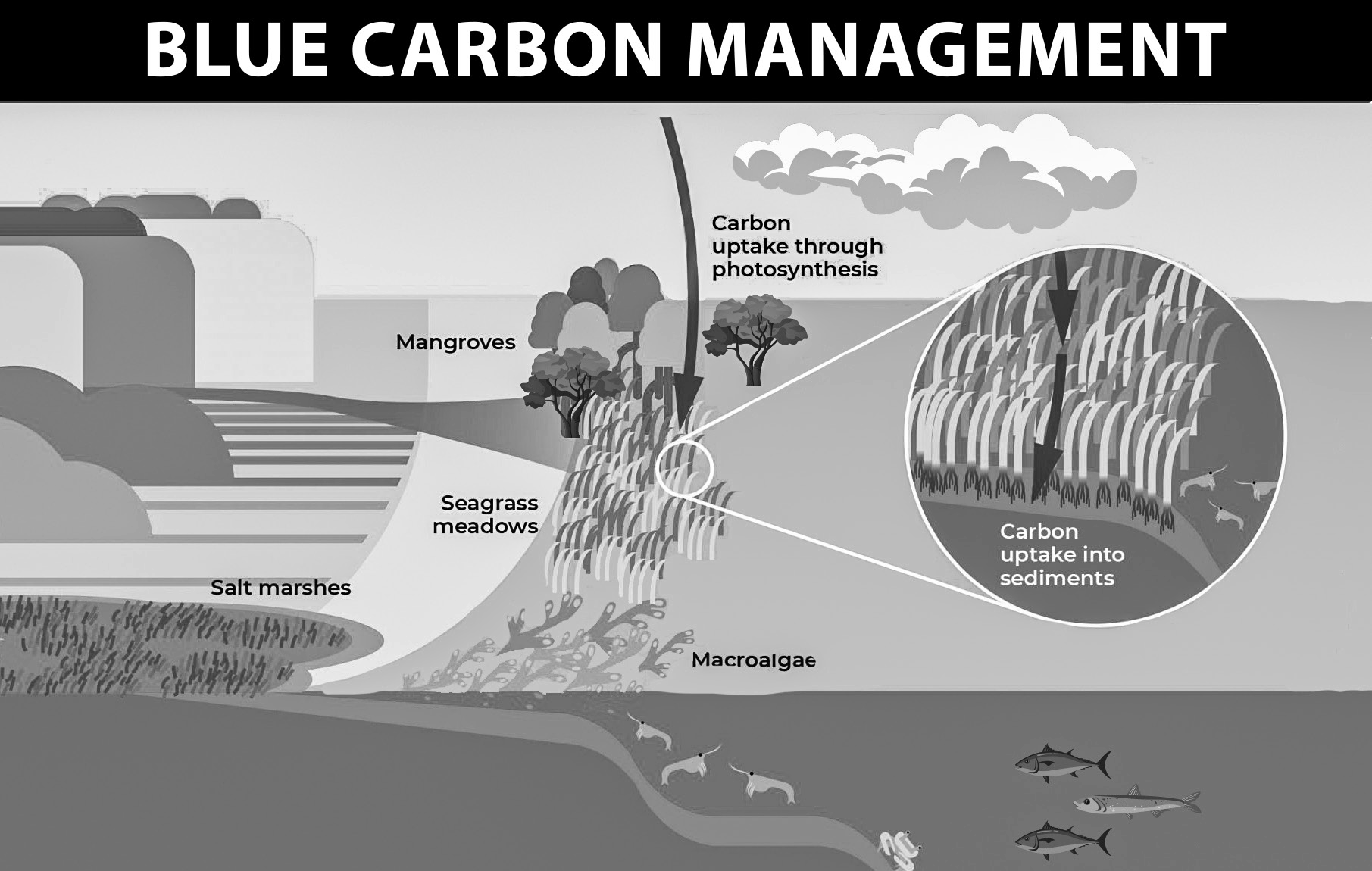
Did you know that the world’s coastal systems can store carbon for millions of years, even though they are far smaller than the planet’s forests? They also sequester carbon at a far quicker pace.
Blue carbon is the result of the ocean’s and coastal ecosystems’ sequestration of carbon dioxide from the atmosphere. This process is mostly carried out by algae, seagrasses, macroalgae, mangroves, salt marshes, and other plants found in coastal wetlands.
Blue Carbon Initiative
The effort seeks to reduce the effects of climate change by restoring and using marine and coastal ecosystems sustainably.
Initiative is led by:
• Conservation International
• IUCN
• Intergovernmental Oceanographic Commission
River Cities Alliance
Ministry for Jal Shakti launched the River Cities Alliance.
It is a forum specifically designed for river cities in India to brainstorm, talk about, and share knowledge on the sustainable management of urban rivers.
It is an alliance of the two Ministries i.e., Ministry of Jal Shakti & Ministry of Housing and Urban Affairs.
The objective of this initiative is to assist urban areas in lowering their water footprint, lessening their influence on rivers and other bodies of water, leveraging natural and intangible architectural heritage and related services, and creating self-sufficient and self-sustainable water resources by implementing a recycle and reuse strategy.
The alliance includes both Ganga Basin & Non-Ganga Basin cities.
The 30 member cities include Haridwar, Rishikesh, Kanpur, Ayodhya, Patna, Howrah, Ayodhya, Varanasi, Prayagraj, etc. from Ganga basin states and Aurangabad, Chennai, Hyderabad, Bhubaneshwar, Pune, Udaipur, Vijayawada, etc. from non-Ganga basin states.
Plastic Pollution in Aquatic Ecosystem
According to a recent United Nations Environment Programme (UNEP) assessment, by 2040, an estimated 23–37 million tons of waste up from 9–14 million tonnes annually in 2016 may make their way into the ocean annually.
Key Findings of the report
The plastisphere, or microbial community on plastic waste, currently encompasses all of Earth’s biomes. The paper discusses the severe strains that plastic pollution is placing on the environment and the urgent need to find solutions.
Even though they are labeled as biodegradable, plastics can take hundreds of years to break down in the water; trash still poses a threat to human health, biodiversity, and ecosystem health. Land-based sources are the primary contributors to plastic pollution and marine litter.
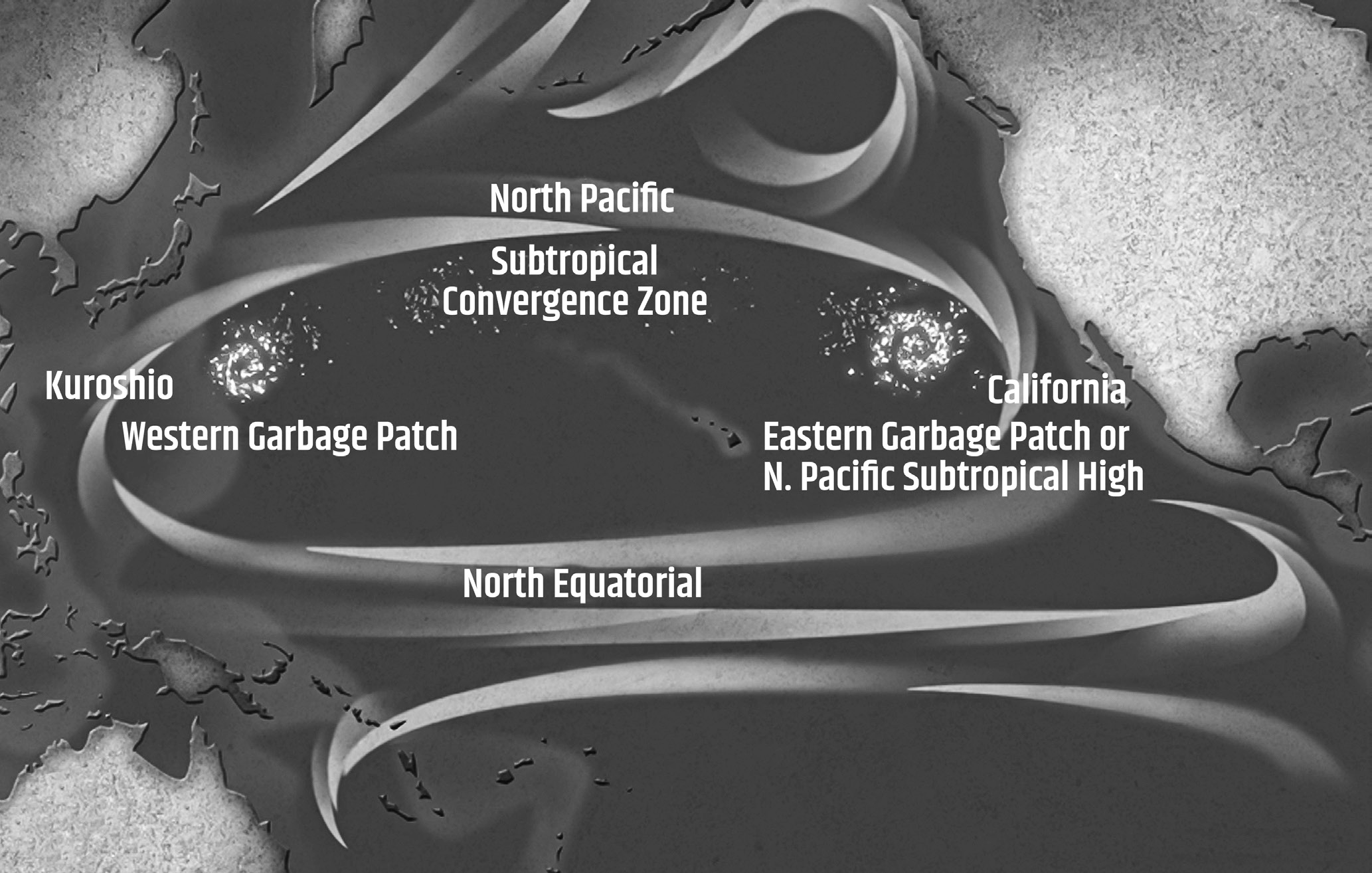
The Great Pacific trash patch is the most well-known concentration of seaborne plastic debris. Plastic may also affect plankton and primary production in marine,
freshwater, and terrestrial systems, which can change the global carbon cycle.
An estimated 1 meter of plastic bottles enter the ocean every minute, making up most of the rubbish found there. PET (polyethylene terephthalate) bottles are the main offender.
What is Plastisphere?
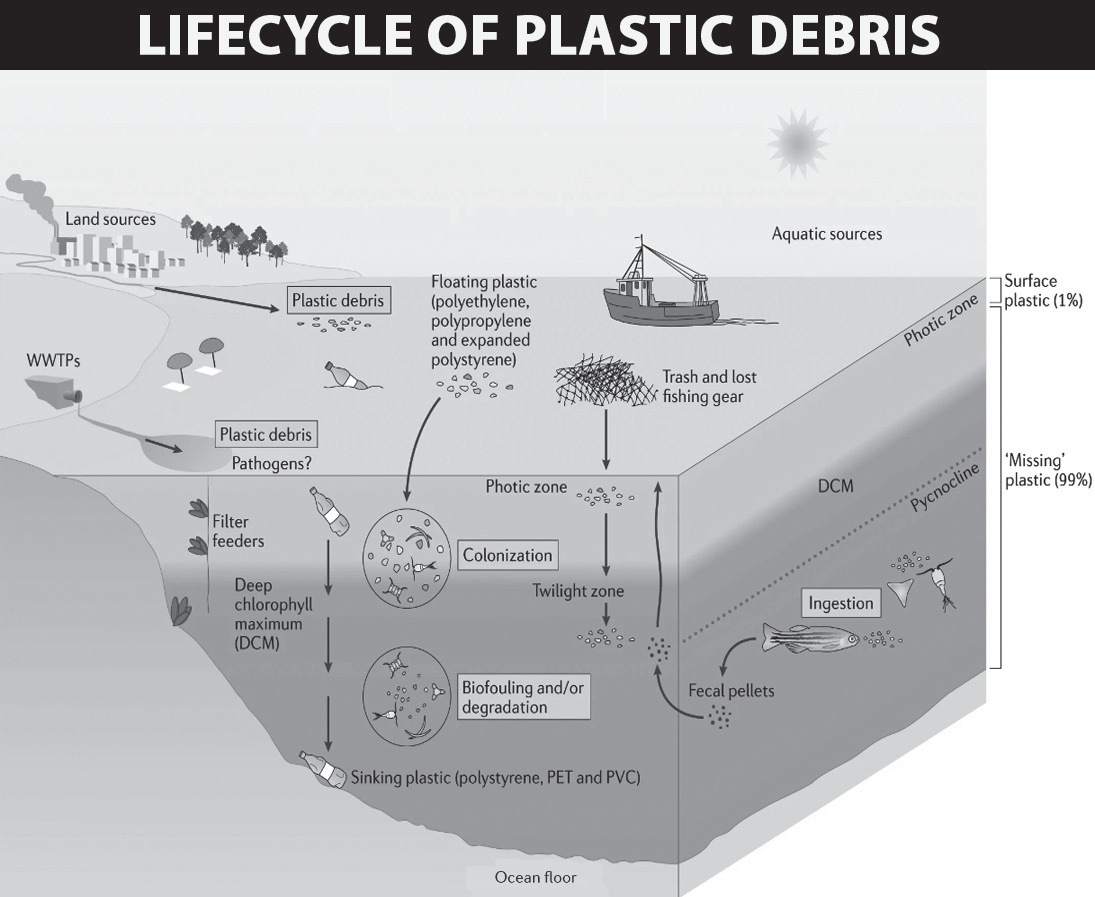
The plastisphere is a region, just like the atmosphere, magnetosphere, and hydrosphere; yet, it is also an ecosystem, much like the Siberian steppe or coral reefs, a plasticized marine habitat.
Ecosystems that have adapted to survive in habitats built of plastic by humans are referred to by this name. Floating objects in the water have the ability to attract life, which is why fishermen employ floating buoys to gather fish for harvesting.
Microbes like bacteria, algae, and other single-celled organisms congregate around and colonize plastic and other things floating in water on tiny sizes, and plastic marine waste is no exception.
Plastics attract carbon, iron, nitrogen, and phosphorus when immersed in water, which in turn attracts bacteria.
Even tiny bits of plastic marine trash the size of your pinky nail can operate as microbe aggregating devices.
This phenomenon is frequently referred to as the Zobell effect.
As a result, the community of bacteria expanding as a thin coating of life (a biofilm) on the surface of plastic is dubbed the “plastisphere,” which is comparable to the layer of life known as the “biosphere” on the exterior of the Earth.
A whole spectrum of interactions is conceivable in the plastisphere due to the presence of photosynthesizing organisms, predators, prey, symbionts, and parasites, much like in other ecosystems.
Great Pacific Garbage Patch
The North Pacific Subtropical Gyre surrounds the entire Great Pacific Garbage Patch, which is made up of two separate areas of marine debris: the Eastern Garbage Patch, which is situated between the states of Hawaii and California in the United States, and the Western Garbage Patch, which is situated close to Japan.
National Interlinking of Rivers Authority
The National Interlinking of Rivers Authority (NIRA), a free- standing, autonomous organization responsible for planning, examining, funding, and carrying out the nation’s river interlinking projects, was established by the Centre.
Structure of NIRA
The National Water Development Agency (NWDA) will be replaced by NIRA, which will be led by a secretary- rank official of the Government of India.
The New Institution will be able to raise funds and serve as an archive of borrowed funds received as loan or given on interest.
It will also have the authority to coordinate with neighboring countries, concerned states and departments, and on issues pertaining to environment, wildlife, and forest permits under river linking projects and their legal aspects.
National Water Development Agency
It was set up in 1982 as Autonomous Society under the society’s registration act 1860.
NWDA is the agency under Ministry of Jal Shakti.
In order to maximize the use of the water resources in the Peninsular River system, it was required to conduct the equilibrium of water and other studies on a realistic and scientific foundation.
The responsibility of the Himalayan Component of the National Perspective Plan was also given to NWDA in 1990.
It has also been tasked with creating assessments on the viability of intrastate connections that the States have suggested.
National Perspective Plan
The National Perspective Plan (NPP) was prepared by the then Ministry of Irrigation (now Ministry of Jal Shakti) in August 1980 for water resources development through inter basin transfer of water, for transferring water from water surplus basins to water-deficit basins.
Under the NPP, the National Water Development Agency (NWDA) has identified 30 links (16 under Peninsular Component and 14 under Himalayan Component) for preparation of Feasibility Reports (FRs).
Frothing in Yamuna River
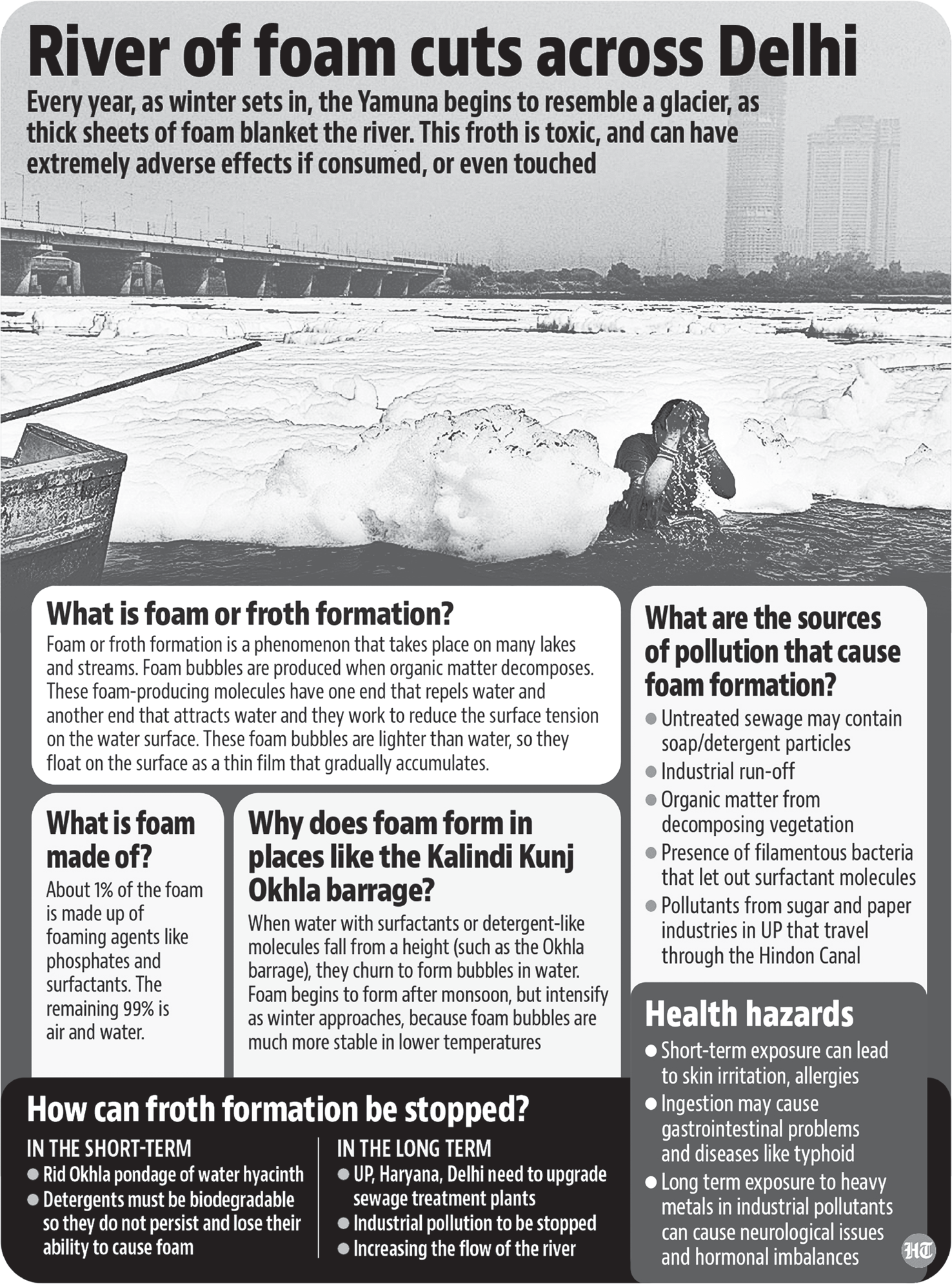
The Yamuna River’s severe pollution and images of white foam have been made public by Delhi’s Chhath Puja celebrations.
Although the formation of hazardous foam in the Yamuna is not new, not much has been done to identify the reason or address it up to this point.
Health hazards
Ingestion of these chemicals may result in gastrointestinal disorders and illnesses like typhoid.
Prolonged interaction with heavy metals in pollution from factories can result in brain disorders and hormone abnormalities.
Brief exposure to such foam in can cause skin irritation and allergy.
Polyaromatic Hydrocarbons
An MoU on source apportionment and forecasting of air pollutants in Delhi, particularly polyaromatic hydrocarbons, was inked by the government and IIT Kanpur.
Polyaromatic hydrocarbons (PAHs), which include benzene, toluene, and xylene, are substantially polluting the air in Calcutta, according to recent research.
The World Health Organization (WHO) states that these chemicals should not be in the air at all.
Polyaromatic Hydrocarbons
The primary source of these pervasive environmental pollutants, known as polycyclic aromatic hydrocarbons (PAHs), is incomplete combustion of organic sources, such as coal, oil, gasoline, and wood.
A lot of PAHs are poisonous, mutagenic, and carcinogenic.
Because PAHs are extremely fat soluble, they are easily absorbed from mammals’ digestive systems (Bioaccumulation).
Other particulate matter, such as PM2.5 and PM10, can bind to polycyclic aromatic hydrocarbons and become more harmful.
Sources
Natural
Naturally occurring in coal, crude oil, and gasoline, PAHs in the environment are caused by open burning, natural losses or seepage of petroleum or coal deposits, and volcanic events.
Anthropogenic
The burning of coal, oil, gas, wood, trash and tobacco also produces them.
There are several PAHs in cigarette smoke.
Cooking food at a high temperature causes PAHs to develop in meat and other meals.
One PAH that is commercially manufactured in the US is naphthalene, which is used to generate mothballs and other compounds.
Benzene Pollution
At room temperature, benzene is a colorless compound with a pleasant smell that burns easily.
Benzene swiftly dissipates into the atmosphere. Because its vapor is heavier than air, it might sink to the bottom.
One of the basic petrochemicals and a naturally occurring component of crude oil, benzene floats on top of liquids and dissolves very minimally in it.
Since benzene is a significant component of gasoline (petrol) and has a high-octane number.
Benzene, a volatile organic compound, combines with other air pollutants to create ground-level ozone, which may harm materials and crops by causing smog.
Where is benzene found and how it is used?
Benzene is produced by both natural and man-made processes. Naturally, it is emitted from forest fires and volcanoes.
Cigarette smoke, gasoline, and crude oil all naturally contain benzene.
Some types of lubricants, rubbers, dyes, detergents, medications, and insecticides are made with benzene.
Some companies utilize benzene to manufacture other chemicals that are used to make plastics, resins, nylon, and synthetic fibers.
Products including glues, paints, furniture wax, and detergents that contain benzene are the source of the benzene found in indoor air.
How benzene works
Benzene functions by disrupting the normal functioning
of cells. For instance, it may cause the bone marrow to generate insufficient red blood cells, potentially resulting in anemia.
Moreover, it can weaken the immune system by lowering white blood cell counts and altering blood antibody levels.
Within minutes to many hours, those who inhale high concentrations of benzene may experience the following signs and symptoms: Drowsiness, Dizziness, Rapid or irregular heartbeat, Death (at very high levels)
thinners and as an octane booster in gasoline engines. It is a clear, colorless liquid that turns into a vapor when exposed to air at room temperature. When Toluene (methylbenzene)
Toluene is used in paint exposed, toluene has a strong or sweet odour.
Xylene (dimethylbenzene)
Xylene is an environmental pollutant.
Xylene easily vaporizes and divides by sunlight into other harmless chemicals.
Sources
It serves as a solvent in a variety of sectors, including medical technologies, paints, polishes, and dyes.
Cigarette smoke from various automobiles and petrochemical companies emit xylene into the environment.
Combusting organic materials including coal, wood, and petroleum-based products.
Global Methane Initiative
The Global Methane Initiative is a collaborative effort involving various stakeholders such as development banks, NGOs, and governments, established in 2004. Its aim is to reduce methane emissions and promote the use of methane as a clean energy source.
The initiative focuses on five key industries: oil and gas systems, municipal solid waste, coal mining, agriculture, and municipal wastewater, which are significant sources of human-made methane emissions.
Earth’s Black Box
Earth’s Black Box
• The “Earth’s Black Box” is a steel vault designed to monitor climate change on Earth, similar to a flight recorder on an airplane.
• It will collect data daily on factors like ocean and land temperatures, atmospheric carbon dioxide levels, and biodiversity decline.
• The vault, the size of a school bus, will be installed in Tasmania, Australia, to track and hold people accountable for climate change.
Black Box in Airplanes
The black boxes are actually two orange metallic boxes containing the recorders.
Black boxes, comprising the cockpit voice recorder (CVR) and the flight data recorder (FDR), are essential components in most aircraft. These devices aid in reconstructing events leading to an accident. The CVR captures cockpit sounds and radio transmissions, while the FDR records various flight parameters like altitude, airspeed, heading, acceleration, and pitch.
How do the black boxes survive the crash?
The recording devices are stored inside a unit that is made from steel or titanium & are also insulated from factors such as extreme heat, cold or wetness.
To protect these black boxes, they are equipped towards the tail end of the aircraft – where usually the impact of a crash is the least.
To make black boxes discoverable in situations where they are under water, they are equipped with a beacon that sends out ultrasound signals for 30 days.
Securitization of Climate Change and E Dna
.
What is Securitization of Climate Change?
• Climate securitization involves shifting climate-related issues from regular political discussions to security matters, allowing emergency measures involving force or defense.
Currently, no UN forum is specifically tasked with addressing climate security challenges.
Also, discussions on the link between war and climate change have not been part of the annual conferences of the UN Framework Convention on Climate Change.
What is the need for Securitization of Climate Change?
There is proof that climate change might exacerbate disputes and give the UNSC a bigger role in the game.
The destruction of West African agriculture due to climate change has worsened the inter-ethnic conflict.
In South Sudan, flooding has resulted in widespread relocation, escalating tensions between communities.
The Horn of Africa’s eastern regions are experiencing a severe and protracted drought, which could aggravate the region’s already dire humanitarian conditions as political unrest and war escalate.
Rising sea levels for tiny island nations and conflict in Sudan, Ethiopia, and Egypt on the usage of Nile resources in the event of future droughts.
• It’s an attempt by industrialized countries, particularly the USA, to avoid taking accountability for their previous pollution. The UNSC might not be the best person to spearhead an international response to an issue that calls for cooperation from all nations and interested parties.
• A security-focused approach to one of humanity’s most pressing problems might undermine international cooperation.
• What would happen if the UNSC made climate negotiations an official forum? -
A small number of governments, particularly the P5 countries with veto power, will have total discretion over all decisions pertaining to climate change.
• Securitization may be advantageous because it draws attention to a problem and provides additional resources to fix it, but it can also have unfavorable effects, which is why India voted against it.
• It may result in unwise actions such as a general investment in bolstering military capabilities or an arms race between wealthy nations.
• India said that since everything covered by this resolution can be accomplished through the UNFCCC procedure, it is superfluous.
Way Forward
• The United Nations Framework for Climate Change (UNFCCC), which is now in place and democratically based on the collective voice, must be strengthened and given more faith.
Environmental DNA
• Researchers from two independent teams have shown that environmental DNA (e-DNA) can potentially detect and monitor endangered species.
• This method could help understand the composition of animal populations and track the presence of invasive species.
• However, it is currently not reliable enough to provide accurate population census data.
What is e-DNA?
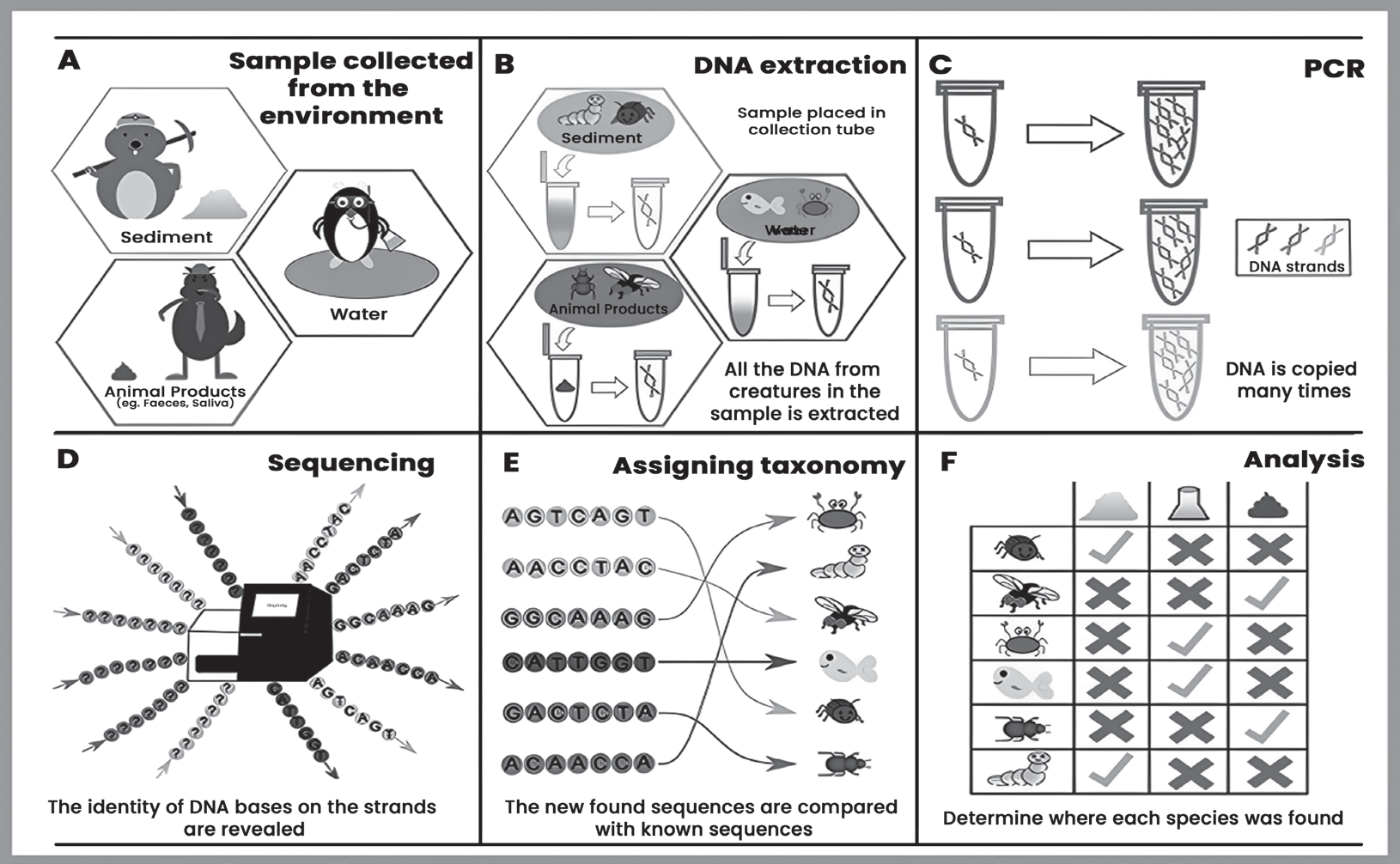
• e-DNA, or environmental DNA, is not directly obtained from individual organisms but is instead collected from various environmental samples such as soil, saltwater, snow, and air.
• This DNA is released by animals into their surroundings through processes like breathing, saliva, fur or feces, mucus, reproductive cells, shed skin, corpses, and hair.
e-DNA Metabarcoding
• e-DNA metabarcoding involves analyzing environmental samples using DNA sequencing techniques like metagenomics or metabarcoding.
• This method allows for the assessment of biodiversity by examining the DNA present in the environment.
• First, DNA is extracted from the samples, and Polymerase Chain Reaction (PCR) is used to amplify this DNA.
• Next, the amplified DNA is sequenced, and the resulting sequencing data is analyzed. Computational tools are utilized to match the sequences with known sequences, thereby identifying the species present and assessing overall biodiversity.
• This process combines advanced computational methods, molecular techniques, and traditional ecological fieldwork.
Important Current Affairs
Circular Economy
The European Union called for support for technological transfer to enhance ‘circular economy’ at fifth session of the United Nations Environment Assembly.
What is Circular Economy?
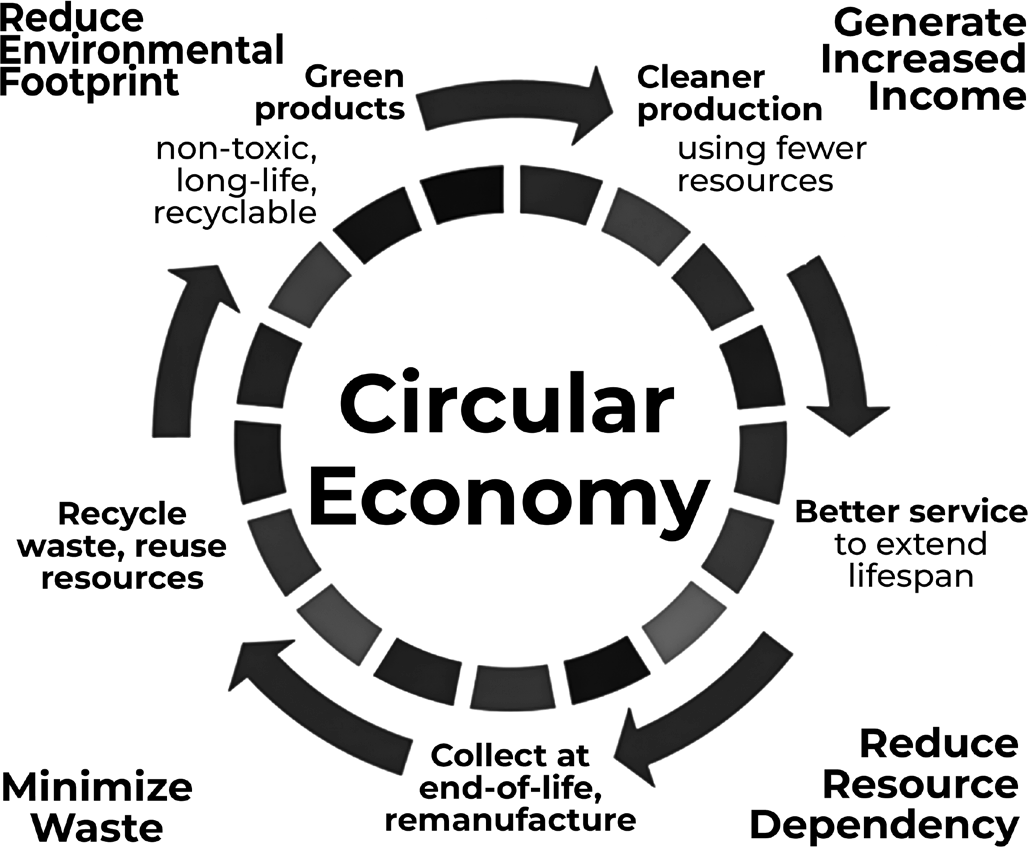
A circular economy is defined as “a production and consumption model that, for the longest period of time possible, involves sharing, leasing, reusing, repairing, refurbishing, and recycling existing materials and products. “The old linear economy stands in opposition to the circular economy.
Linear Economy vs Circular Economy
Natural resources are transformed into goods in a linear economy, and because of the manner these items are created and processed, they eventually end up as garbage. “Take, make, waste” is a common way to summarize this process.
In contrast, a circular economy minimizes the use of resource inputs and the production of waste, pollution, and carbon emissions by utilizing reuse, sharing, repair, refurbishing, remanufacturing, and recycling to form a closed-loop system.
The circular economy seeks to increase the productivity of resources by extending the lifespan of goods, supplies, machinery, and infrastructure.
Advantages of Circular Economy
Less extraction of virgin raw materials.
Reduced consumption of fossil fuels.
Extending the useful life of products through actions such as recycling.
Decrease in waste generation.
Innovation and economic growth.
Allows for a change in consumption habits.
Greater independence in terms of imports and agility in supply.
Creation of new jobs
Lead Poisoning
Context: High levels of lead were found in the blood of thousands of children living around the Kabwe mine in Zambia.
Lead
Lead is a toxic metal found in various products such as paints, hair dye, fuel, gasoline, and batteries. Tetraethyl lead (TEL) is added to gasoline to reduce engine knocking. However, lead poisoning can occur when lead accumulates in the body, leading to health issues like kidney and liver damage, anemia, convulsions, coma, and even death. Symptoms include headaches, infertility, constipation, tingling in the extremities, irritability, memory problems, and stomach discomfort. Lead exposure can harm the neurological system, cause gastrointestinal problems, and sometimes lead to cancer.
H2Ooooh! Initiative
The H2Ooooh! Initiative, launched jointly by UNESCO and the National Mission for Clean Ganga (NMCG), released three animated videos as part of the “Waterwise program for the Children of India” initiative to commemorate World Water Day. These videos are based on stories submitted by students, focusing on the conservation and preservation of Indian rivers.
Sujlam 2.0 Campaign
Recently Ministry of Jal Shakti launched Sujlam 2.0 Campaign.
It aims to manage greywater through people’s participation.
Grey Water
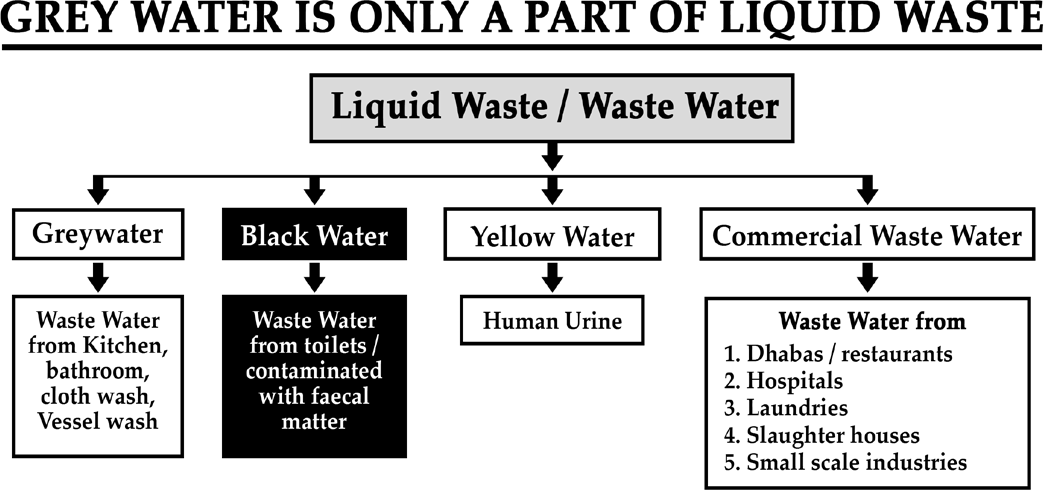
Greywater is the term used to describe all domestic wastewater, except for toilet waste, which includes bath
and shower water as well as dish and clothes washing water.
Greywater management is a component under Swachh Bharat Mission, Grameen - Phase 2.
Composition of greywater
There are wide variations in the makeup of greywater, which may be attributed to the people’ lifestyle choices and the chemicals they use for washing, bathing and other home tasks.
Greywater needs to be treated before being reused because it primarily contains excessive amounts of easily degradable organic material, such as cooking fat and oil, tensides, and other residues from soap and other detergents.
Pathogens only exist in the greywater fraction if the water is contaminated by faeces. Finally, untreated greywater easily becomes anaerobic (its oxygen is depleted) and releases foul odors.
Phenol
Indian researchers have found an efficient way to convert Phenol to its oxidized products.
Phenol & Its Applications
Phenol is a manmade chemical that is also found in nature. It is a colorless to white solid in its pure state and is mostly used to make phenolic resins, which are then used to make nylon and other synthetic fibers.
It is also utilized in medical preparations including mouthwash and sore throat lozenges, as well as slimicides chemicals that destroy bacteria and fungus in slimes.
Several essential and fundamental building blocks are utilized in the synthesis of several organic chemicals that are employed in medicine and industry, including phenol and its oxidized products such as 1,4-hydroquinone, catechol, and resorcinol.
Products such as 1,4 hydroquinone are utilized as intermediates in the production of medications, food preservatives, polymers, pigments, and so on.
UN Ocean Conference
Lisbon recently played home to the UN Ocean Conference.
The Ocean Conference, which the governments of Portugal and Kenya jointly hosted.
It aimed to inspire action for the preservation and sustainable use of marine resources, including the oceans and seas.
It also covers tackling the dangers that acidification, marine trash and pollution, illicit, unreported and unregulated fishing, habitat loss, and biodiversity represent to the health, ecology, economics, and governance of the ocean.
It will look for measures to encourage the achievement of Sustainable Development Goal 14.
The governments of Sweden and Fiji co-hosted the first UN conference, which took place in 2017.
Global Plastics Treaty
A worldwide pact aimed at addressing the whole supply chain of plastic has been accepted by 175 countries, bringing an end to the scourge of plastic pollution.
It emphasizes the necessity of acting at every stage of the plastics lifecycle to effectively lessen their harmful effects.
The treaty is enforceable by law from 2024 onwards.
An intergovernmental negotiating committee (INC) has been established by the UNEA resolution to prevent plastic pollution, and it is anticipated that the INC will deliver its draft agreement by 2024.
Microplastics in Human Blood
For the 1st time microplastic pollution has been detected in human blood.
Key Observations
The finding demonstrates that the particles may lodge in organs and move throughout the body.
It discovered that red blood cells’ ability to carry oxygen may be restricted by microplastics that can adhere to their outer membranes.
Pregnant women’s placentas have also been reported to contain the particles.
A quarter of the blood samples included polyethylene, and half of the samples contained PET plastic and one- third contained polystyrene.
What is a microplastic?
They are frequently smaller than the smallest grain of sand or a fraction of the width of a human hair.
There is no universally accepted definition for microplastics, however they are widely understood to be any plastic particle greater than 1 micrometer and less than 5 millimeters in size.
Microbeads
Microbeads are small, nonbiodegradable plastic particles that are smaller than 1 mm in size. They are frequently found in toothpaste, body washes, face washes and other similar products.
These microscopic particles readily slip through water filtering systems and wind up in the ocean and Great Lakes, posing a possible threat to aquatic life.
Microbeads can create plastic particle water pollution and constitute an environmental concern for aquatic organisms in freshwater and ocean water.
PET Plastic
The chemical name for polyester is called polyethylene terephthalate, or PET.
It is a clear, robust, and lightweight plastic that is extensively used to package foods and drinks, particularly small soft drinks, juices and water.
Polyethylene/Polythene
It is also frequently used to package salad dressings, peanut butter, cooking oils, mouthwash, shampoo, liquid hand soap, window cleaner, and even tennis balls. Best of all, PET is fully recyclable.
PET may be chemically broken down to its component elements to manufacture new PET resin, or it can be thoroughly cleaned and remelted for commercial recycling.
The #1 in the triangle “chasing arrows” code, which is often molded into the side or bottom of the container, makes PET easy to identify. There isn’t another plastic with the #1 code.
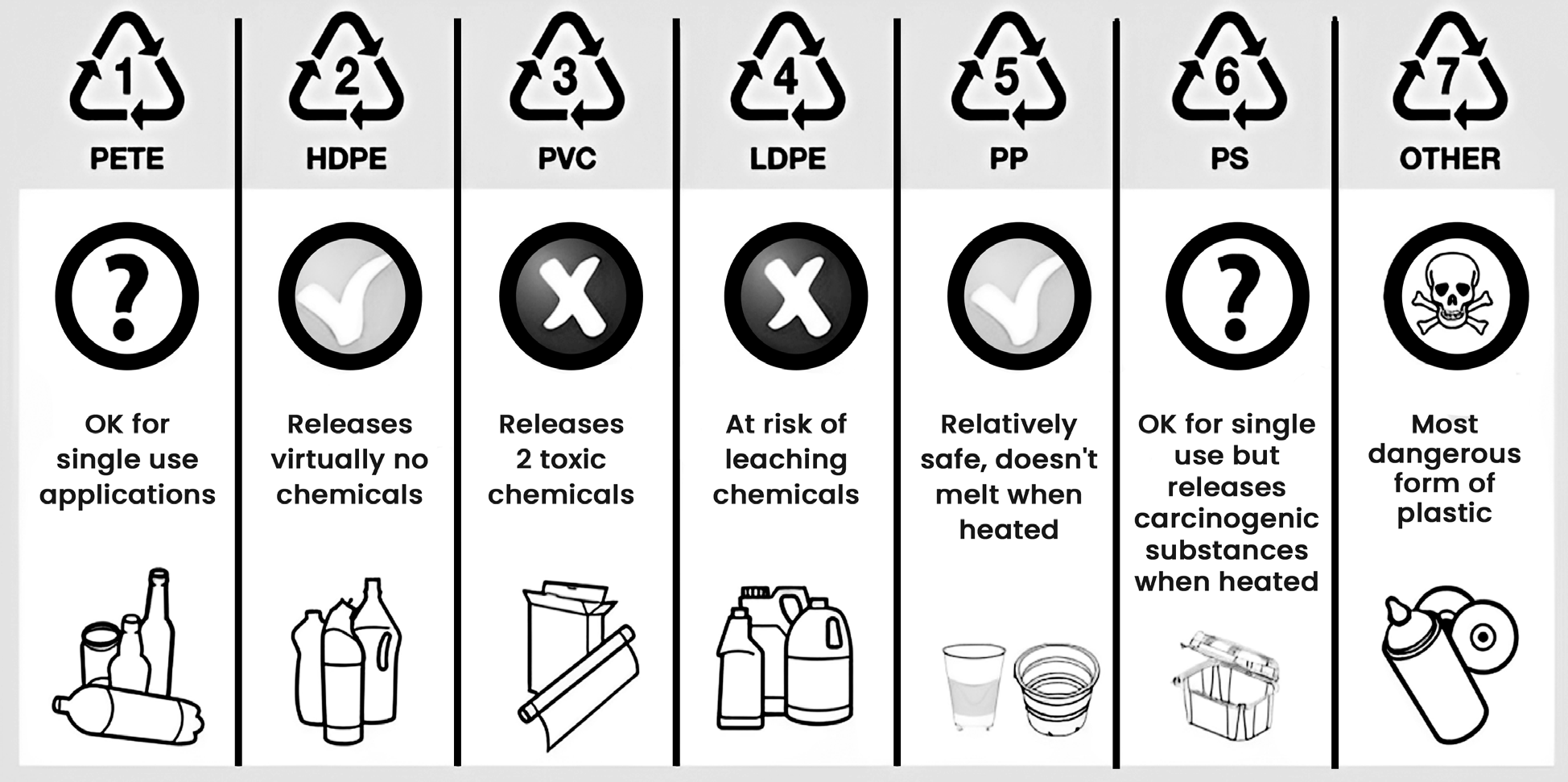
It’s the most widely used plastic available right now.
Ethylene is polymerized to create polyethylene (PE).
It is a polymer that is mostly used in packaging (plastic bags, plastic films, geomembranes, and containers including bottles, etc.). It is a gaseous hydrocarbon that is typically produced by the cracking of ethane, which is also a major component of natural gas or can be extracted from petroleum.
Polyethylene does not quickly biodegrade and hence builds up in landfills. It has low strength, hardness, and stiffness but excellent ductility, impact strength, and low friction.
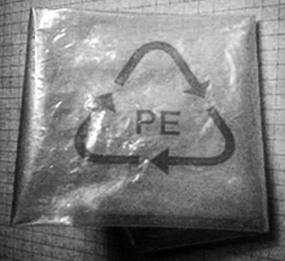
On the other hand, a variety of animal and bacterial species can break down polyethylene.
“PE” or “02” (“plastic number 2”) can be used to read it.
Polystyrene
Polystyrene is a type of plastic made from a substance called styrene.
It’s used in making a wide variety of consumer goods because it’s strong and durable.
You can find it in things like appliances, electronics, toys, and food packaging.
Sometimes, it’s mixed with other materials to make different products.
Post 2020 Global Biodiversity Framework
The UN Geneva Biodiversity Meetings concluded working out the post-2020 Global Biodiversity Framework before CoP15 of Convention of Biological Diversity (CBD).
What is Post 2020 Global Biodiversity Framework?
The Post-2020 Global Biodiversity Framework (GBF) is
an initiative led by the United Nations to address the alarming loss of biodiversity worldwide. Similar to the Paris Agreement for climate change, this framework aims to tackle the root causes of biodiversity loss and its impacts on approximately one million plant and animal species, as well as food security, human health, and economic production.
Negotiations are currently underway under the Convention on Biological Diversity (CBD) to develop this framework for the post-2020 era. It will set out goals and strategies for biodiversity conservation and sustainable use over the next decade and beyond.
Governments are expected to achieve 10 milestones and 21 objectives outlined in the GBF by the end of the decade, emphasizing the urgent need for coordinated action to protect and sustainably manage Earth’s biodiversity.
Boma technique adopted for translocating deer from Keoladeo
The Boma technique, widely used in Africa, involves capturing animals by guiding them through a funnel- shaped fence into an enclosure. This method was employed at Keoladeo National Park to capture spotted deer for relocation to the Mukundara Hills Tiger Reserve. It’s a strategic approach to safely trap and relocate animals to new habitats.

Keoladeo Ghana National Park
Keoladeo Ghana National Park, formerly known as the Bharatpur Bird Sanctuary, is a renowned avifauna sanctuary in India. It holds UNESCO World Heritage Site status and is designated as a Ramsar Site. The park is famous for hosting thousands of birds, especially during the winter season, and features a freshwater marsh that floods during the monsoon.
Vegetation within the park includes tropical dry deciduous forests mixed with dry grasslands and wetlands.
Notably, Keoladeo Ghana National Park serves as the sole regular wintering area in India for the critically endangered Siberian crane.
Avian major fauna found in the park includes migratory waterfowl, painted storks, and the sarus crane, which is a large non-migratory crane found in parts of India.
In addition to birds, the park is also home to various mammalian species such as rhesus macaques, nilgai, blackbuck, hog deer, chital deer and sambar.
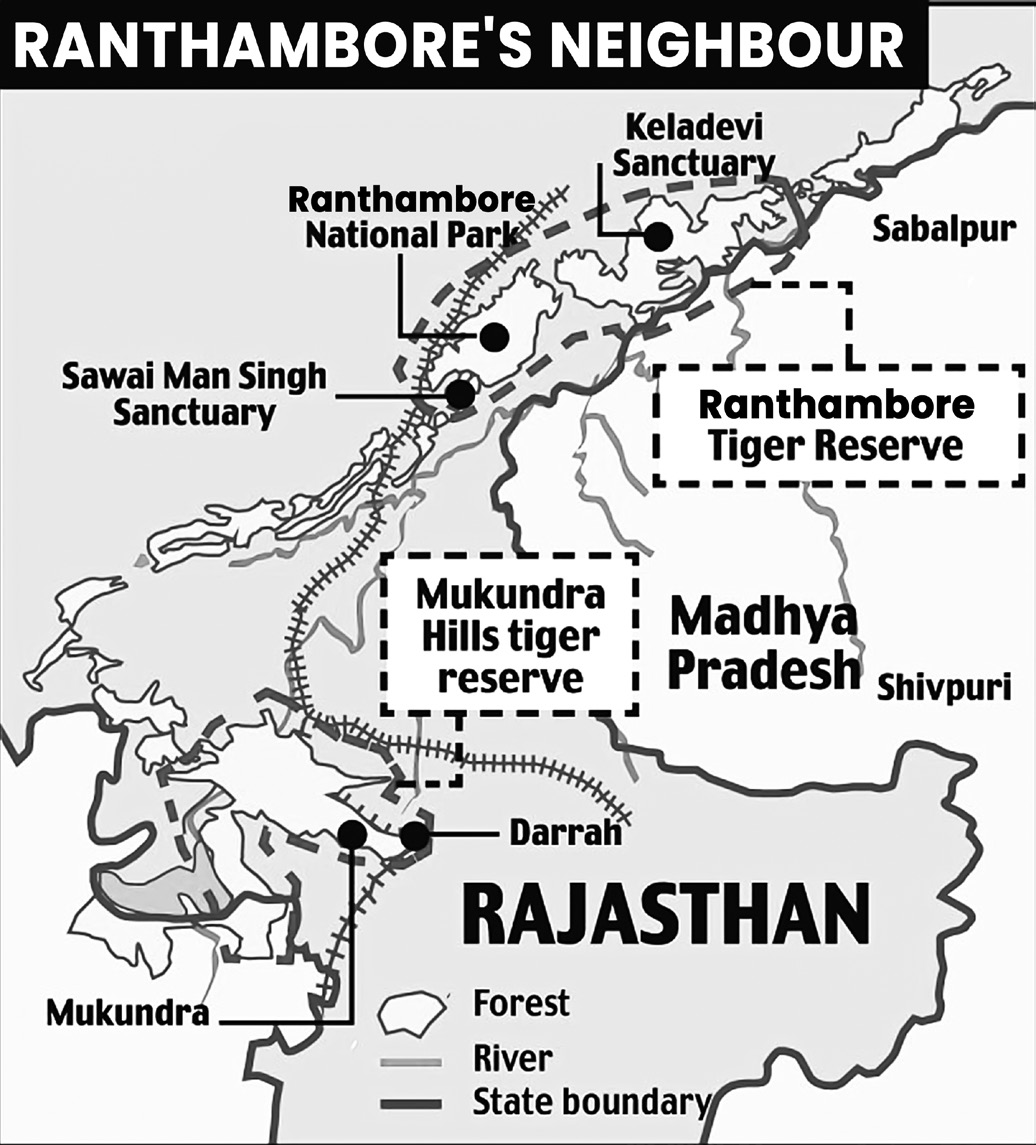
Madhav National Park
It has been declared India's 58th Tiger Reserve (9th Tiger Reserve of MP).
Located in Shivpuri District, it is part of the upper Vindhyan hills and was historically a hunting ground for Mughal emperors and the Maharaja of Gwalior.
It was designated a National Park in 1958.
The park has a rich ecosystem, including lakes, dry deciduous, and dry thorn forests, and is home to species like tigers, leopards, Nilgai, Chinkara, Chousingha, and various deer species.
It is part of one of India's 32 major tiger corridors, operationalized through the Tiger Conservation Plan under the Wildlife (Protection) Act, 1972.
As of 2022, India’s tiger population was estimated to range between 3167- 3925, growing by 6.1% annually, and now holds 75% of the world’s tigers.
Ecosystem Services by Seaweed
Seaweeds encompass a diverse range of marine plant species, including both microalgae and macroalgae, that thrive in shallow waters, estuaries, and backwaters. Unlike seagrasses, which resemble vascular plants with stems, roots and leaves, seaweeds lack roots, vascular systems, stems, or leaves. They can vary greatly in size, from tiny phytoplankton suspended in the water to massive species like giant kelp, which forms extensive underwater “forests” rooted from the ocean floor.
Commercial Significance
Seaweed is rich in essential vitamins, minerals, and fiber, and it contains various anti-inflammatory and antimicrobial compounds. Some types of seaweeds even exhibit potent anti-cancer properties. Due to these beneficial properties, seaweeds are extensively used in various commercial products. They serve as emollients in organic cosmetics and skincare products, providing moisturizing properties. Also, seaweeds are employed as effective binding agents or emulsifiers in a wide range of commercial items such as toothpaste, fruit jelly and ice cream.
Ecological Importance of Seaweed Cultivation
The ecological importance of seaweed cultivation extends to various aspects:
Treating coastal pollution: Seaweeds play a crucial role in coastal ecosystems by absorbing excess nutrients and heavy metals, thereby reducing pollution levels in coastal waters. They absorb excess fertilizers and iron, which helps to mitigate algae blooms and capture heavy metals present in marine environments.
Oxygen & Nutrient Supply: Seaweeds provide organic nutrients and oxygen to other marine organisms, supporting marine ecosystems’ health and diversity. Large seaweeds, such as kelp, form underwater forests known as kelp forests, which serve as essential habitats and nurseries for various marine species.
Mitigating climate change through Ocean Macroalgal Afforestation (OMA): Seaweed cultivation can contribute to climate change mitigation efforts through Ocean Macroalgal Afforestation (OMA). Seaweeds are highly efficient in photosynthesis and can absorb significant amounts of carbon dioxide from the atmosphere. By promoting seaweed farming and increasing seaweed populations, OMA can help reduce atmospheric carbon dioxide levels. Also, harvested seaweeds can be anaerobically digested to produce biomethane, further contributing to renewable energy production and reducing greenhouse gas emissions.
Other Utilities
They can be used as fertilizers in aquaculture.
Methane emission from cattle may be reduced substantially if seaweed is used as feed.
Seaweed can be very helpful to combat beach erosion.
Seaweed Cultivation: Potential in India
Seaweed cultivation holds significant potential in India due to its diverse coastal habitats and extensive coastline:
Rich Biodiversity: India’s Exclusive Economic Zone (EEZ) spans over 2.17 million square kilometers, providing a diverse range of coastal habitats conducive to seaweed growth. With over 844 species of seaweed identified along its 7,500 kilometers of coastline, India possesses rich seaweed resources.
Opportunities in Coastal Zones: Coastal regions like Gujarat, with their intertidal and subtidal zones along the West Coast, offer favorable conditions for seaweed cultivation. These areas, along with beaches in Tamil Nadu, Lakshadweep, Andaman and Nicobar Islands, and other regions like Mumbai, Ratnagiri, Goa, Karwar, Varkala, Vizhinjam and Chilka in Orissa, boast abundant seaweed beds.
Economic Potential: The abundance of seaweed species and favorable coastal conditions present opportunities for the development of seaweed-based enterprises in India. These enterprises could encompass various sectors such as food, pharmaceuticals, cosmetics, and biofuels, leveraging the rich biodiversity and availability of seaweed resources.
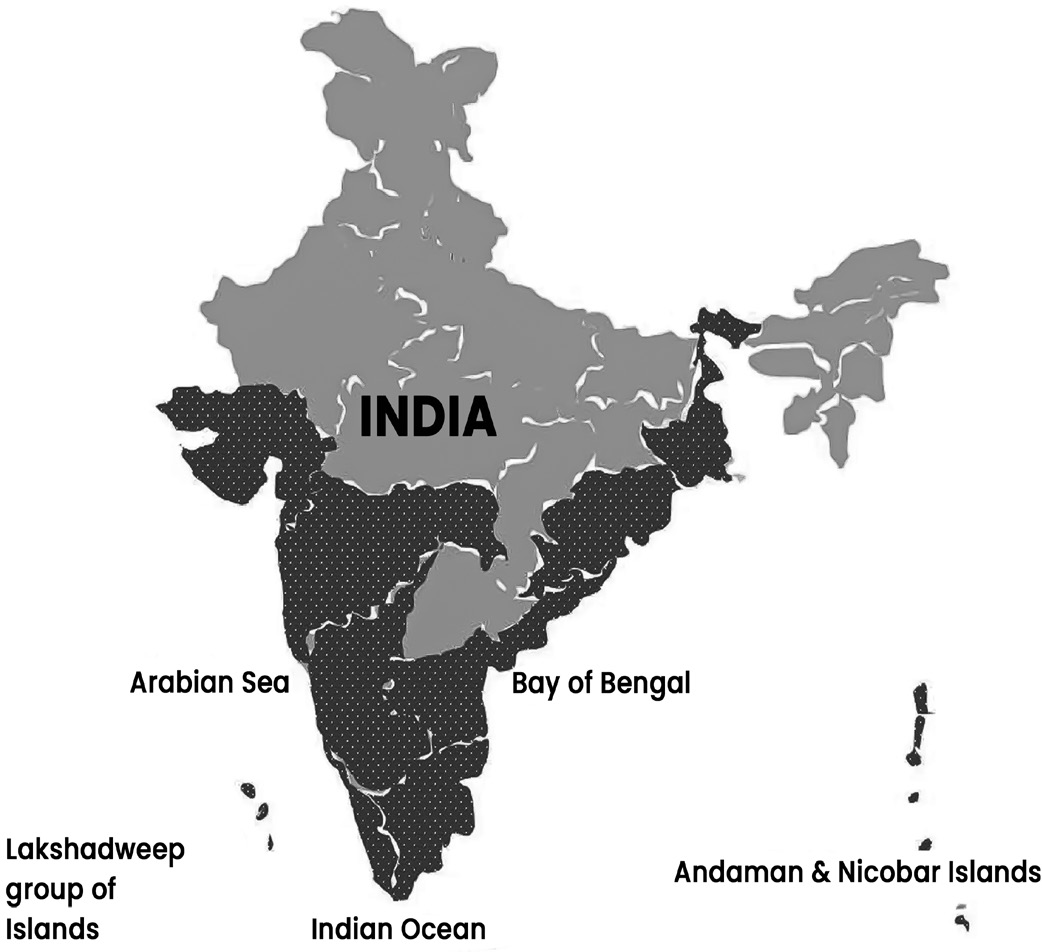
Challenges to seaweed harvesting in India
The challenges to seaweed harvesting in India include:
Limited Adoption: Seaweed cultivation is not widespread in India, leading to limited awareness and adoption among coastal communities.
Seasonal Labor Shortage: During the paddy harvesting and transplanting seasons, there is a shortage of labor, which affects seaweed harvesting activities.
Insecure Income: Seaweed harvesters often face insecure income due to poor pay and unpredictable weather conditions.
Technological Limitations: Inadequate technology for processing seaweed hampers the development of value- added products.
Raw Material Sources: There is insufficient knowledge about alternative sources of raw materials for seaweed cultivation.
Safety Concerns: Harvesting seaweed from depths exceeding 25 to 30 feet can be dangerous for workers, posing safety risks.
Overexploitation: Overreliance on harvesting rather than farming has led to the overexploitation of seaweed resources in India.
Market Demand: Despite the health benefits of seaweed, lower market demand due to limited awareness among the population about its nutritional value hampers the growth of the seaweed industry.
Bamboo in India
Bamboo is a perennial blooming evergreen plant that is a member of the Poaceae family of grasses. It is a multipurpose plant that may support human livelihoods and the environment.

It is also known as:
Poor Man’s Timber
Green Gold
Cradle to Coffin Timber
They are more common to the tropics but also occur naturally in subtropical and temperate zones of the world (Except in Europe).
India is 2nd richest country (after China) in terms of bamboo diversity with 136 species (125 indigenous and 11 exotic)
Distribution
In India, bamboo is distributed across various regions, with different genera found in different areas:
Genus Bambusa:
This genus is the most widely distributed.
Bambusa species can be found throughout India, spanning from the southern peninsula to the lower Himalayan region.
They are commonly found in plains and low-lying hilly regions across the country.
Genus Dendrocalamus:
This genus is primarily found in the plains of South and Central India.
It also occurs in dry hilly areas of North India.
These genera represent the main types of bamboo found in India, each adapted to specific climatic and geographical conditions.
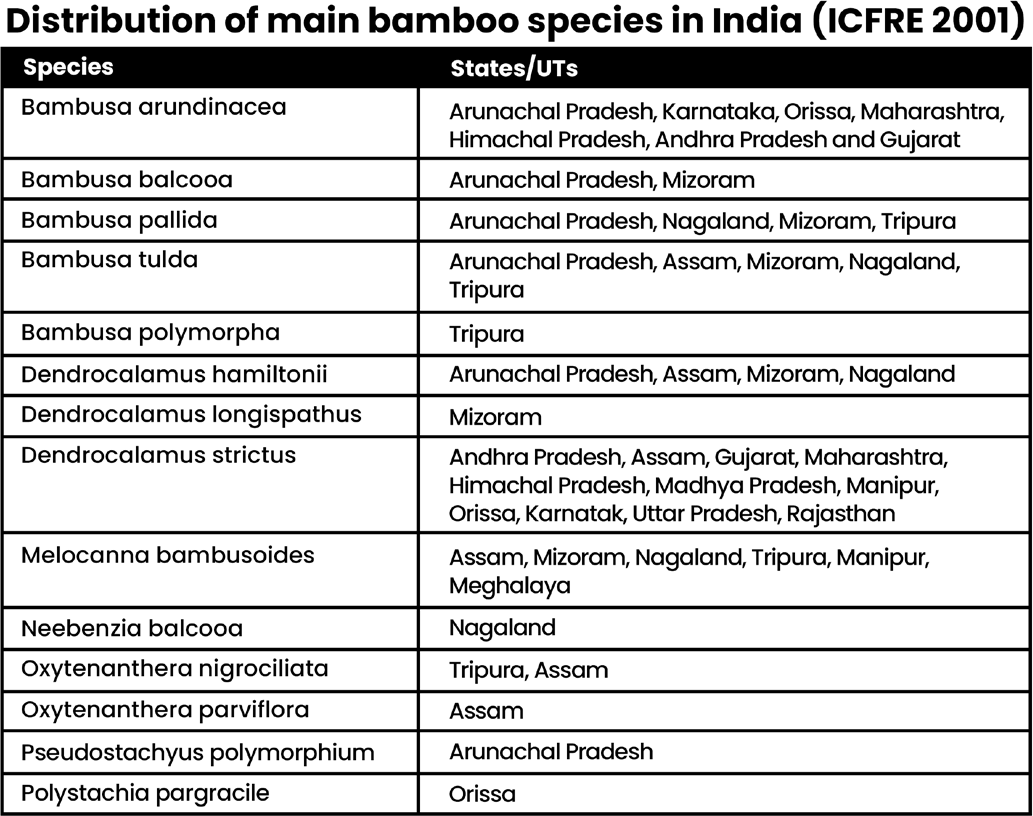
Distribution of main bamboo species in India (ICFRE 2001)
Bamboo falls into 2 main categories:
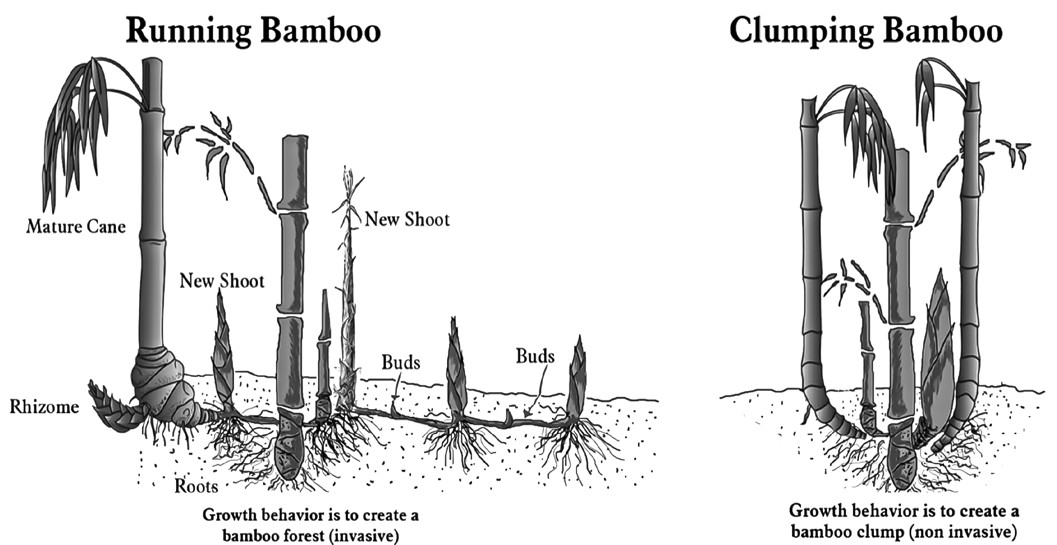
• Sympodial/Clump Forming
• Monopodial/Runner bamboo
Source & Credits
In India, clump forming bamboo constitutes over 67% of the total growing stock.
Climate & Soil Requirement
Bamboo thrives in specific climate and soil conditions: Climate:
Bamboo plantations prefer hot to moderate temperate climates.
They do not do well in areas with chilly winds, as bamboo has weak roots.
Soil:
Bamboo trees require well-drained sandy to clay soil.
The ideal soil pH range for bamboo is acidic, between 4.5 to 6.0.
While bamboo can be planted and managed in a variety of soil types, rocky soils are not suitable.
The Barak Valley region is considered ideal for bamboo cultivation due to its favorable soil and temperature conditions.
Uses
Bamboo serves a multitude of purposes:
Cultural Significance:
Jaapi from Assam and khumbeu from Mizoram are important cultural symbols made from bamboo.
Musical instruments like the Gogona, Tirio, and Pangsi are crafted from bamboo by various tribal communities.
Meghalaya’s tribal communities use bamboo containers called “Thiar” for storing paddy, while the Khasi tribe creates bamboo wood known as “Duli.”
Soil and Water Conservation:
Bamboo’s clump structure and fibrous root system make it an excellent soil binder, contributing significantly to soil and water conservation efforts.
Lumber and Resource:
Bamboo is a more affordable source of lumber and is a strong natural resource due to its rapid growth and versatility.
Versatility:
Different parts of the bamboo plant serve various purposes and can be harvested at different stages of development, making it usable throughout its life cycle.
Edible and Nutritious:
Some types of bamboo have edible and highly nutritious branches.
Bamboo Rice, derived from withering bamboo shoots, is a unique rice variant known for its resilience, lightness, and flexibility. It is suitable for diabetes and has a low Glycemic Index.
Issues in Bamboo Sector
Ignorance of Economic Potential
Despite bamboo’s significant economic potential and benefits for rural communities, there is a lack of awareness and understanding among stakeholders.
Lack of Reliable Data
The absence of trustworthy data regarding bamboo growth,
biomass, productivity, area coverage, and expanding stock hampers the effectiveness of the nation’s resource strengthening programs.
Scarcity of High-Quality Planting Material
There is a scarcity of high-quality bamboo planting material. Since bamboo flowering is sporadic, obtaining seeds from providers is challenging, and the quality of these seeds is often unknown.
International/National Bamboo Organisations
International Bamboo and Rattan Organisation (INBAR)
It is a non-profit organization that was founded in 1997 with the goal of creating and advancing creative, bamboo- and rattan-based solutions to environmental sustainability and poverty.
It is headquartered in Beijing, China
Bangladesh, Canada, Indonesia, Myanmar, Nepal, Peru, Philippines & United Republic of Tanzania are founding members (India is a member but not a founding member).
World Bamboo Organisation
It aims at promoting best practices in supply chain management for bamboo.
Every year, September 18 is observed as the World Bamboo Day by the World Bamboo Organisation.
Every 3–4 years the WBO organizes a World Bamboo Congress (WBC).
It was founded as the International Bamboo Association (IBA) at Thailand in 1991.
Steps Taken by India
National Bamboo Mission
The National Bamboo Mission, implemented by the Department of Agriculture & Cooperation under the Ministry of Agriculture, aims to harness the potential of the bamboo crop.
Initiation and Implementation:
Launched as a Centrally Sponsored Scheme in 2006-07, the mission focuses on promoting bamboo cultivation and utilization.
Inclusion in MIDH:
From 2014 to 2015, the mission was incorporated into the Mission for Integrated Development of Horticulture (MIDH).
Development Contribution
The mission has significantly contributed to the improvement of bamboo regions in both forest and non-forest areas.
Flaws:
One major flaw identified in the scheme is the lack of significant value addition components or effective linkages between the bamboo industry and producers or farmers.
Restructured National Bamboo Mission
Under the restructured National Bamboo Mission authorized by the Cabinet Committee on Economic Affairs (CCEA) in 2018 under the National Mission on Sustainable Agriculture, the primary focus is on linking farmers with markets.
Objective
The mission aims to facilitate the quick market access for agricultural producers, enabling them to sell their bamboo products efficiently.
Geographical Focus
The mission will concentrate its efforts on the growth and development of bamboo in several states across India, including the Northeastern region, Madhya Pradesh, Maharashtra, Chhattisgarh, Odisha, Karnataka, Uttarakhand, Bihar, Jharkhand, Andhra Pradesh, Telangana, Gujarat, Tamil Nadu, and Kerala.
Restructured NBM strives to:
The restructured National Bamboo Mission (NBM) aims to achieve the following objectives:
Expansion of Bamboo Plantations:
Increase the area under bamboo plantations on both government and private lands outside of forest areas. This
expansion aims to boost agricultural revenue and improve resilience to climate change.
Development of Post-Harvest Infrastructure:
Establish modern primary processing facilities, treatment and seasoning plants, and preservation technologies. Additionally, develop market infrastructure to enhance post- harvest management of bamboo products.
Support for MSME-level Product Development:
Encourage the development of bamboo-based products at the Micro, Small, and Medium Enterprises (MSME) level. This support aims to foster innovation and entrepreneurship in the bamboo sector, thereby contributing to economic growth and job creation.
Bamboo Not a Tree
Is it a tree? Is it a shrub? Is it a weed? No. It is a grass.
Bamboo is the tallest perennial grass. The Indian Forests Act (1927) recognized it as a tree according to science before it was amended.
The Indian Forest Act 1927 was modified in 2017 to stop considering bamboo that is growing outside of forests to be a tree.
Bamboo that is cultivated outside of forests is exempt from the need for transit permits and felling; bamboo that is planted within forest areas is still subject to the Indian Forest Act’s regulations.
Government hoped to promote cultivation of bamboo in non-forest areas to achieve the “twin objectives”:
• Doubling Farmer’s Income
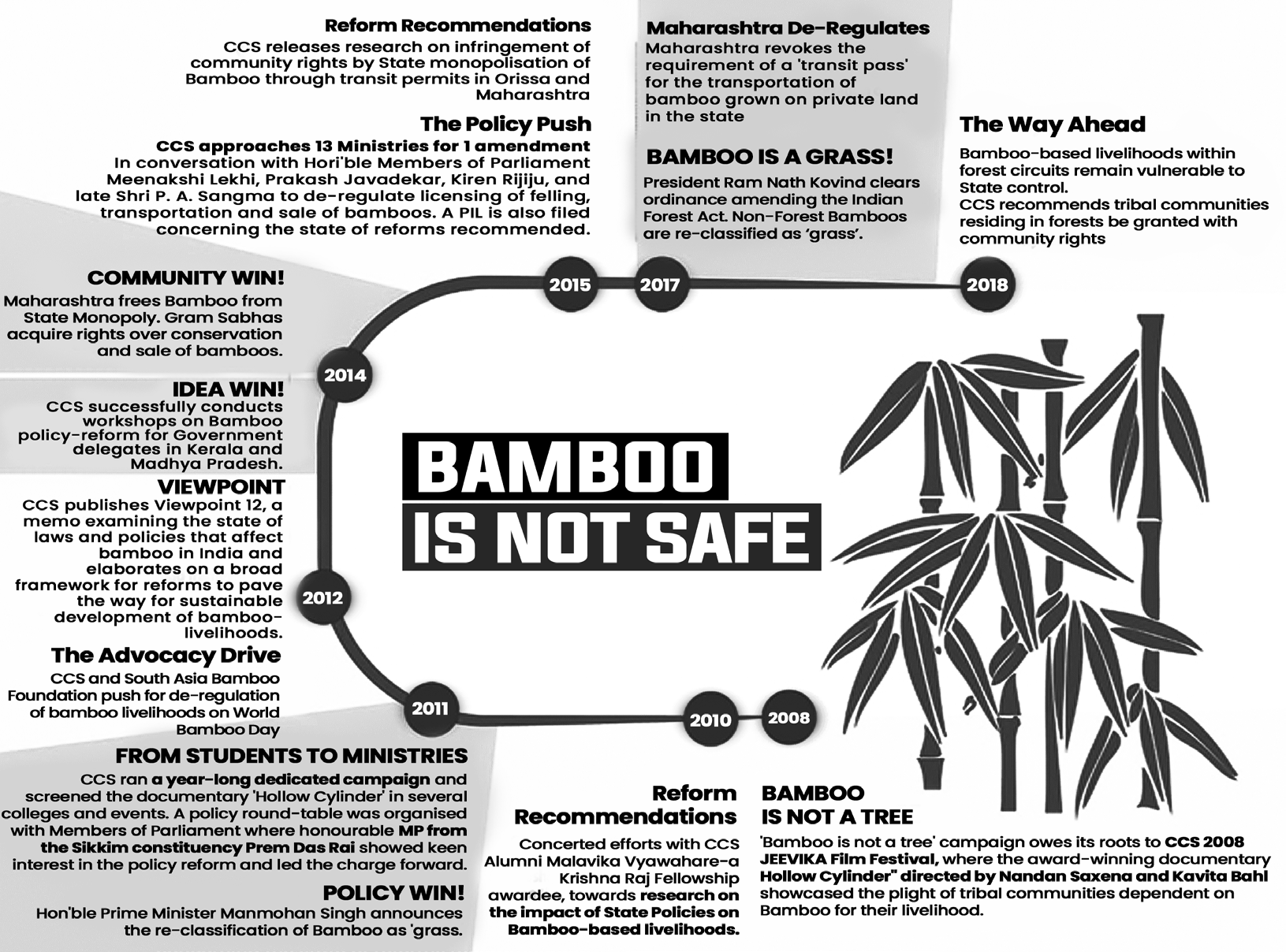
Some Other Initiatives
The country’s import policy has also been adjusted to support the development of the bamboo sector.
The Ministry of Micro, Small, and Medium Enterprises (MSME) is also implementing SFURTI (Scheme of Fund for Regeneration of Traditional Industries) to support bamboo craftsmen and traditional industries.
The National Skill Development Agency’s Sector Skill Councils will teach traditional craftspeople new skills and recognize their prior learning.
Agriculture Minister launched 22 bamboo clusters in 9 States.
Creation of North East Cane and Bamboo Development Council
Establishing a Center of Excellence to support the Northeastern Region’s cane and bamboo industries.
To find and create pertinent technology both domestically and internationally to advance the cane and bamboo industries.
New Logo
The launch of the new logo for the National Bamboo Mission signifies the importance of both farmers and industry in the bamboo sector. The logo features a
depiction of a farmer and an industrial wheel, symbolizing the dual roles of agriculture and industry in the bamboo value chain. This imagery reinforces the idea of bamboo as “green gold”.
Recommendations for Management of Bamboo Cultivation
Designate Bamboo as Grass: Consider categorizing bamboo as grass rather than a tree, which can help in revising laws and ensuring better implementation.
Clarify Bamboo’s Status: Clearly define bamboo as a non-timber forest product and establish regulations for its transportation, use, and harvesting.
Include Bamboo in Forest Management: Incorporate bamboo forests into existing forest management plans, such as Joint Forest Management initiatives.
Establish a Bamboo Board: Create a dedicated authority or board specifically for managing bamboo resources, similar to existing boards for other agricultural products like tea or coffee.

International Nitrogen Initiative (INI)
Establishment and Objectives: Founded in 2003 by the International Geosphere Biosphere Programme (IGBP) and the Scientific Committee on Problems of the Environment (SCOPE), INI aims to maximize the positive impact of nitrogen on sustainable food production while minimizing its negative effects on the environment and human health, especially from food and energy production.
Partnership with Future Earth: INI is currently a partner of Future Earth, a global research platform for sustainability.
Conference Schedule: The initiative hosts a conference every three years to discuss nitrogen-related issues and solutions. The most recent conference was held in Melbourne in 2016, resulting in the Melbourne Declaration.
Nitrogen as the “New Carbon”: INI has designated nitrogen as the “new carbon,” indicating its growing importance in environmental and sustainability discussions, similar to the role carbon has played historically.
Nitrogen Emission in India
In 2017, a large team of Indian scientists had come out with The Indian Nitrogen Assessment (INA).
Emissions grew at 52% from 1991 to 2001 & 69% from 2001 to 2011 in India.
Key Findings
Largest Contributor of Nitrogen Pollution: Agriculture
2nd Largest Contributor of Nitrogen Pollution: Sewage and organic solid wastes
Only 33 % of the nitrogen that is applied through fertilisers is used by the plants & remaining 67 % remains in the soil and leads to nitrogen pollution.
Nitrogen particles make up the largest fraction of PM2.5.
N2O has replaced methane as the second largest Greenhouse Gas (GHG) from Indian agriculture.
Parts of Punjab, Haryana and Western Uttar Pradesh have the highest NO3 concentration in dug well water and shallow bore-well water.
An emission reduction of 26.81 MtCO2 eq was achieved during 2019-24 from neem coated urea application
South Asian Nitrogen Hub (SANH)
The South Asian Nitrogen Hub (SANH) is a collaboration involving 50 institutions, with 18 research institutes in India, focusing on studying nitrogen pollution in South Asia. SANH
will assess nitrogen levels and impacts in eight countries: India, Afghanistan, Pakistan, Bhutan, Bangladesh, Maldives, Nepal, and Sri Lanka.
Harmful Effects of Nitrogen Pollution
Nitrogen pollution has several harmful effects
Acid Rain: Nitrogen compounds combine with oxygen and other substances in the atmosphere during precipitation, leading to acid rain.
Eutrophication: Excessive nitrogen causes abnormal algae growth in water bodies, releasing toxins harmful to humans and aquatic life.
Soil Degradation: Ammonium-based fertilizers increase soil acidity, leading to dehydration of plants and deterioration of soil fertility.
Contaminated Groundwater: Nitrogen from runoff contaminates underground water sources used for drinking, leading to pollution.
Photochemical Smog: Nitrogen pollution contributes to the formation of photochemical smog.
Recommendations
Here are some recommendations to address nitrogen pollution:
Develop a comprehensive national strategy to tackle nitrogen pollution.
Apply the Nutrient Based Subsidy Scheme to urea to encourage responsible fertilizer use.
Implement Nutrient Management Techniques: Farmers should apply fertilizers in the right amounts, at the right times, using proper techniques, and in suitable locations.
Establish Field Buffers: Plant grasses, trees, and bushes around field boundaries, especially near water bodies, to absorb or filter nutrients before they reach water sources.
International Energy Agency
The International Energy Agency (IEA) is an organization based in Paris, formed in 1974 after the oil crisis of 1973. It operates within the framework of the Organisation for Economic Co-operation and Development (OECD).
Originally focused on oil, its role has expanded to include all aspects of the global energy system, promoting cleaner and faster-growing energy sources like solar, wind, and biofuels, as well as traditional sources like coal, oil, and gas.
While it primarily serves OECD member countries, it also collaborates with non-member nations such as India, China, and Russia.
India is an Associate Member of the IEA. Member countries must maintain oil stock levels equivalent to at least 90 days of the previous year’s net imports.
In 2001, the IEA launched the Joint Organisations Data Initiative (JODI) in collaboration with five other international organizations: APEC, Eurostat, OLADE, OPEC, and the UN Statistics Division.
Some Programmes of IEA
• IEA Bio Energy Tasks
• IEA Photovoltaic Power System
Reports
• World Energy Outlook (It doesn’t provide a forecast of what will happen. Instead, it provides set of scenarios that explore different possible futures, actions, in- actions).
• South East Asia Energy Outlook
Sharm El Sheikh Declaration – CBD
The Sharm El Sheikh Declaration was adopted during COP 14 of the Convention on Biological Diversity (CBD), held in Sharm El Sheikh, Egypt. The declaration aims to integrate biodiversity into legal and policy frameworks as a strategy for investing in biodiversity for both people and the environment. Its overarching goal is to establish a global framework for biodiversity beyond 2020, aligning with the vision of the New Deal for Nature, which sets targets for biodiversity conservation and restoration by 2050.
Kuala Lumpur Supplementary Protocol on Liability and
Redress – Cartagena Protocol
The Kuala Lumpur Supplementary Protocol on Liability
and Redress is an additional agreement to the Cartagena Protocol on Biosafety, adopted in Nagoya in 2010.
This protocol outlines international guidelines and procedures for addressing liability and providing compensation for damage to biodiversity resulting from the transboundary movement of living modified organisms (LMOs).
Its objective is to promote the conservation and sustainable use of biodiversity. The protocol defines “damage” as a measurable, observable, and significant adverse impact on the conservation and sustainable use of biological diversity, taking into account risks to human health.
Regional Oil Spill Contingency Plan
The Regional Oil Spill Contingency Plan was launched by SACEP and the International Maritime Organization (IMO) together. Its purpose is to encourage cooperation among countries and help prepare for and reduce the impact of a major oil spill in the waters near Bangladesh, India, the Maldives, Pakistan, and Sri Lanka.
Honolulu Strategy
It provides a framework for an all-encompassing, international endeavor to lessen the effects of marine debris on the environment, human health, and the economy.
United Nations Environment Programme (UNEP) introduced the Honolulu Strategy.
It is a framework document & does not supersede activities of national authorities.
Charlevoix Blueprint
In 2018, leaders of the G7 came up with ‘Charlevoix Blueprint’ for Healthy Oceans, Seas & Resilient Communities.
It’s a novel approach to improving ocean and coastal “resilience,” which goes beyond simple adaptation to climate change to sustain function in a way that surpasses previous methods.
Alliance to end Plastic Waste
The Alliance to End Plastic Waste, started in 2019, is a non- profit group made up of companies involved in various stages of the plastic lifecycle, from production to recycling. Their goal is to develop ways to reduce and stop plastic pollution, especially in the oceans.
The Ocean Cleanup Project
It is a not-for-profit environmental organization based in
Netherlands.
It is directed at cleaning The Great Pacific Garbage Patch.
The Regional Seas Programme
The Regional Seas Programme started in 1974 after the 1972
United Nations Conference on the Human Environment in Stockholm. Its aim is to help nearby countries work together to protect their shared marine environment, addressing the worsening condition of oceans and coastal areas.
Bay of Bengal Large Marine Ecosystem Project (BOBLME) PROJECT
The Bay of Bengal Large Marine Ecosystem Project (BOBLME) started in 2009 under the UN FAO. It involves countries around the Bay of Bengal like Bangladesh, India, Indonesia, Malaysia, Maldives, Myanmar, Sri Lanka, and Thailand. Its aim is to reduce marine pollution and promote sustainable fishing with funding from the Global Environment Facility.
Horizon 2020
The Horizon 2020 Initiative, launched in 2006, aimed to bring together stakeholders to reduce pollution in the Mediterranean region by 2020. It involved 22 countries bordering the Mediterranean Sea and Jordan.
Mangroves for Future (MFF)
It is co-chaired by the IUCN & UNDP.
It is a collaboration between multiple partners, including governments, NGO, research institutes etc.
India is a member country.
It seeks to encourage funding for the preservation of coastal ecosystems in order to support sustainable development. Although mangroves are the initiative’s main feature, wetlands, coral reefs, estuaries, lagoons, sandy beaches, and sea grass are also included in the MFF.
Tropical Forest Alliance (TFA) 2020
It was founded in 2012 at Rio+20.
The Alliance works throughout Latin America, West and Central Africa, and Southeast Asia to achieve these pledges, which include eliminating tropical deforestation linked to the production of palm oil, soy, cattle, pulp, and paper.
Its secretariat is hosted at the World Economic Forum.
TFAwith World Economic Forum published Commodities and Forests Agenda 2020 Report.
New York Declaration on Forests
It is a political declaration adopted in 2014, calling for global action to protect and restore forests by implementing 10 Goals.
Some of the goals includes
• Halting natural forest loss by 2030
• Restoring 350 million hectares of degraded landscapes and forestlands,
• Reducing emissions from deforestation and forest degradation as part of a post-2020 global climate agreement.
Forests for Life Partnership
It is an initiative launched by:
Global Wildlife Conservation
Rainforest Foundation Norway
UNDP
Wildlife Conservation Society
World Resources Institute.
It aims to:
Encourage the growth of trees as a natural response to climate change and biodiversity preservation.
Stop and reverse deforestation on one billion hectares of the world’s most intact forests.
Miyawaki Method
The Miyawaki method is an afforestation technique that has transformed backyards into miniature woods, revolutionizing the idea of urban afforestation.
Kerala has embraced this strategy for developing forests since it recovers and creates dense native forests from native tree seeds regardless of soil and climate conditions.
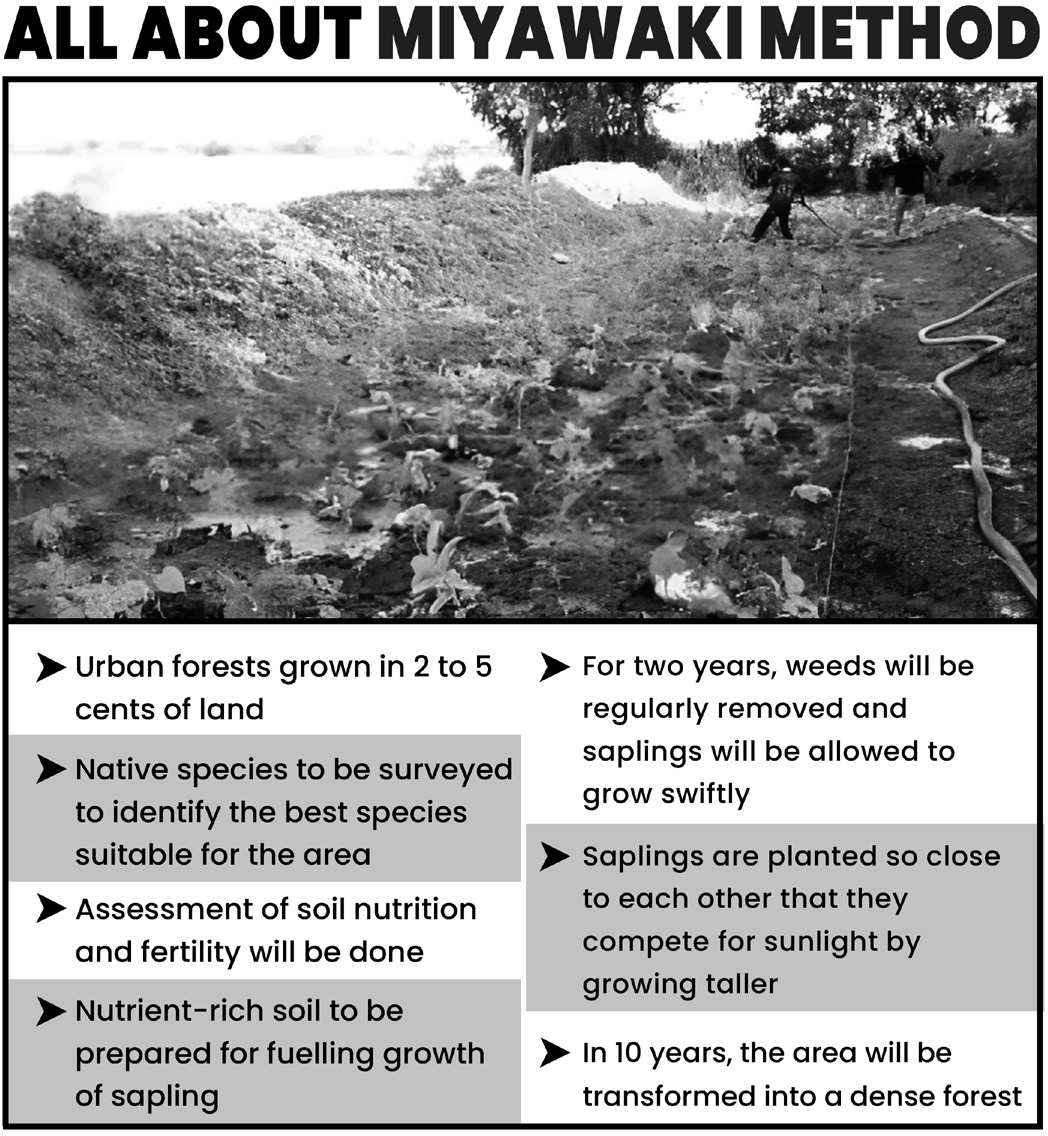
Benefits of the Method
A natural forest takes 25 to 30 years to grow, but Miyawaki Forest may grow in 5 to 6 years.
The resulting plantation has a 30% denser density than typical.
Compared to traditional forests, it results in a thirty-fold increase in CO2 absorption.
Compared to typical plantation species, it guarantees at least 300% more species in the same area.
It lowers air and noise pollution, as well as temperatures in concrete heat islands.
To realise the vision of saturating National Highways with green cover, National Highways Authority of India (NHAI) has decided to plant Miyawaki plantation on land parcels adjacent to National Highways at various locations.
Total land area of over 53 acres has been identified at different places in and around Delhi-NCR to establish the Miyawaki plantations.
Deemed forests
Deemed forests are areas identified as having the characteristics of forests, regardless of their ownership status.
In Karnataka, these areas include densely forested regions under the jurisdiction of the Revenue Department that have not been transferred to the Forest Department, forested lands granted to individuals but not cultivated, and heavily forested plantations managed by the Forest Department.
The Karnataka government plans to declassify a significant portion of these deemed forests, totaling 6.64 lakh hectares, and transfer them to tax authorities.
United Nations Forum on Forests (UNFF)
It is a high-level intergovernmental policy forum established in 2000 by United Nations Economic and Social Council (ECOSOC).
Its goals are to support sustainable development, management, and protection of all kinds of forests.
It is based on the Rio Declaration, the Forest Principles & Agenda 21.
It was founded in 2001 on the advice of the UN Economic and Social Council and consists of fourteen international organizations, institutions, and conventions with a connection to forests.
It strives to assist the United Nations Forest Forum’s (UNFF) efforts.
The CPF’s goal is to increase the value of trees found outside of forests as well as all sorts of forests.
Some Important member organizations of the Collaborative Partnership on Forests include:
• FAO ITTO
• UNFCCC IUCN
• CBD Secretariat UNEP
International Tropical Timber Organization (ITTO)
The International Tropical Timber Organization (ITTO) is an international organization that supports the sustainable management and protection of tropical forest wood resources. It is not a non-governmental organization.
It was established under International Tropical Timber Agreement (ITTA) in 1985.
Governing body of the ITTO is International Tropical Timber Council (ITTC):
Council consists of all the members of the Organization.
Bali Partnership Fund was established for sustainable management of tropical timber producing forests.
Headquarters: Yokohama, Japan
India is a member
Forest Certification
A voluntary, non-regulatory, independent third-party instrument to guarantee sustainable forest management that is socially, ecologically, and economically feasible is Forest Management (FM) certification. This procedure confirms that a forest or plantation area where wood, fiber, and other non-timber forest products are collected is managed in accordance with a set standard.
At the Rio Summit of 1992, the UN Conference on Environment and Development (UNCED) established the concept of forest certification.
What is Certification Scenario Globally?
Forest Management Certification schemes available at global level:
FSC (Forest Stewardship Council) launched in 1993.
PEFC (Programme for Endorsement of Forest Certification) was founded in 1999.
Indigenous Forest Certification System
Network for Certification & Conservation of Forests has developed country specific & internationally benchmarked Forest Management Certification Standard for India in 2015.
It helped in making the Indian wood and forest fiber- based industry competent globally.
The Indian Forest Certification Scheme has been endorsed & internationally recognised by the PEFC.
Benefits of Forest Certification
Environmental Benefits: It helps in maintaining environmental safeguards.
Economic Benefits: It enables stakeholders to get premium price for their products and facilitates value addition.
Management Benefits: It brings forest management at par with internationally benchmarked practices.
Compliments Country’s International Commitments: It complements various international commitments under the UNFCCC, UNCCD and UNCBD, etc.
Hope Spots
The International Union of Conservation of Nature (IUCN) and Mission Blue collaborated to create the Hope Spot Network.
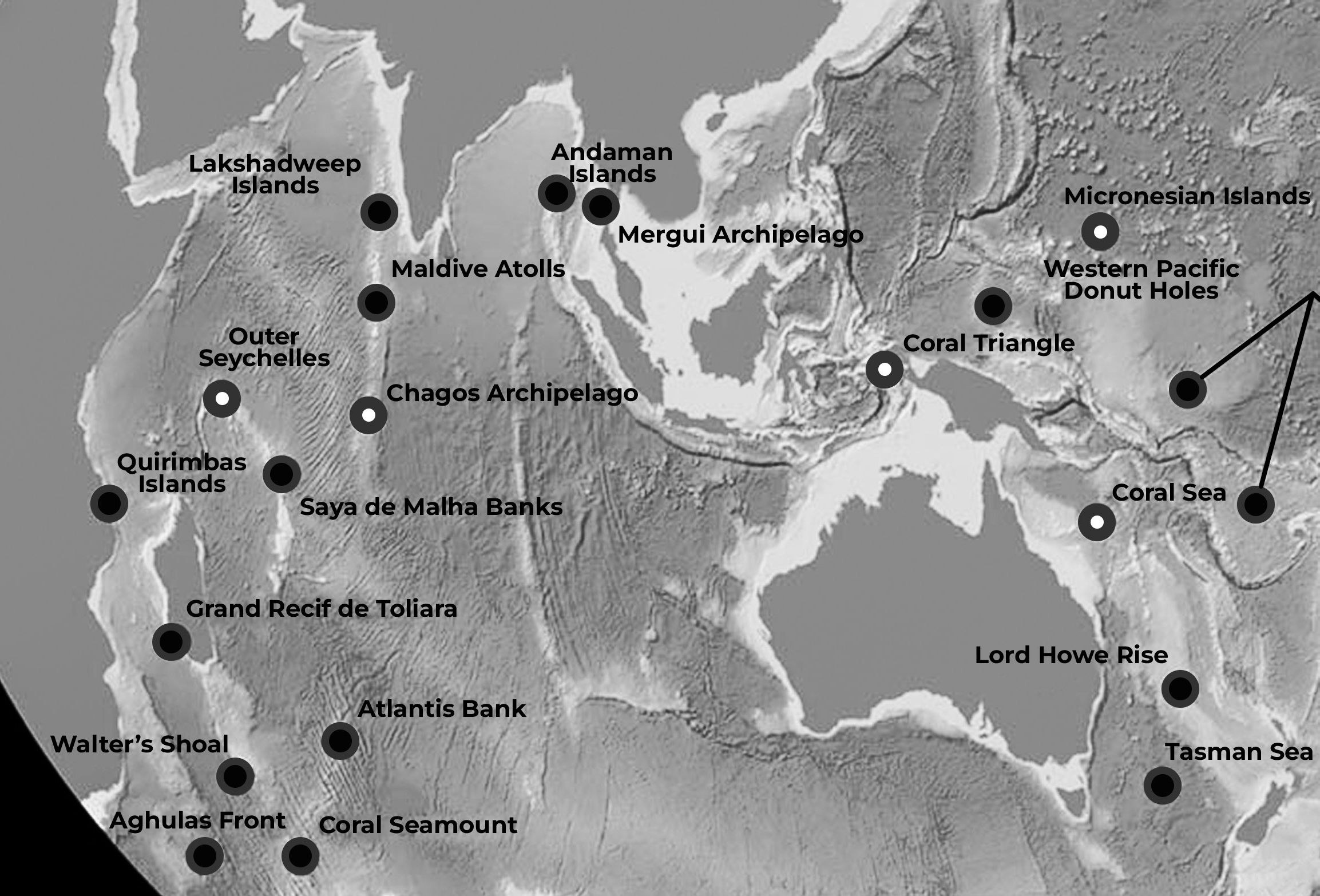
A hope spot is a section of an ocean that, due to its species and important underwater ecosystems, requires extra preservation.
They were picked because they provide significant habitat, support biodiversity, and act as a carbon sink.
These might be newly discovered locations or Marine Protected Areas (MPA) that require maintenance.
Hope Spot Sites from India
Lakshadweep Islands
Andaman Nicobar Islands
Marine Protected Areas
These are specific oceanic regions where human activity is subject to stricter regulations and is afforded greater protection than it is elsewhere in the marine environment.
These areas are defined by IUCN.
Evolutionarily Distinct and Globally Endangered Species (Edge Species)
Species classified as Evolutionarily Distinct and Globally Endangered (EDGE) are those that face extinction and have few or no near relatives in the evolutionary tree.
The goal of the EDGE program is to ensure the continued existence of EDGE Species.
If they go extinct, there won’t be anything like them on the planet.
EDGE species are often incredibly unique in their appearance, manner of life, and genetic makeup.
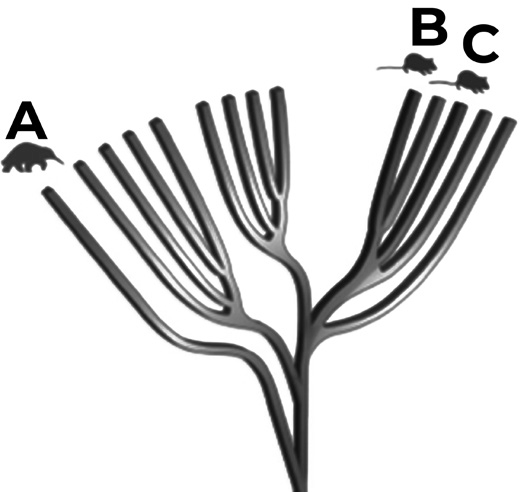
Species A has a higher EDGE score than either species B or C.
If species A were to go extinct, there would be no similar species left on the planet.
National Action Plan for Conservation of Migratory Birds
(2018 – 2023)
MOEFCC has developed the plan for Conservation of Migratory Birds & their Habitats along Central Asian Flyway (CAF) for the period 2018-23.
The longer-term objective is to stop the decrease in migrating bird populations and protect their habitats. The short-term strategy is to stop the drop in decreasing meta-populations by 2027.
Central Asian Flyway (CAF)
Groups of birds utilize flyways as part of their yearly cycle; these locations are used by the birds for breeding, stopping over, and wintering; many of these sites are very productive and also provide advantages to the surrounding population.
One of the nine flyways recognized by the Convention on Migratory Species is the Central Asian Flyway (CAF).
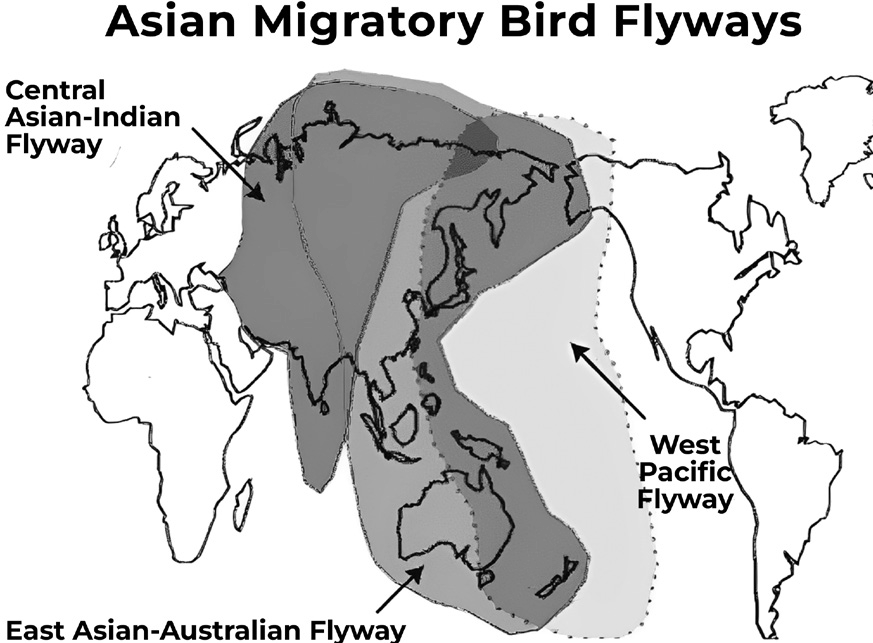
Route : Russia (Siberia) to the southernmost non- breeding (wintering) grounds in West & South Asia, the Maldives & British Indian Ocean Territory.
Over 90% of the bird species that are known to use the flyway have crucial stopover locations in India, which gives the country a strategic importance in the migration process.
Biodiversity Finance Initiative (BIOFIN)
It was launched by UNDP in 2012.
It aims to:
• Create a technique for calculating the national biodiversity financing deficit;
• Increase cost-effectiveness by integrating biodiversity into sectoral planning and national development.
• Creatingall-encompassing national resource mobilization plans.
It facilitates the National Biodiversity Action Plan (NBAP)’s implementation and advances the NBTs, or National Biodiversity Targets, towards their accomplishment.
The Ministry of Environment, Forests, and Climate Change (MoEFCC) is in charge of BIOFIN in India.
The National Biodiversity Authority (NBA) is in charge of the project; it collaborates with four State Biodiversity Boards and receives technical support from the National Institute of Public Finance and Policy (NIPFP) and the Wildlife Institute of India (WII).
SCATFORM Project
Sustainable Catchment Forest Management Project is launched by Tripura.
The project is jointly funded by the Japan International Cooperation Agency (JICA) i.e. 80% and Government of India (20%).
To address problems like deforestation and loss of forest cover, which are mostly brought on by shifting farming.
Asian Elephant Alliance
The Asian Elephant Alliance is a coalition of five non- governmental organizations: Elephant Family, International Fund for Animal Welfare, IUCN, Wildlife Trust of India, and World Land Trust. Its primary objective is to secure 96 out of the 101 existing corridors utilized by elephants across 12 states in India.
International Consortium on Combating Wildlife Crime (ICCWC)
It provides coordinated assistance to subnational and regional networks, as well as national wildlife law enforcement authorities, in their efforts to combat wildlife crimes.
The 5 partners are:
• CITES Secretariat
• INTERPOL
• United Nations Office on Drugs and Crime
• World Bank
• World Customs Union
This alliance was formally established through St. Petersburg Declaration in 2010.
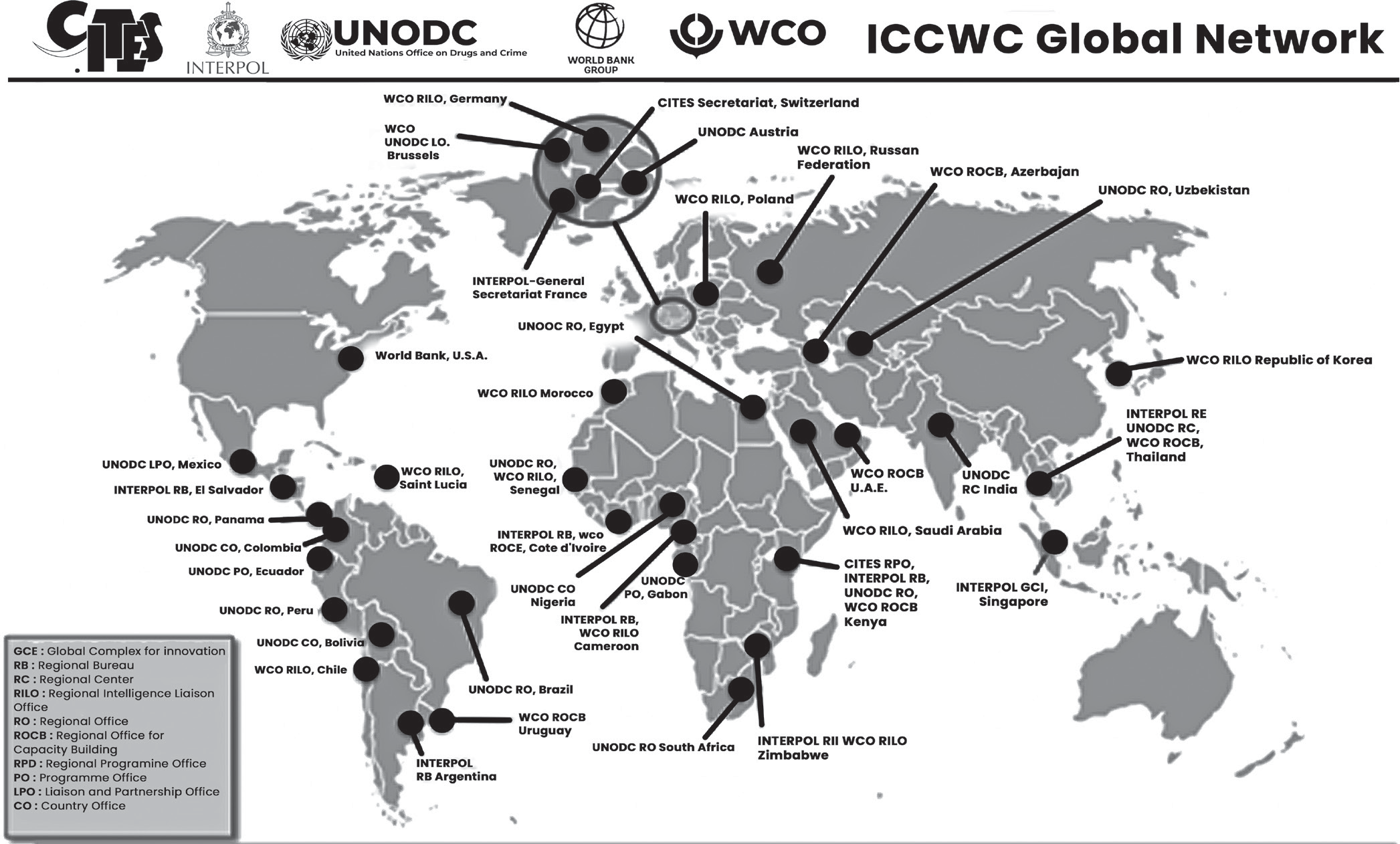
Global Wildlife Programme
It was launched in 2015
It is a World Bank-led & GEF-funded global partnership.
Aim: To combat trafficking in Wildlife
Coalition Against Wildlife Trafficking
The alliance pledges to work together to combat the illegal trafficking in wildlife and animal components.
It is a US-led Coalition Against Wildlife Trafficking (CAWT) launched in 2005,
India is a member
Fugitive particulate matter
Fugitive particulate matter refers to particulate matter that is not emitted into the air through a stack or similar structure, such as a chimney or vent. It includes fugitive dust, which is a type of particulate matter released into the air by wind or similar forces. Sources of fugitive dust include both natural sources like wind erosion and wildfires, as well as human sources like agriculture, construction, and road activities.
Breathe India
Niti Aayog’s Breathe India plan targets the 10 most polluted cities in India.
A 15-point action plan has been developed to address air pollution in the cities
Cities Includes: Kanpur, Faridabad, Gaya, Varanasi, Patna, Delhi, Lucknow, Agra, Gurugram and Muzaffarpur.
15 Point Action Plan:
Electrify all last-mile transportation by 2022, such as taxis, three-wheelers, and public transportation.
Make transitional traffic in certain cities illegal.
By 2022, phase out private diesel cars.
Prioritize the decommissioning of power plants in the vicinity of the most polluting cities by conducting an analysis and survey of these facilities over the next five years.
Update the laws governing industrial air pollution.
Establish a national emissions trading scheme based on the “polluters pay” theory.
By 2019, establish towers free of pollution at all significant building sites.
Provide incentives for the collection and application of agricultural residue.
By 2019, establish landfill fee policies and provide incentives for trash processing instead of land filling.
By2019, require automated dust removal in the most contaminated cities.
Coordinate Your Attacks on Forest Fires.
To lessen interior air pollution, put in place a policy requiring the use of cleaner cooking methods.
Create stakeholder-specific awareness campaigns in these cities to make sure that everyone involved is informed about the dangers of air pollution and the consequences of participating in activities that contribute to it.
By the end of 2018, establish city-level plans with precise deadlines and emission objectives for all sources of pollution (building, transportation, and interior environments).
By 2019, install thorough and precise air quality monitoring systems in the cities that are most severely impacted.
Breathe Life Campaign
Breathe Life is an international initiative that encourages cities and people to take action against air pollution in order to save both the environment and human health. The Climate & Clean Air Coalition (CCAC), UN Environment Programme (UNEP), and World Health Organization (WHO) are spearheading the initiative.
Oxygen Park
It is a concept where a 2-layer layout is being used to
plant trees that release oxygen for 24-hr period.
It provides natural “lungs” to the cities.
The 1st layer contains:
• Peepal (Ficus religiosa)
• Neem (Azdirachta indica)
• Areca Palm (Dypsis lutescens)
The 2nd layer contains:
• Aloe Vera
• Tulsi (Ocimum sanctum)
• Snake plant (Sansevieria trifasciata)
• Ivy plant (Hedera)
• Fig plants/trees (Ficus).
Why there is a need for Oxygen Parks?
Phenomenon of a citywide microclimate due to rampant construction and pollution.
Rampant Urbanization.
Increased air pollution especially around densely populated areas.
Water scarcity.
Global Carbon Project
It is a global research project of Future Earth.
It was launched in 2001 by partnership of:
• International Geosphere Biosphere Programme
• International Human Dimension Programme
• World Climate Research Programme
• Diversities
Aim: to comprehend the carbon cycle and compile information on the three main greenhouse gasses:
Co2
Methane
Nitrous Oxide
Deep Carbon Observatory Project
Research conducted by the Deep Carbon Observatory takes into account the global carbon cycle beyond Earth’s surface.
Over a decade has been dedicated to comprehending
the amounts, motions, forms, and origins of carbon in the Earth by a community of over a thousand scientists worldwide.
What is Deep Carbon?
Ninety percent of the carbon on Earth is buried beneath the surface, and this is referred to as deep carbon.
The flow of carbon through the Earth’s greatest carbon stores, the core and mantle, is known as the deep carbon cycle.
The deep Earth releases and retrieves carbon from surface reservoirs through subduction and volcanism.
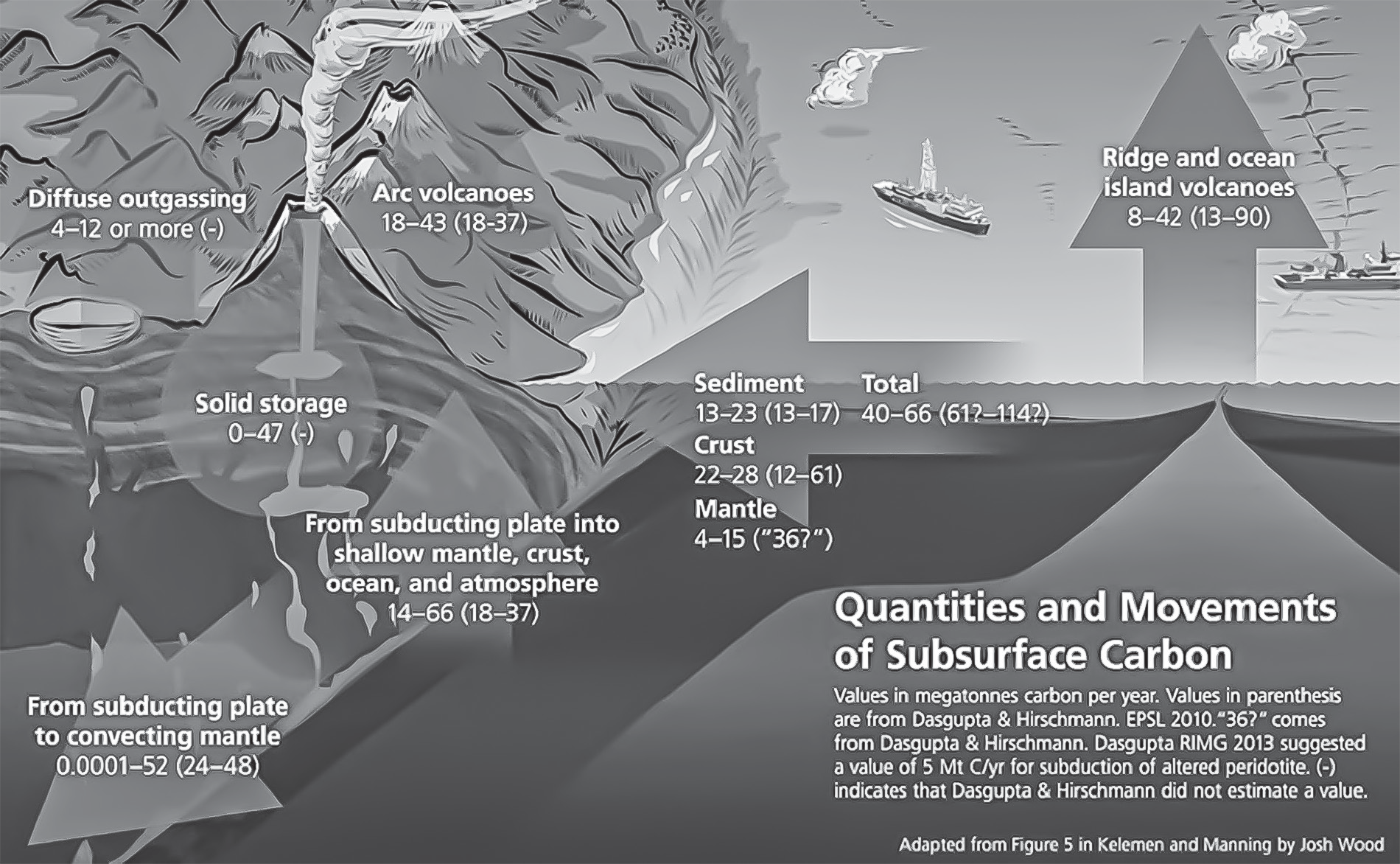
It is closely related to the flow of carbon in the Earth’s surface and atmosphere and is a component of the carbon cycle.
Because it affects the seas, atmosphere, and ultimately life on Earth, deep carbon is an essential component of the carbon cycle.
By bringing deep carbon back into the earth, it is essential to preserving the terrestrial conditions required for life to survive.
In the absence of it, carbon would build up in the atmosphere and eventually reach very high concentrations.
Surface vs. Deep Carbon: The primary distinction between the two carbon cycles is timescale since the latter involves an order of magnitude slower time scale than the former.
National River Conservation Directorate
It is under Ministry of Jal Shakti (Earlier Ministry of Environment)
Its duties include putting into effect the officially supported National River Conservation Plan (NRCP) for all rivers in the nation, with the exception of the river Ganga and its tributaries (National Ganga Council).
Note: The Environment Ministry has the responsibility over issues relating to biodiversity conservation of lakes, wetlands, coastal waters, mangroves & coral reefs. Therefore, National Lake Conservation Plan is implemented by Environment Ministry.
Himalayan State Regional Council
The council was constituted by NITI Aayog
It is composed of top NITI Aayog officers, chief secretaries of important central ministries, chief secretaries of Himalayan States, and special invitees. It serves as the nodal agency for the sustainable development of the Indian Himalayan Region.
Carbfix Project
Vegetation and trees are not the only things that absorb carbon from the atmosphere. Large amounts of carbon are found in rocks naturally.
Carbfix captures and removes CO2 permanently, mimicking and speeding up these natural processes.
Young basaltic rocks are highly fractured and porous, allowing water to easily seep through the interconnected cracks and empty spaces underground.
Carbon dioxide is dissolved in water and reacts with reactive rock structures, such as basalts, to form solid minerals providing a permanent carbon sink.
World’s 1st negative emissions plant under the CarbFix project to turn atmospheric CO2 into Stone has begun operations in Hellisheidi, Iceland.
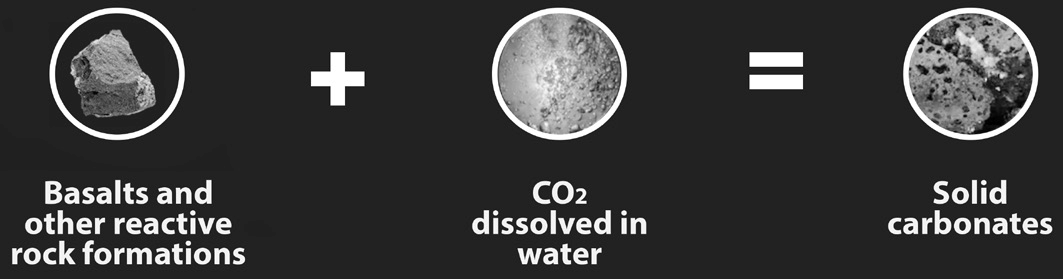
Wind Augmentation Purifying Unit (WAYU)
The WAYU gadget was created by the National Environmental Engineering Research Institute (NEERI), a laboratory of the Council for Scientific and Industrial Research (CSIR).
It functions by employing a filter to turn harmful PM2.5 and PM10 particles, carbon monoxide, and volatile organic compounds into carbon dioxide.
It cuts pollutants at heavy traffic intersections by 40–60%.
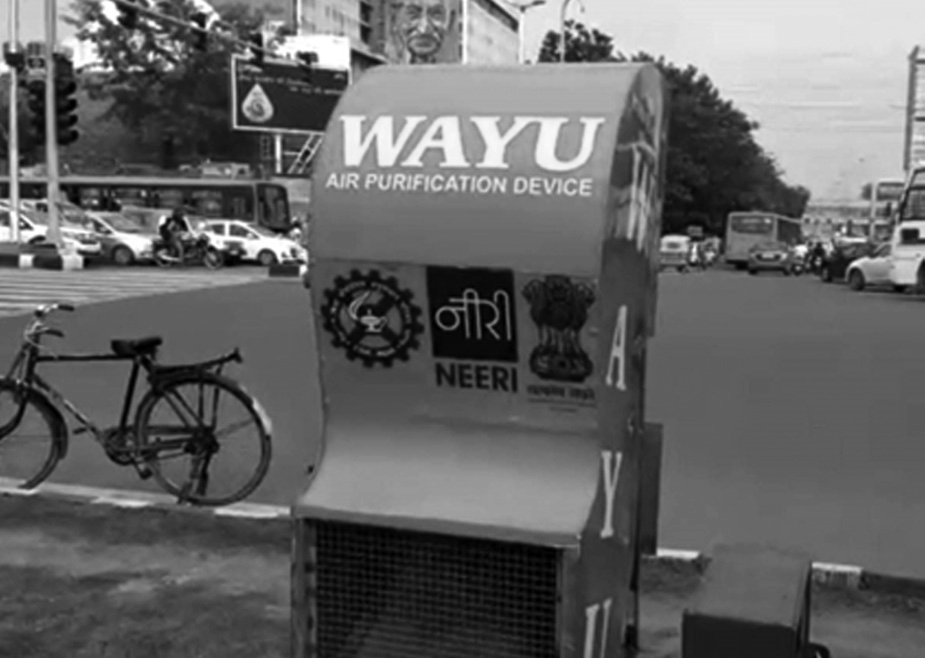
Mission Innovation
It is a global initiative of 24 countries of the EU.
Is to dramatically accelerate global clean energy innovation.
It is announced in 2015 – Paris Climate Agreement
India is founding member & part of steering committee.
Dept of Biotechnology – Nodal Ministry of S&T.
Dept of MNRE, Dept. Of S&T & Min of Power (also participating in addressing the challenges).
Challenges
Smart Grids Innovation Challenge (India will Lead)
Off Grid Access to Electricity Innovation Challenge
Carbon Capture Innovation Challenge
Sustainable Biofuels Innovation Challenge (India will Co-Lead)
Converting Sunlight Innovation Challenge
Affordable Heating & Cooling of Building Innovation Challenge
Clean Air-India Initiative
The Clean Air India Initiative is a collaborative project between:
• Get in the Ring (a platform for start-ups by the government of the Netherlands)
• Start-up India
• INDUS Forum (an online matchmaking platform of Indian and Dutch businesses).
It aims to curb air pollution in Indian cities & pollution from stubble burning.
Clean Air Initiative
It is initiative launched by the United Nations, WHO, UNEP and Climate & Clean Air Coalition.
It urges national and local governments to pledge to attaining healthy air quality for residents and to synchronize air pollution and climate change strategies by 2030.
This Initiative will be led by the WHO with the support of the Clean Air & Climate Coalition (CCAC).
Alliance of Small Island States (AOSIS)
It is an intergovernmental organization of low-lying coastal & small island countries.
It was established in 1990.
The primary goal of the alliance is to unite the voices of Small Island Developing States (SIDS) in order to address global warming.
The majority of SIDS, but not all of them, are members of the Alliance of Small Island States (AOSIS), which handles lobbying and negotiation on their behalf within the UN system.
The common factor that unites AOSIS members is their unique vulnerability to climate change.
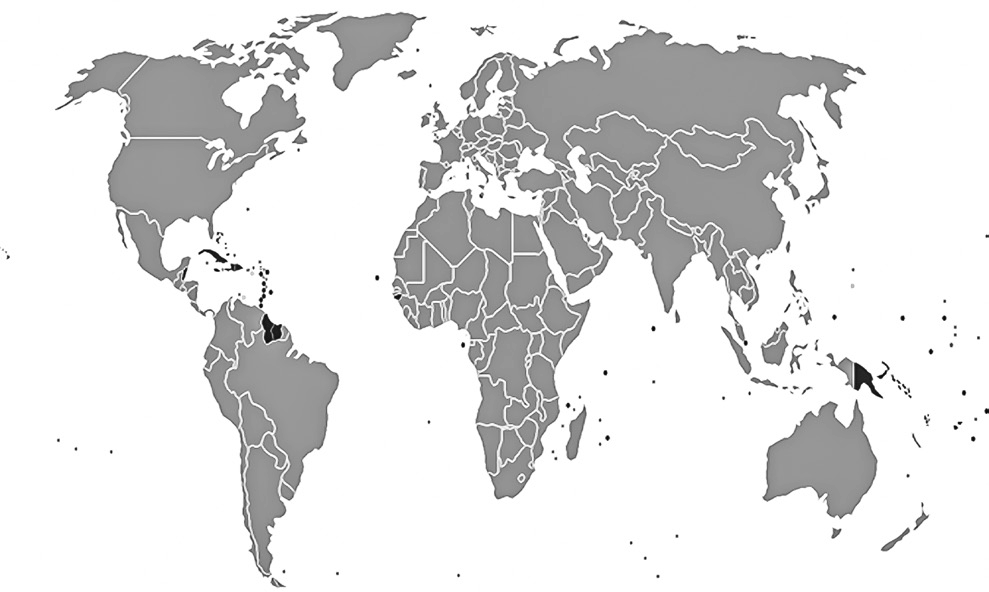
Climate Vulnerable Forum (CVF)
The Maldivian government established the Climate Vision Foundation (CVF) before to the 2009 UN Climate
Change Conference in Copenhagen. It is an international consortium of developing nations monitoring climate change worldwide.
It was established to hold developed countries more responsible for the effects of climate change.
It aimed to raise awareness of nations deemed climate change vulnerable.
India is an observer State under CVF (Not a member).
CVF Virtual Summit – 2018
It was worlds 1st Virtual Climate Summit.
2018 CVF Summit is organized as part of Talanoa Dialogue.
The Jumemmej Declaration, which was the result of the summit, urges governments and non-state actors to take action based on the recommendations of the IPCC Special Report on 1.5 C in advance of the UN Climate Change Conference in Katowice (COP24).
Talanoa Dialogue
Talanoa Dialogue was launched at COP 23 under the Presidency of the Republic of Fiji.
The term “Talanoa” refers to a process of inclusive, transparent, and participatory discourse and is traditionally used in Fiji and around the Pacific.
In order to assist nations, execute and improve their Nationally Determined Contributions by 2020, Talanoa Dialogue is a technique that involves exchanging ideas, skills, and experience via storytelling.
Every five years, the Parties to the Paris Agreement are required to conduct progress assessments, sometimes known as “stock takes,” which enable them to monitor their advancement toward the agreement’s long-term objective and give guidance for developing more ambitious NDCs.
The first stocktake under the terms of the Paris Agreement was scheduled for 2023.
Nonetheless, the Parties decided that it was crucial to start this cycle before 2020, when the Paris Agreement is anticipated to enter into effect, and as a result, they formed Talona Dialogue, a first stock-taking exercise, for 2018.
Belmont Forum
Established in 2009, it is a high-level coalition of the world’s leading sponsors of international science councils and global environmental change research.
Its goal is to expedite the identification, study, and delivery of international environmental research priorities for society by means of transnational research collaboration and international resource alignment.
India is a member of Forum represented by Ministry of Earth Science.
Capacity-Building Initiative for Transparency (CBIT) Fund
CBIT is an outcome of the UNFCCC’s Paris agreement
in 2015.
Its goal is to improve developing nations’ institutional and technological skills so they can fulfill the Paris Agreement’s increased transparency standards by 2020 and beyond.
The creation of an improved transparency framework for monitoring and reporting the status of past, present, and future national commitments—with built-in flexibility for non-Annex I Parties—was a major outcome of the discussions leading up to the Paris Agreement.
Fund is set up by GEF & World Bank is the trustee.
Climate Technology Centre and Network
The CTCN is the operational arm of the UNFCCC Technology Mechanism.
It is hosted by the UN Environment Programme & UN Industrial Development Organization (UNIDO).
At the request of developing nations, it expedites the transfer of ecologically sound technology for low-carbon & climate resilient growth.
C 40 Initiative
The C40 Cities Climate Leadership Group (C40) is a network of the top 97 cities in the world that are tackling climate change head-on in the direction of a more sustainable and healthful future.
India’s Bangalore, Chennai, Kolkata, and Delhi NCT are included in the C40.
C40 encourages cities to work together and exchange information in order to duplicate, enhance, and quicken climate action.
South Asian Climate Outlook Forum
It was established in 2010, by the South Asian Members of the World Meteorological Organization.
It serves as a forum for meteorologists from Myanmar and the South Asian Association of Regional Cooperation (SAARC) nations to address shared weather and climate- related issues.
For the neighboring countries of India that lack sophisticated tools for issuing forecasts and making predictions, the forecast is useful.
Countries under SASCOF:
• Afghanistan
• Pakistan
• India
• Sri Lanka
• Nepal
• Bhutan
• Myanmar
• Maldives
Note: Bangladesh is the only SAARC nation not under South Asian Climate Outlook Forum. Myanmar is not a member of SAARC.
Global 200 Eco-Regions
• It is a system developed by WWF.
• To identify high-priority ecological zones for preservation.
• It designates a group of freshwaters, terrestrial, and marine ecoregions on Earth that are home to extraordinary biodiversity.
• Despite having the designation Global 200, it really consists of 238 areas.
• Every hotspot for biodiversity has at least one worldwide 200 Eco Region.
• In India:
• Western Ghats
• Indus River Delta
• The WWF assigns a conservation status to each eco- region in the Global 200:
• Critical or Endangered
• Vulnerable
• Relatively stable or intact.
• Over half of the eco-regions in the Global 200 are rated endangered.
Note: Don’t confuse it with IUCN assigned conservation status to flora & fauna.
GACSA - Global Alliance on Climate Smart Agriculture
• It is an initiative of FAO
• It is a voluntary coalition of partners committed to tackling the issues pertaining to agricultural and food security by utilizing the multitude and variety of resources, information, and experience within and among its members to support tangible projects at all levels.
Outcomes of GACSA
• Boosted agricultural production and revenues for farmers in a sustainable manner.
• Increased farmers’ ability to withstand harsh weather and climate change.
• Lowered greenhouse gas emissions from the agricultural sector.
Cool Coalition
• It is a global effort led by:
• UN Environment
• Climate and Clean Air Coalition
•
Kigali Cooling Efficiency Program
• Sustainable Energy for All (SEforALL)
The objective is to stimulate aspiration and expedite the shift towards sustainable and effective cooling methods. It was introduced during the inaugural Global Conference on Synergies between the 2030 Agenda and Paris Agreement in 2019.
International Whaling Commission
It is not an organ of UN.
It is set up by terms of Internal Convention for Regulation of Whaling (ICRW).
It ensures that whale stocks are properly conserved, which makes the orderly growth of the whaling business feasible.
Areas may be designated as whaling sanctuaries.
• Southern Ocean Whale Sanctuary (Antarctica)
• Indian Ocean Whale Sanctuary (Seychelles)
HQ: United Kingdom
Participation in IWC not limited to states involved in Whaling.
India is a member.
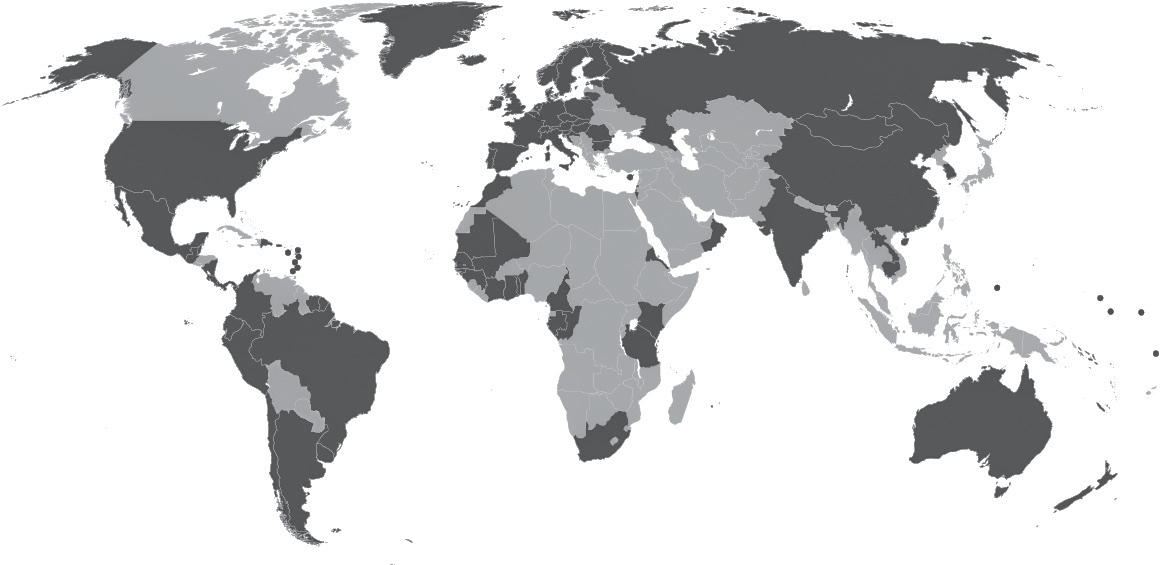
In 1982 it adopted Moratorium on Commercial Whaling.
• Moratorium of 1982 applies only to commercial whaling
• Whaling under Scientific Research and aboriginal subsistence provisions of ICRW are still allowed.
Florianopolis Declaration: During a meeting in Florianopolis, Brazil, in September 2018, members of the IWC rejected a proposal by Japan to recommence commercial whaling.
As a result, Japan announced its withdrawal.
The Three Percent Club for Energy Efficiency
It aims to increase energy efficiency improvements & deliver on average 3% per year until 2030 in alignment with SDG 7.3.
It was launched under the Climate Action Summit’s
Energy Transition Track.
India is a signatory.
Eco Mark
The Bureau of Indian Standards (BEE) certifies items that meet a set of guidelines intended to have the least negative effects on the environment by awarding them the eco label.
The Ministry of Environment, Forests, and Climate Change oversees the Eco- mark program, which is optional and aids in identifying environmentally friendly items on the market.
PARIVESH
Pro-Active and Responsive facilitation by Interactive, Virtuous and Environmental Single-window Hub (PARIVESH)
It was launched by MOEFCC.
It is an online program designed to allow proponents to submit and track projects online in order to obtain clearances from district, state, federal, and environmental authorities for CRZs, forests, and wildlife.
The whole procedure is automated.
Access to earlier Environment Impact Assessment Reports is also made possible by this method. Monitoring of compliance reports is done by geotagged photos of the location.

Faith for Earth Initiative
It was launched in 2017 by UNEP.
It seeks to collaborate and strategically interact with faith- based groups in order to jointly accomplish the SDGs.
Its goal is to establish a high-level worldwide “Coalition for Creation” to promote policy discussions on environmental concerns and support creative thinking in the pursuit of long-term solutions to environmental problems.
Sustainable Energy for All (SE4All)
It is a multi-stake holder partnership between governments, private sector & civil society.
It is launched by UN Secretary – General in 2011.
By achieving three interconnected goals that must be accomplished by 2030, it advances the Sustainable Development Goal 7 and the Paris Agreement:
Twice the rate at which energy efficiency is improving globally
Boost the proportion of green energy in the world’s energy mix by twice.
Access to contemporary energy services for everybody
United for Biodiversity Coalition by EU
The European Commission (EU’s executive branch) has launched the ‘United for Biodiversity’ coalition.
It was launched on World Wildlife Day 2020 ― 3rd of March.
The group consists of international zoos, aquariums, botanical gardens, national parks, and science and natural history museums.
In advance of the COP-15 of the Convention on Biological Diversity in Kunming, China in October 2021, the coalition provides all such institutions with the chance to “boost public awareness about the nature crisis.”
High Level Champions
In order to attain more robust and aspirational climate action following COP21, the UNFCCC designated two High Level Champions.
Their goal is to provide a link between the government’s efforts and the numerous voluntary and cooperative initiatives undertaken by nations, corporations, regions, and investors.
Gonzalo Muñoz and Nigel Topping are High-Level Climate Champions for Climate Action.
Some other initiatives by Champions
Race to Zero
The UN-backed global campaign called “Race to Zero” calls on non-state players, such as businesses, governments, regions, financial institutions, and educational institutions, to act swiftly and firmly in order to halve global emissions by 2030 and create a zero-carbon, healthier society on schedule.
Race to Resilience
The goal of the global campaign Race to Resilience, which is the sibling of Race to Zero, is to mobilize non-state actors to take action that will increase the adaptability of 4 billion people from vulnerable groups to hazards from climate change by 2030. The campaign prioritizes people and the environment in the pursuit of a resilient world in which we not only survive but thrive in the face of climate shocks and stresses.
Glasgow Finance Alliance for Net Zero (GFANZ)
It brings together more than 160 companies to spearhead net zero projects throughout the financial sector, with the goal of accelerating the shift to net zero emissions by the latest in 2050.
The UN Race to Zero campaign must accredit any alliance that is a member of GFANZ.
In accordance with the UN Race to Zero criteria, they must commit to transparent reporting and accounting, cover all emission scopes, set intermediate targets for 2030, and utilize science-based recommendations to achieve net zero emissions.
2030 Breakthroughs
The UN High-Level Champions and the Marrakech Partnership produced the Climate Action Pathways, a collection of comprehensive roadmaps to accomplish the Paris Agreement in accordance with 1.5 C across all sectors, from which the 2030 Breakthroughs are drawn.
In order to advance along these routes, various players must and may contribute to important milestones and acts that are highlighted in the Breakthroughs.
Carbon Footprint
It is an annual measurement that is represented as the weight of CO2 emissions produced in tonnes and shows the influence that an individual’s activities have on the quantity of CO2 created via the combustion of fossil fuels.
| As per IEA 2023 | 2023 CO2 emission in mteric tons | Global Share | Change since 2000 till 2023 |
| China | 11130 | 32.08% | +262% |
| US | 4413 | 12.72% | -23% |
| Russia | 1629 | 4.88% | +15% |
| India | 2763 | 7.97% | +210% |
| Japan | 935 | 2.69% | -18% |
| Germany | 549 | 1.58% | -32% |
| S.Korea | 551 | 1.59% | +32% |
| Iran | 727 | 2.1 | +133% |
| S Arabia | 535 | 1.54 | +128% |
| Canada | 523 | 1.51% | +4% |
The smartphone app Carbon Watch, which calculates a person’s carbon footprint, was introduced in Chandigarh, the first state or union territory in India.
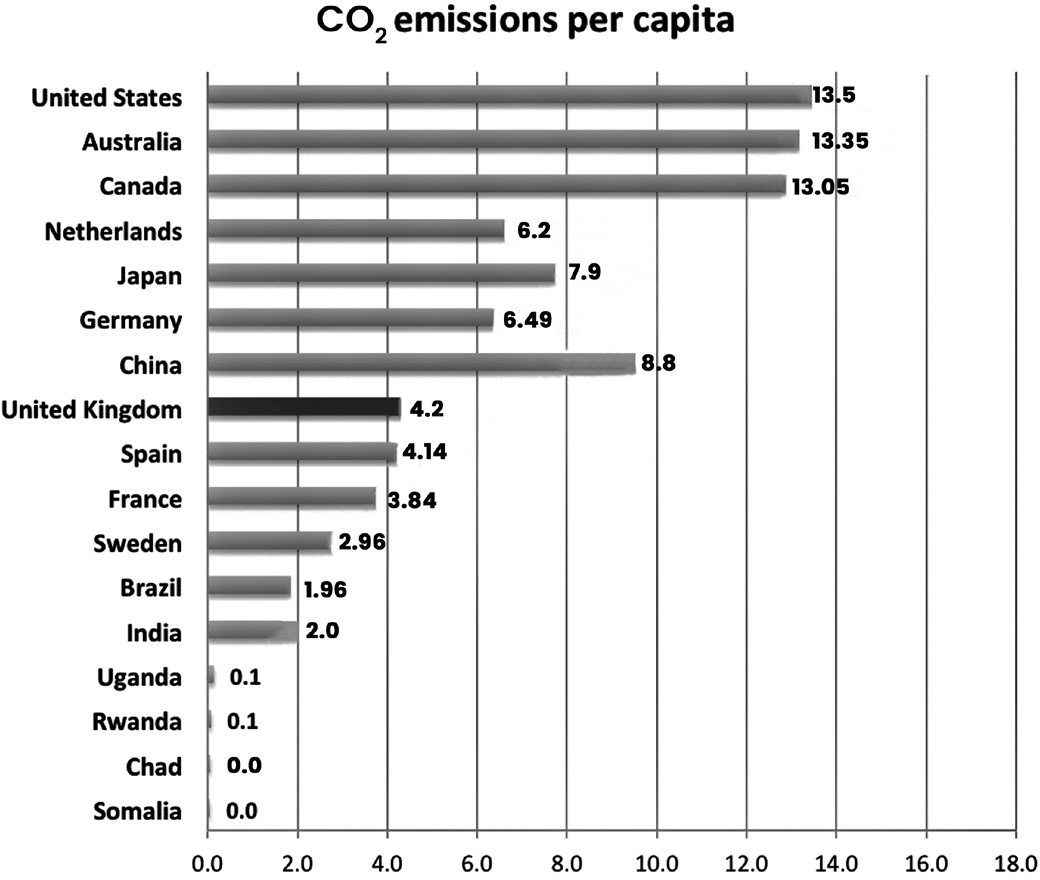
A person is questioned about information related to four areas: transportation, energy, waste creation, and water.
The mobile application determines an individual’s carbon footprint using the above given information.
Climate Sensitivity
It is described as the increase in global temperature that occurs when the amount of CO2 in the atmosphere doubles from pre-industrial levels.
Knowing the climate sensitivity will help us calculate the amount of CO2 we can release while adhering to the Paris Agreement’s limit of 2 C of warming.
When pre-industrial CO2 levels were doubled, they would be around 520 parts per million.
The most recent CO2 content measured in the atmosphere was 419 parts per million.
That is, compared to pre-Industrial levels, our atmosphere currently has around 45% more CO2 in it.
Depending on future GHG emissions, the 520-ppm barrier is predicted to be reached in the next 50 to 100 years.
Global Assessment Report on Biodiversity and Ecosystem Services 2019
The Intergovernmental Science-Policy Platform on Biodiversity and Ecosystem Services (IPBES), with its headquarters in Bonn, Germany, is responsible for preparing the 2019 UN-sponsored Global Assessment Report on Biodiversity and Ecosystem Services report.
IPBES is sometimes referred to be the “IPCC for biodiversity” since it evaluates scientific literature on biodiversity and has 130 members, including India.
Key points form the IPBES Report
Total estimated number of species on Earth is 8 million
(includes 5.5 million insect species).
Nearly a half of the natural ecosystems have already vanished due to human activities.
Up to 1 million species threatened with extinction, many within decades.
The threatened list includes 40% of amphibian species, 33% of reef-forming corals, and more than a third of all marine mammals.
Humans have severely altered 75% of land, 40% of marine environments and 50% of inland waterways:
300% increase in food crop production since 1970.
23% land areas have seen a reduction in productivity due to land degradation.
50% agricultural expansion that occurred at the expense of forests.
100-300 million people in coastal areas are at increased risk due to loss of coastal habitat protection.
More than 100% growth of urban areas since 1992.
Less than 1% of total land used for mining but has significant negative impacts on environment.
16-21 cm rise in global average sea level since 1900.
100% increase since 1980 in GHG emissions, raising average global temperature by 0.7 degree.
Plastic pollution alone has increased tenfold since 1980.
1,000 green activists and journalists reporting on environmental issues killed between 2002 and 2013.
Operation Clean Art
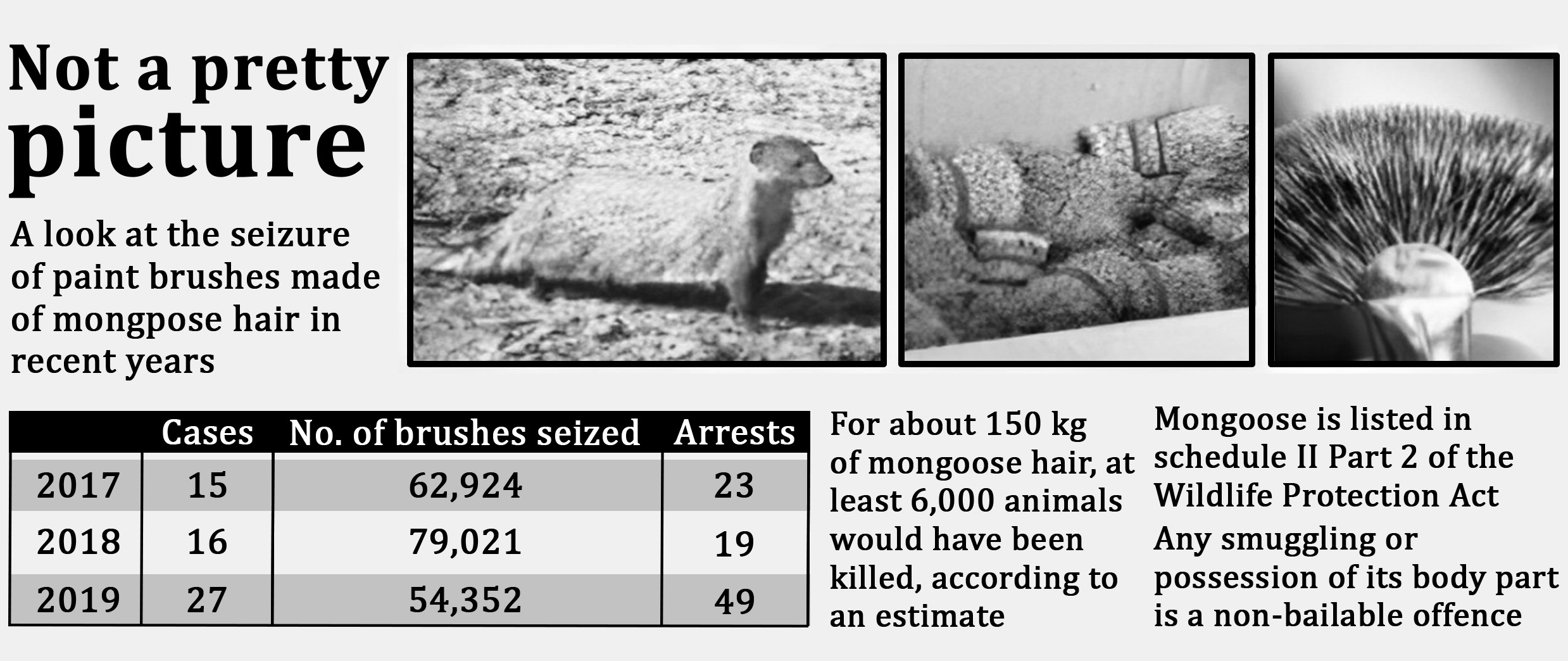
The first nationwide effort in India to combat the smuggling of mongoose hair was called Operation Clean Art.
The Wildlife Crime Control Bureau (WCCB) came up with the idea in order to make sure that the trade in mongoose hairbrushes should be outlawed nationwide.
Only 20–25 grams of “brush-making hair” are retrieved from the roughly 30–40 grams of hair that an adult mongoose produces.
The equivalent of at least 6,000 animal deaths would have occurred for every 150 kg of mongoose hair.
In few cases, courier services have been used to deliver mongoose hair.
Concerned organizations are launching a social media campaign to get artists to promise not to use brushes made of mongoose hair.
Need for alternatives
Mongoose hairbrushes are preferable to other brushes because they keep color better, according to painters. Research is needed to create brushes that meet artists’ needs because the alternatives on the market are of poor quality.
Wildlife Protection Act provision
The Indian Wildlife (Protection) Act, 1972’s Schedule II (Part II) provides protection for any species of mongoose that may be found in India.
The species is also prohibited from being traded commercially by the Convention on International Trade in Endangered Species of Wild Fauna and Flora (CITES).
Earth Day
Earth Day was first observed in 1970 when 20 million took to the streets to protest against environmental degradation. The event was triggered by the 1969 Santa Barbara oil spill and other issues such as smog and polluted rivers.
Every year, April 22 is observed as Earth Day, an international event celebrated around the world to pledge support for environmental protection.
The 50th anniversary of the inaugural Earth Day is being observed in 2020.
The theme for 2026 is “Our Power, Our Planet”, which heavily emphasizes community action, the transition to renewable energy, and boosting accountability for environmental damage
Earth Hour
The World Wildlife Fund for Nature (WWF) is the global organization behind the Earth Hour initiative.
It urges people everywhere to turn off the lights between
8.30 and 9.30 p.m., local time.
It began in 2007 and takes place on the final Saturday of March each year.
The 2026 event carried the theme "Give An Hour For Earth," encouraging individuals, communities, and businesses to go beyond simply switching off their non- essential lights.
The purpose of this energy-saving initiative is to appeal for environmental conservation by abstaining from using non-essential lights.
Earth Hour has been effective in changing laws by utilizing the strength of the populace and group effort.
In Argentina, for instance, it contributed to the creation of a 3.5-million-acre maritime protected area.
Eliminate plastics from the Galapagos Islands.
State of India’s Environment 2026
Publisher: Published by the Centre for Science and Environment (CSE) annually since 1982.
Objective: To provide a comprehensive assessment of India’s environmental status and highlight emerging ecological and climate challenges.
Key Findings:
7 of the nine planetary boundaries have been breached, with ocean acidification emerging as the seventh.
The world is close to breaching the 1.5 C global warming threshold, signalling irreversible climate impacts.
Global forest cover has fallen to 59%, far below the 75% safe threshold, while species extinction rates exceed 100 per million species years (ten times the safe limit).
Habitat loss, prey depletion, and increasing human proximity to forests are altering tiger behaviour and increasing encounters.
Global Biofuel Alliance (GBA)-2023
Global Biofuel Alliance (GBA) was recently launched by world leaders to expedite the global uptake of biofuels, under India’s G20 presidency. The alliance brings together major biofuel producers and consumers, such as the US, Brazil, and India.
Nineteen countries and 12 international organizations have already agreed to join or support the GBA.
Significance:
• GBA will facilitate transfer of technologies and mobilization of international climate funds.
• Having achieved the E10 target, India aims to achieve E20 by 2025-26.
• It may accelerate adoption of Flex Fuel Vehicles.
• Establishment of GBA reinforces the fight against climate change.
• An opportunity for India to increase its share in biofuel production