Power Sector in India
Power Sector in India
The power sector in India is a crucial component of the nation’s infrastructure and economy. India ranks as the world’s third-largest producer and consumer of electricity.
As of May 31, 2021, India’s national electric grid boasts an installed capacity of 383.37 GW. This capacity represents the country’s ability to generate electricity.
Despite being one of the largest producers and consumers, India’s per capita electricity consumption remains relatively low compared to many other countries. This indicates potential for growth in electricity demand as the economy develops further.
India’s electricity sector heavily relies on fossil fuels, which account for approximately 80% of its energy mix. The remaining 20% is sourced from renewable energy. This composition reflects a significant dependence on traditional energy sources, although efforts are being made to increase the share of renewables.
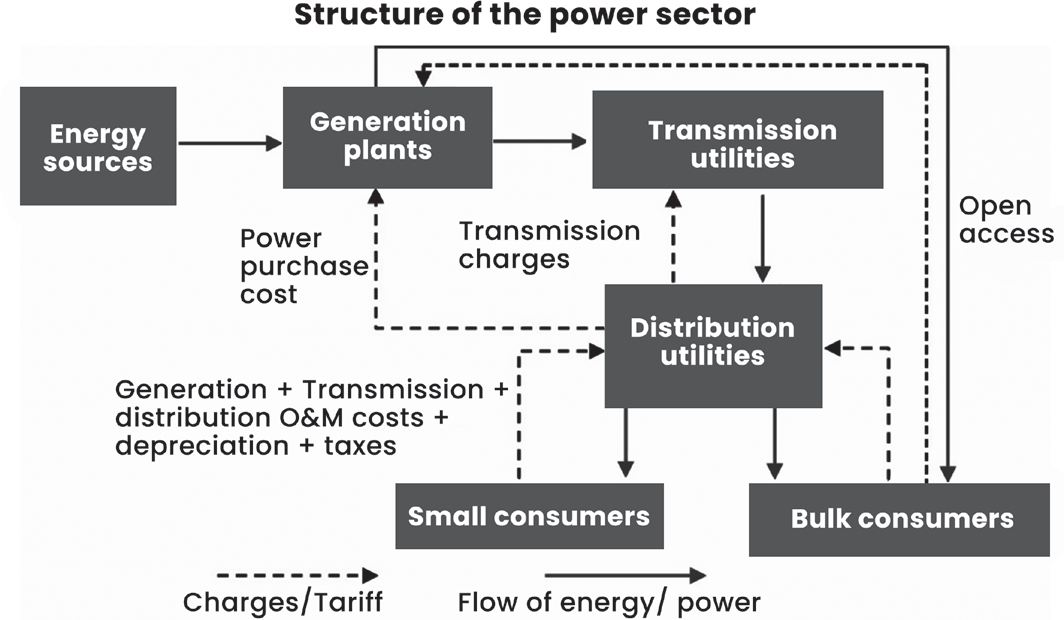
The electricity sector in India comprises three primary segments: generation, transmission, and distribution.
Generation: This involves producing electricity using various fuels in generating stations or plants.
Transmission: Transmission utilities transport bulk power from generation plants to distribution substations via a grid system and at high voltages.
Distribution: Distribution utilities deliver electricity from substations to individual consumers through a distribution network. Distribution occurs at the retail level and operates at lower voltages.
Generation
Fuel Sources for Power Generation:
India utilizes a variety of resources for electricity generation, including:
Coal
Natural Gas
Hydropower
Nuclear Power
Renewables (solar, wind, small hydro, biomass)
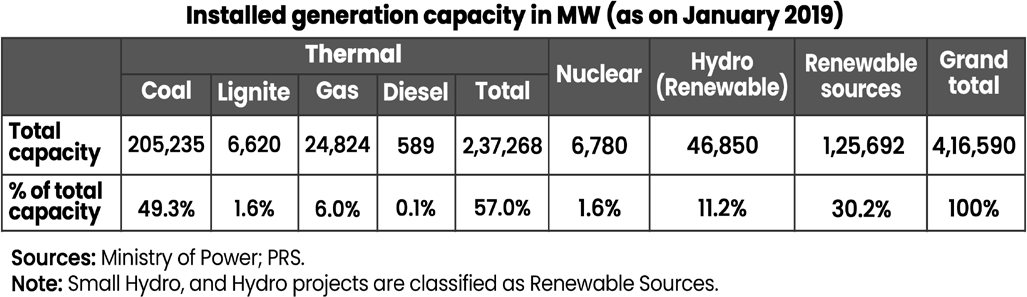
Power Generation Capacity (as of Dec. 2018): The total installed capacity for power generation in India was 349 GW.
The delicensing of power generation in 2003 through the Electricity Act has significantly increased India’s generation capacity. This reform allowed for greater participation by private sector companies.
Power Generation by Sector:
Private utilities emerged as the major power generators, contributing 46% of the total capacity.
State utilities and central generating utilities followed, holding shares of 30% and 24% respectively.
Fuel Share in Power Generation:
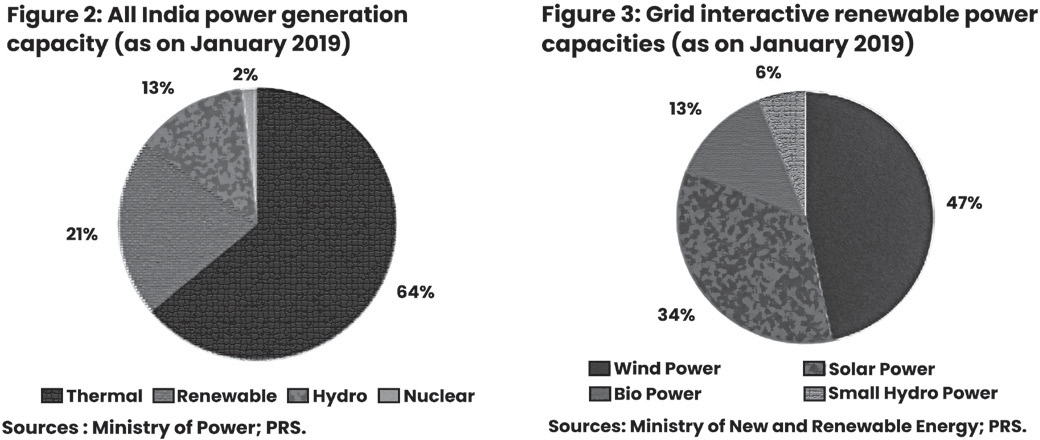
Coal dominates power generation in India, accounting for a substantial 55% share. The power sector is the largest consumer of coal in the country.
Thermal power generation, which includes both coal and natural gas, contributes to 64% of the total electricity produced.
As of Apr 2024, Renewable energy sources, including large hydropower, have a combined installed capacity of
191.67 GW.
Hydropower was the leading renewable source, contributing 13% of the total generation.
Nuclear power stood at a 2% share.
Status of Power Generation in world
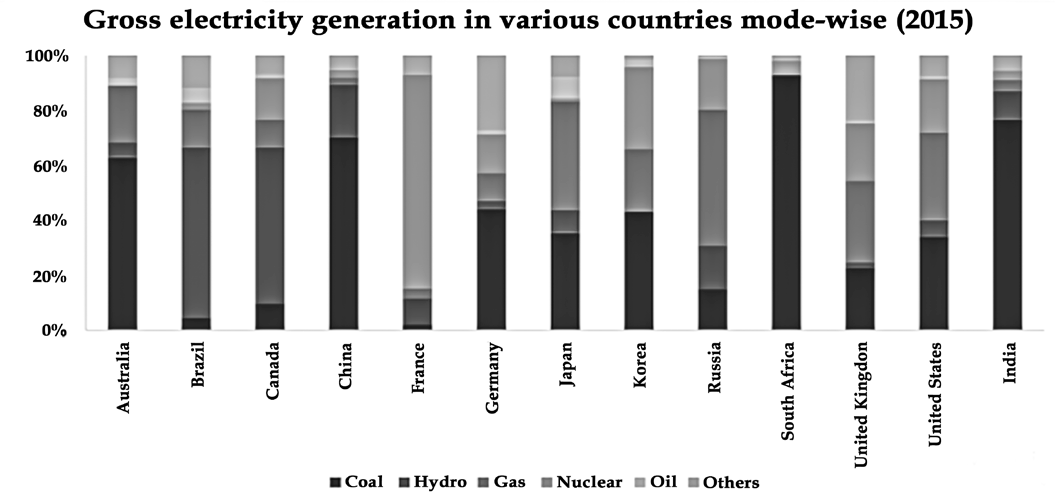
Coal remains a primary source of electricity generation in many countries worldwide. Despite concerns over its environmental impact, coal-fired power plants continue to play a significant role in meeting energy demands, particularly in countries with abundant coal reserves like China, India, and the United States.
Countries with access to ample water resources, such as Brazil and Canada, often rely heavily on hydroelectric power generation. Hydroelectricity is considered a cleaner source of energy compared to coal and is a significant contributor to the electricity grids of these nations.
Several countries, including Japan, Russia, the UK, and the US, generate a notable portion of their electricity from gas-fired power plants. Natural gas is considered a cleaner alternative to coal due to lower emissions of greenhouse gases and pollutants. Its flexibility and relatively lower environmental impact make it an attractive option for power generation in these countries.
Many countries are increasingly investing in renewable energy sources such as solar, wind, and biomass for electricity generation. Countries like Germany, Denmark, and Spain have made significant strides in integrating renewable energy into their grids, aiming to reduce dependence on fossil fuels and mitigate climate change.
Sources & Credits: Central Electricity Authority Transmission
Transmission plays a crucial role in the electricity sector, ensuring the efficient and reliable delivery of electricity from power generation sources to end consumers.
Transmission activities in India are primarily undertaken by central and state government-owned companies. This government control ensures coordination and regulation of transmission activities across the country.
In 1989, the transmission segment was separated from the central generation agency, leading to the establishment of the Power Grid Corporation of India (Powergrid). Powergrid is entrusted with the responsibility of planning, implementing, operating, and maintaining the inter-state transmission system, as well as managing national and regional power grids.
Power-grid plays a central role in facilitating the transmission of electricity across India. It oversees the development and operation of transmission infrastructure, ensuring the smooth flow of electricity from generation sources to distribution networks.
The Electricity Act of 2003 introduced provisions for open access, allowing consumers to purchase power directly from any power generating plant. This provision ensures non-discriminatory access to transmission and distribution lines, promoting competition and efficiency in the electricity market.
Distribution
Distribution activities are primarily carried out by state- owned distribution companies, also known as discoms. These entities are responsible for distributing electricity to consumers within their respective regions.
In select cities such as Delhi, Mumbai, Ahmedabad, and Kolkata, the distribution business is owned and operated by private entities. This privatization of distribution allows for increased competition and potentially more efficient service delivery.
Discoms, or distribution licensees, procure electricity from generation companies through power purchase agreements (PPAs). These agreements govern the terms of purchase, including price, quantity, and duration of supply.
One of the significant issues plaguing the power sector is the poor financial health of state discoms. Financial constraints hamper their ability to procure sufficient power for distribution and invest in infrastructure upgrades. As a result, the quality and reliability of electricity supply to consumers are often compromised.
Issues in the Power Sector
Peak Deficit
Despite an increase in generation capacity over the years, India continues to experience peak deficits in electricity supply. This indicates that during periods of highest demand, the available capacity is insufficient to meet the peak electricity requirements.
India has seen significant growth in thermal generation capacity, averaging an annual growth rate of 7% between 2005-06 and 2018-19. Thermal power plants, fueled by coal and natural gas, contribute substantially to the country’s electricity generation.
The peak deficit in India stood at 2% in recent years. For instance, in 2017, while the total available capacity was 330 GW, the peak demand reached 164 GW, resulting in an unmet demand of 2%.
The peak deficit situation may vary across different regions and states within India. Some areas may experience more pronounced deficits due to factors such as infrastructure limitations, inadequate investment, or geographical constraints.
Despite the historical peak deficits, the Central Electricity Authority projected an energy surplus of 4.6% and a peak surplus of 2.5% for the fiscal year 2018-19. This suggests that, at least for that period, the available generation capacity was expected to exceed the peak electricity demand.
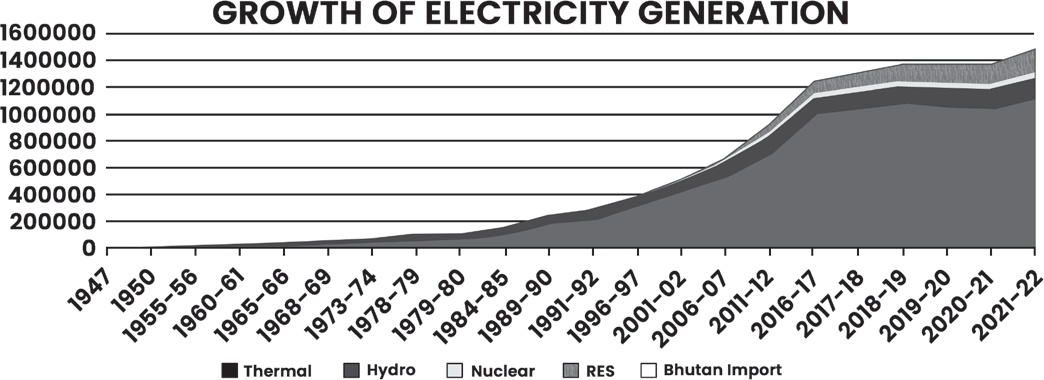
Capacity Utilisation of Thermal power Plants has been Declining
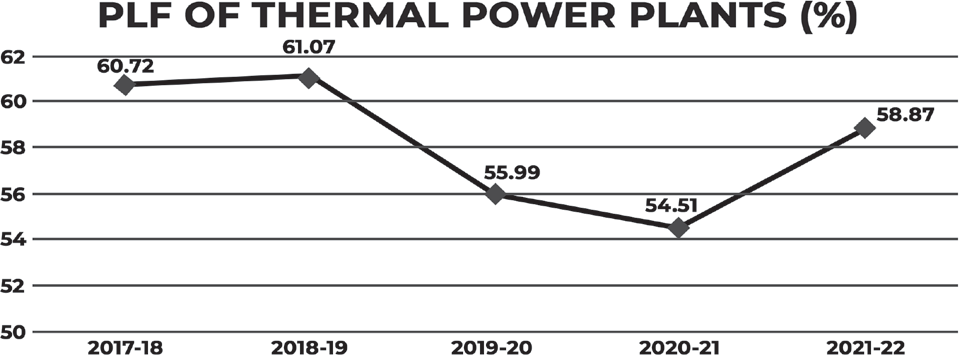
Despite the steady increase in generation capacity, the capacity utilization of thermal power plants has witnessed a decline over the years. For instance, the PLF dropped from 78% in 2009-10 to 61% in 2018-19. This trend indicates that thermal power plants are operating at a lower capacity relative to their total potential.
Among the different types of generators based on ownership (private, state, and central), private and state-owned thermal power plants exhibit poorer PLF compared to central ones.
Causes of Low PLF
Nonavailability of fuel (such as coal or gas) can hinder the operation of thermal plants, as they heavily rely on these resources for electricity generation.
Surplus capacity in certain regions of the country may lead to underutilization of thermal plants, as demand for power may be adequately met through other sources or due to lower electricity demand.
Low demand for power or increasing reliance on alternative energy sources, such as renewables, may reduce the need for thermal power generation.
Fixed Costs and Idle Plants: Thermal power plants incur significant fixed costs, including maintenance, depreciation, and financing expenses, even when they are lying idle due to low PLF. This situation can exacerbate financial challenges for power producers and adversely impact the overall viability of thermal power projects.
Source & Credits: Ministry of Power High Cost of Power
High tariffs for electricity can lead to reduced demand from consumers, as they may seek to limit their usage or explore alternative sources of energy. This is particularly relevant for sectors such as industrial and commercial, where electricity costs can significantly impact operational expenses.
For distribution companies (discoms), the cost of purchasing power from power plants constitutes a substantial portion, accounting for roughly 75-80% of their total expenditure. Therefore, any changes in the cost of power procurement directly affect the overall financial health of discoms.
Changes in the cost of power procurement have a significant impact on the retail tariff, as it constitutes a significant portion of the overall expenditure for discoms.
High NPAs
The power sector in India has been grappling with rising Non-Performing Assets (NPAs), particularly in the thermal power segment.
The number of NPAs in the power sector has been on the rise, posing significant challenges to the financial health of power companies and lenders involved in the sector.
India has eight stranded coal-based thermal power plants, as of April
2023, according to an analysis by the Institute for Energy Economics and Financial Analysis (IEEFA).Stranded assets a re ones no longer used or where operations may have
stalled and may end up as a liability.
One of the primary reasons for financial stress in power plants is the delay in payments by distribution companies (discoms) to power producers. Discoms, facing their own financial challenges, often delay payments to power plants for electricity procured under Power Purchase Agreements (PPAs).
Power plants experiencing financial stress are often unable to cancel PPAs with defaulting discoms due to
legal and contractual constraints. This prevents them from seeking alternative buyers for their power production, exacerbating their financial woes.
The inability to receive timely payments from discoms and the inability to cancel PPAs adversely affect the liquidity of power plants. This, in turn, hampers their ability to service their debt obligations and maintain their operational viability.
Stressed power plants face limitations in selling power on the power exchange or through short-term PPAs, further restricting their revenue-generating avenues and aggravating their financial difficulties.
Power Sector Schemes
These are various schemes initiated by the Indian government to address different aspects of the power sector:
Accelerated Power Development and Reforms Programme (APDRP): Aims to reduce Aggregate Technical and Commercial (AT&C) losses and improve revenue realization by state distribution companies (discoms).
Deen Dayal Upadhyaya Gram Jyoti Yojana (DDUGJY): Focuses on rural electrification, separation of agriculture and non-agriculture feeders, and strengthening of sub- transmission and distribution infrastructure in villages.
Financial Restructuring Package (FRP): Aims to address the financial distress of state discoms by restructuring their debts and encouraging prudent management of utilities.
Integrated Power Development Scheme (IPDS): Focuses on providing quality and reliable power supply in urban areas through the strengthening of sub-transmission and distribution networks.
Jawaharlal Nehru National Solar Mission (JNNSM): Aims to increase grid-connected solar generation capacity in India, with targets set for solar power generation.
National Smart Grid Mission (NSGM): Aims to plan and implement policies and programs related to smart grid technologies for efficient power management.
Pradhan Mantri Sahaj Bijli Har Ghar Yojana (Saubhagya): Aims to achieve universal household electrification by providing last-mile connectivity and electricity connections to all rural households and poor urban households.
Re-structured Accelerated Power Development and Reforms Programme (R-APDRP): Focuses on reducing losses of state discoms, particularly AT&C losses.
Scheme for Harnessing and Allocating Koyala (Coal) Transparently in India (SHAKTI): Provides a transparent and objective coal linkage policy for allocation among thermal power plants.
Ujwal Discom Assurance Yojana (UDAY): Aims to
financially and operationally turnaround state-owned power distribution companies (discoms) by restructuring their debts and improving their operational efficiency.
Electricity Act, 2003
The Electricity Act of 2003 was a significant legislative measure aimed at transforming the power sector in India.
The act completely delicensed power generation, except for certain large nuclear and hydro-power projects. This move aimed to encourage the participation of private sector entities and introduce competition in the generation segment.
The act mandates that 10% of the power supplied by suppliers and distributors to consumers must be generated using renewable and non-conventional sources of energy, promoting the reliability and sustainability of energy sources.
The act allows generators to sell electricity to any licensees or directly to consumers, where permitted by state regulatory commissions. This provision promotes flexibility and efficiency in electricity trading.
The act introduces a licensing regime for distribution in urban areas and licenses distribution in rural areas.
Setting up SERCs is made mandatory under the act to regulate and oversee the functioning of the electricity sector at the state level.
An appellate tribunal is established to hear appeals against the decisions of the Central Electricity Regulatory Commission (CERC) and SERCs, ensuring a mechanism for dispute resolution.
Mandatory metering of electricity supply and stringent provisions related to electricity theft are introduced to improve accountability and curb losses.
Trading in electricity is recognized as a distinct activity, with regulatory commissions authorized to set ceilings on trading margins to ensure fair practices.
The central government is tasked with preparing the National Electricity Policy and Tariff Policy to guide the development and regulation of the electricity sector at the national level.
The role of CEA is limited to policy recommendations and advisory functions, ensuring coordination and guidance at the national level without direct regulatory authority.
Energy Conservation Act 2001
The Energy Conservation Act of 2001 provides a legal framework for promoting energy efficiency in India.
The act identifies certain consumers as “Designated Consumers” who are required to comply with energy efficiency norms and standards set by the government.
The act mandates the standardization and labeling of appliances to inform consumers about their energy
efficiency levels, helping them make informed purchasing decisions.
Energy Conservation Building Codes (ECBC): The act introduces Energy Conservation Building Codes to regulate the energy performance of commercial buildings, ensuring energy-efficient construction and operation.
Bureau of Energy Efficiency (BEE): The act establishes the Bureau of Energy Efficiency, tasked with implementing energy conservation policies, promoting energy efficiency measures, and coordinating with various stakeholders.
Energy Conservation Fund: The act establishes the Energy Conservation Fund to finance energy conservation initiatives and projects across the country.
The Energy Conservation Act was amended in 2010 to introduce additional measures:
The amendment empowers the central government to issue energy savings certificates to designated consumers who achieve energy savings beyond prescribed norms. These certificates can be traded or purchased by consumers who fail to meet energy efficiency standards, thus incentivizing energy conservation efforts.
The central government, in consultation with the Bureau of Energy Efficiency, can prescribe the value of energy savings in metric tons of oil equivalent consumed.
The amendment extends the Energy Conservation Building Codes to include commercial buildings with a connected load of 100 kW or a contract demand of 120 kVA and above, ensuring broader coverage of energy efficiency standards in the building sector.
Energy Conservation Building Code
The Energy Conservation Building Code (ECBC) is a set of standards established by the Ministry of Power in 2007 aimed at promoting energy efficiency in commercial buildings.
ECBC sets minimum energy performance standards for commercial buildings with a connected load of 100 kW or a contract demand of 120 kVA and above.
While ECBC provides guidelines and standards, its implementation is voluntary in nature. However, many states and local authorities encourage or mandate compliance with ECBC as part of their building regulations.
ECBC covers various aspects of building design to improve
energy efficiency, including:
Building envelope: Specifies thermal performance requirements for walls, roofs, and windows to minimize heat transfer and maintain comfortable indoor temperatures.
Lighting system: Sets standards for lighting design, including daylighting strategies, and performance requirements for lamps and luminaires to reduce energy consumption.
HVAC system: Establishes energy performance criteria
for heating, ventilation, and air conditioning (HVAC) systems, including efficiency standards for air distribution systems.
Electrical system: Provides guidelines for efficient electrical system design to minimize energy losses and optimize power distribution.
Water heating and pumping systems: Includes requirements for energy-efficient water heating and pumping systems, with provisions for incorporating solar hot-water systems to harness renewable energy.
ECO Niwas Samhita 2018
The ECO Niwas Samhita 2018, launched by the Ministry of Power, is also known as the Energy Conservation Building Code for Residential Buildings (ECBCR).
The ECO Niwas Samhita aims to promote energy efficiency in the design and construction of residential buildings, including homes, apartments, and townships. Its primary goal is to benefit occupants and the environment by reducing energy consumption and greenhouse gas emissions.
The code outlines minimum performance standards for the building envelope, which includes walls, roofs, and windows. These standards aim to limit heat gains in warm climates, where cooling is required, and to minimize heat loss in colder climates to maintain warmth indoors.
In addition to building envelope standards, the code also specifies requirements for adequate natural ventilation and potential for daylighting in residential buildings. These provisions enhance indoor comfort and reduce the need for artificial lighting and mechanical ventilation systems.
Compliance with the ECO Niwas Samhita is estimated to result in significant energy savings for occupants. It is suggested that adherence to the code’s design standards can lead to electricity bill savings of up to 20% for residents.
Stars & Labelling Programme
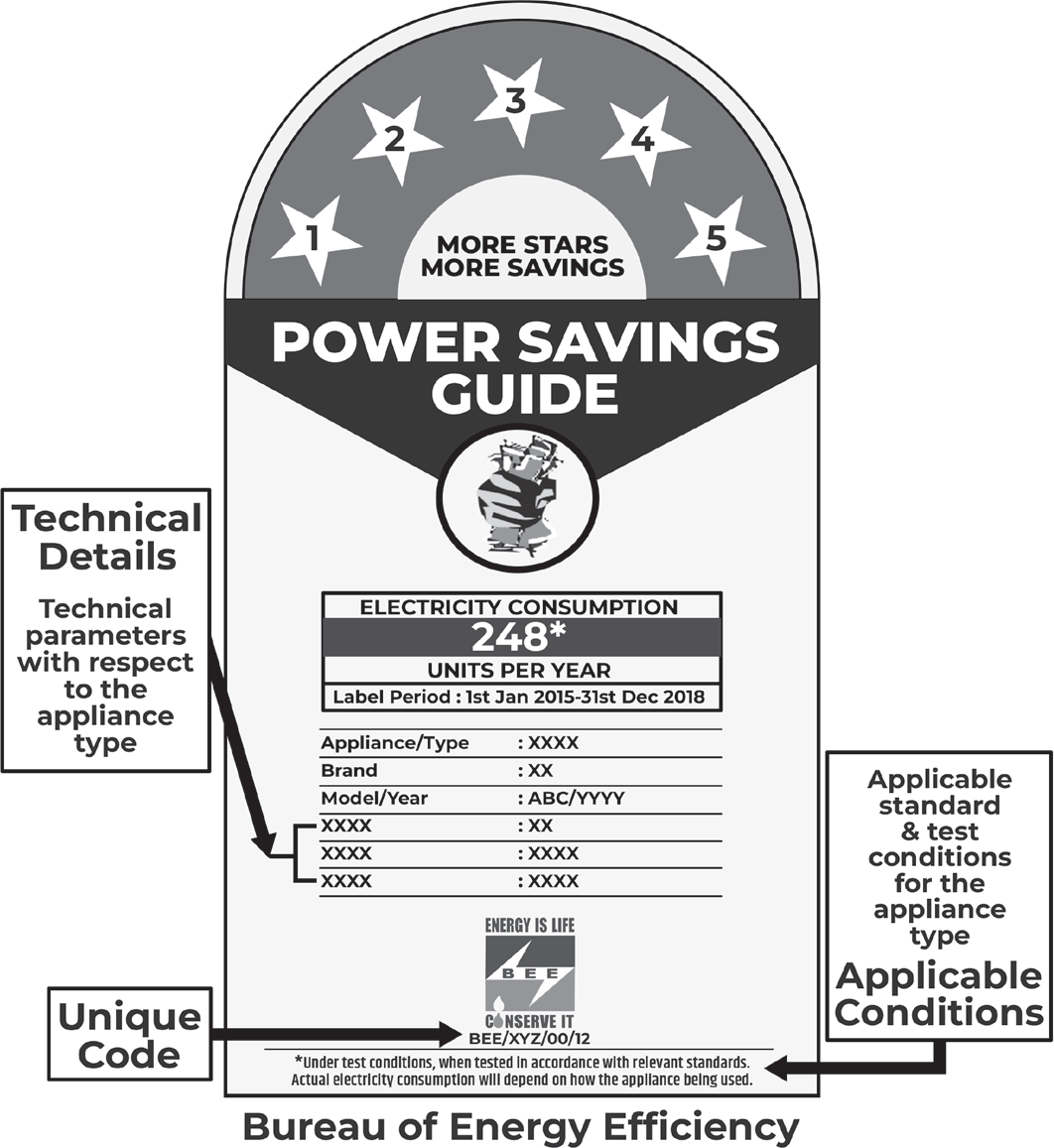
The Standards & Labeling program, initiated by the Bureau of Energy Efficiency (BEE) in 2006, aims to provide consumers with information about the energy-saving potential and cost-saving benefits of various equipment and appliances.
The program helps consumers make informed decisions by providing them with standardized energy efficiency ratings for different products. This enables consumers to compare the energy performance of various models and choose the most energy-efficient option.
The program covers a range of 21 equipment and appliances, out of which 10 are subject to mandatory labeling. These products include commonly used appliances such as refrigerators, air conditioners, washing machines, water heaters, and lighting products.
Products notified under mandatory appliance
Frost Free (No-Frost) Refrigerator
(Tubular Fluorescent Lamps
Room Air Conditioners
Distribution Transformers
Room Air Conditioners (Cassette, Floor Standing Tower, Ceiling, Corner AC)
Direct Cool Refrigerator
Electric Geysers
Color TV
Room Air Conditioners (Inverter type)
LED lamps
Chiller Star Labelling Program
The Chiller Star Labeling Program, launched by the Ministry of Power and formulated by the Bureau of Energy Efficiency (BEE), aims to promote the deployment of energy-efficient chiller systems in India.
The program encourages the adoption of energy-efficient chiller systems by providing star ratings based on their energy performance. This helps consumers identify and choose chiller systems that offer higher energy efficiency.
By promoting the use of energy-efficient chiller systems, the program drives advancements in technology for central HVAC (Heating, Ventilation, and Air Conditioning) systems. This facilitates the development and adoption of innovative and energy-efficient solutions for large commercial and industrial applications.
Chillers are widely used for space conditioning of buildings and industrial process cooling applications. These systems are essential components of HVAC systems and play a crucial role in maintaining comfortable indoor environments and supporting industrial processes.
Chillers are known to be energy-intensive systems, contributing significantly to the total energy consumption in commercial buildings. In fact, they account for more than 40% of the total energy consumption in many commercial buildings.
Energy Conservation Recommendations
LED Replacement for CFLs: Encouraging the replacement of CFLs with more energy-efficient LEDs.
Upgrading Appliances: Replacing old and inefficient appliances with newer, energy-efficient models.
Transition to Renewable Energy: Promoting the use of renewable energy sources like solar, wind, and biogas over non-renewable sources.
Energy Audits: Conducting regular energy audits in homes, buildings, hotels, and factories to identify areas for improvement.
Demonstration Projects: Showcasing projects that introduce renewable energy technologies at the community level.
Research and Development: Supporting collaborative research efforts to develop low-cost and sustainable energy solutions.
Promotion of Public Transport: Encouraging the use of environmentally friendly public transportation to reduce reliance on individual vehicles.
Use of Photoelectric Controls: Installing photoelectric controls or timers to optimize outdoor lighting usage.
Efficient Elevator Use: Encouraging efficient elevator use, such as limiting usage for coming down and operating only one elevator during non-peak hours.
Water Conservation: Promoting the conservation and sustainable use of water resources, which indirectly impacts energy conservation.
Training Programs: Organizing training programs to educate communities about energy-efficient repairs and practices.
Advocacy Against Subsidies: Advocating for the removal of subsidies to inefficient and polluting energy sources.
Improved Cook Stoves: Introducing locally manufactured, improved cook stoves to reduce fuel consumption.
Regular Monitoring and Audits: Conducting regular monitoring and audits of energy consumption in industries to identify opportunities for conservation.
Process Modification: Employing process modification in industries to replace old and energy-intensive processes with newer, energy-efficient alternatives.
Promotion of Public Transportation: Encouraging the use of public transportation over private vehicles to reduce fuel consumption and emissions.
Efficient Driving Practices: Encouraging efficient driving practices, such as avoiding frequent starts and stops, to reduce fuel consumption.
Energy Star Rated Appliances: Replacing appliances and office equipment with energy-efficient models bearing the Energy Star label.
Energy-Efficient Building Design: Promoting building designs and construction practices that prioritize energy conservation, such as improved insulation and passive heating and cooling techniques.
India’s National Action Plan on Climate Change
India’s National Action Plan on Climate Change (NAPCC) was introduced in 2008 by the Prime Minister’s Council on Climate Change.
NAPCC emphasizes the importance of developing and utilizing new technologies to address climate change challenges effectively.
The plan’s implementation involves collaboration between the government, private sector, and civil society through public-private partnerships and community- based action.
Focus Areas: NAPCC prioritizes several key areas, including:
Promoting awareness and understanding of climate change.
Developing strategies for adaptation and mitigation.
Enhancing energy efficiency.
Conserving natural resources.
Eight National Missions: The NAPCC consists of Eight National Missions, which serve as the core components of the plan. These missions focus on various aspects of climate change mitigation and adaptation, including renewable energy, energy efficiency, sustainable agriculture, and water conservation.
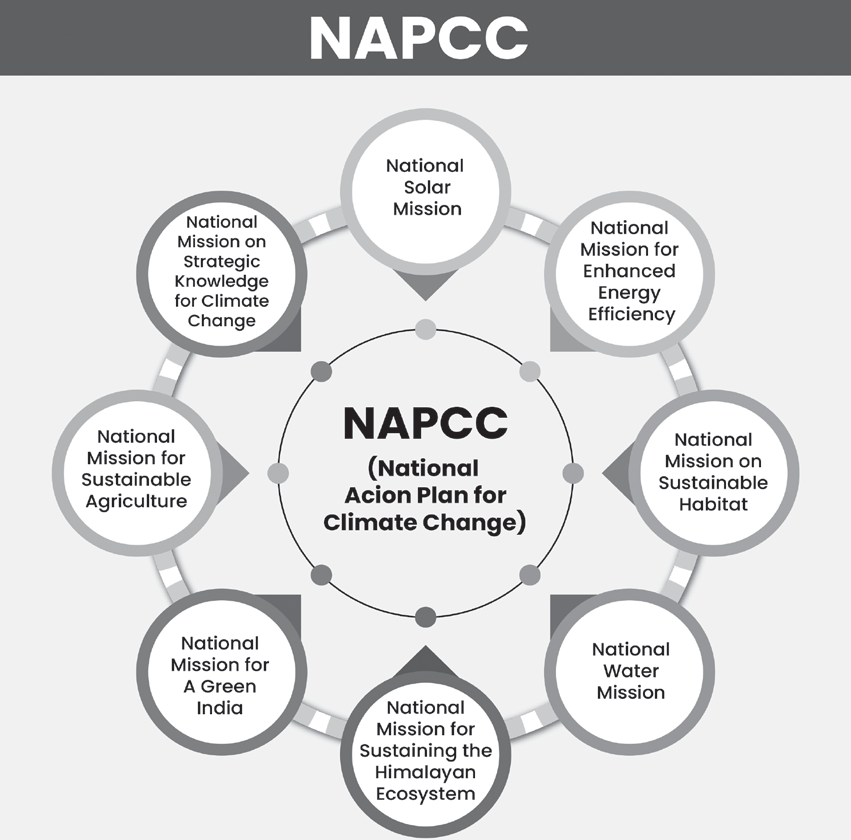
National Mission for Enhanced Energy Efficiency (NMEEE)
The National Mission for Enhanced Energy Efficiency (NMEEE) aims to promote energy efficiency in India through various initiatives.
The primary objective of NMEEE is to stimulate the market for energy efficiency by implementing innovative policies and market instruments.
The mission document, approved in 2010, highlighted India’s significant energy efficiency potential, estimated at about Rs. 74,000 crores. A recent World Bank study has suggested that the country’s energy efficiency market is valued at approximately 1.6 lakh crores.
Four Initiatives under NMEEE:
Perform, Achieve and Trade (PAT):
This initiative focuses on large energy-intensive industries.
Industries are assigned specific energy reduction targets.
Upon achieving targets, they receive tradable Energy Saving Certificates (ESCerts).
Industries that fail to meet their targets can buy ESCerts from those exceeding them.
Market Transformation for Energy Efficiency (MTEE):
This initiative promotes the adoption of energy-efficient equipment and appliances through innovative business models.
Two key programs under MTEE include:
Unnat Jeevan by Affordable LEDs for All (UJALA): Aims to replace conventional lighting with more efficient LEDs in households.
Super-Efficient Equipment Program (SEEP): incentivizes manufacturers to produce more energy-efficient equipment, initially focusing on ceiling fans.
Energy Efficiency Financing Platform (EEFP):
This initiative aims to increase the involvement of financial institutions and investors in energy efficiency projects.
It addresses challenges in market development and project implementation, creating a platform for collaboration and boosting confidence in the sector.
Framework for Energy Efficiency Economic Development (FEEED):
This initiative promotes energy efficiency projects by mitigating investment risks.
The Bureau of Energy Efficiency (BEE) established two
funds:
Partial Risk Guarantee Fund for Energy Efficiency (PRGFEE): Provides a risk cover for banks and investors involved in energy efficiency projects.
Venture Capital Fund for Energy Efficiency (VCFEE): Encourages equity financing in the sector, particularly for smaller companies and projects.
| Mandatory Appliances as of March 2019 | Voluntary Appliances as of March 2019 |
| Room Air Conditioners Frost Free Refrigerators Tubular Florescent Lamp Distribution Transformer Room Air Conditioner (Casettes, Floor Standing Tower, Ceiling, Corner AC) Direct Cool Refrigerator Color TV Electric Geysers Inverter Air conditioners LED Lamps | Induction Motors Agricultural Pump Sets Ceiling Fans Domestic Liquefied Petroleum Gas(LPG) Stoves Washing Machine Computer (Notebook /Laptops) Ballast (Electronic/Magnetic) Office equipment's (Printer, Copier, Scanner, MFD’s). Diesel Engine Driven Monoset Pumps for Agricultural Purposes Soli State Inverter Diesel Generator Chillers Microwave Ovens |
UJALA & SLNP
The UJALA (Unnat Jyoti by Affordable LEDs for All) and SLNP (LED Street Lighting National Programme) are key initiatives implemented by the Government of India (GOI) through Energy Efficiency Services Limited (EESL), a joint venture of Public Sector Undertakings (PSUs) under the Ministry of Power.
UJALA Initiative:
UJALA is recognized as the world’s largest domestic lighting project.
Under UJALA, EESL has distributed over 36.69 crore LED bulbs across India.
This has resulted in estimated energy savings of 47.65 billion kWh per year with avoided peak demand of 9,540 MW and estimated GHG emission reduction of 38.59 million tonnes CO2 per year.
Additionally, over 72 lakh LED tube lights and over 23 lakh energy efficient fans have also been distributed at affordable price under this programme.
The initiative has been successful in reducing the prices of LED bulbs significantly. The prices fell from INR 310 to INR 38 in 2018, making them more affordable for consumers.
SLNP Programme
SLNP is recognized as the world’s largest streetlight replacement program.
1.14 crore LED streetlights under SLNP. Results in estimated energy savings of 7.67 billion kWh per year with avoided peak demand of 1,280 MW and estimated GHG emission reduction of 5.29 million tonnes CO2 per year.
Impact and Achievements
Both UJALA and SLNP have made significant contributions to energy efficiency and environmental sustainability.
The large-scale adoption of LED bulbs and streetlights has resulted in substantial energy savings and GHG emission reductions.
The affordability and accessibility of LED bulbs have been improved, benefiting consumers across India.
With the concerted efforts towards building a robust ecosystem for LED lighting in India, these programmes have bagged global awards like the prestigious South Asia Procurement Innovation Award (SAPIA) 2017,
For the innovative use of IT and business results achieved in Street Lighting National Programme (SLNP), it won CIO 100 award in 2019.
The highly successful UJALA and SLNP have also bagged the Global Solid State Lighting (SSL) award of excellence for the transformational contribution to the LED sector, Award for High Impact Program for Energy Efficiency CII National Award for Excellence in Energy Management 2020 and award of excellence at the 10thElets knowledge exchange summit and awards 2020.
Gram Swaraj Abhiyan (GSA)
Under the GSA initiative, which aimed at apprising rural communities of various government welfare schemes and initiatives, 21,058 Indian villages with a significant number of poor households were able to purchase LED bulbs at a special price under the UJALA program.
National Mission on Sustainable Habitat
The National Mission on Sustainable Habitat, approved in 2010, aims to promote sustainable development practices in urban areas.
The mission focuses on enhancing energy efficiency in buildings by extending energy conservation building codes to new and large commercial structures. This aims to reduce energy consumption and promote sustainable construction practices.
It emphasizes better urban planning and the development of efficient and convenient public transportation systems to facilitate the growth of medium and small cities. This includes measures to reduce congestion, improve accessibility, and promote sustainable transportation modes.
The mission aims to improve the management of solid and liquid waste, including recycling of materials and the implementation of urban waste management practices such as producing power from waste.
Efforts are made to enhance the ability of habitats to adapt to climate change, including measures for improving advance warning systems for extreme weather events. This involves integrating climate resilience into urban planning and infrastructure development.
The mission advocates for appropriate changes in the legal and regulatory framework to support sustainable development practices. This includes policies and regulations that promote energy efficiency, waste management, and climate resilience in urban areas.
Implementation of the National Mission on Sustainable Habitat is being carried out through various programs under the Ministry of Urban Development, including:
Atal Mission on Rejuvenation and Urban Transformation (AMRUT)
Swachh Bharat Mission
Smart Cities Mission
Urban Transport Programme
National Water Mission (NWM)
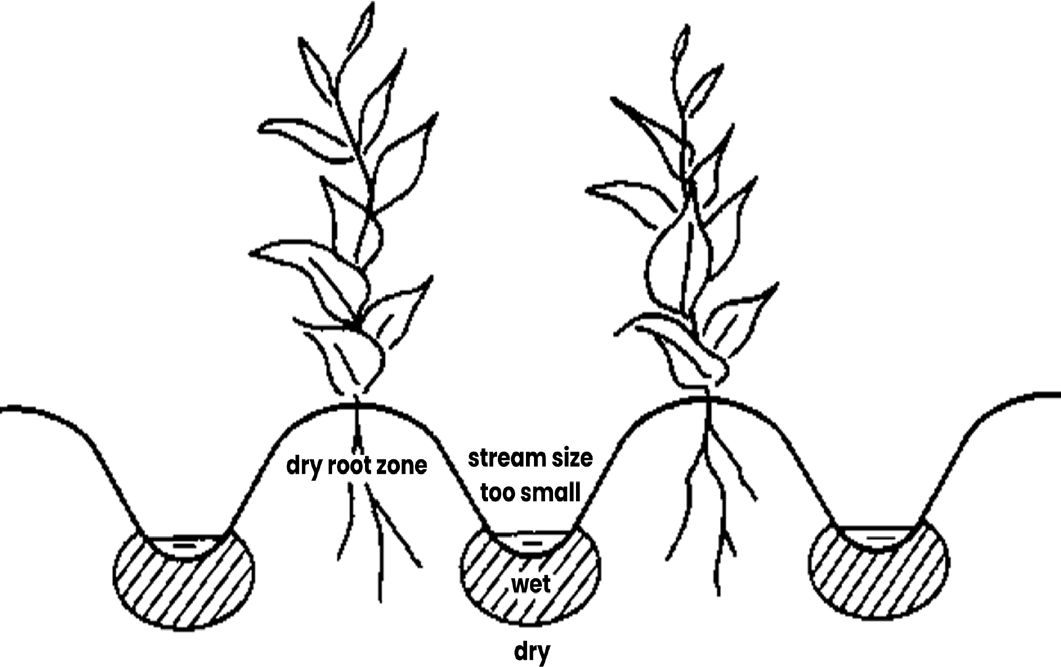
The National Water Mission (NWM) aims to ensure integrated water resource management to conserve water, minimize wastage, and ensure more equitable distribution both across and within states.
Objectives:
Increase water use efficiency by 20%: This involves promoting measures to reduce water wastage and improve efficiency in water utilization across various sectors.
Meet urban water needs through recycling: Promote the recycling and reuse of water in urban areas to reduce the demand for freshwater sources.
Meet coastal city water needs through desalination: Implement modern desalination technologies to address the water requirements of coastal cities.
Implement basin-level management strategies: Work with states to develop strategies to manage water resources effectively, particularly in dealing with variability in rainfall.
Strategies:
Implement differential entitlements and pricing mechanisms to encourage efficient water use and discourage wastage.
Promote the construction of storage facilities both above and below ground and encourage rainwater harvesting to augment water resources.
Encourage the adoption of technologies and practices that do not deplete water resources or have a neutral impact on water availability.
Promote large-scale irrigation programs that utilize water-efficient irrigation methods such as sprinklers, drip irrigation, and ridge and furrow irrigation.
National Mission for Sustaining the Himalayan Ecosystem (NMSHE)
The National Mission for Sustaining the Himalayan Ecosystem (NMSHE) aims to develop a sustainable model to continuously assess the health status of the Himalayan ecosystem and assist policy bodies in formulating policies and implementing actions for sustainable development in the Indian Himalayan Region.
Objectives
Develop a sustainable model for assessing the health status of the Himalayan ecosystem.
Assist policy bodies in policy formulation and support states in implementing actions for sustainable development in the Indian Himalayan Region.
Focus Areas:
Himalayan glaciers and associated hydrological consequences: Study the impact of climate change on glaciers and hydrology, including changes in precipitation patterns, glacial retreat, and water availability.
Prediction and management of natural hazards: Address issues related to natural disasters such as landslides, earthquakes, and floods in the Himalayan region.
Biodiversity conservation and protection: Promote conservation efforts to protect the rich biodiversity of the Himalayas and preserve fragile ecosystems.
Wildlife conservation and protection: Implement measures to conserve and protect endangered species and their habitats in the Himalayan region.
Traditional knowledge societies and livelihood: Support traditional communities in the Himalayas by preserving their cultural heritage and promoting sustainable livelihood options.
Impact of Climate Change on Himalayan Glaciers and Hydrological Consequences:
Increased drought-like situations: Climate change leads to a decrease in the number of rainy days, resulting in more frequent droughts.
Increased flood events: Climate change causes an increase in the intensity of rainfall, leading to more severe flood events.
Effect on groundwater quality: Changes in precipitation patterns and extreme weather events affect groundwater quality in alluvial aquifers.
Influence on groundwater recharge: Changes in precipitation and evaporation rates impact groundwater recharge processes.
Saline intrusion: Rising sea levels due to climate change can lead to saline intrusion into coastal and island aquifers, affecting freshwater resources.
National Mission for a Green India (Green India Mission)
The National Mission for a Green India (Green India Mission or GIM) is a part of the National Action Plan on Climate Change (NAPCC) and aims to protect, restore, and enhance India’s forest cover while responding to climate change through adaptation and mitigation measures.
Objectives:
Sequester 2.523 billion tonnes of carbon by 2020-30.
Protect, restore, and enhance India’s diminishing forest cover.
Respond to climate change through adaptation and mitigation measures.
Enhance annual CO2 sequestration by 50 to 60 million tons by 2020.
Implementation:
Implemented on both public and private lands.
Involves local communities in planning, decision making, implementation, and monitoring.
Intended Major Outcomes:
Improved ecosystem services and reversal of land degradation.
Augmentationof sha red natural resourcesfor communities.
Enhancement of connectivity between Protected Areas through biological corridors.
Inclusive growth for communities around remote forest areas.
Increasedwage labor opportunities during lean agricultural seasons.
Goals:
Improvement in the quality of forest cover and ecosystem services.
Eco-restoration of shifting cultivation areas, cold deserts, mangroves, ravines, and abandoned mining areas.
Improvement in forest and tree cover in urban/peri-
urban lands.
Improvement in tree cover on agricultural lands and other non-forest lands (agroforestry/social forestry).
National Mission on Seabuckthorn:
Part of the Sub-Mission on Cold Desert Ecosystems under the Green India Mission.
Aimed at cultivating Seabuckthorn in cold deserts.
Initiated by the Ministry of Environment, Forest and Climate Change (MoEF) and the Defence Research and Development Organization (DRDO).
Seabuckthorn Properties:
Also known as Leh berries, “Wonder plant,” and “Ladakh gold.”
Has multi-purpose medicinal and nutritional properties.
Has the ability to fix atmospheric nitrogen.
Tolerant to extreme temperatures and suitable for controlling soil erosion and preventing desertification due to its extensive root system.
National Mission for Sustainable Agriculture (NMSA)
The National Mission for Sustainable Agriculture (NMSA) is aimed at enhancing agricultural productivity, particularly in rainfed areas, given that 60% of India’s net sown area is rainfed and contributes 40% to total food production.
The mission focuses on various aspects including integrated farming, water use efficiency, soil health, and resource conservation.
Some key dimensions of the NMSA include
Improved crop seeds, livestock, and fish cultures.
Water use efficiency.
Pest management.
Improved farm practices.
Nutrient management.
Agricultural insurance.
Credit support.
Markets.
Access to information.
Livelihood diversification.
One of the components of NMSA is Soil Health Management (SHM), which aims at promoting Integrated Nutrient Management (INM) by using chemical fertilizers, organic manures, and biofertilizers judiciously.
The goals of SHM include enhancing soil fertility and promoting sustainable agricultural practices.
The Soil Health Card Scheme, initiated in 2015, plays a crucial role in SHM. It provides farmers with information on their soil’s nutrient status and recommendations on the appropriate dosage of nutrients to improve soil health and fertility. This scheme aims to empower farmers with knowledge to make informed decisions regarding soil management practices.
The National Mission on Strategic Knowledge for Climate Change (NMSKCC)
The National Mission on Strategic Knowledge for Climate Change (NMSKCC) aims to establish a robust knowledge system to support national policies and actions in effectively addressing the challenges posed by climate change, while ensuring continued progress towards the nation’s growth objectives.
The mission objectives include:
Formation of knowledge networks: Facilitating collaboration among existing knowledge institutions engaged in research and development related to climate science. This involves fostering partnerships and sharing resources to enhance the collective understanding of climate change.
Capacity building for regional impact modeling: Developing national capabilities to model the regional impacts of climate change on various ecological zones. This involves employing advanced modeling techniques to assess the potential effects of climate change on different regions, ecosystems, and communities within the country.
Encouraging research: Establishing research networks and promoting research activities focused on understanding the impacts of climate change on key socio-economic sectors such as agriculture, health, natural ecosystems, biodiversity, coastal zones, etc. This includes supporting interdisciplinary research initiatives aimed at identifying adaptation and mitigation strategies to address climate-related challenges in these sectors.
National Bio-Energy Mission
The National Bio-Energy Mission is geared towards fostering the sustainable development of the renewable energy sector in India.
The mission aims to improve energy efficiency in traditional biomass-consuming industries, thereby reducing resource consumption and environmental impact.
It seeks to develop a bio-energy city project, likely as a model initiative to demonstrate the integration of bio- energy technologies in urban settings.
Logistics support for biomass processing units: Providing logistical support to biomass processing units to streamline operations and increase the availability of biomass feedstock for energy production.
National Biomass Resource Atlas: Proposing a GIS- based National Biomass Resource Atlas to map potential biomass regions across the country. This atlas would serve as a valuable resource for stakeholders involved in bio-energy planning and decision-making.
According to estimates, biomass derived from agricultural and agro-industrial residues has the potential to generate up to 25,000 MW of power in India, indicating the significant role that biomass energy can play in the country’s energy mix.
Indian Network on Climate Change Assessment
The Indian Network on Climate Change Assessment (INCCA) was established by the Ministry of Environment, Forests, and Climate Change (MoEF) to facilitate domestic research efforts
on climate change. Reports generated by INCCA contribute to India’s National Communication (NATCOM) to the United Nations Framework Convention on Climate Change (UNFCCC).
National Communication (NATCOM):
NATCOM is a crucial component of India’s commitment to
the UNFCCC. It involves the preparation and submission of comprehensive reports detailing the country’s efforts, policies, and strategies related to climate change mitigation, adaptation, and other relevant aspects.
The initial phase of India’s NATCOM was initiated in 2002 with funding support from the Global Environment Facility.