Biomass
RENEWABLE SOURCES OF ENERGY
Biomass
| Biomass | Cheap so popular in under developed and developing countries | Comparatively low level of energy. Bulky so difficult to transport. Burning wood causes air pollution. Destruction of forests to obtain fuel wood and so desertification. Release lot of fly ash. |
| Biomass conversion | Renew able energy | May lead to food shortage because nutrients not returned to soil from biomass. Growing maize for ethanol requires more energy expenditure than the amount of energy in the form of alcohol retrieved. Land for growing food used for growing biomass for conversion into fuel. |
Biomass is a renewable energy resource derived from plant and animal waste. The energy stored in biomass is released through a process known as biomass conversion, which involves either burning the biomass or breaking down the chemical bonds of organic molecules formed during photosynthesis.
Biomass fuels can be utilized directly, such as burning wood for heating, or they can undergo transformation into more convenient forms, such as biofuels like ethanol or biodiesel, before being used for various applications. These processes enable the harnessing of energy from organic matter, contributing to sustainable energy production and reducing reliance on fossil fuels.
Sources of Biomass
By-products generated by the timber industry, such as sawdust, wood chips, and bark. Agricultural crops and their byproducts, including crop residues like straw, husks, and shells. Raw materials obtained directly from forests, such as branches, leaves, and woody biomass. Major components of household waste, including organic materials like food scraps, yard waste, and paper products.
Solid Biomass Fuels
Wood logs and wood pellets produced from timber or wood processing.
Charcoal derived from wood or agricultural waste through pyrolysis.
Agricultural waste materials such as stalks, husks, and other plant debris.
Animal waste, such as dung, which can be used as a source of biomass energy.
Aquatic plants like kelp and water hyacinths, which can be harvested and converted into biomass fuel.
Urban waste materials like paper, cardboard, and other combustible materials, which can be processed and utilized as biomass fuel.
Uses of Biomass
Biomass finds various uses, especially in the developed world, where it is becoming increasingly important for several applications.
Combined Heat and Power Generation (CHP)
Biomass is utilized in CHP systems where it is burned to produce heat and electricity simultaneously. This process maximizes the energy efficiency of biomass utilization and is commonly used in industrial settings, district heating systems, and large-scale power plants.
Domestic Heating
Biomass energy is gaining significance as a clean and renewable source of heat for domestic heating purposes. Biomass heating systems, such as wood-burning stoves, pellet stoves, and biomass boilers, are used to provide space heating and hot water in residential buildings.
Community Heating Applications
Biomass energy is also utilized for community heating applications where multiple buildings or residential units are connected to a centralized heating system. Biomass-fueled district heating systems provide reliable and sustainable heat to communities, reducing reliance on fossil fuels and lowering greenhouse gas emissions.
Advantages of Biomass Energy
Carbon Neutral: Burning biomass doesn’t add to atmospheric CO2 levels since the carbon emitted was absorbed during the biomass’s growth phase. This makes biomass energy environmentally friendly, helping mitigate climate change.
Abundant and Renewable: Biomass is abundantly available in various forms, such as agricultural residues, wood, and organic waste. This ensures a consistent and reliable source of energy, contributing to long-term sustainability.
Versatile Applications: Biomass can be utilized for various purposes, including heat generation, electricity production, and transportation fuels. Its versatility makes it a valuable resource for meeting energy demands across different sectors.
Energy Security and Diversification: As one of the most important fuels worldwide, biomass contributes to energy security by diversifying the energy mix. Reliance on biomass reduces dependence on finite fossil fuels, enhancing energy resilience.
Promotes Sustainable Development: Bioenergy derived from biomass, such as biogas from organic waste, supports sustainable development goals by reducing waste, improving waste management practices, and
providing decentralized energy solutions.
Conversion to Gaseous and Liquid Biofuels
Conversion of biomass into gaseous and liquid biofuels offers several advantages and can be done through various processes.
Distillation for Liquid Biofuels: Biomass can be converted into alcohol-based liquid biofuels like ethanol and methanol through distillation processes. These fuels are suitable alternatives to traditional fossil fuels and can be used in transportation and heating applications.
Types of Liquid Biofuels: Liquid biofuels include ethanol, methanol, gasohol (a blend of gasoline and ethanol), and biodiesel. These fuels are derived from renewable biomass sources and can help reduce greenhouse gas emissions and dependency on fossil fuels.
Gaseous Biofuels: Biomass can also be converted into gaseous biofuels such as biogas and wood gas. Biogas, also known as synthetic natural gas, is produced through anaerobic digestion of organic materials and consists mainly of methane and carbon dioxide. Wood gas is produced by partial combustion of biomass and contains mainly methane and carbon dioxide, making it suitable for use as a fuel.
Biomass Briquettes: Instead of burning loose biomass directly, it is more practical to compress it into briquettes, which are blocks of biomass of a chosen shape. Briquettes improve the utility and convenience of biomass as a fuel, making it easier to handle and store.
Utilization of Biomass Briquettes: Biomass briquettes
can be used as a substitute for coal in traditional furnaces or in a gasifier. Gasifiers convert solid biomass fuels, including biomass briquettes, into a more convenient- to-use gaseous fuel called producer gas. This gas can be used for heating, cooking, and electricity generation.
Petro Crops (Plants)
Recent research suggests that hydrocarbon-producing plants can serve as alternative energy sources, offering a potentially inexhaustible and renewable supply of liquid fuel. This makes them attractive candidates for addressing energy security and environmental concerns associated with fossil fuels.
Petrocrops can be cultivated on land unsuitable for traditional agriculture and not covered by forests. This utilization of marginal lands can help prevent deforestation and competition with food crops for arable land.
Jatropha curcas is a significant petroplant known for its potential in biofuel production. Its latex can be tapped to obtain biocrude.
Biocrude obtained from plants like Jatropha curcas contains various components such as liquids, terpenoids, triglycerides, phytosterols, waxes, and modified isoprenoid compounds. These compounds can be processed to extract useful hydrocarbons.
Biocrude can undergo hydrocracking, a refining process that breaks down complex hydrocarbons into simpler, more valuable products. Through hydrocracking, biocrude can be converted into products such as gasoline (used as automobile fuel), gas oil, and kerosene, which have diverse industrial and commercial applications.
Some potential petro-crop species belong to the families Asclepiadaceae and Euphorbiaceae
Biofuel
Biofuel
Biofuels are derived from biomass, which can be any organic matter from living or once-living materials. This includes various sources such as crops, agricultural residues, algae, and organic waste.
Biofuels come in various forms - solid, liquid, or gaseous. Each type has its own production process and applications.
Examples of Biofuels
Ethanol: Often produced from corn in the United States and sugarcane in Brazil, ethanol is used as a gasoline additive or fuel extender.
Biodiesel: Sourced from vegetable oils and liquid animal fats, biodiesel can be used as a substitute for diesel fuel.
Green Diesel: Derived from algae and other plant sources.
Biogas: Methane obtained from anaerobic digestion of organic materials like animal manure and other organic waste.
Biofuels emit less carbon dioxide (CO2) during combustion compared to conventional fossil fuels. This
makes them a valuable tool for reducing greenhouse gas emissions, particularly in the transportation sector.
Biofuels can be blended with existing fossil fuels, providing a seamless transition toward lower-carbon energy sources. This flexibility makes them an effective strategy for reducing CO2 emissions without significant infrastructure changes.
Biofuels are gaining traction worldwide, representing approximately 3% of road transport fuels in use. This adoption rate is expected to increase as countries seek to meet climate targets and reduce dependence on fossil fuels.
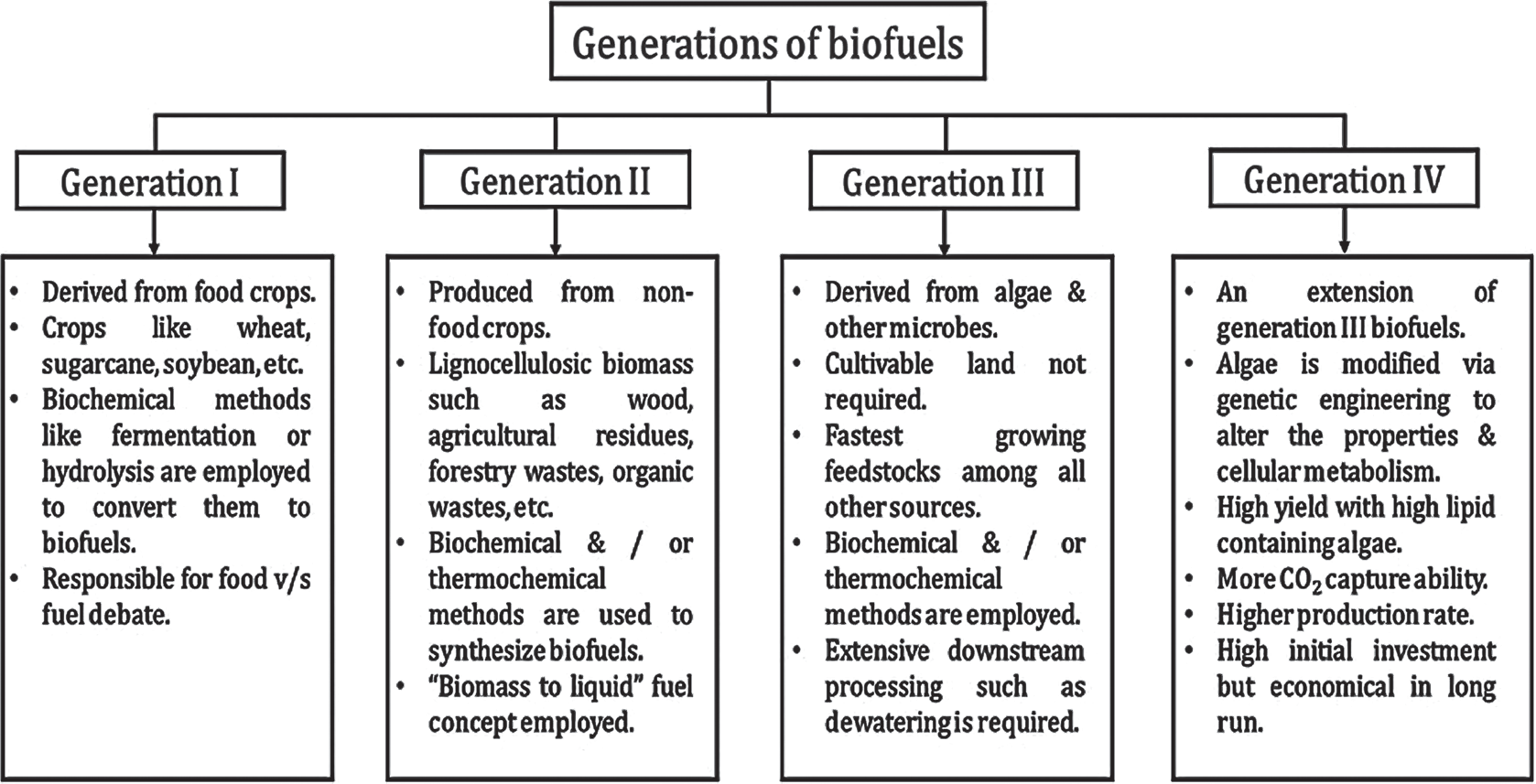
Generations of Bio-fuels First Generation Biofuels
First-generation biofuels are produced from edible biomass sources such as starch (from crops like potato, wheat, barley, and corn) or sugars (from crops like sugarcane and sugar beet).
First-generation biofuels are produced from edible biomass sources such as starch (from crops like potato, wheat, barley, and corn) or sugars (from crops like sugarcane and sugar beet).
Crops like wheat, sugar cane, sugar beet, and corn are commonly used as feedstock for bioethanol production, while rapeseed oil is often used for biodiesel.
Associated Problems:
Some first-generation biofuels have been found to have negative net energy gains, meaning they release more carbon during their production than what their feedstocks capture during growth. This undermines their effectiveness as a renewable energy source.
One of the most contentious issues surrounding first- generation biofuels is the “fuel vs. food” debate. Using food crops for biofuel production has been criticized for contributing to rising food prices and potentially exacerbating food insecurity.
Intensive cultivation of food crops for biofuel production can lead to environmental concerns such as deforestation, habitat destruction, and increased use of fertilizers and pesticides, which may have negative impacts on biodiversity and ecosystem health.
Second Generation Biofuels
Second-generation biofuels are produced from non- food crops, including agricultural residues, wood chips, waste cooking oil, and other biomass sources that are not intended for human consumption.
Second-generation biofuels utilize a wider range of feedstock sources, including agricultural residues, forestry residues, organic waste, and specific biomass crops. This diversification helps reduce competition with food production and eliminates the main problem associated with first-generation biofuels.
Benefits of Second-Generation Biofuels:
Second-generation biofuels are becoming more cost- competitive compared to existing fossil fuels, making them economically viable alternatives.
Unlike first-generation biofuels, which may require additional resources such as fertilizer, water, and arable land, second-generation biofuels utilize waste materials and by-products.
By utilizing waste materials and non-food crops, second- generation biofuels help reduce greenhouse gas emissions and minimize environmental impacts associated with intensive agriculture. They also contribute to circular economy principles by repurposing waste materials.
Second-generation biofuels have the potential to achieve positive net energy gains, overcoming one of the main limitations of first-generation biofuels. This means they can produce more energy than is required for their production.
Third Generation Biofuels
Third-generation biofuels capitalize on specially engineered energy crops, with algae being a prominent example. These engineered crops are cultivated to serve as a low-cost, high-energy, and entirely renewable feedstock for biofuel production.
Algae offer significant advantages over conventional crops as they can be cultivated to produce more energy per acre. Their rapid growth rates and high lipid content make them a promising source of biomass for biofuel production.
Algae can be grown in various environments, including land and water unsuitable for food production. This utilization of marginal lands minimizes competition with food crops and reduces environmental impacts associated with agriculture.
Algae-based biofuels have the potential to be manufactured into a wide range of fuels, including diesel, petrol, and jet fuel. This versatility enhances their applicability across different sectors of the transportation industry.
Algae-based biofuels hold the potential to be carbon neutral, meaning the carbon dioxide emitted during combustion is balanced by the amount of carbon dioxide absorbed by the algae during growth.
Fourth Generation Biofuels
Fourth-generation biofuels aim not only to produce sustainable energy but also to capture and store CO2 emissions. This dual-objective addresses both energy security and climate change mitigation.
Like second-generation biofuels, fourth-generation biofuels are produced from biomass materials that have absorbed CO2 during their growth. Common feedstocks include non-food crops, agricultural residues, and waste materials.
The production process of fourth-generation biofuels differs from previous generations as the carbon dioxide is captured at all stages of production. Techniques such as oxy-fuel combustion are employed to capture CO2 emissions during processing.
The captured carbon dioxide can then be geo-sequestered by injecting it into geological formations such as old oil and gas fields or saline aquifers. This process securely stores the CO2 underground, preventing its release into the atmosphere.
The incorporation of carbon capture and storage
technologies makes fourth-generation biofuels production carbon negative rather than simply carbon neutral. This means that more carbon is locked away in storage than is produced during the entire production process, resulting in a net reduction of atmospheric CO2 levels.
By capturing and storing CO2 emissions, fourth- generation biofuels not only mitigate greenhouse gas emissions but also contribute to reducing overall CO2 levels in the atmosphere. Additionally, the use of biofuels as a substitute for fossil fuels further reduces CO2
emissions, helping to combat climate change.
Benefits of Biofuels
Increases life of Vehicle Engine
Less Carbon Emissions: Studies suggest that biofuels reduce greenhouse gases by up to 65 per cent.
Easy to Source
Economic Security: Country can reduce its dependence on fossil fuels. More jobs will be created with a growing biofuel industry, which will keep our economy secure.
Lower Levels of Pollution: Biofuels are biodegradable that reduces the possibility of soil contamination
and contamination of underground water during transportation, storage or use.
Cost-Benefit
Demerits of Biofuels
High Cost of Production and Future Price: Biofuels are quite expensive to produce in the current market. Constantly rising prices may make the use of biofuels as harsh on the economy as the rising gas prices are doing right now.
Industrial Pollution: Large scale industries meant for churning out biofuel are known to emit large amounts of emissions and cause small scale water pollution as well.
Changes in Land Use and Pollution: Biofuel production can encourage monoculture.
Biofuel is less suitable for use in low temperatures: It is more likely to attract moisture than fossil diesel, which creates problems in cold weather. It also increases microbial growth in the engine that clogs the engine filters.
National Policy on Biofuels 2018
The National Policy on Biofuels 2018, established by the Ministry of New and Renewable Energy (MNRE), builds upon the foundation laid by the 2009 policy.
The 2018 policy recognizes the strategic importance of biofuels in India, aligning with government initiatives such as Make in India, Swachh Bharat Abhiyan, Skill Development, and doubling of Farmers’ Income. It also aims to address objectives like import reduction, employment generation, and waste-to-wealth creation.
The policy categorizes biofuels into Basic Biofuels (First Generation), Advanced Biofuels (Second Generation), and Third Generation biofuels. This classification enables the extension of appropriate financial and fiscal incentives tailored to each category.
The scope of raw material for ethanol production is expanded to include various sources such as sugarcane juice, sugar-containing materials (e.g., sugar beet, sweet sorghum), starch-containing materials (e.g., corn, cassava), damaged food grains, and surplus food grains. This expansion aims to increase ethanol availability for blending with petrol (Ethanol Blended Petrol Programme).
MNRE has set indicative targets of 20% blending of ethanol in petrol and 5% blending of biodiesel in diesel to be achieved by 2030. Currently, the blending percentages are around 2% for petrol and less than 0.1% for diesel.
The Ministry plans to establish a ‘National Biomass Repository’ through a nation-wide appraisal program. This repository will help ensure the availability of biofuels produced from domestic feedstock, enhancing energy security and sustainability.
The policy allows the use of surplus food grains for ethanol production, subject to approval from the National Biofuel Coordination Committee. This initiative not only helps in addressing food surplus issues but also contributes to ethanol availability for blending with petrol.
Key Terms
Bioethanol: Bioethanol is a type of fuel produced from various materials including:
Materials rich in sugar such as sugar cane, sugar beet, and sweet sorghum.
Materials containing starch such as corn, cassava, and even rotten potatoes.
Cellulosic materials like bagasse, waste wood, agricultural residues, forestry residues, and other renewable industrial waste.
Biodiesel: Biodiesel encompasses fuels made from
Methyl or ethyl esters of fatty acids derived from non- edible vegetable oils.
Acid oil.
Used cooking oil.
Animal fat.
Bio-oil.
Advanced Biofuels: Advanced biofuels consist of:
Second-generation (2G) ethanol.
Drop-in fuels.
Algae-based third-generation (3G) biofuels.
Bio-compressed natural gas (bio-CNG).
Bio-methanol.
Dimethyl ether (DME) derived from bio-methanol.
Bio-hydrogen.
Drop-in Fuels: Drop-in fuels are derived from biomass, agricultural residues, municipal solid waste (MSW), plastic wastes, etc. These fuels are designed to be used in existing engines without requiring modifications to their fuel distribution system.
Bio-CNG: Bio-CNG refers to purified biogas produced from various organic sources such as agricultural residues, dung, food waste, sewage water, etc. These fuels have a composition and energy potential comparable to fossil-based natural gas.
Methanol
Methanol can be produced from a variety of sources including coal, petroleum, natural gas, and biomass waste. This versatility in feedstock allows for flexibility in production methods.
Methanol, along with ethanol, can be used as a clean alternative fuel in automobiles. Its combustion produces lower carbon emissions compared to traditional fossil fuels, contributing to reduced air pollution and environmental impact.
Methanol presents an opportunity for import substitution of crude oil. Countries like India currently import methanol from nations like Saudi Arabia and Iran, however the domestic production could reduce reliance on foreign sources.
Methanol economy offers the potential to utilize vast reserves of coal, which is otherwise problematic when burned directly due to environmental concerns.
Methanol economy serves as a bridge towards achieving a complete hydrogen-based fuel system. It allows for a gradual transition by utilizing methanol as an intermediate step.
The Indian government (NITI AAYOG) has outlined plans to replace a significant portion of crude imports with methanol. The aim is to increase fuel blending, including methanol, ethanol, or biodiesel, to 20% by 2030.
Advantages of Methanol as Fuel:
Methanol burns more cleanly than traditional fuels, emitting lower levels of particulate matter, soot, sulfur oxides (SOx), and nitrogen oxides (NOx). This contributes to improved air quality and reduced environmental pollution.
The unit cost of energy produced from methanol is often cheaper than that from petrol, diesel, or liquefied petroleum gas (LPG), making it an economically viable alternative fuel.
Methanol is lighter than petrol and diesel but heavier than LPG, making it suitable for various applications in different types of engines and vehicles.
Methanol production can involve the conversion of carbon dioxide (CO2) into methanol, presenting an opportunity for carbon utilization and reducing greenhouse gas emissions.
Methanol blends, such as M15 in petrol, have shown significant reductions in pollution levels. For example, diesel replacement with methanol can lead to over 80% reduction in pollution.
Adopting methanol as a transport fuel requires minimal infrastructure modifications compared to other alternative fuels like compressed natural gas (CNG) or LPG.
Bioethanol
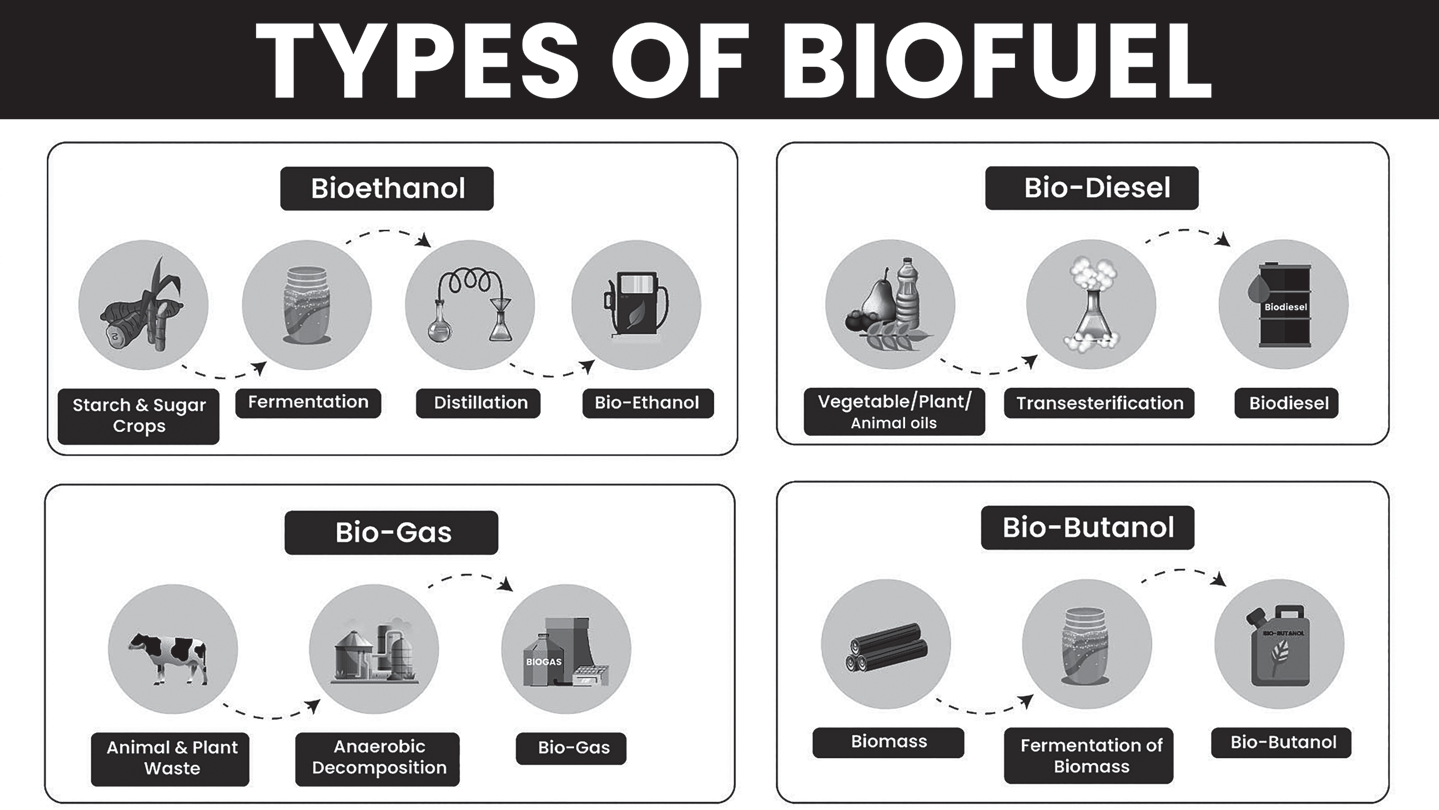
Bioethanol, also known simply as ethanol or ethyl alcohol (C2H5OH), is a type of alcohol primarily produced from starch and sugar crops.
Bioethanol is derived from renewable sources such as starch and sugar crops, including corn, sugarcane, sugar beet, and sweet sorghum. It can also be produced from other biomass materials rich in sugars or starches.
Bioethanol is commonly blended with petrol (gasoline) to create ethanol-blended fuels, such as E10 (10% ethanol, 90% petrol) or E85 (85% ethanol, 15% petrol).
Bioethanol is primarily produced through fermentation, where sugars from biomass materials are converted into ethanol by microorganisms such as yeast. Another
method involves reacting ethylene with steam to produce ethanol, known as the ethylene hydration process.
Ethanol is a clear, colorless liquid with a characteristic odor. It is highly soluble in water and commonly used as a solvent in various industries.
Bioethanol is biodegradable, low in toxicity, and causes minimal environmental pollution when compared to fossil fuels. It burns cleanly, producing carbon dioxide and water as byproducts.
Ethanol is a high-octane fuel, meaning it has a high resistance to engine knocking. It has replaced lead additives as an octane enhancer in petrol, contributing to cleaner and more efficient combustion.
Oxygenation and Emissions Reduction: Blending ethanol with gasoline improves the oxygenation of the fuel mixture, leading to more complete combustion and reduced emissions of pollutants such as carbon monoxide and hydrocarbons.
E20 Fuel
E20 fuel refers to a blend of 20% ethanol with gasoline, designed for use as automotive fuel.
It is considered a green fuel due to its renewable and environmentally friendly characteristics.
E20 fuel is part of the Indian government’s efforts to promote the use of biofuels, which are derived from renewable sources such as biomass, agricultural residues, and waste materials.
The adoption of E20 fuel is expected to contribute to the reduction of emissions of pollutants such as carbon dioxide (CO2), hydrocarbons, and other harmful substances.
By promoting the use of E20 fuel, India aims to reduce its dependence on imported fossil fuels, thereby enhancing energy security. This reduction in the oil import bill helps to conserve foreign exchange and strengthen the country’s economic resilience.
Biodiesel
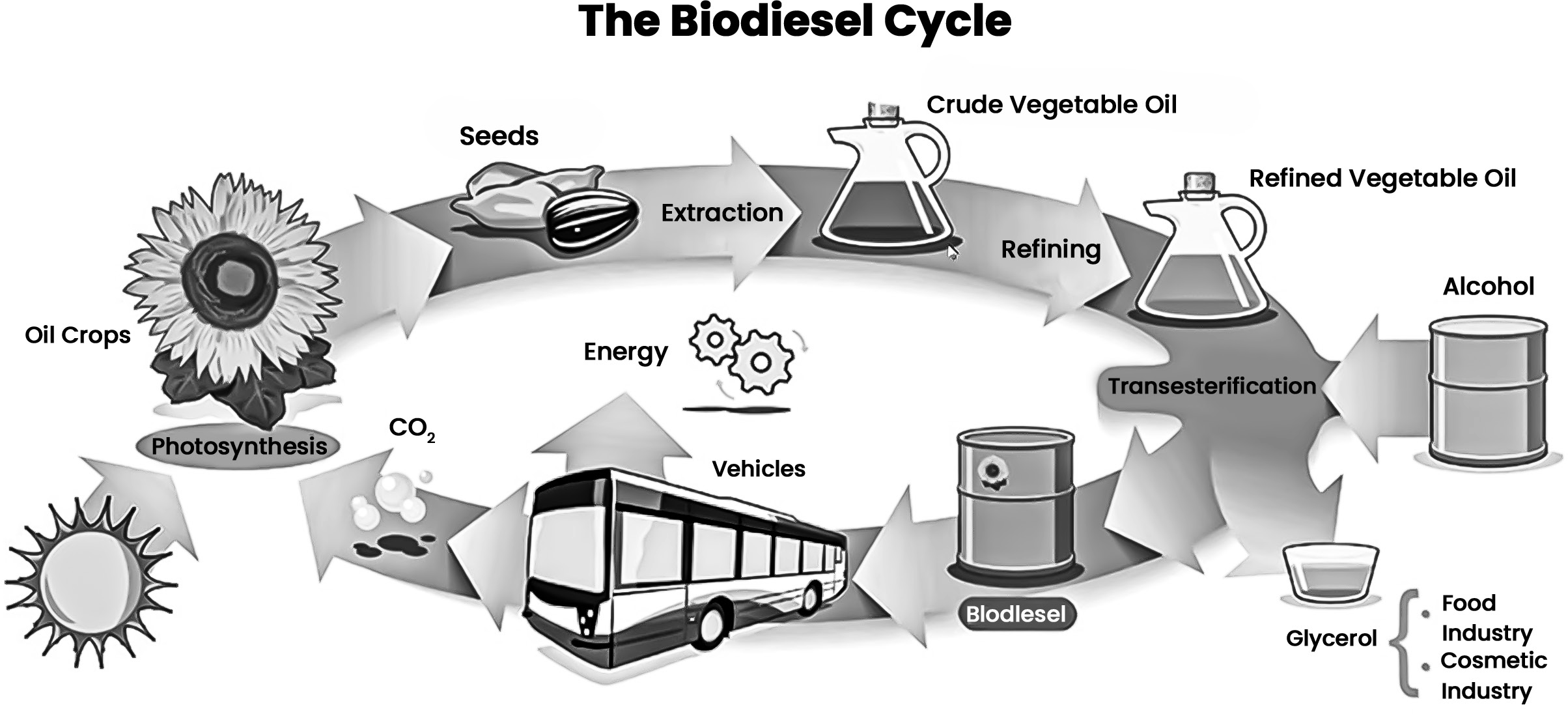
Biodiesel is a renewable fuel derived from vegetable, plant, or animal oils, primarily used in diesel engines.
Biodiesel is produced from renewable sources such as vegetable oils, plant oils, and animal fats. These sources provide a sustainable alternative to fossil fuels.
Vegetable oils used in biodiesel production consist of triglycerides, which are fats composed of glycerol and three fatty acid chains. Biodiesel is composed of esters of long-chain fatty acids derived from these oils.
Biodiesel is produced through a chemical process known as transesterification. In this process, the fats in the vegetable oil (triglycerides) react with alcohol, typically methanol. During this reaction, glycerol is replaced by methanol to produce methyl ester, which is the biodiesel component.
In India, biofuel development has focused on cultivating Jatropha plants, which are rich in oil content (around 40%). The seeds of the Jatropha plant are used as a feedstock for biodiesel production.
In 2008, the Indian Government introduced the ‘National Biofuel Policy’ with the aim of meeting 20% of India’s diesel demand through the use of plant-derived fuels. This policy emphasizes the development and promotion of biofuels as a sustainable energy alternative.
Biodiesel blend
The biodiesel blend, denoted as BXX, represents a mixture of biodiesel with fossil fuel, where XX indicates the volume percentage of biodiesel in the blend.
The blend ratio, such as B2, B5, etc., signifies the proportion of biodiesel mixed with fossil fuel. For instance, B100 denotes pure biodiesel, while B2 contains 2% biodiesel and 98% fossil fuel. The choice of blend ratio
is often influenced by the availability of biodiesel rather than technical constraints.
Biodiesel blends ranging from B2 to B100 can be used in existing diesel engines without requiring significant modifications. However, pure biodiesel (B100) may necessitate minor adjustments in engine systems due to its different properties compared to fossil diesel.
Filling stations in countries within the European Union and the United States commonly supply biodiesel blends ranging from B2 to B100. This widespread availability enables consumers to choose biodiesel blends according to their preferences and requirements.
With the exception of B100, which may require minor modifications, biodiesel blends can be seamlessly integrated into existing diesel engine systems. This ease of use facilitates the adoption of biodiesel as a renewable and environmentally friendly fuel option.
Advantages of Biodiesel
Biodiesel contains long-chain fatty acids, providing inherent lubrication that reduces engine wear and tear (leading to extended engine life).
Biodiesel typically has a higher Cetane Index (CI) compared to fossil diesel, resulting in better ignition and combustion performance.
Biodiesel molecules contain approximately 11% oxygen, which promotes more complete combustion and reduces the formation of soot during combustion.
Biodiesel has a significantly lower sulphur content, typically around 0.001%, compared to fossil diesel, contributing to reduced emissions of sulphur compounds and minimizing environmental pollution.
Biodiesel exhibits a viscosity similar to fossil diesel, requiring no modifications to existing fuel injection equipment, making it compatible with conventional diesel engines.
Biodiesel is less toxic and biodegradable, posing fewer risks to human health and the environment compared to fossil diesel.
Biodiesel has a higher flash point, exceeding 130 C, compared to approximately 51 C for fossil diesel, making it safer to handle and store.
Biodiesel leads to substantial reductions in emissions of particulate matter, unburnt hydrocarbons, carbon monoxide, and sulphur compounds, contributing to improved air quality and reduced environmental impact.
Biodiesel production requires less energy compared to fossil fuels. For every unit of energy needed to produce biodiesel, approximately 3.24 units of energy are gained, resulting in a net energy gain. Additionally, each liter of biodiesel produced saves approximately 2.2 kg of greenhouse gas emissions.
Biodiesel production does not compete with edible oil production for resources, eliminating the ethical dilemma between food and fuel production.
Advantages over other alternative fuels (CNG, LNG, LPG and ethanol)
Mains practice: Biodiesel emerges as the most promising alternate fuel. Examine.
Biodiesel is both renewable and sustainable, unlike alternative fuels such as compressed natural gas (CNG), liquefied natural gas (LNG), liquefied petroleum gas
(LPG), and ethanol.
Unlike other alternative fuels, biodiesel does not require significant modifications to existing infrastructure. This means that current diesel-powered vehicles and fueling stations can easily accommodate biodiesel without extensive upgrades.
Alternative fuels like CNG, LNG, and LPG have lower energy content per volume compared to biodiesel, requiring larger storage space for the same amount of energy. Biodiesel’s higher energy density allows for more efficient storage and transportation.
While ethanol manufactured from molasses is renewable, its calorific value is lower than that of biodiesel. Biodiesel offers a higher energy content per unit volume, providing better fuel efficiency and performance.
Switching to biodiesel is expected to be a smoother and more cost-effective process compared to other alternative fuels. The existing infrastructure and supply chain for diesel fuel can be readily adapted to accommodate biodiesel, minimizing transition costs and disruptions.
There is abundant availability of fallow land and labor, favorable weather conditions, and a wide range of oilseed crops suitable for biodiesel production. This availability ensures a sustainable and reliable supply of feedstock for biodiesel production.
Biodiesel from UCO
The ‘Randhan se Indhan’ scheme promotes the conversion of UCO (Used Cooking Oil) into biodiesel.
By converting UCO into biodiesel, the initiative helps reduce the country’s dependence on imported oils. This not only strengthens the nation’s energy independence but also mitigates the economic risks associated with fluctuations in global oil prices and supply disruptions.
Recycling UCO into biodiesel prevents the improper disposal of cooking oil, which can otherwise clog drains and pollute water bodies. By diverting UCO from landfills and waterways, the initiative helps mitigate environmental pollution and promotes sustainable waste management practices.
The conversion of UCO into biodiesel creates opportunities for rural employment, particularly in the collection, processing, and production stages of the value chain. This can contribute to poverty alleviation and socioeconomic development in rural areas by providing livelihood opportunities and income generation.
Used Cooking Oil (UCO)
Consumption – Bulk use of cooking oil in India is by:
Restaurants & eateries
Ready-to-eat food producers
Canteens in institutions (educational, commercial/ offices & industrial)
Identifying Used Cooking Oil unsuitable for Consumption:
If the oil emits blue-grey smoke when heated.
If a tough foam forms on the surface of the oil when heated.
If the oil’s color darkens significantly and becomes murky.
Harmful effects of UCO
Repeated use and frying of cooking oil leads to the accumulation of Total Polar Compounds (TPC), which are indicative of oil degradation. High levels of TPC can have adverse health effects when consumed.
The repeated heating and frying of cooking oil alter its nutritional and physiochemical properties, reducing its health benefits and potentially increasing the formation of harmful compounds.
The degradation of cooking oil during frying can lead to an increase in trans-fats and the formation of free radicals, which are associated with various health issues, including cardiovascular diseases and oxidative stress.
Regular consumption of food cooked in used cooking oil can have serious consequences for human health, including an increased risk of heart attacks, liver diseases, and other health conditions.
Improper disposal of UCO can lead to the clogging of municipal sewers and a reduction in the efficiency of Wastewater Treatment Plants (WWTPs).
UCO disposal can increase the chemical oxygen demand (COD) in water bodies, adversely affecting aquatic and marine life. The accumulation of UCO in water bodies can harm marine fauna by coating them with oily layers, impeding their ability to breathe and ultimately leading to their death.
Good Practices for maintaining the quality of fried foods:
Selecting good quality frying oil is essential for producing fried foods with optimal taste and texture. Oils high in saturated and monounsaturated fatty acids, such as peanut oil, sunflower oil, or canola oil, are suitable for frying due to their stability at high temperatures.
Maintain the frying temperature at the lowest level possible while still achieving the desired crispiness and browning of the food. This helps prevent the oil from reaching its smoke point, which can lead to the formation of harmful compounds and a decrease in oil quality.
Regularly filter the frying oil to remove food particles and impurities that can accumulate during the frying process. This helps prolong the life of the oil and ensures that the fried foods maintain their quality and flavor.
When frying, use stainless steel equipment rather than iron pans, as iron can accelerate oxidation and lead to the development of rancidity in the oil. Stainless steel is more resistant to corrosion and less likely to interact with the oil, helping to maintain its quality over time.
Steps taken by India
The government has set a maximum permissible limit of Total Polar Compounds (TPC) in cooking oil at 25%. This regulation aims to ensure the quality and safety of cooking oil used in food preparation.
The National Policy on Biofuels 2018 encourages the production of biofuels from Used Cooking Oil (UCO). Additionally, it sets a target of 5% blending of biodiesel in High-Speed Diesel (HSD) by 2030.
The Food Safety & Standards Authority of India (FSSAI) has issued the Standard Operating Procedure (SOP) outlining the proper handling and disposal of UCO. These guidelines emphasize that UCO should not be disposed of into municipal sewers or drains but should instead be provided to authorized oil aggregators or collectors for proper recycling or disposal.
Dumping UCO into water bodies is considered a punishable offense under The Water (Prevention & Control of Pollution) Act, 1974.
Government of India recently issues some Bio energy related guidelines
• Waste to energy guideline (2025)
• Revised biomass program guidelines (2025)
RUCO Project: The government has initiated the Repurpose Used Cooking Oil (RUCO) Project to incentivize the collection and conversion of UCO into biodiesel. This project aims to promote sustainable waste management practices while also supporting the production of biofuels.

Total Polar Compounds
When cooking oil is exposed to high temperatures during frying, it undergoes degradation, resulting in the formation of polar compounds. These compounds contribute to undesirable changes in the oil’s odor, color, and viscosity.
TPC is used as a measure of the quality of cooking oil. The level of TPC increases with each subsequent heating or re-heating of the oil (It indicates a decrease in its quality and suitability for consumption).
A TPC level beyond 25 percent is considered unfit for human consumption. This threshold serves as a critical benchmark for determining the safety and suitability of cooking oil for use in food preparation.
Higher levels of TPC in cooking oil have been linked to various health issues, including hypertension, atherosclerosis, Alzheimer’s disease, and liver disease. Consumption of oil with elevated TPC levels may contribute to adverse health outcomes, underscoring the importance of monitoring and maintaining oil quality.
Studies have observed associations between elevated TPC levels in cooking oil and changes in biological markers such as glucose, creatinine, cholesterol, protein, and albumin. These findings highlight the potential physiological impacts of consuming degraded cooking oil on human health.
FSSAI
The Food Safety and Standards Authority of India (FSSAI) is a crucial regulatory body responsible for ensuring food safety and promoting public health in India.
FSSAI operates under the administrative control of the Ministry of Health and Family Welfare, Government of India.
It was established as a statutory body under the Food Safety and Standards Act, 2006. This legislation empowers FSSAI to regulate and supervise various aspects of food safety in the country.
FSSAI’s primary mandate is to protect and promote public health by ensuring the safety and quality of food products consumed by the Indian population.
FSSAI formulates regulations to establish food safety standards, ensuring that food products meet specific quality and safety criteria.
It sets guidelines for accrediting laboratories involved in food testing, ensuring that testing facilities adhere to international quality standards.
FSSAI provides scientific advice and technical support to the Central Government on matters related to food safety and standards.
Biogas
• Biogas consists mainly of methane (50–65%) and carbon dioxide (35–50%), along with trace amounts of other gases.
• Biogas is produced through anaerobic digestion, a fermentation process where microorganisms break down organic matter in the absence of oxygen. This process releases methane and carbon dioxide as byproducts.
• Anaerobic digestion involves fermentation, which is the chemical breakdown of organic substances by bacteria, yeasts, or other microorganisms. This process produces bubbles in the liquid and releases heat.
• Biomass sources used for biogas production include agricultural residues, cattle dung, sugarcane press mud, municipal waste, and other organic materials.
• Purification: Biogas is purified to remove impurities and increase its methane content. The purified gas, known as Compressed Biogas (CBG), typically contains over 95% methane.
• CBG has a high calorific value, approximately 52,000 KJ/ kg, making it a valuable energy source comparable to Compressed Natural Gas (CNG).
• With India’s abundant biomass resources, CBG has the potential to replace CNG as a cleaner and renewable alternative fuel.
• India has a significant potential for CBG production, estimated at about 62 million tonnes per annum.
Biogas Plant
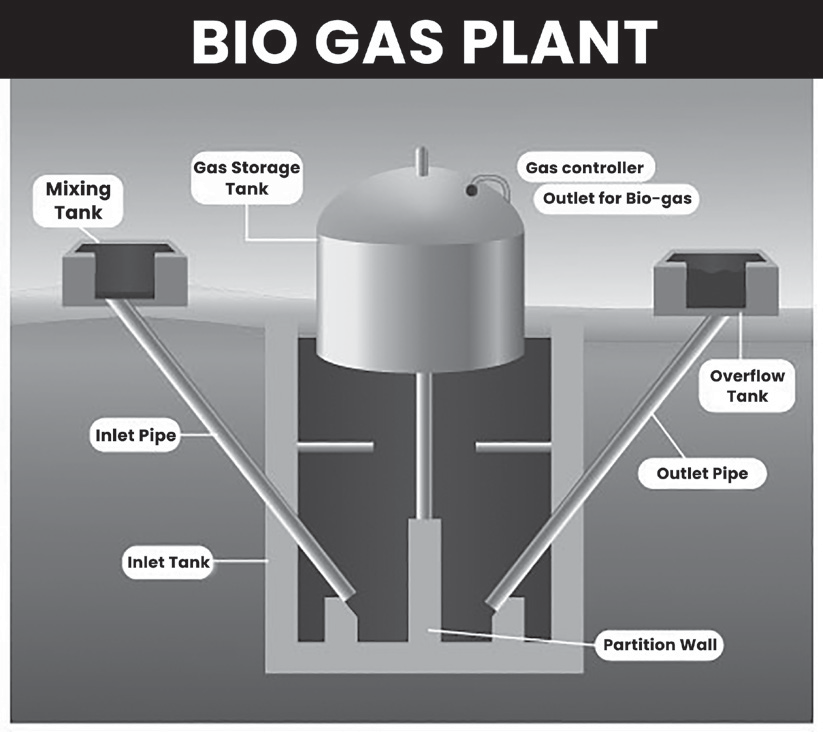
• The biogas plant typically consists of two main components:
• Digester or Fermentation Tank: This is where anaerobic digestion takes place. Organic materials, such as cow dung or faeces, are collected and added to the digester.
• Gas Holder: The gas holder is connected to the digester and collects the biogas generated during the digestion process. It helps maintain anaerobic conditions within the digester by cutting off air supply.
• In the digester, a series of chemical reactions occur as a result of microbial activity. Methanogenic bacteria break down the organic matter, releasing methane (CH4) and carbon dioxide (CO2) as byproducts. These gases are collected in the gas holder.
• Various biodegradable substances can be used as feedstock for biogas production, including cow dung, animal manure, sewage sludge, food waste, agricultural residues, and organic byproducts.
Bio Gas Plant
SATAT Initiatives
• The SATAT (Sustainable Alternative Towards Affordable Transportation) initiative focuses on promoting Compressed Bio-Gas (CBG) as an alternative and environmentally friendly transport fuel.
• SATAT aims to promote the use of CBG by setting up Compressed Bio-Gas plants, primarily through independent entrepreneurs. These plants will produce CBG from biomass and organic waste materials.
• The initiative emphasizes the efficient management of biomass and organic waste by converting them into valuable CBG. This helps in reducing the environmental impact of waste disposal and mitigating issues such as stubble burning.
Biobutanol
• Biobutanol is produced through the fermentation of biomass, typically using bacteria such as Clostridium acetobutylicum. The fermentation process can be carried out in ethanol production facilities.
• Biobutanol is a four-carbon alcohol with properties similar to gasoline. It has a higher energy density compared to ethanol and can be used as a drop-in replacement for gasoline in many applications. Additionally, it is less corrosive and has a lower vapor pressure than ethanol, which simplifies storage and distribution.
• Biobutanol can be used as a fuel in internal combustion engines without requiring significant modifications. Some gasoline-powered vehicles can even run on biobutanol blends without any adjustments. It can be blended with gasoline in various concentrations, with blends of up to 11.5% by volume being common.
• One limitation of biobutanol compared to gasoline is its lower energy content, typically about 10-20% less. This can result in slightly reduced vehicle performance and fuel efficiency when compared to pure gasoline.
• Despite its lower energy content, biobutanol offers significant environmental benefits. It can reduce carbon emissions by up to 85% compared to gasoline, making it a more sustainable and eco-friendly fuel option.
Bio-Hydrogen
Biohydrogen can be produced through various processes, including
Pyrolysis: Thermal decomposition of biomass in the absence of oxygen.
Gasification: Conversion of biomass into a mixture of gases under high temperatures and pressure.
Fermentation: Biological process where microorganisms break down organic materials to produce hydrogen.
Biohydrogen offers several advantages as an alternative energy carrier:
Produced from biomass sources such as agricultural residues, organic waste, and dedicated energy crops, making it renewable.
Combustion of hydrogen produces only water vapor as a byproduct, making it a clean fuel with minimal environmental impact.
Can be used in various applications, including transportation, electricity generation, and industrial processes.
Despite its potential benefits, widespread adoption of biohydrogen faces several challenges:
Large-scale production of biohydrogen must be economically viable to compete with fossil fuels.
Continued research and development are needed to improve the efficiency and cost-effectiveness of biohydrogen production processes.
Development of infrastructure for storage, distribution, and utilization of hydrogen fuel is necessary for its widespread use.
Bagasse as Biofuel
Bagasse, the fibrous residue left over after sugarcane is crushed to extract its juice, is increasingly being utilized as a biofuel in Indian sugar mills.
Utilizing bagasse as a biofuel helps reduce reliance on fossil fuels for electricity generation, thereby lowering greenhouse gas emissions and mitigating environmental pollution.
Generating electricity from bagasse allows sugar mills to reduce their dependence on grid electricity or other conventional fuels, thereby lowering their energy costs in the long term.
By converting bagasse into electricity, sugar mills can generate additional revenue by selling surplus power to the grid or utilizing it for their own operations, thereby improving their financial viability.
Geothermal Energy
Geothermal Energy
| Geothermal energy | Environment friendly | Steamcontains Hydrogen Sulphide (H2S) having odour of rotten eggs. Minerals in the steam corrosive to pipe lines and equipment causing maintenance problems. Minerals in the water toxic to fish. |
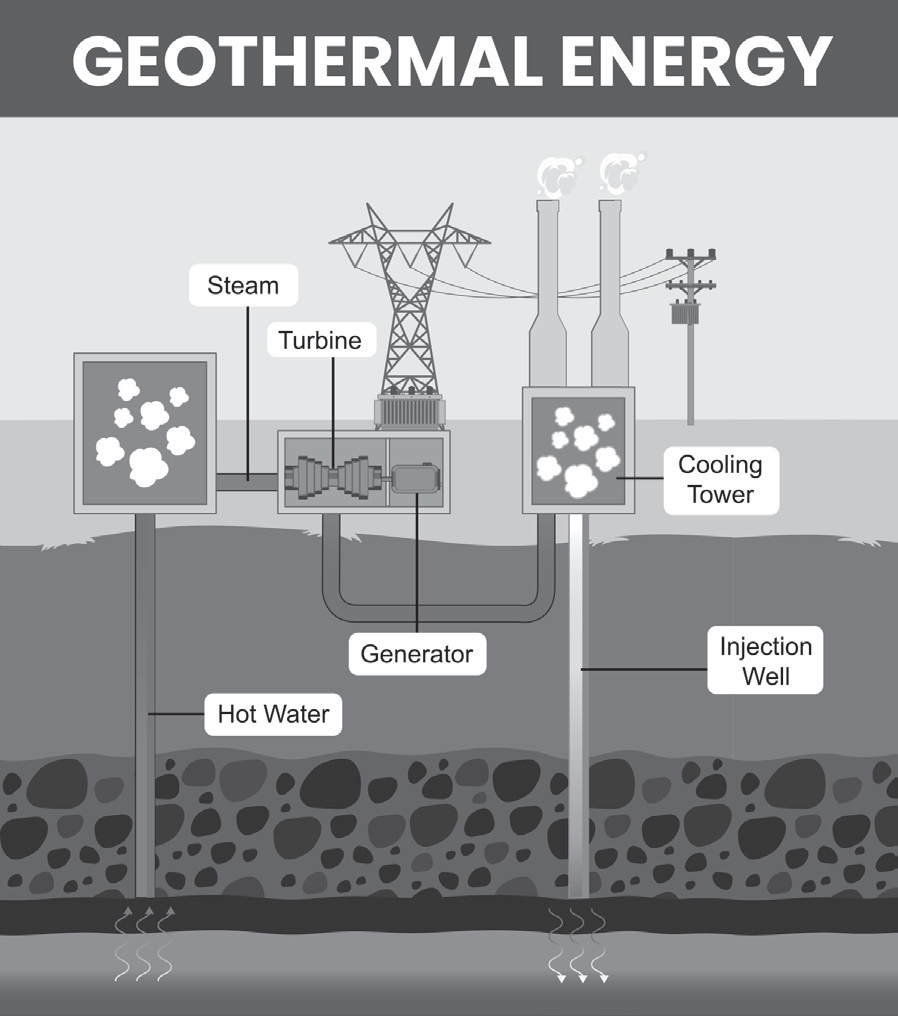
Geothermal energy is the heat stored beneath the Earth’s surface, originating from the planet’s core and radioactive decay in the mantle.
Geothermal energy harnesses the natural heat from within the Earth’s interior for various purposes, including electricity generation and heating.
This energy can be harnessed through various methods, such as using hot water and steam from geothermal reservoirs to drive turbines for electricity generation, or directly for heating purposes in buildings and industrial processes.
Geothermal resources are typically found in areas with active geological features like volcanoes, hot springs, and geysers. In addition, methane deposits beneath ocean floors also represent potential sources of geothermal energy.
Geothermal resources are categorized into geopressurized zones, hot-rock zones, and hydrothermal convection zones. Currently, commercial exploitation primarily focuses on geopressurized zones.
In the context of India
India has identified regions with geothermal potential, including the Northwestern Himalayas and the western coast. These areas exhibit characteristics suitable for geothermal energy extraction.
The Geological Survey of India (GSI) has identified over 350 hot spring sites across the country, which serve as indicators of geothermal activity and potential energy sources.
Among the geothermal sites in India, the Puga Valley in the Ladakh region stands out as one of the most promising geothermal fields, offering opportunities for further exploration and development of geothermal energy projects.
Environmental Impact of Geothermal Energy
Geothermal energy, while considered a renewable and relatively clean energy source, can indeed have environmental impacts, including:
Noise Pollution: On-site noise generated during the operation of geothermal power plants can impact local communities and wildlife.
Gas Emissions: Geothermal power plants may emit gases such as hydrogen sulfide (H2S) and carbon dioxide (CO2) during the extraction and utilization of geothermal fluids. Hydrogen sulfide, in particular, has a distinct odor (It smells like rotten eggs) and can contribute to air pollution.
The drilling and construction activities associated with geothermal projects can disrupt local ecosystems, habitats, and landscapes.
The steam produced from geothermal reservoirs may contain minerals that are harmful to aquatic life if discharged into water bodies. Additionally, these minerals can be corrosive to pipes and equipment, necessitating regular maintenance and potentially leading to environmental contamination if not properly managed.
Hydrogen Economy
Hydrogen Economy
• The Hydrogen Economy represents a vision for utilizing hydrogen as a low-carbon energy source.
• Hydrogen is the most abundant chemical substance in the universe, but it is not found in pure form on Earth.
• Hydrogen must be produced from other compounds such as natural gas, biomass, alcohols, or water through processes like steam reforming, electrolysis, or biomass gasification.
• At standard temperature and pressure, hydrogen is a nontoxic, nonmetallic, odorless, tasteless, colorless gas with the molecular formula H2. It is highly combustible and can be used as a fuel.
Types of Hydrogen
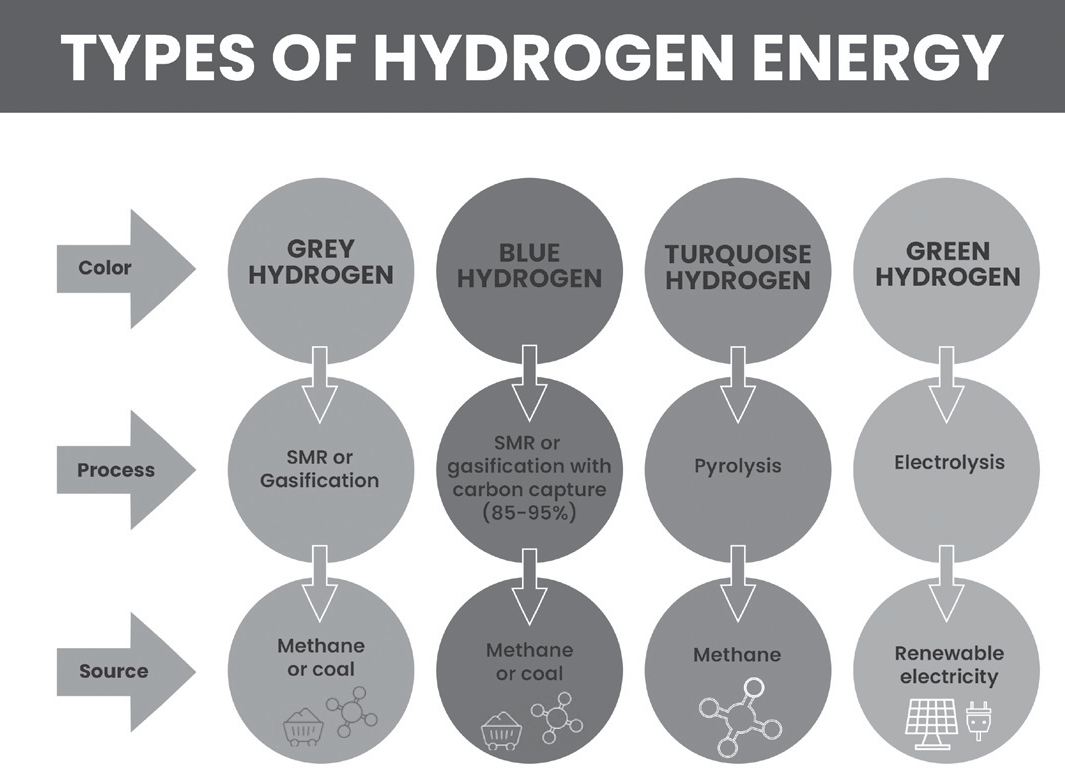
• Grey Hydrogen: Produced from fossil fuels without carbon capture and storage options.
• Blue Hydrogen: Produced from fossil fuels with carbon capture and storage options to mitigate carbon emissions.
• Green Hydrogen: Produced from renewable power sources such as solar, wind, or hydropower through electrolysis, offering zero-carbon emissions during production.
How Hydrogen Fuel Cells Work?
• Hydrogen is not a primary source of energy but rather an energy carrier. The energy used to produce hydrogen typically comes from conventional sources like natural gas, coal, or renewable sources such as solar or wind power.
• Hydrogen fuel must be converted into electricity using a device called a fuel cell stack before it can power vehicles or other equipment.
• Inside each fuel cell, hydrogen gas is drawn from an onboard pressurized tank and brought into contact with a catalyst. This catalyst, often made from platinum, palladium, or gold, speeds up the reaction.
• At the anode (negative electrode), hydrogen undergoes oxidation, releasing positively charged hydrogen ions (protons) and electrons. The electrons flow from the anode through an external circuit, creating an electric current.
• Simultaneously, the positively charged hydrogen ions migrate through an electrolyte material from the anode to the cathode (positive electrode) within the fuel cell.
• At the cathode, another catalyst facilitates the reaction between the hydrogen ions, electrons from the external circuit, and oxygen (usually from the air), producing water as a by-product. This process generates electricity, which can be used to power electric motors or other devices.
• While hydrogen and phosphoric acid fuel cells are common, fuel cells that run on alternative fuels such as methanol, ethanol, and natural gas are also available, each with their own set of advantages and limitations.
Advantages of Hydrogen as Fuel
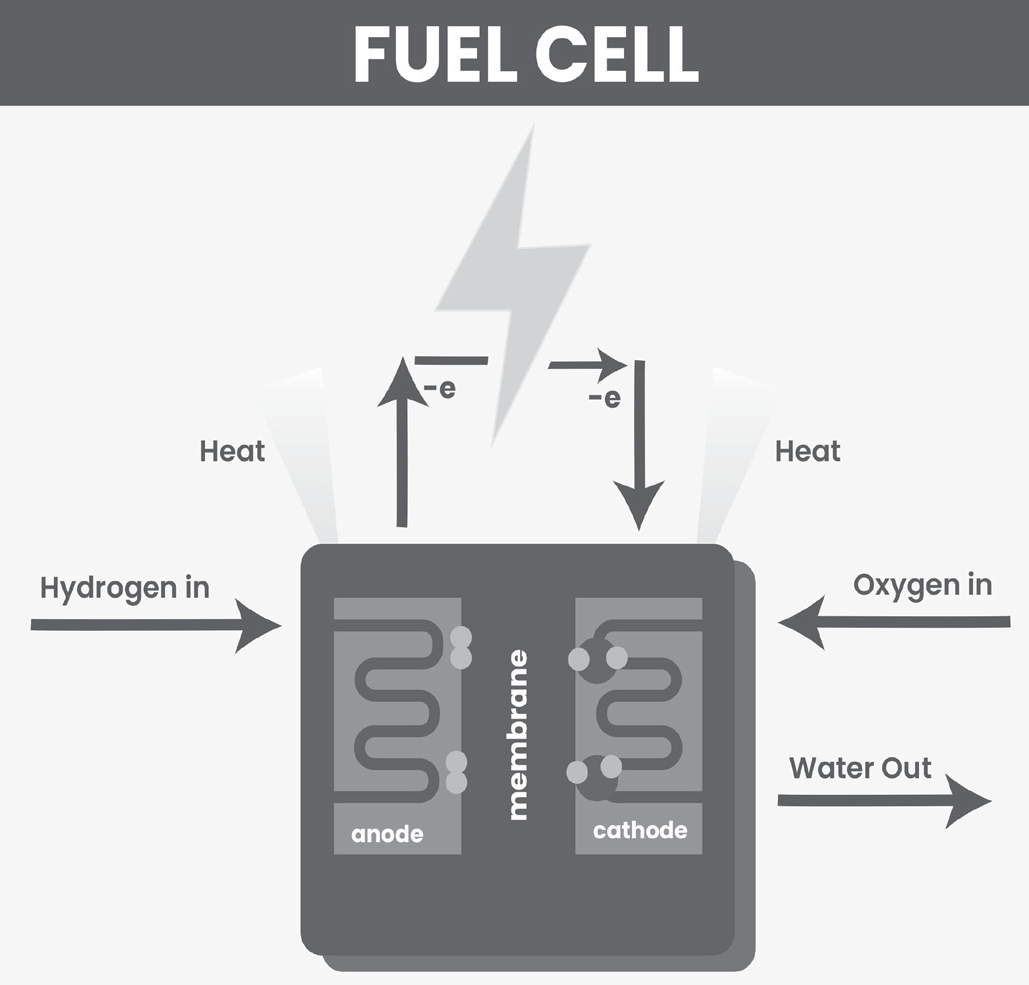
• Fuel cells offer higher efficiency compared to traditional thermal power plants. This is because fuel cells directly convert chemical energy into electrical energy, bypassing the intermediate steps involved in traditional power generation, which leads to energy loss.
• Hydrogen is one of the most abundant elements in the universe, making it a readily available fuel source.
• Hydrogen fuel is renewable and produces no harmful emissions during combustion. The only by-product of hydrogen fuel cells is water.
• Hydrogen has a high energy-to-weight ratio, meaning it can produce more energy per pound of fuel compared to traditional fossil fuels like diesel or gasoline.
• Hydrogen can be produced from a wide variety of resources, including water, biomass, and renewable electricity. Additionally, it can be used in a diverse range of applications, including power generation, transportation (as a fuel for low-carbon vehicles), and heating.
Disadvantages of Hydrogen as Fuel:
• Fuel cells are expensive to produce, primarily due to the cost of materials such as platinum and palladium used as catalysts in the cells.
• Hydrogen is difficult to transport and store efficiently, requiring specialized infrastructure such as high-pressure tanks or cryogenic storage.
• There is a relative lack of off-the-shelf engine technology capable of running safely on hydrogen, which may hinder the widespread adoption of hydrogen-powered vehicles.
• Hydrogen’s high reactivity with environmental oxygen poses safety concerns, particularly in terms of handling and storage.
• Hydrogen production from water or organic compounds like methane through electrolysis is energy-intensive, leading to a high carbon footprint unless produced using renewable energy sources.
• Efficient photochemical water splitting technology for hydrogen production is still lacking, limiting the scalability of hydrogen production methods.
• The lack of a widespread infrastructure for hydrogen fueling stations further hampers the adoption of hydrogen-powered vehicles.
• Electric vehicles (EVs) are generally considered more efficient than hydrogen-powered vehicles.
• Efficiency Ranking.
• Electric Vehicles (EVs)
• Hydrogen Vehicles
• Diesel Vehicles
• Petrol Vehicles
Current Status of Hydrogen Economy in India
• Hydrogen is predominantly utilized in India as an industrial feedstock, particularly in the production of ammonia-based fertilizers.
• Most of the hydrogen produced in India is derived from methane reforming, a process that generates significant carbon dioxide emissions.
• National Hydrogen Energy Road Map (NHERM): Adopted in 2006 by the National Hydrogen Energy Board, NHERM aims to outline pathways for the gradual integration of hydrogen energy and the establishment of hydrogen energy infrastructure across the country.
• National Hydrogen Energy Mission (NHM): The Union Budget for 2021-22 has announced the establishment of a National Hydrogen Energy Mission (NHM), which will develop a comprehensive roadmap for harnessing hydrogen as an energy source in India.
• Delhi has pioneered the operation of buses fueled by hydrogen-enriched compressed natural gas (HCNG).
The Ministry of Road Transport and Highways has proposed amendments to the Central Motor Vehicles Rules, 1989, to include safety evaluation standards specifically tailored for hydrogen fuel cell-based vehicles
Compressed Natural Gas (CNG)
• It is a type of fuel that is obtained from natural gas, primarily consisting of methane, ethane, and propane. It is produced by compressing natural gas and storing it in tanks for use in various applications, including transportation and heating.
• Natural gas is extracted from gas wells or obtained as a byproduct of crude oil extraction.
• After extraction, natural gas is compressed to reduce its volume, making it easier to store and transport.
• Natural gas primarily consists of methane, with varying proportions of ethane and propane. Additionally, it may contain trace amounts of other gases such as nitrogen,
carbon dioxide, and sulfur compounds.
• A sulfur-based odorant is often added to CNG to facilitate leak detection. This distinctive smell alerts individuals to the presence of natural gas in case of a leak, enhancing safety.
• One advantage of CNG over liquefied petroleum gas (LPG) is that it is lighter than air. In the event of a leak, CNG will quickly dissipate into the atmosphere, reducing the risk of accumulation and potential hazards.
Advantages
• CNG is a clean-burning fuel, leaving little or no residue after combustion. This results in reduced engine maintenance and lower emissions of pollutants.
• While natural gas combustion still produces greenhouse gases (GHGs), the emissions are significantly lower compared to those from petrol or diesel.
•
CNG is considered safer than petrol and diesel due to its high auto-ignition temperature, reducing the risk of accidental ignition. Additionally, CNG dissipates quickly if leaked, as it is lighter than air, minimizing the risk of fire or explosion.
• CNG is generally cheaper than petrol and diesel, offering cost savings to consumers. This affordability can help reduce fuel expenses for vehicles and lower the overall cost of transportation.
• CNG has a high calorific value, providing efficient energy output per unit of fuel consumed. With a calorific value of around 50,000 kJ/kg, CNG offers efficient energy conversion in vehicle engines.
• Despite these advantages, there are some disadvantages associated with CNG:
Large Fuel Tanks: CNG requires larger fuel tanks compared to petrol or diesel due to its lower energy density, which may impact vehicle design and space utilization.
Limited Range: Vehicles running on CNG may have a limited range compared to those fueled by petrol or diesel, requiring more frequent refueling.
Limited Infrastructure: The availability of CNG filling stations is relatively limited compared to petrol and diesel stations, which may inconvenience CNG vehicle owners, especially in areas with sparse infrastructure.
Compatibility Issues: Older vehicles may not be designed or equipped to run on CNG, requiring modifications or retrofits to utilize this alternative fuel effectively.
About H-CNG
• Hydrogen-enriched compressed natural gas (HCNG) is a fuel blend consisting of compressed natural gas (CNG) and a certain percentage of hydrogen (H2) by energy
content.
• The Ministry of Road Transport has permitted the use of HCNG, which involves blending 18% hydrogen with CNG, in CNG engines. This move aims to promote cleaner fuels and reduce emissions from vehicles.
• Amendments to the Central Motor Vehicles Rules of 1989 have been made to include HCNG as an automotive fuel.
• HCNG has demonstrated the potential to reduce emissions of carbon monoxide (CO) by up to 70%. Additionally, engines running on HCNG can be calibrated to release lower amounts of nitrogen oxide (NOx).
• HCNG is considered ideal for high-load applications and heavy-duty vehicles, as it offers better performance and efficiency compared to conventional fuels. It enables fuel savings of up to 5% and boasts a higher octane rating due to the presence of hydrogen.
• HCNG typically contains 4–9% hydrogen by energy content, which increases the hydrogen-to-carbon (H/C) ratio of the fuel. This results in a higher flame speed compared to pure CNG, enhancing combustion efficiency.
• Hydrogen is seen as a promising secondary fuel for power systems due to its carbon-free operation. As efforts to decarbonize various sectors intensify, HCNG could play a significant role in reducing greenhouse gas emissions and promoting sustainable energy practices.
Advantages
• HCNG can reduce the emission of carbon monoxide (CO) by up to 70% compared to conventional fuels.
• Vehicles running on HCNG can achieve fuel savings of up to 5%, making it a cost-effective option for fleet operators and drivers.
• Engines fueled by HCNG can be calibrated to release lower amounts of nitrogen oxide (NOx), which are harmful pollutants contributing to air pollution and respiratory problems.
• Transitioning to HCNG typically requires minimal modifications to existing engines, simplifying the conversion process and reducing implementation costs for vehicle owners and manufacturers.
• HCNG is particularly well-suited for high-load applications and heavy-duty vehicles due to its enhanced performance characteristics and improved combustion properties.
• The higher-octane rating of hydrogen (H2) present in HCNG results in better engine performance, including smoother operation, increased power output, and improved fuel efficiency.
Green Hydrogen Microgrid Projects
• The establishment of the Green Hydrogen Microgrid Project at Simhadri in Vishakhapatnam marks a significant milestone in India’s transition towards
sustainable energy solutions.
• Being India’s first Green Hydrogen-based Energy Storage Project, the initiative sets a precedent for future endeavors in the field of renewable energy and energy storage. By utilizing green hydrogen as the primary energy carrier, the project aims to demonstrate the viability and effectiveness of hydrogen-based microgrid systems.
• The project serves as a platform for studying and refining the integration of green hydrogen-based microgrids in various off-grid and strategic locations across the country. By facilitating research and development activities, the initiative contributes to the advancement of knowledge and expertise in the field of renewable energy technologies and grid management.
• By deploying hydrogen-based microgrids, the project enhances energy security in off-grid and remote areas where traditional grid infrastructure is inadequate or unavailable. The availability of reliable and sustainable energy sources contributes to socio-economic development, improves living standards, and promotes inclusive growth in underserved communities.
Solar Energy
Solar Energy
| Solar Energy | Environment friendly Ample or unlimited availability. | Limited capacity for storage of sunlight. Cloud cover. Collecting equipment expensive. |
Types of Solar Systems
The sun provides us with abundant energy, and we can capture it in various ways using solar systems. Here are the three main categories:
Passive Solar Energy
Passive solar energy systems do not involve the use of mechanical or electrical devices to capture or utilize solar energy. Instead, they rely on architectural design elements and building materials to harness solar energy for heating, cooling, lighting, and other purposes.
Examples of passive solar energy applications include orientation of buildings to maximize sunlight exposure, strategic placement of windows for natural lighting and heat gain, and the use of thermal mass materials to store and release solar heat.
Active Solar Heating and Cooling Systems
Active solar heating and cooling systems utilize mechanical or electrical components to capture, convert, and distribute solar energy for heating or cooling purposes.
Solar collectors, such as flat-plate collectors or evacuated tube collectors, are used to absorb solar radiation and transfer heat to a fluid (such as water or air) circulating through the system.
Pumps, fans, and other equipment are employed to circulate the heated or cooled fluid to where it is needed, such as for space heating, domestic hot water heating, or air conditioning.
These systems may include storage tanks or thermal mass elements to store excess heat or coolness for later use.
Solar Cells or Photovoltaic Technology
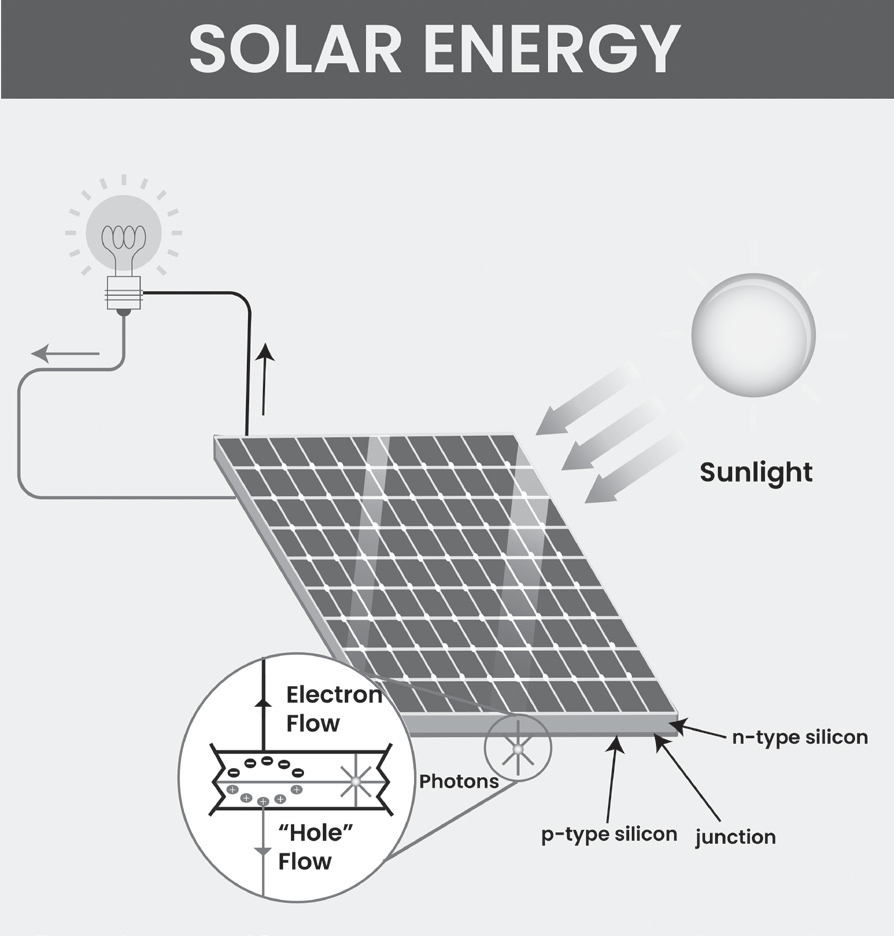
Photovoltaic (PV) cells, also known as solar cells, directly convert sunlight into electricity through the photovoltaic effect.
PV cells are typically made of semiconductor materials, such as silicon, and generate electricity when photons from sunlight dislodge electrons in the semiconductor material, creating an electric current.

International Solar Alliance
The International Solar Alliance (ISA) is a global alliance spearheaded by India with the goal of promoting solar energy.
Solar panels consist of multiple PV cells connected together to produce usable electrical power.
Solar PV systems can be grid-tied, off-grid, or hybrid systems, and they can be used for a wide range of applications, including residential and commercial electricity generation, remote power systems, and solar- powered water pumping.
It originated from discussions at the India-Africa Summit and a meeting of member countries before the Paris Summit.
The alliance was formalized through the Paris Declaration,
and its framework agreement was made available for signatures in Marrakech in 2016.
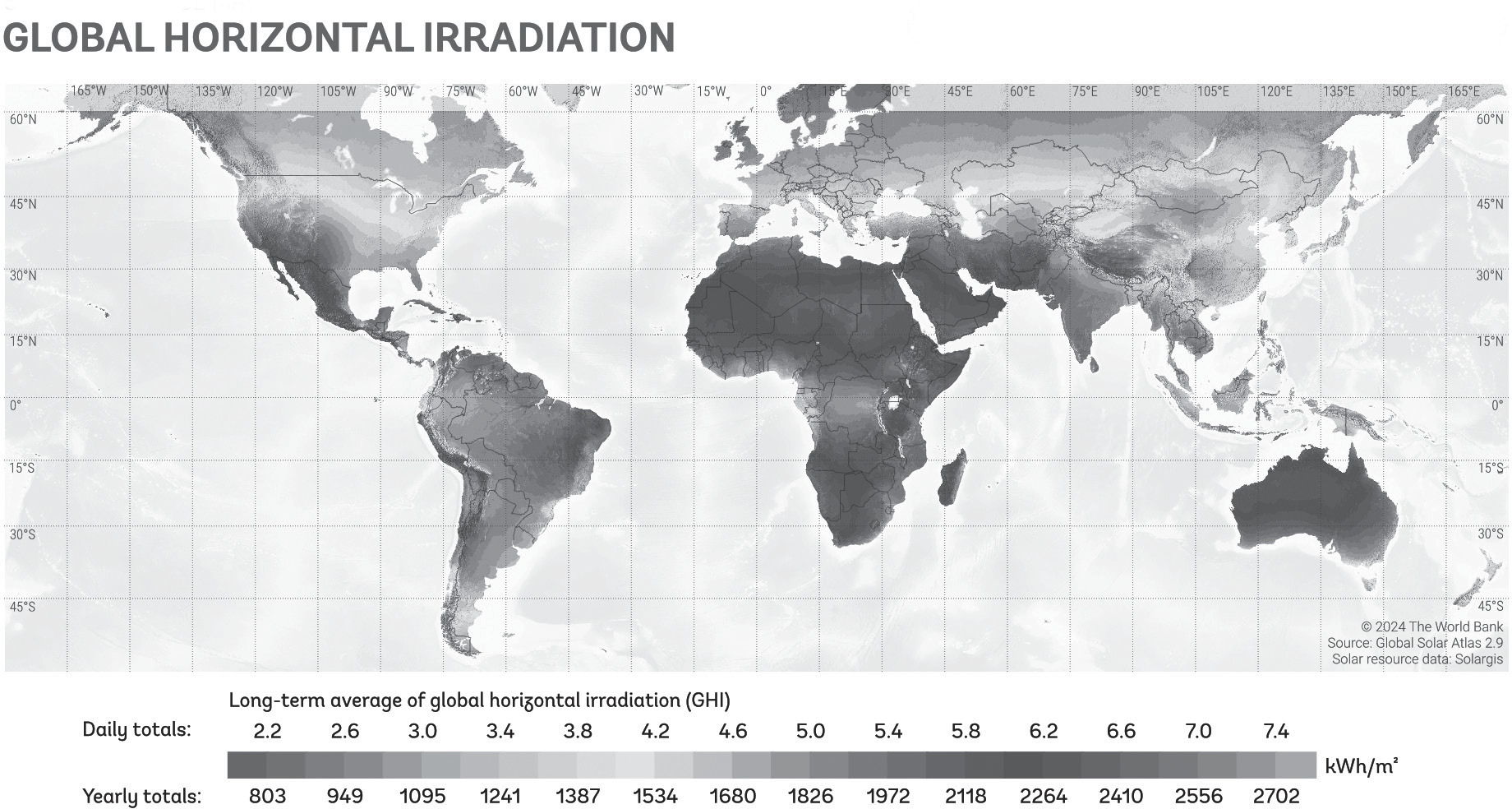
Currently, more than 120 countries have joined the alliance, most of which are located in regions with abundant sunlight, lying either wholly or partially between the Tropic of Cancer and the Tropic of Capricorn.
The International Solar Alliance (ISA) has evolved into a treaty-based intergovernmental organization, now open to all members of the United Nations.
While countries outside the Tropics can join, they may not have full voting rights.
The alliance’s main objective is to promote the efficient
use of solar energy to reduce reliance on fossil fuels.
ISA aims to complement the efforts of existing
organizations like the International Renewable Energy Agency (IRENA), Renewable Energy and Energy Efficiency Partnership (REEEP), International Energy Agency (IEA), Renewable Energy Policy Network for the 21st Century (REN21), and United Nations bodies, rather than duplicating them.
ISA seeks to establish networks and synergies with these organizations to enhance global efforts towards sustainable energy. Additionally, ISA plans to establish a World Solar Bank with an authorized capital of $15 billion to fund solar projects and mobilize investments exceeding USD 1000 billion by 2030.
The headquarters of ISA is located in Gurugram, Haryana, India.
Targets
The International Solar Alliance (ISA) has established an ambitious target of achieving 1000 GW of solar energy capacity by the year 2030. This goal reflects the alliance’s commitment to promoting the widespread adoption of solar energy worldwide.
In alignment with this, India set its own renewable energy targets. India aimed to achieve a total renewable energy capacity of 175 GW by the year 2022, with a significant portion comprising 100 GW of solar energy capacity. These targets demonstrate the collective efforts of ISA member countries and India to accelerate the transition towards sustainable and renewable energy sources.
Delhi Solar Agenda
The Delhi Solar Agenda was adopted during the Founding Conference of the International Solar Alliance (ISA).
It outlines the commitment of ISA member states to increase the share of solar energy in their respective
national energy mixes as a strategy for addressing global challenges such as climate change and achieving cost- effective energy solutions.
To achieve this goal, ISA has established six programs focusing on various aspects of solar energy utilization. These programs include Solar Applications for Agricultural Use, Affordable Finance at Scale, Mini Grids, Solar Rooftops, Solar E-mobility & Storage, and Large- Scale Solar Parks. Through these initiatives, ISA aims to promote the widespread adoption of solar energy across
different sectors and applications.
First World Solar Technology Summit (WSTS)
The First World Solar Technology Summit (WSTS) was organized jointly by the International Solar Alliance (ISA) and the Federation of Indian Chambers of Commerce and Industry (FICCI).
WSTS served as a valuable forum for fostering collaboration, sharing knowledge, and promoting the adoption of innovative solar technologies among ISA member countries.
Objectives
Showcase State-of-the-Art Technologies: The summit aimed to showcase the latest advancements and next- generation solar technologies from around the world. This would provide member countries with insights into cutting-edge innovations in solar technology.
Facilitate Stakeholder Engagement: WSTS provided a platform for decision-makers and stakeholders from various sectors to convene. It offered them an opportunity to interact, exchange ideas, and discuss their priorities and strategic agendas related to solar energy integration.
One Sun One World One Grid
The One Sun One World One Grid (OSOWOG) initiative is India’s ambitious endeavor to establish a global network of interconnected renewable energy resources.
OSOWOG aims to create a comprehensive ecosystem that connects renewable energy sources worldwide. It seeks to leverage solar energy potential on a global scale for the collective benefit of all nations.
The blueprint for OSOWOG is being developed under the guidance of the World Bank’s technical assistance program. This program is focused on accelerating the deployment of grid-connected rooftop solar installations.
The fundamental concept behind OSOWOG involves the establishment of an international electricity grid that facilitates the seamless exchange of power among participating countries. This requires the development of robust regulatory frameworks, particularly concerning grid security and international energy exchange.
To enable the realization of OSOWOG, certain regulatory changes are necessary, especially in ensuring grid security for the Indian grid and fostering the development of appropriate international energy exchange mechanisms.
OSOWOG envisions the implementation of a “smart grid” infrastructure to maximize efficiency, considering the challenges associated with transmitting solar power, such as transmission losses.
The OSOWOG project is planned to be executed in three phases:
Phase 1: Establishing interconnectivity within the Asian continent.
Phase 2: Extending connectivity to include African nations.
Phase 3: Globalizing the initiative to encompass the
entire world.
OSOWOG is viewed as India’s strategic response to China’s Belt and Road Initiative (BRI). By spearheading this initiative, India aims to assert its leadership in the global renewable energy sector and foster closer ties with participating nations.
India and Solar Energy
Steps taken by India in Solar Energy
India now ranks 3rd globally in terms of renewable power capacity.
India has successfully scaled up its non-fossil fuel-based power generation capacity to 274.61 GW, accounting for approximately 48% of its total power generation capacity.
India aimed to further increase its non-fossil fuel-based power generation capacity to 500 GW by the year 2023, demonstrating its ambitious growth targets in the renewable energy sector.
KUSUM Scheme: The Indian government has introduced the KUSUM (Kisan Urja Suraksha evam Utthaan Mahabhiyan) scheme, which focuses on replacing diesel- powered irrigation pumps with solar energy systems. This initiative aims to solarize 2.8 million irrigation pumps, benefiting both the environment and farmers’ income.
India has established a Project Preparation Facility in collaboration with the Export-Import Bank of India. This facility is dedicated to developing bankable solar energy projects in member countries of the International Solar Alliance (ISA).
The Indian government has allocated approximately US $1.4 billion in lines of credit (LOCs) to support the development of 27 solar projects across 15 countries. This financial support facilitates the expansion of solar energy infrastructure globally.
India actively participates in the International Solar Alliance (ISA), a global initiative aimed at promoting solar energy adoption worldwide. India’s involvement in initiatives like “One World One Sun One Grid” within ISA underscores its commitment to leveraging solar energy for transformative benefits on a global scale.
Jawaharlal Nehru National Solar Mission (JNNSM)
The Jawaharlal Nehru National Solar Mission (JNNSM), also known as the National Solar Mission, is a cornerstone of India’s ambitious clean energy goals.
Objectives
The mission aims to establish India as a leading force in the global solar energy sector.
Promoting solar energy is seen as a way to achieve environmentally friendly economic development while addressing India’s energy security needs.
JNNSM contributes significantly to India’s efforts to combat climate change. It aligns with the National Action Plan on Climate Change.
The program was launched in 2010 with a vision for long- term leadership in solar energy and maximizing energy production through this clean source.
The initial target for solar power generation capacity was 20 GW by 2022. In 2015, the target was significantly revised upwards to a much more ambitious 100 GW by 2022.
Phased Implementation: The JNNSM follows a three-phase approach with regular reviews and adjustments to targets:
Phase 1 (2010-2013)
Phase 2 (2013-2017)
Phase 3 (2017-2022)
The target for JNNSM was a remarkable 100,000 MW of solar power generation capacity by 2022.
The Ministry of New and Renewable Energy (MNRE) proposes to achieve this through a two-pronged strategy:
40,000 MW from Rooftop Solar Projects: This strategy focuses on promoting solar panel installations on rooftops of homes, businesses, and other buildings.
60,000 MW from Large and Medium Scale Solar Projects: This approach involves establishing large-scale solar power plants to generate significant amounts of electricity.
Domestic Content Controversy
The guidelines for the solar mission stipulate that those cells and modules for solar PV projects, primarily based on crystalline silicon, should be manufactured in India. This requirement covers a significant portion, over 60%, of the total system costs. Additionally, for solar thermal projects, the guidelines mandate that 30% of the project should have domestic content.
A contentious debate arose between power project developers and solar PV equipment manufacturers. On one side, power project developers prefer sourcing modules from the global market to benefit from competitive pricing, better quality, predictable delivery, and access to the latest technologies. On the other hand, solar PV equipment manufacturers advocate for a controlled environment that compels developers to purchase modules from a limited group of manufacturers
in India.
Domestic manufacturers aim to avoid competition with global players and advocate for government incentives to foster the growth of the local industry.
The United States Trade Representative (USTR) filed a complaint at the World Trade Organization (WTO) challenging India’s domestic content requirements, arguing that they discriminate against US exports.
Ultimately, the WTO ruled in favor of the USA, signaling that India’s domestic content requirements violated international trade agreements.
PM-KUSUM Scheme
The PM-KUSUM Scheme, launched in 2019 by the Ministry of New and Renewable Energy (MNRE), aims to support rural
areas by promoting the installation of off-grid solar pumps and reducing dependence on the grid in grid-connected areas.
It has achieved a record of installing 667 MW solar power capacity under component A
Objectives and Components
The PM-KUSUM scheme consists of three components
Installation of 10 GW of Decentralized Ground Mounted Grid Connected Renewable Power Plants.
Installation of 17.50 lakh standalone (off-grid) Solar Powered Agriculture Pumps.
Solarisation of 10 Lakh Grid-connected Solar Powered Agriculture Pumps.
The scheme aims to add a solar capacity of 25.75 GW by 2022 and provide total central financial support of Rs. 34,422 crores.
Expected Benefits
Reducing farmers’ dependence on diesel and kerosene.
Enabling farmers to set up solar power generation capacity and sell it to the grid.
Providing opportunities for farmers to earn income through solar power generation on barren land.
Reducing emissions and subsidy burden on discoms (~Rs 50,000 crores).
Criticism
Concerns about potential over-exploitation of groundwater due to increased use of solar pumps.
Doubts regarding the effectiveness of reducing discoms’ subsidy burden, as pump installation is not tied to a decrease in subsidised agricultural power supply.
Potential for benefiting only wealthy farmers due to the large investment required for solar plant installation on farmland.
Recent Developments:
Union Budget 2020 extended the scheme to set up 20 lakh standalone solar pumps and solarise 15 lakh grid- connected solar pumps.
Farmers will now be allowed to set up grid-connected
solar power generation on barren land.
Recommendations from CSE (Centre for Science and Environment)
Implement strict measures to control groundwater extraction alongside solar pump schemes.
Focus on on-grid solar pumps as they are economically superior and enable excess electricity injection into the grid.
Consider off-grid pumps only for unelectrified regions with a relatively high water-table.
Set clear targets to provide solar pumps to small and marginal farmers.
Rooftop Solar Programme
The rooftop solar programme, initiated by the Ministry of New and Renewable Energy (MNRE), aims to promote the installation of grid-connected rooftop solar photovoltaic (PV) projects across India.
MNRE issued guidelines for the implementation of the second phase of the grid-connected rooftop solar PV programme.
Under the second phase, a target of setting up 22 GW of rooftop solar PV projects has been set.
Karnataka was ranked the best for setting up rooftop solar projects, according to the State Rooftop Solar Attractiveness Index (SARAL) released by the Centre.
Telangana, Gujarat, and Andhra Pradesh scored a rating of A++, while Jammu and Kashmir was placed at the bottom.
PM-Surya Ghar: Muft Bijli Yojana- It is benefitting over 18 lakh households in India.

India aims to produce 40% of its installed electricity capacity from clean sources by 2030, aligning with its commitment to the Paris Climate Agreement.
The target includes installing 175 GW of renewable energy capacity by 2022, with specific targets for solar, wind, bio-power, and small hydro power.
The MNRE had approved a programme to install 4,200 MW of rooftop solar plants by 2019-20, but only 2,158 MW could be installed in the first phase.
Electricity distribution companies (discoms) will play a key role in expanding rooftop solar projects in the second phase, aiming to ease the process for consumers and ensure efficient implementation. Discoms and their local offices will act as nodal points for the implementation of the rooftop solar programme.
Central financial assistance (CFA) of 4,000 MW will be
provided to government-owned discoms to install grid-
connected rooftop solar projects in residential sectors.
Discoms will receive incentives to cover additional expenses related to manpower, infrastructure, capacity building, and awareness.
National Programme on Solar PV Modules
The National Programme on Solar PV Modules, recently approved by the cabinet, aims to incentivize the establishment of integrated solar PV module manufacturing plants in India.
The programme includes a production linked incentive (PLI) scheme with an outlay of Rs 4,500 crore to add 10,000 MW capacity of integrated solar PV modules manufacturing plants.
Currently, solar capacity addition in India relies heavily on imported solar PV cells and modules.
Solar PV Module
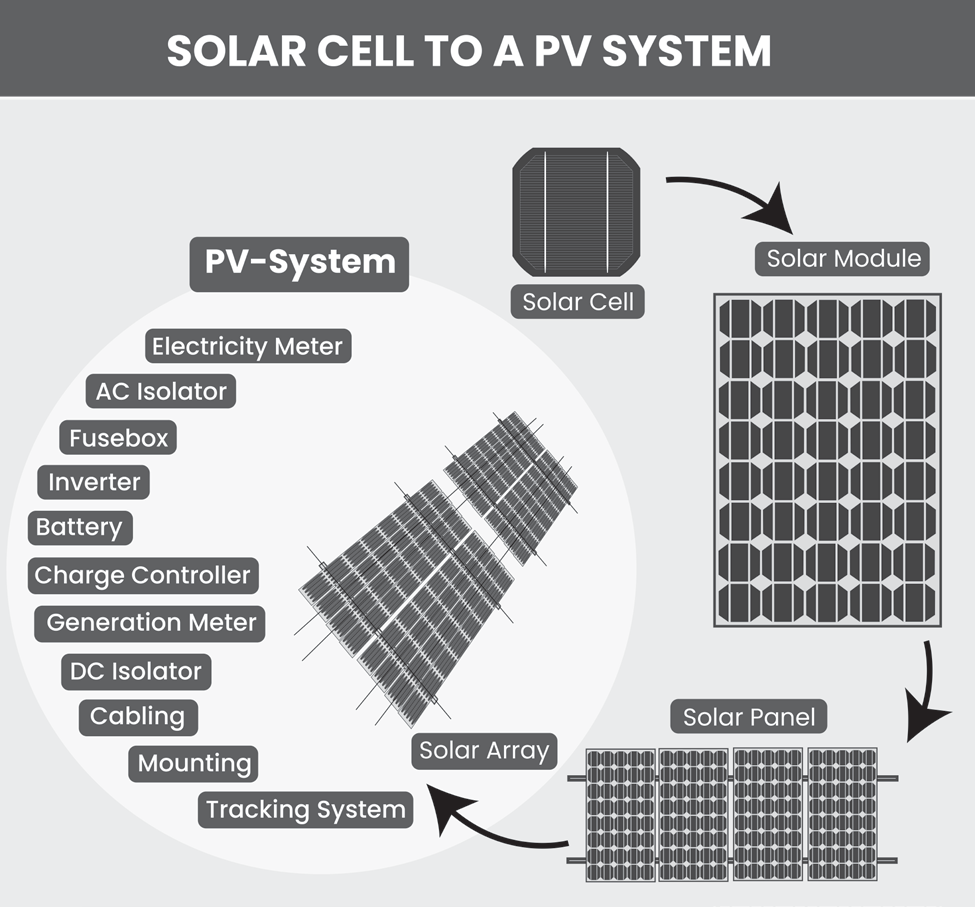
Solar cells or photovoltaic cells utilize sunlight to generate direct current.
A single solar cell may not provide sufficient output, so multiple cells are connected to form a PV module.
PV modules are assembled collections of photovoltaic cells, and a system of panels is referred to as an array.
Arrays of a photovoltaic system supply solar electricity to electrical equipment.
MNRE and IIT Bombay has developed world’s second
highest efficiency cell with 26% efficiency.
Reduction in GST from 12% Slab to 5% slab for solar energy related devices
Types of PV Modules
Crystalline Silicon (Semiconductor) PV Module
Costly but offers high conversion efficiency.
Amorphous Silicon (Semiconductor) PV Module:
Suitable for low-cost products but has lower conversion efficiency.
Solar Waste
Solar waste consists of discarded solar panels that have reached the end of their operational lifespan.
With India’s ambitious target of achieving 280 GW of solar capacity by 2030, there is a growing concern about the management of solar waste.
It is estimated that India could generate over 34,600 tonnes of cumulative solar waste by 2030.
Manufacturing solar panels involves the use of various chemicals and materials, including cadmium telluride, copper indium selenide, cadmium gallium (di)selenide, copper indium gallium (di)selenide, hexafluoroethane, lead, and polyvinyl fluoride. These materials contribute to the efficient functioning of solar panels but can pose environmental risks if not properly managed.
Solar panels typically have an operational lifespan of 20 to 30 years.
As older solar panels reach the end of their lifespan, there is a need for proper disposal or recycling.
However, due to the presence of toxic metals inside solar cells and a lack of oversight, it is often cheaper to discard them in landfills or export them to developing countries.
Improper disposal of solar panels can lead to the leaching of toxic metals into the environment. The presence of hazardous materials in solar panels poses risks to both human health and the ecosystem.
What’s in a Solar Panel?
Solar panels are primarily composed of silicon crystals arranged in sheets called cells.
Each cell is typically sandwiched between layers of aluminum and glass.
These layers collectively form the structure of the solar panel.
Solar cells within the panel require pure silicon to operate effectively. When sunlight hits the silicon atoms within the cells, it causes electrons to be ejected, generating an electric current.
Metal impurities, such as traces of other metals like cadmium and lead, are added to the silicon to enhance the efficiency of the solar cells.
The ejected electrons are then carried through the cell via these metal impurities, and copper wires within the panel carry the electric current away as usable electricity.
While silicon is recyclable, the presence of hazardous metals like cadmium and lead complicates the recycling process.
Extracting these hazardous metals from the solar cells requires significant energy and specialized recycling processes.
Roadmap to resource-efficient solar energy
To ensure resource-efficient solar energy and address the challenges posed by solar waste, several measures need to be implemented:
Implementing e-waste or renewable energy waste laws with Extended Producer Responsibility (EPR) can hold manufacturers and developers accountable for the end- of-life management of solar panels.
Investing in recycling infrastructure and fostering collaboration between the energy and waste sectors can reduce recycling costs and facilitate efficient handling of renewable energy waste. Building more recycling plants can prevent solar panels from ending up in landfills.
Enforcing bans on sending solar panel waste to landfills can mitigate environmental harm caused by toxic metals and minerals leaching into the ground.
Introducing new business models, incentives, or green certificates can encourage the recycling industry to actively participate in the management of renewable energy waste.
Continued investment in research and development is
crucial for technological advancements that minimize the environmental impact of renewable energy waste. Developing new panel designs that use fewer materials and produce less waste during manufacturing can contribute to sustainable solar energy practices.
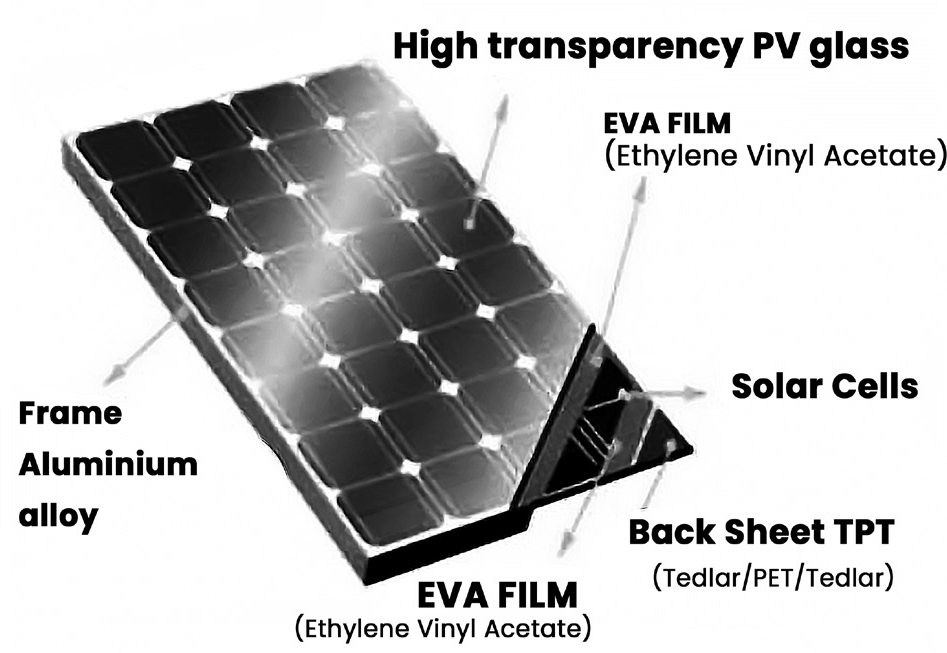
Additional Reading: E-Waste management Rules | Solar
Energy (Refer to Environment 2021 – 22)
Tidal Energy and Wind Energy
Tidal Energy
| Tidal energy | Free and clean | Structures (plant) used for harnessing energy expensive. Plant disrupts natural flow of estuary and concentrate pollutants in the area. |
Tidal power projects aim to capture the energy produced by the movement of tides.
Site Selection: Tidal power sites are chosen based on specific criteria, such as a tidal range exceeding 5 meters.
Construction of Dams: A dam is constructed across the entrance of a bay or estuary, creating a reservoir. This dam contains turbines that will generate electricity.
Tidal Action: Initially, the dam prevents water from entering the bay as the tide rises. When the tide reaches its peak and there’s enough water to power the turbines, the dam gates are opened.
Electricity Generation: As water flows through the turbines into the reservoir, the blades of the turbines are turned, generating electricity.
Reservoir Management: Once the reservoir is filled, the dam gates are closed to retain the water. During the ebb tide (when the tide falls), the water level in the reservoir remains higher than the ocean.
Reversible Turbines: The turbines used in tidal power projects are reversible, allowing them to generate electricity both when water flows into the reservoir and when it’s released back into the ocean.
Environmental Impact: While tidal power can generate clean energy, the construction of dams can have adverse effects on the surrounding vegetation and wildlife.
Tidal power projects harness the kinetic energy of tides to produce electricity through the controlled flow of water past turbines. However, careful consideration of environmental
impacts is necessary during the construction and operation of these projects.
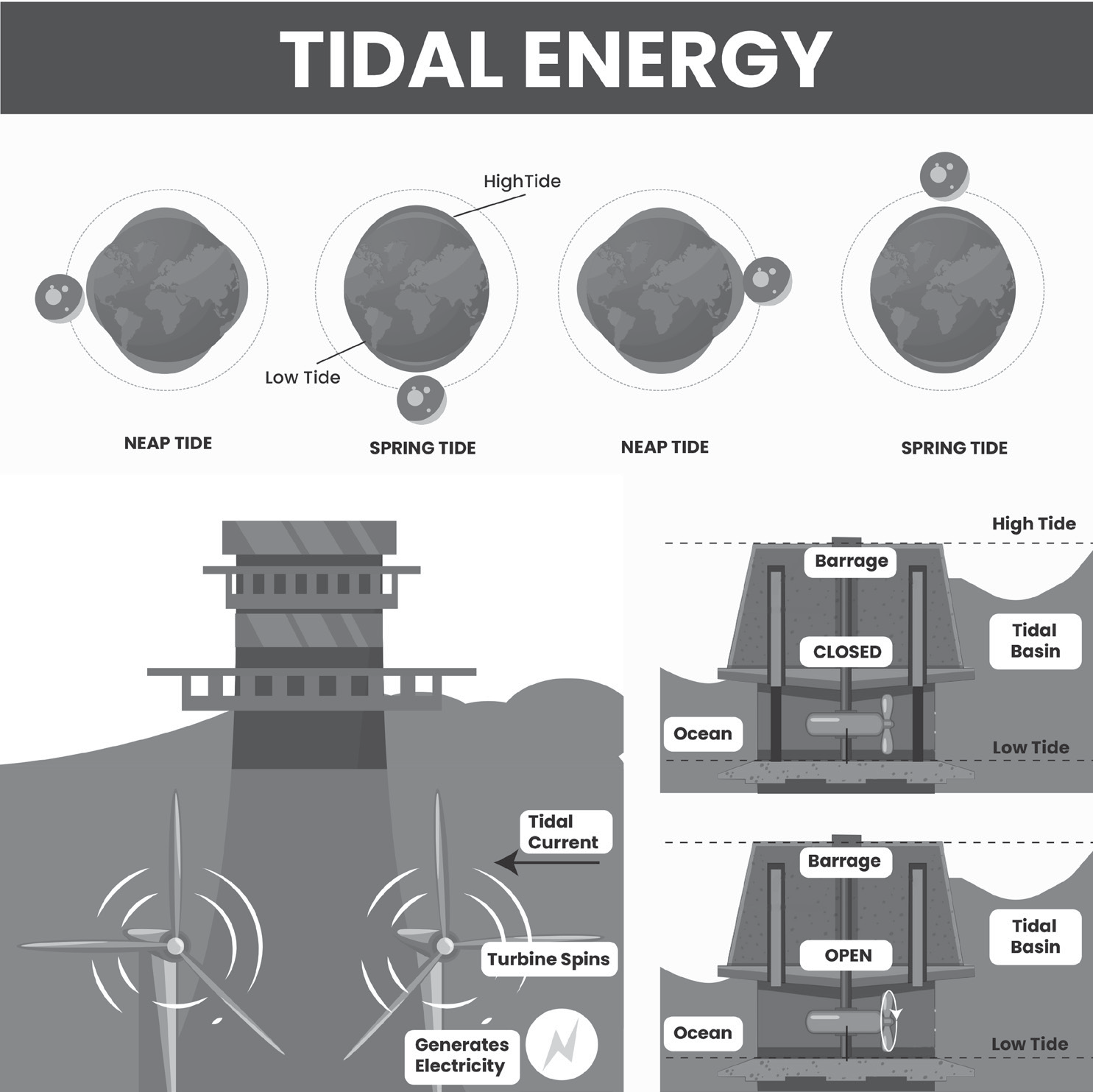
Hydropower Energy
| Hydropowe | World’s hydroelectricity capacity high | Ecosystems behind dams disturbed. Human settlements up rooted. Habitat loss and biodiversity loss. Developmental cost high. Fertile farmland lost Amount of nutrient rich silt on down river agricultural fields reduced. |
Hydropower, also known as hydroelectric power, is a method of generating electricity using the kinetic energy of moving water.
It harnesses the force of flowing water to produce electricity. This energy is typically derived from rivers, streams, or other bodies of water.
When water is allowed to flow from a higher elevation to a lower elevation, it spins turbines connected to generators, producing electricity. This process is commonly known as hydroelectricity or hydel power generation.
Hydroelectric power is often regarded as a cost-effective and efficient energy source compared to thermal or nuclear power. Once the infrastructure, such as dams and turbines, is in place, the ongoing operational costs are relatively low.
Dams are constructed to impound water at higher elevations, creating reservoirs. When water is released from these reservoirs, it flows through turbines, generating electricity. Dams are essential components of hydropower plants.
Advantages: One of the significant advantages of hydropower is its reliability and sustainability once the infrastructure is established. It’s considered a clean
energy source, producing minimal greenhouse gas emissions.
Disadvantages: Despite its benefits, hydropower also poses some challenges. The construction of dams and reservoirs can disrupt natural habitats and ecosystems, leading to the loss of biodiversity and alteration of river ecosystems. Additionally, the displacement of communities living in areas inundated by reservoirs is a social concern associated with large-scale hydropower projects.
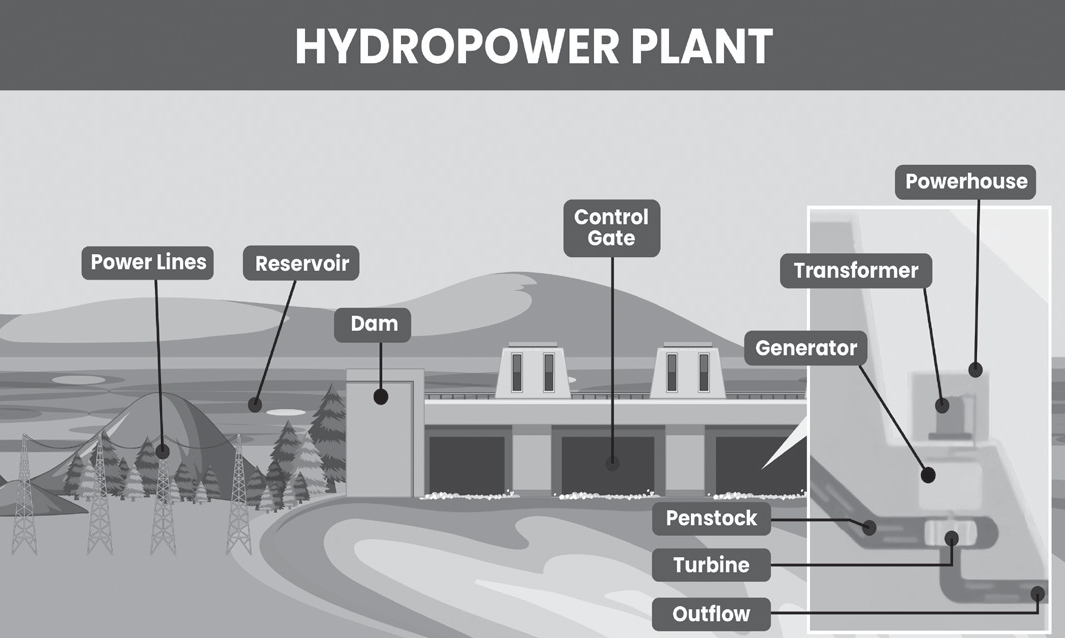
Hyd ropower Plant
Wind Energy
| Wind Energy | No pollution Available for free | Notavailable everywhereor intermittently available. |
| Fans of wind mills visual hazards for flying birds and aeroplanes (visual pollution). |
India’s wind energy sector has experienced significant
growth and development.
Against the overall target of 60 GW, the cumulative installed capacity of wind power was 56.09 GW as on March 2026. This is part of the larger goal to achieve 50% of energy requirement of country through renewable energy by 2030.
India holds prominent positions globally in wind and solar power installed capacities. It ranks 4th in wind power capacity and 3rd in solar power capacity
Overall Renewable Energy Capacity: India is ranked 5th globally in terms of overall installed renewable energy capacity. This highlights the country’s commitment to expanding its renewable energy infrastructure.
Renewable energy sources contribute significantly to India’s total installed power generation capacity, accounting for approximately 34% of the total capacity.
National Wind-Solar Hybrid Policy
The National Wind-Solar Hybrid Policy, introduced by India’s Ministry of New and Renewable Energy in 2018, aims to foster the development of hybrid projects combining both wind and solar energy.
The policy encourages the establishment of new hybrid projects as well as the hybridization of existing wind or solar projects.
Hybrid projects are encouraged to integrate both wind and solar energy at both AC and DC levels, enhancing overall efficiency.
The policy allows flexibility in determining the proportion of wind and solar components in hybrid projects, accommodating varying resource availability and project requirements.
Power procurement from hybrid projects is facilitated through a transparent tariff-based bidding process, ensuring fairness and competitiveness.
To be recognized as a hybrid project, one energy resource must contribute at least 25% of the rated power capacity of the other resource.
The overarching goals of the policy include promoting large grid-connected wind-solar hybrid systems, optimizing transmission infrastructure and land utilization, reducing renewable power generation variability, and enhancing grid stability.
MoEF relaxed the lease rent norms for wind power projects
Currently, establishing a wind power project on forest land entails several mandatory charges, including compensatory afforestation charges and Net Present Value (NPV) charges. Additionally, companies were required to pay a lease rent of Rs. 30,000/- per megawatt (MW) for utilizing the land.
The MoEF has decided to relax the mandatory lease rent of Rs. 30,000/- per MW for wind power projects. This means that wind power project developers will no longer be required to pay this additional lease rent.
The reduction in financial burden is expected to encourage more investment in wind power projects.
By eliminating the lease rent requirement, wind power generation costs are likely to decrease.
Encouraging wind power projects aligns with India’s commitment made in the Paris Agreement of 2015, which aims to derive 40% of the country’s power from renewable resources by 2030.
This decision by the MoEF is expected to promote the development of wind power projects, contributing to India’s renewable energy targets and fostering sustainable energy production.
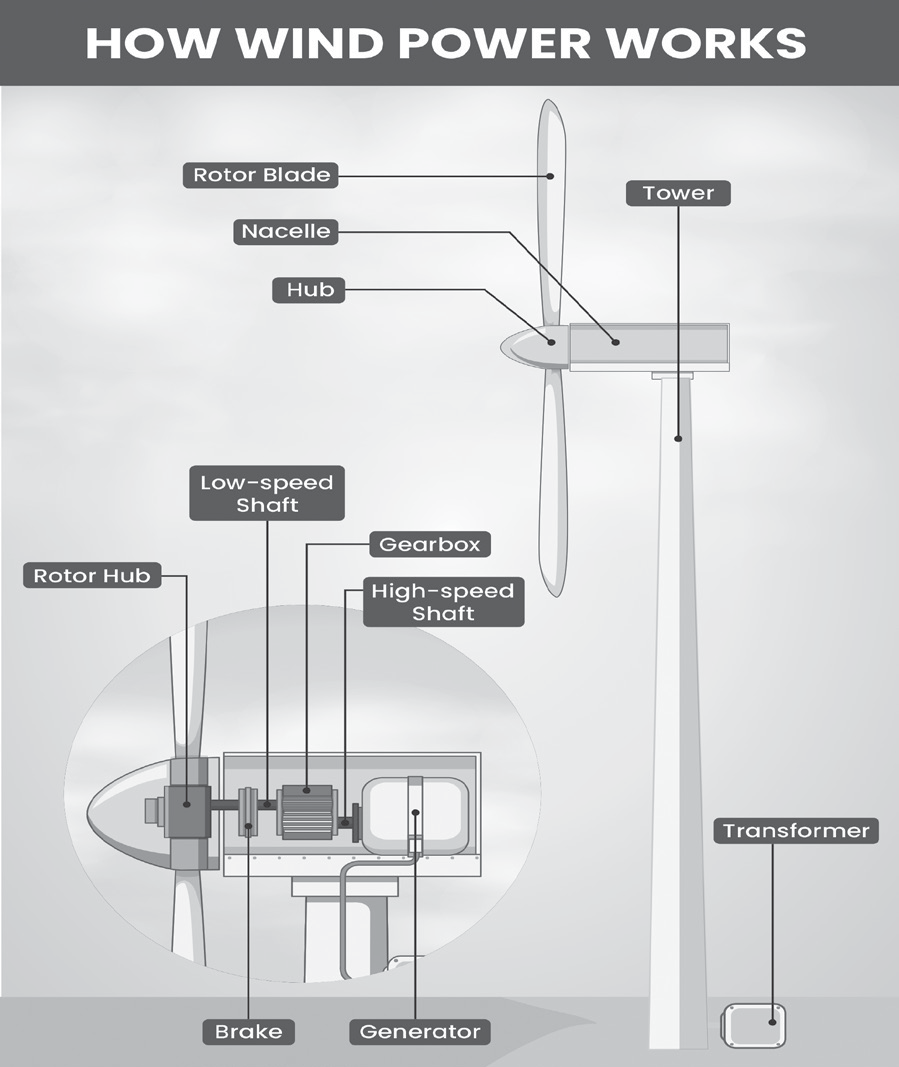
Challenges faced in Renewable Energy Sources
Wind and solar power typically have a lower plant load factor compared to thermal power plants. This means that renewable energy plants need to be of higher capacity to generate the same amount of electricity as thermal plants.
Renewable energy relies on intermittent sources such as sunlight, wind, and tides. This results in fluctuating output, which may not always align with peak demand periods, leading to challenges in matching supply with demand.
For example, solar output peaks during midday hours, while wind output is highest during late evenings and early mornings. However, peak demand for electricity usually occurs during evening hours, which may not coincide with renewable energy generation peaks.
The utilization of renewable energy can lead to lower utilization of existing transmission lines, resulting in relatively increased costs for transmission infrastructure. This aspect can affect the overall cost-effectiveness of renewable energy projects.
Renewable energy sources are not evenly distributed across the country. Certain regions may have higher potential for wind or solar energy generation compared to others, leading to challenges in achieving uniform access to renewable energy resources.
Renewable energy sources may lack round-the-clock dependability and may not be available during peak demand hours. This intermittent nature of renewable energy can pose challenges in ensuring reliable power supply, especially during periods of high demand.
Renewable Hybrid Energy Systems
In response to the inherent limitations of renewable energy sources, there is a growing emphasis on hybrid systems of energy storage and supply. These systems aim to reduce costs and ensure continuous electricity supply, even during peak demand hours.
Components of Hybrid Systems
Hybrid systems incorporate various flexible energy resources that can quickly adjust power supply based on demand. These resources may include hydro or gas-based power generation, as well as energy storage solutions such as batteries.
How They Work
Hybrid systems store excess energy generated during renewable generation hours, such as when solar or wind power production is high. This stored energy is then released into the grid during peak demand hours, ensuring a steady supply of electricity. By doing so, hybrid systems can provide both baseload and flexible 24x7 clean energy.
Cost Advantages
Hybrid systems are becoming increasingly cost-competitive, driven by the declining costs of battery storage technology. An optimal combination of solar, wind, and storage can deliver stable round-the-clock power at competitive rates, even when compared to baseload coal plants. The cost of Li-ion batteries is expected to decrease significantly in the coming years, further enhancing the cost-effectiveness of hybrid systems.
Potential to Replace Coal-Fired Power Plants
Wind-solar storage hybrid systems have the potential to compete with a significant portion of existing coal-fired