Aptitude
Aptitude
Aptitude is an essential aspect of competency, determining an individual's capability to perform specific tasks at a certain proficiency level. It is often associated with talent and reflects one's ability to interact with the environment and execute particular behaviors. The term aptitude originates from the Latin word ‘Aptos’, meaning "suited for" or "fitted for".
• It is described as an innate or natural ability to develop a specific skill or proficiency in the future through proper training. Aptitude can be either mental or physical and is also recognized as the inclination or quickness to excel in a particular domain. It represents an individual's current abilities, which indicate their potential for future growth and achievement.
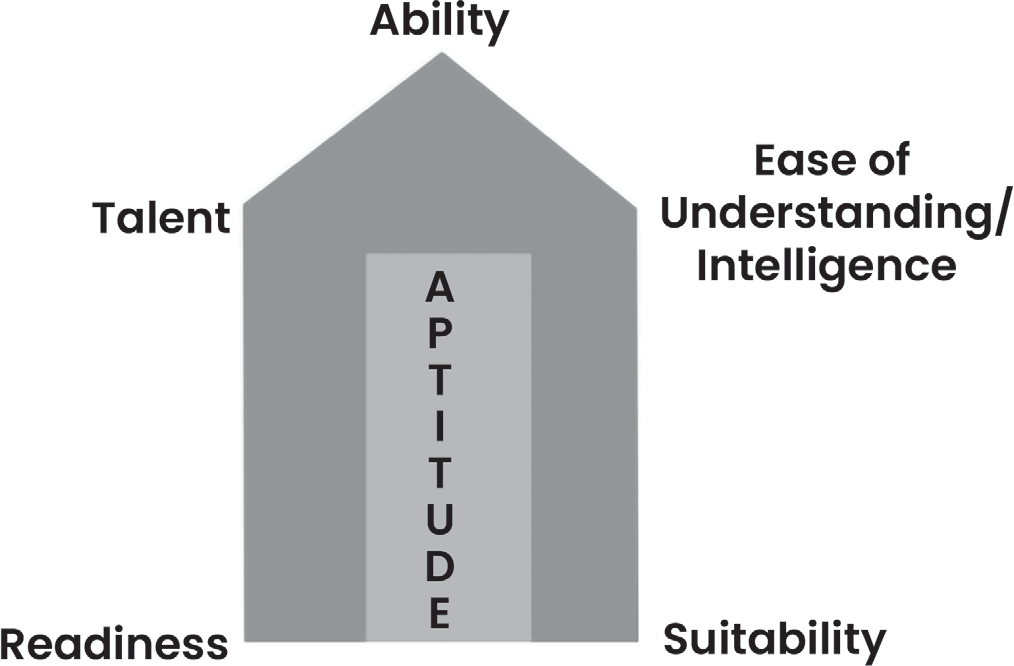
Figure: Characteristics of Aptitude
• Mental Aptitude
• A student’s ability to learn languages depends on their cognitive aptitude.
• Examples include verbal ability, mathematical reasoning, and creativity.
• Physical Aptitude
• Sachin aspired to be a fast bowler but lacked the required height. However, he possessed the ability to play bouncers exceptionally well.
•
Muttiah Muralitharan’s **naturally twisted arm** enabled him to **deliver remarkable spin** while bowling.
Features of Aptitude
Aptitude serves as an indicator of an individual’s potential capabilities.
It arises from the interaction between heredity and environment. While people are born with certain inherent abilities, their surroundings either facilitate or obstruct the development of these abilities.
Aptitude encompasses various traits that influence learning, such as intelligence, achievements, personality, interests, and skills.
It is always oriented towards future possibilities.
With the right training, aptitudes can be nurtured and developed to enhance an individual's capabilities.
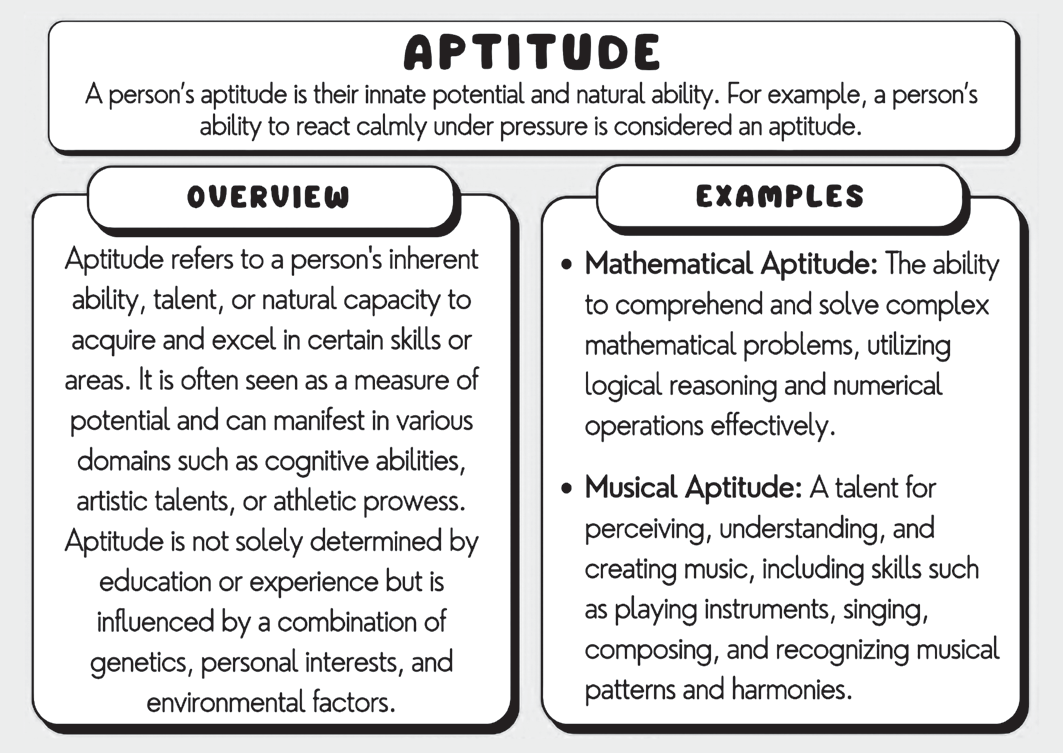
Aptitude, Ability and Skill
Aptitude refers to the things that one can learn in the future. Aptitude or talents are things you can do naturally, that come easy to you often requiring little thought or effort to accomplish. It can become a skill if one gets appropriate training.
• For instance, a child is good at numbers so it is an aptitude. If trained, the child can become a mathematical genius and become professor.
• Abilities refer to the things that one can do now.
• For example, person has learned to drive, but practice will lead to the skill of driving at difficult and crowded places.
• Skills refer to things an individual has learnt to do in the past. Skills come from knowledge and practice. Skills are something that you can learn and develop.
• For example, children develop writing skills
during schooling and use it throughout life.
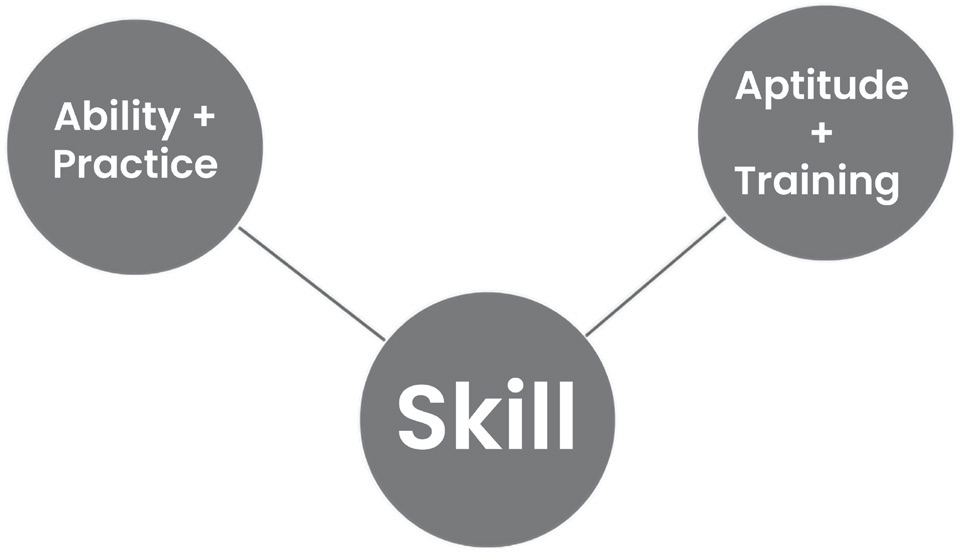
Figure: Relation between Ability, Aptitude and Skill
Aptitude and Interest
Aptitude and Interest
Interest reflects the things that you like to do. Interest is liking and having positive emotion towards anything regardless of skill or aptitude.
• Interests are the result of what you do, what you learn and whom you know. These factors change greatly over time as your knowledge and experience grows.
Whereas the aptitudes are the result of inheritance and early development.
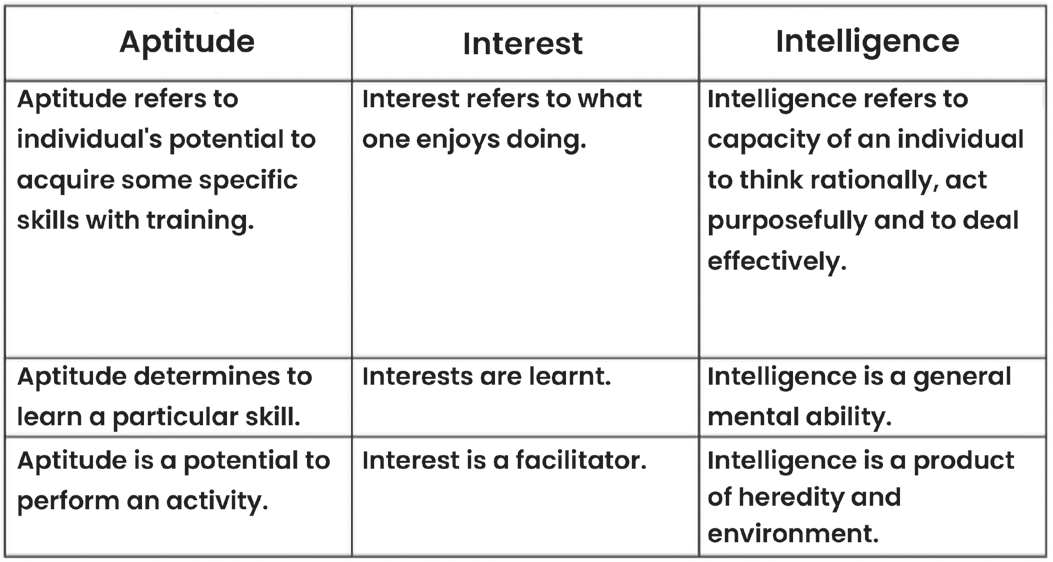
Figure: Comparing Aptitude, Interest and Intelligence
Aptitude and Intelligence
• Intelligence refers to an individual's ability to think logically, act purposefully, and adapt effectively to their surroundings. In contrast, aptitude is an innate or natural capacity to develop a specific skill or ability in the future with proper training.
• Aptitude has a limited scope, focusing on specific areas of potential, whereas intelligence has a broader application across various domains.
• Aptitude is future-oriented, as it signifies the potential for learning and skill development. Intelligence, however, reflects present cognitive abilities, determining what a person currently knows and can accomplish in different fields.
• Aptitude indicates the level of proficiency a person can reach with training, whereas intelligence tests assess existing cognitive abilities to predict success in various intellectual or problem-solving tasks.
Aptitude and Attitude
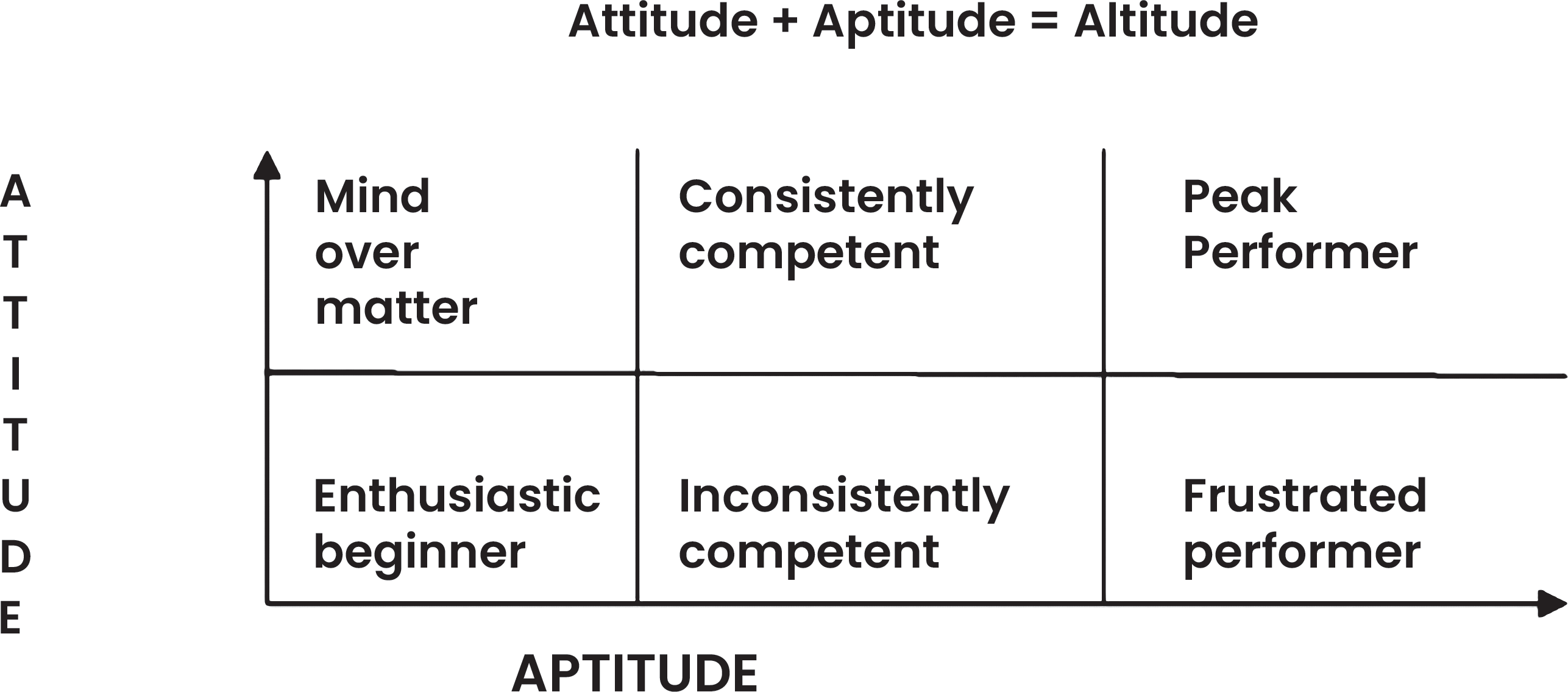
Figure: Aptitude-Attitude Matrix
| Basis of Difference | Aptitude | Attitude |
| What is it? | Aptitude is a person’s natural ability to learn something. | Attitude is a person’s feeling, opinion or perspective about something. |
| Nature | Aptitude is related to talent. | Attitude is related to character and personality. |
| Mental vs. Physical | Aptitudes can be mental or physical. | Attitudes are mental. |
Ethics Morality and Aptitude Moral Aptitude
Ethics/Morality and Aptitude: Moral Aptitude
Ethics and aptitude are closely connected, both playing a crucial role in shaping an individual’s behavior.
• Ethics pertains to the principles and values that govern our decisions and actions, while aptitude refers to a person’s natural talent or ability to perform specific tasks efficiently. Moral or ethical aptitude is the innate tendency to act ethically, which can be further enhanced with training.
• A person's aptitude may influence their ethical behavior, as they are likely to act in ways that align with their strengths.
• Likewise, ethical values can impact aptitude, leading individuals to prioritize moral principles over their inherent skills in certain situations.
• The relationship between ethics and aptitude is further nuanced by individual differences in ethical values and abilities.
• For instance, someone with a strong aptitude for science may prioritize environmental conservation over scientific advancements due to their ethical beliefs.
• In such cases, conflicts may arise as individuals struggle to balance their natural talents with their moral convictions.
• Moral Character and Rational Decision-Making
• Rational decision-making involves assessing the costs and benefits of different choices and selecting the one that maximizes benefits while minimizing costs.
• A person's moral character influences how they weigh these factors in decision-making.
• For example, an individual who values honesty highly may choose to tell the truth, even if it is not in their personal interest.
• Conversely, someone lacking strong ethical principles may be more inclined to deceive others to avoid negative consequences.
• Moral Character and the Welfare of Society
• Acting in society's best interest requires making choices that benefit the collective well-being.
• Moral character shapes how individuals define
and pursue societal good.
•
For instance, someone who deeply values social justice may support policies that uplift marginalized communities, even at personal cost.
• On the other hand, an individual with self-serving motives may prioritize policies that serve their own interests, even if they disadvantage others.
• Conclusion
• The relationship between ethics and aptitude is intricate and multi-dimensional. While they often complement each other, there are instances where they may clash.
• Developing strong ethical values and moral character can refine an individual’s aptitude and encourage ethical conduct.
A society that upholds ethical principles and moral integrity is more likely to thrive and achieve long- term, sustainable progress
Aptitude Realisation and Identification
Aptitude Realisation
Recognizing one's aptitude is a crucial step toward building a fulfilling and successful career. However, many individuals find themselves stuck in professions that do not align with their true talents. Despite gaining financial success and recognition, they may lack the natural ability or passion for their chosen field.
Career choices are often influenced by family
expectations, rather than individual aptitude.
A doctor's child is expected to follow in their parent's footsteps, and children from business families are often guided into family enterprises from an early age.
This trend is also observed in Indian bureaucracy, where many individuals enter the system by chance rather than due to their inherent skills.
• To truly realize one's aptitude, three key steps are essential:
• Accurate Identification of one's natural talents and abilities.
• Commitment and determination to pursue a career aligned with one's aptitude.
• Social and cultural aptitude also play a significant role in realizing one’s potential.
• All three aspects—identification, commitment, and social/cultural aptitude—are essential for success. Even if two are present to a lesser extent, a strong dominance of one can still lead to achievement.
• For instance, personalities like M.S. Dhoni and Ranbir Kapoor have excelled in their respective fields due to their dominant aptitude, despite varying levels of the other factors.
Aptitude Identification
• The first step in realizing one's aptitude is accurately identifying it. A single well-informed decision can significantly impact a person's life.
• For example, Sachin Tendulkar initially aspired to be a fast bowler, but he soon recognized that his physical and mental aptitude aligned better with batting rather than bowling.
• Aptitude identification can be done through both
informal and formal methods:
• Informal methods begin with students making educational choices that shape their future. Their interests, attitudes, and performance in specific
fields during school and college often indicate their natural aptitude. Family, teachers, and friends can also recognize their potential based on their responses to various subjects and activities.
Formal methods involve aptitude testing, which is specifically designed to assess an individual’s natural talents. These tests not only assist organizations in selecting the right candidates for jobs but also help individuals understand their strengths and weaknesses. Aptitude tests evaluate multiple abilities using an aptitude battery, which helps determine a person's inherent capabilities
Aptitude for Civil Services
Aptitude for Civil Services
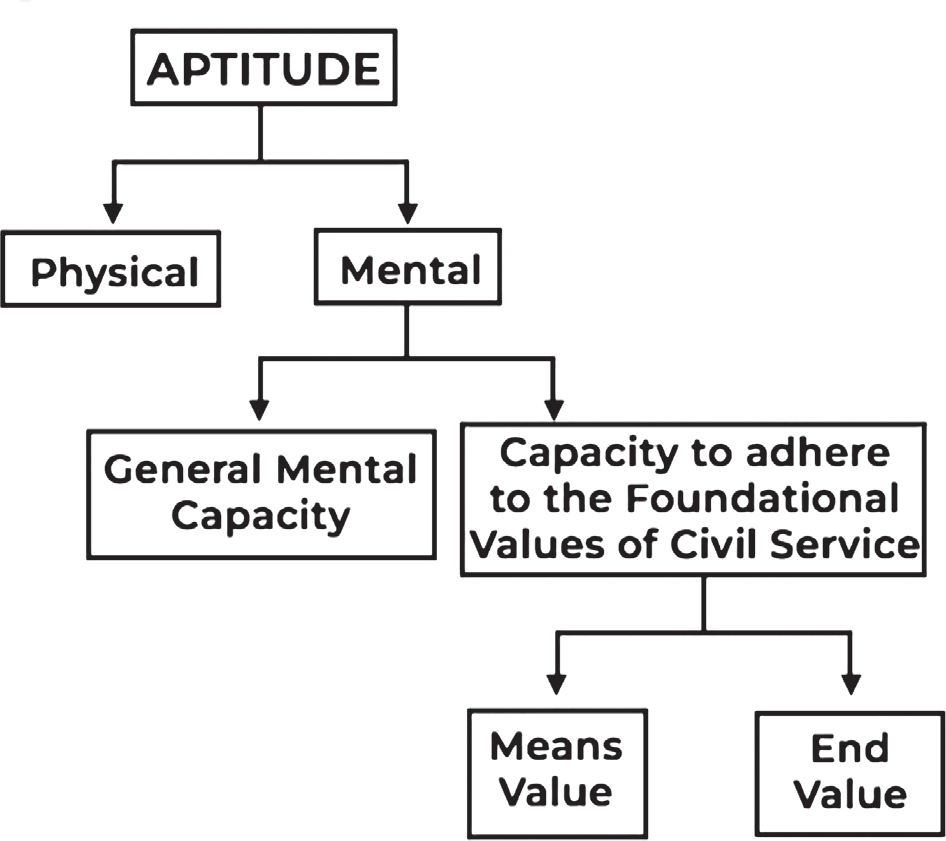
Figure: Aptitude for Civil Services
Aptitude for Civil Services has two dimensions i.e., physical and mental aptitude. Physical aptitude refers to certain conditions which are important for serving
the government and people. For example, minimum height criterion for Indian Police Services and good eye sight is required for Indian Railway Services.
• Mental Aptitude can further be divided into two categories as shown in the diagram; General aptitude and capacity to adhere to the foundational values of
Civil Services.
• A Civil Servant must have Three Mental Aptitudes:
• Intellectual Aptitude: General Intellectual or Mental Ability refers to an extraordinary capacity or potential demonstrated through cognitive functions such as memory, reasoning, learning speed, spatial awareness, problem-solving skills and the ability to work with abstract concepts and identify connections.
• Moral Aptitude: Ethical or Moral Aptitude is the natural inclination to perform ethical actions, performing excellently especially when trained.
• Emotional Aptitude: Emotional Aptitude or Emotional Intelligence (or Emotional Quotient or EQ) is the ability to understand, use and manage your own emotions and of others in positive ways to relieve stress, communicate effectively, empathize with others, overcome challenges and defuse conflict.
FOUNDATIONAL VALUES FOR CIVIL SERVANTS
• It refers to the core, essential values without which Civil Service (or Bureaucracy) may become a self- service.
• They decide and guide the behaviour in the right direction. Thus, it is important that UPSC recruit only those candidates which have the tendency to follow an ethically correct path.
• At its core, Impartiality, Neutrality and Anonymity are the three key foundational values of civil services.
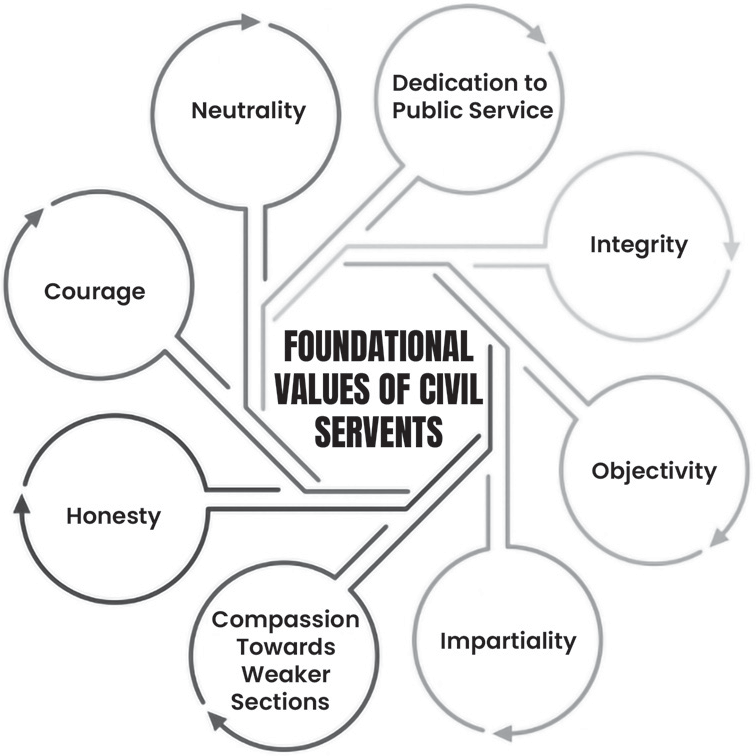
Figure: Foundational Values of Civil Services
• Bureaucracy refers to "governance through offices." Bureaucrats are responsible for implementing government policies by interpreting and executing laws passed by elected officials. After gaining independence, India adopted the Weberian Model of Bureaucracy; however, it now faces challenges in adapting to new paradigms and meeting the demands of a developing nation like India.
• Max Weber supported democracy not because he had faith in the masses but because he believed it provided the greatest dynamism and the best environment for producing strong political leaders. He was critical of authoritarian figures like Bismarck but placed his hopes if any on great political leaders rather than the general population or bureaucrats. His unwavering nationalism led him to prioritize the nation above all else.
• Weber classified legitimate authority into three types:
• Traditional Authority is based on an established
belief in the sacredness of longstanding traditions and the legitimacy of those in power under them.
• Examples include monarchies, patriarchal rule, and Khap Panchayats.
• Charismatic Authority is based on devotion to an individual due to their extraordinary qualities, heroism, or exemplary character, as well as the values or orders they establish.
• Examples include Martin Luther King, Jr., Barack Obama, and Adolf Hitler.
• Rational-Legal Authority is based on the belief in the legality of established rules and the right of those in power to issue commands under those rules.
• Bureaucracy is an example of this type of authority.
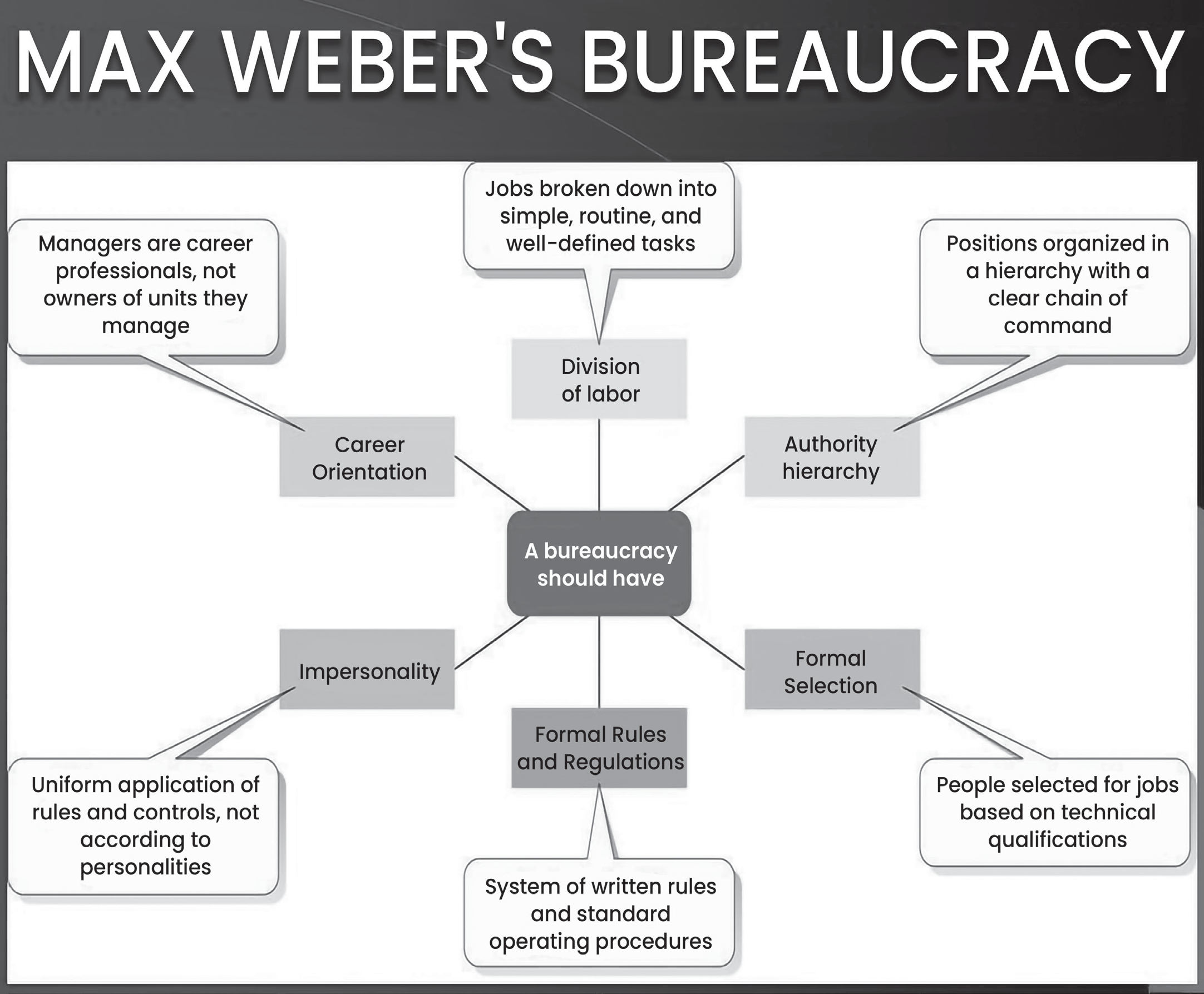
Figure: Characteristics of Max Weber’s Bureaucracy
Political Executive vs Permanent Executive
Need for Civil Service Values
• Every society and its political system operate based on a set of values that are universally accepted by responsible members of the community.
• Since civil services are an integral part of the political system, they are expected to uphold and adhere to these values.
• Values play a crucial role in shaping organizational culture, serving as guiding principles that influence behavior and decision-making.
• In the civil services, maintaining high ethical standards fosters public trust and confidence in governance.
• Given that civil servants possess discretionary powers, it is essential to establish guiding principles to prevent any misuse of authority.
• In contemporary governance, civil servants are directly accountable to citizens, who are now viewed as customers. They must respond effectively to the moral expectations and ethical concerns of the public.
| Criteria | Political Executive | Permanent Executive |
| Derives Authority | from people, by virtue of elections. | From Technical and Administrative expertise. |
| Tenure | Temporary and Short | Permanent and long |
| Contact with Public | More | Less |
| Nature | He has knowledge of what people’s expectations but rarely an expert. He therefore relies on permanent officials for facts and advice. | Usually a generalist. Sometimes out of ‘touch’ with the problems of general public, because of ‘ivory tower’ approach, ‘colonial’ mindset. |
| Function | Policy Making | Policy Implementation |
| Role | Often depends on Policy advice | As principal advisor to minister, an officer must render advice without fear/ favours. |
| Core Interest | Interested in positive action in short- term popular decisions rather than going for a long-term planning. | They ensure long term constitutional and public interests are secured. Officer must briefly record all decisions and instructions to protect own career in long term after CAG audit or media-expose. |
Are they Different from Personal Values?
• Values are closely associated with cultural norms but they are more universal and abstract in nature. In certain societies, norms embody values such as respect and support for friends and family.
• Cultural values vary across different societies, and individuals also hold distinct values. Since values shape behavior, they serve as a foundation for achieving organizational objectives.
• In bureaucracies, maintaining high ethical standards in public service fosters public trust and confidence.
• Conversely, the weak application of values or the promotion of inappropriate values can undermine democratic governance, leading to ethical dilemmas and complex decision-making challenges.
• Additionally, different sectors within the public service operate under varying sets of values. One of the key responsibilities of managers and leaders is to harmonize, reconcile and manage these differing values.
• Several challenges confront traditional public service values, including:
• New governance models
• Decentralization of authority
• Market-driven reforms
• Political influences and expectations
• Increased reliance on specialized agencies
• Geographical decentralization and relocation
• Evolving human resource policies and recruitment practices
• Emerging technologies and advancements in information sharing
• The process of decision-making is just as crucial as outcomes, and public trust depends on the consistent application of democratic values at every stage. In an era of uncertainty and frequent structural changes, values act as a guiding framework for governance.
• While personal values may differ from organizational values, maintaining ethical standards ensures continuity and integrity in public service.
• If the public service does not adhere to a well- defined value system, it risks losing public trust and credibility.
Values for Civil Services
• Defining the values that public services should uphold is challenging due to the diverse historical, social, and cultural influences shaping different regions across the world.
• However, as per the Second Administrative Reforms Commission (ARC), certain principles such as integrity, commitment to public service, impartiality, political neutrality, and anonymity are considered fundamental characteristics of an effective civil service.
•
The commission further asserts that, along with adherence to the Constitution, civil servants must also uphold additional essential values.
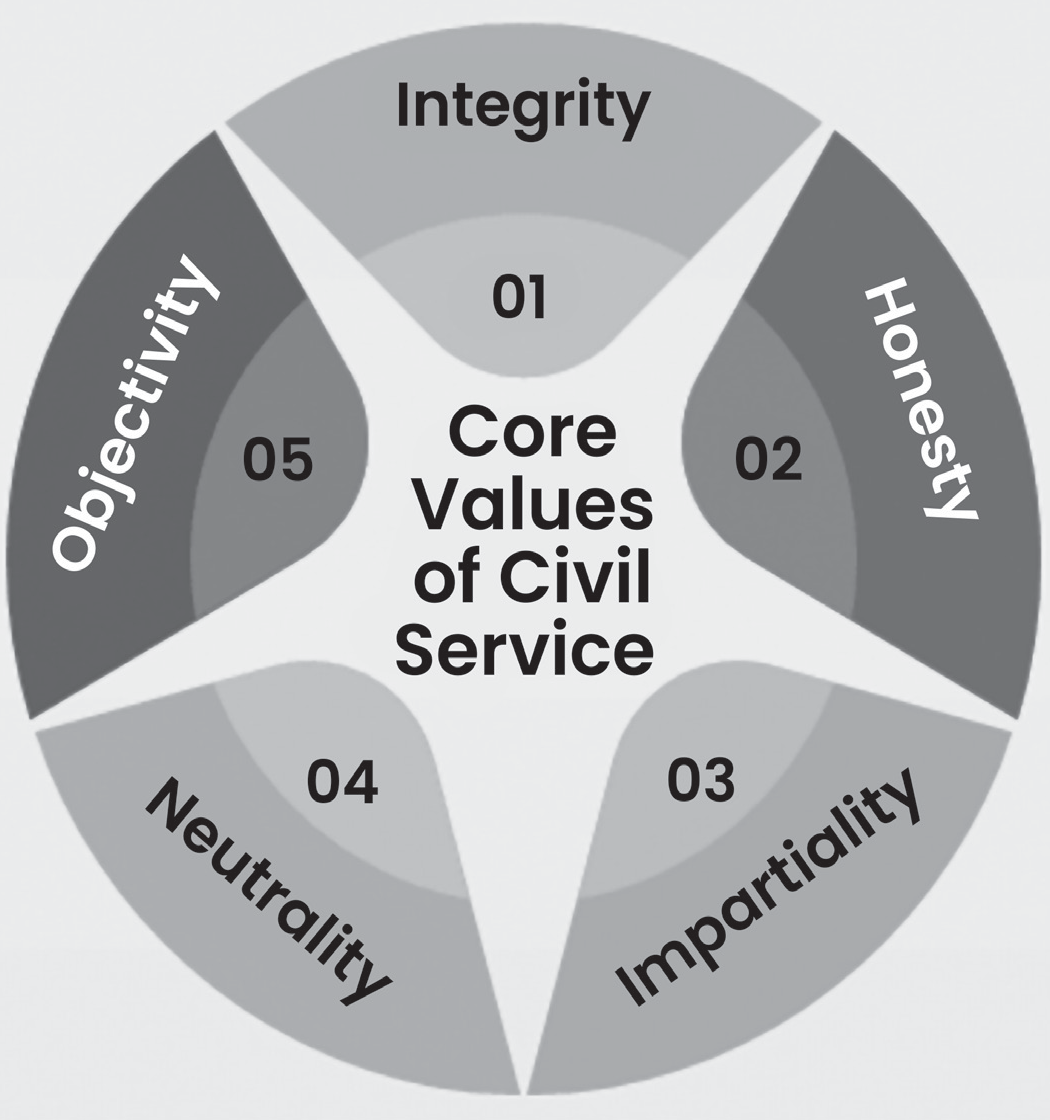
Figure: Core Values of Civil Services
Non Partnership
Non-Partisanship
Non-partisanship is defined as an active lack of allegiance to any political party, organisation or group.
The principle of non-partisanship and political impartiality governs the relations between the political executive and the civil servant.
Civil Servant must not take any active participation in the politics of the day. There might be changes in political leadership but the civil servant will be unfailingly offering technical advice to the political master keeping himself aloof from the politics of the day.
•
Political partiality is passive in nature while political partisanship is active in nature. Partiality does not automatically lead to partisan behaviour.
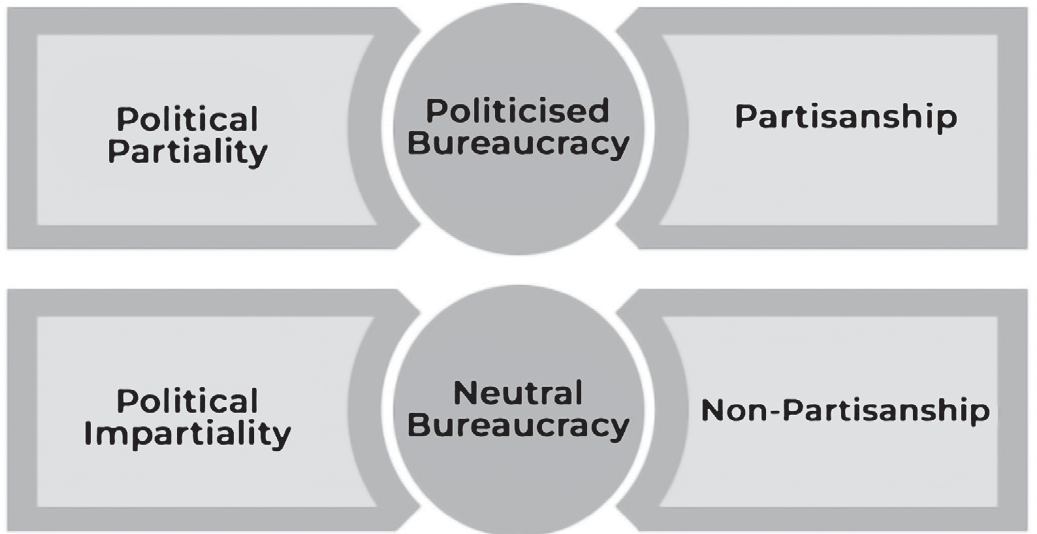
Figure: Politicised vs Neutral Bureaucracy
• The principle of non-partisanship in civil services yields several positive outcomes, such as:
• Enhancing public trust in the neutrality and non- political nature of the civil services.
• Ensuring that ministers, regardless of their political affiliation, have confidence in the loyalty and impartiality of permanent civil servants.
• Boosting the morale of civil servants, as career advancements, transfers and service conditions are determined based on merit rather than political influence.
• This principle is rooted in the politics-administration dichotomy, which emphasizes a clear distinction between the roles of politicians and administrators politicians focus on policy formulation and decision- making, while administrators are responsible for policy implementation. It is essential that neither interferes in the other's domain. For instance:
• Mr. Kuvempu, during his tenure as Vice-Chancellor of Mysore University, did not misuse his authority to favor his son in the BA examination.
• Judges voluntarily withdraw from cases where they
perceive a conflict of interest to uphold impartiality.
• Erosion of Political Neutrality and Non-Partisanship
• In recent decades, these core values of civil services have been increasingly undermined.
• This decline has led to the development of personal affiliations between ministers and civil servants, resulting in the politicization of civil services. Such politicization has contributed to corruption and a weakening of the spirit of public service, which
is fundamental to any effective administrative system.
• Few instances of such breach and their impacts:
• Two of the most shameful examples of politicised bureaucracy are the 1984 anti-Sikh riots and the Gujarat riots of 2002.
• All the major scams in the last decade in India (2G Scam, Commonwealth Scam, Coal Gate Scam etc.) shows politician-bureaucrats nexus in its core.
• There are some civil servants who were very close to ministers. E.g.: Rakesh Asthana, Nripendra Misra (even got ministerial rank) etc.
• Consequences of Politicisation of Civil Services
• It has fostered corruption and diminished the spirit of public service, which is fundamental to an effective administrative system.
• Ministers frequently misuse their authority to transfer, suspend, or take disciplinary action against civil servants who do not align with their interests.
• This has led to the rise of factionalism, internal conflicts, and caste-based divisions among both ministers and civil servants.
• The absence of mutual trust between politicians and civil servants, coupled with declining public confidence, has created an environment of instability and disorder.
Objectivity
Objectivity
• The Principle of Objectivity suggests that decisions and actions should be grounded in facts and evidence, free from emotions, biases or personal prejudices.
• Objectivity in Governance refers to the commitment of public authorities to rationality, legality, and established standards, procedures and norms within institutions.
• As per the Nolan Committee and the Second Administrative Reforms Commission, objectivity is a fundamental attribute in public administration. It is a core philosophical principle associated with reality and truth, with varying definitions across different sources.
• In general, objectivity refers to a state or quality where truth remains unaffected by an individual's biases, interpretations, emotions or imagination.
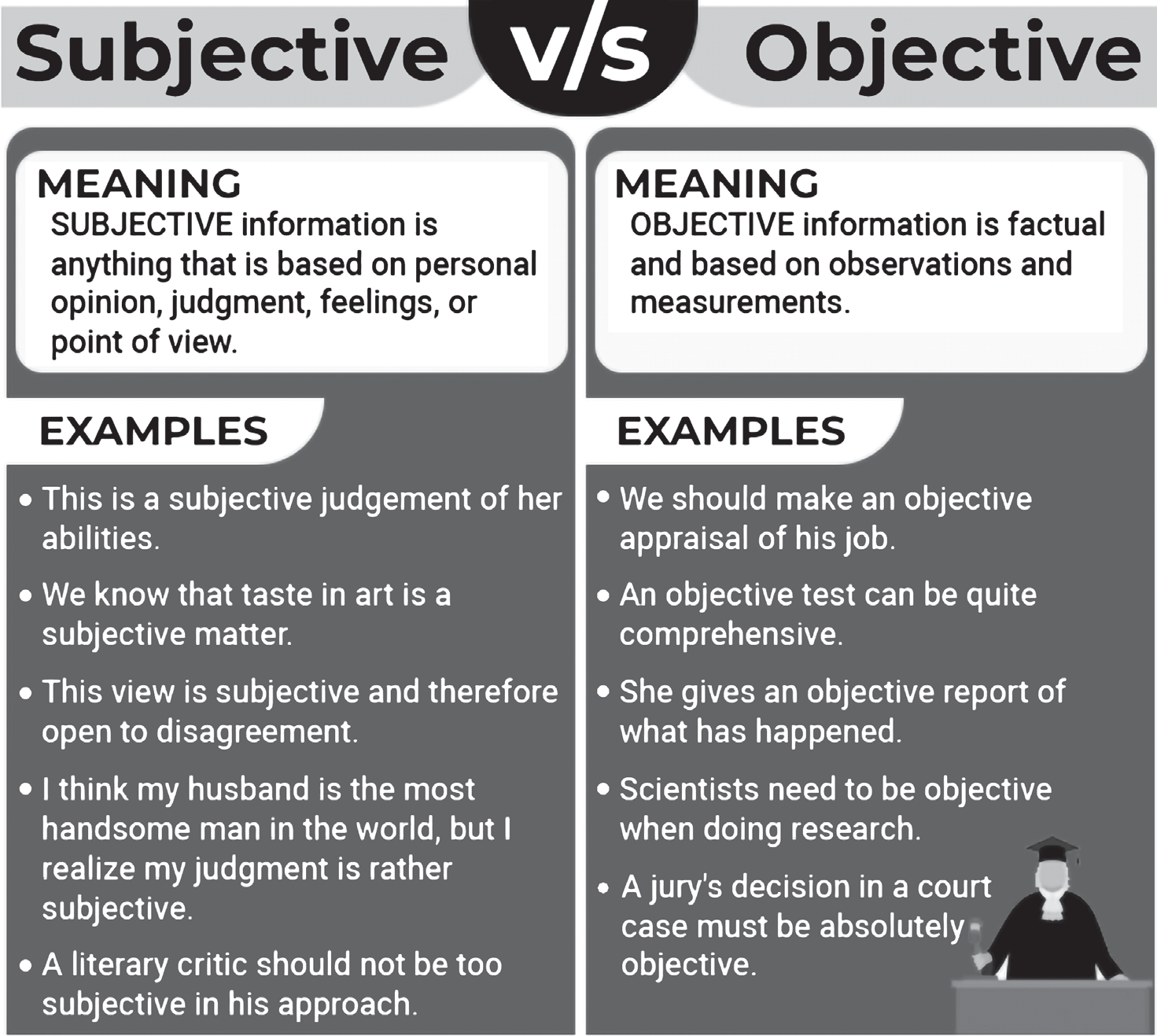
Figure: Subjective vs Objective
• Max Weber introduced the concept of Legal-Rational Bureaucracy, where legitimacy stems from a structured legal framework and rational decision-making.
• A decision is deemed rational when the means are specifically designed to achieve a defined objective. It is considered legal when authority is exercised through a standardized system of rules and procedures applicable to all.
• To uphold rationality and legality, a civil servant must maintain objectivity, as it reinforces the legitimacy of bureaucracy.
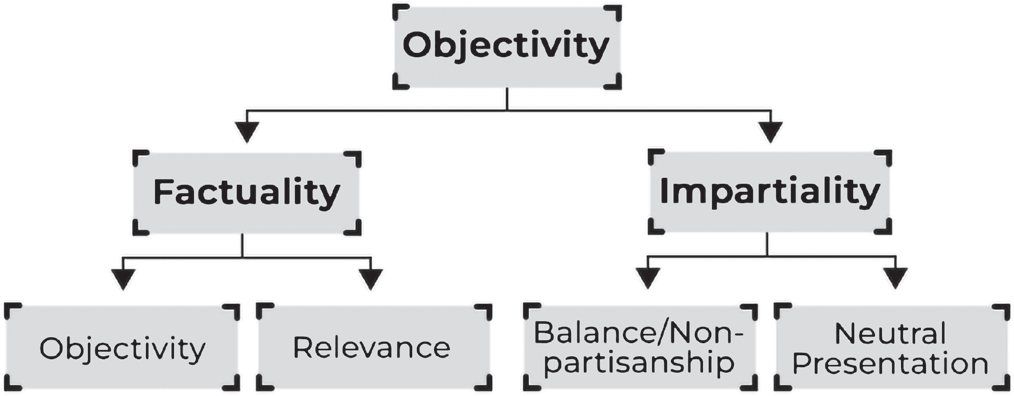
• An objective civil servant is expected to provide accurate information and advice to all stakeholders, ensuring it is based on factual evidence and data. They must present available options and facts impartially, make merit-based decisions, and duly consider expert and professional recommendations.
• Aspects of Objectivity:
Figure: Objectivity and its subdivisions
IS IT DESIRABLE AND POSSIBLE TO ALWAYS REMAIN OBJECTIVE? Arguments Supporting Objectivity • Prevents Emotional Influence on Judgment ¾ Objectivity ensures that personal emotions do not cloud decision-making. ¾ ¾ • Example: Signing a contract under family pressure or granting undue favors to relatives may result in corruption and nepotism. • Aids in Resolving Ethical Dilemmas Helps in making morally sound decisions when faced with conflicting values. Example: Prioritizing the rescue of those in greatest need during a crisis.
• Facilitates a Common Understanding Among Stakeholders ¾ Promotes clarity and agreement among individuals, government, and civil society. • Example: Convincing slum dwellers near chemical plants to relocate for their own safety. • Enhances Situational Awareness in Duty Execution Helps officials maintain clarity while handling complex situations. • Example: Maintaining law and order during ethnic conflicts. • Encourages Integrity and Fairness in the Workforce ¾ Ensures services are delivered with equity and inclusivity. • Example: Providing public services without bias or favoritism. • Crucial in Scientific and Policy Decisions • Ensures that evidence-based decisions are made, reducing unintended negative consequences. ¾ Example: Ignoring crucial data or alternative viewpoints can lead to misguided policies. • Strengthens Democracy and Informed Citizenship ¾ Upholds democratic principles by countering authoritarian tendencies. ¾ Encourages rational decision-making over autocratic rule
Arguments Against Objectivity • Absolute Objectivity is Neither Possible nor Desirable ¾ The Constitution itself is not entirely objective, as it incorporates positive discrimination in favor of marginalized groups like SCs, STs and women to ensure social justice. • Can Lead to Inefficiency and Delays in Public Service Delivery ¾ Strict adherence to objectivity may cause bureaucratic lethargy and red tape, leading to inefficiencies. • Example: The death of a teenage girl in Jharkhand due to the rigid enforcement of Aadhaar-ration card linkage highlights the downside of excessive objectivity. • Many Modern Theories Reject Absolute Objectivity ¾ These perspectives argue that an intelligent and perceptive person cannot be completely objective, as personal biases and interpretations inevitably shape decision-making.
• Often Referred to as ‘Clerical Objectivity’
• In decision-making roles, strict objectivity can be seen as mechanical and detached.
• Example: If two individuals commit the same crime, imposing an equal fine on a poor and a rich person may not be fair due to their differing financial conditions.
• Human Nature is Naturally Subjective
• Individuals tend to be partisan and self-interested, selectively interpreting facts that support their own beliefs.
• Scientists and Politicians May Struggle with Objectivity
• Both fields often involve vested interests, making complete objectivity difficult.
• Can Suppress Innovation and Creativity
• Overemphasis on objectivity may stifle creativity and field-level problem-solving.
• Objectivity is Impossible Without Reliable Evidence
• If valid information is denied, manipulated, or unavailable, achieving true objectivity becomes unrealistic.
Challenge of Inculcating Objectivity?
Openness: Objective approach is possible through remaining open to new evidence and alternative viewpoints.
Critical Thinking: Archaeological Survey of India (ASI) began gold hunting in Unnao district of Uttar Pradesh, on order of a union minister who believed in a ‘baba’. They showed lack of critical thinking by blindly following dictates of higher authority.
Right to Review Decisions: within judicial
/ administrative procedure, there should be mechanism for appellate board e.g., in taxation, land acquisition etc.
Training: Training imparts right guidance to the people who are delivering the services. This also ensures that public servants know what all needs to be done.
Right to be Heard: often officers don’t hear the complaint or opinion of people properly and just do the things that are in their mind. Hence new schemes should have ‘social audit / public hearing’ component.
• Transparency: e.g., Right to Information Act. Bureaucrat will think twice before taking subjective/discretionary decisions, fearing that he’ll have to answer it if someone files an RTI.
• Conclusion
• Although objectivity is important, one must approach with caution and keep both the text and the context in mind in order to come up with the best decision. Because of this, it is argued that pragmatism and objectivism should be combined rather than using a pure form of objectivity.
Impartiality
Impartiality is a principle of justice holding that decisions should be based on ‘objective’ criteria, rather than on the basis of bias and prejudice.
Impartiality thus means absence of prejudice and bias. It is about acting without bias of citizen’s nature (rich vs poor) or social pressure (caste,
religion etc).
| Bias Bias is a preference or inclination towards someone at the cost of others. It is something which inhibits impartial judgements. Bias leads to partiality. It may be positive or negative. | Prejudice Prejudice or prejudgement i.e., making a decision before becoming aware of the relevant facts of a case referring to an unreasonable attitude towards someone. It is a clear negative feeling towards someone which is not based on actual experience. |
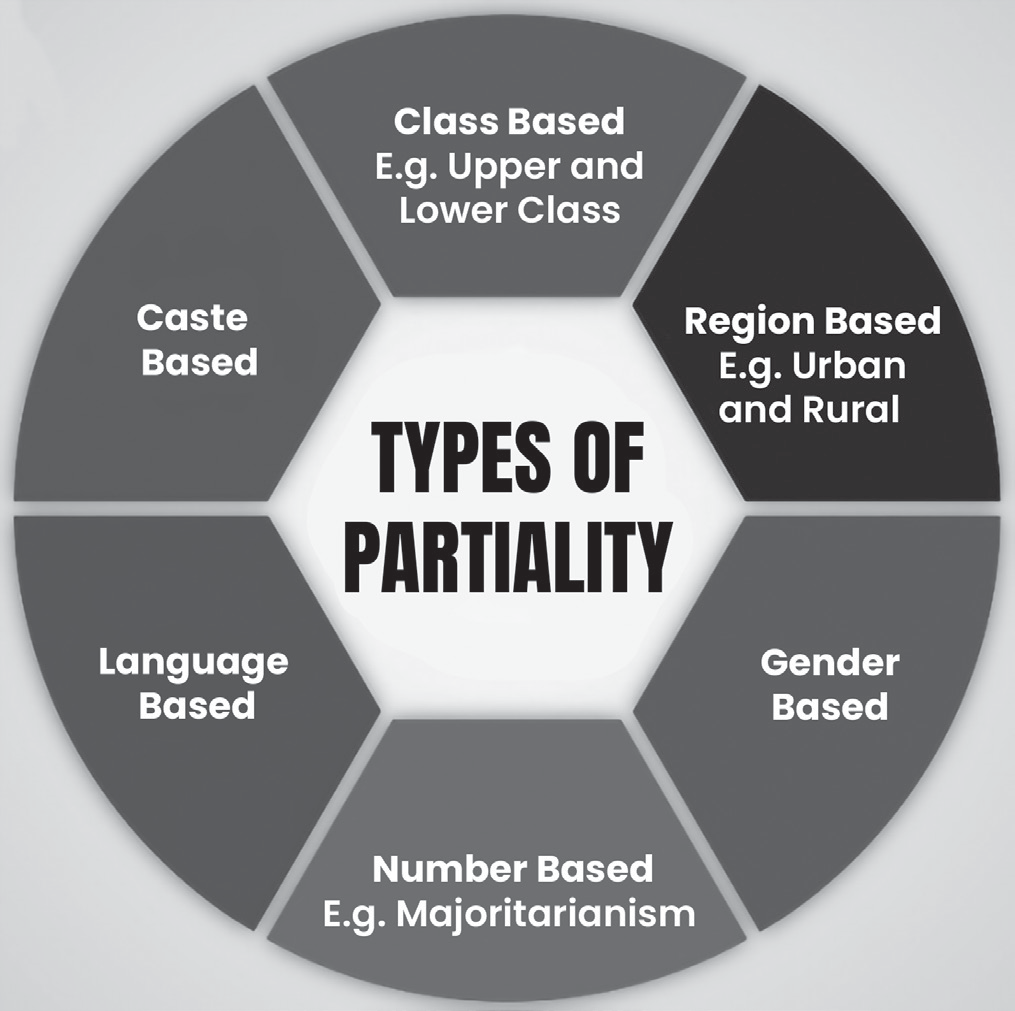
Figure: Types of Partiality
• Examples associated with Impartiality:
• Appreciating a movie that goes against our culture or presents a critique of our culture.
• Supreme Court gave Ajmal Kasab a fair trial despite him participating in Mumbai Terror attacks.
• Judges recusing themselves from cases where they feel there is a conflict of interest.
• Need for Impartiality
• It reposes trust in the government.
• It makes administration more legitimate and effective.
• It establishes the Idea of Justice. Justice is based on the idea of that judgements should not be made based on bias, prejudice or favouring one person over another for wrong motives, but rather on objective standards.
• It enables performance of duties in a fair, just and equitable manner with diversity and equality.
• It avoids unreasonably favours or discrimination
against any person or class of persons.
• Say, for instance, while choosing road contractor, objective standards will be used in all respects.
• It avoids controversy during tenure in office. The work’s objectivity will keep problems out of the public eye.
• For instance, if a public official approves rally for one political party but not for another. It is possible to prevent this by being impartial.
• It will help in maintaining harmony and representativeness between social groups like caste, religion, language or ethnicity, especially
of a minority.
• Minority views may be muted, especially in a diverse nation like India, if a civil worker shows a bias toward the majority for personal gain.
• An impartiality brings better credibility and
persuasive ability in negotiations, for example, N Ravi, an interlocutor was effective in northeast insurgency.
• In civil services, impartiality works at two levels, Political and Public.
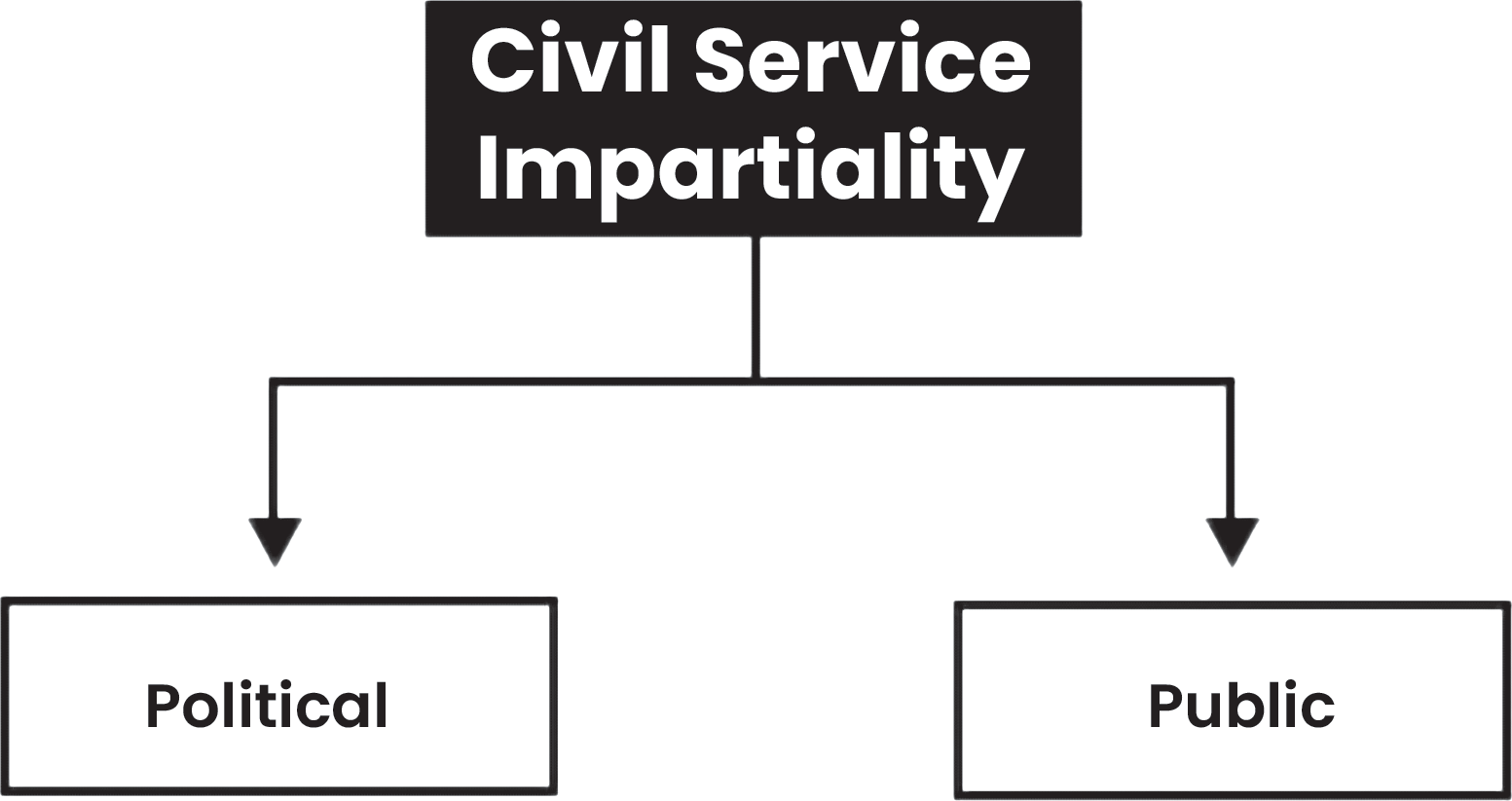
| Political Impartiality Political impartiality requires a civil servant to perform their duties to the best of their ability, regardless of their personal political beliefs. In public administration, political impartiality means making decisions solely on merit and serving both governments of different political parties and the general public** with the same level of dedication and fairness. Civil servants must act in a manner that earns and maintains the confidence of ministers. They should remain neutral, without favoring any particular politician or political ideology. Their focus should be on the office or position rather than the individual occupying it. Example: In 2013, the Code of Conduct for Ministers (issued by the Ministry of Home Affairs) was amended (Section 2) following the Second Administrative Reforms Commission's recommendations: Ministers must uphold the political neutrality of civil servants and must not pressure them into actions that would conflict with their official duties and responsibilities. | Public Impartiality Importance of Public Impartiality: Simply putting, public impartiality means treating all individuals equally without favoritism or bias. This principle stems from the constitutional values of equality and merit. Example: The Right to Equality (Articles 14 to 18 of the Indian Constitution) upholds equality before the law, prohibits discrimination (Article 15), and ensures equal opportunity in public employment (Article 16). A civil servant must perform their duties in a manner that is fair, just, and equitable, demonstrating their commitment to equality and diversity. Significance of Public Impartiality: Strengthens bureaucratic legitimacy and authority. Enhances credibility and trustworthiness in governance. Ensures a structured and disciplined administration. Helps resist political pressure and interference. Empowers civil servants to question authority, irrespective of the person's influence or stature. Example: High-profile cases like Aryan Khan (Son of Shah Rukh Khan) and Shashikala demonstrate the application of impartiality in law enforcement and governance. |
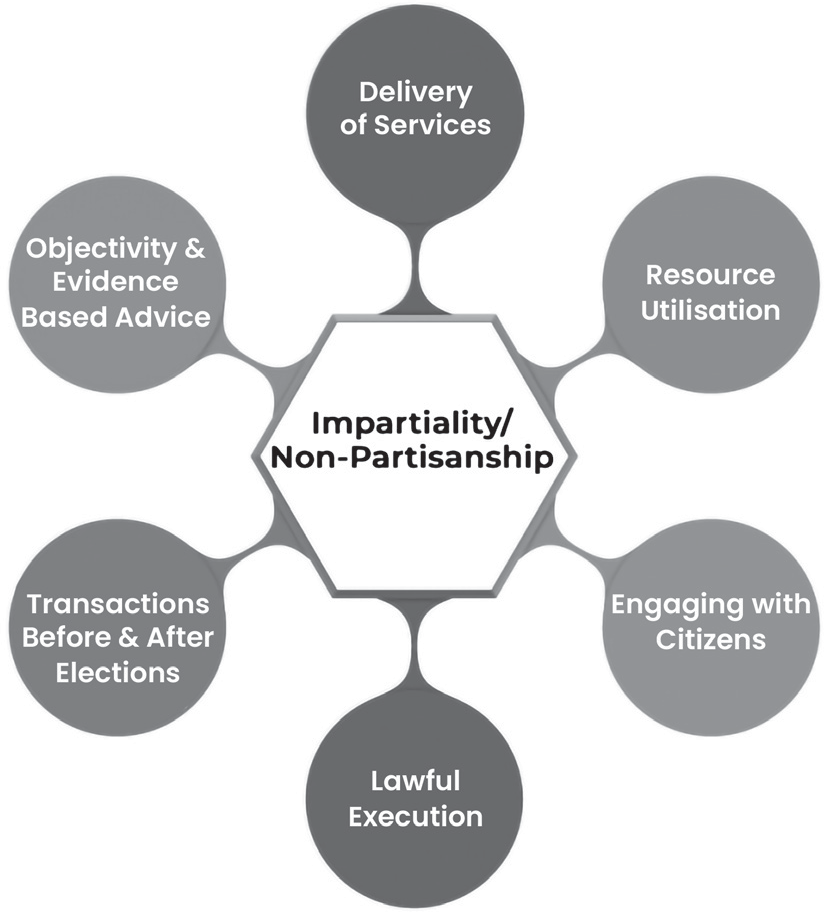
Figure: Benefits of Impartiality and Non-Partisanship
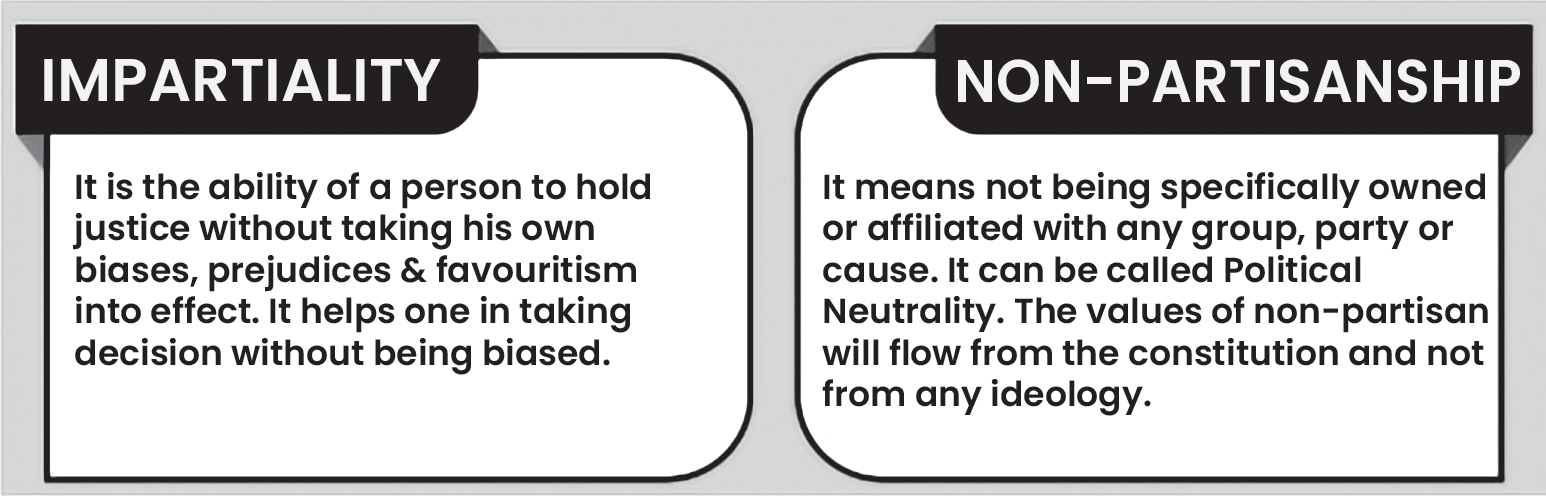
Figure: Impartiality vs Non-Partisanship
• Conclusion
• Impartiality requires actions to be taken strictly in accordance with established rules and regulations. Max Weber emphasized laws over human discretion as the foundation for rational decision-making.
• However, in situations where necessary, wisdom and judgment should also be applied. Even the civil service conduct rules empower officials to use their discretion and analytical ability to make the most competent and fair decision when rules are unclear.
Neutrality
Neutrality
Max Weber's bureaucratic theory views bureaucracy as a neutral tool that can be utilized by whoever assumes control over it.
Fritz Morstein Marx examines bureaucratic neutrality from both negative and positive perspectives:
Negatively, administrative neutrality does not imply complete detachment or avoidance. Civil servants are required to exercise their best judgment on various policy, program and management issues. Avoiding these responsibilities would mean neglecting their duties. Furthermore, bureaucrats must not become so deeply associated with a particular policy or program that it hinders their ability to function objectively under a different administration.
Positively, neutrality signifies unwavering commitment to professional responsibilities and working diligently for the effective implementation of policies, regardless of the ruling government.
•
Joseph La Palombara defines "bureaucratic neutrality as the administrator’s obligation to remain uninvolved in political conflicts—whether between political parties or within the ruling party. This requires a deliberate and ongoing effort to stay disengaged from political affairs in any form."
• Neutrality signifies that public officials are not subordinate to politicians or any other authority, except for the moral authority of the Constitution.
• It highlights that the Principle of Neutrality grants bureaucrats a degree of independence from both the ruling government's partisan interests and external social pressures that seek to dominate or marginalize others.
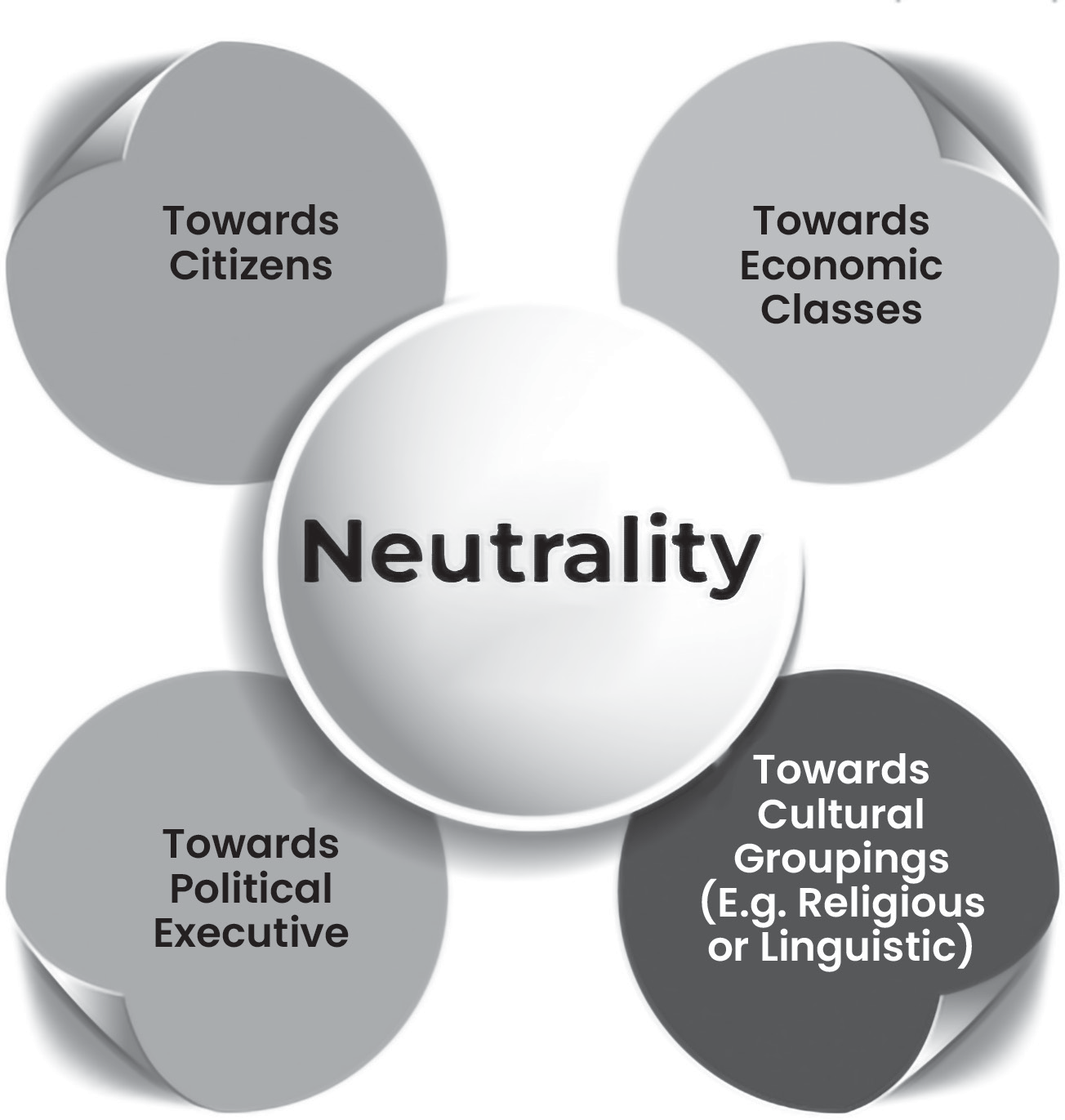
Figure: Dimensions of Neutrality
• Civil Services Neutrality is mainly of three kinds:
• Between Classes- The society is made up of several classes, such as the landlords, capitalists, traders, professionals, clergy and workers. The government is expected to take care of the interests of each one of these classes and to allocate resources to them in an equitable way, for justice, welfare of the poor, and their protection from exploitation, to bring about development. Bureaucratic neutrality means an impartial and objective view of the class structure of society, to secure an equitable distribution of goods and services and helps the party in power, to carry out its social policy as translated into law.
• Between Cultural Groups- A multicultural society like India consists of several groups based on
religion, caste, language, and region. Even in the USA, society is divided between black and white groups. They have many common and conflicting interests. The administration, i.e., the bureaucracy keeps balance between these groups by treating all equally. Here, the bureaucracy is to harmonize and secure the interests of all groups of people.
• Between Political Parties- The struggle for power among political parties is a natural and essential characteristic of a democratic system. The victory of a party in elections means that its manifesto stands accepted by majority of the people i.e. it gets the mandate to implement it. Bureaucracy can perform this function efficiently only when it acts neutrally and impartially. A politically or ideologically committed bureaucracy cannot be expected to act out its role efficiently at all times.
• Neutrality is a state of mind and a psychological attitude. There can be no effective law or rule that can produce it or ensure its presence. Civil servants have to willingly and consciously adopt it, practice it, and maintain it during the course of their administrative work. Neutrality has to be accepted and cultivated as a tradition or convention. It must form a feature of the administrative conscience. In fact, neutrality has to be a part and parcel of the integrity of each civil servant.
• Significance of Neutrality:
• Civil Services Neutrality means that a civil servant will remain politically impartial and non-partisan throughout his career.
• Neutrality means a King of Political Sterilisation
i.e. bureaucracy remaining unaffected by the changes in the flow of politics.
• Neutrality of the public service is a tradition, whose roots can be traced to the administrative systems of Britain, Switzerland Canada, Australia, and several other countries of the world. The ideal of neutrality stands accepted in India also.
• The basic assumptions behind the concept of a Neutral Bureaucracy have been as under:
• It is the product of the Merit System of Recruitment. This system secures a neutral and apolitical public service.
• The advantages of permanence, continuity, reliability and professionalism, which are present in a neutral bureaucracy, far outweigh and neutralize its disadvantages,
i.e. conservation, reluctance to depart from
routine and preference for incremental changes instead of obstructing public policy.
•
It adjusts better with political changes, particularly, with the changes in the rulers.
• It is better equipped to deal objectively with the demands for socioeconomic development of all sections or classes or groups of people.
• It helps the process of growth of a healthy and efficient bureaucracy because political impartiality helps it to concentrate on its own work.
• It helps maintain continuity in administration. It helps the political executive to objectively know the past and to take decisions in the interest of the nation.
To sum up, it can be said that in a democratic system where government keeps on changing, a neutral bureaucracy, in its positive form- politically neutral, and committed to upholding
the values of objectivity, impartiality, the Code Of Conduct and morally valid values act as a vital source of strength for an efficient functioning of the Government of this state.
• In the present scenario, bureaucratic neutrality has eroded. After every election, the newly elected government often initiates large-scale transfers of officials appointed under the previous administration, as seen in Uttar Pradesh.
• Over time, bureaucracy has increasingly served the interests of the ruling elite. Max Weber observed that bureaucracies amass significant power and are often composed of individuals from affluent backgrounds, as only the wealthy can afford higher education. Consequently, the upper echelons of bureaucracy are predominantly from privileged classes and tend to operate in their favor, raising questions about true bureaucratic neutrality.
• Official Conduct Rules for Ensuring Civil Service
Neutrality
• A civil servant must refrain from engaging in political activities.
• They are prohibited from making financial contributions or offering any form of assistance to political parties.
• While they have the right to vote, they must not disclose their political preferences.
• Displaying election-related symbols on personal belongings, such as vehicles or residences, is not allowed.
• Participation in rallies, protests, or demonstrations is prohibited unless explicitly permitted by the government.
ARGUMENTS FOR AND AGAINST NEUTRALITY
Arguments favouring Neutrality
• Election and Corruption
• Electoral Funding: Ministers prefer a convenient subordinate, not free and frank advice.
• Lack of Uprightness and Greed for Plum Postings: Officers offer only anticipated advice, even bend down and touch feet of the politicians in public ceremonies.
• Era of Coalitions and Political Instability: It created opportunities in both politicians and bureaucrats. E.g. if different parties at centre and state then officers play cards accordingly for plum postings at the centre.
• In-service and Intra-service rivalry
• In each government-service, there are various factions based on language, religion, caste and region and also among IAS/IPS/IRS lobbies.
• First Administrative Reforms Commission observed- IAS has lost its enthusiasm and vigour and work only for reward/fear of transfer. They align with ruling party and have cynical disregard for public interest.
• Committed and Partisan Bureaucracy may ignore people who’re not the prime-vote bank.
Arguments against Neutrality
• Many scholars have rejected the concept of a neutral bureaucracy, labeling neutrality as a "robotic sin."
• They argue that the fundamental conditions required for neutrality are not fulfilled, including:
• Alignment in culture, class and caste.
• Consensus on core social values.
• In societies undergoing transition, such as India, dissent and conflict are prevalent. Maintaining absolute neutrality in public office may lead to moral corruption, as it prevents bureaucrats from using their conscience in decision-making.
• If neutrality were upheld without question, no one could criticize an officer who followed orders to execute Jews under Hitler’s regime.
• Dante’s Inferno states, "The darkest place in hell is reserved for those who remain neutral in times of moral crisis."
Steps for Inculcation of Neutrality in the Bureaucracy:
• Political development is fostered by strengthening and enhancing the functioning of key components of the political system, such as interest groups, political parties, the electoral system, mass
media, legislatures, the judiciary, and the executive (both political and bureaucratic). When these institutions operate effectively through active interest groups exerting pressure on the government, internal democracy within political parties, a robust and independent mass media, well-functioning legislatures and widespread democratic awareness, it becomes challenging for ministers and bureaucrats to collude for unjust or partisan benefits.
Cultivating the Right Attitude in Bureaucracy
• Developing desirable attitudes within the bureaucracy requires a comprehensive approach to personnel administration.
• During recruitment and selection, efforts should be made to ensure that candidates have received proper socialization and education from their families and schools.
• Competitive exams should incorporate assessments that evaluate commitment to constitutional values, national objectives and inclusivity towards various social classes, cultural
groups, and political parties, ensuring a broad and impartial mindset.
• Post-recruitment, bureaucrats should be motivated through training, incentives, desirable postings, international exposure and faster promotions to cultivate the right professional attitudes.
• Oversight by the political executive and legislature is crucial to prevent bureaucratic deviations from established norms. Additionally, institutions such as Public Service Commissions, Courts, and Administrative Tribunals must ensure that regulatory controls remain fair and just.
• Lastly, in a democracy, citizens hold both the right and responsibility to monitor and ensure that all institutions function efficiently and ethically.
Conclusion:
• Neutrality as a principle, from administrative point of view, as suggested by Max Weber, will help organisational decisions to be more neutral and unbiased and guarded against personal, irrational and emotional aspects.
Anonymity
Anonymity
The principle of anonymity is the situation where a person’s name is not known. It has been regarded as an important characteristic of efficient civil services. It is insisted upon to ensure impartiality of the civil servants. It implies that the civil. Norm of anonymity
• Neutrality vs Impersonality vs Anonymity:
flows from the norm of Neutrality. Civil servant’s anonymity means that they should not be held directly responsible for any success or failure of policy of the government.
• Bureaucrat is supposed to work behind the curtain and avoid media limelight and public gaze. He’ll not get credit for success nor be blamed for the failure.
• It’ll be responsibility of the political executive to handle all the applaud and criticism.
• E.g. Mundhra Deal Scam (1957) where Life Insurance Corporation (LIC), under pressure from the finance ministry, had bought worthless shares of companies held by Mundhra. Chagla Commission held that Minister T.T.Krishnamachari is constitutionally responsible for the actions of his secretary (H.M.Patel)- he can’t take shelter behind them or disown reasonability.” Consequently, Minister resigned.
• It is important to point out that Minister is responsible only in case of legal acts of the Civil Servants and not in case of illegal or criminal acts.
• In other words, anonymity does not protect the civil servant who is guilty of abuse of authority for personal ends or criminal acts or any other illegal act.
• Civil servant is protected only for the legal actions taken by him/her under the legitimate and proper direction of the Minister and the policy finalized by him/her. Minister is thus accountable to people.
| Neutrality The rule of Neutrality expects the civil servant to be politically neutral. He has to give loyalty to the post of Minister (not the individual) irrespective of the political party and the person to which his government belongs. | Impersonality The doctrine of Impersonality expects the civil servant to follow the prescribed laws, rules and regulations irrespective of any person in case he has taken up the charge of his particular post from another civil servant or irrespective of the person to whom the case pertains. | Anonymity The rule of Anonymity is that civil servant neither takes credit not takes blame for the acts done in his official capacity. It operates in the case of legal and proper acts of the civil servants. They are not required to come out in public or face parliament in case of such acts; it is the minister who then faces the people of the parliament. For illegal personal acts, both the civil servants and the ministers can be held guilty. |
• Anonymity in Indian Civil Services
• The anonymity of the civil service is closely connected to two key principles: Permanence and Neutrality. Civil servants must be able to provide advice to ministers without hesitation, ensuring that their guidance is free from concerns about public or political backlash or potential harm to their future careers.
• This principle aligns with the convention of Ministerial Responsibility, which holds that ministers are accountable for their own decisions
as well as those made by their departments.
• In the long term, there cannot be a fundamental disconnect between the will of the State, as expressed by politicians, and its implementation by administrators.
• A system where politicians are perceived as communal, corrupt, or complicit in wrongdoing, while civil servants remain secular, reform-driven, and responsive, is unsustainable. Eventually, the values upheld by both political and administrative entities must align.
• Failure to achieve this alignment can lead to a weakened self-image, an identity crisis, and complete detachment from public concerns, sometimes resulting in unusual or inappropriate conduct.
• To uphold the principle of anonymity, the All India Services (Conduct) Rules, 1968, prohibit civil servants from engaging in self-promotion, participating in entertainment activities, or associating with political parties and their functions. These regulations ensure that civil servants maintain their impartiality and focus on their administrative duties.
• Official Conduct Rules for Anonymity:
• Civil servants must protect official secrets and refrain from disclosing confidential information, except in cases where the Right to Information (RTI) Act applies.
• They are prohibited from making public statements that could strain relations between the Union and State governments, between different states, between India and foreign nations, or among the
executive, judiciary, and legislature. Additionally, they must not publicly criticize any policy of the Union or State government.
• Government approval is required before publishing books, writing articles for newspapers, or appearing on television or radio, except in cases of literary, artistic, or scientific works.
• These restrictions apply even if the individual chooses to act anonymously or under a pseudonym.
• Without prior government authorization, they cannot accept honors, attend ceremonies, meetings, or rallies organized in their recognition or in the recognition of another civil servant.
• However, farewell gatherings upon retirement or transfer are permitted.
• Participation in modest and inexpensive events organized by public institutions or bodies is allowed.
• If a civil servant is criticized by the public or the press for actions taken in an official capacity, they cannot file a defamation case or issue a public response without government approval. This rule is in place to uphold discipline, decorum, and morale within the civil services.
• Challenges to Anonymity
• In recent times, the anonymity of civil servants has been increasingly challenged due to various factors.
• Members of Parliamentary Committees (MPs) frequently question civil servants regarding the advice they provide to ministers.
• Growing media scrutiny of government affairs
has led to increased public identification of senior civil servants.
• Ministers are becoming more inclined to publicly assign blame to civil servants rather than taking responsibility for the actions of their departments.
• Often, ministers propose populist policies or schemes with unrealistic goals and later hold officers accountable for failing to implement them effectively.
• Civil servants frequently face public protests against the state, even though they, in turn, criticize politicians in their professional and personal lives, leading to a loss of mutual respect.
• Corruption and inefficiency are often widespread across the state bureaucracy.
• Many civil servants have become deeply engaged in partisan politics, influencing and participating in it both individually and
collectively.
• While ministers openly criticize bureaucrats, civil servants are unable to defend themselves due to the norms of anonymity.
• The advancement of Information and Communication Technology, along with the rise of social media, has prompted civil servants to adopt direct public communication channels.
• Providing candid and independent advice has become a subject of public debate, often leading to accusations of political bias and partisanship.
Way Forward:
• Senior civil servants should finalise the policies with the Ministers privately, so that no wider perceptions or debates around politicisation can ensue.
• Also, there is need to check the unnecessary political influence and interference in the functioning of the civil servants so they can perform their duties without any fear or favour.
• Civil Servants must always strive to preserve and uphold the constitutional values and the rights guaranteed under it. Attracting attention to oneself or taking political positions must be avoided at all costs.
• Hence, there is need of non-partisan and committed civil servants who are sensitive towards the goals and objectives of the policies and who can coordinate with political leaders who are committed to development.
Commitment to Citizen and Perseverance
Commitment to Citizen /Commitment to the Constitution/ Dedication to Public Service/Spirit of Service/Devotion to Duty
The bureaucratic structure has both strengths and weaknesses. According to Weber, its primary advantage is efficiency, while Marx highlighted its major drawback as alienation. Therefore, the goal is to minimize alienation while preserving efficiency. This can be achieved, to some extent, by enhancing the bureaucracy’s sense of commitment and moral dedication.
Individuals who are dedicated to their vision set high standards and execute tasks effectively. Commitment enables a person to uphold their promises to themselves and others. They recognize that a commitment signifies a firm resolve to act, involving emotional, spiritual, mental and physical dedication.
• Commitment refers to the dedication and loyalty to a cause, organization, or community. In public service, commitment is important because it demonstrates a willingness to work towards the betterment of society and a desire to make a positive impact. The more devoted, or committed, s/he is to service instead of only money, the greater is his/her satisfaction. Thus, commitment leads not only to organisational effectiveness and efficiency but also to the satisfaction and happiness of the employees.
• Dr. APJ Abdul Kalam, who was committed to promoting science and technology education and worked tirelessly to inspire and motivate young people to pursue careers in these fields.
• U Sagayam, IAS in tamil Nadu slept whole night in the open field to stop corruption and ensure safety of the people.
• Rahul Kumar, IAS in Bihar, ate Mid-Day Meal made by a Dalit cook to break the traditional mindset of the parents in the area.
• Commitment refers to being devoted to a cause or activity. Once a person commits to something, they are obligated to act; otherwise, their commitment cannot be considered genuine. It signifies the ability to dedicate one’s time, attention and self entirely to a particular cause, activity, or individual.
• Dedication represents the highest level of commitment, encompassing passion and love for a goal. It stems from an internal drive to achieve an objective or devote oneself to a cause or action.
• Public servants must uphold values such as honesty, integrity, empathy, justice and equality.
• Beyond adhering to human and constitutional values, bureaucrats must also be committed to national objectives.
• Serving the people requires prioritizing public welfare over personal interests in cases of conflict.
• Fulfilling administrative duties effectively demands not only knowledge and skills but also moral dedication, adherence to ethical principles, and professionalism. Additionally, staying updated with developments in their respective fields and maintaining high performance standards is essential.
• Dedication and commitment are closely related, with minimal distinction between the two. Commitment often implies an obligation due to a formal pledge or agreement, whereas dedication signifies devotion, even in the absence of a formal commitment.
• Dedication is cultivated through both
commitment and perseverance, involving unwavering persistence in pursuing a goal despite challenges and setbacks.
• It influences an individual’s level of motivation and the extent of effort they are willing to exert to achieve their objectives.
• Without dedication, a person may either lose focus on their goal or fail to accomplish it.
• In civil services, dedication is even more crucial than commitment, as one can be committed without necessarily having passion or inspiration.
• For example, a person has signed a contract while joining a job which requires that man to serve whenever he is required. Now if he is called to serve at some inappropriate time, then he has to go and perform his duty even if he is not motivated and interested.
• Examples of Committed and Dedicated Administrators and Individuals:
• Armstrong Pame : Spearheaded the construction of the "People’s Road" to connect remote villages.
• Kannan Gopinathan : Played a crucial role in disaster management during the Kerala floods.
• MG Rajamanikyam: Actively participated in relief efforts by personally carrying sacks of rice during the Kerala floods.
• Smita Sabharwal : Led the "Fund Your City" initiative to enhance urban infrastructure.
• Sonam Wangchuk : Launched "Operation New Hope," which transformed education in Ladakh.
• E. Sreedharan : As the head of Konkan Railways and Delhi Metro, ensured smooth construction with minimal disruption, establishing a benchmark for professionalism.
• Police and medical personnel : Continued their duties selflessly during the pandemic, despite the risk of infection.
• Sonu Sood : Assisted migrant workers in reaching their hometowns during the COVID-19 crisis.
• Importance of Dedication and Commitment:
• In India, bureaucrats often fulfill their responsibilities due to formal obligations rather than intrinsic motivation.
• However, such a mindset is insufficient, as civil servants in a developing country like India are not only responsible for administrative maintenance but also play a crucial role in socio-economic development.
• Recovering from the damage caused by colonial exploitation and engaging in a complex process
of nation-building demands extra effort, which can only come through dedication.
A dedicated civil servant integrates a strong sense of duty with their responsibilities, ensuring they remain motivated even when assigned mundane or challenging tasks.
Dedication in public service fosters perseverance, enabling civil servants to work under tough and demanding conditions for extended periods without distraction.
Being an honest public servant in India is difficult due to various external and internal pressures that can derail one’s commitment to public service. In such circumstances, dedication to the Constitution and government policies is essential for completing tasks effectively.
Dedication of Renowned Personalities:
MS Swaminathan : His unwavering dedication enabled India to achieve self-sufficiency in food production, earning him the title of "Father of the Green Revolution in India."
Homi Jehangir Bhabha : A pioneering nuclear physicist, founding director, and professor at the Tata Institute of Fundamental Research, regarded as the "Father of India’s Nuclear Program."
Vikram Sarabhai : An eminent physicist and visionary, recognized as the "Father of India’s Space Program."
Mother Teresa : Devoted her life to serving the underprivileged, dedicating herself to humanitarian work for the poorest of the poor.
THE GOOD OF AN INDIVIDUAL IS CONTAINED IN THE GOOD OF ALL”.
• This quote by Mahatma Gandhi refers to his philosophy of Sarvodaya. ¾ The term was first coined by Mohandas Gandhi as the title of his 1908 translation of John Ruskin’s, “Unto This Last”. ¾ Sarvodaya implied Welfare of all is good for everyone. One should think about others before thinking about himself. ¾ The philosophy of Sarvodaya is based on the concept of Unity of Existence i.e., the entire universe is permeated by the Supreme God. • Sarvodaya represents the well-being of all, rather than prioritizing the interests of any specific individual or group. It functions as a service oriented movement dedicated to the collective welfare of society. Rejecting the politics of power and exploitation, Sarvodaya emphasizes strong moral and spiritual values. ¾ Political Perspective: This philosophy envisions
the state as a welfare agency, focusing on inclusive growth, social development and the upliftment of marginalized communities. Such efforts are essential for the overall progress, happiness, and well-being of individuals. ¾ Economic Perspective: Sarvodaya aligns with the principle of Trusteeship, ensuring that people work toward the greater good while fostering a sense of unity and shared responsibility within the community. This approach promotes freedom, equality, and mutual cooperation. ¾ Social Perspective: An individual's well-being is deeply connected to the well-being of their family, friends, and society. Since humans are inherently social beings, their progress is interdependent. True development can only be achieved through collective advancement rather than isolated growth. • The unequal distribution of economic benefits has created a divide in Indian society, which remains a major concern. Simply increasing an individual's income does not lead to overall societal prosperity; collective progress is essential for the well-being of all. ¾ A person may accumulate wealth and build a luxurious home, but if surrounded by slums, true enjoyment remains elusive. ¾ Initiatives like Bhoodan, Gramdan, and Sampattidan can foster a transformation in mindset, encouraging both the rich and the poor to detach from material possessions and work toward the common good. ¾ Prioritizing personal gain at the expense of others does not lead to sustainable progress, as evidenced by the failure of land reforms in India. • Thus, economic, social, scientific and political advancements must be directed toward the welfare of all. Compassion and a spirit of sharing should take precedence over selfish motives to ensure genuine, grassroots-level development for everyone
Perseverance/ Courage of Conviction
Conviction refers to having a strong belief in oneself. A firm and unwavering conviction signifies that one is on the right path and making the right choices.
This deep sense of conviction enables individuals to discover new opportunities each day, driving them toward greatness. It instills absolute self-confidence and self-efficacy, fostering an optimistic outlook toward a future filled with success. However, achieving greatness also requires unwavering commitment.
Courage is the ability to take necessary actions to
overcome both real and self-imposed limitations. It requires one to make every moment count.
• Courage involves making fearless decisions and standing strong in the face of pain or adversity. While conviction is about holding firm beliefs or opinions, a civil servant must exhibit both courage and conviction, ensuring decisions are rooted in integrity and rules.
• Even in the presence of fear, uncertainty, or doubt, courage allows individuals to act despite these obstacles. By embracing courage proactively, one can overcome many challenges.
• Perseverance is the continuous and determined pursuit of a goal, belief, or course of action, even when faced with difficulties, setbacks or discouragement.
• It is generally regarded as a positive trait, particularly valuable in civil services.
• Perseverance fosters optimism and prevents individuals from seeking immediate gratification when confronted with hardships.
• Courage of conviction is the mental or spiritual strength that enables a person to confront fear or challenges with confidence, composure and determination.
• It is the confidence to act in accordance with one’s beliefs, even in the face of adversity or opposition.
• While high values and strong beliefs are important, they hold little significance unless one possesses the courage to uphold them at critical moments.
• This form of courage empowers individuals to make tough decisions without fear of consequences.
• It encourages accountability by allowing one to acknowledge mistakes and speak out against wrongdoing.
• Having the courage of conviction means standing by one’s principles despite fear, external pressures, criticism or resistance.
• It ensures that public interest takes precedence over personal gain or external influence.
• Relevance of Courage of Conviction in Civil Services:
• In public service, courage of conviction is important because it allows individuals to advocate for policies and actions that they believe will benefit society, even if they are unpopular or difficult to implement.
• Like T N Seshan who courageously implemented the independence of Election Commission and ensured free and fair elections in India at a time when there was huge pressure of coalition governments.
• Similarly, Vinod Rai fearlessly brought out the 2G scam, coal scam and many irregularities of the government.
• It helps stay on the best course of action staying firm in his/her beliefs, values and duty. Hence, this quality assumes importance in public service.
• There are instances of key public officials failing to safeguard the Constitutional values and imperatives of national unity as they were afraid of victimization in the hands of a recalcitrant State Government. ‘
• The officers will have the courage of conviction to face the onslaughts of arbitrary transfers and political actions and will be able to protect public interest without fear of victimization.
• Helps take bold decisions: For example - Whistleblowers need courage of conviction to disclose information.
Sympathy, Empathy and Compassion for the Weaker Sections of Society
Sympathy, Empathy and Compassion for the Weaker Sections of Society
• In order to understand why we need public officials to be empathetic and compassionate towards weaker sections and towards society in general, it is important
to know the difference between apathy, pity, sympathy, empathy and compassion:
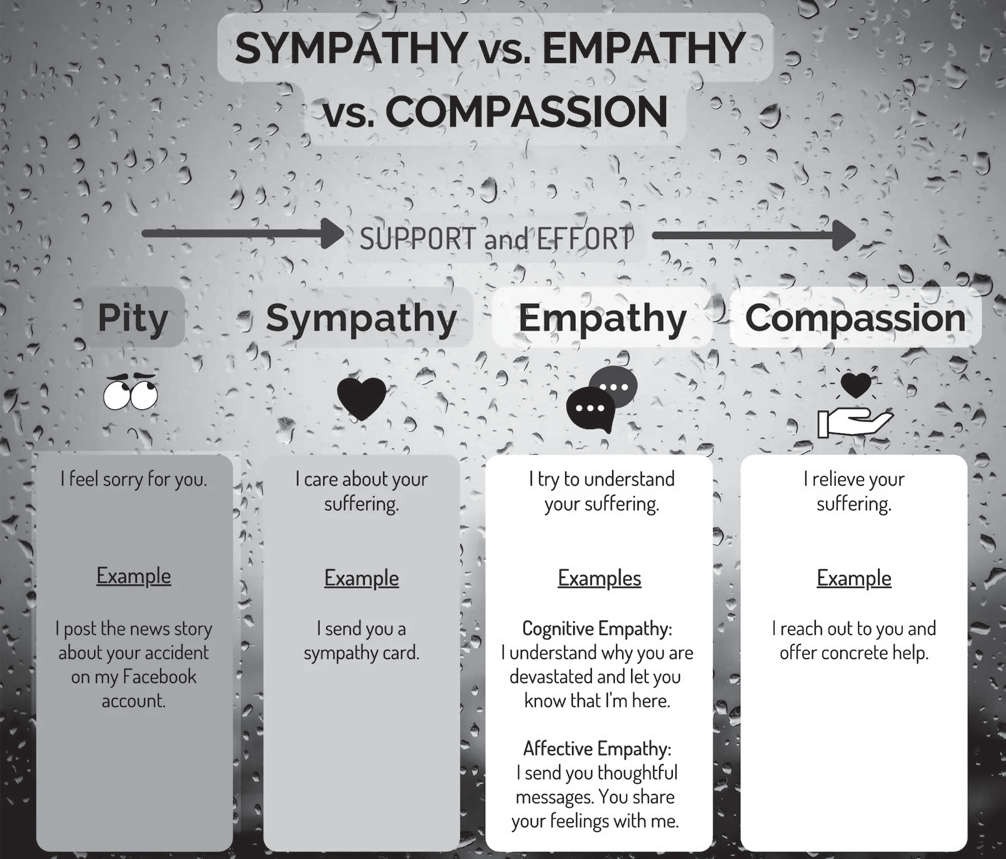
• Apathy is the state of indifference or the state in which no emotion such as concern; care, motivation etc are shown.
• Pity is a feeling of discomfort when one sees another in distress; the person filled with pity often appears paternalistic or condescending.
• Sympathy is an instinctive reaction of kindness which is momentary in nature. It is spontaneous and real understanding of the problem is not there.
• Empathy involves putting oneself in another man’s place to understand his pain and sorrow. It has both cognitive and emotional aspects. Understanding of nature & intensity of problem is there. Empathy is more sustainable than sympathy.
• Compassion involves not only understanding but also a desire to help alleviate the suffering of other persons. Emphasis here is on action. Having compassion for others requires one to put the other person first, imagine what the person is going through and then consider ways which can help people feel better.
Empathy is the ability to understand and share the feelings and perspectives of others.
It is the ability to understand even when not explicit.
It is directly dependent on the ability to feel your own feelings, identify and accept them.
It deals with universal virtues like love compassion, kindness, tolerance, respect and acceptance.
It is the cornerstone of moral and character development.
It is essential for inclusive society.
• It is needed for survival and success in this complex world.
• Characteristics of Empathetic Behaviour:
• Demonstrate active listening skills like asking probing questions. Like are you feeling, OK?
• Recognise body language, facial expressions and tone of voice to understand the unspoken. Like you seem to be looking dull today? Are you felling well?
• Recognise the unexpressed or poorly expressed thoughts, concerns and feelings like in the case of a child who is behaving strangely or excessively calm or silent or unresponsive to understand that there is something wrong with the child.
• Pickup signals when others are not feeling comfortable and display consideration. E.g. in case of rape victims who are in trauma and need counselling.
• Need for Empathy and Compassion in Civil Services
• In public service, empathy is important because it allows individuals to connect with and understand the needs and concerns of the community they serve.
• It enables public servants to develop policies and programs that are responsive to the needs of citizens and can help build trust and cooperation between the public and government institutions.
• To change bureaucracy with colonial mind-set
– Indian civil services (ICS) attracted the most intelligent and talented among the British youth, yet they failed to look after the interest of Indians, why?
• They were intelligent but lacked ’empathy.’ and at the same time, the British civil service manual / code of conduct lacked any directives in that regard.
• For ICS officers, public services meant ensuring the administrative, economic and strategic interest of the empire. Our bureaucrats have inherited this colonial legacy- hence we must make them emphasize the plight of a common man.
• Empathetic officers are the need of hour in modern day administration targeted towards inclusive growth. Understanding of problems
and suffering become more enduring if we have empathy towards people in distress.
• In developing countries there is always a greater chance of disconnect between bureaucracy and people as bureaucrats are vulnerable to getting
trapped in distancing confines of the power elites. This disconnect which exists between the policy maker and the people who bear the brunt of policies can only be removed through empathy and compassion.
• The argument that affinity with the soil of the land givers you bigger ears to the ground has also been challenged in recent times. Except few highly motivated and dedicated bureaucrats,
more entrants with humble background have not changed the narrative of disconnect between bureaucrats and people.
• “To walk among the Kings and yet not lose the common touch’ is a kind of attitude required from the civil servants” Rudyard Kipling
• Moral sentiment is born in human heart when one starts looking at others with empathy. Compassion is at the root of a tree called dharma.
How to cultivate Empathy?
Meaningful Art, literature, cinema- they help us inculcate empathy. E.g. Satyajit Ray’s “Pather Panchali” realistically portrays the poverty and rural India.
Eid, Diwali- encourage participation in each other’s festivals.
Ensuring the Implementation of the Right to Education Act:
The Right to Education Act mandates a 25% reservation for children from economically weaker sections in schools. This provision fosters interaction between the rich and the poor, helping to develop mutual empathy and understanding.
Activities such as perspective-taking exercises, role-playing games and putting oneself in another’s position should be encouraged to enhance empathy.
Ways to Cultivate Compassion:
Practice Acts of Kindness Daily – Engage in small acts of kindness, such as assisting the elderly, persons with disabilities (Divyangs), and other vulnerable individuals.
Incorporate Philosophical Teaching – Learn and apply principles from Buddhism, particularly the Four Noble Truths and the Middle Path, to develop a balanced and compassionate outlook.
• Engage in Loving-Kindness Meditation – Develop positive thoughts and feelings for:
• Those you love and respect.
• Family members and close friends.
• Neutral individuals, such as shopkeepers or service providers.
• Even those you dislike, fostering a sense of universal compassion.
• Participate in Social Welfare Activities – Regular visits to slums, old age homes and schools for the differently-abled can deepen one’s understanding of societal challenges and enhance compassion.
• Travel and Interact with Diverse People – Exposure to different cultures, communities and lifestyles helps broaden perspectives and instills a greater sense of empathy toward others.
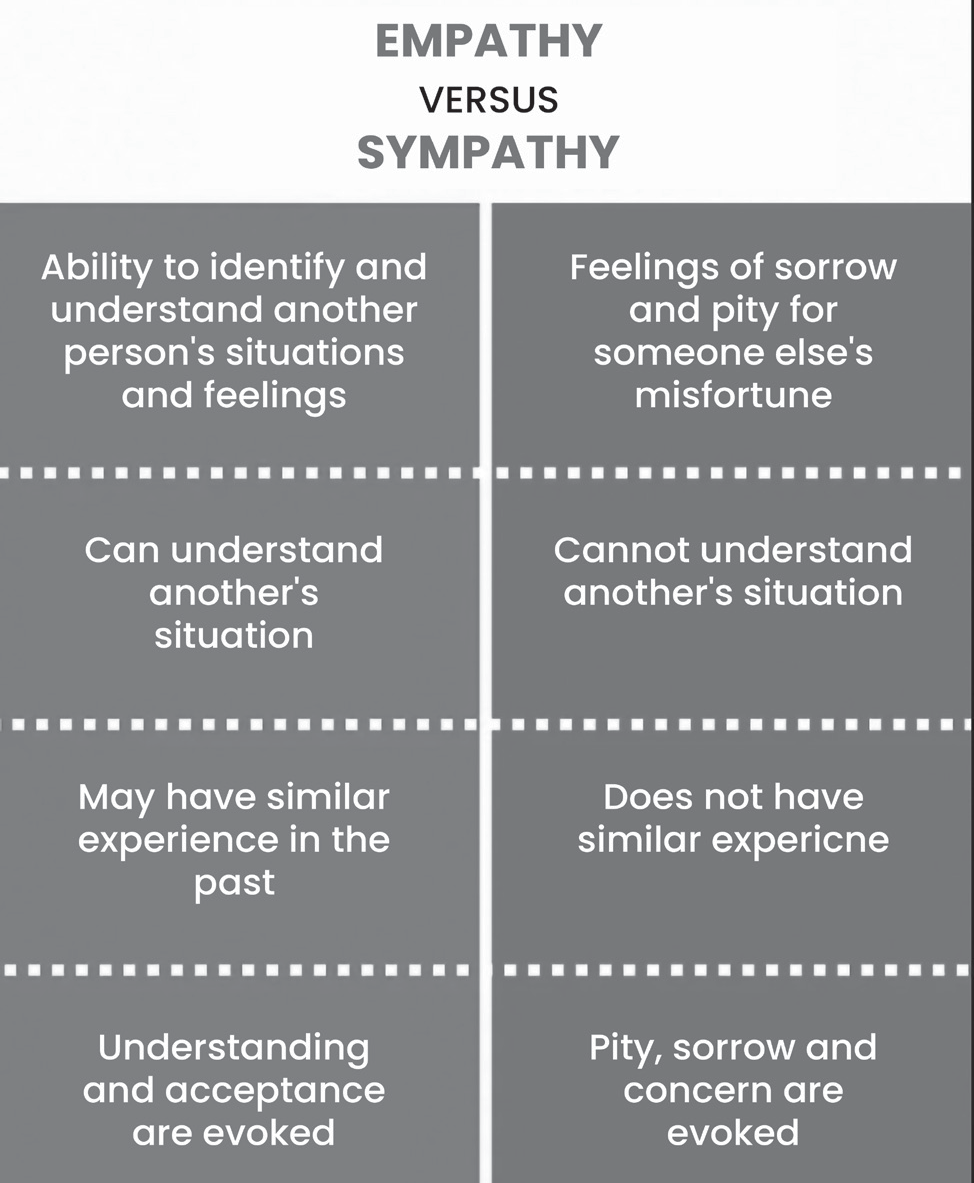
• Difference between Sympathy and Empathy:
• Both have feeling and concern yet there is a significant difference between the two.
• Sympathy is a sorry feeling and pity but not specific understanding of other’s feelings.
•
Empathy places yourself in that person’s place
and having good sense of other’s feelings.
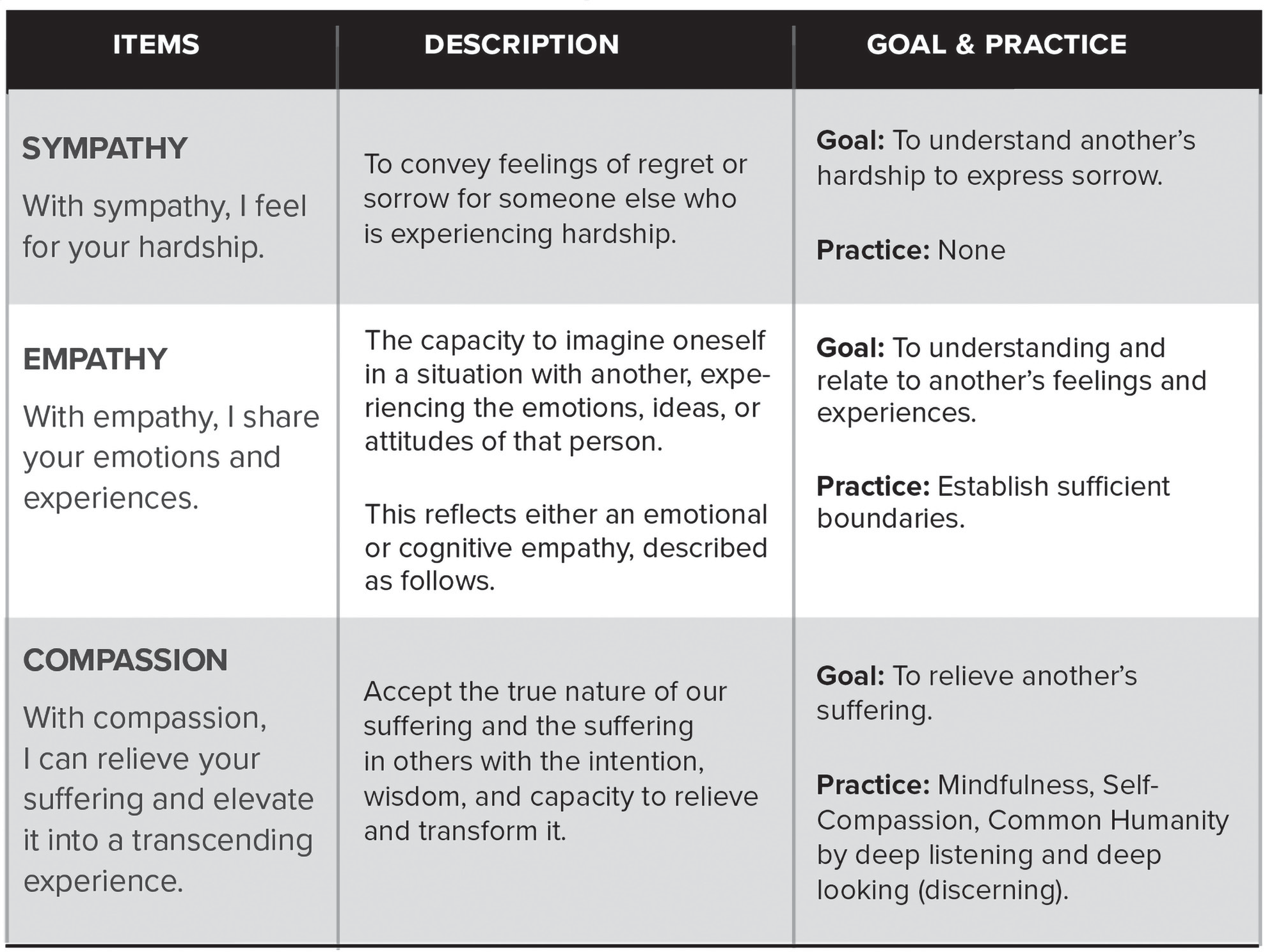
• Examples associated with Empathy and Compassion
• There was directive of Government of India to all secretaries to spend one week in the area of their first posting.
• IAS Ira Singhal recruited one transgender in her office.
• Operation Sulaimani to address hunger in Kerala is a decentralised participatory project.
• IAS P Narhari of MP cadre, known for making Indian infrastructure accessible to the disabled and working on open defection-free initiatives.
• Kochi metro gave job to transgender.
• IAS Inayat khan adopted two kids of Pulwama Martyr.
• Dr. APJ Abdul Kalam denied using glass pieces on compound walls of DRDO for security purposes because birds could be hurt.
• Everyday examples:
• Helping a blind person cross the road.
• Helping an old person with their baggage.
• Giving up one’s seat for a pregnant woman
Tolerance
Tolerance
• Tolerance is the ability to adopt a fair, unbiased and accepting attitude toward individuals with differing opinions, beliefs, customs, race, religion, or nationality. Simply put, it is the capacity to respect
and endure diverse viewpoints and practices within
society.
• As a fundamental value, tolerance promotes peaceful coexistence and harmony despite differing perspectives.
• In a diverse society with variations in caste, race, religion and nationality, tolerance becomes essential for maintaining social peace and order. It upholds human dignity, fundamental rights and adherence to the rule of law.
• Importance of Tolerance in Civil Services:
• The principle of tolerance is embedded in the concept of secularism, which is enshrined in the Indian Constitution.
• Secularism, as defined by the Constitution, ensures neutrality and impartiality toward all religions.
• The state is concerned with human relationships rather than religious beliefs. Public officials, as custodians of the state, must ensure equal treatment and maintain an unbiased stance toward all religions, making tolerance an essential trait.
•
Communal violence, such as the 2002 Gujarat riots and the 1984 Sikh riots, resulted from a lack of tolerance, demonstrating the critical need for this value.
• Tolerance also extends to accepting diverse opinions and perspectives.
• Article 19 guarantees the right to freedom of speech and expression, allowing individuals to express their viewpoints.
• Differences in opinion are natural due to varied experiences and perspectives, but a civil servant must respect and consider all viewpoints, even those they may personally disagree with.
• As Voltaire famously stated, "Sir, I disagree with what you say, but I will defend to the death your right to say so."
• Intolerance toward genuine criticism of government policies, such as trolling journalists and intellectuals on social media and labeling them anti-national, reflects a lack of acceptance for dissenting voices, which is contrary to democratic principles.
• Empathy and compassion, which are the foundational values of civil services, are not possible without tolerance and vice versa. Tolerance prevails where the values of empathy
and compassion exist.
Examples associated with Tolerance
Good example is to live in peace at home even when there are family members who have opposing or conflicting political or religious or other views. Like father supporting right wing while son supporting left wing parties.
Jawaharlal Nehru was very tolerant to criticism. After the Indo-China war, his own ministers criticised him in the parliament. He listened to them and acknowledged their criticism
Honesty
Honesty
Honesty: It means to be truthful and open. Honesty is to be truthful to your actions, thoughts and behaviour. It is doing your duty faithfully.
Holders of public office have a duty to declare any private interests relating to their public duties and to take steps to resolve any conflicts arising in a way that protects the public interest.
For instance, telling the truth without
Satyendra Dubey, the IES officer exposed the corruption in the golden quadrilateral highway project.
• Relevance of Honesty:
• Creating credibility (Building trust): It helps a civil servant to be trustworthy and get lots of respect in the career because honest people are really trusted by others. People generally do not trust dishonest civil servants.
• Building trust and confidence requires an environment where there is a premium on honesty, transparency, openness, boldness,
fairness and justice.
• Leadership: As Mahatma Gandhi’s Experiments with Truth, says that a true leader will always lead by own example. If a leader is honest, sincere and committed to the task assigned to him, the vibes created percolate down the hierarchy cleansing the system that he controls. By bringing transparency in the system and standing against corruption.
• A civil servant is required to implement the orders of government without bias, with honesty and without fear or favour. It is precisely in this area that a degree of a difference of opinion begins to emerge between the political executive and the civil servants.
• Other relevance: Improve work culture and motivate subordinate officers to be honest, it ensures effective delivery of the services, present day nepotism problem can be reduced if honesty is followed in public service and inequalities are reduced in the organization.
Integrity
Integrity
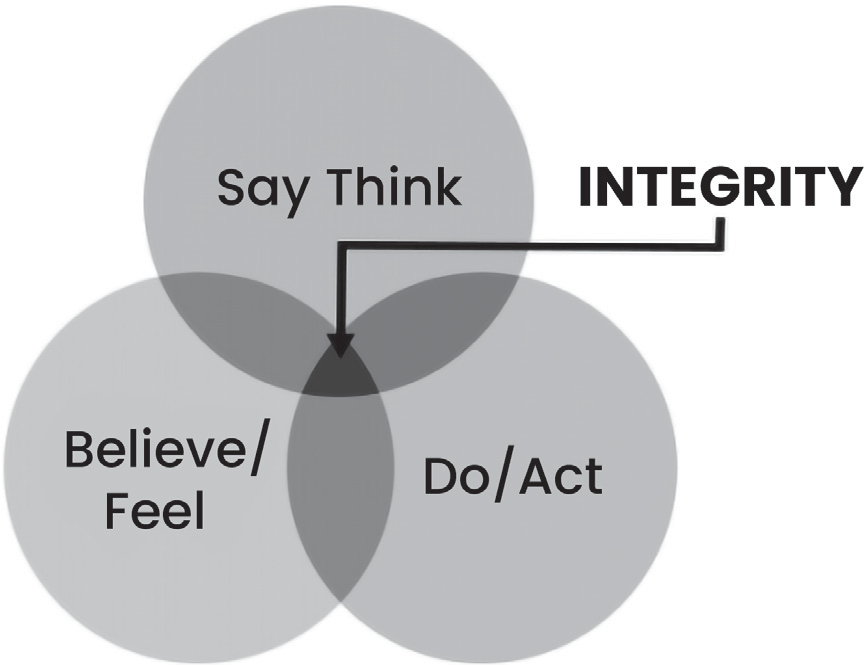
Figure: Integrity
Integrity is a foundational moral virtue, and the bedrock upon which good character is built.
•
Integrity, said author C.S. Lewis, “is doing the right thing, even when no one is looking.” If you’re a person of integrity, you’ll not do the duties which your conscience doesn’t agree with.
• E.g. Policeman ordered to fire on unarmed peaceful protestors. Honest policeman will obey the order. Policeman of integrity, will refuse to fire.
• In social context, integrity describes a person who willingly and consistently acts in accordance with social standards and values of society. Every society has certain norms and values.
• Democracy, brotherhood, equality and secularism are some of the values of Indian society. When these values are internalised by an individual and are reflected in his behaviour, one can say that he is a human of integrity in the context of society.
• In simple words, integrity refers to adopting similar principles or standards in similar situations across time and concerned parties.
• It means unity, coherence, state of undividedness, non-selective and non-negotiable state of values.
• Integrity is an absolute and unwavering principle that cannot be compromised under any circumstances. Being non-negotiable means it should never be sacrificed, no matter the cost, while being non-selective means it must be upheld in every situation. Civil servants, in particular, often encounter challenging circumstances that put their integrity to the test.
• The fundamental rule of integrity is that there should be no compromise, regardless of the circumstances.
• For instance, if a district collector refuses a bribe on one occasion but accepts it when the amount is significantly higher, it indicates a complete lack of integrity. Integrity is not situational: it is either present or absent.
• A notable example is Ashok Khemka, a senior IAS officer from the Haryana cadre, who faced frequent transfers due to his stand
against irregularities. In April 2013, he was transferred for the second time in six months following his exposure of corruption in the Haryana Seed Development Corporation.
Despite facing 44 transfers in his 22-year career, he remained steadfast in his moral convictions, resisting political pressure and never compromising his integrity.
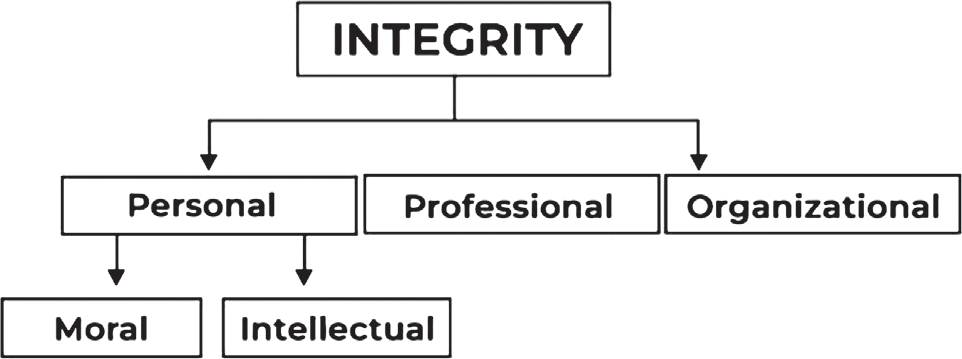
Figure: Dimensions of Integrity
• Types of Integrity at the Individual Level
• Moral Integrity: Moral integrity refers to maintaining consistency and honesty in the standards used to judge both oneself and others regarding what is right or wrong. It is often described as morality in action. For example, if a person believes that violence and discrimination are unacceptable, but later engages in or remains silent about the same behavior when it benefits them, it reflects a lack of moral integrity.
• Intellectual Integrity: Intellectual integrity is the commitment to being truthful and consistent in one’s thought process while holding oneself to the same standards expected of others. It involves acknowledging inconsistencies in one’s reasoning and taking responsibility for discrepancies between one’s thoughts and actions.
• Personal Integrity: Personal integrity refers to aligning one’s thoughts, speech, and actions in a consistent and honest manner. It signifies eliminating the gap between what one thinks, says, and does, ensuring that one’s ideals, convictions, beliefs, and behavior are in harmony.
• People with strong personal integrity possess an internal locus of control, meaning they are guided by their conscience rather than external circumstances.
• Source of Personal Integrity: Integrity cannot be imposed through external regulations or enforcement. It originates from moral reasoning rather than a profit-and-loss mindset. When faced with dilemmas, individuals should make decisions based on ethical considerations rather than personal gain. Integrity is cultivated through moral judgment rather than external control mechanisms.
• Professional Integrity: Professional integrity entails adhering to the ethical principles, norms, and standards of a chosen profession. It defines a professional who consistently upholds ethical obligations and works within the ethical framework of their field.
• It is essential to recognize that moral and intellectual integrity are closely related. Integrity,
at its core, is about acting in accordance with one’s moral principles.
• Intellectual integrity involves applying moral values in the pursuit of truth. The ethical principles established through intellectual and moral reasoning should always take precedence over personal or social convenience.
• Few examples associated with Integrity:
• When Dr. APJ Abdul Kalam served as the President of India, he invited his family and extended relatives for a two-day visit. Although the expenses could have been covered by the Rashtrapati Bhavan as per protocol, he chose to bear the costs himself.
• On another occasion, Dr. Kalam was gifted a wet grinder at an event. Despite the sponsor’s insistence, he politely declined. When the sponsor remained adamant, he accepted the gift but ensured he paid for it.
• During the 1990s, Dr. Manmohan Singh earned a substantial profit due to the appreciation of the US dollar against the Indian rupee, as he had some foreign currency deposits from his time teaching at international universities. However, instead of keeping the profit, he donated the amount to the Prime Minister’s Relief Fund.
• Lal Bahadur Shastri, as Railway Minister, resigned from his position, taking moral responsibility for a train accident. Later, as the Prime Minister of India, he maintained strict ethical standards and never used official vehicles for personal purposes.
• Sir M. Visvesvaraya, while serving as the Dewan of Mysore, ensured ethical conduct even in small actions. When he went to submit his resignation, he traveled in a government vehicle, but after formally resigning, he returned in his private car, demonstrating his commitment to integrity.
• Kuvempu, during his tenure as the Vice-Chancellor of Mysore University, upheld ethical principles by not misusing his authority to influence his son’s BA examination results.
• Integrity in Civil Services:
• The Second Administrative Reforms Commission defines integrity as the principle that civil servants should base their decisions solely on public interest, without allowing financial or personal factors related to themselves, their family, or acquaintances to influence their actions.
• As per the Ministry of Personnel, integrity is reflected in an individual’s consistent commitment to fairness, transparency, and honoring commitments while upholding public service values.
• Core Ethical Responsibilities of a Civil Servant:
• Perform dutieswith diligence and accountability.
• Remain unwavering in upholding the highest ethical principles.
• Ensure the prudent and efficient use of public resources and funds.
• Interact with the public in a fair, effective,
prompt, and sensitive manner.
• Maintain transparencyin handling
information within the legal framework.
• Adhere to the law and uphold justice in administration.
• Guidelines for Ethical Conduct:
• Do not misuse official authority to secure financial or non-financial advantages for oneself, family, friends, or any associated groups.
• Avoid situations that create a sense of obligation, such as accepting excessive hospitality, free services, or engaging in activities of chance.
• Refrain from any actions that might raise suspicions of dishonesty or personal gain.
• For example, do not engage in business dealings with a company in which you or a relative hold financial interests.
• Follow established tender procedures and disclose any personal interests if required.
• Encourage adherence to public service ethics among colleagues.
• Treat all individuals impartially, irrespective of their political, social, economic or geographical background.
• Uphold laws, public service values, and ethical conduct even in challenging situations.
• Like Kiran Bedi in 1980s, maintained law and order by standing alone in front of the crowd in Delhi through just a staff (stick), when her subordinates ran away.
• Like Chetan Singh Rathor in 2019, controlled the unruly anti-CAA protesters by singing ‘national anthem’ to gain their attention and trust and calming them down.
• Have the courage and conviction to make and stand by the right decisions even at significant personal cost.
•
Durga Shakti Nagpal remained firm in her decision to demolish an illegal structure, alleged to be a religious site, despite facing a transfer, a show-cause notice, and a government inquiry.
• Rahul Sharma, an IPS officer, was transferred 12 times over two decades. During the 2002 post-Godhra riots, as the SP of Bhavnagar, he ordered police action against a Hindu mob attempting to attack a madrasa. Within two months, he was reassigned to a less significant role as DCP in the Ahmedabad police control room.
• Principles of Ethical Governance:
• Offer honest and impartial advice, prioritizing public interest without fear or favoritism.
• Challenge influential and powerful individuals
to ensure accountability and just decision-making.
• Example: Kiran Bedi, in 1982, towed away a vehicle belonging to the Prime Minister’s Office (PMO), upholding the law without bias.
• Example: IAS officer Tukaram Mundhe took strict action against illegal bars, unauthorized encroachments, and land and water mafias.
• Provide complete transparency by informing stakeholders about the political consequences of decisions.
• Accept responsibility for personal actions.
• Maintain a strong stance when confronted with unreasonable pressures or demands.
Example: A Telecom Secretary recorded formal objections to a Minister’s decisions to ensure accountability
Integrity and Efficiency in Governance
• Integrity is fundamental to efficiency, as a person cannot truly be effective without being honest and ethical. However, possessing integrity alone does not always guarantee efficiency.
• IAS officer Devansh Yadav has empowered local SHGs to start endeavours like sanitary pad making and bamboo furniture units.
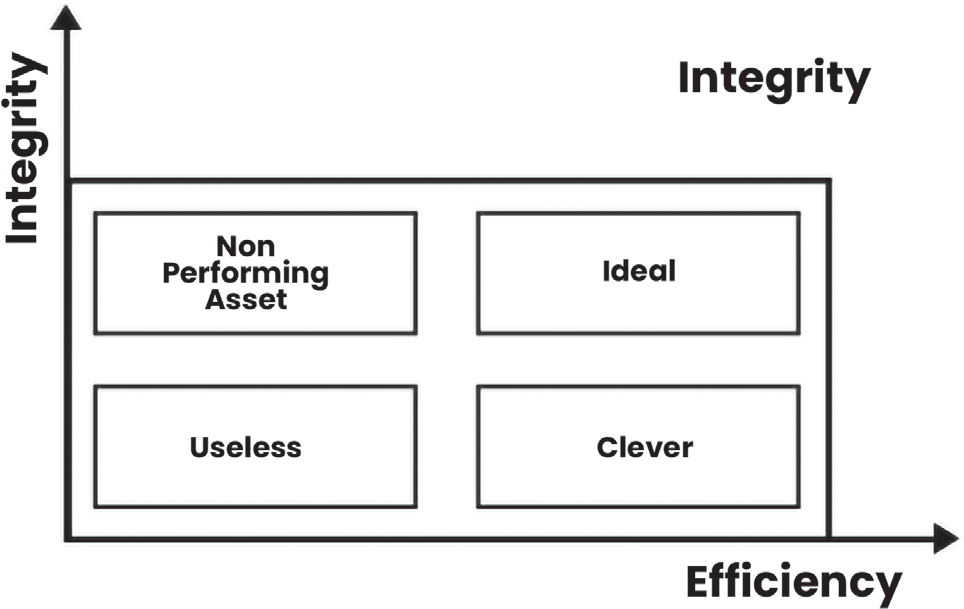
Figure: Integrity-Efficiency Matrix
• Integrity and Corruption: Basic meaning of corruption is moral impurity. A person who has moral impurity cannot go for moral analysis. If moral analysis is not there, integrity is not there.
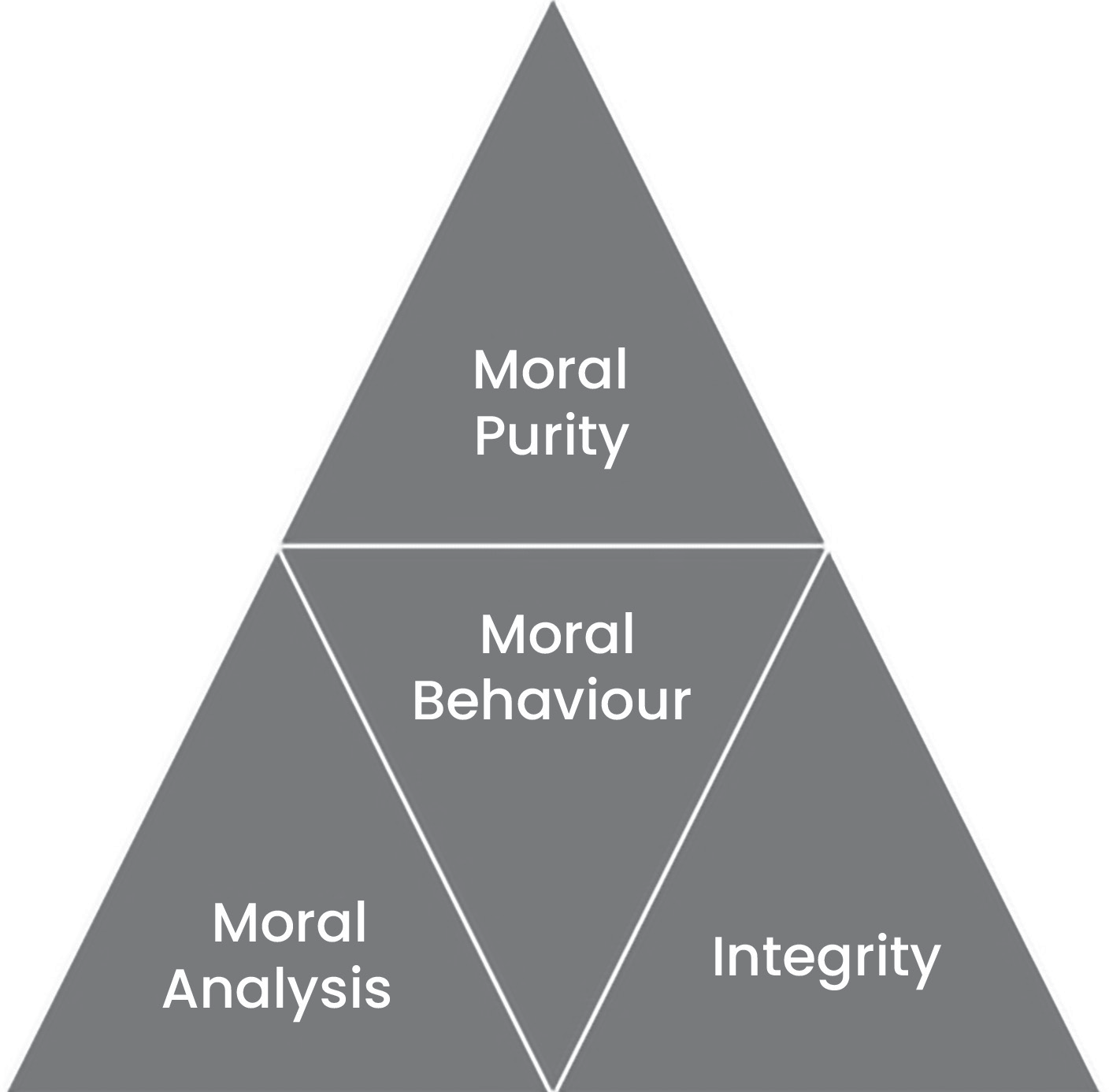
Figure: Basis of Moral Behaviour
• Measure taken to promote integrity:
• A separate section for integrity assessment is included in the Annual Confidential Report (ACR) of government officials.
• In the Central Vigilance Commission (CVC) selection process, a mandatory integrity clause ensures that only individuals of unquestionable integrity are appointed.
• The International Monetary Fund (IMF) has an Integrity Hotline to address allegations of staff misconduct from both internal and external sources.
• Integrity Pacts, developed by Transparency International, serve as anti-corruption tools and were utilized in cases such as the AgustaWestland deal.
•
Integrity surveys are conducted to identify and
recognize honest officers.
• The Second Administrative Reforms Commission (ARC) recommends establishing a Code of Ethics for all government departments.
• Example: The Speaker of Parliament will monitor instances of parliamentary disruptions, with a dedicated committee preparing a report for public awareness.
• However, no penalties will be imposed—this approach is meant to generate social and peer accountability.
• Integrity Testing involves randomly selecting officials and attempting to bribe them. Unlike CBI or Anti-Corruption Bureau (ACB) raids, which aim to expose corruption, integrity testing is designed to verify honesty.
• Example: The New York Police Department (NYPD) frequently conducts integrity tests, creating a strong deterrent effect as officers remain vigilant, knowing they could be tested at any time.
If a young recruit's initial posting is under an honest officer, they are more likely to maintain integrity throughout their career due to positive mentorship and role modeling
Equity/Justice and Equality/Fairness
• Fairness, Equality, and Justice in Governance
• Fairness and equality emphasize treating all individuals without discrimination, irrespective of age, race, nationality, gender, religious beliefs, or sexual orientation.
• It signifies impartiality, ensuring that no person faces favoritism or bias in any aspect of governance or administration.
• Justice or equity entails providing individuals with what they rightfully deserve, rather than treating everyone identically. In traditional terms, it means ensuring that each person receives their due based on merit and circumstances.
• Justice is both a legal and philosophical principle aimed at maintaining fairness within the system. A civil servant must act with impartiality and integrity to uphold public trust in governance.
• IAS officer Raj Yadav launched the "District Administrations Adopted Village" initiative, where villagers actively contributed manpower and financial resources. This collaborative effort transformed gram panchayats into model villages, promoting self-sufficiency and community development.
PRINCIPLE OF NATURAL JUSTICE
• Principle of Natural Justice, also known as ‘Substantive Justice’, ‘Fundamental Justice’ or ‘Universal Justice’, is a law of nature which is not derived from any statute or constitution but adhered to by all the citizens of civilised State with Supreme importance.
• The term ‘natural justice’ comes from Roman ‘jus- naturale’, meaning the principles of natural law, justice, equity and good conscience.
• It is closely tied to common law and moral principles of natural justice, natural law and equity. “Natural justice is a sense of what is wrong and what is right.”
• Natural justice simply means to make a sensible and reasonable decision-making on a particular issue. It is not restricted within the concept of ‘fairness’ it has different colours and shades which vary from the context.
• Basically, natural justice consists of three basic rules.
• “Bias rule” or “No one should be a judge in his own case” generally expresses that panel of expert should be biased free while taking the decision. The decision should be given in a free and fair manner which can fulfil the rule of natural justice. Few Common Types of Biases include
• Personal Bias (family or friend of a party or may have enmity or rivalry)
• Pecuniary Bias (own financial interest, how so ever small, connected to that case)
• Subject matter Bias (involved in the subject matter of a particular case)
• Departmental Bias (belonging to the same department)
• Policy notion Bias (preconceived policy notions)
• “Hearing rule” or “No person can be condemned or punished by the court without having a fair opportunity of being heard” which states that the person or party who is affected by the decision made by the panel of expert members should be given a fair opportunity to express his point of view to defend himself.
• “Reasoned Decision” which states that order, decision or judgement of the court given by the Presiding authorities with a valid and reasonable ground.
• In India, in the case of Mohinder Singh Gill vs. Chief Election Commissioner, the court held that the concept of fairness should be in every action whether it is judicial, quasi-judicial, administrative and or quasi-administrative work.
Discipline
Discipline
Discipline commonly refers to rule-following behaviour, regulation, order, control, and authority. It is the practice of training people to obey rules or a code of behaviour, using punishment to correct disobedient.
Discipline is an approach used by management to modify undesirable performance and behaviour through the use of a corrective action process.
The term discipline refers to a condition in the organisation wherein employees conduct themselves in accordance with the organisation’s rules and standards of acceptable behaviour.
Discipline generally involves obeying, respect for authority and observance of established principles/ rules within chain of command and hierarchy. It allows for smooth flow of vital information and the decisions taken, between all the levels of an organization.
It is essential for success of organisation but it may create a culture of fear and apprehension, as punishing employees for poor performance is not as effective as helping them to identify their weaknesses and explore how to improve upon their strengths.
Further, the emphasis on order and subordination curb the individual freedom to innovate and voice of conscience against unethical practices and take independent decisions in public interest.
For instance, IAS officers are bound by the Code of Conduct Rules that prohibits them from making public statements, violating which disciplinary action could be initiated by the department.
It may lead to resentment, demotivation, and even legal disputes within the organisation.
Therefore, a finely balanced discipline is must, through positive discipline approach, which uses constructive criticism, can be followed to instil correct behaviour. For example, explaining to an underperforming employee how his/her failure to follow proper protocol is hurting her performance and then offer helpful suggestions for increasing productivity.
Similarly, the employee should be allowed to exercise independence within his/her jurisdiction and be able to take action against the illegal/inappropriate orders of the senior officers or political masters without any fear or favour.
Other Values for Civil Services
These other values are required under New Public Management, because now citizen has become a customer and seeks value for money/taxes paid while getting public service.
Optimism: The tendency to be hopeful and to emphasize or think of the good part in a situation rather than the bad part, or the feeling that in the future good things are more likely to happen than bad things::
As you’re in civil service, then in case of decided reforms, you must be optimist about the outcomes.
Creativity: It is the ability to make or otherwise bring into existence something new, whether a new solution to a problem, a new method or device, or a new artistic object or form.
In a rapidly changing environment with new ICT technologies coming every day, you’ve to be creative to utilize them to make your administrative work faster, smoother and more efficient.
Responsiveness: It is the ability to react quickly and in a positive way to something. It is good to be responsive to whatever new opportunities and challenges arise every day.
Courage: It is the quality of mind or spirit that enables a person to face difficulty, danger, pain, etc., without fear;
For example, to initiate reforms, to apply creative solutions, you need to be courageous.
Trustworthiness: A trustworthy party is one that will not unfairly exploit the vulnerabilities of the other party in the relationship. Trustworthy is someone who is honest who can be entrusted with your secrets or with anything else of importance. Being trustworthy is admirable and desirable.
An example of trustworthy is the person who babysits your kids or who you tell your secrets to.
Fortitude: Fortitude is the acquired habit of showing strength or courage. We need fortitude to overcome fear of bodily pain, temporal loss, ridicule, what people will think or say and the displeasure of friends. It is the moral strength or moral courage in adversity when faced with the danger of death or other grave peril.
Fortitude is often associated with soldiers
facing tough battle field situations.
•
Temperance: It signifies the ability to control one’s anger, emotions and desires. It can be regarded as rational self-restraint.
• Effectiveness: It is the ability to be successful and produce the intended results. For example, the drug’s effectiveness is doubtful.
Nolan Committee Seven Principles of Public Life
Nolan Committee: Seven Principles of Public Life
The Committee on Standards in Public Life (CSPL) is an independent advisory body established by the UK Government in 1994 to provide recommendations to the Prime Minister on ethical standards in public service.
In its First Report (1995), the committee introduced the Seven Principles of Public Life, commonly known as the Nolan Principles:
Selflessness: Public officials must make decisions based solely on the public interest and should not seek financial or material benefits for themselves, their families, or their associates.
Example: Kerala Relief Officers MG Rajamanickam and NSK Umesh personally assisted in unloading relief materials, including rice bags, during times of workforce shortages, prioritizing public welfare over personal comfort.
Integrity: Officials must not allow financial or external influences to affect their official responsibilities.
Example: Ashok Khemka, an IAS officer, was transferred more than 50 times throughout his career but consistently upheld ethical standards, refusing to compromise his integrity despite political pressure.
Objectivity: When handling public affairs, including appointments, contract allocations, or awarding recognitions, decisions should be based solely on merit rather than personal biases.
Example: In cases of sexual harassment complaints, companies should use objective and evidence-based procedures to verify claims rather than acting on emotions or rumors.
Accountability: Public officials must be answerable for their decisions and actions and should accept the necessary scrutiny related to their role.
Example: IAS officer Ritu Maheswari tackled electricity theft in Kanpur by introducing smart electricity meters, ensuring greater accountability and transparency in power usage and billing.
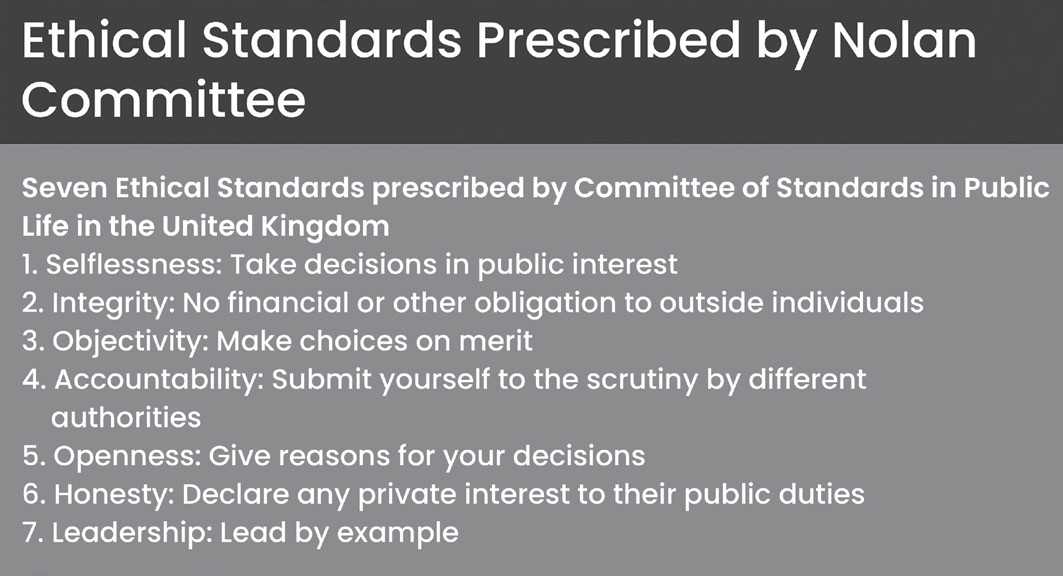
• Openness: Holders of public office should be as open as possible about all the decisions and actions that they take. They should give reasons for their decisions and restrict information only when the wider public interest clearly demands.
• U Sagayam, IAS officer, has created history of sorts by being the first IAS officer in the state to upload details of his assets on the district website, taking fellow officers by pleasant surprise.
• Honesty in Governance:
• Public officials have a responsibility to disclose any personal interests that may intersect with their official duties and must take necessary actions to prevent conflicts of interest, ensuring decisions are made in the public’s best interest.
• Example: Kuvempu, a Jnanpith awardee and a revered poet from Karnataka, served as the Vice-Chancellor of Mysore University. When his son, a student at the same university, failed an English paper, a professor sought Kuvempu’s advice. Instead of favoring his son, Kuvempu reviewed the answer sheet and instructed the professor to award even fewer marks, demonstrating absolute integrity and impartiality in his role.
• Leadership by Example:
• Public officials must uphold ethical standards
by setting an example through their actions.
• Example: IPS officer Arif Shaik launched the ‘Chuppi Todd’ initiative during the COVID-19 pandemic, encouraging victims to report domestic violence. The initiative received 100 complaints on its first day, highlighting its impact.
•
Example: Rahul Kumar, an IAS officer in Bihar, ate a Mid-Day Meal prepared by a Dalit cook to challenge deep-rooted societal biases and change parents’ traditional mindset toward caste-based discrimination.
Second Administrative Reforms Commission Recommendations:
As per Second Administrative Reforms Commission (10th report; Refurbishing of Personnel Administration
– Scaling New Heights), a comprehensive Civil Service Code can be conceptualized at three levels.
At the apex level, there should be a clear and concise statement of the values and ethical standards that a civil servant should imbibe. These values should reflect public expectations from a civil servant with reference to political impartiality, maintenance of highest ethical standards and accountability for actions.
At the second level, the broad principles which should govern the behaviour of a civil servant may be outlined. This would constitute the Code of Ethics.
At the third level, there should be a specific Code of Conduct stipulating in a precise and unambiguous manner, a list of acceptable and unacceptable behaviour and actions. The values and the Code of Ethics should be given a statutory backing by including them in the proposed Civil Services Bill.
It was also of the view that in addition to commitment to the constitution values for civil services should include –
Objectivity
Commitment to the principles enshrined in the Constitution
Empathy and Compassion for the vulnerable and weaker section of society
Adherence to the highest standards of probity, integrity and conduct
Commitment to the citizens concerned and public good
Impartiality and non-partisanship