Attitude and Its Concept Features Importance Components
Concept of Attitude
• Psychologists define Attitude as a learned, as opposed to an in-born, tendency to evaluate things in a certain way. This can include evaluations of people, issues, objects or events. Attitude means a person’s own evaluation of another person, idea, situation etc.
• Such evaluations are often favourable or unfavourable but they can also be uncertain at times. Thus, we often speak of ‘mixed feelings’ about an individual or an event.
• Attitude is part of social psychology. Social psychology is a specific branch in psychology which tries to understand and explain how the thoughts, feeling and behaviour of individual influence as well as gets influenced by one another.
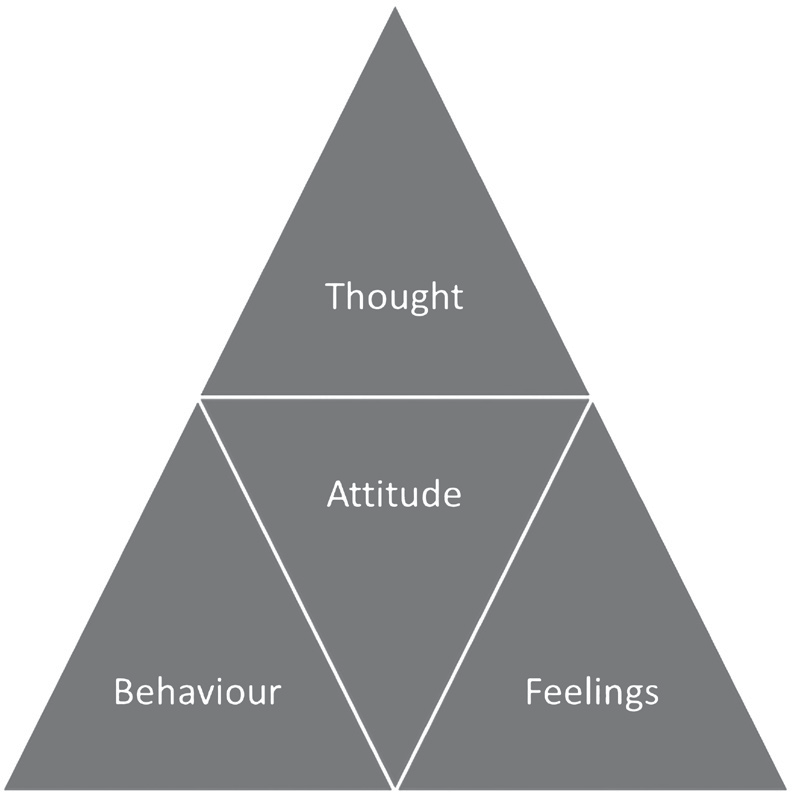
Figure: Interdependence of Thoughts, Feelings and Behaviour
Gordon Allport once described attitude as “the most distinctive and indispensable concept in contemporary social psychology”.
• According to Eagly and Chaiken, an attitude is “a psychological tendency that is expressed by evaluating a particular entity with some degree of favour or disfavour.”
• In simple words, Attitude is a learned tendency to act, think and feel in particular ways towards a class of people, object, place or an event.
• It can be positive, negative, neutral or ambivalent
evaluation of stimuli present in our environment.
Features/Nature of Attitude
Following are some important features of attitude:
• Not Inborn: Attitude is acquired or learned; attitude is not inborn.
• For example, if the colleague of Ram is a religious
person, it will affect Ram’s mental make-up also.
• Many Sources: Attitude is acquired or obtained from many sources like communication media, society, personal experiences, etc.
• Universal: Attitude exists in everybody, not only in a particular person. It has a universal quality.
• Need Based: Attitude fulfil some particular need of an individual. For example, a positive attitude of an individual’s job fulfils the need of satisfaction of that individual.
• Dynamic - A person’s attitude is not fixed and can change over time. It evolves based on shifting emotions and beliefs.
• Persuasion plays a key role in altering an individual's attitude.
• For instance, if a credible, knowledgeable, and likable person states that “the preference of wealthy individuals for SUVs has contributed to high pollution levels,” this may influence your perception. The next time you see a wealthy person, you might feel a sense of disapproval.
• - Aperson’s **attitude can be categorized** as **positive, negative, neutral, or ambivalent**, depending on their perspective and behavior.
• Positive Attitude – When an employee speaks highly of their manager, saying "My manager is a great person," this reflects a positive attitude.
• Negative Attitude – If someone criticizes company policies, stating that "The company's policies do not favor employees," it demonstrates a negative attitude.
• Ambivalent Attitude – When a person recognizes corruption as unethical (cognitive belief) but still engages in bribery (behavior), it creates cognitive dissonance. Similarly, someone might know that chocolate is bad for dental health but still enjoy eating it.
• Another Example of Ambivalence – While both corruption and tax evasion are illegal and detrimental to the economy, a tax evader may not equate their actions to corruption unless they are prompted to reflect on it.
• Tendency to React - Attitude shapes an individual's response toward a person, object, thought, or place.
• Example: If a person derives happiness from worship and religious activities, they exhibit a religious attitude.
Belief/Opinion and Attitude
• Both are relatively stable, have a cognitive aspect and affect the behaviour.
• Attitude has affective component as most important as belief/cognitive will be there necessarily but behaviour may or may not.
• On the other hand, Belief has cognitive aspect as most important and absence of affective component, while behaviour may or may not exist.
• Belief may not be related to an attitude and remains a belief till it has no affective aspect.
• Attitude necessarily motivates a person but belief may or may not.
• Belief or Opinion is unstable, uncertain and dynamic.
• Attitude helps predict and affect the behaviour but not opinion/belief.
• Attitude is made by socialisation in childhood subconsciously and rarely at conscious level but opinion is consciously made.
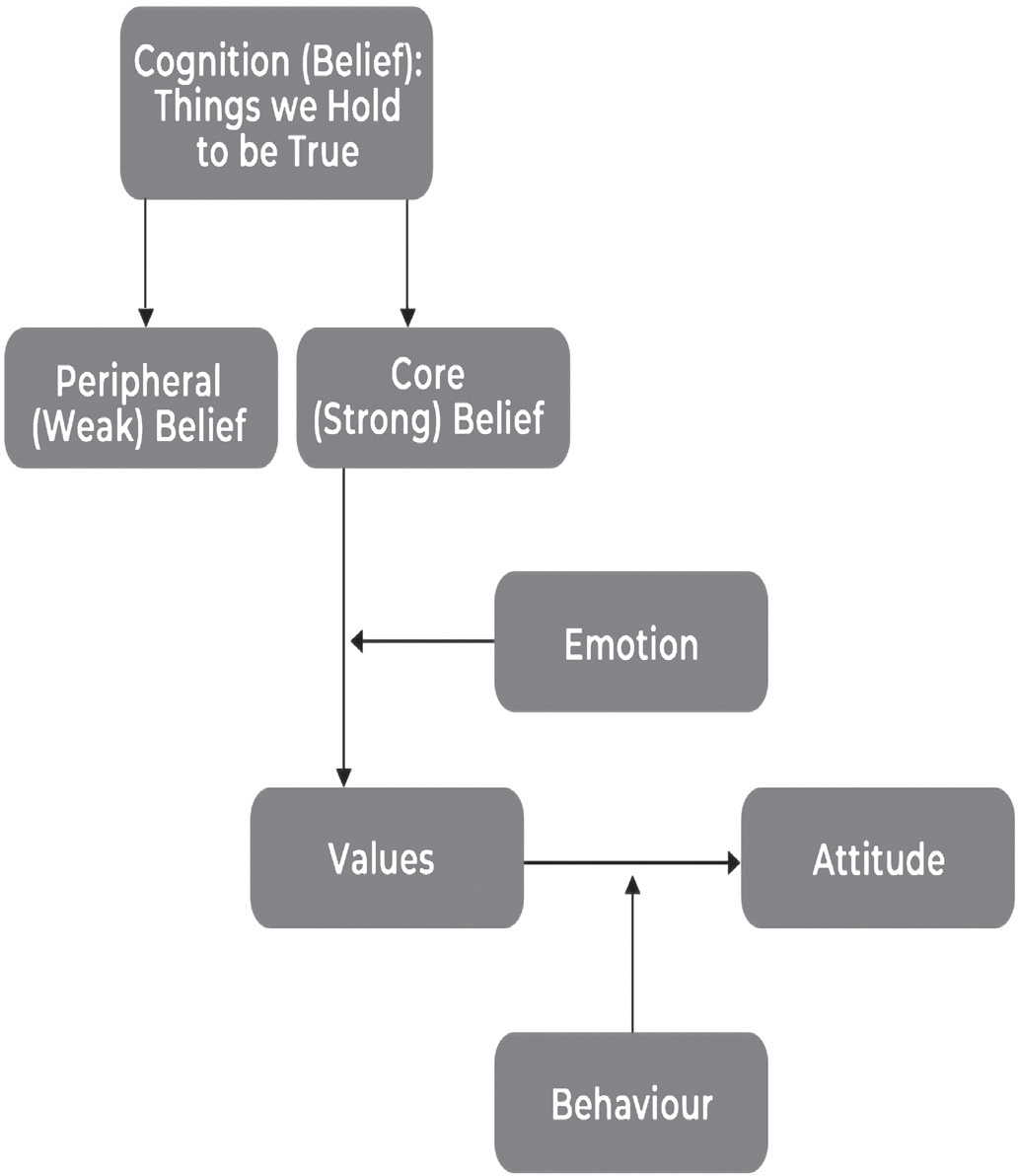
Figure: Relationship Between Belief, Value and Attitude
Attitude and Value
• Values shape general behavior as they represent core ideals, whereas attitude is specific to particular events or situations.
• Values are constant in an individual’s behavior, such as honesty, whereas a negative attitude toward one person does not necessarily apply to others.
• Values form the foundation of beliefs, guiding a person’s attitudes, which develop based on their moral values.
• Both values and attitudes influence cognitive processes and evolve through social experiences and interactions.
• Attitude is issue-specific, while values are broad in scope. For example, a liberal attitude may apply to specific topics like caste, gender, or LGBTQ+ rights, whereas liberty as a value leads to a universally liberal approach.
• Attitudes are flexible and can change with circumstances, while values are more stable and enduring, though significant life events can reshape them (e.g., Ashoka’s transformation after the Kalinga war).
• Values are stronger and more permanent, whereas
attitudes are relatively weaker and more adaptable.
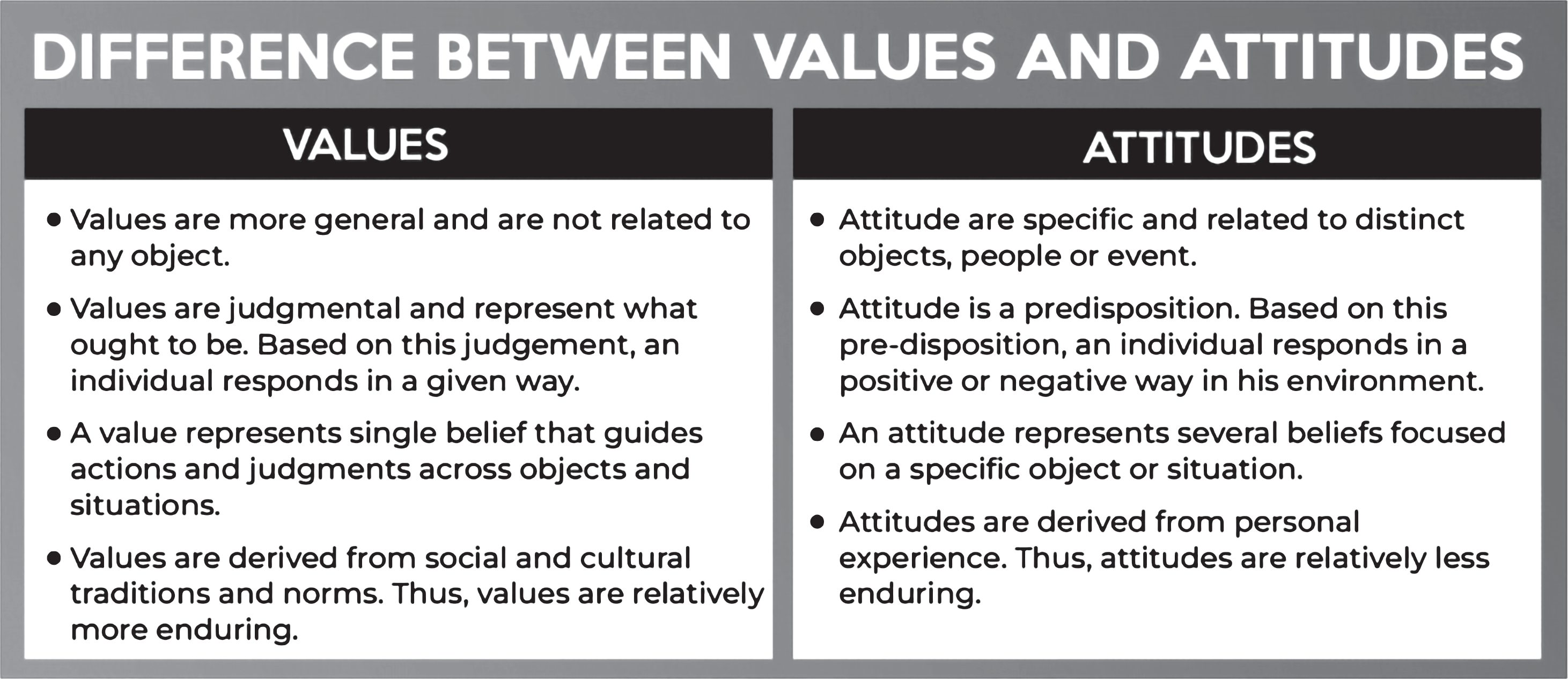
Interrelationship between Belief, Value and Attitude
• Belief is what we think about things. It is the smallest entity of conscious thought.
• e.g. Public Works Department (PWD) is corrupt.
• Value is what we think ‘ought to happen’. These are deeply held beliefs, which are preferable and considered important.
• Value can be ‘desirable’ or ‘undesirable’. They guide our behaviour. Values can be for individual, group, organization and nation, while virtues are associated only with an individual
• e.g. Corruption is bad and honesty is the best policy.

Figure: Attitude Formula
Content and Structure of Attitude
•
Attitude is our like or dislike for an object, event, organization or person. It persists in human but is changeable.
• Thus, Belief (PWD Corrupt) + Value (Honesty is best)
= Attitude towards event/people (negative attitude towards PWD).
• In above example, person’s attitude will be of dislike/cynicism/opposition towards officials and the department.
Importance of Attitude
• Attitude plays a fundamental role in shaping every aspect of our lives.
• It influences how we respond to challenges, adapt to new experiences, grow, learn, and build relationships.
• Our present attitude is a reflection of lifelong beliefs
and experiences that have been ingrained over time.
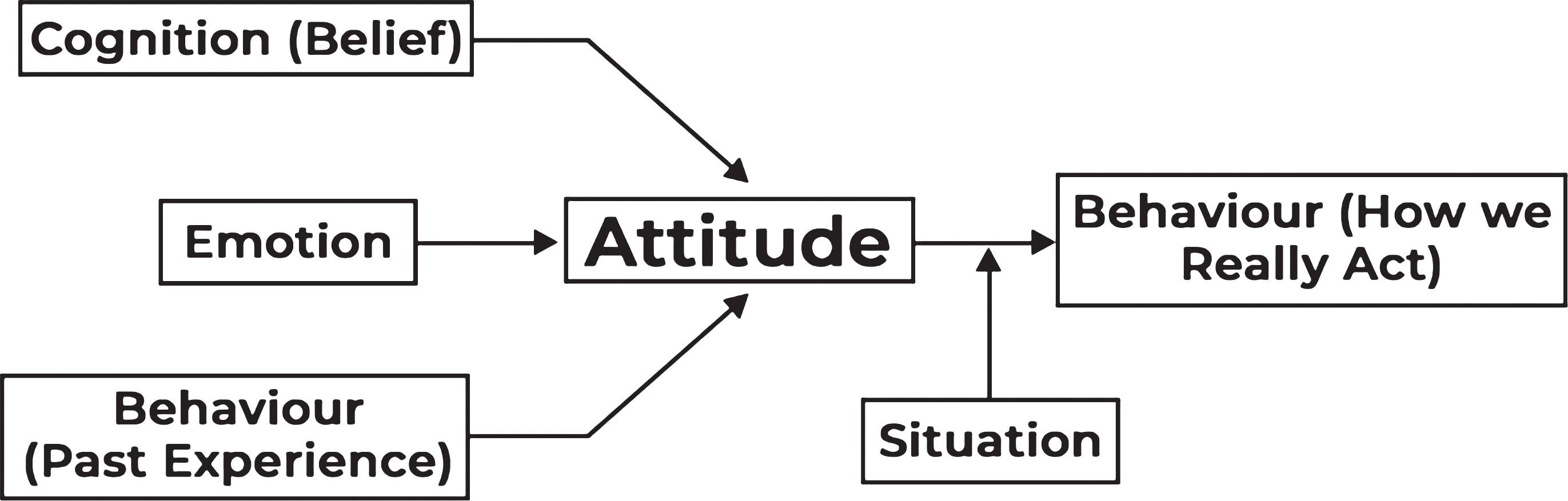
Figure: Attitude and Behaviour
Content/Components of Attitude: CAB Model of Attitude
• There are three components/content of attitude, generally called CAB Model:
• Cognitive
• Affective
• Behavioural
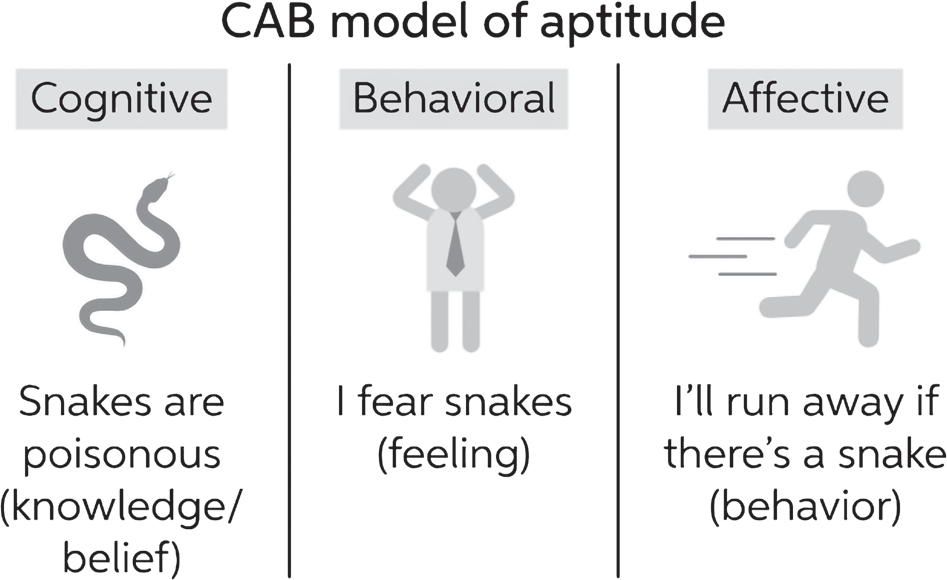
• Cognitive Component
• The cognitive aspect of attitude involves beliefs, thoughts, and perceptions associated with an object. When individuals evaluate information and form opinions—whether positive or negative—it reflects the cognitive dimension of attitude.
• For example, in the Delhi Odd-Even Program, awareness was raised about the severity of pollution using real-time Air Quality Index data at key intersections, while promoting public transport as a cost-effective alternative.
• Another example includes beliefs such as "Snakes are poisonous" or "Cricketers prioritize money over national pride."
• Similarly, the argument "The death penalty should be abolished because it does not deter crime" is a belief that forms part of cognitive attitude.
• Stereotypes are generalized thoughts or assumptions about individuals or groups that may not always reflect reality. These are part of the cognitive component of attitude.
• Examples include statements like "Women are bad drivers," "Africans engage in drug trafficking," or "Punjabis are heavy drinkers."
• Affective Component
• The affective component of attitude relates to emotions or feelings (such as self-identity, value expression, or ego defense) associated with an object. Emotional responses strongly shape attitudes in various ways.
•
A primary way in which feelings shape attitudes is through feelings that are aroused in response to an attitude object.
• This component helps in attitude formation and change, persuasion, social influence and decision making.
• This component may lead to overriding cognitive rationale according to values of society or situation.
• For instance, in Delhi Odd-Even Programme, to
target the affective component of Attitude:
• Data on 50% children being affected by respiratory diseases in Delhi – emotion of love, care, compassion etc.
• New relations due to carpooling – friendship. Frustration due to traffic jam is now reduces. Fear of heavy fine. On the first day instead of issuing fine, roses were given to develop positive emotion.
• For instance, I fear snakes (feeling) or I hate cricket because all matches are fixed. (feeling)
• For example, I dislike death penalty. (feeling)
• Prejudice is prejudgment, or forming an opinion before becoming aware of the relevant facts of a case.
• Formation of prejudice is the result of the affective component of Attitude.
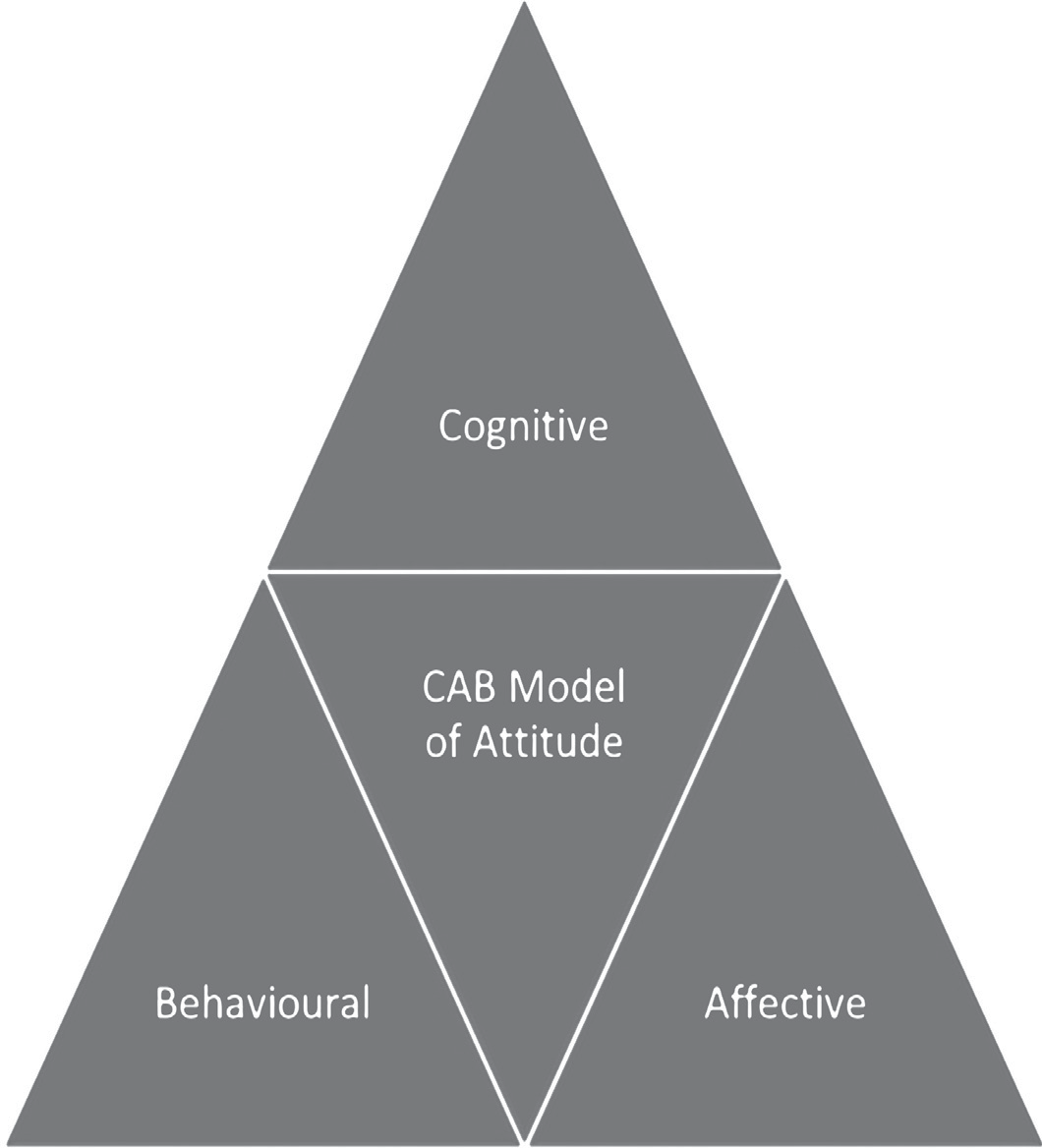
Figure: CAB Model of Attitude
• Behavioural Component
• The behavioural component of attitudes refers to past behaviours or experiences with reference to an attitude object.
• It refers to a tendency or a predisposition to act in a certain manner. The predisposition to behave in a certain manner may be caused by affective and cognitive components.
• Like in Delhi Odd-Even Programme: people started realising that the scheme is saving their time due to less traffic. Number of buses were increased, metro frequency was increases, whole public transport was strengthened. Carpooling in Ola and Uber were initiated.
• For instance, belief that ‘boss is corrupt’ and feeling that ‘can’t work with him’ may lead to behaviour i.e. ‘going to quit job’.
• For instance, I’ll run away if there is a snake.
•
Like I will not buy X brand shampoo because it is promoted by a cricketer and I know all cricketers are match fixers. (behaviour in a shop.)
• Such as I’ll lead a protest march against death penalty. (behaviour on street)
• Behaviour based on stereotypes and prejudice often lead to unfair discrimination on illogical grounds.
Relation between CAB Components
• The components of the CAB model share a “synergistic” relationship. When an individual holds positive beliefs about an attitude object, they usually develop favorable emotional and behavioral associations with it.
• However, this is not always the case. For instance, a person may have a strong liking for Gulab Jamun but may not hold positive beliefs about it. For example, they might believe that Gulab Jamun is unhealthy.
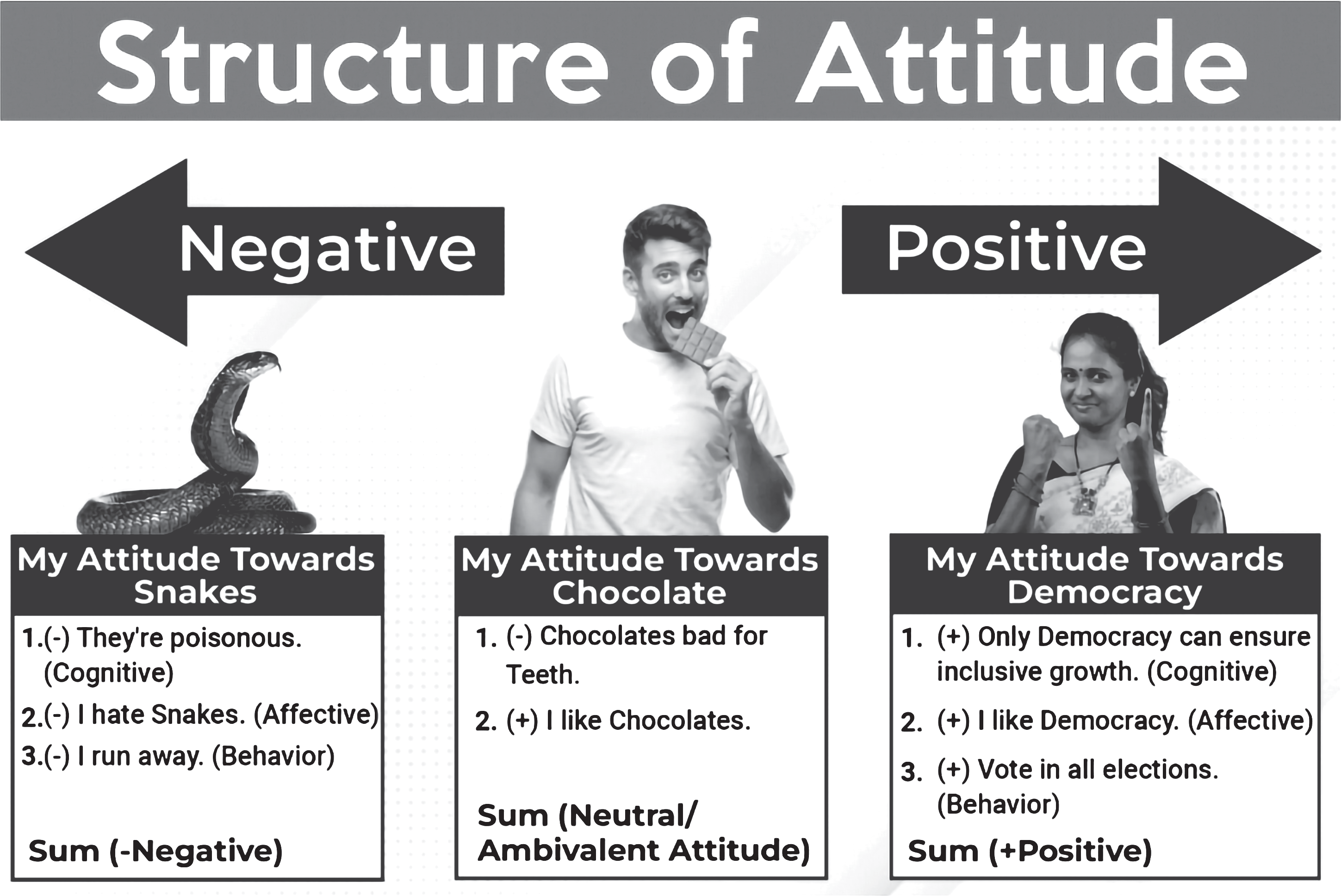
Structure of Attitude
• The structure of attitude aligns with the CAB model’s dynamic implications for information processing, retrieval, and judgment. Attitude possesses dynamic
properties, including:
• Strength: The strength of an attitude is influenced by factors such as certainty, intensity, extremity, origin, personal significance, interest, and direct experience. Even if a group is in the minority, a
strong attitude toward a cause may enable them to influence others.
• For example, having friendships with Muslims can foster stronger positive attitudes toward the community.
• Consider this scenario : The Government of Maharashtra has implemented a beef ban. How would you react? Would you stage a protest (strong reaction), remain indifferent because it doesn’t
personally affect you (neutral), or quietly discuss it with your family while watching the news (mild response)?
• Consider some labour reform that will help 90% of the workers in unorganized sector. But still Government may not implement it, fearing strikes by labour unions (from organized sector).
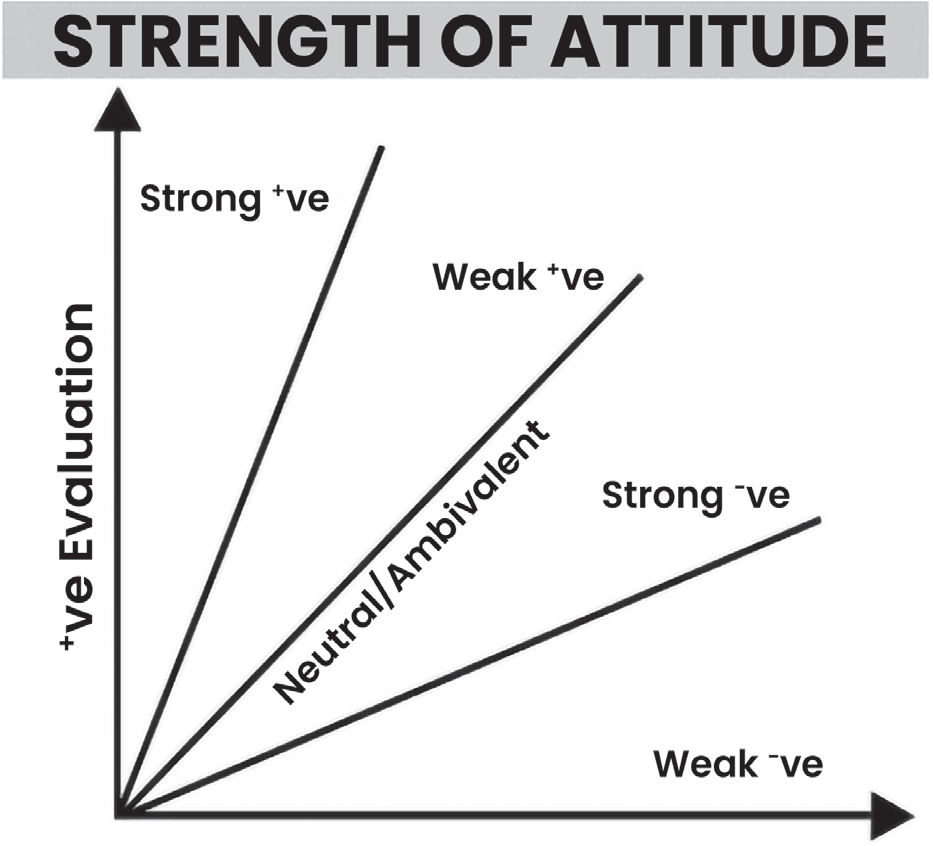
Figure: Strength of Attitude
• Accessibility: It depends on ease of retrievability from memory about an object, issue or situation. Faster the recall, stronger the attitude.
• For example, memories related to childhood violence by parents creates stronger attitude of aggression.
• In a study, participants were asked “will you vote for Obama?” immediately raised hands (conscious), they voted but those who raise hands after few minutes, didn’t.
• Such as due to dislike for salesman and tele- callers, leads to immediate cutting of the call (high accessibility) without thinking (low cognition mode) of consequences. But in reverse case, it is difficult.
• Ambivalence: Simultaneous possession of both positive and negative attitudes affect the behaviour of an individual. People with integrity are less ambivalent.
• For instance, conflicting values on arranged marriage due to obedience to parents’ vs personal values of freedom and choice.
• Social Pressure: For instance, a study was done in USA during the period of racial discrimination.
• Hotels, restaurant owners were sent letter “if Chinese couple coming, will you receive them?” Most owners replied “no”, indicating
racial prejudice. However, when an actual Chinese couple was sent, majority of the owners received them well. Owners feared negative media limelight.
• Same way, if you’re health conscious, you’ll avoid junk food at home but may be at friend’s private party, you’ll eat junk food or even drink desi liquor, because of peer-pressure.
• During Non-Cooperation movement,“social outcasting” of non-participants occurred. E.g. laundry, grocery, etc. Then they’ll started to participate.
• Bottom line: Relation between attitude and behaviour is not straight forward. “social influence / peer-pressure” matters.
Structure of Attitude
Structure of Attitude
• The structure of attitude aligns with the CAB model’s dynamic implications for information processing, retrieval, and judgment. Attitude possesses dynamic properties, including:
Strength: The strength of an attitude is influenced by factors such as certainty, intensity, extremity, origin, personal significance, interest, and direct experience. Even if a group is in the minority, a strong attitude toward a cause may enable them to influence others.
• For example, having friendships with Muslims can foster stronger positive attitudes toward the community.
• Consider this scenario : The Government of Maharashtra has implemented a beef ban. How would you react? Would you stage a protest (strong reaction), remain indifferent because it doesn’t
personally affect you (neutral), or quietly discuss it with your family while watching the news (mild response)?
• Consider some labour reform that will help 90% of the workers in unorganized sector. But still Government may not implement it, fearing strikes by labour unions (from organized sector).
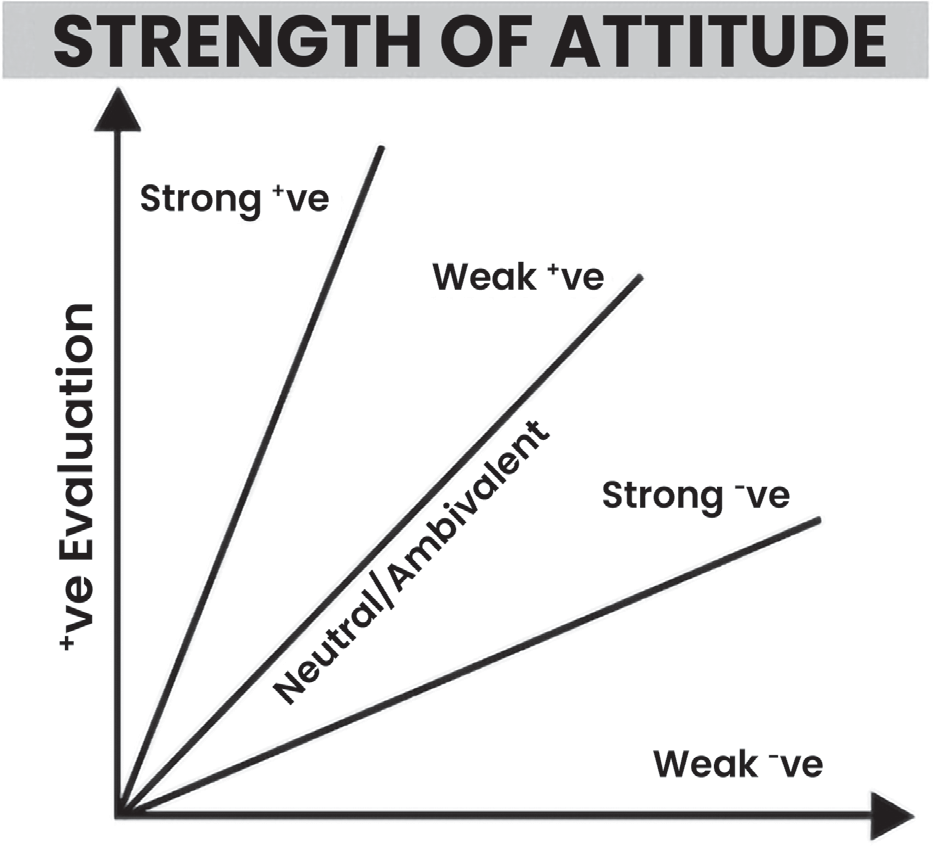
Figure: Strength of Attitude
• Accessibility: It depends on ease of retrievability from memory about an object, issue or situation. Faster the recall, stronger the attitude.
• For example, memories related to childhood violence by parents creates stronger attitude of aggression.
• In a study, participants were asked “will you vote for Obama?” immediately raised hands (conscious), they voted but those who raise hands after few minutes, didn’t.
• Such as due to dislike for salesman and tele- callers, leads to immediate cutting of the call (high accessibility) without thinking (low cognition mode) of consequences. But in reverse case, it is difficult.
• Ambivalence: Simultaneous possession of both positive and negative attitudes affect the behaviour of an individual. People with integrity are less ambivalent.
• For instance, conflicting values on arranged marriage due to obedience to parents’ vs personal values of freedom and choice.
• Social Pressure: For instance, a study was done in USA during the period of racial discrimination.
• Hotels, restaurant owners were sent letter “if Chinese couple coming, will you receive them?” Most owners replied “no”, indicating
racial prejudice. However, when an actual Chinese couple was sent, majority of the owners received them well. Owners feared negative media limelight.
Same way, if you’re health conscious, you’ll avoid junk food at home but may be at friend’s private party, you’ll eat junk food or even drink desi liquor, because of peer-pressure.
During Non-Cooperation movement,“social outcasting” of non-participants occurred. E.g. laundry, grocery, etc. Then they’ll started to participate.
• Bottom line: Relation between attitude and behaviour is not straight forward. “social influence / peer-pressure” matters.
Milgram Experiment
Milgram Experiment
Hitler was an evil dictator. But why did ordinary Germans participate in atrocities against Jews Prof. Stanley Milgram of Yale University (1961) began experiment to study it.
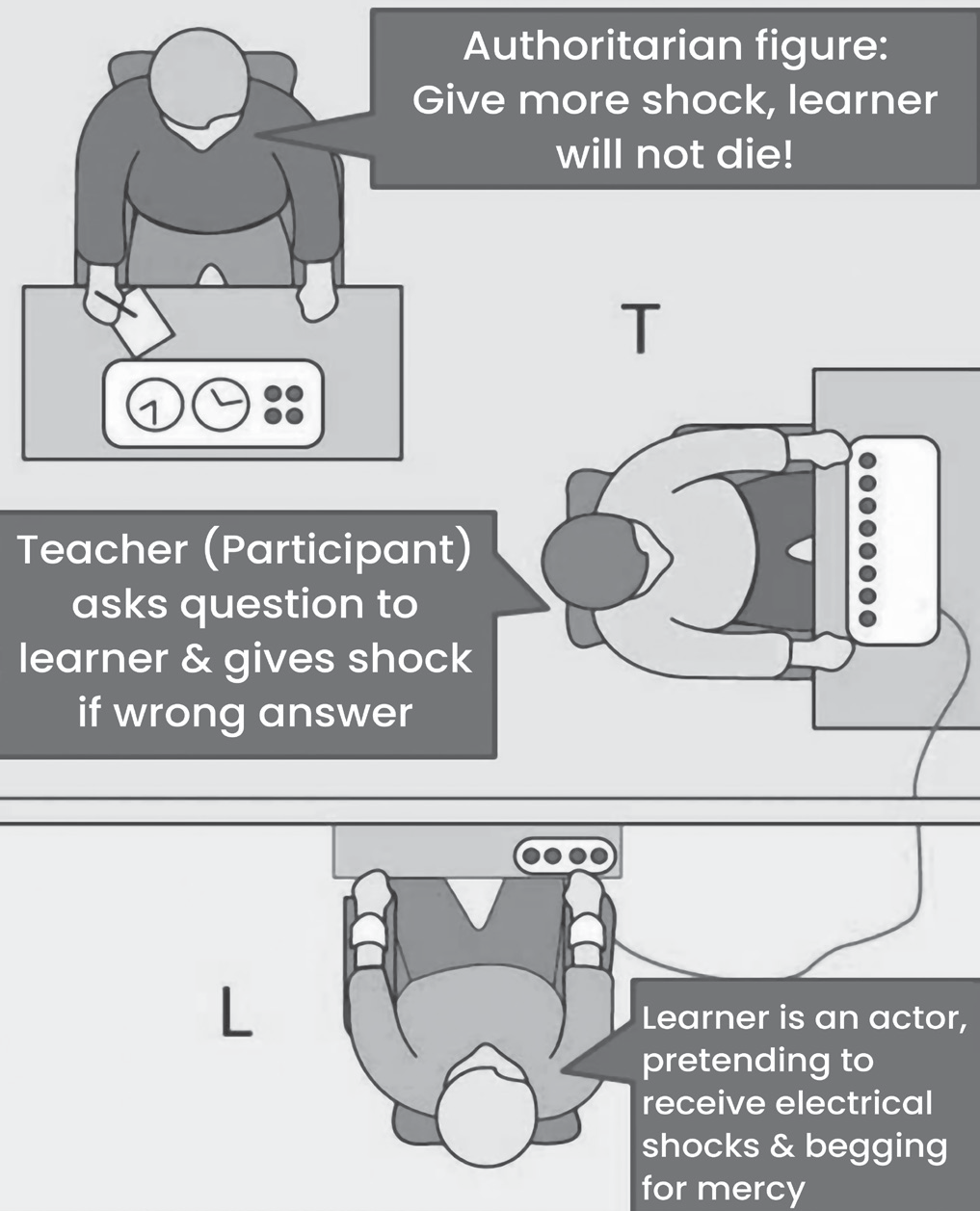
Figure: Milgram Experiment on Attitude
In this study, an authority figure (doctor) ordered participants (teachers) to deliver what they believed were dangerous electrical shocks to another person (who acts as student and show as if getting the shocks and is in pain), if the person gives wrong answers to a set of questions.
2/3rd of the participants gave shocks up to fatal level
(450 volts). Because behind participant, there was a doctor, he’ll keep saying “go on…increase the voltage, person will not die.”
These results suggested that
People are highly influenced by authority, and highly obedient.
Lack of accountability overrides conscience: Individual participant’s conscience is overpowered, when participant thinks “it’s not my responsibility, I’m only following orders”.
In Nuremberg trials, German officers shamelessly justified their actions saying we were just following orders (obedience).
Authoritarian figure can overwrite one’s conscience just by a speech as done by Hitler.
Peer-pressure is Stronger Than Obedience: Among two participants, second participant strictly refuses to give shock and leaves the room, then first participant may also walk away.
Mass-movements like Nirbhaya rape protests or Anna Hazare movement or mass hysteria, due to peer pressure, you’ve to participate, if others are participating(conformity) like “Ganpati drinking milk”.
Thus, in the order of Strength, Peer-Pressure (Conformity) is stronger than Obedience which is stronger than Conscience.
Functions of Attitude
Functions of Attitude
According to functional theories of attitude, attitudes are important to human psychological functioning.
Attitudes are constructs that people create in order to meet their physical, social, and emotional needs.
Individuals hold attitudes for a variety of reasons.
For example, an individual’s affinity for the Indian hockey team might have developed from his/her relatives and friends supporting the team.
In contrast, one’s attitude toward abortion might be based on the value one places on an individual’s freedom of choice or the sanctity of life.
In Daniel Katz’s view, Attitude performs various Functions:
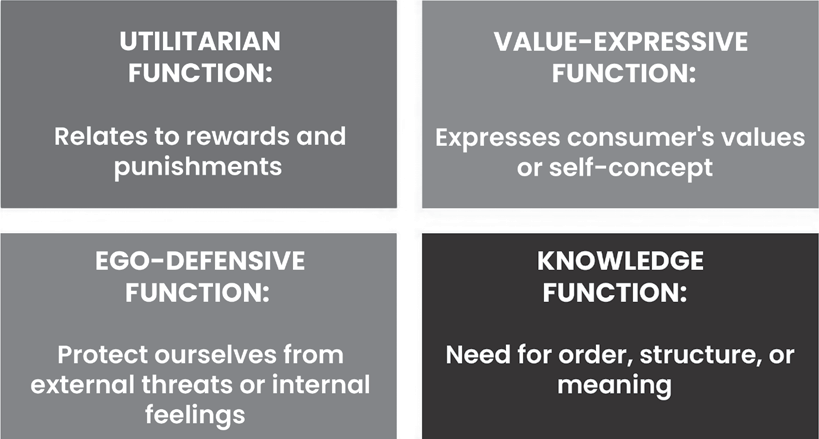
Figure: Functions of Attitude
•
Knowledge: Attitudes have a knowledge function, which enables individuals to understand their environment and to be consistent in their ideas and thinking. It brings stable, meaningful, clear, organised world view via a frame of reference which makes sense and allows prediction providing a sense of control.
• This implies that attitude is a schema to organise, interpret and structure social information i.e. classification of objects and experience according to importance and positivity. It helps create generalization/ stereotyping.
• For instance, Crows in India are black, so all crows in the world should be black.” (it’s true, thus your time is saved)
• If I believe good things happen to good people, so, if bad thing happened to a person, he must be a bad person. (Stereotyping/prejudice as may or may not be true).
• Utility: Many attitudes have a utilitarian function. They help individuals in maximizing benefits and minimizing disadvantages to optimize one’s interests while interacting with individuals, groups and situations in their environment.
• For instance, rewards to advanced tax payers.
• If you’ve big property, you’ll oppose property tax hike.
• Like a Soap is cheap and yet cleans the clothes efficiently.
• Ego-Defensive: Attitudes promote and maintain an individual’s self-esteem as defence mechanisms like Denial, Repression, Projection, Rationalization for handling an individual’s internal mental conflicts by hiding an individual’s true motives from himself or psychologically isolate him from groups perceived as hostile or threatening.
• For instance, negative attitude to sports after humiliation but support in public to maintain self-image.
• “Grapes are sour, because I can’t eat them”.
• Like if British felt Indians were uncivil and incapable of ruling themselves, then some people tried to revive ancient Indian pride.
• For instance, any criticism of the Prime Minister is attack against the nation, calling the critics as anti-national.
• Value Expression: Katz suggested that attitudes can fulfill a value-expressive function, allowing individuals to reflect their self-identity and core values through their attitudes.
• For example, Gandhiji stopped wearing coat/ pants and switched to Khadi dhoti to express his central value “self-reliance, simple living”.
• For instance, a politician kissing a baby for social acceptance (verbal or non-verbal)
• Like an advertisement shows purchase more gold to show higher status. And even use photos of Goddess Laxmi.
• Identification/ Social Adjustment: Attitudes perform a social role, helping in an individual’s self-expression and social interaction. Set of attitudes indicate identification with reference groups to express one’s core values, and identity. It underlies an individual’s desire to establish his individual and social identity.
• For instance, a behaviour of wearing cap, having stickers or tattoos.
• Similarly, buying flag on Independence Day.
• Like, I am a fan of Shahrukh Khan, so I’ll buy Pepsi, because he is endorsing it.
• Externalization: By blaming external factors we try to defend our internal conflict
• E.g. I got low marks in interview because panel was biased.
Formation of Attitude
Formation of Attitude
Classical Conditioning (Pavlovian Conditioning or Learning by Association): Process of attitude formation or behavioural modification by which a person comes to respond in a desired manner to a previously neutral stimulus. When interaction between two (may/may not be independent) stimuli are related to produce a new stimulus. (Stereotyping or brainwashing)
Pavlovian Classical Conditioning Example:
In Pavlov’s well-known experiments, conditioning occurs by associating two stimuli.
Pavlov trained dogs to react to the sound of a ringing bell, which was consistently followed by food. Initially, salivation was triggered by food (the unconditioned stimulus), but after repeated pairings, the bell alone caused salivation.
In this experiment, dog food serves as the unconditioned stimulus, naturally leading to the unconditioned response—salivation. The ringing bell acts as the conditioned stimulus, eventually eliciting salivation as a conditioned response.
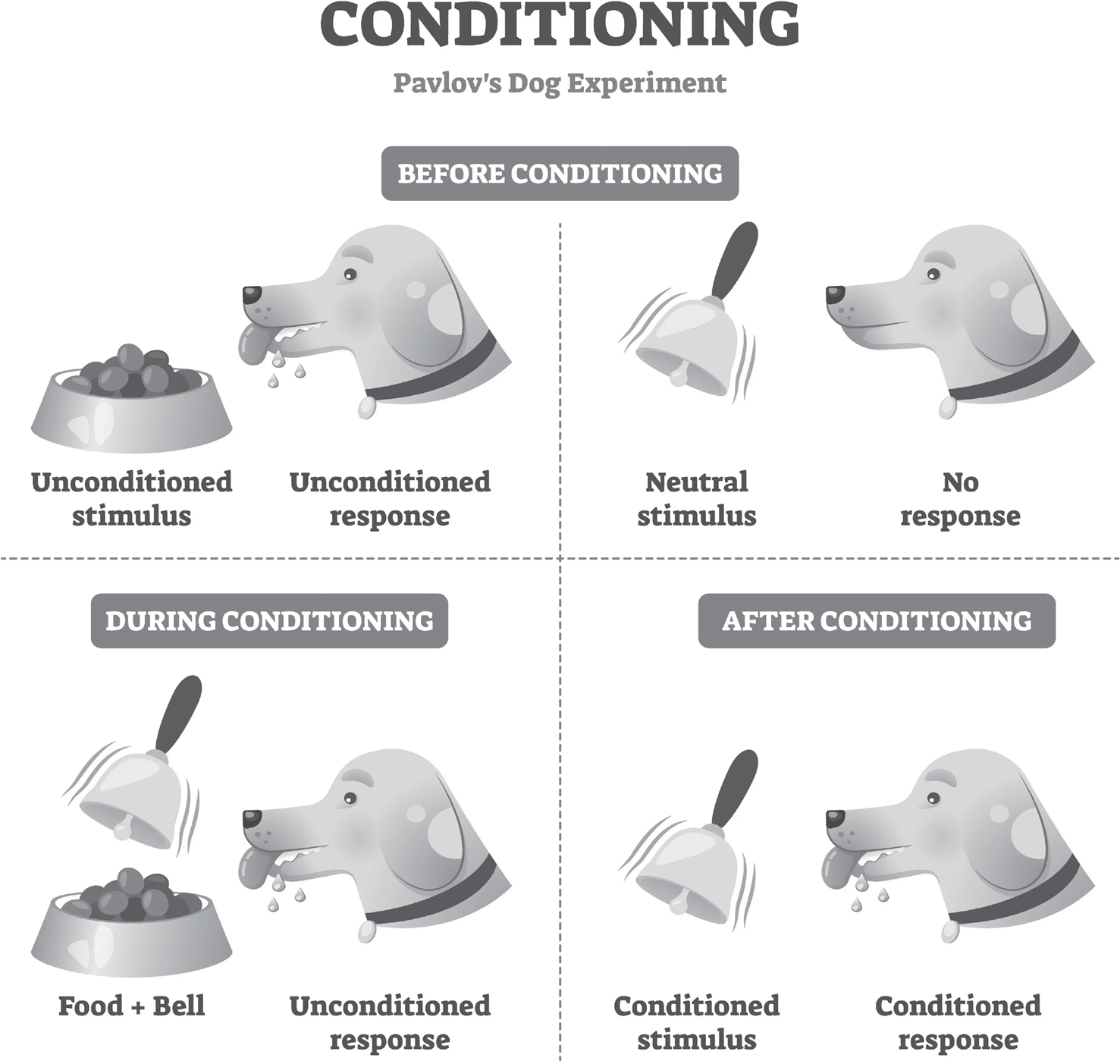
Figure: Pavlov Conditioning
• Similarly, a child repeatedly listening to parents calling Muslims to be aggressive and fundamentalist, may adopt such negative attitudes, even without meeting them.
• Operant Conditioning (Instrumental): When behaviour having positive outcomes are strengthened/ encouraged and those with negative outcomes are suppressed/discouraged. (Rewards vs Punishment)
• Behaviorist B.F. Skinner was the first to describe operant conditioning, which is sometimes referred to as Skinnerian conditioning.
• As a behaviorist, Skinner argued that understanding internal thoughts and motivations was unnecessary for explaining behavior. Instead,
he emphasized focusing on external, observable factors that influence human actions.
• He expanded on the Law of Effect by introducing the concept of Reinforcement, stating that behaviors followed by reinforcement are more likely to be repeated (strengthened), while those that are not reinforced tend to diminish or disappear (weakened).
• The Skinner Box, or operant conditioning chamber, is a device designed to systematically record an animal’s behavior over a short period. It allows researchers to reinforce or punish specific actions, such as a rat pressing a lever, to study behavioral patterns.
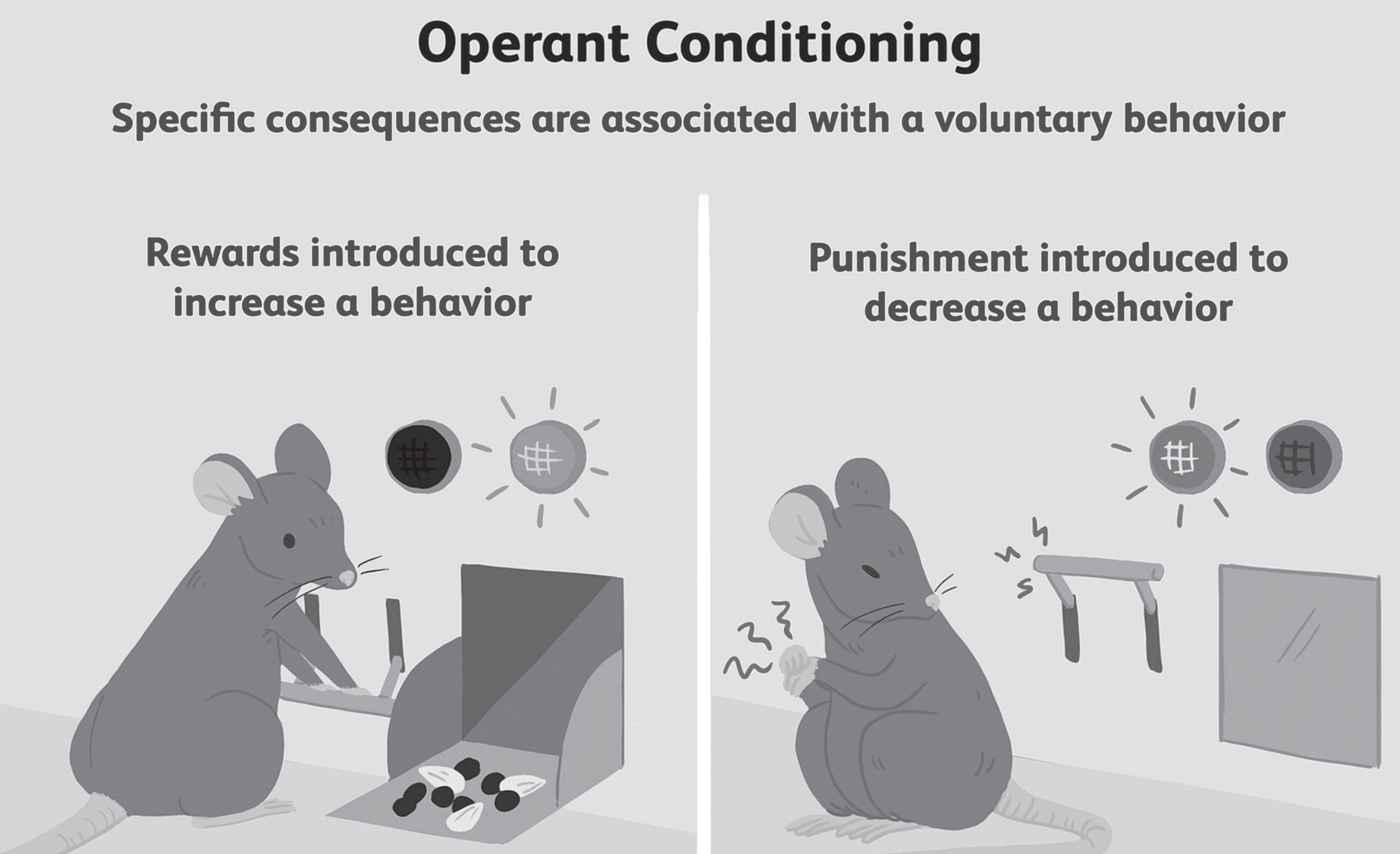
Figure: Operant Conditioning
• For instance, praise for studies may lead to double the efforts and positive attitude towards studies and vice versa.
• Observational Learning (Media Information or Modelling): The phenomena by which a person acquires new forms of behaviour simply by observing the rewards and punishments that others get. When individuals learn through the experiences of others (similar, desirable or experts) in the society (majority of people).
• For example, some cartoons like Doraemon or
Shinchan are very violent and cause children to illustrate aggressive behaviour.
Genetic Factors: Genetic factors also play a role in shaping attitudes of an individual, However, they play stronger role in shaping some attitudes than others.
For example, attitudes involving food preferences.
Similarly, attitude of identical twins similar even in opposite conditions of development.
Categories of Attitudes
Categories of Attitudes
• Attitudes are divided into two categories as given below. The basic difference between these two types of attitudes is conscious and unconscious cognition.
• Explicit Attitudes: These stem from conscious cognition.
• Implicit attitudes: These stem from Unconscious cognition.
• Explicit Attitudes: meaning individuals are fully aware of their attitudes. Since cognitive and motivational factors play a deliberate role in shaping them, they are sometimes referred to as self-reported attitudes.
• Implicit Attitudes: These originate from past experiences and are rooted in unconscious cognition, often involving forgotten memories.
• They emerge involuntarily and are primarily influenced by emotional experiences, making them more accessible when contextual factors come into play.
• Moreover, since culture embodies various emotions and sentiments, cultural biases significantly shape implicit attitudes.
Moral Attitude
• Attitudes may or may not be linked to morality.
• For instance, my perception of snakes is unrelated to morality, whereas my stance on democracy carries moral implications.
• Every individual holds and expresses moral attitudes, which tend to be more intense than moral beliefs.
• Morality concerns what society deems right or wrong, whereas attitudes reflect personal preferences. Thus, a moral attitude pertains to one's feelings about moral issues—where societal debates arise over right and wrong.
• For example, what are your thoughts on euthanasia (mercy killing)? Do you consider it morally acceptable?
• Family, society, religion, and education significantly influence the development of moral convictions. Additionally, moral attitudes are often shaped by a person's moral values.
• Among all natural values, moral values hold the highest significance. Traits such as goodness, purity, truthfulness, and humility rank above qualities like intelligence, artistic beauty, vitality, or even the power and stability of a state.
| Positive Aspects of Moral Attitudes Deeply connected to strong emotions, moral attitudes help deter deviant behaviors in society by instilling a fear of social rejection or exclusion. For example, acts like child molestation and incest are strongly condemned. Moral attitudes also inspire individuals to engage in altruism, volunteerism, and social service. For instance, educating and providing meals for underprivileged children. Advocating against harmful practices like dowry. | Negative Aspects of Moral Attitudes Since moral attitudes are socially accepted, they can be used to justify violent actions such as riots, genocide, and terrorism. Even irrational or extreme behavior may be tolerated by society under this pretext. For example, in April 1919, an English missionary, Marcella Sherwood, was attacked by a mob in Punjab. General Dyer cited this incident to defend the Jallianwala Bagh massacre, and he was celebrated as a hero in England. The strong emotional attachment to moral attitudes can lead to intolerance toward those who hold different views. For instance, before renting or purchasing a house, people often inquire about the caste, religion, or dietary habits (vegetarian/non- vegetarian) of their prospective neighbors. Moral attitudes have a trickle-down effect. For example, religious and caste-based divisions—such as conflicts between Hindus and Muslims or high and low castes—can extend beyond religion and caste, influencing political and economic perspectives and ultimately evolving into communal attitudes. |
Impact of Social Media on the Youth and Their Moral Attitudes
• Through Facebook, WhatsApp, Instagram, Twitter etc., youngsters are exposed to vulgar jokes and MMS, indecent, extreme and violent content every day.
• This adolescent exposure conflicts with moral/ ethical lessons in textbooks on respecting the law, constitutional values of non-violence, respecting women causing Cognitive Dissonance.
•
Research indicates that such children exhibit lower levels of empathy toward rape victims, a higher tendency for aggressive behavior, and an increased inclination to pressure partners into unwanted sexual activities.
• Poor or negligent parenting, lack of concern from teachers, peer influence in school or college, and unregulated exposure to television and the internet contribute to the distortion of a teenager’s moral compass.
• Such teenagers feel attracted towards doing ‘wrong’ things like Hacking, Impersonation, Surveillance, Harassment, Recruitment and Malicious distribution through internet, because of its advantages like anonymity, action at distance, automation (using internet bots), accessibility (due to cheap data) and perpetuity (data on the web).
• Cyber-violence against women is a widespread issue across all types of countries.
• Developed Nations: The prevalence of pornography and platforms like Ashley Madison,
which facilitate infidelity among married individuals.
• Developing Nations: According to the 2014 UN Gender Report, nearly 200,000 children are kidnapped and trafficked annually in China through online portals.
• Least Developed Nations: In countries like Nigeria and Kenya, mobile phones are the most frequently used tools for cyber violence, including the circulation of explicit content such as viral rape videos or MMS.
KEY VIRTUES THAT UNDERPIN MORAL ATTITUDES
• Reverence: The fundamental attitude of reverence forms the foundation of all moral behavior toward others and oneself. It refers to a deep sense of respect or admiration for someone or something.
• For example, experiencing awe and reverence for a religious leader like Baba Bageshwar Dham fosters a positive attitude toward him.
• Faithfulness: This trait serves as the backbone of every institution that has been established and plays a crucial role in sustaining a healthy civilization. It signifies loyalty and devotion to a person or tradition.
• For instance, adherence to the tradition of applying a tilak cultivates a positive attitude toward it.
• Awareness of Responsibility: A person who possesses a sense of responsibility can truly recognize the significance of values in shaping the world.
• For example, a Sarpanch’s commitment to their village panchayat or community fosters a positive attitude toward their duties.
• Veracity: Veracity refers to truthfulness, authenticity, or accuracy. It serves as the cornerstone of genuine human relationships, love, professional integrity, knowledge, self-improvement, and spiritual beliefs.
• For example, a teacher’s honesty in teaching leads to positive learning outcomes among students, creating a favorable attitude toward the teaching profession.
• Similarly, authenticity in friendship is strengthened when friends support each other in difficult times, fostering a positive outlook on friendship.
• Goodness: Goodness represents what is morally right, beneficial, or positive. It lies at the core of moral values, symbolizing both moral excellence and the essence of ethical conduct.
• For instance, when an employee performs well in alignment with an organization’s objectives, it builds a positive perception of them within the workplace.
• Moral Values: The significance of moral values has been acknowledged by great thinkers like Socrates and Plato, who consistently emphasized that "it is better to endure injustice than to commit it." This supremacy of morality is a fundamental principle deeply embedded in Indian cultural heritage.
Political Attitude
• Political attitudes refer to opinions and perspectives directed toward political entities, including candidates, issues, parties, and institutions.
• This broad category includes views on various aspects such as patriotism, democracy, referendums, women's
reservation, transgender rights, equality, secularism, socialism, communism, communalism, transparency, accountability, corruption, voting behavior, and
political parties.
Types of Political Attitudes
• Commonly used terms to describe political attitudes in discussions include Radical, Liberal, Moderate, Conservative, and Reactionary.
Liberals advocate for fundamental principles such as liberty, equality, and democracy. However, they seek reforms within the existing system, preferring cons
Conservatives prefer maintaining the status quo, believing that changes or reforms will not necessarily lead to improvements.
Progressives advocate for gradual and steady reforms within the system, as exemplified by leaders like Nehru.
Radicals demand immediate and sweeping changes, similar to the views of Karl Marx.
Reactionaries seek to revert to a previous system or traditional way of governance.
For instance, groups like the Taliban and ISIS govern using a literal interpretation of Sharia or the Quran.
Religious organizations engaged in politics
often exhibit reactionary tendencies.
Extremists are highly dissatisfied with the
existing system and push for a complete overhaul, endorsing violence as a legitimate means to achieve their goals.
Pacifists also oppose the current system but reject violence as a method for bringing change.
Examples include Mahatma Gandhi and Martin Luther King Jr., who pursued nonviolent resistance to achieve their objectives.
Complex Factors that Shape Political Attitude:
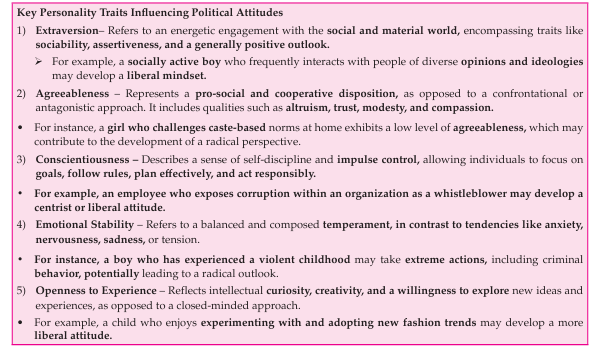
Personality Traits: An individual’s psychological traits also influence his ideological orientation. Individual personality is moulded by family, education, culture and work.
• Family: Despite generational differences and family disagreements, children often grow up to have the same political views as their parents.
• Extraversion– Refers to an energetic engagement with the social and material world, encompassing traits like
sociability, assertiveness, and a generally positive outlook.
• For example, a socially active boy who frequently interacts with people of diverse opinions and ideologies
may develop a liberal mindset.
• Agreeableness – Represents a pro-social and cooperative disposition, as opposed to a confrontational or antagonistic approach. It includes qualities such as altruism, trust, modesty, and compassion.
• For instance, a girl who challenges caste-based norms at home exhibits a low level of agreeableness, which may contribute to the development of a radical perspective.
• Conscientiousness – Describes a sense of self-discipline and impulse control, allowing individuals to focus on
goals, follow rules, plan effectively, and act responsibly.
For example, an employee who exposes corruption within an organization as a whistleblower may develop a centrist or liberal attitude.
• Emotional Stability – Refers to a balanced and composed temperament, in contrast to tendencies like anxiety, nervousness, sadness, or tension.
For instance, a boy who has experienced a violent childhood may take extreme actions, including criminal
behavior, potentially leading to a radical outlook.
• Openness to Experience – Reflects intellectual curiosity, creativity, and a willingness to explore new ideas and experiences, as opposed to a closed-minded approach.
• For example, a child who enjoys experimenting with and adopting new fashion trends may develop a more
liberal attitude.
• Age- Younger individuals are generally more open to change compared to the elderly, as older generations often have a vested interest in maintaining the status
quo.
• Pre-teens tend to be flexible and easily influenced.
• Teenagers are more likely to be rebellious.
• Elderly individuals usually adopt a more conservative stance.
• For example, Ronald Reagan supported the Democrats and advocated for government intervention in the market during his youth.
However, as he aged, he aligned with the Republicans and promoted market-oriented reforms.
• Gender: Women are generally more inclined toward liberal ideologies.
• Race: If a racial group perceives itself as being deprived of opportunities due to other races, it is more likely to support parties advocating radical solutions.
• For instance, many German "Aryans" joined the Nazi Party due to feelings of racial grievance.
• Health Status: Certain medical conditions can influence a person's attitudes.
• Epilepsy is often associated with a cynical outlook.
• Encephalitis can lead to increased aggression.
• Education: A Chinese may find Indian democracy as repulsive, because he has been taught that Mao’s Communist ideology is best.
• Economic Status: People who are prospering in society are usually resistant to change. The poor, on the other hand, have little to lose and a lot to gain from change. Or at least that’s what it appears to be.
• Psychological Inclinations: Some people are also better suited to liberalism or conservatism psychologically than others.
• To be a political liberal, one must have a high level of disorder tolerance.
• Belief in the necessity of a strong state for development and protection and ending disorder, indicates political right.
• Hobbes said, “Man is fundamentally evil.” Therefore, a strong-powerful state is required.
• Locke said, “Man is a good rational person”. Therefore, state should be kept weak, and men should be made strong by giving more freedom and rights.
• Religious Attitude: It frequently shapes their political views in light of their religious beliefs and practices. Fundamentalist approach may lead to a right-wing political attitude.
• Regional Aspirations and Insecurities. People tend to vote for regional parties because they are accustomed to them and their way of life. They may develop conservative attitude and often a right wing leaning.
• For instance, “Local” unemployed often align with party against the migrants or support regional reservation.
• Social Media: The information processed and shared on social media, moulds a person’s political views like during 2014 General elections.
• In 2014 general election, about 16 crore voters were 18-24 age group first time voters. Here, social media/internet helped both Modi and Kejriwal to reach surprise victories in election.
• Social media is full of Hindu vs. Muslim, India vs Pakistan, etc. A teenager exposed to such groups, is likely to develop extreme radical or reactionary political views.
•
ISIS is using social media to recruit soldiers for their war.
• Muzaffarnagar riots were a result of a viral video about eve teasing. Here, moral attitude (about dignity of women) + Religion + politics created a deadly stew.
• WhatsApp was used for coordination of political and violent agitation like during Patidar agitation in Gujarat.
Administrative Attitude and Attitude of the Citizens
• The perception, mindset, and attitude of both the public and administrators significantly influence a country's governance. Therefore, understanding the interplay between public and administrative perspectives is crucial. This will be explored under the following subheadings:
• Relationship Between Administration and the Public
• Public Perception of Administration
• Administrative Attitude Toward Citizens
• Harmonizing Public and Administrative Interests
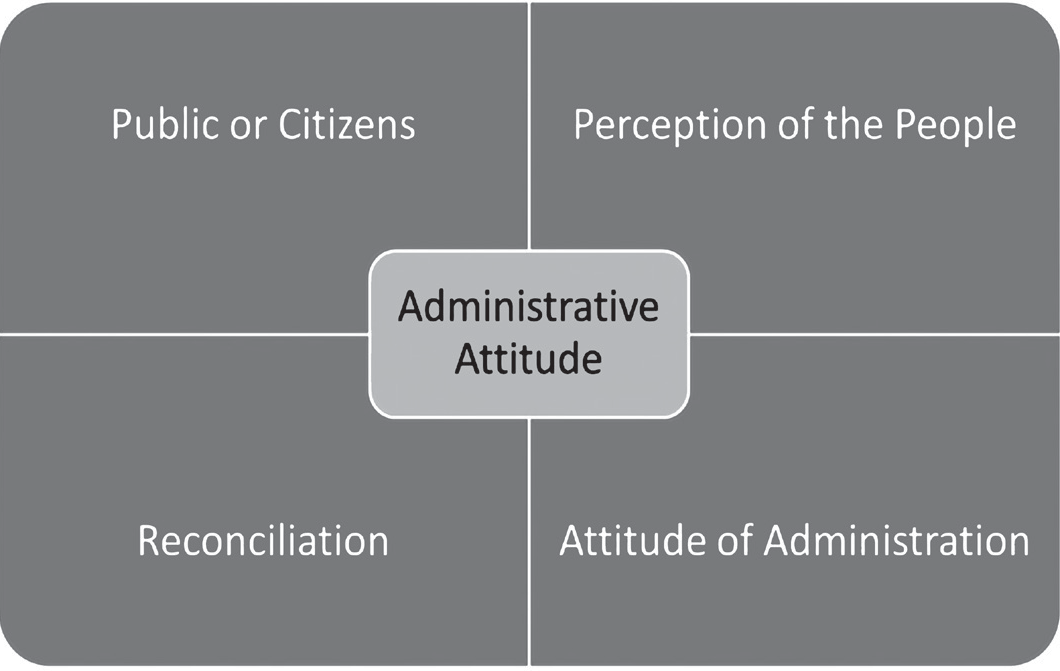
Figure: Aspects of Administrative Attitude
•
Administration vis-a-vis Public
• After independence, the role of administration expanded beyond maintaining law and order, delivering justice, and collecting revenue— functions aligned with the ‘Night-Watchman’ concept. It evolved into a ‘social service or welfare state,’ where administration took responsibility for sectors such as health, education, industry, and agriculture, covering every aspect that affects the public.
• As a result, governance became increasingly complex and required specialized expertise. This challenge is even more pronounced in developing countries like India, where a significant portion of the population remains poor, illiterate, traditional- minded, and lacks the initiative necessary for nation-building.
• Consequently, the administration is expected to drive social change and economic transformation by encouraging public participation in developmental programs.
• Public Perception of Administration
• Effective governance requires active citizenship and self-reliance, supported by public trust and cooperation. This interaction functions as a two- way process.
• The administration earns public respect only when it aligns with people's aspirations. Studies, including those by the Administrative Reforms Commission, reveal that citizens often view the bureaucracy negatively due to delays in case resolution, corruption, poor communication, lack
of accountability, favoritism, exploitation, arbitrary decision-making, and an indifferent approach.
• There is widespread skepticism regarding the integrity of public officials, as their behavior
creates opportunities for middlemen to exploit the poor and vulnerable.
• Administrative Attitude Toward the Public
• The Indian bureaucracy primarily consists of an urban middle-class workforce, while it largely serves rural populations that are poor and illiterate. This cultural gap often results in perceptions of apathy, indifference, and a lack of engagement in the development process.
• The bureaucracy points out that the people are unaware, no understanding and make no effort, are pessimistic. Further, there is too much interference of local politicians making it difficult to work honestly and freely. In fact, many times, the civil servants are looked at with contempt, suspicion, fear and distrust.
• Reconciliation of Public and Administration
• CP Bhambri suggests that there is a need
Bureaucratic Attitude and Democratic Attitude
for a Public Relations Agency within the administration itself. For progress and prosperity, citizens must actively participate in governance by showing initiative, interest, and wholehearted support. Their direct involvement is crucial for the effective implementation of welfare programs and policies.
• The effectiveness of administration relies on the commitment, dedication, and selfless efforts of public servants in working towards the well- being of millions across the country.
• The Hota Committee observed that advanced technology alone cannot make administration people-friendly. A proactive approach is essential, requiring officials to engage directly with citizens. They must dedicate more time to field visits, inspections, tours, and overnight stays in remote and rural areas to ensure better governance.
| Bureaucratic Attitude Bureaucratic Attitude reflect hierarchical discipline, implicit obedience to orders, top-down instructions, and rule bound approaches. Merits: objectivity, rule-bound nature, certainty, and simplicity and Weberian rationality. Like ensuring the acceptance of Dalit Cook in Government school. Demerits: rigidity, hide bound nature, stifling initiative and innovation, and focus on procedures than on results. Like sometimes following the rules literally in case of an officer in the temple not able to follow the religious mores. | Democratic Attitude Democratic Attitude is based on acceptance of majority principle for decision making, ensuring free and fair elections, participatory, humanistic and flexible approaches and on bottom-up decision- making. However, democratic approaches can cause confusion, indiscipline, soft-headedness, slow action, and corruption through slackness. Like in case of public works, decision should not be delayed but consent of villagers must be taken. |
• Many argue that the bureaucratic values are unsuited to development needs. Development needs a proactive, dynamic, goal oriented and problem- solving approach.
• Decision-making has to focus not on procedural formalities but on development objectives.
• Officers have to work in teams with cohesion and team spirit, breaking hierarchies.
• However, bureaucratic values suck as due procedures, official discipline, financial accountability, and legal orientation are essential organizational requirements. They ensure objectivity and impartiality.
• Bureaucratic and democratic values in administration are thus not antithetical but complementary.
Stereotypes Vs Prejudice Vs Discrimination
Stereotypes vs Prejudice vs Discrimination
• Stereotypes: These are negative attitudes about a labelled group. It is the beliefs about people due to they being member of a particular group.
It can be based on gender, ethnicity or occupation, etc. It is based on exaggeration, selective focus or bias, over generalisation and homogenisation. Evolutionists believe they developed as an adaptive advantage for survival. Some stereotypes like xenophobia (fear of strangers) which is a psychological or genetic tendency.
Stereotypes are generally used in daily life. These can be positive, negative or neutral. For instance,
Jains are traders.
Gujaratis are business minded.
Tamils are proficient in maths.
Punjabis are alcoholic party lovers.
Muslims are unclean and fundamentalist. (negative stereotype)
Women are poor drivers. (negative stereotype)
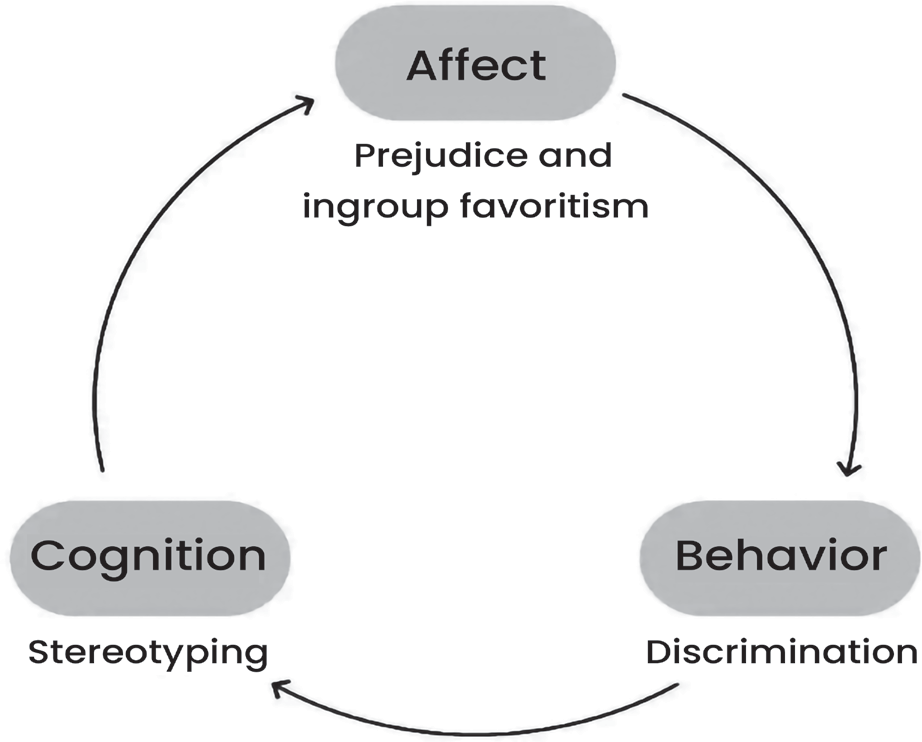
Figure: Cyclical Structure of Attitude
• Prejudice: It is an Attitude. Prejudice is formed by negative-stereotyping. Prejudice is a destructive phenomenon.
• It is a negative belief or feeling about a particular group of individuals. E.g. All the Nigerians in Goa are drug dealers.
• It is often passed over generations. It is pervasive because it serves many psychological, social and economic functions
• It allows people to avoid doubt and fear.
• Like a businessman of SC/ST category hating his own category to strengthen his claim to higher class.
• It gives people scapegoats to blame in times of trouble.
• Such as a higher caste person blames his unemployment on lower caste whom he believes to be incompetent and get preference due to working on low wages.
• It can boost self-esteem and group esteem having feeling of ingroup and outgroup.
• Like a poor Brahmin(s) can feel better about his(their) own poverty by insisting about
his superior caste status and prejudice about superior mental abilities.
Prejudice can be Explicit (i.e. publicly or consciously declared) or Implicit (hidden or unconscious).
Explicit prejudice includes overt discrimination, such as untouchability. However, as societies progress, such visible prejudices tend to decline.
Implicit prejudice is more subtle. For instance, in the USA, when a Black man interacts with a White man, there may be no obvious discrimination, but the White man's facial expressions may unconsciously change, revealing underlying bias.
Similarly, in urban India, while untouchability is not legally practiced, discrimination can still be observed in property rentals and sales.
A notable example occurred in 2009, when Bollywood actor Emraan Hashmi was denied a No Objection Certificate (NOC) to buy a house in Pali Hill. The society initially cited his Muslim identity as the reason, later justifying the denial based on his "serial kisser" on- screen image, claiming it was inappropriate for children. Both explanations reflect prejudice in different forms.
Reducing Prejudice: Four key conditions must be met to minimize biases:
Ensure equality among groups in terms of legal status, economic opportunity, and political power.
Authorities must actively promote and enforce equal rights for all.
Encourage formal and informal interactions between different groups to foster understanding.
Facilitate cooperation between groups toward achieving shared goals.
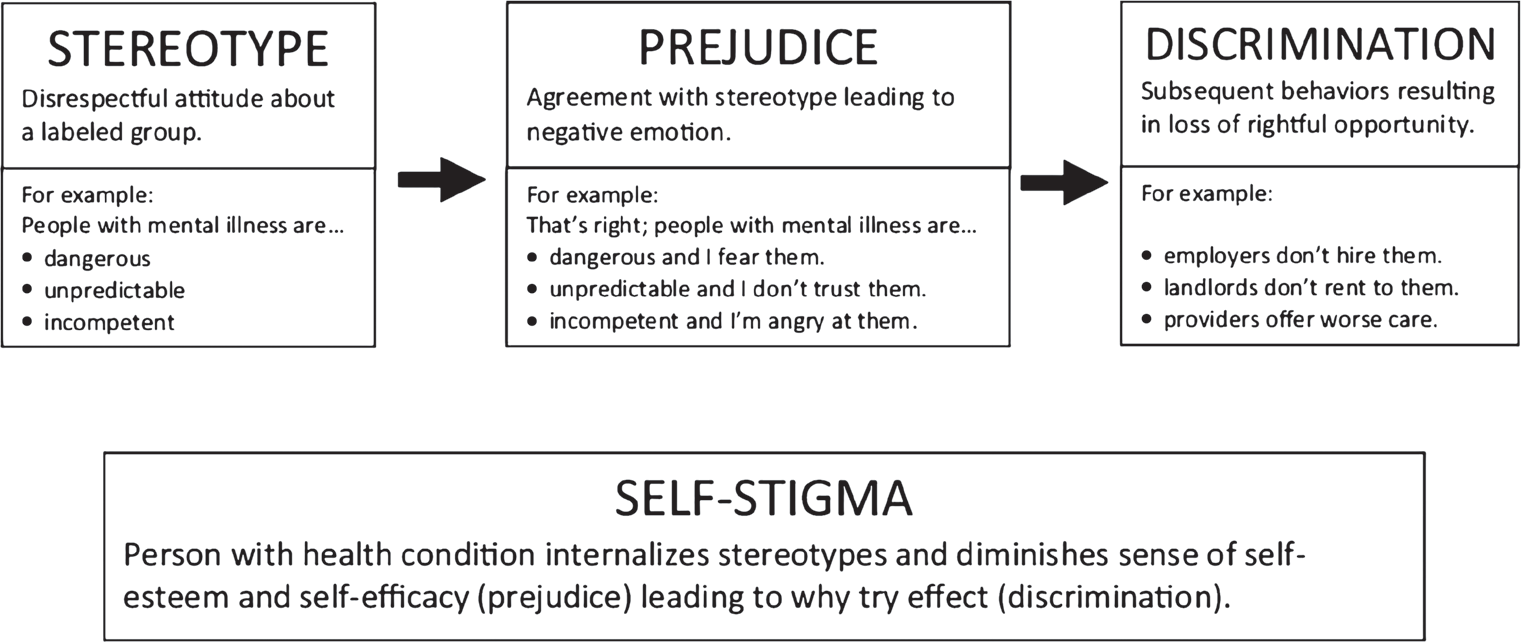
Figure: Stereotype, Prejudice, Self-stigma and Discrimination
• Discrimination: If that prejudice is guiding the behaviour. Discrimination is behaviour of making a distinction in favour or against a person based on the groups, class or category to which that person belongs to.
• Such discrimination overlooks individual merit
and can also be directed toward objects or ideas.
• For example, denying a Nigerian national a No Objection Certificate (NOC) to rent a house in a housing society is an instance of prejudice.
• Consider the following experiment:
• Students were randomly divided into two
groups, one wearing yellow shoes and the other red shoes.
• Over time, each group started speaking negatively about the other, labeling them as lazy, troublesome, or bullies.
Within their own group (in-group), all actions were justified, whereas everything about the other group (out-group) was seen as wrong.
Humans function in a similar way — differences based on race, religion, or region are no different from the arbitrary distinction of red shoes vs. yellow shoes.
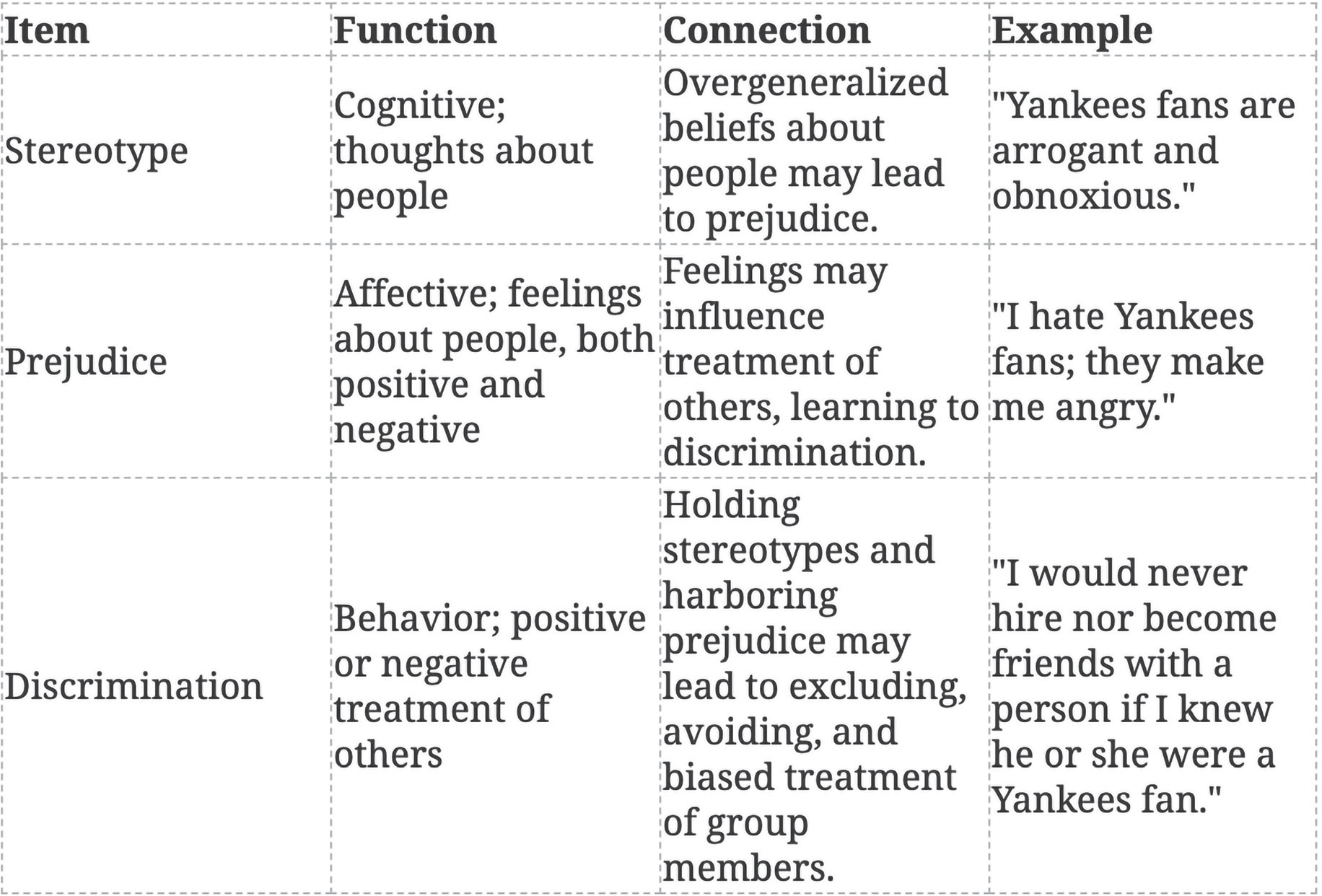
Figure: Stereotype, Prejudice and Discrimination
Significance of Attitude Change
Significance of Attitude Change
• Attitude can be changed in various ways for various purposes:
• Economic or Business Advertisement: Using ads, you change attitude of a person to make him like/ buy your product.
• Political Mass campaign: To get public support, you’ve to change their attitude. e.g. a leader was equated with his state; attack against the leader was started to be considered as an attack against the state.
• Social Change through IEC (Information- Education-Communication): for public awareness.
• From Public Policy perspective: For instance, in Bangladesh, pit-latrine is used, that’s safer for
women and cheaper than conventional toilet. Thus, rate of open defecation is low.
In India, many villagers own bikes, TVs, and mobile phones but lack toilets without feeling any guilt. Government-constructed toilets are often repurposed as storage rooms. The core issue lies in the attitude towards cleanliness and the dignity of women. To address this, the Swachh Bharat Abhiyan has involved celebrities to influence public perception and drive behavioral change.
Similarly, the National Health Policy includes a focus on “De-stigmatizing mental disorders” to encourage awareness and acceptance.
Likewise, the National Skill Policy highlights a prevalent mindset. A person may pursue
postgraduate education yet remain unemployed, as they perceive learning trades like welding as inferior. The belief that education equals graduation, while vocational skills are undervalued, hinders skill-based employment opportunities.
• Dr. Amartya Sen called for “attitude change” must be inculcated if Government wishes to opt public provision route for any facility like health insurance.
• Because we are a socially backward country with
many feudal structures.
• For instance, in Mid-Day Meal Scheme:
• Cook may be of any caste, yet child will have to eat.
• Students from all caste and religion will sit together and eat.
• Thus, A child develops ‘tolerant/inclusive’ attitude towards other castes and religions.
During COVID-19 Immunization: Problems occurred in some Muslim areas due to ignorant thinking that it’s against Islam, or will make them infertile
Theories of Attitude Change
Theories of Attitude Change
• Social psychologists propose two different approaches to explain the process of Attitude Change. One approach assumes that the genesis of the process of attitude change is internal (cognitive consistency approach). However, the other approach emphasises external source (persuasion).
• Balance Theory: Fritz Heider (1946) proposed balance theory which views the situations in a triad containing three components; P: the person, O: the other person, and X: the attitude object.
• Heider hypothesises two types of relationships among elements: sentiment and unit. Sentiment relationships are characterised by bonds based on attitudes or evaluations.
• For example, Rohan likes coffee; Sandhya supports moves for cashless economy; Nitesh cheers Mumbai Indians in the IPL.
• Unit relationships indicate possession.
• For example, Ritesh works with Omkar; Gagan has prepared a proposal for cashless economy; Mukesh owns the Mumbai Indians in the IPL.
• Relationships among the elements are indicated by positive (+) or negative (-) signs.
• For example, the principle that “my enemy’s enemy is my friend” is balanced, because there is something consistent about liking the person who has attacked your enemy.
•
Balance theory proposes that since balanced states are favoured over unbalanced states, people are motivated to change an unbalanced state to a balanced state.
Cognitive Dissonance Theory: By planting an idea that challenges the contrast in your beliefs. E.g. Tax evasion is same as corruption. So, tax evader will either try to justify his action or change his tax-evasion behaviour. Dissonance will be resolved by:
Change Behaviour: A person who smokes even after knowing that smoking can cause cancer may eventually stop smoking and thus reduce the dissonance caused by the inconsistency between belief and behaviour.
Change Perception of Behaviour: A person who smokes despite knowing the danger may continue with the reasoning to avoid the stresses or only with his friends.
Change Beliefs: This option is unlikely if the opinion is deep-seated and central to the individual’s belief system. Moreover, our basic beliefs and attitudes are relatively stable and people generally hesitate in changing their basic beliefs, attitudes or opinions.
Forced Compliance: Due to social norms, etiquettes or obligations to behave publicly in a way that is inconsistent with our personally or privately held belief. For example, we are forced to praise a horrible singing of a close friend.
Many Dilemmatic Situations: Here, taking a decision may induce dissonance. For example, getting married or going for a career, both the alternatives have their own advantages and disadvantages and going along one alternative closes the possibility of availing the advantages of the alternative that was rejected.
Effort Justification: It seems logical to construe that people attach more value to those goals that are achieved after great efforts.
For instance, when we achieve a trivial goal even after investing substantial effort it produces considerable dissonance.
Thus, people tend to justify their efforts by appraising the achieved goal in a more positive way and by attaching more subjective value to those goals, consequently leading to the reduced dissonance.
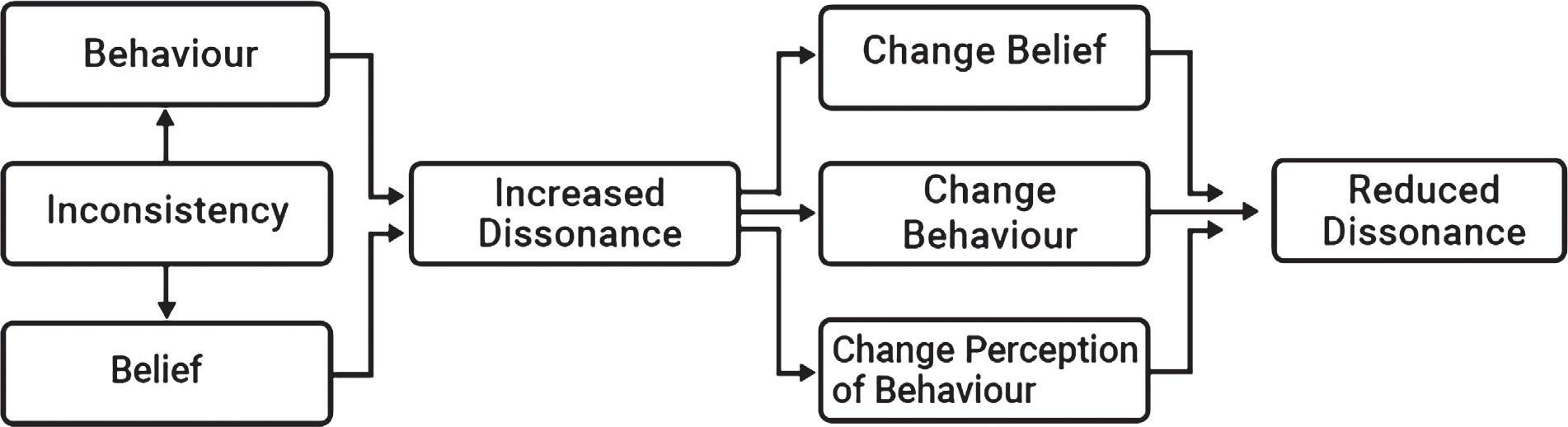
Figure: Change in Cognitive Dissonance
• Persuasion/Learning Theory: By actively persuading others. Studies done by Carl Hovland indicated that
• High-credibility sources tend to create immediate attitude change after communication. However, over time, a sleeper effect occurs, where the message is remembered, but the source is forgotten.
• Mild fear appeals are more effective in altering attitudes compared to strong fear appeals. Historically, propagandists have used fear- based strategies, but excessive fear can backfire, hindering persuasion instead of reinforcing it.
• Belief Rationalization
• People tend to maintain their attitudes if their beliefs align with their past behavior and face minimal conflicting information.
• However, when individuals are confronted with contradictions, they may adopt a more extreme stance to rationalize their previous actions.
• Elaboration Likelihood Model (ELM)
• Cognitive capacity influences persuasion. If a person is sleepy or distracted, their ability to process information is low, making them more susceptible to superficial persuasion. On the other hand, complex tasks like solving mathematical problems require high cognitive engagement, leading to more critical evaluation of information.
• Advertisements leverage low cognitive capacity states, leading to temporary persuasion—for instance, buying one smartphone brand today and switching to another later.
• In governance, for long-lasting impact, people must be convinced when they are in high cognitive mode, ensuring stronger commitment to policies.
• This model has proven effective in encouraging healthier lifestyle choices, such as among cancer patients, individuals at risk of HIV/AIDS, and
adolescents vulnerable to tobacco use.
Social Influence
SOCIAL INFLUENCE
Social influence referstothealterationinanindividual's behavior, thoughts, emotions, or attitudes due to their interaction with others in society. This change can occur intentionally or unintentionally, depending on how the individual perceives their relationship with the influencing person.
• It takes place when a person’s opinions, emotions, or actions are shaped by external influences. This influence can manifest in compliance, identification, or internalization of ideas and behaviors.
• Social influence takes many forms and can be seen in conformity socialisation, peer pressure, obedience, leadership, persuasion, sales and marketing.
• Social Influence can happen at three levels: Values, Attitude and Behaviour.
• For example, career that we choose is socially influence. Our manners, dressing style, eating habits etc are all socially influenced.
Levels of Social Influence (as defined by Professor
Kelman)
• Compliance: It is the act of responding favourably to explicit or implicit request or orders of others. In case of compliance, only behavioural change takes place but there is no change in attitude or values of a person.
• For example, being vegetarian on the insistence of parents.
• Identification: People may identify with an influential person whom they either idolize from a distance or know intimately.
• For example, advertisements that rely on celebrities to market their products are taking advantage of this phenomenon. Like Amitabh Bachchan selling hair oil.
• Internalisation: People may internalize the belief systems of others. In this a person internalizes the whole idea when self and the other person express common belief indicating congruence of value system. This is beyond compliance.
• Discussion: It is to affect the behaviour of average person. E.g. family beliefs, family structure, peer pressure, etc.
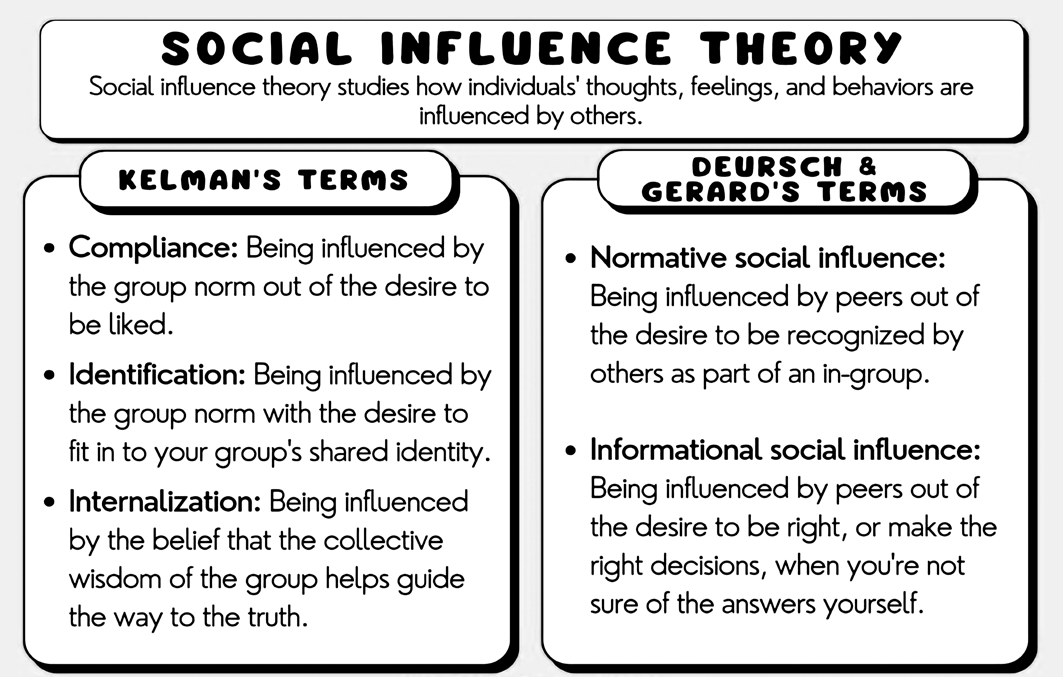
Types of Social Influence
• According to Bannister and Bushman, there are two kinds of social influence:
• Normative
• Informative
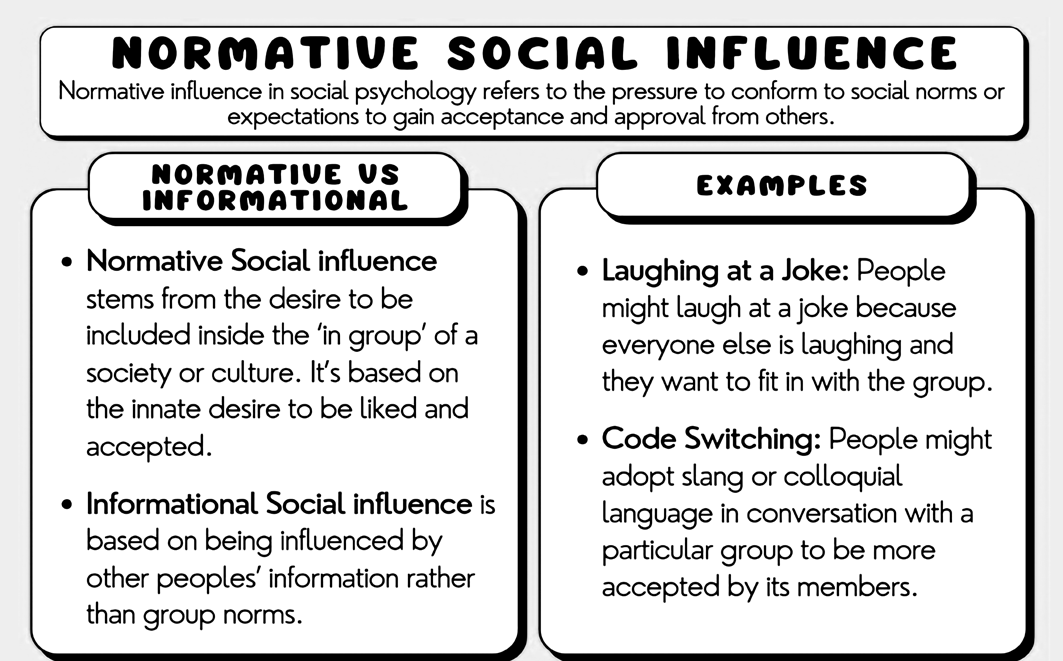
• Normative Influence: It means going along with the crowd to be liked/accepted due to the basic need to belong, thus raising the chances to survive by agreeing on common beliefs, values, attitude and behaviour.
• For instance, Asch Study of 1955 of judging the length of line concluding that people will get along with the group decision even if its clear error to avoid social rejection. This indicates Conformity Bias.
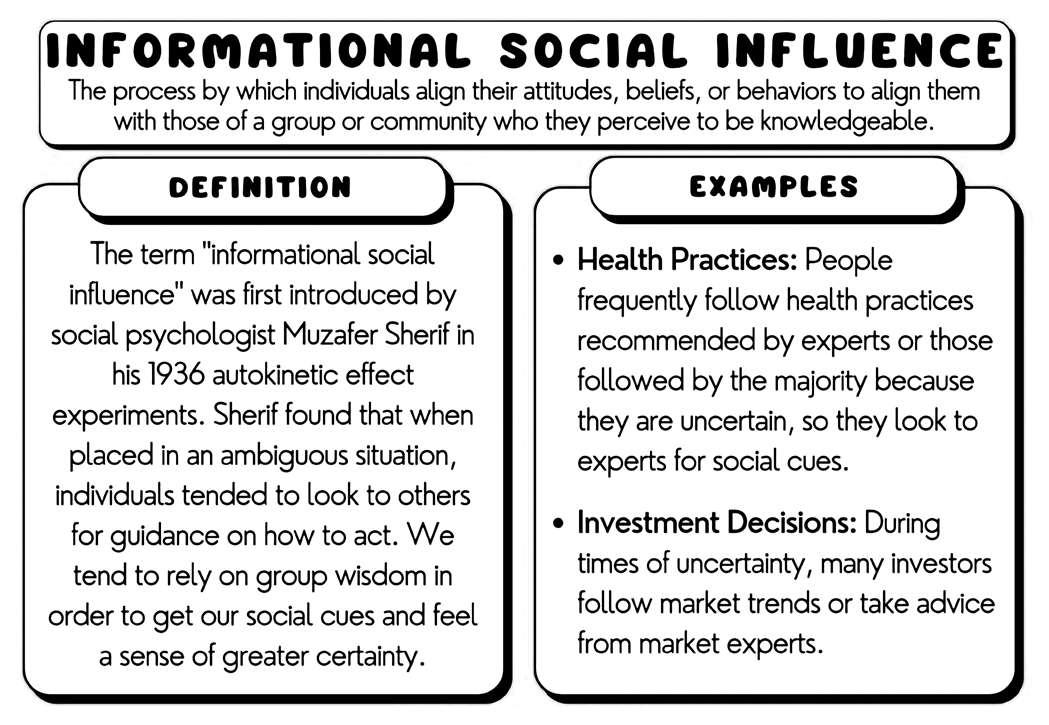
• Informative Influence: It means we go along with the crowd because we think crowd knows more than we do especially in ambiguous or crisis-like time scarce situation. This indicates Group Bias.
Principles of Social Influence
• Fundamental human instincts can be exploited both intentionally or unintentionally, through advertisement etc. to sway opinion especially when we are unable to scrutinise and resist according to ease of provocation, context and employment of best methods and awareness.
• There are six key principles of social influence which include the reciprocity principle, commitment and consistency, social proof, liking, authority, and
scarcity.:
• Reciprocity: It might be obvious and main rule of society. We easily feel indebted to others. Small indebtedness may lead us to respond disproportionately. For instance, social smile or Golden Rule.
• Consistency and Commitment: It deals with consistency with action, opinion, and assertion with commitment. We want to be consistent with what we have committed publicly. For example, after public decision on something, people stuck to it.
• Social Proof: Often decision is according to what similar others have done especially in uncertainty. Like following a precedent in Parliament.
• Liking: Influence is by the people liked by them due to physical attraction, similarity, praise, contact and association. Such as TV Ads or public appearance of celebrities.
• Authority: Like parental influence which is reflected in clothes, titles and even automobiles. Similarly, politicians, officials or film stars have influence.
• Scarcity: Rule says more desirable if less accessible. We feel loss than we feel gain. Fear of loss is one of the strongest behaviour motivators.
• Such as censored videos or limited-edition watch or last week sale slogans have immediate effect.
Other Types of Social Influence
• Conformity refers to adhering to the rules and norms of a specific community. It is a type of social influence where an individual alters their behavior, beliefs, or thoughts to align with others or with established social norms.
• For example, peer pressure may lead someone to engage in activities such as drinking alcohol because they perceive it as necessary to maintain friendships. A positive example of conformity is following traffic rules by driving on the correct side of the road.
• When conformity is absent, individuals may engage in non-conformity processes such as independence (choosing a different path) or non- conformity (like opting for a live-in relationship despite societal disapproval).
• Anti-conformity differs from independence because it opposes group norms not based on personal belief but rather to challenge the majority. Actions, opinions, and beliefs in anti- conformity are often deliberately opposed to the dominant societal standards.
• Self-Fulfilling Prophecy occurs when a prediction, even if initially false, leads to behaviors that ultimately make it come true due to the feedback loop between belief and behavior.
• For instance, the belief that women cannot become CEOs is a false prophecy, as there is no scientific basis for such a claim.
• However, repeated societal reinforcement of this notion can discourage women, making them less likely to pursue leadership roles, thus unintentionally fulfilling the prophecy.
•
Obedience is a form of social influence in which an individual follows explicit orders from an authority figure. It differs from compliance, which is influenced by peers, and conformity, which aligns with the majority's behavior.
• Obedience can be classified as moral, immoral, or amoral depending on the context.
• For example, following orders to harm an innocent person is considered immoral, while eliminating a threat to save lives may be seen as moral.
• The Milgram experiment (1960s), conducted by Stanley Milgram, demonstrated how ordinary people could be compelled to carry out harmful acts under authoritative pressure, explaining how Nazis involved civilians in mass atrocities during the Holocaust.
• Conformity refers to adhering to the rules and norms of a specific community. It is a type of social influence where an individual alters their behavior, beliefs, or thoughts to align with others or with established social norms.
• For example, peer pressure may lead someone to engage in activities such as drinking alcohol because they perceive it as necessary to maintain friendships. A positive example of conformity is following traffic rules by driving on the correct side of the road.
• When conformity is absent, individuals may engage in non-conformity processes such as independence (choosing a different path) or non- conformity (like opting for a live-in relationship despite societal disapproval).
• Anti-conformity differs from independence because it opposes group norms not based on personal belief but rather to challenge the majority. Actions, opinions, and beliefs in anti- conformity are often deliberately opposed to the dominant societal standards.
• Self-Fulfilling Prophecy occurs when a prediction, even if initially false, leads to behaviors that ultimately make it come true due to the feedback loop between belief and behavior.
• For instance, the belief that women cannot become CEOs is a false prophecy, as there is no scientific basis for such a claim.
• However, repeated societal reinforcement of this notion can discourage women, making them less likely to pursue leadership roles, thus unintentionally fulfilling the prophecy.
• Obedience is a form of social influence in which an individual follows explicit orders from an authority figure. It differs from compliance, which is influenced
by peers, and conformity, which aligns with the majority's behavior.
• Obedience can be classified as moral, immoral, or amoral depending on the context.
• For example, following orders to harm an innocent person is considered immoral, while eliminating a threat to save lives may be seen as moral.
• The Milgram experiment (1960s), conducted by Stanley Milgram, demonstrated how ordinary people could be compelled to carry out harmful acts under authoritative pressure, explaining how Nazis involved civilians in mass atrocities during the Holocaust.
Persuasion
PERSUASION
Persuasion is another form of social influence aimed at shaping or altering a person’s attitude or behavior toward an event, idea, object, or person.
It involves guiding oneself or others to accept a particular perspective through logical or symbolic means.
The process includes various verbal and non- verbal communication techniques to convey information, emotions, and reasoning to bring about attitude change.
The goal is to "win the heart and mind" of the intended audience.
It is a form of communication designed to influence
beliefs and actions.
• Factors Influencing Persuasion:
• The effectiveness of persuasion depends on three
key elements:
• Source– The credibility and trustworthiness of the person delivering the message.
• Message– The content and structure of the argument being presented.
• Target– The characteristics of the audience receiving the message.
• According to Aristotle, persuasion operates through three main appeals:
• Logos – Uses logic, reasoning, facts, and evidence to persuade.
• Ethos – Relies on credibility, ethics, and trustworthiness of the speaker.
• Pathos – Appeals to emotions and personal experiences to connect with the audience.
• How Modern Persuasion Differs from the Past:
•
Richard M. Perloff identifies five key ways in which modern persuasion has evolved, distinguishing it from historical approaches.
• The volume of persuasive messages has
increased significantly.
• Persuasive communication spreads much faster due to mediums like television, radio, and the internet, which allow messages to reach audiences almost instantly.
• Persuasion has become a major industry, with companies dedicated entirely to influencing consumer behavior, such as advertising agencies, marketing firms, and public
relations companies.
• Various organizations, including political parties and pressure groups, employ persuasion in a more subtle and strategic manner.
• The nature of persuasion has grown more intricate—with consumers having access to diverse choices, marketers must adopt sophisticated strategies to craft compelling messages.
McGuire's Model of Persuasion
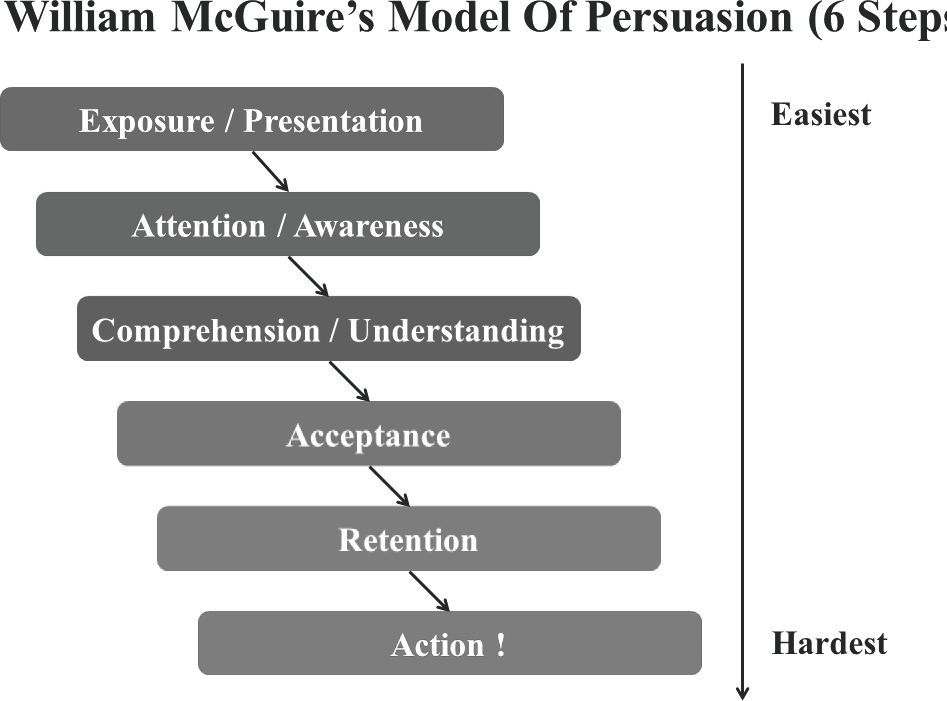
Persuasion is a multi-step sequential process where an audience must successfully pass through each behavioral stage for a message to achieve its final intended action.
• Presentation: The message must be made available to the recipient. (For instance, where the target demographic travels, a government hoarding about
Beti Bachao Beti Padhao must be displayed).
• Attention: The message must be noticed by the recipient. (For instance, using eye-catching images, well-known public figures, or emotional appeal to draw viewers in).
• Comprehension: The main point must be understood by the recipient. (For instance, bureaucratic jargon must be avoided and the message must be in plain, regional language).
• Yielding (Acceptance): The message must be accepted by the recipient. (For instance, they are persuaded that the suggested action is advantageous, such as when the Swachh Bharat program persuades people that personal hygiene is their duty).
• Retention: The argument and the message must stick in the recipient's memory. Recall is aided by slogans, memorable jingles, and repeated public address announcements.
• Behavior (Action): The message must cause the recipient to alter their behavior. (For instance, actually using soap to wash hands or sorting rubbish at home).
Case Study
Public Health Campaigns (e.g., Vaccination Drives):
• Make sure the message is communicated in a way that is both local and understandable (Presentation, Comprehension).
• Take help of credible influencer such as MP/MLA or celebrity to influence the hesitant or rural populations (Yielding).
• In order to ensure that the audience comes back for their second dose, it is important to reinforce the message by providing consistent reminders. (Retention, Action).
Two Types of Persuasion
• Systematic Persuasion: Systematic persuasion is when you use logic and reasoning to persuade someone. Systematic persuasion relies on logic, reason, and facts. Like, giving a logical argument for why people should vote for your political party.
• Heuristic Persuasion: Heuristic persuasion is when you use emotional appeals to persuade someone. Like an advertisement for a horror movie.
Factors Affecting Persuasion
• Source: The individual who delivers the message is referred to as the communicator. The likelihood of attitude change increases when the message is conveyed by an expert perceived as trustworthy, attractive, and relatable to the audience. For instance, if cricketer Virat Kohli endorses an energy drink, young children, who admire him as a sports icon, may be influenced to purchase the drink, believing it will enhance their performance like his.
• An effective source should possess the following traits: credibility, expertise, trustworthiness, knowledge, rationality, and attractiveness.
•
Power and authority of the communicator enhance compliance.
• Attractiveness fosters identification with the audience.
• Credibility promotes internalization of the message.
• Message: The effectiveness of a message lies in its ability to persuade and facilitate attitude change. It should be short, relevant, concise, precise, and well-organized. Messages that evoke fear and anxiety tend to have a greater impact. For instance, an advertisement for soap may highlight that body perspiration causes unpleasant odor, leading to social rejection. Conversely, using a specific soap might attract more friends, reinforcing a positive perception.
• Receiver: The characteristics of the person whose attitude is being influenced significantly affect the likelihood of change. Attitudes that are strong, deeply personal, complex, and interconnected are more resistant to change. For example, altering one’s family values is much harder than changing their preference for a soap or beverage.
• Channel or Medium : The effectiveness of persuasion depends on who delivers the message, what is being communicated, and through what medium it is conveyed. These factors collectively determine the success of the persuasion process.
Underlying Principles of Persuasion
• Reciprocation : This principle is based on the give- and-take concept, where people feel obligated to return favors. Society instills in individuals the need to repay acts of kindness, making this a highly effective persuasion technique. It can even result in unequal exchanges.
• For instance, in an experiment, participants attending an art appreciation session were divided into two groups—one group was offered a soft drink, while the other was not. Later, all participants were asked to purchase 25-cent raffle tickets. The results showed that those who had been offered a drink, regardless of whether they accepted it, bought twice as many tickets as those who were not offered anything.
• Commitment and Consistency : Once individuals make a decision or express a viewpoint, they experience both internal and external pressure to act in a manner that aligns with their prior commitment. This principle is widely used in political campaigns,
where politicians seek to secure public commitment to their ideology, making individuals more likely to support them consistently.
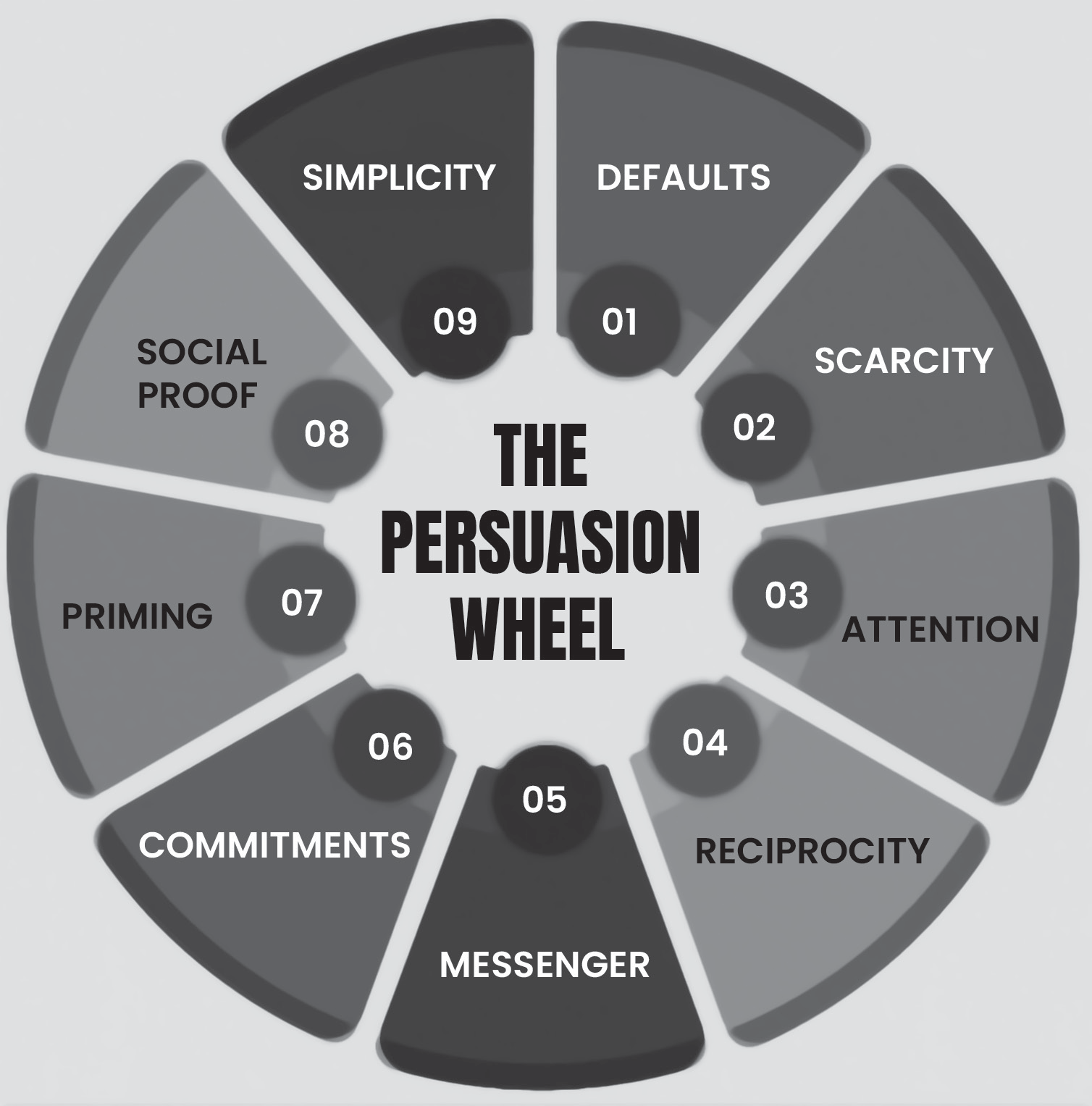
Figure: The Persuasion Wheel
• Social Proof : People tend to determine what is right or acceptable by observing the behavior of others. If the majority follows a particular action or belief, individuals are more likely to assume that it is correct and appropriate. This principle is particularly influential in shaping perceptions of proper behavior, as people often look to societal cues to guide their decisions and actions.
Difference between Persuasion and Manipulation
•
Liking : People are more inclined to agree with or say "yes" to individuals they find likable or relatable.
• Authority : Most individuals are taught to respect authority figures, whether explicitly or implicitly. The degree of influence authority has varies depending on the person and situation.
• Defaults : In decision-making, people tend to stick with the default option unless there is a compelling reason to make a change.
• Priming : Exposure to one stimulus can subconsciously influence future thoughts or actions. This effect is particularly strong when individuals are uncertain or lack expertise in a subject.
• Example : A child who sees a bag of candy near a red bench might start associating benches with candy, influencing their behavior in the future.
• Attention : People give more significance to whatever they actively focus on, assigning greater importance to things that stand out or are emphasized.
• Messenger : Sometimes, people are more influenced by who delivers a message rather than the actual content of the message itself.
• Simplicity : Making something easy increases engagement, whereas adding difficulty reduces the likelihood of participation.
• Scarcity : When opportunities or items become less available, people perceive them as more valuable and desirable (e.g., a limited-edition watch).
| Basis of Difference | Persuasion | Manipulation |
| What it is? | Persuasion is the act of causing people to do or believe something, which will usually bring positive outcomes | Manipulation is the act of controlling or playing upon someone by artful, unfair, or insidious means, especially to one’s own advantage. |
| Intention | Noble | Evil and Immoral |
| Impact/Result | The person who is persuaded by someone else will get something good as the result. | The person who is manipulated will get victimized and will be badly treated by the person who manipulated |
| Trust | While persuasion can build trust on the other person. | Manipulation destroys the trust held on the other person. |
| Affiliation | Persuasion is more related to religious terms. | Manipulation is more related to immoral and evil acts, etc. |
Resisting Persuasion
• Although persuasion often succeeds in altering attitudes, it does not always yield the desired outcome. Some individuals strongly resist persuasion, making them a difficult audience. Several factors determine
the extent to which people resist persuasive attempts.
• Reactance: Individuals have an inherent need for personal freedom when forming opinions or taking stances on issues. When persuasion is perceived as a direct threat to one's independence,
reactance increases, motivating the person to defend their existing beliefs. Studies suggest that when reactance is triggered, moderate or weak arguments tend to be more effective than strong ones.
• Forewarning: When people are aware in advance that a message is specifically designed to change their attitudes, they can prepare counterarguments.
• Example: Viewers understand that advertisements during commercial breaks are crafted to encourage purchases.
• Similarly, during political campaigns, listeners recognize that speeches aim to influence their voting decisions. Knowing this beforehand allows individuals to mentally prepare and resist persuasion more effectively.
• Selective Exposure: Once attitudes are established, they become an integral part of one's identity, leading individuals to actively protect them. People tend to seek information that aligns with their existing views while avoiding content that contradicts or challenges their beliefs.
• Like while watching television we change the channel during commercial breaks to avoid any impact of persuasive attempts. Such selective exposure and avoiding the information contradictory to our views ensure that our attitudes are intact and persist for a longer time.
• Counterarguments : Research indicates that actively disputing a persuasive message that contradicts one's existing attitude reduces susceptibility to persuasion.
•
This is especially applicable to attitudes that were originally shaped through strong reasoning and thorough argumentation.
• Engaging in counterarguments against opposing messages reinforces the justification for maintaining one's stance, ultimately strengthening the pre- existing attitude.
How is Persuasion different from Social Influence?
• Persuasion is a one-way process, where one individual seeks to convince another to alter their attitude or behavior. In contrast, social influence is a two-way interaction, where both parties attempt to affect each other's perspectives.
• For instance, if two friends are discussing whether one should end a relationship, they engage in social influence by presenting arguments and emotions to support their stance. In such a scenario, both individuals are trying to shape each other's viewpoints, and a disagreement may arise if they do not reach a consensus.
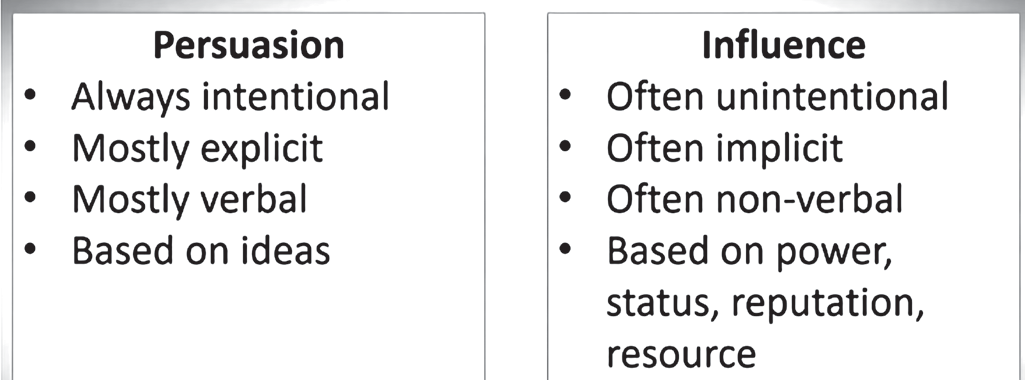
However, in the absence of any disagreement—where both parties share the same viewpoint—it would be classified as persuasion, as there is no opposing stance to influence.