Basic Guidelines to Solve Case Studies
• Along with the theory part, case studies in Ethics paper brings out ethical dilemmas and logical reasoning sharply. The purpose of case studies is to make aspirants ready for the real-time field experience like situation. Aspirants should try to enhance their skill for civil services examination, as once they will enter the civil service after selection, aspirants may face situations in which competing values clash. Would strictly adhere to rules or stay flexible at times to help the needy.
• It makes the aspirants prepared for the real-life battle as Civil servant confronts real-life situations on a daily basis. With the help of case studies, the examiner can understand how aspirants might behave if they face real-life similar situation.
• Case studies can be defined in different ways in different contexts. For example, in social and life sciences, a case study is a research method involving a close, in-depth, and detailed examination of a subject of study (the case), as well as context in which the study has taken place. However, when it comes to CSE, Case studies are stories. They present realistic, complex, and contextually rich situations and often involve a dilemma, conflict, or problem that one or more of the characters in the case must negotiate.
• A case study provides an adequate fact base to stimulate an educated conversation concerning possible outcomes. Every case has one central decision point, dilemma, or angle. The nature of the situation is clearly apparent within the first few lines of the paragraph, but it does not have an obvious solution. The case put the candidates in the role of a decision maker or an administrator facing a problem.
Basic Guidelines to Solve Case Studies
• Making use of Value based terminologies
• This will make your answer subject specific i.e., ethics, integrity & aptitude based rather than merely a generalist or public administration heavy opinion. Remember that your optional might help you to get a feel of the question but your answer has to be relevant to the Ethics paper at hand. For example, professional integrity, conscience, Nishkam Karma, ethical competencies, ethical
reasoning, ethical illiteracy, obligations intellectual integrity, empathy, compassion & tolerance, dignity of an individual, etc.
Understanding basic difference between ethical decision and legal decision
Most of the Public servants/ Managers world over suffer from “ethical illiteracy” i.e., they consider that their legal decision is ethical decision. But if it indeed were so then what is the need to talk about ethical decision. But that does not mean that one has to become a lawbreaker. Yet one has to come out with some “out of box” solution. However, if you do then you have to face ire of your seniors. But that’s invariable part of ethical decision.
Make use of ethical reasoning/ moral imagination
Immediately sketch whole of case as a movie in your mind placing yourself as one of the characters.
Based on ethical reasoning/moral imagination raise questions
Are there any ethical issues?
If yes, what are they?
Schools of Philosophy to Resolve Case Studies
SCHOOLS OF PHILOSOPHY TO RESOLVE CASE STUDIES
Utilitarianism
Utilitarianism is a moral philosophy that promotes actions that enhance happiness and well-being while opposing those that lead to suffering or harm. When applied to social, economic, or political decisions, it seeks to maximize overall societal welfare.
• It is based on the idea that the ethically correct decision in any scenario is the one that results in the greatest overall benefit.
• Utilitarianism prioritizes outcomes, meaning it does not concern itself with whether the benefits arise from deception, coercion, or manipulation, as long as the greatest good is achieved.
• For instance, measures like the implementation of AFSPA, the tightening of U.S. security protocols post-9/11, strict punishments, demonetization, and the introduction of GST were all executed from a utilitarian perspective, focusing on larger societal benefits despite potential short-term hardships.
• Limitations of Utilitarianism:
• Identifying all possible options requires significant intelligence, time, and resources. Moreover, quantifying and comparing the costs and benefits of certain actions—such as balancing human lives with development—is highly subjective and complex. Additionally, the long-term consequences of present actions can never be fully predicted with certainty.
• Utilitarianism can justify morally questionable decisions, leading to unjust outcomes. For instance, British colonial rule in India and the atomic bombings of Hiroshima and Nagasaki were rationalized using utilitarian logic.
• Utilitarianism focuses solely on outcomes, disregarding the ethical nature of the means used to achieve them. However, the morality of an action is inherently tied to both its means and its ends.
Rights Based Approach
• Rights are justified claims that individuals have on others, and their legitimacy depends on societal acceptance of a common standard. Rights are inherently linked to duties, just as liberty and equality are interconnected.
• Human beings possess conscience and the ability to distinguish between right and wrong, which grants them dignity. Rights are established to safeguard this dignity.
• This perspective is based on the belief that human dignity stems from their capacity to make autonomous choices about their lives.
• Limitations of the Rights-Based Approach
• Rights should not be the sole factor in ethical decision-making. In certain cases, prioritizing rights over societal well-being can lead to significant harm, necessitating reasonable restrictions.
• The Fundamental Right to Property was curtailed post-independence as it was seen as an obstacle to national development.
• Unrestricted Free Speech can lead to societal discord, as seen in hate speech on social media and polarizing TV debates.
• Conflicts between rights often arise, requiring prioritization. For example, in the Delhi photocopy case, Intellectual Property Rights clashed with the Right to Education.
• The Aadhaar debate highlights a conflict between the Right to Privacy and the Right to Good Governance, necessitating careful balancing of rights.
Justice Approach
• Understanding Justice and Its Limitations
• Justice entails providing individuals with what they deserve or what is rightfully theirs. The core principle of justice states that equals should be treated equally, while unequals should be treated unequally based on relevant distinctions.
• This principle underscores the need for a fair distribution of benefits and burdens. If all individuals hold equal intrinsic value, they should have equal claims. However, if differences exist, their entitlements should be proportionate to those differences.
• The concept of justice is rooted in social stability, interdependence, and respect for equal dignity.
• Examples include insurgencies in Naxal-affected regions, issues in Baluchistan, and the Irish referendum, all of which stem from perceived injustices.
• Limitations of the Justice-Based Approach
• The standards for determining justice vary from person to person, making subjectivity a challenge.
• In certain situations, the principle of justice may need to be compromised in favor of other moral considerations, such as individual rights or societal well-being.
• For instance, amendments to the Land Acquisition Act were made to balance justice for landowners with the larger goal of economic development.
Common Good Approach
• Understanding the Concept of Common Good
• Common Good refers to general conditions that benefit society as a whole. It includes shared resources and systems that contribute to the well-being of all or most members of a community.
• Living harmoniously in a society requires a balance between individual interests and collective well- being.
• A society where individuals willingly make modest sacrifices for the greater good is far more sustainable and desirable than one where groups solely prioritize self-interest.
• Examples of common goods include a thriving economy, infrastructure, natural resources like air and water, fair recruitment and procurement
processes, electricity, and responsible media.
• Limitations of the Common Good Approach
• The concept of a common good may be difficult to define in diverse societies like India, where people hold different perspectives on what
constitutes a good life. Even if broad agreement exists on valuable societal assets, differences arise over their relative importance.
• There is a risk of individuals becoming free riders, enjoying the benefits of common goods without actively contributing to or supporting their preservation.
Virtue Approach
• Ethics serves to guide individuals with principles and rules that dictate appropriate actions.
• The Virtue Approach helps in addressing
fundamental ethical questions, such as "What kind
of person should I strive to be?" or "How will a particular decision shape my character?"
• This approach is self-driven, where an individual acts according to their virtues in pursuit of personal ideals.
• It emphasizes moral decision-making based on character and long-term goals, rather than focusing solely on rules or consequences.
• For instance, an ideal civil servant is expected to embody virtues such as objectivity, empathy, compassion, tolerance, and impartiality.
• A significant challenge of this approach is its subjectivity, as virtues are determined by individuals and can vary from person to person.
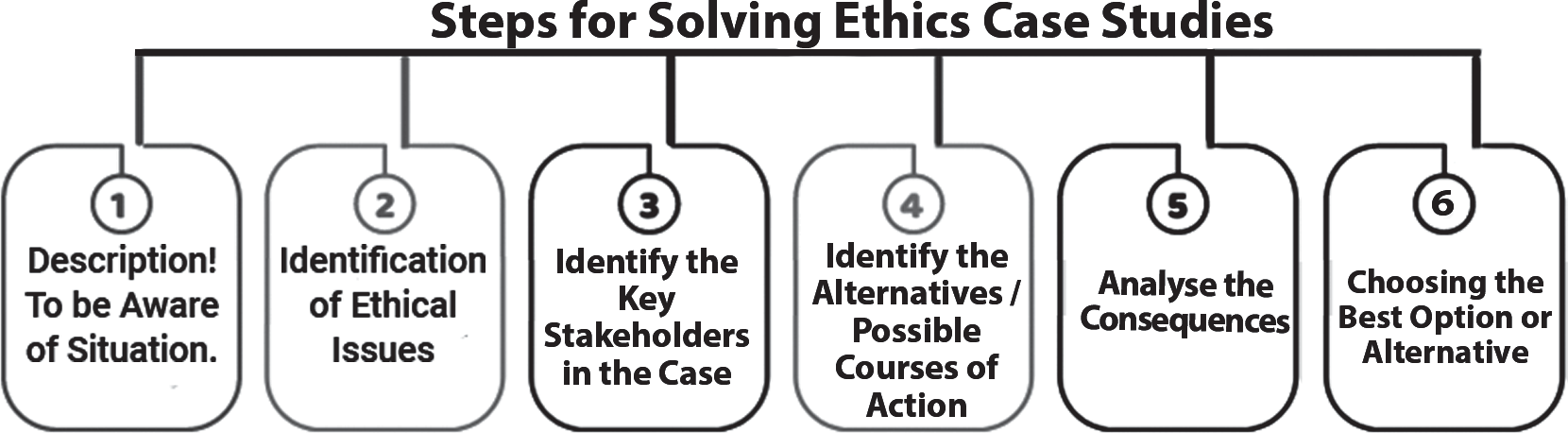
Steps for Solving Case Studies
STEPS FOR SOLVING CASE STUDIES
Begin by pinpointing the fundamental ethical issue at the core of the case.
Identify and elaborate on the secondary ethical concerns using the appropriate terminology from the paper.
If the question does not specifically require an in- depth analysis, the above points will serve as both a brief introduction and a preliminary analysis. However, if an analysis is explicitly requested, proceed with the next steps.
• List the key stakeholders involved in the case:
• Individuals: Consider factors such as personal virtues, rights, obligations, and ethical responsibilities.
• Institutions: Examine aspects like autonomy, operational efficiency, the common good, rightful compensation for services, public trust, and institutional integrity.
• Communities: Evaluate concerns such as religious sentiments, fundamental rights (e.g., access to clean drinking water), and other community- specific interests.
• Society and the General Public: Reflect on broader societal values such as tolerance, unity, harmony, and social peace.
•
Government: Assess issues like governmental reputation, accountability, transparency, fiduciary obligations, impartiality, economic and administrative efficiency, and meeting public expectations.
• Explore the relationships among the various stakeholders, such as:
• The government's responsibility to uphold the
standards of nationally significant institutions.
• An employee’s duty of loyalty toward their organization.
• The corporate sector's social and ethical responsibilities.
• If the case provides multiple options, evaluate each by listing its advantages and disadvantages before selecting the most suitable course of action. If no options are given, generate potential alternatives and assess them before forming a well-reasoned conclusion.
• Make sure to include negative choices like not helping the person on the road, or escaping the situation in the face of protests or wrong/unethical choices like ignoring the harassment around, or not taking any action, etc. Always make sure to mention the harmful consequences of such choices on all the stakeholders like community, society, democracy and nation at large. Including such choices in options will make
sure you cover all the aspects and make a 360-degree holistic analysis.
• Utilize bullet points or a table to present pros and cons efficiently, as this approach saves both time and space.
• Support your final stance with philosophical reasoning and the core theoretical framework of the paper.
• Your syllabus mentions “Case Studies on the above issues.” Demonstrating familiarity with these topics (i.e., those covered in the syllabus) ensures you meet the requirement. To achieve this, follow a structured approach:
• Present the case study using the ethical paper’s terminology while maintaining clarity in general English.
• Address multiple themes and subthemes from the syllabus, such as human values, attitude, persuasion, civil service ethics, emotional intelligence, moral philosophers, ethical governance, probity, and more.
Give proper structure to your thought – what comes first must come first – values must precede attitude which must precede persuasion and likewise other concept
Qualities of A Good Case Study Answer
QUALITIES OF A GOOD CASE STUDY ANSWER
• Flexibility: - Candidate should be flexible in approach for effectively dealing with the case studies. He/ she should emphasize on exploration rather than prescription, as they are comparatively freer to discover and address issues as they arise. In addition, the loose format of case studies allows candidates to begin with broad questions and narrows their focus as their experiment progresses. It is also a desired quality among civil servants as they have to look things from a wider perspective.
• Objective and Problem-Solving prescription: As in case study also, first the key issues and aim is identified. Then a list of available options is prepared and then all options are analysed in a neutral manner. Only in the end, a decision is made. Most students however, mistakenly begin with making a choice in the starting and then the whole answer is based on justifying the chosen option.
• More Practical Approach: Candidates need to be practical and pro-active. This emphasis can help them bridge the gap between normative answers and concrete practical solutions. Candidates should avoid emphasis on deeper data-based answers as the commission expects students to take a practical and relevant approach. Thus, concrete situation specific steps are required to resolve the cases.
• Similarly, if an accident/mishap happens in front of you on the road or in a vehicle, always take the preliminary steps in the beginning like a realistic scenario. Use your imagination how you would help the person in need. Use your life experience and knowledge to take action based on practical understanding of the situation and your general awareness.
• If there is asthma attack case in a bus, then first of all take help of fellow travellers to comfort the person, ask if any traveller is a doctor to get help, help him take the lying down posture to take rest, ask if any medicines available and call the relatives, if possible and call ambulance on immediate basis if serious situation. Don’t hesitate to even give mouth breathing to save his/her life till the person is brought to hospital. If patient has any child or other dependent with him/her, then provide comfort and take help in whatever way possible and care for them as well.
• Similarly, if a person is injured on road/highway, first of all never forget the basics. Bring the person on the roadside and provide first aid through whatever is available like handkerchief or any clean cloth, etc. Always use your presence of mind and take help from the local people in immediate basis according to situation, ensure the person be brought to a nearby hospital at the earliest within the Golden Hour.
• Likewise, if there is a natural disaster like flood or landslide, earthquake etc, then begin by making proper analysis of the situation through ground reports, sending essential ration, ambulance, forces etc, as required for the area, reaching on the spot on immediate basis to provide comfort to the people and making them aware of the situation and necessary decisions being taken as per the situation, taking help of the local people to find solutions, using additional emergency funds, making appeals to the people, NGOs, influential personalities for crowdsourcing and philanthropic help.
Ethical Considerations: Candidates should consider certain ethical issues while studying and resolving the case studies. For example, students should take pro- democracy or pro-women stand in the case-study, if such type of scenario emerges.
• UPSC encourages ethical considerations along with modern values, which are more pro-democracy, pro-freedom, pro-constitution and pro-women oriented. So, candidates should always try these as ethical guidelines, according to which they arrive at rightful considerations.
• For instance, if there is a choice in deciding between expenditure on building a seminar hall or constructing a long pending toilet in the organisation for the female employees, then
lady’s toilet should get the priority as a pro-
women approach.
• Similarly, if there is a choice between making a direct unilateral decision on any matter and making a decision by a democratic majority in a committee in a collective manner, then there should be a preference for the democratic committee system of decision making.
• Likewise, if one has to choose between allowing Freedom of Expression and creativity of the filmmakers and restricting the movie under the pressure/threat of fringe groups, then the freedom of the filmmakers must be prioritised with
adequate precautions.
• Personal biases need to be considered as well: - The personal integrity, sensitivity, and possible prejudices and/or biases of the candidates need to be taken into consideration as well. Personal biases can creep into how the candidates think about different stakeholders in a case.
• If there is a case of a divyang or person of any weaker section, there should not be a prejudice or preconceived notion that the person is incapable of handling oneself. One must calmly listen, ask and communicate with the person to understand the problem and take his/her consent about the solution to be provided.
• Justification: - One thing should always be remembered while answering a case study. You will get marks not for the choice you made but for the justification you present to defend your choice. It has often been found that both the options available in the case are correct. In such scenario, your reasoning will fetch you marks rather than your choice of option.
• For instance, the problem of child beggary can be solved either by providing children education, along with providing compensatory amount to the parents. Or providing the basic facilities and ration to the family along with skills or suitable job to the able member of the family. Or even through rescuing the children and sending them to hostel so that they get proper facilities and educational environment. Each of the option may be right but it’s the ethical and empathic reasoning which you use which will determine your marks.
• Taking Stand on Ethical Grounds: - It has usually been seen that candidates try to take a middle approach while presenting their solutions. It is not a bad tactic but always taking a middle path is also not right. The
cases where grave injustice has been done or problems which needs some extreme solutions, must be dealt with a hard stand.
• For instance, if there is a riot situation and situation is getting out of control even after dialogue, assurances, committee meetings, warnings, deployment of the forces, etc. then Section 144 (curfew) has to be applied and detaining the miscreants and rioters will have to be done. First water cannons, then lathicharge would be the legitimate strict action according to the seriousness of the situation.
• Similarly, if your senior officer or your political master (i.e. minister) tells you to act in an unethical manner, then politely deny and take strong stand in favour of the right thing to do along with the proper justifications. Also tell the problems that will result due to the unethical actions and its impact on the various stakeholders and the nation and society at large in short and long term.
Following the Framework: - It is very important for the candidates to bring clarity in their answers. Clarity simply means congruence between what you are thinking, what you are writing and what the evaluator is understanding. Clarity also comes through better organisation and presentation of your analysis. A good framework caters to all these requirements.
Search for Perfection/Excellence: There is no perfect solution in ethics case studies, there are only justifications and multiple considerations. Never ignore the minor things and always consider the background/untold circumstances. Always use your sensitivity to understand the situation and use influence and power on priority to help the weak, ill, needy and marginalised sections of society to provide them comfort. Always take actions which bring a humanistic face of administration.
• For instance, if a hungry old lady is coming in office for her work, never ever forget the basic courtesy to provide her a sitting chair and offer her a glass of water. Listen to her patiently and calm her down. Take her case on priority and provide facilities through your influence within the ambit of the law.
• Similarly, if there is a situation of disaster evacuation, then make sure to follow the correct priority to save the people in danger like if there are politician, your blood relative, pregnant women, children, elderly, divyangs, ill patients, youth, prisoners, medical professionals, officers, etc. then make sure to evacuate in the following Ethical Priority Order:
• First the persons in immediate danger be saved, whoever it may be.
• Then, ill patients, pregnant women, children, elderly and divyangs be evacuated in the same sequential order.
• After that, prisoners must be evacuated as they are the core responsibility of the state.
• Then, politicians/ministers, their families, subordinate officers and their families, all able-bodied youth and own blood relatives, medical professionals will be evacuated in the
same order sequentially.
• Follow Precedents along with taking Initiatives: As a future officer, you have to take decisions in a manner where all of society benefits. Though in sensitive situations and areas, one must take advice of seniors and follow precedents and well established Standard Operating Procedures (SOP). However, never hesitate to take new initiatives and programmes through the help of locals and influential people to find solutions to teething problems.
• Like in case of Kerala, hunger was a problem in a district and Operation Sulemani was started by the DM to provide free meals to the poor, by taking help of local people.
Types of Case Studies
TYPES OF CASE STUDIES
Take Consent: Unless the person is in a life-or-death situation or unconscious or lack of awareness or unable to take a decision, there is a formal need to take consent from the person or community before taking any relevant decision. Taking consent is not only a basic human etiquette but also considered an essential step in decision making in a liberal democracy.
• Like in case of decision on construction of a pond in a village, there should be a proper dialogue and discussion on the need for the pond and consent of the villagers whether they want it or not. Ther reason is that such a consent will create a sense of ownership and ensure sustainability of the pond.
• Similarly, if there is a decision to construct school in a tribal or backward area, there should be formal awareness campaign for the education along with the discussion with the local people to understand their requirements and take their consent. It is essential as not taking consent and imposing education to which they are not consulted, the public investment may go waste or goal of efficient utilisation of resources may not be achieved and a law-and-order situation may arise.
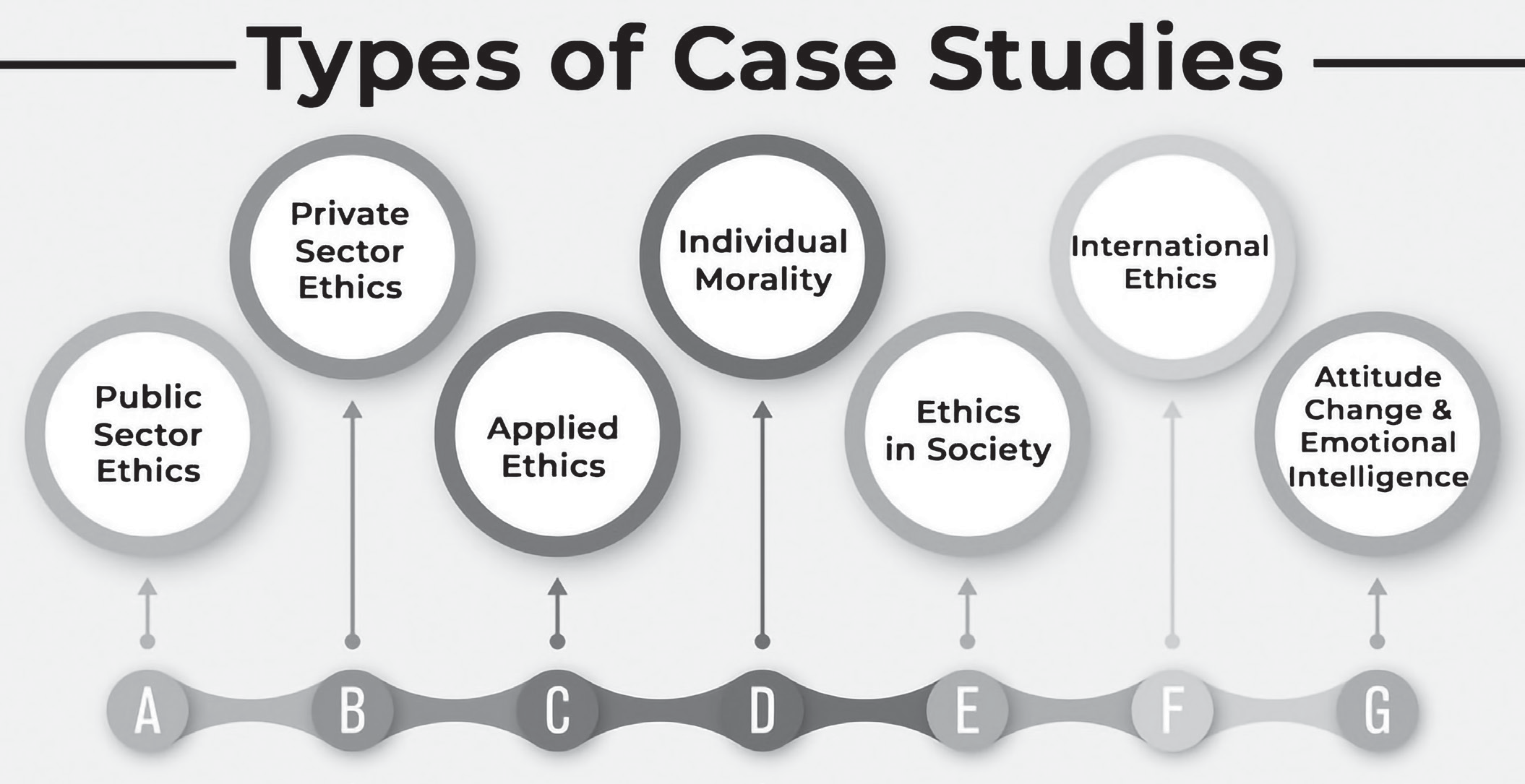
Case Studies Based on Public Sector Ethics
The major values concern in public sectors are:
Responsibility and accountability
Work commitment
•
Responsiveness
• Fusion
• Legality and rationality
• Excellence
• Utilitarianism
• Compassion
• National Interest
• Uniformity
• Integrity
• Transparency
• Justice
Some of the dilemmas faced by Public Sector Organisations are:
Discipline versus Empathy (like the case of being late at the interview due to saving someone’s life)
Integrity versus Personal and Social Well-being (like the case of meeting promises at work vs taking out family time)
Personal Interest versus Public Interest (like the case of recusing oneself from judging the case of one’s own relative)
Truth versus Loyalty (like the case of whistleblowing in the organisation)
Rule of Law versus Empathy & Compassion (like the case of a hungry destitute old lady of general category unable to get benefit under any scheme)
Examples:
You have been working as a Superintendent Engineer in the Central Public Works Department of a city which is going through major developmental work. A large transport infrastructure is required in coming years to cop up the pressure of growing population. It includes further stretching of the roads to the areas which are not covered yet. You have been given the responsibility of choosing the route through which the road will pass in an area. The most effective route (economical and serving major population) has been identified by you but this route requires the demolition of a famous mosque. The second route will not be cost effective and will also serve a smaller number of people than the first route.
Analyse the situation from different perspectives and explain what decision you will take under such scenario.
The Son of an M.L.A. was driving the vehicle in a very rash and erratic manner. The traffic constable on duty at a traffic intersection stopped the vehicle. Suspecting that the boy driving is possibly drunk, he calls the patrolling group. They came and subject the boy to breath analyser. The suspicion turns out to be correct. All this action took about one hour. In the mean while the boy was throwing tantrums and dropping names. He also made few calls and tried to slap the constable on duty. But the constable on duty remained undeterred. On
the arrival at the police station, the SHO took the note of the situation but just before filing the case, he gets a call from his superior to release the boy without any arrest or fine.
• Critically analyse the situation from different perspectives and explain what action shall SHO take in midst of such a dilemma
• Rakesh was working as Joint Commissioner in Transport Department of a city. As a part of his job profile, among others, he was entrusted with the task of overseeing the control and functioning of City Transport Department. A case of strike by the drivers ‘union of City Transport Department over the issue of compensation to a driver who died on duty while driving the bus came up before him for decision in the matter. He gathered that the driver (deceased) was plying Bus No. 528 which passed through busy and congested roads of the city. It so happened that near an intersection on the way, there was an accident involving the bus and a car driven by a middle – aged man. It was found that there was altercation between the driver and the car driver. Heated arguments between them led to fight and the driver gave him a blow. Lot of passersby had gathered and tried to intervene but without success Eventually, both of them were badly injured and profusely bleeding and were taken to the nearby hospital. The driver succumbed to the injuries and could not be saved. The middle – aged driver’s condition was also critical but after a day, he recovered and was discharged. Police had immediately come at the spot of accident and FIR was registered. Police investigation revealed that the quarrel in question was started by the bus driver and he had resorted to physical violence. There was exchange of blows between them. The City Transport Department management is considering of hot giving any extra compensation to the driver’s (deceased) family. The family is very aggrieved, depressed and agitated against the discriminatory and non – sympathetic approach of the City Transport Department management. The bus driver (deceased) was 52 years of age, was survived by his wife and two school – college going daughters. He was the sole earner of the family. The City Transport Department workers union took up this case and when found no favourable response from the management, decided to go on strike. The union’s demand was two – fold. First was full extra compensation as given to other drivers who died on duty and secondly employment to one family member. The strike has continued for 10 days and the deadlock remain.
(a) What are the options available to Rakesh to meet the above situation? (b) Critically examine each of the options identified by Rakesh. (c) What are the ethical dilemmas being faced by Rakesh? (d) What course of action would Rakesh adopt to diffuse the above situation
Case Studies Based on Private Sector Ethics
The important value concerns in private sector are:
Major ethical dilemmas faced by private sector:
Economy versus Ecology (like the case of Environment Impact Assessment)
Ethics versus Profitability (such as the case of Corporate Social Responsibility projects)
Integrity versus Well-Being (like the case of polluting projects in the company)
Professionalism versus Well-Being
• Examples:
• You are a new employee at a manufacturing unit of an MNC. You have got this job with great difficulty as nearly hundred candidates appeared for the job interview. The salary is good and your family is really happy for your achievement. However, after working for few days, you realised that some of the manufacturing processes in the unit are in gross violation of environmental norms and cause severe ground water depletion. If the company does not adopt such measures, then its manufacturing cost would go up and the unit might have to be shut down. You are in a state of dilemma and unrest.
• Analyse the different options available with you and explain what action you will take in such a situation.
• Manohar Lal, the CEO of a prominent pharmaceutical company in India, is confronted with a challenging ethical and legal issue. A researcher from the company’s R&D department, Shivraj, has developed a highly affordable drug that could be beneficial for cancer patients. However, upon further investigation, Manohar Lal realizes that the drug is derived from a
formula patented by an international corporation. This scenario presents a clear case of intellectual property infringement.
• The company holding the patent sells the drug at a significantly high price, making it unaffordable for economically disadvantaged patients. As per existing legal provisions, Manohar Lal’s company can legally manufacture and distribute the medicine within the domestic market, even though it violates patent laws.
Key Questions:
• What are the ethical concerns involved in this situation?
• What possible alternatives does Manohar Lal have to address this issue?
• Which course of action would be the most suitable for Manohar Lal, and why?
• Prabhat, a senior executive at Sterling Electric Ltd., is facing a complex ethical predicament. His financial situation is strained, as he is the sole earner responsible for supporting his school-going children, an ailing elderly mother, and a heavy financial burden, including home loan repayments. The pressure of maintaining financial stability has been causing him immense stress.
• In an unexpected turn of events, Prabhat’s secretary informs him that Subhash Verma, a candidate applying for a managerial position in the company, has arrived for an interview. Notably, his application has been forwarded through the office of the Minister of Defense.
• During the interview, Prabhat finds Subhash Verma to be a highly competent and resourceful professional with expertise in tendering procedures and contract negotiations. Compared to the other candidates interviewed in recent days, he appears to be the best fit for the role.
• However, the situation takes an unexpected turn when Subhash Verma discloses that he has access to confidential bid documents belonging to Unique Electronics Ltd., which is set to submit its tender to the Defense Ministry the following day. He offers to provide these documents in exchange for securing employment in the company under favorable terms.
• Subhash Verma argues that this opportunity would give Sterling Electric Ltd. a competitive advantage, allowing it to outbid its rival and secure a lucrative contract with the Defense Ministry. He presents it as a mutually beneficial deal that would lead to substantial growth for both himself and the company.
• Prabhat is left in a state of shock, torn between ethical integrity and the potential benefits of accepting the offer. On one hand, agreeing to the proposal would eliminate his financial struggles and significantly enhance the company’s position. On the other hand, it involves engaging in unethical and potentially unlawful conduct.
• Key Questions:
• What are the ethical dilemmas involved in this situation?
• What options does Prabhat have in responding to Subhash Verma’s proposition?
• Which option would be the most ethical and appropriate for Prabhat, and why?
• The Supreme Court has banned mining in the Aravalli Hills to stop degradation of the forest cover and to maintain ecological balance. However, the stone mining was still prevalent in the border district of the affected State with connivance of certain corrupt forest officials and politicians. Young and dynamic SP who was recently posted in the affected district promised to himself to stop this menace. In one of his surprise checks with his team, he found loaded truck with stone trying to escape the mining area. He tried to stop the truck but the truck driver overrun the police officer, killing him on the spot and thereafter managed to flee. Police filed FIR but no breakthrough was achieved in the case for almost three months. Ashok who was the Investigative Journalist working with leading TV channel, Suo moto started investigating the case. Within one month, Ashok got breakthrough by interacting with local people, stone mining mafia and government officials, He prepared his investigative story and presented to the CMD of the TV channel. He exposed in his investigative report the complete nexus of stone mafia working with blessing of corrupt police and civil officials and politicians. The politician who was involved in the mafia was no one else but local MLA who was considered to be very close to the Chief Minister. After going through the investigative report, the CMD advised Ashok to drop the idea of making the story public through electronic media. He informed that the local MLA was not only the relative of the owner of the TV channel but also had unofficially 20 percent share in the channel. The CMD further informed Ashok that his further promotion and hike in pay will be taken care of in addition the soft loan of 10 lakhs which he has taken from the TV channel for his son’s chronic disease will be suitably adjusted if he hands over the investigative report to him .
(a) What are the options available with Ashok to cope up with the situation? (b) Critically evaluate/ examine each of the options identified by Ashok.
(c) What are the ethical dilemmas being faced by Ashok? (d) Which of the options, do you think, would be the most appropriate for Ashok to adopt and why? (e) In the above scenario, what type of training would you suggest for police officers posted to such districts where stone mining illegal activities are rampant?
• You have done MBA from a reputed institution three years back but could not get campus placement due to COVID – 19 generated recessions. However, after a lot of persuasion and series of competitive tests including written and interview, you managed to get a job in a leading shoe company You have aged parents who are dependent and staying with you. You also recently got married after getting this decent job. You were allotted the Inspection Section which is responsible for clearing the final product. In first one year, you learnt your job well and was appreciated for your performance by the management. The company is doing good business for last five years in domestic market and this year it is decided even to export to Europe and Gulf countries. However, one large consignment to Europe was rejected by their Inspecting Team due to certain poor quality and was sent back. The top management ordered that ibid consignment to be cleared for the domestic market. As a part of Inspecting Team, you observed the glaring poor quality and brought to the knowledge of the Team Commander. However, the top management advised all the members of the team to overlook these defects as the management cannot bear such a huge loss. Rest of the team members except you promptly signed and cleared the consignment for domestic market, overlooking glaring defects. You again brought to the knowledge of the Team Commander that such consignment, if cleared even for domestic market, will tarnish the image and reputation of the company and will be counter – productive in the long run. However, you were further advised by the top management that if you do not clear the consignment, the company will not hesitate to terminate your services citing certain innocuous reasons.
• (a) Under the given conditions, what are the options available to you as a member of the Inspecting Team? (b) Critically evaluate each of the options listed by you. What option would you adopt and why? (d) What are the ethical dilemmas being faced by you? (e) What can be the consequences of overlooking the observations raised by the Inspecting Team?
Case Studies Based on Applied Ethics
• Environment Ethics: Some major dilemmas are:
• Profitability versus Environment Sustainability (like the case of excessive ground water extraction by industries)
• Economic Development versus Ethnic Rights (like the case of Vedanta in Odisha’s Niyamgiri Hills)
• Bio-centrism (like the case of Chipko movement, Seed Sovereignty campaign) versus Human- centrism (pollution immoral because it harms humans)
• Example of a case: As there is an increasing thrust on economic development all around the globe. At the same time, there is also an increasing concern about environmental exploitation caused by development. Many a time, we face a direct conflict between developmental activity and environmental quality. It is neither feasible to stop or curtail the development process, nor it is advisable to keep exploiting the environment, as it threatens our very survival.
• Discuss some strategies which could be adopted to eliminate this conflict and which could lead to sustainable development.
• Another example: Satish is a climate-conscious and responsible citizen. Satish left his well-paying job as a senior manager in a multinational company and started a small firm that manufactures eco- friendly products. The motto of his company is “zero wastage and green for welfare”. His firm makes bio-degradable polymer which can be used as an alternative to plastic bags, bottles, plates etc. Satish thinks that this will promote a healthier environment and will have a positive impact on people’s health. It will also help address the problem of climate change by reducing one’s carbon footprint. For this to be achieved, he believes that not just products, but the process too should be less polluting. This is why he invested heavily in non- polluting machinery. These machines are certified as “green machines”. In fact, some of them were even imported from other countries. All of this has gained him a good reputation in the eyes of critics and environmentalists. But the technology used in manufacturing these products is new, imported and expensive, the products made by Satish’s firm are costlier than conventional plastic products. Satish has proved that his product is environmentally benign, but he was unable to scale up production because he ran out of funds. Satish knows that if he could start manufacturing the polymer at a large scale and leverage economies of scale his product would become more price competitive
compared to conventional plastics. Satish used the last of his funds to publicize his product. He thought that with this publicity, raising funds from the market would be easy. Satish reached out to many investors, and they showed great interest in his product. But none of them was willing to invest money in this product. They feared that this new product, being much more expensive, would not be able to compete with conventional plastic products. Satish’s firm is also losing its existing customer who complains about the very high cost of its products. Both Satish’s prospective investors and past customers know that this technology is less polluting and environmentally benign and has a positive attitude towards it. But consumer concern and attitude about the environment do not readily translate into the purchase of environmentally friendly products. Academic research has also identified this gap between purchase intentions and behaviours. Satish knows that if he changes the production procedure, things can look better for the company on the financial front, but that can take away his reputation and will also be against his own beliefs. The only possible hope is to expand his consumer base, sell his products at full capacity and convince investors to invest in his eco-friendly venture to keep his green industry running.
Consider yourself in Satish’s position and answer the following questions:
• How will you induce behavioural change to nudge people to move towards eco-friendly products?
• What factors will you have to consider while inspiring such a change?
• You are appointed as an officer heading the section in Environment Pollution Control Board to ensure compliance and its follow – up. In that region, there were large number of small and medium industries which had been granted clearance. You learnt that these industries provide employment to many migrant workers. Most of the industrial units have got environmental clearance certificate in their possession. The environmental clearance seeks to curb industries and projects that supposedly hamper environment and living species in the region. But in practice, most of these units remain to be polluting units in several ways like air, water and soil pollution. As such, local people encountered persistent health problems. It was confirmed that majority of the industries were violating environmental compliance. You issued notice to all the industrial units to apply for fresh environmental clearance certificate from the competent authority. However, your action
met with hostile response from a section of the industrial units, other vested interest persons and a section of the local politicians. The workers also became very hostile to you as they felt that your action would lead to the closure of these industrial units, and the resultant unemployment will lead to insecurity and uncertainty in their livelihood. Many owners of the industries approached you with the plea that you should not initiate harsh action as it would compel them to close their units, and cause huge financial loss, shortage of their products in the market. These would obviously add to the sufferings of the labourers and the consumers alike. The labour union also sent you representation requesting against the closure of the units, you simultaneously started receiving threats from unknown corners. You however received supports from some of your colleagues, who advised you to act freely to ensure environmental compliance. Local NGOs also came to your support and they demanded the closure of the polluting units immediately. (a) What are the options available to under the given situation? (b) Critically examine the options listed by you. (c) What type of mechanism would you suggest to ensure environmental compliance? (d) What are the ethical dilemmas you faced in exercising your option?
• Bio-ethics: Some major issues relate to:
• Euthanasia
• Cloning
• Surrogacy
• Stem cell research
• Ethics in Politics: Some major issues relate to:
• Horse Trading
• Criminalisation of Politics
• Use of Black money in Elections
• Media Ethics: Some major issues relate to:
• Paid news
• Sensationalism in Media
• Sting operations
• Media trials
Case Studies Based on Society
• As an officer responsible for executing a social service scheme aimed at supporting elderly and destitute women, you encounter an old, illiterate woman seeking assistance under the program. However, she lacks the necessary documents to prove her eligibility.
• After interacting with her and assessing her situation, you strongly believe that she genuinely requires help. Further inquiries confirm that she
is indeed destitute and living in extremely poor conditions. This puts you in a difficult ethical position—approving her request without proper documentation would violate official regulations, yet denying her assistance would be unjust and inhumane.
• Key Questions:
• How can this dilemma be resolved in a rational and ethical manner?
• What justifications can be provided for the chosen course of action?
Case Studies Based on International Ethics
Key Ethical Dilemmas
• Patriotism vs. Nationalism – The conflict between being loyal to one’s country while residing abroad and maintaining a broader perspective on global affairs.
• Nationalism vs. Internationalism – The challenge of balancing national priorities with international commitments, such as adhering to World Trade Organization (WTO) regulations.
• National Interest vs. Universal Values – The dilemma of prioritizing a nation’s strategic interests over global principles like peace, diplomacy, and fraternity, particularly in situations like border disputes.
• Duty to Citizens vs. Duty to Humanity – The ethical conflict between serving one’s own citizens and extending humanitarian assistance to others, such as in cases involving refugees or evacuations in war-affected areas.
• Nationalism vs. Human Empathy – The struggle between prioritizing national identity and embracing a compassionate outlook towards all individuals, regardless of nationality.
Case Study
• You are representing India in an international oil exploration bidding process in a foreign country. Several wealthier nations are also competing for the same project. You are confident that India's bid is not only more cost-effective but also technically superior, giving you a strong chance of securing the contract. However, just a day before the auction, you come across shocking information—some of the wealthier competing nations are resorting to unethical practices, including bribing officials, to secure the deal. Additionally, certain officials from your own country have approached you with demands in exchange for guaranteeing India's victory in the bidding process.
• You are fully aware that winning this bid carries immense significance for India's economy and
strategic interests. Given the situation, answer the following questions:
• What ethical dilemma are you facing in this scenario?
• In international dealings, should ethical considerations take precedence, or are they secondary to national interests?
• What course of action will you take in this situation? Provide justification for your decision.
• Case Study
• Ramesh, a State Civil Services Officer, has been posted to the capital of a border state after serving for 20 years. His mother has recently been diagnosed with cancer and is undergoing treatment at the city's leading cancer hospital. Additionally, his two adolescent children have secured admission to a reputed public school in the city. After assuming his role as Director in the State Home Department, Ramesh received confidential intelligence reports indicating the infiltration of illegal migrants from a neighboring country.
• Determined to verify the situation firsthand, Ramesh, along with his Home Department team, conducted an unannounced inspection of border posts. During the operation, he discovered that two families, comprising 12 individuals, had crossed the border with the help of security personnel. Further investigations revealed that once these migrants entered the state, their identification documents—such as Aadhaar cards, ration cards, and voter IDs—were forged, allowing them to settle in designated areas.
• Ramesh meticulously compiled a detailed report on his findings and submitted it to the Additional Secretary of the State. However, a week later, he was summoned by the Additional Home Secretary, who instructed him to retract his report. He was informed that higher authorities did not appreciate the contents of his report. Furthermore, he was warned that failing to withdraw it could result in his transfer from the capital and jeopardize his upcoming promotion.
Based on this situation, answer the following questions:
• What are the possible courses of action available to Ramesh as the Director of the Home Department in the border state?
• Which course of action should Ramesh take, and why?
• Provide a critical assessment of each available option.
• Identify the ethical dilemmas that Ramesh is facing in this situation.
• Suggest policy measures to effectively address the issue of illegal migration from the neighboring country.
Practicing Case Studies
PRACTICING CASE STUDIES (SOLVED)
Question:
Q 1. As an honest and responsible civil servant, you frequently encounter the following perspectives:
There is a common belief that following ethical principles may lead to personal hardships and difficulties for one’s family, whereas engaging in unethical practices can facilitate career growth.
When unethical behavior is widespread, a small group committed to ethical conduct may not bring about any significant change.
Strict adherence to ethical practices may hinder broader developmental objectives.
While one may refrain from major unethical acts, the exchange of small gifts is often considered beneficial for improving efficiency within the system.
Critically analyze these statements, discussing their merits and drawbacks.
Introduction:
Such dilemmas often challenge an upright civil servant who must navigate both external corruption and internal temptations. Analyzing these perspectives is crucial for maintaining ethical integrity in public service.
Ethical Conduct and Personal Hardships:
Following ethical principles may result in personal and professional difficulties, such as limited career progression, financial constraints, and strained relationships with colleagues.
• However, ethical conduct has significant advantages:
• It brings a sense of fulfillment and moral satisfaction, aligning with Aristotle’s view that virtues are inherently valuable.
• It upholds honesty, dignity, and self-respect.
• It eliminates fear of legal consequences, ensuring peace of mind.
• Ethical behavior fosters goodwill, serving as a role model for others.
• The principle of Nishkama Karma teaches that duty should be performed without expecting rewards.
• As per Kantian ethics, individuals have inherent duties and rights, and civil servants must uphold high moral standards.
Impact of a Small Ethical Minority:
• Even a small group committed to ethics can drive substantial change.
• Gandhiji's principle—"No one needs to wait for another to take the right action"—illustrates how individual commitment can influence an entire movement.
• Ethical leaders in bureaucracy and politics have historically initiated reforms.
• Organized ethical minorities can use social influence and persuasion to inspire systemic changes, such as environmental ethics in governance.
• The collective ethical behavior of individuals contributes to the integrity of the system as a whole. A Greek saying encapsulates this idea: "Let evil exist in the world, but not through me."*
Ethical Conduct and Development:
Ethical compliance may initially seem to slow down development due to procedural constraints and resistance to corruption.
However, sustainable progress is only possible through ethical governance, as corruption ultimately weakens institutions and public trust.
• Larger developmental goal of a nation can only be fulfilled by fulfilling the aspiration of the people as mentioned in the preamble of the constitution.
• Farmer’s welfare and prevention of suicide; tribal welfare, minimisation of displacement and rehabilitation; environmental conservation and balanced regional growth have to be considered for larger developmental goals.
• Developmental goals of a nation are dependent on good governance and ethical governance in which ethical means cannot be compromised.
d As per one school of thought, small corruption brings motivation and efficiency in administration and this is the reason why corruption has lasted so long. When salary is not sufficient to live decent standard of life corruption may help in short term. But:
Giving and accepting a small gift develops sense of indebtedness and desire to pay back. This cycle continues and give and take amplifies in magnitude and extent.
Corruption is addictive and has demonstrative effect, domino effect and bandwagon effect. It encourages others to indulge in corruption and one loses one’s authority to stop act of corruption.
Even small corruption destroys integrity and work culture. One must never forget that integrity is non-selective and non-negotiable.
Administration is like a large ship that can serve too many people. However even a small hole will sink the whole ship. Same is the case with corruption. An honest civil servant shall always stay on right path with dedication.
Q 2. Solid Waste Management (SWM) has emerged as one of the most massive development challenges in urban India. Many Indian cities are facing a major problem in the management of household waste. Most of such urban waste ends up in poorly operated landfill sites or is dumped or burned. The huge volume of waste has also meant that landfill sites are facing the problem of overcapacity. On the other hand, the waste-to-energy plants constructed to solve the problem are also facing flak due to their inefficiency and release of poisonous pollutants. The manner of waste disposal by people is identified as one of the main reasons behind this problem. The government has notified rules regarding disposal, collection and treatment of waste and has initiated numerous awareness campaigns in the past. Still, the problem does not seem to be getting under control. Given such a situation, answer the following questions:
What do you think is the reason behind the apathy of people towards issues like waste disposal that affect the larger interests of society in general?
Identify the stakeholders and the significance of their
involvement in addressing the issue.
Answer:
Introduction:
The given case depicts the issue of waste disposal and management in urban India, thus putting both environment and the public health at risk. Currently, the waste management strategies adopted by the government are marred with several challenges such as overcapacity in case of landfills, inefficiency and release of poisonous pollutants in case of waste to energy plants, etc. Even though the issue affects the whole society in general, still people are apathetic toward the notified rules regarding disposal, collection and treatment of waste.
Reasons behind the apathy of people toward waste disposal are:
• Lack of awareness and political will: General public is not sensitized about the health hazards and other ill effects of improper waste disposal. Waste management has also not received adequate political attention.
• Situational factors: Lack of convenience, information, availability of conditions for recycling and presence of alternatives, thought of saving money by not disposing of the waste properly, etc.
Not in my backyard attitude: Most people keep their own backyard clean while compromising the sanitation of the public space. This is because they don’t realize that this might also have certain direct or indirect effects on their lives.
Sociological factors: Traditionally, waste disposal in India is done by persons belonging to the lower castes, thereby tabooing waste disposal as a dirty job.
Structural constraints: Lack of resources and relatively poor access to drop-off sites lead to improper waste disposal.
Various stakeholders and the significance of involving
them:
General Public:
Since they are the waste generators, the principles of refuse, reduce, recycle and reuse must be emphasized beginning from this level itself.
Their involvement level would decide the effectiveness of the further process.
Rag pickers:
They form an important link between waste generators and waste managers in India.
Involving them formally would help in further institutionalising the collection process.
Waste Treatment Plant
Utilizing these methods will lead to the efficient and scientific management of waste while enhancing the reuse of various by-products during the waste processing cycle.
Encouraging their use would facilitate the adoption of improved and more advanced technologies.
It can also contribute to job creation within this sector.
Role of Government:
The government can provide policy support and ensure effective implementation. For instance, enforcing Solid Waste Management Rules, banning plastic bags, and integrating waste management into urban planning.
Additionally, it can offer infrastructural support, such as setting up color-coded waste bins to segregate degradable and non-degradable waste.
Role of Non-Governmental Organizations (NGOs):
NGOs can complement government initiatives while raising awareness about the importance of maintaining clean surroundings, discouraging excessive consumerism, and reducing waste.
Role of Media:
The media can play a crucial role in turning cleanliness into a mass movement. For example, social media
campaigns like ‘plogging,’ which involves collecting litter while jogging, promote sanitation as a lifestyle choice.
Conclusion:
Effective waste management in India requires not only strong policies but also a shift in public behavior. In this regard, social and behavioral change communication should be at the heart of the overall strategy. Initiatives like the Swachh Bharat Mission, which emphasize collective action for cleanliness, are significant steps in this direction.
Satish, a responsible and environmentally conscious citizen, made a bold decision to leave his lucrative position as a senior manager in a multinational corporation to establish a small business focused on producing eco- friendly products. His company operates under the motto “zero wastage and green for welfare,” aiming to create biodegradable polymers as an alternative to conventional plastic items such as bags, bottles, and plates. Satish firmly believes that these products will contribute to a healthier environment, positively impact public health, and help mitigate climate change by reducing carbon footprints.
To ensure that his entire production process remains environmentally sustainable, Satish invested heavily in non-polluting machinery, including certified “green machines,” some of which were imported. His commitment to sustainability has earned him recognition from critics and environmentalists alike. However, since the technology used in manufacturing these products is new, imported, and costly, the final products are significantly more expensive than traditional plastic alternatives.
Despite proving that his product is environmentally friendly, Satish struggled to scale up production due to a lack of funds. He was aware that mass production could bring down costs through economies of scale, making his product more competitively priced. In an effort to attract investors, he exhausted his remaining funds on marketing and promotion, hoping that the publicity would make it easier to secure financial backing. While many investors expressed enthusiasm for his innovation, none were willing to invest due to concerns about the higher cost of his products compared to conventional plastics. Additionally, Satish’s existing customers began to turn away, citing affordability as a major issue.
Although both potential investors and consumers acknowledge the environmental benefits of his products, there remains a gap between positive attitudes toward sustainability and actual purchasing behavior—a phenomenon well-documented in academic research. Satish realizes that altering the production process could improve his company’s financial situation, but doing
so would compromise his reputation and contradict his core principles. His only viable option is to expand his customer base, maximize sales, and persuade investors to support his eco-friendly venture, ensuring the continued survival of his green enterprise.
Consider yourself in Satish’s position and answer the following questions:
How will you induce behavioural change to nudge people to move towards eco-friendly products?
What factors will you have to consider while inspiring such a change?
Answer:
Introduction:
The above case is about the tremendous challenges like acceptance, technology and competition faced by green industries. For e.g., people still prefer their milk in plastic bags despite knowing its harmful effects on the environment.
Stakeholders Involved:
• Me and my company
• My competitors
• Consumers
• Government
• Society and the world at large
• Behavioural change in people for encouraging them to use eco-friendly products can be brought in the following ways:
• Appeal to logic: Logically helping the people see the falsehood in advertisements. E.g., publishing data about industries and their contributions towards pollution.
• Information provision: Printing the carbon footprint on each product to let people know about their contribution.
• Marketing strategy: A marketing strategy based on mouth-to-mouth publicity and door-to-door sale for making our product accessible.
• Social influence: People can be influenced by collaboration with a celebrity who stands for the same cause e.g., Greta Thunberg, Joaquin Phoenix, etc.
• Habit formation: Habituating people with free samples, demo products, etc.
• Green consumer certification: To appreciate consumer efforts, certification in collaboration with international agencies or NGOs can be given.
• Collaboration with Government: Mutual
collaboration to help the government meet Nationally Determined Contributions, formulate green policies, etc. in return for a public nudge towards green consumption.
• A change can occur by various means, the most common ones being a revolution and an evolution. Certainly, many people are joining the revolution towards a sustainable future e.g., the extinction rebellion, evolution is also occurring gradually for all of us.
Factors to be considered while inspiring change in attitude:
• Statistics: Statistics would show the demand and supply so that the extent of behaviour change needed can be determined.
• Target Audience: 66% of consumers (73% of millennials) worldwide report being willing to pay extra for sustainable offerings.
• Alternatives:
• Markets: For e.g., overseas markets pay more for organic foods as has been seen in the Sikkim model.
• Technology: Tech procurement from overseas can be considered if it is cost-effective.
• Attitude: People’s attitude needs to be known so as to determine if the change is possible. E.g., cloth bags were considered old fashioned and hence people preferred polybags.
• My reputation: The recognition that I have gained can also help with product marketing.
Conclusion:
According to IPCC in order to save the earth, the need of the hour is to go carbon neutral. Green industries and industrial processes are hence the future. If I alter the process of my manufacturing to keep up with the competition, I’ll exhibit a lack of intellectual integrity. Hence, whatever the alterations, they should be made with ecological footprint reduction in mind to lead towards a sustainable future.
Q 4. As a representative of India in an international bidding process for oil exploration in a foreign country, you find yourself in a highly competitive environment where several wealthier nations are also vying for the same project. Confident in the superiority and cost-effectiveness of your bid, you strongly believe that India stands a great chance of securing the contract. However, just a day before the auction, you uncover some alarming information. It becomes evident that other, more affluent countries are resorting to unethical means, including bribery, to secure their success in the bidding process.
Compounding the situation, officials from your own country approach you with demands, implying that fulfilling them could guarantee India’s victory in the bid. You fully understand the immense economic and strategic significance of this deal for your nation. The decision before you is complex, as it involves balancing ethical considerations against national interests. Based on the above given information answer the following questions:
Specify the ethical dilemma that you face in this situation.
Do ethical concerns really matter in international transactions or are they considered secondary to domestic interests?
What will be your course of action in the above situation? Justify your course of action.
Answer:
The situation, in this case, presents the following ethical dilemma;
Giving the bribe vs being upright: The former action may help India win the bid, but it will be an unethical course of action and may spoil the image of the country in the long run when the truth comes out to the public. It will also have adverse consequences for India’s relations with the countries involved the in the bidding process. Moreover, this is inimical to healthy competition, a level playing field and innovation. The latter course of action may lead to a possible defeat in the bidding process, a setback for my career and economic and strategic implications for the country. But it is the right path to follow.
Importance of ethics in international transactions vs national interest:
• A fundamental challenge in international politics is balancing national interests with the values that nations claim to uphold. Most countries express their commitment to universal principles and strive to align their actions accordingly. While many pledge adherence to non-interference and peaceful foreign policy, the reality often unfolds differently. National interests are frequently defined through a realist perspective, leading countries to pursue power maximization, inevitably placing them in competition with other aspirants.
• Proponents of prioritizing national interests in global affairs argue that a nation’s well-being should always come first. As Henry Kissinger famously stated, "There are no permanent allies or permanent enemies, only interests are permanent." This viewpoint stems from the idea that governments primarily serve their
citizens and are therefore obligated to prioritize their needs above all else.
• However, this stance has notable inconsistencies. If national interest alone justifies a country’s actions, then historical wrongs such as colonization, regime changes, and coercion of weaker nations would become defensible. Additionally, given the existing disparities in global power and resources, unchecked pursuit of self-interest would only widen these inequalities. Furthermore, essential global concerns such as environmental sustainability and the preservation of shared resources would be neglected, making sustainable development an unachievable goal. Thus, ethical considerations such as fairness, justice, equity, and the overall well-being of the global community must hold equal significance alongside national interests in international relations.
• In response to the situation at hand, I would first
verify the credibility of the information regarding bribery in the auction process. Following this, I would consult my senior officials for guidance, as they may have encountered similar scenarios in the past. If necessary, I would escalate the matter by formally informing the authorities overseeing the bidding process, ensuring they are aware of the irregularities and advocating for a fair and transparent procedure. If these concerns remain unaddressed, I would, with my senior officials’ support, seek intervention from higher governing bodies, including judicial authorities, if required. Additionally, I would insist that officials involved in unethical practices face appropriate consequences to discourage such behavior in the future. Similarly, countries engaged in unfair dealings should face penalties such as fines, blacklisting, or bid cancellations.
• Justifying this approach, it is evident that unethical practices like bribery often get rationalized under the guise of national interest. However, in reality, such actions ultimately undermine long-term national benefits. No single contract is worth compromising a nation's ethical foundation and reputation. Corruption erodes societal integrity, and any short-term gains derived from it only serve to weaken the system as a whole.
Conclusion
By taking these steps, I would demonstrate confidence in my country’s governance, uphold moral integrity, and work towards ensuring a just and impartial bidding process. Given that India’s bid is both superior and cost- effective, a fair competition would likely result in success. Additionally, such ethical conduct would foster goodwill for India in the host country and set a strong precedent against corruption in international dealings.
Q 5. You are an honest officer. You have been transferred to a remote district to head a department that is notorious for its inefficiency and callousness. You find that the main cause of the poor state of affairs is the indiscipline of a section of employees. They do not work themselves and also disrupt the workings of others. You first warned the troublemakers to mend their ways or else face disciplinary action. When the warning had little effect, you issued a show cause notice to the ringleaders. As a retaliatory measure, these troublemakers instigated a woman employee amongst them to file a complaint of sexual harassment against you with the Women’s Commission. The Commission promptly seeks your explanation. The matter is also publicized in the media to embarrass you further.
Some of the options to handle this situation could be as follows:
• Give your explanation to the Commission and go soft on the disciplinary action.
•
Ignore the Commission and proceed firmly with the
disciplinary action.
• Brief your higher-ups, seek directions from them and act accordingly.
Suggest any other possible option(s). Evaluate all of them and suggest the best course of action, giving your reasons for it.
Introduction:
The case involves various ethical issues like rogue behaviour of employees and openly defying the authority. There is also gross injustice to the authority premised on false allegations, which can seriously damage the reputation and career of the officer. It is a classic case where good work is disincentivised by fabricated allegations that are grave.
Option 1: Give your explanation to the Commission and go soft on the disciplinary action.
| Merit | Demerit |
| My explanation will be given and it may clear the doubts in this regard. Since I go soft on disciplinary action, the allegation may be taken back. It’ll reinstate my reputation. It will also show that there is transparency in handling such cases. | Going soft on disciplinary action will mean the employees have leverage over me and they can dominate me to do anything. It will lead to more inefficiencies amongst them and this is a win for injustice. It will only promote and encourage wrongful means to defy authority in future. |
Option 2: Ignore the Commission and proceed firmly with the disciplinary action.
| Merit | Demerit |
| Doing the duty to maintain departmental efficiency by continuing with the departmental enquiry. I will not give in to the wrong means used by the employees. It will show them that nothing can make me afraid or stop me from taking the right action. It will become an example for other employees to not do such immoral actions. | Not replying would reinforce the allegation. Reputation is harmed and may not be reinstated. May lead to some action upon me if I don’t explain myself. Transparency and accountability are lost. It shows insensitivity towards issues pertaining to women. |
Option 3: Brief your higher-ups, seek directions from them and act accordingly
| Merit | Demerit |
| Ensuringeffectivecommunicationwith seniors- honouring lines of authority. I will seek their guidance and experience in such matters. Taking the seniors into confidence on the matter could prevent/reduce personal harm later. | Shows less initiative from my side, especially towards the allegation. Higher-ups may not want to get involved when harassment case is there. |
The course of action:
One is to gather evidence and prove myself innocent and follow the guidelines in such cases. The second is to reply to the commission regarding the veracity of claims and come clean. Next, I would not go soft on employees and further continue with the disciplinary action. Further, I would seek the help of higher-ups and their guidance in this regard. I will keep them in the loop regarding every step and also do as direct. This will lead to better efficiency at work by other employees and set a future precedent for others who try to cause disruption at work. I can also take seniors into confidence and find employees who can vouch for my integrity. It is the most holistic solution with fewer demerits.
Conclusion
The truth will always prevail and triumph if one is always in pursuit of it. We cannot leave our moral ground even if immoral means are used against us. We can take refuge under truth as Gandhiji said because it alone will lead to justice and fairness.
Q 6. You have recently begun playing chess on a well- known online gaming platform and have found the experience both enjoyable and educational. The platform offers various lessons on strategies and techniques, helping you significantly enhance your skills in a short period. You are particularly impressed by the opportunity to play against opponents of varying skill levels from around the world. Additionally, the platform provides detailed game analysis and constructive feedback, further aiding your growth as a player. Through this platform, you have also connected with several competitive chess players from diverse backgrounds, forming friendships and acquaintances.
However, your experience has recently taken an unpleasant turn as you have started encountering racial, religious, and stereotypical remarks from other players. Initially, you dismissed these comments as immature attempts to distract you during the game. Later, you tried engaging with such individuals to challenge their prejudices and misconceptions. Despite these efforts, repeated exposure to such negativity began affecting your mindset, leaving you feeling disheartened. In response, you decided to block such users upon encountering them. What once was a fun and intellectually stimulating activity has now become a source of distress.
Through discussions with others, you realized that many players have faced similar abusive behavior, with some even leaving the platform entirely to
escape such hostility. You also recognized that this issue extends beyond just the gaming platform and reflects a broader pattern of toxic behavior on social media. Previously, you considered online trolling as mere playful banter, but after experiencing its darker side firsthand, you now understand the profound negative impact it can have.
Given this information, what are your thoughts on the following:
How should one deal with the issues of online abuse such as in the case above?
What values should guide online behaviour? Do these values differ from values governing offline conduct?
Introduction:
The case study highlights an enlarging problem where online trolling and abuse are impacting the offline mental peace of an individual. With more people coming online, the digital world is not only getting smaller but becoming crowded as well. Abusive online behaviour by individuals has often been seen problem in this crowd. Blocking people out of view is used as the default way to wade through this chaos. But a more constructive way needs to be found.
• Ways to deal with online abuse:
• Engage: It is always preferable to engage. Information is the best tool for breaking stereotypes. Although it may not work always and can lead to frustration as highlighted in the given case.
• Disengage: Avoid contact with abusive individuals. Over time, such a tactic can limit the delinquents to their own circle. This disincentivizes trolling behaviour which thrives on attention.
• Complain: In egregious cases and unlawful offences such as threats to life and safety, doxing etc. one must file an official complaint. Such a complaint can be filed with the grievance officer of the social media platform, the local police, or cyber police.
• Avoid technological dependence: Treat digital platforms as options which can be used by many others. Choose alternatives when an online platform fails to provide a safe and conducive environment e.g., in the given case an alternate online platform for playing chess can also be used.
• Block: This should be avoided on the basis of difference in opinion as it prevents discourse and evades conversations. But it is useful when someone is targeted with digital hounding, or targeting someone’s group identity such as race, religion, nationality etc.
• social media need to add the following positive values to transform their character for a pleasant experience:
• Cosmopolitanism: People must see each other as part of a global digital community, beyond their racial and national identities. Such an outlook promotes openness and liberal values.
• Kindness and Empathy: Avoid conduct motivated by the desire to hurt. Wide adoption of these values can limit online abuse to a large extent.
• Privacy: Privacy in the online world aids protection from targeting. Anonymity is an important aspect of it. Doxing is its antithesis.
• Responsibility: Users must practice an internal locus of control in online behaviour. It is likely to be more effective in changing the nature of discourse on social media than any externally imposed regulation.
Values of the online and offline world are not completely different, but they interact in interesting ways, for example:
• Anonymity is a part of the value of privacy in the online world. It expands free speech, especially against authority. It is also valued in the offline world as can be seen in the Whistle-blowers Protection Act 2014 in India and similar legislation in other countries.
• Responsibility is linked with freedoms in India through reasonable restrictions as per constitutional statute. But the online world is spread across sovereign limits with varying standards of freedoms and liabilities. The notion of responsibility thus changes in the online world.
• Cosmopolitanism outlook overlooks sovereign boundaries as it sees people as part of a world community. This can lead the social media platforms to see themselves as supernational entities.
Conclusion:
Therefore, we should conduct ourselves in such a way that our values dictate how we use social media, rather than be dictated by the values of the medium. This would help us enjoy the benefits of social media while limiting its harms.
Q 7. You are Vice Principal of a degree college in one of the middle-class towns. The principal has recently retired and management is looking for
his replacement. There are also feelers that the management may promote you as Principal. In the meantime, during the annual examination, the flying squad which came from the university caught two students red-handed involving in unfair means. A senior lecturer of the college was personally helping these students in this act. This senior lecturer also happens to be close to the management. One of the
students was the son of a local politician who was responsible for getting the college affiliated with the present reputed university. The second student was the son of a local businessman who donated maximum funds for running the college. You immediately informed the management regarding this unfortunate incident. The management told you to resolve the issue with the flying squad at any cost. They further said that such an incident will not only tarnish the image of the college but also the politician and the businessman are very important personalities for the functioning of the college. You were also given hint that your further promotion to Principal depends on your capability in resolving this issue with the flying squad. In the meantime, you were intimidated by your administrative officer that certain members of the student union are protesting outside the college gate against the senior lecturer and the students involved in this incident are demanding strict action against defaulters.
• Discuss the ethical issue involved in the case.
• Critically examine the options available to you as Vice Principal. What option will you adopt and why?
Answer:
Introduction:
The glaring issues in the college where blatant misuse of power is being done set a bad example to the students and to society. This case highlights the issue of injustice, immorality and abuse of power by the wealthy. An education institution that is expected to set a good example is violating the principles of ethics.
Stakeholders
• Me as an aspiring Principal
• Students who were caught and their future
• Other students protesting outside
• Management and senior lecture of degree-college
• Nation and society at large.
• Ethical issues involved:
• Integrity: The foremost ethical issue involved in this case, is that of professional integrity. While the senior lecturer has compromised his professional integrity, the situation is also a test of my own integrity, as it creates a conflict between my values/duty and personal interest.
• Test of moral strength (morality): The present situation is also a test of my moral strength. On one hand, it is a lucrative opportunity to become the principal of the college and on the other hand, it is the duty to do the right thing.
• Impartiality: The present situation involves the issue of impartiality, as the examination procedure has to be fair for all, any leniency for a few students will make the process partial for other students.
• Professional ethics: The situation involves a test of my professional ethics. As it remains to be seen if I can
carry out my duty without any considerations of fear or favour.
• Options available to me as vice principal:
Option 1: To listen to the advice of the school management and try to resolve the issue, at any cost, without taking any actions against the students.
| Merits | Demerits |
| This option will save the reputation of the college, in short term. The college will continue to gain, political and financial patronage from the politician and the businessman. It might make the possibility of my elevation as principal more certain. | It will compromise the sanctity of procedures. It will be impartial for the other students. It will tarnish the credibility of the college. It will set a bad precedent for the future. It will compromise my own professional ethics/morality and integrity. It will aggravate the student protests. |
Option 2: To let the flying squad/concerned authorities take strict action against the senior lecturer, and the two students, according to the procedure, in a fair way.
| Merits | Demerits |
| It will enforce the sanctity of procedures. It will enhance the credibility of the college. It will set the right precedent for the future. Itwillensurecheckagainstcorruption/ malpractices by teachers. It will calm the protests by other students. | It might jeopardise the future of the two children. It might have financial implications for the college. It might lead to bad publicity for the college. It will/might tarnish the reputation of the families of the concerned students. My chances of elevation will be diminished. |
Option 3: To convince the flying squad not to take any action, and thereafter, punish the boys and the lecturer after conducting an internal enquiry.
| Merits | Demerits |
| It will save the reputation of the college in the short term and its patrons. It will save the career of the two students and the lecturer. It will show my capability for crisis management. | It will aggravate the protests. It might encourage more such incidents in the future. It will compromise the sanctity of fair procedures. |
My course of action and reasons for adopting it:
I would choose the second option, as it aligns with ethical principles despite the potential consequences such as harming the college’s reputation or affecting my chances of promotion. However, it is the correct course of action because:
• An educational institution is meant to instill moral and ethical values in students. By taking this step, students will learn the significance of integrity and righteousness.
• The involvement of a senior lecturer in the misconduct makes it imperative to take strict action to maintain institutional discipline.
• Seeking a promotion through unethical means would
compromise the principle of purity in both means and ends, which is essential for true success.
This decision ensures fairness for all students who have honestly appeared for the exam, reinforcing the principle of justice.
Addressing the issue transparently will also help in calming student protests, demonstrating the institution’s commitment to fairness.
It will preserve the institution’s credibility as an unbiased and just establishment.
Conclusion:
While ambition is natural, true success can only be achieved through ethical means, not by succumbing to wrongful practices. As Mahatma Gandhi emphasized,
one cannot sow seeds of a poisonous plant and expect to harvest fragrant roses.
Q 8. As the CEO of a social media company with a vast user base, I oversee a platform that enables individuals to connect, exchange news, and share opinions. However, the platform has also become a space where women frequently face harassment and cyberbullying.
Whenever such cases are reported, my team promptly deactivates the offending accounts. However, since new accounts can be created effortlessly, the problem persists. Additionally, public authorities and human rights organizations have criticized the platform’s inadequate verification system, calling for stricter measures.
At the same time, ensuring a seamless sign-up process is crucial for expanding the user base, which directly impacts advertising revenue—the company’s primary source of income. However, in light of the rising harassment cases, there is an urgent need to strengthen the account verification process while efficiently identifying and removing accounts involved in misconduct.
• Highlight the options available to you in this scenario and evaluate each of them. What course of action will you take and why?
• Is there a need for having reasonable restrictions on social media so that it remains a a platform of healthy and fruitful engagement? Analyse from the viewpoint of different stakeholders.
Answer:
According to the above-given situation, the social media company is rapidly expanding but has simultaneously become a platform for harassment of women. This is becoming a problem for the company mainly because the platform is user-friendly and it is easy for users to create a new profile. Lax security while creating a new profile has led to a wide user base, hence, more avenues for profit. However, it is also reinforcing instances of harassment.
Stakeholders involved:
I being the CEO, it is my responsibility to ensure that my company grows well and at the same time does not become a platform for harassment.
Employees of the company who are continually working to check increasing instances of harassment.
Victims of harassment as well as those who harass.
Continuing and new users, as they too can face similar situations in the future.
The society at large as societal values and norms are being violated.
Government and the regulatory bodies who have an obligation to prevent women harassment.
Ethical issues:
Harassment of women can have an impact on their personal dignity, physical and mental health.
Commercial profit vsmoral responsibilityof safeguarding societal values and interest.
Providing voice and connectivity to people through social medium vs becoming a medium of social evil.
Options available to me as a CEO in this scenario are:
Option1: Do a thorough background check of new and existing users:
Merits:
This will ensure that the company monitors the accounts of past offenders. Similarly, potential harassers can also be identified and such incidents can be prevented in the future. This will fulfil the company’s obligation towards women and society as well as increase its popularity amongst women, thus benefitting the business in the long run.
Demerits:
It can prove to be a cumbersome task as it is not feasible to evaluate a large user base. Moreover, conducting a background check does not serve as a guarantee that incidents of harassment will not be repeated in future.
Additionally, a large customer base denotes more avenues for advertisement by companies leading to more revenue for my company. The company will have to forgo financial profit in this case.
Option2: Outsource the work to an external security agency in order to combat the existing problem:
Merits:
This will ensure that one agency specifically deals with the problem and that all resources are used to put an end to it.
Demerits:
It can lead to unanticipated security issues as a third party will get access to confidential user information.
Option3: Deactivation of account on the complaint and add the feature to contact the police of specified area which can take forward the investigation.
Merits:
Will prevent harassment and ensure swift action against miscreants. It will discourage possible offenders and ensure the protection of women.
Demerits:
Can be used to file frivolous complaints and many genuine accounts will be affected. The company will be greatly occupied with such cases while its popularity will decline.
A suitable course of Action:
In this situation, the most suitable action will be to hire more personnel and delegate the responsibility of checking instances of harassment to them. Company personnel can immediately deactivate the account of the harasser and inform the local police. Additionally, they can create a database of offenders for future reference. This will ensure that the same person will not repeat the incident in the future. Also, in this way, the company will prioritize the safety of its users and will not compromise on it at any cost. Additionally, educating the users, especially the young about the moral and legal aspects of online harassment will help.
While social media platforms offer numerous advantages, they have also become breeding grounds for fake news, online harassment, and fraudulent activities. Therefore, implementing reasonable restrictions is essential. This can be examined from the perspective of various stakeholders:
• CEO/Company: Imposing reasonable restrictions helps prevent the misuse of a valuable platform for unethical purposes. It would be morally irresponsible for the company to prioritize profits over ethical concerns. Since the platform generates revenue from its users, it has a duty to serve their best interests and uphold its social responsibility.
• Victims: The misuse of social media can result in severe emotional distress, depression, and, in extreme cases, even suicide. Protecting users, particularly women and children, should be a priority as they are more susceptible to such threats.
• Users: Restrictions ensure users are shielded from abuse while also providing them with accurate and reliable information. Preventing exposure to misleading narratives or harmful campaigns safeguards their interests.
• Society: Any medium as widespread as social media requires regulation, whether self-imposed or external, to prevent severe and unforeseen repercussions.
Q 9. You are the administrator in charge of your district. In your district, you witnessed widespread food wastage in lavish parties as well as in restaurants
and eateries, on one hand, and people starving due to the inability to ensure one square meal a day, on the other. Realizing that it is not the scarcity of resources, but the habit of people that is causing
paucity in the availability of food, you decide that certain measures are needed to be taken in order to deal with the issue of starvation at the grassroots level.
Given the situation, answer the following questions:
• Identify the ethical issues involved in this case.
• What measures would you take to deal with the wastage of food in your area?
• What explains this co-existence of affluence and
hunger in developing countries like India?
Answer:
The case presents a stark contrast between the excesses of the affluent, who have an abundance of food to waste, and the struggles of the underprivileged, who barely manage to secure one proper meal a day.
Ethical issues involved in this case:
A lack of empathy and sensitivity among individuals and communities that contribute to food wastage.
Absence of foresight and rational decision-making regarding food consumption.
Violations of equality, justice, and fairness due to the vast disparities in access to resources.
Failure of the privileged to take responsibility for their actions.
Disregard for the principles of social equity and human dignity.
Measures to address food wastage and hunger at the grassroots level:
As the district administrator, I would implement both immediate and long-term strategies to tackle food wastage and hunger.
Immediate Action: Ensuring an adequate supply of quality food resources to meet the needs of those struggling to secure daily sustenance.
Addressing Wastage:
Introducing a structured assessment system for estimating food requirements in public events and, with consent, extending it to private gatherings. This would help minimize excess food and raise awareness about the issue of wastage.
Collaborating with local NGOs involved in food distribution and encouraging affluent individuals to contribute towards such initiatives.
Implementing a system of warnings and, if necessary, enforcing penalties on event organizers found to be wasting food, following a feasibility study.
• Partnering with hotels and restaurants to promote responsible consumption by displaying messages and images discouraging food wastage.
• Linkage Systems: Establishing mechanisms to collect surplus food and distribute it to the needy through coordinated efforts involving private sector contributions via Corporate Social Responsibility (CSR) initiatives.
• Existing Models: Drawing inspiration from successful food redistribution projects such as Roti Bank, Feeding India Initiative, and Operation Sulaimani.
• Storage Solutions: Developing efficient storage facilities to preserve surplus food, ensuring its timely redistribution.
Reasons for the coexistence of affluence and hunger
in developing nations like India:
• A major factor is the concentration of wealth and resources in the hands of a few, leading to an unequal and skewed distribution of basic necessities. This has been a characteristic of most developing economies, exacerbating social and economic inequalities.
• Societal divisions are also stark. Many in the current generation have not experienced poverty and many are oblivious to the hardships that the poor face.
• Inability of the state to provide robust security nets and welfare schemes to the population due to financial constraints.
• Corruption in form of leakages, ghost beneficiaries, etc. diverts scarce funds which need to be allocated to the needy.
• Low infrastructural and technological development results in a lack of efficient and accessible storage houses and linkages for safe collection and distribution of food.
Q 10. A state has been notorious for the high rate of crimes and illicit activities. Understaffed police force along with the sheer volume of criminal instances makes it difficult for police to duly investigate and pursue all cases till their logical end. The criminal justice system is also burdened and it takes years to deliver justice. Given the nexus between criminals and politicians, it is difficult to conduct an investigation without external influences. A sense of lawlessness has prevailed in society. In this backdrop, it has been observed that police have been resorting to an increasing number of encounters of alleged criminals rather than catching them and following the due process. Popular public sentiment is also supportive of this method and the result has been a general declining trend in crime.
Given this scenario, answer the following questions:
Analyse the issue from different ethical perspectives.
What could be the effects on the police administration and the society of such a strategy? (c) As an advisor to the Chief Minister of the State, what advice would you give to improve the law-and-order situation?
Answer:
Governance demands results. Maintaining law and order is a crucial task of governance. The breakdown of law and order depresses the social sentiments and badly affects the economy of the country. In the quest to show results to society as in this case, the state and its agencies can switch to short-cuts. Law can be misused and exploited by the police to pursue lethal means against criminals.
Restoring law and order through extra-judicial means
flags many ethical concerns:
• From the perspective of justice, a criminal has the right to be heard and the punishment for the crime cannot be more than what is codified in the law of the land. Extra-judicial killings abridge the constitutional rights of an individual. It also goes against the International Covenant on civil and political rights.
• It does not increase the happiness in society in a sustainable manner. In the long run, it results in lawlessness, illegal killing, many times of innocents, and a breakdown of administrative machinery. Thus, it is unethical from a utilitarian perspective.
• From a deontological perspective, an ethical act is one which can become a universal law and can be applied in all similar cases. Extra-judicial killings cannot become universal because it violates the basic values of democracy.
Effects on police administration
In the short run, extra-judicial killings may seem to have some positive effects on the police administration. However, in the long run, it has the following negative effects:
• Police become inhuman, brutal and insensitive to the people.
• It gradually erodes the faith of people in the police system and makes them suspicious of police actions
• It hampers the discipline in police administration.
• Due to such actions, police officers imbibe vices.
• Police vigilantism is used as a tool in the hands of political parties and politicians in power to further their own agendas.
Effect on society:
As in this case, the popular public sentiment is supportive
of this method, prima facie it seems as a silver bullet against crime. However, it has the following negative effects on society:
• More often than not, the victims of fake encounters belong to the minority or socially disadvantaged section of society. Thus, such a strategy destroys the social fabric of society.
• It creates fear psychosis among people.
• It hampers the faith of people in the judicial system and ultimately in the democracy. It can create a culture of violence in society.
• Democratic freedoms underpin human creativity, without which no society can prosper. Adopting extra judicial measures can hamper creativity and could prove to be anti-growth.
As the advisor to the Chief Minister, I would suggest the following measures for improving the law-and-order situation of the state-
• Separation of investigative and law & order maintenance function of the police.
• Implementation of Supreme Court directions on police reforms as enunciated in the Prakash Singh case, especially which shield the police from unnecessary political intervention.
• Equipment, service conditions and training should be modernized so that criminal investigation can be done in a professional and timely manner.
• Following the National Human Rights Commission (NHRC) guidelines in fake encounter cases, this includes registering of offence, investigating the cases by independent agencies like CID and granting compensation to the relatives of the deceased.
• Measures to incorporate accountability at all levels, combined with the freedom to take desirable and just actions swiftly.
The state should focus on economic development and employment generation so that prosperity can dampen the crime in long run.
Q 11. As the District Magistrate of a flood-prone region, you are faced with a critical situation. The Flood Control Department had sanctioned forty crore rupees for constructing embankments in low- lying areas along the riverbed. However, there have been multiple complaints from residents regarding project delays, rule violations, and financial mismanagement due to collusion between politicians and contractors.
During the monsoon season, the embankment failed to endure even a single flood cycle, leading to widespread devastation. Several villages were
submerged, leaving thousands of people stranded with no access to essential supplies such as food and drinking water. The stagnation of floodwaters has further raised concerns about the outbreak of epidemics in the affected areas.
Public outrage has intensified, with protests erupting over allegations of corruption against a prominent local politician. Given his strong influence and connection to the ruling party, you are under immense political pressure to suppress the corruption scandal. Any attempt to go against the directives of senior political figures may result in severe consequences, including the possibility of being transferred from your position.
Discuss the various course of action you will take in this situation. Also, discuss the reasons for the adoption of a particular course of action.
Identify the various dimensions of the crisis involved in the issue. Based on your understanding, suggest measures to deal with the crisis.
Answer:
Facts of the case:
• Floods due to failure of recently constructed embankment.
• Severe condition of people trapped in the submerged villages.
• Protest over allegations of corruption.
• Alleged violations of rules and misuse of funds.
• Political pressure to cover up the issue.
Stakeholders involved
• Villagers
• Contractor
• Politician
• Self (District Magistrate)
• Nation and society at large
Options available to me as a District Magistrate:
• Initiate a rescue operation and ensure the availability of food, medicines and drinking water
• Preventing loss of lives should be of utmost priority.
• Children and women are the worst sufferers of any such disaster. They need to be immediately rescued.
• District Magistrate must have a responsibility to ensure the supply of all essential materials.
• Assessing the severity of the situation and reaching out to disaster response forces.
• State Disaster Response Force (SDRF)/National Disaster Response Force (NDRF) have appropriate experience in handling flood situations.
• District magistrate is the head of the district disaster management authority.
Persuading locals not to protest and cooperate with government officials.
• Making the locals understand that the immediate need is to rescue the stranded people.
• Local youth can help in locating stranded people.
Forming a Special Investigation Team (SIT) to look into charges of corruption.
• Knowing and understanding the facts would help in pursuing the case further.
• SIT Report can be used in subverting any political pressure.
• Making the Chief Minister aware of the corruption and political pressure.
Dimension of the crisis:
Ethical dimensions:
• Denial of justice: Lives of people get completely devastated by the loss of their homes and livelihood due to floods. No monetary amount can compensate for the sorrow and grief of their loss.
• Loss of faith in leaders: People elect their leaders so that they can become their voice and address their grievances. Nexus between people’s representatives and contractors render people helpless.
Legal dimension:
• Corruption: Allegations of corruption and putting pressure on the District Magistrate is a complete dereliction of duty by political leaders.
• Politicisation of bureaucracy: The District Magistrate facing political pressure expecting him to cover up the issue indicates a defunct culture of quid pro quo in the country’s governance system.
Measures to deal with the crisis:
The District Magistrate must show the spirit of service and conviction to ensure justice to the people. He must work tirelessly for their rescue and rehabilitation and ensure that strict action is taken against the culprits.
Ensuring legal justice by ensuring that those guilty must be punished. Contractors and politicians involved must face trial in a court of law.
Taking confidence-building measures to regain the trust of people in the government. Special schemes should be initiated for creating livelihood opportunities and for the education of children affected by floods.
Long-term measures for flood prevention, mitigation and adaptation should be taken. Embankments and flood-resistant structures must be built after scientific analysis.
Local people must be made aware of their rights and sense of duty towards ensuring good governance. ‘Citizen-centric governance’ must be the way forward as recommended by the Second Administrative Reforms Commission report.
Q 12. Arun, a young and dynamic civil servant, is widely recognized for his integrity, dedication, and ability to handle challenging assignments. Given his reputation for competence and perseverance in difficult situations, his superiors entrusted him with a highly sensitive role in a tribal-dominated district infamous for rampant illegal sand mining. The extraction of sand from riverbeds, its transportation via trucks, and its sale in the black market had become deeply entrenched in the region. This unlawful trade thrived under the protection of influential local figures and tribal enforcers who controlled the impoverished tribal population through intimidation and bribery.
Upon assuming his post, Arun quickly assessed the situation and uncovered the intricate operations of the sand mafia. His investigation revealed that certain employees within his own office were complicit in these activities, having formed corrupt alliances with the mafia. Determined to put an end to these illegal dealings, he took decisive action against those involved and launched raids targeting the illicit transportation of sand. His firm approach unsettled the mafia, as few officers before him had dared to challenge their dominance.
Recognizing the threat posed by Arun’s crackdown, the mafia retaliated aggressively. Some compromised office employees informed them of Arun’s unwavering determination to dismantle their operations, increasing their concerns. In response, the mafia and their enforcers resorted to intimidation tactics, issuing serious threats against him. His family, including his elderly mother and wife, was placed under constant surveillance, causing them immense psychological distress. The situation escalated
further when a known mafia enforcer confronted Arun in his office, warning him to halt his actions or suffer the same fate as a previous officer who had been killed a decade earlier.
• Identify the different options available to Arun
in attending to this situation.
• Critically evaluate each of the options listed by you.
• Which of the above, do you think, would be the most appropriate for Arun to adopt and why?
Answer:
Stakeholders Involved:
• Arun- a competent civil servant with integrity, dedication and honesty.
• Mafia
• His family (wife and mother)
• Local functionaries and tribal musclemen
• Employees of his office
• Nation and society at large
Ethical issues involved:
Integrity to the service vs family security
Professional values vs personal values
Options available to Arun:
Option 1: Arun can continue his actions against the Mafia, his corrupt subordinates and local functionaries. He can further apply for police protection. At the same time, he should also inform his superiors about the whole situation.
Merits:
• This will reinforce rule of law in the tribal district.
• This will act as a check against corruption in public office.
• Police protection will ensure the safety and security of Arun, his mother and his wife.
• This action will free the tribals from fear and intimidation of the illegal sand mining mafia.
Demerits:
• Arun’s family may have to face the consequences of his action.
• There is a possibility that some policemen are hand in glove with the mafia.
• Arun may face continued resistance from his subordinates.
Option 2: Arun can stop taking any action or measure, and can continue his tenure in his office.
Merits:
• Mafia will stop threatening Arun and his family members.
•
Arun will be able to complete his tenure in peace.
Demerits:
• Taking no action will compromise the law-and-order situation in the tribal district.
• Continued illegal mining will adversely affect the state exchequer, local tribals and the environment.
• The will of the sand mafia and corrupt officers will be emboldened.
• The reputation of Arun as an honest, competent and dedicated officer will be compromised.
Option 3: Arun can request his superiors for his transfer after describing the whole situation to them.
Merits:
• It will stop the mental agony, trauma and stress for his family members.
• Arun can work peacefully on his next assignment.
Demerits:
• This will further aggravate the problem of illegal sand mining.
• Thiswill comp romiseA run’sdedication and commitment to public service.
• Corruption in public office will continue without being hindered.
Among all the above-mentioned options, option 1 seems the most suitable because:
• It will restore rule of law in the district and check the incident of illegal sand mining.
• Arun will be able to fulfil his duty by checking corruption in the public office.
• He will be able to do justice to the people of the region and also with his professional integrity.
• By doing this he can get this issue into the knowledge of higher authority i.e., state government and demand extra force like CRPF, and the Army, he can also get extra security for himself and his family.
• This option will make Arun an even braver and more experienced civil servant, who stood his ground in the face of adversities. It will help him in his future career.
Q 13. As a senior doctor in the oncology department of a prestigious super-speciality hospital in Delhi, you come across a concerning revelation while reviewing quotations from well-known pharmaceutical companies. Your findings expose a deep-seated collusion between these pharmaceutical firms and the hospital administration. This alliance is orchestrating a scheme to exploit cancer patients by inflating the prices of essential medications, despite
the availability of more affordable alternatives in the market.
In addition to your role as a doctor, you also serve as the head of the Alliance of Doctors for Ethical Healthcare, an organization committed to challenging the arbitrary pricing of life-saving drugs. Your position grants you the opportunity to present your concerns before the state's Health Minister, potentially leading to significant reforms. However, resistance arises from certain members within the alliance who are personally benefiting from the unethical pricing system. These doctors pressure you to distort the reality of the situation when addressing the Minister, fearing that exposing
the nexus would put an end to the financial advantages they currently enjoy.
• Identify the main stakeholders and ethical issues involved.
• Analyse the possible solutions for addressing the issues.
• What would be your final course of action and
why?
Answer:
The given case captures the breach of medical ethics without giving regard to the public interest at large. It presents a grim picture of the competing interests among the hospital administration, pharmaceutical companies and cancer patients.
| Main stakeholders | Ethical issues involved |
| Cancer patients | Violation of the principle of justice and fairness: As the burden of exorbitant prices directly falls on them. |
| Hospital administration | Transparency and Accountability: unholy nexus between pharma companies and hospital administration violates the principle of transparency and accountability. |
| Pharmaceutical firms | Corporate governance: In a bid to maximize profits, unreasonable prices amount to dilution of corporate governance norms. Viewing patients as merely customers and money-minting agents, shows a lack of compassion and sensitivity towards them. |
| Alliance of Doctors for Ethical Healthcare (including myself) and Health Ministe | Integrity and Honesty: The idea of presenting distorted reality in front of the minister, speaks volumes of self-serving tendencies. As a result, it defeats the basic purpose of setting up the Alliance, thus compromising its foundational values and integrity. |
| State & Society | The case also depicts failure on part of the State to uphold the Rule of Law. ‘Hand in glove’ situation highlights the ineffectiveness of the regulatory system, thus exposing thousands of patients to unmindful exploitation. |
| Myself, as a senior docto | Being aware of reality, one cannot be immune from taking action. At the same time, one has to either motivate or fight one’s colleagues who are engaged in such unethical practices. Professional ethics along with the courage to face consequences only can show the right path. |
Possible solutions for addressing the issue: Option 1:
Adhering to the demands of other doctors to ignore the
impending issues and presenting a distorted reality to the health minister.
Merit:
Hospital administration and other doctors who are part of the Alliance of Doctors for Ethical Healthcare will continue to express their confidence and their support for me, in addition to the regular flow of pecuniary benefits.
Demerit:
This will amount to a dereliction of my duty and will neither help the hospital nor the patients in the long run. Knowingly, ignoring the discrepancies in the system provide scope for a slippery slope in the future. It even compromises the basic essence of medical ethics.
Option 2:
Issue one last warning to the administrative officials and pharma firms so as to get things in order or face executive action.
Merit
This step provides scope for reformation within the existing work culture of the hospital for the betterment of all. Also, it may help in bringing down the prices of life- saving drugs in a swift manner.
Demerit
However, this step ignores the disproportionate harm which has already been done to the patients. Knowing that strict action is avoided this may send a message to the administration/ doctors about high tolerance for unethical conduct.
Option 3:
Presenting a true picture of the case supported with all the factual evidence to the health minister
Merits:
• It redresses the interests of various stakeholders in the most efficient manner.
• This step would ensure that benefits are redistributed across a large population, rather than being accrued to a handful of people occupying the top administrative posts.
• This will motivate my confidence as I am able to work in accordance with my professional ethics and values.
Demerits:
This step might antagonize members of the Alliance. I might even lose the support of hospital administration and the work environment may become temporarily uncongenial.
The final course of action:
Given the gravity of the situation, the last solution seems more empathetic and pragmatic among the enlisted options. This action will be in line with my personal commitments, organisational values and institutional integrity. It would not only help expose the nexus in my hospital but would also set the ball rolling for repairing the relations between other pharma firms and hospitals across different parts of the country.
However, a multi-pronged approach is needed to ensure better transparency in the short term:
• The prices of all medicines must be carefully regulated in a manner that does not unjustly interfere in the market but strictly regulates the cases where the market provisions are misused for personal gains.
• A code of marketing for pharmaceutical companies should be enforced.
• Strict action should be taken against those found guilty in the illegal nexus network.
• Auditing of all medical procedures, implants, business contracts etc. should be undertaken and overseen by a competent authority.
As injustice anywhere is a threat to justice everywhere. The suggested course of action would bring fairness in the drug price discovery, ensure meaningful justice to the patients and provide them with the ability to lead a socially and economically productive life in the long term.