Dimensions of Ethics
Dimensions of Ethics
• Ethics seek to resolve challenges of human morality by defining certain themes such as good and evil, right and wrong, virtue and vice, justice and crime. Moral philosophy is connected to the sciences of moral psychology, descriptive ethics and value theory as a subject of intellectual investigation. Moral philosophy also called ‘Ethics’, includes systemizing, defending and promoting conceptions of good and bad conduct in our society.
• The concepts of good and bad are subjective and tend to evolve over time. Ethics as a discipline seeks to establish a shared perspective that defines what
is considered right or wrong. It examines moral questions related to good and evil, virtues and vices, justice and injustice, and other ethical concerns through four key aspects, known as the Dimensions of Ethics.
The study of ethics through various dimensions helps in making ethical decisions in complex situations. Different ethical approaches analyze how moral behavior is determined within a specific context. People often face situations where their choices lead to conflicting and potentially unfavorable outcomes. Ethics is broadly categorized into four main dimensions that guide moral reasoning and decision-making.
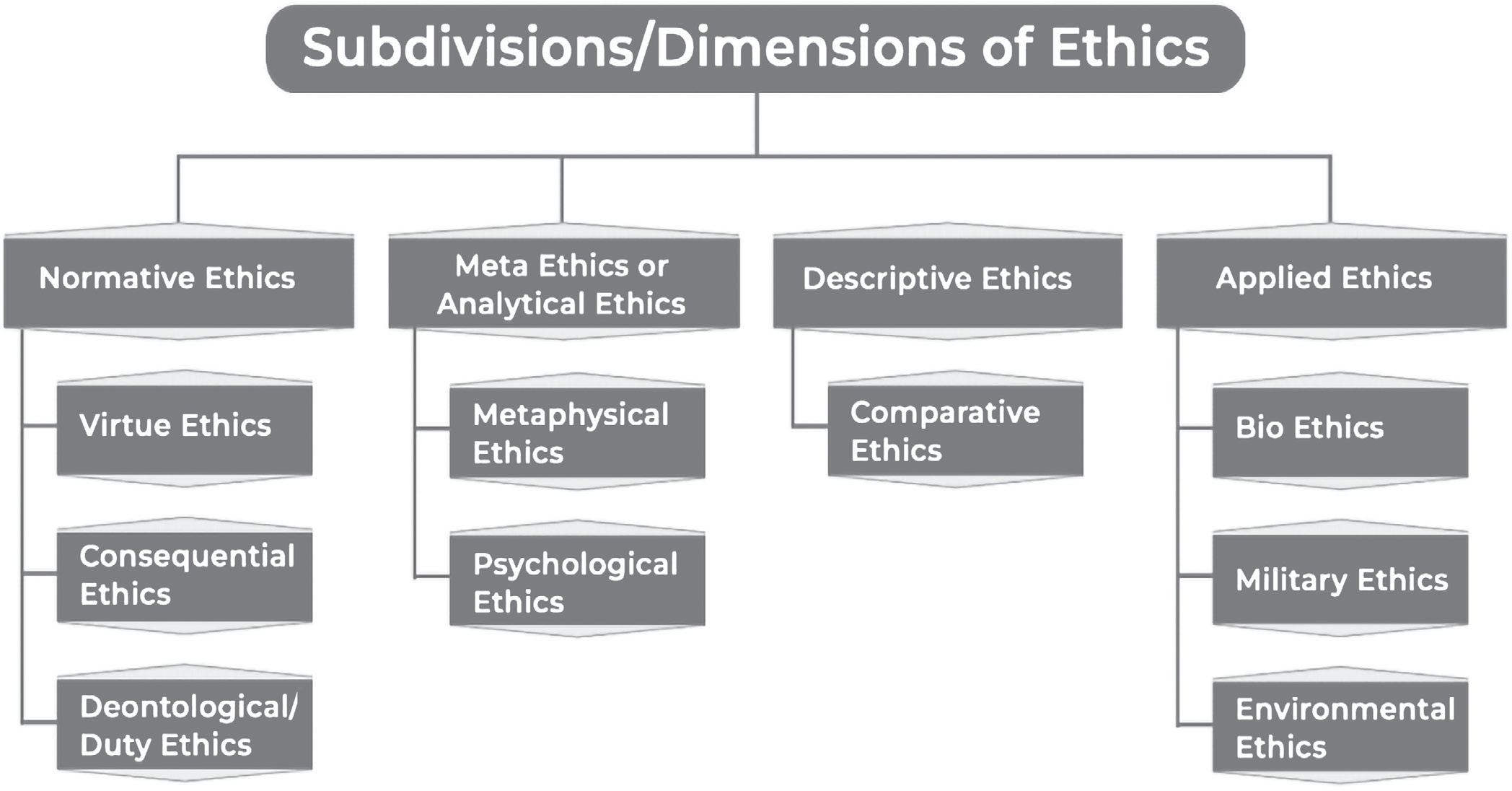
Figure: Dimensions of Ethics
Meta Ethics: What does “right” even mean?
Normative Ethics: How should people act?
Descriptive Ethics: What do people think is right?
Applied Ethics: How do we take moral knowledge and put it into practice?
META ETHICS
• Meta-ethics, also known as Analytical Ethics, examines moral reasoning and the language used in ethical discussions. It seeks to understand the underlying metaphysical, epistemological, semantic, and psychological assumptions that shape moral beliefs, discourse, and actions.
• The term Metaethics is formed by combining the words "meta" and "ethics."
• The word "meta" is often misinterpreted as meaning "beyond" or "after" ethics, but in reality, it signifies "reflecting on" or "analyzing" ethics, delving into its fundamental principles.
• In Plato’s Euthyphro, Socrates argued for separating
divine commands from moral values, a perspective that laid the groundwork for modern metaethical debates on the secular basis of morality. Similarly, in Aristotle’s Nicomachean Ethics (Book One), virtue and happiness are anchored in the biological and political nature of human beings.
• This branch of ethics investigates how individuals interpret and determine whether a decision, action, or objective is morally right or wrong.
• Some key questions explored in meta-ethics include:
• What is the meaning of moral language?
• Do moral facts exist?
• If they do, what are they?
• What defines an action as right or wrong?
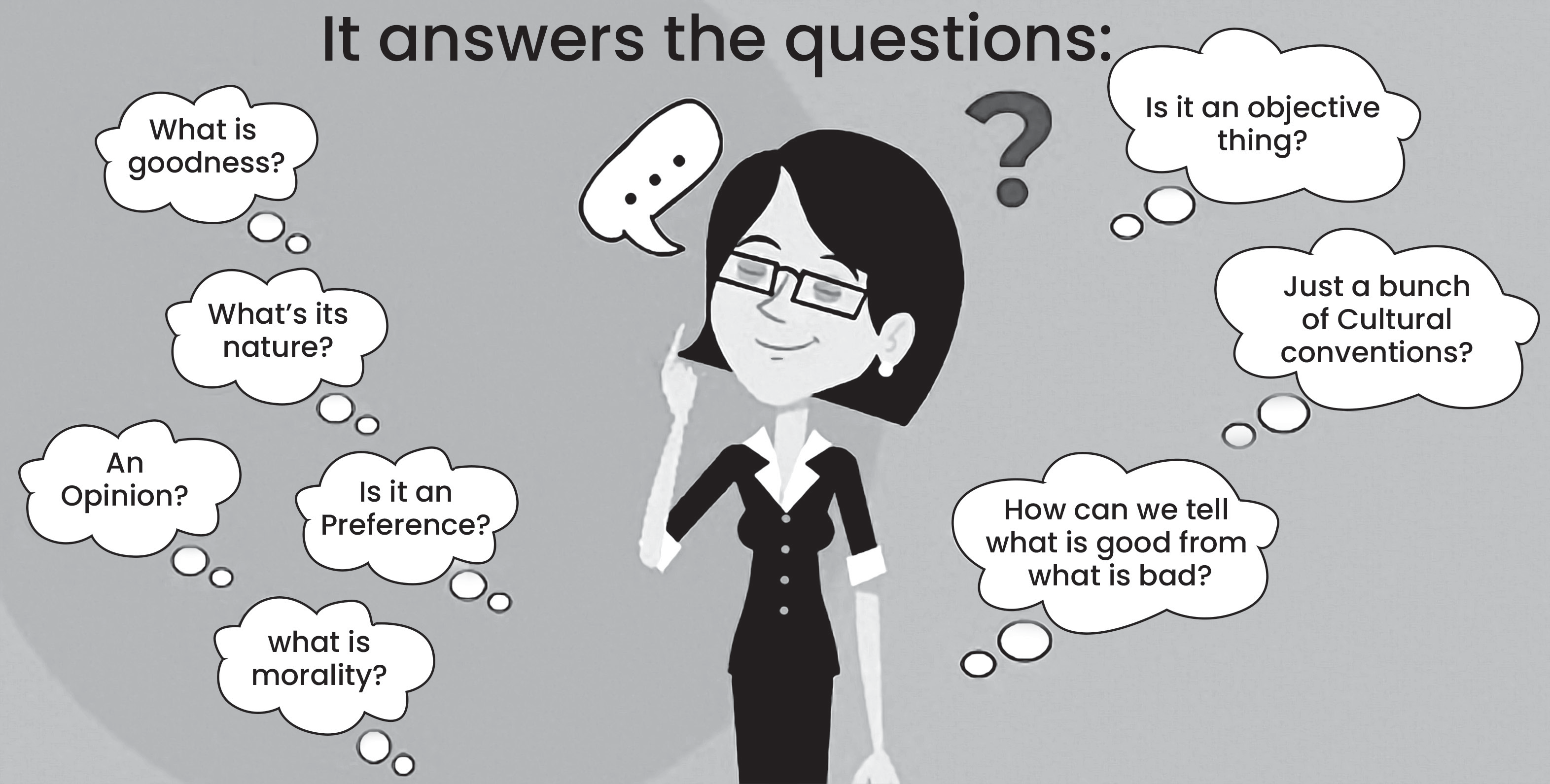
Figure: Nature of Meta Ethics
• Metaethics focuses on the meaning of ethical concepts in general, rather than the applied question of ‘what should be done in a specific situation?’
• It is not concerned with whether an action is right or wrong; rather, it is concerned with the fairness and evilness of morality itself.
• Naturalism, Non-Naturalism, and Prescriptivism are the three main theories in meta-ethics.
• Philosophers have been attempting to provide a precise account of meta-ethics since antiquity.
• For example, Aristotle proposed that our judgement of good and evil is founded on our
grasp of other subjects and the relative ethical wisdom that we passively obtain from it.
Aristotle also stated that acculturation has a significant impact on our thoughts and conceptions about a subject.
When two or more cultures coexist in a geographical location, the diverse characteristics of each culture are absorbed into their everyday lives, broadening their knowledge span and influencing their understanding of good and evil.
Modern philosophers are divided on Metaethics. There are two schools of thought:
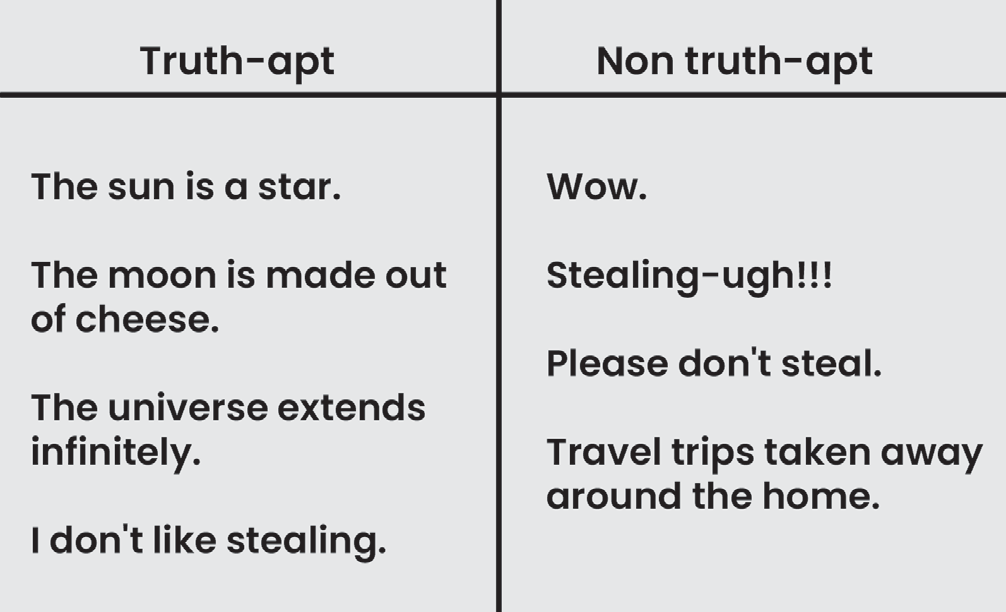
Figure: Truth Apt and Non-Truth Apt Facts
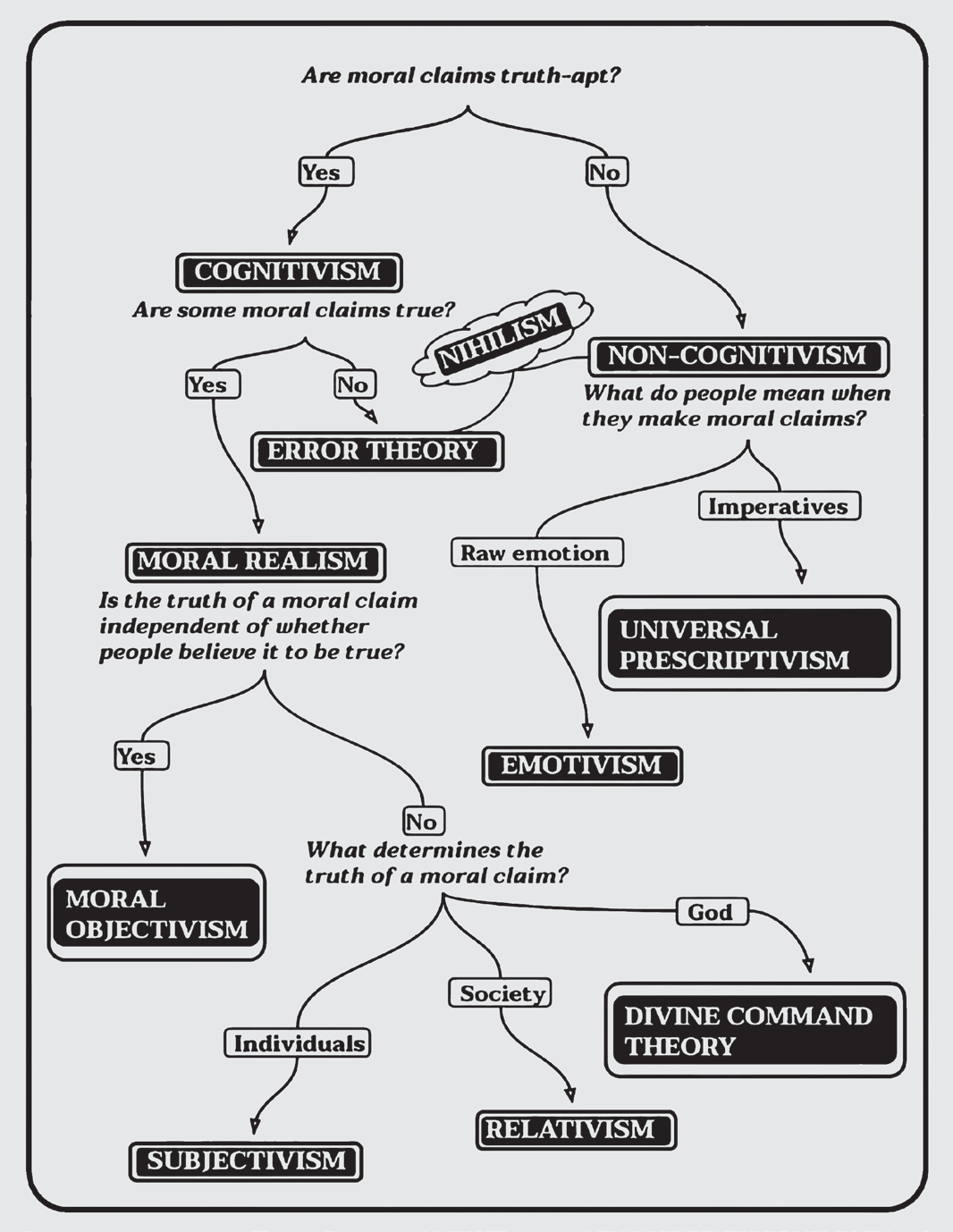
Figure: Flowchart of Meta-Ethics and Related Theories
Non-Cognitivism (Not Truth-Apt): This philosophical perspective asserts that moral judgments, when categorizing something as right or wrong, do not hold objective truth or falsehood.
Non-cognitivists are considered non-realists because they reject the notion that meta-ethics requires a specific ontological framework.
Cognitivism (Truth-Apt): This viewpoint emphasizes that moral judgments are based on factual information and objective reasoning, determining what is morally right
or wrong through verifiable facts and logic.
•
Moral discourse, theories and facts are false. Further, just emotional, prescriptive, expressive and theological facts are false.
• Cognitivists are realists because they explain what kinds of properties or states are relevant to this subject, what values they possess and why they guide and motivate one’s decisions and actions.
• Meta Ethics deals with two issues:
• Meta Physical i.e. whether morality exists independent of humans?
• Here, it deals with the nature of reality, ultimate reality and human reality, its number, elements etc. There are two views: Other-Worldly and This-Worldly.
• Other-Worldly view says that moral values are objective, timeless, eternal, stable, absolute etc. For instance, Divine Command theory (by William Okham).
• This-Worldly view says that morals are human commands not divine. This is also called Moral Relativism. Here, it can be Individual Relativism (Individuals create their own moral standards) or Cultural Relativism (morality is grounded in social approval, not individual precepts).
• Psychological i.e. what is the underlying mental or psychological basis of our moral judgements and conduct?
• For instance, inherent selfishness and hunger for pleasure. There are two ideas under it.
• Thomas Hobbes’ Egoism or Psychological Egoism or Hedonism: It implies that we act according to our desires/happiness. We seek pleasure in what we do.
• H J Burlier’s Altruism or Psychological Altruism: It implies that humans have an innate property of being benevolent to others.
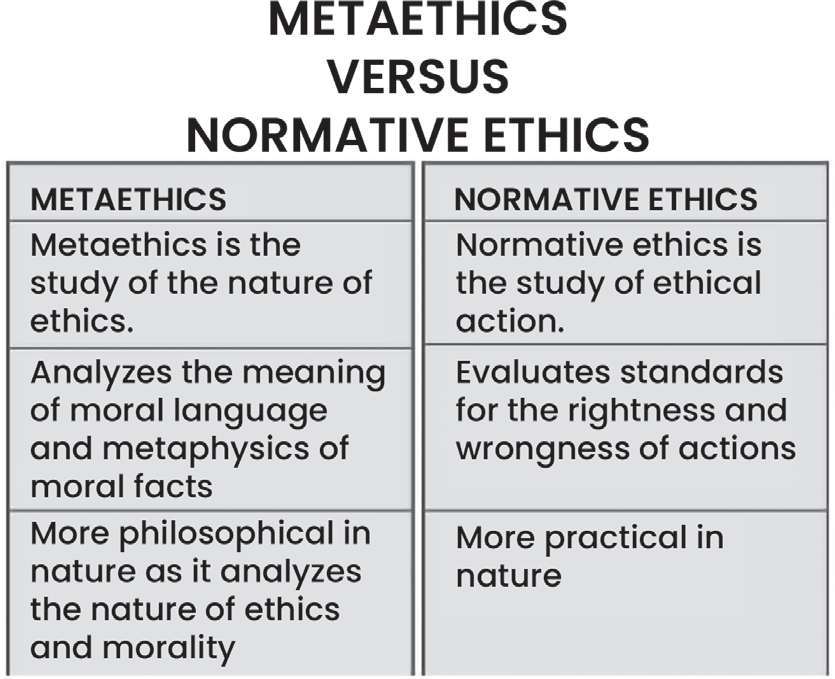
Figure: Meta Ethics versus Normative Ethics
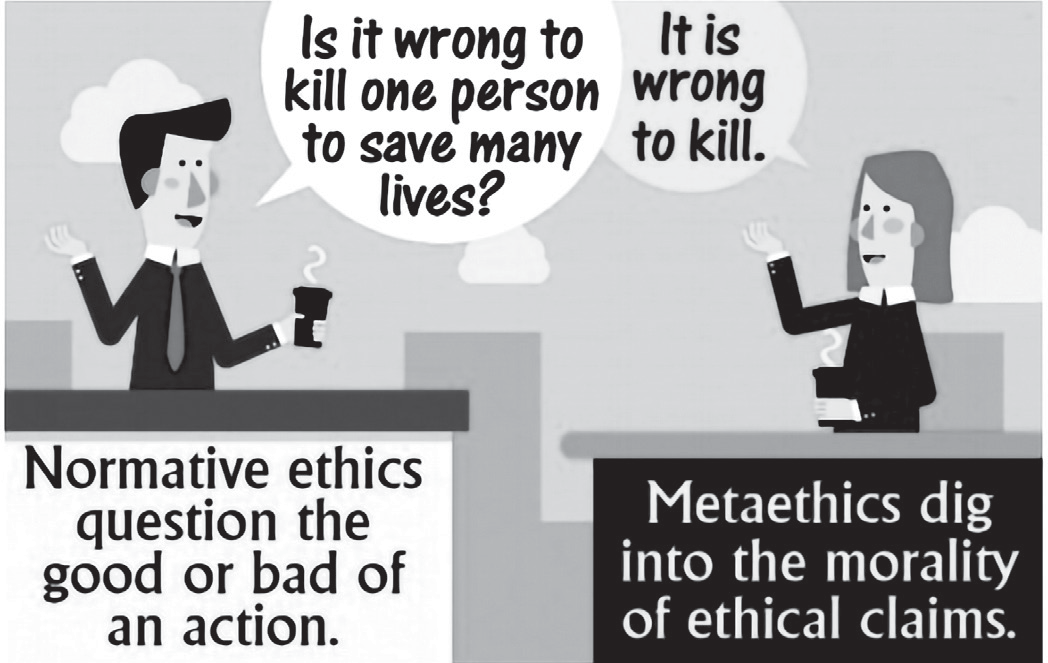
Figure: Comparison between Meta Ethics and Normative Ethics
NORMATIVE ETHICS
• Normative ethics focuses on establishing moral standards that guide and regulate right and wrong behavior.
• It involves recommending or defining the virtues one should cultivate, the obligations one must fulfill, and the impact of one’s actions on others.
• In essence, normative ethics seeks a definitive criterion for determining appropriate conduct.
• A well-known example of a normative ethical principle is The Golden Rule, which states: "Treat others as you would like to be treated."
• If I do not want my neighbor to steal my car, then stealing my neighbor’s car would be unethical.
• If I would appreciate being fed in times of starvation, then I should extend the same help to those in need.
• By this same reasoning, acts such as lying, harassment, victimization, assault, or murder are deemed morally unacceptable.
• Normative ethical theories are categorized into three primary branches: Teleological Ethics, Deontological Ethics, and Virtue Ethics. Each approach assesses the
morality of actions differently, determining whether
they are right or wrong, acceptable or unacceptable.
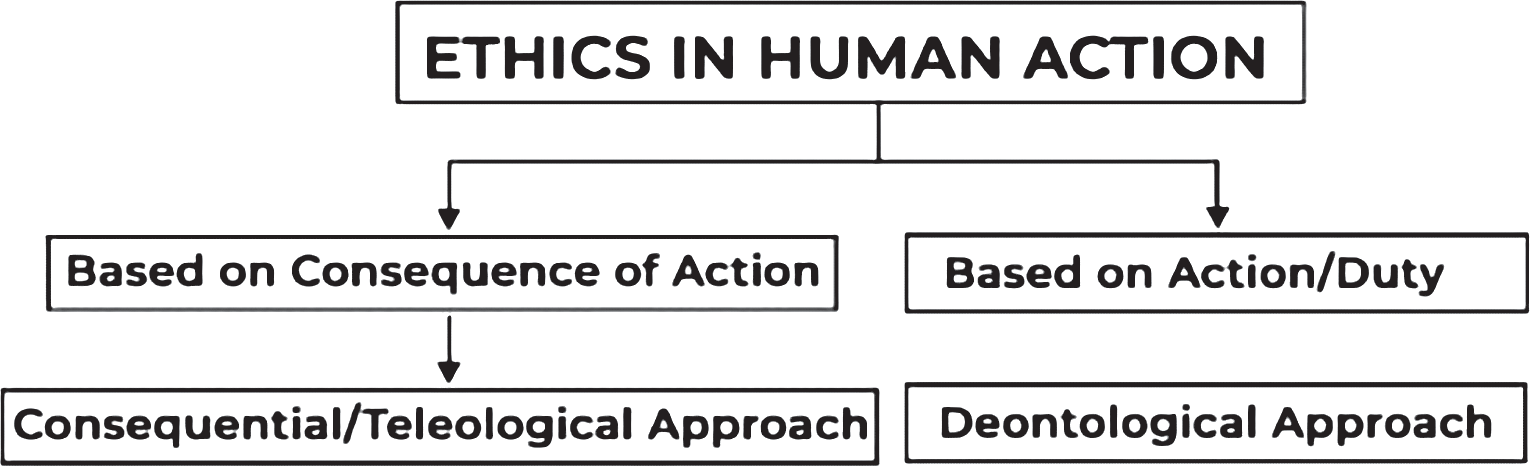
Figure: Ethics in Human Action
Teleology
• Teleology is derived from the Greek words ‘telos’ meaning “end” and ‘logos’ meaning “science.” This ethical approach, also known as “consequentialism,” evaluates the morality of an action based on its outcomes or consequences.
• An action is considered morally right if it results in positive consequences and wrong if it leads to negative consequences. Therefore, assessing the morality of an action requires analyzing its actual or potential effects.
• According to consequentialism, ethical behavior is determined solely through a cost-benefit evaluation of an action’s outcomes. A defining feature of most teleological ethical theories is their association of morality with concepts such as pleasure and pain or happiness and suffering.
• Thus, actions are deemed morally right, ethical, or good if they lead to pleasurable outcomes, while they are considered immoral, wrong, or unethical if they result in painful consequences.
• There are three major types of teleological theories-
• Ethical Egoism – This theory asserts that an action is considered morally right if its consequences are primarily beneficial to the individual performing the action.
• Notable proponents of this theory include Epicurus, Hobbes, Nietzsche and Adam Smith.
• Ethical Altruism – According to this principle, an action is morally right if its outcomes are more favorable for others rather than the individual performing the action. Ethical altruism encourages individuals to prioritize the well-being of others over their personal ambitions, considering such selflessness as the highest moral act.
• Ethical Utilitarianism – This theory maintains that an action is morally justifiable if its consequences are more beneficial than harmful for everyone affected by it. Jeremy Bentham and J.S. Mill are key advocates of this concept, which is based on the idea that the "greatest happiness for the greatest number" determines the moral worth of an action.
• Example: If a thief’s children were starving, and stealing a loaf of bread could immediately prevent their starvation, then the act might be considered morally acceptable from a utilitarian perspective. This scenario exemplifies teleological ethics in the form of utilitarianism.
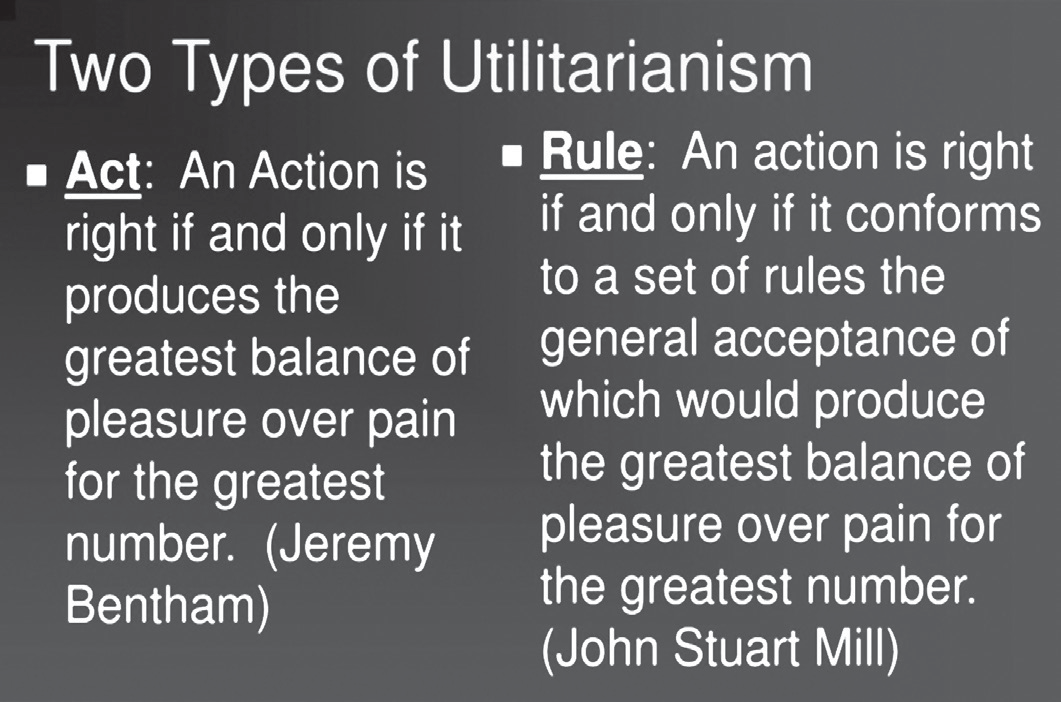
Figure: Types of Utilitarianism
• Other theories under teleological approach include Hedonism (Hobbes’ pleasure theory), Evolutionism (i.e. social development of morality) and Perfectionism (if feelings are under control of the mind, then there will be full development of mankind).
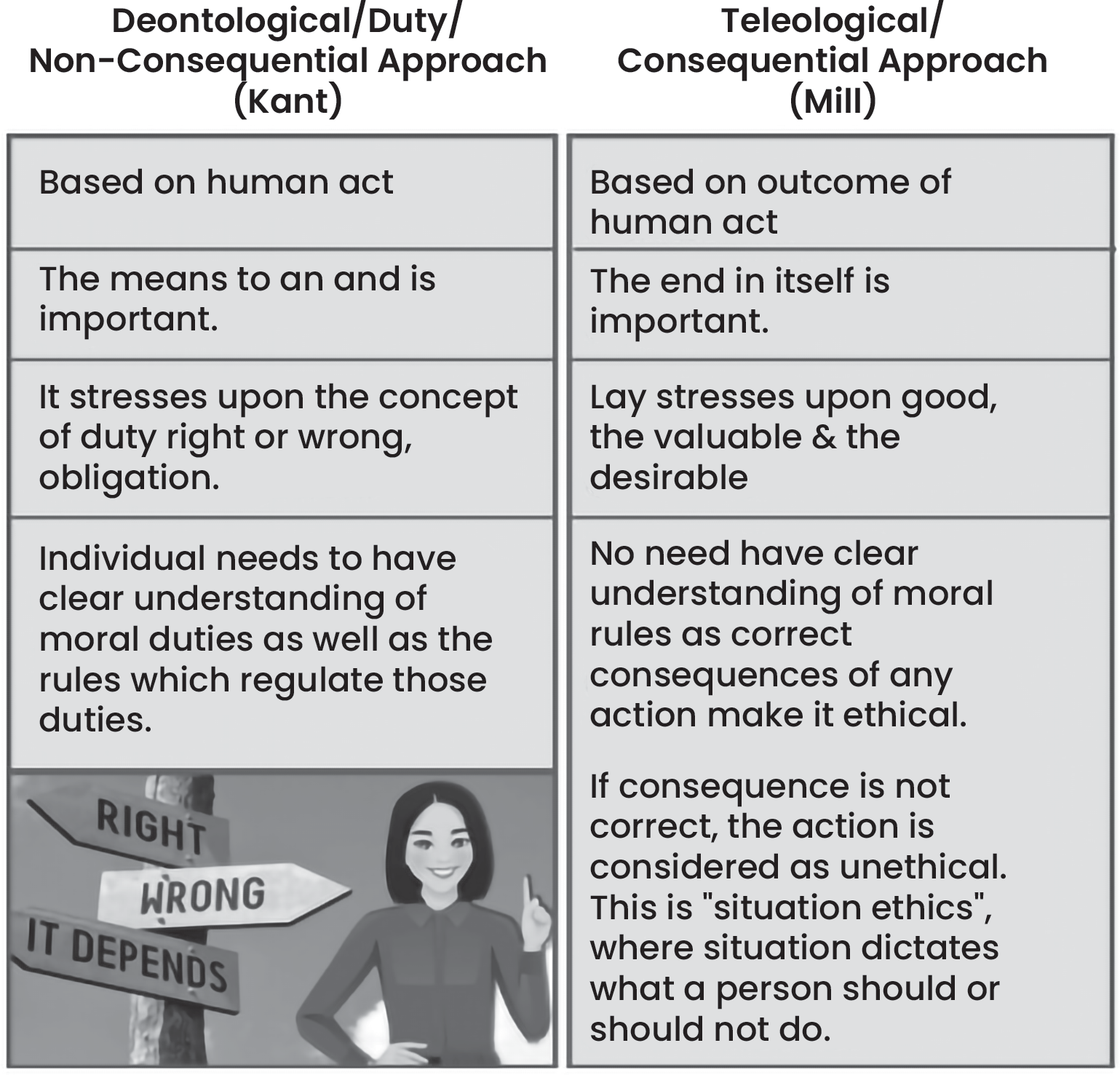
Figure: Deontological vs Teleological Ethics
Deontology
• It is also known as normative, ethical or positive theory. The term deontology finds its etymology in the Greek word ‘Deon’, meaning ‘duty,’ or ‘obligation,’ or ‘that which is necessary, hence moral necessity’.
• The deontological approach rejects that the moral worth of any action depends on its consequences. Deontological approach to ethics holds that moral agents have to rigorously fulfil their moral duties or obligations and other’s rights unmindful of the consequences.
•
For instance, it is wrong to not care children
even if there are financial benefits.
• Moral agents have to honour human rights and meet moral obligations even at the cost of an optimal outcome.
• A deontological perspective asserts that certain actions are inherently immoral, regardless of their consequences. For instance, character assassination is considered unethical and inhumane, even if it leads to positive outcomes. A historical example is the anti-slavery movement in early 19th-century America, where many abolitionists opposed slavery not because of its economic implications but because it was fundamentally wrong.
• From a teleological viewpoint, slavery might seem like an effective economic system, as it could provide widespread satisfaction and prosperity. However, a deontologist would argue that even if a cost-benefit analysis shows greater societal happiness than suffering, slavery remains morally unacceptable because it violates an absolute ethical principle. The most renowned deontologist was the German philosopher Immanuel Kant, who emphasized that moral rules should be upheld unconditionally, irrespective of their outcomes.
• Categorical Imperative of Kant
• Immanuel Kant disagreed with Utilitarianism, believing that morality is not necessarily linked to happiness.
• His theory evaluates the motivation behind actions, advocating for deeds performed out of conscience without expectation of rewards. This perspective introduced a secular approach to morality, clearly distinguishing morality from religion.
• Kant’s deontological ethics introduced the concept of the Categorical Imperative, a moral law that applies universally and unconditionally, independent of personal goals or outcomes.
• He formulated this principle in different ways, with the most notable being, "Act only according to that maxim (rule) which you can, at the same
time, will to become a universal law."
• It implies that what is right for one person becomes right for all and what is wrong for one is wrong for all. If you cannot universalise your action in order to make it right for all, then it is wrong for you too.
Virtue Theory
• Virtue ethics, a concept introduced by Aristotle and later developed by Thomas Aquinas
• It emphasizes the intrinsic character and moral virtues of a person rather than focusing on specific actions.
• Instead of adhering to rigid rules, this ethical approach highlights the cultivation of good habits, such as benevolence. When an individual develops benevolence, they naturally act in a benevolent way.
• Socrates' ethical philosophy centers around the idea of virtue, which he regarded as the most fundamental quality of human nature. He believed that pursuing virtue is the highest purpose and greatest good one should strive for in life.
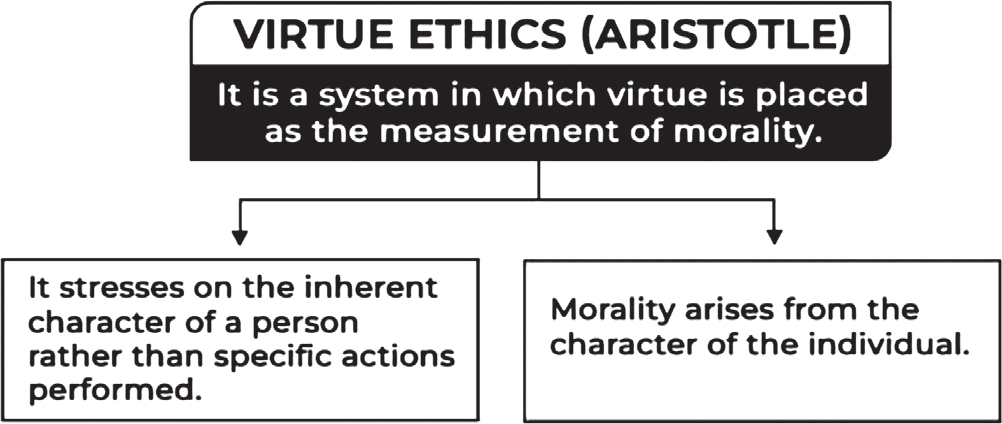
Figure: Virtue Ethics
• Plato emphasized Four Virtues in particular, which were later called Cardinal Virtues:
• Wisdom (i.e. ability to judge action)
• Courage (i.e. fortitude or ability to confront fear)
• Temperance (i.e. practice of self-control)
• Justice (i.e. fairness)
• Plato defines how an individual can attain these virtues:
• Wisdom comes from exercising reason;
• Courage from exercising emotions or spirit;
• Moderation(sometimes “temperance”) f rom
allowing reason to overrule desires;
• Justice ensues when all elements of the mind are in concord with one another.
• Aristotle described virtues as "good habits" that help regulate emotions, a concept known as the Golden Mean. For example, courage is the appropriate response to fear, enabling individuals to face danger.
• He viewed virtue as a quality that leads to Eudaimonia, or overall well-being, and classified it into two types: moral and intellectual.
• Essential virtues include fortitude, generosity, self- respect, sincerity, and good temper.
• Virtue ethicists not only encourage the cultivation of good character traits but also stress the importance of avoiding vices such as cowardice, insensibility, injustice, and vanity.
•
Additionally, virtue theory underscores the significance of moral education, as virtues are developed during youth. Hence, it is the duty of adults to instill these values in the younger generation.
DESCRIPTIVE ETHICS OR COMPARATIVE ETHICS
• Descriptive ethics is an empirical study that examines people's moral beliefs based on laws and societal conventions. It explores the historical development and evolution of ethics, documenting specific taboos, norms, and traditions.
• This field focuses on understanding morality, values, and virtues through observation, historical records, and comparative analysis.
• Kohlberg's theory of moral awareness exemplifies descriptive ethics, as it offers a value-neutral perspective, distinguishing it as a branch of social science rather than a study of moral philosophy.
• It seeks to answer questions such as, "What do people believe is right?" by analyzing real-life moral choices and beliefs.
• Unlike normative ethics, descriptive ethics does not start with fixed theories or assumptions. Instead, it thoroughly examines existing facts and real-world examples by observing the actual decisions made by individuals in various contexts.
• This field covers a broad spectrum of ethical studies, including societal codes that shape laws and regulations, informal etiquette theories, legal and arbitration systems, and everyday moral choices made by individuals without expert guidance.
APPLIED ETHICS
• Applied ethics is a branch of moral philosophy that seeks to implement ethical theories in real-world scenarios, including issues like euthanasia, abortion,
and surrogacy, among others.
• It aims to utilize ethical frameworks to determine the morally appropriate course of action across different aspects of daily life. This approach has led to the development of specialized fields such as professional ethics, medical ethics, bioethics, and business ethics.
• For instance, environmental ethics addresses ecological concerns, such as the duty of governments and corporations to mitigate pollution and maintain environmental sustainability.
• It must be controversial (substantial people should be for and against).
• It must be a moral issue (not social).
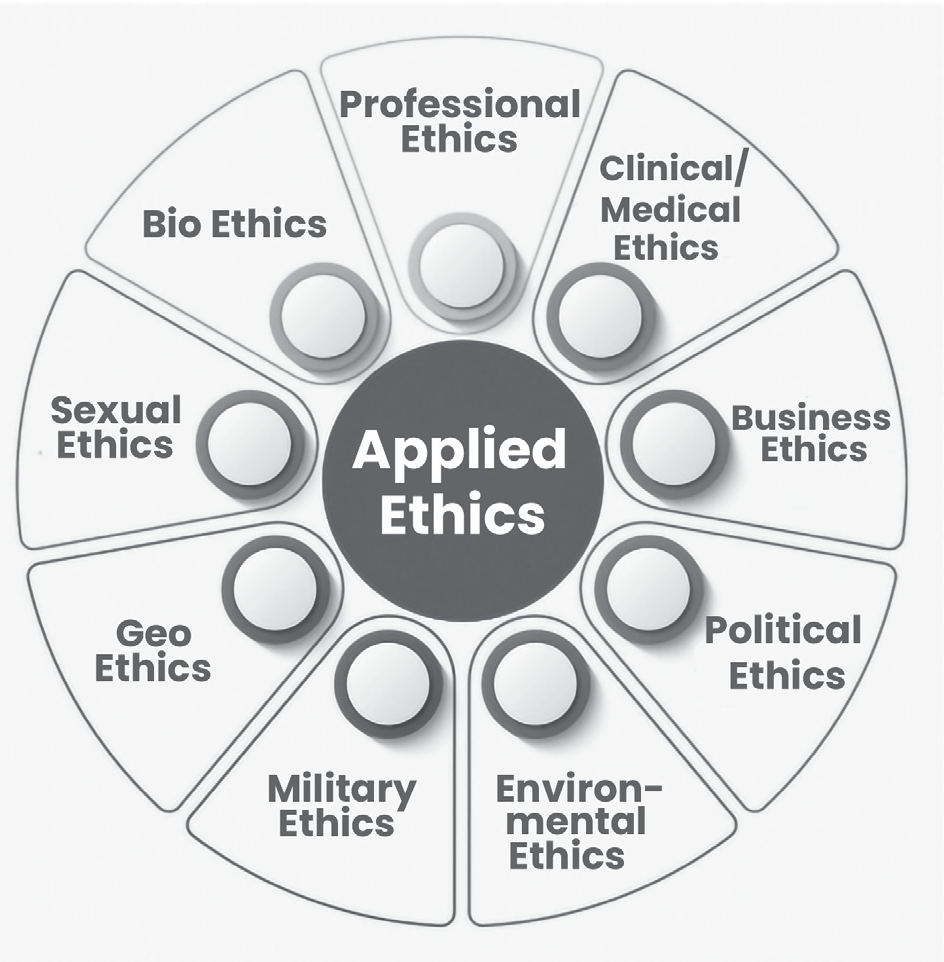
Figure: Key Areas of Applied Ethics
Environmental Ethics
• Environmental ethics is a field that examines the moral relationship between humans and the environment, including the ethical value and status of non-human entities in nature.
• Rabindranath Tagore’s perspective on education aligns with environmental ethics. He stated, “The highest education is that which does not merely give us information but makes our life in harmony with all existence.”
• This highlights the ethical connection between humans and the natural world, emphasizing that both humans and other living beings are integral
parts of the environment.
• The foundation of environmental ethics is the belief that all forms of life have an inherent right to exist. When humans destroy nature, they violate this right, making such actions both unjust and unethical.
• Furthermore, the principle of intergenerational equity stresses the moral responsibility to preserve the planet for future generations. Just as we inherited the Earth from our ancestors, we are ethically bound to pass it on in a sustainable condition, ensuring that future generations can thrive without suffering the consequences of environmental degradation for which they were not responsible. This principle upholds sustainability and fairness across generations.
• Also, environmental degradation and climate
change has disproportionate effects the poor and vulnerable who have not contributed these. This violates the Principle of Polluter Pays.
• The major factors that necessitate environmental ethics are:
• Modern science demonstrates how we have changed and are changing our environment in ways not previously understood, thus raising
new ethical issues.
• For example, until the past decade, few people believed that human activities could be changing the Earth’s global environment.
• Now, however, scientists believe that burning fossil fuels and clearing forests have changed the amount of carbon dioxide in the atmosphere, and this causes changes in our climates, and hence the need for global action. This new perspective raises new moral issues.
• Our modern technological civilisation affects nature adversely, we must examine the ethical consequences of these new actions.
• Some people argue that animals, trees and even rocks have moral and legal rights, and that it is a natural extension of civilisation to begin including the environment in ethics. These expanded concerns lead to need for new ethics.
Environmental Ethics vs Development:
• The world’s population was said to be around 2.5 billion during 1950’s. By the year 2050 it is expected to have grown to between nine and 10 billion. As the population is increasing, infrastructural development is essential to accommodate the growing demand, a major burden of which will fall on the environment. Mostly, development takes place at the cost of environment.
• For instance, developmental Project like Ken Betwa River linking project, ever since it was proposed by National Water Development Agency in 1995, has been considered unviable by several experts for its immense environmental cost.
• In 2011, then Environment Minister rejected the project. In August 2016, an Environment Ministry panel cautioned that the Ken Betwa Linking project “may not be the best possible option for addressing livelihood and development of the region” - running the risk of providing justification or unhealthy precedence within the protected areas. It will not be in the interest of wildlife and the overall well-being of the society in the long term.”
Environmental Ethics and India
• Since ancient Vedic times, the fundamental principle of social life was to coexist harmoniously with nature. Sages, saints, and enlightened teachers of India resided in forests, engaged in deep meditation, and conveyed their wisdom through scriptures like the Vedas, Upanishads, Smritis, and Dharma.
• This sacred literature of the golden era consistently emphasized a reverential approach toward nature, including plants, trees, the earth, sky, air, water, and animals, advocating for their protection and care.
• It was considered a sacred duty of every individual to safeguard and preserve them. Hinduism inherently upholds environmental respect, balance and conservation, urging humans to recognize and honor the divinity present in nature.
• As a result, elements of nature such as trees, animals, hills, mountains, and rivers are revered as symbols of respect for the natural world. A review of Hindu scriptures highlights key principles:
• Respect and protection of nature.
• Nonviolence (Ahimsa Parmo Dharma) as the highest virtue, promoting kindness toward animals, plants, and all living beings.
• In today’s world, however, people have largely neglected these ancient traditions of environmental harmony and conservation. The relentless pursuit of industrialization and economic growth has led to a disregard for nature’s significance.
• Earlier, humans coexisted with nature just like other creatures, maintaining a deep connection and sensitivity toward their surroundings. However, over time, humans began perceiving themselves as masters of the universe, assuming that nature exists solely for their benefit.
• While early civilizations cherished and protected their environment, modern industrialization has eroded this sensitivity. Despite being aware that industrial growth leads to environmental pollution, people often refuse to acknowledge or act upon this reality.
• This version retains the original meaning while ensuring originality and clarity. Let me know if you'd like any refinements!
Indian Constitution and Environmental Ethics
• Article 48-A: State shall endeavour to protect and improve environment and to safeguard forest and wildlife of the country.
• Article 51-A (g): It is the duty of every citizen of India to protect and improve natural environment
including forest, lake, rivers and wildlife and to have compassion for living creatures.
Bioethics
• Bioethics is the field that examines ethical dilemmas arising from advancements in biology and medicine. Bioethicists explore moral concerns related to the intersections of life sciences, biotechnology, medicine, politics, law, and philosophy. Additionally, bioethics
Military Ethics
Military Ethics
These are concerned with questions regarding the application of force and the ethos of the soldier and are often understood as applied professional ethics.
• Just War Theory aims to ensure that a war is morally justifiable through a series of criteria, all of which must be met for a war to be considered just.
• The criteria are mostly split into three groups:
• Jus ad bellum («right to go to war»)-
• Competent authority (duly constituted),
• Probability of success (of just cause),
• Last resort (i.e. all non-violent options like diplomacy, sanctions and other non-military options must first be exhausted) and
• Just cause (to protect life).
• Jus in bello («right conduct in war») –
• Distinction (no attack on non-combatants, surrendered, captured, injured, no immediate lethal threat)
• Proportionality (Harm not more than anticipated military advantage)
• Military necessity (only to defeat the enemy)
• Fair treatment of prisoners of war (no torture or threat)
• No means malum in se (not use evil weapons like nuclear or chemical weapons)
• Jus post bellum (“ending a war”) – by Gary Bass, Louis Iasiello and Brian Orend concerns justice after a war, including peace treaties, reconstruction, environmental remediation, war crimes trials, and war reparations to deal with some hostile actions outside a traditional battlefield. For instance, French- led deployment of French troops and British sailors to Ottoman Syria in 1860, after massacres of Christians. It is based on ensuring responsibility and accountability of warring parties post-war.
• A just termination of the war once its objectives have been largely met;
• Right intention, meaning no revenge;
• Working with a legitimate domestic authority that respects human rights;
• Discrimination,meaning no collective punishment;
• Proportionality
• The Indian Hindu epic, the Mahabharata, offers the first written discussions of a “just war” (dharma- yuddha or righteous war), establishing criteria like
• Proportionality (chariots cannot attack cavalry, only other chariots; no attacking people in distress)
• Just Means (no poisoned or barbed arrows)
• Just Cause (no attacking out of rage)
• Fair Treatment of captives and the wounded
• In Sikhism, the term ‘dharamyudh’ describes a war that is fought for just, righteous or religious reasons, especially in defence of one’s own beliefs.
• However individual countries and traditions have different fields of attention. It involves multiple subareas, including the following among others:
• What, if any, should be the laws of war.
• Justification for the initiation of military force.
• The decisions about who may be targeted in warfare.
• The decisions on choice of weaponry, and what collateral effects such weaponry may have.
The standards for handling military prisoners
The methods of dealing with violations of the laws of war
Corporate Ethics
Corporate Ethics
The relationship of business and society is going through a phase of transition. The companies, whose major objective has been to maximize profits for the benefits of their shareholders, should focus on serving the interest of society at large.
The social obligation of the company is to behave in a transparent, ethical manner that helps protect the long-term success of society and the environment.
• It may include:
• Maintenanceof transpa rent organisational governance,
• Maintenance of human rights and ethical labour practices,
• Sustainable environmental practices;
• Fair operating practices, etc.
• This has given rise to the concept of corporate governance.
• Corporate Governance essentially involves balancing the interests of a company’s many stakeholders, such as shareholders, senior management executives, customers, suppliers, financiers, the government, and the community.
• Ethical issues with Corporate Governance in India:
• Conflict of Interest: The challenge of managers potentially enriching themselves at the cost of shareholders e.g., recent case of former ICICI bank head Chanda Kochar approved a loan to Videocon for a quid pro quo deal for her husband.
• Weak Board: Lack of diversity of experience and background represents a major area of weakness for these boards. There have been questions about board performing in the larger interests of the shareholders. In case of IL&FS, not a single red flag was raised by any board member.
• Separation of ownership and management: In case of family-run companies, the separation of ownership and management remains a key challenge in majority of companies including some of India’s top ones.
• Independent directors: Independent directors are partisan and are not able to check promoter’s unethical practices.
• Executive Compensation:Executive compensation is a contentious issue especially when subject to sha reholder’s accountability. Executive compensation needs to stand the test of stakeholders’ scrutiny.
Corporate Social Responsibility (CSR)
• Corporate Social Responsibility (CSR) can be described as the ongoing commitment of businesses to operate ethically while contributing to economic growth. It emphasizes enhancing the well-being of employees, their families, the local community, and society as a whole. CSR reflects an organization’s overall approach toward its workforce, customers,
the environment, and the broader community.
• India is the first country to legally mandate Corporate Social Responsibility (CSR) compliance for companies. As per Section 135 of the Companies Act, 2013, any company—whether private or public—with a net worth of ₹500 crore, a turnover of ₹1,000 crore, or a net profit of ₹5 crore must allocate at least 2% of its average net profit from the past three financial years toward CSR initiatives.
• Additionally, companies are required to establish a CSR committee responsible for formulating a CSR policy. This policy, once approved by the board, outlines the specific CSR activities the company intends to undertake.
• Classifying Social Responsibilities of the corporates:
• Responsibility Towards the Organization: Every corporate entity must focus on growth, expansion, and stability to ensure profitability. Achieving social and economic objectives requires enhancing organizational efficiency.
• Responsibility Towards Employees: Employees are the backbone of an organization. Businesses have several obligations toward their workforce, including timely salary payments, maintaining a hygienic work environment, fair and unbiased
treatment, access to healthcare, recreational activities, and encouraging employee participation in managerial decisions.
• Responsibility Towards Consumers: Companies must uphold high-quality standards for their products and services at fair prices. They should avoid unethical practices like hoarding and black marketing.
• Responsibility Towards Shareholders: Corporations have a duty to protect shareholders' investments and strive to provide reasonable returns.
• Responsibility Towards the Environment: Businesses must play an active role in environmental conservation by producing eco- friendly products and ensuring proper industrial waste management. By effectively implementing CSR, companies can gain various competitive advantages, such as better market access, increased
sales and profits, reduced operational costs, improved productivity and quality, a stronger workforce, enhanced brand reputation, greater customer loyalty, and more effective decision- making and risk management.
Triple Bottom Line Approach to Business Ethics
• In economics, the Triple Bottom Line (TBL) concept emphasizes that businesses should prioritize social and environmental responsibilities alongside profitability. According to TBL theory, companies should focus on three key aspects rather than just financial gains: profit, people, and the planet.
• TBL serves as a tool to assess a corporation’s commitment to corporate social responsibility (CSR) and its long-term environmental impact.
• This approach provides a framework for evaluating and reporting corporate performance across economic, social, and environmental dimensions. It aims to align private businesses with the broader objective of sustainable global development, ensuring they operate with a holistic set of goals beyond just profit-making.
• For an organization to be truly sustainable, it must maintain financial stability, minimize or eliminate environmental harm, and adhere to societal
expectations.
International Relations
INTERNATIONAL RELATIONS
When analyzing ethical reasoning in international relations, it is essential to recognize that decisions are made by individuals, not by states, cultures, institutions, agencies, or organizations. These individuals may have differing perspectives on morality and its influence on global affairs. Just as people disagree on national interests and the best strategies to achieve them, moral viewpoints in international relations also vary.
Theoretical Perspectives in International Relations:
A theory of international relations is a conceptual framework that explains how the global system functions. Unlike ideologies, these theories are supported by evidence. The two dominant theories in this field are realism and liberalism.
• Realism: Realism asserts that states primarily seek to enhance their power relative to other nations.
• It is based on the following principles:
• The world is harsh and unpredictable, where power is the only certainty. A strong state will always have an advantage over weaker competitors, ensuring its survival. Military strength is considered the most significant and dependable form of power.
• A state’s main objective is self-preservation; therefore, it must pursue power and prioritize its security at all times.
• There is no supreme authority to enforce global regulations or penalize misconduct.
• Moral behavior can be a liability, as it may
weaken a state's ability to safeguard itself.
• The international system compels states to resort to military force and warfare. While leaders may have moral values, foreign policy should not be dictated by ethics.
• International organizations and laws lack real enforcement power and only exist as long as states recognize them.
• Historically, realism has influenced political strategies since the inception of nation-states. During the Cold War, both the United States and the Soviet Union operated under a realist framework, seeking allies to fortify their security and extend political and military influence. Realist principles were also evident in the George W. Bush administration.
• Liberalism: Liberalism argues that deepening global ties among states has made it harder to define national interest and reduced the effectiveness of military power. Emerging in the 1970s, liberalism challenged realism by highlighting the impact of globalization, advancements in communication, and the growth of international trade. These factors have diminished the role of traditional power politics. Liberal theories are often referred to as complex interdependence theories and include the following key ideas:
• The world remains challenging and dangerous, but military force often has more drawbacks than benefits. Thus, international cooperation benefits all states.
• Different states prioritize different national
interests.
• International organizations and legal frameworks can foster cooperation, trust, and economic growth.
• Idealism: A subset of liberalism, idealism emphasizes that states should pursue moral objectives and act ethically in global affairs. Idealists argue that behavior deemed immoral in personal interactions is equally unethical in foreign policy. They reject deception, manipulation, and violence in international relations.
United Nations Charter:
• The United Nations Charter serves as the legal and
moral cornerstone of international relations. It embodies
humanity’s shared spiritual values and unity.
• Preamble: We, the people of the United Nations, are committed to:
• Preventing future generations from experiencing the devastation of war, which in our lifetime has twice inflicted immense suffering on humanity.
• Upholding faith in fundamental human rights, recognizing the dignity and worth of every individual, and ensuring equal rights for men, women, and nations, regardless of their size.
• Creating an international framework where justice and respect for treaties and international laws are preserved.
• Encouraging social progress and fostering better living standards within an environment of greater freedom.
• To achieve these objectives, we pledge to:
• Promote tolerance and coexist peacefully as good neighbors.
• Unite our efforts to uphold international peace and security.
• Ensure that armed force is only used in the collective interest and in accordance with agreed principles and mechanisms.
• Utilize international cooperation to advance the
economic and social well-being of all people.
• With these commitments in mind, we have resolved to work together to achieve these common goals.
India’s Role in Global Ethical Governance
• India’s Contributions: India has played a significant role in promoting ethical governance globally. It was a member of the League of Nations and is also a founding member of the United Nations. Article 51 of the Indian Constitution provides a framework for India’s engagement with international law.
• Additionally, Article 51A aligns with Article 29(1) of the Universal Declaration of Human Rights, emphasizing the responsibilities of individuals towards their communities.
• Article 51 instructs the state to honor international law, although it does not automatically integrate it into Indian legal statutes.
• Under Article 51, the state is expected to:
• Encourage international peace and security.
• Uphold just and respectful relations among nations.
• Promote adherence to international laws and treaty obligations in global interactions.
• Advocate for the peaceful resolution of international disputes through arbitration.
Panchsheel Principles (Five Principles of Peaceful Coexistence)
• These principles guide international relations and include:
• Respect for each nation’s sovereignty and territorial integrity.
• Commitment to non-aggression.
• Non-interference in each other’s internal affairs.
• Equality and mutual benefits in cooperation.
• Peaceful coexistence among nations.
Non-Aligned Movement (NAM)
• Nehru provided three main reasons for India’s non- alignment policy:
• As a newly independent nation, India needed to prioritize economic and social development rather than align with military blocs.
• India has historically been a peaceful nation, having never engaged in aggressive warfare against any country.
• When the world is split into two opposing military alliances poised for conflict, it is prudent to reinforce the neutral zone (third bloc) to act as a bridge for peace.
• Therefore, rather than merely maintaining neutrality, a proactive approach to non-alignment is necessary, where nations actively contribute to the peace process.
India’s Nuclear Policy
• India follows a declared policy of No First Use (NFU) for nuclear weapons, adhering to a strategic doctrine of credible minimum deterrence.
• Key aspects of India’s nuclear doctrine include:
• Developing and maintaining a credible minimum nuclear deterrent.
• Adopting a No First Use stance, meaning nuclear weapons will only be deployed in retaliation against a nuclear attack on Indian soil or Indian military forces stationed anywhere.
• Any nuclear retaliation in response to a first strike will be overwhelming and aimed at causing unacceptable destruction.
• Only the civilian political leadership, through the Nuclear Command Authority (NCA), has the authority to approve nuclear retaliatory strikes.
India’s Refugee Policy
• Despite not being a signatory to the UN Refugee Convention, India hosts one of the largest refugee populations in the world.
• India upholds the principles of the 1951 UN Refugee Convention and the 1967 Protocol, offering refuge to individuals irrespective of their race, religion, or creed.
• However, India has not formally adopted international legal frameworks that guarantee refugees the right to seek asylum or protect them from being deported to dangerous conditions.
• India lacks a formal asylum procedure, and individuals entering without a visa are classified as illegal immigrants under the Foreigners Act or the Indian Passport Act.
• The only legal protections available to refugees are the Right to Life under Article 21 and Protection Against Arbitrary Abuse of Power under Article 14 of the Indian Constitution.
• In 2019, India enacted the Citizenship Amendment Act (CAA), which grants amnesty and accelerates the process of acquiring Indian citizenship for non- Muslim "illegal immigrants" from neighboring nations like Pakistan, Bangladesh, and Afghanistan.
• In Tamil Nadu, Sri Lankan Tamil refugees received state government support, including financial allowances and work opportunities. Following the end of the Sri Lankan civil war in 2009, they were given the option to seek guidance from UNHCR to decide whether to return.
• India has consistently supported the Dalai Lama and the Tibetan refugees who fled with him after the failed anti-China uprising of 1959, granting them asylum in the country.
Ethical Considerations in International Funding
• The concept of reward and punishment has long been used to shape human behavior. International financial assistance from global agencies and Western countries can also be viewed as a means to influence or persuade developing nations.
• The ethical nature of such funding depends on the conditions attached to it:
• If provided out of compassion, humanity, justice, equality, fraternity, peace, and altruism, it is considered ethical.
• However, if it serves purposes such as hegemony, self-interest, greed, coercion, inequality, manipulation, or control, it is deemed unethical.
• During the Cold War, international funding was largely unethical, used as a tool to manipulate newly
independent nations into aligning with one of the two dominant power blocs.
• This led to the rise of oppressive regimes and deepened global inequalities between the Northern and Southern hemispheres. However, in the later years of the Cold War, institutions like the World Bank Group initiated reforms aimed at global development, known as first-generation reforms or the Washington Consensus.
The Washington Consensus
• The Washington Consensus refers to a set of ten economic policy recommendations designed to serve as a standard reform framework for developing nations facing economic crises.
• These policies were promoted by Washington, D.C.-based financial institutions, including the International Monetary Fund (IMF), World Bank, and the US Treasury Department.
• The term was introduced in 1989 by economist John Williamson.
• It included ten broad sets of relatively specific policy
recommendations:
• Maintaining fiscal discipline by avoiding large budget deficits relative to GDP.
• Shifting public expenditure away from broad subsidies, particularly indiscriminate ones, toward essential pro-growth and pro-poor services such as primary education, healthcare, and infrastructure development.
• Implementing tax reforms, which involve expanding the tax base and setting moderate marginal tax rates.
• Ensuring that interest rates are market-driven, remain positive in real terms, and are kept at moderate levels.
• Adopting competitive exchange rates to enhance economic stability.
• Trade liberalization, focusing on the reduction of import restrictions, particularly eliminating quantitative controls such as licensing, and ensuring that trade protections, if necessary, are limited to low and uniform tariffs.
• Encouraging foreign direct investment (FDI) by easing restrictions on inward investment.
• Privatizing state-owned enterprises to promote efficiency and economic growth.
• Deregulation, which involves removing restrictions that hinder market competition, except where necessary for consumer protection, environmental safety, and financial sector stability.
•
Guaranteeing legal security for property rights to create a stable investment environment.
• IMF Conditionalities: Countries that accept IMF loan packages may face limitations on their economic sovereignty, as national policies become dictated by IMF agreements. Additionally, these conditions have been linked to negative social impacts, such as reduced public spending on healthcare and education.
• World Bank Concerns: The World Bank has been criticized for the types of development projects it finances. Large infrastructure projects, such as hydroelectric dams, have led to displacement of indigenous communities, raising serious ethical concerns.
• The World Bank’s role in the global climate change finance framework has also been a subject of controversy, with debates surrounding its effectiveness and ethical implications in addressing climate challenges.
• Civil society organizations argue that the World Bank is unsuitable for managing climate finance due to the conditions and advisory services that accompany its loans. The Bank’s involvement in climate change mitigation and adaptation is seen as contradictory, given its continued financial backing of carbon- intensive industries, including coal power.
• Concerns also arise from the World Bank’s collaboration with the private sector, which could weaken the state’s role as the primary provider of essential services like healthcare and education, potentially leading to shortages in countries that most require these services. The first-generation economic reforms did not achieve their goal of reducing global inequality and fostering prosperity, as they largely imposed Western economic models on developing nations.
Second-Generation Reforms
• The second-generation reforms aim to ensure that the state plays an appropriate role within a market economy, fostering a fair and inclusive environment that prioritizes social welfare and poverty alleviation.
• These reforms focus on four key areas:
• Financial System Reforms
• Strengthening banking system stability.
• Promoting greater financial transparency.
• Improving data dissemination for informed decision-making.
• Liberalizing capital accounts to facilitate investment.
• Good Governance (As defined by the IMF)
• Enhancing transparency in government operations to curb corruption and increase accountability.
• Establishing a clear and simple regulatory framework for privatized sectors.
• Ensuring an independent and professional judiciary.
• Upholding human rights and democratic values.
• Promoting sustainableand inclusive development.
• Fiscal Adjustment
• Reducing non-essential expenditures, such as ilitary spending.
• Redirecting funds toward social sectors likeeducation and healthcare.
• Structural Reforms
• Implementing civil service reforms to enhance efficiency.
• Overhauling labor market regulations to encourage employment.
• Liberalizing trade and regulatory frameworks.
• Advancing agrarian reform for rural development.
The Beijing Consensus
• The Beijing Consensus was introduced by Joshua Cooper Ramo in 2004 and is also referred to as the Chinese model of economic development.
• It describes the policies implemented by Deng Xiaoping following Mao Zedong’s death in 1976.
• This model was positioned as an alternative to the Washington Consensus, offering developing nations a distinct path to economic growth, free from IMF, World Bank, and US Treasury influence.
• It emerged as a counter-perspective to the Washington Consensus, emphasizing a unique development trajectory for emerging economies.
•
Three Core Principles of the Beijing Consensus:
• Continuous Experimentation and Innovation: Economic policies should be adaptive and constantly refined based on practical experiences.
• Peaceful, Distributive Growth with Gradual Reforms: Economic changes should be progressive and inclusive, ensuring widespread benefits across society.
Self-Determination with Selective Foreign Integration : Countries should retain control over their development path, selectively adopting foreign ideas that align with national interests