Ethics and Its Scope
What is Ethics?
ethos, which can refer to custom, habit, character, or disposition.
Ethics focuses on what is beneficial for both individuals and society and is often referred to as Moral Philosophy.
It involves a thoughtful examination of what is right or wrong in aspects of human behavior where individuals hold personal responsibility.
• At its simplest, ethics is a system of moral principles. Ethics means guide about right or wrong. They affect how people make decisions and lead their lives. To be ethical, one should be having a thinking mind.
• For example, a person observes that another person forgetfully left his purse behind. First person is strongly tempted to take the purse and the money, but s/he resists the temptation and calls the owner to return it. In doing so, s/he makes a moral judgement i.e., that it is wrong to take what is not one’s own.
• For instance, telling the truth is a universal ethical value.
• Similarly, helping the elderly, respecting women and treating the wounded is an ethical act.
• The word "ethics" originates from the Greek term
Our understanding of ethics has its roots in religions, philosophies, and cultural traditions.
• For instance, ethical principles shape discussions on issues such as abortion, human rights, and professional behavior.
• For instance, giving alms to poor helps them or promotes their dependence on the freebies.
What Ethics is Not?
• Morality is not Ethics.
• Even if others disagree with them, a person’s commitments to morality might be their own. But being ethical is not possible in isolation.
• Ethics helps one realize oneself by bringing others into the picture.
• In contrast to ethics, which demands agreement from others, morality does not have any such demand.
• A moralist can assert that they are morally superior
to everyone else and ask, “So what if I don’t believe in war?”
• Religion is not Ethics.
• Ethics are applicable to everyone, whether someone is
religious or not.
• The majority of religions certainly support high moral standards, but occasionally they do not address all the issues we encounter.
• For example, Sati tradition in Hinduism.
• Like confusion over equality and rights of Transgender and LGBTQ people in various religions.
• Similarly, confusion over the morality of euthanasia.
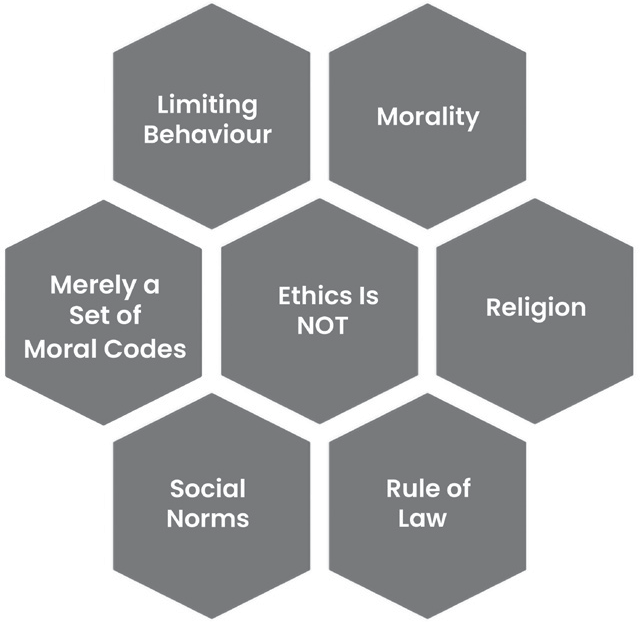
Figure: What Ethics is Not
• Ethics is not about Abiding by the Law.
• In law, a person is guilty when he violates the rights of another.
• However, Immanuel Kant once said, “In ethics, he is guilty if he thinks of doing so.”
• Many ethical norms are included in a decent legal system, although the law might diverge from what is moral.
• For instance, making fun of weak and disabled does not get punished under law but it is unethical to do so.
• Similarly, coming late at work may not be illegal, but falsifying the fact and hiding it from employer is unethical.
•
In some crucial areas, law may struggle to create or enforce rules and may be slow to deal with emerging issues.
• For example, right to inheriting property for women in India.
• Ethics does not simply mean adhering to socially accepted norms.
• While some societies uphold strong ethical values, others may succumb to corruption or fail to recognize certain ethical concerns.
• For example, the United States once supported slavery before the Civil War.
• Similarly, the saying “When in Rome, do as the Romans do” is not a sufficient moral guideline, as it suggests that following local customs is always ethical, which is not necessarily true.
• A case in point is the caste-based discrimination in Bihar, where students boycotted a Mid-Day Meal prepared by a Dalit cook. To challenge this prejudice, the District Collector personally ate the meal, setting an example to change societal attitudes.
• Ethics is not merely about restricting behavior; rather, it helps individuals determine what is good and how to achieve it.
• The binding nature of ethical norms stems from the fundamental purpose of ethical inquiry— discovering the most essential principles that justify moral actions.
• Additionally, ethics is not just a collection of rules or codes. While it involves moral guidelines, it cannot be reduced to them alone. Ethics extends beyond rules to explore deeper moral reasoning and justification.
Two Aspects of Morals
• Moral philosophers frequently explore two distinct yet interconnected aspects of morality: (1) the action itself and (2) the intention behind the action.
• The first aspect pertains to the ‘substance’ or ‘content’ of morality, while the second relates to its ‘form’ or the ‘attitude’ that underlies the moral decision.
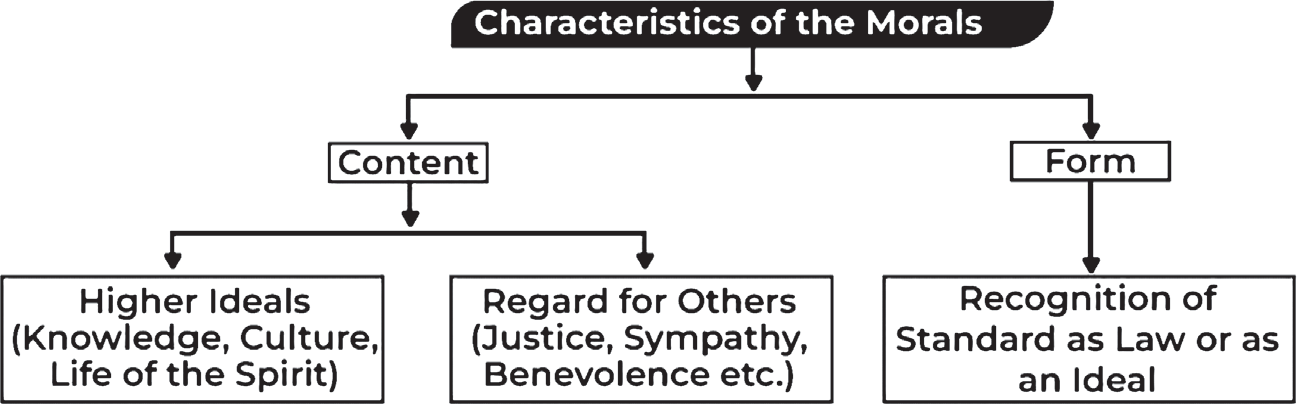
Figure: Characteristics of Morals
| Moral Judgements based on Content Moral judgments can be assessed from two perspectives: The distinction between the 'higher' and 'lower' self The way individuals treat others The first perspective contrasts aspects such as spirit versus flesh, refinement versus crudeness, and nobility versus baseness. Both elements exist within human nature. Instincts like aggression, self-preservation, and reproduction are essential for survival. However, to achieve their highest potential, individuals must regulate these impulses through mental and moral discipline, striving toward higher ideals. The second perspective considers virtues such as justice, kindness, and the principle of the Christian Golden Rule— "Treat others as you wish to be treated"—as morally right and good. In contrast, negative qualities like injustice, cruelty and selfishness are deemed wrong, bad, and classified as vices. | Moral Judgements based on Form or Attitude Right conduct is evaluated according to a standard, such as 'moral law', which we are expected to follow. We respect its authority as a means to regulate our impulses and desires. Actions considered 'good' are viewed as valuable and desirable. A conscientious individual adheres to these moral guidelines and fulfills their duties. Such a person seeks to understand genuine goodness and pursues ideals through thoughtful reflection rather than acting on mere impulses. Motivated by principles, a virtuous individual remains honest and sincere—not out of fear of punishment or expectation of reward but due to a 'sense of duty' and 'respect for ethical values'. |
• People pursue various goals in life.
• Some strive for wealth, independence, power, fame, knowledge, love, excitement or peace.
• Others find fulfillment in art and science,
• Engaging in acts of kindness and service,
• Contributing to the development of social and political institutions.
• Some place their greatest aspirations in the belief in an afterlife.
• These diverse pursuits raise an important question: Is there a supreme ideal in life or a universal standard by which one can determine that a particular way of living is superior to another?
• Ethics, being normative, establishes principles and guidelines to define ideal conduct. However, it is also essential to acknowledge the moral values that societies actually practice.
• In administrative settings, the approach to ethics must be practical. It should be normative and rule-based, addressing real-life governance challenges rather than engaging in moral dilemmas, abstract theories, or hypothetical puzzles.
Scope of Ethics
• Ethics is concerned with ‘voluntary and conscious’ choices. Human activities are those that are carried out by humans intentionally, knowingly, and with an objective in mind.
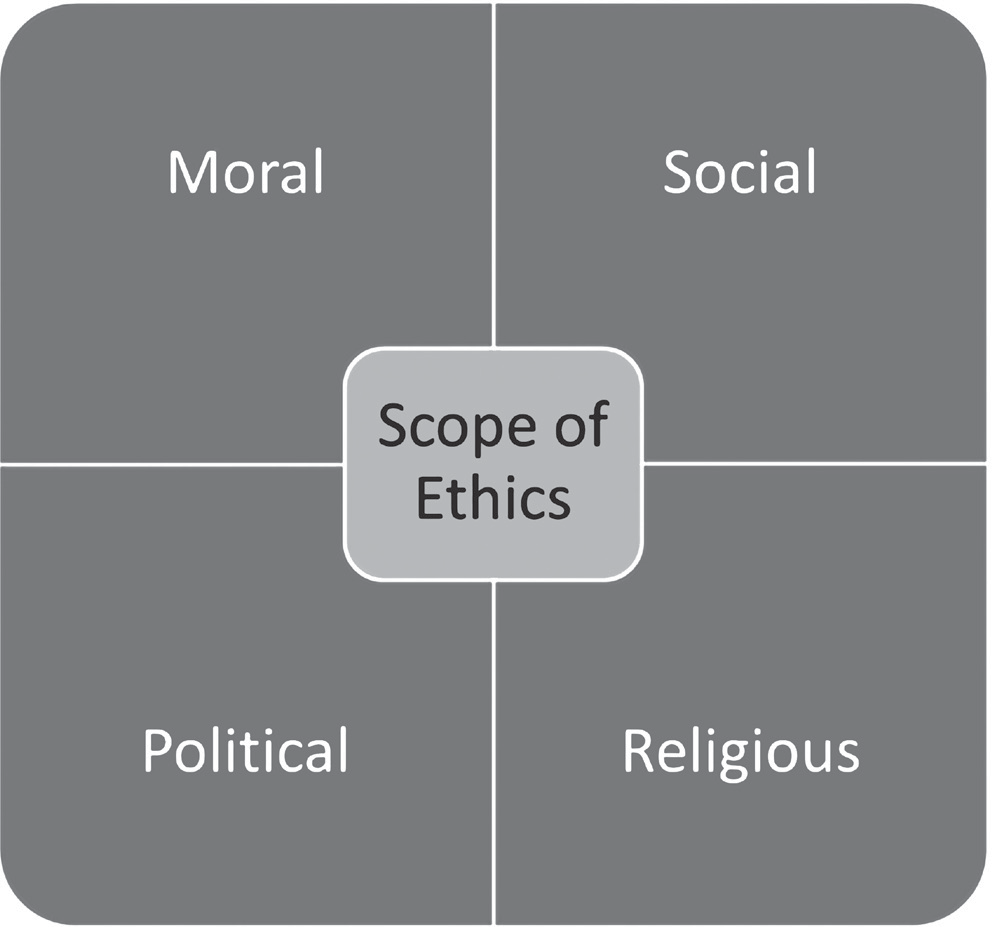
Figure: Scope of Ethics
• Human actions are different from actions of humans.
• Even while various actions of humans (including sleeping, walking, etc.) may not be performed wilfully, voluntarily, consciously, or deliberately, they are nonetheless performed by humans.
• The distinction between human action and other human action is determined by the ‘intention’. Ethics only concerns itself with human behaviour.
• Ethics is a guide book of moral rule. Human beings are endowed with a distinctive faculty of pure reason.
They possess a conscience which is different from consciousness.
• Aristotle called human a ‘social animal’. It means to have a human interference to stay in the state of sociability. And their contradictory instincts of survival and domination constantly push him to confront the dilemma of selfishness and selflessness. Thus, ethics has been a tool for moral excellence of the person to establish an amicable relation with others for present and future. Whenever there is operation of human conduct, there may be problems for ethics. These spheres may be broadly divided into four ways: Moral, Social, Religious and Political.
• Moral Sphere : Ethics examines the virtues and vices that shape human interactions. It is believed that living a life guided by virtue and reason contributes to both individual well-being and the betterment of society, fostering responsible citizenship.
• Therefore, moral philosophers have primarily focused on the significance of virtue and reason. True moral progress can only be achieved when this harmony is fully reflected in the behavior of individuals within a society.
• Social Sphere:
• As we know, in every society, there are institutions, customs and conventions. Ethics give us a moral insight and points out how undesirable ones are to be reformed.
• As the family is another social institution which has to play role in the moralisation of the child. It is also susceptible to various prejudices; it may adversely affect the minds of its members.
• The idea of value is the basic concept of ethics.
• Religious Sphere:
• Ethics primarily deals with fundamental questions such as the existence of God, the immortality of the soul, and religious consciousness.
• In Indian tradition, ethics has been regarded as a spiritual discipline aimed at achieving salvation ('Moksha').
• Similarly, in Western philosophy, thinkers like Kant and Spinoza viewed ethics as a practical discipline essential to human existence, with religious influences being shaped by pre- established moral and spiritual principles.
• Religion and morality are closely connected, as morality fosters higher values and virtues within religious beliefs. In this way, it plays a crucial role in refining and purifying religious dogmatism.
•
Political Sphere and Ethics : Moral conduct plays a crucial role in political affairs, as all political decisions are ultimately evaluated based on the moral aspirations of society.
• Political systems such as democracy, fascism, and communism must adhere to the rule of law, with ethics holding a position of higher importance.
• Ultimately, an individual's character and values are reflected in an ethical way of life.
• Thus, it is evident that ethics encompasses social, religious, moral, and cultural concerns in the pursuit of the highest good. In today's world, with the advancement of technology, new ethical challenges have emerged, expanding the responsibilities of ethical thinkers.
Importance of Studying Ethics
• Today, more than ever, the importance of ethics is felt at every sphere of human living.
• The situation in the present world is characterised by an increasing rate in crime, with no end to such increase in sight.
• Besides, the power of traditional religions to inspire moral conduct continues to decline.
• Terrorism, civil wars, industrial pollution, planned obsolescence, misleading advertising, deceptive labelling, crooked insurance adjusting, unfair wages, crime syndicates, illegal gambling, forced prostitution, high jacking, match-fixing… so many are the prevailing trends!
• There are at least three reasons why we should study ethics.
• First, the study of moral philosophy or ethics can deepen our reflection on the ultimate questions of life.
• The study of ethics helps a person to look at his own life critically and to evaluate his actions/ choices/decisions.
• Like whether I am doing the right thing?
• Is my conduct, right?
• Am I right in giving up the privileges?
• Is it wrong to hurt someone by telling the truth or right to tell a lie to save someone’s life?
• It assists a person in knowing what he/she really is and what is best for him/her and what he/she has to do in order to attain it.
• For example, as an officer, to get promotion, should I ignore the rules and the welfare of the people at the instance and pressure of my seniors and political masters?
• What is the best way out to create a win-win situation without jeopardizing the rule of law and the high ethical standards?
• Second, the study of moral philosophy enhances our ability to think critically about morality.
• It helps us clarify our moral stance when making ethical decisions.
• Is it right to ignore an incident of domestic violence in my neighborhood, or should I report it anonymously to the police?
• Is it ethical to consume food served by a child laborer at a hotel? Should I confront the hotel owner, try to make them understand or directly contact the child helpline at 1098?
• It improves our perspective, and makes it more reflective and better thought out.
• What if I warn the owner to call the helpline or police and the hotel owner denies any wrongdoing and again puts the child back on the job?
• Is it wrong if I give alms to the beggar who is a pregnant woman or an elderly person or should I give them food instead?
• It can also improve our thinking about specific moral issues. In our everyday life, we are confronted with situations in which we have to decide what is the correct course of action and what is to be avoided. However, there remains an issue of disagreement is over the question of what exactly is the right thing to do.
• For instance, giving a bribe to get the work done faster to get a job opportunity or not giving a bribe to do the right thing even if it means loss of opportunity and poverty.
• Such as if I am teaching someone then what
should be my relationship and role with that person?
• Is it right for a teacher to develop relations with one’s pupil or how to make a pupil understand the immorality of the relationship which will scar one’s conscience for life?
• Thirdly, the study of moral philosophy enhances our ability to think critically and analytically.
• It develops logical and rational thinking, enabling us to approach moral dilemmas with greater clarity.
• Ethics is essential because human beings are inherently social creatures, living in connection with others and the surrounding environment.
• Like what should be my role as a friend, son, daughter, father, mother, in the family and society? How does it affect my future?
• Is my family’s future interconnected to the future of wider society and nation?
• What should be my best course of action to ensure the progressivity, rule of law and sustainability of peaceful society and nation?
• Every action, whether consciously recognized or not, has an impact on others, just as the actions of others influence us.
• When making decisions or judgments, individuals rely on a standard of right and wrong, though this standard may vary depending on the situation.
Therefore, ethical dilemmas are a universal experience. No one can completely avoid ethics in life, even if they are unaware of ethical principles. Whether consciously or unconsciously, we all engage in moral decision-making daily.
Importance of Being Moral and Ethical
Why be Moral/Ethical?
Why is morality important? Why do we need to participate in the ethical institution of life? Why should we take a moral stance?
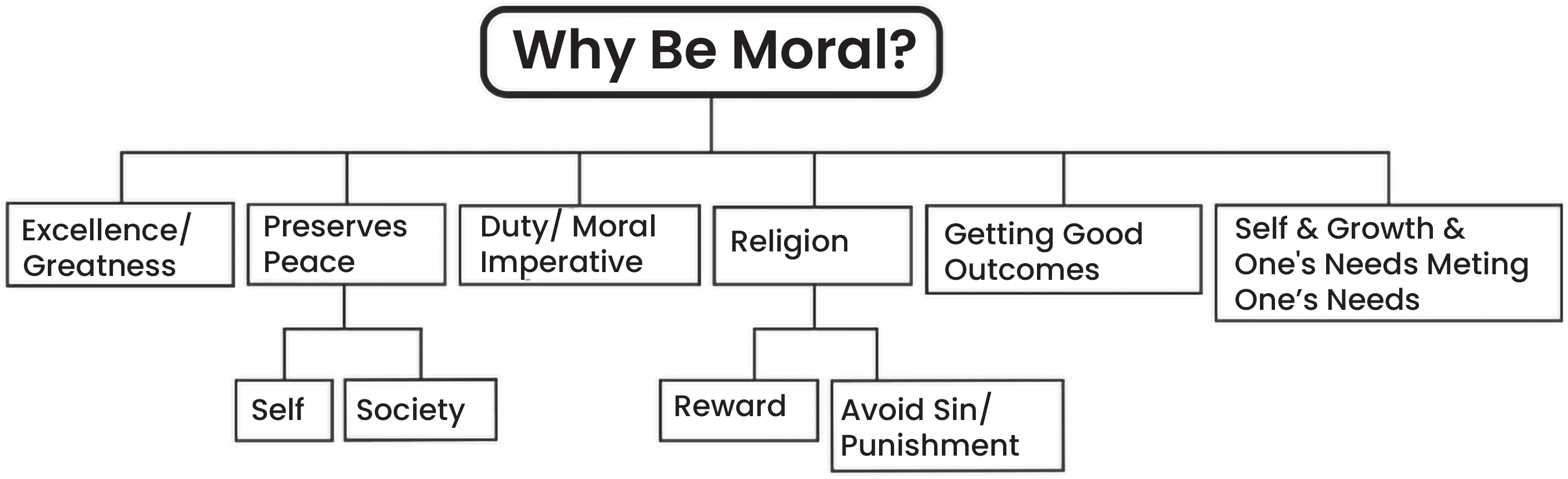
• Every human being harbours a ‘strong desire to do good’. Humans have a tendency to be good by nature—’summum bonum’.
• Every person wants the best for himself. Ethical principles and moral practices aid in achieving this goal and help a person ‘improve their moral character’.
• Like everyone wants to be able to ‘achieve high’ in life, get the ‘best life’ possible, get the best education, healthcare and standard of living.
• Similarly, we like cleanliness, and abhor poverty and want the people to ‘grow and live happily’ because we live in a society.
• Being moral (or good) is necessary for having ‘self- respect’, which is necessary for ‘real happiness’. Therefore, being good is necessary for happiness.
• Morality is the only way to have a chance at having self-respect. We can only have self-respect
if we ‘respect who we actually are’, we can’t if we only respect some false image of ourselves.
• For instance, honestly returning excess money to the shopkeeper brings a good feeling of happiness while keeping that money brings bad feeling of guilt, shame and remorse inside. And one can’t respect what one doesn’t like.
Because being good lets you see what is ‘true value’ in the world. Part of what being good requires is that good people know what is good in the world and what is not.
Bad people have bad values, good people have good values.
Having good values means valuing what ‘deserves to be valued’ and not valuing what does not deserve to be valued.
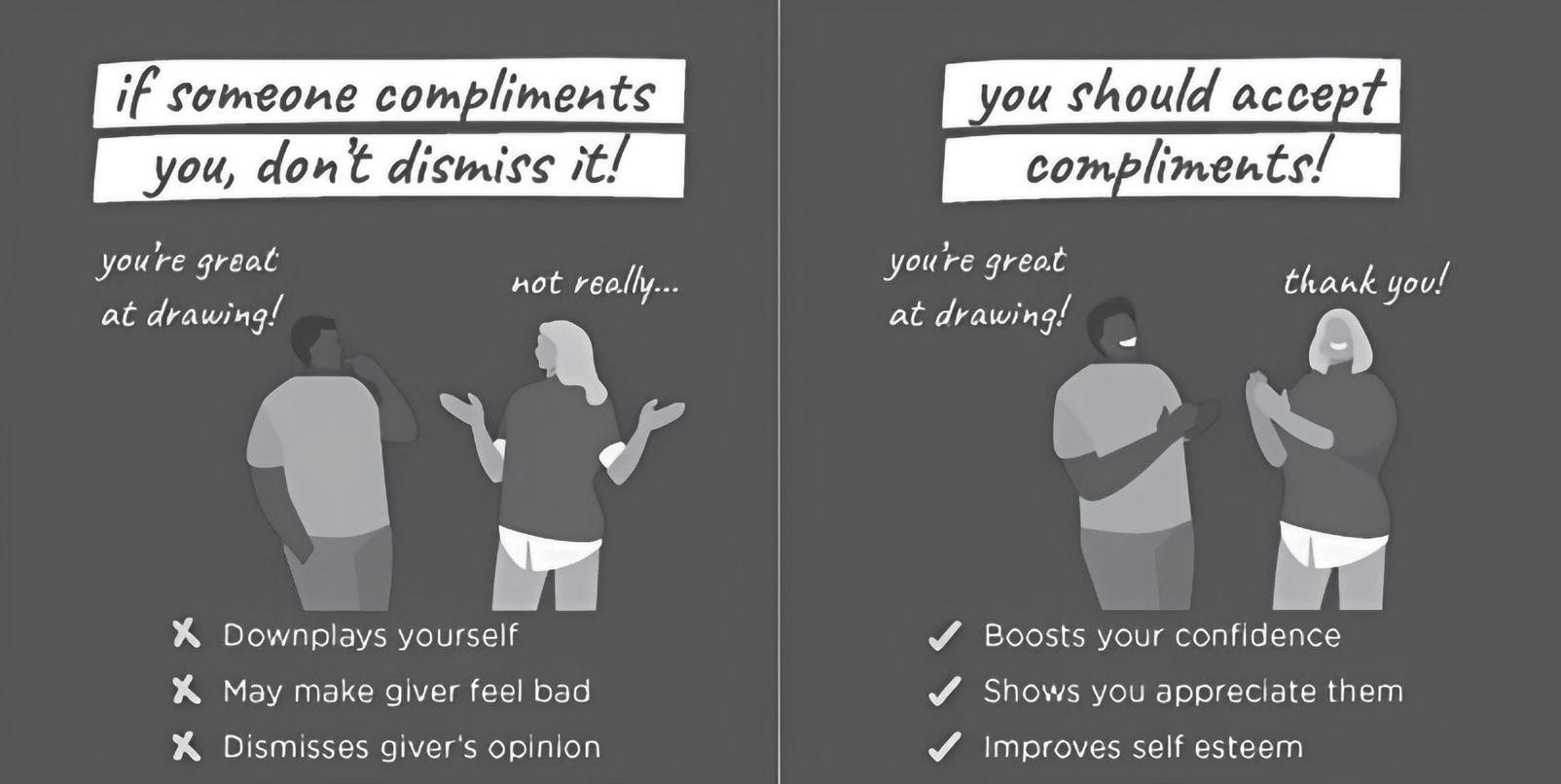
For example, praising a good art motivates the artist while false praise will create false impression of the oneself and the artist causing confusion and irritation creating bad impression.
• Being good involves taking proper care of yourself.
• This does not imply that you are the most important person in the world or that nothing holds greater significance than you.
• However, under normal circumstances, it allows you to prioritize the well-being of yourself and your loved ones over that of strangers.
• For example, if someone protests against poor water quality, it ultimately improves their own health as authorities take action to enhance the supply.
• Being good also means that while you can be passionate, you have the ability to choose your passions wisely without allowing emotions, desires, or needs to control you and lead to regrettable actions.
•
For instance, indulging in spicy food in moderation is beneficial, but overconsumption can harm digestion and overall health.
Being moral leads to wisdom, which grows with age and experience.
Profound wisdom may not be accessible to everyone, as some individuals may lack the intellectual capacity to attain it.
For example, high level advisors, justices and officials to the government or business leaders of large organisations maintain high levels of integrity and highly valued and excellently paid for their ethical acumen and excellence like Dr. APJ Abdul Kalam, Ajit Doval, Dr. S Jaishankar,
Justice D Y Chandrachud, Prof. K Vijay Raghavan, Sanjeev Sanyal, Arvind Subramanian, Ratan Tata,
N R Narayan Murthy, Azim Premji, Aditya Birla, Raghuram G. Rajan, Montek Singh Ahluwalia, V Anantha Nageswaran, Vinod Rai, etc.
• Because being good/moral means that you will be ‘courageous and brave’, in the face of danger and pain, and social rejection. It helps you ‘be successful’.
• Morality has more to do with ‘one’s inner being’ than following established norms or rules. From this vantage point, morality is seen as a fundamental human goal and as having to do with human nature.
• For example, courageously helping an injured person on the road despite having one’s most important job interview and taking him to hospital makes you strong and confident, which are essential for success.
• Because being moral means that we are ‘lovers of the good’ and, if we are lucky, it means that we will be loved by those who are themselves good.
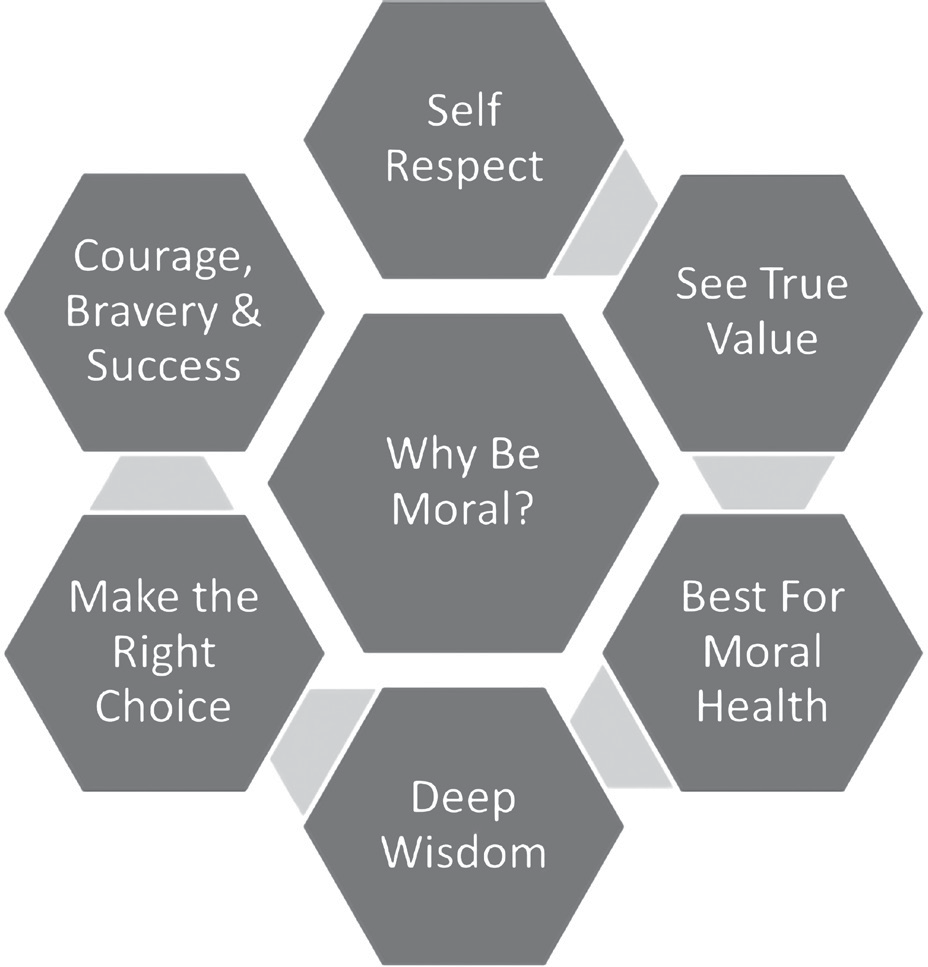
Figure: Why Be Moral/Ethical?
• Morality strives to improve our lives, guiding us toward a better way of living.
• It seeks to establish a shared perspective that enables collective agreement on what is right for everyone.
• Its goal is to find a more objective basis for judgment rather than relying solely on individual preferences, with a strong focus on our moral well- being.
• For example, voluntarily stopping own vehicle at red light in a road traffic makes others to follow suit and prevents accidents.
• The intellectual nature of a person makes them ‘aware
of some basic logical and moral thinking’ principles.
• This implies that every human action has both a subjective and an objective component, which leads each individual to base himself or herself on a set of universal rules.
• We also discover that some laws and rules are necessary for any civilisation to function. If so, neither a “state of nature” nor a “totalitarian state” would be able to provide the conditions for an adequate human life for people living in groups.
• Without some moral standards, institutions, that are intended to improve and ease human existence, cannot work.
• However, the issue of personal freedom may also be relevant here.
How far the society can go on demanding to adhere to its norms? Shouldn’t it respect the freedom of the individual? Is morality made for human or human is made for morality?
Challenges of Ethical Conduct in India
Challenges of Ethical Conduct in India
Pre-eminence of Social Code of Morality: From sex education at school to reality show formats, we, Indians, have a strong moral view ignoring information, observation and objectivity.
For instance, the dispute between writer Chetan Bhagat and the creators of the movie '3 Idiots' was not a matter of legal obligation. Despite receiving payment for licensing his story, the writer was deeply dissatisfied with how his credit was presented.
Influence of Religion and Politics
Some scholars suggest that in Hinduism, morality and law are often closely intertwined and can sometimes be used interchangeably.
Religion versus Human Rights is another ethical question. Political-communal propaganda of Love Jihaad, obsolete traditions of Triple Talaq and Nikah Halala are some of the examples.
TV News Media is also full of communal, politically polarising and divisive debates.
Culture of Opportunism: A better example of India’s fluid and flexible thought processes is India adopting the Westminster system of administration and English common law without an ounce of resistance.
Ethical concepts like though shall not steal, though shall not lie, or though shall love your neighbour are circumstantial in Indian sense.
Moral One-Upmanship and Intolerance: The biggest advantage of this approach is that moral values can be constituted on completely unfounded grounds, based on convenience.
For instance, we have moral policing and vigilantism even in metro cities like Mumbai, Delhi, Chennai before the state police comes into action. Example frequent attack by self-proclaimed cow vigilantes.
High egoism and self-centric behaviour visible in road rage, political meetings, festivals, etc don’t follow sound and pollution control.
Crossing the railways tracks, jumping the medians avoiding the subways and bridges.
In the corporate world, even when businesses engage in tax evasion or unethical practices, their owners often justify their actions as morally acceptable.
A chewing gum brand promotes moral lessons related to traffic violations.
A tea brand advocates for democratic values and the importance of voting.
Many Indian brands emphasize 'Indianness' as a value superior to Western ideals.
Ayurvedic and natural brands feel morally
superior over the scientific ones.
The political party in Mumbai vandalising the city consider themselves to be the moral guardians of the city.
• Lack of Empathy, Conscience and Sensitivity: shown by people in cases of street fights to accidents, where they record the horrific incident on their mobile phones without coming in aid. This is a serious issue where the life of a person is depicted of no value to others.
• Lack of Justice due to judicial delays, high undertrials, harassment of Good Samaritans by police, lack of protection to whistle blowers, apathetic level of protection to vulnerable sections of society, etc.
• Weaker implementation of laws is another issue which leads to ‘Culture of Impunity’ and Indiscipline such as disregard for rules (traffic rules), littering in public places, tendency of a large part of population to be late for meetings.
• Symbolism/Tokenism: Be it reminding people of their filial responsibilities, or secularism, taking side of Dalits or women or even representing the interest of the poor.
• Corruption/Jugaad Smarter than Being Ethical: Being Ethical is considered an idiotic choice because it leads to disadvantages.
• Like if you line up for a popular ride at a theme park and wait for your turn, you will never get the
ride because everyone is cutting the line in front of you and also bring their families friends along in the process.
• Jugaad usually means frugal innovation. However, in the parlance of business and administration, jugaad means ‘going out of the way’ or ‘exploiting loopholes’ in the laws and system, through whatever means necessary to get the job done, like water flowing through the ‘path of least resistance.’ It has been perceived as the backbone of India’s economic growth story.
Traditional Values: Indian people value loyalty to person over competence when making hiring decisions. Being subservient to the cause of the stake holder.
Individualism and disagreeing or being loyal to the cause than to the stake holder is seen as a crime, meritocracy is seen as absolute crime.
Noble Ends Justify Dubious Means: Three texts intrinsic to Indian culture and philosophy indicate this: epics Ramayana and Mahabarata and the economic treatise Arthashastra. For example, it was considered a great honour to die in a battle, however fleeing to fight another day was never punished
Essence of Ethics in Human Actions
Essence of Ethics in Human Actions
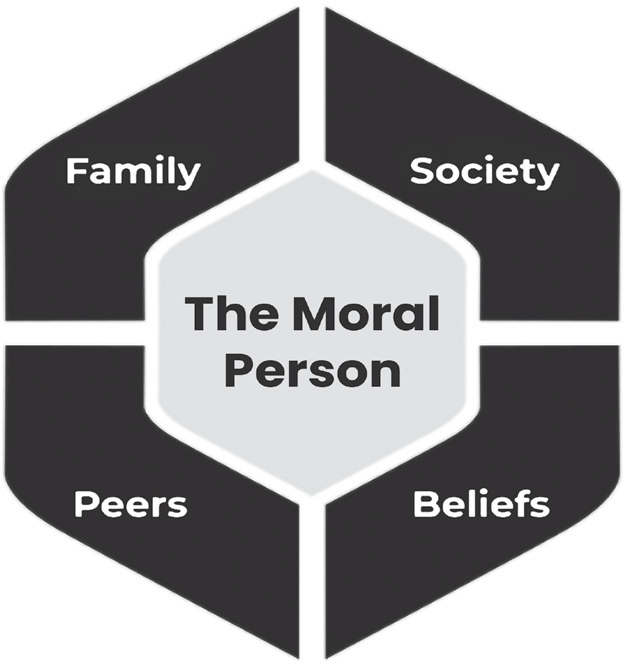
• The core purpose of ethics in human actions is to guide individuals in identifying what is good and how to achieve it while also recognizing and avoiding wrongdoing.
• Ethics fundamentally involves concern for something or someone beyond ourselves, extending beyond personal desires and self-interest.
• Ethics revolves around considering the well-being of others, societal interests, and the pursuit of the 'greater good'.
• The fundamental nature of ethics can be understood as follows:
• Ethics cannot develop or thrive in isolation; an individual’s environment interacts with their genetic traits to shape behavior.
• Different philosophical perspectives exist regarding the origins of morality.
• Some argue that morality is innate, something we are born with.
• For example, a person with a calm temperament naturally values peace and non-violence, whereas someone with an aggressive nature may find these principles challenging to uphold.
• Others believe that morality is acquired through experience and socialization.
For instance, if parents unknowingly praise dishonest practices, such as cheating in exams, they may inadvertently instill a tolerance for corruption in their children.
• And still, others believe that it is a combination of both nature (birth) and nurture (environment).
• Like a child develops honesty both through practice of honesty by parents along with inner inclination and attitude of positivity.
• Ethics is concerned about what is Right, Fair, Just or Good; about what we ought to do, not just about what is most acceptable or expedient.
| Success by Unethical Means (‘Jugaad’) Certain businessmen demonstrated the application of innovative strategies both legal and unconventional to create economic value. A well-known instance of jugaad that employs ethically dubious methods is electricity theft through unauthorized tapping of public utility lines, wherein individuals or small businesses connect wires directly to these lines to circumvent meters and evade payment for electricity. Another side of the Jugaad Though jugaad is frequently lauded as a smart, cost- effective form of innovation, its tendency to bend rules can slip into unethical behavior when it breaches laws or safety standards. Falsely passing safety inspections in commercial areas by using unapproved, uncertified gas or electrical wiring. Deploying illicit or unlicensed software networks spread through local gray markets to bypass enterprise licensing costs. Offering minor bribes to local inspectors to ignore missing permits or poor-quality construction materials in order to speed up project approval. Simultaneously these business men navigated the socialist bureaucracy to produce some of the world's most cost-efficient and affordable goods and products. | Success by Ethical Means The microfinance industry emerged as a response to the shortcomings of government-funded financial programs aimed at providing loans to low-income households. These programs were often inefficient, plagued by corruption, and failed to reach their intended beneficiaries. Additionally, banks imposed stringent documentation requirements and incurred high costs with minimal returns. Ujjivan Financial Services, a microfinance institution established in Bangalore in 2004, serves the urban poor. Ujjivan offers loans at an interest rate of 24%, which is significantly lower than the 50% to 300% charged by private moneylenders but higher than traditional banks. As of March 31, 2011, the institution had distributed over $450 million in loans to more than 991,000 customers. |
Ethics is time and person-dependent. They vary in the meaning & intensity according to time, place and person.
•
Ethics can be both ‘Subjective and Objective’ as per different philosophies.
• For example: Stealing, killing, and lying have been considered wrong in all societies across time and place (Ethical or Moral Objectivism), however there are contradictory views on capital punishment, abortion rights, wars etc. (Ethical or Moral Relativism)
| When stating an ethical fact, I might say: "Murder is wrong." →Thisrepresents "Moral Realism". | Whenconveyingmy emotions, I might say: "Stop murder!" → This aligns with "Emotivism". |
| When expressing my personal opinion, I might say: "I disapprove of murder." → This reflects"Moral Subjectivism". | When issuing a directive or prohibition, I might say: "Do not commit murder." → This falls under "Prescriptivism/ Normativism". |
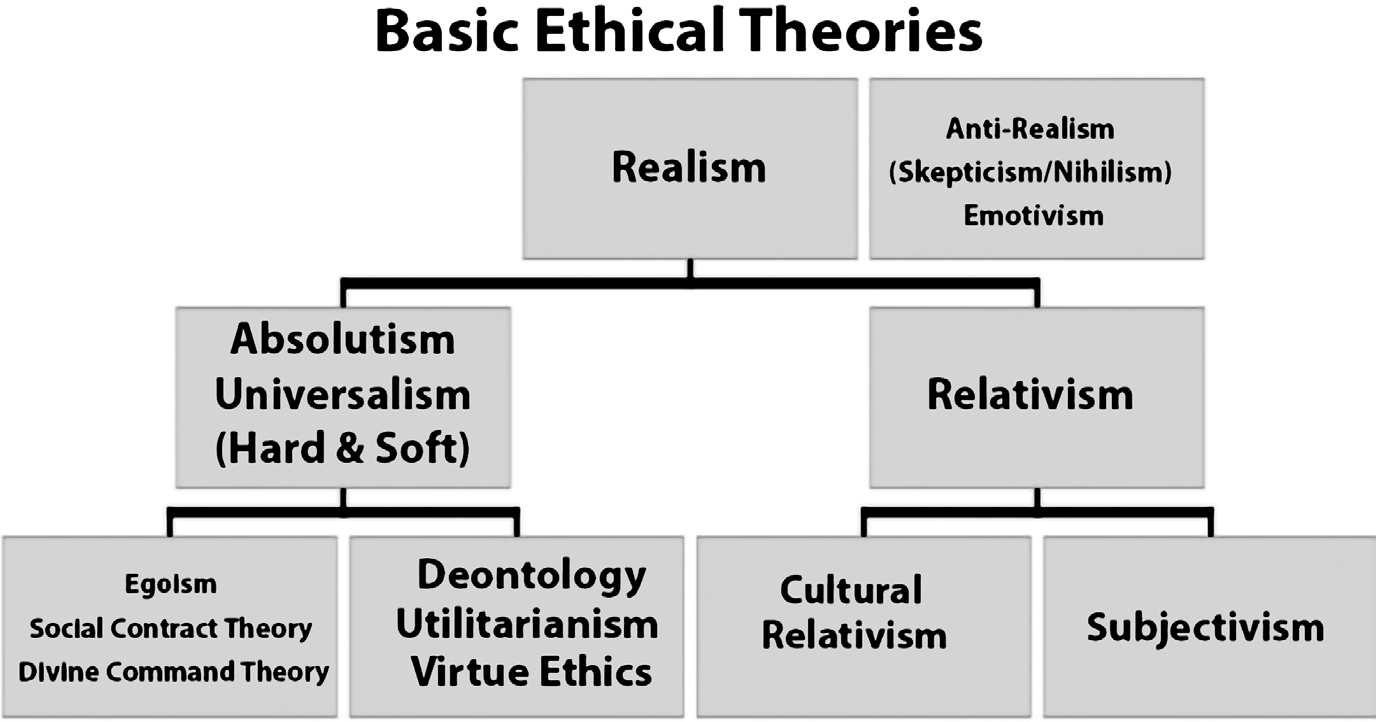
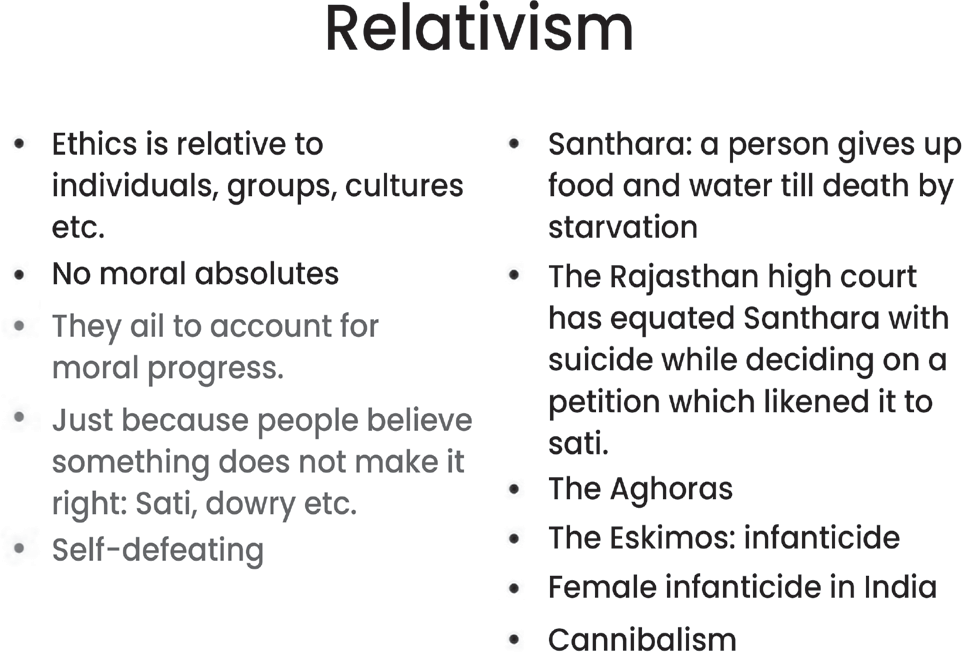
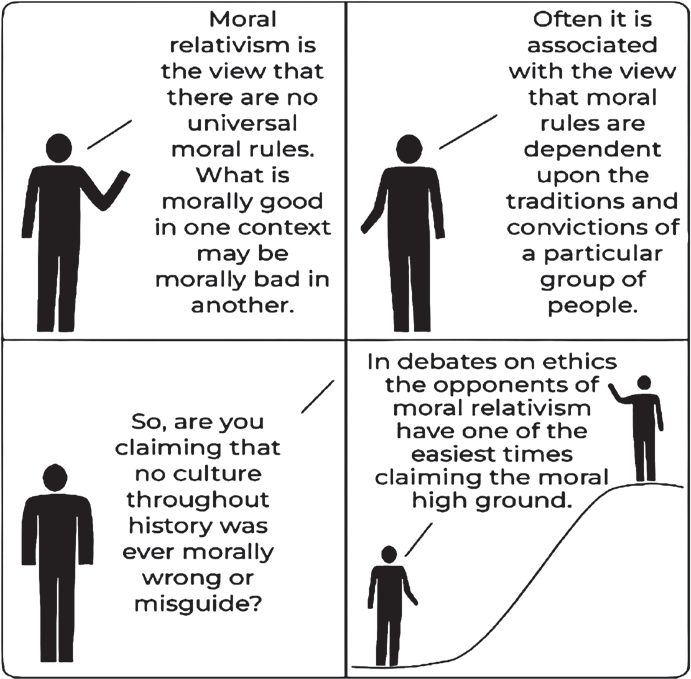
Figure: Illustration of Moral Relativism
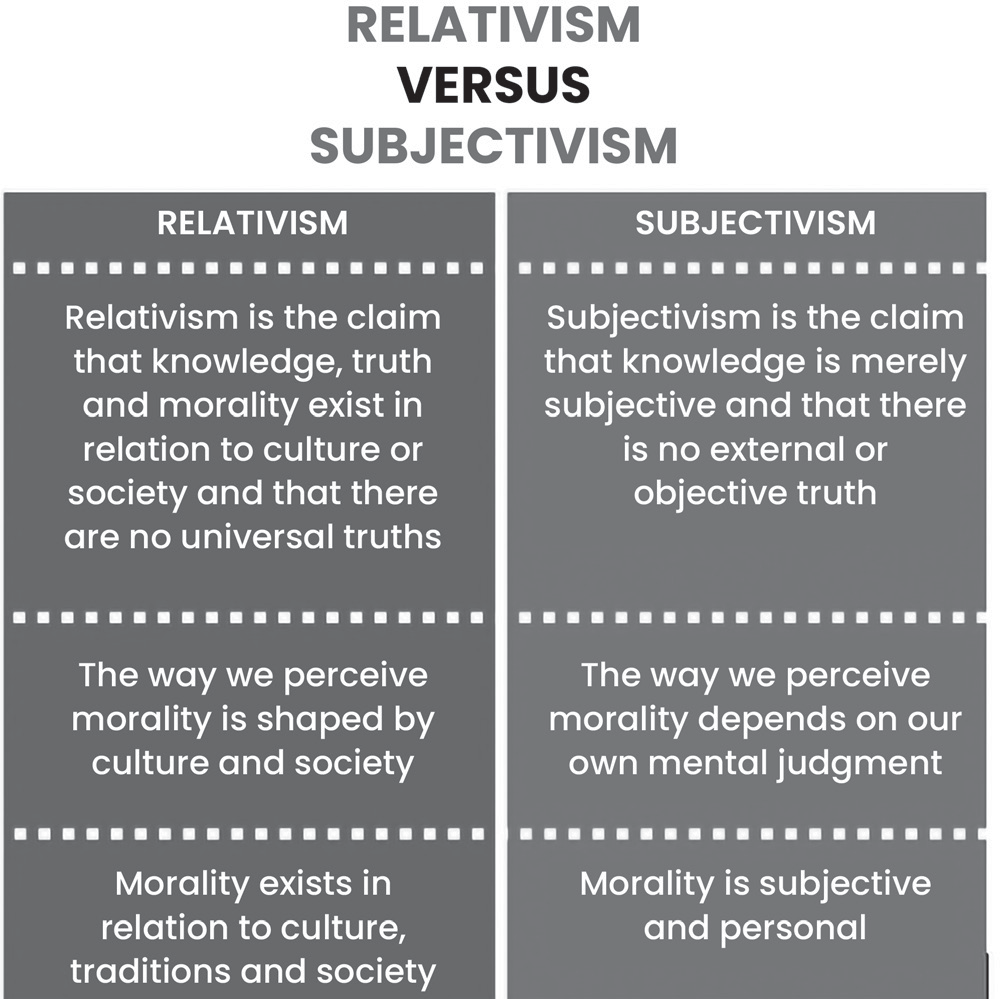
Moral Relativism: Morals are not absolute, but are shaped by social customs and beliefs. Moral Relativism holds that morals are related to ‘culture’. Values are determined by the society we grow up in and there are no universal values.
It is often presented as Tolerant View: ‘if moral relativism is true, no one has the right to force his or her moral views on others’
• Moral Subjectivism: In Moral Subjectivism, it is up to each individual to determine what is good and wrong. Subjectivism teaches that there are no objective moral truths out there.
| Pros of Subjectivism Reflects the Subjective Elements of morality Highlights the strong connection between morality, personal feelings, and opinions. "Demonstrates the Evaluative Nature of Moral Statements:" Moral statements in daily life involve judgments (e.g., "Lying is wrong"), unlike factual statements (e.g., "Cats have fur"). "Shows That Moral Judgments Express Approval or Disapproval:" Moralstatementsinherently communicate agreement or disapproval, which is a key aspect of ethical discussions. "Helps Identify the Core of Disputes:" Subjectivism can help individuals recognize that disagreements often stem from personal preferences rather than objective truths. "Reveals the Persuasive Nature of Ethical Debates:" Subjectivism also helps people understand that ethical discussions are less about proving absolute truths and more about persuading others to accept a particular viewpoint. | The Issue with Subjectivism Subjectivism appears to suggest that moral statements hold less significance. "If I approve of something, it must be good." Subjectivism Reduces Moral Statements to Personal Feelings It implies that moral statements merely reflect an individual's emotions toward moral issues. If subjectivism is strictly followed, then a person who sincerely supports dishonesty would be considered *correct* in saying that lying is good—unless they themselves disapprove of lying. Under this view, proving that lying is morally acceptable would simply require demonstrating consistent approval of dishonesty— such as frequently lying, feeling no remorse about it, being shocked when criticized for it, and even encouraging others to lie. Most people would find this perspective on ethics impractical and unhelpful. Moral Statements Are More Than Just Expressions of Feelings Generally, when someone claims that something is wrong, they are not merely expressing disapproval—it conveys a deeper ethical stance beyond personal emotions. The Challenge of Accountability if Morality Is Entirely Subjective If moral statements lack objective truth, then holding people accountable for wrongdoing becomes problematic. For instance, if "Murder is wrong" has no objective basis, how can society justify punishing murderers? One argument is that punishment can be justified based on the objective reality that the vast majority of people in society strongly disapprove of murder. |
• Moral Objectivism - What is morally right or wrong is independent of individual opinions. Moral truths exist as objective facts, much like physical laws, and are not shaped by personal beliefs. Instead, they must be discovered. There is always a single correct answer that applies universally.
• Examples : "Divine Command Theory" – What is morally right aligns with God's commands, while what is wrong is what God forbids.
• "Utilitarianism/Consequentialism" (Bentham/Mill), "Deontological Ethics/Non-Consequentialism" (Kant), and "Virtue Ethics" (Aristotle) also fall under moral objectivism.
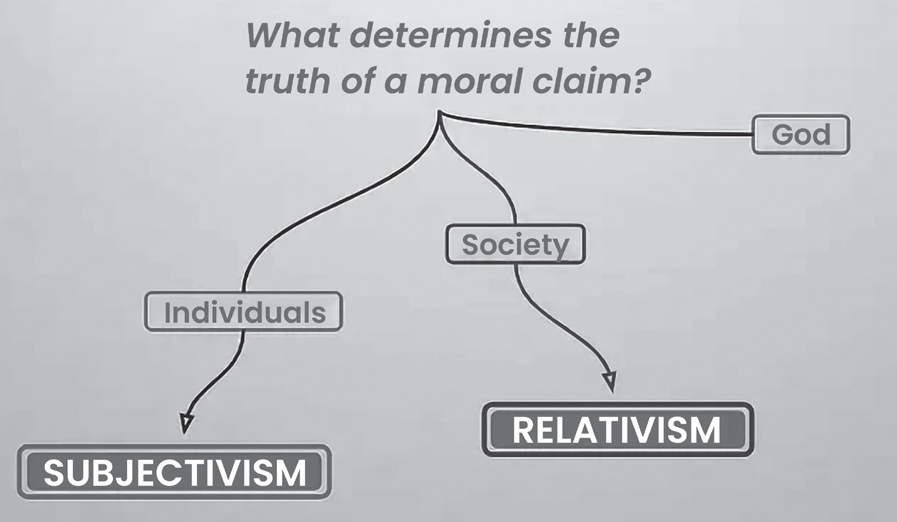
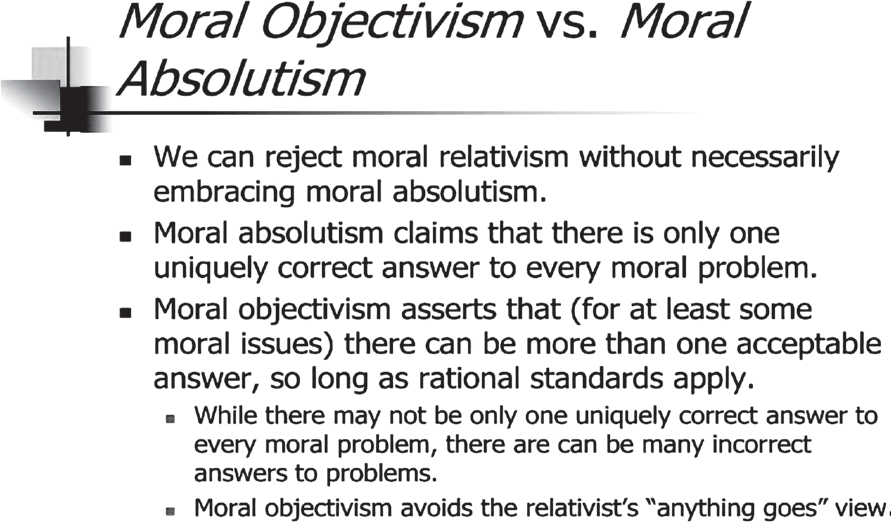
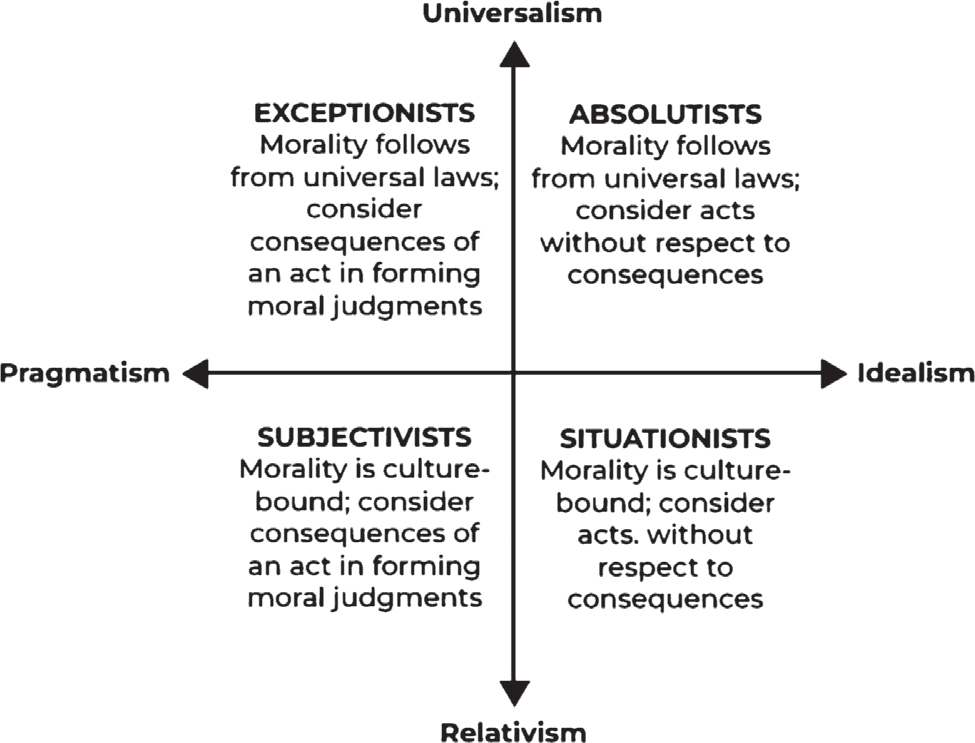
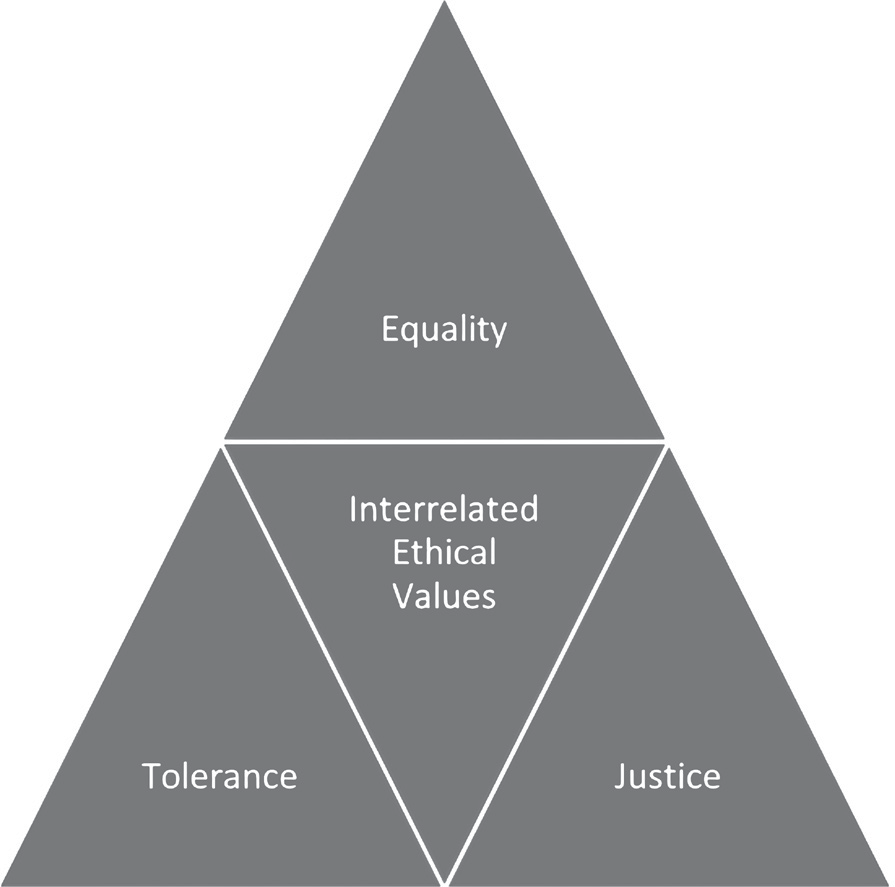
Figure : Interrelationship between Ethical values
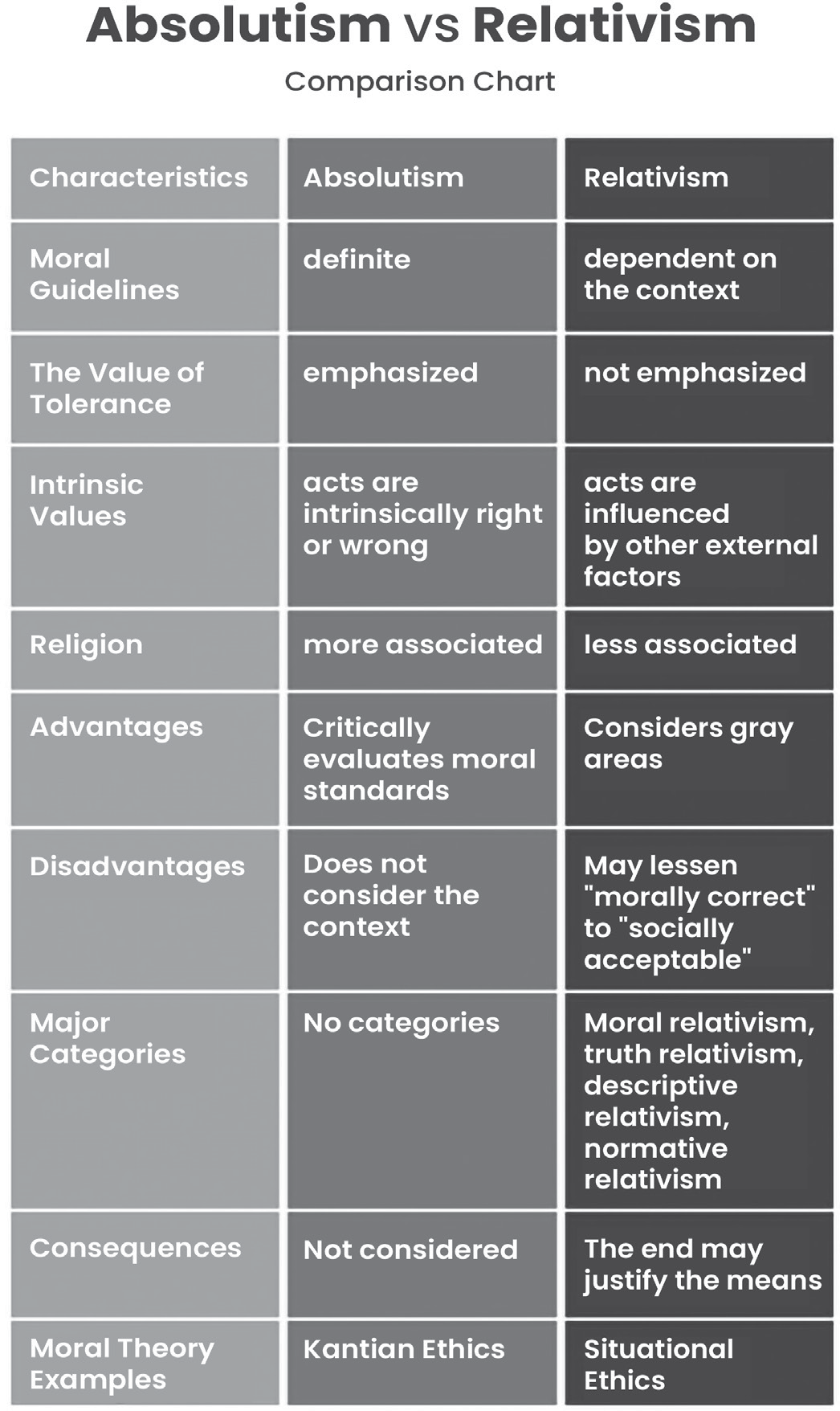
• Ethical Values are Interrelated to each other.
• For example, values of Equality and Justice cannot exist without Tolerance.
There are no absolute truths (Relativism) in ethics and that what is morally right or wrong varies from person to person (Moral Subjectivism) or from society to society (Moral Relativism)
Determinants of Ethics in Human Actions
Determinants of Ethics in Human Actions
"Determining Ethical Standards"
Identifying the factors that define ethics is a complex task. This is because the criteria for judging right and wrong are neither absolute nor universal; they are relative and influenced by
factors such as individual perspective, cultural
context, and historical period.
For Example- In some societies, pornography is considered acceptable, whereas in others, it is deemed inappropriate.
Likewise, there was a time when slavery was not regarded as morally wrong in certain parts of the United States, whereas in modern society, it is widely condemned as unethical.
• Some important Determinants of Ethics are:
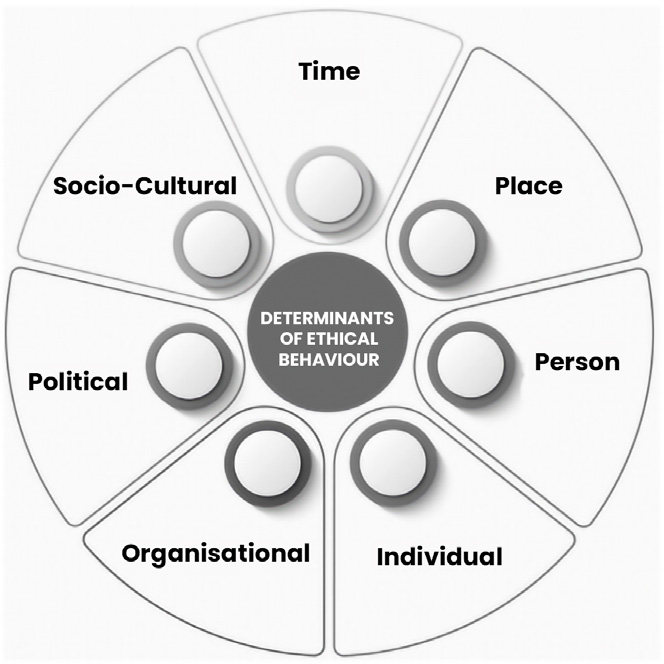
Figure: Determinants of Ethical Behaviour
• Person: An individual's mental makeup determines whether or not they exhibit ethical behavior. The degree to which an individual has internalized personal beliefs and values surrounding ethical behavior determines this.
• E.g. An aggressive person may consider ‘talking rudely’ as natural however, a sober person may consider it wrong.
• "Place:" Refers to the external environment, including family, school, and other social institutions, which play a crucial role in shaping ethical values through socialization.
• For instance, as children, we are taught that stealing is wrong, and as we grow, we apply this principle in real-life situations.
• Similarly, workplaces instill ethical values such as
teamwork, punctuality, and responsibility.
• "Time:" Moral values and ethical standards evolve across different individuals, societies, and cultures over time.
• For example, the practice of 'Sati' was considered acceptable in 18th-century India but is now banned as a violation of human rights.
•
"Circumstances:" In certain situations, ethical principles become subjective, leading to variations in moral judgments.
• For example, stealing is generally considered wrong. However, if a person in extreme poverty steals to provide food for their starving children, the moral severity of the act may be perceived as lessened.
• "Culture:" has a significant impact on shaping an individual's values and ethical outlook.
• For instance, in Western societies, it is common for individuals to leave home and become independent at 18, whereas in Indian culture, caring for aging parents is regarded as a moral duty.
Factors Determining the Morality of Human Acts
Factors Determining the Morality of Human Acts
• Most of the moralists agree that to judge the goodness or badness of any particular human act, three elements must be weighed from which every act derives its morality. They are: the Object of the act, the Circumstances surrounding the act, and the End or Intention that the one performing the act has in mind.
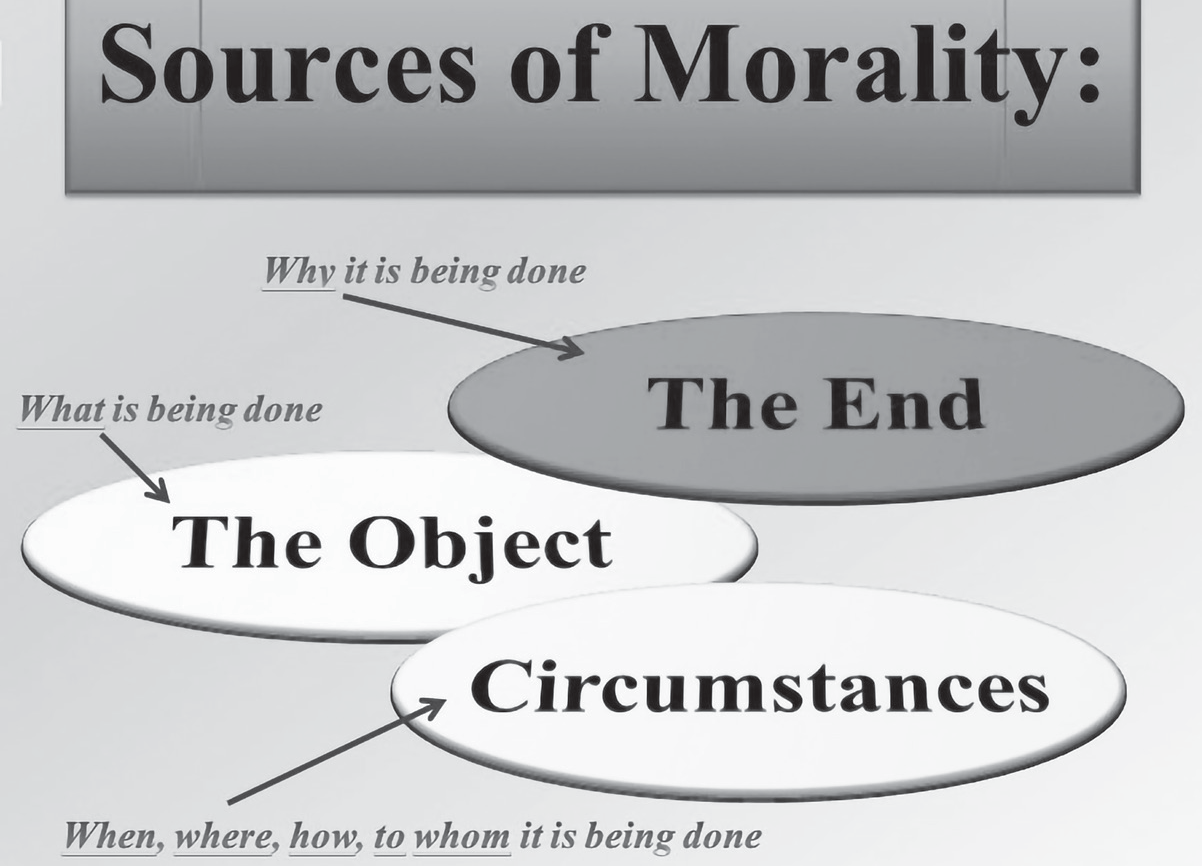
• The Object of the Human Act: It refers to the effect which an action primarily and directly causes. It is necessarily the result of the act without taking into account the circumstances or the end.
• For example, the object of setting fire to the hut of a slum-dweller is to burn whereas the end might be revenge.
• The object is usually regarded as the primary factor for moral judgement of a human act.
• From the viewpoint of an object, an act is
generally classified as morally good, bad or indifferent.
• The circumstances surrounding a human action encompass all the specific details that can influence its moral significance.
• These factors include aspects such as the person involved, the time, the place, and the occasion, which are separate from the action itself but have the potential to modify or, in some cases, completely transform its moral character. In certain situations, circumstances can even enhance the moral value of an otherwise good action.
• For example, providing food to someone on the brink of starvation enhances the moral value of the act.
• However, circumstances can also worsen an action that is inherently wrong.
• For instance, stealing the only meal of the day from a beggar makes the act even more reprehensible.
• The end or intention behind a human action refers to the purpose or motivation that drives a person to act.
• It represents the effect that the individual consciously aims to achieve through their actions.
• For an action to be morally good, the person performing it must have a virtuous intention—one that seeks to bring about some form of goodness.
• For example, a soldier who takes the life of an enemy does so with the ultimate goal of protecting the citizens of their country, which gives the act a moral justification.
Case of Moral Culpability: Problem of Moral Luck
For example, two high speeding cars violate red light on the road. While one leads to death of a child on the road while other gets a traffic challan. Which of the two drivers are more immoral?
Common person will say that death of the child made the first driver more guilty. However, the reality is that there is no difference in their guilt because speed and following the traffic rules was under their control. However, unlucky driver had to face the uncontrollable event of the child crossing the road, not the lucky one.
Both drivers should bear equal guilt if it is assumed that moral responsibility should only be applicable in cases where the agent voluntarily conducted or did not perform an activity.
This may be intuitively problematic, as one situation resulted in a death because even the laws like under Indian Penal Code Section 304A/Section 106 of the Bharatiya Nyaya Sanhita (BNS) it is necessary that death is caused and it is caused by the direct consequence of the negligent act of the accused, thus higher punishment is administered. However, from a moral standpoint, both drivers still remain equally guilty, despite different consequences as there was always a possibility of accident for the lucky driver as well.
Susan Wolf argues that external observers should assign equal blame to both the lucky and unlucky drivers, even though their intuition may suggest otherwise—specifically, that the unlucky driver who accidentally hits a pedestrian should feel worse. However, she believes that the unlucky driver, on a personal level, should take greater responsibility for their actions compared to the lucky driver.
Moral philosophers assert that a human action is considered morally good when its object, circumstances, and intention are all aligned with moral order. An action is deemed good only if each of these three elements adheres to ethical principles.
Consequences of Ethics in Human Action
An action is evaluated as good or bad based on its consequences. If it causes harm to others, it is considered wrong, whereas if it brings benefits, it is deemed right. Therefore, the outcomes of an action are a crucial factor in assessing ethical behavior. The impact of ethics on human actions is significant, as ethical principles play a vital role in both individual lives and society as a whole.
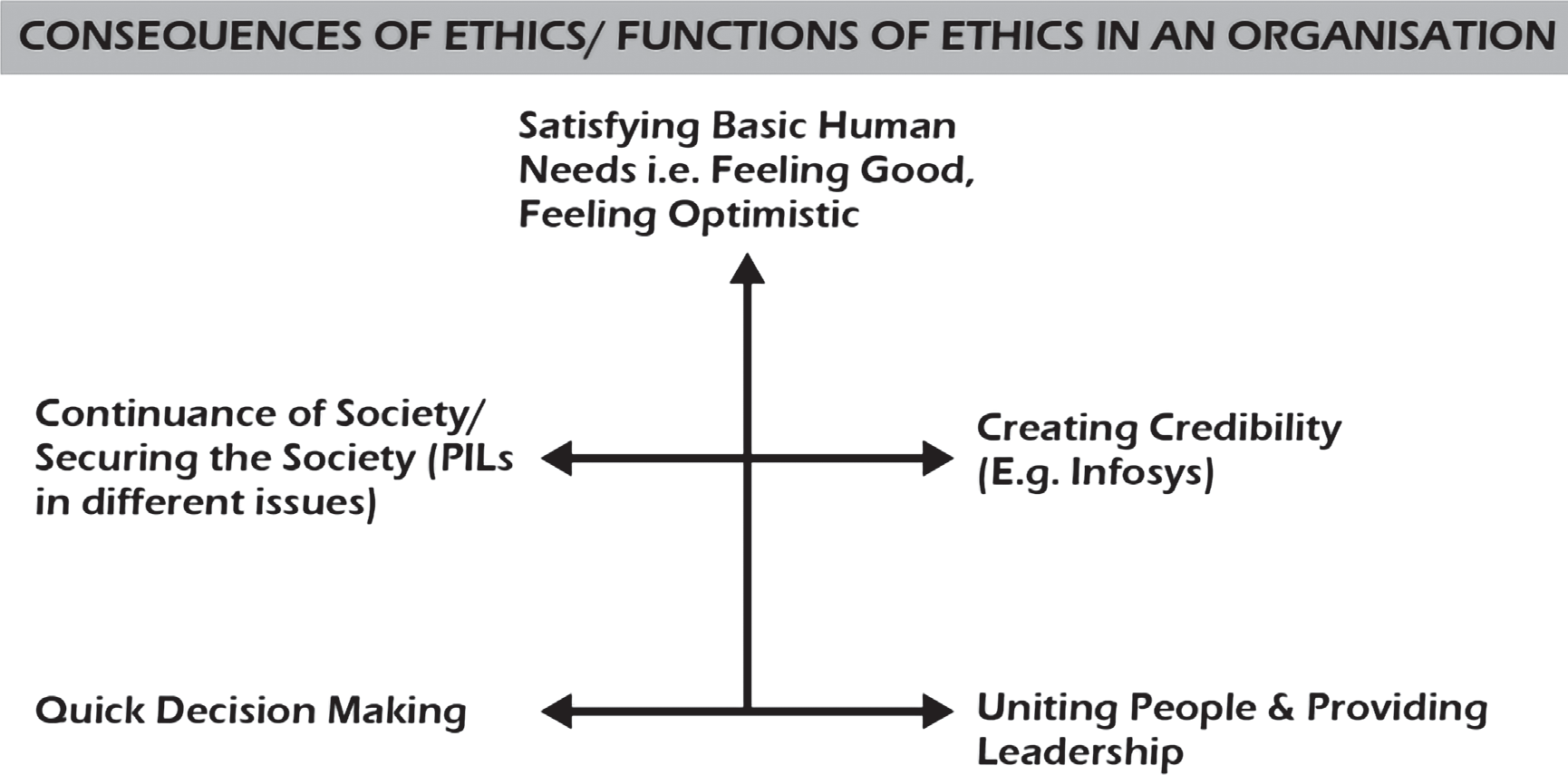
Figure: Consequences of Ethics/Functions of Ethics in an Organisation
• Ethics play a crucial role in human life in several ways.
• They fulfill fundamental human needs, as fairness, honesty, and integrity are essential aspects of human nature.
• Ethics also foster trust and credibility within society, strengthening relationships and interactions.
• Additionally, they aid in making decisions more efficiently by guiding choices.
• Moreover, ethics highlight the moral aspects of decisions that might otherwise appear neutral, thereby facilitating ethical decision-making.
• For administrators, ethics assist in making well- thought-out decisions that can be justified in a public setting.
• They also contribute to the cohesion and stability of society.
• In the absence of ethics, the repercussions can be severe. In today's world, the impact of ethical decline is significant enough to influence the future of individuals, organizations, or even entire nations. These effects can be observed across various levels and fields.
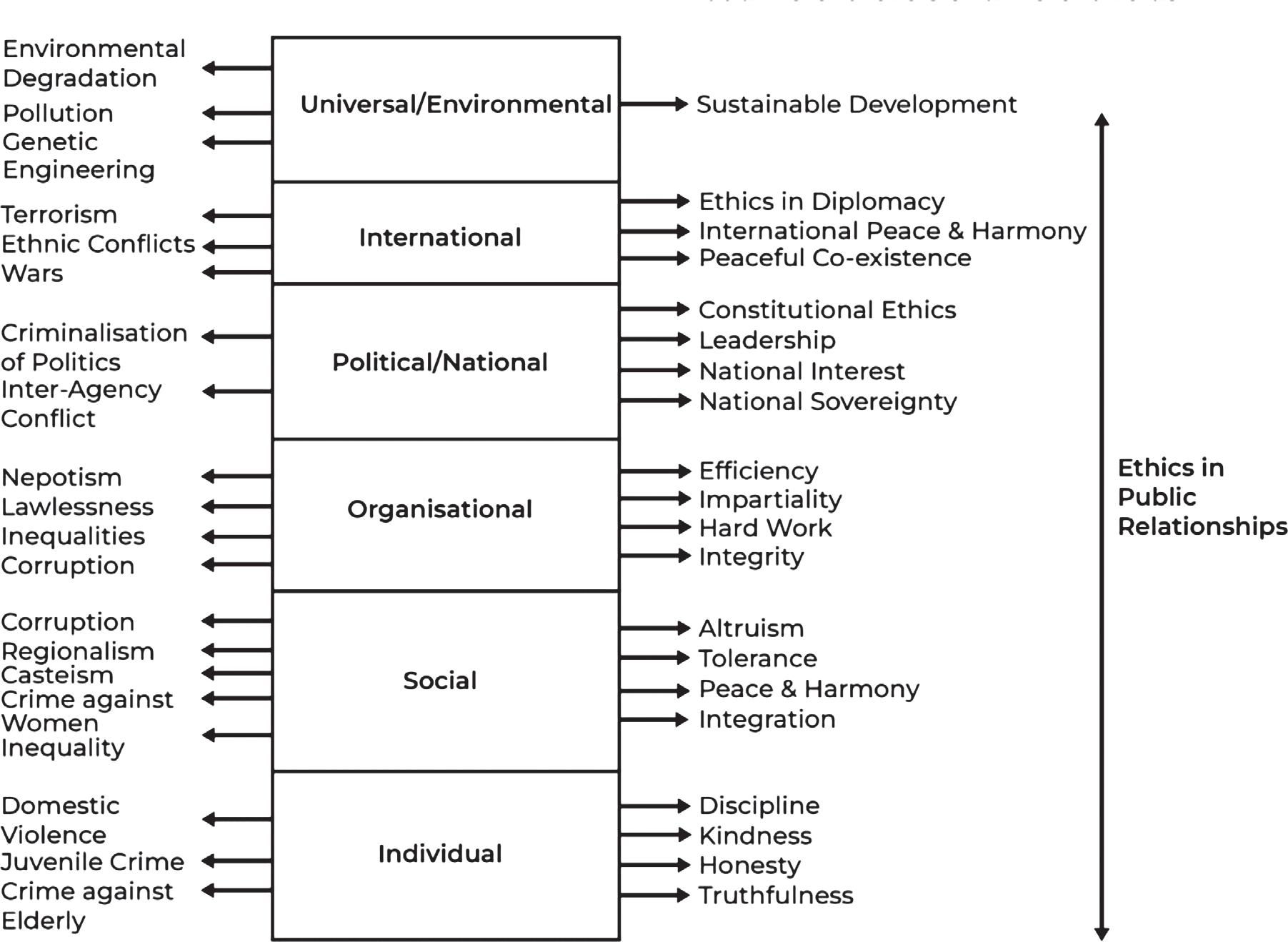
Figure: Ethics in Public Relationships
• At Individual level, we see petty crimes are increasing, instances of domestic violence on rise, the increased use of abusive language etc. are all consequences of absence of ethical behaviour in the society.
• A successful Political system requires trust and commitment from the citizens. This trust comes only when the ethics are high. Loss of ethics in Indian political system has led to coalition governments, defections, hung parliament etc.
• At Organisational level, the major manifestations due to loss of ethics are corruption, nepotism, lawlessness, loss of trust in administration, destruction of work culture etc.
•
At Geopolitical level, the trust deficit is increasing among the nations. For example, the problem between India and Pakistan have become more complex largely due to loss of ethical behaviour.
• The absence of Environmental ethics caused environmental degradation, loss in flora & fauna, increased level of pollutions etc.
• Some actions lead to both positive and negative outcomes, and these are referred to as acts with Double Effects. To evaluate such situations, moral philosophers have established certain guiding principles.
• One key principle states that the action causing both effects should be inherently good or at least morally neutral.
• An inherently bad action can never become good and will always remain bad.
• The positive outcome of an action must be a direct
result and not arise through a negative effect.
• Additionally, the intention behind the action must be morally good.
• There should be a valid reason for carrying it out.
• Furthermore, the positive impact must significantly
outweigh the negative consequences.
• For instance, if an individual is attacked by a criminal and, in self-defense, unintentionally kills the attacker, the good effect is that the individual has protected themselves, while the bad effect is the loss of the attacker's life.
• According to Thomas Aquinas, such an act is considered morally acceptable because the person's intention was self-preservation, not to kill. However, he emphasized that the force used in self-defense should be necessary and proportional, avoiding excessive harm beyond what is required to ensure safety.
Ethics in Public Relationships
• Public Relations pertain to interactions among individuals within the public domain, where people recognize themselves as part of a broader social framework rather than as isolated beings.
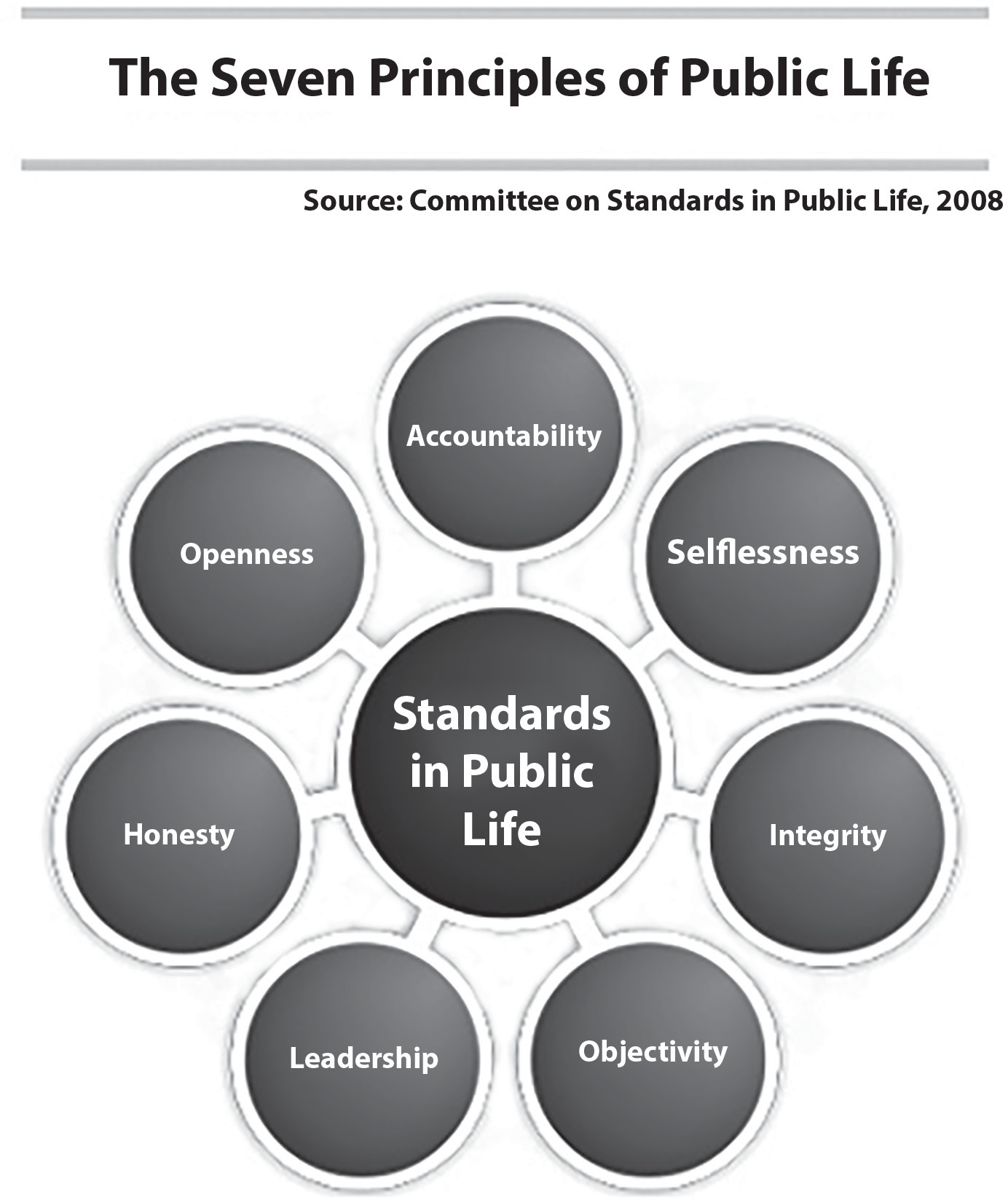
• Those engaged in public life are expected to act with selflessness.
• Their actions and decisions should prioritize societal welfare and public interest over personal gain.
• Examples include public servants, civil servants, representatives of public or private organizations, and service providers.
• These interactions are typically structured and foreseeable:
• Theya re governedby legal and social responsibilities.
• Duties within public relations are obligatory, externally enforced, formal and regulated.
• Ethical conduct in public relations is shaped by societal norms, values and behavioral expectations.
• Public relations have a vast reach and can significantly influence society:
• Core ethical values in public life include honesty, transparency, integrity, fairness, and openness.
• Prominent Ethical Principles in Public Relations:
• Panchsheel at the Organizational Level – The Five Principles of Peaceful Coexistence guide ethical conduct in professional and public spheres.
Co-existence adopted at Geopolitical level can be replicated at the organisational level. (Mutual respect, equal and mutual benefit working relationship, mutual non-aggression, mutual non- interference, peaceful coexistence)
• Nolan Committee’s Seven Principles of Public Life
Ethics in Private Relationships
• Private or personal relationships primarily involve interactions with family and friends.
• These relationships are informal, as they are not governed by any formal regulations or procedures. They exist on a one-to-one basis, independent of external contexts.
• They are rooted in emotional connections, and in most cases, they allow for the free expression of individual personality.
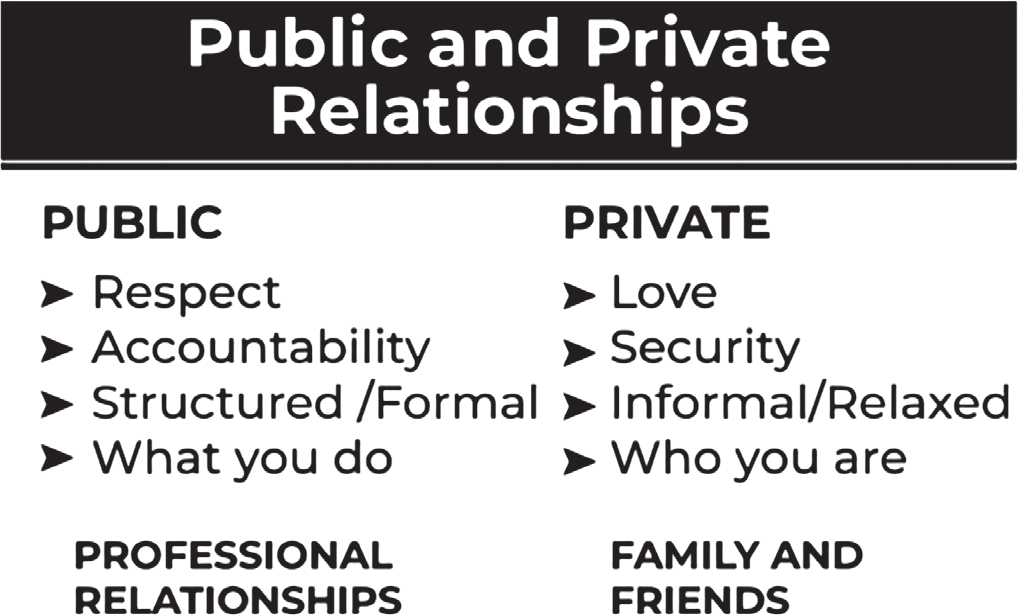
• Ethics in private life vary from person to person and are shaped by an individual's morality, emotions, and personal interests within relationships.
• Responsibilities in such relationships are self- imposed, voluntary, and informal in nature.
• In any society, morality serves as the foundation for ethical behavior in private life. However, emotions sometimes take precedence over moral values in personal relationships.
• For example, as a college principal, you might prioritize admitting your friend’s son despite
knowing it is ethically wrong, simply because of your close bond with your friend.
• Personal relationships are not only influenced by morality but can also shape it. Ethical values are not innate; socialization plays a crucial role in developing a person’s moral framework. Ethics practiced in private relationships significantly contribute to an individual’s overall moral values.
• Examples of ethical principles in personal life include love, honesty, good manners, equality between genders, dedication, truthfulness, respect
for elders and sharing.
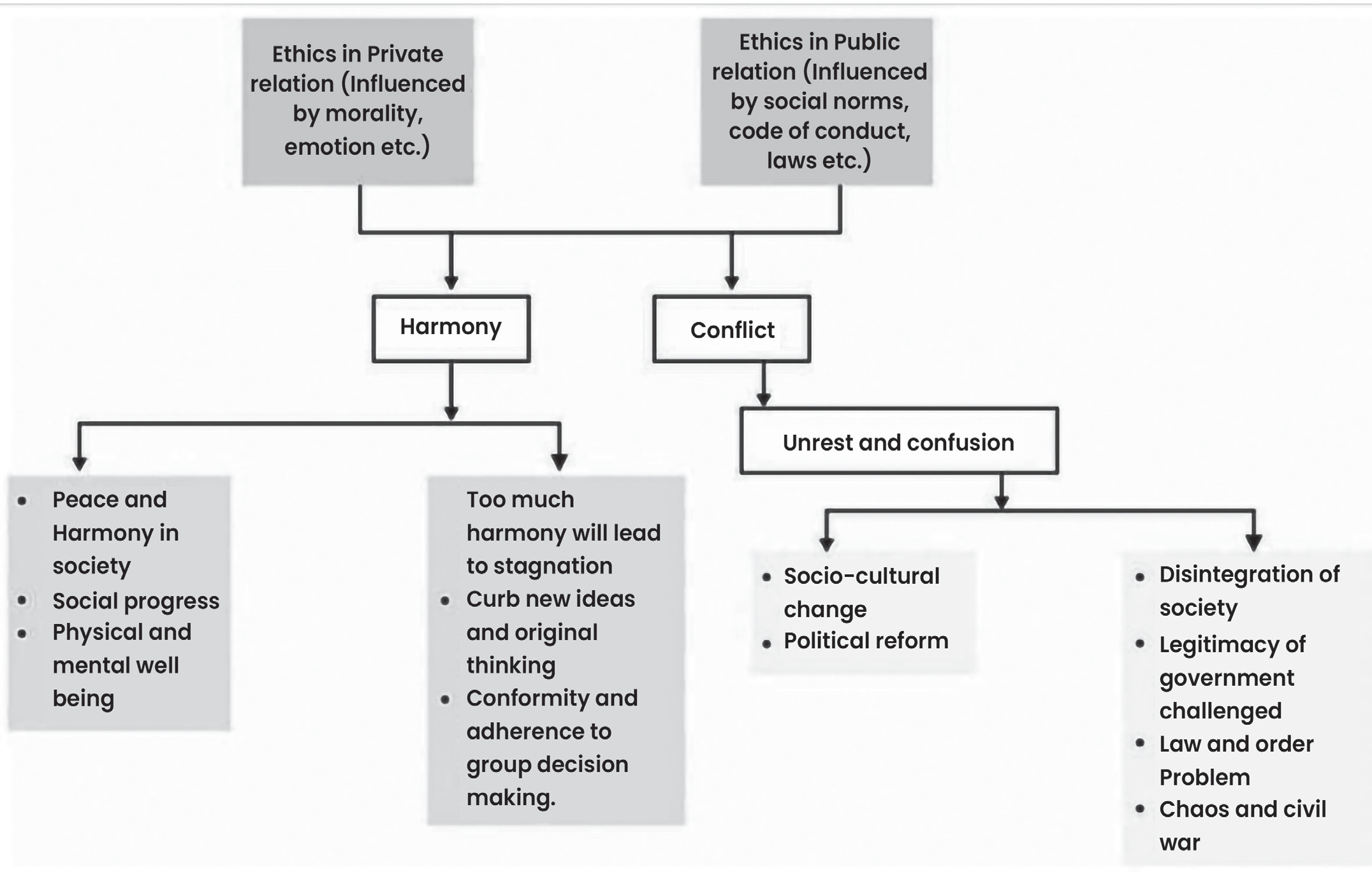
Relationship between Ethics in Public and Private Life
• "Personal ethics" are moral values that govern interactions with family and friends, whereas "public ethics" establish guidelines for professionals, such as doctors and engineers, to ensure responsible and ethical conduct in serving their clients and society.
• Distinguishing between personal and professional ethics can be challenging, as individuals often apply similar ethical principles in both areas of life.
• For example, a civil servant’s attitude toward women in his household may influence how he
treats women in the workplace and whether the policies he enforces are fair or biased.
• Personal and professional ethics should align rather than conflict, as contradictions may lead to frustration, guilt, confusion, or internal moral
conflict.
• For instance, even if a doctor personally believes that abortion is unethical, professional ethics require them to provide the procedure when necessary.
• While performing public duties, individuals must separate their personal beliefs from their professional responsibilities and strictly follow the established code of conduct.
• In personal life, ethical dilemmas typically fall into three categories:
• Aesthetic questions: These are the questions in which we have to choose between good and bad. It involves our aesthetic sense that is our sense of recognizing and appreciating beauty and taste.
• For example, do you like the pink colour? Do you like the chocolate flavoured ice-cream?
• Scientific questions: These are the questions in which we have to choose between true and false.
• For example, why sky appears blue? Is Earth sphere?
• Ethical questions: Ethical questions are those in which we have to choose between right and wrong.
Is it right to give money to the beggar or one should avoid it as it promotes beggary?
Inter caste marriages or gay marriages are right or wrong?
• Every society has a set of ethics and it expects its members to follow it. Thus, certain standards are there. But individual ethics or morality is also there. Every person has its own set of ethics. Thus, taking decision becomes difficult especially when there is a conflict between morality and social norms and ethics
Belief and Opinion
Belief
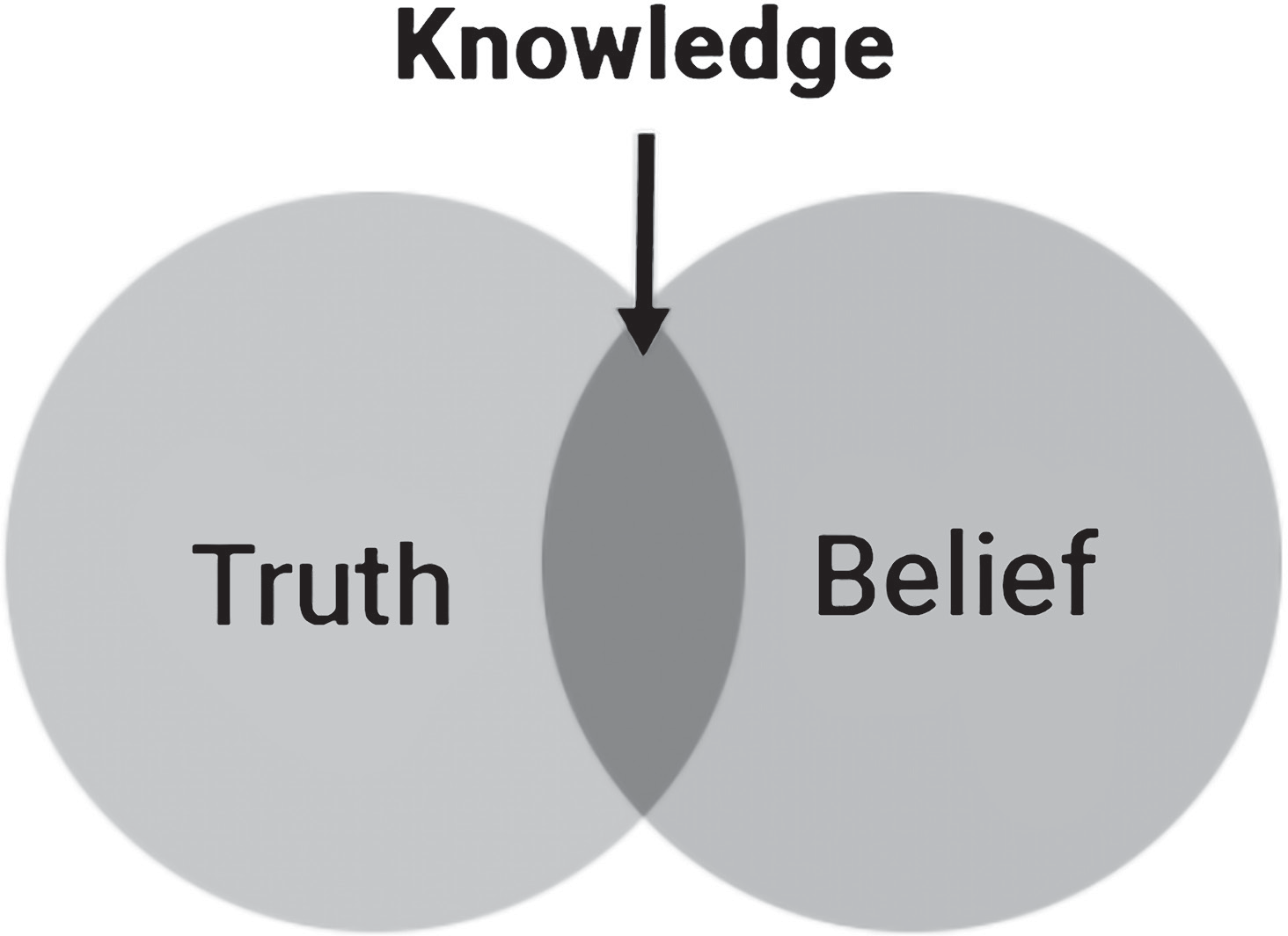
• Belief is the thought that we hold to be true. For example, belief about life after death.
• It is the smallest entity of conscious thought.
• It is an acceptance that something exists or is true, especially something without proof. It is an idea or a proposition, which you accept as true and valid, even though it might not be logical.
• A person can base a belief upon certainties, probabilities or matters of faith.
• Another example of belief is hanging lemons and chilies in vehicles is lucky.
• Similarly, it is a common belief that black cat crossing the pathway is inauspicious.
• Beliefs which are formed by direct interaction are generally strong, otherwise they could be weak.
DEFINITION TO REMEMBER
• Belief is defined as an internal feeling that something is true even if it is unproven or irrational
Beliefs can be changed through exposure to new information, facts, experience, new acts of authority, etc.
Belief vs Opinion
It is so important to your original take on anything and everything. Though our understanding of good and bad, right and wrong is also based on many factors.
Something is not black and white on what is right or wrong but something in between all these. All our problems will only get solutions when we will ask questions.
Opinion is having subjective views with the will to add perspectives of other people– temporary subjective views.
On the contrary, permanent subjective views are Beliefs.
| Belief Beliefs are deeply ingrained, highly resistant to change and characterized by extreme rigidity, making them difficult to challenge. Rather than fostering discussions, beliefs often lead to debates where opposing sides are firmly established. The focus is not on finding common ground but on asserting dominance and proving one side right while rejecting the possibility of a middle ground. Beliefs do not offer practical or effective solutions; instead, they often result in unrealistic or impractical answers. Moreover, rigid beliefs hinder personal and societal growth, preventing individuals and communities from evolving. | Opinion Opinions are open to challenge, discussion, modification and negotiation. Even when two individuals hold completely different "opinions", they can reach a mutual understanding through dialogue and compromise, as opinions allow room for discussion. Unlike rigid beliefs, opinions provide practical and workable solutions. Embracing diverse opinions fosters personal and societal growth, enabling progress and continuous evolution. |
• In case of beliefs, we have impermeable shells around views, heading nowhere close to peace.
• The need of this hour is to encourage people of all age and all genders to have opinions to be strongly put and question almost everything to understand and function better as a society, country and world.
Values
Values
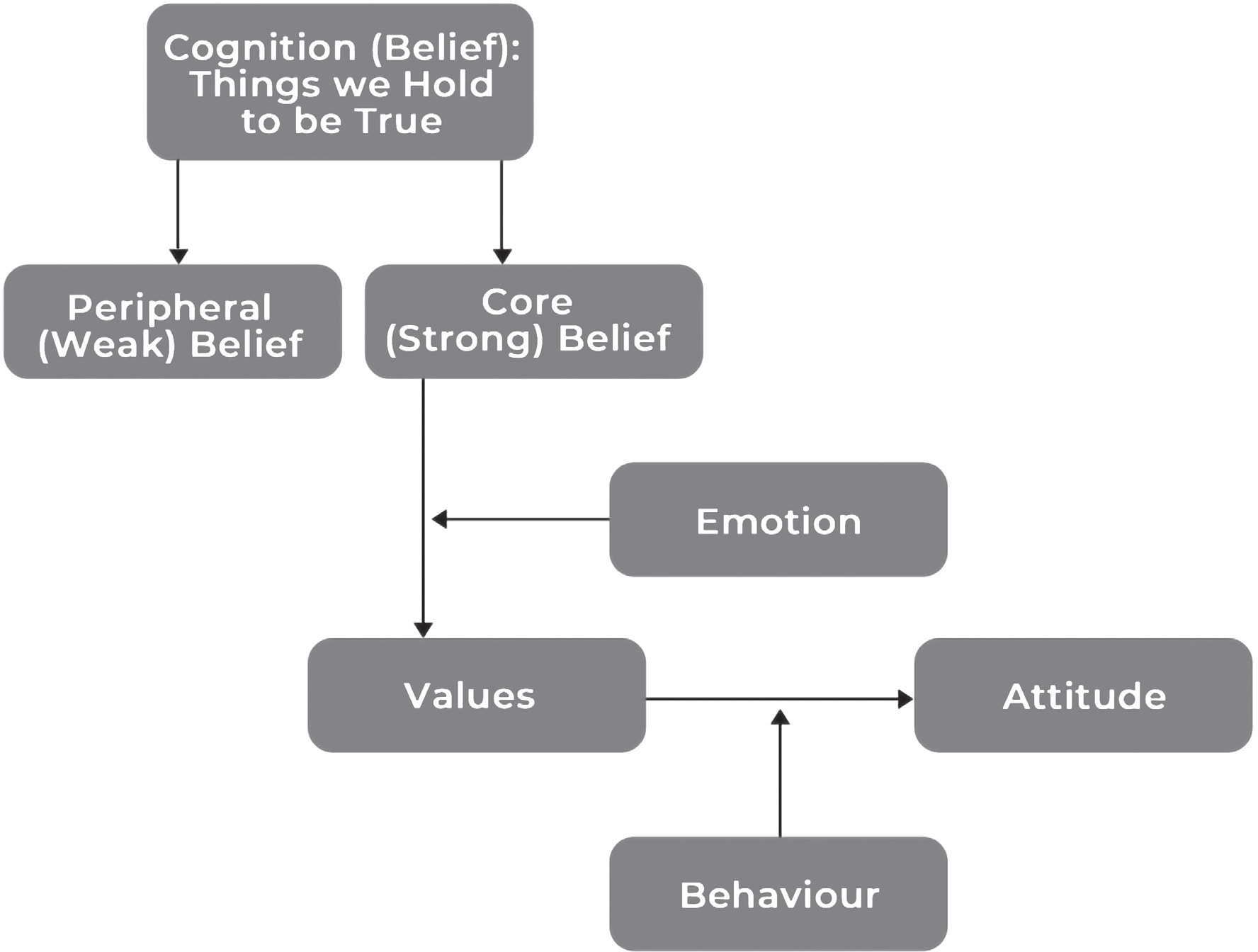
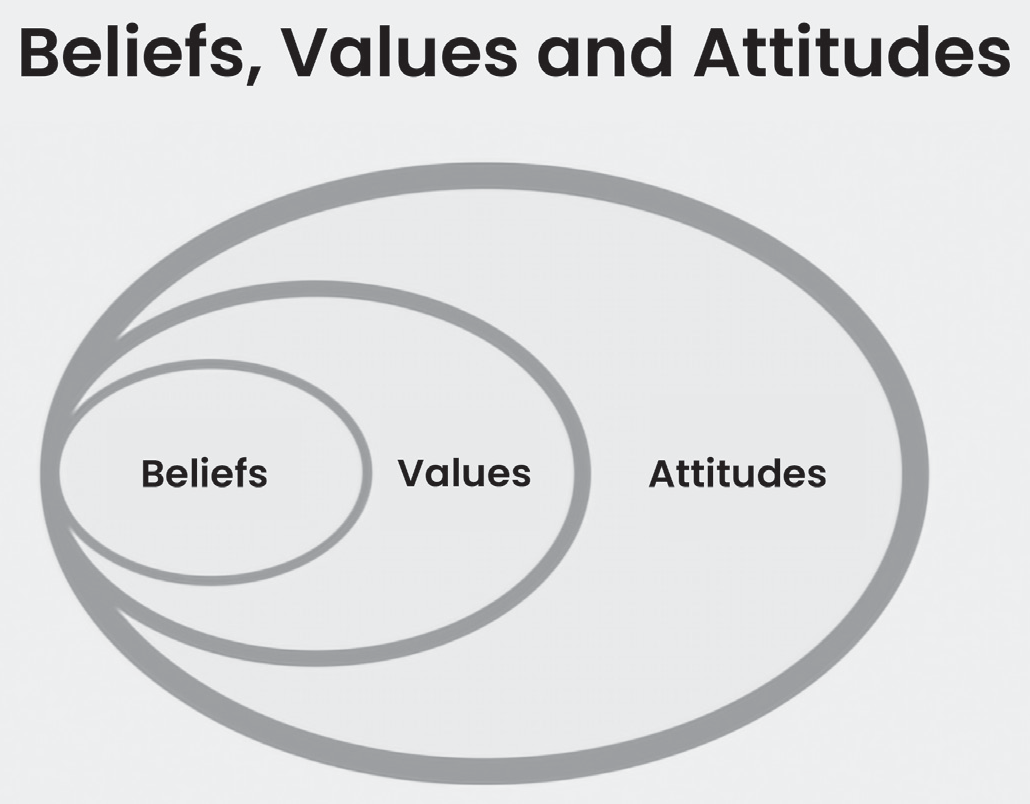
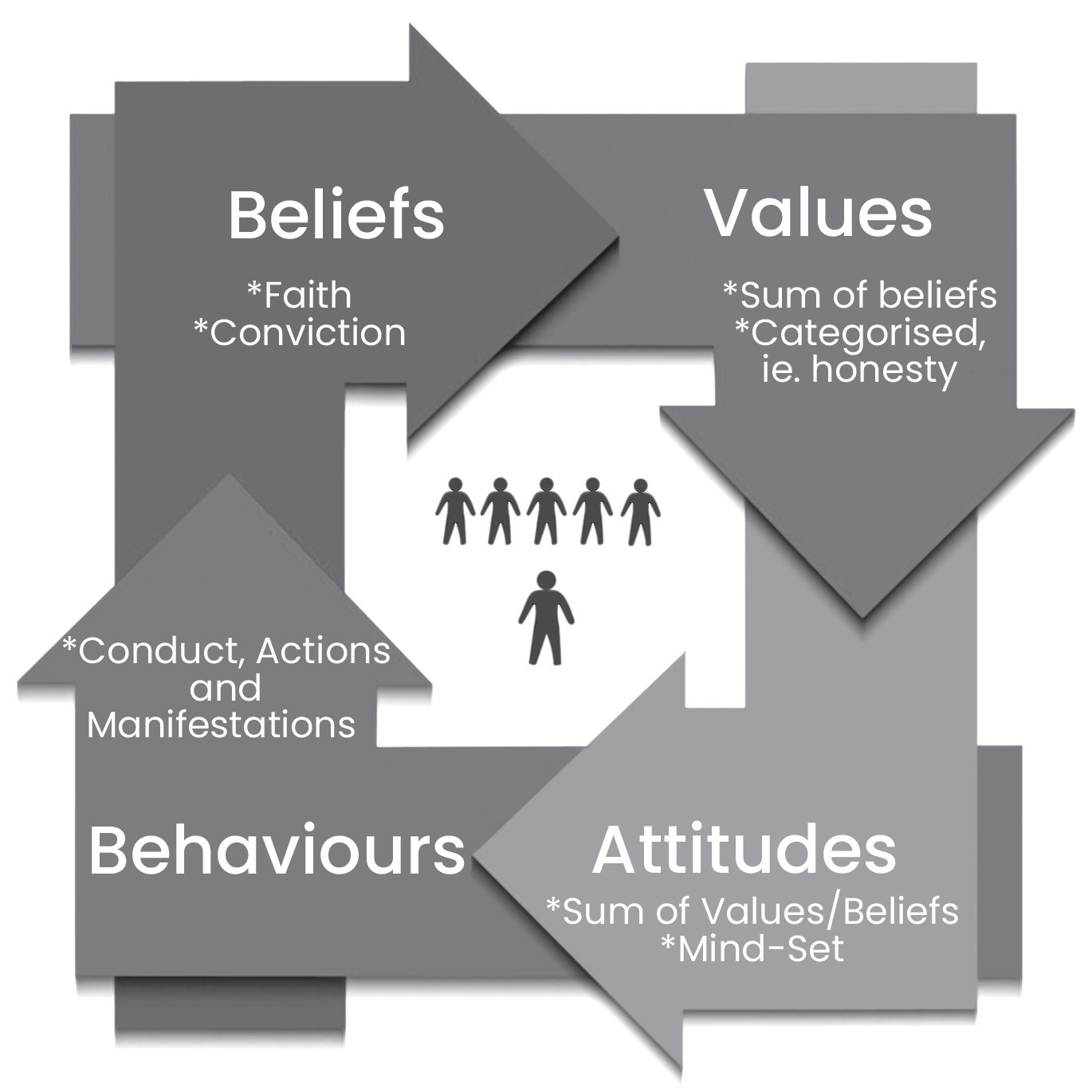
Figure: Relationship between Belief, Values and Attitude
• "Values" represent personal preferences and define what holds significance in an individual’s life. They guide decisions on what is considered desirable or undesirable.
• The term "value" originates from the French word 'valoir', which signifies worth, merit, usefulness, or importance.
• Values act as benchmarks that help assess and determine the desirability or importance of a person, place, or event, influencing judgments on what is meaningful or insignificant.
• For example, communist class values equality, justice etc. and capitalist class values competition, profitability etc.
• Different individuals and groups may hold varying sets of values. For instance, tribal communities prioritize environmental conservation more than others, European cultures place greater emphasis on compassion for pets, and those in the service sector highly value stability and job security.
• Values primarily stem from experiences shaped
by diverse social interactions, influenced by both individual and collective responses and attitudes.
Characteristics of Values
Values reflect an individual's top priorities and deeply ingrained motivations.
They form the core of personality and strongly influence behavior.
Many values remain stable and long-lasting over time.
They involve an element of judgment in determining what is important or desirable.
• There are various types of values, including personal values, social values, instrumental values, intrinsic values, human values, and universal values.
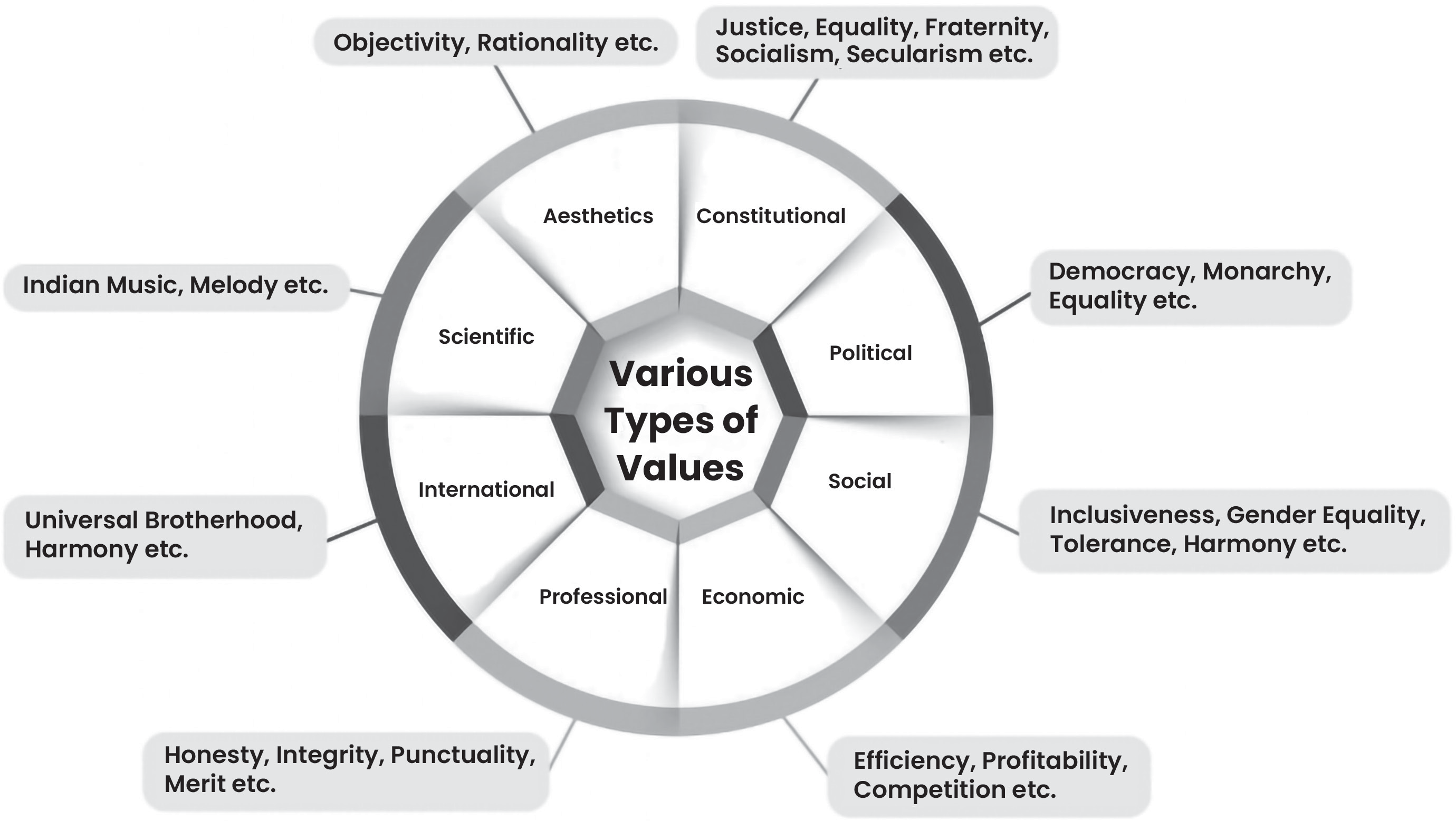
Figure: Various Types of Values
• "Intrinsic or Terminal Values" are those that hold significance on their own.
• Examples include truth, beauty, goodness, temperance and courage.
• These values are considered ends in themselves.
• Their worth is not based on their outcomes but rather on their inherent goodness.
• Intrinsic values are often regarded as absolute and independent.
• "Extrinsic or Instrumental Values" serve as a means to achieve another value and possess only instrumental worth.
• For instance, good food is valued for its taste and quality, making it an instrumental value.
• These values contribute to a larger purpose.
•
They act as a means to an end.
• Examples include wealth, fame and physical fitness.
• The distinction between "intrinsic and extrinsic values" is relative, not always absolute.
• What one person considers valuable for its own sake may be seen by another as a means to an end.
• Values can be categorized into various types, such as positive and negative values, productive and unproductive values, or permanent and temporary values.
• Generally, intrinsic values are considered superior to extrinsic ones.
• Positive values are prioritized over negative values.
• The values associated with human cognition are
Intellectual Values(Truth), Aesthetic Values(Beauty) Moral Values (Goodness).
• A **Universal Value** is one that holds the same significance or worth for all, or nearly all, individuals. Examples of universal values include
Attitude
Attitude
It is how we approach a situation; our likes and dislikes towards different things and ideas;
It could be positive, negative or neutral.
Attitude is the manifestation of our value system. If we know the value system of a person, we can predict his attitude towards a thing or idea.
• Attitudes can be shaped by an individual's past and present experiences. They are measurable and can be altered by influencing a person’s emotions, beliefs, and behavior.
• For instance, if an HR manager instructs you to hire only male candidates, but you strongly uphold the value of gender equality, you will develop a negative attitude toward the directive.
Human Behaviour
Human Behaviour
Human behaviour refers to the range of behaviours (a response to a stimuli) exhibited by humans and which are influenced by culture, attitudes, emotions, values, ethics, authority, rapport, hypnosis, persuasion, coercion and genetics.
It deals with how we react.
Belief and values happen to be building blocks of human behaviour.
• Apart from the factors mentioned above situations/ circumstances influence the behaviour to a great extent.
There are many instances in which one start acting against his/her attitude.
For Example, despite compassion for poor, one doesn’t give money to beggar at public places to discourage organised beggary, following objectivity.
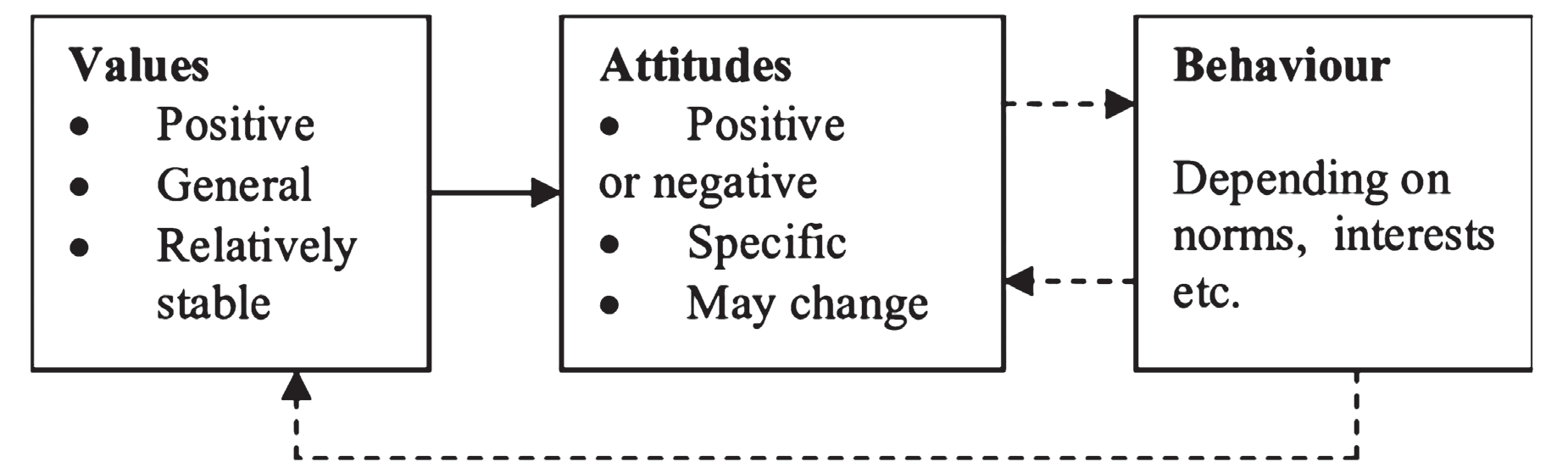
• Attitude and Behaviour Affect Each Other:
• Positive attitude towards a thing may lead to preference and a favourable behaviour, however the experience generated by the behaviour may not be as per the beliefs and values which leads to change in attitude itself towards that thing. This changed attitude will change the behaviour as well.
• For instance, attitude of a teacher towards an intelligent student in the class may change when the student starts to perform poorly and vice versa for a student who scored low earlier.
• Similarly, if a teacher has a positive attitude towards the inherent ability of a low performing student and starts to behave respectfully, provides quality lessons and inspires the student, the student responds positively and the behaviour changes and performance improves.
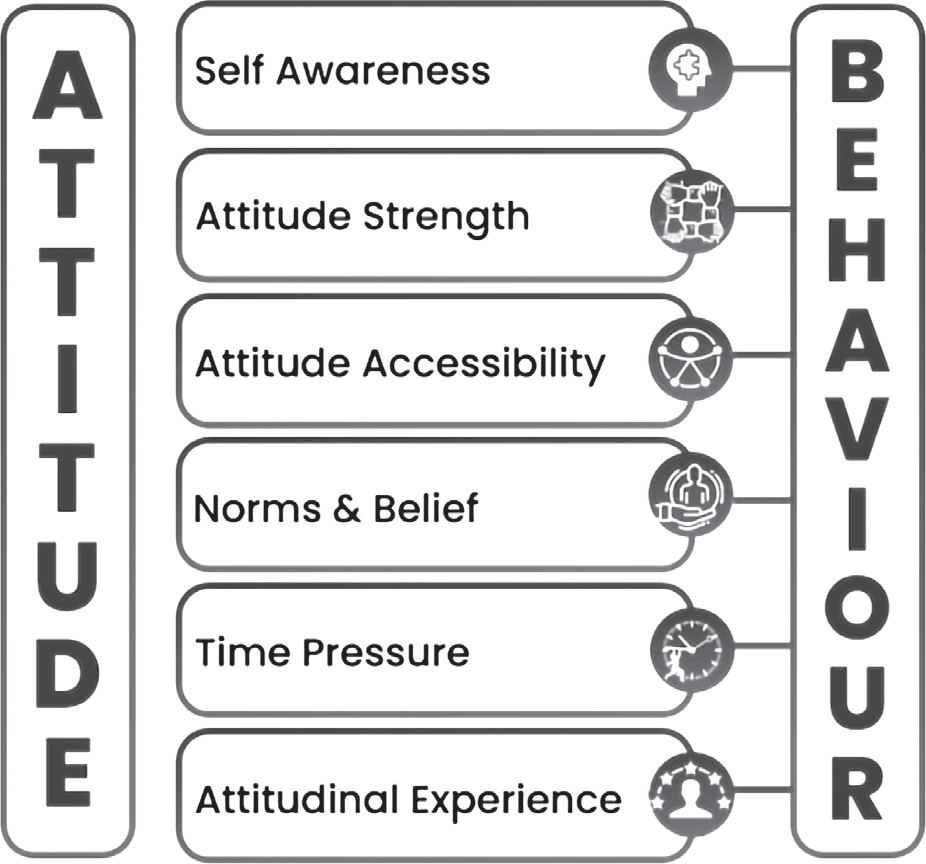
Other examples of behaviour affecting attitude:
Children in school are ensured to be punctual. Later, punctuality becomes their attitude.
Cricket team of New Zealand wears black dress (behaviour) to develop aggression (attitude).
Officers who are made to stop corrupt practices (behaviour) through strict law enforcement develop negative attitude towards corruption.
Morality
The term ‘moral’ originates from the Latin word
'mores', which means custom.
"Morality" refers to a set of principles or standards derived from a specific philosophy, religion or cultural code of conduct.
It can also stem from an individual's personal beliefs.
Morality helps in negotiating, maintaining and strengthening relationships with others.
It is guided by personal conscience rather than legal requirements.
Morality is always viewed from an individual's perspective.
Changes in morality occur due to differences in personal beliefs.
People adhere to moral principles because they believe it is the right thing to do.
There could be situations where a moral person violates ethics to uphold his moral values.
• For example, a person saves a woman by telling lie to the robbers based on his own morality despite telling the truth is a universal ethical principle.
• Though there is a slight difference between Ethics and Morality, yet sometimes the terms Ethics and Morality are used interchangeably. There are various types of Morality like which are as follows:
| Personal/Private Morality "Personal morality" consists of the values and principles that individuals personally follow and consider ethically appropriate and just. A person’s "conscience" serves as the foundation of personal morality. Personal morality varies based on factors such as cultural background, religious beliefs, education, and family upbringing, all of which shape an individual's values and lifestyle. It influences various aspects of life, including family, relationships, career and financial decisions. At times, personal morality may intersect with "conventional morality and ethics". For example, while some individuals may consider euthanasia acceptable, widely accepted moral standards may oppose it. | Public Morality "Publicmorality"encompassesthevaluesthat individuals are expected to uphold in their public life. Laws are often established to safeguard and regulate public values. Differentprofessionsfollowspecificguidelines, standards, and ethical principles. For example, doctors are required to abide by the "Hippocratic Oath". In this form of morality, individuals perceive themselves as part of a larger community, bearing collective responsibilities based on the principle of "consequentialism". Public morality requires individuals to set aside personal loyalties, prioritize the greater good over self-interest, and adhere to shared values shaped by public reasoning. For instance, a responsible citizen upholds principles such as "political freedom, solidarity, cultural heritage and shared traditions", rather than acting purely based on emotions or personal gain. |
• Constitutional Morality
• This concept does not have a specific definition, but various interpretations exist. Essentially, it refers to the commitment to uphold the fundamental principles of the "Constitution" in a democracy. It signifies an individual’s moral duty to honor constitutional values with the highest integrity, ensuring loyalty to the foundational principles of the Constitution.
• "Dr. B.R. Ambedkar" described "constitutional morality" as the balanced interaction between the governing authorities and the governed. It involves resolving dissent and conflicts of interest peacefully, without leading to major confrontations or resorting to violent uprisings.
• He believed that "Indian society was inherently undemocratic" and emphasized the importance of constitutional morality, especially in a country where democracy was merely a superficial layer imposed on traditional social structures.
• It includes commitment to inclusive and democratic political process in which both individual and collective interests are satisfied.
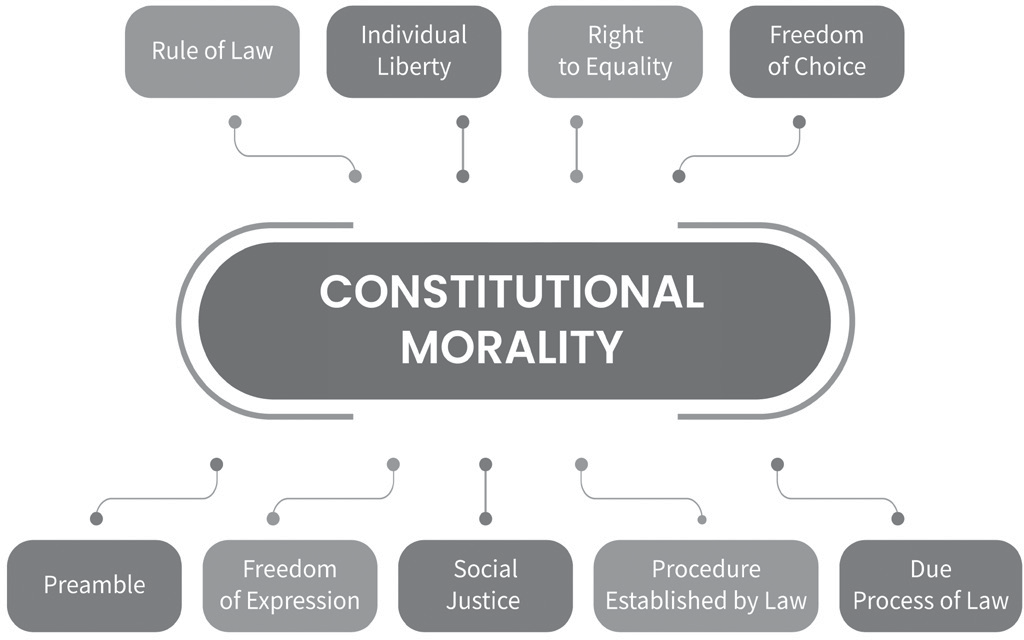
• In the context of the Indian Constitution, constitutional values include Democracy, Socialism, Equality and Integrity, among others. These values are primarily reflected in the Preamble, which provides a clear understanding of the foundational principles of the Constitution.
• The concept of constitutional morality has been referenced in several landmark Supreme Court judgments, In Naz Foundation vs. Government of NCT of Delhi (2010), the Supreme Court emphasized upholding constitutional morality over popular morality in matters concerning same-sex relationships, In NCT of Delhi vs. Union of India (2018), the Court equated constitutional morality with the very essence of the Constitution, defining it as strict and absolute adherence to constitutional principles. In Navtej Singh Johar vs. Union of India (2018), the Court distinguished between constitutional morality and public morality, asserting that constitutional morality embodies the ideal of justice. In Indian Young Lawyers Association & Ors. vs. The State of Kerala & Ors. (2019) (Sabarimala Case), the Supreme Court ruled that the exclusion of women aged 10-50 years from the temple violated four fundamental principles of constitutional morality: Justice, Liberty, Equality, and Fraternity.
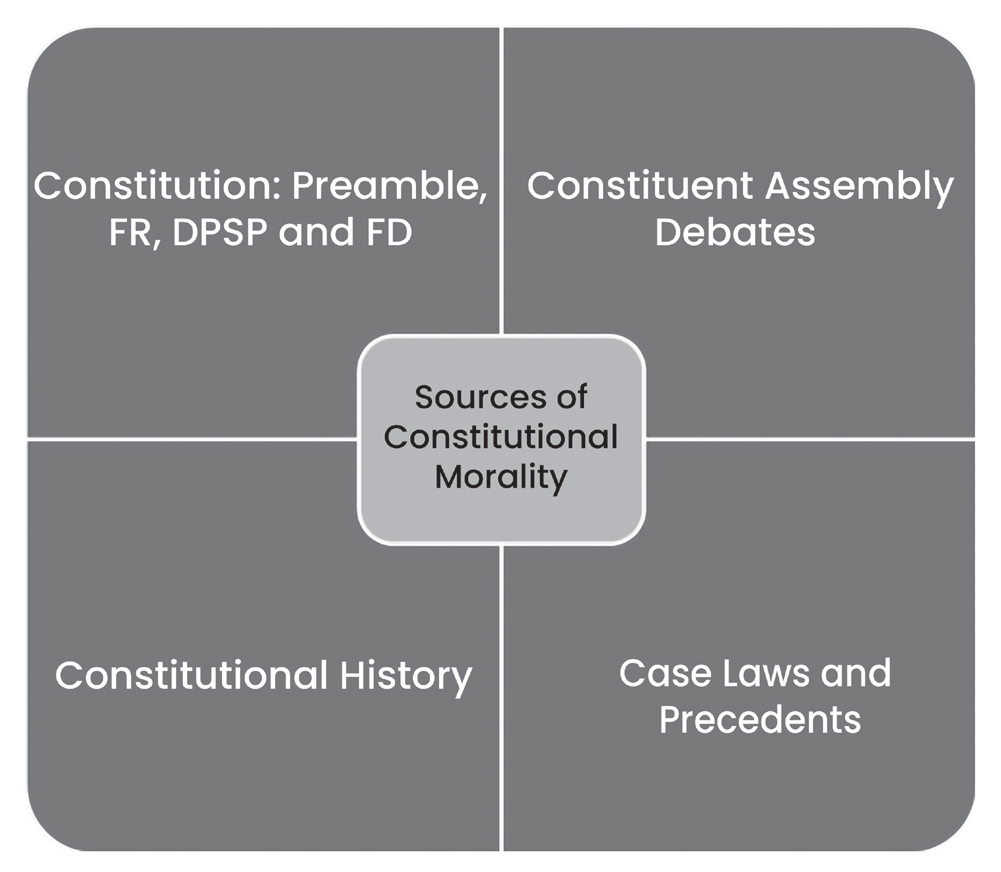
Figure: Sources of Constitutional Morality
• Examples of non-adherence to constitutional morality include exploitative conditions of work imposed upon the scavengers and sweepers under the employment of municipal corporations or related local bodies despite Article 17 of the Constitution abolished untouchability, or mob lynching incidents of Pehlu Khan or police encounter incidents like in Manipur violate the fundamental constitutional guarantees of
due process, innocent until proved guilty, and proportionality principle of the punishment.
• Steps Needed to uphold Constitutional Morality include:
• Inculcating Respect for the Constitution and its principles, including democracy, secularism, and federalism through education and understanding of its provisions and implications.
• Promotion of Human Rights and Dignity by advocating for the rights of marginalized groups, supporting supportive initiatives and opposing policies that undermine human rights.
• Commitment to Social Justice and Equality through policies that promote equal opportunities and access to resources and services.
• Responsibility of Public Officials to act in accordance with the principles of the Constitution and work towards the greater good of society.
• Judicial Activism by interpreting the Constitution and safeguarding the rights of citizens. Judicial activism is a powerful tool to enforce constitutional morality.
• However, there is lack of literature and clarity on the concept of Constitutional Morality. It also encourages judicial supremacy and activism by the courts. It also hinders the organic and natural development of the society. It further creates distrust among public towards organs of the State. It acts as a counterpoise to public morality.
• Thus, ultimately it requires a collective effort from citizens, civil society, and the state to ensure that the constitutional morality is upheld both in policy and practice.
Political Morality vs Bureaucratic Morality
Norms vs Conventions
Customs vs Traditions
| CUSTOMS It signifies a common practice, behavior, or usage observed by many people or specific communities. While it is often followed for a long time, it can also be newly adopted. Unlike legal regulations, these social norms are established and enforced by society itself rather than formal laws. | TRADITIONS It refers to a belief, principle, or practice that has been passed down through generations within a particular society or community over an extended period. Traditions can endure and evolve for centuries—the term "tradition" originates from the Latin word tradere, which means "to transmit, hand over, or preserve." Customs, when carried forward across generations, transform into traditions. Examples include festivals, culturally symbolic attire (such as lawyer's wigs or woolen caps worn by police officers), and other practices that may not be practical but hold deep social significance. |
Virtues
• It refers to a commendable moral trait in an individual or the overall moral excellence of a person. Such qualities are regarded as essential for good character.
• Virtue involves mastering instincts and impulses, striving for self-betterment and achieving personal integrity.
• Examples of virtues include honesty, courage, compassion, generosity, fidelity, integrity, fairness, self-discipline, and prudence. The antithesis of virtue is vice.
Ideals
• An ideal is a principle or value that a person actively strives to achieve, particularly in the realm of ethics.
• - It represents a benchmark of excellence or perfection, serving as a supreme goal or aspiration, often associated with noble character.
Some Important Differences
SOME IMPORTANT DIFFERENCES
Ethics and Morals
Ethics focus on the decision-making process for distinguishing right from wrong, often involving a
weighing of pros and cons or balancing conflicting values and interests. Morality, on the other hand, refers to a code of conduct that is frequently influenced by religious beliefs, shaping ethical choices.
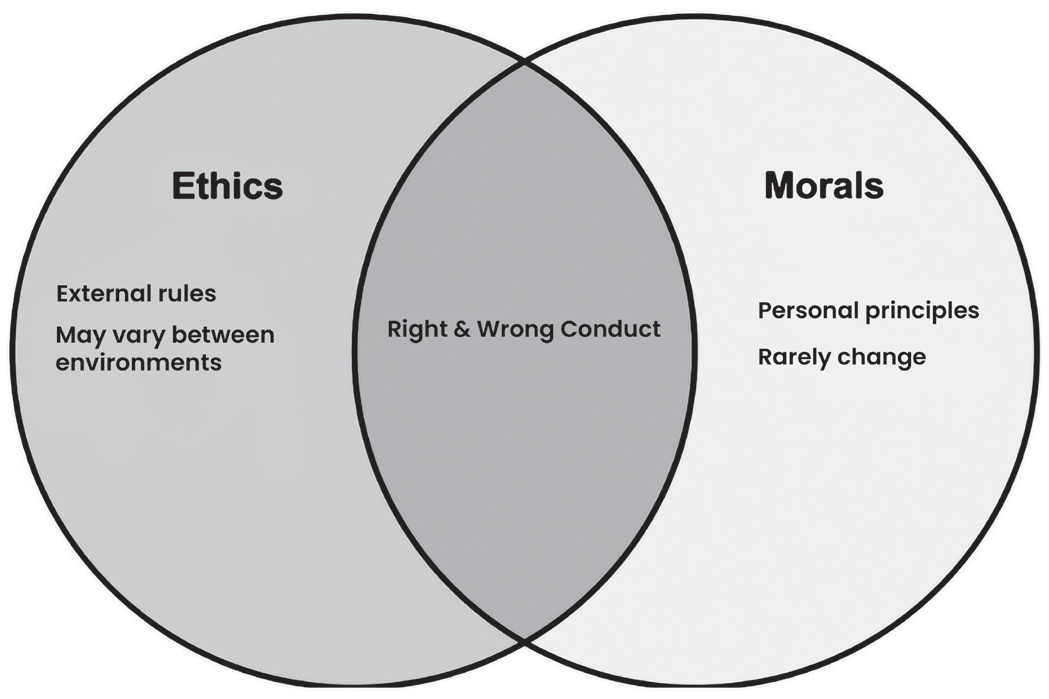
Figure: Ethics and Morals
• Morals stem from within, acting as an internal compass, whereas ethics are external guidelines that govern behavior in society.
• Ethics represent what one believes and professes, while morality is reflected in actions. When ethics and morality align, it leads to integrity.
• Ethics establish codes of conduct that guide policies in professional settings, whereas morality defines personal standards of right and wrong.
• Ethics serve as a framework for decision-making, while morality is a predefined standard used to evaluate behavior.
| Basis for Comparison | Ethics | Morals |
| Meaning | The term Ethics is derived from the Greek word 'ethos', which means character. It refers to a set of principles established by society to guide behavior, decision- making, and actions. | The term Morals originates from the Latin word 'mores', meaning custom. It represents a set of rules that define right and wrong, which are generally accepted without question. |
| Enforced by | Social system/External | Individual/internal |
| Reason of abiding by | Because society says it is the right thing to do. | Because we believe in something being right or wrong. |
| Consistency | Ethics rely on external sources for their definition and may vary depending on the context, circumstances, or time. They evolve over time. | Morals, on the other hand, are generally consistent but may undergo slight changes if an individual's beliefs shift. |
| Understood as | What we “ought” to do. | What we actually do. |
| Origin | Purposefully Developed | Felt Intuitively |
Ethics and Laws
| Basis for Comparison | Ethics | Laws |
| What is it? | Ethics are a set of principles established by society to guide behavior, decision- making, and actions. | Laws, on the other hand, are a structured set of rules designed to regulate society and the conduct of its members. |
| Enforced by | Individual, Legal and Professional norms | Government |
| Expression | Abstract in nature | Expressed and published in writing |
| Aim and Objective | Ethics are established to guide individuals in determining what is right or wrong and how to behave accordingly. | Laws are formulated with the purpose of maintaining social order, ensuring peace within society, and safeguarding the rights of all citizens. |
| Binding | They are not of binding nature. | They are legally binding. |
Ethics and Values
| Basis for Comparison | Ethics | Values |
| Meaning | Ethics refers to a set of standards established by society to guide behavior, decision-making, and actions. | Values are the principles and ideals that assist individuals in determining what holds greater significance in their judgment. |
| Influenced by | Professions, organisations and institutes. | Familybackground,culture, religion, community. |
| What are they? | System of moral principles | What we want to do or achieve. |
| Determines | Extent of rightness or wrongness of action | Priorities of life |
| Uniformity | Uniform | Differs from person to person |
| What it does? | Constrains | Motivates |
Human Values
HUMAN VALUES
• The term "value" originates from the Latin word "valere," meaning to be strong or of worth. According to the dictionary, it refers to relative worth, utility, importance, or a degree of excellence. Value signifies something that holds significance, is precious and is worth striving or sacrificing for.
• Values guide individuals in determining what is desirable or undesirable. They serve as standards for evaluating and making judgments about the worth or significance of a person, place, or event.
Human values are fundamental and inherent qualities in individuals that guide interactions between people by emphasizing the human aspect in relationships.
• They encompass positive traits that foster connections among individuals, promoting a sense of shared humanity and holding significance for all. These values reflect deep, positive emotions toward the human essence of others.
• They form the core of an individual's personality.
• These values act as guiding principles for behavior in various situations and serve as a foundation for moral standards.
• They transcend specific objects, circumstances, or individuals, representing broad experiences in social interactions that combine both personal and collective attitudes and responses.
Nature of Human Values
• Universal: Human values are inherent and shared by all individuals, regardless of their religion, caste, creed, culture, nationality, or historical background.
• Culture-Specific: Human values are also influenced by cultural contexts. Each existing culture has its unique value system, ethics, and traditions.
• In nations like India and Japan, the value system
plays a crucial role in all aspects of life, including
business practices.
Promotes Peace: A peaceful environment fosters prosperity, which can be achieved by embracing and practicing essential human values. Implementing these values in daily life ultimately contributes to overall well-being and progress.
Supports Individual Development: Human values emphasize personal growth and progress. The Indian education system embodies unique qualities that contribute to this development.
Passed Down Through Generations: These values are transmitted from parents to children through socialization. As individuals progress through different stages of life, they continue to learn about these values from family, peers, teachers, elders, leaders and society.
Distinction Between Human Values, Ethical Values, and Moral Values:
• Ethical Values involve showing respect not only toward other human beings but also toward nature, including plants and animals, fostering harmony with them.
• Moral Values focus on self-improvement and discipline. They can be taught and cultivated over time.
• Human Values relate to how individuals interact with others in society. These values are inherent and naturally present in everyone.
Prominent Human Values
Some of the key human values can be classified as follows:
Truth: Truth refers to the quality of aligning with reality and facts.
• The ultimate truth is absolute, unchanging across past, present, and future, and remains valid at all times and in all places.
• Truth is not subjective or influenced by individual perceptions or circumstances.
• It is reflected through honesty, sincerity, and integrity, guiding one’s actions in accordance with their conscience.
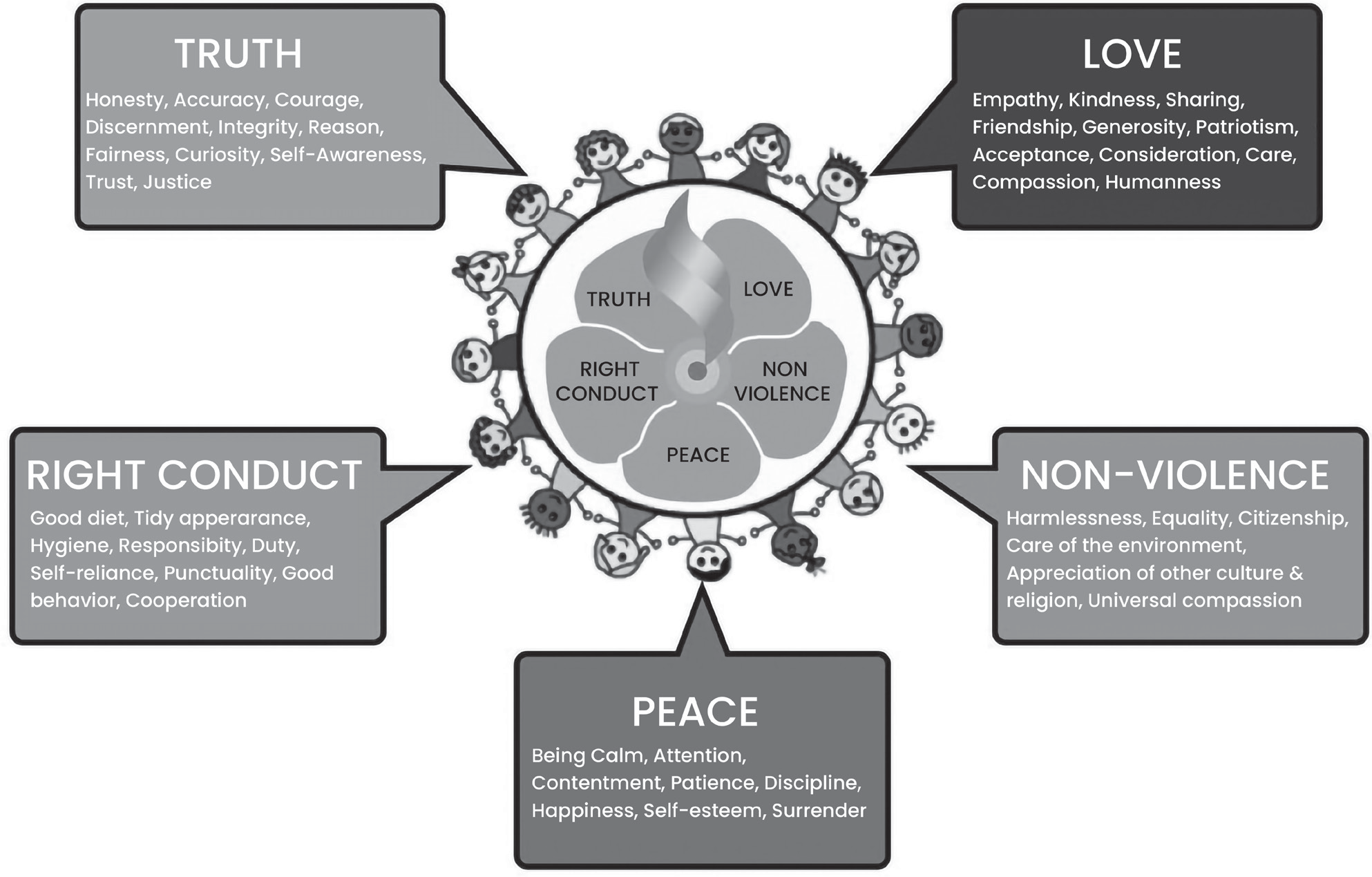
Peace: Peace is a virtue that represents a calm state of mind, fostering goodwill, confidence, and fairness.
True peace is reflected in inner tranquility and the ability to remain composed in all circumstances.
It embodies societal harmony and friendship, existing in the absence of conflict and violence.
Non-Violence: Non-violence refers to refraining from causing harm to any living being through thoughts, words, or actions.
It signifies respect for life and acknowledgment of others' rights.
Non-violencep romotes appreciation of diversity, nurtures tolerance and reinforces the
interconnectedness of all living beings, fostering respect for all forms of life.
Love: Love is the expression of care and selflessness, prioritizing another person's well-being and best interests.
• The purest form of love is unconditional and selfless, free from attachment and expectations. It stems from a genuine and heartfelt concern for others.
• Love serves as the foundation of all human values, guiding our actions and interactions.
Justice: Justice entails ensuring that each individual receives what they rightfully deserve. It is closely associated with fairness, though both concepts carry distinct interpretations.
| Justice Justice is about a standard of rightness. It is the ability to make judgments that are general. | Fairness Fairness is ability to judge without reference to one’s feelings or interests. It is the ability to make judgments that are concrete and specific to a particular case. |
Justice is based on the principle that "equals should be treated equally, while unequals should be treated differently in proportion to their differences." For instance, if Ram and Shyam perform identical tasks under the same conditions, without any distinguishing factors, fairness dictates that they should receive equal compensation.
• There are mainly three kinds of Justice:
| Distributive Justice It pertains to the degree to which a society's institutions ensure an equitable distribution of benefits and responsibilities among its members. For example, slavery in the USA was denounced as unjust because it was a blatant instance of discrimination based on race. | Retributive or Corrective Justice Retributive justice pertains to the fairness and appropriateness of punishments, considering factors such as the severity of the crime and the intent of the offender while disregarding irrelevant aspects like caste or race. For instance, Black individuals have historically received harsher punishments, including more frequent death sentences, compared to white individuals. | Compensatory Justice Compensatory justice relates to the fairness of providing compensation to individuals for harm suffered, ensuring that the reparation is proportional to the damage incurred. For example, workers in coal mines receiving compensation for health issues caused by their work conditions. |
Functions of Human Values
• Human values shape various aspects of an individual's personality and impact their socio- cultural development.
• They serve as fundamental pillars that support society and strengthen social relationships.
• These values play a crucial role in fulfilling and integrating an individual's basic needs in a stable and consistent way, essential for a balanced life.
• They shape a person’s outlook and act as a foundation for assessing the actions and conduct of others.
Mean Values and End Values
• Ends refer to the desired goals or outcomes, while means
are the methods employed to achieve those goals.
• End-values are associated with the outcome, whereas mean-values relate to the process. However, a mean- value can also transform into an end-value.
• For instance, education can be a mean-value, while poverty reduction is an end-value. In another context, poverty reduction may serve as a mean- value, with national development being the end- value.
• The Constitution typically embodies end-values such as socialism, an egalitarian society, a Gandhian society, and a uniform civil code.
• Mean-values are reflected in codes of conduct, including qualities like honesty, integrity and dedication.
Lessons and Teachings From the Lives of Great Leaders
Lessons and Teachings from the Lives of Great Leaders, Reformers
Humans are both shaped by and contributors to their culture. They are influenced by the societal value system while also playing a role in shaping and redefining these values.
Throughout history, various leaders, reformers, and administrators have not only reinforced existing
values but have also reinterpreted them when necessary. These individuals have led by example, demonstrating how one can align personal values with everyday conduct and live by them.
• The primary role of these individuals is to shape the behavior of others, gaining their cooperation and support to achieve a shared goal. Their key objective is social influence, and their value system serves as their strongest tool in shaping the conscience of others.
• While they may possess distinct attitudes, skills and qualities, all great leaders, administrators, and reformers have certain fundamental values that they uphold, even in the face of adversity.
• A commitment to serve people, uplifting the marginalized, maintaining impartiality and integrity, as well as demonstrating benevolence and compassion, are defining traits of their character and personality.
Mahatma Gandhi
• Mahatma Gandhi, also known as Mohandas Karamchand Gandhi, is regarded as one of India's greatest moral thinkers.
• Born on October 2, 1869, in Porbandar, Gujarat, his father, Karamchand Gandhi, served as the Diwan of Porbandar.
Raised in a Hindu household,
Gandhi remained a devout Hindu throughout his life, yet he was deeply influenced by Jain teachings, particularly the principle of Ahimsa (non-violence). During his time studying law in England, he was inspired by Theosophists to explore ancient Indian scriptures such as the Bhagavad Gita. He spent two decades in South Africa advocating for civil rights and immersing himself in diverse religious literature. Upon returning to India, he established an Ashram for his family and followers. Despite his spiritual
devotion, the Ashram did not adhere to any rigid religious orthodoxy.
• Altruism and Self-Sacrifice:
• Gandhi considered self-sacrifice the highest form of morality in his ethical framework.
• Inspired by this idea, Gandhi developed his philosophy of Satyagraha and regarded Socrates as a “soldier of truth.”
• Non-Violence (Ahimsa):
• Gandhi’s concept of Ahimsa was not limited to abstaining from harm but also encompassed showing love and compassion toward all living
beings.
• According to him, non-violence, kindness, and empathy were powerful tools that could be used to resolve conflicts and even wage wars peacefully.
• Power of Truth (Satya):
• Gandhi was profoundly influenced by Tolstoy’s The Kingdom of God is Within You (1893), which had a lasting impact on him. He was particularly moved by Tolstoy’s philosophy of love as the fundamental law of life and his concern for humanity.
• In honor of Tolstoy, he named his second Ashram in South Africa, where he experimented with the methods of Satyagraha.
• Gandhi equated God with truth and identified his
religious belief as the "religion of truth."
• He viewed truth as an ideal guiding human behavior and considered India’s struggle for independence a just pursuit of both national and individual freedom.
• Satyagraha (Truth Force):
• Satyagraha is the application of the purest spiritual force or truth force against all forms of injustice, oppression, and exploitation. The term means "holding firmly to truth."
• If a government no longer represents the people's will and instead supports corruption and oppression, it must be resisted peacefully, even if it involves personal sacrifice.
• A state that fails to protect the rights of the poor and the hungry is a form of disorder that should be opposed through non-violent means.
• Sarvodaya (Welfare of All):
• Gandhi presented four fundamental goals for humanity’s progress: Swaraj (Self-Rule),
Non-Violence, Swadeshi (Self-Sufficiency), and Sarvodaya (Welfare of All).
• Sarvodaya embodies the belief that universal welfare benefits everyone. It promotes equality in labor and encourages individuals to prioritize the needs of others before themselves.
• The philosophy of Sarvodaya is rooted in the idea of the Unity of Existence, which suggests that the entire universe is interconnected and pervaded by the Supreme Being.
• Gram Swaraj (Village Self-Rule):
• Gandhi was not only a vocal critic of urbanization but also an ardent supporter of rural life. In his vision of an ideal society, communities functioned as self-sustaining villages that utilized minimal resources to fulfill their "needs" rather than "wants."
• For true self-rule (Swaraj) to be achieved, each village needed to be self-reliant and capable of sustaining itself independently.
• Gandhian Gram Swaraj is based on certain principles such as human beings’ supremacy, full employment, equality, Swadeshi, trusteeship, self-sufficiency and cooperation, Nai Talim, decentralisation.
• The Principles of Gram Swaraj can be summarised as follows.
• India lives in its villages, not in cities.
• Rural Reconstruction is based on the non- exploitation of rural areas.
• Moral and ethical values are vital than materialistic gain.
• Sarvodaya - the welfare of all.
• Promotion and use of Swadeshi products.
• Village industrialisation through small scale and cottage industries.
• Each individual must perform their duty towards the state.
• Decision making should be lies in people’s hand.
• Bottom-up Planning Process
• Trusteeship:
• Gandhi’s economic ideas were part of his general crusade against poverty, exploitation against socio-economic injustice, and deteriorating moral standards.
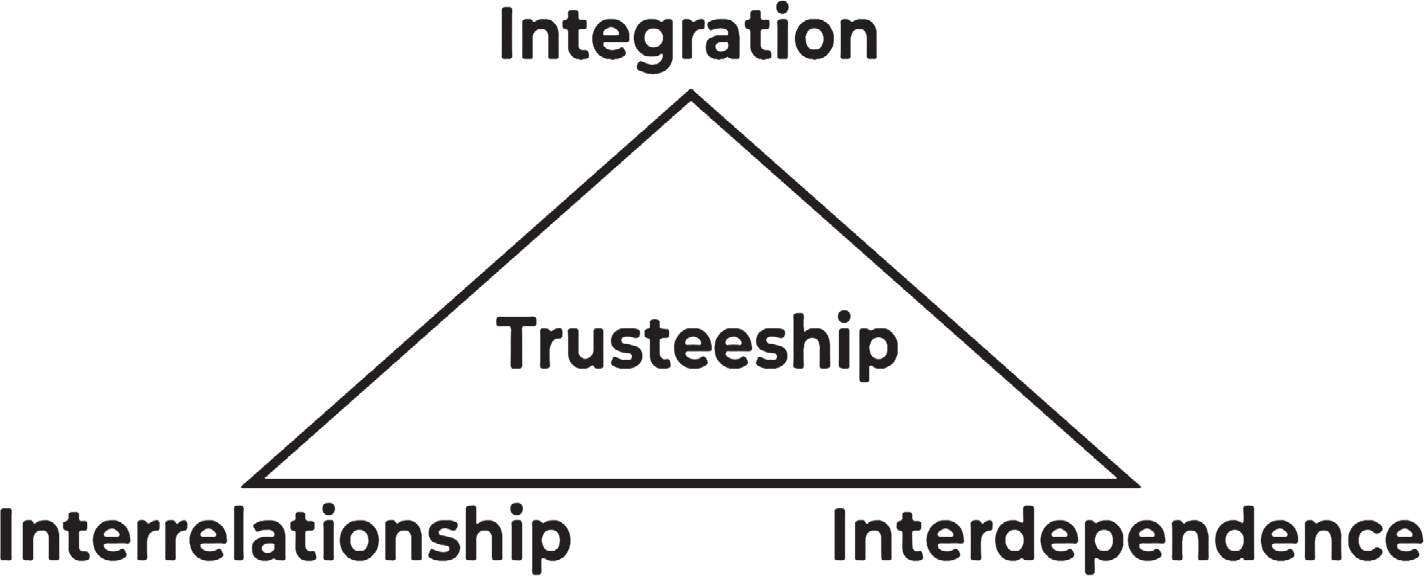
Figure: Principles of Trusteeship
• Trusteeship is a socio-economic philosophy rooted in the principle of Ahimsa (non-violence), introduced by Mahatma Gandhi.
• It was based on his religious conviction that all wealth and resources ultimately belong to God and originate from Him.
•
The concept aimed to gradually transform the existing capitalist system into a more egalitarian society.
• Gandhi viewed the wealthy as custodians of their riches, emphasizing that any surplus wealth they hold rightfully belongs to society and should be utilized for the welfare of the less fortunate.
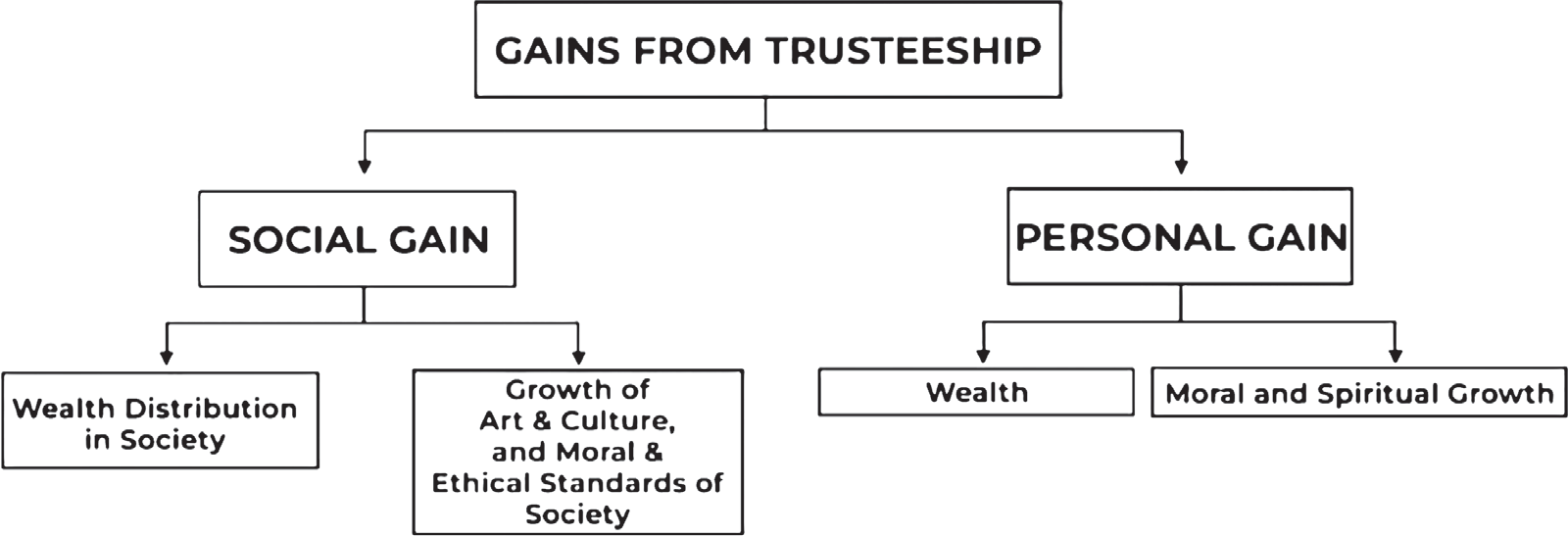
Figure: Gains or Benefits from Trusteeship
• Wealthy individuals are merely trustees of the excessive share of resources they possess, which are ultimately God's property. Their role is to utilize this wealth for the upliftment of the underprivileged.
• Gandhian socialism is fundamentally ethical and differs from Marxian socialism. Gandhi considered humans as moral beings first and social beings later. Unlike Marxian socialism, which seeks to abolish the capitalist class, Gandhian philosophy aims to reform rather than eliminate the institution.
• Means Are as Important as Ends
• According to Gandhi, the ultimate goal (satya or truth) is self-evident and does not require justification, while the means (ahimsa or non- violence) must be justified independently rather than solely in relation to the goal.
• He firmly believed that noble objectives should be
pursued through ethical means. He stated, “No good can come from bad deeds, even if they are well-intentioned.” He warned against the idea that positive intentions can justify unethical actions, opposing the utilitarian and consequentialist perspective that permits the use of immoral means to achieve desirable ends.
• Gandhi held that if independence were attained through violence and bloodshed, then the very essence of freedom would be lost. His principle of Satyagraha was entirely based on the purity of means.
• He often emphasized that the ultimate purpose of all human efforts should be the pursuit of absolute truth, which he equated with God. While absolute truth may be beyond human comprehension, ensuring the purity and honesty of the means is of utmost significance.
• Seven Deadly Social Sins by Gandhiji:
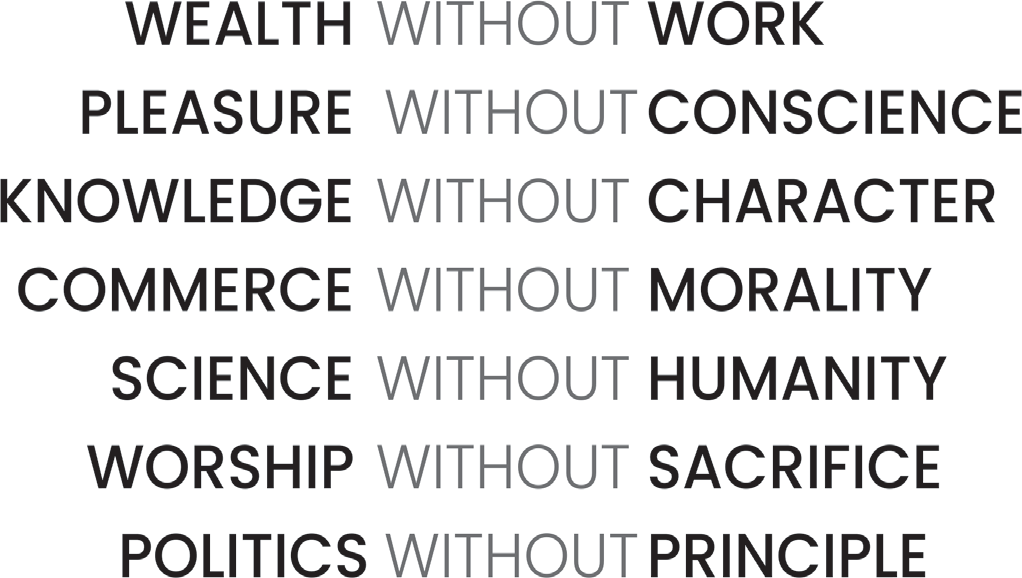
• Wealth Without Work
• This concept refers to acquiring benefits without making any real effort—manipulating markets and resources to gain without contributing any productive value, merely exploiting systems and individuals.
• It involves accumulating wealth through dishonest means, such as taking shortcuts. Examples include tax evasion, financial scams, insider trading, and unaccounted money (black money).
• The Indian ethos upholds the principle of "Work is Worship," valuing the rewards of one’s own labor. Work fosters dignity and self-reliance.
• Encouraging productivity and ensuring compliance with tax regulations is the appropriate course of action.
• A simple example would be keeping extra money mistakenly returned by a shopkeeper instead of returning it.
• Pleasure Without Conscience
• Seeking pleasure without moral responsibility comes with significant consequences, be it financial costs, loss of reputation, or emotional harm to others who suffer due to one’s self- indulgence.
• Enjoyment at the expense of others is unethical and can be considered an injustice. Pursuing pleasure without social accountability leads to moral corruption.
• When undeserving individuals wrongfully benefit from welfare or development programs while ignoring the genuine needs of the underprivileged, it becomes morally unacceptable. Likewise, issues like sexual harassment and reckless consumerism fall under this category.
•
The challenge lies in fostering selflessness, empathy, and consideration for others.
• Initiatives like the "Give It Up" campaign, which encourages individuals to voluntarily forgo subsidies they do not need by defaulting to an opt-out model, promote a spirit of altruism.
• Overindulgence without restraint, such as excessive eating without self-control, exemplifies pleasure without a sense of responsibility.
• Knowledge Without Character
• A small amount of knowledge can be dangerous, but possessing vast knowledge without a strong moral foundation is even more perilous.
• Intellectual growth, without a corresponding development of ethical character, is as reckless as handing a high-speed sports car to a drug- intoxicated teenager.
• As Bruce Lee famously said, "Knowledge will give you power. Character gives you respect." A person with knowledge must also uphold values such as integrity and honesty.
• In an era of globalization and rapid information exchange, the absence of moral guidance within this knowledge explosion risks desensitizing societies to fundamental values of ethics, harmony, and brotherhood.
• Issues such as gender-based violence, online harassment, and increasing substance abuse among teenagers reflect how people, despite gaining awareness about the world, are paradoxically becoming less conscious of their own actions and their consequences.
• Individuals must recognize that emotional intelligence and virtues like self-discipline, altruism, patience, and trust are just as significant as intellectual abilities.
• For instance, a teacher who possesses extensive knowledge but lacks discipline and engages in irresponsible behavior, such as excessive drinking, exemplifies knowledge without character.
• Commerce Without Morality
• In The Theory of Moral Sentiments, Adam Smith emphasized that the success of economic and political systems relies on ethical principles—how people treat each other, the spirit of generosity, service, and contribution.
• Neglecting moral foundations in business will
ultimately lead to a society that lacks ethics or, worse, embraces immorality.
• Fairness and compassion in commerce serve as the backbone of the free-market system known as capitalism. Additionally, in a constitutional democracy, it is crucial to safeguard the rights of minorities.
• The principle of mutual benefit—often referred to as the "Golden Rule" or a win-win mindset— promotes morality, fairness, and shared prosperity. Ethical business practices should ensure fairness for all stakeholders involved.
• Corporate Social Responsibility (CSR) is a step in the right direction, bringing positive changes to both businesses and society.
• Unethical governance, lack of proper infrastructure, absence of integrity, poor working conditions, adulteration, and inadequate security are manifestations of this issue. Within corporations that boast ambitious mission statements, many individuals are deprived of self-worth, financial stability, or job security without proper justification.
• Ashopkeeper selling expired products to customers is an example of business without ethical values.
• Science Without Humanity
• When science is reduced to mere technical advancements, it can easily turn into a tool for exploitation rather than progress.
• Without a deeper understanding of human well- being and ethical considerations, societies risk becoming enslaved by technology.
• For instance, digital platforms and social media are often misused to spread radical ideologies, religious intolerance, and hatred.
• Technologies like Artificial Intelligence, if deployed without prioritizing human welfare, exemplify science devoid of humanitarian concerns.
• Religion Without Sacrifice
• Following religious practices without embracing sacrifice, empathy, and humility for the well-being of others undermines the true essence of faith.
• Across all religions, sacred teachings promoting gender equality, caste neutrality, and universal brotherhood have long existed and been acknowledged in Indian culture.
• Genuine religious values reinforce the belief that serving humanity is equivalent to serving God.
• The MARD (Men Against Rape and Discrimination) campaign embodies this principle
by advocating for the dismantling of male dominance in patriarchal societies to promote gender equality.
• The Good Samaritan Law, which rewards those who assist road accident victims, uses behavioral insights to encourage selfless service to humanity.
• Unfortunately, religion today is often reduced to mere rituals and traditions, neglecting core teachings of compassion, kindness, and fraternity, which is a fundamental deviation from its true purpose.
• A person who prays to God for success in an exam but fails to put in the necessary effort exemplifies faith without dedication or sacrifice.
• Politics Without Principle
• Without principles, there is no true direction— nothing reliable to guide governance.
• Increasing concerns about the criminalization of politics, misuse of public positions, and ineffective administration have led to growing public disengagement from political participation.
• Moreover, politicians invest vast amounts of money in building an image that is often superficial and lacks authenticity, merely to secure votes and gain power.
• A well-functioning society requires the collective social will and value system to be aligned with ethical and just principles.
• When politics is driven by greed, power, and opportunism, it ultimately harms national interests. Crony capitalism is a significant example of this issue.
• The rise of money and muscle power, along with the absence of strong convictions and moral integrity in politics, is detrimental to democracy.
• For instance, a political leader making false promises during elections to manipulate voters is a clear example of politics devoid of principles.
• Internationalism
• Gandhi emphasised his role as a global citizen throughout his life. He experimented with his truth and nonviolence formulas in the laboratories of South African and Indian politics. In contrast to the concept of ‘survival of the fittest’, he believes that truth will triumph in the end.
• Gandhi dedicated his life to the cause of freedom and racial equality in South Africa from 1893 to 1914. Gandhi worked in India from 1950 to 1948 for the country’s independence.
• Gandhiji said, “I want cultures of all lands to be blown about my house as freely as possible. But I refuse to be blown off my feet by any.”
• Famous Quotes by Gandhi:
• “An eye for an eye only ends up making the whole world blind.”
• “You must not lose faith in humanity. Humanity is an ocean; if a few drops of the ocean are dirty, the ocean does not become dirty.”
• “See the good in people and help them.”
• “It’s easy to stand in the crowd but it takes courage to stand alone.”
• “A nation’s culture resides in the hearts and in the soul of its people.”
• “Strength does not come from physical capacity. It comes from an indomitable will.”
• “First they ignore you, then they laugh at you, then they fight you, then you win.”
• “Freedom is not worth having if it does not include the freedom to make mistakes.”
Martin Luther King Jr.
• Martin Luther King, Jr. (1929–1968) was the most influential figure in America’s 20th-century civil rights movement. He was born in Atlanta, Georgia, a region deeply affected by racial segregation.
• As a Baptist minister and social reformer, he played a crucial role in leading the civil rights movement
in the U.S. from the mid-1950s until his assassination in 1968. His leadership was instrumental in the movement’s success in dismantling legal segregation faced by African Americans in the South and other parts of the country.
• Important Life lessons from the life of Martin Luther King, Jr.:
• Martin Luther King, Jr. inspired the world to dream beyond boundaries when he proclaimed, "I have a dream that one day little black boys
and girls will be holding hands with little white boys and girls." Though this vision was not fully realized during his lifetime, it has become a reality in later generations.
• He firmly believed in the transformative power of love, teaching those around him that love triumphs over hate. To him, harboring hatred was a sign of weakness, and he urged people never to succumb to it.
• King was also a strong advocate for perseverance. Despite being imprisoned multiple times, he remained steadfast in his fight for human rights. He demonstrated that hardships are not a reason to give up but rather a call to keep pushing forward.
• His philosophy centered on the idea that true greatness lies in serving others. Martin Luther King, Jr. himself embodied a life of service, making selflessness a defining principle of his legacy.
• Famous quotes by Martin Luther King Jr:
• “Darkness cannot drive out darkness; only light can do that. Hate cannot drive out hate; only love can do that.”
• “Injustice anywhere is a threat to justice everywhere.”
• “Our lives begin to end the day we become silent about things that matter.”
Nelson Mandela
• Nelson Rolihlahla Mandela was a South African political leader and anti-apartheid activist who served as the nation’s first black president from 1994 to 1999. He was the first head of state elected through a fully representative democratic process.
• As a Black nationalist and South Africa’s first Black president, Mandela played a crucial role in ending the apartheid system of racial segregation. His negotiations with then-President
F.W . de Klerk in the early 1990s paved the way for a peaceful transition to majority rule. In recognition of their efforts, both Mandela and de Klerk were jointly awarded the Nobel Peace Prize in 1993.
• Important life lessons from the life of Nelson Mandela:
• “Never abandon hope or give up.”
• “The struggle is my life. I will continue fighting for freedom until the end of my days.”
• “Violence is not the answer.”
• “We can’t win a war, but can win an election.”
• Learn how to forgive. “The struggle is my life. I will continue fighting for freedom until the end of my days.”
• “Draw a line under your past.”
• “We don’t have to be victims of our past, that we can let go of our bitterness, and that all of us can achieve greatness.”
• Famous quotes by Nelson Mandela:
• “Real leaders must be ready to sacrifice all for the freedom of their people.”
• “A fundamental concern for others in our individual and community lives would go a long way in making the world the better place we so passionately dreamt of.”
• “Resentment is like drinking poison and then hoping it will kill your enemies.”
• “Education is the most powerful weapon which you can use to change the world.”
Mother Teresa
• Mother Teresa: A Life of Service and Compassion
• Mary Teresa Bojaxhiu MC, widely recognized as Mother Teresa, was an Albanian-Indian Catholic nun and the founder of the Missionaries of Charity. Born in Skopje (then under the Ottoman Empire), she moved to
Ireland at 18 before settling in India, where she spent the majority of her life.
• Mother Teresa, a Roman Catholic nun, dedicated her life to caring for the impoverished and needy worldwide. She spent many years in Calcutta, India, where she established the Missionaries of Charity, a religious congregation committed to assisting those in dire conditions.
• She showed deep compassion by caring for the sick, dying, and destitute with love and respect. Inspired in 1946, she committed herself to serving the underprivileged in Calcutta, working alongside the local government to set up a hospice.
• In 1979, she received the Nobel Peace Prize, becoming a symbol of selfless charity. Instead of keeping the prize money, she donated it all to the poor of Calcutta.
• Mother Teresa’s life teaches us to stand firm in our values, regardless of circumstances. External conditions should never discourage us from our mission. By upholding virtues like integrity, kindness and selflessness, we find fulfillment and purpose.
• Finding Peace Through Purpose - and Living by positive principles allows us to cultivate inner peace. It grants us a sense of freedom from life’s constant challenges, serving as an unchanging foundation in an ever-changing world.
• Famous Quotes by Mother Teresa
• “If you judge people, you have no time to love them.”
• “Peace begins with a smile.”
• “We fear the future because we are wasting today.”
• “Not all of us can do great things. But we can do small things with great love.”
• “Yesterday is gone. Tomorrow has not yet come. We have only today. Let us begin.”
• “Life is an opportunity, benefit from it. Life is beauty, admire it. Life is a dream, realise it.”
Abraham Lincoln
• Abraham Lincoln was born on February 12, 1809, in a modest log cabin in Kentucky to parents who were illiterate. His formal education was sporadic, totaling about a year, but he was largely self-taught, gaining knowledge by reading borrowed books. At the age of nine, he faced the tragic loss of his mother.
• Lincoln went on to become a lawyer and statesman, eventually serving as the 16th President of the United States from 1861 until his assassination in 1865. During his presidency, he guided the country through the turmoil of the American Civil War, ensuring the preservation of the Union, the abolition of slavery, the strengthening of the federal government, and the advancement of the U.S. economy.
• His life was a testament to perseverance and dedication. He faced numerous setbacks before achieving success. In 1831, he experienced failure in business, and the following year, he was defeated in his run for the state legislature. Another business venture in 1833 also failed, and in 1835, he suffered the devastating loss of his fiancée. The hardships continued when he endured a nervous breakdown in 1836. Despite these difficulties, he persisted in politics. In 1843, he ran for Congress but was unsuccessful, and another attempt in 1848 ended in defeat. His bid for a Senate seat in 1855 also failed. The next year, he campaigned for the position of Vice President but was not elected. In 1859, he made another effort to secure a Senate seat but was once again defeated. However, in 1860, after years of struggle and resilience, Abraham Lincoln was elected as the 16th President of the United States.
• Important lessons from the life of Abraham Lincoln:
• Success Isn’t Solitary — And Need Not Be for Yourself. Having someone else worth succeeding for can make all the difference between success and failure.
• Create what you want in your mind — then go get it. Don’t just wait around for things to “flow to you” or for serendipity to show its smile.
• Persistence is one of the key components to success. Don’t Give Up — Ever. There will be times in your journey and in mine where the temptation to give up is huge, where the end of the rope seems nigh — and that’s okay, because that’s part of the process, that’s life, that’s the gatekeeper of our best achievements.
• Understand Others Before You Judge Them. Most people form a first impression and that becomes their final assessment. Few people look past a first impression and seek to truly understand someone before they choose how to feel about them. Be one of those people. Understand first, rather than seeking to be understood.
• Take responsibility, don’t put off what matters,
because you will not escape responsibility, no matter how hard you try to put it off.
• Whoever you are, whatever you do, be a person of truth and honesty, live a life that is authentic not only to others, but to yourself as well. We cannot
lie to others forever, and we certainly can never lie
to who we really are. Live well, and live honestly, to yourself and to others.
• Famous Quotes by Abraham Lincoln:
• “Character is like a tree and reputation like a shadow. The shadow is what we think of it; the tree is a real thing.”
• “The ballot is stronger than bullet.”
• “Nations do not die from invasion; they die from internal rottenness.”
• “Nearly all men can stand adversity, but if you want to test a man’s character give him power.”
Other Important Values that can be Learned from the Life of Great Leaders
• Love for Justice
• Selflessness
• Respect for Humanity
• Dignity for All
• Loving and Caring Behaviour
• Peace Loving
• Benevolence
• Compassion
Lessonsfromthelivesofgreat Administrators
LESSONSFROM THE LIVES OF GREAT ADMINISTRATORS
We have been fortunate enough to have some of the best administrators in the world. When we will study these administrators in detail, it will be evident to us that they have been guided by various Professional and Human Values throughout their lives.
M.S. Swaminathan
• Mankombu Sambasivan Swaminathan was an Indian agronomist, agricultural scientist, plant geneticist, administrator, and humanitarian. He was born on August 7, 1925, in Kumbakonam, a town in the southern Indian state of
don’t let things slide. Today is the only day that
Tamil Nadu.
Figure: M. S. Swaminathan
matters, the only time you will ever have, so don’t turn tomorrow into the trash bin of your potential by perpetually kicking the can down the road,
•
Recognized as a distinguished geneticist and
international administrator, he played a pivotal role in India's Green Revolution. This transformative
program introduced high-yield varieties of wheat and rice, significantly benefiting poor farmers and enhancing agricultural productivity.
• Dr. M.S. Swaminathan was a visionary leader, an exceptional administrator, a determined innovator,
and a charismatic institution builder.
• His decision to study genetics stemmed from a deep desire to support underprivileged farmers and enable India to achieve self-sufficiency in food production. His scientific approach, combined with unwavering compassion for his mission, allowed him to turn this vision into reality.
• Despite having the opportunity for a promising academic career in the United States, his profound love for his country and commitment to serving its people led him to forgo it.
• To further his mission, he established the M.S. Swaminathan Research Foundation, dedicated to eradicating hunger and poverty. This institution continues to empower farmers by providing knowledge and introducing innovative agricultural techniques.
• His life serves as an inspiration, demonstrating that with passion, dedication, determination, and relentless effort, it is possible to transform dreams into reality.
Dr A P J Abdul Kalam
• Avul Pakir Jainulabdeen Abdul Kalam, widely known as the "Missile Man of India," was
a distinguished scientist, visionary leader and former President of India. He was
an aerospace scientist and
statesman who served as the 11th President of India from 2002 to 2007. Born and brought
up in Rameswaram, Tamil Nadu, he pursued studies in physics and aerospace engineering, laying the foundation for his remarkable contributions to the field of science and technology.
• APJ Abdul Kalam left a lasting impact on the nation's consciousness, inspiring millions with his wisdom and life story. His words and actions continue to resonate, motivating generations to strive for excellence.
• A man of unwavering integrity, he upheld ethical values throughout his public life.
• When he was sworn in as President, he personally covered the travel expenses for 55 family members who attended the ceremony at Rashtrapati Bhavan.
• Despite his influential position, he never used his
authority to secure jobs or benefits for his relatives,
demonstrating his commitment to fairness and honesty.
• One of his most profound and thought-provoking quotes is, “If you want to shine like the sun, then first you’ll have to burn like it.” This statement reflects his strong belief in perseverance, hard work and sacrifice as essential components of success.
• Just as the sun burns to emit light, individuals must endure challenges and dedication to achieve greatness.
• His life itself was a testament to this principle— born into a humble family in Rameswaram, Tamil Nadu, he overcame numerous hardships on his journey to success.
• Beyond commitment, true achievement demands consistent effort and dedication. Kalam embodied this philosophy, dedicating endless hours to scientific research, often working late into the night to accomplish his goals.
• He also emphasized the significance of Creative Leadership in good governance, outlining essential traits for effective leaders. According to him, a leader must have:
• A clear vision
• The passion to realize it
• The courage to venture into unexplored paths
• The ability to manage both success and failure.
• He believed in decision-making with conviction
• Nobility in management
• Complete transparency in actions
• The resilience to overcome challenges. A true leader, in his view, masters problems, conquers them, and ultimately achieves success.
• Leader must work with integrity and succeed with integrity.
• His Famous Quotes include
• “Thinking should become your capital asset, no matter whatever ups and downs you come across in your life.”
• “All Birds find shelter during a rain. But Eagle avoids rain by flying above the Clouds. Problems are common, but attitude makes the difference.”
• “Man needs difficulties in life because they are necessary to enjoy the success.”
• “You have to dream before your dreams can come true.”
• “One of the very important characteristics of a student is to question. Let the students ask questions.”
• “It is very easy to defeat someone, but it is very hard to win someone.”
• “Look at the sky. We are not alone. The whole universe is friendly to us and conspires only to give the best to those who dream and work.”
• “Be more dedicated to making solid achievements than in running after swift but synthetic happiness.”
• “Thinking should become your capital asset, no matter whatever ups and downs you come across in your life.”
• “Without your involvement you can’t succeed. With your involvement you can’t fail.”
• “Where there is righteousness in the heart, there is beauty in the character. When there is beauty in the character, there is harmony in the home. When there is harmony in the home, there is order in the nation. When there is order in the nation, there is peace in the world”
• “If a country is to be corruption free and become a nation of beautiful minds, I strongly feel there are three key societal members who can make a difference. They are the father, the mother and the teacher.”
Other Important Administrators
• Other important administrators like Verghese Kurien, I.G. Patel, V.P. Menon, T N Seshan and GVG Krishnamurthy also guide us through various Professional and Human Values such as:
• Integrity
• Non-discrimination
• Discipline
• Citizenly-duty
• Social equality
• Lawfulness
• Sense of Ethical Accountability
• Loyalty
• Courage
• Solidarity and respect
LESSONS FROM THE LIVES OF GREAT REFORMERS
Many social reformers such as Kabir, Guru Nanak, Raja Rammohan Roy, Ishwar Chandra Vidyasagar, Swami Vivekananda, etc. who challenged the prevailing customs and enlightened the society on various social and religious matters.
Guru Nanak
• Guru Nanak, the founder of Sikhism and the first of the ten Sikh Gurus, played a pivotal role in shaping the faith. In the 16th century, he initiated
interfaith dialogues, engaging with various religious communities of his time. His teachings and compositions were later included in the Adi Granth, which was compiled by the fifth Sikh Guru, Arjan
Dev, between 1563 and 1606.
• His teachings emphasize fundamental values for a righteous life.
• He preached that whatever one receives from God should be shared with those in need before consuming it, encouraging selflessness and compassion.
• He stressed the importance of hard work and honest earnings, discouraging the exploitation of others for personal gain.
• Guru Nanak also urged his followers to meditate on God's name as a means to overcome the five major vices—anger (Krodh), greed (Lobh), attachment (Moh), pride or ego (Ahankar), and lust (Kama).
• Speaking the truth fearlessly was another essential aspect of his teachings, regardless of whether one faces victory or defeat.
• Additionally, he advocated for universal well- being, emphasizing that people should pray for the happiness of others, regardless of differences in caste, gender, or religion.
Important teachings of Kabir:
Kabir Das was a 15th-century mystic poet and saint whose works had a profound impact on the Bhakti movement in Hinduism. His verses are also included in Sikhism’s sacred scripture, the Guru Granth Sahib, as well as the Satguru Granth Sahib of Saint Garib Das and Kabir Sagar.
Born in Varanasi, in present-day Uttar Pradesh, Kabir was known for his critical views on organized religion. He openly challenged and questioned what he saw as meaningless and unethical practices within various faiths, particularly in Hinduism and Islam.
Important teachings of Kabir:
Kabir’s teachings centered around universal love, which he considered the strongest force capable of uniting humanity in an unbreakable bond of brotherhood.
He placed great emphasis on the role of the Guru or teacher, regarding them as a divine presence and instructing his followers to give their utmost respect to their mentors.
He also preached that the path to attaining God could only be achieved through Bhakti—deep love and devotion. According to him, sincere dedication would inevitably lead one to spiritual enlightenment
Additionally, matters of the soul were a fundamental aspect of his philosophy. He viewed the soul as the essence of life, breath, and knowledge, playing a central role in one’s spiritual journey.
Quotes from Miscellaneous Authors (Asked in Previous Years)
• Life doesn’t make any sense without interdependence. We need each other, and the sooner we learn that, it is better for us all.” -Erik Erikson
• “Falsehood takes the place of truth when it results in unblemished common good.” – Tirukkural
• “In looking for people to hire, you look for three qualities: integrity, intelligence and energy. And if they do not have the first, the other two will kill you.
-” Warren Buffet
• “Great ambition is the passion of a great character. Those endowed with it may perform very good or very bad acts. All depends on the principles which direct them.” – Napoleon Bonaparte
• “Ethics is knowing the difference between what you have the right to do and what is right to do. “-Potter Stewart
Role of Family, Society and Educational Institutions in Value Inculcation
ROLE OF FAMILY, SOCIETY AND EDUCATIONAL INSTITUTIONS IN VALUE INCULCATION
• Values represent an individual's personal preferences, which are shaped through social interactions. As humans are inherently social beings, these preferences develop under the influence of various factors such as family, society and educational institutions. The role of these influences is crucial in instilling values and shaping an individual’s moral framework.
• It is often said that no one is entirely self- made; rather, individuals are shaped by the contributions of countless others.
• Additionally, a person’s character and outlook are significantly influenced by the five people they are closest to.
• The development of values is an ongoing, cumulative, and deeply interconnected process that influences all aspects of an individual's personality. Various factors, both natural and environmental, play a vital role in shaping a person’s value system, highlighting the complex and dynamic nature of moral and ethical growth.
• Many personal attributes such as intelligence, creativity and temperance influence the development of values. However, it is the environment which plays the most important role in developing the value structure of a person.
Kohlberg's Theory of Moral Development
Lawrence Kohlberg, an American psychologist, was a trailblazer in the study of moral development. Expanding upon Jean Piaget’s foundational ideas, he proposed that human moral reasoning progresses through three distinct levels, each comprising two stages.
Kohlberg’s model of moral development consists of the following stages:
Preconventional Level: At this stage, children accept moral rules based on authority figures. Actions are judged as right or wrong depending on their consequences—punishment implies wrongdoing, while rewards indicate correctness. Additionally, moral choices are often influenced by self-interest, with "good" being what benefits the individual.
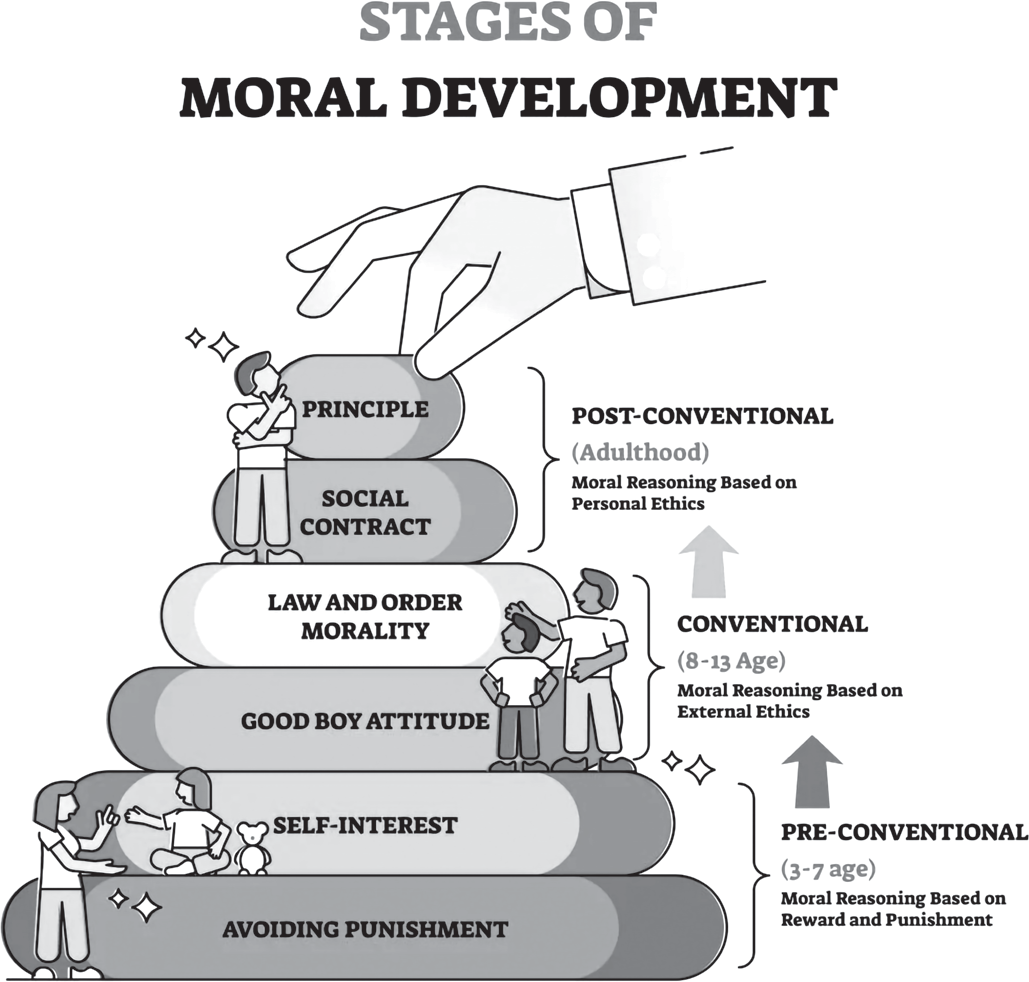
Figure: Stages of Moral Development
Conventional Level: Moral reasoning at this stage is shaped by societal norms and the expectations of others. Individuals believe that social rules define acceptable behavior, and maintaining relationships and social order is essential. As a result, what is deemed right or wrong is largely dictated by collective values.
Postconventional Level: At this highest stage, moral judgments are based on an individual's internalized understanding of universal ethical principles. The morality of any action is determined by how well it aligns with fundamental human rights, justice, and fairness, rather than simply adhering to societal norms or authority.
• Obedience and Punishment
• In the first stage, moral decisions are based on obedience and the consequences of actions, particularly punishment.
• For example, Finn determines right and wrong based on whether he will be punished. Although he wants to help his friend, he
refrains from doing so out of fear of being
punished by the teacher. His thought process revolves around the question: *How can I avoid punishment?*
• Self-Interest
• At this stage, self-interest becomes the primary motivator for moral choices.
• For instance, Mary decides to step in and assist Tom despite knowing she might face punishment. However, she also considers that she could find herself in a similar situation in the future and that Tom might return the favor. She evaluates the situation by asking: *What benefit do I get from this?
• Interpersonal Accord and Conformity
• In the third stage, moral reasoning is shaped by the need for social acceptance and conformity.
• For example, Betty witnesses the fight and considers intervening. However, noticing that everyone else is merely observing, she
chooses not to act. She wants to maintain her
reputation as a well-behaved individual who aligns with societal expectations. Her concern is: How do others perceive me?
• Authority and Maintaining Social Order
• At this stage, individuals prioritize authority, rules, and societal order.
• For instance, when the teacher notices students fighting, he immediately intervenes, firmly stating, "Fighting is not allowed in school!" He believes that adhering to rules is essential
to prevent disorder and ensure a functioning system. His primary thought is: How do I uphold law and order?
• Social Contract
• At stage five, we understand rules as a social contract as opposed to a strict order.
• Like Jessy, who watches from afar, is not sure how she feels about this. To her, rules make sense only if they serve the right purpose.
Obviously, the school rules prohibit fighting, but maybe Tom deserves to finally learnt his lesson. Just yesterday he punched a young girl from grade one. She asks herself: Does a rule truly serve all members of the community?
• Universal Ethical Principles
• At this final stage, moral reasoning is guided by fundamental ethical principles that transcend laws and societal norms.
• For instance, when those involved in the incident are brought before the headmaster, he first explains the school rules and their purpose. However, he also emphasizes that rules must be based on justice to hold true validity. He believes that a commitment to justice sometimes requires challenging unjust rules. Compassion is the core of his moral beliefs, and he encourages individuals to understand one another’s perspectives so that no one feels isolated in their emotions. His guiding question is: What are the fundamental ethical principles that shape my understanding of justice?
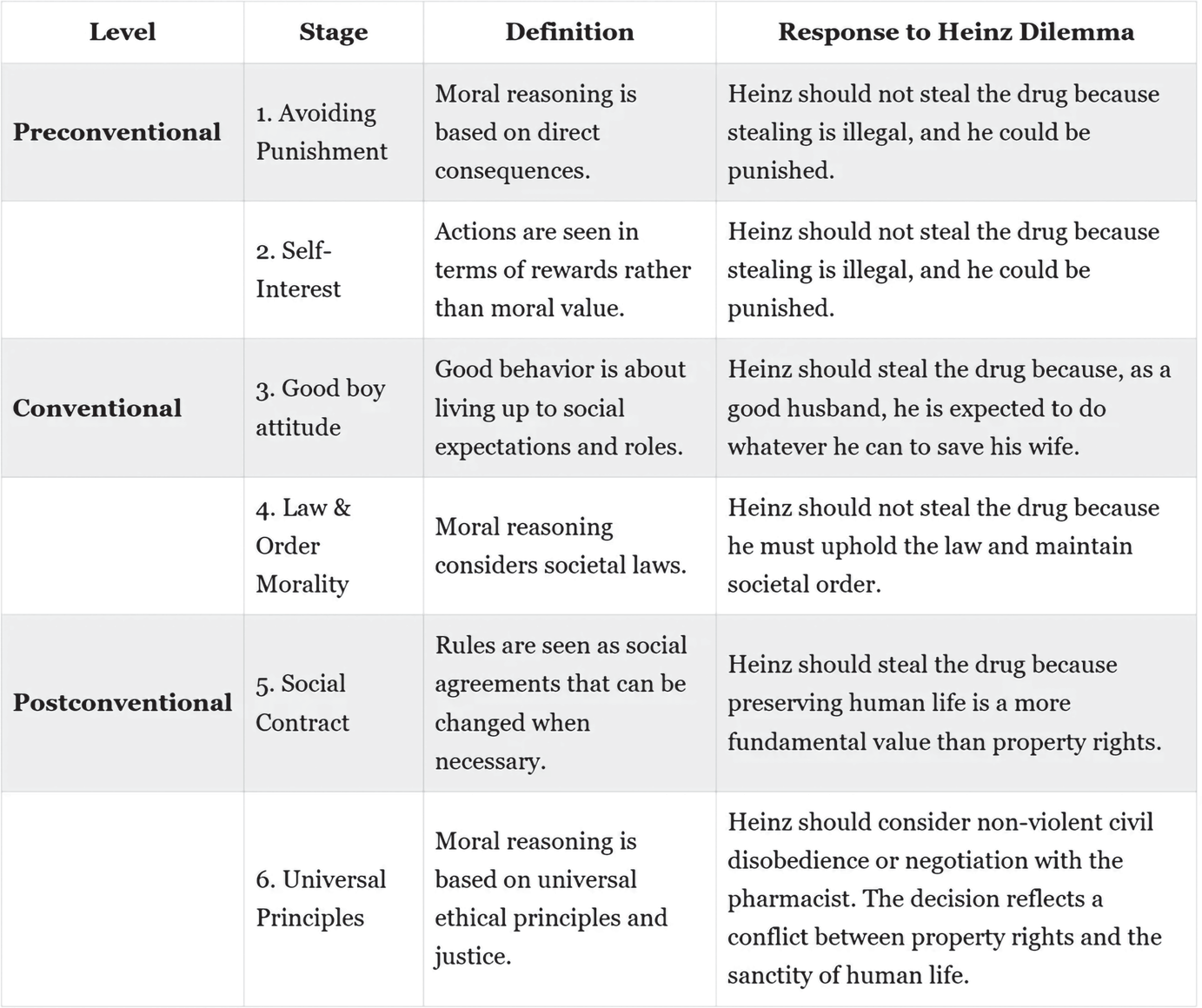
Role of Family in Inculcating Values
• Family is a group of persons united by the ties of marriage, blood, or adoption, constituting a single household and interacting with each other in their respective social positions, usually those of spouses, parents, children and siblings.
• Family acts as primary socializing agent to turn human beings into social beings.
• Mother is the first teacher and Home is the first informal school.
• For instance, if mother shouts at a dog, then child learns the same.
• Values imbibed from mother include fear, confidence, self-respect, self-awareness, curiosity, self-sacrifice, self-knowledge, self- realisation, etc.
• The elders at home teach the developing baby behaviour, dress codes, customs, and aspirations and so on.
• Significance of family in ethical development of an individual:
• Values formation is very high through family because of high emotional attachment.
• Love, compassion, companionship, trusting people, self-sacrifice, dignity of labour, charity, respect and values of sharing and caring develop
implicitly within a child.

Role of Family in Inculcating Values:
Induction: Induction is considered the single most powerful parental influence on children’s moral development.
It involves the use of explanations or reasoning with a child in order to convey parental standards. It also involves a request for the child to act accordingly and emphasizes consequences for the child’s behaviour.
Nurturing and Support: Another element of value development at home is the parenting style adopted at
home. The parenting style or Child Rearing Practices (CRP) could be of three types: autocratic, authoritative and permissive.
For instance, if child raised in an authoritarian manner, then child will value authority.
• In authoritative families, there is mutually positive basis for interaction. It promotes the development of conscience and moral reasoning in children, which is important for value development.
For example, altruism meaning ‘giving to another at cost to oneself’, is a value which is generally developed in the children whose parents are nurturing and supportive and exhibit altruism.
• Modelling: The social learning theory suggests modelling is basically imitation where learning of the socio-emotional and cognitive behaviours occurs by observing and imitating parents.
• For example, the children of parents who resolve disagreements through aggression or by disrespecting others also tend to adopt the same values.
• Decision-making: As children grow, older parents should provide them opportunities to exchange viewpoints and attitudes on various moral and social issues. They should also allow children to participate in family decision making.
• Reading Habits: Children can learn a great deal about the social world through reading books, listening to radio and watching television or films.
Role of Society in Inculcating Values
• A society is an aggregation of all the human relations based on some common characteristics, tradition, norms and values. The child is initiated into learning in the society to which he/she is a member with all facilities at disposal.
• Ethics of every profession will be near to general morality which is propagated from generation to generation.
• Success of any government depends on effective collaboration of its citizens i.e. civic consciousness. This is possible only through education and mass media. They inculcate it along with patriotism and discipline.
• How society imparts value:
• Culture and Religion: Religion and culture are deeply intertwined, with their principles playing a crucial role in shaping values through societal influences.
• For instance, the Indian ideals of tolerance and
mutual acceptance are largely derived from Hindu scriptures.
• Traditions and customs: They serve as enduring social practices passed down across generations, ensuring the continuity of values. These traditions are often rooted in principles like loyalty and courage.
• Economy: The economic structure of a society also impacts the values of its members.
• For Instance, a socialist economy fosters the value of equity, while a market- driven economy encourages creativity and competition.
• Politics: Politics reflects societal values, as it is shaped by public aspirations. Political movements and promises influence the beliefs of people, particularly the youth.
• For example, the student-led Anti-Emergency movement of 1975 instilled values of liberty, democracy, and constitutionalism.
• Civil society: It plays a key role in shaping values by mobilizing people around common causes through media, demonstrations, and advocacy.
• A notable example is the Mazdoor Kisan Shakti Sangathan movement, which led to the enactment of the Right to Information (RTI) Act in 2005, reinforcing the values of transparency and accountability in governance.
• Leadership: Leaders in social, political, and religious spheres significantly impact people’s values. Through persuasion and influence, they shape public attitudes. People often emulate their leaders, a concept Max Weber describes as "charismatic authority."
• Celebrities, for instance, influence values related to fashion, lifestyle, and behavior.
Role of Educational Institutions in Value Inculcation
• Education is a structured approach to learning, aimed at preparing individuals for a life that is considered meaningful and beneficial to society.
• The process inherently involves the transmission of values. True education nurtures human personality in multiple dimensions, including
intellectual, physical, emotional, social, ethical, and moral aspects.
• According to the National Education Policy, education is regarded as the most powerful tool for instilling values in children. Its objective is to nurture and preserve universal values in young minds.
• The Kothari Commission aptly stated that "the destiny of a nation is being shaped in its classrooms," emphasizing that what students learn in school should be reflected in their behavior within society.
Role of Schools
• Schools play a crucial role in the early years of systematic learning by providing children with maximum opportunities and exposure.
• It is in school that a child first interacts with members of the community beyond their family, including peers, teachers, and staff. This exposure helps in learning social behavior and self-regulation.
• Schools also instill etiquette and values.
• For example, in Japan, the education system emphasizes teaching children basic manners and values during their initial years, including fundamental life skills like cleaning their own toilets.
• As students progress to higher classes and colleges, they engage with complex ideologies such as Marxism, Socialism, and Capitalism. This exposure fosters critical thinking, objectivity, and the ability to challenge authority.
Role of Teachers
• A teacher is not only an educator but also a mentor, guide, and facilitator, shaping students' approach to life. They create an environment that stimulates intellectual growth and encourages independent thinking.
• Teachers play a crucial role in imparting values such as honesty, morality, truth, and nonviolence.
• They also serve as role models—students often adopt their teacher’s principles.
• For instance, if a teacher strongly opposes caste- based discrimination, students are likely to develop similar beliefs.
• Similarly, Gopal Krishna Gokhale, as a political mentor, significantly influenced Mahatma Gandhi’s ideology and vision for India.
Syllabus and Textbooks
• Every subject in the curriculum can contribute to character building and value development.
• For example, social sciences help inculcate values like secularism, socialism, hard work, and democracy.
• By studying French revolution, we learnt the values of Liberty, Equality and Fraternity.
ROLE OF MEDIA IN DEVELOPING ETHICS
• The media plays a crucial role in shaping societal perceptions of success and value, as well as defining what is considered marginal, undesirable, or deviant.
• It not only mirrors societal values but also plays a significant part in shaping them.
• The media has a profound influence on ethics, impacting aspects such as social development, tolerance, and cultural acceptance.
• Children, in particular, are highly susceptible to media influence, often treating it as an informal "parallel school."
• For example, if a news anchor aggressively confronts political leaders, it promotes a culture of disrespect toward authority.
• Likewise, caste and religious biases depicted in television content can foster intolerance and discrimination.
• Ethics guide media professionals in various ways, including:
• The responsible collection and dissemination of information.
• Ensuring the authenticity and accuracy of news.
• Using language that is socially appropriate while being mindful of its societal impact, especially in the digital era, where media wields significant influence.
• Upholding ethical standards in journalism, which include avoiding discrimination, preventing the incitement of hatred based on nationality or religion, and refraining from prejudging an accused individual before a legal verdict is reached.
• Respecting individuals' right to privacy, as violating this can put lives at risk.
• Media ethics emphasize social responsibility and prioritize public interest.
• To regulate media practices, a Code of Conduct is established, ensuring responsible and ethical journalism.
• Responsibility: The right of a newspaper to attract and hold readers is restricted by nothing but considerations of public welfare. A journalist who uses his power for any selfish or otherwise unworthy motive is not trustworthy. We shall elaborate on this elsewhere.
• Freedom of the Press: Freedom of the press is guarded as a vital right of media. It is the unquestionable right to discuss whatever is not explicitly forbidden by law including the wisdom of any restrictive statute.
• Independence: Freedom from all obligations except that of fidelity to the public interest is vital.
• Sincerity, Truthfulness, Accuracy: These enable media have a good rapport with the reader.
• Impartiality: news reports and expression of opinion are expected to be free from bias of any kind.
• Fairplay: question of private rights and public interest distinguished from public curiosity, is discussed in fairplay of the media.
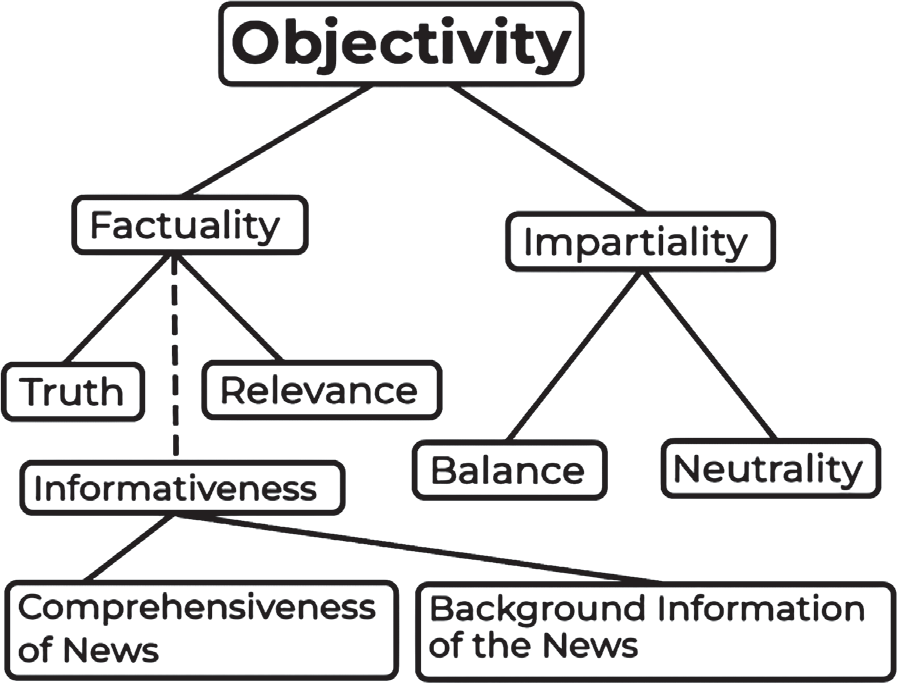
• Print media has faced significant criticism over time, particularly regarding its ethical standards. Three primary concerns are often raised about modern newspapers:
• Although the press presents itself as an impartial source of news, in reality, it operates as a collection of business entities driven by the financial interests of owners and shareholders.
• This commercial orientation subjects print media to financial constraints, often placing control in the hands of a select few.
• As a result, newspapers tend to cater to the social, political and economic interests of these controlling groups rather than prioritizing unbiased reporting.
• It is argued that newspapers face significant pressure from major advertisers. To maintain their financial support, print media may sometimes distort or bias news coverage to align with advertisers' interests.
• Many newspapers openly exhibit political bias. When economic matters are at stake, most publications, with a few exceptions, tend to favor the interests of dominant groups rather than maintaining neutrality.
Electronic broadcasting, encompassing radio and television, is a relatively modern development that has rapidly expanded in influence. Given its substantial reach, it is governed by ethical regulations that emphasize its responsibility to serve the common good.
• Ethical journalism demands that news reporting remain factual and objective.
• Programs covering controversial public issues must present fair and balanced perspectives, avoiding bias or favoritism.
• Content aimed at children should prioritize education over mere entertainment. Such programming should reinforce core human values, including respect for parents, law and order, morality, fairness and ethical conduct.
• Ethical guidelines prohibit content that attacks religious beliefs, promotes profanity, obscenity, or vulgarity, or incites extreme emotional responses among audiences.
• The advertising of hard liquor, fortune-telling, and occult practices is discouraged.
• In portrayals of crime, violence, and sexuality, broadcasters must follow ethical considerations. Radio guidelines stress that crime should not be depicted in an appealing or imitative manner. Similarly, television codes emphasize respect for the sanctity of marriage and discourage presenting illicit relationships as admirable.
• The ethical code also addresses children's programming, highlighting the need to provide young audiences with a well-rounded understanding of the world. It encourages the broadcasting of high- quality informational, educational, cultural, and entertainment content to complement the influence of schools and educational institutions.
• Research on children's programming suggests that some parents express concerns about excessive violence and the insufficient presence of educational and religious content.
• The broadcasting system was to be a kind of community mouthpiece for keeping the people informed, stimulating discussion and presenting music, drama and athletics for the entertainment of the public.
• The ethical standards of the radio and television industries appear to be the generally accepted standards of society. The industry tries to follow the law of the land.
• Concept of Public Interest is in the heart of media ethics and highlights the crucial role of communications sector in shaping the formation of public opinion and civil society movements.
• Steps to be taken for a Responsible Media:
• From the Commission on the Freedom of the Press or the Hutchins Commission the following five guidelines are briefly given for a Free and Responsible Press:
• A truthful, comprehensive and intelligent account of the day’s events in a
• context which gives them meaning;
• A forum for the exchange of comment and criticism;
• The projection of a representative picture of the constituent groups in the society;
• The presentation and clarification of the goals and values of the society;
• Full access to the day’s intelligence
• The mass media has an obligation to the society to show right things, right thought, right guidelines, and right behaviour.
• For instance, in smoking advertisements, it is wrongly projected that freshness comes after having that smoke. When such ideology is inflicted on the minds of people, they are made to believe. Avoiding such advertisement would enable us to take care of people in any society.
• Where ever the suppression of fact is necessary, the mass media has a duty to do it immediately.
• For instance, reporting of sensitive communal riots and tensions might be suppressed if it would accelerate further riots and tensions in other parts of the world.
• Similarly, it is essential to suppress news which exaggerates personal misbehaviour of particular individual, for which one is duly punished.
• For example, reporting the individual’s wrong doing as belonging to a particular community, state, religion, or country, is unwarranted.
• The principle of equality before the law ensures that wrongdoers are punished without bias or favoritism.
• In certain situations, the mass media may need to amplify facts for the greater good. Such exaggerations can serve as warnings, helping people take precautions and safeguard themselves.
•
For instance, if a report states that 1,000 people have died in road accidents due to not wearing helmets, the number might be overstated to raise public awareness and encourage safety measures.
• A delicate balance must be maintained between an individual's right to privacy and the public's right to information, which is a fundamental aspect of press freedom.
• The right to know is a guiding principle in journalism.
• Journalists firmly believe that secrecy among officials can lead to injustices and corruption.
• However, privacy is a fundamental human right essential to personal liberty and dignity.
• The media often justifies invading privacy by arguing that it serves the public interest, as seen in investigative journalism.
• Privacy concerns go beyond just data protection or confidentiality; they also include broader issues related to personal freedom and security in an increasingly monitored society.
• Conclusion
• The field of communication plays a crucial role in shaping the direction of societal development (Melisande, 2009). The public must be educated to critically analyze and evaluate the information they consume. Respect for individual privacy, including that of public figures, must be upheld with integrity. Privacy should never be violated under the guise of public curiosity, as this could be used as a justification for media overreach.
• Media ethics serve to regulate events, life, and their representation. The role of mass media remains indispensable in today’s world, contributing significantly to the development of a healthier society, nation, and global community.
How to Inculcate Ethical Values in Oneself or Be Ethically Competent?
• ETHICS paper is designed to evaluate the ‘ethical competence’, but not the ‘knowledge about ethics‘. Ethical competence is often described as an experience acquired through the combination of knowledge and practice.
• For example, Park and Peterson (2006) find that individuals who do not possess strength of
character might not “do what is correct” or “take correct action” in a given situation.
• Steps to be Taken to Develop one’s Ethical Competence:
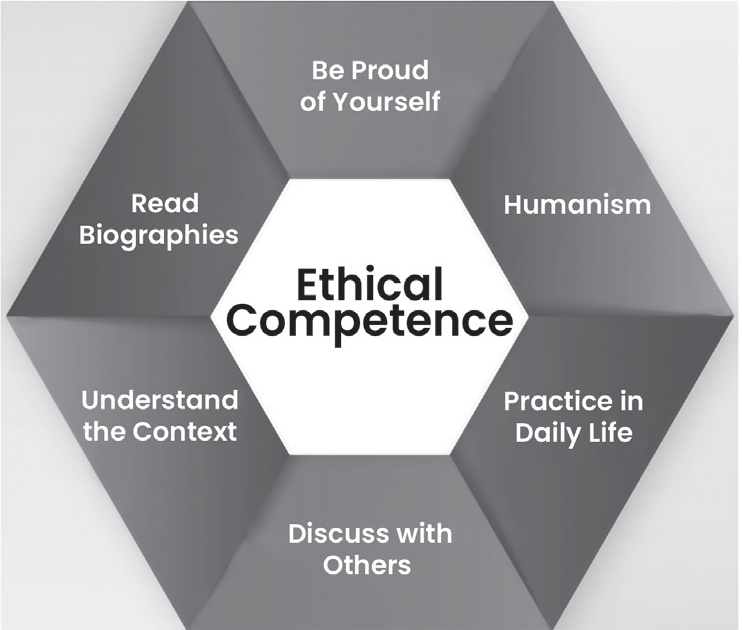
Figure: Developing Ethical Competence
• Being ethical requires practice: It is just like any other skill, needs to be practiced in daily life.
• For example - demonstrate honesty wherever you get chance. Like returning excess money to shopkeeper or avoid cheating in exam or helping a poor with food, etc.
• Discuss both Hypothetical and Real Ethical and Dilemmatic Situations (in the news) with your family members, relatives, colleagues, peers and on social media.
• Suppose an IAS officer is a part of an interview panel. While taking interviews, he/ she discovers that a candidate is a son of his friend. Then that IAS officer should disclose that fact. He should abstain from taking interview of that candidate.
• Strongly Believe in the Ideal of Righteousness: Always highlighting good examples with friends and family, create an ethical environment around you and try to act upon it as much as possible in daily life.
• Such as if someone advocates/supports doing corruption then try to counter with positive examples and ease and benefits of being honest. It will make you confident about promoting the right cause.
• Never Take Ethical Values Literally or in Extreme form: Always understand the context of the applicability of values and apply them pragmatically. It does not mean applying it at convenience. It simply means always see the right context of application of the ethical value.
• For instance, if your father is facing health problems, and you need to take him to a good hospital, however a big hospital has no beds and authorities are asking for bribe to admit him, then you ought to choose the next best
hospital instead of that corrupt hospital to get him the right treatment.
• Always have as many options as possible to maintain your ethical standards. Further, never be in the guilt of not being able to give bribe because giving bribe is easy but an unethical hospital always has a danger of poor treatment and unethical practices which may further endanger the life of the patient. Also never make the choice the question of your own ego satisfaction. Always think about the patient’s safety as first and foremost. So be ethical and choose the best possible ethical option
instead of the easiest one.
Read Biographies: Read about the lives of great social reformers, leaders, civil servants etc. and other venerable public figures to reinforce the values in your mind, understand them in-depth and know how they handled ethical dilemmas in their life situations.
• Sir M. Visvesvrayya, then Dewan of Mysore state, used Government vehicle while he went to tender his resignation. After tendering his resignation, he drove back by his private vehicle. He always maintained two sets of candles – one set bought out of government money and the other set bought from his money. (not misusing public resources for private gain)
• Kuvempu, Jnanapith awardee, a poet and Karnataka’s pride, was once Vice-Chancellor of Mysore University. His son, studying in the same
university, failed in English Paper and Professor asked Kuvempu as to what to do. Kuvempu saw the answer script and instructed the professor to award to even lesser marks. (avoiding conflict of interest)
• Dr. APJ Abdul Kalam, as the project head, displayed empathy toward his subordinates. One of his engineers had sought permission to leave early to take his children to an exhibition. However, deeply engrossed in work, the engineer forgot to leave on time. Noticing this, Kalam Sir took it upon himself to take the children to the exhibition.
• Satish Dhawan, the then chairman of ISRO, demonstrated remarkable leadership and team-building skills during the first launch of the SLV. When the mission failed, he took full responsibility for the setback. However, when the subsequent launch was successful, he attributed the achievement entirely to the team that had worked on the project.
• Sagayam, an IAS officer from Tamil Nadu, upheld the principles of integrity and transparency by publicly disclosing his and his family's assets on a government website.
• K. Jairaj, an IAS officer from the Karnataka cadre, was approached to approve the dismissal of a female typist accused of inappropriate behavior toward her colleagues. Instead of making a hasty decision, he investigated the matter further and discovered that she was a widow suffering from depression. A co- worker had exploited her by making false
promises of a new life, and she later became the target of verbal abuse from colleagues. This mistreatment had led to her outburst. Taking into account her difficult financial situation and her responsibility to educate her son, Jairaj reduced her salary by two increments instead of dismissing her. Eventually, her son secured a well-paying job at Infosys. This act demonstrated his compassion toward women, empathy for subordinates, and commitment to fostering a positive work culture.
• Always Be Proud of yourself for being ethical: And reward yourself for high ethical conduct.
• For instance, eat your favourite ice cream on the day you acted on an ethical value. This will secrete good hormones in your brain and activate positivity inside you.
• Develop Leadership, a Sense of Justice, Fairness and Oneness of Kind: with the people as a sensitive human being and a Good Samaritan, in the spirit of humanism and global citizenship, especially while dealing with weaker sections of society like elderly, ill, women, children, SC/ST, poor and marginalised, etc.
• Like, never withhold someone’s due share like salary of workers, pension of retired, food for hungry, care for elderly, respect to women and men, love and protection to children, etc.
• For instance, always have good friends and become a ‘friend in need’, care for the people around. This will create good social capital and ensure you have options in crisis times.