Protagoras
Protagoras
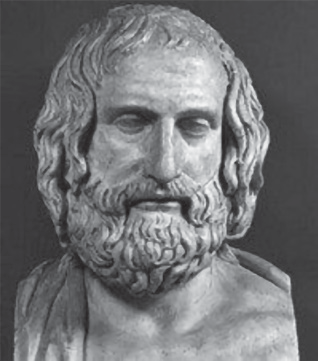
Protagoras was a prominent sophist, meaning "one who exercises reason, wisdom, or learning," and played a significant role in fifth-century intellectual debates by developing argumentative techniques.
Some of Protagoras' views raised important philosophical issues that were later explored in detail by Plato, Aristotle, and other philosophers.
His famous thesis, "man is the measure of all things," is often interpreted as an early argument in favor of relativism.
His views on the gods introduced the problem of agnosticism.
His conventionalist idea of justice marked a departure from traditional divine justice, and it has been argued that it provided a theoretical basis for democracy through direct participation.
Protagoras and other sophists believed in "might makes right" and were pragmatic, focusing on achieving desired outcomes by any means necessary. This approach aligns with the idea that morality is shaped by those with power, rather than by divine teachings or objective moral standards.
This view closely resembles teleological or consequentialist theories, where the end justifies the means.
They also espoused relativism, arguing that truth, knowledge, and morality are not absolute but exist within specific cultural, social, and historical contexts. According to sophists, knowledge is subjective, with no external or objective truth.
Protagoras positioned himself as an heir to the great poets and thinkers of the past, presenting himself as an educator capable of adapting their teachings to fit the needs of the new political world (the polis)
Socrates
Socrates
• Socrates is regarded as the father of Western philosophy and is credited with laying the foundation for moral philosophy as we understand it today. He disrupted the status quo by questioning accepted ideas and critically analyzing societal norms without relying on unquestioned tradition or religious doctrine.
• Socrates' views on knowledge and truth have had a lasting influence on how people approach learning. However, very little is known about his personal life, as he did not write any works. Our understanding of his teachings comes primarily from the writings of ancient authors, especially his student, Plato.
Socrates believed philosophy should bring practical benefits to society and aimed to create an ethical system based on human reason, not religious teachings. He emphasized that human choices are driven by the desire for happiness.
Socrates can be considered a virtue ethicist, believing that morally right actions are those that exemplify virtues. The greatest virtue, he argued, is knowledge. ¾ He believed the only life worth living is one that is thoroughly examined.
• Socrates argued that understanding virtue or "the good" is enough to make someone truly happy. He believed that if a person fully understood the value of life, they could never willingly choose harmful actions.
As he stated, “If you constantly examine who you are as a moral agent, in relation to others and your community, you are on the right path.” This highlights the importance of building personal and social values ethically
Socrates embodied his teachings by living an ethical life until his death. Though many admired his challenges to Greek wisdom and his witty approach, some felt he threatened their way of life. He was eventually accused of not recognizing the gods of the city and corrupting the youth with his ideas.
In Plato's Apology, Socrates stands firm during his trial, knowing the potential consequences. His unwavering stance exemplifies intellectual integrity and the courage to "speak truth to power". He was sentenced to death for his beliefs.
• Key quotes by Socrates:
¾ “True knowledge exists in knowing that you know nothing.”
¾ “It is not living that matters, but living rightly.”
¾ “I know that I am intelligent, because I know that I know nothing.”
¾ “There is only one good, knowledge, and one evil, ignorance.”
¾ “A system of morality based on relative emotional values is an illusion, a vulgar concept with no sound truth.”
“ANUNEXAMINED LIFE IS NOT WORTH LIVING.”
• "An unexamined life is not worth living" emphasizes the importance of self-reflection and introspection in life. Without it, life lacks meaning, and individuals may end up unhappy and unaware of how their actions affect themselves and others.
• Using our capacity for reason and critical thinking helps elevate our existence beyond mere survival instincts. Simply engaging in routine activities like eating, sleeping, working, and procreating does not set us apart from animals.
• The key to living a meaningful life is listening to our conscience and reason, ensuring our actions are purposeful and aligned with values, rather than living without thought.
• An examined life brings about meaningful actions such as love, generosity and joy, delivered at the right time and to those who deserve it. It promotes belief, learning, and self-improvement.
• People who live an unexamined life may appear content but are actually unaware of the deeper philosophical questions that should guide their existence. They may assume they already have all the answers without ever critically evaluating them.
• For example, a child raised in a religious family might follow their teachings without using their own reasoning to understand the meaning of life.
Without rational belief about the meaning of life, a person will never be truly satisfied. They will lack clear goals, and their life will feel meaningless.
• Just as a seed needs soil, sunlight, and water to grow, human life requires introspection and examination for growth and development.
• Mahatma Gandhi’s self-examination, reflected in his autobiography My Experiments with Truth, illustrates how questioning his own actions such as when he hit his wife helped him evolve morally.
• The essence of life lies in examining one’s choices and beliefs rationally to determine their validity.
• Avoiding self-examination leads to an unfulfilling and immoral life, as individuals are unaware of the impact of their actions on others.
• In civil service, self-reflection is essential for maintaining ethical standards and serving the public good. It helps public servants stay grounded, empathetic, and focused on their responsibilities.
• Self-examination enables individuals to recognize their strengths, weaknesses, values and beliefs, allowing them to make informed decisions and live purposefully.
• In the Mahabharata, Arjuna’s questioning of the war and his purpose in life illustrates the importance of self-reflection in moments of crisis.
• Simple questions, like whether a superstition holds any truth, or more significant inquiries, such as questioning one’s role in addressing social issues like communal polarization, require introspection.
• Examining life does not mean taking extreme positions but rather becoming aware of one’s biases and being more sensitive to societal responsibilities. It involves questioning harmful norms and habits, instead of blindly accepting or ignoring them.
• In today’s world, filled with conflict, fake news, nationalism, and social media toxicity, this quote reminds us to follow a virtuous path through self- reflection.
• Overall, this quote serves as a reminder for individuals to engage in introspection, leading to a more meaningful and fulfilling life.
Plato
Plato
• Plato, a prominent philosopher who lived from 427 to 347 BC, was a student of Socrates and the founder of the first known university, the Academy. He made significant contributions to political theory, particularly in his work The Republic, and is also known for his Theory of Forms.
Plato believed that the good life is one based on virtue, with human nature being inherently social.
• According to Plato's Theory of Morality, there are four key virtues that constitute a morally good life: Wisdom, Courage, Temperance, and Justice.
These virtues are referred to as the 'Cardinal Virtues' because they are fundamental to moral living and support the functioning of society.
• Wisdom: The Virtue of Reason, which involves mastering emotions and passions through knowledge, insight, and foresight.
Courage: The Virtue of the Spirited Element, which must align with reason. It can be physical (like a soldier’s bravery) or moral (like a thinker or reformer’s convictions).
Courage is the excellence of will, where the spirited element follows the guidance of intellect. • Temperance: Self-control or moderation, which involves regulating bodily desires and passions.
• Justice: The virtue of the whole self, achieved when the different parts of the personality function harmoniously. Justice arises when the virtues of wisdom, courage and temperance are balanced and guided by reason.
Plato compares justice in the soul to health in the body, with morality being the harmony between rational and non-rational elements.
• Key Quotes by Plato:
¾ "Knowledge becomes evil if the aim is not virtuous."
¾ "We can easily forgive a child who is afraid of the dark; the real tragedy of life is when men are afraid of the light."
¾ "Good people do not need laws to act responsibly, while bad people will always find ways around them."
¾ "The price good men pay for indifference to public affairs is to be ruled by evil men."
¾ "The measure of a man is what he does with power."
“WE CAN EASILY FORGIVE A CHILD WHO IS AFRAID OF THE DARK; THE REAL TRAGEDY OF LIFE IS WHEN MEN ARE AFRAID OF THE LIGHT.”
• The quote highlights that misplaced emotions and ignorance hinder growth. Life is driven by emotions, which should be harnessed as strengths rather than weaknesses.
The statement contrasts two scenarios: one involving a child, representing innocence and lack of awareness, and the other a mature adult, representing the full understanding of consequences
• A child afraid of the dark irrationally avoids it, even when confronting it is necessary for growth. This fear is due to the child's cognitive limitations and inability to understand the importance of facing the darkness.
• We can excuse a child for this irrational fear, as they cannot yet grasp the need for experiencing challenges to grow.
• However, when adults avoid the truth (symbolized by the light), it becomes a serious issue. Adults, with their maturity, must acknowledge the importance of facing the truth for society to progress. If they fail to do so, societal growth is stifled.
• True happiness comes from understanding one's nature and embracing life's realities. Ignorant individuals live lives driven by unfulfilled desires, while those with awareness appreciate existence and live joyfully.
• In the context of governance, leaders in India often fear the "dark" (losing elections) and avoid facing the "light" (making necessary, progressive decisions for the country's development).
• Facing the light involves making decisions for long-term growth, even if it risks electoral loss.
• It's crucial for leaders and individuals to acknowledge the truth and work towards progress, rather than being afraid of facing difficult but necessary realities.
Aristotle
Aristotle
Aristotle, a renowned Greek philosopher, was a disciple of Plato and mentor to Alexander the Great. Within the development of political thought, he held a prominent place due to his profound philosophical contributions.
He believed that everything in nature aims toward a telos, or ultimate purpose. He often questioned the role and function of various elements in plants and animals. Defining humans as “rational animals,” Aristotle asserted that our life’s purpose is to fulfill our capacity for reason.
This teleological approach forms the foundation of his ethical philosophy, giving it a focused trajectory. According to him, the aim of moral education is to enable individuals to live in accordance with reason, overcoming base instincts or irrational impulses.
For Aristotle, happiness is not just pleasure but implies success and fulfillment of one’s potential.
According to Aristotle, our natural pursuit is toward happiness. However, the objective of his work Ethics is not merely to advocate for a joyful or successful life but to clarify what a truly fulfilling life entails. Many people associate happiness with pleasure or recognition, but this is due to a limited or flawed understanding of what constitutes a good life.
He emphasized that virtue cannot be instilled through theoretical teaching or logical argument alone. Therefore, his Ethics is not designed to morally reform people, but to analyze what is good, explain its intrinsic value, and explore how societies and institutions can promote and nurture such goodness.
On the concept of Justice, Aristotle presents it in two interconnected forms:
General justice, which refers to living virtuously in interactions with others—being fair, truthful, and respectful of others' rights.
Particular justice, which has two types: Distributive justice: Concerned with the fair allocation of resources within a society, maintaining a balance between giving too much or too little relative to one’s merit. Rectificatory justice: Focuses on correcting imbalances caused by unfair transactions, whether voluntary (like trade) or involuntary (like theft or harm). In such cases, a judge’s role is to restore fairness, ensuring that gains and losses are balanced, thereby reinstating equity.
Aristotle’s Doctrine of the Mean states that virtue lies between two extremes one of excess and the other of deficiency. This idea is central to his ethical philosophy.
For instance, courage is the balanced virtue between the extremes of recklessness (excess) and cowardice (deficiency).
However, Aristotle consistently warns that practical life doesn't follow rigid rules. Instead, ethical decisions must be made individually in context, guided by both cultivated virtue and practical wisdom.
To Aristotle, virtue is holistic, it cannot be selectively adopted. A person is not truly virtuous unless they embody all the key virtues. One cannot choose to be generous and self-controlled but neglect courage or honesty.
He also viewed happiness as a social and communal experience rather than a solitary or private one. Aristotle believed that interpersonal relationships and civic engagement are essential to achieving true happiness. Hence, a life of isolation such as that of a hermit, cannot be considered fully happy. • Among all human capacities, Aristotle held that contemplation is the most elevated.
He regarded wisdom the fusion of scientific knowledge and intuitive understanding of fundamental truths as the greatest intellectual virtue.
Because contemplation is the activity of wisdom, Aristotle considered it the highest form of human expression and fulfillment.
• Important quotes by Aristotle
Key Quotes by Aristotle:
“It is the mark of an educated mind to be able to entertain a thought without accepting it.” This highlights the importance of critical thinking and intellectual openness.
“Happiness depends upon ourselves. Happiness is the meaning and the purpose of life, the whole aim and end of human existence.” Aristotle suggests that happiness is within our control and is the ultimate purpose of human life.
“He who has overcome his fears will truly be free.” Overcoming fear is a key part of achieving true freedom and living virtuously.
“The roots of education are bitter, but the fruit is sweet.” Acknowledging the challenges in education and the rewards of wisdom and virtue.
“At his best, man is the noblest of all animals; separated from law and justice he is the worst.” Without law and justice, humans lose their nobility and fall into corruption.
“The worst form of inequality is to try to make unequal things equal.” Equality must be based on fairness, not uniformity.
“I COUNT HIM BRAVER WHO OVERCOMES HIS DESIRES THAN HIM WHO CONQUERS HIS ENEMIES; FOR THE HARDEST VICTORY IS OVER SELF.”
• This is talking about the eternal internal struggle of humanity. We seem to have a gap between what we should do and what we actually do.
• People who smoke or overeat are two obvious examples.
• Overcoming one’s desires is a very difficult thing
for most of us to do.
• Conquering an enemy, or defeating any external obstacle, that is easy when compared to conquering that which lies within ourselves. With everything focused on the outside, you can ignore the internal conflict. When facing yourself, you must bring a level of honesty and integrity that is very admirable, and more than a little difficult.
• Self-discipline begins with self-knowledge. Self-knowledge is necessary to understand your motivations and desires. So, to overcome your desires, you must start with self-knowledge, then you can move to self-discipline, then, with practice, comes the victory over your desires.
Self-Control: In the present context, where we are surrounded by instant gratification and distractions, it is crucial to cultivate self-control and discipline in our lives.
Overcoming One’s Inner Demons: In the present context, where mental health issues are on the rise, it is important to acknowledge and address our inner struggles against demons such as greed, envy, and lust and work towards overcoming them.
Virtue of Bravery: In the present context, where conformity and following the crowd are often valued over individuality, it is important to recognize and appreciate the courage it takes to stand up to one’s own desires and impulses.
• Where can I apply this in my life?
Write down all your faults and choose two or three faults
Look at the choices if you could overcome that portion of your life. How much of an improvement would it be?
Divide the probable solution into steps?
Ask why you aren’t behaving as required.
“Why?” again. Keep digging. ¾ Once you have a clue as to why you do what you do, you have achieved a new level of self knowledge. It’s time for some self-discipline.
Only a person of high morality and character can resist the temptations of crude desires. • The present society faces an acute form of this problem. Even highly qualified people fail to resist the temptations of material gains and pleasures. This becomes a sign of their moral weakness. • So, the solution lies in self-discipline. As Buddha said that desires and resultant suffering can be controlled through middle path.
Self-discipline begins with self-knowledge. Self-knowledge is necessary to understand your motivations and your desires.
So, to overcome your desires, you must start with self-knowledge, then you can move to self discipline, then, with practice, comes the victory over your desires. Therefore, overcoming desires should be the final aim of an individual to achieve greatness in life
Epicureanism
Epicureanism
Epicureanism derives its name from its founder Epicurus although the school of Epicurus survived for six centuries his followers made no significant changes in his doctrines.
Epicureanism teaches that the greatest good is to seek modest pleasures in order to attain a state of tranquility, freedom from fear (“ataraxia”), and
absence from bodily pain (“aponia”).
According to this school of thought, all people live in a constant state of irrational fear, anxiety & superstition and these factors keep humans in a state of pain.
The biggest causes of these factors are the fear of death, the fear of being trapped in some really terrible afterlife for all of eternity and a fear of the gods.
Epicurus directed that the state of tranquility could be obtained through knowledge of the workings of the world and the limiting of desires.
Epicurus was one of the first to develop a notion of justice as a kind of social contract, an agreement “neither to harm nor be harmed”.
In more modern times, the French philosopher and priest Pierre Gassendi (1592-1655) referred to himself as an Epicurean (and attempted to revive the doctrine), as did Thomas Jefferson (1743 - 1826) and the Utilitarian Jeremy Bentham (1748-1832
Sri Krishna
Sri Krishna (Teachings of Bhagwat Geeta)
• The Bhagavad-Gita, which embodies the teachings of Lord Krishna, is revered worldwide and has been translated into multiple languages.
• Key Teachings of the Bhagavad-Gita:
• The Atman (soul) is eternal and indestructible—it cannot be pierced by weapons nor burned by fire.
• Death pertains only to the body, not the Atman, which transitions into another body upon physical demise.
• God incarnates Himself to protect the virtuous and punish the wicked.
• One should remain equanimous in both joy and sorrow, profit and loss, and victory and defeat.
• Doctrine of Karma tells that a person’s present circumstances are shaped by their past karma.
However, this does not mean one is powerless against fate, as the future can be altered through wisdom and righteous actions.
• Many thinkers have emphasized that while past karma influences one’s current state, proactive and ethical efforts in the present can lead to transformation.
• Paths to Moksha (Liberation):
• Jnana (Knowledge): Attaining the highest wisdom.
• Bhakti (Devotion): Surrendering to God with love and faith.
• Karma (Action): Performing one’s duties selflessly, without attachment to outcomes.
• The Bhagavad-Gita is among the earliest texts to stress that duty should not only be performed but executed with detachment.
• The principle of world welfare serves as a guide for administrators facing moral dilemmas, ensuring they uphold righteousness in a changing world.
• The Gita's virtue-based ethics highlight essential qualities necessary for just governance, including:
• A calm and composed mind (anuvignamanās).
• Firm resolve (prajñā pratiṣṭhitā).
• Dispassion and impartiality (anapekṣas, udāsīnas).
• Commitment to one’s duty (svakramaniratas).
• Equanimity in pleasure and pain (samaduḥkhasusukhas).
• Equal treatment of friends and enemies (samaḥ atrāu ca mitre ca).
• Indifference to honor and disgrace (mānāpamānayos).
• Through the concept of dharma, the Gita lays down fundamental principles that shape cultural and ethical life.
• Karma Yoga and Jnana Yoga provide guidance for individuals in their quest for truth and eternal joy.
• The Bhagavad-Gita promotes a consciousness- centered and spiritually-driven approach to ethics, advocating for eternal values and moral integrity in administration.
• The ethical framework imparted by Krishna to Arjuna remains timeless and continues to serve as a guiding system for righteous conduct.
• Important teachings/concepts from Gita, that have a direct role in administration:
• Desired personal qualities to cultivate:
Lord Krishna in the Bhagavad-Gita describes the 26 qualities that define a true gentleman. These include being merciful, obedient, truthful, and just, as well as possessing saintly virtues such as magnanimity, mildness, cleanliness, simplicity, charity, and peacefulness. A gentleman is one who has fully surrendered to God, remains free from greed and possessiveness, and is steady and determined in his actions. He should be devoid of the six vices, maintain self-restraint in food habits, and embody qualities like sobriety, respectfulness, humility, seriousness,
compassion, friendliness, eloquence, expertise, and conciseness.
Krishna emphasizes that to nurture and uphold these virtues, one must overcome kama (lust or selfish desires). Here, lust does not solely refer to physical cravings but to any intense and uncontrolled desire, such as the lust for power or wealth. Krishna teaches that greed, dishonesty, and corruption stem from uncontrolled desires, and therefore, self-discipline and restraint over kama are essential in building a strong moral character.
• Performing Duties Without Fear or Favor
• The Bhagavad-Gita teaches that duty should be performed without attachment to personal emotions or material interests.
• When Arjuna hesitated to fight in battle upon seeing his own relatives, teachers, and friends on the opposing side, Krishna used the concept of the body and soul to justify duty over emotions. He explained that the soul is eternal while the body is temporary, and thus, Arjuna must fulfill his responsibility without concern for personal loss or suffering.
• This principle extends to administration as well—leaders and officials must carry out their responsibilities impartially, without being influenced by personal relationships or biases.
• The highest form of Swadharma (one’s righteous duty), as per the Gita, is a selfless commitment to duty for the well-being of society, free from personal attachments or self- interest.
• Become Rajarishi through Yoga:
• The Bhagavad Gita envisions an ideal administrator as a blend of a raja (king) and a rishi (sage), embodying both selflessness and wisdom. Such a leader must perform duties impartially, without being influenced by personal relationships like friendship or kinship. Additionally, they should possess the detachment of a sage, prioritizing duty over personal gain.When power and social responsibility are integrated with strong
•
Jainism
Jainism
For some individuals, it may arise naturally, while others develop it through learning and cultural influences. In the beginning, faith is based on reason, encouraging one to explore the fundamental teachings of the Tirthankaras. As one delves deeper into Jain philosophy, this faith strengthens, affirming confidence in the wisdom
• Jainism is an ancient Indian religion that advocates for liberation and ultimate bliss through a life of non-violence and renunciation. At its core, Jainism emphasizes compassion and concern for the well- being of all living beings, as well as the balance of the universe.
• Jains follow a strict vegetarian lifestyle and make conscious efforts to minimize their consumption of the world’s resources. They believe that all forms of life, including humans, animals, and plants, possess living souls of equal value, deserving of respect and kindness.
• Central to Jain beliefs is the concept of reincarnation, with the ultimate goal of achieving liberation (moksha). This liberation signifies freedom from the endless cycle of birth, death, and rebirth, allowing the soul to exist eternally in a state of pure bliss. To attain this state, one must purify the soul by eliminating all karma.
• Jainism is a path of self-discipline and self- reliance, as it does not recognize any gods or divine beings who can grant salvation.
• The religion is guided by three fundamental principles, known as the "Three Jewels": right belief, right knowledge, and right conduct.
• The highest ethical principle in Jainism is ahimsa (non-violence), which is one of the five great vows (mahavratas). The other four vows include non- attachment to material possessions, truthfulness, refraining from stealing, and practicing celibacy (with complete renunciation as the ideal).
• Mahavira is regarded as the spiritual teacher who shaped Jainism into its present form, and his teachings are preserved in sacred texts known as the Agamas.
• Jains are divided into two primary sects: the Digambara (meaning "sky-clad"), who practice extreme asceticism, and the Svetambara (meaning "white-clad"), who wear white garments.
• Unlike many other religions, Jainism does not have priests; instead, religious guidance comes from monks and nuns who live highly disciplined, ascetic lives.
• Threefold path of Liberation:
• Right Faith (Samyak Darshan) – Right faith serves as the foundation for discovering truth.
and guidance of these enlightened teachers.
• Right Knowledge (Samyak Jnyan) – Right knowledge refers to a true understanding of the principles of Jain philosophy and religion. It is attained through careful study of the teachings of the Tirthankaras, who are considered omniscient.
• It involves a clear comprehension of the real nature of Jiva (living beings) and Ajiva (non- living entities).
• It ensures freedom from doubt, false beliefs, and uncertainty.
• Right Conduct (Samyak Charitra) – Right conduct is the practical application of what one has learned (Right Knowledge) and accepted as truth (Right Faith). It plays a crucial role in self-discipline, as knowledge without action is meaningless, and action without knowledge lacks direction. By practicing ethical living, one can gradually eliminate karma and move towards the ultimate goal—realizing one's true nature and attaining spiritual liberation.
Jainism Quotes
"Non-violence is practiced through silence and self-discipline."
"A truly wise individual neither takes a life, encourages others to do so, nor approves of such actions."
"Reverence for all living beings embodies the principle of non-violence."
"The highest form of religion is non-violence."
"Human suffering stems from ignorance, and true happiness can be achieved through the pursuit of knowledge."
Buddhism
Buddhism
Buddhism is a spiritual tradition centered on personal growth and deep understanding of life's true nature. Followers of Buddhism strive to attain nirvana, drawing inspiration from Siddhartha Gautama, the Buddha, who embarked on a journey for enlightenment in the sixth century BCE.
The Buddha advised against the extremes of indulgence in worldly pleasures and severe asceticism.
Instead, he advocated the Madhyam Marg, or the Middle Path, as the ideal way to live.
• He emphasized that individuals are responsible for their own happiness, highlighting Buddhism’s focus on personal effort and self-realization.
• Core Teachings of Buddhism
• The Four Noble Truths (*Ariyasachchani*)**:
• Life is characterized by suffering (*dukkha*).
• Craving and attachment are the root causes of suffering.
• Suffering can end by eliminating craving.
• There exists a path that leads away from craving and suffering.
• The Eightfold Path (Astangika Marg): This path offers a way to overcome suffering through ethical conduct, mental discipline, and wisdom. It consists of:
• Right View
• Right Intention
• Right Speech
• Right Action
• Right Livelihood
• Right Effort
• Right Mindfulness
• Right Concentration
• Buddhism places great importance on the nature of dukkha (suffering) and its cessation. This suffering extends beyond physical pain to include the potential for distress and dissatisfaction.
• At its core, Buddhism seeks enlightenment by promoting a balanced way of life that neither indulges in excess nor embraces extreme renunciation. Unlike many religions, it does not revolve around the worship of a supreme god or deity.
• The ultimate goal of the Buddha’s teachings is the attainment of nirvana, a state of liberation from suffering, which is not a physical place but an experience that can be realized in one's lifetime.
• Buddha also laid down ethical guidelines for both monks and laypersons, known as the Five Precepts (Pancasila), which emphasize refraining from:
• Violence
• Theft
• Sexual misconduct
• False speech (lying or gossip)
• Consuming intoxicants (alcohol or drugs)
• Violence
• Stealing
• Sexual misconduct
•
Lying or gossip
• Taking intoxicating substances e.g. drugs or drink
• Buddhism quotes
• "Happiness is not a destination; it is the journey itself."
• "Your true purpose in life is to discover your calling and dedicate yourself wholeheartedly to it."
• "Compassion must extend to yourself; otherwise, it remains incomplete."
• "Clinging to anger is like holding a burning coal with the intent of harming another; in the end, you are the one who gets burned."
• "There are only two errors one can make on the path to truth: failing to begin and failing to see it through."
• "Anger does not lead to external punishment; rather, it punishes the one who harbors it."
Dalai Lama
Dalai Lama
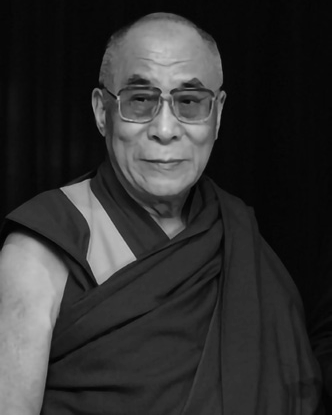
The 14th Dalai Lama, known as Gyalwa Rinpoche among Tibetans, is the highest spiritual authority and leader of Tibet. As the present Dalai Lama, he is regarded as a living Bodhisattva, specifically an incarnation of Avalokiteśvara in Sanskrit, or Chenrezig in Tibetan.
He was born on July 6, 1935, into a
farming family in a small village in Taktser, Amdo, in northeastern Tibet.
Tenzin Gyatso, the 14th Dalai Lama, won the Nobel Peace Prize in 1989 for his peaceful, moral fight to free Tibet and for his work advancing ecological preservation, human rights, and world peace.
He advocates for Secular Ethics, emphasizing moral values derived from human faculties such as logic, empathy, reason, and moral intuition, rather than relying on divine revelation or supernatural guidance. His approach is inclusive, recognizing the shared inner values of humanity and encouraging respect for all individuals, communities, cultures, and religions. Grounded in common sense, lived experiences, and scientific reasoning, his philosophy promotes compassion, human dignity, well-being, and fundamental human rights.
• Famous Quotes by Dalai Lama
• “Morality is not necessarily based on belief in God, Buddha or any faith. Looking at today’s reality,
I don’t believe that religion alone cannot foster values such as compassion and forgiveness for the entire global society.”
• “We can never obtain peace in the outer world until and unless we obtain peace within ourselves.” – Dalai Lama
“Judge your success by what you had to give up in order to get it” – Dalai Lama
Swami Vivekananda
Swami Vivekananda
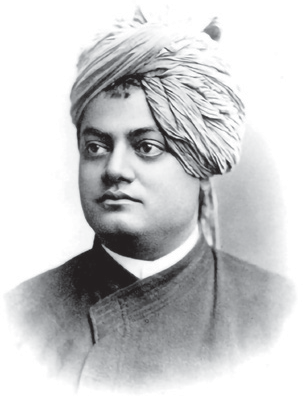
Swami Vivekananda, originally named Narendranath Datta, was born on January 12, 1863, into an aristocratic Bengali Kayastha family in Calcutta. He was an Indian Hindu monk, philosopher, author, and spiritual teacher, best known as the chief disciple of the Indian mystic Ramakrishna.
• Swami Vivekananda is regarded as one of the most
influential thinkers of the Indian Renaissance.
• According to him, ethics represents the cultural vitality of a society at any given period. As human civilization progresses, people develop evolving cultural and moral principles. However, there comes a point when cultural advancement stagnates due to a lack of fresh ideas.
• As a result, ethical values begin to lose their significance and become mere remnants of their past greatness, requiring renewal to regain their strength.
• When materialism is prioritized above all else and privileges become the primary pursuit, ethical degradation is inevitable. The solution, according to Vivekananda, lies in integrating spirituality into culture, which in turn fosters the development of a renewed moral and ethical framework for future generations.
• In words of Swami Vivekananda:
• “Ethics cannot be derived from the mere sanctions of any personage; however great and divine he may have been. …The infinite oneness of the Soul is the eternal sanction of all morality that you and I are not only brothers… but that you and I are really one. This is the dictate of Indian philosophy. This oneness is the rationale of all ethics and spirituality.”
• According to Swami Vivekananda, the social, economic, and political transformation of a nation is essential for the spiritual progress of its people. He emphasized that providing religious teachings to those suffering from hunger is both an insult and an affront
to their dignity. He strongly condemned social evils such as untouchability, caste-based discrimination, priestly dominance, and religious oppression.
• Vivekananda believed that a society filled with atheists who rely on reason is preferable to the one trapped in blind superstition. He argued that superstition stifles intellect, freezes the mind, and leads to societal decline. Instead of blindly believing in countless deities without question, he advocated for a rational approach to faith and spirituality.
• For him, freedom was a fundamental requirement for human development. However, he clarified that true freedom does not mean the mere removal of barriers to social domination or economic exploitation. He put forth progressive ideas and firmly rejected escapist philosophies such as mysticism and occultism, which he believed had weakened society. In his view, religion should be life-affirming and empowering, and anything that diminishes a person’s strength must be discarded as harmful.
• Vivekananda considered the empowerment of women and the upliftment of the masses as crucial to India's social revival. He observed that India's decline was largely due to the continued neglect of these groups. He asserted that no nation can achieve greatness without respecting and empowering its women. He also believed that the state, with society's support, should work towards the collective welfare of its people by promoting justice, honesty, and peace. Since the state is made up of individuals, the prosperity of a nation depends on the virtue of its citizens.
• His concept of nationalism was dynamic and intertwined with internationalism. He encouraged people to engage with individuals and nations beyond their borders, believing that such interactions contribute to mutual well-being, progress, and prosperity. His love for humanity was not limited by geography; rather, he championed global harmony and advocated for strong relationships among nations for collective advancement.
• Famous quotes by Swami Vivekananda
• “Always try to represent yourself as happy. Initially, it becomes your look, gradually it becomes your habit and finally it becomes your personality.”
• “Anything that makes you weak physically, intellectually and spiritually, reject it as poison.”
• “Desire, ignorance and inequality, this is the trinity of bondage.”
• “Truth can be stated in a thousand different ways, yet each one can be true.
• “The fire that warms us can also consume us; it is not the fault of the fire.”
Raja Ram Mohan Roy
Raja Ram Mohan Roy
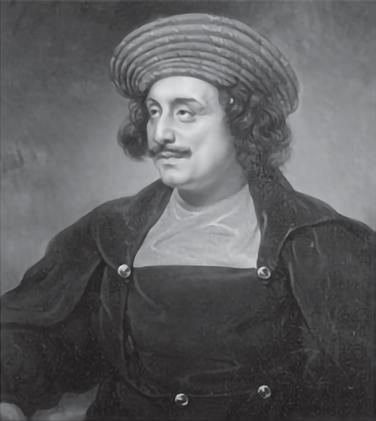
Raja Ram Mohan Roy was born on May 22, 1772, in Bengal. His early education encompassed Persian and Arabic studies in Patna, where he explored the Quran, the works of Sufi poets, and Arabic translations of Plato and Aristotle. Additionally, he
studied Sanskrit in Benaras, delving into the Vedas
and Upanishads.
Recognized as the pioneer of India's Modern Renaissance, Raja Ram Mohan Roy was an indefatigable social reformer who ushered in an era of enlightenment and progressive modernization in
the country.
• Influenced significantly by Western intellectual thought, he emphasized rationalism and a modern scientific outlook. His primary concern was the religious and social decline prevalent in Bengal at the time. He believed that rigid religious orthodoxies had become detrimental to society, causing confusion and distress rather than contributing to social progress and well-being.
• Ram Mohan Roy was a staunch advocate of social equality and firmly opposed the caste system. He was deeply drawn to the concept of monotheism in Islam and asserted that Vedanta also fundamentally upheld the idea of a singular divine entity.
• He strongly believed that the advancement of Hindu society was impossible without liberating women from oppressive practices such as illiteracy, child marriage, sati, and purdah. He condemned the practice of sati, describing it as a violation of basic human and social values and an indication of moral degradation in society.
• Famous quotes by Raja Ram Mohan Roy:
• “Truth and Virtue do not necessarily belong to wealth and Power and distinctions of big mansions”
• “To abuse and insult, is inconsistent with reason and justice”
• “I have now given up all worldly avocations, and am engaged in religious culture and in the investigation of truth”
B.r. Ambedkar
B.R. Ambedkar
Bhimrao Ramji Ambedkar, widely revered as Babasaheb, was a distinguished Indian jurist, political leader, philosopher,
historian, orator, economist, educator, editor, and prolific writer.
He played a pivotal role in the Dalit movement and was the chief architect of the Indian Constitution.
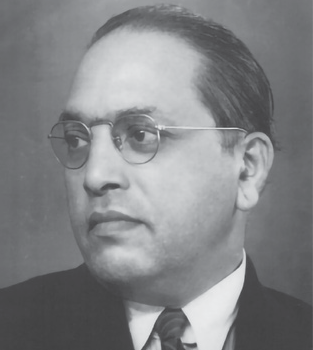
• Born on April 14, 1891, in Mhow, he belonged to the Mahar community, a socially marginalized caste. He was the youngest of fourteen children in his family. His father, Subedar Ramji Maloji Sakpal, served in the British Army.
• Despite facing severe social and financial challenges, Ambedkar became one of the first Dalits to receive higher education in India. His experiences with untouchability began at an early age when he was subjected to discrimination in school, such as being segregated from upper-caste students. Even access to drinking water was restricted, as he could only drink if a peon poured it from a distance.
• Ambedkar critiqued the Hindu social structure, asserting that the four-varna system perpetuated inequality and gave rise to the caste hierarchy and untouchability, both being manifestations of social disparity. He firmly believed that only a radical transformation could address the plight of marginalized communities.
• His vision of an ideal society was built on three fundamental principles: liberty, equality, and fraternity. He insisted that all three were indispensable, as the absence of even one would render the concept of an ideal society incomplete.
• Throughout his life, Ambedkar dedicated himself to challenging the caste system, which had oppressed a significant portion of the population for centuries. However, his efforts were not confined to caste struggles alone. He also advocated for the rights of workers, peasants, and women, striving to eliminate all forms of social and economic exploitation.
• His fight was not just for the upliftment of the oppressed classes but for the complete eradication of caste-based discrimination. While he strongly opposed the ideology that sustained caste-based oppression, he did not harbor animosity toward individuals based on their caste. His struggle was against systemic injustice, not specific communities or individuals.
• Famous quotes by B.R. Ambedkar:
• “If I find the constitution being misused, I shall be the first to burn it.”
• “Cultivation of mind should be the ultimate aim of human existence.”
• “Constitutional morality is not a natural sentiment. It has to be cultivated. We must realize that our people have yet to learn it. Democracy in India is only a top-dressing on an Indian soil which is essentially undemocratic.”
Rabindra Nath Tagore
Rabindra Nath Tagore
Rabindranath Tagore was born on May 7, 1861, in Calcutta, India. He was the son of Debendranath Tagore, a distinguished philosopher and religious reformer.
• Tagore was a multifaceted personality, poet, philosopher, educationist,
patriot, humanist, and internationalist, who became a voice for India's spiritual and cultural essence. While Swami Vivekananda introduced India's philosophy to the West, Tagore conveyed its emotions and poetic vision to the world. In an era dominated by materialism and skepticism, he articulated the moral and spiritual wisdom of the East. His poetry, characterized by a profound universality, earned him the title of a "world singer." In 1913, he became the first non-European to receive the Nobel Prize in Literature for Gitanjali, a collection of his poems. Tagore played a crucial role in presenting Indian culture to the global audience and is regarded as one of modern India's greatest creative minds.
• A true humanist, Tagore championed love, unity, and cooperation. As a poet, he transcended barriers of caste, creed, and nationality, focusing instead on the shared humanity of all people. His Gitanjali reflects the omnipresence of divine love and calls upon his fellow beings to immerse themselves in its boundless depths. To him, love was the path to realizing the divine, and all forms of sin and vice stemmed from a failure to acknowledge this sacred connection.
• Tagore believed that human beings are social, sensitive, and imaginative by nature, rather than merely political or mechanical entities. He saw politics as just one aspect of society, not its defining force. Keenly aware of India's social shortcomings, he argued that political agitation alone could not bring about true change. Instead, he urged Indians to first reform their own society before challenging foreign rulers. A nation that tolerated deep-rooted social injustices at home, he reasoned, could not rightfully oppose the arrogance of colonial rule. He prioritized societal reform over mere government criticism and advocated for constructive efforts driven by collective welfare and social altruism.
• Tagore was also a staunch advocate of human rights. In The Call of Truth, he asserted that rights are not to be begged for but must be claimed through self- empowerment. He emphasized the importance of strength both individual and collective in securing rights. He urged India's oppressed and destitute to cultivate moral courage and refuse to submit to imperial dominance.
His concept of freedom extended beyond political liberation to spiritual enlightenment. True freedom, according to Tagore, was the illumination of the soul through self-realization. While political independence was essential, he believed that both rulers and the ruled needed to uphold human dignity and self-worth to attain genuine spiritual liberation.
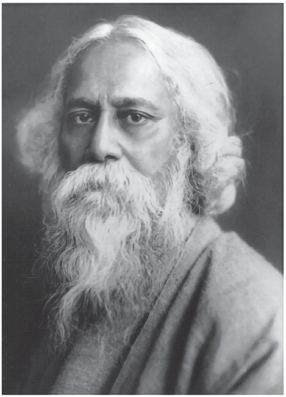
• Tagore advocated for a moral perspective in politics, emphasizing that true national strength could only be achieved through the sincere practice of justice, integrity, and freedom. He rejected the notion that politics was inherently immoral. A devoted patriot, he played a significant role in the agitation against the partition of Bengal, with his powerful words inspiring the masses. This earned him the title of a national poet.
• During the Civil Disobedience Movement in 1932, Tagore called for the recognition of India's fundamental rights and urged the immediate granting of independence. While he supported cooperation between India and Britain, he believed it should be founded on mutual trust and friendship. Although he valued political freedom, he was also a vocal critic of nationalism.
• Tagore had a profound love for India, yet his sensitive nature opposed violent or anarchic revolutionary methods. He firmly believed in the spiritual unity of humankind and refused to be confined by the rigid structures of nation-states. To him, excessive national pride stemmed from a limited worldview and a lack of spiritual awareness. Rather than being a champion of nationalism, he stood for the welfare of people beyond borders.
• Tagore envisioned Santiniketan as a bridge between India and the rest of the world, aspiring to create a global center dedicated to the study of humanity, transcending national and geographical boundaries. He established a school, which he named Visva- Bharati, laying its foundation stone on December 24, 1918. The institution was officially inaugurated exactly three years later.
• Famous quotes by Rabindranath Tagore:
• “You can’t cross the sea merely by standing and staring at the water.”
• “The butterfly counts not months but moments, and has time enough.”
• “A mind all logic is like a knife all blade. It makes the hand bleed that uses it.”
• “Don’t limit a child to your own learning, for he was born in another time.”
• “Love does not claim possession, but gives freedom.”
Swami Dayanand Saraswati
Swami Dayanand Saraswati
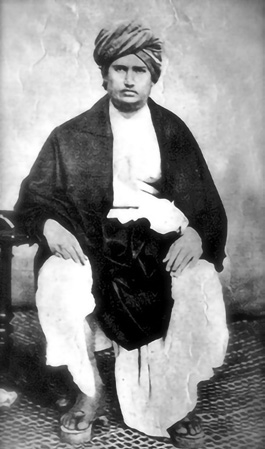
Swami Dayanand Saraswati was born on February 12, 1824, in Tankara, Gujarat, into a Brahmin family. His parents, Lalji Tiwari and Yashodhabai, were devout followers of traditional Brahminical beliefs. Initially named Mool Shankar Tiwari due to his birth under the Mool Nakshatra, he later renounced worldly life and spent
fifteen years (1845–1860) as an ascetic, searching for
ultimate truth. His philosophies and teachings were compiled in his renowned work, Satyarth Prakash (The Light of Truth).
A prominent Indian philosopher, social reformer, and the founder of the Arya Samaj, he played a vital role in revitalizing Vedic dharma. In 1876, he was the first to voice the call for Swaraj with the slogan "India for Indians," advocating for self-rule.
A self-educated individual and a significant figure in India's social transformation, Swami Dayanand earned recognition and respect among both royalty and the common people. He formally established the first Arya Samaj unit in Bombay in 1875, and later, its headquarters were set up in Lahore.
His vision for India encompassed the creation of a society free from class and caste distinctions, a united nation in terms of religion, society, and national identity, and an India liberated from foreign dominance. He aspired for Aryan religion to serve as a unifying spiritual foundation for all.
Swami Dayanand regarded the Vedas as the eternal and infallible source of wisdom, referring to them as "India’s Rock of Ages" and the true foundation of Hinduism. He popularized the slogan "Back to the Vedas," emphasizing the revival of ancient knowledge.
He advocated for the Vedic chaturvarna system, in which caste was determined by an individual's profession rather than birth. According to this system, a person was classified as a Brahmin, Kshatriya, Vaishya, or Shudra based on their occupation and not by lineage.
A strong proponent of educational reform, he introduced significant changes to the learning system in India. His vision laid the foundation for the establishment of DAV (Dayanand Anglo-Vedic) schools in 1886. The first DAV School was founded in Lahore, with Mahatma Hansraj serving as its headmaster, aiming to bring his educational ideals to life.
Sri Aurobindo Ghose
Sri Aurobindo Ghose
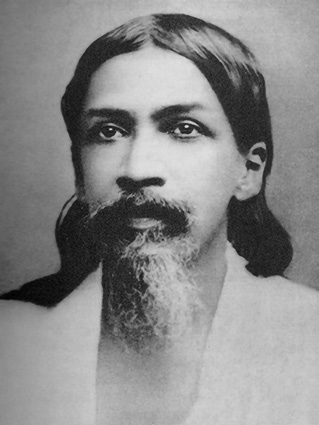
Sri Aurobindo, also known as Aurobindo Ghose, was an Indian philosopher, yogi, spiritual leader, poet, and nationalist. He also played a significant role as a journalist, editing newspapers such as Vande Mataram. Born in Calcutta on August 15, 1872, he emerged as one
of the most profound thinkers of the 20th century.
• However, Sri Aurobindo was much more than just a philosopher. His contributions extended across multiple fields—he was a political activist, mystic, poet, teacher, and spiritual guide. Having engaged deeply in various aspects of human life, he shared his insights in a way that was accessible and meaningful.
• His influence lay in his ability to blend the philosophies of the East with the dynamism of the West. He merged the Western emphasis on material, mental, and physical advancement with the Eastern focus on spiritual evolution and philosophical depth, offering a comprehensive vision of human growth and potential.
• It is natural for human beings to seek success, happiness, and fulfillment, often driven by the desire to experience pleasure and avoid suffering. These motivations shape ethical principles, leading to moral frameworks that prioritize these aspirations.
• However, Sri Aurobindo emphasized that ethics should not be dependent on achieving personal gratification or avoiding hardship. He argued that ethical behavior should be rooted in a higher principle rather than functioning as a transaction based on fear or self-interest. True ethics, according to him, is dharma, the rightful expression of one's higher nature. Righteous actions should be performed for their inherent value, not as a means to gain rewards or escape consequences. He asserted that morality driven by greed or fear lowers the human spirit, whereas genuine righteousness elevates it.
• Human law is structured to align with societal expectations, imposing penalties for harmful actions while rewarding those who conform to moral standards.
• Similarly, the popular understanding of the Law of Karma is that it functions as an absolute system of cause and effect, enforcing justice with unwavering precision. However, Sri Aurobindo pointed out that this perception mirrors human legal systems rather than the true essence of cosmic law. Many people view karma as a system of rewards and punishments, but this perspective is a reflection of human constructs rather than an ultimate spiritual truth
S. Radhakrishnan
S. Radhakrishnan
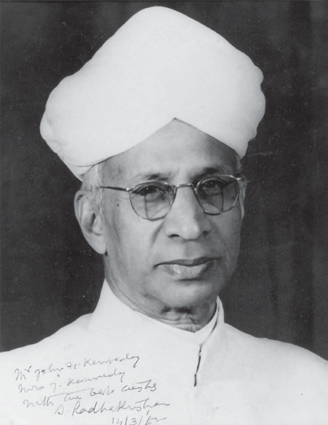
Dr. Sarvepalli Radhakrishnan was an eminent Indian philosopher, distinguished teacher, prolific writer, and statesman who served as India's second President from 1962 to 1967. Born in Andhra Pradesh on September 5, 1888, he also held a professorship at
Oxford University. His writings primarily aimed at promoting Indian culture, and he ardently defended Hinduism, as evident in his renowned works, The Philosophy of the Upanishads and East and West: Some Reflections. Dr. Radhakrishnan was regarded as a vital link between India and the Western world, leading the Indian delegation to the United Nations Educational, Scientific, and Cultural Organization (UNESCO). Throughout his life, he dedicated himself to articulating, safeguarding, and disseminating his philosophical and spiritual beliefs.
A firm advocate of idealistic values, Dr. Radhakrishnan emphasized a broad and holistic approach to education. He proposed the inclusion of diverse disciplines such as yoga, ethics, political science, agriculture, literature, philosophy, general science, mathematics, geography, poetry, and painting. His most significant impact on educational reform was
through his contributions to the University Education Commission Report (1948–49).
According to Dr. Radhakrishnan, the primary aims of education should be:
Recognizing that life has a meaningful purpose
Cultivating wisdom to awaken inherent potential
Preparing individuals for participation in democratic processes
Acquiring the skills for self-improvement
Developing an awareness and appreciation of one’s cultural heritage
Important Thinkers and Philosophers
ST. Augustine
Augustine of Hippo, also recognized as Saint Augustine, was a theologian and philosopher of Berber descent who served as the bishop of Hippo Regius in Numidia, Roman North Africa.
• To address a fundamental question in Christian theology—
how a perfect God permits the existence of evil—he introduced the concept of free will.
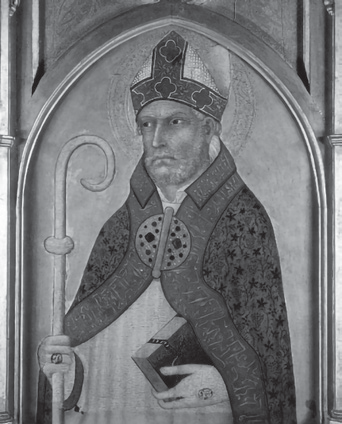
• He asserted that God created humans as rational beings capable of discerning right from wrong. God granted them complete freedom to make choices and take actions. Therefore, when a person commits a wrongful act, the responsibility falls on the individual rather than on God.
• Saint Augustine described evil as a lack or deficiency of goodness rather than an independent entity in itself.
Thomas Aquinas
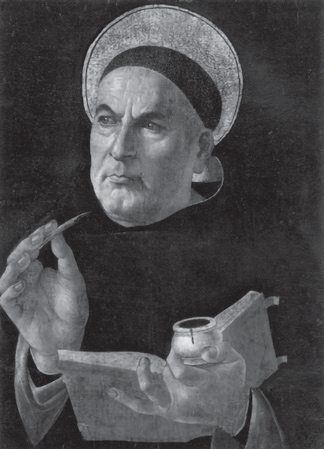
• Thomas Aquinas OP was an Italian Dominican friar, priest, philosopher, theologian, and jurist, deeply rooted in the scholastic tradition. Hailing from the County of Aquino in the Kingdom of Sicily, he was a leading advocate of natural theology and the founder
of the philosophical school known as Thomism.
• Aquinas was a virtue ethicist and drew inspiration from the philosophical teachings of Plato and Aristotle. While he acknowledged the four cardinal virtues, he expanded upon them by adding three
more: Faith, Hope, and Charity. These three, combined
with Plato’s four virtues, formed the seven Christian virtues:
• Prudence
• Temperance
• Courage
• Justice
• Hope
• Faith
• Charity
• Additionally, Aquinas contributed significantly to the development of the Just War Theory, an ethical framework used to assess the moral justification for engaging in war. Originally formulated by theologians like Augustine of Hippo and Thomas Aquinas, this theory has evolved over time while maintaining core principles. It includes the following principles:
• War should be last resort.
• War should be a defence against aggression or an attempt to stop atrocity.
• The expected good must outweigh the cost of killing and destruction.
Machiavelli
• Niccolò di Bernardo dei Machiavelli was an Italian diplomat, writer, philosopher, and historian who lived during the Renaissance. He is widely recognized for his political treatise The Prince, which he wrote around 1513, though it remained
unpublished until 1532, five years after his death.
• Machiavelli believed that the ultimate objective of political and social life is to acquire and maintain power.
• According to him, moral principles serve as practical guidelines for securing and sustaining authority. He suggested that breaking agreements is justified whenever it proves advantageous since, by nature, people are deceitful and would not hesitate to violate agreements themselves. Therefore, one should honor commitments only when they contribute to gaining or retaining control over others.
• As the first prominent thinker to assess actions purely based on their outcomes, Machiavelli argued that an action is deemed good not because it aligns with divine commands or moral virtue, but because it successfully leads to the acquisition and preservation of power.
• In The Prince, his most famous work, written in 1513, he introduced the concept of Realpolitik, which emphasizes political and diplomatic decisions driven by practical circumstances and realities rather than strict ideological beliefs or moral considerations. This approach is rooted in a teleological perspective, where the ends justify the means.

• Important quotes by Machiavelli
• “Hatred is gained as much by good work as much by evil.”
• “Politics has no relation with morals.”
• “Everyone sees what you appear to be, few experience what you really are.”
• “Make no small plans for they have no power to stir the soul.”
• “The wise man does at once what the fool does finally.”
Thomas Hobbes
• Thomas Hobbes was an English philosopher, best known for his influential work Leviathan, published in 1651, in which he presented a significant formulation of Social Contract Theory.
•
Hobbes' social contract theory is rooted in the concept of egoism. In Leviathan, he asserted that human beings possess an unceasing and insatiable desire for power that ceases only with death. He believed that this drive could only be restrained by a sovereign authority through the application of punishment.
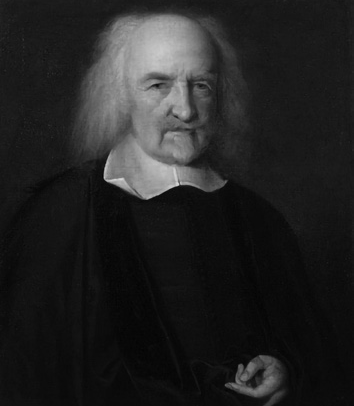
• According to Hobbes, in their original state, human beings exist in a state of nature, where everyone has an unrestricted right to do anything they wish. However, this absolute freedom would inevitably lead to a chaotic "war of all against all." To prevent such disorder, individuals agree to a social contract, thereby forming a civil society.
• Hobbes defined society as a collective of individuals under the rule of a sovereign authority. To ensure their own protection, individuals willingly surrender some of their rights to this authority, which in turn is tasked with safeguarding their remaining rights. Since the sovereign derives its power from this collective surrender, its authority cannot be challenged or resisted.
• Hobbes acknowledged that moral civil disobedience
could be justified if certain conditions were met:
• It should be the last possible resort.
• It must be conducted openly.
• It should align with one’s conscience.
• The individual must be willing to accept the consequences.
• It must be strictly non-violent.
• However, if the sovereign authority, or Leviathan, failed to fulfill its duty of protecting its people, society would have the right to seek out a new ruling authority.
• Important quotes by Thomas Hobbes
• “Knowledge is power.”
• “When all the world is overcharged with inhabitants, then the last remedy of all is war, which provides for every man by victory or death.”
• “Understanding is nothing else than conception caused by speech.”
• “The condition of man is a condition of war of everyone against everyone.”
• “Words are the counters of wise men, and the money of fools. ”
• “It is one thing to desire, another to be in capacity fit for what we desire.”
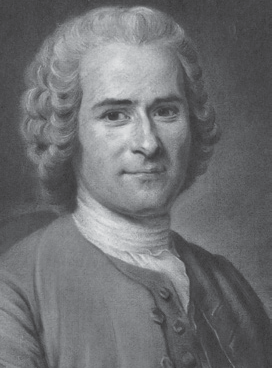
Rousseau
• Jean-Jacques Rousseau was a philosopher, writer, and composer from Geneva. His political philosophy significantly influenced the Age of Enlightenment across Europe, contributed to aspects of the French Revolution, and shaped modern political, economic, and educational thought.
• Rousseau was critical of Thomas Hobbes' concept of the social contract. He argued that a sovereign exists to safeguard the liberty of its citizens, and moral distinctions between right and wrong should be determined by an individual’s emotions and conscience rather than imposed by the sovereign.
• His primary focus was on liberty, which he passionately defended in his version of the social contract. He criticized Hobbes’ interpretation, asserting that it deprived individuals of their freedom. According to Rousseau, the government should be accountable to the people and must ensure both freedom and happiness. He believed the ideal state for humanity was one that balanced nature and civilization.
• Rousseau’s moral philosophy was rooted in conscience, which he described as a divine inner voice. He asserted that governments should function according to the general will of society, thereby guaranteeing everyone’s natural rights, which are bestowed by God.
• Furthermore, he emphasized that emotions play a crucial role in morality, giving them precedence over rationalism and empiricism.
• Important Quotes by Rousseau
• “Nature never deceives us; it is we who deceive ourselves.”
• “The only way to avoid error is ignorance.”
• “Why should we build our happiness on the opinions of others, when we can find it in our own hearts?”
• “Everything is good when it comes from the hands of the Creator of the world, but it degenerates as soon as it comes into the hands of man.”
• “The more I enter myself, the more I read the words written in my soul: Be righteous, and you will be happy.”
• “I prefer liberty with danger than peace with slavery.”
• “To write a good love letter, you ought to begin without knowing what you mean to say, and to finish without knowing what you have written.”
John Locke
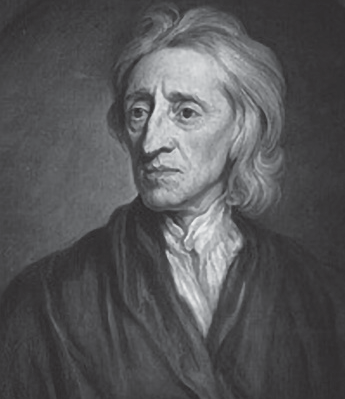
• John Locke, FRS was an English philosopher and physician, widely regarded as one of the most influential of Enlightenment thinkers and commonly known as the “Father of Liberalism”.
• John Locke introduced the rights- based approach, incorporating the
concept of natural rights into the social contract. He asserted that the primary role of the state is to safeguard these natural rights of its citizens. Furthermore, he emphasized that any legitimate social authority must
derive its power from the consent and approval of the people.
• According to Locke, individuals possess three fundamental natural rights: the right to life, the right to liberty, and the right to property.
• He also addressed the distinction between rights and desires, acknowledging that this can be a complex and ambiguous issue. He argued that it is the responsibility of the government to define and regulate this distinction through laws.
• Locke was a proponent of empiricism, asserting that human beings are not born with innate ideas. Instead, all knowledge and understanding are acquired through experience and interaction with society.
• Important quotes by John Locke
• “The natural liberty of man is to be free from any superior power on earth, and not to be under the will or legislative authority of man, but to have only the law of nature for his rule”
• “It is not always necessary to make laws, but it still is to execute those who were made”
• “The people are the supreme judge of how governments fulfil their mission because it is the person who gave them power and who care as such, the ability to revoke”
• The understanding is that this man is above the other sentient beings, the source par excellence of its advantage and its power over them.
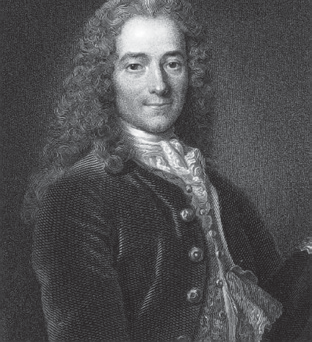
Voltaire
• François-Marie Arouet, better known by his pen name, M. de Voltaire, was a French Enlightenment thinker, writer, and historian. Renowned for his sharp wit, he was a vocal critic of
Christianity particularly the Roman Catholic Church and also condemned slavery.
• Voltaire viewed democracy as unpredictable and
believed that meaningful change could only be achieved under the rule of an enlightened monarch. He rejected the Bible as outdated and subscribed to deism, a belief in a higher power that is not linked to any established religion. Additionally, he strongly supported the ideals of the French Revolution liberty,
equality, and fraternity.
• Important quotes by Voltaire
• “I disapprove of what you say, but I will defend to the death your right to say it.”
• “It is dangerous to be right when the government is wrong.”
• “One day everything will be well, that is our hope. Everything’s fine today, that is our illusion.”
• “It is better to risk sparing a guilty person than to condemn an innocent one.”
Immanuel Kant
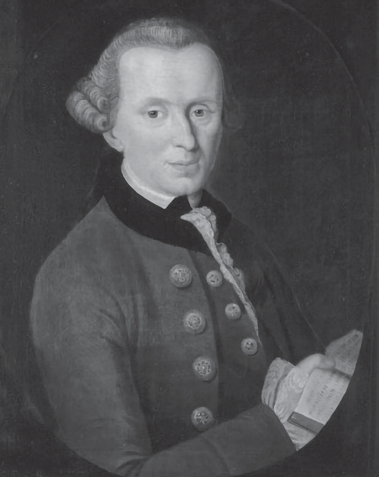
• Immanuel Kant (1724-1804) is widely regarded as one of the greatest philosophers in history. He believed that a consistent moral framework could be established through reason. According to Kant, certain moral principles must be followed by all rational beings, solely because of their rational nature.
These principles would apply universally to any
rational beings, regardless of time or place.
• Kant argued that individuals could determine right and wrong through reason alone, without reliance on God, society, or any external authority.
• The term ‘deontological’ is derived from the Greek word deon, meaning ‘duty.’
• Deontological ethics, also known as duty-based ethics, focuses on actions themselves rather than their consequences. Under this ethical framework, an action cannot be deemed right or wrong based solely on its outcomes, which is why it is sometimes referred to as ‘non-consequentialist’ ethics.
• Duty-based ethics assert that certain actions are inherently right or wrong, and individuals have a moral obligation to act accordingly, irrespective of the potential consequences.
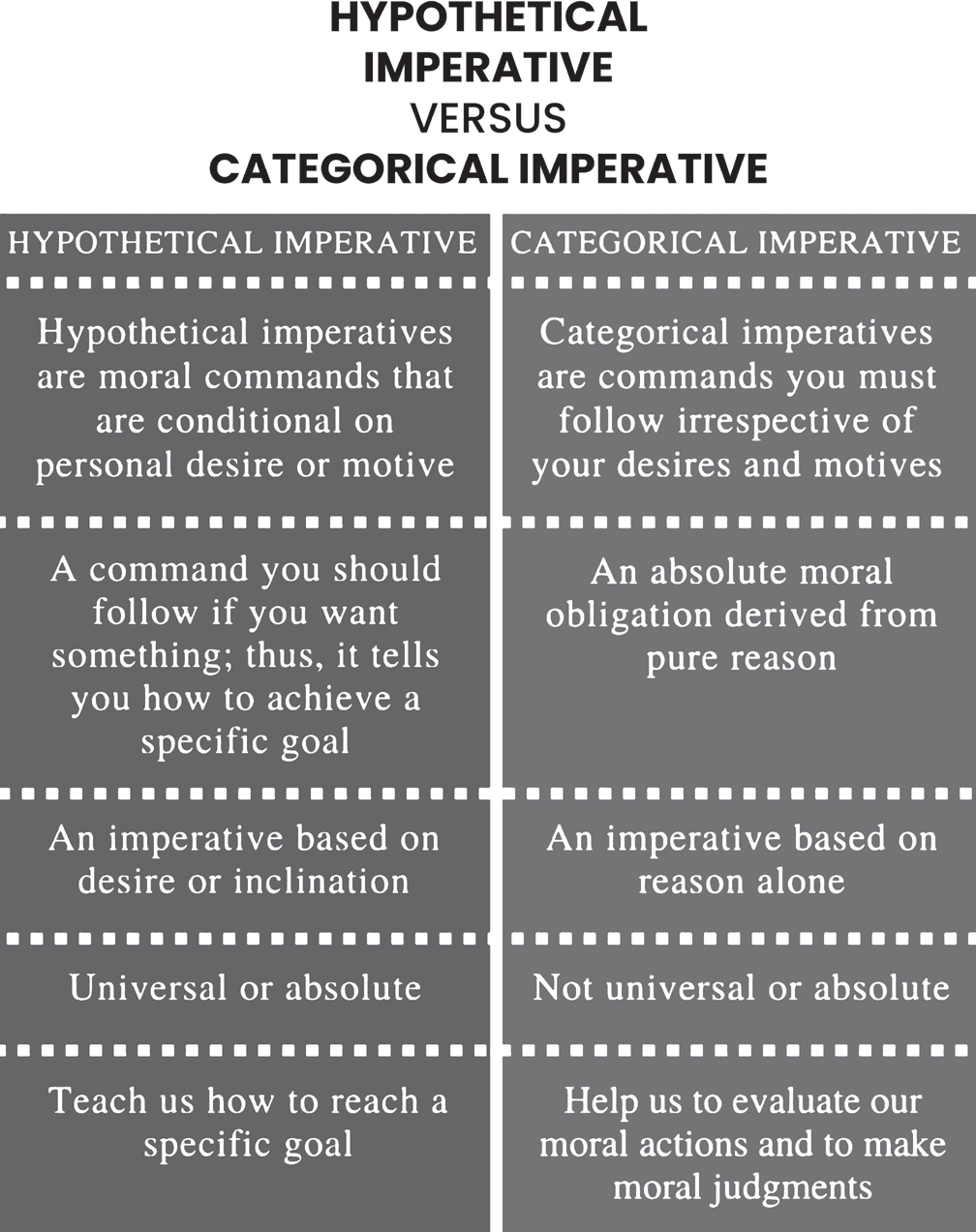
• Kant’s Categorical Imperative:
• Kant’s ethical philosophy is rooted in what he termed the ‘categorical imperative,’ which serves as the foundation for all moral principles. This imperative has two key aspects:
•
Kant maintained that all human beings should be treated as free and equal members of a shared moral community.
• He emphasized that individuals should always be regarded as valuable in themselves, rather than merely as means to an end.
• Important quotes by Immanuel Kant:
• “It is beyond a doubt that all our knowledge that begins with experience.”
• “All our knowledge begins with the senses, proceeds then to the understanding, and ends with reason. There is nothing higher than reason.”
• “I had to deny knowledge in order to make room for faith.”
• “Thoughts without content are empty, intuitions without concepts are blind.”
• “Nothing is divine but what is agreeable to reason.”
• “Autonomy is the root of human dignity and the sources of all morality.”
Jeremy Bentham
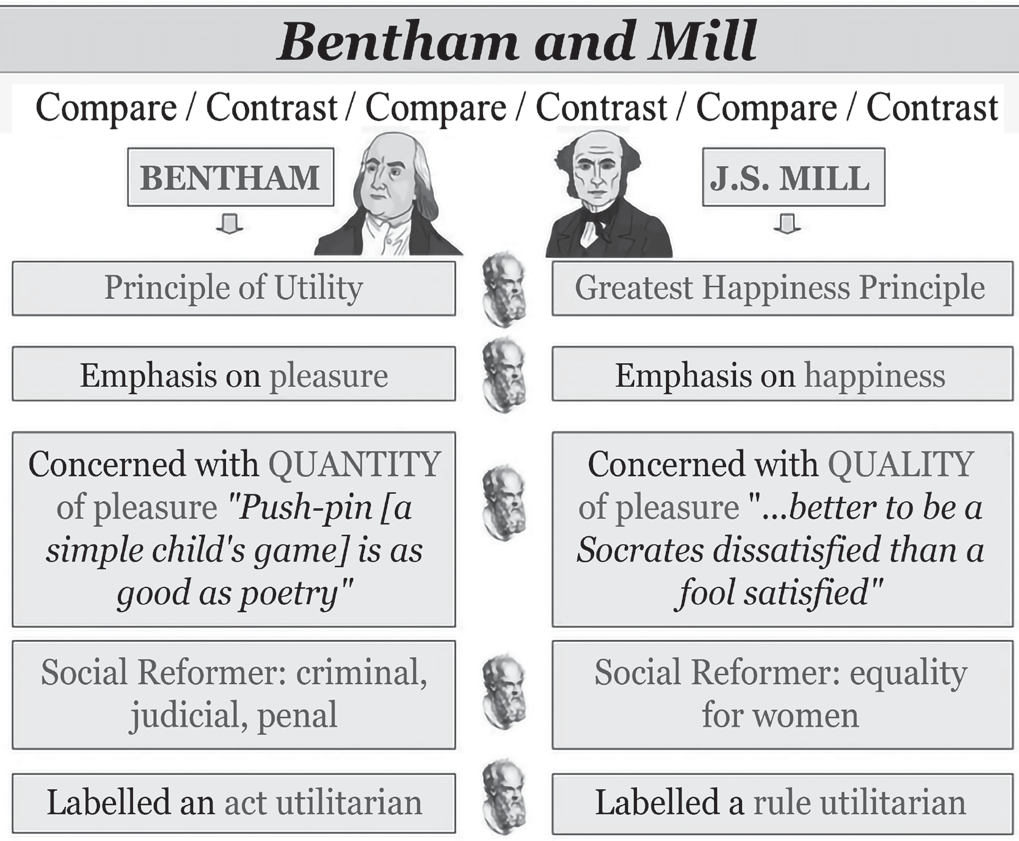
• Jeremy Bentham, an English philosopher and political radical, is best known for his contributions to moral philosophy, particularly his principle of utilitarianism. This ethical framework assesses actions
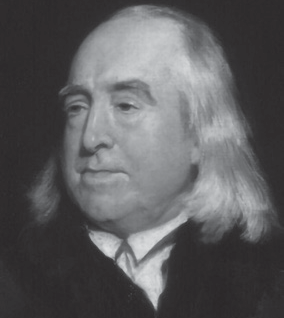
based on their outcomes, emphasizing the overall happiness or well-being generated for all individuals affected.
• Drawing influence from Enlightenment thinkers, especially empiricists like John Locke and David Hume, Bentham formulated an ethical theory rooted in an empirical understanding of human nature.
• He advocated a hedonistic perspective on motivation and value, asserting that pleasure and pain are the fundamental determinants of human actions. In his view, happiness is achieved through the presence of pleasure and the absence of pain.
• Hedonism
• Hedonism is the philosophical doctrine that considers pleasure (‘hedone’) to be the highest good and the ultimate aim of life. It assumes that human beings are naturally inclined toward sensory experiences, with reason or intellect playing a secondary role.
• Hedonism posits that individuals inherently seek pleasure and avoid pain, with all desires ultimately directed toward attaining pleasure.
• The moral worth of human actions is judged based on their consequences, specifically in terms of pleasure and pain.
• According to hedonism, an action is deemed right if it leads to pleasure and wrong if it results in pain.
• Hedonistic Calculus
• Bentham proposed a systematic method, known as the hedonistic calculus, to evaluate pleasure and pain derived from an action. This assessment is based on several criteria:
• Intensity – The strength of the pleasure or pain.
• Duration – How long the pleasure or pain lasts.
• Proximity – How soon the pleasure or pain will occur.
• Certainty – The likelihood of experiencing the pleasure or pain.
• Purity – The extent to which the pleasure is free from pain.
• Fruitfulness – The potential of the pleasure to lead to further pleasures.
• Extent – The number of individuals affected.
• The evaluation of actions using hedonistic
calculus must remain unbiased and independent of personal interests, ensuring an altruistic approach. For example, a railway minister should not prioritize introducing new trains solely in his own constituency.
• Bentham’s hedonism takes on an altruistic dimension by considering the extent of its impact and through four types of sanctions that influence human behavior:
• Natural or Physical Sanction – Consequences arising from nature.
• Political Sanction – Fear of legal punishment.
• Social Sanction – Fear of societal disapproval or ostracism.
• Religious Sanction – Fear of divine retribution.
• Utilitarianism
• Utilitarianism builds upon hedonism with certain
refinements:
• It is based on altruistic hedonism, considering the collective welfare rather than just individual pleasure.
• Bentham emphasized that human behavior is governed by two primary forces: pleasure and pain.
• His utilitarianism, often referred to as quantitative utilitarianism, focuses on measuring and maximizing the overall happiness of society.
• Bentham’s philosophy underscores the importance of evaluating the broader consequences of actions, ensuring that moral decisions contribute to the greatest good for the greatest number.
• Important quotes by Jeremy Bentham
• “Tyranny and anarchy are never far apart.”
• “Every law is an infraction of liberty.”
• “It is vain to talk of the interest of the community, without understanding what is the interest of the individual.”
John Stuart Mill
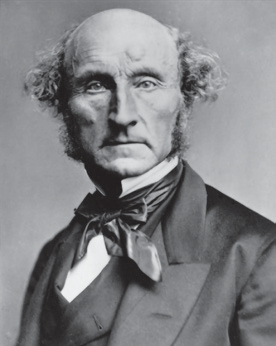
• John Stuart Mill, a 19th-century British political thinker and activist, was a key proponent and practitioner of Utilitarianism. This philosophy holds that an action is justified if it benefits the majority of society.
• Mill refined Bentham’s utilitarian framework by distinguishing between lower, sensual pleasures and higher, intellectual pleasures—not just in terms of quantity but also in quality.
• A strong advocate of political liberty, Mill also supported universal compulsory education, believing that people should be guided toward happiness, even if it meant enforcing it against their will.
• Mill introduced the Harm Principle, which asserts that the state should only intervene in an individual’s freedom to prevent harm to others. He argued that society should not suppress opinions arbitrarily, as open discourse is essential for progress.
• According to Mill, freedom plays a crucial role in exposing hypocrisy, combating intellectual stagnation, and fostering personal fulfillment. Excessive public criticism weakens intellectual courage and hinders the pursuit of truth.
• Mill believed that democracy requires certain essential conditions, warning that without a strong democratic culture, it could devolve into a ‘False Democracy.’ He argued that democratic governance is only suitable where people have reached a level of maturity necessary to sustain democratic values. Consequently, he did not advocate representative democracy for all societies, suggesting that authoritarian rule might be more appropriate for those he deemed uncivilized or unprepared for self-governance.
• Important Quotes by J.S. Mill
• “It is better to be dissatisfied Socrates rather than satisfied pig.”
• “Democracy’s superior virtue lies in the fact that it calls into activity the intelligence and character of ordinary men and women.”
• “One person with a belief is equal to a force of ninety-nine who have only interests. “
• “A party of order or stability, and a party of
progress or reform, are both necessary elements of a healthy state of political life.”
“The liberty of the individual must be thus far limited; he must not make himself a nuisance to other people
John Rawls and Concept of Justice
John Rawls and Concept of Justice
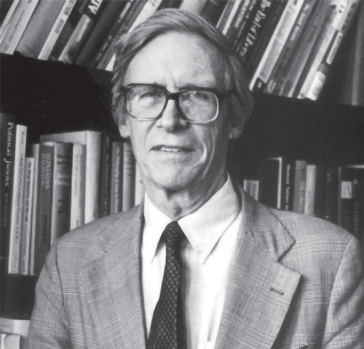
John Bordley Rawls was an American philosopher specializing in moral, legal, and political thought within the liberal tradition. In recognition of his contributions, he was awarded both the Schock Prize
for Logic and Philosophy and the National Humanities Medal in 1999. Born on February 21, 1921, in Baltimore, Maryland, Rawls was raised in a family with a strong civic background, his father being a distinguished lawyer and his mother serving as a chapter president of the League of Women Voters.
• The idea of justice has been central to human society since prehistoric times. It is a fundamental legal, moral, and philosophical concept that has evolved alongside civilization. In simple terms, justice refers to actions that align with the principles of law and fairness.
• Various philosophical traditions have shaped the understanding of justice. In ancient Indian thought, scholars such as Manu and Kautilya contributed significantly to the discourse. Manu categorized law into civil and criminal matters, while Kautilya argued that the state alone has the authority to administer fair justice.
• In Western philosophy, one of the earliest major conceptions of justice comes from Plato, who viewed it as a safeguard against two societal evils—ignorance and political self-interest. Aristotle further refined the concept by associating justice with proportional equality, advocating that fairness must be based on a balanced distribution of resources and responsibilities.
• Legal theorist Hans Kelsen took a different approach, arguing that justice cannot be studied as a formal science. He asserted that even if a theory of justice were constructed logically, it would ultimately rest on subjective and emotional foundations rather than purely objective principles. According to Kelsen, the pursuit of justice reflects humanity’s eternal desire for happiness—an aspiration that individuals cannot fulfill in isolation. Instead, justice manifests as social happiness, made possible through an organized and structured society.
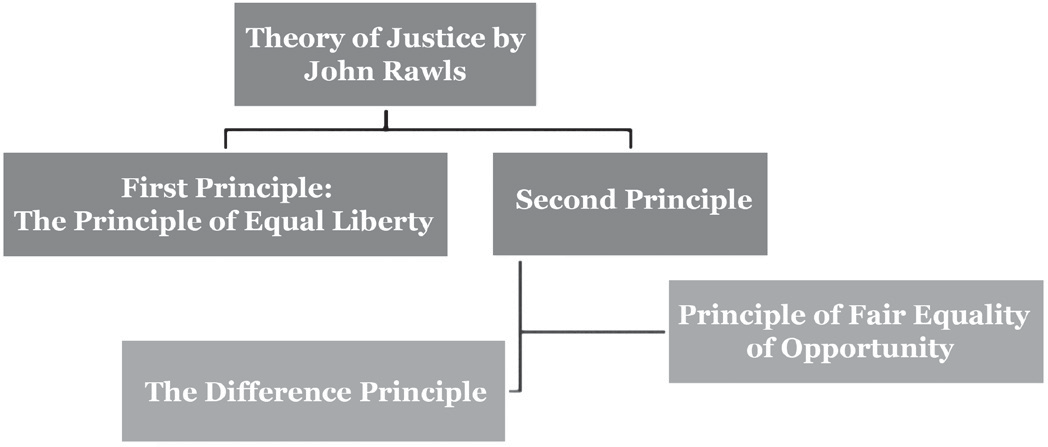
• Rawls’ Theory of Justice John Rawls is best known for his Theory of Justice as Fairness, which outlines principles to guide a just social order. His framework emphasizes the importance of political and personal freedoms, equal opportunities, and cooperative structures that benefit both the privileged and disadvantaged members of society. He envisions society as comprising free and equal individuals, whose interactions should be governed by fairness and justice.
• Rawls urges us to view society as "a fair system of cooperation that extends across generations." He describes citizenship as a fundamental relationship within the basic structure of society, one that individuals enter at birth and leave only upon death.
• In A Theory of Justice, Rawls asserts that "Justice is the first virtue of social institutions," meaning that a well-ordered society must be founded on just principles. His theory aims to establish a model for structuring society based on the ideal of justice as fairness.
• Rawls seeks to identify the fundamental principles that underpin a just society. He highlights two primary functions of justice:
• Assigning rights and duties within the core institutions of society.
• Determining the fair distribution of societal benefits and burdens to ensure equity among all individuals.
• By developing these principles, Rawls provides a philosophical foundation for a fair and just social structure.
SOCIAL JUSTICE CONCEPT • Social justice refers to the fair distribution of resources, opportunities, and privileges within a society. It is also understood as the just organization of social institutions to ensure access to economic benefits for all. Often associated with the concept of distributive justice, social justice aims to create a society where fairness and equity prevail. • Key Principles of Social Justice ¾ While there is no universally agreed-upon
definition of social justice, most perspectives align with the overarching goals of inclusion and fairness. To achieve these, certain ethical principles serve as the foundation of a just society, including:
• Access
• This principle emphasizes that all members of society should have equal availability of resources. For instance, many social justice scholars argue that education, healthcare, and employment opportunities should be accessible to everyone. Public officials can uphold this ideal by ensuring that no individual is denied these essential services.
• Equity
• Equity ensures that people have equal opportunities to succeed, even if historical injustices or systemic discrimination have placed them at a disadvantage. This often requires the fair allocation of resources to address the specific needs of marginalized communities, ensuring that past disparities are corrected.
• Diversity
• Diversity highlights the importance of inclusive representation within government and businesses. Leadership structures should reflect the communities they serve, meaning that historically underrepresented groups such as Scheduled Castes, Scheduled Tribes, women, and various ethnic minorities —should have a presence in decision-making positions. This principle also supports anti-discrimination policies, multilingual resources, and affirmative action measures like reservations to ensure equal participation.
• Participation
• This principle asserts that all individuals should have a say in important decisions affecting their community, rather than power being concentrated in the hands of a few. Public policymakers can promote inclusivity by consulting representatives of minority groups and addressing their concerns in governance and policy-making.
• Human Rights
• Considered the most fundamental principle of social justice, human rights encompass both political and personal freedoms. This includes freedom of expression, protection from law enforcement abuse, reproductive rights, and bodily autonomy. A just society must uphold these rights to ensure dignity and fairness for all individuals.
By adhering to these principles, social justice fosters a society that is fair, inclusive, and responsive to the needs of all its members.
• Participation
• Participation is the principle that everyone in a community should have a voice in making important decisions, instead of a small group of powerful people of the community. Public policymakers can address this shortcoming by consulting the advocates of minority communities and considering their needs.
• Human Rights
• The final principle of social justice, and arguably the most fundamental, is human rights. In addition to political rights, such as freedom of conscience, it also requires freedom from police abuse and respect for one’s reproductive rights and bodily autonomy.
• A Well-Ordered Society: Rawls’ theory of justice is inspired by the Social Contract Theory of Immanuel Kant. Rawls extended Kant’s theory by taking the viewpoint of a hypothetical contract wherein the decision-makers come together to formulate rules for defining the basic structure of a well-ordered society, using set principles of justice. As per Rawls, this formulation is done by observing the following conditions of the contract:
• Circumstances of justice
• Original position
• Veil of ignorance
• Maximin rule
• Circumstances of Justice: As per Rawls, the circumstances of justice are the normal conditions under which human cooperation is both possible and necessary. These circumstances are pertinent for any society to make just laws. Rawls described two kinds of circumstances of justice – objective and subjective circumstances.
• Objective Circumstances: Objective circumstances are where members of a society co-exist in some identifiable territory and are of some comparable strengths and weaknesses so that no one has an edge over another and resources available to a society are moderately scarce.
• Subjective Circumstances: Subjective circumstances of justice are where few members of the society have conflicting interests in the resources available. When such interests contradict the mutually advantageous social cooperation, a need for justice arises.
• Original Position: John Rawls imagines a hypothetical scenario where a group of people
ignorant of their or others’ social, economic, physical, or mental factors, come together to make laws for themselves. This imaginary initial position of equality of perspective, or viewpoint of impartiality is what Rawls calls an original position (OP). It is like the state of nature does in the social contract theory of Thomas Hobbes, Jean-Jacques, Rousseau, and John Locke.
• In the original position, the parties have the choice to select the principles of justice to govern the basic structure of society. These principles are imperative to ensure that the benefits and burdens of society are just or fair to all parties. Rawls proposed that the parties or decision-makers must choose them as if behind a veil of ignorance.
• Fair and continuous distribution of ‘Social Primary Goods’ to all parties is essential which includes rights, liberties, opportunities, income, and wealth as they represent citizens’ fundamental interests.
• Rawl’s Veil of Ignorance is the method of determining the morality of political issues. As per Rawls, politicians should make decisions based on the assumptions that they know nothing about the particular talents, abilities, taste, social class and positions they will have in social order, once they become part of it. These factors may be –
• Demographic facts – Examples of which may be age, sex, ethnicity, level of income, colour, employment, personal strengths and weaknesses, etc.
• Societal facts – Examples of which may be the type of government, societal organisation, culture and traditions, etc.
• Facts about the decision-maker’s own view of the good – These are the decision-maker’s values and preferences of how one’s life should be. It also includes specific morals and political beliefs.
• Such people with veil of ignorance make decisions based on morality, since they may not be able to make choices based on their self-interest or class interest.
• There are two main aspects of the veil of ignorance: Self-Ignorance and Public Ignorance.
• Firstly, it abstains the decision-maker from knowing anything about himself. It is essential for him to not know his own position in society, because knowing may tempt him to make decisions that favour his future-self considering his private interests.
• For instance, a legislator having shares in a company of a particular sector may strive to make laws favouring the future rise of that sector, for himself to indirectly be profited by it.
• Secondly, it abstains the decision-maker from knowing anything about the entities for whom he is making the decision. Such ignorance is crucial to avoid the personal bias of the decision-maker.
• The veil of ignorance makes the parties just be their usual rational selves, instead of being influenced by circumstantial factors. It prevents the privileged from pressurising the vulnerable or underprivileged, as everybody is equal in the original position. The veil ensures that policies are made in the best interest of the entire society, and not just a majority of it.
• Maximin Rule: As per Rawls, to achieve a well- ordered society, the decision-makers under the original position will make choices under uncertainty. The uncertainty will lead them to rationally make rules by selecting the best from a range of options of worst possibilities. They will strive to make rules that ensure that the worst-off people in society progress as much as possible.
• Rawl’s Two Principles of Justice: Rawls argues that a rational individual wearing the veil of ignorance will only choose to establish the society that will at least conform to two rules namely Liberty principle and Difference and Fair Equality of Opportunity principle.
• Equal Liberty Principle provides that all the people in the society must be given certain basic liberties for human existence, which cannot be infringed at any cost, even for greater benefit to a larger mass of people.
• These include freedom of speech, assembly, thought and conscience, liberties required to secure the rule of law, sanitation, wealth, and
health.
• However, Rawls does not consider the economic rights and liberties because economic progress cannot happen without some rights limited to specific people.
• The Difference Principle provides that in case of an unequal distribution of wealth and income, the inequality must be like those worst off are
still better off than they being under any other distribution.
• So, in one way, Rawls opines that no society can exist without economic disparity.
• However, such a disparity must be diminished
as much as possible.
• The Fair Equality of Opportunity Principle provides that society must facilitate everyone with the most basic means to enable them to participate in social competition.
• Everyone should have an equal opportunity to compete for the public or private offices or positions that they wish for.
• This includes providing education, and healthcare.
Social Justice in Indian Context:
• Social justice is embedded in various legal provisions and the Constitution of India, ensuring the empowerment of women and marginalized communities, the abolition of discriminatory practices, and the establishment of a welfare state. These provisions reflect India's commitment to creating an equitable and just society.
• The Indian Constitution guarantees its citizens social, economic, and political justice, along with freedom of speech, belief, religion, and worship. It also upholds the principles of equality, ensuring equal status and opportunities for all individuals. Additionally, it emphasizes the dignity of individuals and the unity of the nation, fostering a spirit of fraternity among all citizens. By incorporating specific provisions, the Constitution seeks to balance individual freedom and constitutional rights with the broader goal of socio-economic justice.
• The spirit of social justice is deeply ingrained in various constitutional provisions. It is closely linked to the principle of equality and is a fundamental aspect of the Preamble of the Constitution.
• Additionally, social justice aligns with the socialist ideals enshrined in the Constitution and plays a crucial role in shaping India's economic policies. The concept of a welfare state, as outlined in the Constitution, is a significant step toward achieving social justice.
• Several Directive Principles of State Policy (DPSP) enshrine the principles of social welfare, equality, and justice, reinforcing the nation's commitment to a just and inclusive society. Some of these principles include:
• Promotion of social welfare (Art. 38)
• Distribution of resources as per common good (Art. 39)
• Equal pay for Equal work (Art. 39)
• Just and humane working conditions (Art. 42)
Promotion of educational and economic interests of Scheduled Castes, Scheduled Tribes, and other weaker sections (Art. 46)
• Fundamental Rights also are made in view of social welfare, such as –
• Cultural and educational rights (Article 29 and Article 30)
• Right against exploitation (Article 23 and Article 24)
• Right to education (Article 21A)
• Right to equality (Article 14, Article 16, Article 17, Article 18)
• Right against discrimination on grounds only of religion, race, caste, sex or place of birth (Article 15)
• Every person also has the right to constitutional remedies, which can be used for the furtherment of social justice. (Article 32 and Article 226)
• The Ministry of Social Justice and Empowerment in India is responsible for ensuring the welfare and upliftment of marginalized communities. It plays a crucial role in policymaking, ensuring that social justice principles are integrated into government initiatives and governance frameworks.
• Several initiatives have been launched to promote social justice and empower disadvantaged groups, including:
• Pradhan Mantri Adarsh Gram Yojana (PMAGY): Aims at the holistic development of villages with a significant Scheduled Caste population.
• Support for Marginalised Individuals for Livelihood and Enterprise (SMILE): Focuses on rehabilitation and support for vulnerable individuals.
• Self-Employment Scheme for Rehabilitation of Manual Scavengers (SRMS): Helps in the rehabilitation of manual scavengers by providing self-employment opportunities.
• Dr. Ambedkar Scheme of Interest Subsidy on Educational Loans for OBCs & EBCs: Provides financial assistance for overseas education to students from Other Backward Classes (OBCs) and Economically Backward Classes (EBCs).
Key Social Justice Initiatives by the Government
• The government has introduced several laws and policies to uphold social justice, such as:
• Progressive taxation system under The Income Tax Act, 1961, ensuring fair tax distribution.
• Subsidy programs aimed at promoting the welfare of Scheduled Castes (SCs) and Scheduled Tribes (STs).
• Infrastructure development in economically backward regions through programs like Pradhan Mantri Gram Sadak Yojana. ¾ Anti-discrimination legislation, including the Protection of Civil Rights Act, 1955, to prevent caste-based discrimination.
• Minimum wage policies, such as those under the Minimum Wages Act, 1948, ensuring fair compensation for laborers.
• Improvement of living conditions for the underprivileged through slum rehabilitation programs, such as the Maharashtra Slum Areas (Improvement, Clearance, and Redevelopment) Act, 1971.
• Reservation policies in education and government jobs for weaker sections, as guaranteed by Article 15(4), Article 16(4), and Article 16(5) of the Indian Constitution.
• These initiatives collectively aim to bridge social inequalities, empower marginalized communities, and promote an inclusive societ
Important quotes by John Rawls:
• “Justice as fairness provides what we want.”
• “A just society is a society that if you knew everything about it, you’d be willing to enter it in a random place.”
• “The principles of justice are chosen behind a veil of ignorance.”
• “Justice is happiness according to virtue.”
• “The fairest rules are those to which everyone would agree if they did not know how much power they would have.”
• “A society regulated by a public sense of justice is inherently stable.”
• “The fault of the utilitarian doctrine is that it mistakes impersonality for impartiality.”
• “An Injustice is tolerable only when it is necessary to avoid an even greater justice.”