Concept of Public Service
Concept of Public Service
Public service refers to government-provided services for people within its jurisdiction.
These services can be delivered directly by the public sector or indirectly through government- funded private entities.
It includes service delivery, interactions with citizens, and grievance redressal mechanisms.
Covers essential aspects of daily life such as healthcare, education, infrastructure, and law enforcement.
In 1996, the United Nations adopted an
International Code of Conduct for public officials.
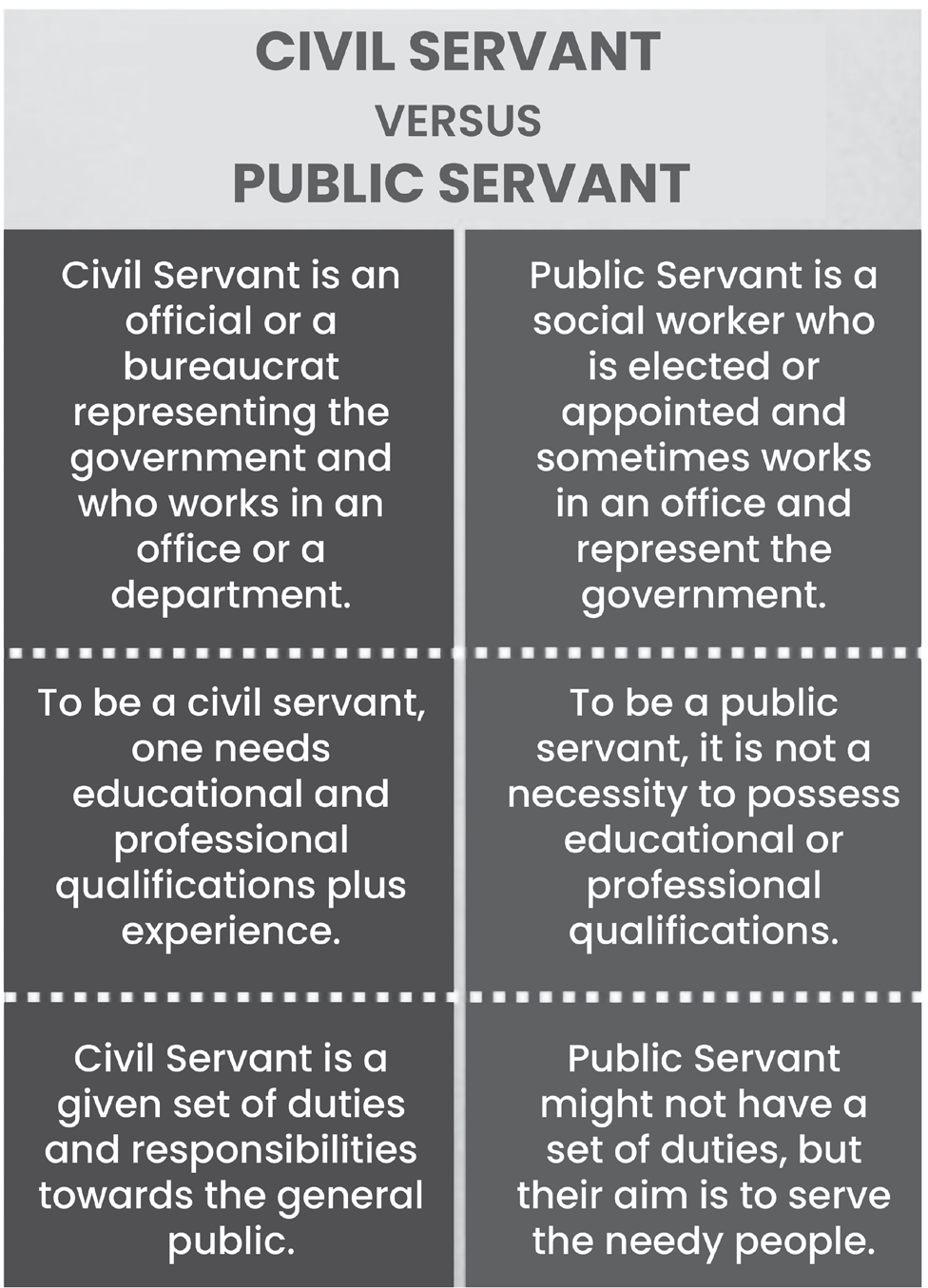
•
As per this document, public service involves duties performed by officials acting on behalf of elected representatives.
• Elected officials determine public interest, while public servants ensure its implementation and maintain public trust.
Important Features of Public Service
• Public services are delivered by administrative bodies
operating under political oversight and direction.
• Often managed by local or national monopolies, especially in sectors where competition is impractical (e.g., law enforcement, judiciary, healthcare).
• The outcomes of public services are difficult to
attribute to the efforts of a single individual.
• Some services are essential for societal existence, including national security, law enforcement, healthcare, transportation, and communication.
• Public services operate on a large scale, influencing the socioeconomic structure of society.
• Public accountability is a core principle in a democratic system.
• The primary objective of public services is to promote social welfare, not to generate profit for the government.
• Public servants function within a legal framework.
They are legally obligated to ensure consistency, fairness, and equal treatment while serving the public
Concept of Probity
Concept of Probity
Probity refers to the ethical commitment to uphold the highest moral principles and integrity in both personal and public interactions.
It encompasses honesty, uprightness, and decency, ensuring adherence to moral values beyond legal obligations and the mere avoidance of corruption.
The term "probity" originates from the Latin word
"probitas," meaning honesty.
It signifies absolute integrity and is often associated with being incorruptible.
• Core elements of probity:
• Integrity – Consistently upholding ethical values.
• Moral Knowledge – Understanding and applying moral principles.
• Decency & Humility – Treating others with fairness and respect.
• Strong Positive Emotion – A genuine commitment to ethical conduct.
• Probity follows a "maximalist approach" to ethical living.
• It is not just about avoiding corruption but about actively embodying the best ethical standards in both personal and public life.
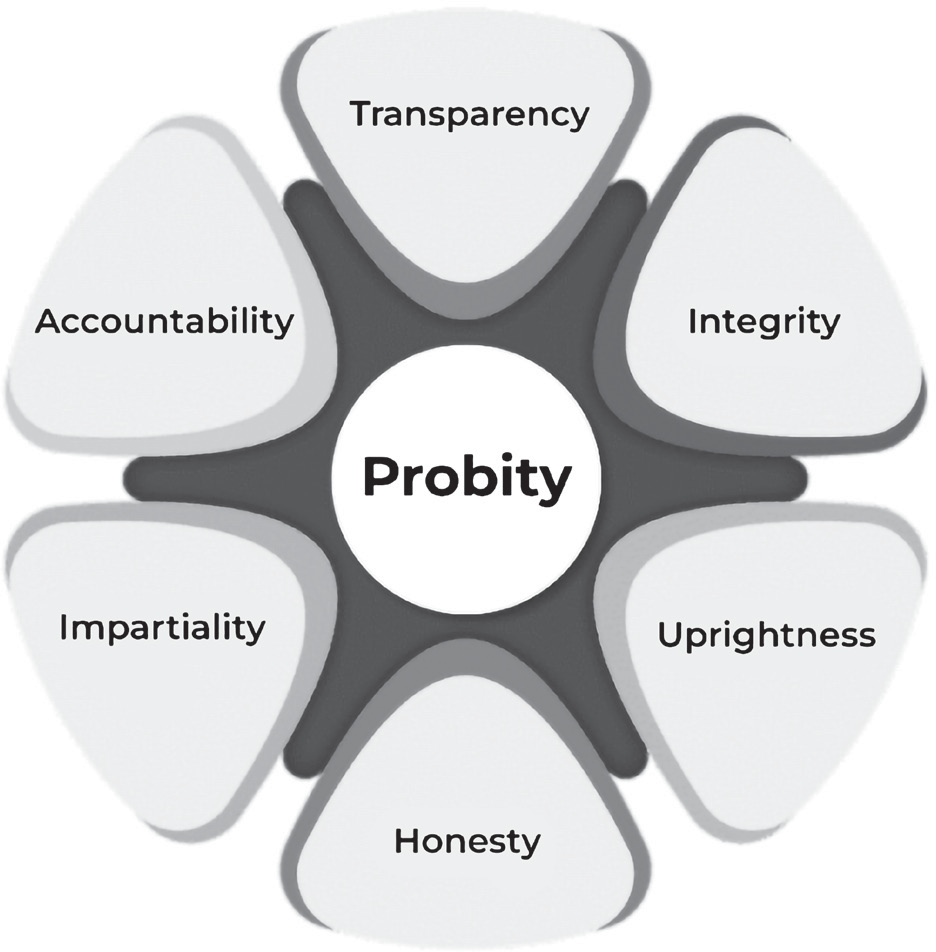
Figure: Aspects of Probity
Examples of Probity in Action:
Justice Kurian Joseph demonstrated probity by skipping a dinner hosted by Italian officials during an official visit.
His reason was to avoid any perceived conflict of interest, as he was part of the bench deciding a legal dispute between India and Italy over the trial of two Italian marines accused of killing Indian fishermen in 2012.
Lal Bahadur Shastri, as Railway Minister, resigned from his position on moral grounds following a railway accident during his tenure.
H.G. Mudgal, a ruling party MP, was expelled from Parliament on 24th September 1951, through a motion by Jawaharlal Nehru despite his willingness to resign.
This case is often cited as an example of high ethical standards set by early Indian leadership in parliamentary conduct.
Probity ensures that individuals with questionable integrity are not shielded within Parliament just because they have not been legally convicted.
Probity in Private Life
Self-improvement begins with probity in personal life.
Guru Nanak's principle on ethical actions:
Before taking any action, one should ask, "Can I present this act before God? Will it stand His scrutiny?"
If the action passes this moral test, then it is worth doing.
Challenges in maintaining probity:
Temptations and societal pressures often divert individuals from ethical conduct.
Consequences of lacking probity in public life:
Issues such as adultery, discrimination, elder abuse, and pornography arise due to a lack of moral integrity in relationships and society.
Probity in Public Life
Probity in public life refers to the ethical standards expected from elected and appointed officials in managing public affairs.
Role of probity in governance:
These standards prevent corruption among politicians and public officials.
Ensuring ethical conduct in governance positively impacts both citizens and the nation.
• Examples of probity in public life:
• Lal Bahadur Shastri took a loan of ₹5,000 from Punjab National Bank in 1965 to buy a Fiat car. After his death in 1966, the bank asked his widow, Lalita Shastri, to repay the loan, which she cleared using her family pension.
• IAS officer Durga Shakti Nagpal took a firm stand against illegal land dealings and the sand mafia in Uttar Pradesh, demonstrating integrity in governance.
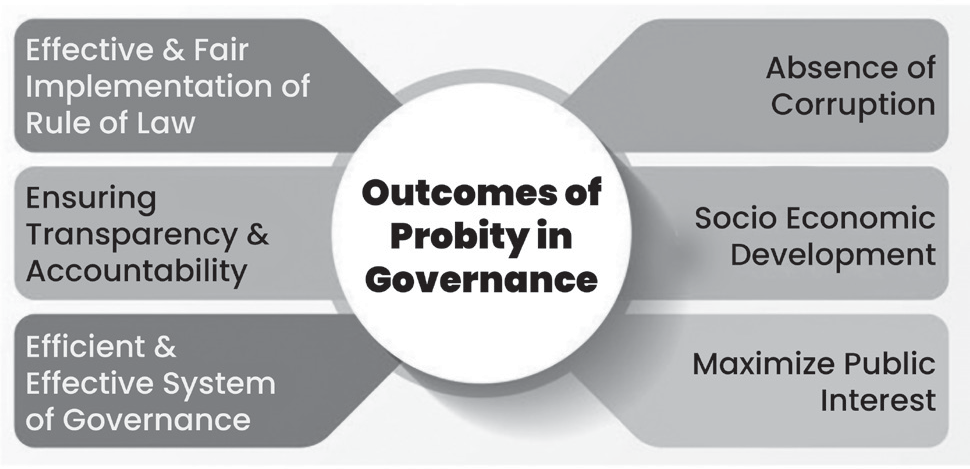
Figure: Outcomes of Probity in Governance
• SecondAdministrative Reforms Commission Recommendations:
• Public service values should combine traditional principles like:
• Efficiency, Integrity, Accountability, and Patriotism
• Along with ethical and moral values, such as:
• Probity in public life, respect for human rights, compassion for the underprivileged, and commitment to social welfare.
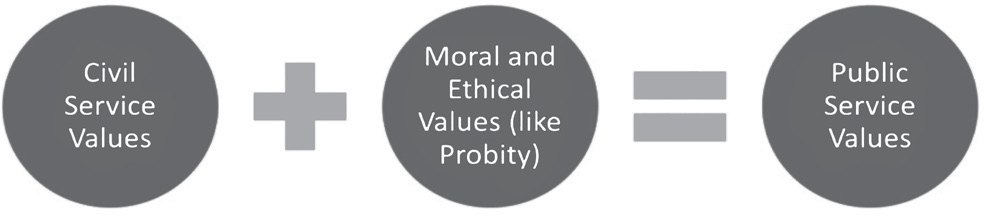
Figure: Probity as Part of Public Service Values
• Prerequisites for Probity in Public Life (NCRWC 2002):
• Elimination of corruption in governance.
• Comprehensive and well-defined laws, rules, and regulations for public administration.
• Fair and effective enforcement of these laws to ensure accountability.
Importance of Probity in Civil Services
• Prevent Unethical Practices: To eliminate misconduct, fraud, favoritism, corruption, and self-centered behavior in governance.
Promote Public Participation: To ensure public interest and cooperation in governance, restoring lost public trust.
Inclusive Growth: To address the needs of all societal sections, ensuring equitable development for all.
Good Governance : To establish accountability, transparency, integrity, and confidentiality in governance.
Equitable Resource Distribution: To ensure the fair and just allocation of resources.
Civil Servant Compliance: To ensure civil servants adhere to laws, processes, and codes of conduct.
Link with Societal Values: Probity is connected to societal values, ensuring public servants are not influenced by unethical norms.
Equality Before the Law: Probity ensures equal treatment under the law, e.g., a civil servant should process the file of an ordinary citizen and a powerful politician in the same manner.
Opposing Corruption: Probity in governance is the direct opposite of corruption in public life.
Avoidance of Corruption: Civil servants who uphold probity avoid corrupt or dishonest conduct by applying values like impartiality, accountability, and transparency.
Foundation of Good Governance: The principle of probity is fundamental to good governance, democracy, and sustainable development.
Hurdles in Practicing Probity include
Poor Work Culture:
Colonial, elitist mindset of civil servants, viewing themselves as "masters" and adopting a selfish, ivory-tower approach.
Lack of administration that is sensitive to the needs of citizens.
No Incentives and Low Morale:
There is a lack of rewards for maintaining high integrity, such as timely promotions or career advancement.
Officials who demonstrate integrity should be recognized through strong Annual Confidential Reports (ACR).
No Fear and Accountability:
High-handedness and corruption often go unchecked, particularly among political leaders and higher-level officials, due to barriers to sanctions, permissions, or impeachment.
Lack of Leadership:
Exemplary actions are often not appreciated due to:
Rivalries and jealousy among officials.
Absence of unity, charity, and mutual respect among civil servants.
A bureaucracy that is politically biased.
• High Discretion and Lack of Transparency:
• Key appointments at higher levels (e.g., Chief Information Commissioners) often lack transparency.
• Decisions, such as those made by the Collegium system, are not clearly explained.
• Poor and Ambiguous Value System:
• Prioritizing loyalty over integrity.
• Viewing probity as an unnecessary burden.
• Placing career ahead of personal conscience.
• Viewing calls for accountability as attacks on the government, instead of seeing them as opportunities for efficiency and improvement.
• Taking shortcuts or exploiting legal loopholes for party interests over national or public benefit.
• Hedonism:
• An excessive desire for wealth and material comforts, even when government officials already enjoy significant benefits, such as:
• A good salary after the 7th Pay Commission.
• Perks like housing, security, personal servants, and allowances for rent, travel, and education.
• Holidays and time off, such as casual or sick leave.
• Prestige from being part of the government and influencing policy.
• Career security and a decent standard of living.
• High Social and Economic Inequality:
• Poor and marginalized communities struggle to access justice and basic services.
• These groups also face challenges when entering public service, which impacts their ability to succeed.
How these Difficulties Can Be Overcome
• High Emotional Intelligence: Essential qualities such as emotional intelligence, optimism, humility, and self-confidence are crucial for maintaining high probity standards.
• This involves taking strong actions against corruption and eliminating its root causes through systemic changes, while also setting an example of integrity in daily life.
• Moral and Value-based Education: This should be emphasized not just at the school or college level but also in professional training programs like at LBSNAA.
•
Reading materials and role play should teach future officers to solve ethical dilemmas and apply a pragmatic approach to practicing probity.
Good Leadership: Leadership and teamwork, along with developing Social Capital (supportive family, friends, citizens, and co-workers), are key to promoting probity in governance.
For example, if an elderly woman who is poor and hungry approaches without any official documents and does not meet the eligibility criteria, it becomes necessary to take courageous
decisions to assist her through all available
means, while staying within the framework of the Constitution and legal boundaries. This can involve mobilizing support from civil society organizations like NGOs to address her immediate needs and launching initiatives to support other women in similar conditions, including regular monitoring and follow-up on their progress.
Fostering Altruism:
Performing small, consistent acts of compassion and kindness is vital to cultivate an altruistic mindset.
This includes offering help to the underprivileged and vulnerable sections of society and developing the habit of sharing as a source of inner contentment and genuine happiness.
Such practices lead to greater sensitivity and empathy toward the realities faced by the poor, with the realization that poverty is not a choice, but often a result of difficult psychological, emotional, physical, social, economic, political, and cultural circumstances. These conditions may push individuals to compromise their dignity and self-worth in the struggle for survival.
Ethical Governance System: A system of governance that rewards and promotes consistent ethical behavior and probity.
Developing Ethical Literacy: Ongoing training and updates to ethical codes are necessary to address new challenges.
This includes adapting training materials and ethical standards to address emerging issues such as cyber security threats, fake news, and social divisions.
Cultivation of Independent Media: Promoting independent, ethical journalism helps create an informed citizenry and ensures government accountability.
Setting High Goals for Administration:
Transitioning from Representative Democracy to
Participative Democracy.
Making probity the default expectation for all administrative personnel.
Adopting a Zero Tolerance policy for corruption and promoting high standards of accountability.
Practicing probity consistently in daily life to set an example for others.
Philosophical Basis of Governance and Probity
Philosophical basis of Governance and Probity
• The term "philosophical" refers to the core nature of knowledge, reality, and existence, indicating the essence or broad foundation of something.
• The fundamental nature of governance involves exercising authority, deciding whom or what to control, influence, or regulate, and understanding how to govern both oneself and others.
• Governance can sometimes be seen as "negative power," which may have an excessively restrictive influence on the governed. It should, however, align with traditions, legitimacy, justice, and societal welfare.
• When the governed experience fairness, reasonableness, and societal benefit, it is due to governance that integrates and institutionalizes strong moral principles like honesty, integrity, and decency, which is referred to as probity.
• The philosophical foundation of probity in governance can be traced back to ancient Greek and Roman philosophy, which emphasized justice, honesty, and integrity in public life.
• Aristotle, for example, argued that good governance relies on the virtue and moral character of rulers, who must act in the best interests of the community.
• In the modern era, probity in governance has gained importance due to the temptation for those in power to misuse their authority for personal gain.
Western Philosophical Thought
• Socrates:
• Believed that the best government is led by individuals with wisdom, virtue, and self- awareness.
• Advocated for governance by knowledge seekers and virtuous individuals.
• Plato:
• Explained that a city (state) functions effectively when each person fulfills their role.
• Justice is performing one's duties without interfering in others' roles.
•
Awell-functioning state requires harmony, temperance, courage, and wisdom.
Aristotle:
Argued that humans naturally form political communities due to sociability.
Good governance ensures the happiness of its citizens.
Laid the foundation for theories of governance and political organization.
St. Augustine:
Explored the role of religion in society.
Established the principles of the Just War Theory.
Machiavelli:
Introduced Realpolitik, emphasizing that rulers should prioritize stability and loyalty over moral concerns.
Thomas Hobbes:
Developed the Social Contract Theory, arguing that a sovereign authority is necessary to mediate disputes within society.
Jeremy Bentham’s Quantitative Utilitarianism:
Bentham's theory emphasizes maximizing utility, which means increasing the total happiness of all individuals. He used a hedonic framework to assess whether actions are morally right or wrong, based on the amount of pleasure or pain they produce. According to Bentham, mental and physical pleasures or pains differ only in terms of their intensity or amount, not in their nature.
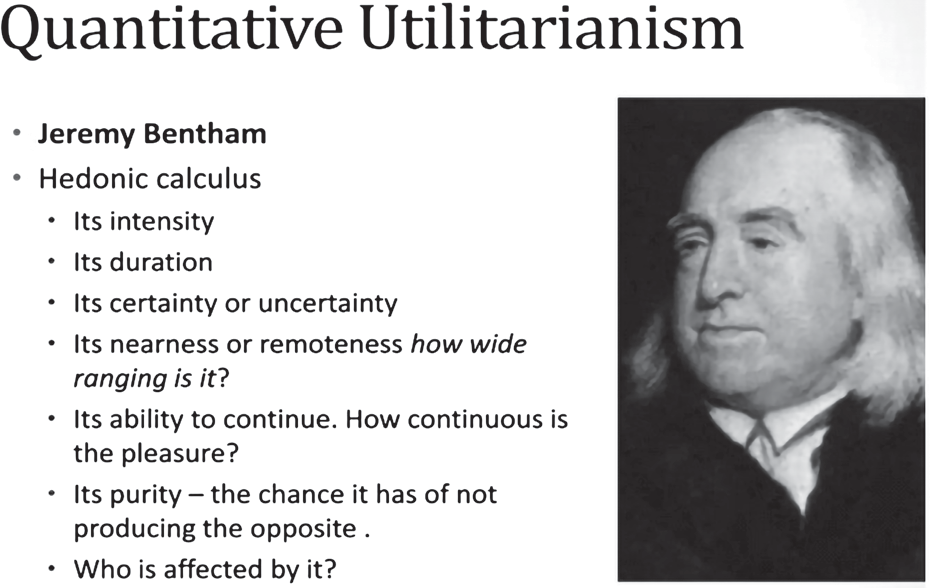
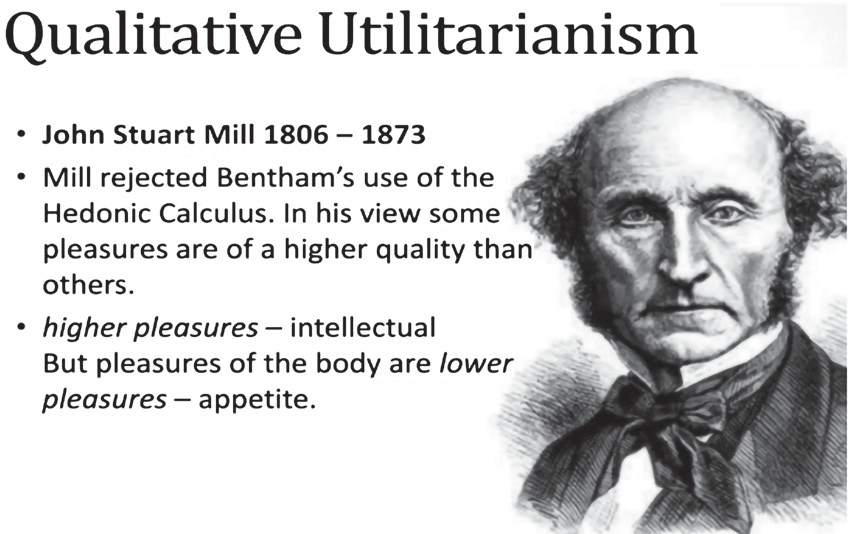
• John Stuart Mill’s Qualitative Utilitarianism: In refining Bentham’s theory, Mill disagreed with the notion that only the quantity of pleasure matters. He believed that the quality of pleasure is equally important in moral evaluation. Mill asserted that mental pleasures and pains are fundamentally different and superior in quality compared to merely physical ones.
Indian Philosophical Thought
• Origins of Governance in India:
• India's earliest governance system was monarchical, responsible for executing public services.
• Information on early administration comes from Vedic texts, Buddhist and Jain literature, Dharmashastras, Ramayana, Mahabharata, Manusmriti, and Arthashastra.
• Manu and the Divine Origin of the State:
• Manu, the first king according to Hinduism, introduced the concept of state governance.
• In Manusmriti, the Divine Theory of Origin of State states that God created kings to prevent anarchy and protect people from exploitation.
• Role of Kings in Ancient Epics:
• Ramayana and Mahabharata depict the king as the supreme authority in administration.
• Kings were assisted by officials in governance.
• Kautilya's Arthashastra and the Development of Public Administration:
• By Kautilya’s time, the Indian public administration system was well established.
•
The State, as per Kautilya, had eight elements: King, Minister, Country, Fort, Treasury, Army, Friend, and Enemy.
• The primary role of the State was to maintain law and order, punish wrongdoers, and protect citizens.
• Unlike Greek philosophers like Plato and Aristotle, Kautilya focused on practical governance over political philosophy.
• Arthashastra emphasized realism and statecraft rather than idealism.
Mughal Administration:
The Mughals established one of the most structured and long-lasting administrative systems.
Akbar played a key role in consolidating the Mughal Empire.
While the Mughals retained earlier Indian administrative traditions, they introduced greater centralization and rigidity.
Unlike Mauryan rulers, the Mughals focused less on social services, welfare, and moral governance
Code of Ethics and Code of Conduct
Code of Ethics and Code of Conduct
According to the Second Administrative Reforms Commission’s 10th Report, titled Refurbishing of Personnel Administration, civil servants have special responsibilities towards citizens because they manage public resources, deliver essential services, and make crucial decisions that impact various aspects of community life.
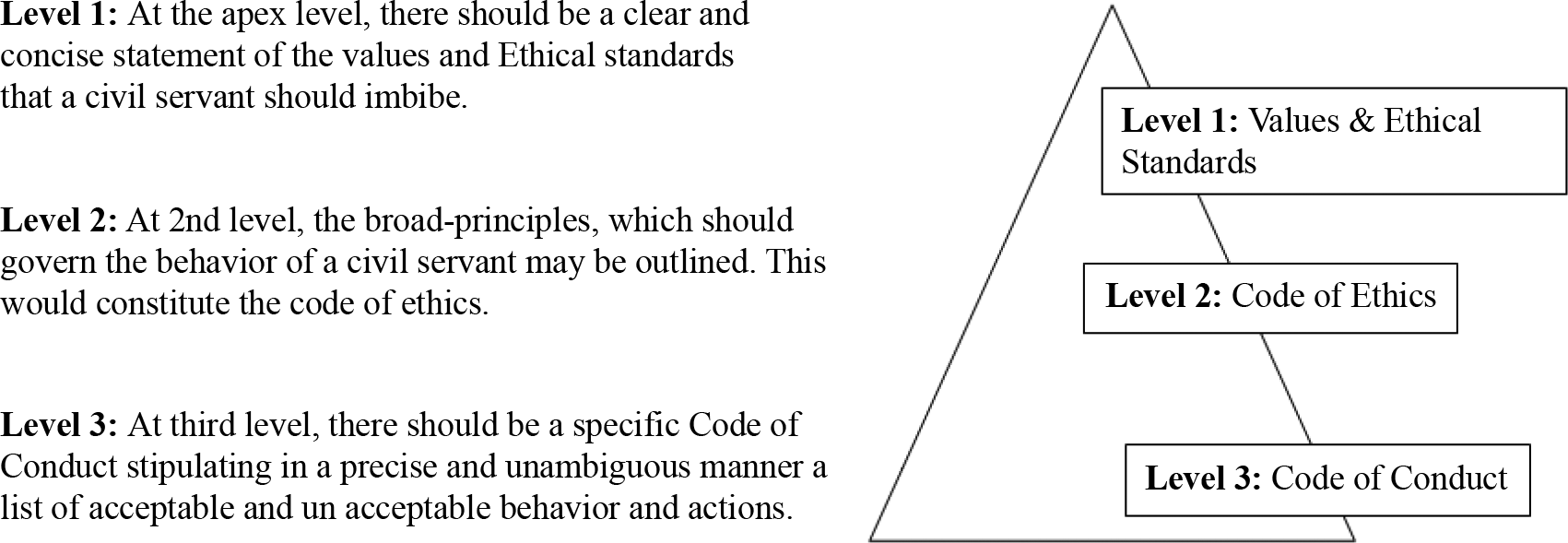
Figure: Ethical Norms Pyramid
Code of Ethics
A Code of Ethics is a guide of general and core
ethical values designed to help professionals conduct business honestly and with integrity.
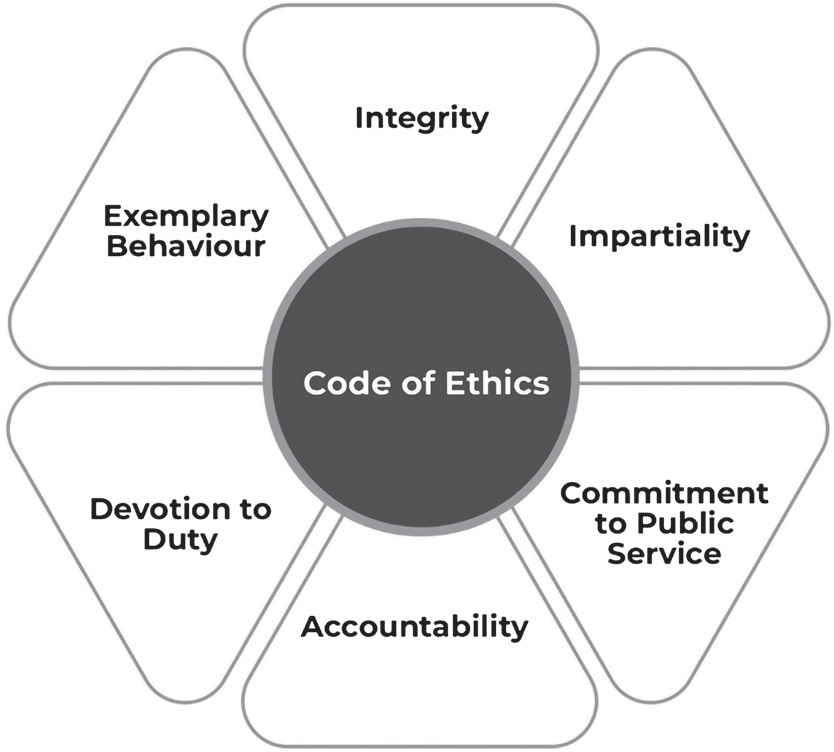
Figure: Aspects of Code of Ethics
The ethical values in a code of conduct are based on the organisation’s core values and the standards to which the professional will be held accountable.
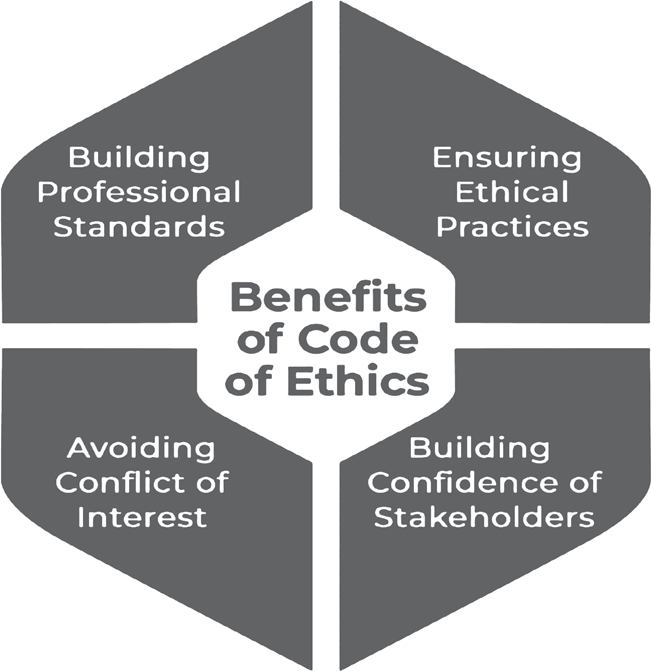
Figure: Benefits of Code of Ethics
It is a document which usually outlines:
the mission and values of an organisation.
The ethical principles based on the organisation’s core values.
The standards to which the professional will be held.
How professionals are supposed to approach problems.
Public Service Bill, 2006 and Public Services Code
• Public Service Bill: Outlines key values and a Code of Ethics for a professional, politically neutral, merit- based, and accountable civil service. These core values include:
• Allegiance to the ideals in the Preamble of the Constitution.
• Apolitical functioning.
• Promoting good governance for public welfare.
•
Duty to act impartially, objectively, honestly, and equitably.
• Accountability and transparency in decision- making.
• Acting with integrity, courtesy, and justice.
• Upholding the highest ethical standards.
• Merit-based civil servant selection, considering national cultural, ethnic, and diversity factors.
• Ensuring economic efficiency and minimizing wasteful spending.
• Creating a healthy and supportive work environment.
• Performing duties with respect to the nation’s diversity without discrimination, while protecting the interests of the underprivileged.
• Encouraging communication, consultation, and cooperation across all levels of government personnel.
• Providing honest, impartial, and candid advice to the political executive.
• Public Service Code as per the Bill and Second ARC Recommendations:
• The Government is expected to uphold Public Service Values and establish a standard ethical framework for public service operations. It must ensure that every public servant:
• (i) Performs duties competently and responsibly, with integrity, diligence, impartiality, objectivity, and accountability, without bias and strictly in line with legal provisions.
• (ii) Focuses on effective administration, professional development, and building leadership capabilities.
• (iii) Refrains from abusing official authority or confidential information, and exercises utmost care and efficiency in the use of public funds.
• (iv) Operates with the intention of making public service a tool for Good Governance, aiming to deliver services that enhance public welfare and promote socio-economic development. This must be done with respect for the nation's diversity, while avoiding discrimination based on caste, religion, community, gender, or class, and by safeguarding the rights and interests of the poor, marginalized, and weaker sections of society.
• The Government, in collaboration with the Central Authority, must formulate a Public Services Code of Ethics within one year of the Act’s enactment to provide guidance to public service employees.
• The Public Services Code should be presented before both Houses of Parliament and remain open for discussion for at least fourteen days.
• Additionally, specialized agencies or departments may develop their own service-specific codes, consistent with the overarching Public Service Code, after consultation with the Central Authority.
• Criticism of the Code of Ethics:
• Theguidelines a re general,abstract, and challenging to enforce.
• They are subjective and open to varying interpretations.
• They do not offer quick solutions in emergencies.
• Theyoverlook socio-culturaland political contexts.
• They are overly descriptive in nature.
Code of Conduct
• Code of Conduct is a set of principles and behaviours which an individual must follow for the successful and ethical conduct of business.
• Code of Conduct is a set of rules outlining expected behaviour from members of an organisation on various transactions.
• It contains the following:
• Principles which are based on the core values of an organisation.
• Detailed and specific behaviours which an individual must follow in form of do’s
• Detailed and specific behaviours which an individual must not follow in form of don’ts
• They are designed to anticipate and prevent certain specific types of behaviour; e.g., conflict of interest, self-dealing, bribery, and inappropriate actions. Most often, they are fairly lengthy and detailed.
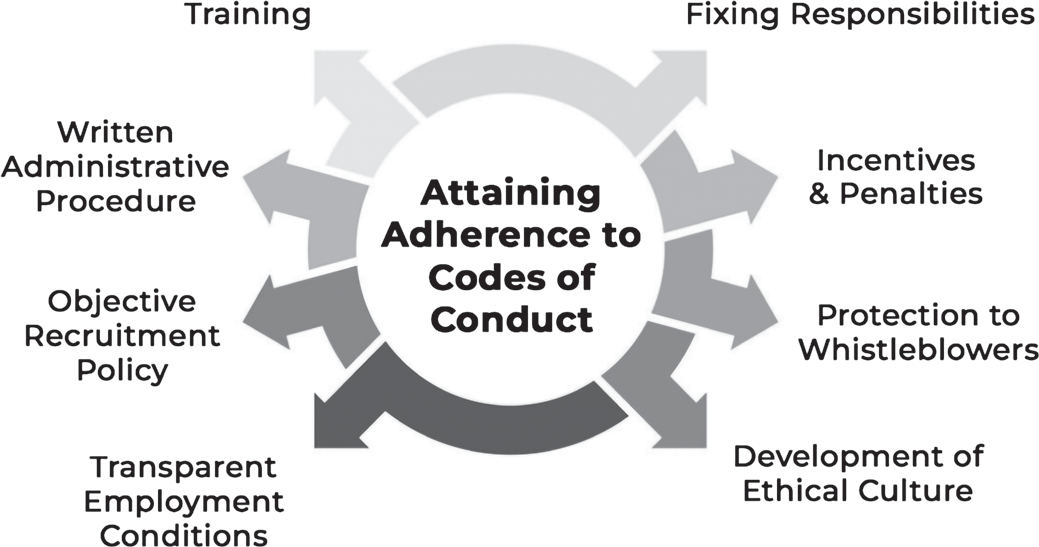
Figure: Adhering to Codes of Conduct
• Central Civil Services (Conduct) Rules 1964
• These are do’s and donts and cover issues like
• Property Transactions
• Acceptance of pecuniary advantages or gifts
•
Joining non-political organizations
• Other normal activities
Criticism of Code of Conduct
• It is almost impossible to predict every possible situation that may arise in the future.
• They are often restrictive rather than affirmative
obligations.
• Highly Prescriptive in nature.
• They generally are designed to address only minimal forms of ethical behaviour.
• Very complex with many sub clauses and exceptions.
• Use of legal language makes them difficult to understand.
• Different codes at different levels are required.
Code of Ethics vs Code of Conduct
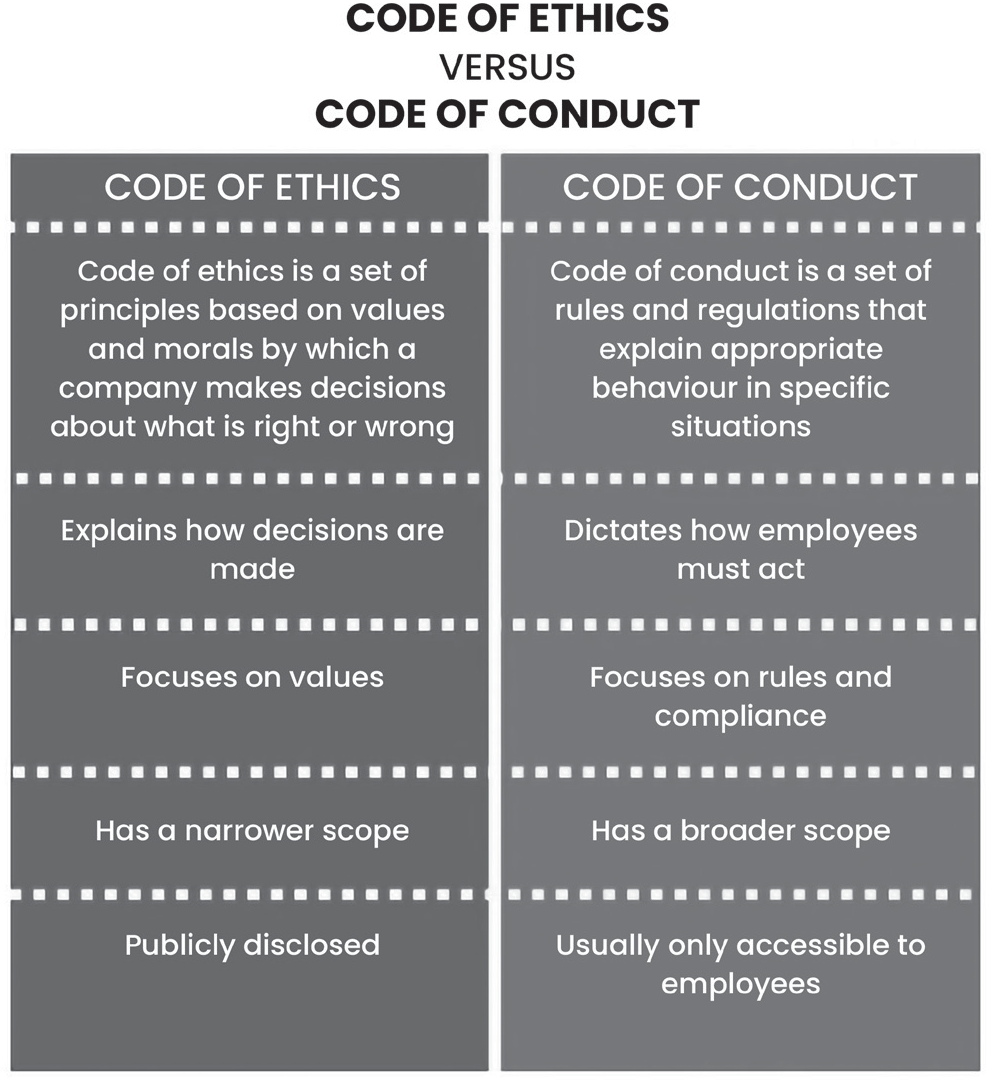
Information Sharing and Transparency in Government
INFORMATION SHARING AND TRANSPARENCY IN GOVERNMENT
Information
• Information is data that has been organized or classified and has some significant value for the recipient. Information is the processed data on which conclusions and responses are based.
• Information plays a key role in decision making. The significance of the decision making depends on the accuracy, completeness and timing of the information. Data is a new oil and information is emulated by data processing.
Information Sharing
• Information sharing is the voluntary act of making information available to others controlled by one entity. The interchange of data across multiple companies, individuals, and technology is referred to as information sharing.
• Wide distributed networks, intranets, cross-platform compatibility, application porting, and IP protocol standardisation have all enabled a tremendous growth in global information interchange.
Why Information Sharing is Important?
• Information sharing by the government offers several benefits to both governments and the public:
• Reduces bureaucratic delays, complexity, and redundant processes (such as collection, validation, and storage of data).
• Promotes more efficient use of public funds by facilitating information exchange between and within government bodies.
• Provides better quality and comparable data, enhancing evidence-based decision-making and supporting cross-jurisdictional initiatives.
• Improves access to government services, making them more seamless for the public.
• Benefits the public by improving the management of natural resources, emergency and health services, and policy planning for communities.
• Encourages active citizen participation in governance.
• Balancing Information Sharing and Security:
• It's crucial to strike a balance between sharing information for effective governance and protecting it from potential misuse by malicious actors.
• A National Information Strategy is necessary, recognizing information as a national asset that must be protected and shared appropriately.
Problems in Information Sharing
• Primary reason for poor information sharing:
• A culture resistant to sharing information, excessive centralization, and misinterpretation of rules that mandate secrecy.
• For example, the Central Civil Services (Conduct) Rules prohibit the unauthorized sharing of information, with similar rules existing for state government employees.
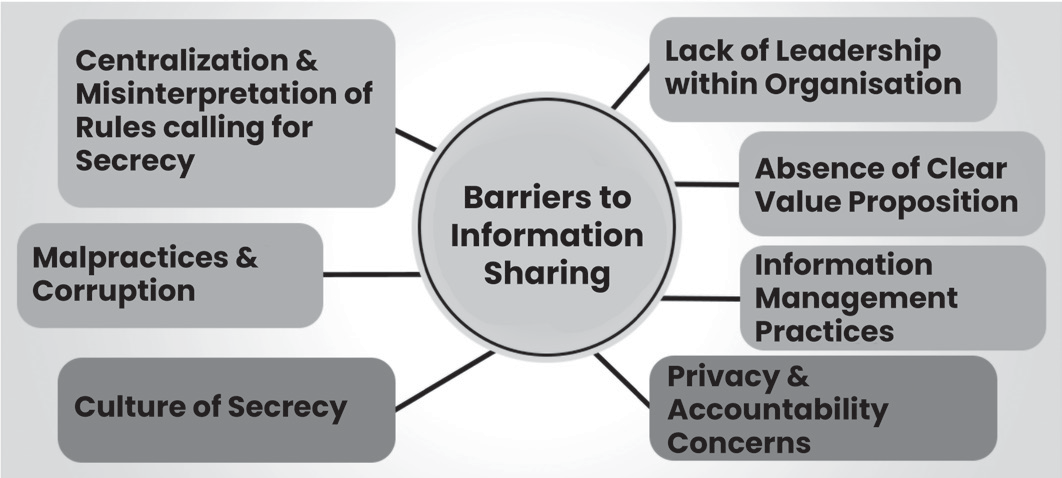
Figure: Barriers to Information Sharing
• Other significant reasons:
• Lack of cooperation and coordination among agencies.
• Absence of a clear value proposition for sharing information.
• Information management practices that hinder sharing capabilities.
• Presence of malpractices and corruption.
• Insufficient infrastructure and technology.
• Information sharing requires motivation, time, and energy, which are often in short supply in government organizations.
• Lack of demand for information and
awareness among the public.
Steps of Improving Information Sharing
• Raising awareness through information education, including privacy education.
• Transforming work culture practices.
• Information governance, which involves laws, methods, standards, guidelines, and the management and dissemination of information.
• Conducting capability gap analysis.
• Managing intellectual property, copyrights, and licensing.
• Developing a communication plan.
Transparency in Governance
• Definition of Transparency: Transparency refers to the timely and reliable sharing of information that is accessible to all relevant stakeholders. In the context of public services, it signifies openness, communication, and accountability, symbolizing the idea of being clear and visible, like a transparent object.
• Application in Public Services: In public services, transparency means that public officials should be as open as possible about the decisions and actions they undertake. They should provide explanations for their decisions and limit withholding information only when it is necessary for the broader public interest.
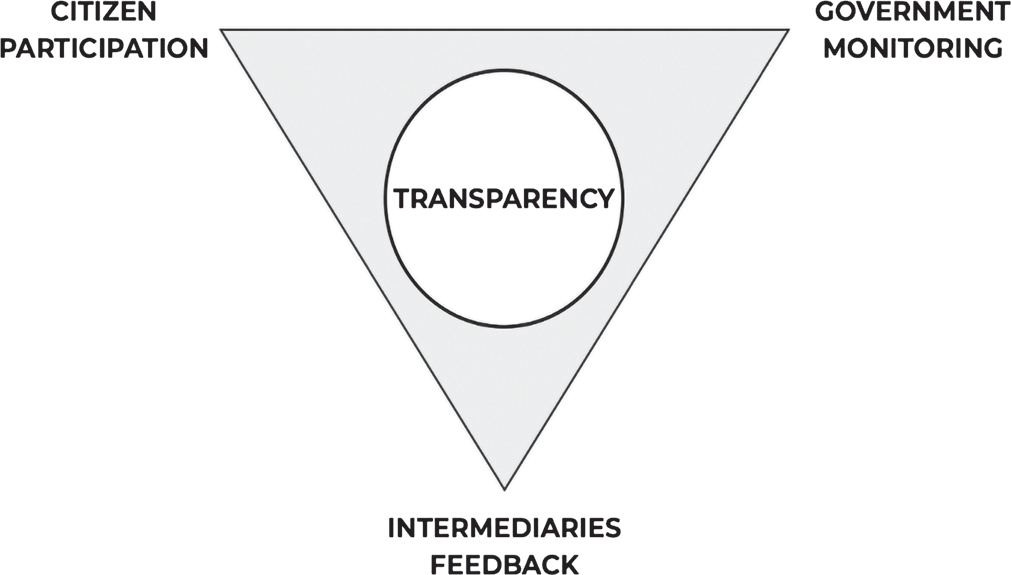
Figure: Aspects of Transparency in Governance
• Transparency in Governance involves openness in the following areas:
• Between the government and citizens
• Between different government bodies
• Between the government and civil society
• Between the government and the private sector
• Within government departments
• Institutional Measures for Achieving Transparency:
• Parliamentary Controls: Through question sessions, debates, etc.
• Legislative Framework: Such as the Right to Information Act and time-bound delivery of services.
• Ombudsman: Institutions like Lokpal and Lokayukta.
• Independent Judiciary: To ensure fairness and accountability.
• E-Governance: Promoting digital transparency.
• Free Press: Ensuring media freedom and accountability.
• Examples of Transparency in Action:
• U Sagayam, an IAS officer from Tamil Nadu, made his and his family's asset details public on a website.
• The RTI Law serves as a crucial tool for good governance.
• The saying, "Sunlight is the best disinfectant,"
emphasizes the value of transparency.
• Supreme Court Judgements: These are reasoned and made publicly available.
• Public Consultations: Involving citizens before enacting laws and rules.
• The use of e-governance, digital governance, and
mobile governance strategies.
• Faceless Income Tax Administration: Ensuring anonymity and transparency in tax processes.
Dimensions of Transparency
• Government Openness: It is defined as the quantum of information that the government releases, meaning, the extent to which governments publish information electronically or makes it available otherwise, as well
as the extent to which the citizens can demand and
receive information not published proactively.
• Protection to Whistle-blowers: Whistle-blowing is one of the fundamental conditions upon which disclosure of abuses of power rests.
• It is often defined as ‘the disclosure by organisation members (former or current) of illegal, immoral or illegitimate practices under the control of their
employers, to persons or organisations that may
be able to effect action’.
• Whistle-blower protection allows individuals to disclose information despite their individual connection to, and vulnerability to retaliation from those in power.
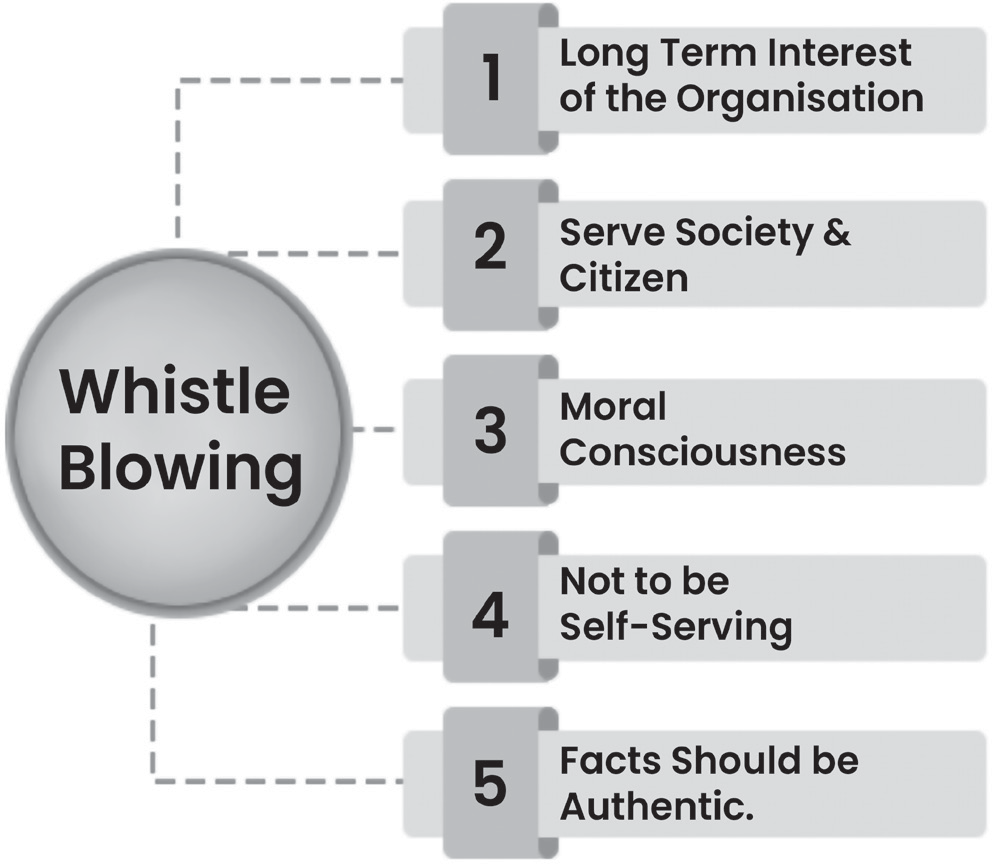
Figure: Benefits of Whistleblowing
• Publicity of Information: There are principally two different types of information displays- Clear and Opaque.
While, ‘opaque’ refers to the type of information which does not reveal how institutions actually behave in practice, in terms of how they make
their decisions or the results of their actions.
‘Clear’, on the other hand, refer to the access information on institutional performance, official responsibilities and flow of public money.
Clear transparency, thereby sheds light on institutional behaviour, which permits individuals to exercise greater control over the
delivery of services; they need to be explicit in terms of ‘who does what and who gets what.’
Importance of Transparency
• It Checks Mismanagement and Corruption. Greater transparency may bring about lower rates of political corruption because it can facilitate legal, administrative or electoral mechanisms of punishment.
•
It is a tool of good governance. Transparency is necessary to guarantee good governance. Information is valuable to the electorate for democratic processes to function successfully.
• It paves the way for Citizen Empowerment. Access to information is critical for enabling citizens to exercise their voice, to effectively monitor and hold government to account, and to enter into informed dialogue about decisions which affect their lives.
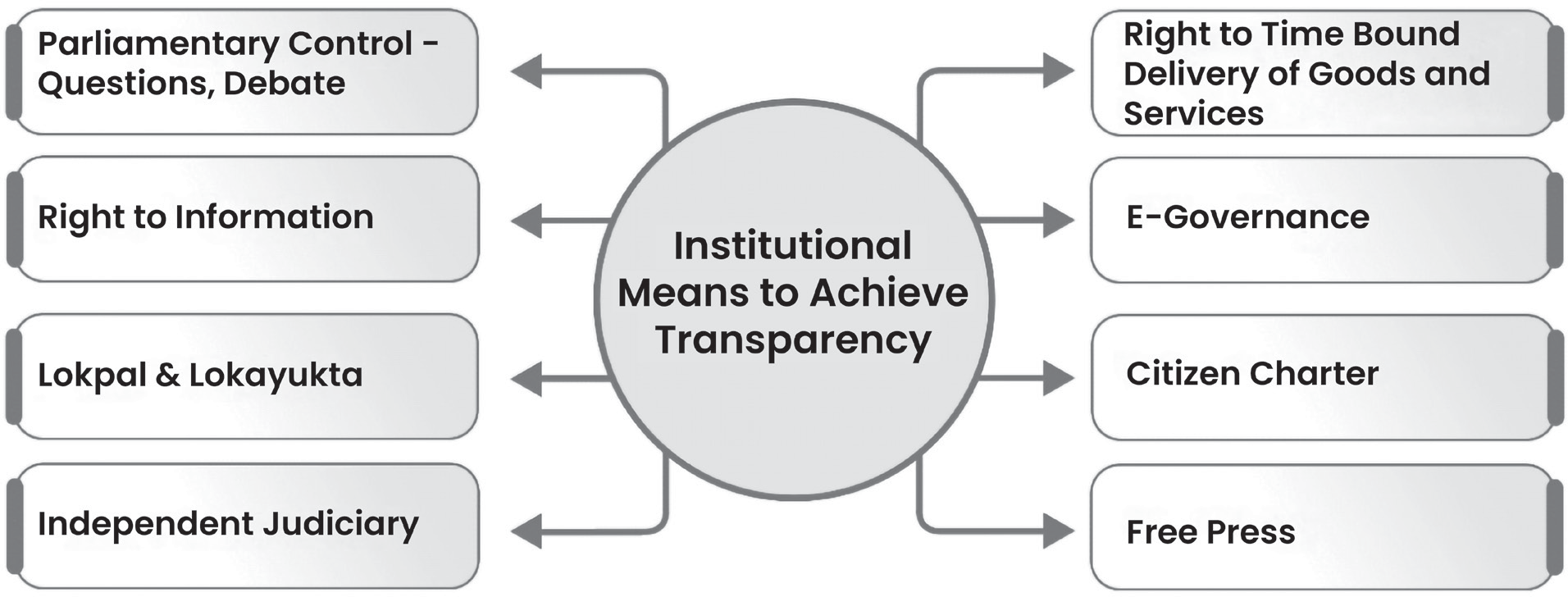
Figure: Institutional Means to Achieve Transparency
How Transparency is Related to Accountability
• The concepts of transparency and accountability are closely linked; transparency is supposed to generate accountability. If ‘transparency is the means, accountability is the end’ that it serves.
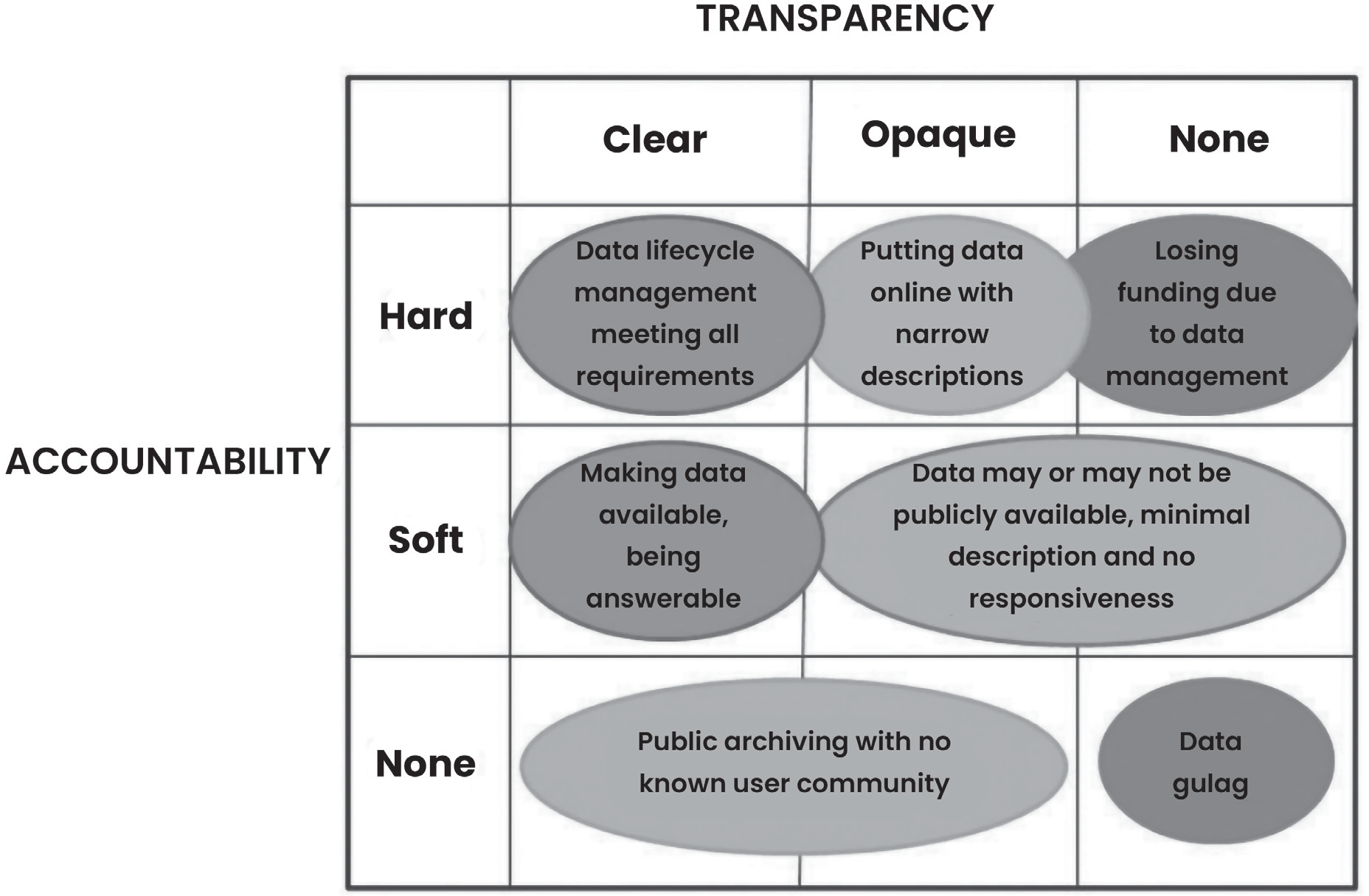
Figure: Accountability- Transparency Matrix
• Transparency ensures that information is available that can be used to measure the authorities’ performance and to guard against any possible misuse of powers and enables shrinking of ‘data gulags’ (i.e. data for which there is no transparency and no accountability).
• In that sense, transparency serves to achieve accountability, which means that authorities can be held responsible for their actions.
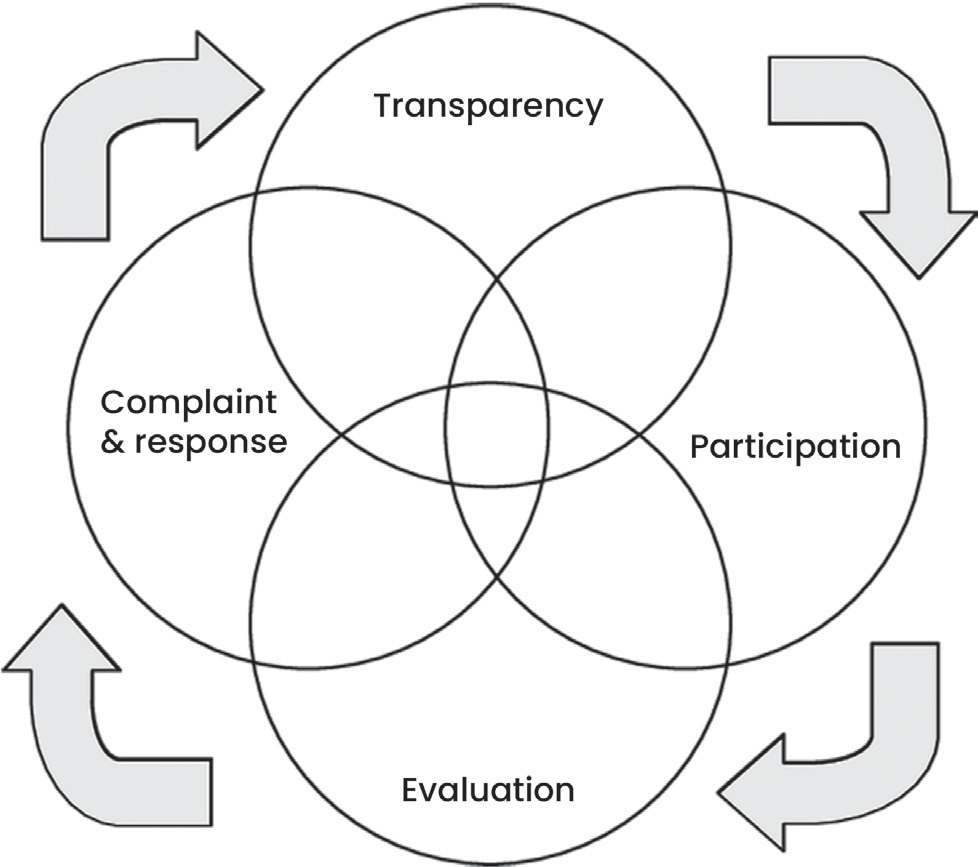
Figure: Global Accountability Framework
• The terms Administrative Accountability and Administrative Responsibility are often used interchangeably.
• Administrative responsibility is nothing but the sum total of all the means through which public officials could be held responsible for their decisions. And transparency in functioning of bureaucracy is one of the major means to secure accountability.
Therefore, in governance, it is generally assumed that the existence of transparency would result in better governance, more accountability and less corruption
Right to Information Act
RIGHT TO INFORMATION ACT, 2005
Background
• The Right to Information gained momentum after the Universal Declaration of Human Rights was adopted in 1948, granting everyone the right to seek, receive, and share information and ideas through any media, regardless of borders.
• The origin of the RTI law can be traced back to a 1986 Supreme Court judgment in the Mr. Kulwal v/s Jaipur Municipal Corporation case. The Court ruled that the freedom of speech and expression under Article 19 of the Constitution implicitly includes the Right to Information, as citizens cannot fully exercise their freedom of speech without access to information.
Objectives of the Act
To empower the citizens
To promote transparency and accountability
To contain corruption and
To enhance people’s participation in democratic process
Factors responsible for adoption of RTI act
Corruption and scams
International pressure and activism
Modernisation and information society
Salient Features of the Act:
The RTI Act grants all citizens the right to access information, making it an obligation for public authorities to disseminate such information.
• Public Information Officer (PIO): Every department must appoint a PIO responsible for providing requested information to the public.
• A PIO can reject a request if the information violates the copyright of someone other than the state. There are restrictions concerning third- party information, and third-party input must be considered when deciding whether to disclose it.
• Time-bound Information: The PIO must provide information within 30 days; if the request concerns life or liberty, the deadline is 48 hours. Information is provided free of charge for people below the poverty line, while others are charged a reasonable fee.
• Appointment of Officials: A Central Information Commission (CIC) and State Information Commissions (SIC) are established to enforce the Act’s provisions. These independent bodies act as appellate authorities with civil court powers.
• CIC handles complaints and appeals related to central government and union territories, while SIC deals with issues at the state government level.
• CIC and Commissioners are appointed by the President based on a committee recommendation that includes the Prime Minister, the Leader of the Opposition, and a Union Cabinet Minister.
• The CIC serves a fixed term, ending at 65 years of age, and is not eligible for reappointment or pensions. Terms, salary, and allowances are set by the government and cannot be changed to the CIC’s disadvantage during their tenure.
• Governments at all levels are required to create educational programs, especially for disadvantaged communities, about the RTI. Officers must receive
training related to RTI implementation.
• Voluntary Disclosure: The Act mandates that public
authorities disclose information proactively to reduce requests. Agencies must publish details on staff payments and budgets.
• The RTI Act overrides the Official Secrets Act, 1923. Information can be disclosed if public interest outweighs the harm to protected entities.
• Exemptions under Sections 8 and 9: Certain information is exempt from disclosure, including matters related to:
• Sovereignty and integrity of India
• National security and economic interests
• Cabinet deliberations
• Contempt of court
• Parliamentary privileges
• Intellectual property rights or trade secrets in the public interest
• Fiduciary relationships (e.g., Aadhaar)
• Impact on public safety or life
• Ongoing investigations and judiciary processes
• Cabinet meetings
• Personal privacy.
Impact of RTI on the Official Secrets Act (OSA)
• The Official Secrets Act (OSA), 1923 was created during the British colonial period to maintain secrecy and confidentiality in the government's operations, which were considered crucial for the nation's growth and development.
• Recently, the OSA came under scrutiny when the government invoked it to defend the leakage of sensitive documents related to the Rafale deal. The government stated that those who shared the information publicly were in violation of the Official Secrets Act.
• There is a clear contrast between the Official Secrets Act and the RTI Act. The OSA was designed to protect government secrecy, while the RTI Act was introduced to promote transparency and accountability in government operations.
• However, the RTI Act includes provisions that prevent the Official Secrets Act from overriding it, especially regarding public access to information and reducing the abuse of power. The RTI Act applies to information from public authorities, ensuring it is accessible to the public.
• If a conflict arises between the OSA and the RTI Act, the public interest takes precedence. Section 8(2) of the RTI Act states that, despite the OSA, public authorities can disclose information when it serves the greater public interest, provided the benefits outweigh the harm caused by disclosure.
•
Section 22 of the RTI Act further clarifies that the RTI Act takes precedence over any law or provision, including the OSA, and applies even if it contradicts other laws.
• The RTI Act plays a crucial role in today's scenario, where corruption and unethical practices are prevalent in government activities. It was established to grant citizens the right to information, ensuring transparency and accountability in government functions.
Impact of The Digital Personal Data Protection (DPDP) Act, 2023 on RTI Act 2005
The Digital Personal Data Protection (DPDP) Act, 2023 fundamentally conflicts with the Right to Information (RTI) Act, 2005, primarily because it removes the "public interest override" that previously allowed access to an official's personal information if a larger public interest justified it.
The Right to Information (RTI) Act, 2005, hailed as a revolutionary step towards transparency and accountability in governance, is now facing a significant dilution through Section 44(3) of the Digital Personal Data Protection (DPDP) Act, 2023. This amendment alters Section 8(1)(j) of the RTI Act, effectively removing the public interest override and restricting access to all “personal information”
The Digital Personal Data Protection Act, 2023, although protecting privacy, has diminished the core of the RTI Act, 2005
The Right to Information (RTI) Act of 2005 was viewed as a groundbreaking move toward openness and accountability in governance. However, it is facing challenges through the Digital Personal Data Protection Act, 2023 (‘DPDP Act’). It eliminates the concept of "public
interest override" and restricting access to all “personal informati on”.
• Significance of DPDP Act, 2023 in Upholding Privacy:
• Constitutional Realisation of Privacy Right: Gives legal substance to the K.S. Puttaswamy (2017) decision, which proclaimed privacy a fundamental right under Article 21.
• Empowerment of Citizens: Individuals get control over their data by using their rights to access, update, erase, withdraw consent, and file a grievance.
• Accountability of Data Fiduciaries: Requires data minimisation, accuracy, security protections, and breach reporting, with tougher standards for Significant Data Fiduciaries.
• Child & User Protection: Minors must provide verifiable parental consent, and harmful processing and targeted advertising are prohibited for users under the age of 18.
• Strong Enforcement & Deterrence: The Data Protection Board of India is established to oversee and handle grievances, with fines of up to ₹250 crore for major violations.
Concerns with DPDPA, 2023
• Amendment to Section 8(1)(j) of RTI act via Section 44(3) of DPDPA:
• The proposed legislation eliminates the public interest protection and prohibits the dissemination of personal information entirely.
• Government agencies can now withhold data that would otherwise be disclosed for transparency purposes.
• Chilling Effect: Unauthorized disclosure fines of up to
₹250 crore deter officials, media, and RTI campaigners.
• Ambiguity in Definition: "Personal information" is broadly defined, allowing for the rejection of previously available information.
• Privacy vs Accountability Dilemma: While safeguarding privacy, it reduces accountability in government.
• Transparency weakened: Privacy regulations can be used as a cover for dishonest authorities, thus depriving citizens of their rights.
• Judicial safeguards bypassed: Previous decisions, such PUCL v. UOI, 2003, maintained that the public interest took precedence over confidentiality.
Achievements of RTI Act, 2005
• Rights-Based Demands: The RTI Act sparked the demand for other significant rights, such as the right
to employment, the right to education, and the right to food security.
• Exposing Scams: The RTI Act played a crucial role in exposing several high-profile scams, including the Adarsh Housing scam, which led to the resignation of the Chief Minister of Maharashtra. It was also instrumental in uncovering the 2G, coal blocks allocations, and Commonwealth Games scandals.
• I-T Returns of Political Parties: In 2008, the CIC ordered the disclosure of income tax returns filed by political parties, sparking a debate on bringing political parties under the RTI Act's scope.
• Accessible File Notings: Following multiple CIC orders, the government started making file notings accessible under the RTI Act in 2012, which increased pressure on bureaucrats to document their work properly.
• Public Disclosure of Assets: Due to the pressure from transparency laws, the assets and liabilities of ministers, bureaucrats, and judges are now publicly available and updated annually.
• Public Scrutiny of Government Actions: Transparency enabled public scrutiny, as seen in the audit of the PM CARES Fund.
• Promoting People-Centric Governance: The RTI Act has empowered the poor, as seen with initiatives like the PM KISAN scheme, the accountability of PDS ration shops, and the PAHAL scheme for LPG distribution to women in need.
Key Issues and Constraints in the Implementation of the Act
• Demand-Side Issues
• Low Public Awareness: A survey revealed that only 15% of respondents were aware of the RTI Act. Awareness levels varied significantly between rural and urban populations, ranging from 33% in Maharashtra to 5% in Andhra Pradesh.
• Lack of User Guides for RTI Implementation: 52% of citizens surveyed requested the availability of a user guide or manual at Public Authorities to assist in the RTI process.
• Absence of Standardized RTI Application Forms: The debate continues on the need for a standardized RTI application form, although the Act does not mandate one.
• Poor Quality of Information Provided: More than 75% of citizens surveyed were dissatisfied with the quality of information provided under RTI requests.
• Supply-Side Issues
• Failure to Provide Information Within 30 Days:
Over 50% of information seekers reported delays exceeding 30 days in receiving information from the Public Information Officers (PIOs).
• Inadequate Training of PIOs and First Appellate Authorities: Only 55% of PIOs surveyed had received RTI training.
• Outdated Record Management Guidelines: Ineffective record management and delays in information collection from field offices hinder the processing of RTI applications.
• Lack of Basic Infrastructure: PIOs reported that a lack of infrastructure, especially at the Block/Panchayat level, hampers effective RTI implementation.
• Lack of Motivation Among PIOs: Besides resource constraints, PIOs also lack the motivation to implement the RTI Act.
• Ineffective Implementation of Section 4(1) (b): This section requires Public Authorities to proactively disseminate information, but it is not being implemented effectively.
• Issues at Information Commissions
• Perception of Leniency Toward PIOs: Discussions and surveys indicated that penalties for PIOs are rarely imposed, leading to the perception of leniency.
• Lack of Monitoring and Review Mechanisms: There is an absence of effective mechanisms for monitoring and reviewing RTI implementation.
• High Pendency of Appeals: The number of pending RTI appeals is growing rapidly each year.
• Geographical Concentration of Information Commissions: Most Information Commissions are located in state capitals, forcing appellants to incur additional costs to attend hearings.
Recommendations for Effective Implementation of the Act
• Awareness Generation:
• Utilize mass media channels like television and newspapers effectively to raise awareness.
• Awareness campaigns should be managed by reputable nonprofit organizations at the State level, designing multimedia campaigns in local languages to meet the needs of the people.
• User Guides for RTI Implementation:
• The government should provide user guides to
information seekers regarding the implementation of the Right to Information (RTI).
• Standardize the RTI application form to capture basic details such as address, contact numbers, and the format for requesting information.
• Ensure that information is provided within the
prescribed time frame.
• Publish suo motu disclosures in printed, priced publications in the official language, updated at least annually.
• Training Programmes:
• Training should not be limited to Public Information Officers (PIOs) and Assistant PIOs (APIOs); all government officials should receive at least one day of RTI training annually.
• Monitoring and Oversight:
• The Central Information Commission (CIC) and State Information Commissions (SICs) must ensure the effective implementation of the RTI Act across public authorities.
• At least half of the members of the Information Commissions should be selected frombackgrounds outside of civil services.
Famous quotes on Transparency
• "Those who aspire to govern must empower themselves with the knowledge that leads to informed decision- making. A government without accessible information is a mere precursor to failure and dysfunction." - James Madison
• "Nothing can be truly secure if it cannot withstand open discussion and scrutiny." - Lord Action
• "Secrecy in government is undemocratic and fosters bureaucratic mistakes. Open dialogue, full information, and debates on public matters are essential for the well-being of the nation." - Just Douglas of USA
• "The absence of transparency breeds distrust and insecurity." - Dalai Lama
• "Connectivity promotes transparency, which is essential for better governance, education, and healthcare." - Bill Gates
Work Culture
Work Culture
Work culture refers to the shared values, beliefs, and principles of members within an organization, shaped by factors like history, product, market, technology, strategy, employee type, management style, and national culture.
Examples of successful work culture:
Indian Space Research Organisation (ISRO): Despite being a public institution, ISRO has achieved high effectiveness and success.
Abdul Kalam: Took his engineer's children to exhibitions, emphasizing the importance of work-life balance.
Satish Dhawan: Took responsibility for the failure of the first SLV mission and later credited the entire team for the success of the next mission.
Tihar Jail: The work culture improved significantly when Kiran Bedi led the change.
Narayan Murthy of Infosys: Focused on maintaining a good work-life balance for employees.
Delhi Metro: Adopted practices that created an efficient work culture.
Education Sector: Incentives were introduced to improve teacher attendance, motivation, and performance, reducing absenteeism and improving student learning outcomes.
Hospitals: Humane treatment and incentives for sanitation staff helped reduce infections and improve hospital cleanliness.
Ethics at Workplace
• Ethical behavior is important for both professionals and businessmen.
• It can enhance one's career and improve the work environment.
• Whether in a service or business sector, adopting ethics can improve productivity and effectiveness.
•
Workplace ethics can be developed by cultivating certain habits or etiquettes.
Need of Ethics at Workplace
• Credibility with the Public: An organization’s ethical values build trust and credibility with the public.
• For example, consumers are more likely to purchase from a company they believe is honest, transparent, and offers good value for their money.
• Credibility with Employees: When employees believe in the ethical values of their organization, they hold it in high regard.
• A company’s social responsibility and moral values often have a greater impact on employees than financial incentives.
• Better Decision Making: Adhering to ethics compels management to make better decisions, considering the interests of stakeholders such as shareholders, employees, customers, clients, the host country, and the company’s long-term success.
• Profitability: Ethical organizations are more likely to be profitable than those that disregard rules and policies.
• Ethical companies have a well-defined organizational structure that keeps operations on track and discourages unethical practices.
• Unethical practices such as cheating, abusive behavior, and insider trading are controlled by enforcing predefined rules in the company's code of conduct.
• Protection of Society: Ethics can sometimes protect society more effectively than the legal system.
• For example, an ethically sound HR manager may handle employee issues more effectively than law enforcement.
• Additional Benefits of Ethics:
• Ethics promote strong teamwork and higher productivity.
• They foster coordination and harmony among employees.
• Ethics contribute to organizational growth.
• They help prevent criminal practices within the organization.
Factors That Affect Ethics at Workplace
• Personal Goals: Personal goals are a key factor influencing workplace ethics.
• For example, an employee focused solely on money may resort to unethical practices, like insider trading, to achieve their goal.
• Managers should monitor employees’ personal goals, as they can significantly impact the organization’s ethical standards.
• Values : Values refer to an individual’s standards or judgments about behavior.
• For instance, an employee may lie to clients about a competitor’s products to persuade them to purchase their own, which is unethical as it misguides the client’s decision-making process.
• Morals: Morals are the principles that shape an individual’s ethics, often influenced by cultural norms, religion, and upbringing.
• Morals dictate what is considered right or wrong and significantly affect an employee's behavior in the workplace.
• Personality: An employee’s personality traits can
influence ethical behavior.
• Risk-takers may be more prone to engaging in unethical practices.
• For example, an employee overstepping their authority to secure a business contract is considered unethical due to the likelihood of failure and dishonesty.
• Manager-Employee Relationship: A positive relationship between managers and employees fosters ethical behavior.
• Managers should reward employees for their work and guide them when they make mistakes, which helps build trust and cooperation.
• Society: Society plays a significant role in shaping the ethical policies of an organization.
• The actions of an organization are scrutinized by society, and any unethical practices are brought under legal scrutiny.
• For example, releasing waste into water bodies is unethical due to its harm to the environment, and society demands that organizations avoid such practices.
Ways to Prevent Unethical Practices at Workplace
• Establish a Code of Conduct: A written code outlines the expected behaviors for employees and managers, specifying unacceptable actions and the consequences for violations.
• Set an Example: Managers should lead by example, making ethics-based decisions that inspire positive habits in employees.
• Recognize Employee Contributions: Showing appreciation for employees' work fosters a sense of
value, which boosts loyalty and reduces the likelihood of unethical behavior.
• Enforce Consequences: Managers must hold employees accountable for unethical actions. Repeat offenders should be given warning letters, followed by termination without salary and no experience letter.
• Hire for Values: When recruiting, employers should prioritize not only skills but also an individual’s values and character, conducting thorough background checks.
• Provide Workplace Ethics Training: Employees should receive training on company policies and procedures to help them address ethical dilemmas through diverse instructional methods.
Ethics in International Relations
Ethics in International Relations
• Global ethics refers to the moral principles or codes governing interactions between nations, forming the basis of the International Political or Legal Order.
• Ethical concerns are central to international relations, which addresses war, peace, trade, law, and rights, despite realism often being skeptical of ethics.
• Global ethics deals with moral dilemmas arising from economic, technological, legal, political, social, and cultural globalization, including debates on:
• Social justice
• Human rights
• Environmental protection across borders
• Social responsibility and accountability
• Interdependence through a global perspective
• A core feature of today’s international order is "sovereign equality" of states, mainly derived from the United Nations Charter.
The growing threat of global disasters, such as floods, earthquakes, or pandemics, demands international cooperation.
Examples include Pakistan’s floods, Nepal’s 2015
earthquake, and the COVID-19 pandemic.
During crises, people should not suffer because of political conflicts. Human life must be protected through cooperation.
Disasters should not be used for political gain but should be handled based on humanitarian values and respect for human life.
Cooperation during emergencies can lead to stronger collaboration between previously hostile nations.
India has demonstrated ethical principles, such as aiding Pakistan during the 2010 floods and providing assistance during the Yemen conflict.
Key Ethical Principles and Theories in International Relations
• Ethics in International Relations: Refers to values such as justice, equality, cooperation, humanism, tolerance, mutual trust, and respect.
• Therefore, international relations should prioritize promoting socio-economic development, as well as ensuring collective peace and security.
•
Conflicts and discussions should be handled with equality, respect, and through diplomatic means and persuasion.
• In times of emergencies and disasters, there should be
cooperation from all parties involved.
International Ethical Values as Enshrined in the Preamble of the UN Charter
• Objectives of the United Nations Charter (Preamble):
• To prevent future generations from experiencing the devastating impact of war, which has caused immense suffering twice in recent history.
• To reaffirm commitment to fundamental human rights, the dignity and worth of every person, and the equal rights of men, women, and nations, both large and small.
•
To create conditions where justice is upheld, and obligations from treaties and international law are respected.
• To foster social progress and improve standards of living in greater freedom.
Key Issues in International Ethics
• Espionage on Friendly Countries:
• In today’s multi-polar world, nations don’t neatly fall into "friends" or "enemies," as was the case during the Cold War. Interests, not friendships, define international relations.
• Espionage has long been used to assess the strengths and weaknesses, both moral and military, of other nations, and sometimes even one's own citizens (e.g., during Ashoka's reign).
• Spying on hostile nations is generally seen as
justified for national security reasons.
• However, espionage on friendly nations raises two concerns:
• The state’s responsibility to protect its citizens' interests.
• Breaching the trust and sovereignty of the friendly nation.
• Although spying on allies is unethical because it breaches trust, interests shift, and it’s pragmatic to maintain vigilance over friendly nations through conventional and diplomatic means.
• For example, the USA has maintained close surveillance over both its citizens and foreign leaders to safeguard its global interests.
• In the case of India, issues like cross-border terrorism and smuggling often stem from neighboring countries. Even friendly nations may harbor anti-India sentiments, leading to a potential threat.
• While espionage on friendly nations is unethical, if kept undisclosed, it may not harm diplomatic relations but still protect national interests.
• Might is Right:
• In international politics, the argument often shifts to power rather than the moral argument, as nations prioritize their national interests over ethical considerations.
• Bilateral relations focus more on fulfilling obligations than on morality. Nations often support powerful countries despite morally questionable actions (e.g., Gulf Wars, US invasion of Iraq).
• Morality does play a role in shaping international relations in certain situations, such as India's
commitment to its Panchsheel Doctrine, Nuclear Doctrine, and its actions during the Indo-Pak War of 1971 when it returned land and war prisoners to Pakistan.
• Nations use morality selectively in international relations, depending on whether it aligns with their broader national interests.
• The Problem of Refugees:
• Refugees are people seeking permanent or temporary asylum outside their country due to war, riots, persecution (based on religion, race,
politics, etc.).
• Ethical debates arise when nations face issues with refugees:
• Concerns about limited resources, as refugees often lack land, property, and skills. For instance, in the 1947 mass migration from Pakistan, large areas of land were allocated to refugees.
• Supporting refugees may invite hostility from the refugee’s home country, as seen in the 1972 Indo- Pak war.
• Political and diplomatic polarizations, like the migration of East Pakistan refugees to West Bengal.
• If refugees are political dissidents, it can lead to long-term challenges (e.g., Dalai Lama, Taslima Nasreen).
• An influx of refugees, especially environmental or poverty-driven ones, could lead to annual challenges for the host nation.
• Ethical considerations must balance the welfare of the nation's citizens with humanitarian support for refugees.
• The fundamental rights of citizens, such as life and equality, should not be compromised in favor of refugees’ survival.
• Debates over refugee issues usually don’t include refugees, as they are often represented by NGOs, human rights organizations, and activists.
• Refugees, typically being poor, illiterate, and unaware of the policies of host nations, do not contribute positively to debates about their future.
• Asking refugees for input could provoke enmity from their home country, which forced them to flee.
• For refugees, the actions taken to alleviate their fears are more important than their involvement in debates. Therefore, their exclusion from such
discussions is a considered and appropriate decision.
• War Against Terror:
• Taking a life is generally considered unethical, and so is war. However, when an individual's or group’s actions pose a direct threat to others’ survival, acts of self-defence, including war to a certain extent, may be seen as morally justified.
• For instance, with the emergence of ISIS as one of the most dangerous and wealthiest terrorist organizations, threatening global peace and stability, including targeting countries like the United States, a military response to protect
national security can be considered ethically defensible.
• Nonetheless, launching attacks on ISIS, which operates from countries like Iraq and Syria, raises ethical concerns about violating the sovereignty and territorial integrity of those nations.
• Yet, if these states are unable to eliminate the threat themselves, allowing ISIS to grow unchecked could lead to its expansion into neighboring countries, thereby escalating regional and global security risks.
• Additionally, civilian casualties and damage to infrastructure resulting from airstrikes create significant economic and humanitarian challenges for the affected nations. However, if ISIS is permitted to expand, the potential loss of life and economic disruption may be even more severe, as demonstrated by their control over oil fields in Iraq.
• In light of the larger global interest, targeted action against ISIS may be considered morally acceptable, provided such actions are based on accurate intelligence to enhance effectiveness and minimize civilian harm. Collaboration with regional powers is also crucial in ensuring the legitimacy and success of such operations.
• The Challenge of Climate Change:
• Climate is a vital resource shared equally by humans, animals, and plant life. However, uncontrolled exploitation of natural resources by humans has put the climate and biodiversity at serious risk.
• When there is an absence of unified and rational thinking among nations, individuals, and across generations regarding climate change mitigation, several ethical concerns arise:
• Ethical Responsibility of Individuals:
• An individual's carbon footprint varies depending on the country they live in.
• For instance, per capita greenhouse gas emissions in developed countries can be up to 50 times higher than those in less developed nations, highlighting major lifestyle disparities.
• Individuals, especially those with more financial and technological resources, have a greater moral obligation to reduce their emissions and manage waste responsibly.
• Ethical Duty of Nations:
• Developed countries should lead the way in sharing technology and knowledge with
developing countries, enabling them to grow economically without heavily polluting.
• Given their historical role in environmental degradation, industrialized nations must work to reduce pollution more actively.
• The concept of the “Tragedy of the Commons” suggests that since the climate is a shared resource, some nations may feel little incentive to pollute less, believing it won’t significantly impact them—or that polluting more won’t personally harm them.
• This mindset is ethically flawed. It underpins actions like the U.S. not ratifying the Kyoto Protocol and hesitating to commit to pollution reductions.
• Additionally, there is global disagreement over issues like Common But Differentiated Responsibilities (CBDR), technology transfers, and funding mechanisms.
• Ethical Duty Across Generations:
• It is the current generation’s moral responsibility to leave a stable and healthy environment for future generations rather than a world plagued by climate instability, floods, droughts, diseases, and food shortages.
• Ironically, individuals who are cautious in caring for their children—such as washing fruits and vegetables—often ignore the broader environmental harm caused by actions like owning multiple vehicles or leading a consumerist lifestyle.
• This disconnect arises due to a lack of foresight and the inability to visualize the long-term consequences of present actions.
• The climate is a shared public resource, and it is our duty to pass it on to future generations in the same or a better condition than we inherited it.
ONE MAN’S TERRORIST IS ANOTHER MAN’S FREEDOM FIGHTER.”
• Indian freedom fighters like Bhagat Singh and the Chapekar brothers are seen as heroes by Indians but labeled as terrorists by British historians. This illustrates the historical validity of the statement in the context of India's struggle for independence.
• Bhagat Singh, Sukhdev, and others never harmed ordinary people and used violence only as a last resort. In contrast, figures like Hafiz Saeed and Abu Bakr Baghdadi regularly target innocent civilians, including women and children, who have no ties to the government.
Indian revolutionaries sacrificed their lives for the people’s freedom, while jihadists are more focused on gaining personal power and wealth. This makes the actions of modern terrorists ethically wrong in comparison.
• Difference Between Terrorist and Freedom Fighter:
• The distinction between terrorists and freedom fighters can be subtle. The main differences are:
• Terrorists: Use fear and violence to force civilians to support their cause. They target anyone, including their own civilians, to instill fear and achieve their demands.
• Freedom Fighters: Struggle for civilian rights against an oppressive government or military. They do not harm their own people and may fight peacefully or through the assassination of corrupt officials. Their goal is often peaceful self-governance, transparent elections, or co-existence with the government if their demands are met, unlike terrorists who are often disconnected from civilians.
• A case in point is the Irish Republican Army, which was branded a terrorist organization by the British government, while they considered themselves freedom fighters, showing how perspectives on this issue can differ.
• Therefore, there is a clear distinction between freedom fighters and terrorists. Often, terrorists disguise themselves as freedom fighters to gain sympathy or political legitimacy.
Seas, Atmosphere, Antarctica, and Outer Space,all raising ethical questions.
High Seas: Historically governed by the principle of free access, now many countries claim sovereignty over these waters due to their geopolitical and commercial importance. This challenges the ethical correctness of restricting access to shared resources.
Antarctica: Facing environmental degradation from human activity, particularly pollution and global warming, the ethical question arises whether it's right for countries to harm Antarctica’s environment, given the potential long-term global consequences.
Outer Space: With increasing satellite launches and congestion in space, the ethical question arises about the peaceful use of outer space. The testing of satellite destruction capabilities, like by China, further raises concerns about the militarization of space and its implications for peace
Utilisation of Public Funds
Utilisation of Public Funds
Public Fund : The money that the government earns, which comes from direct and indirect taxes, non-tax revenues, and external financing. This fund can only be spent according to the law.
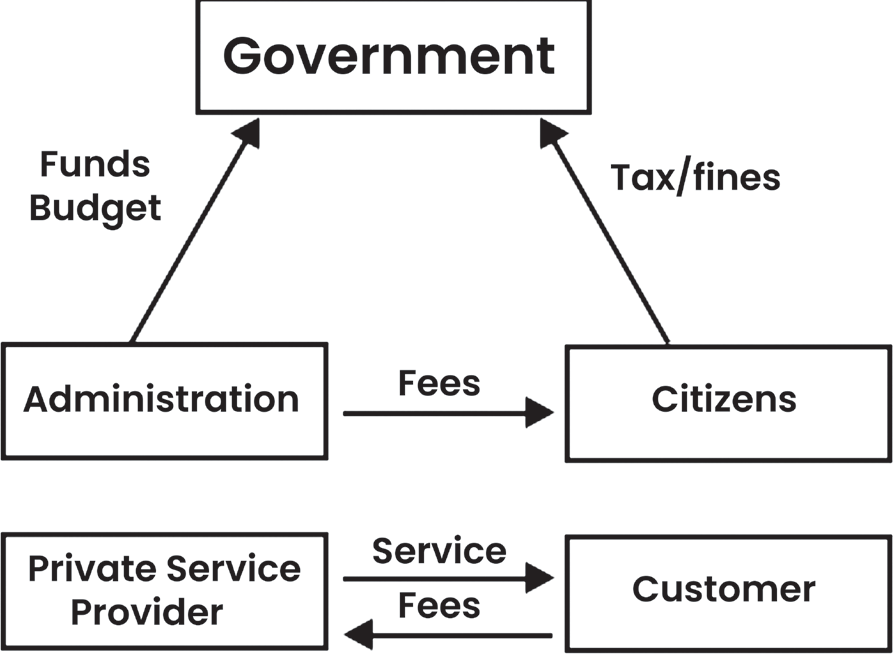
Figure: Government vs Private Sector Revenue Model
• Government's Use of Public Funds:
• Delivering public services.
• Providing grants and subsidies to businesses and disadvantaged groups.
• Making social transfers, such as welfare payments and pensions, to eligible citizens.
• Procuring goods and services.
• Government's Responsibilities:
• Consolidate financial operations.
• Consider the specific nature of expenditures.
• Ensure a productive relationship between expenditure and benefit.
• Disclose the immediate or future fiscal impact.
• Ensure efficiency and effectiveness in spending at all levels.
• Follow performance-based budgeting.
• Set the “Public Spending Code.”
• Optimal Use of Public Funds: Public funds are effectively utilized when spending aligns with the law, follows accepted standards, ensures accountability and financial control, and uses resources and inputs efficiently.
• Ethical Concern of Fund Utilization: The ethical responsibility of the government is to utilize public funds efficiently, as citizens trust the government to manage these resources on their behalf.
Issues involved in Fund Utilisation
• Effective Utilization of Public Resources: Crucial for achieving development goals, issues arise primarily from the underutilization and misutilization of public funds.
• Under-utilization of Public Funds:
• Funds allocated for the Tribal Sub Plan under Scheduled Tribes are not spent, as highlighted in a recent report by the National Commission of Scheduled Tribes (NCST).
• Funds for schemes such as Pradhan Mantri Gareeb Kalyan Yojana are not being fully utilized.
• Mis-utilization of Public Funds:
• Diversion of Funds: Funds intended for tribal development are often redirected to other schemes, even though these funds are meant to be dedicated and non-lapsable.
• Ineffective Schemes: Programs like Swachh Bharat Abhiyan have instances where toilets are constructed without proper water supply or drainage facilities.
• Electioneering Misuse: Ruling parties often divert public funds for advertising their work to gain political advantage, leaving insufficient funds for public schemes.
• Other Key Issues in Fund Utilization:
• Leakages in Project Funding: For example, in road projects, poor quality roads are built without accountability.
• Imbalance in Fund Distribution: Greater emphasis on revenue expenditure over capital expenditure and critical services such as health, education, and sanitation.
•
Bailing Out Public Sector Undertakings (PSUs): Public funds are often used to recapitalize banks and address Non-Performing Assets (NPA) issues.
• Corruption in Government Procurement: Corruption scandals, such as the Tatra Trucks case, are linked to mismanagement of funds.
• Equitable Distribution of Resources: Ensuring that funds and benefits are fairly distributed to all citizens.
Public vs. Private Sector Involvement:
Key programs in education and health are largely operated within the public sector.
While private infrastructure investments have increased in sectors like telecommunications and energy, private investors remain hesitant to invest in socially-driven sectors like water and sanitation, especially in the poorest countries.
Impact of Underutilisation/misutilisation of Public Funds
Resource Wastage: Leads to a depletion of resources, negatively affecting service delivery.
Poor Quality and Unsustainable Infrastructure: Delays in project completions, such as bridges, dams, MGNREGA, PMGSY, etc., result in subpar infrastructure.
Slow Economic Growth: Hinders the development of key economic sectors like retail and logistics.
Breach of Trust: Erodes public trust in government and public institutions.
Negative Impact on Social Welfare: Vulnerable groups, including women, the elderly, SC/ST/OBCs, transgender individuals, Divyangs, and minorities, face further disadvantages.
Increased Economic and Social Inequalities: Worsens the digital divide, rich-poor gap, and rural- urban divide, undermining constitutional goals and Sustainable Development Goals like poverty reduction and Zero Hunger.
Steps to Address the Challenges
Social Audits: Social Audit is a process in which, details of the resource, both financial and non- financial, used by public agencies for development initiatives are shared with the people, often through a public platform. Social audits allow people to enforce accountability and transparency, providing the ultimate users with an opportunity to scrutinize development initiatives.
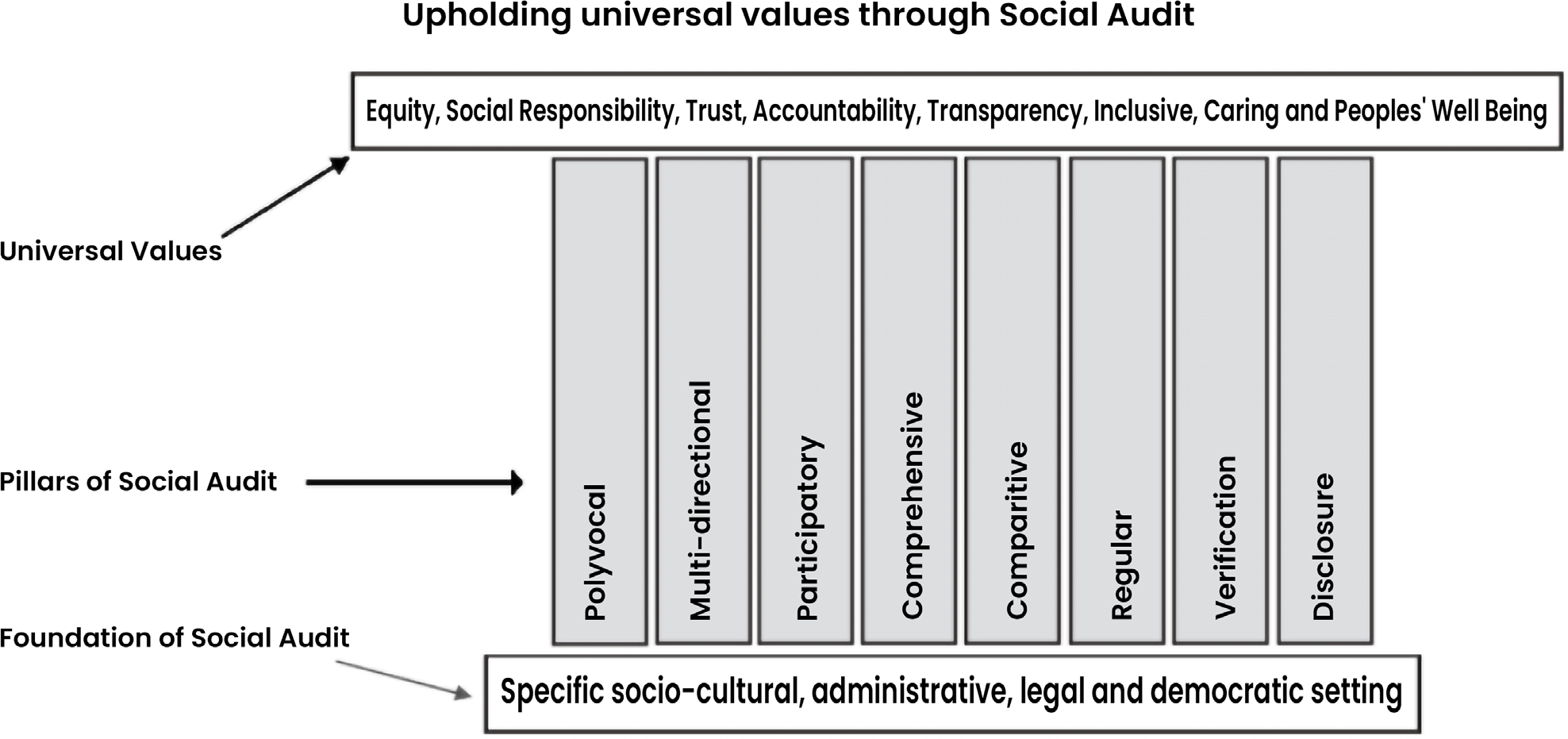
Figure: Characteristics of Social Audit
Mahatma Gandhi National Rural Employment
Guarantee Act (MGNREGA) was the first Act to mandate Social Audit by the Gram Sabha of all the projects taken up in the Gram Panchayat.
Most States have set up an independent Social Audit Unit (SAU) and some have even begun to facilitate Social Audit in other programmes, including Pradhan Mantri Awas Yojana, National Social Assistance Programme, Midday Meal
Scheme and Public Distribution System.
After the 2020 floods in Assam, the state planned to carry out a social audit of relief measures to look into corruption and bribery. This is the first time
• E-Governance
that any government is trying to reinforce a social audit in the aftermath of a natural disaster.
• The Ministry of Social Justice and Empowerment has formulated a scheme, namely Information- Monitoring, Evaluation and Social Audit (I-MESA) in FY 2021-22.
• Under this scheme, Social Audits are to be conducted for all the schemes of the Department starting FY 2021-22.
• These social audits are done through Social Audit Units (SAU) of the States and National Institute for Rural Development and Panchayati Raj.
| Government schemes | -Computerisation of Land Records (Department of Land Resources) -Bhoomi Project in Karnataka (Online Delivery of Land Records) -MyGov -e-Pramaan (Certificate and IDs) | -e-Procurement Project in Andhra Pradesh and Gujarat -GEM for e-procurement -e-BIZ | -Public Finance Management System (PFMS) -E – Samikhsa -UPAAI App (Unified Planning and Analysis Interface) -e-Courts |
• Other TransparencyMeasures like Rightto Information ( RTI) Act, 2005:
• Till 2005, the citizens in India had no access to any information which was dealt by a public authority. However, the promulgation of RTI Act, 2005, set the stage for the transparency in the functioning of the government and its various agencies.
Awareness Measures:
In 2017, a scheme titled “Pradhan Mantri Gramin Digital Saksharta Abhiyan (PMGDISHA)” was launched to usher in digital literacy in rural India by covering 6 crore rural households (one person per household). So far, a total of around 5.78 crore candidates have been enrolled and 4.90 crore have been trained, out of which around 3.62 crore
candidates have been certified under this scheme. (by 1st April 2020)
Challenges of Corruption
• Corruption is a global problem and no country of the world is totally free of its menacing grip. But its radius and impacts are quite deep when it comes to south Asian countries.
• Corruption is a general term covering misuse of authority as a result of considerations of personal gain, which need not be monetary.
• It means that a civil servant abuses his authority in order to obtain an extra income from the public.
• Corruption is a behaviour which deviates public officials from the normal duties. This includes such behaviour as bribery, nepotism and misappropriation.
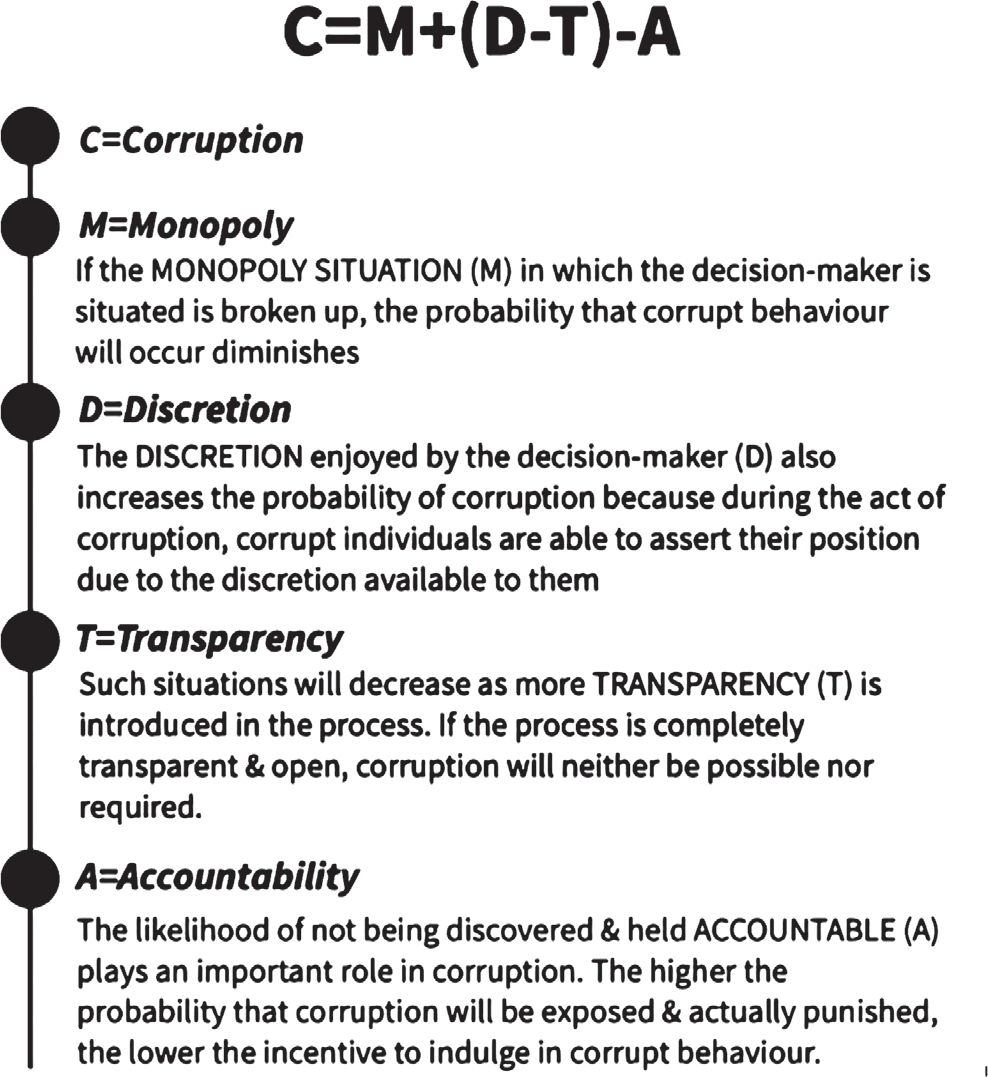
Figure: The Corruption Formula
Various Forms of Corruption
• Legal vs. Moral Corruption:
• Legal corruption is defined through a strict
interpretation of the law. If an official’s actions are explicitly prohibited by law, they are considered corrupt. However, if no legal provision exists, the act may not be labeled corrupt even if it is unethical or abusive.
• Moral corruption, on the other hand, is rooted in ethical deterioration. It reflects a departure from society’s moral standards and leads to a decline in public trust and respect for legitimate authority.
Systemic vs. Sporadic Corruption:
Systemic corruption is deeply embedded within the social, economic, and political structures. It is widespread and sustained by the system itself, making it a core feature rather than an exception.
Sporadic or individual corruption occurs infrequently. It does not severely threaten the structural controls or the overall economy but can still damage public morale and deplete resources.
Types of Corruption:
Collusive Corruption:
In this form, both the giver and the receiver of bribes are active and willing participants, using corruption as a tool to achieve mutual benefit.
It leads to significant harm to society because both parties gain at the expense of the public good.
It tends to increase when state control is weakened, whereas coercive corruption decreases.
This form often involves large-scale corruption, such as:
Public Works Department (PWD) contract manipulation
Procurement kickbacks
Recruitment scams
Tax evasion
Execution of substandard infrastructure
Mutual rule violations
Food and drug adulteration
Obstructing justice by tampering with evidence
Coercive Corruption:
Here, individuals are pressured or forced into corrupt acts by those in authority.
This includes extortion, where services are withheld unless bribes are paid—even if the individual is legally entitled to the service.
Common in everyday scenarios like petty bribery, where citizens often suffer more by resisting, due to:
Delays and harassment
Missed opportunities
Wasted time and wages
In some cases, even physical harm
• Non-Conjunctive Corruption:
• In this form, victims are unaware that they are being exploited. Benefits are taken at someone else’s expense, without their knowledge of the harm caused.
• Political vs. Administrative Corruption:
• Political corruption involves elected representatives deviating from their official responsibilities for personal or political gain, compromising their roles and the public’s trust.
• Administrative corruption refers to the abuse of public resources by bureaucrats or civil servants for individual benefit, often institutionalized within government systems.
• Autogenic, Supportive, and Extortive Corruption:
• Autogenic corruption is carried out independently by the perpetrator, often exploiting others' ignorance or inattention for personal advantage.
• Supportive corruption consists of actions aimed at protecting or preserving existing corrupt practices and systems.
• Extortive corruption involves systematic and forceful demands for bribes or favors in return for services, often using threats or coercion to ensure compliance.
Causes of Corruption
• Insufficient education and training of civil servants, such as the absence of role-play and experiential learning methods for instilling ethics at institutions like LBSNAA, weakens ethical foundations.
• Low remuneration and lack of adequate incentives discourage honesty and integrity among officials.
• Weak supervisory systems and ineffective grievance redressal mechanisms reduce accountability and allow unethical practices to persist.
• Political interference and favoritism foster an unhealthy alliance between elected leaders and permanent bureaucracy, compromising impartiality.
• Cumbersome, outdated, and time-consuming procedures result in red tape, creating obstacles for citizens and businesses alike.
• Revenue collection pressures on officials, such as police or tax personnel, to increase government income at the local level may open avenues for bribery and extortion.
Negative public perception regarding the quality of public services often leads to unrealistic performance expectations from officials, despite their limited resources or capacity.
• Fear of retaliation discourages citizens from reporting corruption, especially when powerful individuals are involved.
• Lack of transparency in public dealings contributes to mistrust and unethical behavior.
• Excessive centralization, such as District Magistrates managing over 76 committees and state governments failing to delegate sufficient authority to local self-governments (panchayats), hampers effective governance.
• Failure to disclose assets and income by officials, even though mandated by the Lokpal and Lokayukta Act, 2013, weakens public trust and oversight.
Impact of Corruption
• Social Impact: Corruption distorts societal values, granting undue prestige to positions that offer opportunities for unethical financial gains.
• Environmental Consequences: Projects with severe environmental impact often receive preference in funding, as they provide easier avenues for misappropriation of public funds.
• Threat to National Security : Corruption in security agencies can compromise national safety by affecting procurement processes, recruitment standards, and border security, facilitating smuggling, terrorism, and money laundering.
• Political Consequences: Corruption erodes public trust in governance, reduces citizen participation, distorts the electoral process, limits political choices, and ultimately undermines democracy.
• Economic Impact: Corruption misallocates resources, increases public transaction costs, acts as an extra tax on businesses, discourages investment, and stifles genuine competition in the economy.
Steps Taken by the Government to Fight Corruption
• Policy Measures Under the New Reform Agenda:
• A shift is being made from ‘rules-based’ to ‘roles- based’ human resource management in civil services.
• This aims to assign responsibilities to civil servants by aligning their skills and competencies with the specific requirements of their roles.
• There is also a focus on "on-the-job learning" to supplement traditional classroom-based or "off-site" training, utilizing shared learning
resources, institutions, and faculty across departments.
• The introduction of the Framework of Roles, Activities, and Competencies (FRACs)—also known as the Competency Framework for Civil Servants, 2016—is a step in this direction.
•
It is designed to develop and provide customized learning material aligned with the defined FRACs within each government department.
• This initiative draws from the recommendations of the Kiran Agrawal Committee Report (2014).
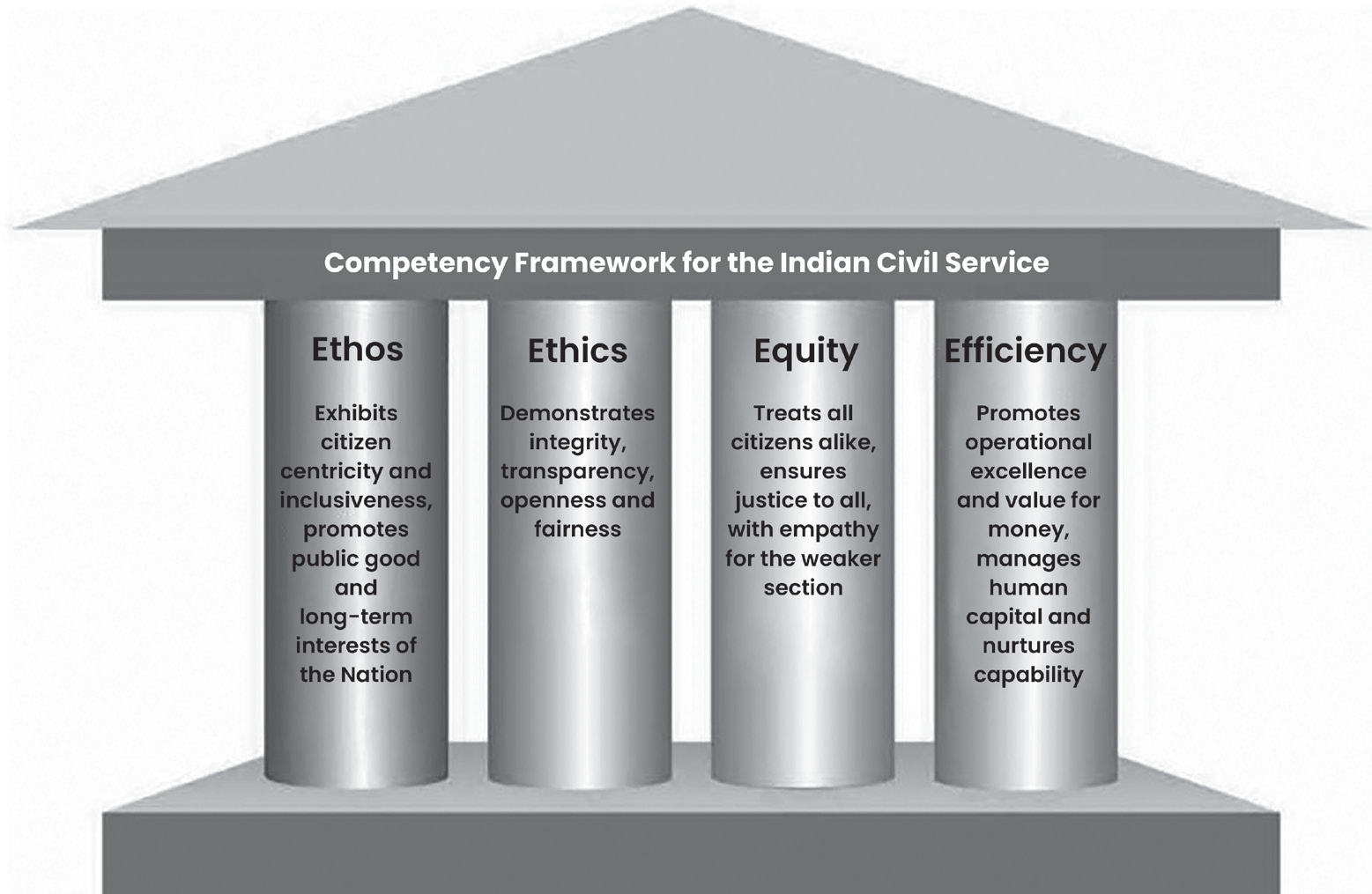
Figure: Competency Framework for Indian Civil Services
• The goal is to support civil servants in developing and enhancing their Behavioural, Functional, and Domain-related skills through a combination of self-directed and mandated learning programs.
• This initiative was originally led by the Department of Personnel and Training (DoPT) in collaboration with the United Nations Development Programme (UNDP). It was first introduced within Project Management Units (PMUs) in the Prime Minister’s Office, the Ministry of Corporate Affairs, DoPT, and three key departments: Police, Social Justice, and Scheduled Tribes Development.
• Governance Assessment and Reforms:
• The Good Governance Index (GGI) 2019, developed by the Department of Administrative Reforms and Public Grievances (DARPG), serves as a holistic and practical framework to evaluate governance quality across states and union territories. It encourages competitive federalism by ranking them to foster continuous improvement.
• The District Good Governance Index (DGGI) 2022 represents a forward-looking reform to benchmark governance at the district level,
assessing the outcomes of various governance measures and assisting in charting future administrative goals.
• Performance and Personnel Reforms:
• In 2015, the government introduced the “360-degree” performance evaluation system to complement the traditional Annual Confidential Reports (ACRs) for senior officials. Under this system, officers receive
comprehensive feedback from seniors, subordinates, and external stakeholders, ensuring a more holistic performance review.
• Revised Procedure for Selecting Director General of Police (DGP):
• Under the new process, the Union Public Service Commission (UPSC) selects a panel of three candidates for the post of DGP from a list of top-ranking officers submitted by the concerned state government.
• Selection is based on seniority, performance reviews, integrity, and related criteria.
• The state government then appoints the DGP
from among the shortlisted candidates.
• This revised mechanism was established in accordance with the Supreme Court's 2018
directive, aiming to enhance transparency, reduce political interference, and preserve the federal character by maintaining the state's final authority in the selection process.
• Revised Cadre Allocation Policy (2017):
• The updated cadre policy introduced in 2017 seeks to foster national integration by dividing the 26 Indian states into five zones for civil services allotment.
• Zone I: Includes AGMUT (Arunachal Pradesh– Goa–Mizoram–Union Territories), Jammu & Kashmir, Himachal Pradesh, Uttarakhand, Punjab, Rajasthan, and Haryana
• Zone II: Covers Uttar Pradesh, Bihar, Jharkhand, and Odisha
• Zone III: Comprises Gujarat, Maharashtra, Madhya Pradesh, and Chhattisgarh
• Zone IV: Includes West Bengal, Sikkim, Assam- Meghalaya, Manipur, and Tripura
• Zone V: Consists of Telangana, Andhra Pradesh, Karnataka, Tamil Nadu, and Kerala
• Cadre selection process:
• Candidates must submit their preferences in descending order, selecting only one state from each zone initially.
• After listing one preference from each of the five zones, they can indicate a second preference from any previously selected zone.
• This system is designed to reduce regional favoritism and promote a pan-Indian perspective among civil servants.
•
Creation of New Civil Services:
• The Government of India has approved the establishment of new specialized services to cater to evolving administrative and developmental needs:
• Indian Skill Development Service (2015)
• Indian Enterprise Development Service (2016)
• Indian Railways Management Service (2019)
• Citizen Charters Initiative:
• The government has made it mandatory for all Ministries and Departments to maintain and regularly update Citizen Charters, ensuring transparency, accountability, and a citizen- centric approach in service delivery.
• Lateral Entry into Civil Services (Since 2019):
• The lateral entry system allows the appointment of domain experts and professionals, especially from the private sector, into senior roles in ministries and government bodies for a fixed term of three years.
• Purpose: To bring specialized skills and fresh perspectives into public administration and ensure merit-based selection for roles in key sectors such as:
• Finance, Revenue, Agriculture, Highways, Civil Aviation, Commerce, and more.
• Guiding Principle: Appointing the right person for the right job.
• Progress: So far, 37 professionals have been inducted through this route—7 in 2019 and 30 in 2021.
| Advantages | Limitations |
| Specialization in Bureaucracy: Involving private sector expertise in top administrative roles addresses the long- standing issue of a generalist bureaucracy. | Difference in Work Culture: Lateral entrants from the private sector and academia may struggle to integrate due to cultural differences, bureaucratic turf wars, and systemic inertia. |
| Inclusion of Experienced Professionals: Lateral entry of seasoned professionals and domain experts enhances administrative decision-making and efficiency in the IAS. | Privilege vs. Merit: IAS officers undergo one of the toughest competitive exams and serve in underdeveloped areas. Lateral entrants from privileged backgrounds may lack grassroots governance experience, such as working in a village school. |
| Addressing Workforce Shortages: Data from the Department of Personnel and Training highlights a shortage of approximately 1,500 IAS officers. Lateral entry helps bridge this gap by bringing in skilled professionals. | Profit vs. Public Service Mindset: Professionals from the private sector may find it challenging to shift from a profit-driven mindset to the public service approach of governance. |
| Promoting Meritocracy: Encouraging professionals from various industries fosters competition and pushes the IAS to adapt to a merit-based approach. | Expertise vs. Decision-Making: Having subject-matter expertise does not always translate to effective decision-making in governance. Ministries already engage experts through committees, consultations, and think tanks. |
| Encouraging Participatory Governance: In line with a multi-stakeholder model, lateral entry enables participation from the private sector and non-profits in governance. | Risk of Exploitation: The government needs to implement proper transition mechanisms to ensure new lateral recruits can establish their authority and are not exploited. |
| Enhancing Bureaucratic Connectivity: Helps policymakers better understand the impact of their decisions on private sector stakeholders and those with external government experience. | Transparency in Recruitment: Concerns exist about the fairness and transparency of the lateral recruitment process. It is crucial to ensure merit-based selection through a clear and accountable hiring process |
| Successful Case Studies: Previous instances, such as the Finance Ministry, RBI, and NITI Aayog, have benefited from hiring experts like Raghuram Rajan, Arvind Subramanian, and Arvind Panagariya. |
Schemes for Civil Service Reforms
• Schemes for Civil Service Reforms:
• Mission Karmayogi (2020):
• Aims to equip Indian civil servants with future-ready skills, making them creative, constructive, innovative, proactive, professional, progressive, energetic, transparent, and technology-driven (CCIIPPPEETT).
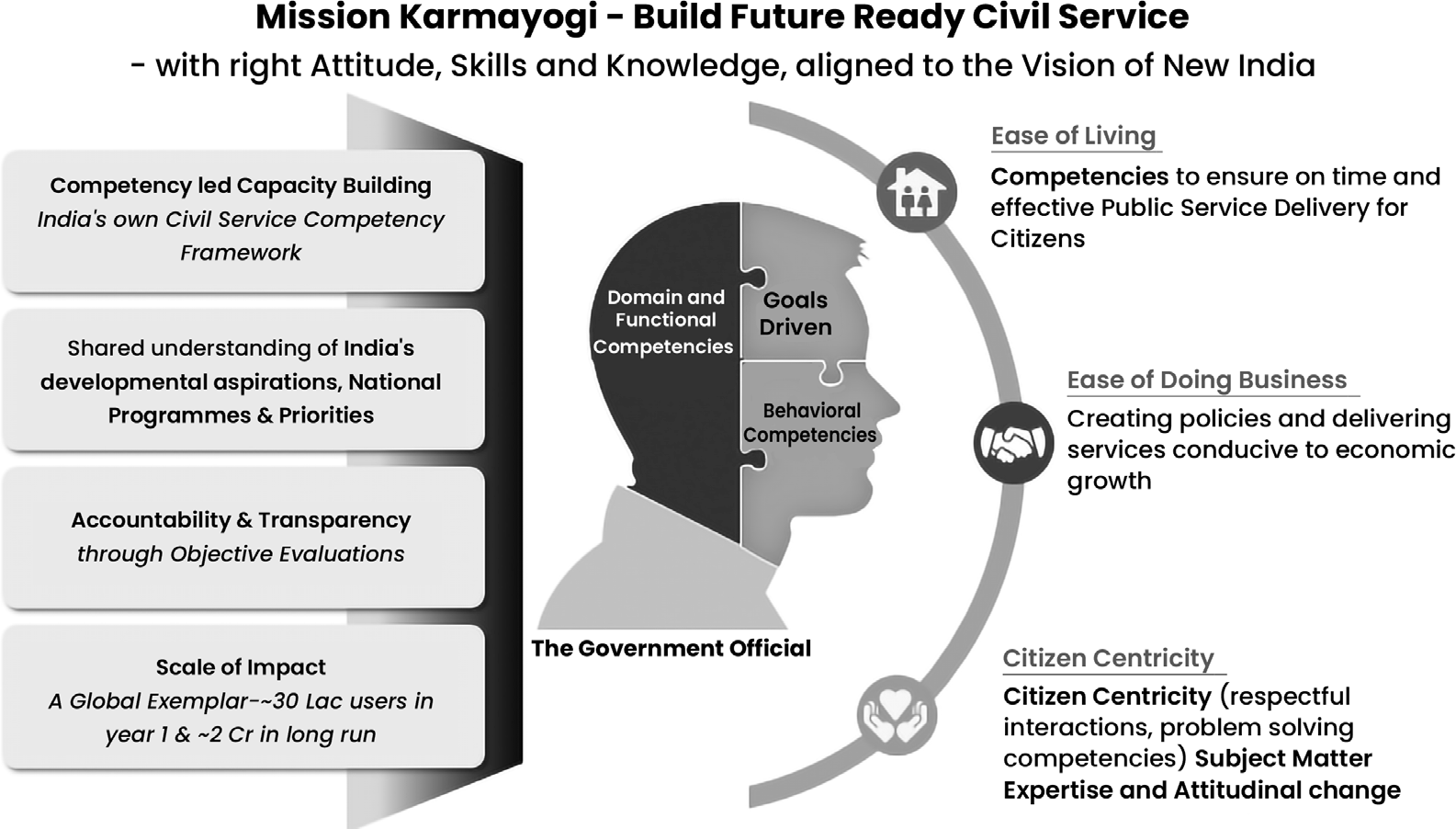
Figure: Mission Karmyogi
• Also called the National Programme for Civil Services Capacity Building (NPCSCB), launched in 2020 with a target completion by 2025.
• Seeks comprehensive reforms at individual, institutional, and process levels to enhance efficiency in public service delivery.
• Emphasizes governance, performance, accountability, and behavioral transformation.
• Promotes a coordinated bureaucracy, shifting from a silo-based system to interdisciplinary collaboration and interdepartmental convergence within the hierarchical structure.
• The primary goal is to establish a citizen-centric civil service that fosters economic growth and public welfare.
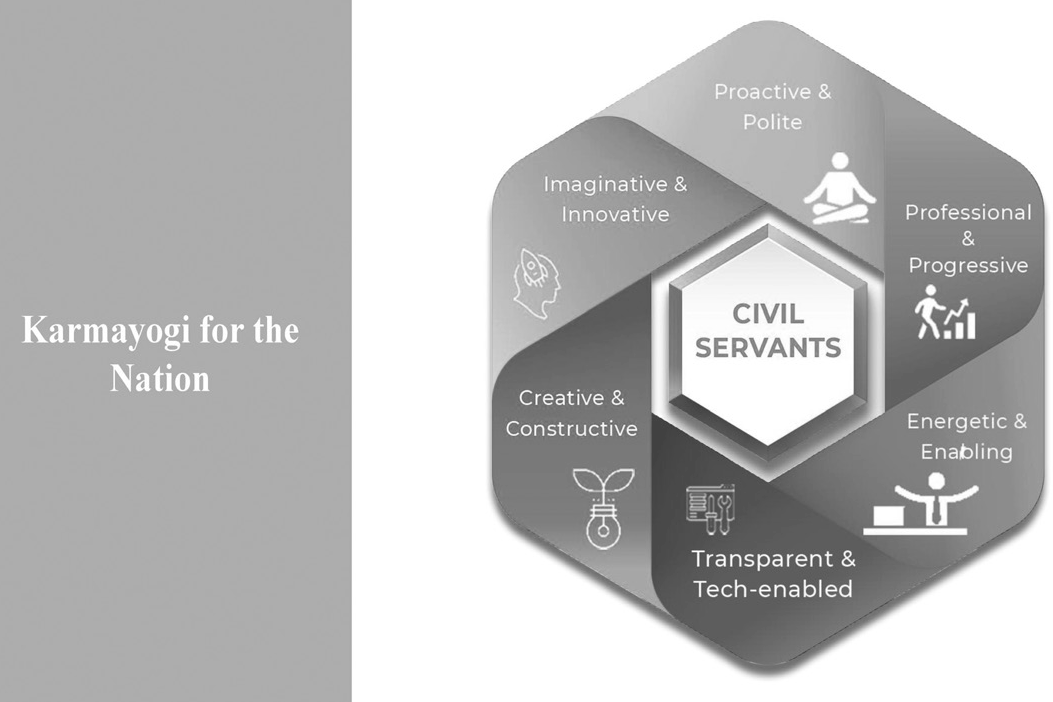
Figure: Desired Traits of Civil Servants
• The initiative is designed to incorporate global best practices and learning resources from leading institutions around the world, while remaining rooted in Indian values and cultural ethos.
• Mid-career training programs, which were
earlier reserved for senior officers, will now be extended to all levels of government personnel, with a system of continuous profiling and performance assessment.
• In cases where specialized appointments are necessary, authorities can utilize technology- driven officer profiles for decision-making, reducing reliance on subjective judgments or informal perceptions.
• The National e-Governance Service Delivery Assessment (NeSDA) has been launched to evaluate the effectiveness and efficiency of e-Governance service delivery across States, Union Territories, and Central Ministries.
Technology and e-Governance Initiatives:
e-Office (2018):
Launched under the National e-Governance Programme (NeGP), e-Office facilitates government functioning in a digital and paperless environment. It supports the core activities of governance across various levels, promoting transparency and responsiveness in administration.
e-Samiksha:
This is a real-time online monitoring platform used for tracking the progress and execution of key government policies and decisions taken at the highest levels. It ensures timely follow-up and implementation of vital programmes and projects.
National Conference on e-Governance:
This annual event offers a collaborative forum where the government engages with industry leaders, scholars, and policy experts to share insights and experiences on various e-Governance initiatives.
Centralized Public Grievance Redress and Monitoring System (CPGRAMS):
Developed by the National Informatics Centre (NIC) in partnership with the Directorate of Public Grievances (DPG) and the Department of Administrative Reforms and Public Grievances (DARPG), this web-based platform allows citizens to submit grievances online from any location.
Users can also track the status of their complaints in real-time. The system facilitates inter-departmental communication and enables DARPG to oversee grievance resolution effectively.
Legislative Measures to Combat Corruption:
• Prevention of Corruption Act, 1988 (Amended in 2018):
• Defines corruption and specifies activities considered corrupt, including bribery and accepting gifts in exchange for favors.
• Strikes a balance between punishing corruption and protecting honest officers—government
approval is required before prosecuting an official.
• Covers employees of the central government, union territories, public sector undertakings, and nationalized banks.
• Special judges are designated to handle cases under this Act, with the authority to conduct summary trials in suitable cases.
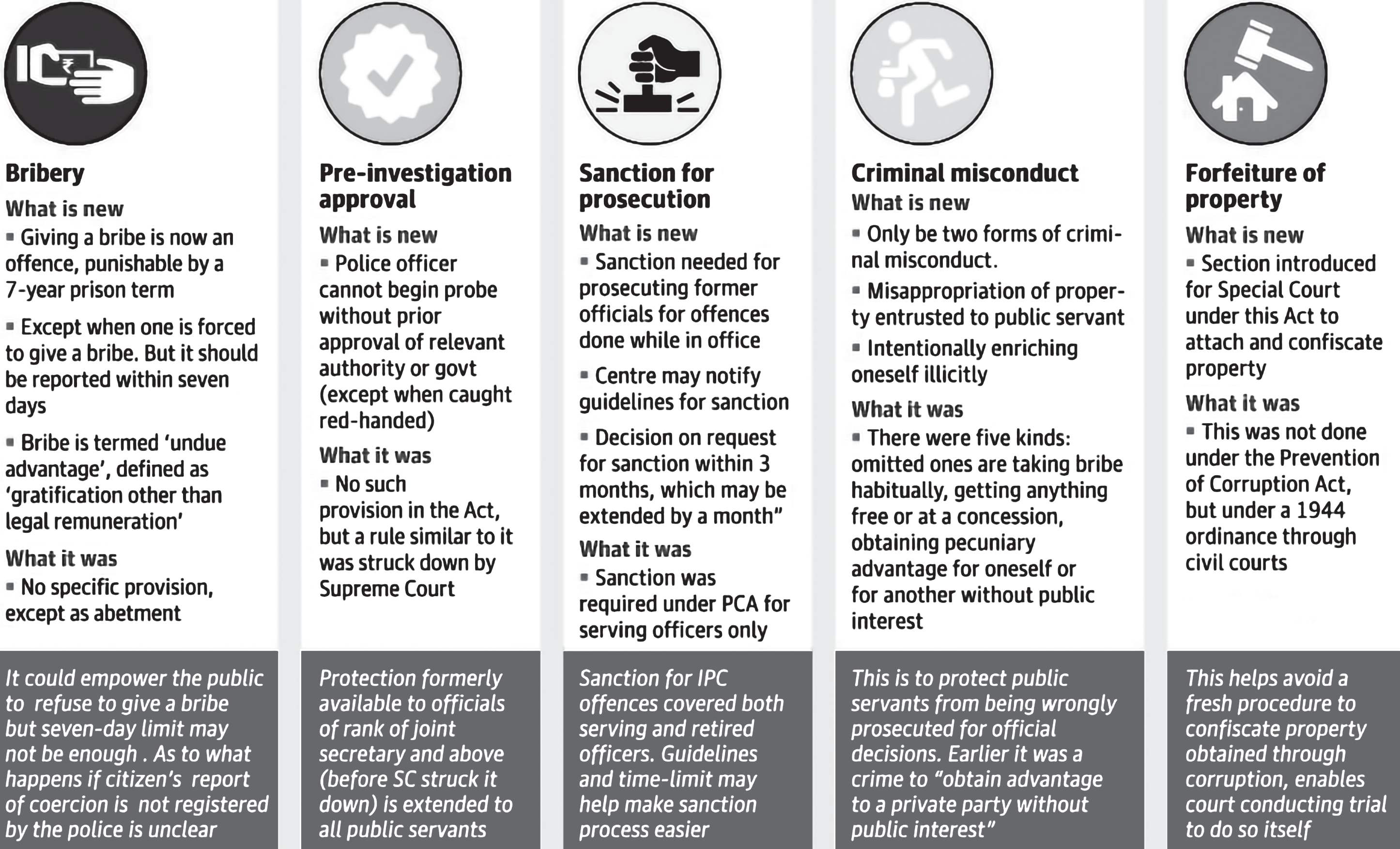
Figure: Prevention of Corruption Amendment Act 2018
Prohibition of Benami Property Transactions Act, 1988 (Amended in 2016):

Figure: Benami Transactions
Benami Transactions:
A Benami transaction occurs when a property is purchased by someone but registered under another person’s name, real or fictitious.
Penalties include confiscation of the property,
fines, and imprisonment. Once confiscated, the property becomes government-owned.
• A designated appellate tribunal will be established for grievance redressal.
• Certain exceptions exist—such as for trusts, religious institutions like temples or mosques, which may legally hold property on behalf of beneficiaries.
• Recent legal changes have broadened the definition of benami properties and empower the government to seize such properties without needing prior court approval.
• Central Vigilance Commission (CVC) Act, 2003 (Amended 2021):
• This Act established the Central Vigilance Commission (CVC) to investigate complaints under the Prevention of Corruption Act, 1988.
• The Central Vigilance Commissioner is appointed by the President based on the recommendation of a committee consisting of the Prime Minister, Home Minister, and Leader of the Opposition in Lok Sabha.
• It has authority over All India Services officers, Union Gazetted officers, and senior officials in public sector banks.
• While conducting investigations, the Commission has civil court powers.
• Amendments have allowed for the extension of the tenure of the Enforcement Directorate (ED) Director:
• The Director of ED, responsible for enforcing FEMA, 1999 and PMLA, 2002, is appointed by the government on recommendations from a committee headed by the CVC.
• The tenure is a minimum of two years, but can be extended by one year at a time, up to a maximum of five years, in the public interest.
• Delhi Special Police Establishment (DSPE) Act, 1946 (Amended in 2019):
• The Central Bureau of Investigation (CBI) is not formed by statute but derives its powers from the DSPE Act, 1946.
•
The CBI functions as the primary investigative agency of the central government and assists the CVC and Lokpal.
• It also acts as the nodal agency for Interpol- related investigations in India.
• The CBI Director leads the agency, which has jurisdiction over:
• 69 Central laws
• 18 State Acts
• 231 offences under the Indian Penal Code (IPC)
• The CBI was created in 1963 based on recommendations from the Santhanam Committee (1962).
• Currently, it operates under the Department of Personnel and Training (DoPT).
• Recent DSPE Act amendments permit the Director’s term to be extended (one year at a time) based on the recommendation of a committee comprising the Prime Minister, Chief Justice of India, and Leader of Opposition, up to a total of five years, including the original term. The extension must be justified in writing.
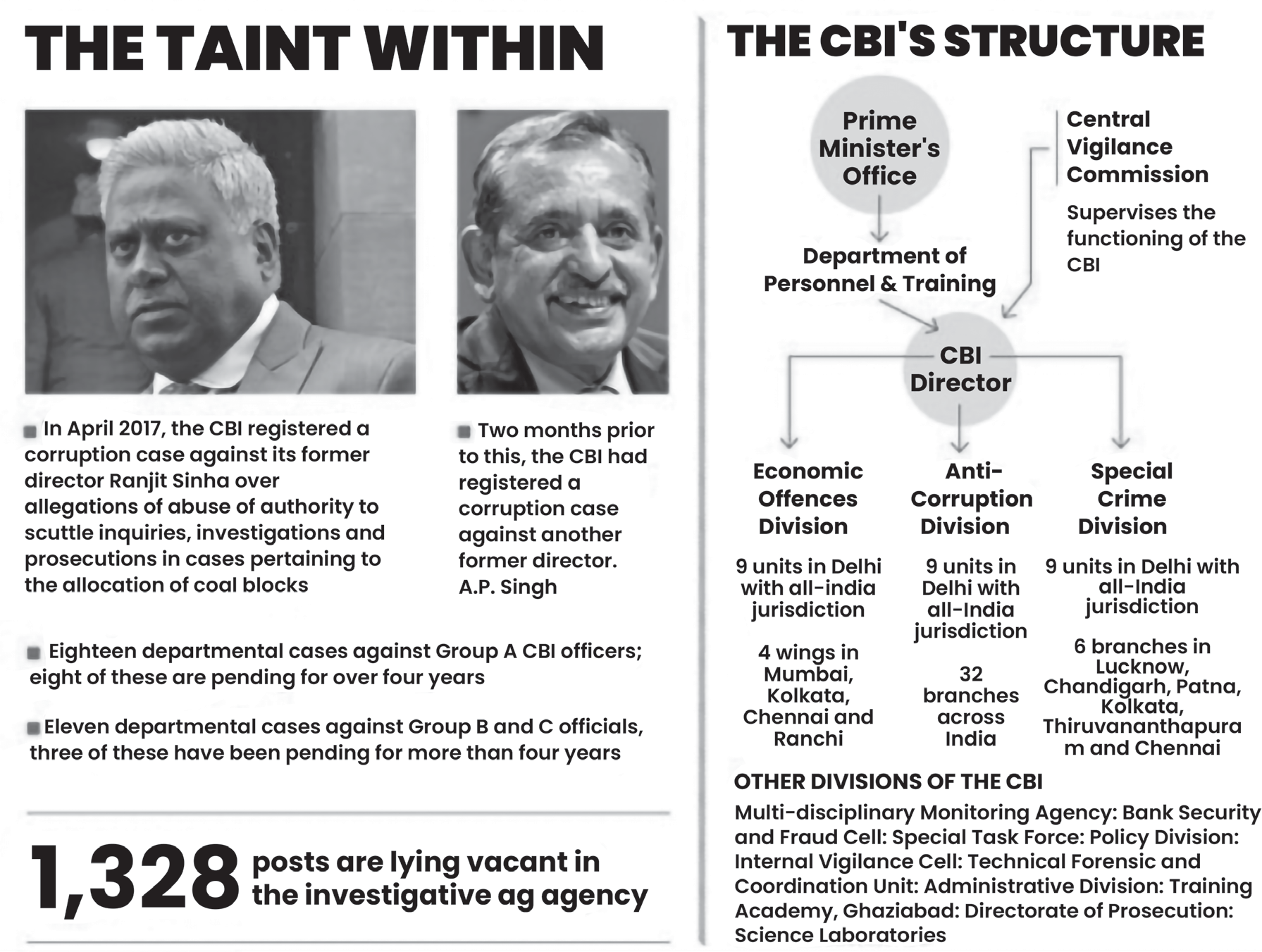
• Right to Information Act 2005 (Amended in 2019)
• The Act grants citizens the legal right to access information, aiming to enhance transparency and accountability in public institutions.
• Section 4 emphasizes the mandatory proactive disclosure of key information and encourages the digitization of official records.
• The law has become a powerful tool in exposing misconduct and lapses in governance. For instance, activists have used the RTI Act to uncover major scandals such as the Vyapam scam in Madhya Pradesh and the Adarsh Housing scam in Maharashtra.
| Differences | 2005 Act | 2019 Amendment |
| Term | Chief Information Commissioner (CIC) and Information Commissioners (ICs) at central and state levels will serve for five years. | Central government will notify the term of office. |
| Salary | At central level, salary of CIC and ICs equivalent to salary of Chief Election Commissioner and Election Commissioners, respectively At state level, equivalent to salary of Election Commissioners and Chief Secretary, respectively. | Salaries, allowances, and other terms and conditions of service of central and state CC and ICs will be determined by the central government. |
| Deductions | At the time of appointment, if CIC and ICs (at central and state levels) are receiving pension or any other retirement benefits for previous government service, their salaries will be reduced by an amount equal to that pension. Previous government service includes service under: (1) the central government, (ii) state government, (i)corporation established under a central or state Law, and (iv)company owned or controlled by the central or state government. | The Bill removes these provisions. |
• Whistleblower Protection Act, 2014 (WPA):
• Over 50 RTI activists were murdered between 2007-2014, with many others assaulted due to inadequate protection, as per a **2015 report by the Accountability Research Center** on attacks against RTI activists.
• WPA provides special protection to individuals who expose wrongdoing in the government, ensuring anonymity and safeguarding them from prosecution under laws like the Official Secrets Act, 1923.
• The Act establishes a statutory framework to protect whistleblowers by concealing their identity and preventing victimization.
• Though passed in 2014, the Act remains non- operational due to a lack of framed rules and an official notification date for enforcement.
• Lokpal and Lokayukta Act, 2013 (Amended in 2016):
Remedies to Fight Corruption
• Comprehensive Systemic Reforms:
• Major reforms are required across all sectors to combat corruption. Governance must be enhanced for greater efficiency, cost-effectiveness, and impact.
• Strengthening Autonomous Institutions:
• Ensuring the autonomy of institutions like the CIC by granting constitutional status.
• Providing adequate manpower, infrastructure, and training for vigilance agencies.
• Eliminating jurisdictional overlaps, such as those between Lokpal and CBI, to improve efficiency.
• Administrative Reforms:
• Establishing a Civil Service Board to minimize political interference in administration.
• Reducing bureaucratic hierarchy to streamline governance.
• Simplifying disciplinary proceedings and strengthening preventive vigilance to prevent corrupt officials from holding sensitive positions.
• Implementing a Code of Conduct for all branches of government.
• Setting up Vigilance Cells/Commissions to monitor administrative integrity.
• Electoral Reforms:
• Banning candidates with criminal records from contesting elections, as recommended by the Election Commission.
• Capping overall election expenditure for political parties.
• Implementing state funding for elections to curb financial influence in politics.
• Governance Reforms:
• Ensuring effective implementation of Social Audits to promote public participation in policymaking.
• Expanding e-governance to improve transparency and accountability while minimizing direct interactions that lead to bribery.
• Enacting a Right to Service Act (e.g., Rajasthan Social Accountability Bill) to guarantee timely public services.
• Strengthening digital initiatives like Digital India and Government e-Marketplace to improve efficiency and reduce corruption.
Economic Reforms:
Addressing legal loopholes in banking and stock market regulations.
Promoting formalization of the economy to enhance transparency.
Refining and accelerating GST implementation
to streamline tax collection and reduce evasion.
Corruption Continuing Despite Measures in India
Judicial Delays and Weak Enforcement: Lengthy legal procedures (with an average case resolution time of five years) and a culture of impunity for influential individuals, who often secure stays on cases or quick bail, weaken accountability. Constitutional protections under Articles 309-311 further shield public officials. Implementing a Zero Tolerance policy against corruption, along with administrative and judicial reforms, is essential.
• Power Imbalance Between Citizens and Politicians:
• Political corruption often goes unpunished, with few convictions and prolonged trials due to repeated appeals. Fast-tracking political cases through judicially appointed Special Investigation Teams (SITs) and daily hearings is necessary to ensure accountability.
• Lack of a Pro-Ethical Environment:
• Ethical values are neither emphasized in homes nor in schools, leading to a society that does not prioritize honesty and integrity. Applying Pavlovian and Operant Conditioning principles can help instill honesty in children and foster a culture of integrity.
• Perceived Difficulty of Practicing Integrity:
• There is a widespread belief that maintaining integrity is impractical or disadvantageous, especially in competitive environments. Many adopt consequentialist and utilitarian approaches to maximize personal benefits. To counter this, governance should be ethics-friendly, ensuring the Ease of Ethical Living.
Lack of a Culture of Kindness and Generosity:
While people admire acts of kindness on social media, they often fail to practice them in daily life. This cognitive dissonance is evident in public interactions, such as at traffic signals where the poor and beggars are often ignored. Celebrities and role models should be leveraged to promote kindness, tolerance, and philanthropy.
Consumerism and Rising Inequality:
Economic disparities are growing, with some professions earning disproportionately high incomes while others, such as teaching, receive minimal compensation. The wealth gap, as indicated by the Gini Coefficient, continues to widen. Excessive consumerism fuels greed rather than contentment. Policies should focus on dignity of labor, just distribution of resources, and capability enhancement. Additionally, promoting ethical resource conservation and adopting a Circular Economy model will be crucial for future generations