Accountability and Transparency in Governance
ACCOUNTABILITY AND TRANSPARENCY IN GOVERNANCE
Introduction
The Right to Good Governance is considered as an essential part of citizen’s right that can be expected from the government.
Good governance is a tool to help governments, businesses and civil societies to fight corruption. Corruption can be curbed by systematic changes in governance through introducing participation, transparency, accountability and probity in administration.
Accountability and transparency have become universal features of the policy statements and governance in the modern age. Therefore, accountability and transparency are widely recognized as ‘Core Principles of Good Governance’.
In order to ensure transparency and accountability, cooperation between government as the holder of power, society as a social element and the private sector as a partner of the government is necessary.
The government as the holder of power, gains legitimacy from the people and sanctity from the constitution. Therefore, the whole government machinery is accountable to ensure public welfare in a transparent manner. This is what makes transparency and accountability integral elements of good governance.
How Accountability and Transparency is Defined
• What is accountability in Governance?
Accountability is a form of liability which is understood as the obligation of the holder of the trust to provide accountability, for everything he is responsible for.
The decision-makers of the government, the private sector, and community organizations are accountable to the public and to the agencies concerned. The form of liability depends on the type of organization concerned.
Accountability basically provides a very important role in creating a good governance activity as a part of improving public confidence in government performance.
In case of government officials, they are accountable not only to the higher authorities but also to the general public, non-governmental organizations, mass media, and other stakeholders.
Public Accountability can further be understood as i.e.
Vertical Accountability: Accountability for the management of funds, timely completion of projects, proper implementation of schemes etc, to higher authorities.
Horizontal Accountability: It is the accountability of the authorities towards the general public or those who are governed.
Social accountability: It is the control exercised by the civil society organizations and media on public sector officials. Social accountability has the capacity of creating public pressure and social stigma on those who govern.
• What is transparency in Governance?
Transparency in governance means that decisions taken and their enforcement are done in a manner that follows rules and regulations. It also means that such information is freely available and directly accessible to those who will be affected by such decisions and their enforcement.
The need for information about the implementation of government is actually necessary to ensure public openness about how the decisions are made and implemented by the government.
Transparency ensures that enough information is provided and that it is provided in easily understandable forms and media.
Transparency means sharing information and acting in an open manner. Free access to information is a key element in promoting transparency. Information, however, must
be timely, relevant, accurate and complete for it to be used effectively. Transparency is also considered essential for controlling corruption in public life.
Thus, transparency can help to stimulate active engagement of the private sector and civil society in public affairs, thereby confirming the changed role of the government as an enabler and facilitator of access to, rather than provider and controller of, goods and services.
Global Perspectives of Accountability and Transparency
Accountability at international level has significantly higher limitations than in national governance. The dimension of answerability and social accountability are increasingly operational, but progress has to be made to implement responsibility at international level.
All developed countries have recognised the need for freedom of information and most of them have passed the Right to Information Act. Most of the countries have passed such laws in the last decade.
Most of the major organizations working on governance reform remain wary of casting accountability and transparency as rights rather than desirable programming attributes.
In the early 2000s, the United Nations Development Programme (UNDP) advocated for the concept of democratic governance, emphasizing the incorporation of accountability, transparency, participation, and inclusion as key elements in creating a more comprehensive governance framework.
Some of the parameters of good governance as defined by the World Bank are:
Political accountability including the acceptability of the political system
Freedom of association and participation
An established legal framework based on rule of law
Bureaucratic accountability
Co-operation between government and civil society
Countries with high levels of corruption in government are more susceptible to conflict and social unrest than other developing countries.
The persistence of corruption adversely impacts the delivery of health, education and other social benefits, and is a contributing factor to the persistence of poverty and other inequalities.
How Transparency is related to Accountability
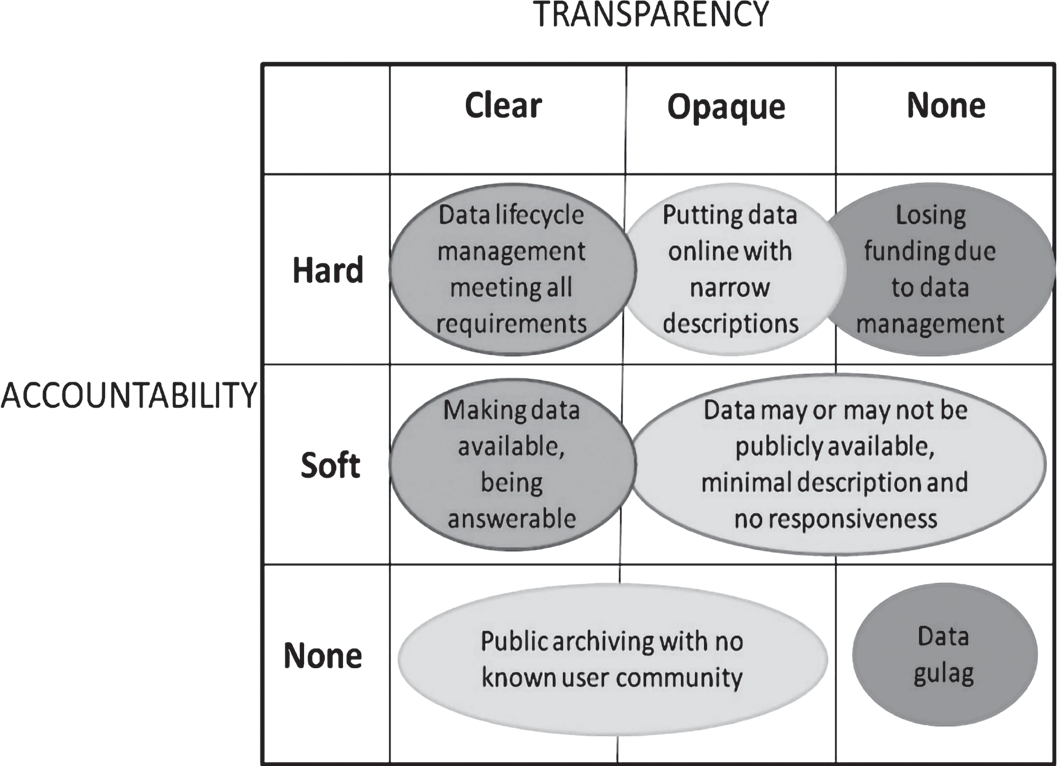
Figure: Transparency-Accountability Matrix
The concepts of transparency and accountability are closely linked; transparency is supposed to generate accountability. If ‘transparency is the means, accountability is the end’ that it serves.
Transparency ensures that information is available that can be used to measure the authorities’ performance and to guard against any possible misuse of powers.
In that sense, transparency serves to achieve accountability, which means that authorities can be held responsible for their actions.
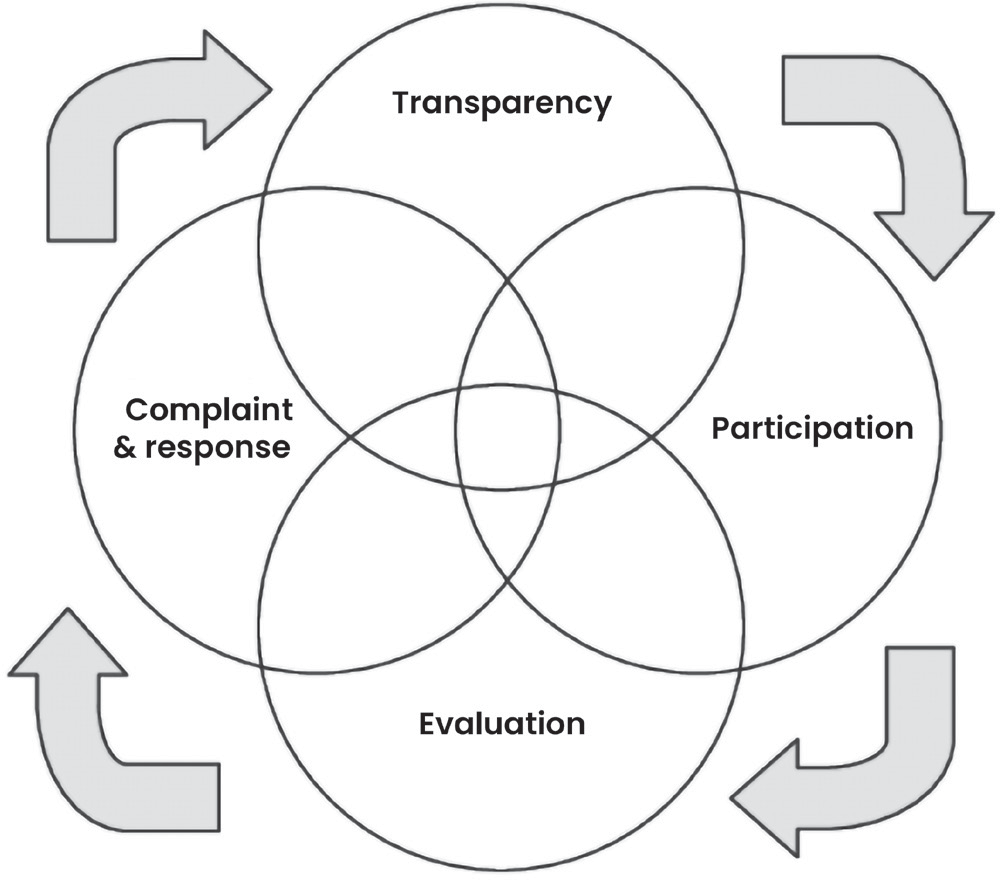
Figure: Global Accountability Framework
The terms administrative accountability and administrative responsibility are often used interchangeably.
Administrative responsibility is nothing but the sum
total of all the means through which public officials could be held responsible for their decisions. And transparency in functioning of bureaucracy is one of the major means to secure accountability.
Therefore, in governance, it is generally assumed that the existence of transparency would result in better governance, more accountability and less corruption.
Role of Accountability and Transparency in Good Governance
The major characteristics of good governance are participation, rule of law, transparency, responsiveness, equity and inclusiveness, accountability and consensus orientation.
Accountability and transparency are indispensable pillars of good governance that compel the state and civil society to focus on results, seek clear objectives, develop effective strategies, and monitor and report on performance.
Accountability of those who govern could usher into good governance in three different ways:
• By Answerability: It is the obligation of public officials to inform, explain and justify their decisions and actions. It is closely tied to transparency and may involve formal mechanisms of monitoring and oversight.
• By Enforceability: It is the capacity of accounting agencies to impose sanctions on public sector officials who violate their duties. This implies that officials are subject to the rule of law and the threat of sanctions if they violate it.
• By delimitation of responsibility: It is the requirement that all positions of authority should have clearly defined duties and performance standards, which would enable their behaviour to be assessed transparently and objectively.
Transparency makes sure that people know exactly what is going on and what is the rationale of the decisions taken by the Government or its functionaries at different levels.
Transparency assures that corruption is minimized, the views of minorities are taken into account and that the voices of the most vulnerable in society are heard in decision-making and implementation.
Therefore, it helps not only to inform the public about development ideas and proposals, but also to convince citizens that the public agencies are interested in listening to their views and responding to their priorities and concerns. This in turn enhances the legitimacy of the decision-making process and strengthens democratic principles.
The main objective of governments providing information to its citizens is not only to promote openness, transparency and accountability in administration, but also to ensure participation of people in all matters related to governance.
Financial Transparency in Governance: Through public financial accountability and transparency, governments can achieve congruence between public policy, its implementation and the efficient allocation of resources.
Lack of financial accountability could lead to inefficiency, waste, and pilferages, and even impede development.
The basic components of financial transparency are records management, accounting and external auditing.
Landmark measures to enhance transparency and accountability in governance
Right to Information (RTI) Act, 2005:
Till 2005, the citizens in India had no access to any information which was dealt by a public authority. However, the promulgation of RTI Act, 2005, set the stage for the transparency in the functioning of the government and its various agencies.
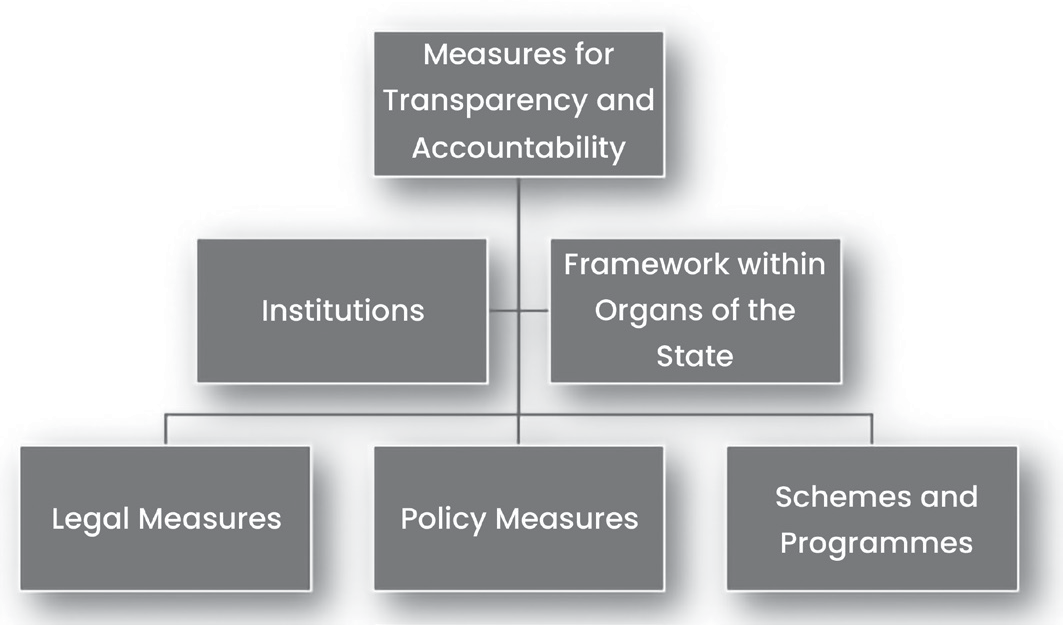
The Right to Information (RTI) Act has made access to information from public agencies a statutory right for every citizen. The Act has undoubtedly played a significant role in promoting transparency in the functioning of public institutions. Over the years, it has led to major gains in the disclosure of information, as highlighted by media reports and research. In the past 18 years, the RTI Act has been crucial in exposing high-profile scams, including the Adarsh Society Scam, 2G Scam, Commonwealth Games Scam, and Indian Red Cross Society Scam. Additionally, it has helped citizens secure their entitlements, such as pensions, certificates, identities, ration cards, and scholarships, while also curbing corruption and holding wrongdoers accountable.
E-Governance:
The major intent of E-Governance is to provide a SMARRT Government. SMARRT refers to Simple, Moral, Accountable, Responsive, Responsible and Transparent
Government.
E-governance can be made instrumental in increasing governmental transparency and facilitate e-democracy.
E-governance, as a service has a massive potential. E-governance has brought and a huge paradigm shift in governance and has redefined the relationship between the government and the people.
E-governance is therefore, a great model for the government to connect with the citizens and help foster transparency and build trust.
Citizen’s Charter:
In a democracy all power belongs to the people. They elect the government and the government, in turn, must be accountable to the people. In this regard the preparation, implementation, monitoring and evaluation of Citizen’s Charters is absolutely essential.
The citizen’s charter is a document that outlines the service commitment of organizations or service providers towards providing quality, high-standard services, including mechanisms for grievance redressal.
The Foundational Principles of Citizen’s Charter are quality, choice, standards, value, accountability and transparency.
In India, the concept of citizen’s charter was first adopted in 1997. The second Administrative Reforms Commission (ARC) had made recommendations to improve the effectiveness of citizen’s charters. The basic objectives of the citizen’s charters is to empower citizens through:
• Improved quality of public services.
• Transparency and Right to Information.
• Timebound delivery of services etc.
E-procurement policy
The introduction of eProcurement has the potential to significantly improve transparency, efficiency and effectiveness in public procurement.
Transparent procurement procedures can contribute to a more efficient allocation of resources through increased competition, higher quality procurement and budgetary savings for governments and thus for taxpayers. They can also help attract more investment by lowering risk.
In domain of governance, the benefits of e-procurement are:
•
Reduced costs on government purchasing
• Increased value for money
• Reduced corruption
• Increased trust in government
• Improved growth
• Increased tax compliance
Direct Cash Benefit Transfer Scheme:
The program was aimed at transfer of subsidies and cash benefits directly to the people through their Aadhaar seeded bank accounts.
The aim was to substantially reduce leakages, and associated delays, owing to the flow of fund in a multi hierarchy of administrative offices till it reaches the end beneficiary.
In the past seven years, DBT has emerged as the accepted way of delivering
development schemes with the delivery of over 450 schemes to more than 900 million people through this mode.
With the outbreak of the COVID-19 pandemic and the imposition of lockdown and social distancing norms, DBT emerged as a boon in providing relief to millions of citizens whose livelihood was impacted.
Right to Public Service legislation.
The Right to Public Services legislation in India includes statutory laws that ensure the timely delivery of various public services to citizens. It also establishes a mechanism for holding public servants accountable and penalizing them if they fail to provide the required services within the specified timeframe.
Therefore, it is aimed to reduce corruption among the government officials and to increase transparency and public accountability.
The Right of Citizens for Time Bound Delivery of Goods and Services and Redressal of their Grievances Bill, 2011, confers on every individual citizen, the right to time bound delivery of goods and services, and for redressal of grievances.
Accountability of Civil Servants and its Importance in Good Governance
A well-functioning civil service helps to foster good policy making, effective service delivery, accountability and responsibility in utilizing public resources which are the characteristics of good governance.
It is the ‘rule of law’ rather than the ‘rule of man’ that is often blamed for widespread abuse of power and corruption among government officials.
The explosion of media in the recent past has opened civil servants to external scrutiny and called for transparent accountability mechanisms in terms of outcomes and results.
The credibility of civil services lies in the conspicuous improvement of tangible services to the people, especially at the cutting edge.
Conceptually, the civil servants are accountable to the Minister in charge of the department, but in practice, the accountability is vague and of a generalized nature.
The Indian system provides for post-audit of government accounts. However, post audit is an age-old mechanism for ensuring administrative accountability and is ineffective under certain circumstances.
Nevertheless, ensuring the accountability for performance is not a simple task in governance and there are immense complexities involved in making civil servants answerable for outputs and outcomes.
Therefore, timely reform in Civil Service and an all- embracing framework for making policy decisions effective within viable systems of accountability and citizen participation is essential to ensure good governance.
The civil servants have always played a pivotal role in ensuring continuity and change in administration. Therefore, accountability of civil servants and transparency in their functioning is an essential prerequisite for good governance.
Role of Civil Society in ensuring Accountability and Transparency in Governance
The civil society and civic engagement play a key role in ensuring the transparency in governance. Governments that share their assessments and plans with citizens and seek their views on a regular basis can be far more effective in implementing development programmes with the participation of stakeholders.
The NGOs promote the interests of citizens, particularly under-represented groups such as women, minorities, the poor and marginalised section of society. These organizations have funds and resources which they utilize to hold governments accountable. Transparency, however, is as vital to these organizations as it is for government.
The media have an important role to play in promoting good governance, and reinforcing and building momentum for change by recognising good practice and highlighting successes in achieving development objectives.
The role of private sector is very important as it is an important means of creating jobs and employment that in turn generate revenue through taxes. Therefore, the private
sector and the government need to work in harmony and understanding for providing better opportunities for citizens. Transparent corporate governance is a must for a responsible private sector.
How accountability is ensured in India
Ombudsman i.e. The Lok Pal and Lokayukta
An Ombudsman is an independent, non-governmental Official who investigates complaints from the public about the administrative actions of public authorities and provides an impartial form of alternative dispute resolution.
Most of the anti-corruption agencies in India have limited powers to prosecute government officials. Therefore ‘The Lokpal and Lokayukta Act, 2013’ provided for the establishment of Lokpal for the Union and Lokayukta for States. Although these institutions are statutory bodies without any constitutional status.
Comptroller and Auditor General (CAG)
Article 148 of the constitution provides for a Comptroller and Auditor-General of India who shall be appointed by the President.
Government Audit plays an important role in the scheme of parliamentary financial control and ensures that the executive bodies keep expenditure and budget allocation within the sums allotted and for the purposes authorized.
The CAG as the highest auditing authority is intrinsically linked to augmenting the efficacy of government policies and undertakings. Therefore, the relationship between the CAG and good governance is incontrovertible.
Central Vigilance Commission (CVC)
The Central Vigilance Commission was formed in 1964, to curb corruption in offices of the Indian government. Complaints from whistleblowers are received by CVC after which the commission can take actions on motivated acts. CVC is free of control from any executive authority. Its role is to monitor all vigilance activity under the Central Government and advising various authorities in Central Government organizations in planning, executing, reviewing and reforming their vigilance work.
Public Interest Litigation (PIL)
PIL is the use of law to raise issues of broad public concern. It emerged in India in late 1980s. PIL helps advance the cause of minority or disadvantaged groups or individuals who are too weak to seek justice on their own.
PIL is a component that enables the poor to get justice. There have been multiple instances when PIL has been able to unearth major corruption cases or to bring an important question of justice to limelight. For instance, Sheela Barse case 1983 on custodial violence against women convicts, Vishakha Guidelines against sexual harassment at the workplace 1997, M. C. Mehta case 1998 on closure of
polluting industries in Ganga basin, Indira Sawhney judgment 1992 on 27% reservation for backward classes in posts and services under the Government of India, 2G Scam case 2012, etc.
Therefore, it can be said that PIL has been an effective instrument to ensure transparency and accountability in governance.
Institutional frameworks promoting Accountability and Transparency
Legislative framework: In a democracy, government is always responsible to the people for its actions. The legislatures always maintain a control over those who govern through various ways.
• Parliament ensures accountability through various parliamentary methods like questions being asked in the house, discussions, censor, motions and resolutions.
• Annual budget and auditing by appropriate authority like CAG is another way of exercising legislative control over the bureaucracy.
• There are various committees of legislatures that ensures details of the governance on fiscal transparency through its reports. For e.g. The Public Accounts Committee, Estimates Committee etc.
• Recent Issue of Declining Sittings in Parliament
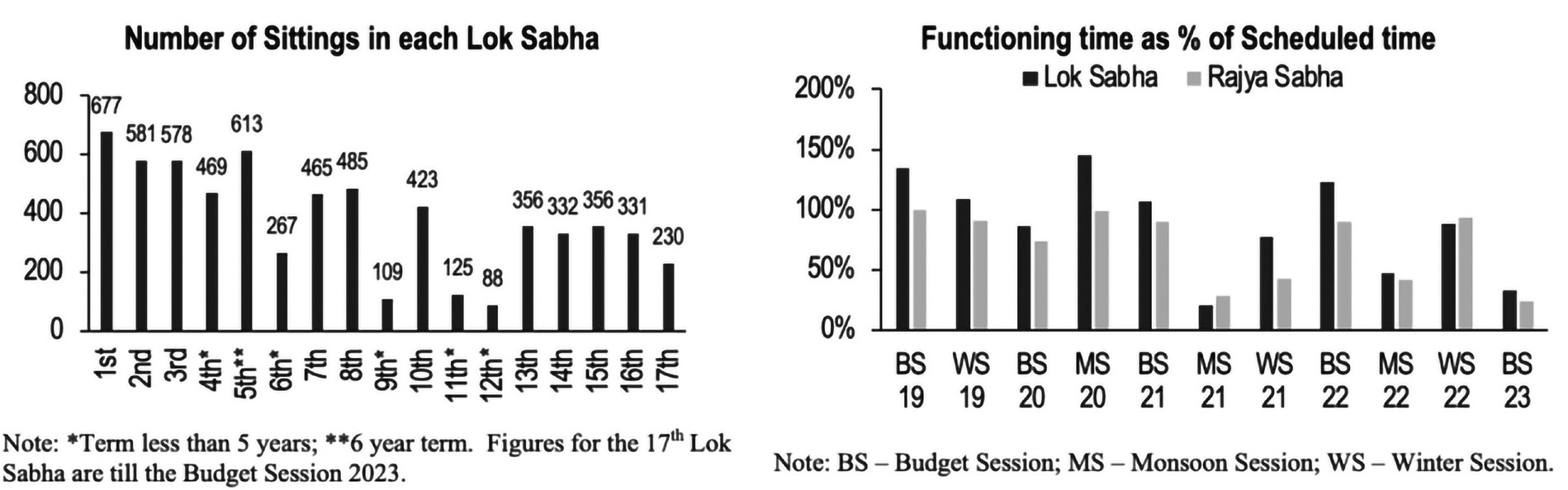
• 11 out of the 15 sessions held during 17th Lok Sabha were adjourned early. As a result, 40 scheduled sittings did not take place (13% of scheduled sittings). The first and last sessions were extended byseven sittings and one sitting respectively.
•
Article 93 of the Constitution requires that Lok Sabha elect a Speaker and a Deputy Speaker ‘as soon as may be’. This is the first time Lok Sabha did not elect the Deputy Speaker for its
entire duration.
• During the 17th Lok Sabha, MPs were suspended on 206 instances, across both Houses of Parliament. In Winter Session 2023, 146 MPs were suspended for serious misconduct in the House.
• Several key legislations like the new Bills to reform criminal laws were passed after MPs were suspended.
• The 17th Lok Sabha held 274 sittings. Only four previous Lok Sabhas have had fewer sittings, all of which were dissolved before completing the five-year term. The fewest sittings in this Lok Sabha were held in 2020 (33 days), amidst the COVID-19 pandemic.
• Parliament has about 58 average sitting days a year.
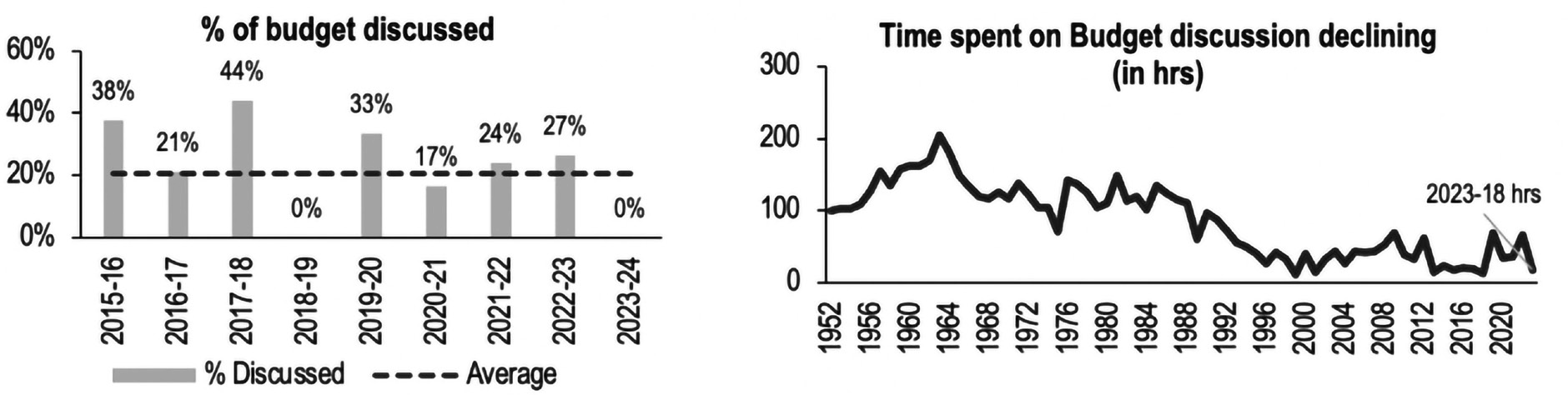
• In the last seven years, on average, 79% of the budget has been passed without discussion.
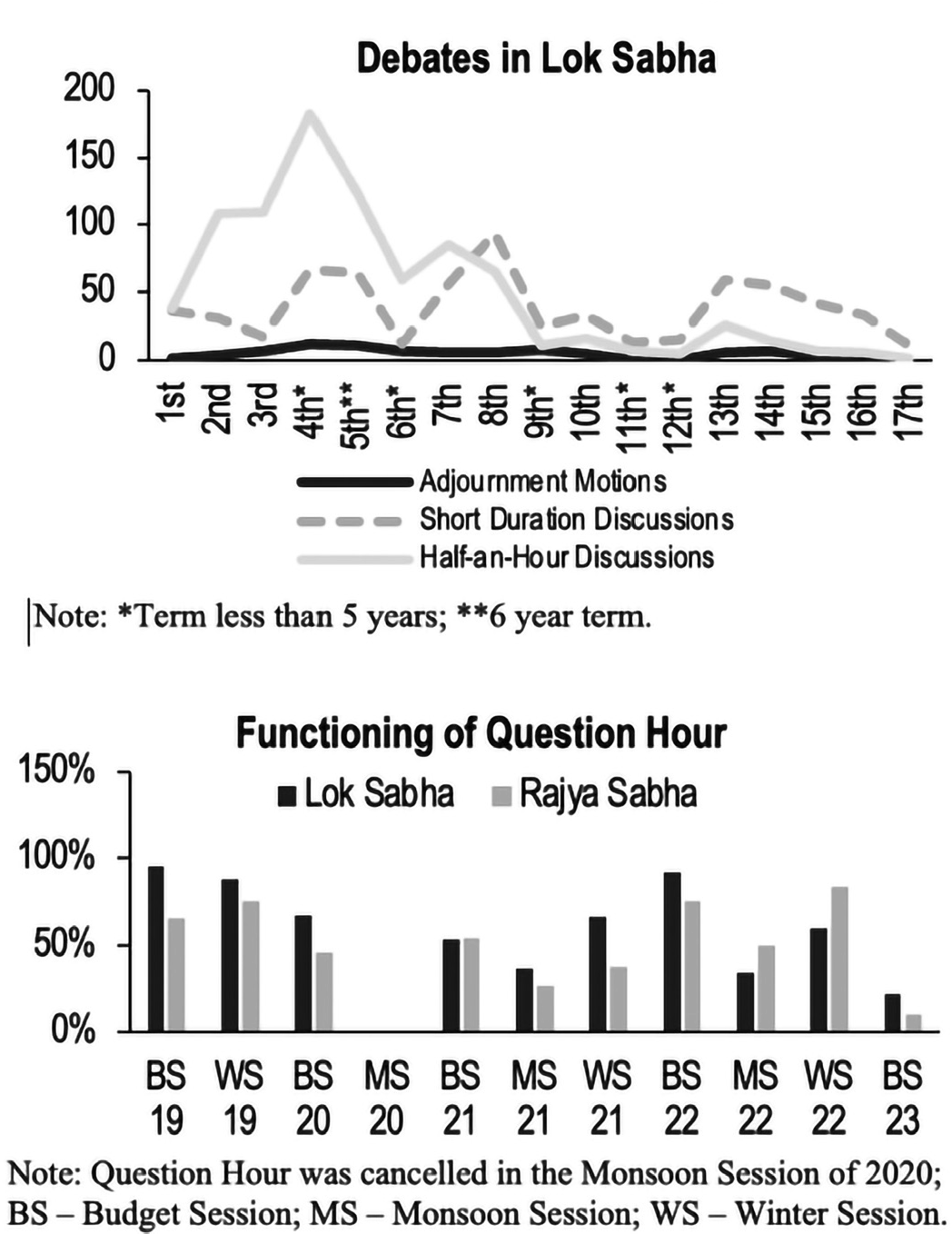
• In the 17th Lok Sabha, only 11 short duration discussions and one half-an-hour discussion have been held so far.
• The 17th Lok Sabha held its sessions between June 2019 and February 2024. In these five years, Lok Sabha functioned for 88% of its scheduled time, while Rajya Sabha worked for 73%.
Executive framework: The political executive controls the functioning of bureaucracy through policy making. The executive ensures accountability of bureaucracy in following manners:
• The individual ministers frame the departmental policies and directly supervise and coordinate their implementation by the administrators.
• The executive controls the bureaucracy through budgetary measures also. It allocates the necessary funds to various departments to meet their expenditure.
• The executive can sanction expenditure, reappropriate grants, make internal audit or prescribe a financial code to be followed by the concerned authorities.
• The executive also hold control over the appointment and removal of personnels in the bureaucracy.
• Besides the delegated legislation is an important tool with the executive to exercise control over administration.
• The Civil Services Code, prescribed by the executive is to be followed by the administrators in exercise of their official powers.
• The staff agencies like the Department of Administrative Reforms, the Cabinet Secretariat etc also exercise control over the administration.
Judicial framework:
• The judiciary has the power to keep the administrative acts within the ambit of the law. It also includes the right of the aggrieved person to move to the court against the administration.
• The judiciary can intervene in the administrative acts on the grounds of error of law, lack of jurisdiction, abuse of power by authority, or for not following the procedure etc.
• Judicial Review is a powerful tool at the hands of judiciary to check the wrong doing of executive. Judiciary can declare almost any law, null and void if it senses violation of rights and can hold the administration accountable for it.
Besides there are certain special provisions with the judiciary to ensure transparency and accountability in governance. Like it can issue writs to the officials and force them to work, punish them or curtail their jurisdiction.
Role of Transparency and Accountability in Economic Development
Transparency and accountability are critical for the efficient functioning of a modern economy and for fostering social well-being. The Right to Access Information is an essential feature of a democratic government. It enables citizens to participate more fully in public life.
Transparency in governance helps combat corruption and protect citizens’ rights, it supports scientific research, and it stimulates trade and the economy.
Without transparency and accountability, there will always be trust deficit between the governing and the governed. Such an environment would lead to social instability and an environment that is less than conducive to economic growth.
Adequate transparency and accountability are therefore critical for ensuring that resource wealth is managed for the benefit of the whole population.
Case studies on Transparency and accountability
The Government of India (GoI) spends close to Rs. 14 lakh crores annually on development activities, through nearly 750 schemes implemented by Union Ministries.
In 2019, NITI Aayog was tasked to evaluating 28 Umbrella Centrally Sponsored Schemes, which are schemes/ programmes funded jointly by the Centre and the States and implemented by the States.
The NITI Aayog prepared a thematic report on the implementation of government schemes and highlighted the role of transparency and accountability in ensuring good governance.
The below mentioned case studies provides brief details of some of Indian Best Practices aiming at improving Accountability and Transparency in Government functioning
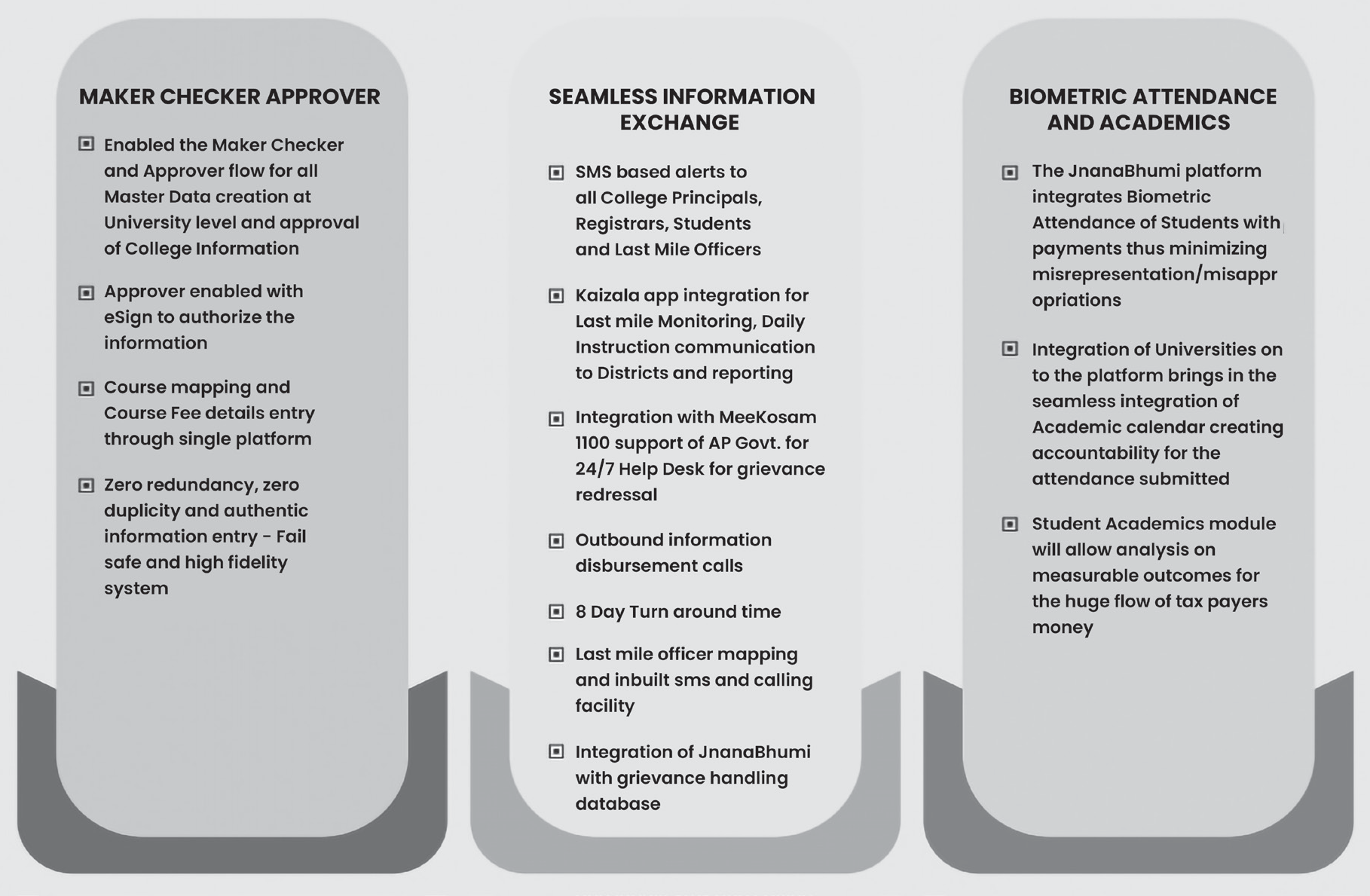
Figure: Complete Digital Overhaul of Processes Following the Deployment of Jnanabhumi
Conclusion
The primary concern of the citizens in a democratic society is that their government must be fair and accountable. For good governance it is essential that the sub- systems of governance are efficient, ethical, equitable and reasonable.
Citizens lose confidence in a government that is unable to deliver basic services; therefore, the degree to which a government is able to carry out its functions at any level can often determine a country’s ability to sustain democratic reforms and provide for the well-being of its citizens.
The administrative system must be accountable and responsive besides promoting transparency and
people’s participation. The test of good governance lies in the effective implementation of its policies and programmes. Civil society, the media, and the private sector, have roles and responsibilities in addition to those of the government.
Good governance implies accountability of the government to the citizens of a democratic polity and their involvement of citizens in decision making, implementation and evaluation of projects, programmes and public policies. In this perspective transparency and accountability become invaluable components of good governance as well as of good administration