Recommendations of Other Committees
Recommendations of Other Committees:
Recruitment:
Rationalization and Harmonization of Services: The existing 60 plus separate civil services at the central and state level need to be reduced through rationalization and harmonization of services. Recruits should be placed in a central talent pool, which would then allocate candidates by matching their competencies and the job description of the post.
Lateral Entry: YK Alagh (2001) Committee recommended lateral entry i.e. direct induction of domain experts from outside at the middle or senior levels, rather than only regular recruits through promotion. This is seen as a solution to the inertia within the services and raise competitive spirit.
Outsource Service Delivery to reduce dependence on the administrative machinery. Various PPP models should be explored to determine the best possible mode of outsourcing.
Aptitude Test: Hota Committee(2004) recommended that aptitude and leadership tests may be introduced for selection and that probationers may be allowed one month’s time after commencement of training to exercise their option for Services.
Training:
Yugandhar Committee, 2003 recommended the need for three mid-career training programmes in the 12th, 20th and 28th years of service. Training at these 3 stages was suggested as there is a “major shift” in the nature of work of the officer, at these stages of their career.
There is a need to inculcate ethical underpinning in the civil servants by implementing the Code of Ethics.
Mid-career exams/skill assessments might be undertaken to evaluate and decide on future postings.
Evaluation:
Institute goal setting and tracking: There is an inherent need to set key responsibility/focus areas and progressively reduce discretionary aspects to evaluate civil servants.
Institute the online Smart Performance Appraisal Report Recording Online Window (SPARROW) template in all central and state cadres.
Compulsory retirement for underperforming officers
Incentivization: Review existing schemes and introduce new schemes of incentives for extraordinary performance.
Domain Expertise:
The Surinder Nath Committee, 2003 suggested 11 domains, Agriculture and Rural Development; Social Sectors, Culture and Information; etc. The Committee suggested that officers may be assigned to a maximum of three domains out of the eleven listed.
The Hota Committee on Civil Services Reforms, 2004, had recommended that domain assignment should be introduced for civil servants to encourage the acquisition of skills, professional excellence and career planning.
Efficiency:
Hota Committee, 2004 emphasised the use of information and communication technologies (ICT) to transform government by making it more accessible, effective and accountable.
The commitment has called for fixed tenure for efficiency and boosting morale of the officers.
Accountability:
The Committee on Prevention of Corruption (Santhanam Committee)
To fight the menace of corruption, it recommended the setting up of Central Vigilance Commission.
Changes were also suggested in Article 311 of the Constitution of India for conducting disciplinary proceedings against government servants.
Offering of bribes should be made a substantive offence.
The first ARC recommended that
The implementing departments and organizations should introduce performance budgeting.
Set up Lok Pal and Lokayuktas to deal with complaints against the administrative acts of Ministers and Secretaries at the Centre and States.
• The Hota Committee recommended that
• Sections of the Prevention of Corruption Act 1988 (PoCA) and the Code of Criminal Procedure may be amended to protect honest civil servants from malicious prosecution and harassment.
• Code of Ethics should be drawn up for civil servants incorporating the core values of integrity, merit and excellence in public service.
• Model Code of Governance should be drawn up benchmarking the standards of governance to be made available to the citizens.
• Performance Appraisal:
• Surinder Nath Committee, 2003 recommended that - performance appraisal should be primarily used for the overall development of an officer and for his/her placement in an area where his/her abilities and potential can be best used.
• The Hota Committee recommended a system of objective performance assessment against agreed work plans.
• The Basawan Committee (2016) recommended a meaningful assessment to be done about the requirement of IAS officers every year to send a realistic requirement of Direct Recruits to Government each year and to monitor the vacancies under the promotion ceiling.
• Arbitrariness in Transfers (Fifth Pay Commission): Minimum tenure for three to five years, exception can be made in favour of longer tenures if the
continued availability of certain specialized skills is required. The Second Administrative Reforms Commission has also highlighted the same.
• Corruption:
• In 1962, Santhanam committee says that the major causes of corruption are administrative delays, high workload, use of personal discretion due to loopholes within the established procedure, cumbersome procedures, etc. These continue to be issued even in contemporary times.
Civil Society in India
In layman terms, civil society can be defined as- As per World Bank, Civil Society can be defined as- “the wide array of non-governmental and not-for-profit organizations that have a presence in public life, expressing the interests and values of their members or others, based on ethical, cultural, political, scientific, religious or philanthropic considerations”.
Civil Society Organizations (CSOs) may include community groups, non-governmental organizations (NGOs), labor unions, indigenous groups, charitable organizations, faith-based organizations, professional associations, and foundations.
Constituents of Civil Societies:
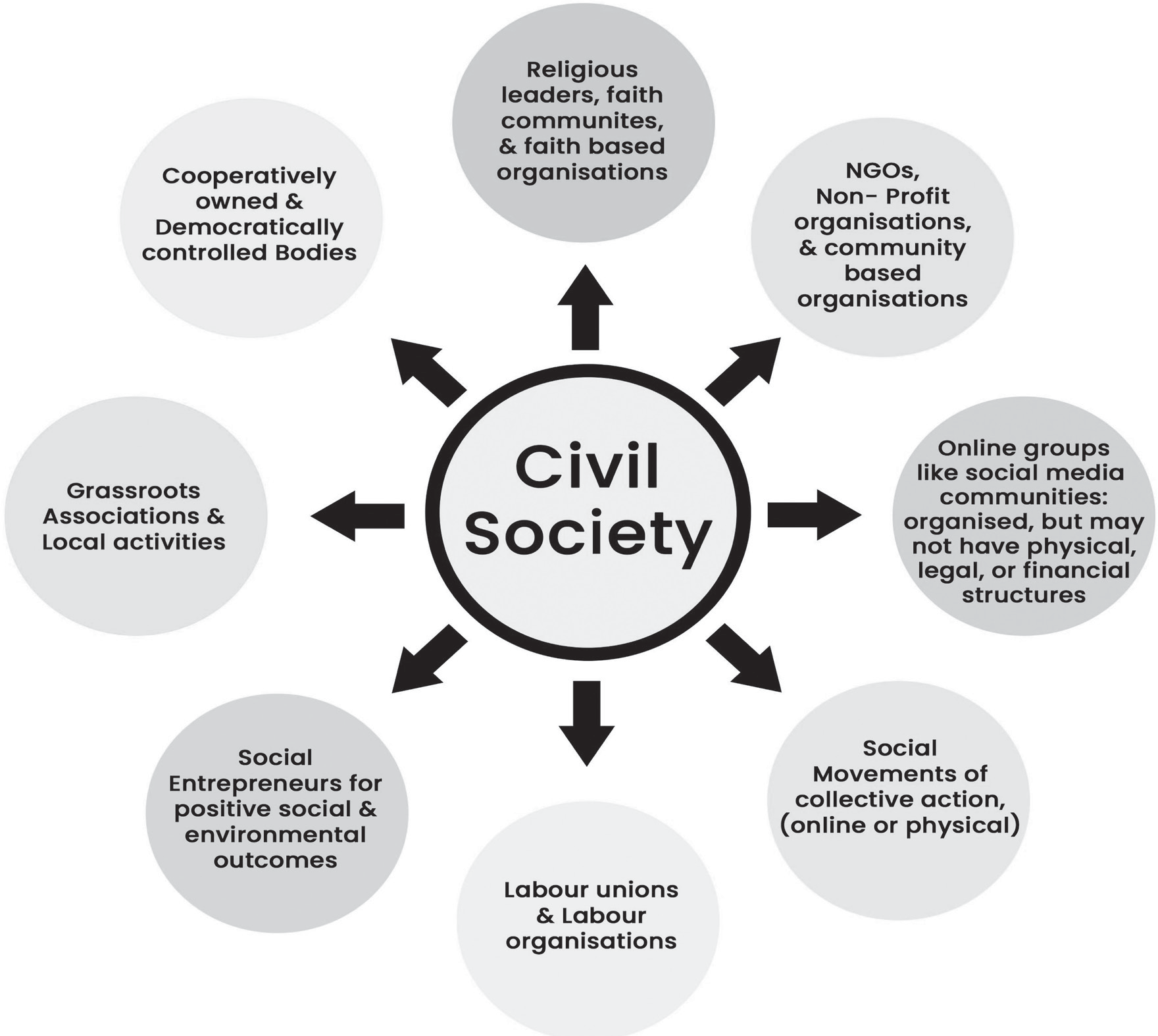
Figure: Aspects of Civil Society
Characteristics of Civil Society:
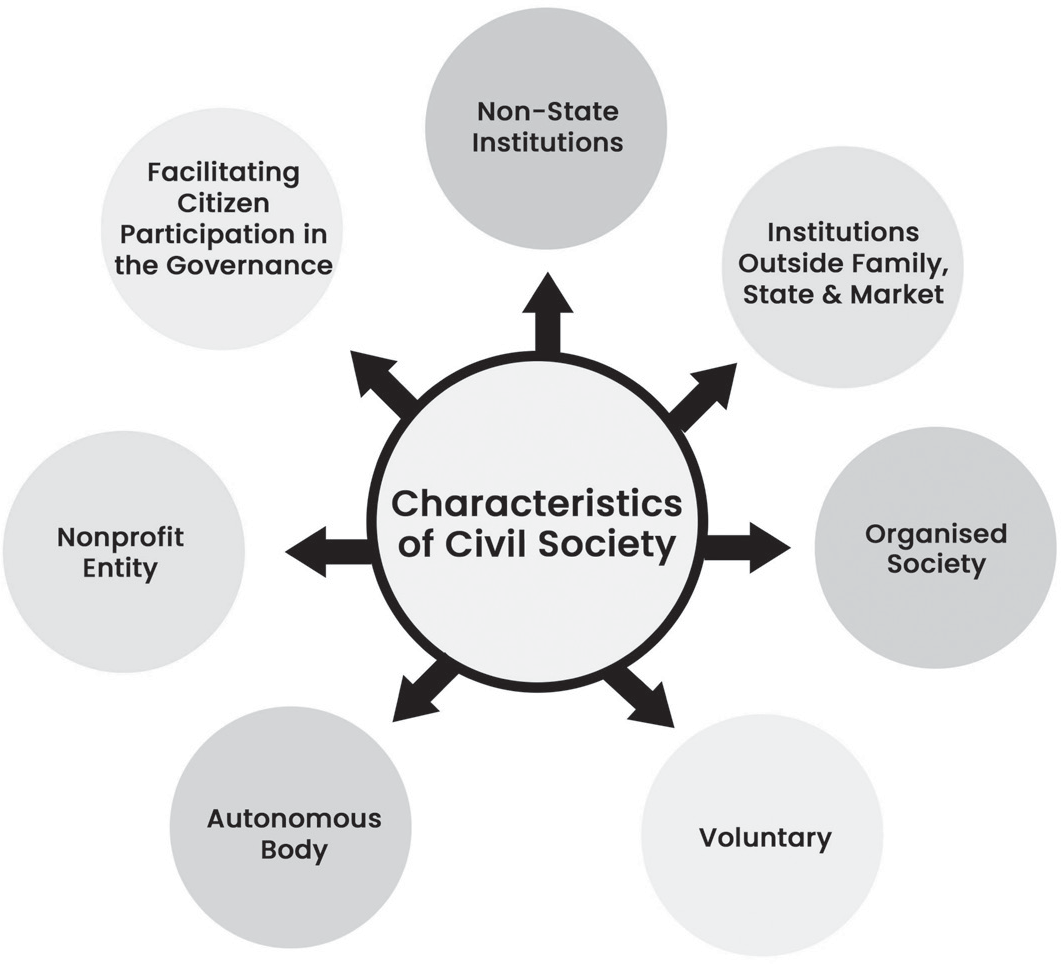
Figure: Characteristics of Civil Society
Evolution of Civil Society in India:
Civil Society in India
India has a long tradition of civil society activities and movements going on since centuries.
• The roots of civil society in India can be traced to the Vedic times.
• Various religions in India like Hinduism, Sikhism, Islam, Buddhism, and Jainism-all stress on behavior that is ultimately beneficial to society and mankind.
• The 'concept of giving' for others is very much embedded in our religions.
• We have ‘Daan’ in Hinduism, ‘Dasvand’ in Sikhism, and ‘Zakat’ in Islam connoting benevolent giving.
• In medieval period also, voluntary organizations were actively involved in welfare activities pertaining to education and health.
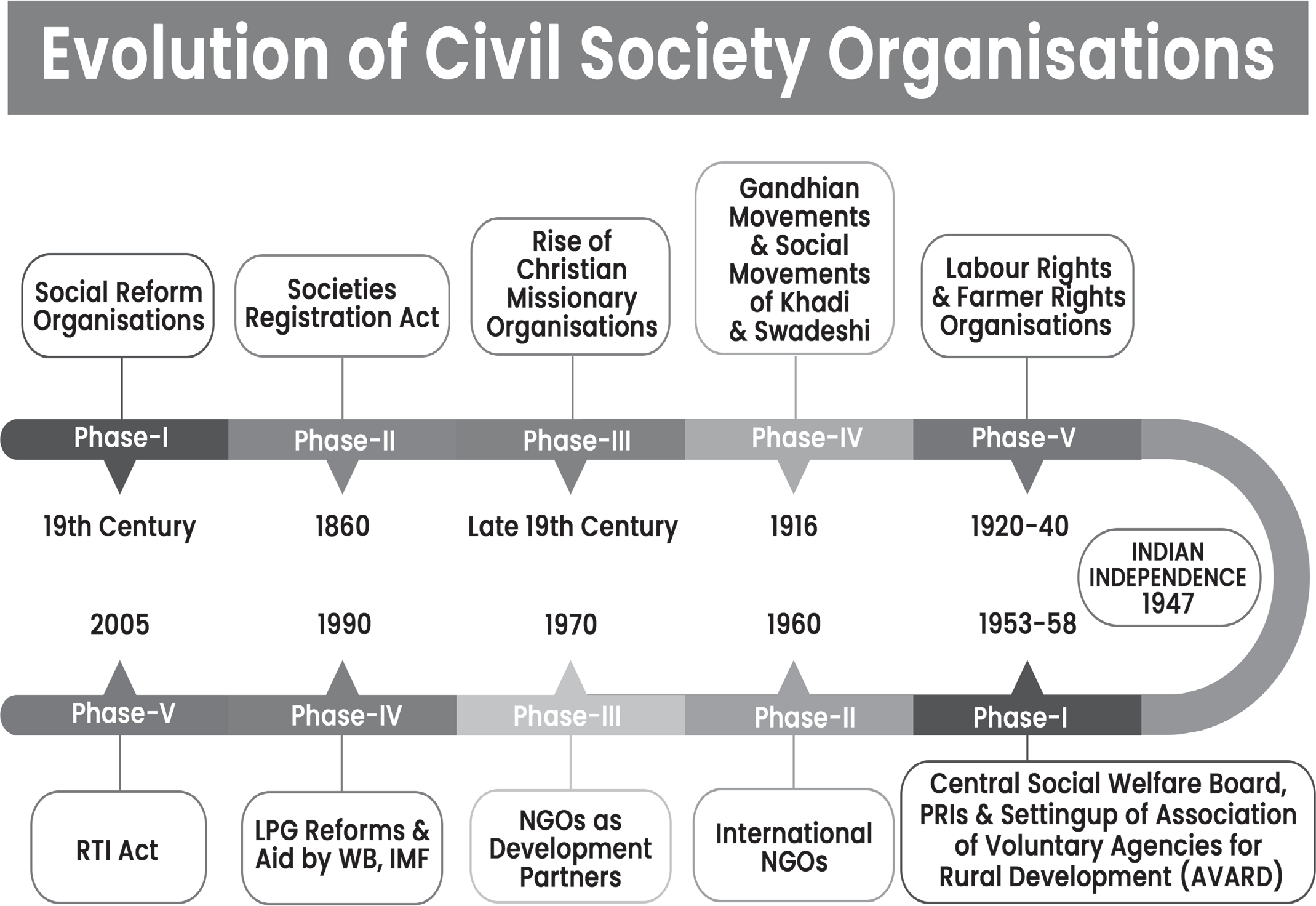
Figure: Evolution of Civil Society Organisations
Classification of Civil Society Organisations in India:
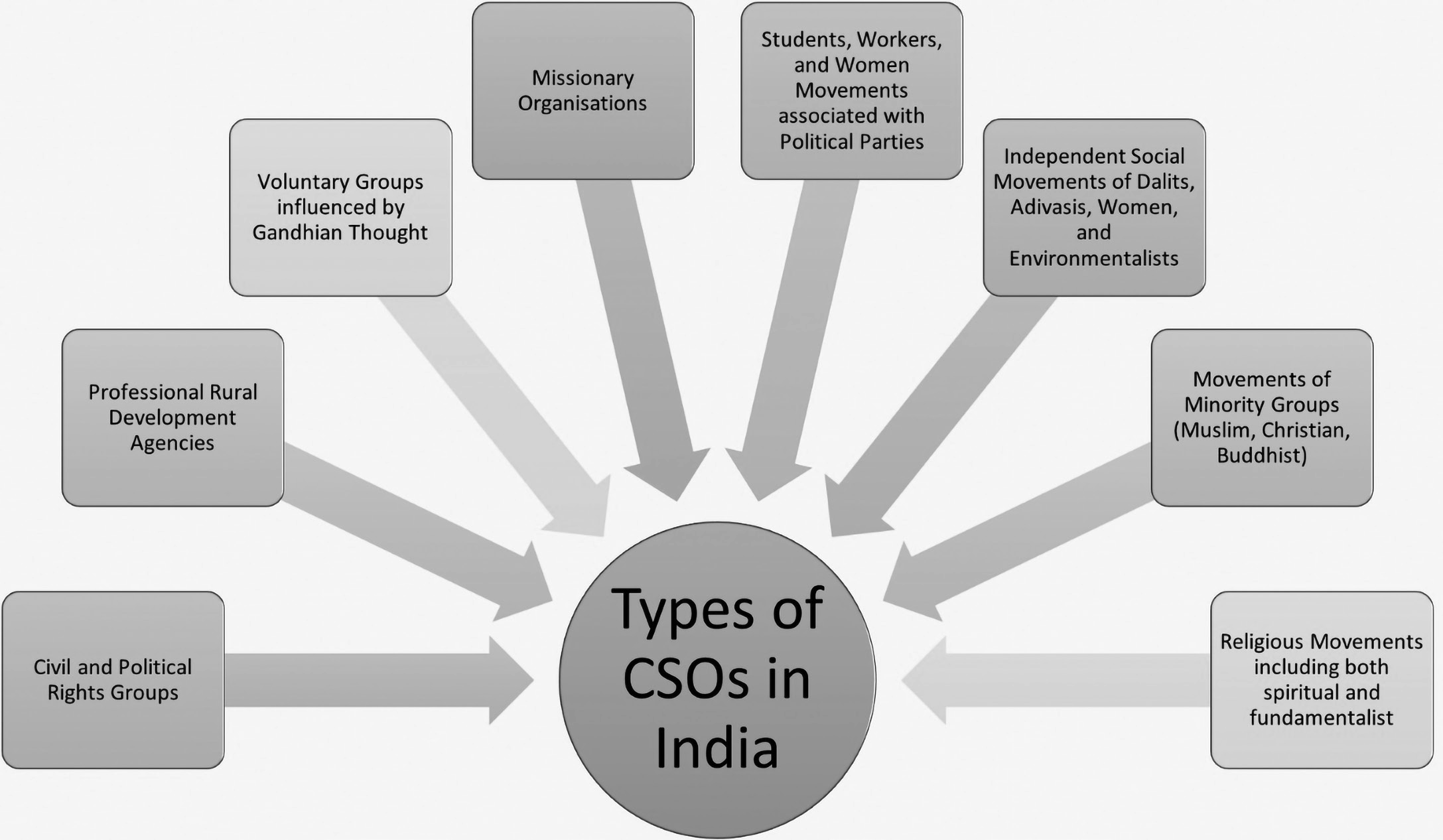
NGOs/VOs at contemporary times in India:
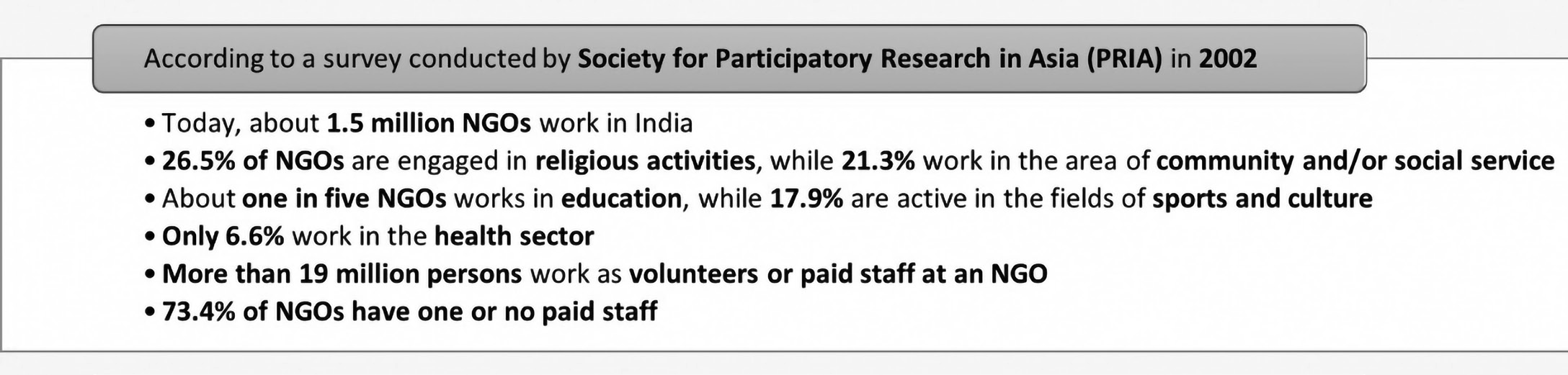
• Various non-profit organizations that provide information resources, services, and networking opportunities to NGOs include Indian Centre for Philanthropy, the Center for Advancement of Philanthropy, Charities Aid Foundation (India), National Foundation for India, and the Society for Service to Voluntary Organizations.
• The Credibility Alliance is an initiative by a group of NGOs committed to enhancing accountability and transparency in the voluntary sector through good governance.
• It was registered in May 2004 as an independent, not-for-profit organization after 2 years of extensive
consultation with thousands of NGOs in India.
• It operates as a standards-setting body, and aims to build trust among all the stakeholders. Its members include nearly 600 organizations.
Role Issues and Steps to Strengthen Civil Societies
Role played by Civil Societies:
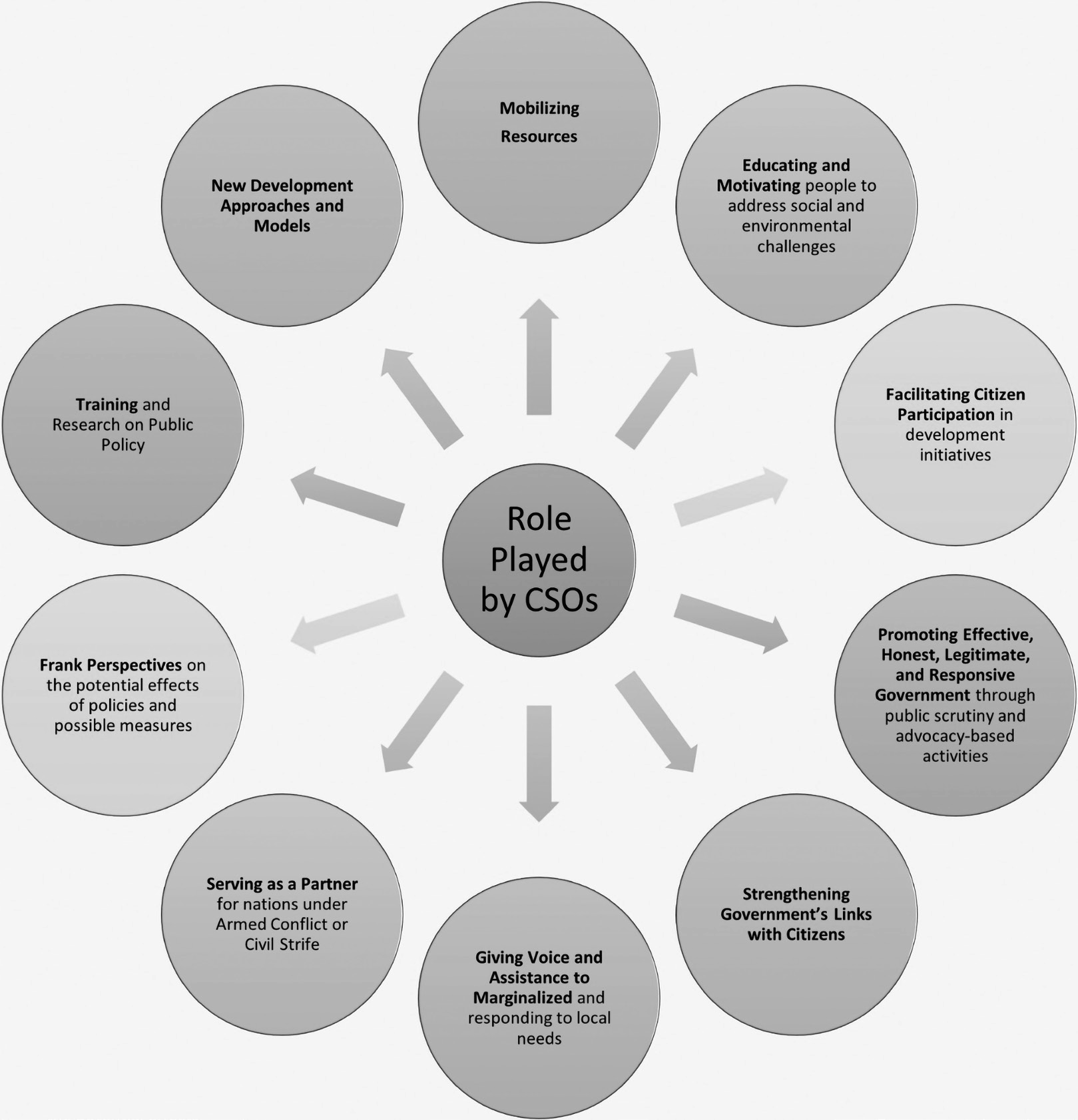
Figure: Role Played by CSOs
Role played by CSOs in Indian context: Policy Advocacy
CSOs are engaged policy dialogues with government in areas of poverty alleviation and empowerment of the disadvantaged sections
These organizations help the government in not only framing the policies in these areas but also help policy execution and policy monitoring and review.
• ‘Save the Children India’ is an NGO that works towards the restoration of the rights of children.
Protection Role
• Usually, such types of CSOs enable legal services andprotect the citizens against the repressive attitudes.
• Association for Protection of Democratic Rights helps provide legal aid to those who have no access to courts of law.
Promotion of Transparency
• The CSOs have enabled the enactment of RTI Act, 2005 and Lokpal and Lokayukta Act, 2013.
Mobilization of the citizens and resources
• These organizations involve communities in development works by engaging them in planning and designing the same.
• This even helps the government to avoid some of its policies that are not people friendly.
• They have used community resources to undertake initiatives like building community infrastructure, houses, toilets, and in providing basic services like water, electricity etc.
As an Active Partners in development
• NGOs like ‘Asha,’ ‘Pratham’ are actively involved in providing education to the children in rural areas and slums in the country.
• NGO like ‘Rural Health Care Foundation’ is providing health care services to the people in rural and remote areas.
Success stories of Civil Society in India Case Study 1
Right to Information Movement
• While for long, ‘right to know’ was demanded by some citizens’ groups, and there were multiple Supreme Court judgments, the seeds of the ‘movement’ for RTI, sown in 1987, grew out of Mazdoor Kisan Shakti Sangathan’s (MKSS) struggle for transparency and accountability in village accounts in Devdungri, Rajasthan.
• What began as a movement for fair daily wages, survival and justice for the most marginalised, spread to other regions, broader sections of population, citizens’ groups, social activists, media, academics, even small sections of government and judiciary, thereby metamorphosing into a powerful movement that culminated in the RTI Act in October 2005.
• National Campaign Committee for the People’s Right to Information (NCPRI) in 1996 also played significant role in the movement.
Case Study 2
Decentralised planning: Kerala Model
• The Kerala Sasthra Sahitya Parishad (KSSP) successfully led a campaign for bottom-up planning process.
• It resulted in the State Planning Board decentralising the process of planning in Kerala.
• Though this happened at a much smaller scale, the ‘Kerala model’ became an important inspiration for civil society groups.
Case Study 3
Civil Society/Wada Na Todo Abhiyan and Planning Commission: The Making of the 12th Five Year Plan
• Wada Na Todo Abhiyan (WNTA), a national coalition of over 3000 organisations across states; Centre for Budgeting and Accountability (CBGA), a think tank working towards bringing people- centred perspective on policies and government budgets; and National Social Watch (NSW), a network of civil society organisations, communities and citizens working on monitoring governance— to ‘claim’ space in the planning process.
Case Study 4
Lokpal /Anti-Corruption Movement
• The issue of Lokpal came to the centre stage in 2011, when Anna Hazare, a civil society activist, sat on an indefinite hunger strike in Delhi, demanding that the civil society draft or the Jan Lokpal bill be passed.
• The leadership of the initial platform ‘India Against Corruption’ included a diverse range of social activists and prominent individuals who came from varied backgrounds.
• The movement compelled the government to hold a joint parliamentary session, raising the level of debate in Parliament, and forcing it to acknowledge corruption, and formulate its own Lokpal bill.
Case study 5
MahatmaGandhi National Rural Employment Guarantee Act (MGNREGA)
• India’s most talked about government programme MGNREGA came about because Jean Drèze and others in civil society drafted it, and advocated for it.
The idea of MGNREGA did borrow from an earlier employment guarantee programme that was started in Maharashtra by Mr Vitthal Sakharam Page— chair of the Maharashtra State Legislative Council, and a social activist—who wrote the first draft in 1965.
But it was only when several civil society activists fought for it in the early 2000s, that it became something that the Central government took seriously and passed into national law.
Case study 6
Integrated Water Management Programme (IWMP)
• The early work around watershed management was done in Sukhomajri in Haryana.
A more integrated approach was later piloted at
Ralegan Siddhi by Anna Hazare.
This, and the Hiware Bazar model by Popatrao Pawar became models to emulate, and the IWMP guidelines that are in place today are a result of contributions from many nonprofits.
National Policy on the Voluntary Sector 2007
Government released the National Policy on the Voluntary sector in 2007 to increase the participation of civil society in governance and to professionalize the existing NGOs. The policy had following objectives-
Creating an enabling environment for Voluntary Organisations (VOs) that not only stimulates their effectiveness but also protects their identity and safeguards their autonomy.
Enabling VOs to legitimately mobilize the necessary financial resources from India and abroad.
Identifying systems by which the Government may work together with the Voluntary Sector.
Encouraging VOs to adopt transparent and accountable systems of governance and management.
Limitations of the NPV 2007: Issues Facing Civil Society
•
The policy recommends a regulatory body for the voluntary sector. Many NGOs demand self-regulation clause and see the regulatory body as an indirect way of extending government control over NGOs.
• The definition of Voluntary organisations used in policy is very broad, vague and ambiguous as per many experts.
• The tax exemptions given to Corporate for the donations to voluntary organisations are criticized by many activists. They held that this provision has made voluntary efforts as per the interests of corporate sector.
• The policy is failed to provide the required funds to voluntary organisations/NGOs.
• The policy also failed to provide exact mechanism, which helps in increasing the professionalism, transparency of the voluntary organisations in India as the recent CBI report is evident of this fact.
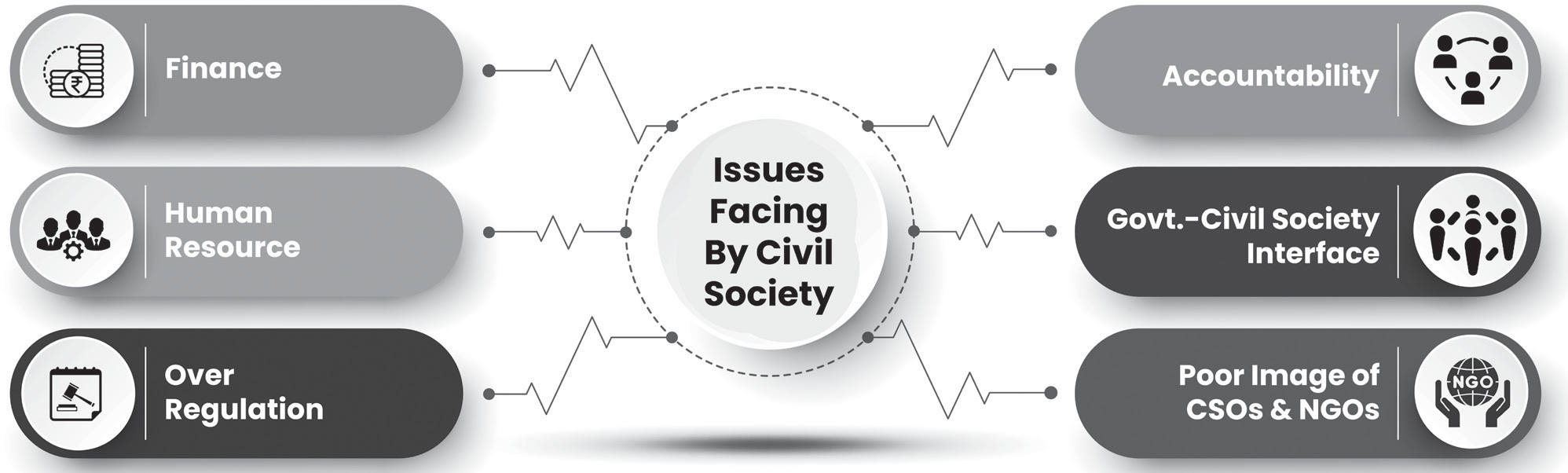
Figure: Issues Facing Civil Society
• Civil society organizations lack adequate financial
resources
• Most of the CSOs don’t have adequate funds to carry out their work, as the people they serve lack the capacity to pay.
• Hence, they depend on receiving funds from the government/non-government bodies/international institutions.
• Now, with a simultaneous cut in the international funding, the problem of financial inadequacy of CSO’s is only increasing. This is causing hurdles in the smooth development of the voluntary and civil society sector, impacting the quality of implementation of development schemes, as they are vital for key suggestions and discussions and feedback upon the issues at the grassroots in democracy.
• Inadequate professional and trained staff
• There exists a huge shortage of professional and trained personnel in the voluntary sector. Most of the personnel are unqualified and unskilled.
Inadequate salaries do act, as a deterrent in appointing of a skilled work force.
• Also, professionally qualified and trained individuals have a preference and inclination to work in high profile cities and offices than a backward and underdeveloped region. This creates a divide between rural and urban areas in the quality of output and outcomes.
• Accountability Issues
• One of the issues plaguing CSOs is the accountability issue in their own operation and working.
• Accountability and transparency, especially, in
financial matters are found lacking.
• There have been increasing incidences of misuse of funds by these organizations.
• In January 2017, the Hon. Supreme Court of India
called for an audit of nearly 30 lakh NGOs.
• This move was taken in the background of the NGOs failing to give an account of expenditure made out of the moneys they had received.
• In recent CBI report, 90 per cent of the 31 lakh NGOs
do not file annual financial statements.
• Government-Civil Society Interface
• The partnership of CSOs with the government has helped in successful implementation of many welfare and developmental programmes.
• CSOs have also successfully engaged with government in formulating various national level policies.
• But this interface between the CSOs and government seem to be clouded with an overbearing attitude of governmental officials, bureaucratization, and inertia that has led to a gap in the interface between the two.
• CSOs and NGOs are seen as hurdle in development
• Increasingly many CSOs and foreign funded NGOs are seen as “anti-development” or “anti-national” by governments and common people.
• A report of IB in 2013 held that- “A significant number of Indian NGOs (funded by some donors based in
How to strengthen CSOs in India
the US, the UK, Germany, The Netherlands and Scandinavian countries) have been noticed to be using people centric issues to create an environment which lends itself to stalling development projects.
• The negative impact on GDP growth is assessed to be
2-3 per cent per annum.”
• Over-regulation by government
• Through Foreign Contribution (Regulation) Act, 2010 (FCRA) government has tightened the control on foreign funding to NGOs.
• The later amendments have made the provision of foreign funding even tougher.
• First, the Amendment bars recipient NGOs from sub-granting foreign funds to other (often smaller) NGOs, even though the latter may be better connected to the intended beneficiaries of a program.
• Second, it reduces the amount of foreign donations NGOs may spend on administrative expenses from 50% to 20%. This will reduce the flow of funds to NGOs and hence it will reduce their effectiveness.
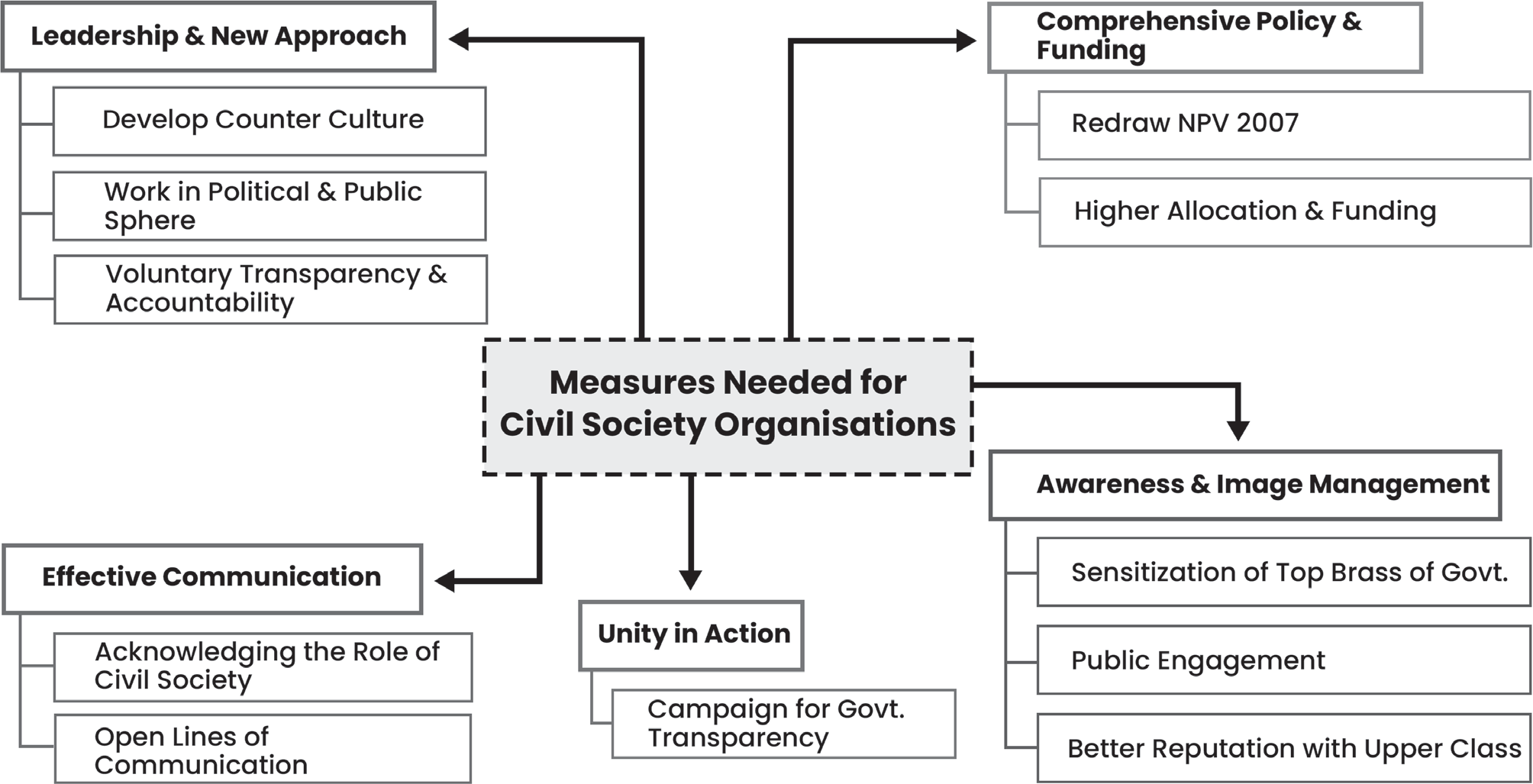
• Show government the value of civil society, and vice versa:
• Civil society organisations (CSOs) share a symbiotic relation with government.
• A strong civil society can only exist within a democratic framework guaranteed by government.
• CSOs need to acknowledge that law-making should be the domain of elected representatives in a democracy, rather than un-elected ones.
•
Similarly, civil society’s role as a facilitator of democracy and development and a watchdog must be acknowledged by the government.
• Open lines of communication:
• Dialogue is key. It takes two to dialogue.
• The success of civil society movement in bringing various welfarist measures in India was the result of dialogue between government and civil society.
• This needs to be developed more going forward.
• Sensitize people in high places about the concerns:
• Identify your allies within the government, Judiciary and ask them how to present data and information.
• Taking a confrontational stand only complicates matters.
• For example, the LGBTQ movement in India, where PIL in Courts helped more than protests.
• Engage the public:
• NGOs need to take outreach to a wider audience.
• The middle class and youth need to be engaged.
• There is a link between economic and political capture by a small group and projection of certain kind of development.
• Support among organisations:
• NGOs are a divided community in India and have failed to make a compelling case for themselves, not just in the public eye, but also with government.
• This can be helpful in putting a consolidated front on any social issue.
• Campaign for more government transparency:
• There is still a lot of information on legal and financial compliance that the NGOs don’t have easy access to.
• This causes quite a few issues. There is a real need for transparency on the processes and decision making by the government.
• This information should be easily accessible to NGOs.
• Work in political and public spheres:
• CSOs should also learn to work more strategically with political parties.
• As CSOs operate in the space between public and political arenas, government responsiveness is improved by engaging both arenas.
• Create a counter-culture:
• It is important to recognise that we live in an age of political capture where the power – economic and wealth – is more concentrated than it has ever been, with this impacting how policies function.
• CSOs need to create a popular narrative with a clear vision of what change looks like – in terms of poverty, gender and social inclusion.
• Improve the sector’s reputation with the upper class:
• Many sections of Indian society view NGOs with suspicion, particularly the upper class.
• While it is true that a few black sheep have tarnished the image of the sector, much of the opposition is because it clashes with the class interests of the elite in India.
• NGOs need to work much harder to convince people of their motivations.
• Take responsibility for accountability and transparency:
• Businesses have been accused of using NGOs for money laundering.
• NGOs should account for the money they spend while working within the parameters of national governing frameworks and laws.
• The best NGOs strategise about how they can be accountable to the communities for whom they work.
• Redraw the NPV 2007 and make the funds available to CSOs:
• The National Policy of Voluntary Sector 2007 has failed to mobilise funds to voluntary organisations. Most of its objectives have remained on paper only.
At the same time the evaporation of foreign fund flow is felt detrimental to voluntary organization in India, post FCRA amendments 2020