Whatsapp 88106-52225 For Details
Get Free IAS Booklet
Get Free IAS Booklet
INTRODUCTION:
Over the years, both sociologists and non-sociologists have invested considerable effort in examining the challenges faced by women and assessing the progress in their status within society. While some focus on the legal rights women have gained in areas like marriage, inheritance, and public participation, others highlight the persistent inequality and discrimination women still face due to entrenched social attitudes and traditional customs. Despite legal advancements that have elevated the status of women, in practice, they continue to endure discrimination, harassment, and humiliation.
The Profile of Women in India
• Sex ratio: The sex ratio is used to describe the number of females per 1000 males. As per the Census 2011, sex ratio for India is 940 females per 1000 males, i.e., females form a meagre 47 percent of the total population. However, this has improved significantly as according to the fifth round of the National Family Health Survey (NFHS-5), the overall sex ratio of the population for the country was estimated as 1020 for every 1000 men. The sex ratio at birth is still dismal at 929 indicating continued sex selection at birth.
• Literacy rate for women: The literacy rate of Indian women has also grown over the years. According to the World Bank India report, only 1 of 11 girls was literate at the time of India’s independence which is about nine per cent but at present, the women’s literacy rate has jumped to 77 percent. However, the female literacy rate is abysmally low in rural areas and some pockets of urban areas. The literacy rate in rural India is 67.77 percent as compared to 84.11 percent in urban India. Bihar has the lowest literacy rate in India at 61.8 percent, followed by Arunachal Pradesh at 65.3 percent and Rajasthan at 66.1per cent.
•
Employment Status: According to the World Bank, women represented 23 percent of India’s formal and informal workforce in 2021, down from nearly 27 percent in 2005. Indian women’s participation in the formal economy is among the lowest in the world and only parts of the Arab world fare worse. Even as the economy has grown, educational attainment has increased, and fertility rates have fallen, women are not participating in the formal economy. In fact, their participation is declining.
• Political participation: Though India had the first women Prime Minister Late Mrs Indira Gandhi, nonetheless women are not fairly represented in the Parliament & other State & Local bodies. The highest proportion of women representatives elected to the 17th Lok Sabha so far was in the 2019 elections, and it was less than 15 percent of the total. Further, the number of women candidates and MPs varies greatly across states and parties. For all the state assemblies, female MLAs’ representation stands at an average of 9percent.
• Health Status: According to NFHS-5, 57 percent of women in the age group 15-49 have anaemia. Its prevalence has increased from 53 percent in 2015- 16 to 57 percent in 2019-21. Further, Malnutrition is higher among girl child as compared to their male counterpart. Nutritional deprivation is a major reason for different ailments in women.
Position of Women in the History of India
During the Vedic period or early Vedic age (1500 BC–1000 BC), women were accorded high respect and dignity. Rig Veda places women as central to the creation of all lives in the cosmos. In education, women enjoyed equality with men. Even they were allowed to spend life in ‘Gurukul’. Education is considered an important qualification for a women’s marriage. There were numerous women seers and poets like Maitreyi, Gargi, Nivavri, Sikata,
Romasa, Juhu, Vagambhrini, Paulomi, Yami, Indrani, Savitri, Devajami, Sulabha, Aditi, Dakshina, Apala, Viswavara, Ghosa, Lopamudra, etc. during this era which is also called the Rig Vedic period.
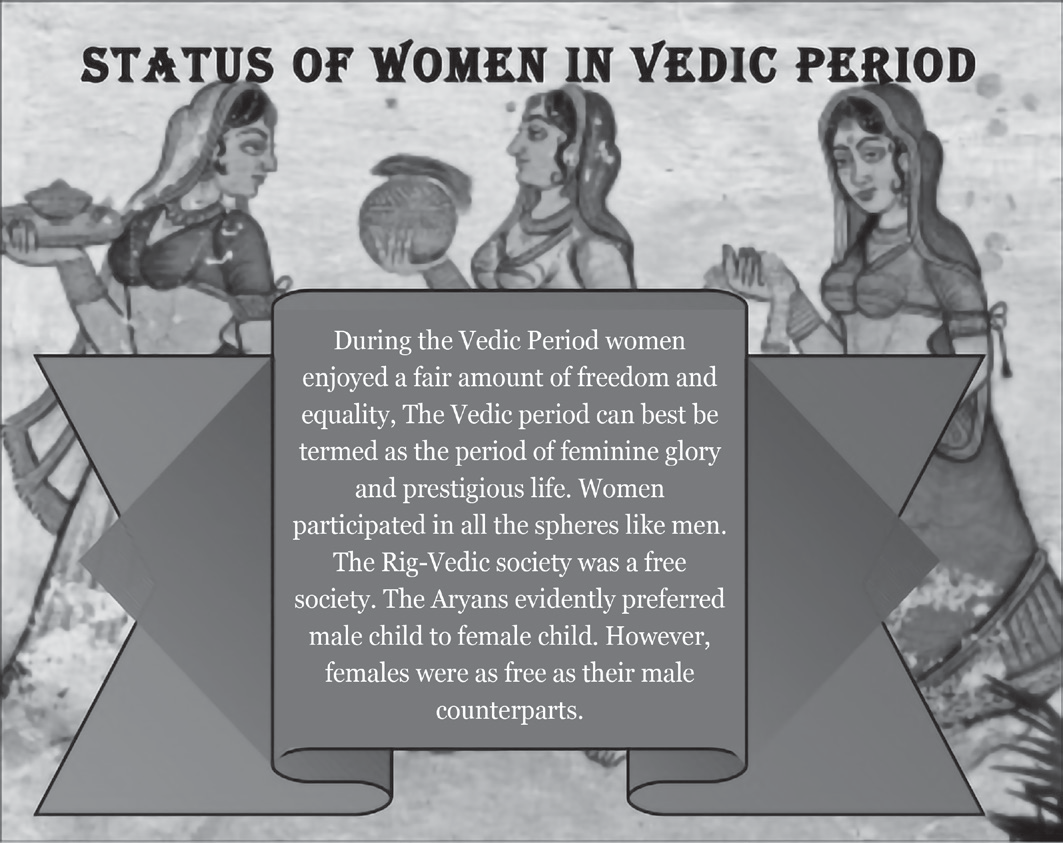
During the later Vedic period, the formation of larger kingdoms led to an increased need for larger armies, which, in turn, elevated the roles and prestige of men. Religious rituals and ceremonies became exclusive privileges for Brahmins, with women being excluded. Women were forbidden from reading Vedic texts, and child marriages became widespread, with marriages often arranged before puberty. Women were viewed as inferior and subordinate to men, and they were also stripped of their political rights, such as the ability to attend assemblies.
Medieval India was ruled by Muslim kings and religious Ulemas. Their conservatism, orthodoxy, and male- chauvinism negatively influenced society and particularly women. The existing social evils became more prominent and also new kinds of restrictions were imposed on the women in the name of religion. The old norms of female infanticide, no education for girls, child marriage, and dowry became more prominent. Purdha or pardah (i.e. veil) system was widely followed. Though queens like Razia Sultana of Delhi Sultnate, Rudrama Devi of Kakatiya dynasty, Chand Bibi of Bijapur, Tarabai
Bhonsle of Marathas, Rani Durgawati of Gondwana, Rani Abakka Chowta, Ahilyabai Holkar of Malwa, etc. existed, yet position of women among the masses was low.
Other than Sati, a menace called Jauhar came into existence. Under this, wives and daughters of defeated warriors self-immolate themselves to avoid strain on their modesty and at the hands of the enemy. As a whole, women in this dark age lived a highly secluded life sanctioned by religious orthodox and patriarchal society.
Position of Women -Phase II
No Dignity
Child Marriage
Complete suppression of Women’s Rights
Sati - compulsory
No widow remarriages
Polygamy
At the outset of the 19th century, a socio-religious reform movement fueled by the Renaissance and Enlightenment ideals began to gain traction under British colonial rule. This movement aimed to challenge the widespread oppression of women. While the British colonial powers undermined Indian sovereignty, they supported the rise of a new educated class that sought to free women from the constraints of religious orthodoxy. This support manifested in several key reforms, including:
• Ending Infanticide: Infanticide was outlawed and classified as murder by the Bengal regulations of 1795 and 1804. Additionally, the 1870 Act made the registration of all births mandatory, ensuring that the births of female children were verified and monitored for several years after birth.
• Abolition of Sati: At the initiative of Raja Ram Mohan Roy, the government declared the practice of Sati (burning alive of widows) illegal and punishable by criminal courts as culpable homicide in 1829. Though this regulation was originally implemented in Bengal alone, the next year it extended to other two major provinces, Madras and Bombay.
• Widow Remarriage: At the instance of Brahmo Samaj and Ishwar Chandra Vidyasagar, Government enacted Hindu Remarriage Act, in 1856. Vidyasagar cited Vedic texts to prove that the Hindu religion sanctioned widow remarriage.
• Annihilation of Child Marriage: Due to the efforts of Parsi reformer B.M. Malabari, the Age of Consent Act (1891) was enacted which forbade the marriage of girls below 12 years old. The Sarda Act (1930) further pushed the marriage age to 18 and 14 for boys and girls, respectively.
• Education to women: The Christian missionaries were the first to set up the Calcutta Female Juvenile Society in 1819. Later Bethune School was founded by J.E.D. Bethune in Calcutta in 1849. Charles Wood’s Despatch on Education (1854) and Hunter Commission also laid great stress on the need for female education.
Changing Status of Women in the Post-Independence Period:
The post-independence phase has witnessed a tremendous upsurge in equality and gender justice. Both structural
and cultural changes have not only provided equality of opportunities to women in education, employment and political participation, but have also reduced the exploitation of women, and oriented women to develop their own organisations which take a keen interest in their problems.
Urban women are experiencing a widespread awakening regarding their rights, prompting the state to take a stand against discriminatory practices. Female literacy has seen significant growth, and women now have access to all professions. Gender issues are gaining increasing attention and prominence. Today, women in India balance multiple roles at home, in the workplace, in factories, and within the legislature.
Structural Challenges: Key Structures and Processes that Perpetuate Gender Discrimination
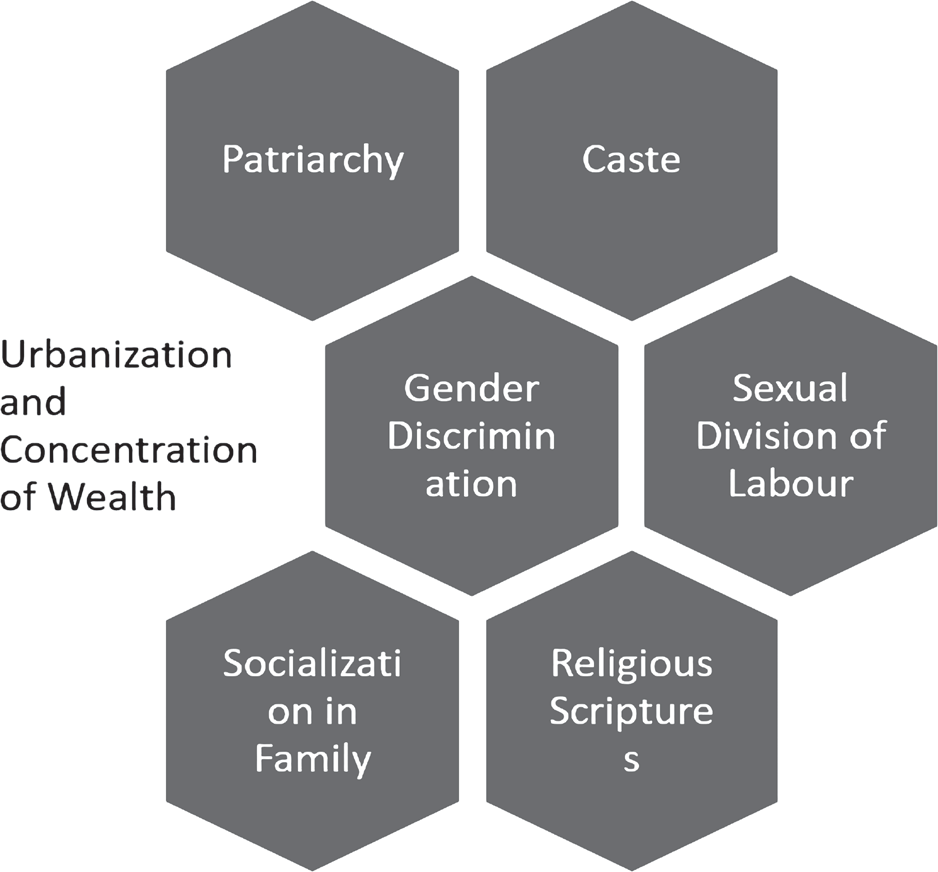
Key Factors of Gender Discrimination
Caste System:
The entire system of hierarchy within the varna system has been founded on the bodies of women. Controlling women and their sexuality has been the bedrock of the caste system. Brahmins were the first class to raise the wall of endogamy. The higher the caste the greater the constraints on women.
The control of women comes from two major aspects:
Women were often denied inheritance of immovable property, effectively excluding them from the public sphere and confining them to a secluded domestic role.
Men exerted significant control over women's sexuality through practices such as arranged marriages, child marriages, a ban on divorce, and the enforcement of strict monogamy for women. These
practices contributed to the prevalence of sati and the prohibition of widow remarriage, even for infant or child widows.
Thus, once married, a woman is often viewed as a source of pleasure and service to her husband and in-laws. She is expected to remain with her husband at all costs. From a young age, she is taught to internalize the values of pativrata (devoted wife) and sanskar (traditional values). This reinforces the invisible grip of oppression disguised as tradition and culture, with women becoming the bearers of family honor.
These restrictions were most rigidly enforced by the upper castes to preserve ritual and biological purity, reinforce caste superiority, and maintain economic dominance. In an effort to improve their social standing, lower caste groups sought upward mobility through economic advancement, often adopting the upper caste norms that restricted women's freedom.
Class Structure:
Class is defined by the ownership of property, capital or economic resources. The constraints on women that vary from upper to lower castes are reinforced by the class structure as well.
Women of upper castes/classes are secluded and participate in activities in the domestic sphere. Women from middle castes with medium and small holdings are more likely to work in their own fields and in certain cases work for wages. Women from artisan castes/classes contribute to home-based production. They belong to the bottom of the hierarchy, where seclusion and restriction on social mobility are not practised.
In the urban context, where there is a transition to non- agricultural occupations, the upper castes form the predominant group among the middle classes. Women of this class emerged from seclusion to acquire education and employment. The important aspect is that the economic dependence on men is broken. However, this did not drastically change the subordination of women.
Institution of Family:
Currently, with the exception of the Nair community of Kerala, the Khasis and Garos of North-eastern India, and certain tribes in Lakshadweep, most communities follow a patrilineal descent system. A key aspect of patrilineality is the practice of patrilocality, where women move to their husband’s village or family home after marriage. Meanwhile, sons remain with their fathers. As a result, property laws have historically prevented daughters from inheriting immovable property, as such property would pass to their husband’s family upon marriage.
This provides a material reason for anxiety over the birth of daughters.
Religious Scriptures:
Moreover, the religious scriptures, especially the Hindu religion, place a high preference for sons. According to the code of Manu, a man could achieve merit only by
protecting the purity of his wife and through her, of his sons. This hierarchy of male and female roles creates a differential evaluation of children with a strong son preference on the one hand and daughter neglect on the other.
Socialisation in the Family:
Socialization performs the function of transmitting culture, tradition, social values, and norms. Boys and girls are socialized differently, reinforcing unequal roles and relationships. Boys are provided with higher education and skills to take on the 'breadwinner' role, while girls are introduced to domestic tasks early on, receive less education, and are taught to work hard and develop low self-esteem. Boys are seen as permanent members of the family, while girls are considered temporary.
Few families allow their daughters to cultivate an independent identity or dignity. The family ideology that defines what jobs are ‘suitable’ or ‘unsuitable’ for women also influences job stereotyping in the labour market.
Social Stratification
Social stratification is a system of social ranking based on norms and superiority, affecting the distribution of advantages and benefits in society. It is an evaluative ranking of social units, governed by principles that determine the basis of social advantages. Social stratification is part of social inequality, categorizing people into socioeconomic tiers based on factors like wealth, income, race, education, and power.
Factors of Social Stratification
Societies’ stratification is influenced by various factors, including wealth, income, and cultural beliefs. Wealth is a key determinant, while wealth and income are based on wealth and assets. Cultural norms and values, such as wisdom and charisma, also influence social standing. Parents’ social standing is passed down through generations, creating a comfort zone and identity. Occupational structure also plays a role, with teachers often receiving low pay due to their noble profession. These cultural attitudes and beliefs perpetuate social
inequalities, making it difficult for first-generation college students to succeed.
Implications of Social Stratification
Social stratification, regardless of its form, is often linked to negative outcomes like poverty, inequality, and social conflict. Lower social positions face barriers to mobility and access to resources, leading to social unrest. However, social stratification can also provide a sense of belonging and motivation for individuals to work hard and achieve success, as it helps them move up the social ladder.
Urbanization and Concentration of Wealth:
Despite significant economic and scientific growth over the past few decades, female infanticide and foeticide remain major issues in India, data show. India’s sex ratio at birth declined even as per capita income increased nearly 10 times over the last 65 years, according to an IndiaSpend analysis of government data.
Contrary to the common belief that the strong prejudice against girls, as reflected in the country's sex ratio, is primarily a rural issue, an analysis of government data from 2011 reveals that some of India's largest cities, including Delhi and Mumbai, also had skewed sex ratios.
Urban India performs worse than rural areas when it comes to sex ratio, both overall and at birth, according to the latest national health survey.
• The overall sex ratio for the country stands at 1020, with rural India at 1037 and urban areas at 985, as per the National Family Health Survey-5 (NFHS-5) for 2019-21.
• The sex ratio at birth has seen a slight improvement over the past five years, rising from 919 to 929 girls per 1,000 boys. However, rural India continues to outperform urban areas in this regard.
Sex selection has been more prevalent in urban areasbecause:
• People have access to technology like sonogram and sex determination tests.
• Anti-female bias and prejudices about their abilities and discriminatory social practices also cause sex selection.
• Parents traditionally believe that they will be better taken care of in their old age by men, as men are perceived as the principal wage earners of the family and caregivers while women are seen as liability as they will leave them for matrimonial homes.
• Parents of girls are usually expected to pay a dowry, which could be a massive expense, avoided by raising males.
• Son preference due to traditional belief that a male child would carry forward the family name.
• Smaller family sizes might also lead to greater gender selection. Sex ratio at birth becomes skewed in favour of boys when fertility rates are low “by choice or coercion”.
• Higher wealth concentration in urban areas along with small family size leads to insecurities about the inheritance of the property and thus, son is considered
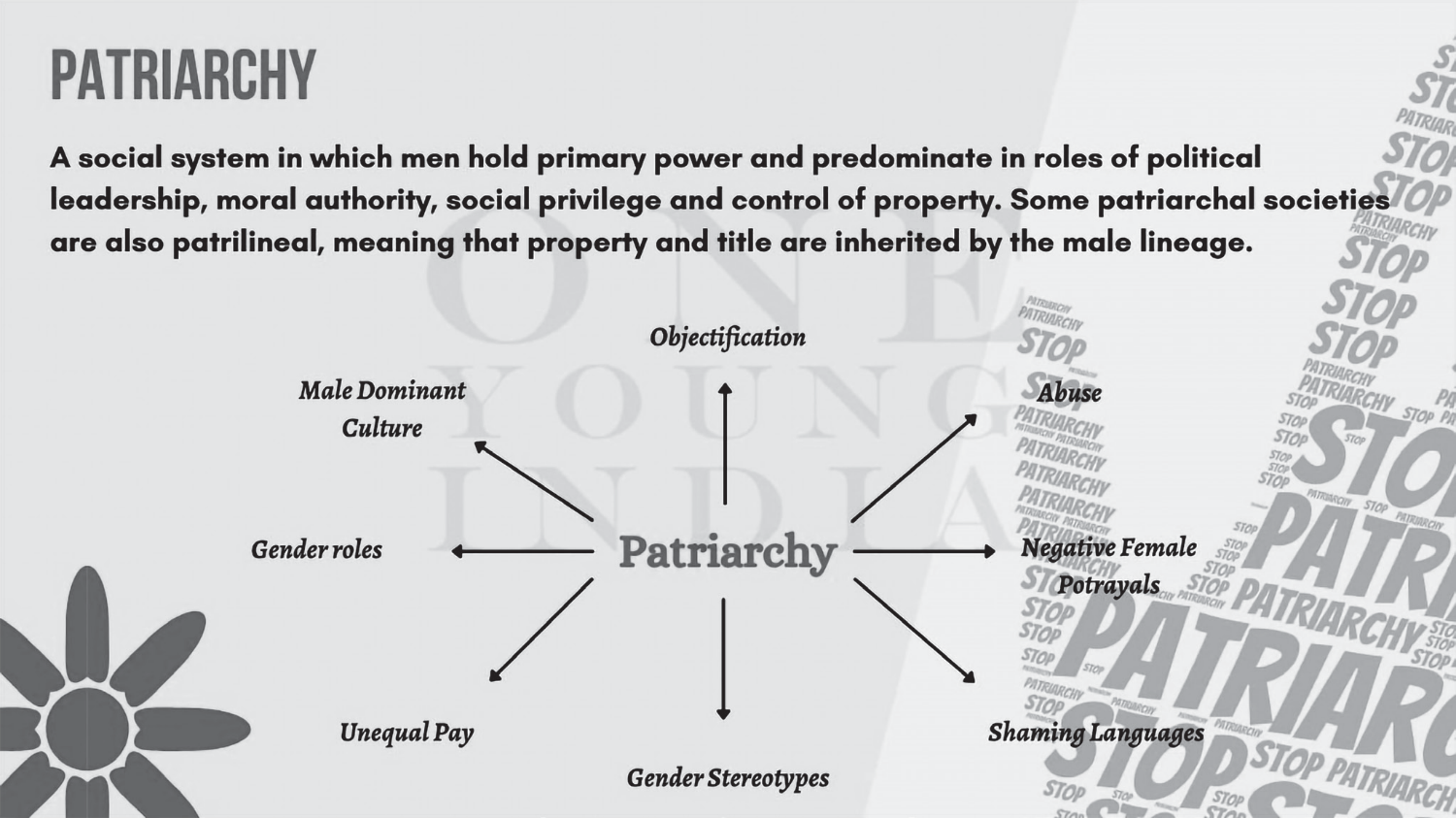
Concept of Patriarchy and Sexual Division of Labour:
as a reliable option for continuity of property within the family.
While education can play a role in reducing son-preference in India, broader empowerment for women is essential. This includes access to education, the freedom to travel, opportunities for personal growth, the ability to make decisions, and the chance to utilize their education in the same way men do. These factors, rather than education or economic development alone, are key to changing gender perceptions.
• Patriarchy is defined as a system of social structures and practices in which men dominate and oppress women.
• Patriarchy operates through various structures, including household production relations where women are subjected to unpaid labor, the discriminatory allocation of occupations in the labor market, the concentration of political power in the hands of patriarchs, male violence that is often systematic and patterned, and patriarchal cultural institutions such as education and media.
• The Sexual Division of Labor refers to the practice of dividing work based on sex and gender. This is the most fundamental form of labor division, existing since ancient times. It is now recognized that the sexual division of labor is socio-cultural rather than biological in nature.
• Historically, men have been seen as breadwinners while women were assigned the roles of housekeepers and child-rearers. This arrangement was once considered "natural." However, the ideology of this "natural" division of labor has been challenged, particularly as women began entering the workforce in large numbers in the West.
• The rise of the feminist movement, especially with the Women's Liberation Movement of the 1970s, raised important questions about the division of labor and the widespread subordination of women across different societies and cultures.
• In the Indian context, feminists view caste as another patriarchal institution. Across all castes, women are primarily seen as domestic workers. Along with religion, caste defines women's roles in Indian society. Furthermore, Brahminical traditions idealize obedient women as "Pativrata," which often masks the underlying gender discrimination.
Specific Problems Faced by Women in Contemporary India
• Domestic Violence: In Indian families, the man is the master and women are the inferior and subordinate partners and societal pressure forces women to maintain this status quo. Wife beating is the most prevalent form of violence against women in Indian society and it is viewed as a general problem of domestic discord.
• National Commission for Women registering over 6,900 complaints in the ‘protection of women against domestic violence’ category in 2022.
• The National Family Health Survey-5 report reveals that in India, nearly one-third of women have experienced physical or sexual violence. Despite a decline in domestic violence from 31.2% to 29.3%, 30% of women aged 18-49 have experienced physical violence for 15 years, and 6% have experienced sexual violence in their lifetime.
• Only 14% of women who have experienced violence have brought the issue up.
• The survey highlights that a more detailed comparison between NFHS-4 and 5 is not possible since NFHS-4 covered women in the 15-49 age group, NFHS-5 dealt with women in the 18-49 age bracket”.
• Dowry: The practice of dowry, as it exists today, has become a social menace, undermining the dignity of women. It has turned into a significant burden for the parents of the bride, leading to tragic outcomes such as female foeticide and infanticide. In popular terms, dowry refers to money, gifts, property, or goods that a wife is expected to bring to her husband upon marriage.
• Unfortunately, dowry, which was once given voluntarily as a symbol of love, has now become a financial obstacle to marriage, particularly for middle-class families.
• Today, dowry is often demanded as a right. The issue doesn't end with the marriage ceremony; it remains a persistent problem even years later. The groom and his family continue to extort money on various occasions, including fairs and festivals.
• As per the data from Rajya Sabha in 2022, 35,493 dowry deaths were reported in the country between 2017 and 2021.
• Atrocities and Discrimination: Gender discrimination and atrocities against women have been the ugly face of Indian society. The patriarchy and social milieu that has surrounded the patriarchal society have established
an unequal power relationship between men and women. Discrimination against women persists from ‘cradle to grave’ and exists in her denial of the right to education, denial of nutritious food, medical care, dowry-related problems and sexual harassment.
• Female Infanticide: Though female infanticide is sharply reduced; it continues to be prevalent in different forms for different reasons. Male child quest- driven sex selection persists. The problem is more among educated urban and rich people.
• According to data from the National Crime Records Bureau (NCRB), a total of 90,113 girls under the age of 18 went missing in 2021, with the highest number reported in West Bengal at 13,278. In total, 1,061,648 women went missing across the country between 2019 and 2021, including 251,430 girls during the same period.
• According to the Lancet, ‘missing female’ births in India increased from 35 million in 1987–96 to 45 million in 1997–2006 and to 5 5 million in 2007–16.
• Prof. Amartya Sen, in his article “Missing Women‟ has statistically proved that during the last century, 100 million women have been missing in south Asia.
• Child Abuse: This creates strain on the moral fabric of children. Many times, children and particularly female child is abused by relatives and parents. This not only creates physical pain but also mental agony unsuitable for the age.
• National Crime Record Bureau (NCRB) reported
1.49 lakh cases of crime against children in 2021 reflecting a sharp increase of 16.2% over 2020.
• According to Interpol report, India is said to have reported over 24 lakh instances of online child sexual abuse during three-year period between 2017-20 with 80 per cent of the victims being girls below the age of 14 years.
• Harassment at the Workplace: As more women join the workforce, they often face harassment from both their superiors and peers. Many women, especially those struggling with economic challenges, lack the opportunity to speak out about their experiences.
• The Annual Review of the State of Sexual Harassment in India, a report by the Women’s Indian Chamber of Commerce and Industry’s Council of Ethics, reported that over 50 percent of respondents experienced sexual harassment at least once at the workplace and of the people who faced such incidents, 55.2 percent decided not to file a complaint.
• Safety: The safety and security of Indian women in public places is pathetic. Molestation, rape, and eve teasing are everyday phenomena at present. India’s rich tradition is facing backlash on the world stage because of this.
• According to the World Bank data of 2022, more than 80% of women commuters faced sexual harassment but only 1% reported it due to lack of awareness, characterising sexual harassment as eve-teasing and deeming it not serious enough to be reported, fear of reprisals from perpetrators, social stigma, and fear of victim-blaming.
• Trafficking: The trafficking of girls child and women are ever-increasing. The problem is such an act is done by an organized crime syndicate with a well-developed and connected network. Trafficked women are used for flesh trading and criminal activities.
• A Reuters study estimates that out of approximately 20 million commercial sex workers in India, 16 million women and girls are victims of sex trafficking.
• According to a report by Legal Services in India, four girls are forced into prostitution every hour in India, with three of them coerced against their will.
• Feminization of Agriculture: With growing tendency of migration of men for work and consequent handover of agriculture jobs to household women leads to the feminization of farming. The disguised nature of Indian agriculture puts women in a perpetual state of poverty.
• The 2017-18 NSSO data reveals that more than 70% of rural women are engaged in agricultural work. Yet, only 13.9% of women own land holdings.
• Less Economic Engagement: Though women widely participate in all kinds of jobs, still their economic engagement is less compared to men.
• Although the Indian economy has grown more than 10 times since 1990, female workforce participation has declined from 30% in 1990 to 19% in 2021.
• This decline has been especially sharp over the past 15 years, with female labor force participation dropping from 32% in 2005 to 19% in 2021.
• This presents a perplexing situation, as access to education for women in India has improved over the years, yet more women are choosing to remain outside the workforce.
• Lack of Political Participation: Despite a gender- neutral constitution, women’s participation in politics is insignificant.
•
In fact, the 17th Lok Sabha saw the highest-ever participation of women MPs, with 78 women elected, making up only 14% of the total. The highest proportion of female representatives in the Lok Sabha was recorded in the 2019 elections, yet it was still less than 15% of the overall total.
• Additionally, the number of women candidates and MPs varies significantly across different states and political parties.
• The one-third reservation for women in Panchayats is often dominated by the wives and daughters of established politicians.
Women Empowerment
The concept of empowerment flows from that of power. In the societal context, ‘power’ is understood as authority, the right to command, the right to govern or rule, the capability to influence etc. Thus, empowerment simply means vesting power where it does not exist or exists inadequately.
Women’s empowerment as a phenomenon is not something new. It has been there throughout the history in all societies. What could be considered new is it’s increasingly coming out in public, used as a social movement and being looked at as an ideology.
Another thing which is new is the identification of the girl children and women as a special group and the acknowledgement, internationally, of the importance of specific focus on the critical issues related to the empowerment of women.
Women’s empowerment is the act of giving women power or authority and removing social restrictions and disabilities that act as an obstacle for them to perform to the best of their potential.
Empowerment is an active multi-dimensional process that enables women to have the “power to say yes and the right to say no”. Most countries today consider gender equality and women’s empowerment to be essential for the development and well-being of families, communities, and nations.
Relationship between Women Empowerment and Development
Women, even if playing an important role in development, are neglected and marginalized in the process of development. Empowerment of women is essential for development. A few critical areas of gender empowerment and development are
• Economic opportunity and participation
• Political empowerment
• Educational attainment
• Health and wellbeing
Economic Opportunity and Participation
• Cultural and traditional roles assigned to women in many societies limit their access to economic opportunities. In most societies, women are primarily responsible for bearing, raising, and caring for children, which restricts their ability to participate in employment opportunities both in the private and public sectors.
• Women working in the unorganized sector of developing countries, including India, are often not entitled to paid maternity leave. Key factors that impact women’s economic opportunities include the duration of maternity leave, the percentage of wages paid during that time, and the representation of women in managerial positions across different countries.
• In India, men capture 82% of labour income, while women earn only 18%, according to the first-ever gender
•
inequality estimates in global earnings, presented in the World Inequality Report 2022.
• Data from the International Labour Organization (ILO) shows that, in 1993-94, Indian women earned, on average, 48% less than their male counterparts. By 2018-19, this gap had narrowed to 28%, according to the National Sample Survey Office (NSSO) labor force survey. However, the pandemic reversed years of progress, with preliminary estimates from the Periodic Labour Force Survey (PLFS) 2020-21 showing a 7% increase in the gender pay gap between 2018-19 and 2020-21. The data indicates that women’s wages declined more rapidly during the pandemic, while men’s wages grew faster, highlighting a need for urgent policy intervention.
• Additionally, women in managerial positions often face a difficult choice between advancing their careers and managing family responsibilities
A study in the United States found that 49% of high-achieving women are childless, compared to just 19% of their male counterparts.
• The landholding pattern among women is significantly higher in Europe than in Asian countries. In Italy and Spain, 32.2% and 28.8% of women are landholders, respectively, whereas in Bangladesh and India, only 2.8% and 10.9% of women hold land.
• In India, women make up nearly a third of the agricultural labor force, and about 72% of employed women work in agriculture. However, their rights to land are much more limited, particularly in Asian countries.
This disparity results in poor access to credit for women and restricts their influence in household decision-making.
Access to land is a crucial element of women’s economic empowerment
Women are often viewed as unfit for certain types of work, leading to a segmented labour market. For instance, women are typically not preferred for shop floor jobs or shift work. As a result, discrimination becomes an inherent part of the labor market structure. The following occupational categories highlight the specific role expectations that contribute to these disadvantages.
| Managers Professionals Associate professionals Clerical and secretarial | Skilled manual Personal services Sales Plant & machine (shop floor) operators |
The economic participation of women in the workforce, in qualitative terms, is important, not only for lowering the disproportionate levels of poverty among women, but also as an important step towards raising household incomes and encouraging economic development in the countries as a whole.
Amartya Sen opined that women need to be seen less as passive recipients of help and more as dynamic promoters of social transformation; and the education, employment, and ownership rights of women have a powerful influence on their ability to control their environment and contribute to economic development.
Discrimination vs Disadvantage
Even if there is no discrimination against a particular group or section (in our case - women) a certain degree of disadvantage may occur because of:
• Women’s placement in the structure
• Inherent mismatch between the characteristics of women as a labour force and specific requirements of a specific job
• Disadvantage due to discrimination in society, like education, training opportunities, or responsibilities for children.
Discrimination refers to the unequal treatment of individuals based on factors such as race, caste, religion, gender, or other socioeconomic characteristics. In the labor market, discrimination manifests as a result of specific attributes, including gender, race, religion, age, and more.
The reasons for labour market discrimination against women as a category, can be:
• Internal dynamics of the labour market
• External factors
Major factors include:
• Women are bearers of specific social characteristics which play a major role in determining their labour market positions.
• The traditional gender-based division of labour within the family has a significant impact on their relationship in the labour market.
• Women tend to have less investment in human capital or training which renders them unsuitable for certain category of jobs.
• Women’s overwhelming social responsibilities towards family and children also has a bearing on their job preferences which reduces their employment options and also partly explains their low wages.
Consequences faced:
• It impacts the wages women command in the market. Gender pay differential is the obvious outcome of discriminations.
• Women are forced to accept low paying jobs.
• It results in productivity difference.
Women’s lower position in society due to her subordinate status in job market
Women have made huge advances relative to men in labour force participation, occupational status, and educational attainment. However, their conditions in the labour market and the discrimination in terms of treatment in nature or their disadvantageous position vis-a vis men must be understood.
Political Empowerment
It is said that, there are three places where women have always been excluded, these are military, religion, and politics, and it is in the political arena that they have the least access. Women’s political empowerment means equitable representation of women in the decision-making structure.
The participation of women in political institutions is probably the most significant indicator of women’s contribution in development process. The presence
of women in Parliament is a direct reflection of their contribution in highest decision-making body of the country.
The United Nations has admitted that women’s political participation has been mostly in the lower echelons of public
administration. The pattern of women’s representation in State Assemblies still lags behind, but with the enactment of the 73rd and 74th Constitutional Amendment Acts 1992, one third of the seats are reserved for women in the local bodies like Gram Panchayats, Panchayat Samitis, Zilla Parishads, Municipalities, and Municipal Corporations as well as for the posts of Sarpanch, Chairman and Mayor. Due to this step, currently, around
• million women are elected representatives in India.
In 2006, Bihar became the first state to increase the reservation percentage to 50%. Sikkim followed suit and implemented a 40% reservation policy in panchayat elections for women in 2008 (it stands at 50% now). At present, 20 states, including Madhya Pradesh, have 50% reservations for women at the panchayat level
Phenomenon of Sarpanchpati
Due to poor socio-economic status of women and prevailing patriarchal set-up, the intended benefit of emergence of women leadership at Panchayat level was not fully realized. In many places they are the de jure heads, but de facto heads are their husbands and relatives, the phenomenon of Sarpanchpati (Husband of Sarpanch being the actual decision maker and the wife merely a rubber stamp in rural local bodies). It is also known as Pradhan Pati or Proxy Politics.
Incidents of the husbands, fathers, brothers, brothers-in-law and fathers-in-law of elected women representatives were administered the official oath was seen in Gram Panchayats like in Sagar, Damoh and Dhar districts of Madhya Pradesh in 2022.
Factors for the emergence Sarpanch Pati-
• Conservatism in Rural areas and tradition of veil: The veil often hinders their public participation. Women are discouraged in public spaces, even government officials avoid talking to women due to their conservative mindset.
• It gives a de facto control to the male relatives as a Sarpanch.
• Women are often expected to perform the
household tasks and not go outside home.
• Caste and Gender based discrimination in social and administrative set up due to prejudices and preconceived notions related to the capabilities of women apart from religious and moral restrictions upon the movement of women.
For instance, Epics like Ramcharitmanas of Tulsidas declares that “Dhol, gawar sudra, pashu, naari, Sakal tarna ke adhikari” (Drums, the illiterate, lower caste, animals and women deserve a beating to straighten up and get the acts together). This clearly shows the fallen status of women in society in terms of human capabilities
• Other religious prejudices like about impurity of menstrual cycle, eat last, inability of women to light the pyre of father, lack of support from maternal family after marriage, issues of dowry etc. also disempower women
• It makes them more vulnerable to various mental, physical, emotional and social attacks.
• Caste Prejudices related to women like dalit women face double burden of backwardness and discrimination. Practices like inability to marry in other castes, honour killings, practice of untouchability, tradition of prostitution among various communities like Nats and Bedia in Rajasthan, etc.
• 40% of those in Delhi think Dalits marrying non-Dalits should be illegal, a new study has found in 2018.
• Illegal Caste related bodies like Khap Panchayats passed dictats against wearing jeans or keeping mobile phones, etc.
• Gender Prejudices like women are weak, emotional, unable to take rational decisions, softer, deserve to be kept in lockers or homes, need to be owned, are a symbol of family honour, etc. cause them to internalise these prejudices and
lead to their perpetuation over generations.
• Fifty percent of adults in India disapprove of women working according the study done in 2018.
Women have low access to education, their participation in decision making and finance management is very less.
This leads to becoming “rubber stamps” or ‘titular heads’ and hampers their ability to challenge male dominance.
In the societal status of women status-quo is maintained.
There is inadequate government effort for capacity building, training or inculcating confidence in female representatives and bring awareness about their rights.
Due to this, empowerment of women could not be achieved.
• Lack of strong deterrence laws to penalise the
practice.
• This has made the illegal acts of family members working as sarpanch etc. to continue with impunity.
• Way Forward
• Hence, Government and civil society must work to raise the society’s awareness about women rights through sustained local level campaigns like Nukkad Nataks in local language and through increasing adult education for women. There is a need for women to gather and debate their issues and form societies and groups for awareness and social, economic and political empowerment. Sensitization of administration is essential to empathise towards the women participation at panchayat level. Strict implementation of the law at the ground level can stop this illegal practice.
Educational Attainment
Education is a crucial foundation for empowering women. It plays a key role in reducing infant and maternal mortality. While the importance of education and literacy is universally recognized, it is especially vital for women. Despite this, women still make up two-thirds of the world's illiterate population. Educating women will:
• Boost the self-esteem and self-confidence of women
• Foster critical thinking skills
• Empower them to make informed decisions in areas such as education, employment, and health
Information and Communication Technology (ICT) has become a key driver of development in recent years. According to a study by USAID, many women lack access to ICT, as well as the understanding and skills needed to use it for social and economic progress. This digital divide will further marginalize women in developing countries, keeping them isolated from the broader opportunities available within their communities, nations, and the world.
In India, the literacy rate among women remains below international standards and varies significantly across states. The World Development Indicator report of 2004 shows that literacy among young women (aged 15-24) stands at 97% in Sri Lanka, compared to just 41% in Bangladesh.
Empowering women through education enhances their social, economic, and political opportunities. As Jawaharlal Nehru once stated, "To awaken the people, it is women who must be awakened; once she is on the move, the village moves and the nation moves."
The old African proverb also reflects this idea: “If you educate a man, you educate an individual; if you educate a woman, you educate a family and a nation.”
Health and Wellbeing
The World Health Organization (WHO) emphasizes that every mother should maintain good health, acquire proper childcare knowledge, have a safe delivery, and give birth to healthy children. A healthy mother is essential for the well-being of the family. However, women often face greater health challenges compared to men, not only due to biological factors but also because of systemic disparities in healthcare.
According to the WHO, 585,000 women die every year more than 1,600 per day due to complications related to pregnancy and childbirth.
The Planned Parenthood Federation of America estimates that out of the 46 million abortions performed globally each year, approximately 20 million are carried out using unsafe methods, leading to the deaths of 80,000 women. This represents at least 13% of global maternal mortality and results in numerous long-term health complications.
In terms of life expectancy, women in Japan live an average of 86 years, whereas in India and Bangladesh, the figures are 70 and 65 years, respectively (as of 2020). This highlights the significant disparity in women's health between developed and underdeveloped countries.
India's maternal mortality ratio stands at 97 (2018-20), which is notably higher than that of countries like the US, UK and Japan. This underscores the poorer health status of women in South Asian nations when compared to those in more developed countries
Success Journey of Indian Women: Since Independence
The progressive constitution, democratic political system, and the establishment of the welfare state after independence helped to combat the oppression of women and guarantee equal opportunities for them in all areas of life. As a result, over seven decades of democratic development, India has seen significant progress in women's empowerment, including the following advancements:
Social Progress
The instances of female infanticide and child marriage have significantly decreased. Women now enjoy greater freedom in choosing their life partners. The status of widows has notably improved, with widow remarriage becoming more common. Women also have a stronger voice in matters of divorce and second marriages. In education, women have made remarkable progress, with figures such as Kiran Bedi (IPS) and Nirupama Rao (IFS) leading the way.
Economic Developments
Breaking away from their traditional roles as housewives, women have made significant strides in the economic sphere, often matching their male counterparts. Today, they play a dominant role in agriculture, especially in animal husbandry. Additionally, women have made substantial progress in high-tech service sectors such as information technology and medicine. Indian women have also demonstrated their leadership abilities in the economic realm, with notable figures such as Chanda Kochhar (ICICI), Kiran Mazumdar Shaw (Biocon), and Indira Nooyi (PepsiCo) leading the way.
Political Participations
Indian women also proved their metal in governance and administration of the country. They actively participated in politics from the office of ward member to the office of PM. India has pride in producing many successful women CMs, like Mayawati, Mamata Banerjee, and Jayalalitha. It was PM Indira Gandhi, also known as Iron Lady, who demonstrated to the world India’s power.
Scientific Achievements
Proving Gandhiji’s words that ‘Woman is more fitted than man to make exploration’, Indian women excelled in science and technology. Side-lining wrong medieval perceptions women demonstrated their mental power in this field. Indian women like Anna Mani (meteorology), Dr Aditi Pant (Oceanographer), Kalpana Chawla (Space),
Sunita Narain (environment), and Dr Tessy Thomas (The Missile Women of India for her role in Agni series) are some of the best popular faces in this context.
Although some progress has been made, the basic attitude of Indian society towards women has not changed. Indian woman today is still not economically emancipated from man. In social, psychological and moral dimensions also, her situation is not identical to that of man.
The way she carries on her job, profession and domestic work, and her devotion to all these depends on the context supplied by the total pattern of her life. She is evaluated by society with a different perspective.
A large majority of women fail to achieve liberation from society or from their husbands. No wonder, they are still the victims of male victimizers.
Proactive Institutions and Feminist Movements for Women’s Empowerment
Inspiration from Waves of Feminism in the West First Wave
• The first wave in the late 19th-century was the first real political movement for the Western world.
In 1792, Mary Wollstonecraft’s revolutionary article ‘Vindication of the Rights of Woman’ was published.
Reproductive rights also became an important issue for early feminists.
Second Wave
Second wave of feminism took place in the 1960s and 70s
• It built on first-wave feminism and challenged what women’s role in society should be.
• Three main types of feminism emerged: mainstream/ liberal, radical, and cultural.
• Mainstream feminism focused on institutional reforms, which meant reducing gender discrimination, giving women access to male- dominated spaces, and promoting equality.
• Radical feminism wanted to reshape society entirely, saying that the system was inherently patriarchal and only an overhaul would bring liberation. It resisted the belief that men and women were basically the same.
• Cultural feminism had a similar view and taught that there’s a “female essence” that’s distinct from men.
Third Wave
• Third-wave feminism also became more conscious of race.
• Kimberle Crenshaw, a gender and critical-race scholar, coined the phrase “intersectionality” in 1989.
• The term refers to how different kinds of oppression – like those based on gender and race – intersect with each other.
• While mainstream first and second-wave feminism had largely ignored or neglected racial disparities within gender, the Third wave paid more attention.
• The phrase “third-wave feminism” was coined in 1992 by Rebecca Walker, a 23-year-old Black bisexual woman.
Fourth Wave
• With the MeToo movement and a resurgence of attacks on women’s rights, many believe we’re living in a new wave.
• Social media activism has propelled the movement firmly into the technological age.
• It builds on the third wave’s emphasis on inclusivity and asks hard questions about what empowerment, equality, and freedom really mean.
Institutions of Women Empowerment in the pre- Independence Period:
• Roles of Mahila Mandals organized by Arya and Brahmo Samaj are commendable in the context of women’s upliftment in the earlier period.
• Christian Missionaries did their best in this perspective, particularly in the context of education and social status.
• National Social Conference: It was a social reform cell of INC by MG Ranade and Raghunatha Rao in 1887. It advocated inter-caste marriages and opposed polygamy and Kulinism (Privileges of Brahmins). It also launched the ‘Pledge Movement’ to inspire people to take pledges against child marriage.
• Satyashodhak Samaj: Founded by Jyotiba Phule, it among the other spread education to women.
• Women’s India Association, Madras: Founded in 1917 by Margaret Cousins, it worked extensively for the social and educational emancipation of women.
• National Council of Women in India (1925): Started by women from Mumbai, Kolkata, and Chennai, it aimed at women’s rights.
• All India Women Conference (1927): It focused on all concerns of women, particularly education.
Institutions of Women Empowerment in the Post- Independence Period:
This cultural defense resulted in a paradoxical situation. Spurred by new European ideas of rationalism and progress, the reformers tried to create a new society, modern yet rooted in Indian tradition. They began a critical appraisal of Indian society in an attempt to create a new ethos devoid of all overt social aberrations like polytheism, polygamy, casteism, sati, child marriage, illiteracy etc. all of which they believed were impediments to progress of women.
While arguing in favour of equal rights for women appealed to logic, reason, history, the principal of individual freedom and the requirements of social programme, social reformers such as Raja Ram Mohan Roy, Keshab Chandra Sen, Iswarachandra
Vidya Sagar, Kandukuri Veeresalingam Panthulu,
M. G. Ranade, Karve, Swami Vivekanantia, Swami Dayanand Saraswathi and others provided leadership to the women’s movement by frankly acknowledging the degraded position of Indian women.
Thus, the social reformers laid the foundation of the women’s movement in India. Social reform movement was the first attempt to remove the obstacles in the life of women. It created awareness among the people that women must be liberated and be made equal of men.
National Movement Phase
As a result of the social reform movement of the 19th century, the social evils were eliminated and opportunities were provided to women for their education. It produced a sizable number of English educated middle class women by the late 19th century- and they made their presence felt in political activities. The characteristics of the second phase of women’s movement i.e. the national movement are: for the first time many women belonging to the middle class, started taking part in the political activities.
Till 1919, the national movement was limited to the urban upper class and it was later with Gandhi’s entrance into the national movement, participation of the masses began to take place. In this phase, meetings were arranged and khadi spinnings were taken up by women. Women contributed their bangles, nose rings and bracelets to the national fund. In villages, women started putting away a handful of grain daily for such purpose. The women of Bengal and Punjab took active part in the Swadeshi movement. The women workers of the Arya Samaj were also responsible for arousing national spirit among the people.
Swarna Kumari, sister of Rabindranath Tagore and her daughter Sarala Devi were strong supporters of the Swadeshi movement. Important women who participated in the revolutionary activities were Mrs. Shyamji Krishna Varma, Ms. P. Nauroji, Ms. M. Chettopadhya, and Madam Bhikaji Rustum, K. R. Kame, a regular among the Indian revolutionaries based in Europe, coordinated to the activities of the revolutionaries. She also raised issues of women’s equality at international socialist circles reflecting the Indian reality. This Swadeshi period marked the formation of several women’s organisations
SaralaDevitookstepstoorganisethewomen’smovement and its nucleus in the form of Bharat Stri Maha Mandal in Lahore in 1910. Branches of this organisation were established at Allahabad and Calcutta. The objective of this society was to bring together women of all castes and creed on the basis of their economic interest for the moral and material progress of Indian women. It was due to women like Annie Besant that organised movement for the emancipation of women took place and the demand for political rights for women came to be firmly established on the political agenda.
The important achievement of the women’s movement in India during the second phase was the founding of Women’s Indian Association (WIA). Pandita Rama Bai’s Sharda Sadan (1892) in Poona, Shri Mahipatram
Rupram Anathashram in Ahmedabad (1892), Shri Zorastrian Mandal in Bombay (1903), Maternity and Child Welfare League in Baroda (1914) , Bhagini Samaj in Poona (1916) all were established and worked with
the particular objective of improving women’s lives.
These regional organisations were followed by national organisations like Women’s Indian Association (1917) and The National Council of Women in India (1920). All India Women’s Conference (1926) went on to organise 12 women’s conferences till 1937 and Federation of University Women in India (1920) stimulated the interests of women in civic and public life and concentrated on the removal of disabilities of women and promoted social, civil, moral and educational welfare of women and children. The Women’s Indian Association was mainly concerned with influencing the government policy on women’s suffrage, educational and social reform issues.
In 1934, when AIWC introduced a bill for equality in marriage, divorce, and property rights, they drew upon the nationalist rights discourse; and
after independence in 1947, women were granted
constitutional equality. However, the Hindu, Islamic, and other religious communities retained jurisdiction over family law.
POST-INDEPENDENCE PHASES OF DEVELOPMENT OF FEMINIST MOVEMENT IN INDIA:
The women’s movements in Independent India are mainly in two different phases:
The Feminist movements from 1947 till 1975.
The Feminist movements emerging during and after the International Women’s Decade.
• The Feminist movements from 1947 till 1975:
This phase of women movement focused not only upon gender but also upon caste, class, and culture as roots of women’s persecution. Key challenges included challenging patriarchal religious practices, while at the same time respecting religious differences. Another is lessening the poverty and insecurity of women and their families.
The groups in this movement were associated with grass- roots labour and tribal movements as well as leftist opposition parties. Among their activities were protests by tribal women in the Toilers’ Union in Maharastra against alcohol-related domestic violence and by the Chipko movement of poor women in the Himalayas to protect their forest resources and highlight women’s unrecognized economic contributions. The Self Employed Women’s Association (SEWA), a union of
women working as street vendors and rag-pickers and in home-based industries, established the first women’s bank for poor women.
Women’s participation in movements had four major concerns:
• For equal social, economic and political rights of specific categories of people like tribal, peasants and industrial workers.
• For improvement in conditions of work and autonomy to women.
• For equal remuneration for work.
• For liberation from traditional sexual division of labour.
Sustainable, grassroots development as a precedence of Indian women’s movement organizations is demonstrated by the organization Stree Mukti Sangharsh (Women’s Liberation Struggle).
• The Feminist movements emerging during and after the International Women’s Decade:
In the 1970s, autonomous, openly feminist women’s movements began to rise. These groups were frustrated by the dismissal of cases involving girls raped by police and by religiously sanctioned violations of women’s human rights. Their campaigns shifted focus to address issues like violence against women, dowry deaths (brides murdered for their dowries), sex-selective abortions, and sati.
While women’s movements achieved notable successes, they also faced an antifeminist backlash. This response, fueled by poverty and insecurity, invoked familial, communal, and religious identities in an attempt to reverse the progress women had made. Thus, the feminist tactic of promoting grassroots-based sustainable development is a double-edged one. It addressed both the economic independence of women and the long-term security and well-being of the whole community In academic domain, International Women’s Decade, 1975-85 has provided push to the growth of social science literature on women, their status in society and issues related to gender-based discrimination and inequality in particular. Gender studies are always on the priority agenda of the Indian Council of Social Science Research (ICSSR) and the University Grants Commission (UGC). Several universities have Centres for Women’s Studies. A research institute focusing on women, the Centre for Women’s Development Studies was established with the support of ICSSR in 1980. Social science texts on various aspects of gender has increased significantly during the 1980s and 1990s.
The 1980s saw a surge in the Women’s Rights movement, culminating in the landmark Shah Bano case, which upheld the fundamental human rights of Muslim women, challenging conservative Islamic bodies. During this period, rights organizations such as Forum Against Rape, Stree Sangharsh, and Samata took a strong stance on the issue of rape. The judiciary also played a significant role in advancing women’s empowerment through crucial legal rulings over the years.
During the era of globalization, "women’s resistance to male domination" was largely influenced by Western education. Women’s liberation movements in India are often seen as being shaped by Western feminist movements, which emphasized the "universality" of gender oppression and the concept of "universal sisterhood" among women.
However, the nature of male dominance in India differs from that in Western societies, leading to distinct demands and forms of resistance from women. For those advocating this perspective, tradition and values are rooted more in Brahminical scriptures than in custom and practice. Research indicates that communal organizations use traditional symbols and language not only to reinforce patriarchal values but also to mobilize large groups of women within one community against another, fueling communal tensions and riots.
Achievements of the Feminist Movement in Independent India:
• Passage of various historic laws like The Protection of Women from Domestic Violence Act 2005, The Sexual Harassment of Women at Workplace (Prevention, Prohibition and Redressal) Act, 2013, The Criminal Law (Amendment) Act, 2013, etc.
Landmark Judicial Pronouncements like in 2022 Supreme Court ruled that marital rape constituted a form of rape under the Medical Termination of Pregnancy (MTP) Act, all women, regardless of their marital status, are entitled to benefits of safe and legal abortion up to 24 weeks of pregnancy, 2018 decriminalization of adultery, 2017 Puttaswamy judgement declared Right To Privacy As Fundamental Right, 2017 Shayra Bano case declared Triple Talaq as unconstitutional, in 2013 two-finger test was declared unconstitutional, 1997 Vishakha Judgement gave guidelines against sexual harassment as workplace, Lata Singh case allowed an adult woman the right to marry or live with anyone of her choice, etc.
Critical Evaluation of the Feminist Movements in India:
Omvedt (Gali Omvedt was an American-born Indian Socologist and Human Rights Activist) does not call collective movements of men and women against oppression as women’s movements. Further, Omvedt refuses to call reform movements like against Sati, etc. as women’s movements because these movements did not challenge the fundamental structure of oppression in family and society.
• There is a discrepancy between pre-independence and post-Independence women’s movements in India. The pre-independence movements were fundamentally about social reforms and initiated by men. Thus, these cannot be categorised as Feminist movements.
When examining women's initiatives in other countries, it is clear that, in the optimism of post- independence, there was a strong belief that women's status would dramatically improve alongside other marginalized groups, as they were now in control of their own destiny. However, this vision has not been fully realized.
Today, numerous movements have emerged, addressing a wide range of issues, such as land rights, wages, job security, and equality. Women have come together to raise awareness and take action on issues including work conditions, population policies, violence against women, and concerns around alcohol abuse.
Organisations working towards women’s empowerment:
• Self-Employment Women’s Association (SEWA): It was the first women’s trade union, formed in 1972 at the initiative of Ela Bhatt and focused on improving the condition of women working in the unorganized sector. Based on Gandhian ideals, it focused on providing training, technical aid, and collective bargaining.
• All India Democratic Women Association (AIDWA): Founded in 1981 as a pan-India women’s organization, it committed to achieving democracy, equality and women’s emancipation.
• Indian Association of Women’s Studies (IAWS): Founded in 1981, this institution brings together women academics and activists to engage in research and education. It is actively involved in publishing books and journals focused on feminist topics.
• Breakthrough Trust: Breakthrough Trust works towards making violence and discrimination against women and girls socially unacceptable. Through multimedia campaigns and community mobilization, the organization advocates for women's rights and ensures dignity, justice, and equality for all.
• Centre for Catalysing Change (C3): Originally established as the Centre for Development and Population Activities (CEDPA) in 1987, C3 has become a key organization dedicated to improving the lives of girls and women in India.
• They create solutions that empower women and girls by equipping them with the tools and knowledge to realize their full potential. C3 works to build an ecosystem where women and girls can demand and receive their rightful entitlements, addressing the challenges they face throughout different stages of their lives.
• Centre for Social Research: It was founded by a group of social scientists from JNU, CSR was established in 1983 in New Delhi. They are dedicated to creating a violence-free, gender-just society through social research, capacity building, and advocacy. They are operating on all three levels — local, regional and national, helping to create better systems for gender equality.
State Government Initiatives:
• New Delhi
• Special Police Unit for Women and Children
• Tejaswini Women Safety and Empowerment Campaign
• Task Force for Women’s Safety in Public Transportation
• Telangana
• Special Cell to report online harassment
• SHE Teams
• Women Safety Wing
• Odisha
• Mission Shakti
• Crime Against Women and Children Wing (CAW&CW) Separate cell
• Mahila Police Station
• Kerala
• State Women Cell
•
Women Safety Year
• Aparajitha is Online
• Maharashtra
• Crime Against Women Unit
• Nirbhaya Squad
• Tamil Nadu
• All Women Police Station (AWPS)
• Kavalan SOS App for Women
• Assam
• Special Cells for Women and Community Approach
• Haryana
• Durga Shakti App
• Jharkhand
• Shakti App
• West Bengal
• Winner Squad
• Punjab
• Crime against Women and Children (Prevention) Cell
Government Organisations:
• Central Social Welfare Board (CSWB): Established in 1953, the CSWB was the first national-level institution focused on the welfare of women. It works by partnering with non-governmental organizations to implement programs aimed at socioeconomic development, vocational training, awareness building, the establishment of hostels for working women, and providing family counseling services.
• Department of Women and Child Development: Created in 1985 under the Ministry of Human Resource Development, this department serves as the central government’s dedicated body for the holistic development of women and children. It is responsible for formulating policies, plans, and programs, and coordinating efforts with both governmental and non- governmental organizations to achieve its objectives.
• National Commission for Women (NCW): The NCW, along with its state-level counterparts, works to investigate and assess the constitutional and legal protections for women, ensuring their effective implementation. The Commission intervenes in individual cases of atrocities against women, making recommendations for remedial actions and supporting justice.
• National Commission for Protection of Child Rights: The statutory body was established in 2007 with the mandate to ensure that all laws, policies, programmes and administrative mechanisms align with the child rights perspective as enshrined in the Constitution of
India and also the UN Convention on the Rights of the Child. The child is defined as a person in the 0 to 18 years age group.
• Rashtriya Mahila Kosh (RMK) was established as an autonomous body under the women’s ministry in 1993. It provides credit to NGOs for women’s development.
• The Ministry of Home Affairs has established a
Women Safety Division to ensure timely investigation of sexual assault cases in States/UTs.
One-Stop Centre Scheme to facilitate access to a wide range of services to women affected by violence.
Cyber Crime Prevention against Women and Children (CCPWC) scheme
Role of Women Organisations in the Contemporary
Context
• Emancipator: Women organizations are primarily functioning as emancipators of women from the suppression and oppression of orthodox classes. It sets women free from outdated, regressive social practices and customs like dowry, domestic violence, etc. Azad foundation in Delhi works on these issues. Jagori worked against violence.
• Educator: They educate women about their legal rights and constitutional privileges, thereby it melts away the ignorance of women and makes them rights-oriented citizens. This helps women in avoiding harassment and atrocities in society and lead a dignified life. Such organizations include K.C. Mahindra Education Trust, Educate Girls, Aarti for Girls, Milaan Foundation, Ibtada, Ek Tara, Sukarya, Snehalaya, etc.
• Mobiliser of Mass: They mobilize people at the grass-root level by articulating problems of the women, thereby NGOs highlight the serious nature of the problem to the government and media. Such a mobilization also provides immense scope for the exchange of progressive feminist ideas. Organizations include ActionAid India, Committee for legal aid to poor, Prerna, Sakhya Women Guidance cell, etc.
• Custodian of Rights: Women NGOs act as guardians of women’s life, custodians of women’s rights and guarantors of women’s freedom. In case of deprivation of their rights, NGOs try to restore them by organizing demonstrations, or by approaching the court or highlighting the issue by leveraging the power of media. Such organizations include Gramin Vikas Evam Chetna Sansthan, Aarti for Girlsm, Rajasthan
Samgrah Kalyan Sansthan, The Self-Employed Women’s Association (SEWA), Guria India,
Sayodhya Home for Women in Need, Shikshan Ane Samaj Kalyan Kendra, International Foundation for Crime Prevention and Victim Care (PCVC), The Prajnya Trust, etc.
• Agent of Change: Women organizations are at the forefront of social transformation by giving adequate space for liberal thoughts, progressive ideas, modern values and practices. They help in inculcating a culture of tolerance and assimilation. Such organizations include Akshara, GenderAtWork, Commit2Change, CORO, Sayfty, CARE, Ayzh, etc.
• Champion of Weak: It gives special emphasis on women belonging to the weaker section of society, like Scheduled Castes and Tribes. They address their socioeconomic concerns with a long-term vision. They provide the utmost care in terms of health, education and housing to integrate them into the mainstream development of the nation. Organizations like FEDO, Charities Aid Foundation, CORO India, etc work with women from weaker sections like Dalits. In case of Adivasis, organizations include PAJHRA, Jan Chetna Sansthan, Vaagdhaara, Adivasi Mahila Vikas Mandal, etc.
• Pressure Group: Nowadays, women NGOs are evolving as separate pressure groups due to their large social base. Thereby it ensures that government policies and programmes are relevant, need-oriented and gender equitable.
Challenges Associated with Women’s Organisations
• Unorganized: Most of the women NGOs are not properly structured and systematically managed. They are functioning as isolated units, lacking coordination and cooperation at the pan-India level. They lack the capacity building which in turn cost the efficiency and effectiveness of the organization.
• Financial Constraints: One of the key challenges faced by women’s organizations is limited funding. They primarily rely on donations and lack sustainable revenue generation. Government support is often minimal, leading to inadequate infrastructure and resources.
• Class Bias: A study by the Centre for Women’s Development Studies in New Delhi highlights that India’s feminist movement has been largely shaped by middle and upper-class women. As a result, the concerns of women from marginalized groups, such as Dalits, Adivasis, and other lower social classes, are often overlooked.
• Limited Focus on Economic Issues: While women’s movements have concentrated on issues like violence, political representation, and reproductive rights, economic challenges faced by women from lower socio-economic backgrounds remain largely neglected, perpetuating poverty and inequality.
• Narrow Base: Despite advocating for the empowerment of half of India’s population, the membership of women’s movements is limited, with most participants being victims or their relatives. There is a lack of widespread involvement, particularly among men, despite their historical role in supporting women’s empowerment.
• Corruption: Recently, some women’s NGOs have been tainted by corruption and mismanagement. These once-respected institutions have sometimes been exploited for money laundering and to legitimize illegal wealth.
• Urban-Centric : Many women’s empowerment initiatives focus primarily on urban areas, neglecting the vast rural regions where 60% of India’s population resides. The issue of women’s empowerment has often been used as a tool for gaining prestige and recognition among the affluent and educated upper class, who fail to address the root causes of women’s problems. Instead, they provide temporary solutions designed to attract media attention.
• English Speaking Literate Dominance: The feminist movement’s use of English and academic language often excludes women from lower socio- economic backgrounds, those who are not literate, or communities that speak regional languages, making the movement inaccessible to them.
• Anti-Male Approach: Many women’s NGOs have misunderstood the concept of gender equality. Instead of working toward true equality, some organizations advocate for women to adopt male-dominated roles despite the biological and cultural differences. This approach sometimes leads to unnecessary conflicts rather than addressing the actual issues women face.
•
Curative in Approach: Women’s organizations tend to emphasize curative measures rather than prevention. There is often greater focus on providing sympathy to victims rather than on education, empowerment, and long-term solutions to prevent problems from arising in the first place.
Constitutional Provisions and Legislative Measures with Respect to Women
The Indian Constitution has several articles designed to secure gender equality and non-discrimination. In specific terms, they provide for:
• Equality before the law and equal protection of laws (Article 14).
• Non-discrimination, inter alia, on the ground of sex specifically in the matter of gaining free access to places of public resort; and State having authority to make special provisions for women (Article 15).
• Equality of opportunity in public employment (Article 16).
• Equal rights for men and women to adequate means of livelihood (Article 39-a).
• State directing its’ public policy towards securing the health and strength of workers, men and women (Article 39 - e and f).
• Human conditions of work and maternity relief for women (Article 42).
• State endeavouring to establish a Uniform Civil Code (Article 44).
• Fundamental duty of every citizen to renounce practices derogatory to the dignity of women, (Article 51-A (e)).
In pursuance of the constitutional provisions, the Government have also enacted specific laws for the protection of women and the upgradation of their status:
• Special Marriage Act, 1954: This law allows any person, regardless of caste or religion, to marry once they reach the age of 18 for women and 21 for men.
• Hindu Marriage Act, 1955: According to this law, a marriage is considered valid once certain rites, particularly Saptapadi, are performed. The law prohibits remarriage while the first marriage is still valid. It also grants the right to judicial separation and divorce under certain circumstances such as unsoundness of mind, conversion to another religion, and incurable or communicable diseases.
• Dowry Prohibition Act, 1961: This law makes
the giving, accepting, or encouraging of dowry a cognizable and non-bailable offense. Offenders can face imprisonment for a minimum of five years and a fine of Rs. 15,000 or the value equivalent to the dowry. The law was amended in 1984, introducing stricter penalties, which led to a rise in convictions and increased public awareness about dowry-related offenses.
• Child Marriage Restraint (Amendment) Act, 1976: The age of marriage was raised to 18 years from 15 years in the case of girls and to 21 years in the case of boys.
• Hindu Succession Act, 1956: It vested women with rights in the matter of inheritance as well as the
alienation of property at par with males. It was the first uniform law in the matters of inheritance under Hindus as it applied to both the schools of inheritance Mitakshara and Dayabhaga, and also to the parts of southern India that were previously governed by a matriarchal system of Hindu law.
| Mitakshara Law School | Dayabhaga Law School |
| The term Mitakshara is derived from the name of a commentary written by Vijnaneswara, on the Yajnavalkya Smriti. | The term Dayabhaga is derived from a similarly named text written by Jimutavahana. |
| It is observed in all parts of India and subdivided into the Benares, the Mithila, the Maharashtra and the Dravida schools. | It is observed mostly in Bengal and Assam. |
| Basis of Inheritance is the principle of Propinquity (or proximity) i.e. nearness in blood relations or consanguinity of blood. It says that sons and daughters should inherit equally. | Law of succession is based on religious efficacy or spiritual benefits (offering of obligation or pindadan). The person who gives more such benefits is preferred. |
| Here agnates (i.e. blood or adopted relative through male line) are preferred over cognates (i.e. blood or adopted relative through male or female line). | It rejects preference to agnates over cognates. |
| A son, by birth acquires an interest in the ancestral property of the joint family. | A son acquires it on death of his father. |
| All the members enjoy coparcenary rights (i.e., equal rights in property) during the father’s lifetime. | Sons do not enjoy coparcenary rights when the father is alive. |
| A coparcener’s share is not defined and cannot be disposed of. | The share of each coparcener is defined and can be disposed of. |
| A wife cannot demand partition but has the right to a share in any partition between her husband and her sons. | Here, the same right does not exist for the women because the sons cannot demand partition as the father is the absolute owner. |
• Protection of Women from Domestic Violence Act, 2005: This law addresses not only physical violence against women but also includes emotional, verbal, sexual, and economic abuse. A key provision is the woman’s right to remain in her husband’s home, ensuring her safety and security.
• Sexual Harassment of Women at Workplace
(Prevention, Prohibition and Redressal) Act, 2013: This Act requires that any workplace with more than 10 employees establish a mechanism for addressing complaints of sexual harassment, ensuring a safe environment for women at work.
Besides these, several laws have been enacted to give labour protection to women workers. The Equal Remuneration Act, of 1976 provides for payment of equal wages for work of the same and similar nature to male and female workers and for not making discrimination
against female employees in matters of transfers, training and promotion etc. The Maternity Benefit Act 1961 was amended in 2017 and provides for paid maternity leave to women workers and crèche facilities by establishments. The Government has increased paid maternity leave from 12 weeks to 26 weeks of which not more than eight weeks shall precede the date of expected delivery
Government Programmes and Schemes for the Welfare of Women
• Beti Bachao, Beti Padhao: This social campaign is aimed at the eradication of female foeticide. It also raised awareness of welfare services meant for young Indian girls. A joint initiative run by the Ministry of Women and Child Development, the Ministry of Health and Family Welfare and the Ministry of Human Resource Development, the ‘Save the Girl Child’
movement was launched in 2015. It mainly targets the clusters in Uttarakhand, Bihar, Uttar Pradesh, Punjab, Delhi and Haryana.
• One Stop Centre Scheme: This scheme is popularly known as ‘Sakhi’. It was implemented with the ‘Nirbhaya’ fund. One-Stop Centres are established at various locations all over the country to provide shelter, police desk, legal, medical and counselling services to victims of violence under one roof, integrated with a 24-hour helpline.
• Swadhar Greh: The Swadhar scheme was launched for the rehabilitation of women living in difficult situations. This scheme is meant to provide shelter, food, clothing and care to marginalized women and girls who are in need. The beneficiaries include widows deserted by their families and relatives, women prisoners released from jail and without family support, women survivors of natural disasters, women victims of terrorist/extremist violence etc. The implementing agencies are mainly NGOs.
• Mahila Shakti Kendra (MSK): The Mahila Shakti Kendra (MSK) Scheme was approved in 2017 as a centrally sponsored scheme to empower rural women through community participation. The aim is to facilitate inter-sectoral convergence of schemes and programs meant for women.
• Working Women Hostel: This scheme is implemented by the government to provide safe and conveniently located accommodation for working women, with day-care facilities for their children, wherever possible, in urban, semi-urban, or even rural areas where employment opportunities for women exist.
• Ujjawala Scheme: The Ujjawala Scheme is being
implemented as a Centrally Sponsored Scheme for the Prevention of trafficking and the Rescue, Rehabilitation, Reintegration and Repatriation of victims of trafficking for commercial sexual exploitation.
• Gender Budgeting: Almost all ministries and departments adopted gender-sensitive budgeting, thereby earmarking the money for women at the policy stage itself.
• Grant-in-aid Scheme: For the welfare of women labour, tribal women, women of weaker sections, etc. such grant in aid schemes are being run by many ministries through voluntary organizations for the following purposes:
• Organizing women meetings, seminars to generate awareness and educating them about their rights/ duties, Legal aid to women, etc.
Apart from the above, there are schemes like MGNREGA, Asha, National Rural Health Mission and National Rural Livelihood Mission which have a special focus on women’s development. For instance, MGNREG Act mandates one- third of the employment generated under the scheme should be for women.
CONCLUSION
The Indian women’s movement has had only very limited success in securing rights and expanding empowerment for women. The women’s movement in India has evolved over time, with each phase addressing different aspects of women’s lives. The future of the women’s movement in India depends on how effectively the state-led movement can transform women’s lives by taking economic empowerment programs to scale