Whatsapp 88106-52225 For Details
Get Free IAS Booklet
Get Free IAS Booklet
INTRODUCTION:
In sociological terms, society refers to a group of individuals who live within a defined community and share common cultural traits. On a larger scale, society encompasses both the people and the institutions that uphold shared beliefs, values, and cultural practices. According to Merriam- Webster, society is a community. Nation or broad grouping of people having common traditions, institutions and collective activities and interests.
According to Talcott Parsons, “Society may be regarded as the most general term referring to the whole complex of relations of man to his fellows.”
According to J.H. Fichter, “A society may be defined as a network of interconnected major groups viewed as a unit and sharing a common culture”
India boasts a rich and diverse cultural heritage that spans thousands of years. Over time, countless races and civilizations have shaped its culture. While some have come as temporary settlers, many have made India their permanent home. This fusion of influences has resulted in a unique cultural synthesis grounded in timeless values.
Society vs Culture vs Civilization
Despite India’s immense cultural diversity, there has been a growing convergence of cultures since the 19th century, driven by several factors. These include a shared political system, common legal and administrative frameworks, a uniform educational system, increasing economic interdependence, and the rise of national awareness. These elements have collectively contributed to the development of a unified "Indian society."
Historically, India has been a deeply traditional society, but the interaction with the modern West sparked the process of modernization—both technological and cultural. Sociologists refer to this as a heterogenetic process of change. However, it's important to note that while India was influenced by the West, its traditional structures did not vanish. Instead, these traditions have shown remarkable resilience, adapting and finding new roles within a modern context. Castes and religions serve as prime examples of this adaptability.
Though certain aspects of tradition will persist due to their inherent vitality and relevance, outdated prejudices and systems of exploitation must be dismantled for a more equitable society.
| Society It is the group of interdependent people who interact in a defined territory and shared a common culture. It includes persistent relationships and feeling of unity among the people. It consists of an abstract agreement between people in a group on the ways of behaviour. In simple terms, Society is ‘who we are’. Society is dynamic and advancing. Society is the structure which is adopted by people as a way to organise themselves. | Culture It is the way of life of people. It is the sum total of the ways of living which has been built by a group of people and which is transmitted over generations. It includes material and non-material elements. In simple terms, Culture is ‘what we are’. Culture cannot be said to be advancing. All societies have culture. It is characterised by acquisition of knowledge, belief, art, law, morals, custom, etc. by man as a member of society. | Civilization The term civilisation comes from the Latin word civis, meaning “citizen” or “townsman.” Civilization is the material part of culture and can be measured. In simple terms, Civilization is ‘what we have’. Civilization is always advancing. Few societies have civilization. It is characterised by development of the state, social stratification, urbanization,andawriting system. |
Continuity of Indian Society and Culture
Historically, western societies were hugely dependent upon the institution of slavery on a large scale and this contributed to their downfall, while in case of India, slavery was not much rigid and widespread. Though, it had social outcasts and untouchables, but even their status was much better than slaves elsewhere.
Western societies were lost with the superimposition of the new Christian and Islamic culture in the region. Indian sub-continent, on the other hand, assimilated all the cultural elements of the incoming societies.
In fact, a remarkable feature of Indian culture is that it uniquely remained dynamic with continuity, whereas the basic spirit of our culture continued. It has kept on discarding
what was becoming irrelevant in the modern age.
Another astonishing characteristic of Indian society is its cultural tolerance and ability to absorb various ethnic identities and ideas into its mainstream through flexible social tools like caste, by providing them a place within the hierarchy of Indian social structure based on occupation.
It is visible in continuity of various historical traditions, symbols, institutions, methods, etc. in Indian society like grid planning of Indus Valley Civilization, ancient values of Vasudhaiv Kutumbakam (World as a Family), caste and jajmani system of later Vedic times, sacred symbols like Swastika, etc. which remained relevant due to various social, economic, political and cultural utilities it served in society.
Salient Features/Diversity in the Indian Context
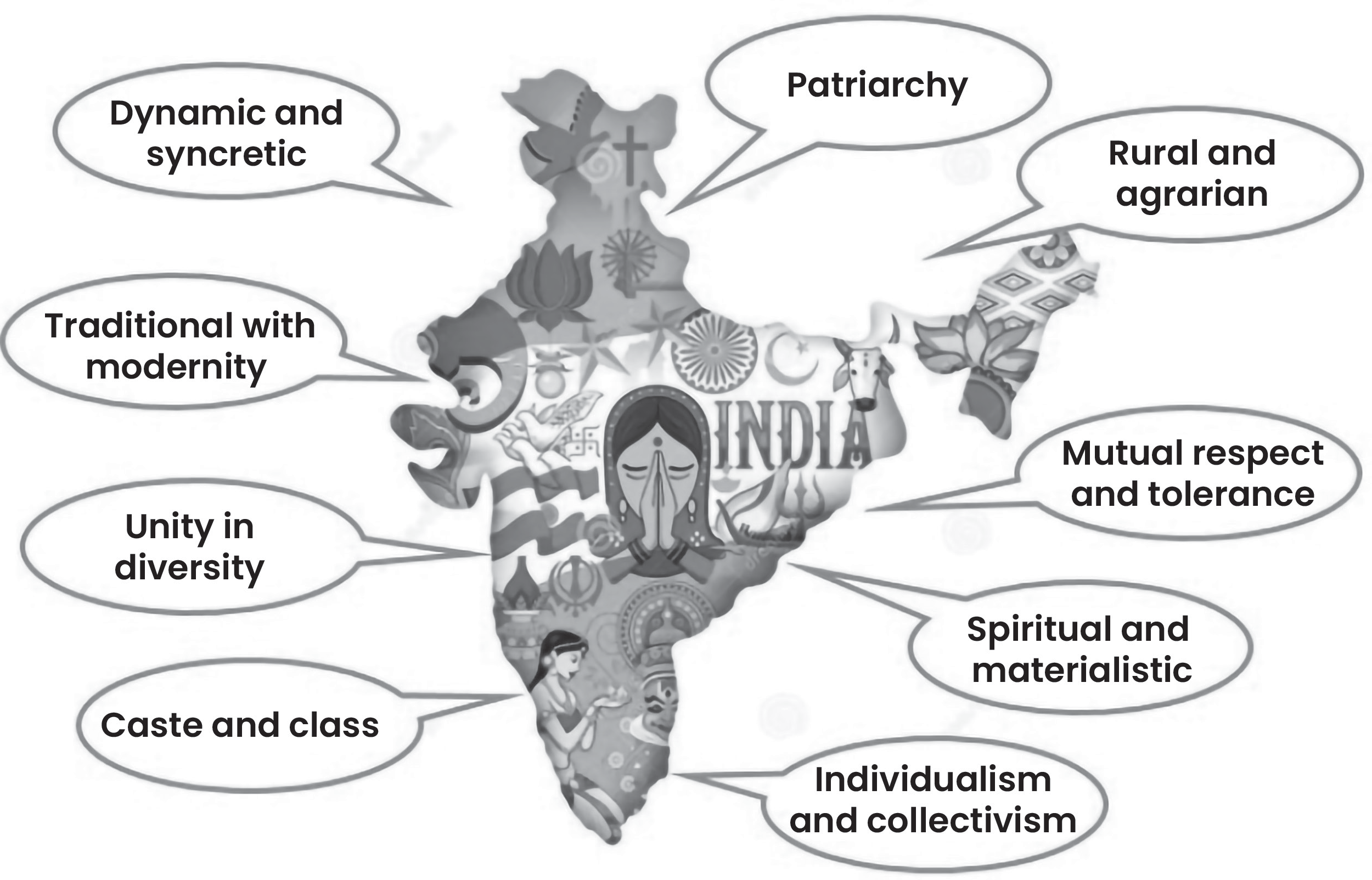
Diversity refers to the various differences that exist among people, particularly those that distinguish one group from another. These differences can be biological, religious, geographical, economic, linguistic, and more. For instance, racial diversity pertains to biological differences, while religious diversity reflects variations in belief systems.
India, being a vast country with varied geopolitical landscapes, experiences distinct social developments across its regions. These differences have shaped the social
evolution of the communities living in different parts of the country.
In addition to its geopolitical diversity, India has been shaped by interactions with foreign cultures through invasions, trade, and missionary activities. These encounters have introduced external influences, not just within the country, but also among the various social groups that migrated to India over time. E.g.: A large number of foreign invaders like Greeks, Kushans, Sakas and Hunas made their
settlements in India and embraced Hinduism over the course of time. They embraced various aspects of Indian culture and formed distinct social groups.
The philosophies of 'Atithi Devo Bhava' (treating guests as God) and 'Vasudhaiva-Kutumbakam' (the world is one family), along with India’s inherent tolerance and openness, have significantly contributed to the rich
diversity of the nation. E.g.: the persecuted communities such as Parsis and Jews were granted asylum in India. The Indian cultural mosaic is made up of diverse elements such as religion, castes, languages, traditions, races, art, and architecture. Reflecting on this rich diversity, Thomas Berry aptly remarked, "The greater the diversity, the greater the perfection."
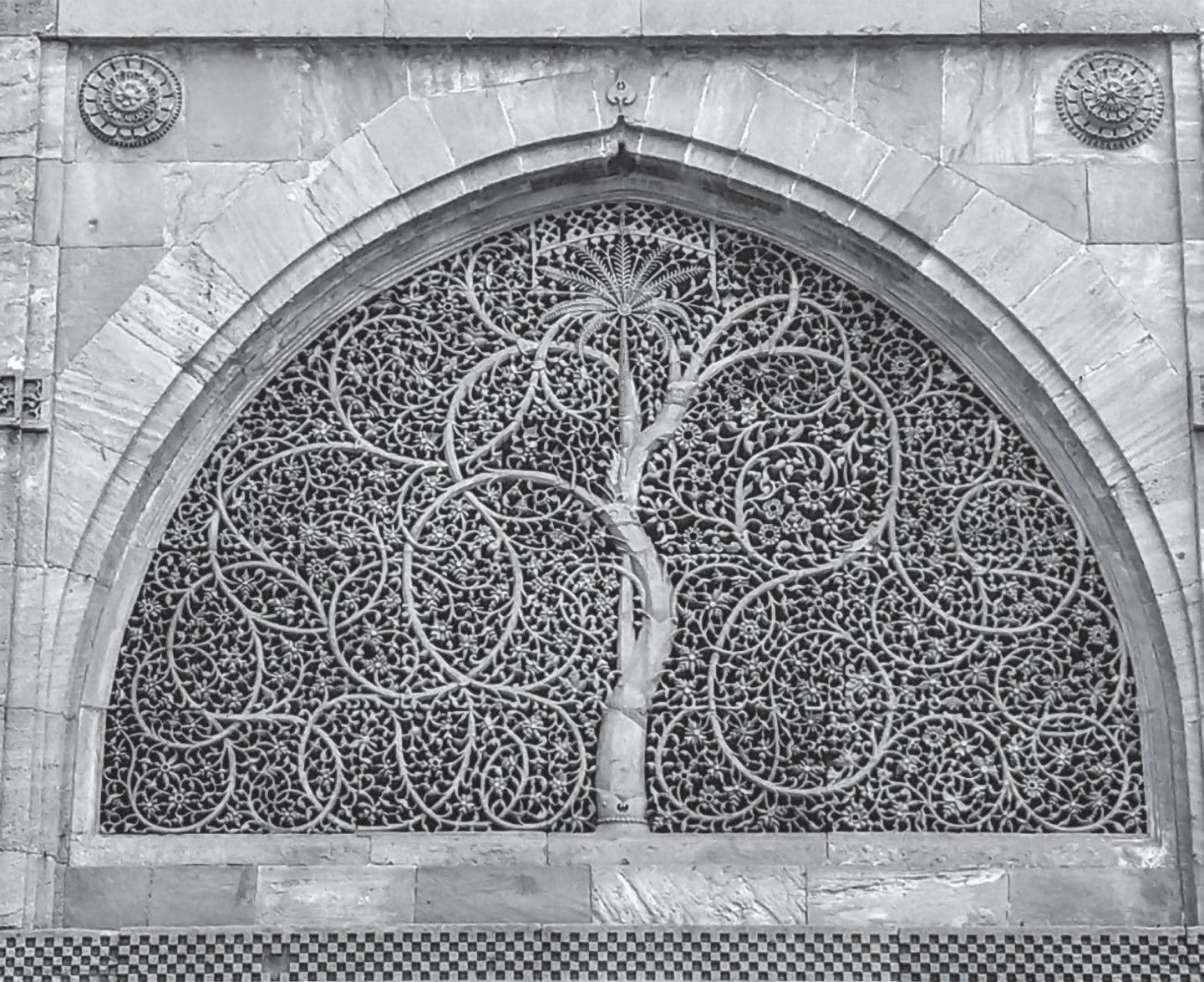
The present Indian society is highly diverse. Every major religion is undisputedly represented. The institution of caste has added one more dimension to the diversity and every geographical region has developed its own language and culture.
Features of Diversity in India
Caste System:
• Caste is a unique feature of Indian society and also an element of the cultural diversity of India. There are more than 3,000 castes and 25000 sub-castes in India.
• The word caste has its genesis in the Portuguese word ‘casta’, meaning species, race, or kind. It is derived from the varna system – based on the occupational division of society.
• Caste dictates social order in Indian society. It has been a practice among not only the Hindus but also other egalitarian religions, like Islam, Christianity and Sikhism. For e.g.: Muslims in India are categorised into three social groupings:
• Ashraf (the ‘noble’ or ‘honourable ones’)
• Ajlaf (Backward Muslims)
• Arjal (Dalit Muslims)
Class:
• A class can be defined as a group of people sharing similar positions in the social hierarchy. In ancient times, the stratification of traditional Indian society was based upon the caste system, wherein social hierarchy was fixed, rigid and transmitted across generations.
• Feudalism gave rise to a new social structure and classes in the form of landlords and peasants, based on land and property ownership/rights. However, with the advent of modernization, these systems are slowly getting flexible and giving rise to new classes. The emergence of a middle class with a rational outlook is a testimony to this fact.
• Society can now be classified into various classes, such as upper, middle, lower etc. based on a number of factors, including birth, economic status, financial and social achievements, etc.
Regional Diversity:
Various regions of India have differences in geographical, cultural & socio-economic conditions, creating regional diversity. Such regions include several states within
them such as seen in the concept of Zones under Zonal Councils. However, regional diversity always remains within the overall rubric of the territory of the nation and national laws.
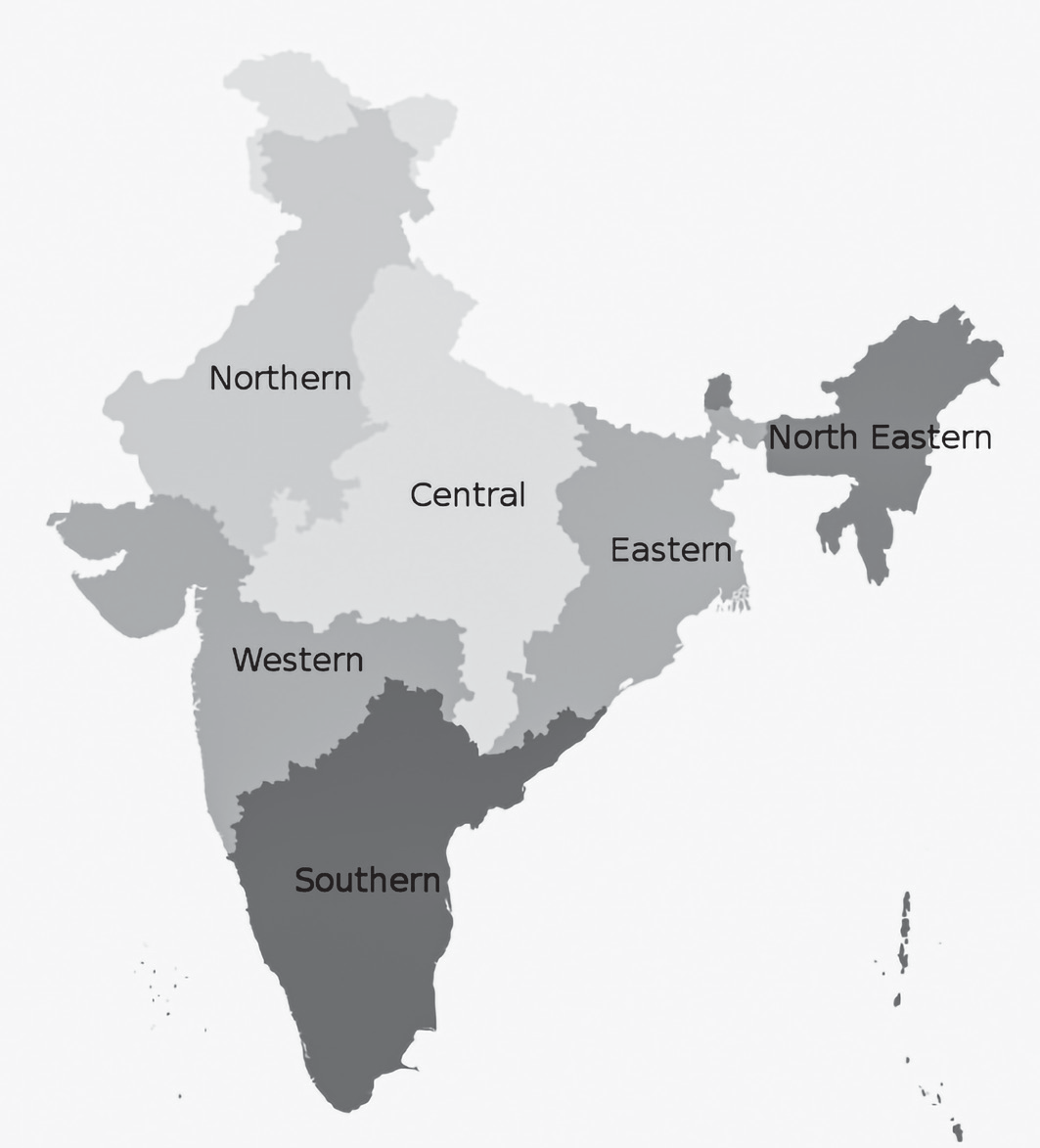
• India is a vast country with geographical unity in diversity. It includes various regional characters such as mountain terrains, productive fields, waterways, wastelands, sea coasts etc. For example, peninsular plateau of south, fertile Plains of the north, deserts of the northwest, etc.
• Regional climatic conditions also have diversity which define the characteristics of its people and their practices such as use of Lungi in humid southern climate and use of payjama in hot northern climate.
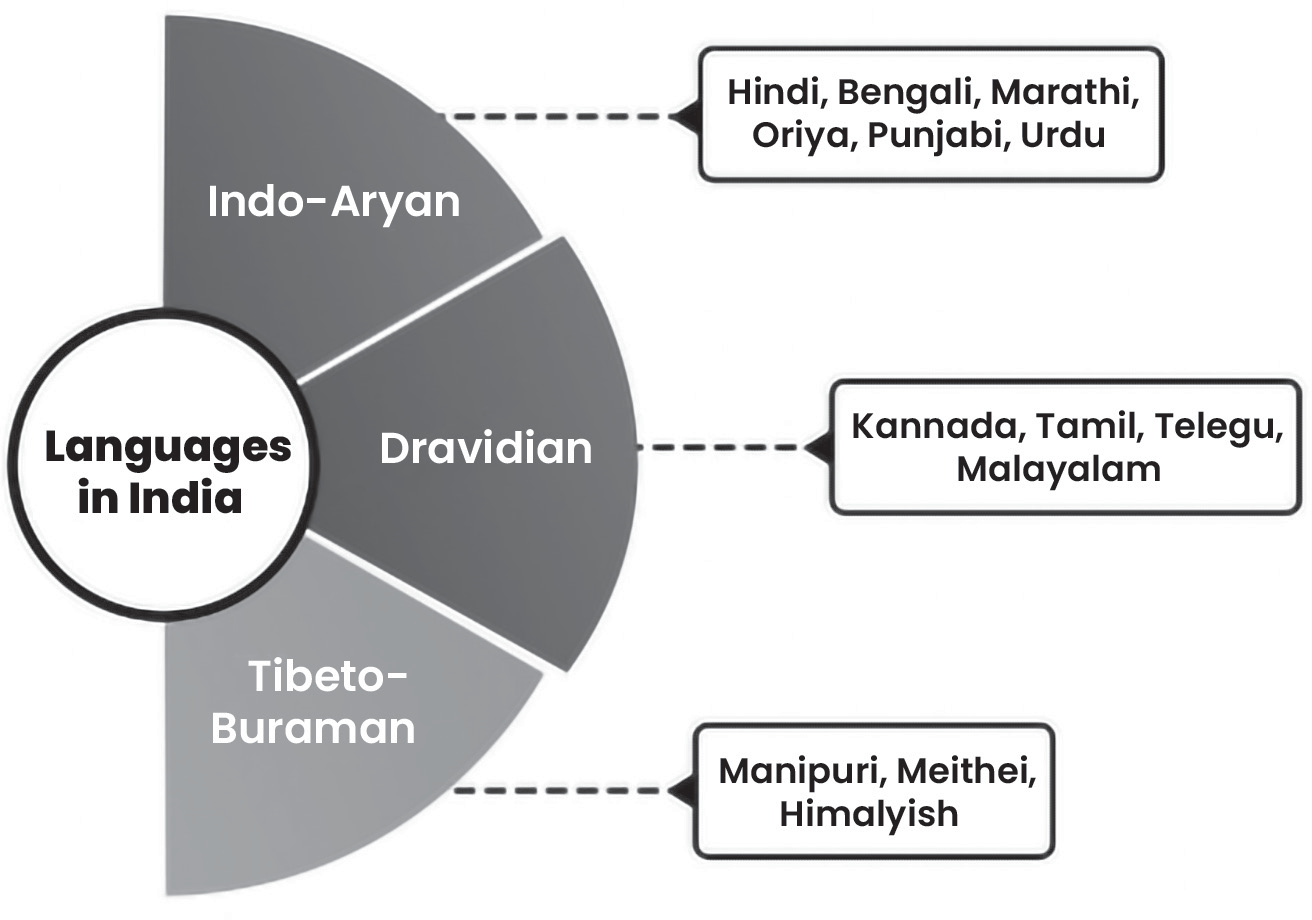
• Linguistic Regional Diversity is also found such as Dravidian languages like Tamil, Telugu, Malayalam and Kannada of South India while Indo Aryan Languages like Sanskrit, Bengali, Hindi, etc. of North India.
• People from different regions practice different culture, food habits, music, dance, arts, rituals etc., and wear different types of clothing. For instance, Carnatic music of south India and Hindustani classical music of North India, etc.
• These differences can also be categorised as religious and cultural diversity.
• Diversity in settlement patterns which also denote regions based on certain ethnic or economic characteristics like – tribal, rural and urban based on forest based, agriculture based and non-primary occupations respectively.
State vs Region as Cultural Unit:
• Regions themselves have common regional characteristics and behave as a cultural and geographical unit like North vs South India.
• Also, various states within those regions may have their unique characteristics as well.
• For instance, Tamil Nadu in South India has its own Tamil identity and culture.
• In 1953, Andhra Pradesh emerged as the first linguistic state of India having its own regional identity.
• Further, sometimes diversities exist within the states as well. States may not be a homogenous cultural unit such as Tulu region in Karnataka state.
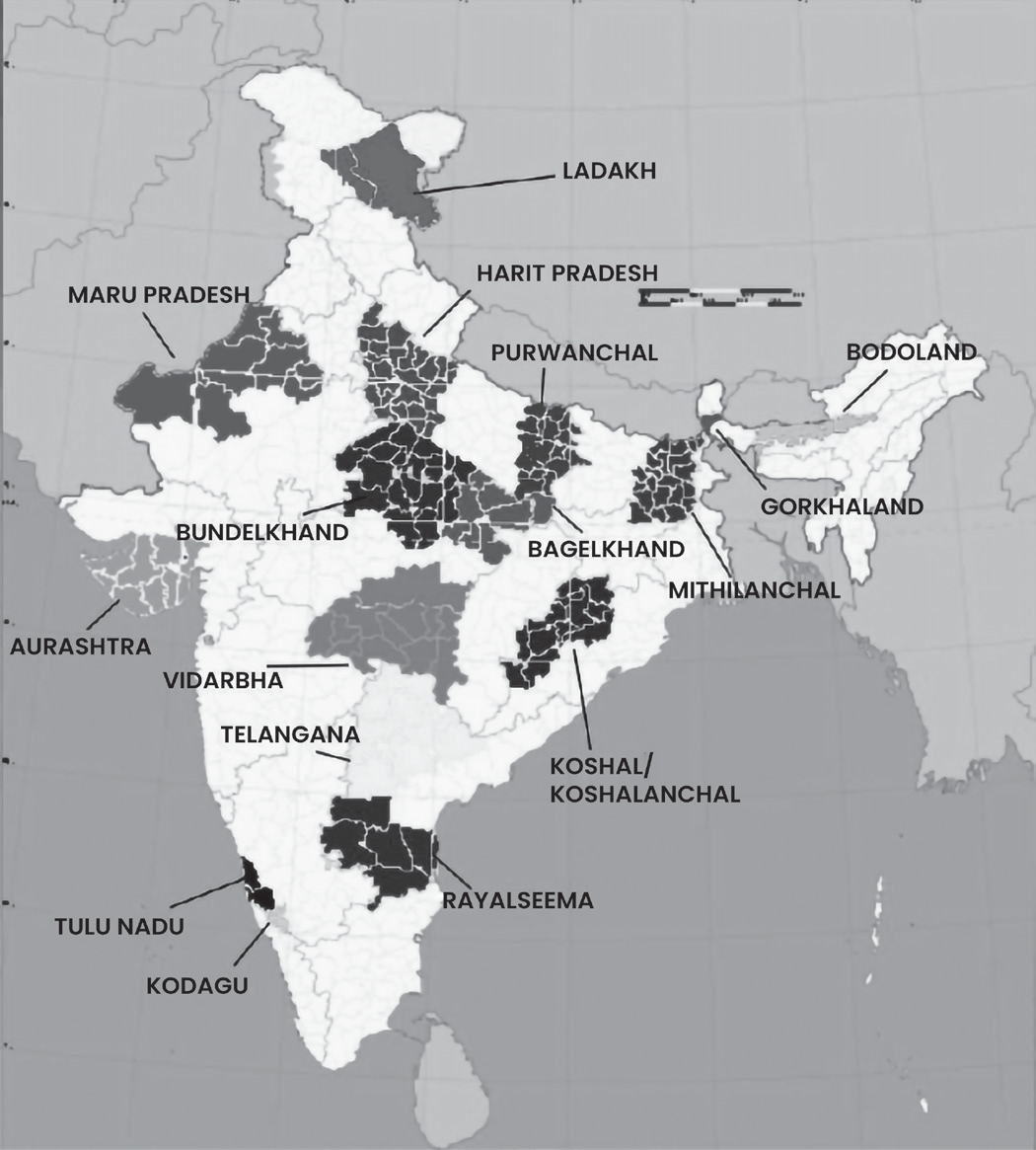
• Regional consciousness and identity developed as a result of geographical or cultural factors, or a combination of both. Economic disparities, along with growing regional awareness, contributed to the rise of a distinct regional identity, which played a significant role in the demand for separate administrative structures, such as states and autonomous councils.
• For example, Maharashtra comprises in itself many sub-regional identities, like Vidharbha, Konkan, Marathwada & west Maharashtra due to differences in socioeconomic & geographic factors.
• Another example will be the formation of Telangana out of Andhra Pradesh in 2014 which was based on cultural and economic reasons. As Telangana had its own subregional identity, it later developed into a full-fledged demand for a separate state.
Linguistic diversity:
• India has a diversity of languages. According to the 2011 Census, India is home to 122 languages and 234 mother tongues, each spoken by over 10,000 people. A 2013 study by the People's Linguistic Survey of India revealed that there are at least 780 languages spoken across the country.
• While Hindi is the official language of India, the Constitution recognizes 22 languages under the Eighth Schedule. These include Assamese, Bengali, Bodo, Dogri, Gujarati, Hindi, Kannada, Kashmiri, Konkani, Maithili, Malayalam, Manipuri, Marathi, Nepali, Odia, Punjabi, Sanskrit, Santali, Sindhi, Tamil, Telugu, and Urdu.
• In addition to these, there are thousands of dialects spoken in different regions of the country. For instance, various dialects of Hindi are used in places like Uttar Pradesh, Delhi, and Mumbai.
•
The languages spoken across India vary by region and play a significant role in shaping regional identities. These regional identities have, at times, sparked emotional movements among people, leading them to demand the creation of states based on linguistic lines.
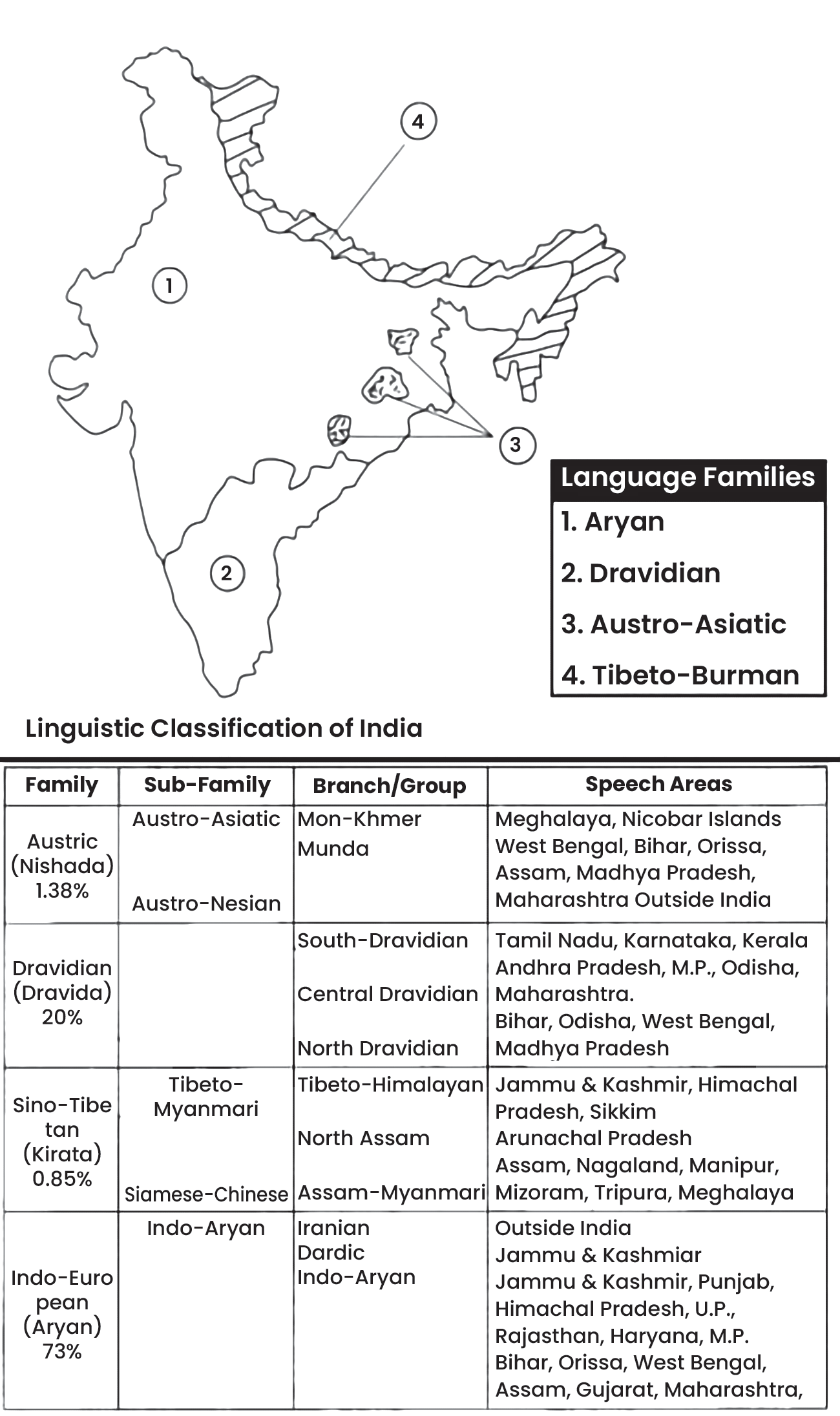
Languages spoken in India can be divided into different families such as:
• Tibeto-Burman language family: Mostly spoken in the North Eastern States. For e.g.: Assamese, Manipuri, Bodo, etc.
• Dravidian language family: This is mostly spoken in the southern part of India by 20 per cent of India’s population. Malayalam, Kannada, Tamil, and Telugu are the four major Dravidian languages.
• Indo-Aryan language family: Languages like Hindi, Sanskrit, Urdu, Bengali, Kashmiri, Marathi etc. are part of this family and are spoken in most parts of North India. The languages of the Indo- Aryan family are spoken by 75 per cent of India’s total population.
• Austro-Asiatic language family: Most of the tribal languages spoken in Chhattisgarh, Jharkhand, and Odisha are part of this family e.g., Khasi, Santhali, Meitei, etc.
Racial diversity: It means that each individual is unique and have differences based on genetic or ethnic origins. Race is genetically determined. Ethnicity refers to people’s background.
The most authoritative and plausible racial classification has been given by famous Anthropologist B.S. Guha, who has identified six major racial elements in India. They are as follows:
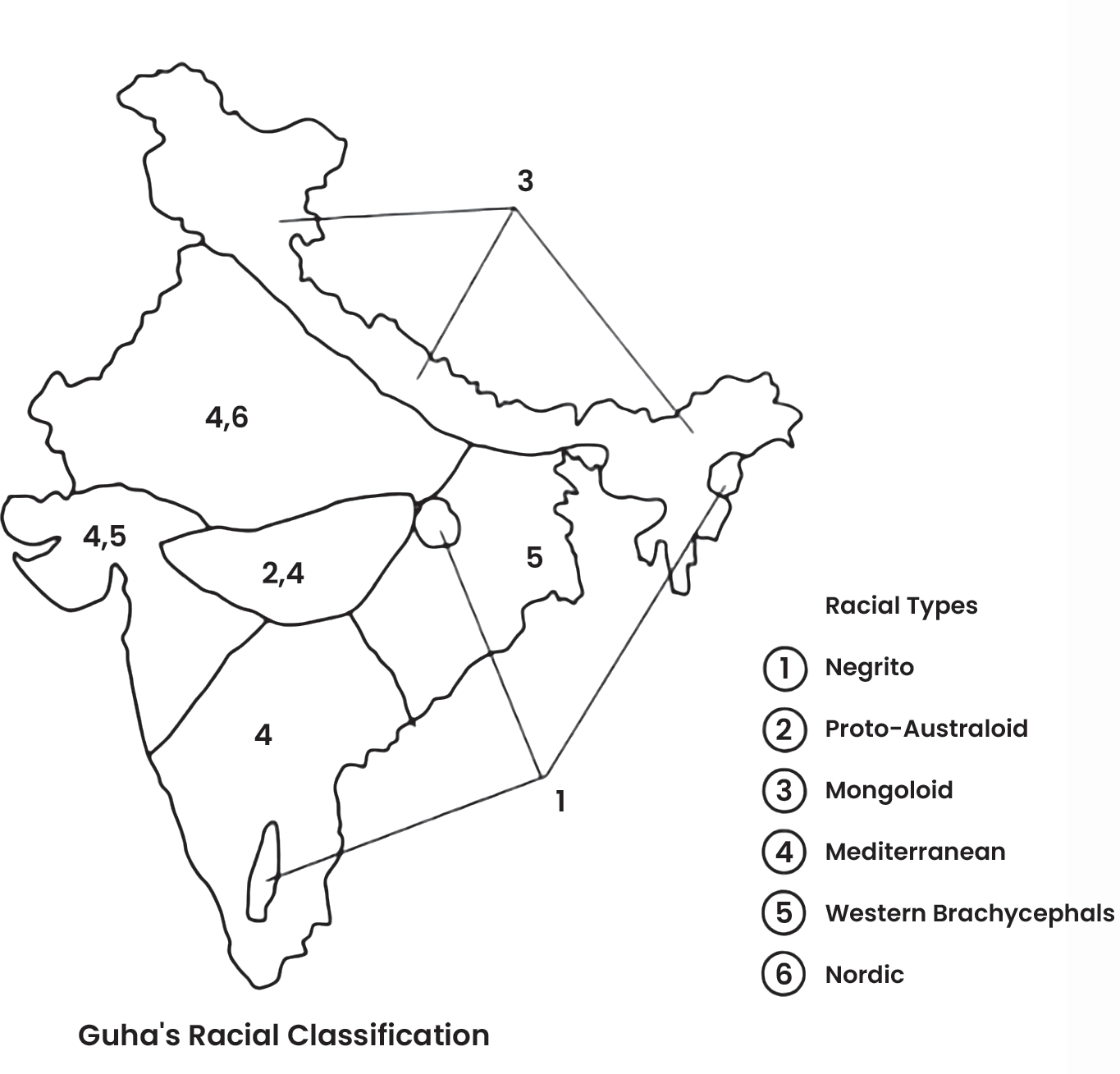
• Negrito: They are confined to small provinces in the south, the Kadar, Andamanese, Angami, Nagas and Bagadi of Rajmahal hills (Bihar). They have short stature, black skin, black woolly hair, thick lips and a broad nose.
• Proto-Australoid: They belong to mid-India in general. They have short and medium stature, long and high head, and broad and small nose. Indo-Aryans derogatorily called them anas, das, dasyu and nishad.
• Mongoloid: They are divided into Paleo Mongoloid (Present in Nagas of Himalayan regions and northeast India) and Tibeto-Mongoloid (Sikkim and Bhutan). They have yellow skin, straight hair, prominent cheekbones and almond-shaped eyes with epicanthic folds.
• Mediterranean: They are connected to Dravidian languages and culture.
• Western Brachycephals: They are divided into 3 sub- groups Alpenoid, Dinaric and Armenoid.
• Nordic: The Nordic race is similar to Aryans and is characterized by tall stature, long head, light skin and hair, and blue eyes.
Tribes (Part of India’s Racial Diversity):
Tribes are groups of people engaged in primitive modes of production and sustenance, in secluded places, away from civilization and mainstream society. They are not homogenous and possess diversity in their characteristics and geographical spread.
They have been regarded as one of the phases in the social and cultural evolutions. Some of them are not part of a wider economic, political and social network like the Hill Kharia of Odisha, while others
are modernised like the Oraons of Jharkhand and Meenas of Rajasthan.
Tribal communities live, in various ecological and geo-climatic conditions ranging from plains and forests to hills and inaccessible areas. For instance, Gond and Baigas in Uttar Pradesh in plains while, Kukis of
Manipur hills.
Furthermore, some Indian tribal communities are at the other extreme end of the spectrum, still living in caves, practice hunting by bow and arrows. As per Census 2011, there are total 75 in number known as Particularly Vulnerable Tribal Groups (PVTGs) like Chenchu
of Andhra, Badaga of Karnataka, Khond of Odisha, Sentinelese of Andaman and Nicobar Islands, etc. These are characterised by:
Pre-agriculture level of technology
Stagnant or declining population
Extremely low literacy
Subsistence level of economy
The Constitution of India in Article 366 (25) prescribe that the Scheduled Tribes means such tribes or tribal communities as are deemed under Article 342 of the Constitution to be Scheduled Tribes. Article 342 provides for specification of tribes or tribal communities or parts of or groups within tribes or tribal communities which are deemed to be for the purposes of the Constitution the Scheduled Tribes in relation to that State or Union Territory.
Religious Diversity:
• India is the land where almost all the major religions of the world are practised by their respective followers. Religious diversity is one of the most important features of our culture. All major religions from Hinduism, Islam, Sikhism, Christianity, Buddhism, Jainism and Zoroastrianism can be found in India.
• According to the 2011 Census, 79.8% of the population of India practices Hinduism, 14.2% adheres to Islam, 2.3% adheres to Christianity, 1.7% adheres to Sikhism, 0.7% adheres to Buddhism and 0.4% adheres to Jainism.
• India is also the country with the third-largest number of Muslims in the world after Indonesia and Pakistan in absolute numbers.
| Minor religions | |
| Adivasi or Tribal religions which include Sarnaism of Munda, Bon of Tibet, Animism, Kirat Mundhum of Nepal, Donyi-Polo of Arunachal Pradesh, etc. | No Religion accounting for 0.25% includes Atheism (the belief that there is no God) Agnosticism (the belief that the existence of God, of the divine or the supernatural is unknown or unknowable) Secularism (belief that religion should not influence or be involved in the organization of society, education, government) which account for 0.5%. |
| Others which account for 0.15%, include Baháʼí Faith (who believe in equal worth of all religions and oneness of all humanity), Zoroastrianism (who believe in a dualistic cosmology of good and evil within the framework of a monotheistic ontology and an eschatology which predicts the ultimate conquest of evil by good.), Judaism (who believe that there is one God, incorporeal and eternal, who wants all people to do what is just and merciful) |
Sects of various religions also exist in India as follows:
The mains sects of Hinduism include
• Vaishnavism (who consider Lord Vishnu as the sole supreme being leading all other Hindu deities, i.e. Mahavishnu.)
• It includes sub-sects like Krishnaism and Ramaism, which consider Krishna and Rama as the supreme beings respectively.
• Shaivism (who consider Lord Shiva as the supreme being.)
• Sub sects include Nath, Veerashaiva/Lingayatism, Siddharism, Sroutaism, Aghori, etc.
• Shaktism (who consider Shakti as supreme godhead.)
• Smartism (who consider synthesis of four philosophical strands, namely Mimamsa, Advaita, Yoga, and theism, and they reject theistic sectarianism and practice domestic worship of five deities i.e Ganesha, Shiva, Shakti, Vishnu and Surya)
• The main sects of India’s Muslims are
• Sunni (who believe that Prophet’s close friend Abu Bakar as his successor) are the majority in India.
• Shia (who believe that the Prophet publicly designated his cousin and son-in-law, Hazrat Ali making up 13% of the Muslim population.
• There are also tiny minorities like
• Ahmadiyya (who believe in Mirza Ghulam Ahmad as both the promised Mahdi (Guided One) and Messiah foretold by Prophet Muhammad)
• Quranists (who consider Qur’an as the sole authentic source)
•
Sikhism comprises several major denominations, with three key groups among the ten distinct denominations:
Khalsa: This group believes that a single divine spirit manifested through the ten Gurus. The Khalsa includes sub-groups such as Nihang (Akāli), Nirmalā, and Sewāpanthi.
Namdhari: Followers of this denomination regard both the Adi Granth (the primary scripture of Sikhism) and the Dasam Granth (compiled by Guru Gobind Singh, the 10th Guru) as sacred texts.
Nirankari: Nirankari Sikhs believe in a continuous lineage of living Gurus, extending beyond the ten traditionally recognized by the Khalsa Sikhs.
Christianity in India has different
denominations like
Catholicism (who believe in the oneness of God and the Trinity, the incarnation of Jesus Christ as the Son of God, the meaning of the crucifixion, resurrection and ascension of Jesus, the person and work of the Holy Spirit, believes the pope to be infallible in matters of doctrine)
Protestantism (who believe that the Bible is the ultimate religious truth and authority, through a belief in Jesus Christ and the grace of God, human beings can find salvation, all Christians are viewed as priests and can communicate directly with God)
Minority sects like Syrian Orthodox and Oriental Orthodox (who believe that Jesus, the Incarnate, is fully divine and fully human, in one ‘nature’)
Geographical Diversity:
• The geographical diversity of India is reflected in its vast expanse, which encompasses a wide range of climatic conditions, landscapes, natural resources,
and variations in skin color.
• This diversity is further expressed through differences in food habits, clothing styles, festivals, and cultural practices.
India is a unique subcontinental region, distinctly set apart from other Asian territories. It is bordered by the majestic Himalayas in the north, surrounded by seas and oceans on the other sides, and characterized by desert regions in the west.
Other Characteristic Features of Indian Society
Hierarchy: India is fundamentally a hierarchical society. Whether in the north or south, among Hindus or Muslims, in urban or rural areas, nearly every aspect of life— including individuals and social groups—is organized into a hierarchy based on various characteristics.
Despite India being a political democracy, the idea of complete equality is rarely evident in daily life.
Systems such as caste, class, and political status contribute to these hierarchical structures.
Social Interdependence: Social interdependence is a defining feature of Indian society. People are born into various groups like families, kinships, clans, subcastes, castes, and religious communities, creating a strong sense of connectedness to these groups.
Economic activities are closely tied to these social networks. Through extensive kinship bonds, individuals are connected to relatives in villages and towns, both near and far.
This sense of interdependence is also evident in life’s key rituals, such as those associated with birth, marriage, pregnancy, and death (Rites de Passage).
Village Structure and Unity: Indian villages are often intricate and are not socially or economically isolated. Instead, they are deeply interconnected within broader networks.
Most villages include a multiplicity of economic, caste, kinship, occupational, and even religious groups linked vertically within each settlement. Residents typically range from priests and cultivators to merchants, artisans, and laborers.
Various crucial horizontal linkages connect each village with many others and with urban areas.
It is seen in case of Jajmani system which includes many communities.
Co-existence of traditionalism and modernity: Traditionalism is upholding or maintenance of core values whereas Modernity refers to questioning the tradition and moving towards rational thinking, social, scientific and technological progress.
The spread of education and technological progress has made modern thinking more prevalent among Indians.
However, the family life is still bound by traditional value and belief systems.
For instance, modern thinking of reason and rationalism has coexisted with idea of religious faith and pseudoscientific ideas of astrology in India.
Similarly, tradition of caste has coexisted with modern ideas of freedom of occupation.
Balance between Spiritualism and Materialism:
Spiritualism’s main focus is to promote an individual’s experience with God apart from of contentment and minimization.
Materialism is a tendency to consider material possessions, sense pleasures and physical comfort as more important than spiritual values.
Spiritual values are deeply rooted in Indian society. Yet, as a result of westernisation, materialistic behaviour has become more evident.
Dynamic and Syncretic Culture:
Contemporary Indian society is the result of a long process of both assimilation and accommodation. Over time, several communities have gradually
integrated into Hindu society, leading to the loss of some of their original cultural practices. However, this cultural interaction has also given rise to new traditions and practices.
Indian society is inherently dynamic, continuously evolving. A recent example of this change is the transformation of social values in response to the influences of globalization.
Examples of syncretism:
Language of Urdu has developed out of Arabic and Hindavi.
Bhakti movement and Sufi movements that inspired each other.
Caste like system adopted by various religions like Christianity (Roman Catholic (Syrian), Jacobites, Orthodox, Marthomites, Chaldeans, Chardos, etc), Sikhism (Jatt, Khatri, Arora, Kumhars, Mazhabi, Ramdasia/Ravidasias, etc.), Islam in India (foreign conquerors - Ashraf and the local converts - Ajlaf), etc.
Rashtrapati Bhawan – architectural fusion of Rajput, Mughal and European architecture.
Pluralism: Pluralism refers to the coexistence of multiple entities within a specific space, regardless of their diversity. It is a concept that acknowledges and values the interests of various groups equally, ensuring that no single group dominates. Pluralism goes beyond mere diversity, fostering a sense of engagement and community among different cultures.
In this context, pluralism can be seen as the distribution of power among various special interest groups, preventing any single group from dominating the government or misusing its power.
Pluralism stands in contrast to communalism, where the interests of one group cannot coexist with those of others and are often seen as conflicting with the interests of other communities.
India is renowned for its pluralism, encompassing religious, cultural, linguistic, and ethnic diversity.
Unity amidst Diversity
The term ‘Unity in Diversity’ relates to the state of togetherness or integrity despite the presence of infinite diversity. Unity in diversity is based on the concept that individuals having variations in physical qualities, skin colour, caste, creed, cultural and religious traditions, etc. are not seen as a dispute. Rather, these differences are viewed as varieties that improve society and the nation as a whole. It doesn’t just mean coexistence but cooperation, coordination, understanding, relationships and co- celebrations of festivities and togetherness of various communities in all walks of life.
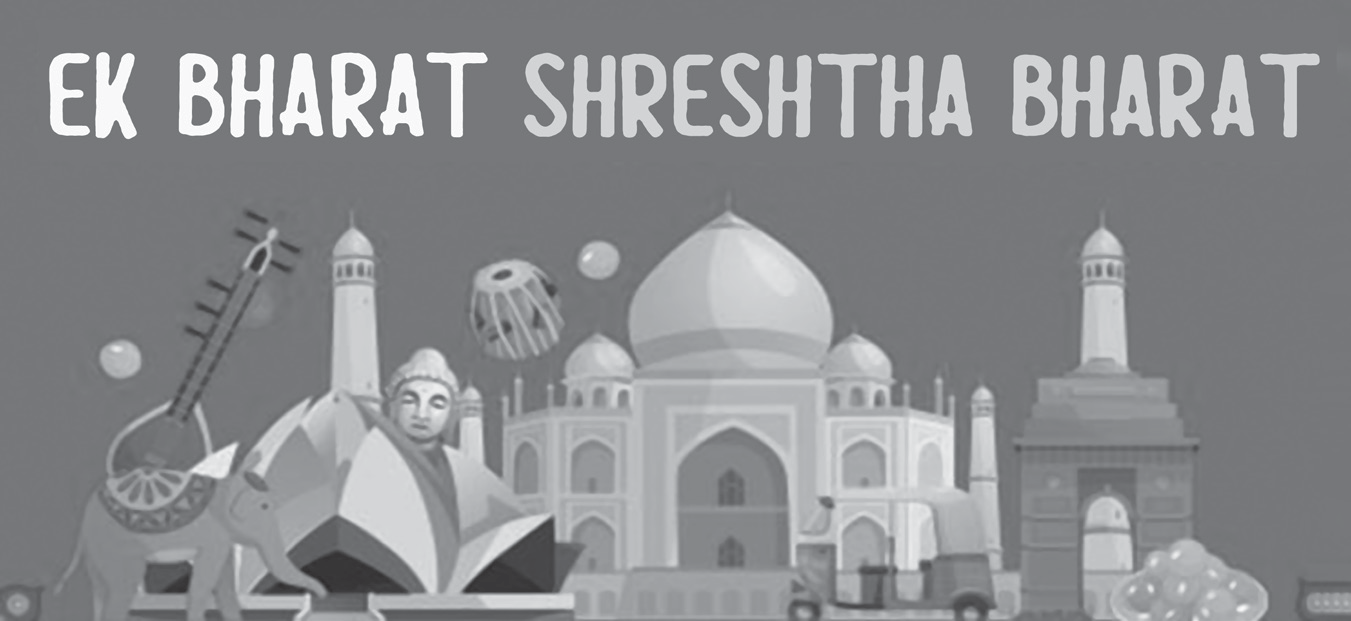
• Pluralism and Synthesis: India is aptly defined by its unity in diversity, showcasing a rich blend of cultures, religions, languages, and communities. This harmonious synthesis of people from various castes and backgrounds has been the cornerstone of its unity and cohesion.
• Despite enduring numerous foreign invasions, Mughal rule, and British colonization, India has preserved its national unity and integrity. It is this remarkable cultural fusion that has shaped India into a unique "Mosaic of Cultures."
•
Social Mobility and Freedom: The organizational structure of Indian society has, from its inception, fostered continuous social integration across diverse backgrounds. It has also created spaces for individuals to experience social mobility and enjoy freedom in personal, domestic, religious, and cultural aspects of life.
• National and Social Networks: The focus on connecting local communities to regional and national levels through institutional frameworks like family, marriage, and kinship has expanded the concept of the "Great Indian Society," eventually bringing the entire country into its fold.
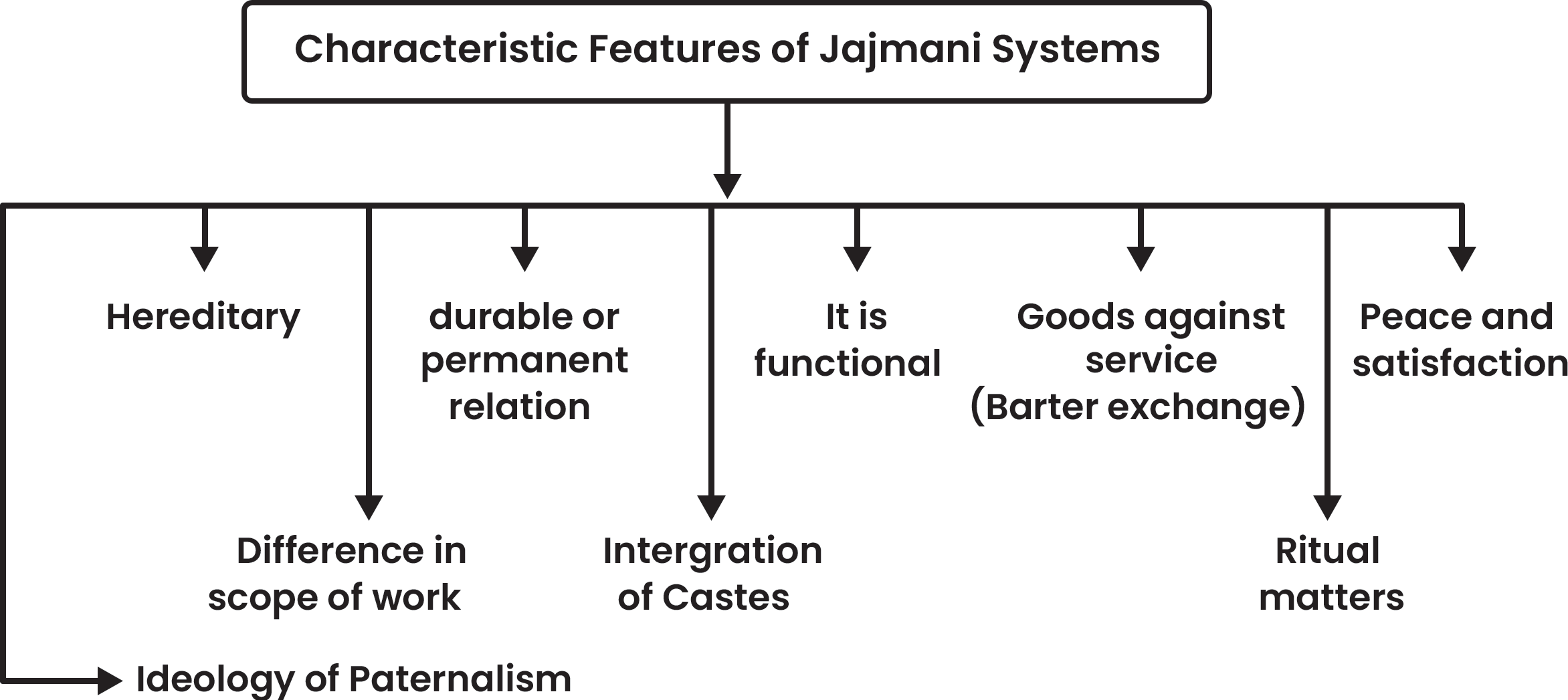
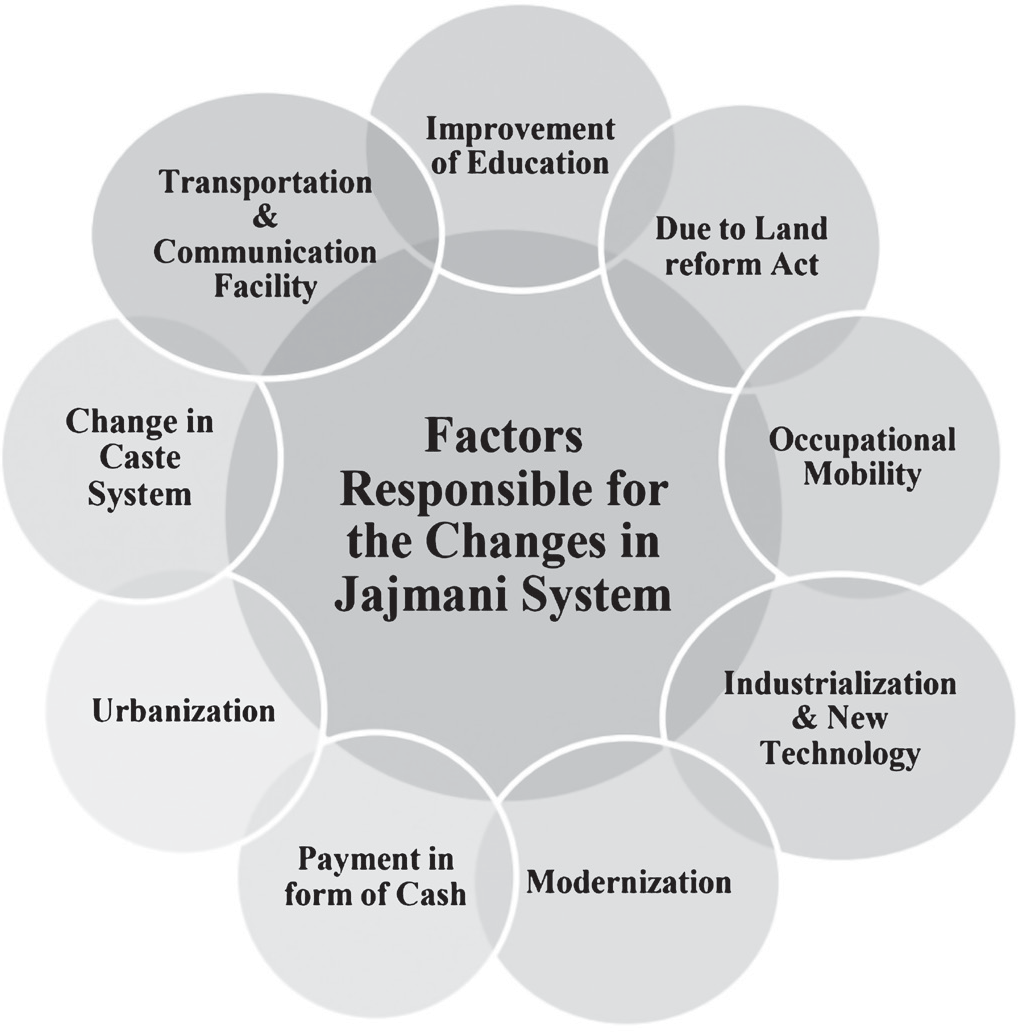
• Economic Interdependence: The traditional Jajmani system, which connects social groups through the exchange of services, goods, and gifts, has served as a unifying foundation for the flourishing of Indian society and culture. This system has played a crucial role in fostering a strong sense of collectivism, particularly in Indian villages, where it is still practiced. For example, even Muslim communities, such as the Mirasi and Meo communities, were integral parts of the Jajmani system.
• Cultural Integration: The process through which Indian society achieved this unity and integration was acculturation. This social process enabled various social groups to blend into the larger fabric of Indian society, contributing to the development of a shared way of life. For example, although Islam originally did not have a caste system, the process of acculturation led to the adoption of the Hindu caste system within
Indian Muslim communities. Over time, distinctions such as Ashraf, Ajlaf, and Arzal (untouchables) emerged, reflecting the social stratifications formed as a result of Hindu conversions over centuries.
• Anthropologist McKim Marriott, in his study of village communities in India, observed that acculturation facilitated a two-way exchange of
traditions—moving from the great tradition to the little tradition and vice versa—shaping the essence of Indian culture. Local customs, rituals, deities, and practices from the little traditions rise to the great tradition, adapting and blending with its established forms. At the same time, elements of the great tradition filter down to become integral parts of the little traditions, often evolving and losing some of their original meanings and characteristics in the process.
Post-independence India stands as a unified nation, overcoming numerous challenges. The concept of unity in India is deeply embedded in its history, socio-cultural heritage, and cultural legacy. As a secular state, India is governed by a single Constitution that ensures protection and equality for people from diverse regions, religions, cultures, and languages, as well as from all socio-economic backgrounds. The country's Five-Year Plans and various developmental initiatives are specifically designed to uplift the marginalized and economically disadvantaged sections of society.
Therefore, despite numerous diversities, Indian society shares several bonds of unity. There are undercurrents of commonality and oneness, encompassing our diverse way of life.
Some Factors Which Have Contributed to Unity are as Follows:
Geopolitical Integration:
India is very well known for its geographical unity signified by the ‘Subcontinental Identity of India’ as India forms a part of ‘South Asia’ but politically, culturally and geographically separate from the rest of the continent.
• Territorially, it is surrounded by the Great Himalayas in the North, Thar desert in the West, Patkai, Naga, Lushai and Chin hills in the East and it stretches southwards and at the Tropic of Cancer, tapers off in the south into the Indian Ocean between the Bay of Bengal on the east and the Arabian Sea on the west, with vast plains and plateaus at a scale only visible in a continent. This isolates India as a separate region from the rest of Asia.
•
Climatic unity is also visible in its Monsoon Climate prevalent across India, through south west monsoon and north east monsoon covering whole of India.
• India has almost all geographical features which exist elsewhere in the world, creating an identity of a little continent. It includes deserts, rivers, mountains, valleys, rainforests, plateaus, etc.
• Geologically, the subcontinent traces its origins to Insular India, a once-isolated landmass that separated from the supercontinent Gondwana during the Cretaceous period. It later collided with the Eurasian landmass around 55 million years ago, giving rise to the Himalayas.
• India is a country of vast cultural and linguistic diversity, with more than 1,600 languages spoken across its regions. Its history is deep and multifaceted, shaped by a wide range of cultural traditions and religious practices. It is the birthplace of several major world religions, including Hinduism, Islam, and Sikhism.
• Population: Indian has the largest population in the world (much higher than any other continent, except for Asia and Africa).
• Diversity of flora and fauna: India has wide range of vegetation ranging from evergreen forests to deciduous to alpine meadows. Many of the animal species found in India are endemic to India and not found in any other part of the world. Species like Asiatic Lion of Gir Forest, Kashmir Stag of Kashmir Valley, Lion-Tailed Macaque of Western Ghats, etc.
Politically, India is a sovereign state. The same constitution and parliament govern the entire territory of it.
Historically, India has been recognized as a distinct entity, with the entire landmass south of the Indus (Sindhu) referred to as Bharatvarsh or Jambudweep. This suggests that India's identity as a subcontinent has been acknowledged since ancient times. The concept of a unified India can be traced back to the Vishnu Purana, which poetically describes, "uttaram yat samudrasya Himadreschaiva dakshinam, varsham tad Bharatam nama Bharati yatra santatih," meaning, "the land that lies to the north of the ocean and to the south of the snowy mountains is called Bharat, where the descendants of Bharat reside."
The geopolitical unity of India was always visualized by our past rulers throughout India as the same. The unity consciousness and expressions of unity are found in Rig Veda, the Sanskritic literature, in the edits of Ashoka, Buddhist monuments and various other sources. The concept of Bharat Varsha (The old indigenous classic name for India), Chakravarthy (emperor) and Ekchhatradhipatya (under one rule) clearly prescribed the ideals of geopolitical unity.
Constitutional and Legal Unity:
The entire nation is governed by a single Constitution,ensuring uniformity across the country. Most states operate under a three-tier government structure, contributing to consistency in national governance. The Constitution guarantees fundamental rights to all citizens, regardless of age, gender, class, caste, religion, or other distinctions. It also provides specific protections to various communities to promote their educational and social advancement. For example, affirmative action policies support backward communities, including Hindus, Muslims, and Tribals, as well as other backward communities (OBCs), ensuring better representation in public employment and education.
Furthermore, laws such as the Special Marriage Act of 1954 facilitate interfaith and intercaste marriages, promoting integration among different communities. Anti-discrimination laws like the Civil Rights Act of 1955 also ensure that untouchability practices are prohibited, applying to all communities and safeguarding equality.
Institution of Pilgrimage and Cultural Unity:
India is a nation deeply shaped by religious principles and beliefs. In this context, temple culture and architecture play a significant role, reflected in the numerous shrines and sacred sites that span the country, fostering a sense of unity. From Badrinath and Kedarnath in the north to Rameswaram in the south, and from Puri in the east to Dwarka in the west, the country's religious shrines and holy rivers are spread across its vast expanse.
India is a nation deeply shaped by religious principles and beliefs. In this context, temple culture and architecture play a significant role, reflected in the numerous shrines and sacred sites that span the country, fostering a sense of unity. From Badrinath and Kedarnath in the north to Rameswaram in the south, and from Puri in the east to Dwarka in the west, the country's religious shrines and holy rivers are spread across its vast expanse.
Pilgrimage serves as a heartfelt expression of love for the motherland, fostering meaningful connections and cultural harmony among people from various regions of India, despite its rich regional diversity.
• For instance, the Muslim community in places like Kedarnath, Vaishnodevi, and Varanasi has always worked together to ensure the smooth conduct of pilgrimages at these sacred sites.
• In addition, while Hindus visit the Haji Ali Dargah in Mumbai to pay their respects, Muslims, such as the Khudai Khidmatgar peace activists, have also offered namaz at the Nand Baba temple in Mathura.
• Moreover, for decades, Hindu devotees journeying to the Sabarimala Temple in Kerala have paused to pray
at the shrine dedicated to Vavar—a Muslim saint who was a devoted follower of Lord Ayyappa.
• In 2020, in Baghpat district of Uttar Pradesh, a BJP leader recited the Hanuman Chalisa and Gayatri Mantra at a mosque, seeking permission from the local cleric to promote unity and brotherhood.
• In Maadhi village of Bihar, which was once inhabited by Shia Muslims, Hindus manage a 250-year-old mosque and read namaz five times a day. The villagers make tazia during Muharram and celebrate festivals together in keeping with the traditional syncretic culture.
• At the Fatehgarh Sahib town of Punjab, for instance, a Sikh priest has been looking after a 350-year-old mosque alongside a gurdwara for years.
• Bhainsasur badi Masjid in Bihar Sharif was opened around Feb. 2020 for non-Muslims to promote communal harmony and sensitise people about Islamic rituals.
Composite Culture: Coexistence and Co-Celebrations of Many Religions:
Religious tolerance is a unique feature of religions in India due to which multiple religions co-exist in India, creating a ‘Composite Culture’. The Rigveda says “Ekam Sath Viprah Bahudha Vadanti” which translates to "The truth is One, but sages call it by different names". Freedom of religion and religious practice is guaranteed by the Constitution itself. Moreover, there is no state religion and all religions are given equal preference by the state, despite Hinduism being followed by the majority of people in India. India has a history of accepting, nurturing and influencing different religious ideas and beliefs, indicating composite culture of India.
• Sufism, a more inclusive and less rigid form of Islam, has been deeply influenced by the liberal values of India.
• Sai Baba of Shirdi (1838-1918), one of the most widely revered saints, is worshipped by millions across Hindu, Muslim, and other communities. Born to Hindu parents and raised by a fakir, he strongly opposed religious orthodoxy and the division between Hindus and Muslims. He believed that love, service, and freedom were the core teachings of both Hinduism and Islam.
• In many parts of India, such as Varanasi, Delhi, Patna, and Hyderabad, temples, mosques, and gurudwaras are situated close to one another. For instance, the Ram Janmabhoomi Temple and Babri Mosque in Ayodhya, Kashi Vishwanath Temple and Gyanvapi Mosque in Varanasi, and Krishna Janmasthan Temple and Shahi Jama Masjid coexist peacefully.
• In cities like Ghaziabad, Delhi, Lucknow, Hyderabad, Bengaluru, and Chennai, people from various religious backgrounds live together in harmony, celebrating different festivals together and exchanging greetings during these occasions.
• Like the Hindus greet Muslims on Eid while the latter do it on Diwali or Holi and celebrate together with sweets and colours like Holi by Muslims at Sufi
shrine Deva Sharif in Barabanki (UP).
• Diwali Lighting at Haji Ali Dargah in Mumbai and
Hazrat Nizamuddin Delhi is practiced every year.
• Sevaiyan (a kind of sweet noodles) is distributed by muslims on Eid to their Hindu neighbours and sweets are distributed by Hindus to Muslims in Diwali.
• Early Churches are made in Islamic architecture in Kerala.
These traditions indicate the glorious and uniquely Indian
tradition of “Ganga-Jamuni Tehzeeb” and ‘Composite Culture’ which is a symbol of communal harmony in India. Economic Integration:
The Constitution of India secures the freedom of Trade, Commerce and Intercourse within the Territory of India under Article 301. Also, Article 19(1)(e) allows the freedom to all citizens irrespective of caste, class, gender, etc. to reside and settle in any part of the country and Article 19(1)(g) allows all citizens the freedom to practice
any profession or carry on any occupation, trade or business. For instance, a person in UP can practice commercial exchange with anyone or can do a job in any organization in any state or district in the country. This clearly integrates India into one economic entity,
Further, The Goods and Services Tax (GST) has established the concept of "one country, one tax, one national market," promoting unity across different regions. Additionally, initiatives such as One Nation, One Ration Card, One Nation One Grid, One Nation
One Frequency, and One Nation One Fertilizer further strengthen this integration.
CONCLUSION:
Despite multi-religion and multi-linguistic states, India remained united largely because of the vision of India’s founding fathers and a sense of territorial boundedness, English language, legacies of British like the Railways, civil services, epics like Ramayana and Mahabharata, Hindi films and the game of cricket.
Is Diversity Good or Bad?
• Our society has lived with the idea of unity in diversity for centuries beginning from ancient Vedic times. Pluralism and celebration of diversity are central to Indian philosophy. The problem, therefore, is not diversity per se, but the handling of diversity in Indian society.
| Diversity as a Boon | Diversity as a Challenge |
| India’s diversity is one of its greatest strengths, uniting people from a wide array of races, religions, castes, sub-castes, communities, languages, and dialects. Despite these differences, India stands united. The nation’s independence movement, led by people from all sects and communities, serves as a reminder of how diversity contributed to our collective struggle for freedom. This rich diversity has also cultivated a vibrant cultural heritage, which plays a significant role in promoting tourism, fostering innovation, and encouraging tolerance toward different cultures and religions. The diversity of ideas and perspectives is also a vital element for the functioning of a healthy democratic society. | However, problems arise when diversity and difference become reasons for prejudices and deprivations. This leads to certain drawbacks of diversity in India, such as, diversity being used for divisive purposes and being transformed into disruptive tendencies, like communalism, casteism and linguistic or regional exclusiveness. Politically, the presence of diversifying factors naturally tends to breed sub-national aspirations in people leading from pluralism to fragmentation. For example, the demand of having a separate flag by the state of Karnataka, secessionist demands from Jammu & Kashmir & Naga tribes, etc. The problems of regionalism, communalism, ethnic conflicts etc. have arisen because The fruits of development haven’t been distributed equally; or Cultures of some communities haven’t been accorded due recognition, or Our legislative and political process have failed to generate social consensus for reforms. |
Existence of Mini India Like Cultural Pockets Across the Country
National Capital Territory of Delhi is known as Mini India, because people from each corner of India live here, belonging to different-different religion, culture, and socio-economic backgrounds. New Delhi has almost all linguistic communities like Tamil, Telugu, Odia, Bangla, etc. living together in harmony.
Coaching Hub of Kota is known as mini-India due to its diverse population from different parts of India. Students from all over the country come to Kota for coaching classes, making it a melting pot of cultures, languages, and traditions.
Community Living in Chennai: People in Chennai live in apartments practicing Community Living tend to be speaking different languages, including Telugu, Marathi, Sourashtra, Hindi, Malayalam, Kannada, Hindi, and English. People provide hospitality and warmth. Their deep-rooted beliefs and customs uphold brotherhood, tranquillity, and mutual respect. Different festivals are celebrated in apartments, it opens the door for people to understand other religions, their customs, their festivals and even an opportunity to be a part of that celebration.
Andaman & Nicobar Islands not only represent the nature’s splendor but are also a microcosm of India’s multi-cultural, multi-religious and multi-linguistic social mosaic. Cellular Jail at Port Blair also linked to freedom struggle is a heritage site creating a collective consciousness of India.
Formation of Indian National Identity
The cultural, linguistic, and religious diversity of India has helped shape the country›s national identity.
India›s diverse heritage has been incorporated into its art, literature, music, dance, and architecture, creating a unique cultural identity that is distinct from any other country.
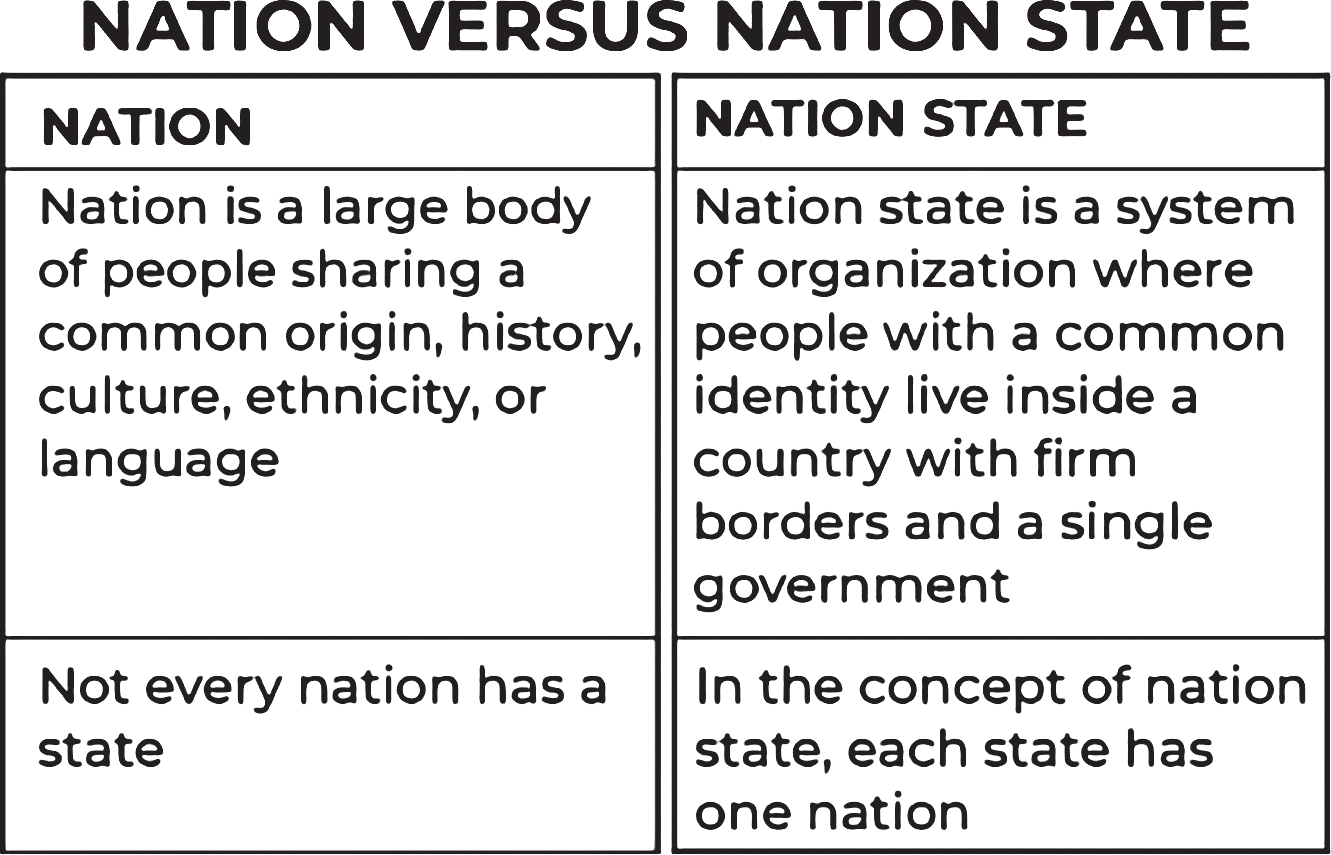
Nation is a political and not a cultural construct; yet, a nation cannot come into being without its people having a sense of cultural belonging as a shared experience. Culture in itself does not create a nation, but it enables the transformation of different existing identities into a national identity.
Concept of a Nation
Nation is a body of people united by common descent and language.
Nation can be defined as a historically constituted stable community of people formed on the basis of a common language, territory, economic life and physiological make up manifested in a common culture.
According to Bluntschilli, Nation is “a union of masses of men bound together specially by language and customs into common civilization which gives them a sense of unity”.
A nation is a culturally homogeneous social group.
Nation connotes the concept of people who are conscious of their historical and cultural background and who wish to perpetuate this background politically, i.e. within the framework of a state.
Concept of a State
State is a political organization with its four elements: population, fixed (definite) territory, government and sovereignty.
• State acts through law and endowed to this end with coercive power, maintains within a community the universal external conditions of social order.
• State is a political organization, a formal and legal organization with its body, its structure.
• State is created by the society or nation to meet the various needs and aspirations of the society or nation.
• As sovereign, the state is supreme over all other organizations, institutions and individuals within its boundaries;
• The state is a people organized for law within a definite territory; it is always sovereign-supreme internally and independent externally.
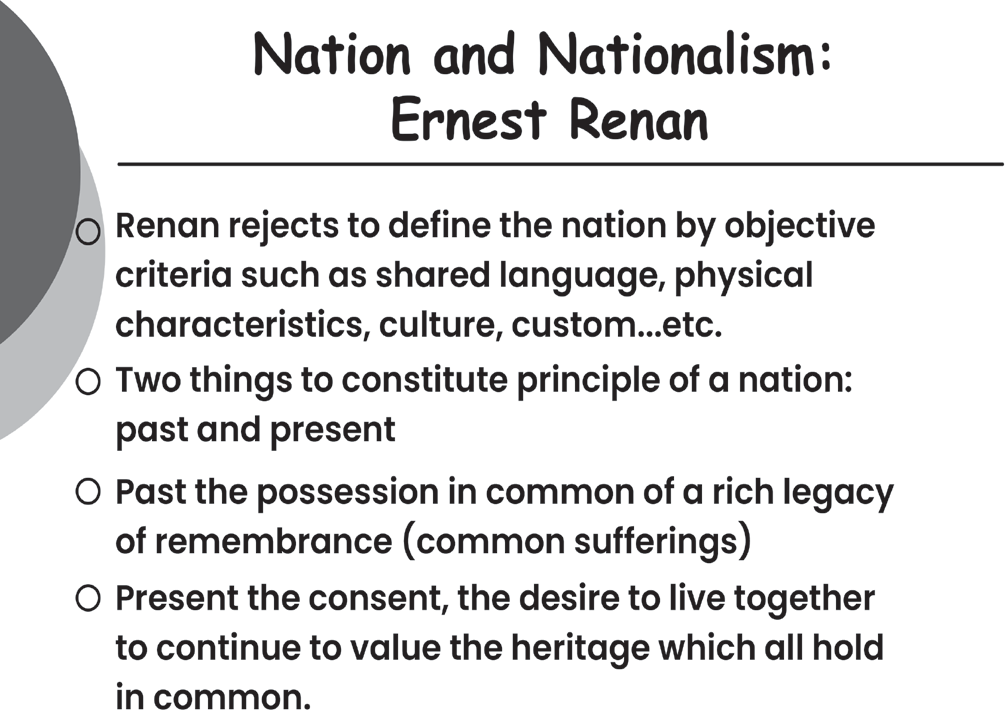
Elements of Indian Nationhood
Indian nationalism is a form of Territorial Nationalism that embraces all the people of India, regardless of their diverse ethnic, linguistic, and religious backgrounds. Nationalism flourishes when people come to believe they are part of a unified nation. History, fiction, folklore, songs, popular prints, and symbols all contributed to the development of this collective national identity.
Key Elements of Indian Nationhood include:
• Geographical Identity: India's concept of nationhood is deeply rooted in the territorial extent of its sovereignty. Historically, India has been identified as Bharatvarsha or Jambudweep, a land surrounded by distinct natural boundaries: the Great Himalayas to the north, the Thar Desert to the west, and the Patkai, Naga, Lushai, and Chin hills to the east. To the south, it extends to the Tropic of Cancer, tapering off into the Indian Ocean, bordered by the Bay of Bengal to the east and the Arabian Sea to the west.
• Common Cultural Elements: Though India is extremely diverse and various experts, post-
independence, denied the stability of Indian nation and predicted its disintegration. However, they were wrong as they neglected the vital Indian cultural characteristics which are mentioned below:
• Unity in Diversity: India is a truly pluralistic society, both in principle and practice, embodying the essence of unity in diversity. It represents a remarkable fusion of cultures, with vast differences in language, religion, and traditions. Despite these varied differences, there exists a profound sense of unity that binds the nation together.
• For instance, many Indians also practice religion in a pluralistic way. For example, often Muslims and Hindus celebrate the festivals of Eid, Diwali and Holi together in India.
• Culture of Tolerance: Religious tolerance is a unique feature of religions in India due to which multiple religions co-exist in India, creating a ‘Composite Culture’.
• The Rigveda says “Ekam Sath Viprah Bahudha Vadanti” which translates to «The truth is One, but sages call it by different Names». India adopted various religions and ethnicities along its long history.
• Syncretic Culture: It is the blending of cultures and ideas from different places. Sikhism combines elements of Islam and Hinduism.
• Similarly, Ganga-Jamuni Tehzeeb indicated Hindu- Muslim syncretism. Various syncretic traditions also exist in India such as Sufism, Bhakti, and other mystical practices.
• Shared Colonial Experience: India’s collective struggle for independence against the British with the values of truth and non-violence espoused by Mahatma Gandhi also creates a strong foundation for India’s Nationhood. It was at this stage that conception of nationhood come to be realised by Indians of all regions of India, despite enormous diversity. Like non-cooperation movement, civil disobedience movement and Quit India movement was spread across India.
• Common Civilizational Heritage: India is considered as the birthplace of the Indus Valley civilisation, as well as four major world religions – Hinduism, Buddhism, Jainism and Sikhism. India has varied tangible and intangible cultural heritage like dance, music, architecture, festivals, cuisines, drapery,
traditions and customs, etc. also create a grand mosaic of cultures and distinct identity for India.
• Indian National Symbols: These symbols are fundamental to Indian identity and heritage. People of all demographic backgrounds, both in India and across the world, take pride in these national symbols, as they inspire a deep sense of pride and patriotism in every Indian’s heart. Examples include the National Flag, National Anthem, National Song, and more.
CONCLUSION
Hence, Constitution and its values must form the guiding principles of our society. Any society which has tried to forcefully homogenize itself has witnessed stagnation in due course and ultimately decline. E.g.: In the case of Pakistan and the creation of Bangladesh. In a country as diverse as India we need both a legal push in the form of Constitutional ideals and a social push for building social consensus, to move forward as an enlightened and just society.