Drug Trafficking
• Drug Trafficking: The narcotics trade refers to the illegal cultivation, manufacture, distribution, and sale of prohibited drugs such as opium, heroin, cocaine and methamphetamine.
• Drug Trafficking as Organised Crime: The trade is often controlled by criminal organisations, and the money generated from it is often used to fund other illicit activities such as terrorism and money laundering.
Definitions and Classifications of Drugs and Narcotic Substances
• The term ‘narcotic’ originally referred medically to any psychoactive compound with numbing or paralyzing properties. Later, it has since become associated with opiates and opioids, commonly morphine and heroin, as well as derivatives of raw opium latex.
• Narcotics are some of the most powerful painkillers available, but they are used with great caution because of their addictive properties. They are often given to patients who are dying from cancer and are in great pain.
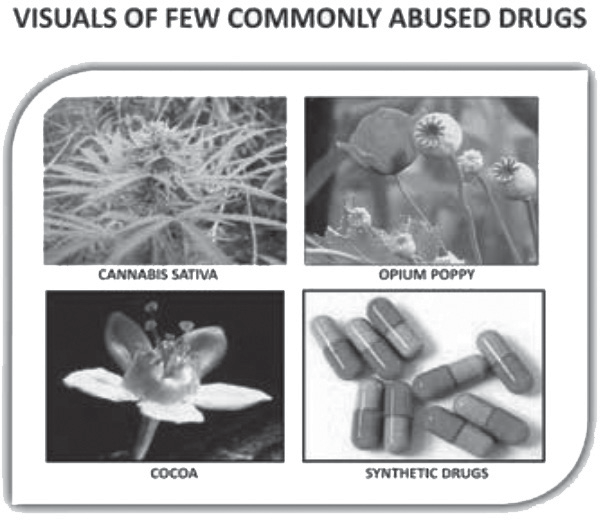
Figure: Some commonly abused drugs
• Tobacco is a narcotic. Its effects are soother. It is in no sense a stimulant or an excitant.
Legally speaking, as per Section 2(xiv) of Narcotic Drugs and Psychotropic Substances (NDPS) Act, 1985, ‘narcotic drug’ means coca leaf, cannabis (hemp), opium, poppy straw and includes all manufactured goods which are all coca derivative, medicinal cannabis, opium derivatives and poppy straw concentrate.
• Psychoactive drugs are compounds that, when consumed or introduced into the body, influence mental functions such as perception, awareness, cognition, mood and emotions. These drugs fall under the larger classification of psychoactive substances, which also encompasses alcohol and nicotine.
• All psychoactive drugs, legal and illegal are classified into different categories based on their effects on the mind and body.
• Major types of drugs include
Depressants: They slow down motor skills and coordination.
Stimulants: They raise heartbeat, blood pressure and metabolism.
Hallucinogens: They interfere with the thought process and ability to communicate.
Club/Designer Drugs: They introduce artificial relaxation.
Opiates: They cause pain relief including anesthesia.
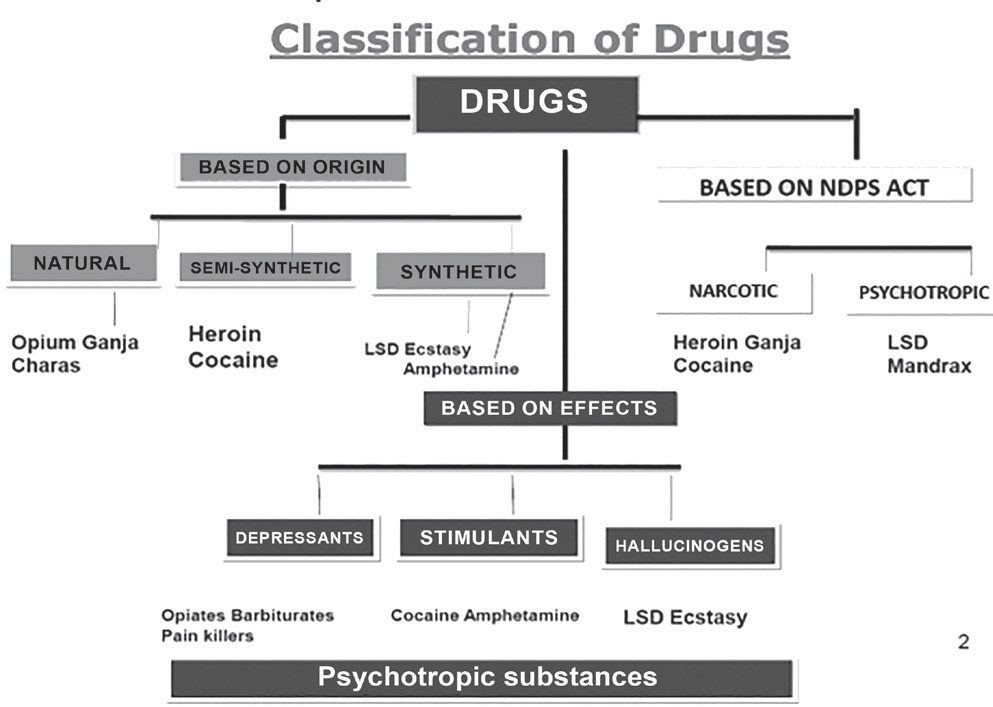
Figure: Classification of Drugs
• Steroids: These are synthetic hormones, which introduce changes in the body
• Psychotropics are medications that are typically used to treat a range of psychiatric disorders. They alter mood, emotional state, and behaviour and work, by targeting the limbic system. For this reason, these drugs are used to treat conditions such as depression, anxiety, epilepsy and schizophrenia.
Some examples of psychotropic drugs include:
Antidepressants
Anti-epileptics (or anticonvulsants)
Mood stabilizers
Antipsychotics
• Psychoactive Substances are defined as anything that crosses the blood-brain barrier, whereas Psychotropic Drugs lead to noticeable changes in mood and cognition.
• Psychedelic Drugs are drugs that cause changes in mood, perception and cognition. They can distort your sense of reality and cause you to perceive things that aren’t actually there. Psychedelic plants have been used by indigenous cultures for thousands of years. They’re known for inducing mystical experiences. Evidence suggests that psychedelics have a low potential for addiction in low doses. However, these drugs are illegal in most countries and still involve safety risks. Moreover, there are recorded incidences of psychedelic-induced psychotic breakdowns. Common psychedelic drugs include:
LSD
Magic mushrooms
DMT
Ayahuasca
Ketamine
Types of Drugs
• Drugs meant for trafficking and illicit trade can be divided into two categories: plant-based drugs and synthetic drugs.
Plant-based drugs are further categorised into three categories:
Cocaine comes from the Latin American countries, but mostly from Colombia.
Opiates primarily originate from Afghanistan.
Cannabis
Synthetic drugs are not geographically constrained and are also increasingly penetrating the traditional categories of trafficked drugs.
• The primary destinations for both opiates and cocaine are Europe, the United States (US), Australia, Canada and Russia. There is evidence to suggest that Western and Central African countries have also become users of these substances.
• Opiate drugs (heroine and morphine are called opiate drugs):
• These are consumed by 18 million people around the world, are derived from opium, a chemical produced by poppy plants.
• Opium is used both as an end product and to manufacture heroin and morphine.
• “Opium Derivative” means--
Medicinal Opium: Opium that has undergone necessary processing to make it suitable for medicinal purposes, in accordance with the standards set by the Indian Pharmacopoeia or any other pharmacopoeia notified by the Central Government. It may be in powdered, granulated, or any other form, including mixtures with neutral substances.
Prepared Opium: Any derivative of opium produced through a series of processes to create an extract suitable for smoking, including the residue or remains left after opium has been smoked.
Phenanthrene Alkaloids: This includes morphine, codeine, thebaine, and their respective salts.
Diacetylmorphine: Also known as diamorphine or heroin, along with its salts.
• Afghanistan is the primary source for most opiates and produces opiates nearly at an industrial scale, making opiates production in other regions negligible.
• Cocaine:
• It is produced from coca bush, has around 17 million users. “coca derivative” means--
Crude Cocaine: Any extract derived from the coca leaf that can be utilized, either directly or indirectly, in the production of cocaine.
Ecgonine and its Derivatives: Includes ecgonine and all its compounds from which it can be extracted or recovered.
Cocaine: The methyl ester of benzoylecgonine, including its salts.
Among the main coca-producing countries, Colombia is the leading country, followed by Peru and Bolivia, both having a high level of illicit cocaine production.
• Cannabis:
• With 183 million users, it is the most widely used illicit drug, commonly known as ‘marijuana’ and typically consumed through smoking.
• Ganja and Charas (Hashish) are derived from the dried leaves and flowers of the hemp plant 'Cannabis sativa' or other Cannabis (Ganja, Hemp) plants.
These substances are among the most frequently abused drugs and are readily available across nearly all regions of the country.
Charas, that is, the separated resin, in whatever form, whether crude or purified, obtained from the cannabis plant and also includes concentrated preparation and resin known as hashish oil or liquid hashish.
Ganja, that is, the flowering or fruiting tops of the cannabis plant (excluding the seeds and leaves when not accompanied by the tops), by whatever name they may be known or designated.
• It changes the brain’s way of processing the sensory perception, which can be pleasant or damaging.
• Cannabis is produced widely across the world, around 135 countries. Morocco remains a significant source of cannabis resin, followed by Afghanistan, Lebanon, India and Pakistan.
• While terrorist organisations continue to benefit from its sales, but it does not have a strong transnational trafficking network due to its wide availability and easy access.
• Several states in the US, Canada and some European countries have legalised the plantation and use of cannabis for medicinal purposes, making it less attractive for criminals to invest in its trafficking.
• Synthetic Drugs
• These are not limited by a particular geography. These are created by chemicals anywhere in the world.
• The most common synthetic drugs are synthetic cannabinoids, phenethylamines, synthetic cathinones, tryptamines, piperazines, novel
benzodiazepines, amphetamine-type stimulants, methamphetamine, ecstasy (MDMA) and lysergic acid diethylamide (LSD).
• ‘Club Drugs’ which include Ecstasy, Gamma- Hydroxybutyrate (GHB), Ketamine, and Rohypnol (flunitrazepam) have become popular.
• Their origin and destination countries are mostly developed countries. There is evidence that terrorist groups benefit from its trafficking and on some occasions, from being end users.
Key Drugs:
• LSD:
• Lysergic Acid Diethylamide, commonly known as
LSD or acid, is a potent psychedelic drug.
• Effects typically include intensified thoughts, emotions, and sensory perception.
• At sufficiently high dosages, LSD manifests primarily mental, visual, and auditory hallucinations.
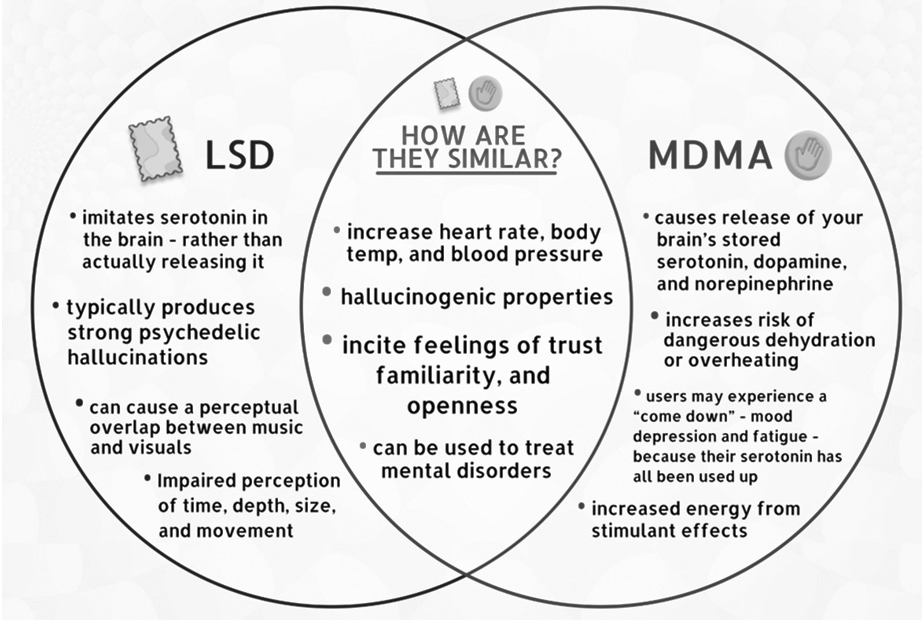
Figure: Comparison between LSD and MDMA
• MDMA:
• Methamphetamine (meth) is an addictive drug and can cause considerable health adversities that can sometimes result in death.
3,4-Methylenedioxymethamphetamine, commonly known as ecstasy, molly or mandy, is a potent empathogen– entactogen with stimulant and minor psychedelic properties primarily used for recreational purposes.
The beneficial pharmacological effects include altered sensations, increased energy, empathy, and pleasure.
• Fentanyl:
• Recently, USA has witnessed a new zombie drug (fentanyl) gripping its population.
• It is a synthetic opioid which uses ‘Tranq’, officially named xylazine or “zombie drug’’ which is a tranquilizer for cows and horses.
• This drug can cause raw wounds on the user’s skin that can spread rapidly with repeated exposure. It starts with ulcers, hardens to dead skin called eschar, and if left untreated can result in amputation.
Some Key Chemicals for Drug Manufacturing
• Acetic Anhydride is used in the manufacture of heroin, which is the commonest drug abuse in South Asia. India is one of the largest manufacturers of acetic anhydride, which is smuggled from India into Myanmar and Pakistan. The chemical (called precursor) is required to convert raw opium into heroin. Ease of logistics has led to refineries being set up along the Indian border as well, and this explains the spurt of heroin supply into Nagaland and Manipur in recent years.
• N-acetyl Anthranilic Acid and Anthranilic Acid
(both precursors for Methaqualone)
• Ephedrine and Pseudoephedrine (both precursors for Amphetamine/ATS)
Global Drug Production and Trafficking Networks
• National Security Compromised: These illicit activities have a bearing on national security, and keep the law enforcement agencies on tenterhooks.
• The Narcotics Control Bureau (NCB) stated that approximately 70% of the total illicit drugs smuggled into India are trafficked via sea routes in the Arabian Sea and the Bay of Bengal.
• The increase in consumption within the region has also contributed to regional insecurity because of the terrorist- criminal nexus.
• Narcotic trafficking is a major source of revenue transnational organized criminals and terrorists. Nearly 70% of these narcotics and drugs are trafficked over land across borders. As regards India, depending upon the nature of the border and its milieu as well as the production, demand and supply of drugs, different borders display different trafficking patterns as follows:
Three Latin American countries centralise cocaine production in the world: Bolivia, Peru, and Colombia.
However, the leading consumer markets are the United States and Europe. Transnational organised crime often dispatches shipments directly from producing countries, but also often use transshipment countries as a strategy to reduce risks.
• Narcotics from the Golden Crescent (Afghanistan, Iran and Pakistan) and Golden Triangle (Myanmar, Laos and Thailand) feeds the Asia-Pacific region with major transit routes to Europe and North America.
India is both a destination and the transit route for the opiates produced in these regions, that has made Indian borders vulnerable to drug trafficking. It flows from 2 fronts, NW & NE, that possesses dual concern - violation of border & threat to national security.
• Golden Crescent region of South Asia - comprises of Afghanistan, Iran, and Pakistan - which is a principal global site for opium production and distribution.
Golden Crescent is world’s leading opium and cannabis producing region since 1983.
Its proximity to Indo-Pak border has worsened the trafficking of hashish and heroin into Indian soil.
Trafficking happens through the border states of
J&K, Punjab, Rajasthan and Gujarat.
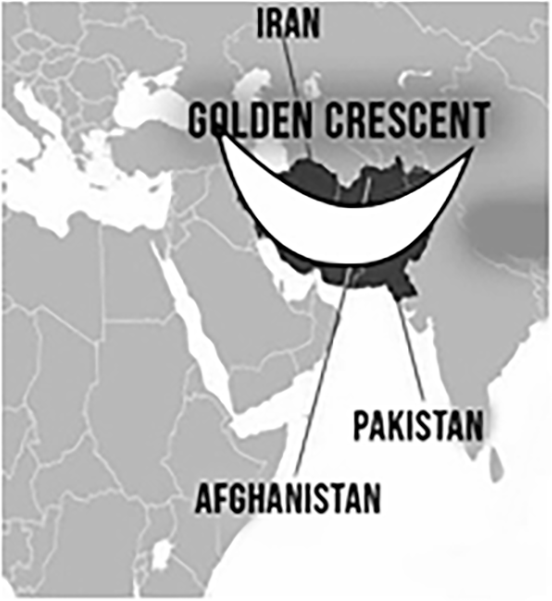
Figure: Golden Crescent
The "Golden Triangle" refers to the region where the borders of Thailand, Laos, and Myanmar intersect at the meeting point of the Ruak and Mekong rivers. It is named "Golden Triangle" due to its distinct triangular shape.
Golden Triangle is leading opium producing region of the South-east Asia, also ancient narcotics supply route to North America & Europe.
Myanmar-Northeast nexus is recognized by NCB as the root of heroin & chemical drugs. Myanmar produces 80% of heroin produced in world.
After production, its trafficked mainly to US & European countries through China, Vietnam, Thailand, Laos & India.
Due to increased surveillance & frequent crackdowns on cartels in various part of SE Asian countries, India has been chosen by drug smugglers as the exit gateway.
Dimapur (Nagaland), Champai (Mizoram), Moreh (Manipur), Guwahati (Assam) have become hubs for trafficking in North East.
Diverse topography, high mountains, rivers, dense rainforests provide numerous hideouts to the smugglers, and security forces cannot respond to criminals due to inefficient connectivity and transport.
Also, rising nexus between the local ethnic insurgent groups & criminals across the border have developed into a potent threat of narco- terrorism that challenges India’s national security.
Funds raised from drug trafficking is used for smuggling of arms. Narco-terrorism has not only developed a social security threat for India, since trade happens in hard cash, & difficult to collect evidences against criminal, due to lack of paper work.
Further, dark web and crypto currency are also used for trafficking.
Influx of narco-trade money leads to laundering, inflation, corruption, which not only causes terrorism, political instability but also deter FDI.
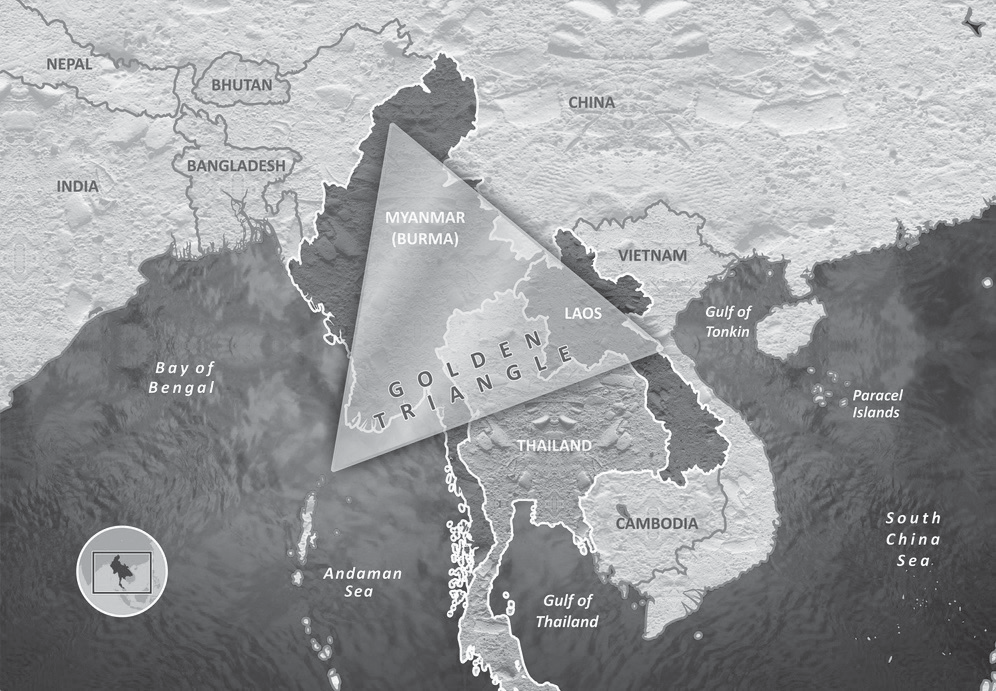
Figure: Golden Triangle
• India-Pakistan Border: Drug-Trafficking in Punjab
• Effortlessly working on its “K2—Khalistan and Kashmir” theory against India, Pakistan’s ISI Directorate gives orders to members of organised crime or drug dealers to transfer narcotics through Punjab border. As of now, the ISI-affiliated drug traffickers throw the parcels with illegal drugs over the border fence in regions where infiltration is not thought to have taken place, and their counterparts on this side of the border pick up the assignment later.
• The Border Security Force (BSF) personnel have frequently found and seized drug packages along with India-Pakistan International Border in Punjab sector.
• According to the data presented before the Lok Sabha in December 2022, over 486.2 kg of narcotic drugs, including hemp, heroin, and opium, was found along the India-Pakistan International Border (IB) in Punjab in 2021.
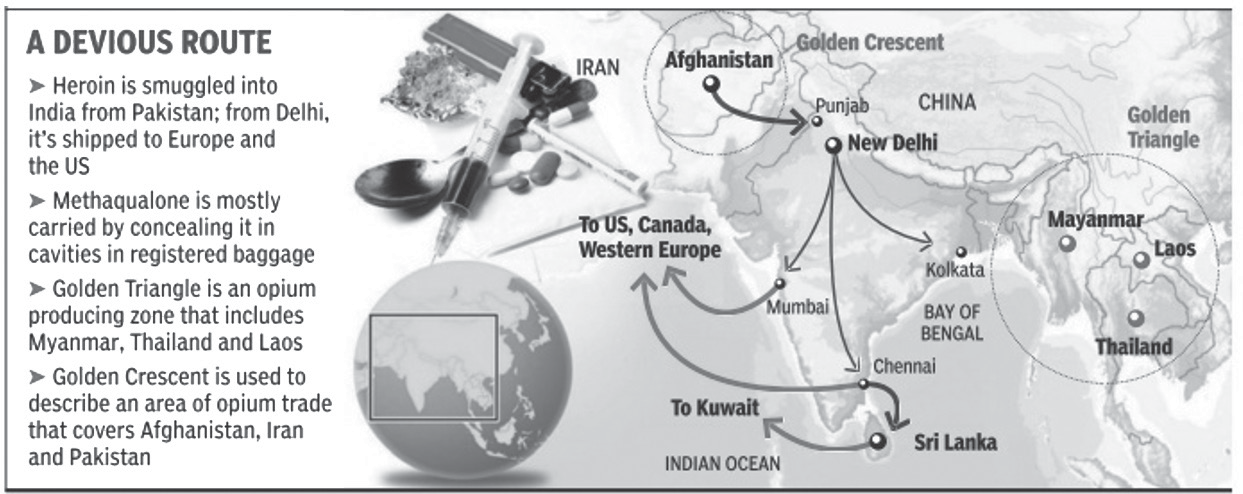
• Figure: Route of Heroin trafficking into India India-Nepal border:
• Hashish and marijuana/ganja are the two cannabis derivatives that have been traditionally trafficked from Nepal into India. Lately, a growing demand for Nepalese and Bhutanese cannabis in India and a corresponding demand for codeine based pharmaceutical preparations as well as low-grade heroin in Nepal and Bhutan have resulted in two-way smuggling of narcotics and drugs through the India- Nepal and India-Bhutan borders.
• India-Myanmar border:
• The close proximity of the India-Myanmar border to the "Golden Triangle", coupled with the rising demand for drugs among the local population in the northeastern states, political instability, and ongoing insurgencies in the region, has created a favorable environment for drug traffickers. Additionally, the porous and inadequately guarded border has facilitated the smuggling of heroin and psychotropic substances into India through the India-Myanmar route.
• India-Bangladesh border:
• The India-Bangladesh border has been susceptible to smuggling of various kinds of drugs ranging from heroin, marijuana/ganja, hashish, brown sugar, cough syrups, etc. High demand for codeine-based cough syrups in Bangladesh, a highly porous border, dense settlement along the border, and strong trans- border ethnic ties contribute towards drug trafficking along the India-Bangladesh border.
New Age Challenges
• Use of drones to supply drugs: The use of drones to supply drugs and weapons across the border in Punjab is a new phenomenon.
• Use of Cryptocurrency: Cryptocurrency payments and doorstep deliveries, through courier services, have made darknet transactions attractive.
• Use of e-commerce: In 2022, an individual was arrested for conducting drug transactions by creating a dummy e-commerce website.
In another case, several individuals were apprehended for selling drugs through e-commerce platforms like Amazon by listing counterfeit products on the site.
Linkages between Drug Trafficking, Organised Crime and Terrorism
• Drug trafficking facilitates other organised criminal enterprises such as human trafficking and gun running, all of which use the same networks and routes to smuggle people, arms and contraband (drugs).
• The nexus between drug traffickers, organised criminal networks and terrorists has created a force powerful enough to cause instability in the country. Money generated through drug trade has been used to fund various insurgent and terrorist movements.
• For instance, it has been estimated that money generated from the illegal sale of narcotics accounted for 15 per cent of the finances of militant groups in Jammu and Kashmir.
• Similarly, Sikh militant groups in Punjab and Northeast insurgent groups like the Nationalist Socialist Council of Nagaland (Isak-Muivah) [NSCN (IM)] are known to channelize drugs into India to finance their operations.
• Besides, criminal syndicates engaged in drug trafficking like the Dawood Ibrahim gang have themselves resorted to terrorist acts in the past (the 1993 terrorist attacks in Mumbai) or have become deeply engaged in the
business/logistics end of terrorism.
• Closed pharmaceutical industries could be involved in drug trafficking. Former CBI Director stated that such factories in Punjab, Rajasthan and Gujarat are engaged in these activities.
• Drug trafficking is often associated with other forms of crime, such as money laundering or corruption. Trafficking routes can also be used by criminal networks to transport other illicit products.
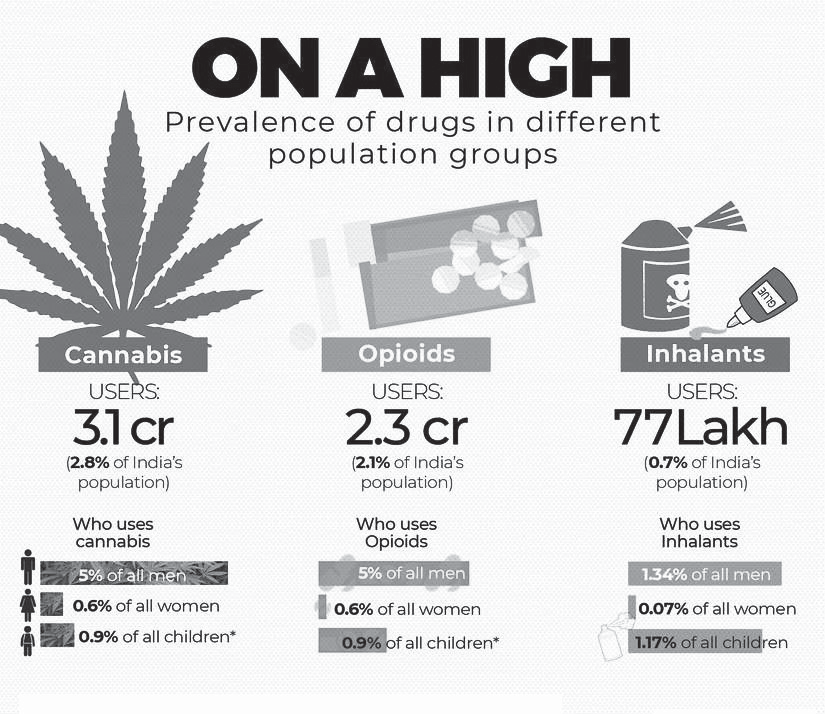
Figure: Prevalence of Drugs in different population groups
• Drug cartels often use human trafficking of women and children to smuggle drugs across the border, doubling up on the money they can make from them.
Status of Drug Addiction in India
• In 2018, the Ministry of Social Justice and Empowerment, in collaboration with AIIMS, New Delhi, conducted the "National Survey on the Extent and Pattern of Substance Use in India". The key findings of the survey are as follows:
| Name of the substance | Prevalence of use (Age Group 10-75 years) |
| Cannabis | 2.83% |
| Opiates/ Opioids | 2.1% |
• As per the World Drug Report 2022, India ranked fourth in opium seizures in 2020, with a total of 5.2 tons, and held the third position in morphine seizures, amounting to 0.7 tons in the same year.
• Synthetic Drugs: There has been an increase in dominance of synthetic drugs such as methamphetamine, and fentanyl due to their low cost and ease of production.
Surge in Use: Drug use disorder cases have surged by 45% in the last ten years.
• Shortage of Treatment: Only one in five individuals with drug use disorders received treatment in 2021, with significant regional disparities in access to treatment.
• Societal & Environmental Impact: Illicit drug economies accelerate conflicts, human rights abuses, and environmental devastation.
• According to 2019 National Survey on Extent and Pattern of Substance Abuse in India, by the Ministry of Social Justice and Empowerment, around three crore people are cannabis users in India.
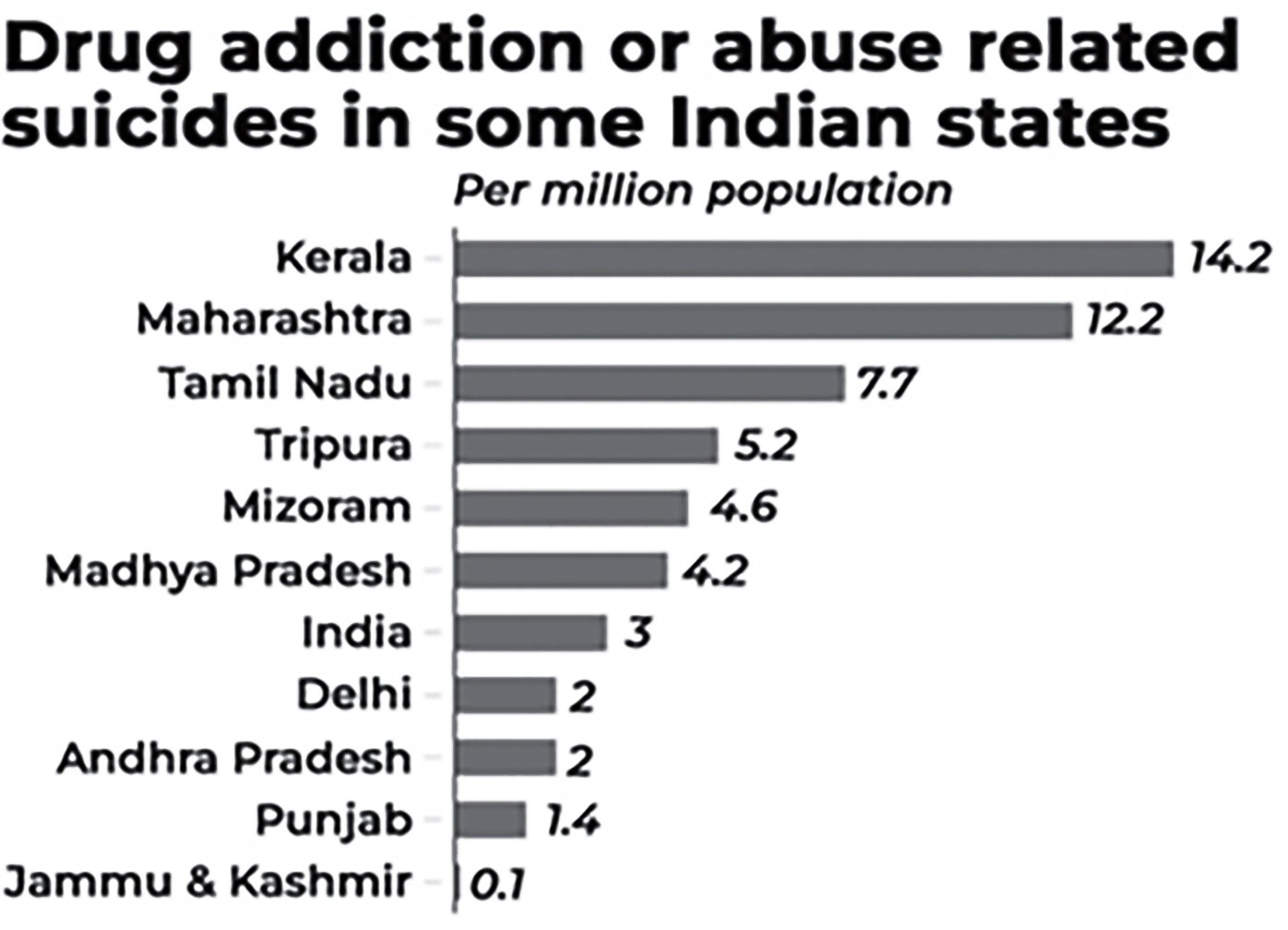
• As per National Crime Records Bureau data 2020, deaths by suicide attributed to drug abuse and alcohol addiction continue to increase with 2020 seeing over 9,000 such cases rising at the rate of one per hour. Just two states, Maharashtra and Karnataka, account for more than 43% cases.
• As per AIIMS 2019 study on Magnitude of Substance Use in India: - About 2.8% of Indians aged 10-75 years (3.1 crore individuals) are current users of any cannabis product, which is predominantly men.
• In eastern & NE states, illegal cannabis products (ganja/charas) are used by a larger proportion of people as compared to bhang.
• States with higher than national prevalence of cannabis use are Uttar Pradesh, Punjab, Sikkim, Chhattisgarh & Delhi.
• The rising epidemic of substance abuse among the youth has reached alarming levels. Shifting cultural values, growing financial pressures, and weakening support systems are contributing factors to the initiation of substance use.
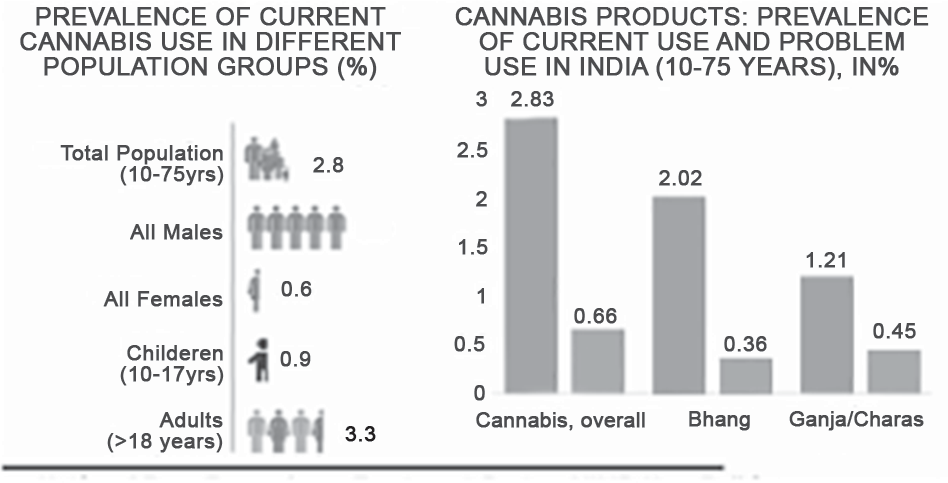
Figure: Drugs use in different Population groups
Causes of Drug Addiction and Trafficking
• Some of the causes behind drug abuse among youth
include
• family history of addiction, lack of family support, peer pressure, lack of social support, stress in life, social isolation, low socioeconomic status, mental
disorder such as depression or anxiety, lack of friends in school or any social setting, traumatic events, economic downturn, natural disasters etc. leaving people vulnerable to involvement in drug
trafficking and related crime.
Major Causes of Drug Trafficking include
• POLITICAL CAUSES:
• Political instability, militarism, civil unrest and internal armed conflict may result in an increase in trafficking such as in Manipur, Jammu and Kashmir, etc.
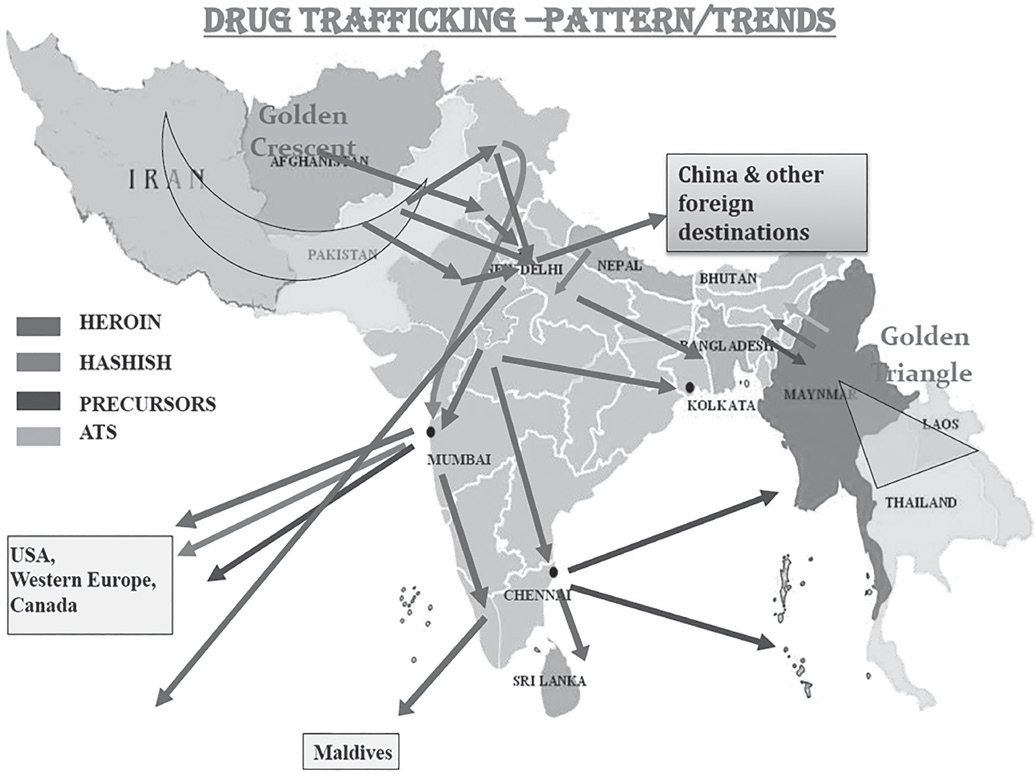
Figure: Drug trafficking
• GEOGRAPHICAL FACTORS:
• India’s sandwiched location between the “Golden Crescent” and “Golden Triangle” makes it vulnerable to drug trafficking. Example: Drugs like heroin, opium, and hashish from Golden Crescent comes into India through the northwest border.
• India is both a destination and a transit route for opiates produced in these regions.
• Trafficking of Hashish from Nepal, smuggling of Cocaine from Latin America and West Africa, trafficking of Ephedrine & Pseudoephedrine to Myanmar and reverse trafficking of ATS.
• Porous borders in North-East with Bangladesh, Nepal, Myanmar, China, and Bhutan are the hot- spots for drug smuggling.
• HIGH DEMAND:
• Drugs for recreational and medicinal purposes like marijuana and cocaine are in high demand in metros like Mumbai and Delhi.
• Religious considerations also lead to drug trafficking
• Poor Role models for the youth causes inclination towards drug abuse.
• CORRUPTION:
• Corruption among officials particularly bribing officials at border crossings to allow them to smuggle drugs into the country without being caught.
• LACK OF AWARENESS:
• Youth have lack of information about the dangers of drug abuse and inability to identify drug abuse or how to get help making them particularly vulnerable to drug traffickers.
• ILLICIT MANUFACTURING
• Illicit manufacturing of Synthetic Drugs and use of Clear Net & Dark Net for sale & purchase of Pharma drugs and hallucinogens & misuse of courier services.
Impact of Drug Trafficking
• Health Impact: Narcotics trade harms youth and families, leading to addiction and health problems. Addiction to alcohol or drugs increases the risk of suicide. People who abuse drugs are up to 14 times more likely to die by suicide than others. They may also have depression or anxiety disorders, chronic illness, a history of abuse, divorce, or financial problems like debt that led them to drug or alcohol misuse.
• Suicides related to opioids, or narcotic painkillers, have doubled in recent years.
• About 1 in 5 people who commit suicide use prescription opioids or heroin. Others use marijuana, cocaine, or amphetamines.
• Social Impact: Drug addiction and abuse can have severe social and economic consequences, including increased crime rates, loss of productivity, and strain on the healthcare system. Drugs destroy the cultural synergies that a society nurtures for ages.
• Social stigma: Someone who has an opioid addiction
and lives with chronic pain may feel ashamed. Doctors also prescribe fewer opioids for chronic pain because of the risk of addiction. This makes it harder to get prescription refills and may push some people to use illegal opioids like heroin. The stigma can increase distress and hopelessness and raise risk for suicide. It leads to loss of employment and loss of social support in housing and basic services apart from police harassment and incarceration.
• In Punjab, initial sampling, by local jail authorities, has found that 42 per cent jail inmates are hooked to narcotics and have been found using drugs like morphine, tramadol and buprenorphine.
• Also, according to the NCRB’s 2014 data on prisons, Punjab accounts for 45 per cent of all prisoners convicted on drug-related charges.
• Economic Impact:
• Drug addiction and substance abuse create a vicious cycle of poverty and vulnerability, particularly among youth as in Punjab and Manipur.
• Diversion of precious financial resources for caring and rehabilitating drug addicts.
• Loss of Human Capital and turning of Demographic Dividend into Demographic Liability, due to labor participation costs, participation in drug abuse treatment, incarceration, and premature death.
• Security Impact
• Diversion of Funds for Illegal Activities: Profits generated from the narcotics trade are funneled into disruptive activities.
• Rise in Terrorism: Cross-border drug traffickers have been linked to terrorist organizations such as Lashkar-e-Taiba and Hizbul Mujahideen, with illicit funds being used to finance terror activities backed by the ISI. For instance, this includes efforts to revive Khalistani militancy and the smuggling of drugs and weapons into India.
• Gunrunning: Drug trafficking organizations often use firearms to protect their operations and engage in gunrunning to acquire firearms.
• Infiltration of Organized Crime: Organized criminal groups, which were previously engaged mainly in local extortion activities, are now becoming involved in the narcotics trade network. These gangs are being utilized for drug trafficking and arms smuggling, posing a threat to the rule of law and weakening the state's capacity to uphold law and order.
• Human Trafficking: Drug trafficking organizations often use human trafficking as a means to move drugs and money across international borders.
• Wildlife and Antique Trafficking are also intertwined with drug trafficking.
• There are a rising number of Adolescent Users, and the gender gap is reducing with psychotropic drug users compared to narcotic users, like Kashmiri girls consuming drugs.
• Expansion of Darknet Markets: Research indicates that 62% of darknet activities are linked to illicit drug trafficking. The anonymity and minimal risks associated with darknet transactions are disrupting conventional drug markets.
• Border Security Concerns: Regions known for heroin and methamphetamine production often have porous borders, making them susceptible to control by rebel groups, sometimes indirectly backed by foreign intelligence agencies.
• Threat to Regional Stability: Drug trafficking exacerbates instability in conflict-prone areas, as rival groups compete for dominance over the highly profitable trade.
• Diplomatic Problems: Many Africans from Nigeria, Mozambique, South Africa, etc., are overstaying their visas in India and are involved with the smuggling of Cocaine and Heroin. He said it is a complex issue involving another country’s citizens and must be dealt with diplomatically.
The Narcotic Drugs and Psychotropic Substances (NDPS) Act
• The Narcotic Drugs and Psychotropic Substances (NDPS) Act was passed in 1985 to tackle the problem of illegal drugs in India.
• Notable Features of the Act: -
• Thrust mainly on prevention of trafficking, not so much on consumption.
• Treatment & Deaddiction.
• Probation.
• Awareness & education.
• Licensing of poppy cultivation.
• Financial investigation & forfeiture of properties.
• Controlled delivery.
• Disposal of drugs: pre-trial and post-trial.
• Penalties as per seizure quantity. (small, intermediate & commercial).
• Penalties for Govt. servants for failure to perform their duties.
• Confession under section before the Investigating Officer admissible in Court of law(section-67).
• Provision of NFCDA (section-7).
• Death penalty for offences after previous conviction in case of commercial quantity (section-31A).
• The Act establishes Narcotics Control Bureau as the apex drug law enforcement agency and empowers it to oversee the implementation of the NDPS Act and also the other international conventions related to it.
• It prohibits the production, sale, purchase, transport and consumption of narcotic drugs and psychotropic substances. The act extends to the whole of India and also in aircraft and ships that are registered in India.
• The original Act provided no immunity to drug addicts, and there was no real difference in treatment of the user and the dealer.
• The Act was amended in 2001. After the amendment, the act became more tolerant and provided a distinction between a drug user and a drug dealer.
• The NDPS Act of 2014 gave the Centre the authority to regulate the possession, sale, transportation, import, export, and use of narcotic medicines and poppy straw. Codeine, fentanyl, morphine, methadone, and codeine are all necessary narcotic medications.
• Punishment and Rehabilitation:
• The Act prescribes quantity-based punishment. The Act differentiates between small and commercial quantities of various drugs.
• NDPS Act provides harsh sentences for those convicted of offences involving smuggling. It even provides for the death penalty in some cases where a person is a repeat offender.
• But the same act also provides for immunity from prosecution to those who are dependent on drugs (through Section 64). It also provides the setting up of treatment facilities for addicts (through Section 71).
• There are three Schedules A, B and C for Controlled Substances.
• Under Schedule A are five items-Acetic Anhydride (precursor for Heroin), N-acetyl Anthranilic Acid, Anthranilic Acid (both precursors for Methaqualone) and Ephedrine and Pseudoephedrine (both precursors for Amphetamine/ATS).
Critical Evaluation of the Act:
• Delays in the Trial:
• Despite Special courts, in many states, such courts are given the additional responsibility of dealing with other cases as well causing undue delays in the disposal of drug-related cases.
• Further, it is quite difficult to find witnesses, often due to threats from the accused including possible bribes to turn hostile.
Sometimes accused is arrested for having a small quantity of drugs are freed after a long time in custody during the investigation period.
• Presumption of Guilt:
• One of the major drawbacks of the act is that it presumes the guilt of the accused which brings complete responsibility of proving an individual’s innocence on him.
• Bail isn’t usually granted to the accused of offenses that fall under Sections 19, 24, or 27A of the NDPS Act and those relating to commercial quantities of drugs.
• Harsh Punishments:
• As per the Act, a convicted person shall be punished with rigorous imprisonment for a term of not less than 10 years which may extend to 20 years and a minimum fine of Rs 1 lakh which may extend to Rs 2 lakh or more (sections 15-25 and sections 27A-29). Cannabis attracts a minimum sentence of five years and a fine that may extend to Rs 50,000 (section 20).
• Stringent Bail Provisions:
• Section 37(1) declares that an accused person should not be released on bail unless the court has reasonable grounds to believe that the accused is not guilty and is not likely to commit an offense while on bail.
• This is similar to Terrorist and Disruptive Activities (Prevention) Act (TADA) and Prevention of Terrorism Act (POTA) which resulted in long periods of imprisonment without trial, evoking strong criticism from the human rights movement.
• Immunity for Treatment Seekers:
• Under Section 64A of the current Act, drug addicts who choose medical treatment are exempt from prosecution if the charge is one of consumption or includes a small number of narcotics. This clause’s applicability has been plagued with ambiguity.
• As most drug addicts have been denied immunity due to a variety of technical reasons like proof of addiction, entering a guilty plea, and waiting for the case to be framed.
• Studies in the US have found that the cost of rehabilitating people on cannabis is six times less than keeping them in jails.
• It undermines legislative objective to discourage the criminalization of drug addicts and encourage treatment-seeking.
• Deterrence as a Theory of Punishment:
• Law designed must be mindful of the social realities
of the milieu in which it intends to effect a change. Now a days, drugs are becoming a way of youth.
Conditions and circumstances of the person must be taken into account while punishing the person.
Poor Effectiveness
• The National Crime Records Bureau (NCRB) 2020 data show a rise in all areas, including the number of arrests made, the total number of instances recorded, and the total amount of seizures made by various authorities.
• Less than one-fourth of the cases in 2020 resulted in convictions and one-fifth of arrested were finally convicted by courts.
• In many cases to get illegal benefits and “harass” people, as was evident most recently in the case of Aryan Khan, actor Shahrukh Khan’s son.
• There’s an ongoing global debate on legalizing cannabis. While some states in the US, and even several European countries, have legalized cannabis, as criminalizing cannabis has driven more people into jails.
Poor Implementation
• Despite adequate evidence, the courts have acquitted the accused on technical ground due to incorrect application of the provisions of the NDPS Act. This not only demoralizes the investigating officer, but is also a setback to the organization in the fight against drugs.
Narcotics Control Bureau (NCB)
• It was set up under the NDPS Act for preventing and combating drugs abuse and illicit trafficking in Narcotics Drugs and Psychotropic Substances.
• Coordination: NCB is responsible for coordination with various Ministries and State/Central Enforcement Agencies in matter related to drugs.
• Assistance to States & UTs: For purchase of Narcotics Control equipments like
• Surveillance equipments;
• Laboratory equipments;
• Vehicles for patrolling/ surveillance;
• Computers and their accessories;
• Fax machines and photocopiers;
• Training equipments and other aids;
• Other equipments useful for enforcement.
• International Implementation: Implementation of the international obligations under various United National Treaties that together form the International Law Framework of the global drug control regime.
• Enforcement Efforts
Seizure and disposal of drugs, destruction of illicit poppy & cannabis cultivation in Himachal Pradesh, Odisha, Telangana, Tripura, Maharashtra, Manipur and Jammu & Kashmir in year 2021-22.
• Enhancing Conviction Rates in drug cases: The conviction percentage of NDPS Act cases in the year 2022 is around 47 percent and 26 habitual drug traffickers have been detained under PITNDPS Act cases.
• Training & Capacity Building: with various academies and drug law enforcement agencies.
• Enhancing Technological Competence: Organising various technical courses/workshops on digital foot prints, cyber/mobile forensic, analysis of Call Detail Record and Internet Protocol Detail Record (CDR/ IPDR), gathering of Intelligence and evidences from Open Source/Social Media and investigation of Darknet and crypto-currencies etc., in collaboration with the United Nations Office on Drugs and Crime (UNODC) and Regional Offices of NCB.
• Use of Technology: NCB has been using social media and the dark web to track drug trafficking. The government has been using modern technology, such as drones and sensors, to monitor the borders.
• Use of Financial Intelligence: Law enforcement agencies are using financial intelligence to track the money trail of drug traffickers. They are working closely with banks and financial institutions to identify suspicious transactions and freeze the assets of drug traffickers.
• Expanding Infrastructure: There are ongoing developmental works to expand the infrastructure for NCB with office complexes coming up in new cities.
Spreading Awareness & Demand Reduction:
26th June has been proclaimed by the UNGA as the “International Day Against Drug Abuse and Illicit Trafficking”. To sensitize the masses, especially students NCB in association with local organisation organizes various awareness programmes throughout the country online and offline. Telecom service providers, FM Radios, Television Channels were also used.
An e-pledge titled “Say yes to Life, No to Drugs” was up-loaded on the website mygov.in.
Broad Strategy and Approach to Control Drugs
Article 47 of the Constitution of India provides that the State shall endeavor to bring about prohibition of the consumption except for medicinal purposes of intoxicating drinks and of drugs which are injurious to health.
Goal of a ‘Drug-Free India’ to be achieved with a ‘Whole of Government’ approach where all the departments will have to move forward with Cooperation, Coordination and Collaboration.
Principle of Balance: It represents a dual obligation of Governments to: -

Establish a system of control that ensures adequate availability of Narcotic Drugs, Psychotropic and controlled substances for medical and scientific purposes.
Simultaneously prevent abuse, diversion and trafficking and mitigate diversion from licit to illicit channels.
• Where,
• MHA = Ministry of Home Affairs
• MSJE = Ministry of Social Justice and Empowerment
• Drug Control Approach
• Hit hard on traffickers
• Discourage ‘Pudiya’ culture
• Take steps for education & awareness.
Approach schools & colleges
Community policing
Collaborate with Civil Society
Visit De-addiction Centres
• Offer treatment/probation opportunities to consumers.
• In drug cultivation areas
• Law Enforcement action will continue
Satellite images of suspected areas to be obtained.
Destruction operations of such crop to be carried out by Central and State enforcement agencies.
• Alternative Development for farmers
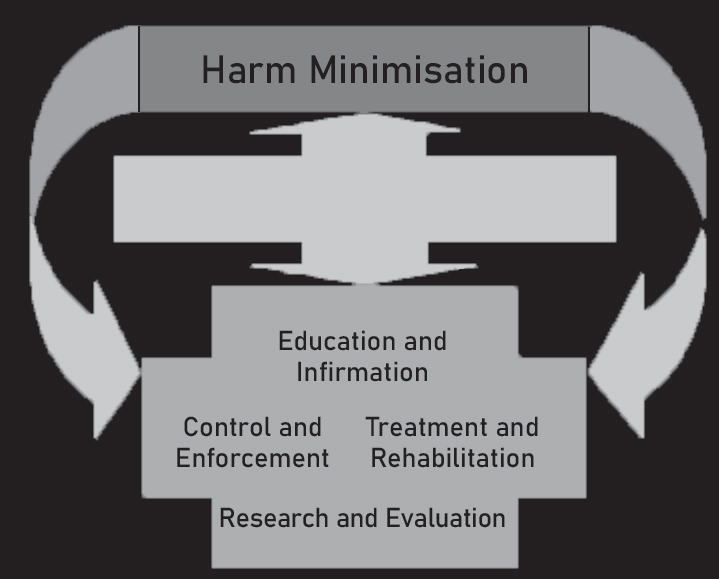
Figure: Harm Minimisation
‘Traditionally’ cultivatingopium poppy illegally.
Their livelihood depends entirely on such cultivation.
Steps Taken by the Government
• Legal Framework to Control Drug Trafficking in India
Narcotic Drugs and Psychotropic Substances (NDPS) Act, 1985
Drugs & Cosmetics (D&C) Act, 1940:
The Drugs and Cosmetics Act, 1940 is an act of the Parliament of India which regulates the import, manufacture and distribution of drugs in India.
The primary objective of the act is to ensure that the drugs and cosmetics sold in India are safe, effective and conform to state quality standards.
Prevention of Illicit Traffic in Narcotic Drugs and Psychotropic Substances Act, 1988: The PITNDPS Act, 1988 provides for detention in certain cases for the purpose of preventing illicit traffic in narcotic drugs and psychotropic substances. This law mandates that the suspect must be held in judicial custody for a minimum of one year.
• Security Initiatives
Seizure Information Management System (SIMS) e-portal:
Narcotics Control Bureau has developed the SIMS platform.
It contains a complete online database of drug offences and offenders.
National Integrated Database on Arrested Narcos Offenders (NIDAAN)
Narco Coordination Centre (NCORD):
The Ministry of Home Affairs has constituted the NCORD in 2016.
Implementation of Border Area Development Program to prevent cross border smuggling.
It is a mechanism to conduct regular meetings with various Central and State Agencies and facilitate coordination between them.
In 2019, the NCORD system has been restructured into 4 tiers up to the district level by MHA for better coordination and cooperation.
Joint Coordination Committee (JCC):
To monitor the investigation of large seizure cases,
a Joint Coordination Committee (JCC) with Director General, Narcotics Control Bureau (NCB) as its Chairman has been set up by the government in 2019.
• Anti-Narcotics Task Forces (ANTF)
• At state level have been established by 35 States & UTs.
• High-Precision Vehicle Scanners for detection near borderlands are deployed in the northeast region.
• Initiatives of Indian Coast Guards:
• The Indian Coast Guard (ICG) has developed a good synergy with the security agencies and with the coast guards of Sri Lanka, Maldives and Bangladesh for seizure of such drugs.
• Operation Samudragupt: by NCB to combat drug trafficking in Indian Ocean Region (IOR).
• Social Programmes
Nasha Mukt Bharat Abhiyan:
Launched in 2020 by Ministry of Social Justice and
Empowerment.
Objective: To address the problem of Drug Abuse among youth of India in 272 most vulnerable districts since August 2020.
Three Prongs:
The supply curb by Narcotics Control Bureau
Outreach and Awareness and Demand Reduction effort by Ministry of Social Justice and Empowerment
Treatment through Health Department.
Project Sunrise
The Ministry of Health and Family Welfare launched it in 2016 to address the rising HIV incidence in India’s north-eastern states, notably among drug users.
National Action Plan for Drug Demand Reduction (NAPDDR)
Implemented by the Ministry of Social Justice & Empowerment.
It is a plan for Drug Demand Reduction for the period of 2018-25. This plan focuses on:
Preventive education & Awareness generation programmes specially at higher educational Institutions, university campuses and schools
Participation: emphasis is laid on the participation of stakeholders such as women, children, educational institutions, civil society organisations etc. who may be directly or indirectly affected by substance use.
Identify Dependents: Identification, counselling, treatment and rehabilitation of drug dependent persons
Treatment: Focus on counselling and treatment facilities in hospitals and rehabilitation centres that have been geo-tagged
Training: Capacity building programmes for
service providers through collaborative efforts of government and NGOs.
• Centre’s Financial assistance to States: is provided to State Governments/ Union Territory (UT) Administrations for Preventive Education and Awareness Generation, Capacity Building, Skill development, vocational training and livelihood support of ex-drug addicts, Programmes for Drug Demand Reduction by States/UTs etc.
• Financial Assistance to Civil Society:
NGOs and Voluntary Organizations (VOs) for operating and managing Integrated Rehabilitation Centres for Addicts (IRCAs).
Community-Based Peer-Led Intervention (CPLI) programs aimed at early prevention of drug use among adolescents, along with Outreach and Drop-In Centres (ODICs).
District De-Addiction Centres (DDACs) and Addiction Treatment Facilities (ATFs) established within government hospitals.
• National Fund for Control of Drug Abuse (NFCDA): It was created in accordance with a provision of the NDPS, 1985 for meeting the expenditure incurred in measures taken for:
• Combating illicit trafficking
• Controlling abuse of drugs and substances
• Identifying, treating and rehabilitating addicts
• Preventing drug abuse
• Educating public against drug abuse
International Collaborations to Control Drug Use
India is a signatory to UN Single Convention on Narcotics Drugs 1961, Convention on Psychotropic Substances, 1971 and Convention on Illicit Traffic in Narcotic Drugs and Psychotropic Substances, 1988.
Apart from that, the NCB also coordinates with various international organisations for sharing information and intelligence to combat transnational drug trafficking, such as SAARC Drug Offences Monitoring Desk (SDOMD), United Nations Office on Drugs and Crime (UNODC) and International Narcotics Control Board (INCB), INTERPOL etc.
India has signed 17 MoUs, 28 Bilateral Agreements and 49 Extradition Treaties.
Way Forward
Implementing Global Success Models
• Laos: UNODC cooperates with the Thai Royal Project Foundation (RPF) and the Thai Highland Research and Development Institute (HRDI) to support the farmers with seedlings of improved fruit and vegetable varieties with technical assistance. In addition, UNODC has built a water supply system for the village and a water storage tank to irrigate the fruit trees and vegetables.
• Coffee instead of Coca in Peru: Peruvian farmers reap the fruits of their labour through a UNODC Alternative Development Programme, farmers received training on how to cultivate high-quality coffee in a sustainable and environmentally-friendly way, avoiding the use of chemicals.
• Thailand: Tai Yai hill tribe people in northern Thailand benefited from alternative development
project, which included agricultural assistance, market access support and infrastructure enhancement, gave their family a stable income and their children the chance to attend school and plan for higher education.
• Strengthening Law Enforcement:
Develop exceptionally good military and intelligence expertise to neutralise terrorist groups.
Targeting Groups:
• The approach of punishing individuals, but permitting groups that have perpetrated violence to exist, is counter-productive.
• Regional Cooperation:
• Develop arrangements with states to disrupt terrorist support networks and assist states by sharing intelligence and exchanging personnel to fight transnational terrorist networks.
• While some of these threats can be resolved unilaterally by states, most require bilateral and multilateral arrangements.
• Regional Autonomy:
• Often, devolving regional autonomy or power sharing has been the most effective strategy. The process requires close supervision, particularly during the implementation phase.
• Carrot & Stick Approach:
• A politico-military approach should be evolved to politically isolate a group in order to stem support and recruits, and to simultaneously offer political and economic incentives and to militarily pressurize it to join the mainstream.
• Enforcement of Strict Laws:
• Stringent laws such as TADA, MCOCA, and the Gangster Act are essential to combat organized crime effectively.
Harsher Punishments: India should implement stricter penalties for drug traffickers and increase punishments for drug-related offenses to serve as a deterrent.
• Raising Public Awareness:
• A continuous public awareness campaign is necessary to educate people about the dangers of drug abuse and the connection between drug trafficking and terrorism.
• Collaboration with civil society organizations is crucial to encourage communities to report drug- related activities in their local areas.
• Adoption of Technology:
• India must utilize advanced technology to track and intercept drug shipments. Drones and unmanned aerial vehicles (UAVs) can be deployed to monitor drug movement across borders.
• Efforts should be made to counter the use of technology by drug cartels,
• monitor darknet activities, and
• strengthen both national and international intelligence networks.
• Rehabilitation and Support:
• Greater focus should be placed on rehabilitating drug addicts by providing the necessary support to help them recover. Reducing drug demand will also prevent individuals from falling into the trap of drug trafficking.