Introduction to Insurgency in Northeast India
INTRODUCTION
India's northeastern region comprises eight states, commonly known as the Seven Sisters—Arunachal Pradesh, Assam, Manipur, Meghalaya, Mizoram, Nagaland, Tripura—along with Sikkim.
This region is rich in cultural and ethnic diversity, home to over 200 distinct ethnic communities, each with its own language, dialect, and socio-cultural identity.
It accounts for 7.97% of India's total land area and 3.78% of its population. The region shares a 5,484-kilometer international border with Bangladesh (1,880 km), Myanmar (1,643 km), China (1,346 km), Bhutan (516 km), and Nepal (99 km).
Insurgency refers to an armed rebellion led by small, lightly equipped groups engaging in guerrilla warfare, often operating from rural strongholds, against a dominant authority.
Insurgency vs Militancy vs Extremism
Militancy is a violent insurrection against a constituted authority, often led by a non-state actor or a disenfranchised group seeking political or socio- economic change.
From a definitional perspective, the Indian Sub- Conventional Doctrine describes insurgency as “a structured armed rebellion by a segment of the population against the state, often backed by foreign support.” Insurgencies may arise due to ideological, ethnic, or linguistic disparities, as well as political, socio-economic factors, fundamentalism, or extremism. Additionally, external interference can serve as a catalyst, further accelerating the movement.
Militancy refers to a state characterized by the use of violence, a combative nature, and a readiness to engage in conflict.
Extremism is a condition where an individual or organization holds radical political or religious views.
When comparing these terms, an extremist does not necessarily engage in illegal activities. Various political and religious groups, such as separatists in Kashmir and Maoist sympathizers, fall into this category. Militants, on the other hand, include individuals or groups that resort to violence, which may encompass not only terrorists and insurgents but also religious factions that use violence to promote their beliefs. Insurgencies can comprise both militant groups that engage in combat and extremists who advocate their ideology.
Insurgency vs Terrorism
• Insurgents primarily focus on attacking security forces and state institutions. Their objective is to rally public support, mobilize the population, and ultimately overthrow the government.
Insurgents, in Mao Tse-tung’s famous formulation, are the fish and the people are the water in which these fish swim.
• In contrast, the common people are the targets of terrorist violence today, although this was not the case when terrorism first emerged in the modern era.
• Earlier, in the late 19th century, the targets of terrorism were symbols of political authority— kings, emperors, viceroys, political leaders, government officials, etc. Further, these attacks were intended to serve as ‘propaganda by deed’, meaning advertisement for the cause. And these attacks were carried out only as the final resort and mainly against autocratic rulers and governments.
• In contrast, ‘there are no innocents’ is the motto of contemporary terrorists who moreover target democracies in the first resort. And, unlike 19th century terrorists who proudly proclaimed that they are indeed terrorists, terrorists today cloak themselves in the garb of freedom fighters and holy warriors.
• Nevertheless, both insurgents and terrorists resort to violence to achieve specific political or increasingly politico-religious goals, such as national liberation, independence, the establishment of a communist regime, an Islamic government, or the restoration of the Caliphate.
Sub-Conventional/ Un-Conventional Warfare vs Conventional Warfare
• Most conflicts in future will occur in the form of sub-
conventional/ unconventional / low intensity conflicts.
• Security forces, now-a-days, are being employed less in traditional roles and more in non-traditional roles characteristically found at the low end of the spectrum of conflict. Sub-conventional warfare differs qualitatively from conventional warfare.
• Sub-Conventional Warfare is a generic term encompassing all armed conflicts that are above the level of peaceful co-existence amongst states and below the threshold of war. Unconventional Warfare is a form of warfare which is based on the idea that it is possible to
destabilize an enemy so much that it concedes even if it has the ability to continue making war.
• Rather than brute force tactics of conventional warfare, unconventional warfare is based on using creative, innovative and usually stealthy tactics so that the enemy never knows what to expect. This type of warfare is also referred as ‘non-conventional’ or ‘sub-conventional’ or ‘asymmetrical’ warfare or ‘small war’ or even ‘new war’.
• It includes guerilla warfare and other direct offensive actions, low visibility, covert or clandestine operations as well as the indirect activities of subversion, sabotage, intelligence activities and evasion and escape, executed singly or collectively by predominantly indigenous people, usually supported and directed in varying degrees by external source during all conditions of war and peace. Such conflicts are political wars in the most literal sense.
• It includes militancy, insurgency, proxy war and terrorism employed as a means in an insurrectionist movement or undertaken independently. Border skirmishes also fall within this category.
• Today, these low intensity conflicts (LIC), carry danger of usurping national / regional stability.
• The full scale and devastating impact of these conflicts may not be felt for decades, but these will serve to set the stage for future violent struggles.
• The general objective of this type of warfare is to instill a belief that peace and security are not possible without compromise or concession.
• Specific objectives include inducement of war- weariness; curtailment of civilian’s standard of living and civil liberties associated with greater
security demands, economic hardship linked to the cost of war, helplessness to defend against assaults, fear, depression and disintegration of morale.
• The ultimate goal of this type of warfare is to motivate an enemy to stop attacking or resisting even if it has the ability to continue. Failing this, a secondary objective can be to emasculate the enemy before a conventional attack.
• Differences from Conventional Warfare
• In conventional warfare, security forces have a clearly stated objective and a plan of getting there. However, in sub-conventional warfare, the goals are usually more nebulous and troops often work independently, in small groups, striking blows at the enemy as they see it.
• Any target is fair game in unconventional warfare, from uniformed troops to civilians, as the idea is essentially to collapse the enemy from the inside out, forcing them to capitulate and negotiate surrender.
• The use of intimidation and coercion is common in unconventional warfare, where anything goes, as long as the greater goal of bringing about a concession
is eventually achieved. The lack of clear goals and encouragement of subversive tactics sometimes leads to the development of rogue operators, who may have lost sight of the greater mission as they work independently.
For example, a guerilla force may move from active harassment of villagers supporting the enemy to tormenting innocent civilians who have no vested interests in the outcome of war.
Here, battle lines are not clearly drawn, the enemy is not identifiable and thus aggression cannot be unequivocally channeled in his direction. Organizational as well as national goals are unclear and ambiguous as also public support is missing in this type of warfare.
• The use of firepower by security forces is restricted and application of force is under constant scrutiny by media and human rights organizations in unconventional warfare. Such restrictions and limitations are not imposed on the security forces in conventional warfare.
• Some of the distinctive features of sub-conventional conflict zone vis-à-vis conventional conflict zone include blurring of the distinction between front and rear, strategic and tactical actions and combatants and non-combatants.
• In addition, the environment is suitably manipulated by terrorists to enhance their relevance and credibility by employing ‘mass disruptive’ or ‘mass destructive’ methods through direct and indirect measures for psychologically influencing various sections of the environment.
• Thus, in finalizing a military reaction to sub conventional wars, security forces actions must be coordinated with the other instruments of national power in order to provide synergized solution to the conflict, where goals are simple, targets limited, terrain familiar, results immediate and satisfactions personal.
Causes of Militancy in North East
• The states of India’s Northeast have a long-standing history of conflict and violence, both among tribal groups within the same state and between neighboring states. A significant portion of this region was originally part of Assam, but the expression of ethno-nationalism, often through violent means, played a key role in the creation of several of the present-day states.
• Although the founding fathers provided for innovative models of Autonomous Councils and other measures in the Constitution, the complex pattern of conflicts in the North-Eastern States still continues.
• The terrain, the state of socio-economic development and historical factors such as language/ ethnicity, tribal rivalry, migration, control over local resources and long and porous international borders have resulted in a fragile security situation in the North Eastern States.
This has resulted in violence, extortion and diverse demands by various Indian Insurgent Groups (IIGs) which maintain safe havens/ camps in neighbouring countries. Basic data regarding area and population of NE States is as under:
| States | Area (sq km) | Population (as per census 2011) | Density of Population |
| Arunachal Pradesh | 83,743 | 13,83,727 | 17 |
| Assam | 78,438 | 3,12,05,576 | 398 |
| Manipu | 22,327 | 28,55,794 | 115 |
| Meghalaya | 22,429 | 29,66,889 | 132 |
| Mizoram | 21,081 | 10,97,206 | 52 |
| Nagaland | 16,579 | 19,78,502 | 119 |
| Sikkim | 7,096 | 6,10,577 | 86 |
| Tripura | 10,486 | 36,73,917 | 350 |
| Total NE | 2,62,179 | 4,57,72,188 | 173 |
| All India | 32,87,263 | 1,21,08,54,977 | 382 |
Conflicts in North-East can be broadly grouped under the following categories:
• National conflicts : These revolve around the idea of a distinct "homeland" as an independent nation, with supporters striving to achieve this goal, such as the demand for Greater Nagalim for the Nagas or Kukiland for the Kukis.
• Ethnic conflicts : These arise when smaller, less dominant tribal groups resist the political and cultural dominance of larger tribal communities. In Assam, this also manifests as friction between indigenous and migrant populations.
• Sub-regional conflicts : These pertain to movements seeking recognition of sub-regional aspirations, often leading to direct confrontations with state governments or even autonomous councils.
Key Characteristics of conflicts in the North-East:
• These conflicts are asymmetrical in nature.
• They are ambiguous, making it challenging to distinguish allies from adversaries.
• They employ unconventional tactics, utilizing political and psychological strategies.
• Over time, such conflicts often escalate into prolonged wars of attrition.
• The failure of state authorities to ensure security has led to the emergence of ethnic militias as alternative forces.
• In ethnically polarized environments, when one ethnic group perceives a threat from another armed group, private ethnic militias are often regarded as more reliable for protection.
• This typically occurs when state security mechanisms are ineffective, and military interventions are perceived as biased.
Factors responsible for Continued Insurgency in North- East:
• Feeling of Isolation, Alienation, Exploitation and Deprivation among the tribal population, due to distance from New Delhi, disconnect with the mainland of India and fellow Indians, lack of visionary leadership among the tribal communities and meagre representation in the Lok Sabha which is leading to more disillusionment in the dialogue process, thereby making call of the gun more attractive.
• The presence of ethnic ties across the Myanmar border and the region’s challenging terrain contribute to the border’s porosity.
• Demographic shifts due to cross-border infiltration: The influx of refugees from former East Pakistan (now Bangladesh) into Assam significantly altered the demographic composition of the region.
• Underdevelopment and lack of basic infrastructure: India's economic policies have fueled resentment and insecurity among the local population. Due to various factors, the Northeast has lagged in development, leading to limited employment opportunities. Consequently, insurgent groups easily attract youth by offering financial incentives.
• Internal displacement remains a persistent issue. Between the 1990s and early 2011, over 800,000 people were forced to flee their homes due to inter-ethnic violence in western Assam, the Assam-Meghalaya border, and Tripura.
• Political backing from various factions, rampant corruption among the ruling elite, and the easy availability of weapons and ammunition have further intensified insurgency.
• External assistance from both state and non-state actors continues to fuel proxy violence in India. There is growing evidence of China reviving its covert operations in the region. Additionally, Pakistan’s Special Services Group (SSG) had trained Naga guerrillas in the 1960s through its bases in East Pakistan (now Bangladesh).
• Proximity to Golden triangle (Myanmar, Laos, Thailand) ensures funding for separatist/secessionist organisations via support to illegal drug smuggling.
Organisations in North East
• At present, several militant groups operate across various northeastern states, particularly in Assam, Manipur, Meghalaya, and Tripura. Some of the prominent groups include:
• Assam: United Liberation Front of Assam (ULFA) and National Democratic Front of Bodoland (NDFB).
• Manipur: People’s Liberation Army (PLA), United National Liberation Front (UNLF), People’s
Revolutionary Party of Kangleipak (PREPAK), Kangleipak Communist Party, Kanglei Yaol Kanba Lup (KYKL), Manipur People’s Liberation Front (MPLF), and Revolutionary People’s Front (RPF).
Meghalaya: Achik National Volunteer Council (ANVC) and Hynniewtrep National Liberation Council (HNLC).
Tripura: All Tripura Tiger Force (ATTF) and National Liberation Front of Tripura (NLFT).
Nagaland: Nationalist Socialist Council of Nagaland (Isak-Muivah) [NSCN(IM)] and Nationalist Socialist Council of Nagaland (Khaplang) [NSCN(K)].
Recent Developments:
The security situation in the Northeastern states has significantly improved since 2014. In 2020, insurgency- related incidents saw a 74% decline, while civilian casualties dropped by 89% and security force casualties by 60%, marking the lowest figures in two decades.
• Owing to the substantial improvement in security conditions, the Armed Forces (Special Powers) Act, 1958 (AFSPA) has been partially withdrawn from 23 districts in Assam, 6 districts in Manipur, and 7 districts in Nagaland, effective from April 1, 2022.
• The Counter Insurgency Operations led to neutralization of 40 insurgents. Over 1400 insurgents surrendered and joined the mainstream society.
• Compared to the year 2014, there is a reduction of 76% in the extremist incidents in the year 2022. Similarly, the deaths of security personnel and civilians have come down by 90% and 97% respectively during this period,’ according to MHA.
State-wise Status of Insurgency
STATE-WISE STATUS OF INSURGENCY:
Nagaland
• Following the cease-fire with the dominant Muivah- Swu of the NSCN, the State is virtually free from overt violent unrest although as already noted, it is the original ‘hot spot’ of insurgency.
• The minority Khaplang faction which does not approve of the cease-fire has also, on the whole, remained peaceful.
• Certain areas of concern with regard to the future are:
• The lingering issue of a final political settlement including the demand for ‘greater Nagaland’ or ‘Nagalim’ which has already noted is causing disquiet in the neighbouring areas, particularly Manipur.
• Growing competition over the limited resources of the State and the problem of unemployment of the educated youth.
History of the Secessionist Movement
• Zapu Phizo led the moment opposing integration of Nagaland in India, demanding secession.
• 1955-57 saw increased insurgency.
• 1960, 16-point agreement signed by Pt. Nehru, promising statehood.
• In 1963, Nagaland was declared the 16th State within the union of India.
• Though insurgency had been brought under control, sporadic guerrilla war was launched by Naga rebels in 1964 and it continues till date.
• Shillong Accord, 1975- led to surrender by large number of militants.
• In 1980, National Socialist Council of Nagaland (NSCN) was formed, dissatisfied with the Shillong Accord.
The National Socialist Council of Nagalim-Isak- Muivah (NSCN-IM) emerged from it.
• Since 2015 a Naga Peace Accord was signed however, a subsequent Peace Agreement is being discussed till today.
• A precarious stability has been maintained over the last 50 years while ceasefire violations keep occurring routinely and almost continuously.
The hilly areas are also inhabited by the Naga tribes, which have historically been at loggerheads with the Kukis. The reason behind this being that some Kuki inhabited areas which they consider part of their homeland coincided with the imagined Naga homeland of Greater Nagaland or Nagalim.
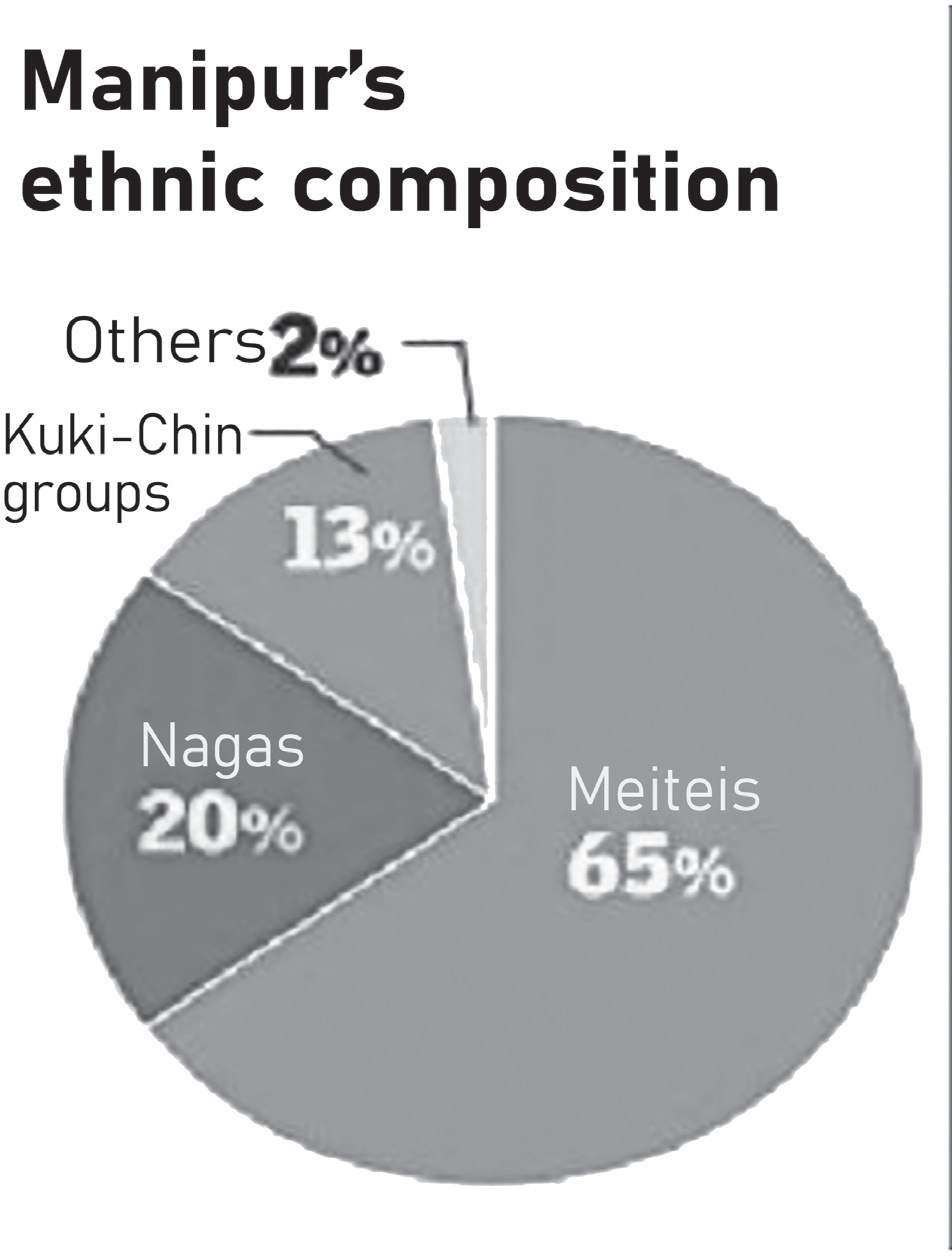
Figure: Manipur’s ethnic composition
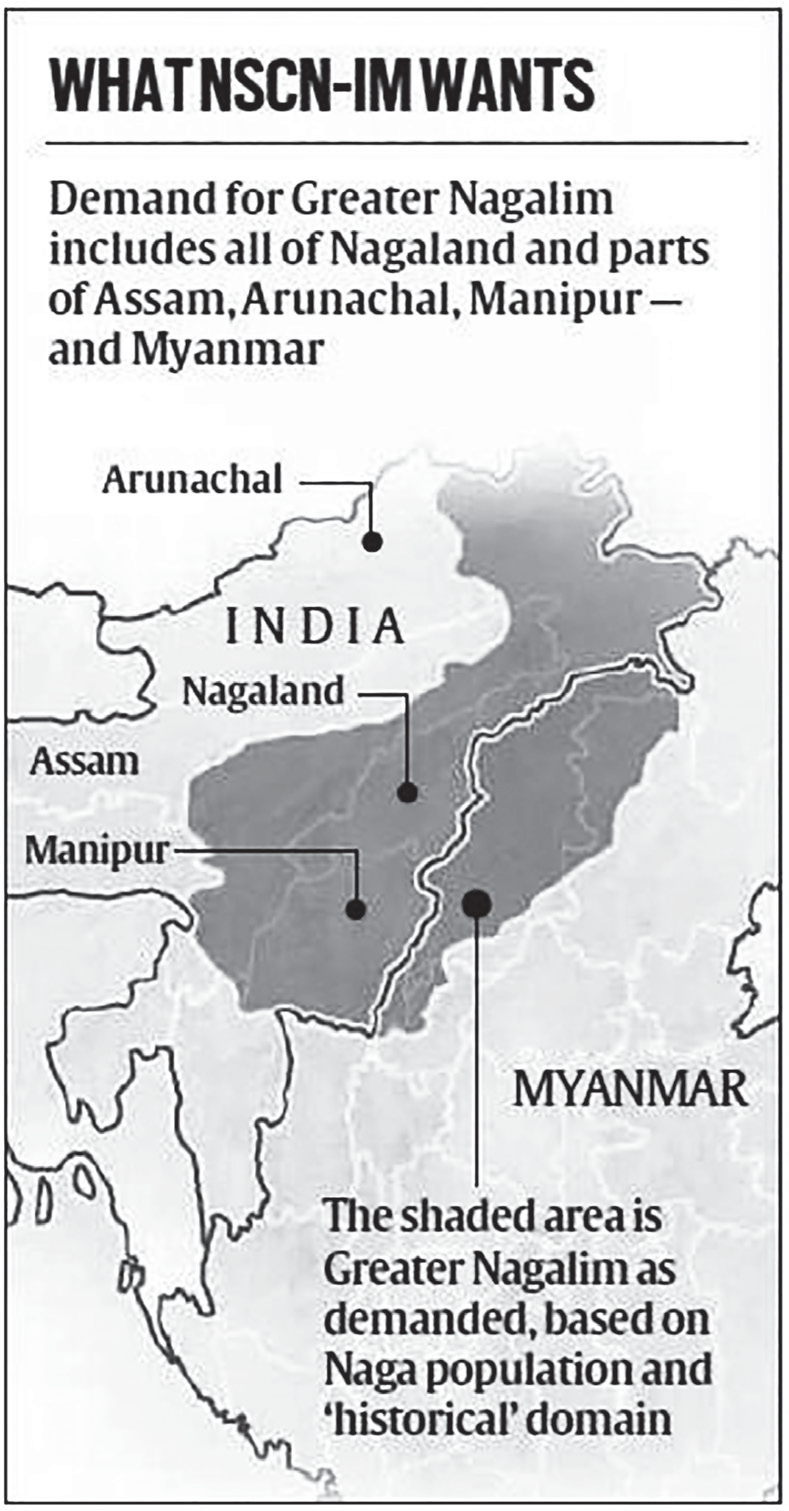
Figure: What NSCN-IM wants
Manipur
• At present, it is the most insurgency-affected state, with around fifteen active violent groups representing different tribes and communities. The insurgency has largely turned into a self-sustaining extortion network, particularly in the Valley. Numerous cases have emerged where development funds have been diverted to support illegal and disruptive activities.
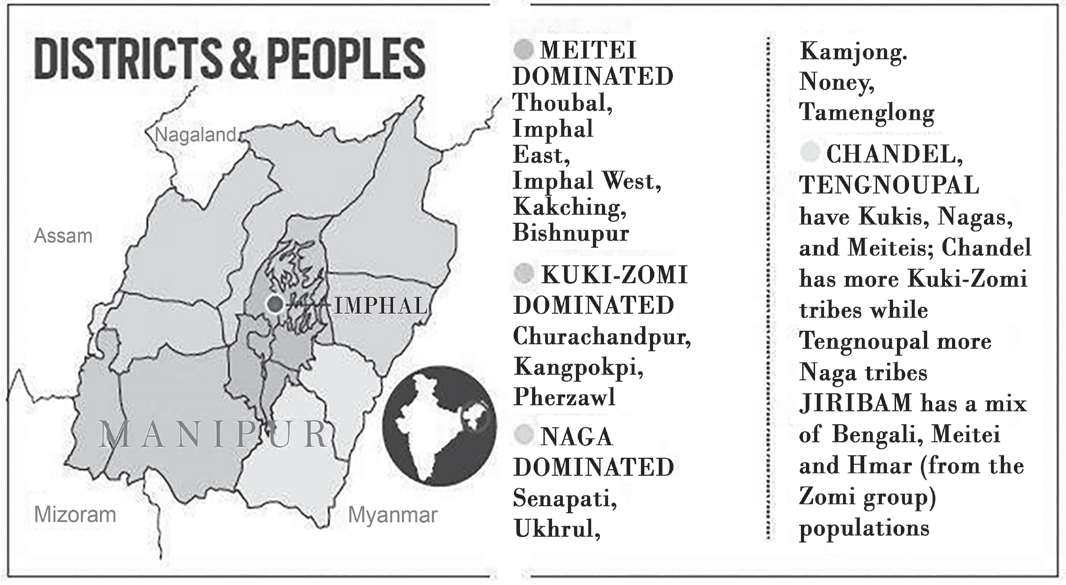
Figure: Areas dominated by different ethnic population
• The State of Manipur is affected by activities of Meitei, Naga, Kuki, Zomi, Hmar insurgent groups.
•
Meitei are predominantly Hindu tribes following Vaishnava tradition. While most Nagas and Kukis are Christian.
• Meiteis live in the plains, while Nagas and Kukis are in the hill districts.
Factors for Insurgency in Manipur
• Secessionist Movement: United National Liberation Front (UNLF) demands independence due to the perception that Manipur was forcefully merged into the Indian union.
• Spill over from Nagaland: The Naga movement’s demand for independent ‘Nagalim’ in neighbouring Nagaland spilled over into Manipur’s hill which is perceived as a “threat” to Manipur’s “territorial integrity”.
• Ethnic Conflict: Ethnic clashes between the Nagas, Kukis and Meiteis.
• Rampant Extortion and illegal taxation- also drug related issues.
• Porous Border- with Myanmar had led to migrant influx
from the Military Junta ruled country.
• Ineffective Hill Area Committee: Under the Manipur Legislative Assembly (Hill Areas Committee) Order 1972, the Hill Areas Committee was set up under Article 371C of the Constitution. It consists of 20 members, out of which 19 are MLAs elected from the hill constituencies and one is nominated by the Governor. It has the power to make review, monitor and make recommendations
on matters relating to the welfare and development of the hill areas, such as legislation, budget, schemes and projects.
Violence in 2023
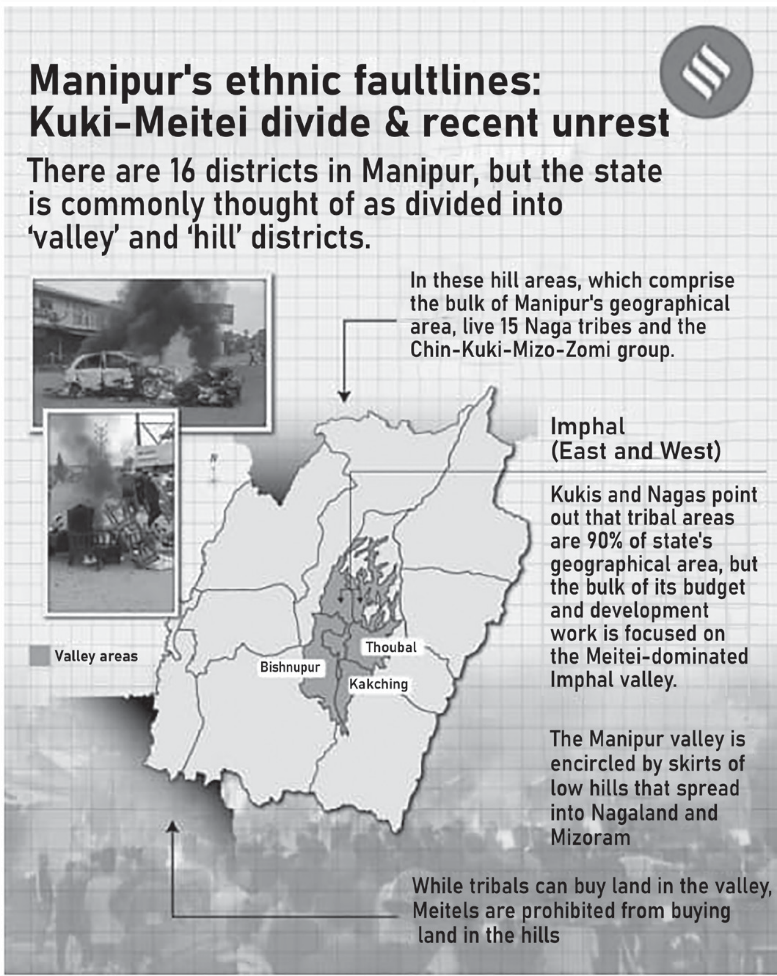
Figure: Manipur’s Ethnic Faultline
• History of insurgency movement in Manipur has various groups at the centre of violence.
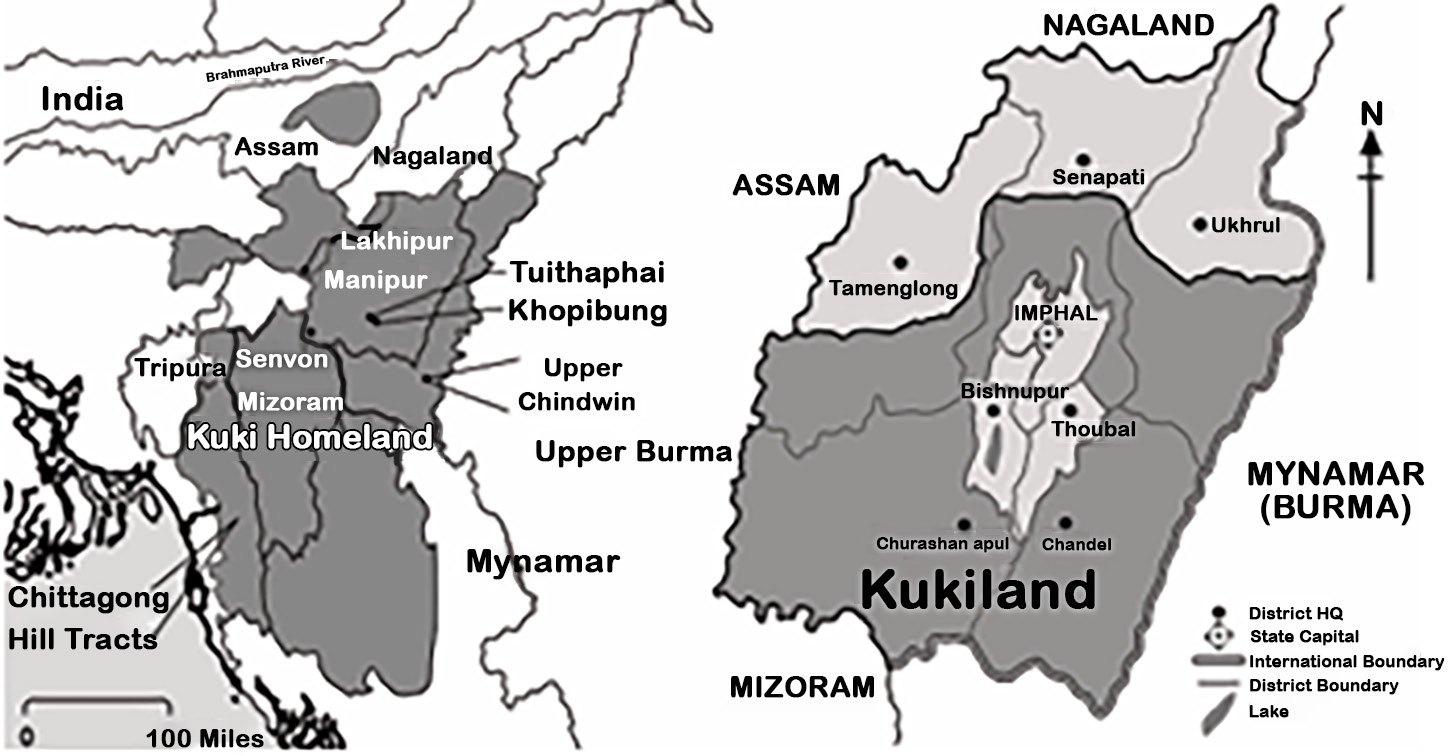
• The Kukis are a multi-tribal ethnic group that live in India’s north-eastern regions of Manipur, Mizoram, and Assam, as well as parts of Bangladesh and Myanmar. They live primarily in the hills.
• The hilly areas are also inhabited by the Naga tribes, which have historically been at loggerheads with the Kukis. The reason behind this being that some Kuki inhabited areas which they consider part of their homeland coincided with the imagined Naga homeland of Greater Nagaland or Nagalim.
• The core demand of the Kuki insurgency movement has always been to have a United Kukiland, which comprises Kuki-inhabited territories in Myanmar, Manipur, Assam, and Mizoram.
However, currently, Kukis no longer demand a separate Kukiland but a ‘Kukiland Territorial Council’, similar to the Bodoland Territorial Council in Assam, which was formed under the sixth schedule of the Constitution.
The other ethnic group in the State are the Meiteis or non-tribal, Vaishnavite Hindus who live in the valley region of Manipur. They claim to have a close kinship with the Bamar and Shan people of Myanmar, who share some linguistic and cultural similarities with them.
The first Suspension of Operations (SoO) was signed in 2005 between Kuki militant organizations and the Indian army. In August 2008, a tripartite Suspension of Operations (SoO) agreement was signed between the Government of India, Government of Manipur and 25 Kuki militant organizations to establish a ceasefire.
• Recently in 2023, communal clashes started due to Manipur High Court’s order directing state to pursue a 10-year-old recommendation to grant ST status to non- tribal Meitei community.
• The valley (10% area) comprises of Meiteis who yield 40 of the 60 MLAs. While the hills (90%) area inhabited by various tribes send 20 MLAs only.
• On 10 March 2023, the Government of Manipur withdrew from the Suspension Of Operations (SoO) Agreement of 2008, with Kuki National Army and Zomi Revolutionary Front.
Hill Area Committee (HAC) of Manipur Assembly recently passed a resolution rejecting the Meitei’s claim and asserting that granting them ST status would disturb the existing balance of power and resources in the state.
| Meitei Demands | Tribal Opposition |
| The ST status is needed to “preserve” the community and “save the ancestral land, tradition, culture, and language” of the Meiteis. | The Meiteis have a demographic and political advantage and are also more academically advanced. |
| The Meiteis need constitutional safeguards against outsiders, they are apprehensive that Greater Nagalim will shrink Manipur. The Meiteis are unhappy because they have been kept away from the hills while the tribal people can buy land in the “shrinking” Imphal Valley. Their population has reduced from 59% to 44% of the Manipur population in 2011. | The bulk of Manipur’s budget and development work is focused on the Meitei- dominated Imphal valley. ST status to the Meiteis would lead to loss of job opportunities and allow them to acquire land in the hills and push the tribals out. The language of the Meitei people is included in the Eighth Schedule of the Constitution and many of them have access to benefits associated with the SC, OBC or EWS status. |
• Way Forward
• Assess ST status based on the Lokur Committee (1965) recommendations- 5 key criteria for tribal identification, namely,
• Primitive traits
• Distinct culture
• Geographical isolation
• Shyness of contact with the community at large
• Backwardness
• Enhanced counter insurgency to tackle militancy.
• Development, inclusive growth and enhanced social welfare.
Mizoram
• Mizoram state today is free from Insurgency. The State with its history of violent insurgency and its subsequent return to peace is an example to all other violence affected States.
• Following an ‘accord’ between the Union Government and the Mizo National Front in 1986 and conferment of statehood the next year, complete peace and harmony prevails in Mizoram.
• The State is recognised as having done a commendable job in the implementation of development programmes and making agriculture remunerative.
• The only potential areas of conflict are the growing income and assets disparities in a largely egalitarian society and the dissatisfaction of the three small non- Mizo District Councils with the State Government, on account of issues pertaining to identity and reservation as STs.
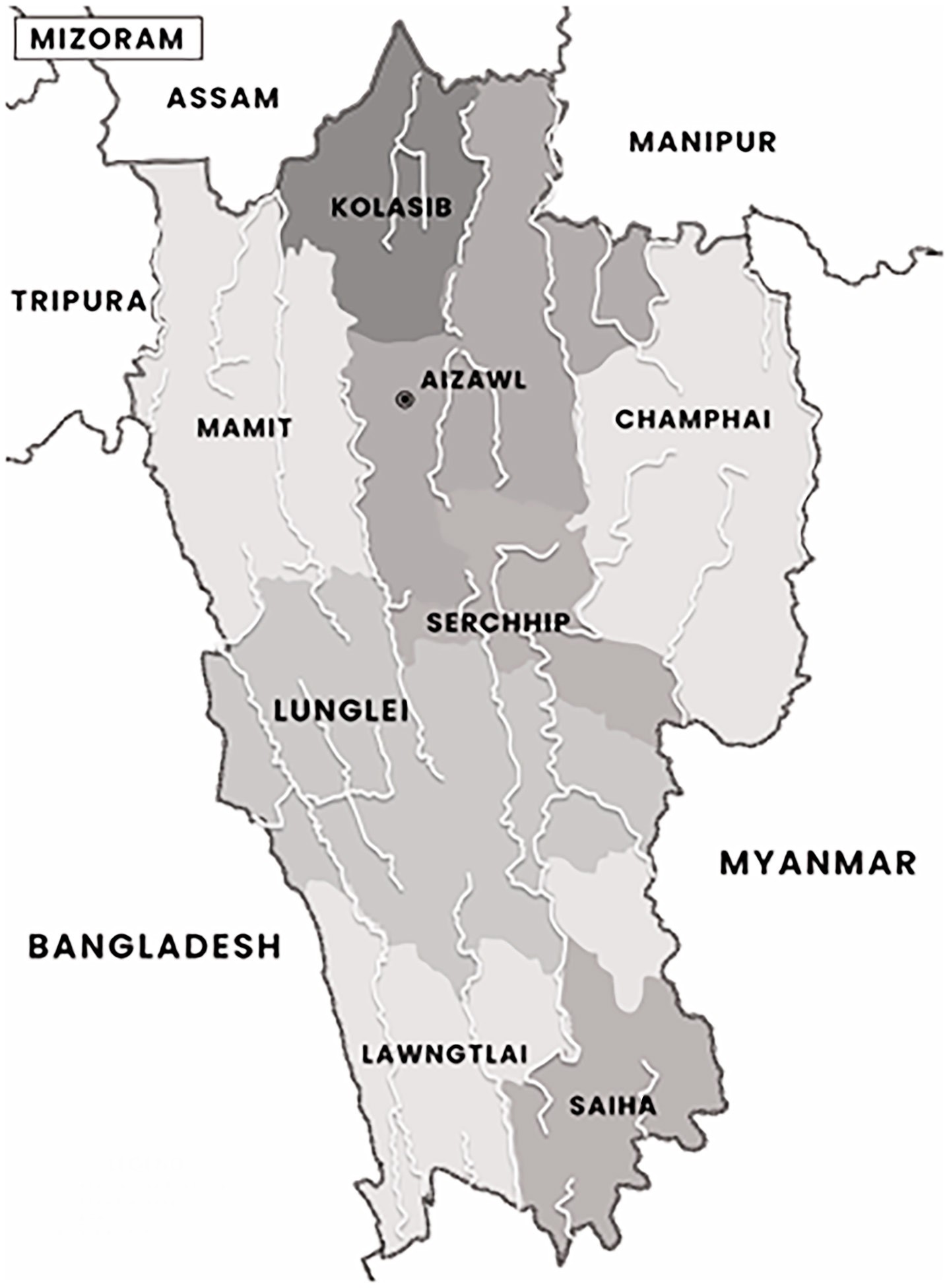
• In 1986, the Mizoram Peace Accord was signed between the Mizo National Front and the government of India.
• It brought an end to two decades long secessionist demands and armed insurrection of Mizo National Front (MNF), led by Laldenga.
• Militants surrendered and gave up arms and joined mainstream politics.
• Indian government accorded statehood to Mizoram, and enabled development through Central assistance.
• It is remarked as the most successful peace agreement in India after its independence from the British Empire.
• The movement by the MNF had racial and religious overtones, and its declared aim was secession of Mizoram from the Indian Union. There was an armed uprising in 1966 and violent conflict continued well into the 1980s.
• Three factors may be said to have contributed to this historic conflict resolution:
• Firstly, Prime Minister Rajiv Gandhi’s sincere and positive gestures were greatly appreciated by the people of Mizoram and its leaders, which laid the initial foundation for negotiations.
• Secondly, the maturity of the two Mizo political personalities of the time, namely, the undisputed
insurgent leader Pu Laldenga and the then Chief Minister Pu Lal Thanhawala’s unilateral offer of stepping down in favour of Laldenga as the Chief
Minister.
Finally, the moderating influence and pressure of the Mizo civil society, especially the women who had been the most aggrieved and affected during the periods of violence.
Meghalaya
Fortunately, the state remains largely free from the high- intensity violence seen in many other parts of the region. Apart from incidents targeting ‘outsiders,’ particularly the Bengali-speaking linguistic minority, the state has not faced any major issues. However, the following areas may pose future concerns:
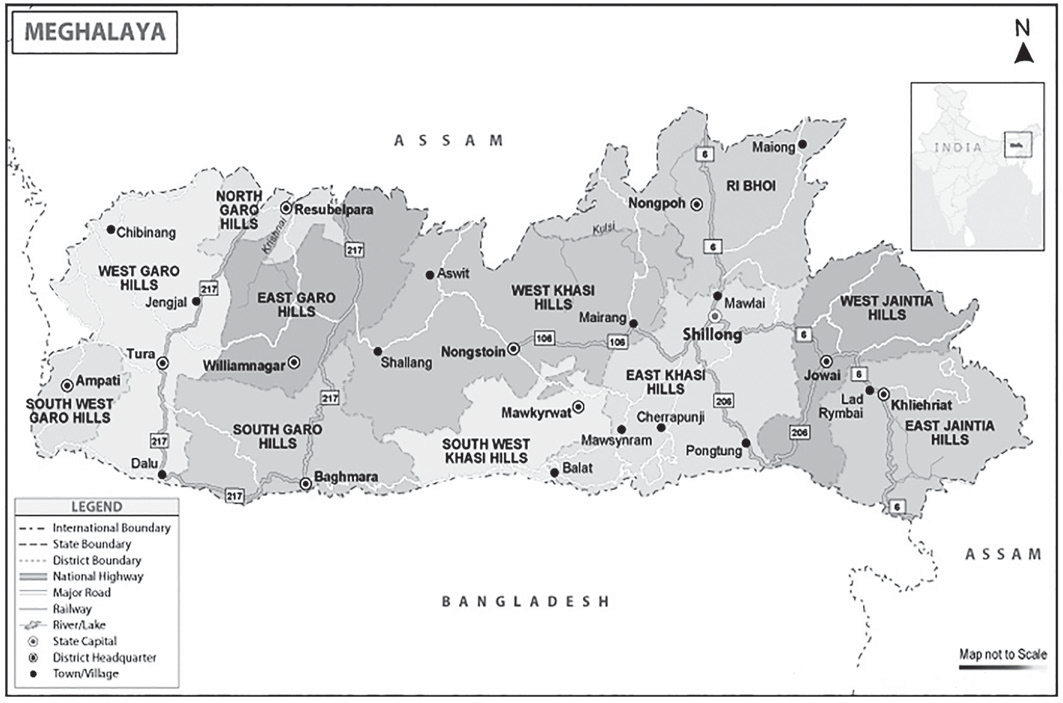
Increasing clash of interests between the State Government and the Sixth Schedule District Councils
– the entire State is under that Schedule.
Increasing inter-tribal rivalry.
Emerging tensionsabout infiltration from
Bangladesh particularly in the Garo Hills.
Factors Behind Insurgency in Meghalaya-
• Ineffective Khasi Autonomous District Council
• Upsurge in Garo nationalism
• Porous borders with Bangladesh, smuggling of contraband items
• Differing tribal aspirations and issues of identity
• Illegal coal mining
Prominent Militant Groups
| Achik National Volunteers Council (ANVC) | Hynniewtrep National Liberation Council (HNLC) |
| Represents the Khasis and the Jaintias | Represents the Garo communities |
| Demand independence from India as they believe Khasi was never a part of India. Its aim is to free Meghalaya from the alleged domination of the Garos and the non-tribal outsiders (the “Dkhars”). | Demand a Garo homeland, within the Constitution of India. |
| It was banned by the Centre in 2000. Over the years, the HNLC built ties with the other secessionist organisations operating in the North-east India, including the NSCN- IM of Nagaland, the NDFB of Assam and the National Liberation Front of Tripura (NLFT) and ULFA. | A Memorandum of Settlement signed between the Government and ANVC has been in force since 2014. |
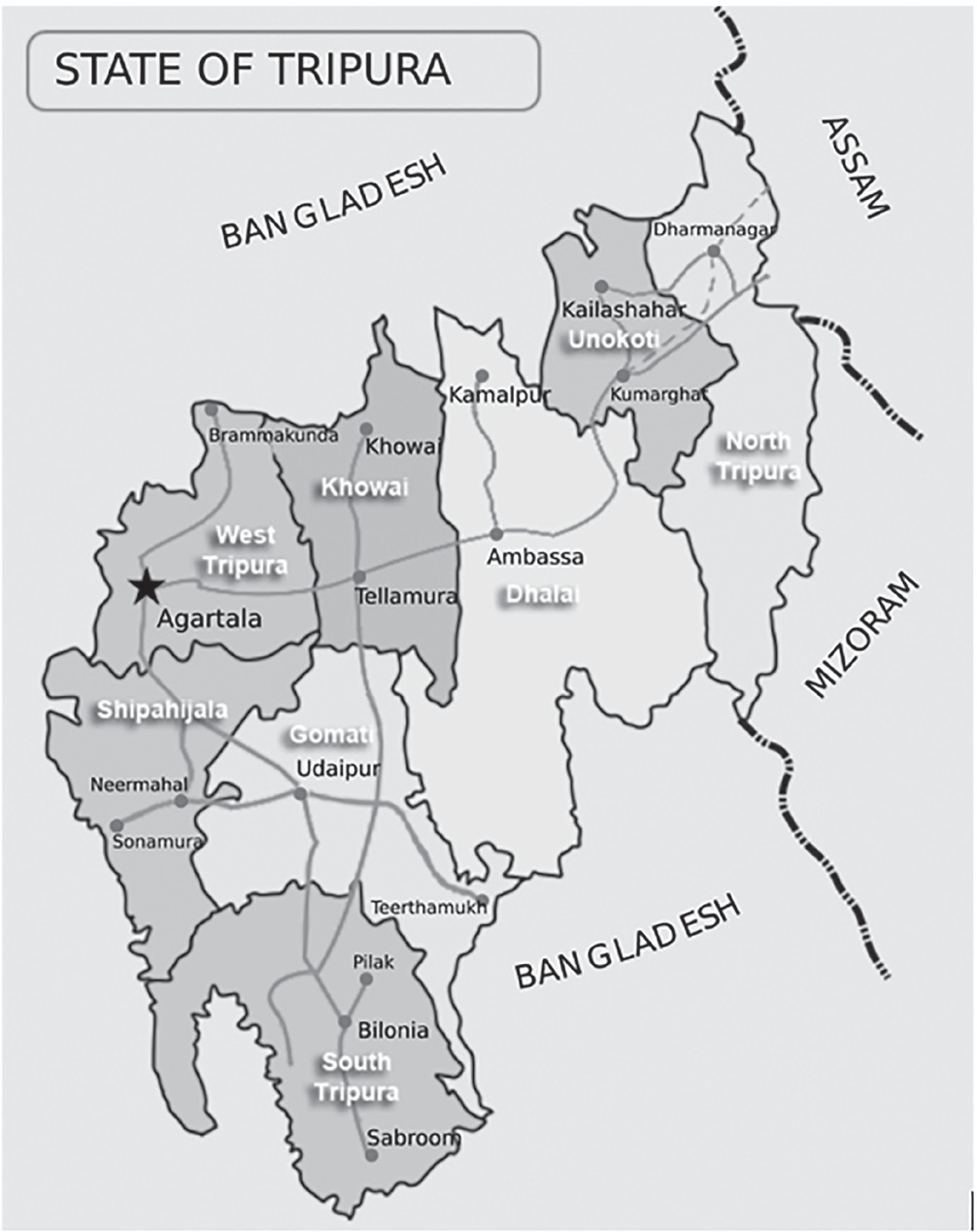
Tripura
• The State’s demographic profile was altered since 1947 when mass migrations from the newly emerged East Pakistan converted it from a largely tribal area to one with a majority of Bengali speaking plainsmen. Tribals were deprived of their agricultural lands at throw-away prices and driven to the forests. The resultant tensions caused major violence and widespread terror with the tribal dominated Tripura National Volunteers (TNV) emerging as one of the most violent extremist outfits in the North East.
• Proximity to Mizoram exposed the State to the ‘side effects’ of that insurgency. However, effective decentralisation in the ‘non-scheduled areas’, bringing
tribal areas within the purview of an autonomous ‘Sixth Schedule’ Council, successful land reforms and systematic promotion of agriculture have contributed to considerable conflict reduction.
• The evolving religious composition of tribal communities, particularly the Jamatiyas, is leading to new tensions, raising concerns about a potential rise in inter- tribal conflicts. While clashes between tribal and non- tribal groups have decreased, there is growing discontent among tribals due to restrictions on their access to forests and their limited involvement in district development initiatives.
• The State of Tripura has remained by and large peaceful. The activities of underground outfit, National Liberation Front of Twipra/ Biswamohan (NLFT/B) have been contained. Some recent developments to establish peace have been-
A Memorandum of Settlement (MoS) between Government of India, Government of Tripura and National Liberation Front of Twipra was signed providing for a Special Economic Development Package (SEDP) of INR 100 crore for overall development of tribals of Tripura.
Settlement of Bru Migrants: An agreement was signed by Government of India, Government of Mizoram, Government of Tripura with representatives of Bru migrants on 16.01.2020 for permanent settlement of Bru (Reang) in Tripura with a financial assistance of around INR 650 crores. Each settled Bru family will be given assistance of INR 4 lakhs in FD, monthly DBT, housing assistance free ration etc.
HISTORY
• The insurgency in Tripura saw a surge in 1990s with formation of the National Liberation Front of Tripura (NLFT) and its armed wings seeking to secede from India. NLFT is declared a ‘terrorist organisation’ under the UAPA, 1967.
• The success of the insurgency during the initial stages was due tothe advantages of the rough, rugged terrain, and the porous and extensive trans-border corridors with Bangladesh.
Peace Process
• The political process initiated by Chief Minister Manik Sarkar went a long way in dissolving the malaise of insurgency.
•
Peace marches were organised in far-flung insurgency pockets to instill confidence in the people and display the sincerity and commitment of the State towards accelerated development and prosperity for all segments of society.
• Micro-democratic institutions such as autonomous development councils, gram panchayats and village councils were strengthened, revitalised and legitimised.
• This brought all the communities, notably the tribals in particular, into the development stream, bringing about substantial empowerment and a sense of fulfilment.
• Bru-Reang Agreement, 2020:
• The Bru or Reang community is an indigenous ethnic group native to Northeast India, primarily residing in Tripura, Mizoram, and Assam. In Tripura, they are classified as a Particularly Vulnerable Tribal Group (PVTG).
• The Centre, the governments of Mizoram and Tripura and leaders of Bru organisations signed the quadripartite agreement, Bru-Reang Agreement in January (2020).
• Under the pact, the Home Ministry has committed to incur the whole expenditure of settlement in Tripura.
• NLFT-Tripura Agreement, 2019:
• National Liberation Front of Tripura (NLFT) has been banned under the Unlawful Activities (Prevention) Act, 1967 since 1997 and has been involved in violence, operating from their camps across the international border.
• NLFT Agreement 2019 resulted in the surrender of 88 cadres with 44 weapons.
• Tripura scripted a story of triumph over insurgency and conflict-resolution, and demonstrated that insurgency was not an insurmountable phenomenon.
• The well calibrated and humane combat operations combined with psychological approach to the issues ensured that the local population was not alienated.
Arunachal Pradesh
• The isolationist policies introduced in the 1950s under the guidance of anthropologist Verrier Elwin have fostered significant social cohesion in the region, with Hindi emerging as the common language.
• Initial concerns arose over the large-scale settlement of the more enterprising Chakma refugees from Bangladesh, but these tensions now seem to have diminished. However, increasing income disparities and limited employment opportunities could become potential sources of conflict.
• Arunachal Pradesh does not have any major indigenous insurgent groups of its own. However,
the state experiences the spillover effects of insurgency from factions of the National Socialist Council of Nagaland (NSCN) and the United Liberation Front of Asom (ULFA) (Independent), particularly in the Tirap, Changlang, and Longding districts. The region has remained peaceful following the ceasefire with NSCN, which was previously active in Tirap district.
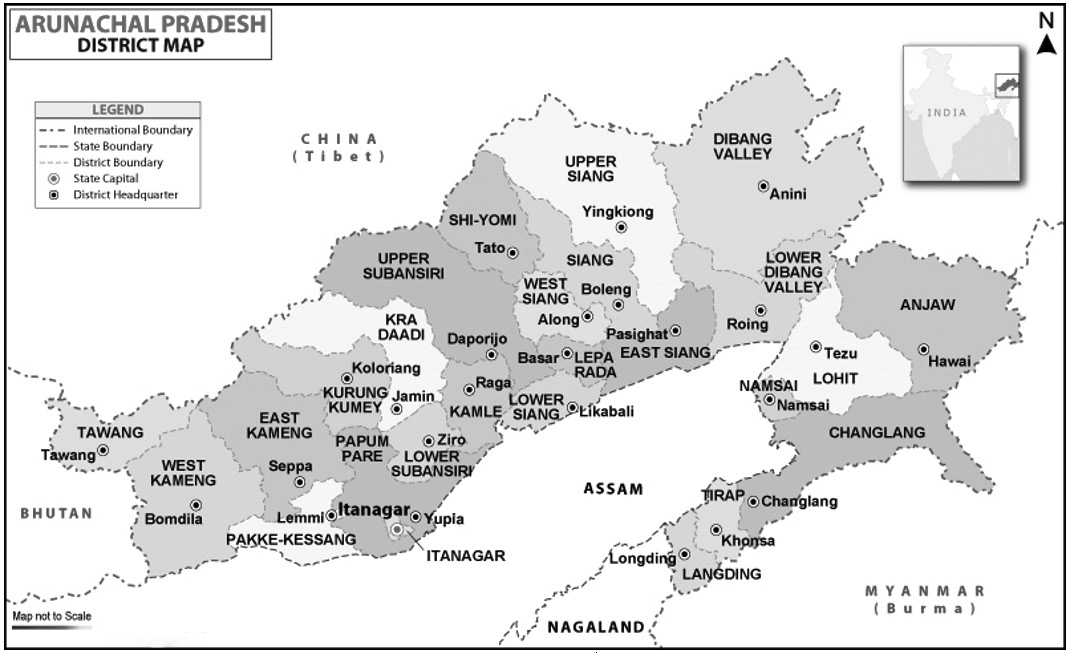
• Tirap, Changlang and Longding districts are part of NSCN-IM’s projected State of Nagalim (Greater Nagaland).
• Kidnapping and extortion by members of NSCN had created an environment of fear.
• ULFA-I cadres utilize the Lohit, Changlang, and Tirap districts as infiltration routes into Myanmar, where their base camps are situated.
• These areas serve as key locations for temporary transit camps while moving and as hideouts to evade counter- insurgency operations in Assam.
• An emerging concern is the presence of CPI-Maoist cadres in the Lohit and Lower Dibang Valley districts of Arunachal Pradesh.
• Additionally, the significant presence of Chakma and Hajong refugees, along with an influx of other outsiders, has periodically raised concerns among the local population.
Assam
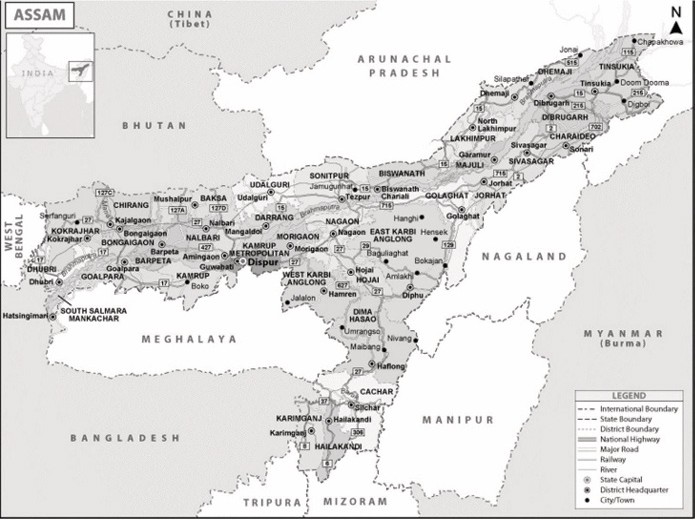
• The state experiences a diverse range of ethnic conflicts, including protests against the influx of foreigners and the perceived failure of the government to deport them. Additionally, occasional tensions arise between religious and linguistic groups, along with escalating conflicts among tribal communities seeking greater local autonomy.
Various Insurgent Groups
• The United Liberation Front of Assam (ULFA), established in 1979, aims:
• to achieve Assam's independence
• and implement a socialist government.
Kamatapur Liberation Organisation
• The Kamtapur Liberation Organisation is an armed group operating in Northeast India, seeking to establish an independent Kamtapur nation.
• Their proposed state would include six districts from West Bengal and four adjoining districts from Assam, with Cooch Bihar as its central region.
Bodoland Issue
• The National Democratic Front of Bodoland (NDFB), is an armed separatist outfit formed in 1998.
• It seeks to obtain a sovereign Bodoland for the Bodo people in Assam, India.
• It is designated as a terrorist organisation by the Centre.
• Bodos, the largest plains tribe of Assam started an armed struggle for a separate state in the mid-1980s.
•
This was accompanied by ethnic cleansing of the non-Bodos along the north bank of the Brahmaputra.
• The ancient tribe of Bodos view the rise of immigrant Bengali Muslims as a threat.
• The Bodoland Autonomous Council (BAC) Accord was signed in 1993.
• In February 2003, the Bodoland Territorial Council (BTC) Accord was signed to end the Bodo movement and setup the Bodoland Territorial Area District (BTAD).
• The BTC, as an ethnically oriented territorial council established under Sixth Schedule of the Constitution, has failed to provide security to people other than the Bodos.
• In 2020, the third Bodo Peace Accord was signed as a tripartite agreement involving the Central Government, the Assam Government, and the banned insurgent group, the National Democratic Front of Bodoland (NDFB).
• This accord is a crucial step toward fostering democratic decentralization, acknowledging the Bodo people's identity, and ensuring lasting peace and stability in the region.
• The Bodo Territorial Areas District (BTAD) was restructured by incorporating new Bodo-majority villages adjacent to the existing BTAD while excluding villages with a predominantly non-tribal population.
• It was renamed the Bodoland Territorial Region (BTR) and granted enhanced executive, administrative, legislative, and financial powers.
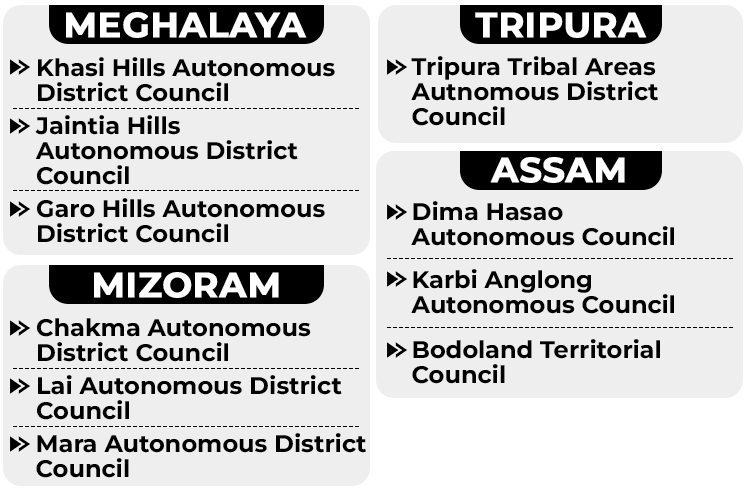
• Additionally, Bodos residing in Karbi Anglong and Dima Hasao districts were granted Scheduled Hill Tribe status.
• The number of seats in the Bodoland Territorial Council (BTC) was expanded from 40 to 60.
| Karbi People’s Liberation Tigers (KPLT) | Rengma Naga Hills Protection Force (RNHPF) |
| It is a breakaway faction of the ethnic insurgent Karbi Longri N.C. Hills Liberation Front (KLNLF). | It was formed in 2012 for protection of the Rengma Nagas from KPLT attacks |
| It is demanding a separate, self-ruled State comprising two hill districts—Kabri Anglong and Dima Hasao. | It is demanding creation of a regional council for the Rengma Nagas of Karbi Anglong. |
Maoists
• Of late, Maoists have been engaged in recruitment,
• Furthermore, Bodo in the Devanagari script was designated as an associate official language for the entire state of Assam.
• Deputy Commissioners and Superintendents of - The posting of Deputy Commissioners and Superintendents of Police will be carried out in consultation with the Chief Executive Member (CEM) of the Bodoland Territorial Council (BTC).
• A special development package of ₹1,500 crores was allocated over three years.
Additionally, the Assam Official Language (Amendment) Bill, 2020, was enacted to accord due recognition and respect to the Bodo language.
Karbi Anglong Issue
Karbi Anglong district is the largest amongst the administrative districts of Assam.
There were violent clashes between the ethnic insurgent groups of Karbi and Rengma people, each demanding autonomy of administration for their area.
training and extortion activities in upper Assam (Tinsukia and Dibrugarh) and Arunachal Pradesh.
The National Register of Citizens (NRC)
• NRC is an exercise first carried out in 1951 to enumerate the citizens, their houses and holdings. It is an official record of all the legal citizens of a State.
• Over the years there has been a demand from the indigenous Assamese groups to update the NRC to weed out illegal immigrants in light of the commitments in Assam Accord.
Background of NRC
• Starting in 1979, Assam's indigenous population demanded the identification and expulsion of illegal immigrants who had migrated from Bangladesh.
• Led by the All Assam Students Union, the movement initially adopted non-violent methods such as satyagraha, boycotts, picketing, and voluntary arrests but escalated into violence by 1983.
• The agitation concluded on August 15, 1985, when its leaders signed the Assam Accord with the central government.
Issues with NRC
• Recently Government released the final draft NRC list in which names of 2.89 crore of the 3.29 crore people were included. The names of about 40 lakh people did not figure in the list.
•
The issue which has been flagged is that relying on documentation to confirm Citizenship in a country like India where most people lack documentation is problematic.
As per the Supreme Court mandated rules, those left out of the draft NRC list had to mandatorily submit their
biometrics during the hearings of ‘claims’ (to include themselves in the NRC) and ‘objections’ (to object to someone else’s inclusion) process.
• These people who have been left out are now struggling to get Aadhaar, and concerned about benefits linked to it which are essential for survival.
Achievements in Countering Insurgency
• Negotiations with ULFA: United Liberation Front of Assam (ULFA) (pro talks) is under Suspension of Operations (SoO) agreement with the Government of India.
• Settlement with Bodo Groups: On January 7, 2020, a Memorandum of Settlement (MoS) was signed between the Government of India, the Assam Government, and representatives of Bodo groups to resolve the longstanding Bodo issue. The agreement also includes a Special Development Package (SDP) of ₹1,500 crore for implementing specific projects aimed at the overall development of Bodo-inhabited areas in Assam.
• Karbi Anglong Agreement, 2021: Karbi Anglong Agreement is a tripartite agreement among five insurgent groups of Assam, the Centre and the state government. Five militant organizations (KLNLF, PDCK, UPLA, KPLT and KLF) laid down arms with more than 1000 of their armed cadres to end the decades old crisis in Karbi
Anglong areas of Assam and they joined the mainstream society. It also provides for a Special Development Package (SDP) for INR 1,000 crore to undertake specific projects for overall development of Karbi areas of Assam.
Assam-Meghalaya Inter State Boundary Agreement, 2022: The agreement is for a closure in six disputed sectors that were taken up for resolution in the first phase. While Assam will get 18.51 sq. km of the disputed areas, Meghalaya will get the remaining 18.28 sq.km. In 2022, a Memorandum of Understanding (MoU) was signed in New Delhi between the Chief Ministers of Assam and Meghalaya to address the long-standing interstate boundary dispute between the two states. This agreement aims to benefit residents of the region by fostering lasting peace and promoting development.
West Bengal
• The resolution of conflict in the Darjeeling hills, near the Sikkim border, stands as another notable achievement. The Gorkha National Liberation Front (GNLF), which advocated for Indian citizenship for all Gorkhas residing in the country, alleged discrimination by the West Bengal government and, as a result, demanded separation from the state. Over time, the movement grew increasingly violent.
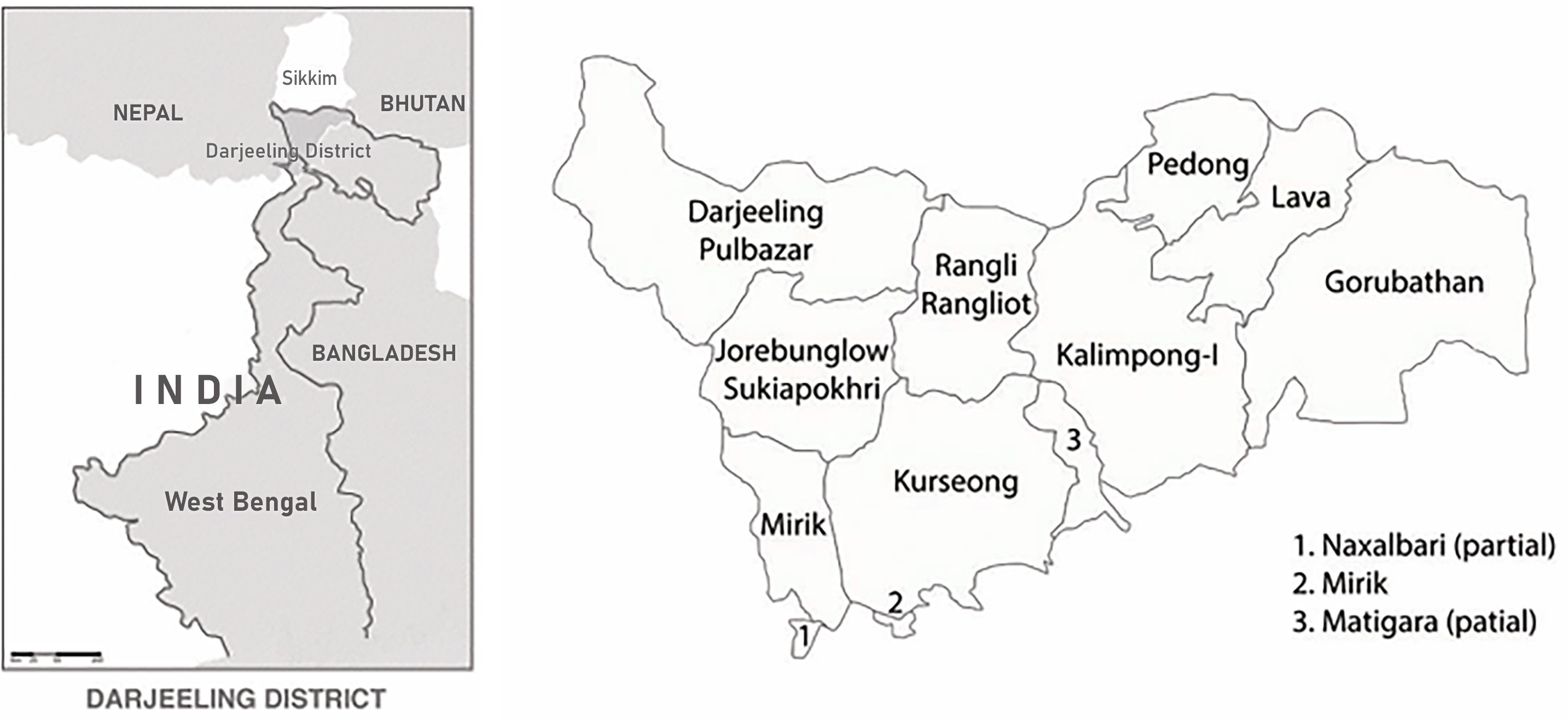
Figure: Darjeeling District and Gorkhaland Territorial Administration in West Bengal
• In 1998, a tripartite agreement was reached between the Union Government, the GNLF, and the State Government. The agreement was based on three key provisions:
•
In consideration of national interest and in response to the Prime Minister’s appeal, the GNLF agreed to withdraw its demand for a separate state of Gorkhaland.
• To promote the social, educational, and cultural development of the people living in the hill regions of Darjeeling district, an autonomous body called the Darjeeling Gorkha Hill Council was established.
• The structure of the Council and the scope of its executive authority were clearly outlined, ensuring compliance with both Union and State laws.
• This led to a halt in the nearly 5-year-old conflict and restoration of peace. Currently, there is a proposal – and a debate – to include the region in the Sixth Schedule of the Constitution.
SIKKIM
• The state has made significant progress in development through decentralized planning while also upholding the constitutional mandate of maintaining harmony among various ethnic communities, primarily the Lepchas, Bhutiyas, and Nepalis. This balance has effectively prevented the rise of major conflicts.
• .
Strategies to Tackle Insurgency Andinitiatives to Tackle Militancy in North East
Key Strategies to Tackle Insurgency
Military operations must aim at creating a sense of security by preventing depredations by insurgents on the people, and force misguided elements to seek an honourable negotiated settlement.
• Changes in attitudes are mandatory to achieve the primary objective of winning over the hearts and minds of the people. Hence reorientation training for counter insurgency environment is mandatory both for political masters and the army.
• Tactical successes are necessary to retain initiative, to maintain morale and motivational levels of own troops and to force the insurgents to remain always on the run.
• Capacity Building: Security forces must develop consummate, calculative and deft, tactical, psychological and political sophistication to come up with correct answers to numerous unforeseen situations that can crop up in an insurgency environment.
• Overall aim of all counter-insurgency activities would be to expand their influence over people by attraction or coercion with a view to assert their credibility in the minds of masses and to gain initiative in the military field.
• Key Tactics must include: population control and denial, psychological operations, civic action programmes and search, ambush and raid missions to isolate and capture insurgents and destroy their camps.
• Avoid Excesses: Avoid excessive use of military force and excessive employment of road opening parties, convoy escorts and other security measures, particularly curfew restrictions.
Government Initiatives to Tackle Militancy in North East
• Conflict resolution in the North East has been pursued through various approaches, including:
•
The use of security forces and police interventions.
• Granting greater local autonomy through measures such as statehood, the provisions of the Sixth Schedule, Article 371C for Manipur, and tribe-specific agreements in Assam.
• Engaging in negotiations with insurgent groups.
• Implementing development initiatives, including special economic packages.
• Some have proved successful in the short-term. However, others had unintended, deleterious consequences as well. Thus, it would require a judicious mix of various approaches strengthened by the experience of successes and failures of the past.
• Although law and order is primarily a state subject, the Central Government supports state governments in controlling illegal and unlawful activities of insurgent groups in the North Eastern states through various measures.
• Counter-insurgency operations are conducted by Central Armed Police Forces, the Armed Forces, and state police.
• The Government of India assists states in strengthening, modernizing, and upgrading their police forces to combat insurgency.
• Since 1995, the Security Related Expenditure (SRE) Scheme has reimbursed state governments for security-related costs in all North Eastern states, except Mizoram and Sikkim.
• Insurgent organizations operating in the region are banned under the Unlawful Activities (Prevention) Act, 1967 (UAPA).
• Certain areas or states are designated as ‘Disturbed Areas’ under the Armed Forces (Special Powers) Act, 1958 (AFSPA).
• Additionally, the Central Government follows a policy of negotiations with insurgent groups that renounce violence, surrender their arms, and seek peaceful solutions within the framework of the Indian Constitution.
• As a result, several groups have entered into Suspension of Operations (SoO) agreements, while others have signed Memorandums of Settlement (MoS) and disbanded.
• To rehabilitate former insurgents, the Ministry of Home Affairs has implemented a Surrender-cum-Rehabilitation scheme aimed at disengaging misguided youth from insurgency.
• The scheme ensures that surrendered insurgents are discouraged from rejoining such activities by providing financial assistance of ₹4 lakh per individual, a monthly stipend, vocational training, and other support mechanisms.
• Prime Minister’s Development Initiative for North East Region (PM-DevINE) (2022-23 to 2025-26).
• PM-DevINE was announced in the Union Budget 2022-23, to address development gaps in the North Eastern Region (NER).
• It is a Central Sector Scheme with 100% central funding and implementation by the Ministry of Development of the North Eastern Region (DoNER) through North Eastern Council or Central Ministries/ agencies.
• It will create infrastructure, support industries, social development projects and create livelihood activities for youth and women.
• Objectives of PM-DevINE
Develop infrastructure to create new economic opportunities.
Promote social development projects based on local needs.
Provide livelihood activities for youth and women.
To ensure that there is no duplication of project support with any of the other schemes of MDoNER.
• In 2023, Indian Army with Oil India,launched Super 30 Initiative to mentor local youth aspiring to become officer in Armed Forces to increase the representation of Youth of Assam in the armed forces.
• In 2022, Indian Army launched Adventure Tourism activities through trans-theatre adventure activity along the Line of Actual Control (LAC) in Arunachal Pradesh, which included– Mountaineering Expeditions, White Water Rafting, Mountain Biking and Trekking etc.
• Helicopter subsidy scheme: to improve connectivity to remote areas. And provide affordable passenger transport during natural calamities and medical evacuation.
• National Register of Citizens (NRC) for Indian citizens in Assam was first created in 1951. Manipur and Tripura were also granted permission to create their own NRCs, but it never materialised. The reason behind the move was to identify Indian citizens in Assam amid “unabated” migration from East Pakistan (now Bangladesh).
• The National Register of Citizens (NRC) is meant to be a register of all Indian citizens whose creation was mandated by the 2003 amendment of the Citizenship Act, 1955. Its purpose is to document all the legal citizens of India so that the illegal immigrants can be identified and deported. It has been implemented for the state of Assam starting in 2013–2014.
• In 2019, the Government passed another amendment which promised an accelerated naturalisation
process for immigrants of non-Muslim religious minority communities due to persecution, from Afghanistan,
• Bangladesh and Pakistan who are Hindus, Sikhs, Buddhists, Jains,
• Parsis or Christians, and arrived in India before the end of December 2014. However, government later put its implementation on hold.
Institutional initiatives for the development of the North East Region have been launched:
The North Eastern Council (NEC) was formed in 1972 through the North Eastern Council Act, 1971, to promote balanced development in the North Eastern Region and facilitate inter-state coordination.
The Department for Development of the North East Region was established in September 2001 and was upgraded to a full-fledged Ministry in 2004. This Ministry serves as the central coordinating body of the Union Government for matters related to the
socio-economic development of the eight North Eastern states.
All Union Ministries and Departments are required to allocate at least 10% of their budgets for development programs in the North Eastern Region. Any unutilized funds are transferred to a dedicated Reserve Fund, known as the Non-Lapsable Central Pool of Resources.
Civic Action Programme: A range of welfare and developmental initiatives are carried out, including medical camps, sanitation drives, sports events, distribution of study materials to children, minor repairs of school buildings, roads, and bridges, as well as the operation of adult education centers
CONTEMPORARY ISSUES
Present situation of North-east Insurgency
• The security situation in certain North Eastern states has remained challenging for an extended period due to the presence of multiple militant groups with varied demands.
• Assam, Manipur, and Nagaland have consistently been areas of concern.
• The Lower Assam and Karbi Anglong regions are vulnerable to ethnic and communal tensions, while distrust between tribal and non-tribal communities in Bodo-dominated areas has been increasing.
Garo insurgency in Meghalaya continues.
• Tensions between the Kukis, Meiteis, and Nagas continue to persist.
• Mizoram and Tripura have made significant progress in curbing insurgency and have remained largely peaceful for an extended period.
• The government has entered into ceasefire agreements and Suspension of Operations (SoO) pacts with most insurgent groups in the region.
• A consistent policy of dialogue and negotiation is followed with any group willing to renounce violence and engage in peace talks within India's constitutional framework.
•
Overall, the security situation in most North Eastern states has significantly improved in recent years.
Reasons that sustain insurgency in north east India
• Independent Identity: There was a historical absence of pre-British and British colonial polices to integrate the hill areas of then Assam to the rest of British India.
• A sense of isolation, deprivation, and exploitation has emerged due to the region's geographical distance from New Delhi and limited representation in the Lok Sabha. This has led to dissatisfaction with the dialogue process, making the path of armed struggle appear more appealing.
Resentment against military measures through Armed Forces Special Powers Act etc.
• Demographic Changes: The migration of refugees from former East Pakistan (now Bangladesh) into Assam significantly altered the region’s demographic composition. Additionally, the recent military rule and persecution of minorities in Myanmar have led to an influx of migrants from the country.
• Lack of Economic Development: Various factors have hindered the development of the North East, leading to limited employment opportunities. As a result, many young people are drawn to insurgent groups as a means of earning quick money.
• Internal Displacement: Internal displacement remains a
persistent issue. Between the 1990s and early 2011, over 800,000 people were forced to leave their homes due to incidents of inter-ethnic violence in western Assam, the Assam-Meghalaya border region, and Tripura.
• External Support: There is growing evidence of China renewing its covert operations in the region. In the 1960s, Pakistan’s Special Services Group (SSG) provided training to Naga guerrillas through its bases in East Pakistan (now Bangladesh). Additionally, some insurgent groups continue to operate from Myanmar.
AFSPA (Armed Forces Special Power Act), 1958
• It confers certain special powers on members of the Armed Forces (military forces, air forces operating on the ground as land forces and any other armed forces of the Union (CRPF, BSF, ITBP etc) for carrying out proactive operations against the insurgents in a highly hostile
environment.
• In the northeast, AFSPA is in force in Assam, Nagaland, Manipur (excluding the Imphal Municipal Council Area), and parts of Arunachal Pradesh like Changlang, Longding and Tirap districts. AFSPA now applicable fully only in 31 districts of 4 Northeast states and partially in 12 districts. However, the AFSPA is not applicable to the Ladakh region of Jammu and Kashmir as Ladakh was not notified disturbed ever under the law.
They have the authority to prohibit a gathering of
five or more persons in an area.
• Brief History:
• In the aftermath of the serious disturbances following Partition, the prolonged and extensive deployment of the Armed Forces became unavoidable. It was soon recognized that the existing provisions of the CrPC (Sections 130 and 131), which allowed the officer in charge of an Armed Forces detachment to use force and make arrests, were inadequate for controlling the situation. Consequently, special powers were granted to the Armed Forces through legislations such as the Bengal Disturbed Areas (Special Powers of the Armed Forces) Ordinance, 1947, and the East Punjab Disturbed Areas (Special Powers of the Armed Forces) Ordinance, 1947.
• These laws authorized even non-commissioned officers to use force, including lethal measures, conduct searches without a warrant, rescue individuals unlawfully detained, and provided them immunity from prosecution for actions taken under these provisions.
• Later in 1958, the law was enacted in response to the violent activities of Naga rebels seeking secession from India. AFSPA initially covered only the state of Assam, but its scope was later extended to other areas facing armed conflict or insurgency, such as Jammu and Kashmir, Manipur, and parts of the Northeast.
•
Provisions of AFSPA:
• Under Section 3, the Central Government, the State Governor, or the Union Territory Administrator has the authority to declare an entire state or a specific part of it as a ‘Disturbed Area.’
An area may be classified as disturbed due to conflicts or disputes among different religious, racial, linguistic, or regional groups, as well as
among castes or communities.
• Section 4 grants the Army the power to conduct searches and make arrests without warrants, use force—including lethal measures—destroy arms and ammunition stockpiles, fortifications, shelters, and hideouts, and stop, search, and seize any vehicle.
Power to use force, including opening fire, even to the extent of causing death if prohibitory orders banning assembly of five or more persons or carrying arms and weapons etc are in force in the disturbed area;
Authority to demolish structures utilized as hideouts, training camps, or bases for launching or planning attacks.
Authority to arrest individuals without a warrant and use force as necessary.
Authority to enter and search premises without a warrant to apprehend suspects, recover hostages, seize arms and ammunition, and retrieve stolen property.
• Section 5 of AFSPA requires that persons arrested by the Armed Forces be handed over to the nearest Police Station “with the least possible delay” along with a report of “circumstances occasioning the arrest”.
• Section 6 offers protection of persons acting in good faith in their official capacity. The prosecution is permitted only after the sanction of the Central Government.
Significance of AFSPA
• Effective: Armed forces operating in such an environment require certain special powers and protection in the form of an enabling law.
• AFSPA is absolutely essential to combat insurgency in the country and protect the borders.
• Concerns of AFSPA
• Critique of Key Provisions:
• Section 4:
No “Due Process of Law” which is synonymous with “Procedure Established by Law,” as per Maneka Gandhi v. Union of India, i.e. a legal method must be fair, just, and reasonable rather than capricious and arbitrary; and it must comply with Article 21.
The army is accused of acting in a highly
extrajudicial and inappropriate manner in the regions designated as disturbed as a result of this incredibly harsh clause. It provides absolute powers without accountability under Section 4.
This may lead to various atrocities and human rights violations by security agencies. The recently in 2021, there was a killing of 14 civilians by Indian security forces in Nagaland. In the Hyderpora case in Jammu and Kashmir, three persons were killed and forces didn’t even return bodies.
• Section 5: There is no specification of what the minimum amount of delay possible is in the act.
• Section 6:
The victims of violations committed by the military services are left with no recourse under this clause.
Also, if any member of the armed forces is ever tried, they will be tried in martial tribunals, whose rulings are often not published or made public.
As the military forces are excluded from the National Human Rights Commission’s (NHRC) jurisdiction under Section 19(b) of the Protection of Human Rights Act 2005, and even if issues are enquired, only after requesting a report from the central government. However, in nearly three decades that the law has been in force in Jammu and Kashmir, there has not been a single prosecution of armed forces personnel granted by the central government.
Judicial View:
On 8 July 2016, in a landmark ruling, the Supreme Court of India ended the immunity of the armed forces from prosecution under AFSPA, saying, in
an 85-page judgement, “It does not matter whether
the victim was a common person or a militant or a terrorist, nor does it matter whether the aggressor was a common person or the state. The law is the same for both and is equally applicable to both ... This is the requirement of a democracy and the requirement of preservation of the rule of law
and the preservation of individual liberties.”
However, the Supreme Court of India has held that the Act is constitutional. Thus, it will be for the Government to decide whether or not to repeal the Act.
• In 2017, a Supreme Court bench ordered CBI to conclude investigations into the “fake encounters or use of excessive or retaliatory force” by the end of 2017. That was also the deadline for filing cases.
• It is worth noting that CBI has undertaken to investigate 97 instances of extrajudicial killings between 2000 and 2011, a vastly lower number from what was included in the original PIL; and only four instances, by CBI’s own admission, for which it claims readiness to file charges.
• Human Rights View:
• National Human Rights Commission (NHRC) is of the view that the AFSPA should be repealed. NHRC viewed custodial deaths or extra-judicial killings “very seriously”, adding that all such cases must be reported or it may take suo moto cognisance. Also, in
a civilised society like India, there is no room for fake encounters.
• Human rights activists state AFSPA gives blanket protection to the Army to kill with impunity.
• Human Rights Watch appealed to the Indian government to immediately repeal the abusive Armed Forces Special Powers Act.
• Terming the AFSPA as a “draconian law”, renowned human rights activist Irom Chanu Sharmila of Manipur had fought for 16 long years till mid-2016, demanding its repeal.
• UN Human Rights Report said: “The Armed Forces (Jammu and Kashmir) Special Powers Act 1990 (AFSPA) remains a key obstacle to accountability.”
• Critical View: Critics say the undemocratic act has failed to contain terrorism and restore normalcy in disturbed areas, as the number of armed groups has gone up after the act was established.
• There is a public interest litigation, or PIL in the Supreme Court, by the Extra Judicial Execution Victim Families Association, Manipur, and the Imphal-based Human Rights Alert (HRA), a watchdog. The PIL alleged 1528 extrajudicial killings between 1980 and 2011. The allegations were against the Indian Army, its adjunct Assam Rifles, several central paramilitary forces, and the Manipur Police (though state police has no immunity under AFSPA).
• Santosh Hegde Commission appointed by the Supreme Court to look into the above allegations stated that seven killings in first six separate instances out of 1528 incidents in Manipur were the consequence of fake encounters.
• The Justice Jeevan Reddy Committee was set up in 2005 to review AFSPA and make recommendations. It recommended that AFSPA should be repealed and the Unlawful Activities Protection Act strengthened to fight militancy.
Recommendations
• Bolster Accountability Systems: To guarantee that the military is held accountable for any human rights abuses, effective accountability procedures need to be created. This may entail creating an impartial commission to look into claims of human rights breaches.
• Increased Openness: The AFSPA should be implemented transparently, with frequent reporting and implementation monitoring. This can entail creating a system for gathering complaints from locals and providing reports on the code’s implementation.
• Consultation With Communities: Before the AFSPA is implemented in communities, civil society groups and communities should be consulted. To guarantee this, there may be public hearings and debates.
• Review of the Law: The AFSPA’s provisions should
be examined to see if they comply with global human rights norms. This might entail reviewing the clauses exempting members of the armed services from prosecution and eliminating clauses that are not essential to upholding the peace.
• Training for the NCO’s and JCO’s: More training is required for members of the armed forces in the areas of human rights and the use of force. This could entail instruction on the fundamentals of international human rights legislation and how to employ non- lethal force when it is essential to use force.
Recent developments in AFSPA
Recently, The Union Home Ministry has considerably reduced the “disturbed areas” under the Armed Forces (Special) Powers Act (AFSPA) in the North East.
• AFSPA remains in force in parts of Assam, Manipur, Nagaland, Arunachal Pradesh and Jammu & Kashmir.
• Over the last two decades, various parts of the Northeast have seen a reduction in insurgencies, some of them up to 60 years old.
• It is a result of the improved security situation and fast- tracked development due to the consistent efforts.
• A number of major groups were already in talks with the Indian government, and these talks received traction during the current regime.
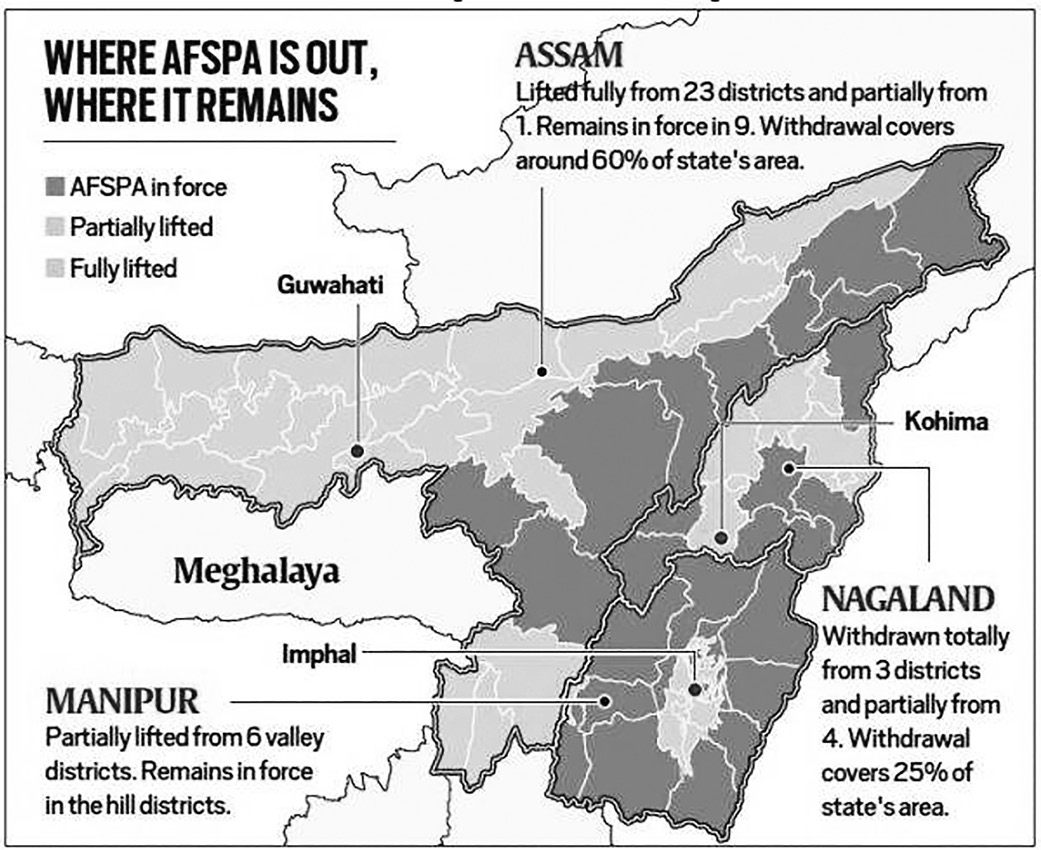
Figure: Status of AFSPA
Significance of the decision
• The Northeast has lived under the shadow of AFSPA for nearly 60 years, creating a feeling of alienation from the rest of the country.
• The move is expected to help de-militarise the region.
• It will lift restrictions of movements through checkpoints and frisking of residents.
CONCLUSION
• Human rights violations perpetrated in the name of security cannot be condoned, thus the government should adopt a scientific and humane strategy to address the socioeconomic issues in the troubled areas rather than enacting the AFSPA.
• On one hand, due to the ongoing instability in the North- East, particularly in Jammu and Kashmir, the prolonged use of AFSPA is unavoidable. Without it, the peace and security of these States will be seriously threatened as they serve as a focal point for terrorist and anti-national activity.
• On the other hand, in order for us to go forward as a successful, united, and stable Indian society, it is equally crucial that the relevant authorities apply the Act with restraint and without provoking the public.
• There is a need for initiating a meaningful dialogue with all the stakeholders as far as the removalof AFSPA is concerned. Only after taking the Army and the Central Armed Police Forces on board, a gradual removal of AFSPA may be considered where condition is peaceful and stable for a sufficient period of time.
Rohingya Crisis
• Since 2017, more than 7,00,000 Rohingya refugees have
fled violence and persecution in Rakhine State, Myanmar.
• The Home Ministry has labelled them “illegal immigrants” and pushed for their deportation in an affidavit submitted to the Supreme Court.
Security Threat
• Security agency reports suggest that Rohingya individuals are involved in fund mobilization through hawala networks, human trafficking, and acquiring counterfeit Indian identity documents.
• Intelligence reports have indicated a symbolic association between ISI and ISIS with the Rohingya, which could incite communal unrest and threaten stability in the Northeast region.
Human Rights Organisation’s Call to Not Deport
• Human Rights Watch said that “deporting these men will place them at severe risk of torture and abuse”.
• Amnesty International said their deportation “violates customary international law”.
Constitutional and legal status of Refugees in India
• Article 19 of the Indian Constitution is only available to the citizens of India- right to reside and settle in any part of India and is not available to the Rohingyas.
• Rohingya cannot claim the residence on legal grounds, as India is neither a signatory to the 1951 Convention relating to the Status of Refugees nor the 1967 Protocol Relating to Status of Refugees and thus provision of non-refoulement does not extend to illegal migrants.
• Moreover, Foreigners Act of 1946, statutorily empowers
the Central government to deport a person who is an illegal immigrant.
Inner Line Permit
• Inner Line Permit (ILP) is an official travel document issued by the Government of India to allow inward travel of an Indian citizen into a protected area for a limited period.
• It was originally created by the British to safeguard their commercial interests in area tea, oil and elephant trade.
• ILP is used today to protect tribal cultures in northeastern India in Arunachal Pradesh, Nagaland, Manipur and Mizoram.
• Area under ILP is notified by the Union Government and ILP is issued by State governments under the Bengal Eastern Frontier Regulation, 1873.
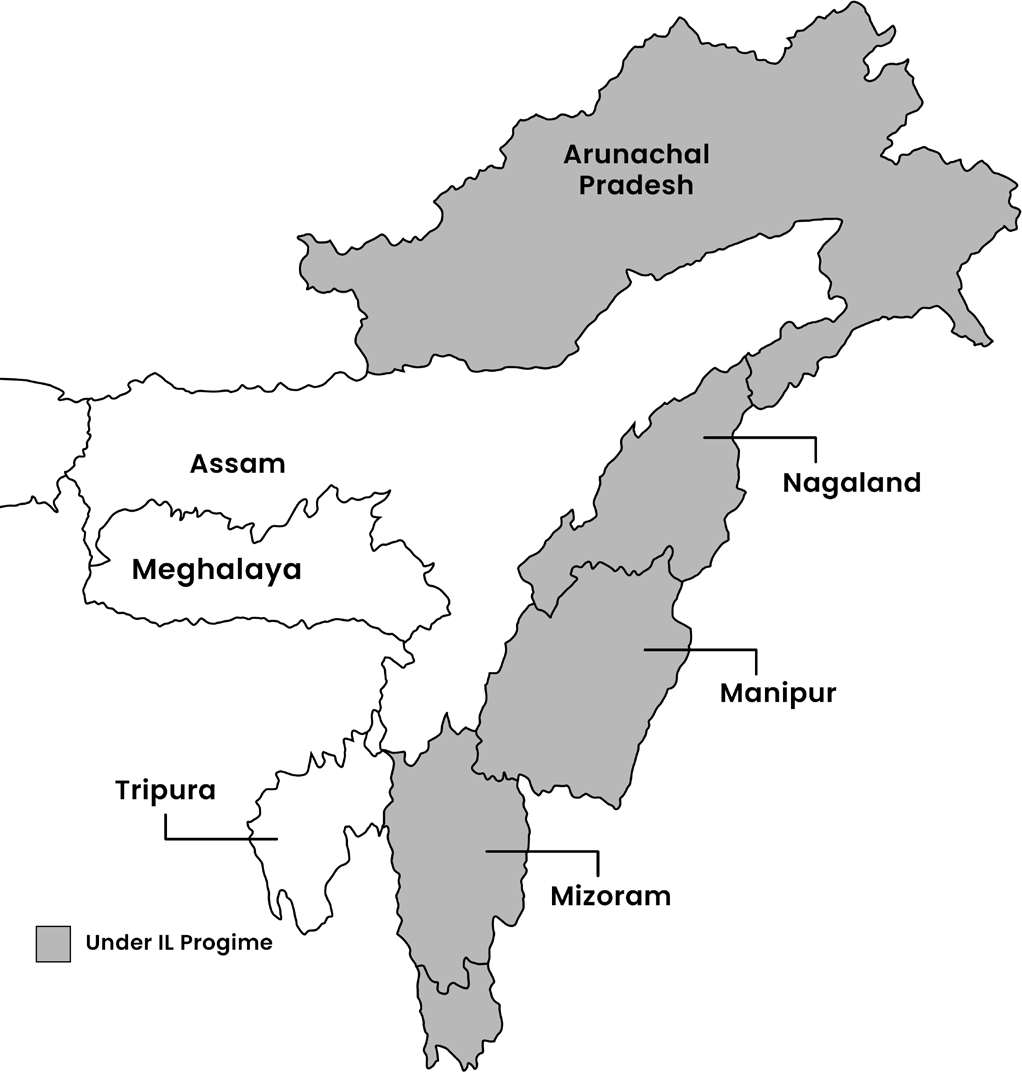
Figure: Areas under Inner Line Permit System (ILPS)
Second Administrative Reforms Commission Recommendations on North East
Second Administrative Reforms Commission Recommendations on North East (5th and 7th Report)
Armed Forces (Special Powers) Act, 1958 (AFSPA):
a. AFSPA should be repealed, and to facilitate the deployment of Union Armed Forces in the North- Eastern states, the Unlawful Activities (Prevention) Act, 1967 should be amended. A new Chapter VI A, as recommended by the Committee to Review the Armed Forces (Special Powers) Act, 1958, should be introduced. This chapter would be applicable exclusively to the North-Eastern states.
Strengthening Administrative Capacity in the North East
Local and technical officers from the region should be given opportunities to serve in larger states and
enhance their professional skills through training programs both within the country and abroad.
The incentives provided to officers serving in the North East should be increased.
The North Eastern Council (NEC) should establish regional training institutions for various administrative sectors, including technical services.
NEC may engage in discussions with state governments to assess the legal feasibility of creating regional cadres for senior roles in technical and specialized departments.
NEC, in collaboration with the Ministry of Home Affairs (MHA) and state governments, should develop an Administrative Reforms agenda for the region. Its implementation should be systematically monitored, with additional funding and special economic packages provided as incentives for successful execution.
• Police Reforms in the North East
The North Eastern Police Academy (NEPA) requires significant improvements in infrastructure and staffing to enhance its capability in handling insurgency. Financial and other incentives should be provided, especially to personnel with a proven track record in counter-insurgency operations.
A scheme should be implemented to facilitate and encourage the deputation of police officers from other regions to serve in the North Eastern states.
• Sixth Schedule Councils
• To address concerns regarding less favorable treatment of ‘Scheduled Areas,’ an appropriate amendment to the Sixth Schedule should be made, empowering Autonomous Councils to enhance the functioning of State Finance Commissions and State Election Commissions under Articles 243I and 243K of the Indian Constitution.
• The existing framework of interaction between the Union, State, and Councils should be revised to establish an effective mechanism for resolving conflicts between Autonomous Councils and State Governments.
• Consultations should be conducted to determine specific powers under the Sixth Schedule that Governors may exercise independently, without being bound by the ‘aid and advice’ of the Council of Ministers, as per Article 163(1) of the Constitution.
• The Sixth Schedule should be amended to allow the Union Government to appoint a unified commission for all autonomous districts to assess their performance and provide recommendations.
• The Government of Assam should allocate funds to the ‘original’ Autonomous Councils to ensure parity with the Bodoland Territorial Council.
Village Level Self-governance in the Tribal North East
Autonomous Councils should enact appropriate legislation to establish village-level bodies with clearly defined powers and a transparent resource allocation system.
The release of grants for such legislation and its implementation should make Autonomous Councils eligible for additional funding.
The State Finance Commission should ensure that Councils maintain minimum service standards and have the capacity to generate local revenue.
Nagaland’s model of decentralized village self- governance, which integrates elected representatives with traditional power structures, should be formally recognized by the Ministry of Rural Development for development and poverty alleviation programs.
Meghalaya should introduce elected village committees in the Garo Hills to facilitate the implementation of the National Rural Employment Guarantee Act (NREGA).
Customary laws should be codified to streamline justice delivery, either under the provisions of the Sixth Schedule or other relevant legislation.
Tribe Specific Councils in Assam and other Issues
Government of Assam may apportion functions between the tribe specific Councils/village Councils and the Panchayati Raj Institutions to assign Tribal schemes and area development schemes respectively.
State Governments may initiate a system of meeting at least the establishment costs of the Councils from sources outside the Tribal Sub Plan, later added in next Finance Commission.
State Governments may take steps to identify innovative initiatives which could be entrusted to the Tribe Specific Councils without affecting area development concerns.
Suitable guidelines may be prepared for preparation of District and sub-District plans in the relevant areas through joint efforts of the Tribe Specific Councils and the Panchayati Raj Institutions.
Consensus be built in Manipur for revival of the Hill Districts Councils, till then legislation to introduce elected village level bodies in the hill areas of that State.
NEC and DONER
a. The NEC Act, 1971 be amended to restore the original ‘conflict resolution provision’ requiring the Council to ‘discuss issues of mutual interest to two or more states and to advise the Central Government thereon’.
• To enable the Council for maintenance of regional security, MHA should keep the strengthened Council Secretariat in its ‘security coordination loop’.
• The Planning Commission/NITI Aayog needs to lay down a framework for preparation of Integrated
Regional Plans, focusing on intra-regional, inter- State priorities to avoid conflicts and promoting regional integration.
• Ensure the associating NEC in the State plan formulation exercise.
• ‘Non-Lapsable Central Pool of Resources’ (NLCPR) should be entrusted to the NEC which will scrutinize funding proposals.
• A 10-Year Regional Perspective Plan for development of human resources and infrastructure, reviewed by the Prime Minister regularly with the Chief Ministers for speedy follow-up.
• The Ministry for Development of North Eastern Region (DONER) may be abolished and MHA may be acting as the nodal Ministry.
• National Register of Indian Citizens
a. Identity cards be developed to achieve convergence for identification of a person and lends itself to be used as a Multi-Purpose National Individual Identity Card (MNIC), particularly in border areas.
• Capacity Building in the North East
• High Level Commission Report – ‘Transforming the North East’ - and the report of the NEC Task Force on Development Initiatives be implemented to fill the gaps in infrastructure in the region.
• A Comprehensive Framework be formulated to promote the region as a Preferred Investment Destination.
• A Transport Development Fund to finance con struction of important road corridors should be set up.
• Comprehensive implementation of a ‘Look East’/ Act East policy for the long-term growth in active association with the State Governments.
• Rail connectivity should be improved in the region on a priority basis.
• Financial Inclusion: Bank branches and other credit
disbursement outlets through further relaxation and incentivisation in the policies of the Reserve Bank and other financial institutions.
• Centres of Excellence for professional and higher education particularly, technical education, such as ITIs, for skilled work force and generate entrepreneurial capacity as well as employment.
• It is necessary to evolve a credible system of Maintenance of Land Records for the North East.
CONCLUSION
There is only one option to counter insurgency and that is, to find a political solution. Any talk of exercising military or hard option mercilessly will only reveal the blinkered strategic perceptions of policy decision makers and must be avoided at all costs. Military pressure should invariably be applied only in a deft and calculative manner, deliberately avoiding excesses all the time.
The Principle of Minimum Force needs to be ensured, particularly during the initial phases of insurgency to encourage the insurgents to seek an honourable political settlement. For reaching desirable political settlement, suitable political initiatives and offensives need to be launched at critical times.
Basic aim of military in counter- insurgency operations
is to win over the hearts and minds of local population.
There is a need for greater cultural dialogue and connectivity, for better integration of the region with the mainland. Stringent law and fast criminal justice system in insurgent’s attack cases is a must. Greater coordination between central and state forces is required for better tactical response.
Socio-economic development is needed which is holistic and inclusive. Decentralization with alertness, improving administrative efficiency, pro-people governance and coping up with regional aspirations is essential to achieve long-term peace and sustainable development in the region