Whatsapp 88106-52225 For Details
Get Free IAS Booklet
Get Free IAS Booklet
INTRODUCTION
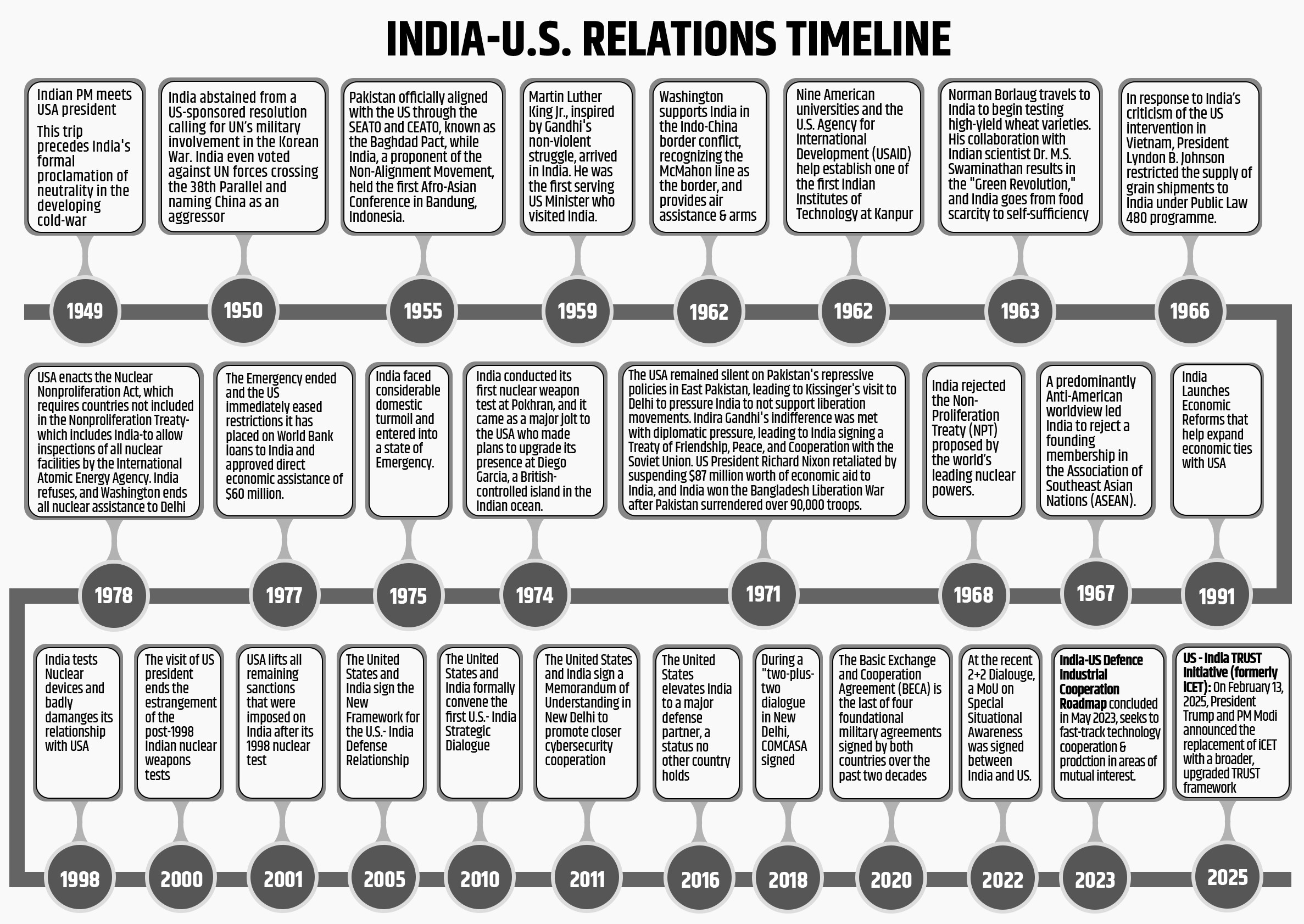
Eliminating the hesitations of history, India and the United States have built a strong and strategic bilateral relationship and continues to contribute to the stability and prosperity of the world. The first Prime Minister of India Jawaharlal Nehru linked American Imperialism to that of British. He propounded and propagated the Non-Alignment Principle whereby India refused to join either the capitalistic US or the communist Soviet Union.
India’s socialistic economic principles and deep skepticism to the US hegemony resulted in its predilections towards USSR much to the ire of the West. As the ideological Cold War ended after a myriad of international convergences and divergences, India was forced to look West given the paradigm shift in the geopolitics of the world and in Francis Fukuyama’s words “End of History”. Today both India and USA are among the most vibrant foreign cohorts and strategic partners.

INDIA-USA: HISTORY OF RELATIONS
The birth of Indian Republic was accompanied by Pakistan’s occupation of Kashmir. Nehru’s efforts to garner support from the international community was fruitless. India declined the American offer to accept a seat at the United Nations Security Council and rather pushed for the membership of the People’s Republic of China which it has immediately recognized as a sovereign nation.
WHY INDIA MATTERS TO THE USA?
India is a crucial partner for the United States, strategically positioned between two of the most critical regions for U.S. national interests. The arc of instability stretches from North Africa, through the Middle East, reaching Pakistan and Afghanistan, and ultimately ending at India’s western border.
India's location in the Indian Ocean places it at the center of vital global trade routes. As Asian economies rise, the Indian Ocean has become a key hub for global communication, with around 50% of world container traffic and up to 70% of global oil shipments passing through its waters.
India's growing national capabilities strengthen its ability to pursue its interests, which aligns with U.S. goals. India boasts the world’s third-largest army, fourth-largest air force, and fifth-largest navy. All three branches are modernizing, with the Air Force and Navy possessing world-class technical resources, and the Army seeking further upgrades.
India is an important U.S. partner in global efforts to curb the spread of weapons of mass destruction. Its broad diplomatic network, particularly in the Middle East, its aspirations for permanent membership in the U.N. Security Council, and its involvement in international bodies like the International Atomic Energy Agency make it a powerful voice in preventing proliferation.
India’s stance against radicalism and terrorism aligns closely with the U.S., reinforcing a shared commitment to security.
India’s English-speaking, Western-leaning elite and middle class naturally connect with their U.S. counterparts in business and academia. The U.S. higher education system, with over 100,000 Indian students, fosters collaboration and strengthens bilateral ties.
As India continues to modernize, it will invest trillions of dollars in infrastructure, transportation, energy, and defense, presenting a significant opportunity for U.S. firms to provide the expertise and technology needed for this transformation.
U.S.-India cooperation is vital in the global fight against climate change, and India is deeply committed to a world order based on multilateral cooperation and the development of international law.
India's culture and diplomacy have built goodwill across its extended neighborhood. It maintains positive relations with critical Middle Eastern, Central Asian, Southeast Asian nations, and important middle powers like Brazil, South Africa, and Japan—all strategically significant to the United States. India's soft power is evident in the growing influence of its civil society globally.
Despite challenges such as poverty, ethnic and religious diversity, and both internal and external conflicts, India’s democracy continues to thrive, demonstrating resilience and stability.
WHY INDIA MATTERS TO THE USA?
India is a crucial partner for the United States, strategically positioned between two of the most critical regions for U.S. national interests. The arc of instability stretches from North Africa, through the Middle East, reaching Pakistan and Afghanistan, and ultimately ending at India’s western border.
India's location in the Indian Ocean places it at the center of vital global trade routes. As Asian economies rise, the Indian Ocean has become a key hub for global communication, with around 50% of world container traffic and up to 70% of global oil shipments passing through its waters.
India's growing national capabilities strengthen its ability to pursue its interests, which aligns with U.S. goals. India boasts the world’s third-largest army, fourth-largest air force, and fifth-largest navy. All three branches are modernizing, with the Air Force and Navy possessing world-class technical resources, and the Army seeking further upgrades.
India is an important U.S. partner in global efforts to curb the spread of weapons of mass destruction. Its broad diplomatic network, particularly in the Middle East, its aspirations for permanent membership in the U.N. Security Council, and its involvement in international bodies like the International Atomic Energy Agency make it a powerful voice in preventing proliferation.
India’s stance against radicalism and terrorism aligns closely with the U.S., reinforcing a shared commitment to security.
India’s English-speaking, Western-leaning elite and middle class naturally connect with their U.S. counterparts in business and academia. The U.S. higher education system, with over 100,000 Indian students, fosters collaboration and strengthens bilateral ties.
As India continues to modernize, it will invest trillions of dollars in infrastructure, transportation, energy, and defense, presenting a significant opportunity for U.S. firms to provide the expertise and technology needed for this transformation.
U.S.-India cooperation is vital in the global fight against climate change, and India is deeply committed to a world order based on multilateral cooperation and the development of international law.
India's culture and diplomacy have built goodwill across its extended neighborhood. It maintains positive relations with critical Middle Eastern, Central Asian, Southeast Asian nations, and important middle powers like Brazil, South Africa, and Japan—all strategically significant to the United States. India's soft power is evident in the growing influence of its civil society globally.
Despite challenges such as poverty, ethnic and religious diversity, and both internal and external conflicts, India’s democracy continues to thrive, demonstrating resilience and stability
WHY THE UNITED STATES MATTERS TO INDIA?
America continues to play a key role in stabilizing Asia through its military presence, diplomatic influence, and ongoing commitments to the region.
Throughout the 20th century, the U.S. undertook a multigenerational effort to prevent the rise of any hostile hegemon on the Eurasian landmass—a role the U.S. still fulfills today with support from its Asian allies.
China has periodically disregarded global non-proliferation norms, a trend the U.S. has worked diligently to curb. While no single nation can prevent future Chinese proliferation, only a U.S.-led international effort stands a chance of success.
India will be better positioned to protect its national interests in Pakistan and Afghanistan through close coordination with the United States.
The U.S. remains essential to India’s economic success. India’s economy is primarily driven by domestic consumption rather than relying heavily on exports.
The U.S. is also one of the leading sources of foreign direct investment in India, bringing vital expertise, capital, and technology to India’s dynamic market.
The United States maintains a long-term commitment to securing freedom of navigation on the high seas, a crucial factor for India as a major energy importer.
Washington wields unmatched power and influence within global governance institutions.
As India seeks a greater role in the U.N. Security Council and other international financial bodies, U.S. support will be crucial for reforms that align with New Delhi’s national interests.
The United States holds a technological edge in various sectors, including commercial, aerospace, and defense technologies, which benefits India’s national interests, as well as Indian businesses and consumers.
MODERN INDIA-US RELATIONS
Today, the India-US bilateral cooperation is broad-based and multi-sectoral, covering trade and investment, defence and security, education, science and technology, cyber security, high-technology, civil nuclear energy, space technology and applications, clean energy, environment, agriculture and health.
India-US bilateral relations have developed into a “global strategic partnership”, based on shared democratic values and increasing convergence of interests on bilateral, regional and global issues.
Reasons for the qualitative transformation in India-US relations:
An evolving geo-political convergence and growing discomfort in the US about China.
The rising stature of India on the global stage.
MAJOR AREAS OF COOPERATION
• Economic Cooperation
• Defense Cooperation
• Energy Cooperation
• International Cooperation
• Energy and Climate Change
• Counter-terrorism and internal security
• Strategic Cooperation
India-Us Economic Relations
Bilateral trade crossed USD140 billion in FY2025–26 as against of total trade of US$ 132.2 billion in FY2024-25.
While Indian exports grew by just 0.93% (down sharply from 11.6% growth in FY2024–25) to about USD87.3 billion (INR7.7 lakh crore), imports jumped by 17.2% to USD53.5 billion (INR4.7 lakh crore).
US ranks 1st as an export destination and 4th as an import partner for India.
US is the 3rd largest investor in India with cumulative foreign direct investment (FDI) inflows of US$ 77.27 billion from April 2000-September 2025.
Imports from US stood at US$ 35.40 billion in FY26 (till November 2025).
India imported 6,123 commodities from US in FY26 (till November 2025)
Major exports from India to the U.S. include petroleum, polished diamonds, pharmaceuticals, jewelry, light oils, frozen shrimp, and textiles, while major imports from the U.S. comprise petroleum, rough diamonds, liquefied natural gas, gold, coal, waste and scrap, and almonds.
India-Us Defence Cooperation
India-US defence cooperation is based on “New Framework for India-US Defence Cooperation”, which was renewed for ten years in 2015.
In order to improve strategic cooperation, defense industry collaboration, and regional security in the IndoPacific, India and the United States are scheduled to establish a new 10-year defense framework in 2025.
Defence cooperation is multifaceted and includes regular institutionalized bilateral dialogue, military exercises, and defence procurements.
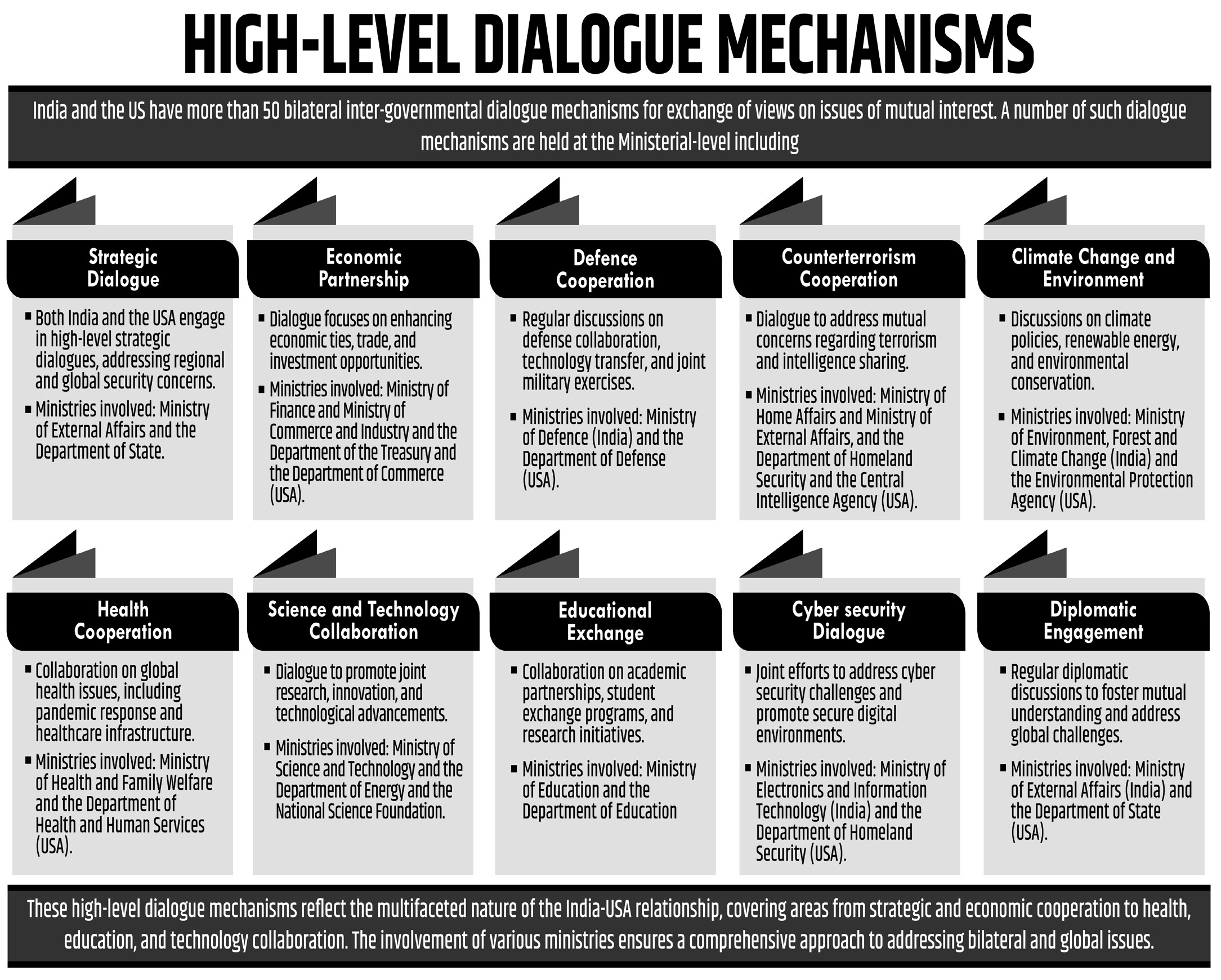
At the apex of dialogue mechanisms is the 2+2 Ministerial Dialogue co-chaired by the Minister of External Affairs and Minister of Defence and the U.S. Secretary of State and Secretary of Defence. This dialogue provides guidance on political, military and strategic issues. The fourth 2 + 2 Ministerial took place in April 2022 in Washington DC.
The Defence Policy Group (DPG) headed by Defence Secretary and Under Secretary of Defence (Policy) provides a platform for a comprehensive review of defense dialogues/mechanisms. The 17th DPG was held in Washington D.C. in May 2023. Defence procurements from USA are growing and amount to almost US$20 billion.
Major US-origin platforms in use include C-130J, C-17, Apache, Chinook, MH60R helicopters and P8I. Other bilateral dialogue mechanisms are the Defence Production and Procurement Group, Joint 5 Technology Group, bilateral Maritime Security Dialogue, Industrial Security Summit and the Defence Trade and Technology Initiative.
Important defence agreements which provide the framework for interaction and cooperation are: Logistics Exchange Memorandum of Agreement (2016); Communications Compatibility and Security Agreement (2018); Industrial Security Agreement (2019); and Basic Exchange and Cooperation Agreement (2020). and Memorandum of Intent for Defense Innovation Cooperation (2018).
The India-US Defence Industrial Cooperation Roadmap which concluded in May 2023, seeks to fast-track technology cooperation and co-production in areas of mutual interest. The India-US Defense Acceleration Ecosystem (INDUS X) – a network of universities, incubators, corporates, think tanks, and private investment stakeholders was launched in June 2023.
Important bilateral exercises include Yudh Abhyas (Army), Vajra Prahar (Special Forces), Malabar (Navy), Cope India (Air Force), and Tiger Triumph (tri-services). Red Flag, RIMPAC, CUTLASS Express, Sea Dragon, and Milan are some multilateral exercises in which the two countries participate.
India joined the multilateral Combined Maritime Force (CMF) based in Bahrain, as an Associate Partner in April 2022.
India as a major defence partner
India has been designated as a major defence partner of the United States. It puts India on a par with the closest allies and partners of the US.
India’s Major Defence Partner status has been made a part of the India Amendment in the National Defence Authorization Act (NDAA), 2017 of US.
Significance: The designation of this status is unique to India, as it is an non-NATO ally of US. It institutionalizes the progress made by US to facilitate defence trade and technology sharing with India to a level at par with its closest allies and partners. It will facilitate US to transfer of advanced defence technology to India. It will also strengthen institutional effectiveness of USIndia Defence Trade and Technology Initiative (DTII) and the durability of the India Rapid Reaction Cell in Pentagon.
Changes in US export law to benefit India
United States (US) has made changes in its export control laws that will benefit India by facilitating smoother transfer of technologies and arms.
These changes have been made in par with recognition of India’s status as a ‘Major Defence Partner’.
The new rule creates a presumption of approval for Indian firms seeking to import the Commerce Department-controlled military items, except weapons of mass destruction-related goods.
Henceforth, companies will not need a license at all after becoming a Validated End User (VEU).
Under it, India will be denied license’s only in the rarest circumstances.
DEFENCE SUPPLIES FROM UNITED STATES
During the Cold War, more than three-fourths of India’s defence equipment was of Soviet origin. This gradually began to change, and in recent years, the US and Israel emerged as major suppliers.
From a total of less than $400 million of defence acquisitions during 1947-2005, the US has signed defence contracts of over $18 billion.
Defence and security ties between India and the US have been on an upswing in the last six years. The bilateral defence trade touched USD 18 billion mark in 2019, reflecting growing defence cooperation between the two sides.
The Indian Air Force went in for C-130J Hercules and the C-17 Globemaster aircraft, along with Apache attack helicopters and Chinook heavy lift helicopters.
The Indian Navy acquired a troop carrier ship and the P-8I long-range maritime reconnaissance aircraft.
During President Donald Trump’s visit, India and the US finalised defence deals under which 30 military helicopters will be procured from two American defence majors for the Indian armed forces.
Under a USD 2.6 billion deal, India will buy 24 MH60 Romeo helicopters from Lockheed Martin for the Indian Navy. Another contract to acquire six AH-
64E Apache helicopters for USD 800 million from aerospace giant Boeing has also been sealed.
The GE F404-IN20 engines for the HAL Tejas Light Combat Aircraft (LCA) Mk 1 and Mk 1A. However, the induction program of LCA Tejas in Indian Airforce faces significant challenges due to delays in GE F404 engine deliveries.
INDUSTRIAL SECURITY AGREEMENT (ISA)
• The ISA was signed in December 2019 to facilitate the exchange of classified information between the defence industries of both the countries.
• The Industrial Security Agreement (ISA) summit between India and the United States was held in 2021 at New Delhi. The summit was organised to develop protocol for the exchange of classified information between the defence industries of both the nations.
• Till now, sharing of information was limited to the Indian government and the defence public sector undertakings.
The ISA will give a boost to the Indian private sector looking for a greater role in defence manufacturing
INDIA-US: COOPERATION IN ENERGY AND CLIMATE CHANGE
• The bilateral Strategic Energy Partnership between the two nations was established in April 2018 and is strong, with growing diversification across conventional and renewable energy sources.
• The US has emerged as India’s major energy partner.
• In 2018, a task force on natural gas between India and the US was established.
• In 2017 and 2018, respectively, India began importing oil and LNG from the United States.
• It is now expected that US imports of LNG and petroleum equal US$ 6.7 billion.
• The Indian Oil Corporation finalized term contracts for the import of US-origin crude oil in February 2019. These are the first term agreements for the import of crude oil grades with US origin that any Indian PSU has completed.
• With the goal of advancing commerce and investment in the energy sector, the US-India Energy Dialogue was initiated in May 2005.
• The Energy Dialogue has six working groups: sustainable development, power and energy efficiency, new technologies and renewable energy, oil and gas, and civil nuclear cooperation.
• The US-Indian energy collaboration is entering a new phase thanks to investments made by Indian businesses like GAIL, Reliance, and Essar in the US natural gas market.
Civil Nuclear Cooperation
The bilateral civil nuclear cooperation agreement was signed in October 2008. India and the US have a Civil Nuclear Energy Working group on R&D activities which has met ten times and has ongoing projects under R&D collaboration which are reviewed by the Working Group. A US company - Westinghouse is in discussions with Nuclear Power Corporation of India Limited (NPCIL) for implementation of a project that envisages six AP 1000 reactors at Kovvada (A.P.). Once implemented, the project would be among the largest of its kind.
India-Us Civil Nuclear Deal
The U.S.-India nuclear deal marks a significant turning point in bilateral relations, introducing a new dimension to global non-proliferation efforts. Signed on July 18, 2005, the agreement ends a three-decade-long U.S. moratorium on nuclear trade with India. It facilitates U.S. assistance to India's civilian nuclear energy program and expands cooperation in energy and satellite technology.
Key Terms of the Deal:
I ndia agrees to grant the International Atomic Energy Agency (IAEA) access to its civilian nuclear program, placing 14 of its 22 power reactors under IAEA safeguards by March 2006.
India commits to signing an Additional Protocol, allowing more extensive IAEA inspections of its civilian facilities.
India will maintain its moratorium on nuclear weapons testing.
I ndia agrees to strengthen the security of its nuclear arsenals.
I ndia will work with the U.S. to negotiate a Fissile Material Cutoff Treaty (FMCT), which bans the production of fissile material for weapons purposes. Additionally, India agrees to prevent the spread of enrichment and reprocessing technologies to non-nuclear states and supports international non-proliferation efforts.
U .S. companies will be allowed to build nuclear reactors in India and supply nuclear fuel for its civilian energy program.
An approval from the Nuclear Suppliers Group (NSG) to lift the ban on India has paved the way for other countries to sell nuclear fuel and technology to India. This opens access for India to U.S. dual-use nuclear technology, including materials and equipment for uranium enrichment or plutonium reprocessing, which could potentially be used in nuclear weapons production. India would also receive imported fuel for its reactors.
Controversial issues with the deal:
The U.S. Congress formally enacted the agreement in 2006 through the Hyde Act, following extensive deliberations. In August 2007, U.S. and Indian negotiators finalized a technical agreement under Section 123 of the U.S. Atomic Energy Act, detailing the responsibilities and conditions of both parties.
However, the implementation of the deal faced opposition from Indian political parties, particularly the Communist parties supporting the UPA government. Critics were concerned about provisions that could lead to the cutoff of U.S. aid if India conducts future nuclear tests and the return of nuclear material supplied by the U.S. Additionally, the Civil Liability for Nuclear Damage Bill, 2010 raised concerns due to its limitations on operators' ability to seek recourse for nuclear accidents caused by defects in material or equipment. The U.S. opposed this, while India argued it complied with the Convention on Supplementary Compensation. The Civil Liability For Nuclear Damage Bill, 2010
• Civil Liability for Nuclear Damage Bill, 2010:
• The bill outlines the framework for nuclear damage liability and compensation:
• Operators are liable for nuclear damage, with a cap of Rs 500 crore. For damages beyond this amount (up to 300 million SDR), the Indian government will bear the liability.
• All operators (except the central government) must secure insurance or financial security for liability.
• The government will cover the entire liability for government-owned facilities.
• The bill specifies who can claim compensation and the process for assessing and awarding it.
Key Issues with the Bill:
• Liability Cap: The operator’s liability cap may be insufficient in the event of a major nuclear disaster, and the low cap compared to other countries may restrict India’s access to international funding.
• Recourse Rights: The right of recourse against suppliers is not fully aligned with international agreements India may wish to sign.
• Conflict of Interest: The government may face a conflict of interest as it is both the liable party and responsible for determining environmental damage.
• Time Limits: The ten-year limit for claiming compensation may be too short for individuals suffering from long-term nuclear damage.
• Though the Bill allows operators and suppliers to be liable under other laws, it is not clear which other laws will be applicable. Different interpretations by courts may constrict or unduly expand the scope of such a provision.
On January 25, 2015, during President Obama’s visit to
India, both countries reached an agreement on resolving issues related to civil nuclear liability. The understanding allows the implementation of the September 2008 bilateral 123 Agreement, facilitating commercial negotiations for nuclear reactor setups in India. This agreement advances the clean energy and economic potential of the U.S.-India civil nuclear partnership, without the need to amend the Civil Liability for Nuclear Damage Act of 2010 or its rules.
How have US concerns over the CLND Act then been resolved?
During the discussions in the Contact Group, India presented its stance on the compatibility between the Civil Liability for Nuclear Damage (CLND) Act and the Convention on Supplementary Compensation for Nuclear Damage (CSC), drawing on case law and legislative history. India also introduced the concept of the India Nuclear Insurance Pool as part of the broader risk-management framework for liability. Following these presentations and discussions, there is a general consensus that India’s CLND law aligns with the CSC, which India has signed and plans to ratify.
Five developments in the India-US relations since the deal
The US has removed many high technology sanctions imposed on India since 1974. If Delhi was prevented by law from importing anything for its nuclear programme over the last few decades, it is boosting atomic power generation in India through imported uranium and is negotiating with multiple vendors for the purchase of new reactors.
The US has become India’s largest trading partner in goods and services, and the two sides have set an ambitious goal of half a trillion dollars for future trade. The growing commercial engagement has been reinforced by an intensification of people-to-people contact and the presence of the 3 million strong Indian diaspora’s in America.
Cooperation on counter-terrorism and intelligence sharing have expanded rapidly over the last decade. The US has become one of India’s major suppliers of arms, and the two sides are discussing ideas that would once have been dismissed as inconceivable — for example, US support in the development of India’s next-generation aircraft carrier.
By choosing not to extend the civil nuclear initiative to Islamabad, Washington effectively separated its relationships with Delhi and Islamabad. Since 2005, the U.S. has also moved away from the notion of mediating between India and Pakistan, particularly on the Kashmir issue.
While traditional differences between Delhi and Washington on global issues have endured, the two sides are now avoiding confrontation in multilateral fora dealing with trade and climate change.
India-Us: Cooperation In Education
• India and the US have very strong linkages and collaboration in the field of higher education. US is one of the most favoured destinations by Indian students for higher education.
• More than 200,000 Indian students are currently pursuing various courses in the US. India is learning from the US experience in community colleges in order to meet our demands for skill development.
• It has been agreed to collaborate with US institutions in the area of Technology Enabled Learning and Massive Open On-line Courses (MOOCs) to extend the reach of education in India.
• Ministry of Education, Government of India and US
Department of State have launched the India-US Working Group on Education and Skill Development in virtual mode, with the aim to enhance cooperation and collaboration between the two countries in the field of education and skill development. Ms. Neeta Prasad, Joint Secretary for International Cooperation, Ministry of Education, Government of India and Mr. Donald Lu, Assistant Secretary of State for the Bureau of South and Central Asian Affairs, US Department of State co-chaired the Working Groups from India and US respectively.
• The establishment of the India-US Working Group on Education and Skill Development was announced by the leaders on the sidelines of the 2+2 Ministerial Dialogue held between India and US in Washington DC on
11.04.2022.
• Discussions during the meeting focussed on the following sub-topics:
• Skilling and vocational education
• Certification and recognition
• Matchmaking between U.S. and Indian higher educational institutions
• Engaging with the Private Sector.
• Both sides acknowledged the importance of skilling and vocational education in the industry centered era.
Recognizing the need to align skills training programs with industry requirements, both sides agreed to foster partnerships between educational institutions, industry stakeholders, and relevant government agencies. This collaboration aims to address skills gaps, enhance employability, and promote entrepreneurship in both the countries.
• Noting that student and faculty exchanges are at the heart of the knowledge partnership between both countries, Indian side highlighted the need for expeditious visa issuance and reaffirmed their ongoing efforts on this issue.
Regional and International Cooperation
• Both countries are collaborating and coordinating on a number of regional and global issues in both security as well as development spheres.
• We are also engaged in areas such as maritime and cyber security, humanitarian assistance and disaster relief efforts.
• The US has expressed support for India’s permanent membership on a reformed U.N. Security Council and for India’s early membership in the Nuclear Suppliers Group.
• India and the US remain engaged to promote peace; prosperity; and security, in the Indo-Pacific as well as globally.
Counter-Terrorism and Internal Security
• Cooperation in counterterrorism has seen considerable progress with enhanced intelligence sharing, information exchange and operational cooperation.
• The bilateral Joint Working Group on CounterTerrorism is an important mechanism in this regard. It last met in Washington in March 2019 (16th Meeting).
• Both sides have also been working together in law enforcement and security cooperation through the six subgroups under the HSD. The Senior Officials Meeting of the HSD (between Ministry of Home Affairs and Department of Homeland Security) was held in July 2018.
• Both sides have also initiated a Designations Dialogue to discuss designations of terrorists and entities. Apart from the above, both sides also cooperate with each other on counter-terrorism and security issues in various multilateral bodies.
• Cyber security cooperation between India and the US is carried out under the India-US Cyber Framework signed in September 2016.The two important dialogue mechanisms in this domain are –
India-US Cyber Security Dialogue (last held in Delhi in September 2019) and
T he India-US Joint Working Group on ICT (last held in Delhi in October 2019)
Indian Diaspora
The Indian diaspora in the United States has a rich history dating back to the late 19th century. The first wave in the 1800s was driven by a quest for education, exemplified by figures like Bhagat Singh Thind. In the early 20th century, Indians contributed to American society through various jobs, including agriculture and engineering. The 1960s witnessed a surge in highly educated professionals immigrating. Today, the Indian-American community is among the fastest growing and affluent ethnic groups in the US, with notable figures such as Sundar Pichai contributing significantly to fields like technology. Their story reflects resilience and a commitment to a better life.
Indian-Americans are the second-largest immigrant community in the US (4 million-plus). They are considered as one of the most influential groups in the US. and they have played a key role in transforming the relations. For example, the U.S. signing the civil nuclear deal. In addition, many American Indians have entered into the administration and the US congress. Indian American community includes a large number of professionals, business entrepreneurs and educationalists with increasing influence in the society. The two countries have been working together to facilitate travel of their respective citizens, and to this end, an MOU has been signed in June 2016 to facilitate India’s joining of the Global Entry Programme for expedited immigration for eligible Indian citizens at US airports.
Strategic Cooperation
Balancing China’s rise in the international system, and more particularly in the Indo-Pacific region, is a clear strategic convergence between India and the United States.
India and the US seem determined to counter China’s maritime expansion, which is seen as a threat to their trade routes in the Indian and Pacific Oceans.
Co-operation at Forums like QUAD (India, the United States, Japan and Australia), to secure the Indo Pacific and countering Chinese accession in Asian geo politics.
INDIA 2+2 Dialogue mechanisms
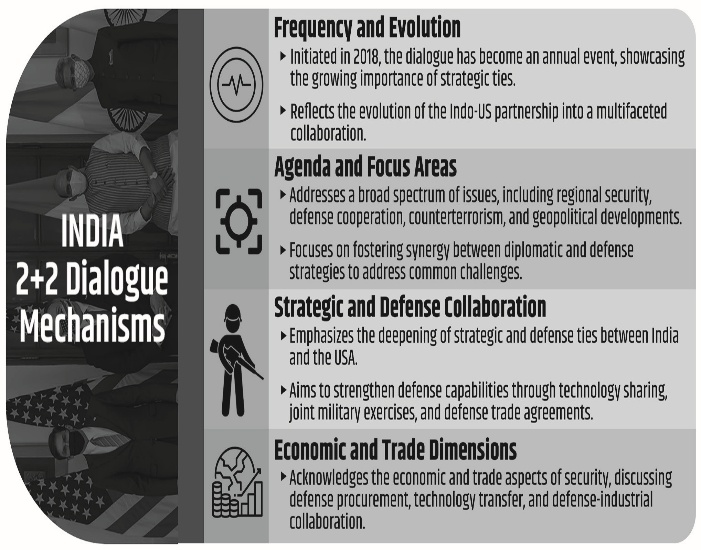
Involves the Foreign Minister and Defense Minister from both India and the USA. Represents a unique forum that brings together diplomatic and defense leadership for comprehensive discussions.
Outcome and Deliverables
Results in joint statements outlining agreements and shared commitments in various areas.
• Facilitates the signing of defense agreements, fostering a framework for ongoing collaboration.
Examples of Achievements
• The Communications Compatibility and Security Agreement (COMCASA) signed in 2018 facilitates secure communication between the two militaries.
• Inclusion of India in the Strategic Trade Authorization (STA) Tier 1 list, streamlining defence technology transfers.
Strategic Vision: Aligns with the broader strategic vision of both nations, emphasizing a free and open Indo-Pacific, democratic values, and shared security interests.
Global Impact: Sends a strong signal of the converging interests and shared responsibilities of India and the USA in addressing global challenges.
Future Prospects: Anticipates further deepening of ties, increased interoperability, and collaborative efforts in emerging security domains like cybersecurity and space.
The India-US 2+2 Dialogue serves as a crucial mechanism, symbolizing the depth and breadth of the strategic partnership between the two nations. It not only addresses immediate bilateral concerns but also sets the stage for collaborative engagement on global issues.
RECENT DEVELOPMENTS
COUNTERING AMERICA’S ADVERSARIES THROUGH SANCTIONS ACT (CAATSA)
• CAATSA stands for “Countering America’s Adversaries Through Sanctions Act”
• This punitive act was signed by President Donald Trump in August 2017.
• It mandates US administration to impose sanctions on any country carrying out significant defence and energy trade with sanctioned entities in North Korea, Iran and Russia.
• This is an act by the Congress; thus, the President of the United States of America doesn’t have too much of authority over it.
Sanctions Waiver For S-400 Missile System
• T he US House of Representatives passed a legislative amendment that exempts India from economic sanctions under the Countering America’s Adversaries Through Sanctions Act (CAATSA) for purchasing the S400 missile defence system from Russia in 2018 to help deter aggressors like China.
• The US sees India as an important ally in its fight against China. If sanctioned, the Quad Collective, of which India is part, could be significantly impacted.
• However, the application of CAATSA is not limited to the S-400, and may include other joint ventures for manufacturing or developing weapons in the future, or any other kinds of major deals with Russia.
• The US has already imposed sanctions on Turkey under CAATSA for purchase of S-400 missile systems from Russia.
• S-400 is a mobile long-range surface-to-air missile (LRSAM) system. S-400 Triumf has the capability to protect against almost all sorts of aerial attacks, including drones, missiles, rockets and even fighter jets.
In discussions on trade, vital minerals, and nuclear cooperation on January 13, 2026, U.S. Secretary of State Mr. Marco Rubio and India's Foreign Minister Mr. Subrahmanyam Jaishankar reaffirmed their goal of more than doubling bilateral commerce to US$500 billion by 2030.
STRATEGIC TRADE AUTHORIZATION-1 (STA-1)
Context
• United States has designated India as Strategic Trade Authorization-1 (STA-1) country that will allow country to buy highly advanced and cutting-edge sensitive technologies from America.
• This coveted status brings India in par with US’s closest allies and partners such as NATO.
What is STA-1?
• STA-1 designation authorizes export, re-export and transfer (in-country) of specified items on Commerce Control List to destinations posing a low risk of unauthorised or impermissible uses.
• Currently there are 36 countries on STA-1 list.
• India is only South Asian country to be on the list. Other Asian countries designated as STA-1 are Japan and South Korea.
What are the benefits of having STA-1 designation to India?
• Under STA-1, India and US have reached understanding under which India will receive license-free access to wide range of dual-use technologies in conjunction with steps that India has committed to take to advance its export control objectives.
• STA-1 treatment will expand scope of technology exports subject to Export Administration Regulations (EAR) that can be made to India without individual licenses.
• It will further enhance bilateral defence trade relationship and result in a greater volume of US exports to India.
• It will allow US companies to more efficiently export much wider range of products to Indian high technology and military customers.
• It will benefit US manufacturers while continuing to protect its national security.
• It will provide India greater supply chain efficiency, both for defence and for other high-tech products that will increase activity with US systems, interoperability of systems and will reduce time and resources needed to get licensing approved.
• It will be also competitive advantage for US, in terms of supplying those kinds of products to India.
• This new designation reflects India’s membership in three of four multilateral export control regimes.
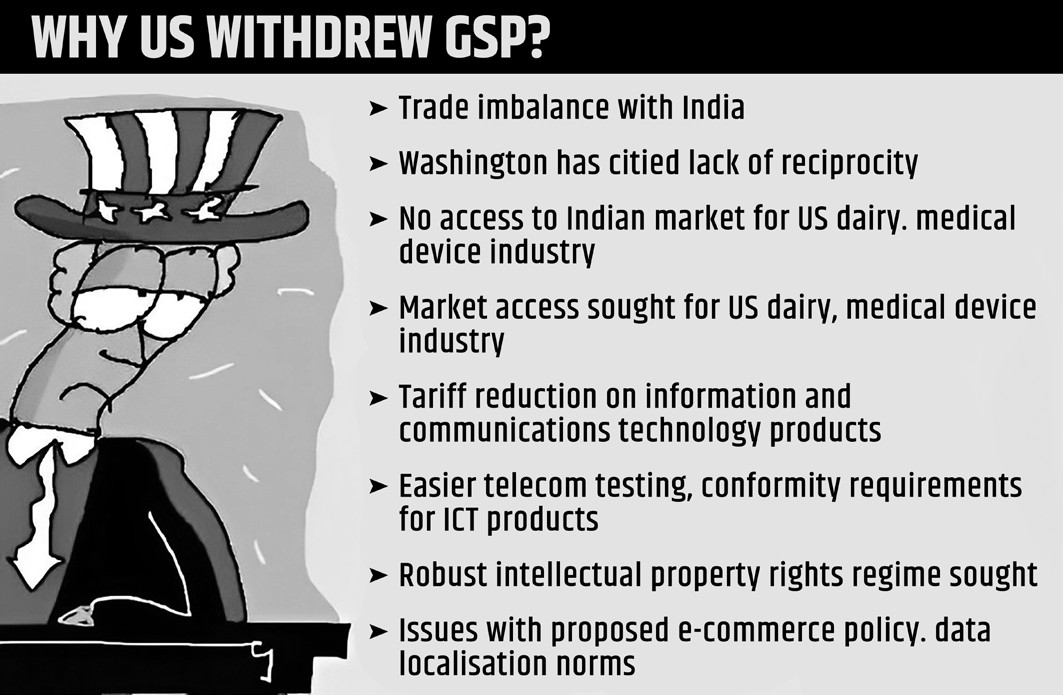
GENERALIZED SYSTEM OF PREFERENCES (GSP)
• US recently terminated India’s designation as a beneficiary developing nation under the key GSP trade programme.
• GSP is the largest and oldest US trade preference programme which allows duty-free entry for thousands of products from designated beneficiary countries.
• Up to 4,800 products from 129 designated beneficiary countries and territories. Additional benefits for products from least developed countries.
• As on December 2018, India and Brazil were the major beneficiaries in terms of export volume realised under GSP. Imports from China and some developing countries are ineligible for GSP benefits. The beneficiaries and products covered under the scheme are revised annually.
INDIA-USA: 2+2 DIALOGUE
Context
• India and US have established new two-by-two (2 by 2) ministerial dialogue to enhance strategic coordination between them and maintaining peace and stability in the Indo-Pacific region.
• The new dialogue format will replace the earlier India-US Strategic and Commercial Dialogue.
• It will be similar to the India-JJapan 2+2 dialogue format between foreign and defence secretaries of the two countries.
How relationship evolved?
• India and US had elevated their Strategic Dialogue in 2009 which mainly focuses on regional security, economic cooperation, defence, trade and climate challenges.
• The purpose of two-by-two ministerial dialogue is to put strategic, defence and security relationship between the two countries at the forefront and centre stage.
• The new format would include External Affairs Minister and Defence Minister from India and their American counterparts Secretary of State and Defence Secretary.
Its impact
• The new ministerial dialogue would enhance strategic coordination between the two nations.
• It will be helpful to coordinate more closely on Afghanistan, developments in the Asia Pacific, Indian Ocean and also in the Middle East (West Asia).
• It will insulate the India-US strategic relationship from feuds over trade and deep divide on economic integration policies as trade and commercial issues were discussed in the Strategic and Commercial Dialogue earlier.
Currency Manipulator List
In 2019, US government has removed India from its monitoring list for currency manipulation. Background: The US Treasury, in its report released in 2018, said no major trading partner met the criteria to be designated as manipulating its currency. It has kept India, China, Japan, South Korea, Germany and Switzerland on the monitoring list.
Significance: It will reduces India’s chances of being named a currency manipulator, and gives the Reserve Bank of India more space to intervene in currency markets to check volatility.
About List: US Treasury Department prepares the list for its major trading partners.
To dismantle unfair barriers to trade and achieve fairer and more reciprocal trade with major US trading partners.
To combat unfair currency practices that facilitate competitive advantage, such as unwarranted intervention in currency markets.
What is currency manipulation and who determines it?
The US Department of the Treasury publishes a semiannual report in which the developments in global economic and exchange rate policies are reviewed.
If a US trade partner meets three assessment criteria, the US labels it a currency manipulator. The US then tries to solve it via bilateral talks.
How are countries identified for the currency manipulation list?
The US Treasury has established thresholds for the three criteria.
• First, a significant bilateral trade surplus with the US is one that is at least $20 billion.
• Second, a material current account surplus is one that is at least 3% of GDP.
• Third, persistent, one-sided intervention reflected in repeated net purchases of foreign currency and total at least 2% of an economy’s GDP over a year.
• The Treasury’s goal is to focus attention on those nations whose bilateral trade is most significant to the US economy and whose policies are the most material for the global economy.
Defence Technologies and Trade Initiative (DTTI)
• Deepening bilateral defense cooperation is a strategic imperative for the United States and India, but for many years progress in this area was impeded by unique national bureaucratic structures, acquisition models, and budget processes. In 2012, the Department of Defense created a mechanism for overcoming or reducing these impediments. This effort has evolved into the India-U.S. Defense Technology and Trade Initiative or DTTI.
• DTTI is intended to focus senior U.S. and Indian leadership on real opportunities and challenges associated with strengthening our defense partnership.
• While DTTI is not a treaty or law, it elevates our shared commitment to defense trade, helps eliminate bureaucratic obstacles, accelerates timelines, promotes collaborative technology exchange, strengthens cooperative research, and enables co-production/co-development of defense systems for sustainment and modernization of our military forces.
• For the U.S., the overall initiative is led by the Under Secretary of Defense for Acquisition and Sustainment. For India, the DTTI is led by the Secretary (Defence Production). Under the DTTI Terms of Reference, the two leads will meet as the DTTI Group every six months alternating location between the U.S. and India. H 1B visa
The US H-1B visa is a non-immigrant visa that allows US companies to temporarily employ foreign workers in specialty occupations. .
A specialty occupation requires a specialised knowledge and a bachelor’s degree or equivalent work experience in areas such as information technology (IT), finance, accounting, architecture, engineering, mathematics, science, medicine, etc.
How Does an H1B Visa Work?
The H1B visa is a work visa requiring the applicant to be sponsored by a US employer to apply. Therefore, someone who wishes to enter the US through an H1B visa needs to gain employment from a US employer who is willing to sponsor you into the US.
Benefits Under H1b Visa?
A successful H1B application, visa stamp, and work permit allows skilled individuals to:
Obtain a Social Security number
Apply for a state ID or driver’s licence
Open a bank account
Buy or rent a car
Rent or own property
How long is an H1B visa good for?
A worker with an H-1B visa can remain in the US for up to six years. It is initially for three years but can be extended for additional three years.
The H1B visa is a dual-intent visa, which means that those who hold it are eligible for permanent residency by applying for a green card. There are difficulties with applying for the green card once your H1B visa has expired. A Green Card is a permit that allows a noncitizen to permanently live and work in the US.
More about H-1B visa
The H-1B is a United States visa under the Immigration and Nationality Act. It has roots in the earlier issued H-1 visa which was later split between H-1A (for nurses) and H-1B. H-1B is one of the most popular visas for foreigners visiting the US for business or trade purpose.
It is a non-immigrant visa that allows US companies to employ foreign workers in speciality occupations that require theoretical or technical expertise.
Speciality occupations include specialized fields like IT, finance, accounting, architecture, engineering, mathematics, science, medicine, etc.. which usually require a bachelor’s degree or higher.
US employers wishing to bring in staff for long-term assignment prefer H1B visa because its application is quicker than applying for a US Green Card.
H-1B visa has its roots in the H1 visa of the Immigration and Nationality Act; which split between H-1A (for nurses) and H-1B in 1990.
How is H-1B visa important to India?
Majority H-1B visa holder: India has been the only country that takes 70 per cent of the 85,000 H-1B visas applied annually. The H-1B visa is crucial for the IT sector in India.
IT professionals: The technology companies of US depend on it to hire tens of thousands of employees each year from countries like India and China. Hence, a cancellation of H-1B visas will most adversely affect Indian IT professionals.
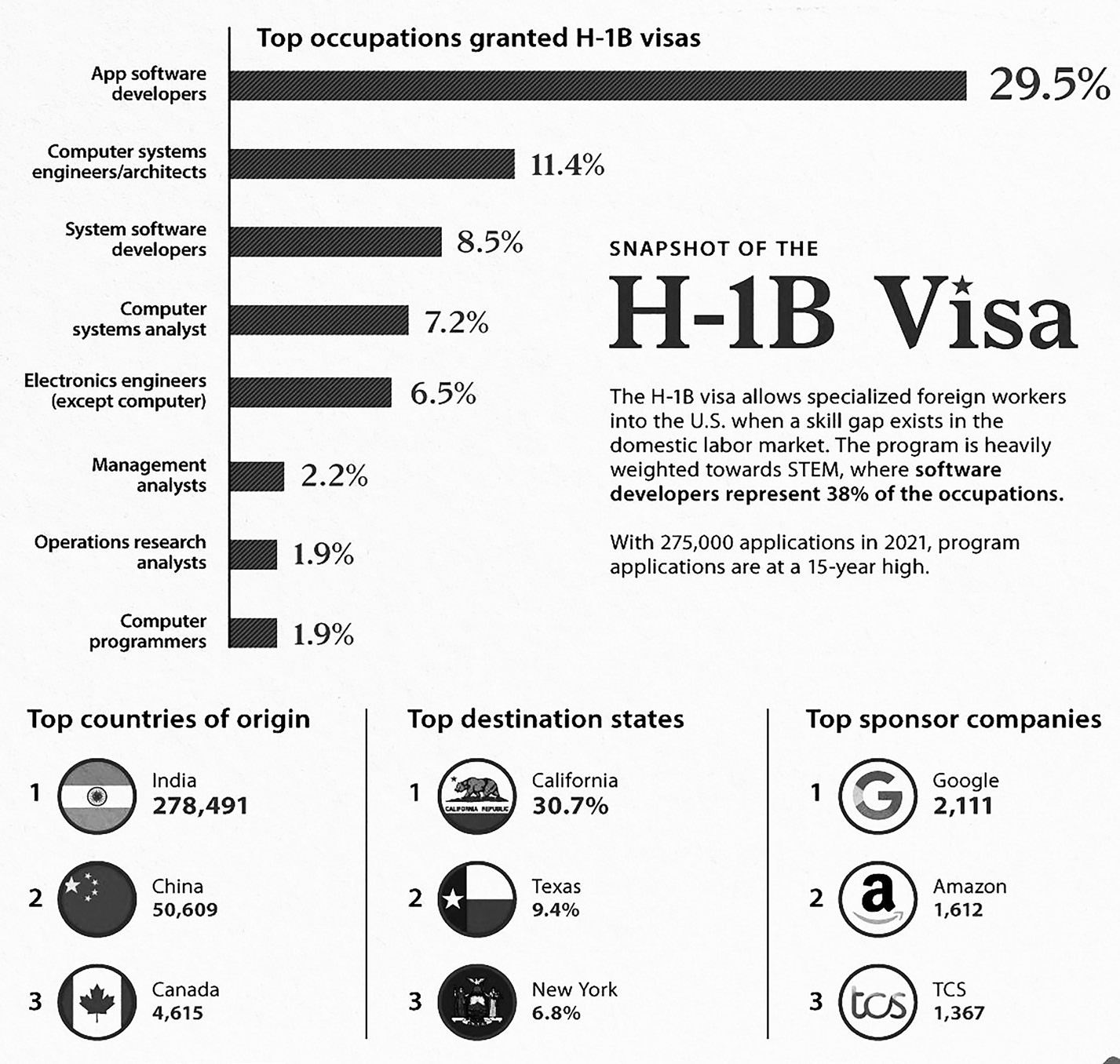
The US should not obstruct the flow of talent from India as it is an important part of the economic cooperation and almost acts as a strategic bridge between the two countries, and is important for the bilateral ties.
Problems that Indians face with current H-1B rules
Recent changes in H-1B visa rules: US proposed revision of “specialty occupations” definition for the H1B visa. H1B visas will be issued to only the most-skilled foreigners or highest-paid beneficiaries.
USCIS can reject H1B applications that do not provide the necessary required information when submitted.
New rules require H-1B petitioners to first electronically register with USCIS.
US can initiate deportation of expired H1-B holders.
US Department of Homeland Security (DHS) is also considering ban on work authorization for spouses of H-1B visa holders.
Problem in job switch: H-1B visa holders in the US face problems in switching jobs even if the new job requires the exact same skill set as before. The US citizenship and Immigration Services (USCIS) has denied several applications by new employers citing that the new position does not constitute a ‘specialty occupation’.
If the H-1B holder starts working elsewhere and the transfer is denied, the person could be ‘out of status’ with a bar on entry into the US, unless the old employer is willing to take him/her back.
Removing country-cap on green cards: Recently, US also removed 7% country-cap on issue of Green Cards. This too will agonise the wait of many skilled professionals from India who had sought permanent residency in USA.
Tiger Triumph Exercise
Tiger Triumph is a bilateral tri-service amphibious military exercise involving the armed forces of the India and the United States. It is the first tri-service military exercise between the two countries. India has previously only held tri-service exercises with Russia.
Exercise
It has been decided to hold the India U.S. joint tri-service and amphibious exercise ‘Tiger Triumph’ on an annual basis.
The exercise aims to consolidate interoperability and validate procedures for conducting amphibious HADR operations in the aftermath of a natural calamity.
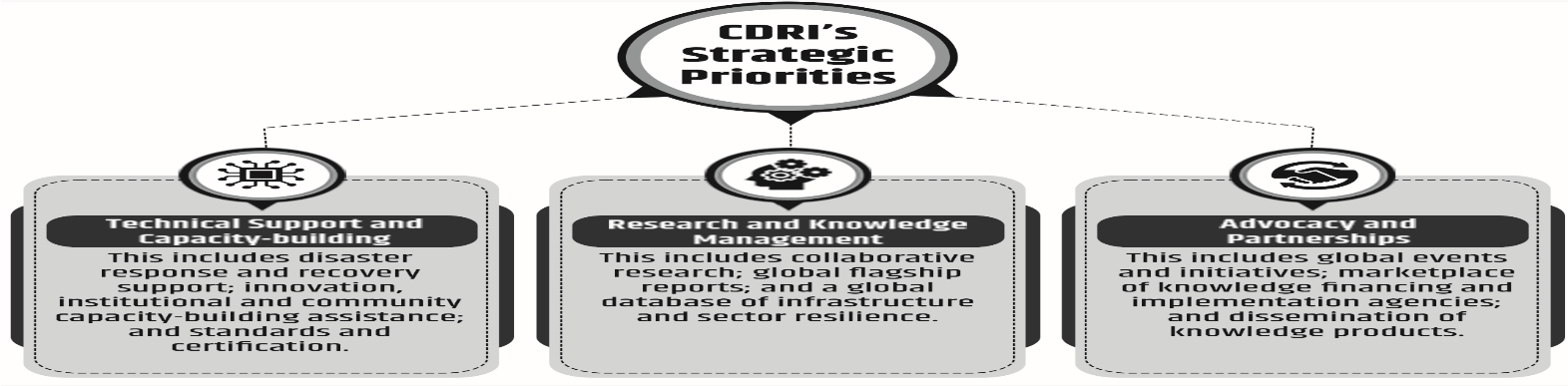
Coalition for Disaster Resilient Infrastructure (CDRI)
Prime Minister of India, Shri Narendra Modi announced a global Coalition for Disaster Resilient Infrastructure (CDRI), at the UN Climate Action Summit 2019 held in New York City, USA, on September 23, 2019.
United States has announced its commitment to being the founding member of the CDRI whose headquarters will be located in India.
| What is the Coalition for Disaster Resilient Infrastructure (CDRI)? CDRI promotes rapid development of resilient infrastructure to respond to the Sustainable Development Goals’ imperatives of expanding universal access to basic services, enabling prosperity and decent work |
Young Innovators Internship Programme (YIIP)
This Programme will create short-term internship opportunities in the US for Indian students at the postsecondary level or recent graduates, in key areas of scientific and economic endeavour.
The Young Innovators Program is developing the next generation of innovative thinkers by engaging exceptional high school students in hands-on laboratory research, encouraging them to explore STEM opportunities in pharmaceutical science research, and empowering them to discover new ways to improve the health of patients through the practice of pharmacy.
Why the Young Innovators Program?
The Young Innovators Program offers high school students the unique opportunity to work side-by-side with faculty on cutting-edge and innovative research
in an immersive laboratory environment. Interns could be working to develop new therapies to cure cancer, designing a virtual patient to enhance the education of health professionals, using 3D printing technology to deliver drugs that prevent the transmission of HIV, and so much more.
Beyond getting paid to gain hands-on experience, the Young Innovators Program prepares students for the next step in their academic and professional careers by incorporating various team building, career development, and interdisciplinary activities into the program.
Finally, the UNC Eshelman School of Pharmacy is an internationally recognized leader in pharmacy practice, education, and research. As the number one pharmacy school in the nation by US News & World Report, UNC offers opportunities in pharmacy and the pharmaceutical sciences that are simply not available anywhere else.
Supply Chain Ministerial Forum
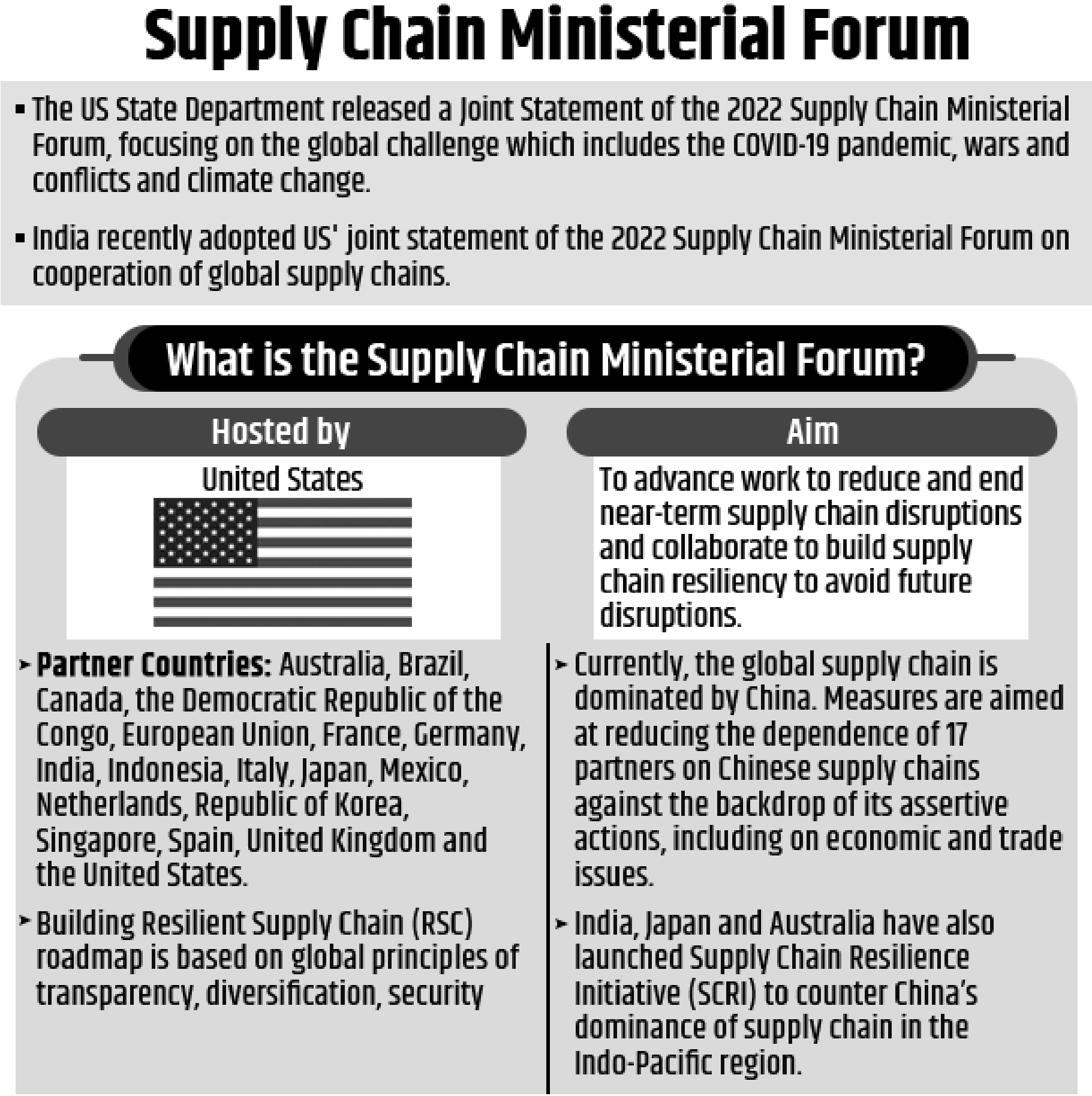
United States Trade Policy Forum
India and the United States held the 13th Ministerial-level meeting of the India-United States Trade Policy Forum (TPF) in Washington, DC, in January 2023. Key outcomes
The Ministers underlined the significance of the TPF in forging robust bilateral trade ties and enhancing the bilateral economic relationship to benefit working people in both countries.
They appreciated that bilateral trade in goods and services continued to rise rapidly and reached about $160 billion in 2021. While welcoming this increase, the Ministers recognized that for economies of their size, the significant potential remains unfulfilled and expressed their mutual desire to further enhance engagement with the goal of continuing to increase and diversify bilateral trade.
The United States and India underlined the importance of continuing to engage on the copyright provisions in view of commitments under the World Intellectual Property Organization Copyright Treaty and World Intellectual Property Organization Performance and Phonogram
Treaty.
The Ministers acknowledged the positive impact of Trade Margin Rationalization (TMR) on patient access to affordable medical devices during the Covid Pandemic. They also agreed to continue to exchange views on pricing issues for cardiac stents and knee implants that would facilitate access to cutting-edge medical technology at affordable prices for the patients.
Reflecting their shared objective of deepening and broadening the US-India trade relationship, the Ministers launched a new TPF Working Group on Resilient Trade. This new Working Group will enable officials to deepen bilateral dialogue on a range of issues that can enhance the resiliency and sustainability of the trade relationship so that it is better able to withstand current and future global challenges.
India-United States Initiative on Critical and Emerging Technology (iCET)
The iCET initiative was launched by Prime Minister Narendra Modi and US President Joe Biden in May 2022 with the goal “to elevate and expand” Indo-US “strategic technology partnership and defence industrial cooperation between the governments, businesses, and academic institutions” of the two countries.
The two leaders believe that India and the United States, being two democracies with common values and respect for human rights, should shape the way “technology is designed, developed, governed, and used” to enable “an open, accessible, and secure technology ecosystem, based on mutual trust and confidence, that will reinforce our democratic values and democratic institutions.”
Some of the key technology sectors identified under the initiative include defence, semiconductor supply chains, space, and STEM (science, technology, engineering, and math).
The initiative in addition identified areas such as biotechnology, advanced materials, and rare earth processing technology.
There is an emphasis on finding ways to engage in codevelopment and co-production while underlining the importance of “innovation bridges” in the key technology areas through expos, hackathons and pitch sessions.
The two sides have also established a joint IndoUS quantum coordination mechanism involving stakeholders from industry, academia, and government to foster research and industry collaboration.
The focus of iCET on resilient semiconductor supply chains is particularly important for India. Consumption of semiconductors in India is expected to cross $80 billion by 2026 and $110 billion by 2030.
Trump’s visit
The President of the United States of America, Donald Trump, paid a State Visit to India on 24-25 February 2020.
Key highlights of the visit:
US President Donald Trump, on his first State visit to India, and PM Modi decided to elevate ties between their countries to a “comprehensive global strategic partnership”, giving it broader scope and scale.
No trade deal was signed during the visit. The two leaders said they looked forward to “early conclusion” of defence cooperation enabling agreements including Basic Exchange and Cooperation Agreement (BECA).
The two sides also “expressed interest in the concept of the Blue Dot Network, a multi-stakeholder initiative that will bring governments, the private sector, and civil society together to promote high-quality trusted standards for global infrastructure development”.
They added the Haqqani network and Tehrik-e-Taliban in Pakistan (TTP) to the list of terror groups against whom they “called for concerted action”.
President Trump announced that US International Development Finance Corporation will be establishing a permanent presence in India and America is committed to work with India to improve development.
Pax Silica Initiative
It is a strategic multi-nation initiative to build a secure, resilient, and innovation-driven silicon supply chain.
In the areas of critical minerals, energy inputs, semiconductors, sophisticated manufacturing, AI infrastructure, and logistics, it seeks to lessen China's hegemony and combat coercive dependence.
India was kept out of the US-led "Pax Silica" effort during the first Pax Silica Summit in 2025, which drew harsh political criticism. However, India later joined Pax Silica at the India AI Impact Summit in 2026
Defence Deal
It was announced that India will purchase more than $3 billion of advanced American military equipment, including 24 multi-role MH-60 Romeo helicopters, through the Foreign Military Sale government-togovernment route, and six Apache AH 64E Apache helicopters for the Army.
The six choppers for the Army will be in addition to the 22 Apache helicopters that have already been ordered for the Air Force.
The MH-60 Romeo Seahawk, made by Lockheed Martin, can not only track and hunt ships, but is also used by the US Navy as anti-submarine weapon.
Recent state visit by Prime Minister to the USA:
Prime Minister Narendra Modi travelled to the US for an official state visit in June 2023. This will be Narendra Modi’s first state visit to the US during his nine-year-long reign as prime minister.
Key outcomes from the visit as outlined in the joint statement:
Technology partnership
Strengthening semiconductor supply chains: Micron Technology, with support from the India Semiconductor Mission, will invest more than $800 million toward a new $2.75 billion semiconductor assembly and test facility in
India. A Semiconductor Centre for Commercialization and Innovation will be built in India to strengthen the two nations’ semiconductor supply chain diversification. 60,000 Indian engineers will be trained through “Semiverse Solution” to accelerate India’s semiconductor education and workforce development goals.
Critical Minerals Partnership: India has become the newest partner of the US-led Minerals Security Partnership (MSP) that has been established to accelerate the development of diverse and sustainable critical energy minerals supply chains globally. The MSP has 12 other partner countries, plus the European Union.
Advanced Telecommunications: India and the US have launched public-private Joint Task Forces on the development and deployment of Open RAN systems and on advanced telecoms research and development. India’s Bharat 6G and the US Next G Alliance will colead this public-private research. This work will reduce costs, increase security, and improve the resiliency of telecommunication networks.
NASA-ISRO collaboration in space: India has signed the Artemis Accords, joining 26 other countries committed to peaceful, sustainable, and transparent cooperation. It will enable exploration of the Moon, Mars, and beyond. NASA will provide advanced training to the Indian Space Research Organization (ISRO) astronauts with the goal of launching a joint effort to the International Space Station in 2024. NASA and ISRO are also developing a strategic framework for human spaceflight cooperation by the end of 2023.
Quantum, Advanced Computing, and Artificial Intelligence: The two countries have established a Joint Indo-US Quantum Coordination Mechanism to facilitate joint research between the public and private sectors across the two countries. They have also signed an implanting arrangement to support joint research on quantum, Artificial Intelligence (AI), and advanced wireless technologies.
Cutting-edge Research: The US National Science Foundation has announced 35 joint research collaborations with India’s Department of Science and Technology and signed a new cooperative arrangement with India’s Ministry of Electronics and Information Technology on emerging technologies.
Innovation Handshake: To support the US-India Initiative on Critical and Emerging Technology (iCET), the US-India Commercial Dialogue will launch a new “Innovation Handshake” to connect the startup ecosystems of the two countries.
Fiber Optics Investments: India’s Sterlite Technologies Limited has invested $100 million in the construction of an optical fibre cable manufacturing unit near Columbia, South Carolina, which will facilitate $150 million in annual exports of optical fibre from India.
Defence partnership: The highlight of the next-generation defence partnership is the deal to co-produce GE’s F414 combat aircraft engines in India. There are several other initiatives as well. Some of them are:
GE F414 Engine Co-Production: The Joint Statement welcomed the ground breaking proposal by General Electric to jointly produce the F414 jet engine in India. GE and Hindustan Aeronautics Limited (HAL) have signed a MoU, and a manufacturing licence agreement has been submitted for Congressional Notification. The first-of-its-kind initiative to manufacture F414 engines in India will enable greater transfer of US jet engine technology than ever before.
General Atomics MQ-9Bs: India intends to procure armed MQ-9B Sea Guardian UAVs. The drones will increase India’s intelligence, surveillance, and reconnaissance capabilities.
Service and repair of US Navy ships: The US Navy has concluded a Master Ship Repair Agreement (MSRA) with Larsen and Toubro Shipyard in Kattupalli (Chennai) and is finalizing agreements with Mazagon Dock Limited (Mumbai) and Goa Shipyard (Goa). These agreements will allow mid-voyage US Navy ships to undergo service and repair at Indian shipyards.
More robust defence cooperation: The two countries advanced steps to operationalize tools to increase defence cooperation. They have resolved to strengthen undersea domain awareness cooperation, and agreed to place three Indian liaison officers in US commands for the first time. The US and India have also begun negotiations for a Security of Supply Arrangement and Reciprocal Defence Procurement Arrangement that will enable the supply of defence goods in the event of unanticipated supply chain disruptions.
Defence “Innovation Bridge”: The India-US Defence Acceleration Ecosystem (INDUS-X) — a network of university, incubator, corporate, think tank, and private investment stakeholders — was inaugurated on June 21, 2023. This programme will facilitate joint innovation on defence technologies and accelerate the integration of India’s private sector defence industry with the US defence sector.
People-centric efforts
• The Joint Statement mentions initiatives on visas and student exchanges. It also refers to the historic aviation deal between Air India and Boeing to acquire more than 200 American-made aircraft, and
the efforts to resolve trade issues between the two countries.
• Domestic visa renewals: The State Department will launch a pilot this year to adjudicate domestic renewals of certain petition-based temporary work visas, including for Indian nationals, who will no longer be required to leave the country for renewal in eligible categories. This will be implemented for an expanded pool of H1B and L visa holders in 2024, with the aim of broadening the programme to include other eligible categories.
• New consulates: The US intends to open new consulates in Bengaluru and Ahmedabad, and India looks forward to opening its consulate in Seattle later this year, and to announce two new consulates in the US, the Joint Statement said.
• Student exchanges and scholarships: The US last year issued a record 125,000 visas to Indian students, and Indians are on track to become the largest foreign student community in the US, with a 20% increase last year alone. India and the US have launched a new Joint Task Force of the Association of American Universities and leading Indian educational institutions, including the IITs.
• Additional Fulbright-Kalam Climate Fellowships for research, administered by the US-India Educational Fund, will advance cooperation between leading scholars in India and the US on climate change.
• Agreement on cultural property: The US and India are continuing negotiations for a Cultural Property Agreement which would help to prevent illegal trafficking of cultural property from India and enhance cooperation on the protection and lawful exchange of cultural property.
• Cooperation in the Indo-Pacific: The US will join the Indo-Pacific Oceans Initiative, a regional initiative inaugurated by Prime Minister Modi in 2015 to promote a safe, secure, and stable maritime domain and promote its conservation and sustainable use. India will continue to participate as an observer in the Partners in the Blue Pacific. The US and India will hold an Indian Ocean Dialogue with experts and stakeholders from across the Indian Ocean region to promote greater regional coordination.
• Energy collaboration: India and the US will continue to work together to achieve their national climate and energy goals. The US welcomes
India’s decision to co-lead the multilateral Hydrogen Breakthrough Agenda to make affordable renewable and low-carbon hydrogen globally available by 2030, the Joint Statement said.
Green technology: The Joint Statement mentioned the two countries’ commitment to creating innovative investment platforms that will lower the cost of capital and attract international private finance at scale for renewable energy, battery storage, and emerging green technology projects in India. It also refers to initiatives taken to decarbonise the transportation sector, and the Global Biofuels Alliance, which has been established by India with the US as a founding member.
Initiatives on health
Fighting cancer and diabetes: The US National Cancer Institute will foster collaboration between US and Indian scientists through two new grants to develop an Artificial Intelligence (AI)-enabled digital pathology platform, which will be utilized for cancer diagnosis, prognosis, and prediction of therapeutic benefit, as well as AI-based automated radiotherapy treatment for cancers of the cervix, head, and neck.
The US National Institute of Diabetes and Digestive and Kidney Diseases will also sign an agreement with the Indian Council of Medical Research to further basic, clinical, and translational research on diabetes. The United States and India will hold a USIndia Cancer Dialogue, hosted by President Biden’s Cancer Moonshot, to bring experts together from both countries to identify concrete areas of collaboration to accelerate the rate of progress against cancer.
Fighting terror and drugs: The Joint Statement reiterated that the US and India stand together to counter global terrorism, and unequivocally condemn terrorism and violent extremism in all its forms and manifestations. President Biden and Prime Minister UN-listed terrorist groups including al-Qa’ida, ISIS/ Daesh, Lashkar e-Tayyeba (LeT), Jaish-e-Mohammad (JeM), and Hizb-ul-Mujhahideen
WHY INDIA MATTERS TO THE USA?
India is a crucial partner for the United States, strategically positioned between two of the most critical regions for U.S. national interests. The arc of instability stretches from North Africa, through the Middle East, reaching Pakistan and Afghanistan, and ultimately ending at India’s western border.
India's location in the Indian Ocean places it at the center of vital global trade routes. As Asian economies rise, the Indian Ocean has become a key hub for global communication, with around 50% of world container traffic and up to 70% of global oil shipments passing through its waters.
India's growing national capabilities strengthen its ability to pursue its interests, which aligns with U.S. goals. India boasts the world’s third-largest army, fourth-largest air force, and fifth-largest navy. All three branches are modernizing, with the Air Force and Navy possessing world-class technical resources, and the Army seeking further upgrades.
India is an important U.S. partner in global efforts to curb the spread of weapons of mass destruction. Its broad diplomatic network, particularly in the Middle East, its aspirations for permanent membership in the U.N. Security Council, and its involvement in international bodies like the International Atomic Energy Agency make it a powerful voice in preventing proliferation.
India’s stance against radicalism and terrorism aligns closely with the U.S., reinforcing a shared commitment to security.
India’s English-speaking, Western-leaning elite and middle class naturally connect with their U.S. counterparts in business and academia. The U.S. higher education system, with over 100,000 Indian students, fosters collaboration and strengthens bilateral ties.
As India continues to modernize, it will invest trillions of dollars in infrastructure, transportation, energy, and defense, presenting a significant opportunity for U.S. firms to provide the expertise and technology needed for this transformation.
U.S.-India cooperation is vital in the global fight against climate change, and India is deeply committed to a world order based on multilateral cooperation and the development of international law.
India's culture and diplomacy have built goodwill across its extended neighborhood. It maintains positive relations with critical Middle Eastern, Central Asian, Southeast Asian nations, and important middle powers like Brazil, South Africa, and Japan—all strategically significant to the United States. India's soft power is evident in the growing influence of its civil society globally.
Despite challenges such as poverty, ethnic and religious diversity, and both internal and external conflicts, India’s democracy continues to thrive, demonstrating resilience and stability