Antarctic Treaty System
ANTARCTIC TREATY SYSTEM
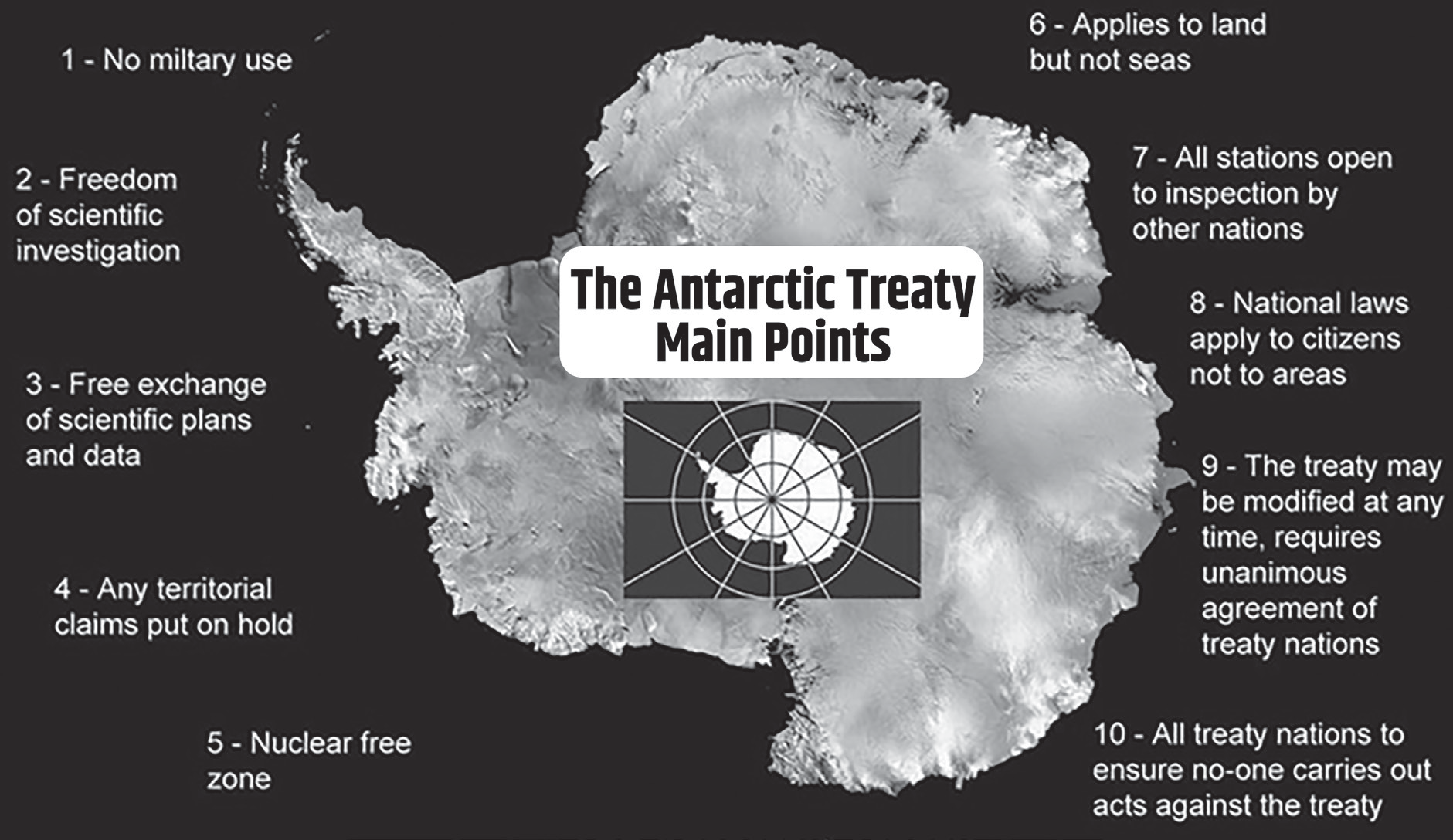
The Antarctic Treaty, signed in Washington in 1959 by 12 countries and entering into force in 1961, now has 53 Parties. Its core objective is to ensure that Antarctica is used exclusively for peaceful purposes, safeguarding it from international conflict in the interest of all humankind.
The Treaty prohibits military activities, except those supporting scientific research; bans nuclear explosions and the disposal of nuclear waste; encourages scientific exploration and the sharing of data; and holds all territorial claims in abeyance.
India became a Consultative Member Antarctic Treaty in 1983, officially joining the Treaty System that year.
Arctic Council
ARCTIC COUNCIL (1996)
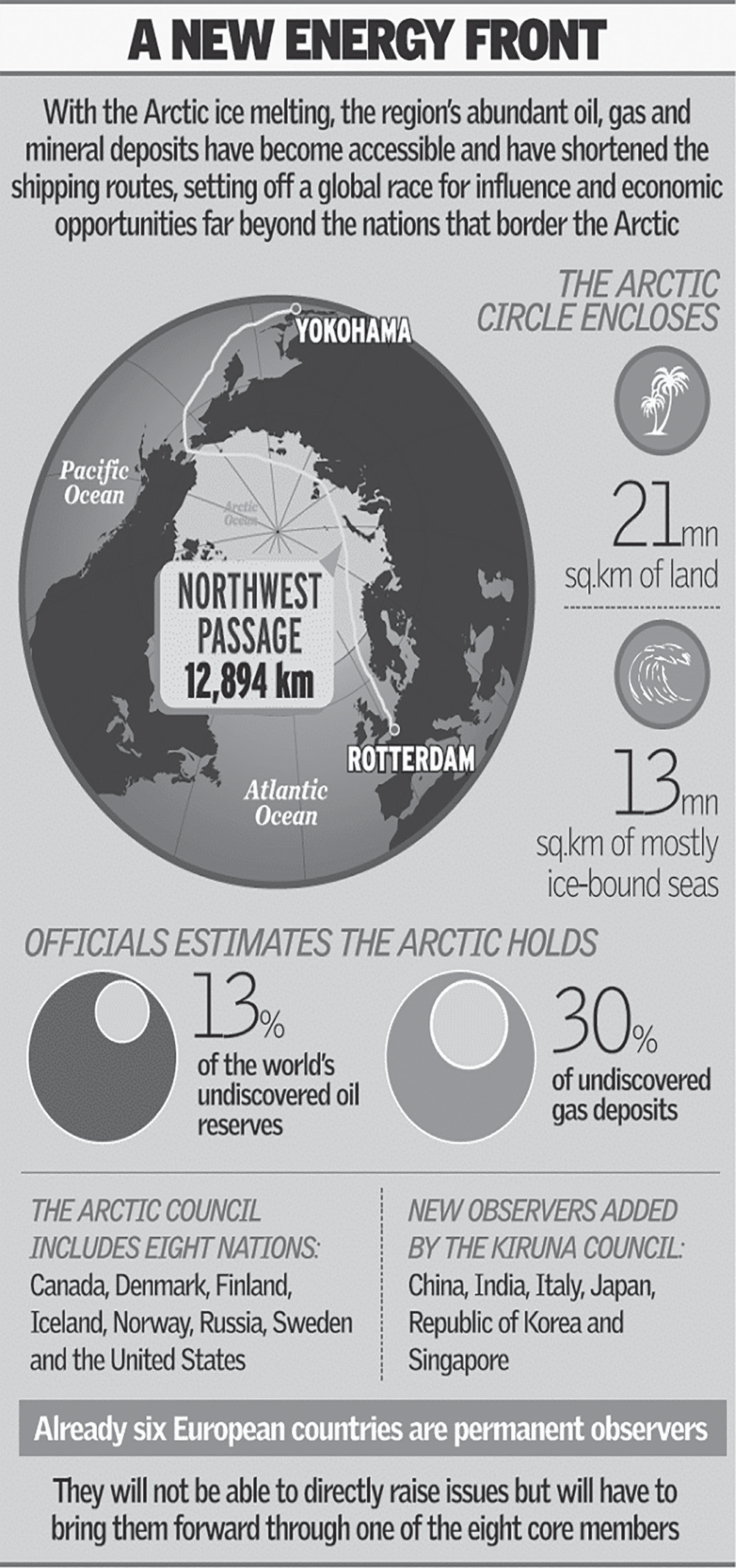
•The Arctic Council is the primary intergovernmental forum dedicated to fostering cooperation, coordination, and collaboration among Arctic States, indigenous Arctic communities, and other Arctic inhabitants. Its focus is on common Arctic challenges, particularly sustainable development and environmental protection.
•Member countries of the Arctic Council, as outlined in the Ottawa Declaration, include Canada, Denmark, Finland, Iceland, Norway, Russia, Sweden, and the United States.
•Six organizations representing Arctic indigenous peoples have Permanent Participant status.
•Non-Arctic States can gain Observer status in the Council. Observers typically engage at the Working Group level and contribute to the Council's discussions.
•Observers include countries such as China, France, Germany, India, Italy, Japan, South Korea, the Netherlands, Poland, Singapore, Spain, and the United Kingdom.
•The Arctic Council regularly produces in-depth environmental, ecological, and social assessments through its Working Groups.
•It has facilitated the negotiation of two significant legally binding agreements among the eight Arctic States.
•The Council's Chairmanship rotates every two years among the Arctic States.
•The Arctic Council does not have a programming budget. Projects and initiatives are funded by Arctic States and sometimes supported by other entities.
•While the Council provides valuable assessments, guidelines, and recommendations, it lacks the authority to implement or enforce them—each Arctic State is responsible for executing these measures.
Asian Development Bank
ASIAN DEVELOPMENT BANK (ADB)
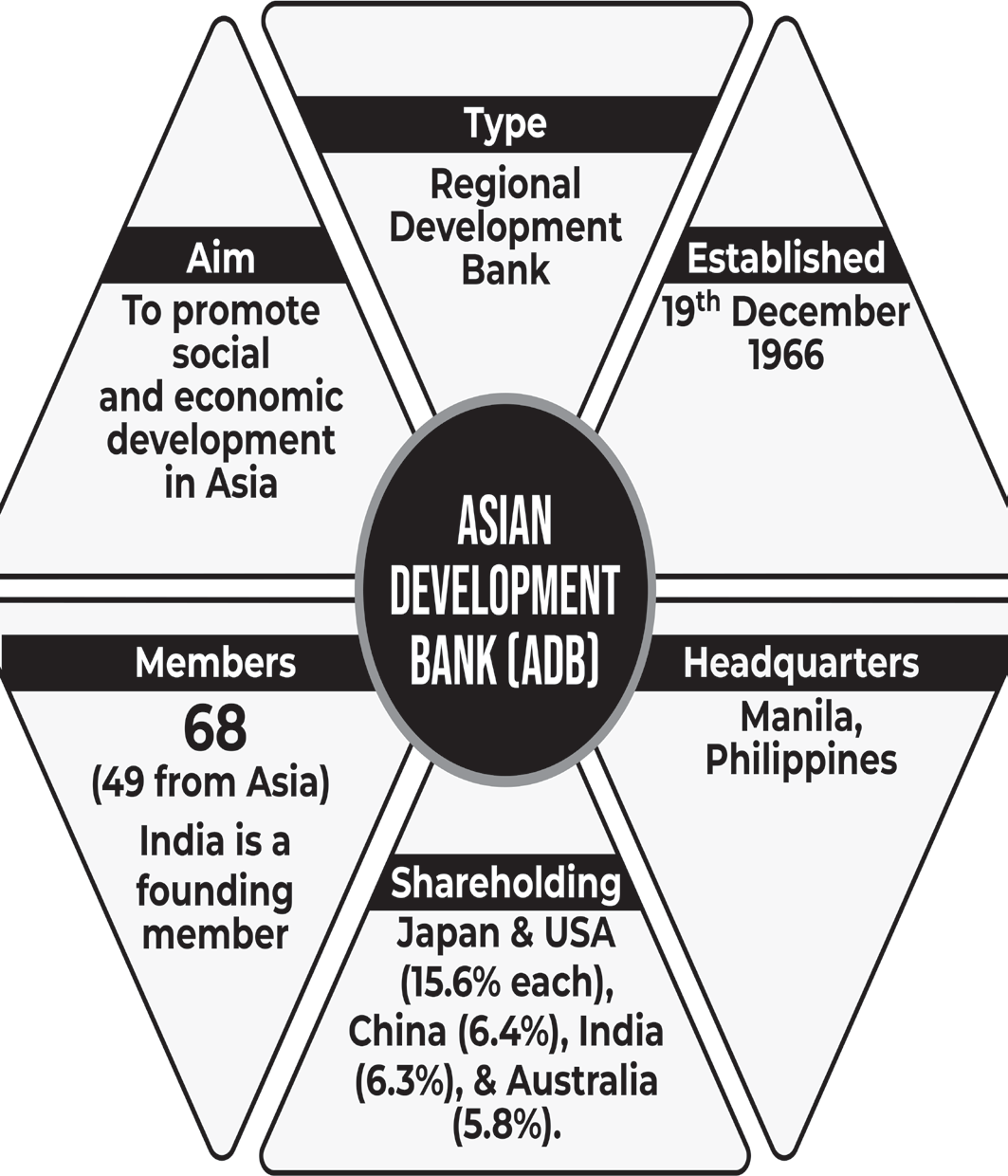
The Asian Development Bank was conceived in the early The Asian Development Bank (ADB) was established in the early 1960s as a regional financial institution aimed at fostering economic growth and cooperation in one of the world’s poorest regions.
• Membership includes countries from the United Nations Economic and Social Commission for Asia and the Pacific, as well as non-regional developed
countries.
• ADB supports its members and partners by providing loans, technical assistance, grants, and equity investments to advance social and economic development.
• ADB’s operations focus on three key areas: inclusive economic growth, environmentally sustainable development, and regional integration.
• Modeled closely after the World Bank, ADB has a similar weighted voting system, where votes are allocated in proportion to each member’s capital subscriptions.
• In India, ADB manages projects such as solar transmission sector projects, transmission improvements in Odisha and Tamil Nadu, and the Madhya Pradesh Skill Development Project.
Asian Infrastructure Investment Bank
ASIAN INFRASTRUCTURE INVESTMENT BANK (AIIB)
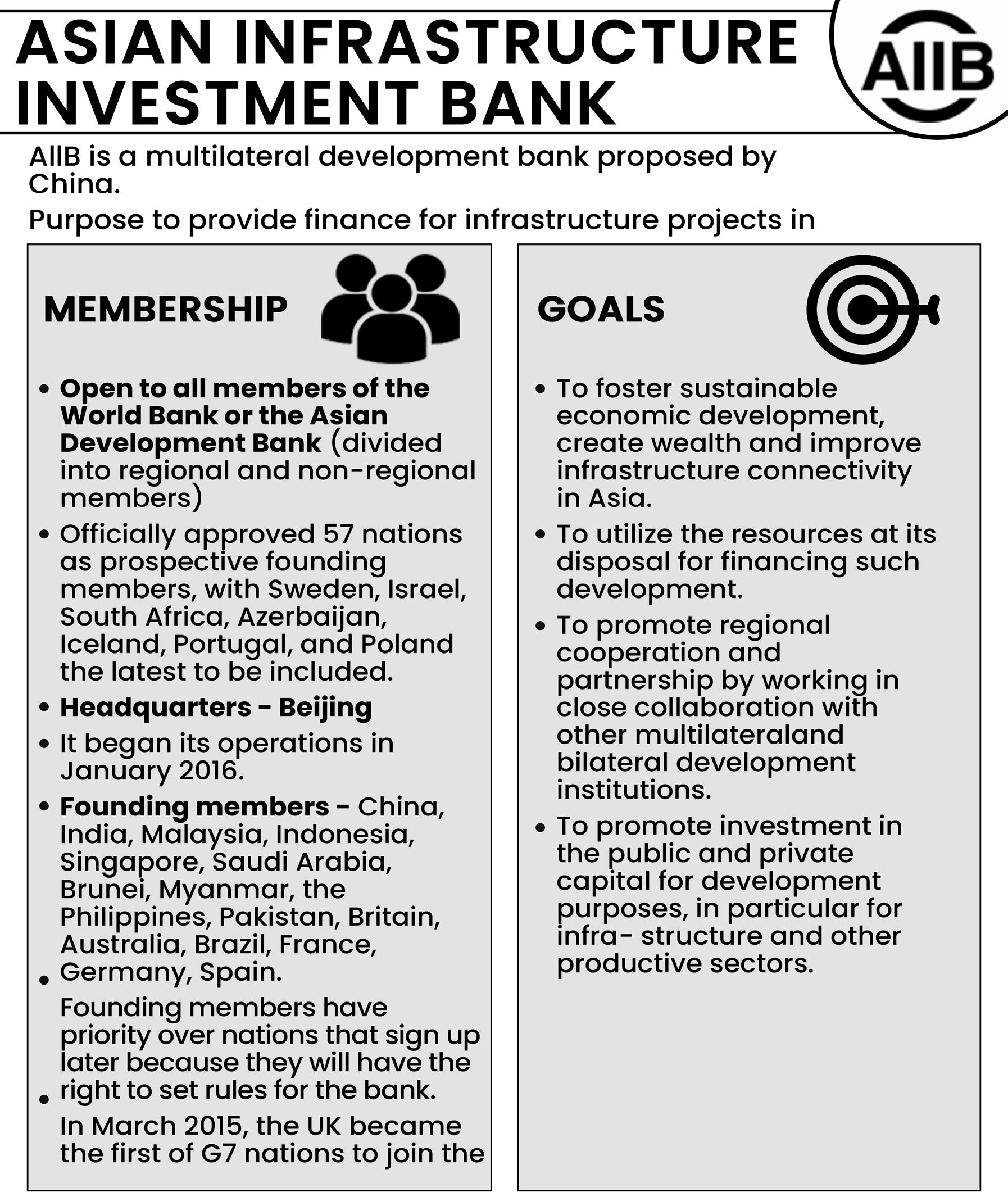
• The AIIB (Asian Infrastructure Investment Bank) is a newly established multilateral financial institution created to unite countries in addressing the significant infrastructure challenges across Asia.
• The bank has 110 members as of October 2024 - (Regional Members: 48, Non-Regional Members: 50, Prospective Members: 12) states while another 18 are prospective members with its headquarters at Beijing, China.
United States, Japan and Mexico are not members of AIIB are not its members.
Its goal is todrive economic growth and enhance access to essential services by promoting greater interconnectivity and development across the region through infrastructure advancements.
• The AIIB provides both sovereign and non-sovereign financing for projects in various sectors, including energy and power, transportation, telecommunications, rural infrastructure, agriculture development, water supply and sanitation, environmental protection, urban development, and logistics.
• Loans will be offered at an interest rate of LIBOR (London Interbank Offered Rate) plus 1.15%, with a repayment term of 25 years, including a 5-year grace period.
• It has authorized capital of US 100 billion dollars and subscribed capital of USD 50 billion.
• China is the largest shareholder, with 26.6% of the current voting share and veto power, followed by India (7.6%), Russia (6%), and Germany (4.2%).
Commonwealth of Nations
COMMONWEALTH OF NATIONS
The Commonwealth of Nations, also known as the British Commonwealth, is an intergovernmental organization consisting of 56 member states, primarily former territories of the British Empire.
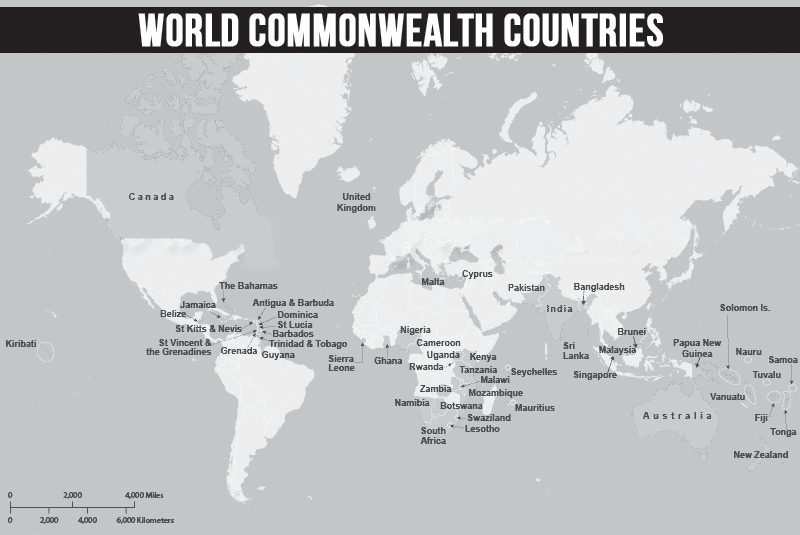
The Commonwealth operates through intergovernmental consensus among member states, facilitated by the Commonwealth Secretariat, while non-governmental activities are coordinated through the Commonwealth Foundation.
• The Monarch of UK serves as the Head of the Commonwealth and is also the monarch of 16 Commonwealth members, known as the Commonwealth realms.
• Member states do not have legal obligations to one another. Instead, they are united by shared language, history, culture, and values, including democracy, free speech, human rights, and the rule of law.
The Commonwealth is represented in the United Nations General Assembly by its Secretariat, holding observer status.In some countries, Commonwealth citizens are granted preferential treatment over non-Commonwealth citizens, especially in terms of residence and voting rights.
Several nations, including Britain and Caribbean countries, allow Commonwealth citizens residing there to vote.
In countries where their own government is not represented, Commonwealth citizens may seek consular assistance at the British embassy.
Mozambique was the first country to join the Commonwealth without any constitutional ties to the British Empire or existing Commonwealth member.
In 2009, Rwanda became the second member to join without such constitutional links
Eastern Economic Forum
EASTERN ECONOMIC FORUM
1.Created by a Presidential Decree of the Russian Federation in 2015.
2.Held annually in Vladivostok.
3.Acts as a platform for discussing crucial topics in the global economy, regional integration, emerging industries and
technologies, as well as the global challenges facing Russia and other nations.
4.Participants: The Forum’s business program features a series of dialogues with key partner countries from the Asia-Pacific region, along with ASEAN, a major organization representing rapidly growing nations in Southeast Asia.
ABOUT THE FAR EAST
The Far East is the easternmost part of Russia. It borders two oceans, the Pacific and the Arctic, and five countries (China, Japan, Mongolia, the United States and the DPRK).
The Far Eastern Federal District covers more than a third of the country’s territory.
RESOURCES
Oil and Gas: Russia is one of the world’s top oil and gas producers, with significant production from regions like Western Siberia.
Metals: Russia is a major global producer of metals, with Norilsk known for nickel and copper production.
Minerals: The Kursk Magnetic Anomaly is a key region for iron ore mining, and the Far East has resources like gold and rare earth elements.Forestry: Russia’s vast forests, especially in Siberia, contribute to its forestry industry.
Agriculture: Russia has extensive agricultural areas, with the Black Earth Belt known for fertile soil.
Water Resources: Russia’s water resources include the world’s deepest freshwater lake, Baikal, and the Volga River, the longest in Europe.
Fisheries: Russia’s fisheries are active in regions like the Barents Sea and the Sea of Okhotsk.
Uranium: Russia is a significant producer of uranium, with Priargunsky being a key facility.
Why is Vladivostok significant to India?
•During the India-Pakistan war in 1971, the US and British Navies tried to threaten the Indian security.
•At that time, the Soviet Union dispatched nuclear-armed fleet from its Pacific Fleet based at Vladivostok in support of India.
•Ever since then, the city of Vladivostok, located in Russia’s Far East, has had a special relevance for Indians.
•There are, now, plans to invest in Russia’s Far East, thus, paying back the long-held Indian debt to Vladivostok.
What are Russia’s priorities now?
•The Far East lies in the Asian part of Russia and is less developed than the country’s European areas.
•As part of his ‘Pivot to Asia’ strategy, Russian President Vladimir Putin is inviting foreign countries to invest in this region.
•Russia’s outreach to Asian nations has especially gained momentum after the 2014 Crimea crisis spoiled its relations with the West.
• Russia also wants to make sure that China does not become a hegemon in the Eurasian region.
•It is thus deepening cooperation with countries like India, Vietnam and Indonesia.
•Here, the Far East has the potential to become an anchor in deepening India-Russia cooperation.
•Moreover, New Delhi has expanded the scope of its ‘Act East policy’ to also include Moscow.
What are the future prospects?
•At least 17 countries have already invested in the Far East.
•The region has its investment-friendly approach and vast reserves of natural resources.
•With this, it has the potential to strengthen India-Russia economic partnership in areas like energy, tourism, agriculture, diamond mining and alternative energy.
• Lack of manpower is one of the main problems faced by the Far East. Given this, Indian professionals like doctors, engineers and teachers can help in the region’s development.
•Presence of Indian manpower will also help in balancing Russian concerns over Chinese migration into the region.
•Further, India, one of the largest importers of timber, can find ample resources in the region.
•Japan and South Korea have also been investing and New Delhi may explore areas of joint collaboration.
Para diplomacy - India has also given due importance to ‘paradiplomacy’ where Indian States are being encouraged to develop relations with foreign countries.
• In other words, Indian states would be collaborating with Russian Provinces to increase trade and investments (State-to-province ties).
•For India, there is immense potential for mid-sized and small businesses.
• These should be assisted to overcome language and cultural barriers so that they successfully adopt local business practices.
European Union
EUROPEAN UNION (EU)
The European Union (EU) is a political and economic union of 27 member states that are located primarily in Europe.
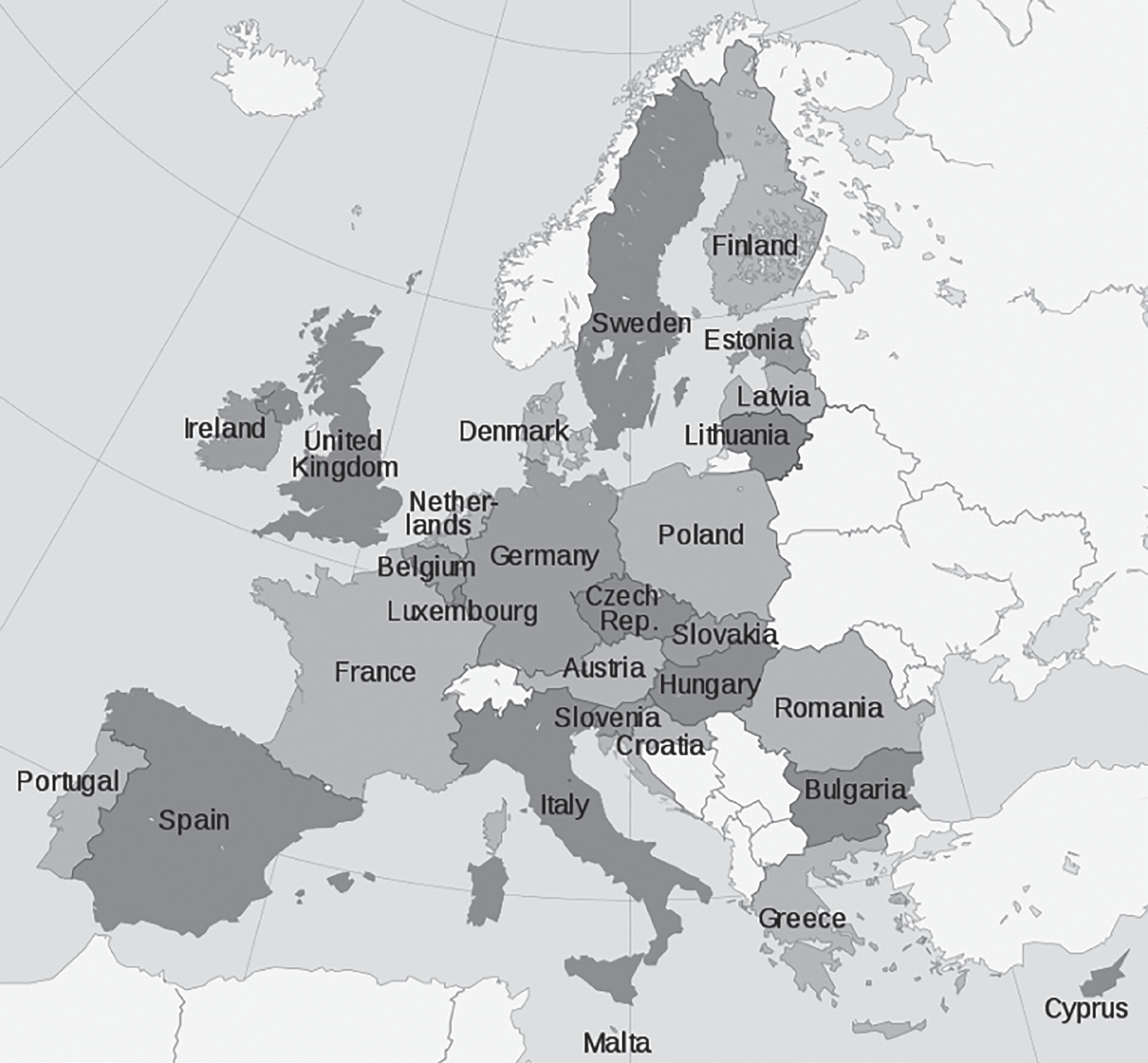
The Maastricht Treaty established the European Union in 1993 and introduced European citizenship.
The latest major amendment to the constitutional basis of the EU, the Treaty of Lisbon, came into force in 2009.
The EU has developed an internal single market through a standardised system of laws that apply in all member states.
EU policies aim to ensure the free movement of people, goods, services, and capital within the internal market, enact legislation in justice and home affairs, and maintain common policies on trade, agriculture, fisheries, and regional development.
Within the Schengen Area, passport controls have been abolished.
A monetary union has been established within union but lacks common Fiscal union.
The Lisbon Treaty now contains a clause under Article 50, providing for a member to leave the EU.
United Kingdom enacted the result of a membership referendum in June 2016 and is currently negotiating its withdrawal.
The EU as a whole is the largest economy in the world.
EU has a common foreign and security policy, thus developing a coordinated external relations and defence.
The membership of EU entails a partial delegation of sovereignty to the institutions in return for representation within those institutions, a practice often referred to as “pooling of sovereignty”.
To become a member, a country must meet the Copenhagen criteria, of the European Council which requires a stable democracy that respects human rights and the rule of law; a functioning market economy; and the acceptance of the obligations of membership, including EU law.
The four countries that are not EU members have partly committed to EU’s economy and regulations - Iceland, Liechtenstein and Norway.
The European Council gives political direction to the EU.
Council of European Union acts together with European Parliament as a legislature.
European Commission is the Executive arm.
Court of Justice of European Union ensures uniform application and interpretation of European Law.
European Central Bank together with national central bank determines monetary policy.
Financial Action Task Force
FINANCIAL ACTION TASK FORCE (FATF)

FATF is an inter-governmental “policy making” body established in 1989 by the Ministers of its Member jurisdictions.
The objectives of the FATF are to set standards and promote effective implementation of legal, for combating money laundering, terrorist financing and other related threats to the integrity of the international financial system.
The FATF has developed a series of recommendations that are recognised as the international standard for combating of money laundering and the financing of terrorism and proliferation of weapons of mass destruction.
FATF released recommendations like “Forty plus Nine”, ―Non-Cooperative Countries or Territories” (NCCTs), commonly called the FATF Blacklist.
Gulf Cooperation Council
GULF COOPERATION COUNCIL (GCC)
•The Gulf Cooperation Council (GCC) is a regional political and economic alliance made up of six energy- rich Gulf monarchies: Bahrain, Kuwait, Oman, Qatar, Saudi Arabia, and the United Arab Emirates.
About the GCC:
•The GCC was founded in 1981 with the aim of enhancing socio-economic, security, and cultural cooperation among its members.
•Its headquarters is based in Riyadh, Saudi Arabia.
•The member states— Bahrain, Kuwait, Oman, Qatar, Saudi Arabia, and the UAE meet annually to discuss matters of mutual interest and regional affairs.
India and GCC: Contours of cooperation
• The Gulf is India's “immediate” neighbor, separated only by the Arabian Sea.
• As the primary source of India’s energy needs, the Gulf plays a key role in our energy security, currently supplying 75% of our oil. With growing demand, India’s dependence is expected to rise to 90% by 2035.
• The GCC is India’s largest trading partner as a bloc, with two-way trade surpassing our relations with the European Union, ASEAN, and North America.
•Four GCC nations are among India’s top 10 trade partners.
•Additionally, an eight-million-strong Indian diaspora in the GCC remits $35 billion annually to India’s economy.
•Ongoing negotiations for an India-GCC Free Trade Agreement could pave the way for a new era of trade relations.
•While India and the GCC share a strong economic partnership, there is still significant room for progress in political ties.
The 39th session of the GCC Summit was recently held in Riyadh. At the conclusion, the council released the ‘Riyadh Declaration,’ which included 72 items addressing issues related to the Gulf countries, the region, and the world.
Qatar and Gulf Co-operation Council What is the issue?
Relations between the oil-rich states of the Gulf Cooperation Council have been fraught since Saudi Arabia, joined by Egypt, Bahrain and the United Arab Emirates, imposed an economic and diplomatic blockade on Qatar in 2017.
Why was the blockade imposed on Qatar?
•Saudi Arabia, Bahrain, the United Arab Emirates (UAE) and Egypt have imposed an air, land and sea blockade on Qatar since June 2017.
• Among the four, Saudi Arabia, Bahrain and the United Arab Emirates are the GCC countries.
•The blockading quartet has accused Qatar of supporting “terrorism”.
•Qatar has denied the charges and said the boycott aims to impinge on its sovereignty.
•Kuwait did not take part in the blockade.
• Kuwait’s government maintains smooth relations with Doha and has made several attempts to mediate between Qatar and its Gulf neighbours to help quell the conflict.
What are the implications of the blockade?
• The blockade has triggered tensions among other GCC countries as well.
•Saudi Arabia is upset that Oman and Kuwait did not join the embargo.
•Kuwait was trying to mediate between the rival’s camps.
• However, the act of mediation hasn’t gone down well with Riyadh.
•Oman continues to be independent of Saudi influence by keeping ties open with both Qatar and Iran.
•The blockade has made Qatar only more independent in its foreign policy decisions.
•It has stepped up assistance for Hamas in Gaza, accelerated a plan to allow Turkey to set up a military camp in the country and resisted calls to cut ties with Iran.
• The decision to quit OPEC and its absence at the GCC meet, point to an increasingly confident Qatar.
•But the intra-Gulf quarrels have dampened hopes for the integration of the region. Role of GCC today:
• Whether the GCC still has a relevant function and role in the region is questionable. Though it was created for the purpose of solidifying union ranks, the blockade imposed on Qatar by its neighbours has largely annulled these principles.
•The Gulf states have in the past differed in their views on several issues that have unfolded in the region over the past two decades. The role of the GCC has also been diminishing ever since the 2003 US-led invasion of Iraq, with the six states illustrating various approaches to the war and its consequences. This has been enhanced during the wave of protests that swept the Middle East in 2011, known as the Arab Spring. Saudi Arabia has gained a dominant role within the GCC today.
India- Israel- United Arab Emirates - Usa (i2u2)
INDIA- ISRAEL- UNITED ARAB EMIRATES - USA (I2U2)
•I2U2 was first mentioned in October 2021, following the Abraham Accords between Israel and UAE, to deal with issues concerning maritime security, infrastructure, and transport in region.
• It was established as an international forum to discuss common areas of mutual interest, strengthen economic partnership in trade and investment in respective regions and beyond.
•The I2U2, referred to as the ‘West Asian QUAD’.
•I2U2 lacks a military angle and focuses on the economy. It has identified six areas of cooperation in water, energy, transportation, space, health, and food security.
•It intends to mobilize private sector capital and expertise to help modernize infrastructure, low carbon
• development pathways for industries, improve public health, and promote development of critical emerging and green technologies.
Significance of I2U2 for India
•Indian Ocean: It will facilitate greater engagement across western Indian ocean which lies between India, Suez Canal and South Africa. At least 12 percent of world trade passes through the Suez Canal that links the Indian Ocean to the Mediterranean via the Red Sea.
•Access to market: It will help to enhance bilateral trade, facilitate access to strategic markets in West Asia, starting with the UAE, and could lead to significant job creation in India.
•Ties with Middle East: It will help India to deepen its ties with the Middle East, which serves India’s energy and economic interests and has a large diaspora presence. Additionally, it will enhance opportunity to expand ties with the US beyond Asia. India would help Israel to bridge the difference between Israel and Arab countries.
•Strengthen global position: After QUAD, India’s inclusion in I2U2 strengthens its global position. Such developments align India with other major powers like Russia, Europe, and China to address its national and regional concerns strategically.
•Security: It would help to minimise threats like maritime piracy, illegal smuggling of drugs and weapons, and terrorism.
Issues associated with I2U2:
• Lack of clarity: Strategic goals are not clear as many scholars see I2U2 as an organisation created to contain Iran, which could further disrupt relation between India and Iran. Asymmetry among members: The member nations have asymmetric power as USA and Israel are militarily stronger than compared to India and UAE.
•Cooperation: Countries in the I2U2 group have conflicting positions on how to deal with China, Russia and that may affect the future of the group and its prospects of success. For instance, India abstains from voting on Russia- Ukraine war.
•Security: I2 U2 may pose a challenge for India i.e. US- sponsored and backed Israel-Arab security deal would complicate India’s ‘strategic autonomy’ in the Middle East as a state that chooses not to take sides.
• Internal conflict in west Asia: The internal conflicts in the Arab world may lead to the significant partners of India like Iran splitting from the former into another group. Developing situation might lead to the creation of two groups: China, Pakistan, Russia, Iran, and Turkey, while India, Israel, the USA, and UAE are likely to be on the other side
India–africa Forum Summit (iafs)
INDIA–AFRICA FORUM SUMMIT (IAFS)
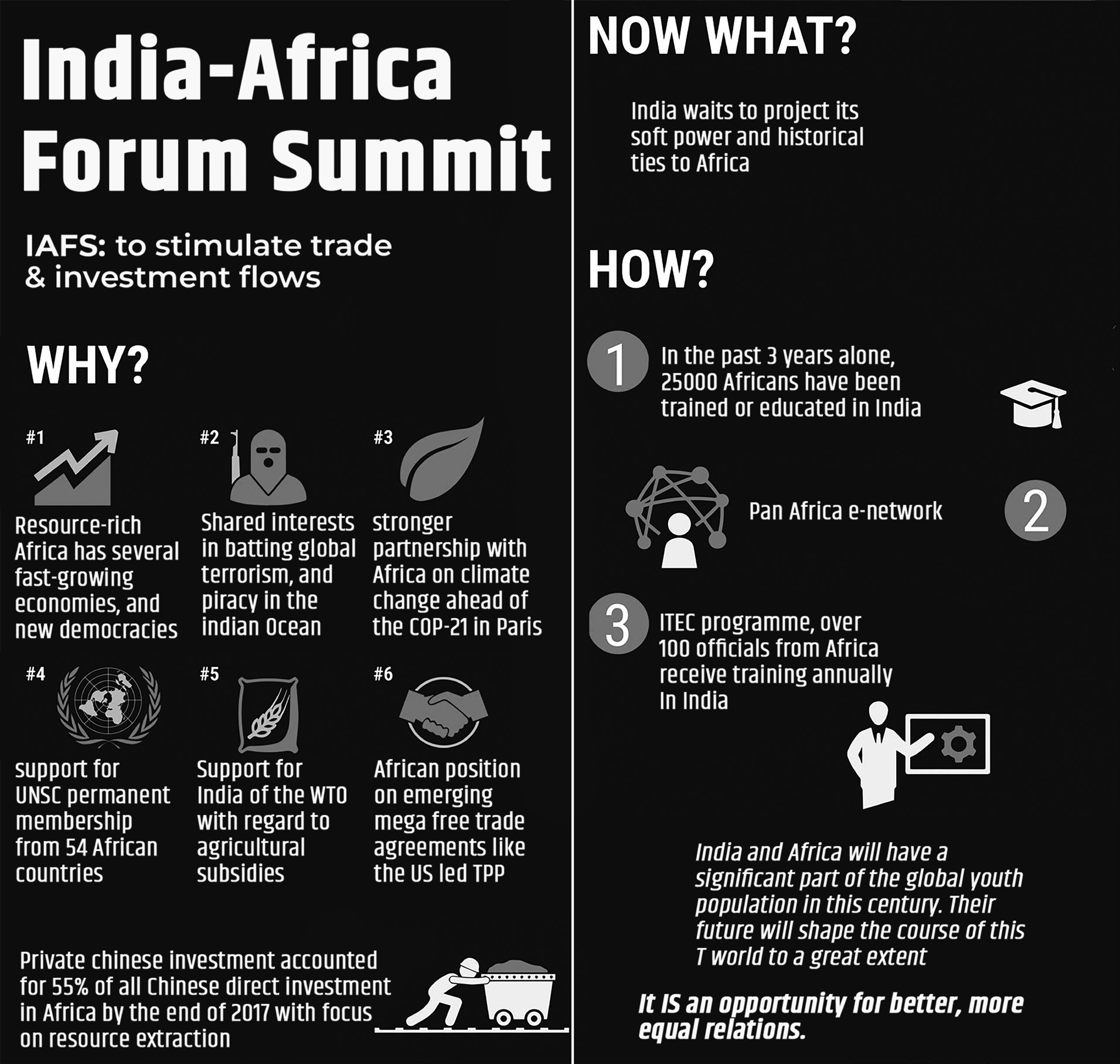
IAFS is the official platform for the African-Indian relations.
It was the first such meeting between the heads of state and government of India and 14 countries of Africa chosen by the African Union.
The topics discussed varied from rising oil and food prices to agriculture, trade, industry and investment, peace and security, promotion of good governance, ICT.
The first summit was held in New Delhi, followed by the second in Addis Ababa, the capital of Ethiopia. Since then, the summits have been organized on a rotational basis between New Delhi and Addis Ababa.
International Atomic Energy Agency
INTERNATIONAL ATOMIC ENERGY AGENCY (IAEA)
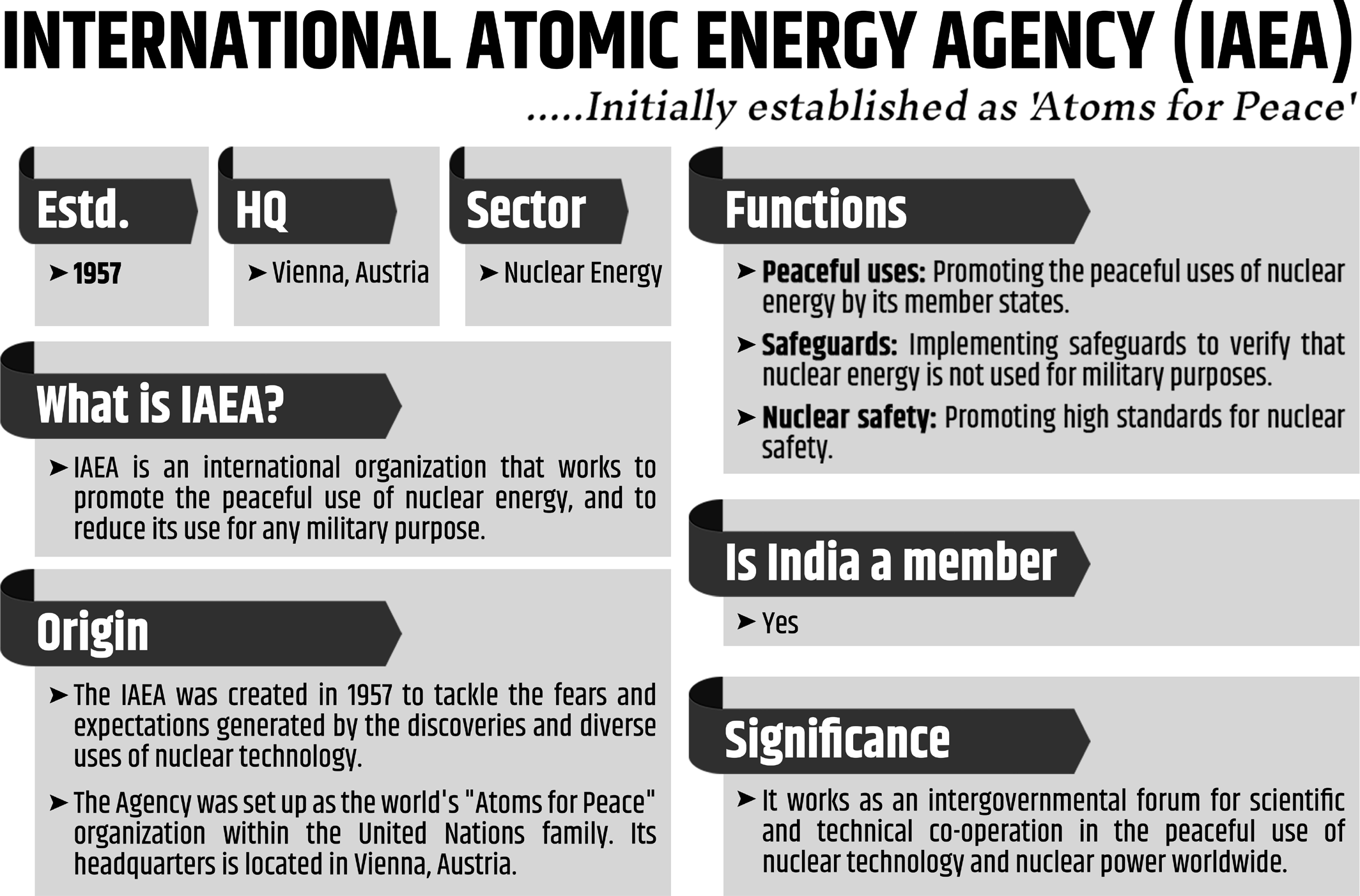
• The International Atomic Energy Agency (IAEA) is an international organization focused on promoting the peaceful use of nuclear energy while preventing its use for military purposes, including the development of nuclear weapons and materials.
• It was established as an independent organization not directly controlled by the UN, but it reports to both the United Nations General Assembly and the Security Council.
• The IAEA is often referred to as the world’s "Atoms Peace" organization. Headquartered in Vienna, the IAEA has 180 nations.
• North Korea has withdrawn its candidacy from the IAEA.
• Unlike most other specialized international agencies, IAEA collaborates primarily with the Security Council rather than the UN Economic and Social Council.
• The IAEA has developed the Program of Action Cancer Therapy (PACT), which aims to help developing countries establish, improve, or expand radiotherapy treatment programs.
International Bank for Reconstruction and Development
INTERNATIONAL BANK FOR RECONSTRUCTION AND DEVELOPMENT (IBRD)
• Global Development Cooperative: The International Bank for Reconstruction and Development (IBRD) is owned by 189 member countries, making it the largest development bank in the world.
• Headquarters: Located in Washington, D.C.
• Establishment: Founded in 1944 to help finance the rebuilding of European nations after World War II.
• Mission Support: IBRD contributes to the World Bank Group’s mission by offering loans, guarantees, risk management products, and advisory services to middle- income and creditworthy low-income countries.
• Sectoral Financing: IBRD finances projects across all sectors and provides technical support and expertise throughout the project lifecycle.
• Focus on Lower Middle-Income Countries: It places special emphasis on supporting lower-middle-income countries as they progress economically, helping them transition from IDA to become IBRD clients.
• Addressing Global Challenges: The bank also plays a key role in coordinating responses to regional and global issues.
• Ownership and Governance: IBRD’s member governments are its shareholders, contributing paid-in capital and holding voting rights on key matters.
• Capital Acquisition: In addition to shareholder contributions, IBRD raises most of its capital through bond issues in international capital markets.
Membership Requirements: All IBRD members mustalso be members of the International Monetary Fund (IMF). Only IBRD members are eligible to join other World Bank institutions, such as the IDA.
International Criminal Court
INTERNATIONAL CRIMINAL COURT (ICC)
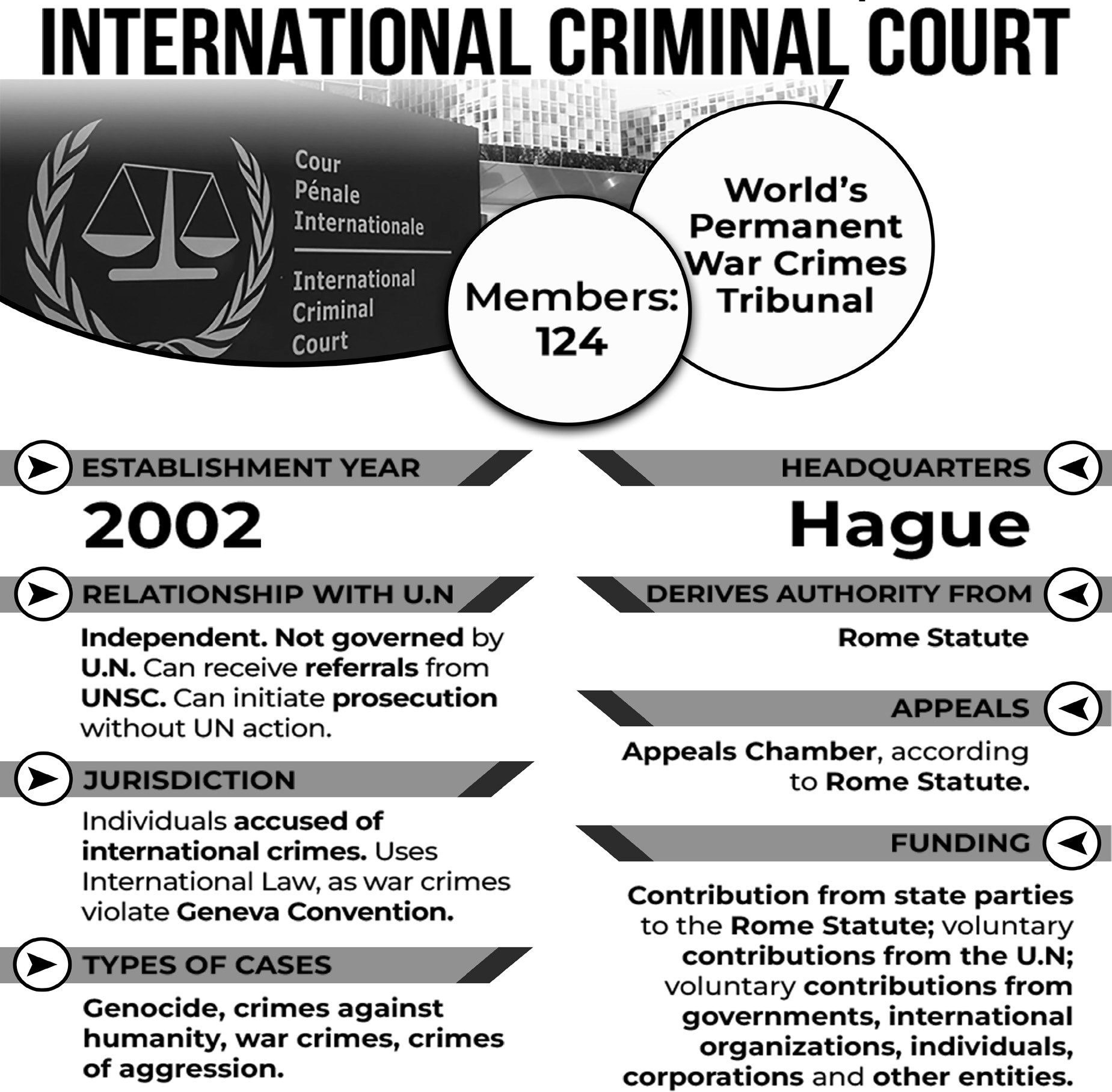
The ICC (International Criminal Court) is an intergovernmental organization and international tribunal based in The Hague, Netherlands. The ICC has the authority to prosecute individuals for international crimes, including genocide, crimes against humanity, war crimes, and the crime of aggression.
It is the world’s first permanent international criminal court.
The ICC is designed to complement national judicial systems and can only exercise jurisdiction under specific conditions.
States that ratify the Rome Statute become members of the ICC, bringing the total membership to 125 countries.
However, Burundi has officially announced its intention to withdraw from the Rome Statute.
Cooperation with the ICC from non-member states is voluntary.
When a case is referred to the ICC by the UN Security Council, all UN member states are required to cooperate, as its decisions are binding on all of them.
India is not a signatory to the Rome Statute.
Difference between ICJ and ICC
• The International Criminal Court (ICC) was established under the Rome Statute as an independent international organization in 2002 and operates separately from the UN.
• While all UN member states automatically become members of the International Court of Justice (ICJ), countries must individually join the ICC by signing the Rome Statute.
• The ICJ does not have jurisdiction over individuals accused of war crimes or crimes against humanity. In contrast, the ICC prosecutes individuals for genocide, crimes against humanity, war crimes, and crimes of aggression under the Rome Statute.
• The ICJ is not a criminal court; it does not have a prosecutor to initiate cases. Instead, it settles disputes between member states, with their consent, on issues such as sovereignty, trade, natural resources, treaty violations, and treaty interpretation.
International Energy Agency
INTERNATIONAL ENERGY AGENCY (IEA)
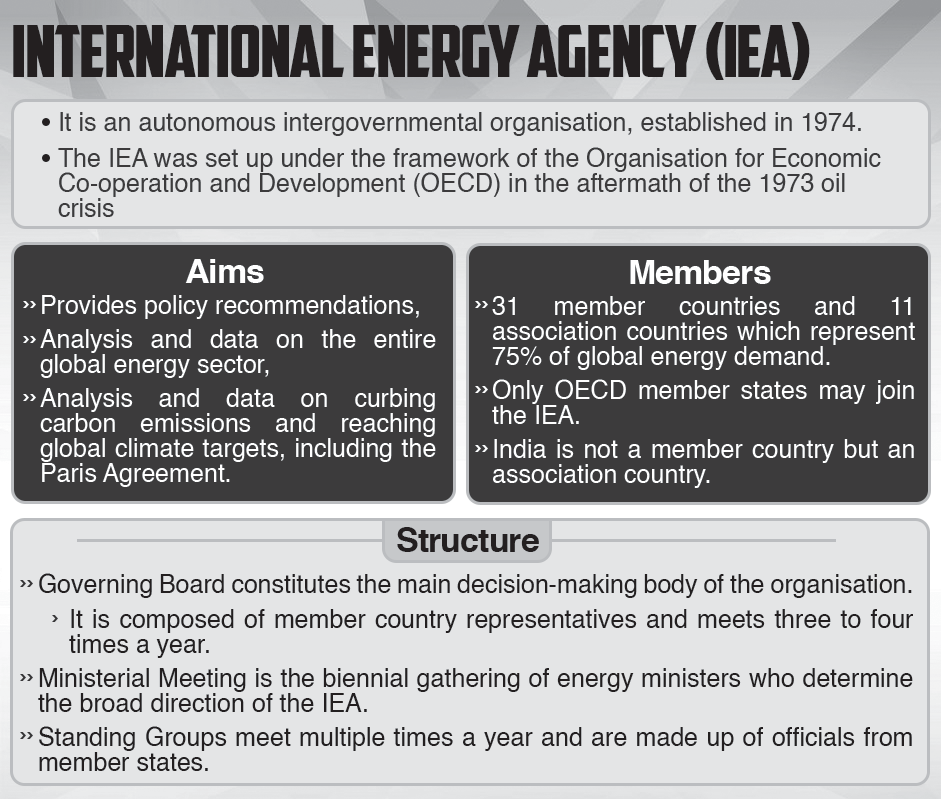
The International Energy Agency (IEA) is an autonomous intergovernmental organization based in Paris, operating within the framework of the Organisation for Economic Co-operation and Development (OECD).
Founded in 1974, the IEA was originally to help countries coordinate responses to significant disruptions in oil supply.
Only OECD member states can join the IEA.
All OECD member states, except Chile, Iceland, Israel, Mexico, and Slovenia, are members of the IEA.
• China, India, Indonesia, Morocco, Singapore, and Thailand are associate members of the IEA.The IEAaddresses a wide range of energy issues, including oil, gas, and coal supply and demand, renewable energy technologies, electricity markets, energy efficiency, access to energy, and demand-side management.
• While the IEA primarily serves as a policy advisor to its member states, it also collaborates with non-member countries, especially China, India, and Russia.
• Its key publications include the World Energy and Key World Energy Statistics.
• Member countries are required to maintain oil stock levels equivalent to at least 90 days of the previous year’s net imports.
International Maritime Organisation
INTERNATIONAL MARITIME ORGANISATION (IMO)
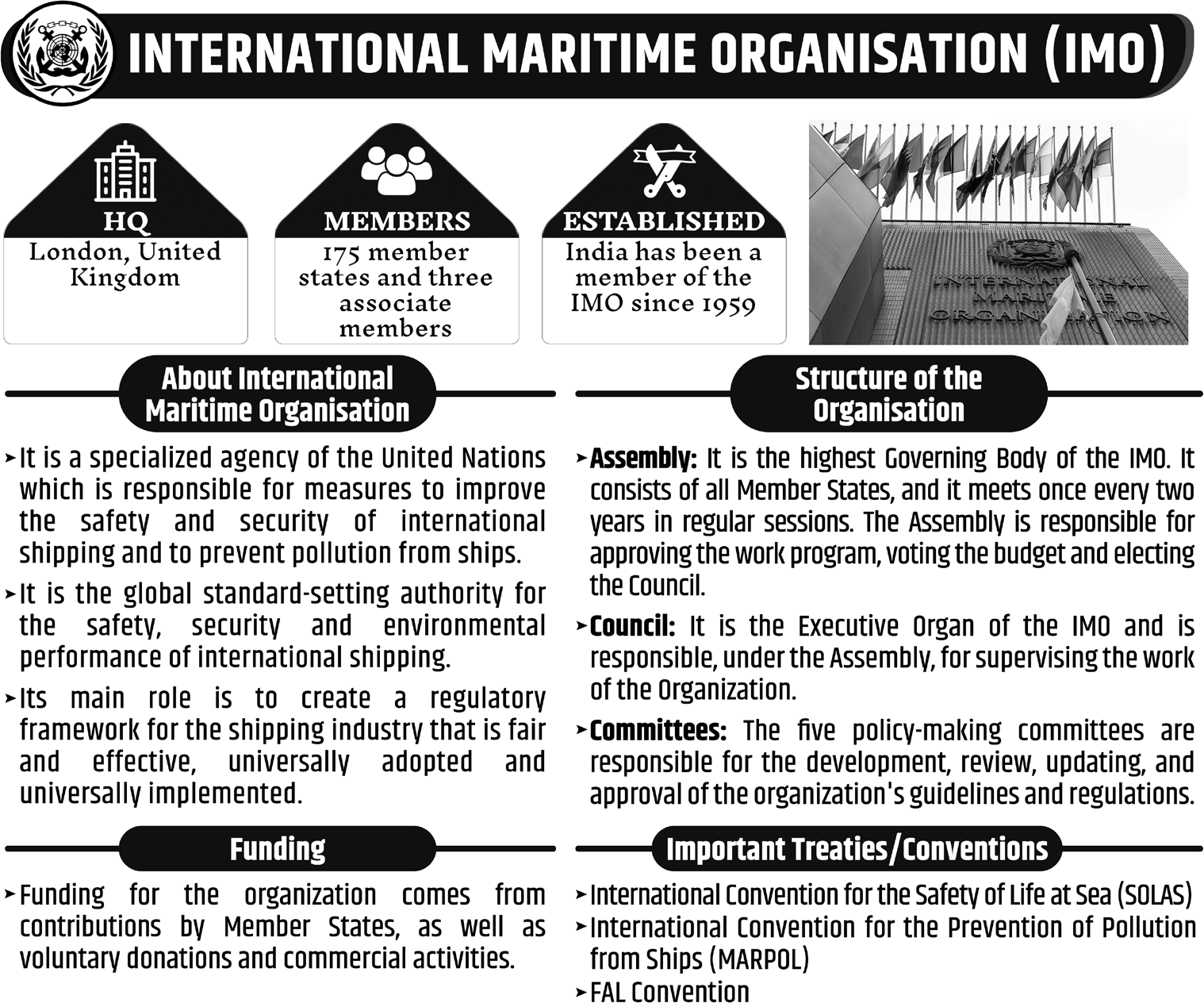
IMO is a specialized agency of the United Nations.IMO is the global standard-setting authority for the safety, security and environmental performance of international shipping by creating a regulatory framework for the shipping industry.
Headquartered in London, United Kingdom, the IMO has 172 Member States and three Associate Members.
Observer status is granted to qualified non-governmental organisations.
• IMO’s role is to create a level playing-field so that ship operators cannot address their financial issues by simply cutting corners and compromising on safety, security and environmental performance.
• IMO measures cover all aspects of international shipping including ship design, construction, equipment, manning, operation and disposal.
• The most significant outcome of IMO was the International Convention for the Prevention of Pollution from Ships, 1973.
• It covers not only accidental and operational oil pollution but also different types of pollution by chemicals, goods in packaged form, sewage, garbage and air pollution.
• The IMO has also enacted a Port State Control (PSC) authority, allowing domestic maritime authorities such as coast guards to inspect foreign-flag ships calling at ports of the many port states.
• The Global Maritime Distress and Safety System (GMDSS) adopted by IMO helps a ship that is in distress anywhere in the world can be virtually guaranteed assistance.
International Monetary Fund
INTERNATIONAL MONETARY FUND (IMF)
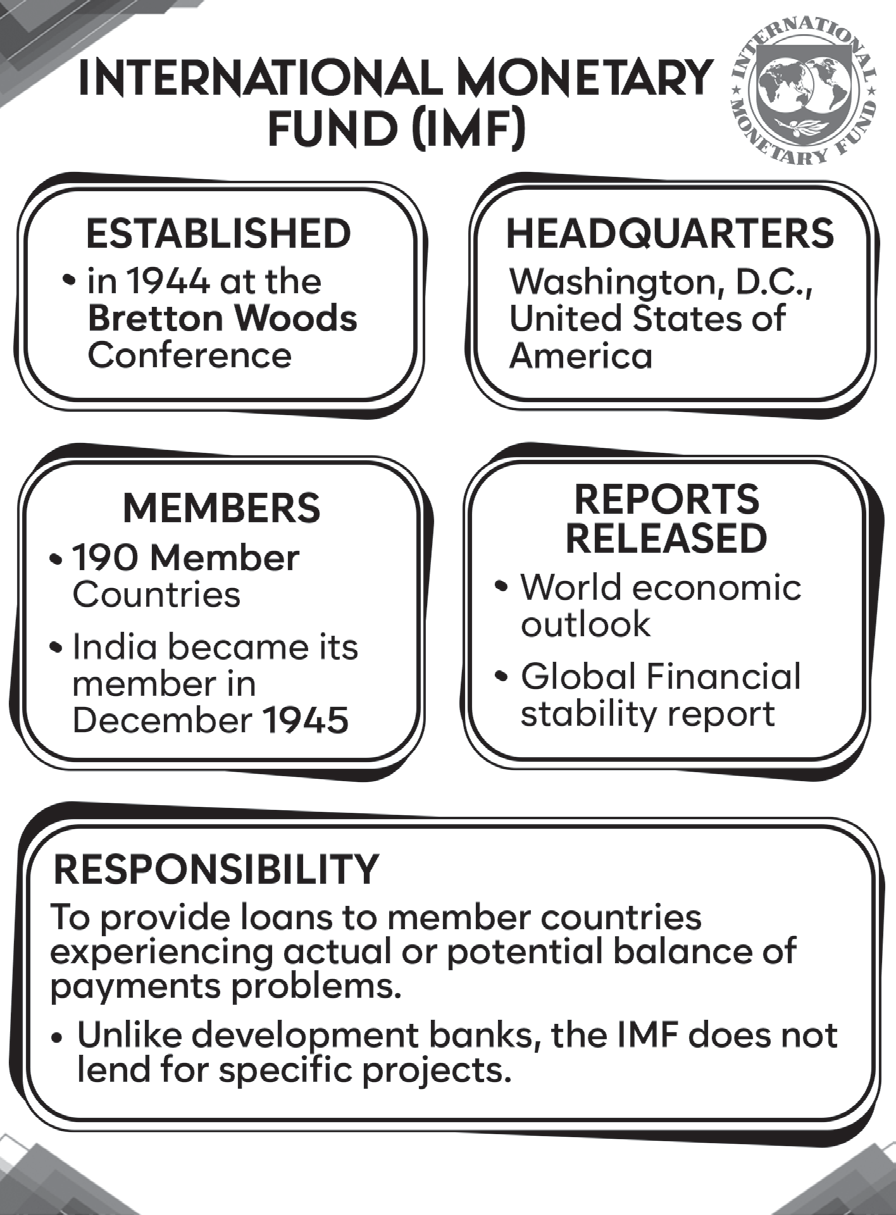
• The Special Drawing Rights (SDR) is an reserve asset established by the IMF in 1969 to supplement the official reserves of its member countries.
• Gold continues to be a significant asset in the reserve holdings of many countries, and the IMF remains one of the world’s largest official holders of gold.
• Unlike the United Nations General Assembly, each country has one vote, decision-making at the IMF is structured to reflect the relative economic positions of its member countries on the global stage.
International Seabed Authority
INTERNATIONAL SEABED AUTHORITY (ISA)
• The International Seabed Authority (ISA) is an intergovernmental organization based in Kingston, Jamaica, established to oversee, regulate, and manage all mineral-related activities in the international seabed area beyond national jurisdiction.
• According to UNCLOS, the international seabed area under ISA's jurisdiction is defined as "the seabed, ocean floor, and subsoil thereof, beyond the limits of national
jurisdiction."
• The ISA was created by the Law of the Sea Convention.
• The Authority holds observer status in the United Nations.
The ISA operates by forming contracts with both public and private entities, granting them permission to explore and, ultimately, exploit designated areas on the deep seabed for mineral resources vital for technological production.The Convention also established a body called the Enterprise, intended to serve as the Authority’s own mining operator. However, no concrete actions have
been taken to establish this entity.
Under 15-year contracts, the ISA has granted permission to 8 entities to exploit the seabed for polymetallic nodules.
The 8 contractors include India, Germany, the Russian Federation, the Inter-Ocean Metal Joint Organization (IOM)
— which comprises Bulgaria, Cuba, Slovakia, the Czech Republic, Poland, and the Russian Federation — as well as the Republic of South Korea, China, Japan, and France.
In 2008, the Authority received two new applications from private firms based in developing Pacific island nations, namely Nauru and Tonga.
India is currently engaged in the exploitation of polymetallic nodules in the Central Indian Basin of the Indian Ocean.
International Tribunal for the Law of the Sea
INTERNATIONAL TRIBUNAL FOR THE LAW OF THE SEA (ITLOS)
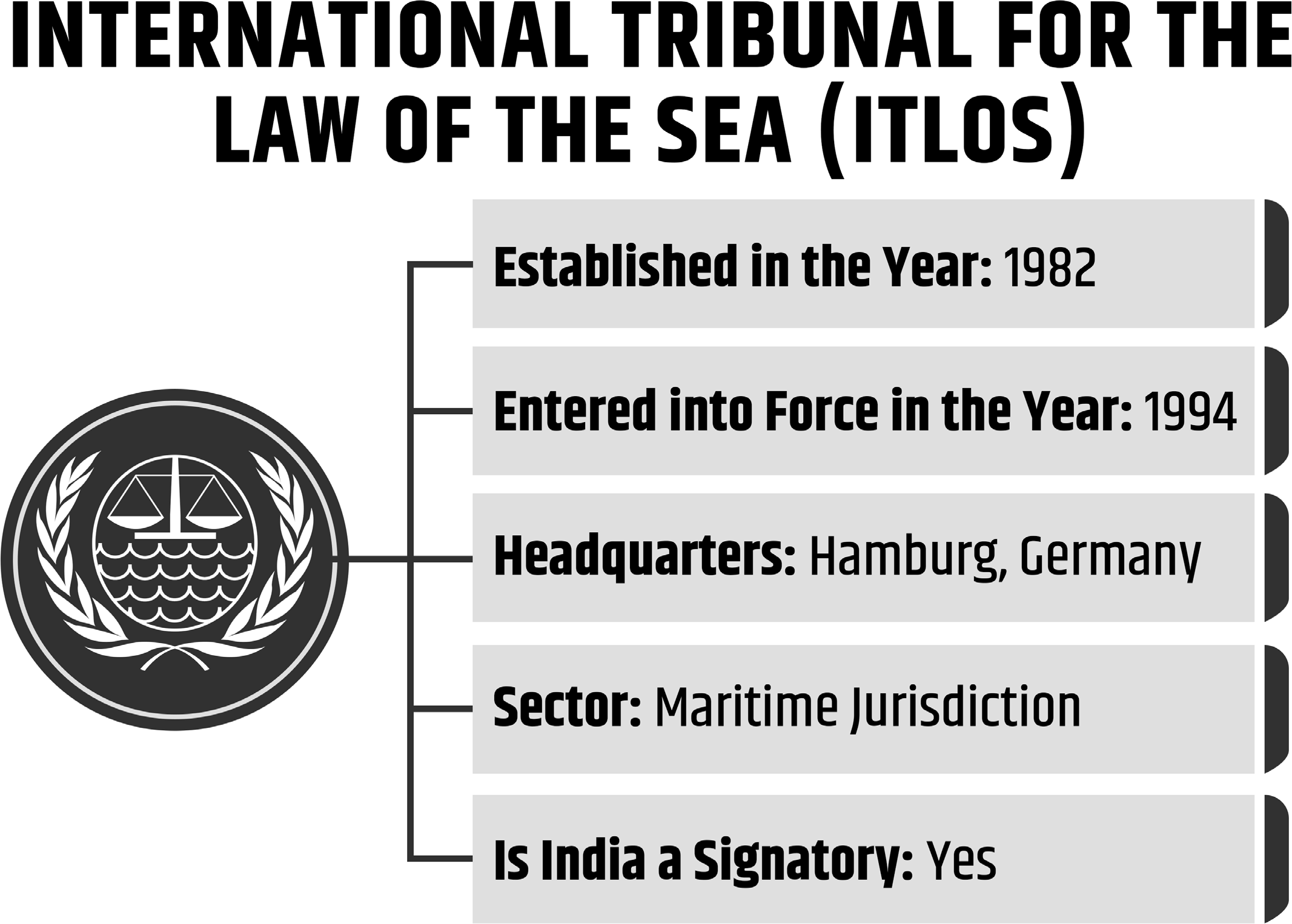
The International Tribunal for the Law of the Sea (ITLOS) is an independent judicial body established by UNCLOS to resolve disputes concerning the interpretation and application of the Convention.
The Tribunal consists of 21 independent members, elected for their high reputation for fairness and integrity, as well as recognized expertise in the law of the sea.
ITLOS is open to States Parties to the Convention, meaning countries and international organizations that are signatories to UNCLOS.
It is also accessible to entities beyond States Parties, including countries or intergovernmental organizations not part of the Convention, as well as state-owned enterprises and private entities.
The Tribunal is located in Hamburg, Germany.
The same Convention that established ITLOS also created the International Seabed Authority, which regulates seabed mining beyond national jurisdiction.
International Whaling Commission
INTERNATIONAL WHALING COMMISSION (IWC)
UNCLOS requires States Parties to resolve disputes concerning the Convention's interpretation or application through peaceful means.
• However, if the parties cannot reach a peaceful settlement on their own, they are obligated to follow compulsory dispute settlement procedures, which result in binding decisions, subject to certain limitations and exceptions in the Convention.
• Unless agreed otherwise, the Tribunal’s jurisdiction is mandatory in cases related to the prompt release of vessels and crews.
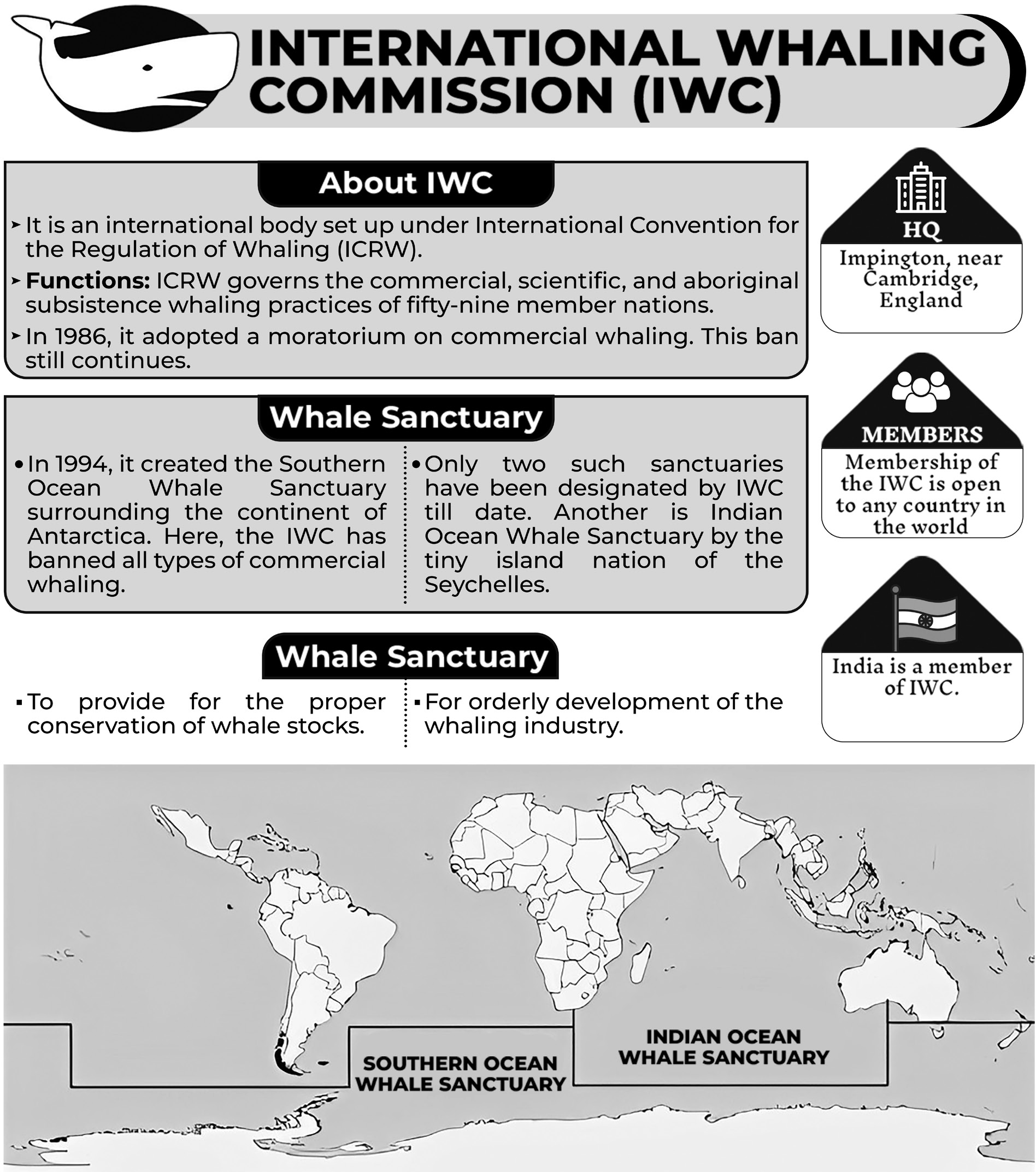
• IWC was set up under the International Convention for the Regulation of Whaling for the proper conservation of whale stocks and thus make possible the orderly development of the whaling industry.
• An integral part of the Convention is legally binding Schedule which sets out specific measures.
• These measures include catch limits (which may be zero as it the case for commercial whaling) by species and area, designating specified areas as whale sanctuaries, protection of calves and females accompanied by calves, prescribe open and closed seasons and areas for whaling and restrictions on hunting methods.
• The Commission also co-ordinates and funds conservation work on many species of cetacean.
• In addition to research, this includes building an international entanglement response capacity, working to prevent ship strikes, and establishment of Conservation Management Plans for key species and populations.
• In 1982 the IWC adopted a moratorium on commercial whaling.
• Currently, Japan, Russia, and a number of other nations oppose this moratorium.
• The IWC allows non-zero whaling quotas for aboriginal subsistence and also member nations may issue ‘Scientific Permits’ to their citizens.
• In 1994, the Southern Ocean Whale Sanctuary was created by the IWC 88 members.
• Membership of the IWC is open to any country in the world.The IWC has no ability to enforce any of its decisions through penalty imposition.
• The headquarters of the IWC is in Impington, near Cambridge, England.
• India is a member of IWC
New Development Bank
NEW DEVELOPMENT BANK (NDB)
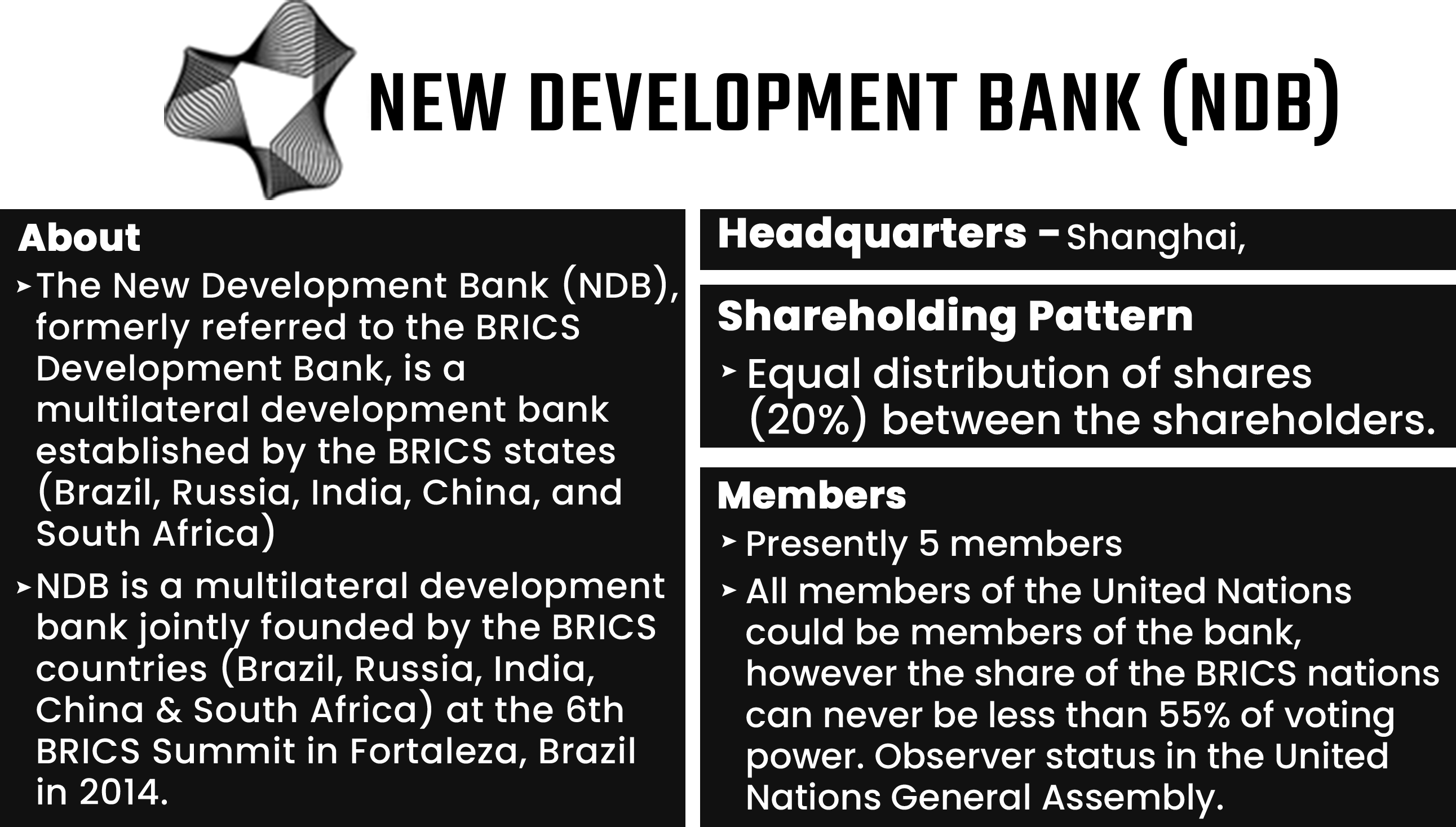
The Bank supports public or private projects through loans, guarantees, equity participation and other financial instruments.
The first regional office of the NDB will be opened in Johannesburg, South Africa.
The idea for setting up the bank was proposed by India at the 4th BRICS summit in 2012 held in Delhi.
Bank’s Articles of Agreement specify that all members of the United Nations could be members of the bank; however, the share of the BRICS nations can never be less than 55% of voting power.
The Agreement on the NDB specifies that the voting power of each member will be equal to the number of its subscribed shares in the capital stock of the bank.
The initial authorized capital of the bank is $100 billion and initial subscribed capital of the NDB is $50 billion.
Four new countries recently joined the NDB in 2021. Bangladesh, Uruguay and the UAE joined the New Development Bank in September 2021, and Egypt joined the New Development Bank in December 2021.
The bank aims to contribute to development plans established nationally through projects that are socially, environmentally and economically sustainable.
The bank’s primary focus of lending will be infrastructure and sustained development projects.
Recently the bank’s President said 60% of the funding will go to renewable
Organisation for Economic Co-operation and Development (oecd)
ORGANISATION FOR ECONOMIC CO-OPERATION AND DEVELOPMENT (OECD) (1961)
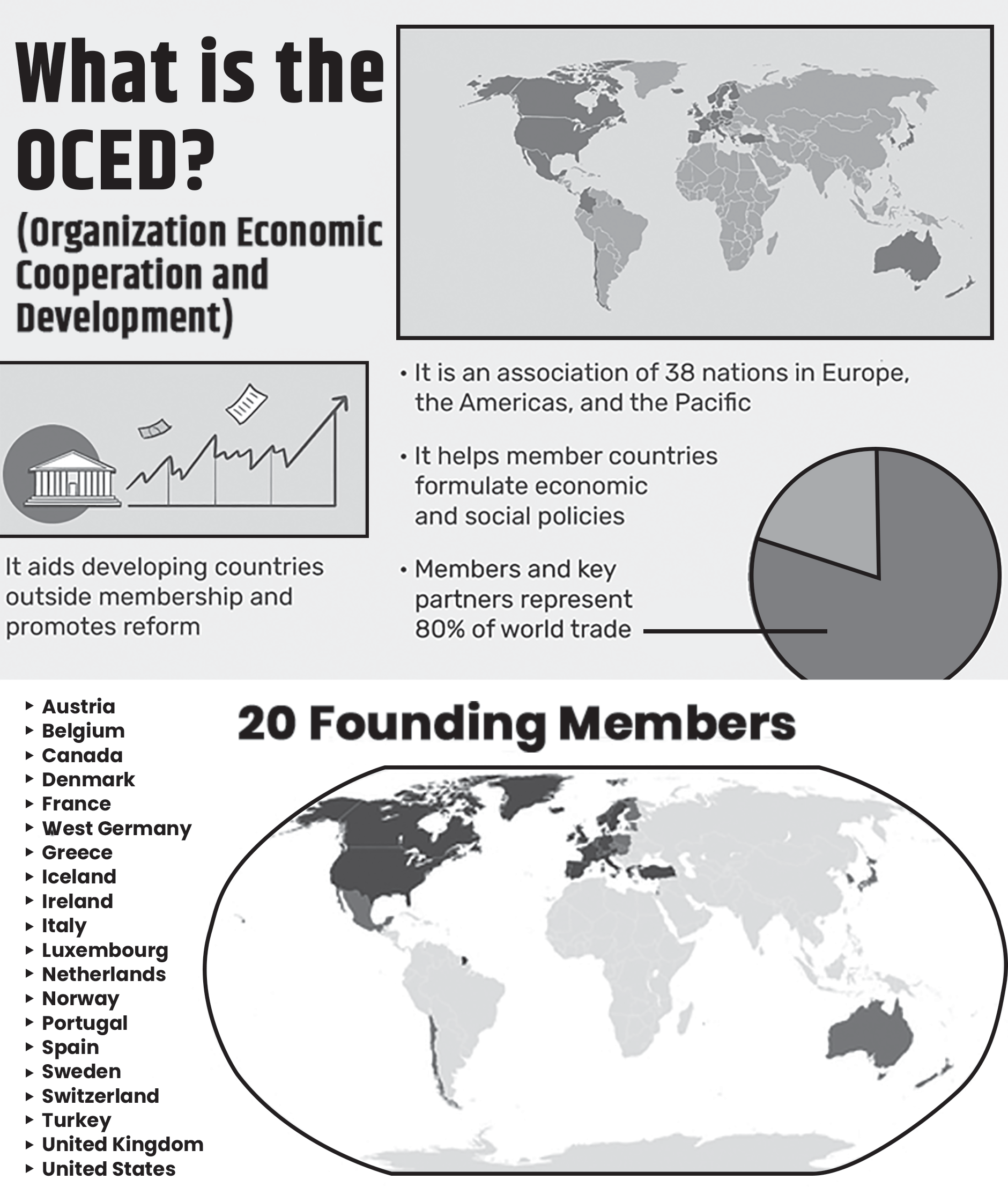
• OECD nations are committed to democracy and market economy, providing a platform to compare policy experiences, seeking answers to common problems, identify good practices and coordinate domestic and international policies of its members.
• It has created agencies such as the OECD Centre, International Energy Agency, and Financial Action Task Force on Money Laundering.
OECD mandate covers economic, environmental, and social issues.It acts by peer pressure to improve policy and implement “soft law”—non-binding instruments that can occasionally lead to binding treaties.
OECD administers and publishes the Programme International Student Assessment (PISA), which is a regular assessment of the attainment of 15-year-olds in three areas of knowledge thus measuring the performance of educational systems across countries.
India is also a signatory of this policy.
Organisation of the Petroleum Exporting Countries
ORGANISATION OF THE PETROLEUM EXPORTING COUNTRIES (OPEC) (1960)
•OPEC is an intergovernmental organization of 12 nations with headquarters in Vienna.
• Angola, Ecuador and Qatar are no longer members of OPEC grouping.
• The 12 countries accounted for an estimated 42% of global oil production and 73% of the world’s “proven” oil reserves.
• OPEC’s stated mission is to coordinate and unify the petroleum policies of its member countries and ensure the stabilization of oil markets, in order to have regular supply of petroleum to consumers, a steady income to producers, and a fair return on capital for those investing in the petroleum industry.
•Two-thirds of OPEC’s oil production and reserves are in its six Middle Eastern countries that surround the oil rich Persian Gulf.
•Gabon recently rejoined OPEC.
• The OPEC Conference ordinarily meets at least twice a year and in additional extraordinary sessions when necessary.
•OPEC collaborated with five other international organizations (APEC, Eurostat, IEA, OLADE (es), UNSD) to improve the availability and reliability of oil data.
•They launched the Joint Oil Data Exercise, which in 2005 was joined by IEF and renamed the Joint Organisations Data Initiative (JODI), covering more than 90 percent of the global oil market.
•GECF joined as an eighth partner in 2014, enabling JODI also to cover nearly 90 percent of the global market for natural gas.
•Since 2007, OPEC has published the “World Oil Outlook” ( WOO) annually, in which it presents a comprehensive analysis of the global oil industry including medium- and long-term projections for supply and demand.
Outer Space Treaty
OUTER SPACE TREATY (1967)
The Outer Space Treaty is an international agreement that mandates the use of outer space solely for peaceful purposes.
Enacted in 1967, it was initially ratified by the United States, the Soviet Union, the United Kingdom, and several other countries, laying the foundation for international space law.
Key provisions of the Treaty include a ban on placing weapons of mass destruction in Earth's orbit, on the Moon, or any other celestial body, and a prohibition against stationing such weapons in outer space.
However, the Treaty does not prevent the deployment of conventional weapons in orbit, meaning certain destructive strategies, like kinetic bombardment, may still be allowed.
Additionally, the Treaty explicitly forbids any government from claiming ownership of celestial bodies or resources, such as the Moon or planets.
Permanent Court of Arbitration
PERMANENT COURT OF ARBITRATION (PCA)
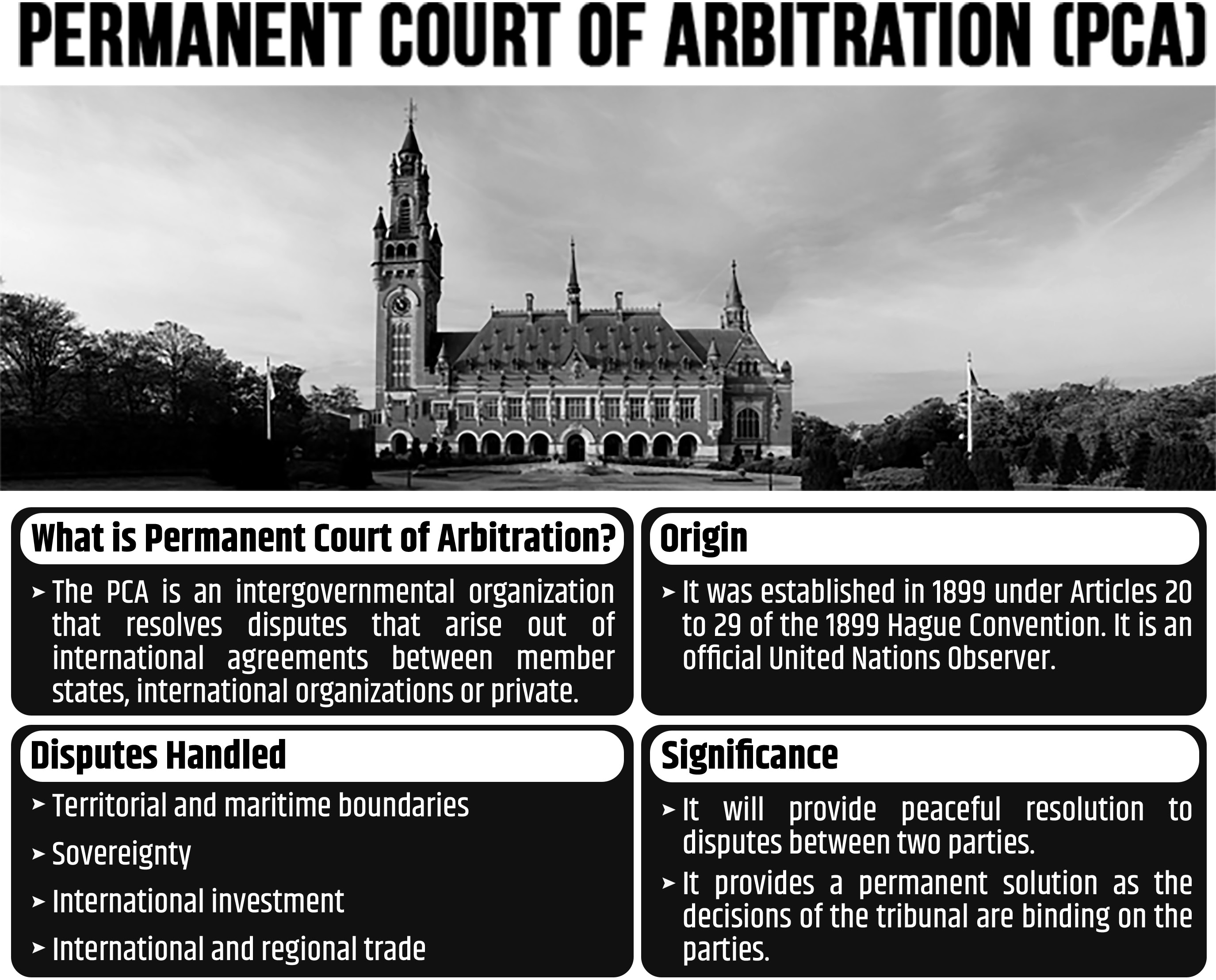
• The Permanent Court of Arbitration (PCA) is anintergovernmental organization based in The Hague, Netherlands.
The PCA is not a traditional court; instead, it offers arbitral tribunal services to resolve disputes between member states, international organizations, or private parties arising from international agreements.
The cases it handles cover a wide range of legal issues, including territorial and maritime boundaries, sovereignty, human rights, international investment, and international trade.
The PCA does not have permanent judges; rather, the parties involved in a dispute select the arbitrators themselves.
While the PCA is not a UN agency, it holds status in the UN General Assembly.
PCA rulings are binding, but the tribunal lacks enforcement powers.
This limitation is evident in recent cases, such as South China Sea dispute.
Un Convention on the Law of Sea
UN CONVENTION ON THE LAW OF SEA (UNCLOS)
The United Nations Convention on the Law of the Sea (UNCLOS) is an international agreement that emerged from the Third United Nations Conference on the Law of the Sea (UNCLOS III).
This treaty provides a regulatory framework for the useof the world’s seas and oceans, aiming to ensure the conservation and equitable use of resources, protect the marine environment, and preserve the living resources of the sea.
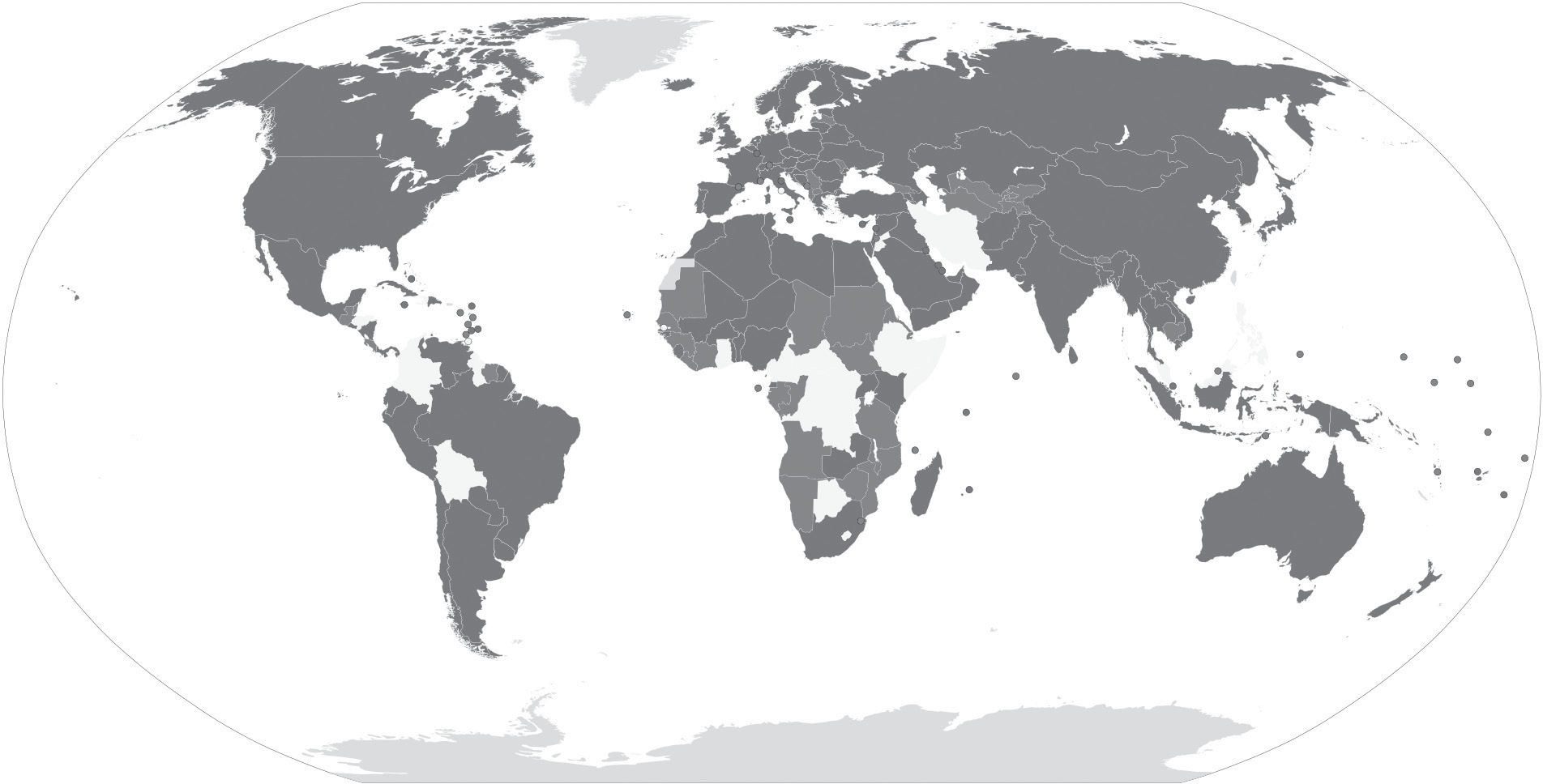
• A total of 167 countries, along with the UN Observer state of Palestine, the Cook Islands, Niue, and the European Union, are parties to the Convention.
• The UN does not have a direct operational role in implementing the Convention. However, organizations such as the International Maritime Organization, the International Whaling Commission, and the International Seabed Authority (ISA) play important roles.
• Key issues addressed by the Convention include setting maritime boundaries, navigation rights, archipelagic status, transit regimes, exclusive economic zones (EEZs), continental shelf jurisdiction, deep seabed mining, the exploitation regime, protection of the marine environment, scientific research, and dispute resolution.
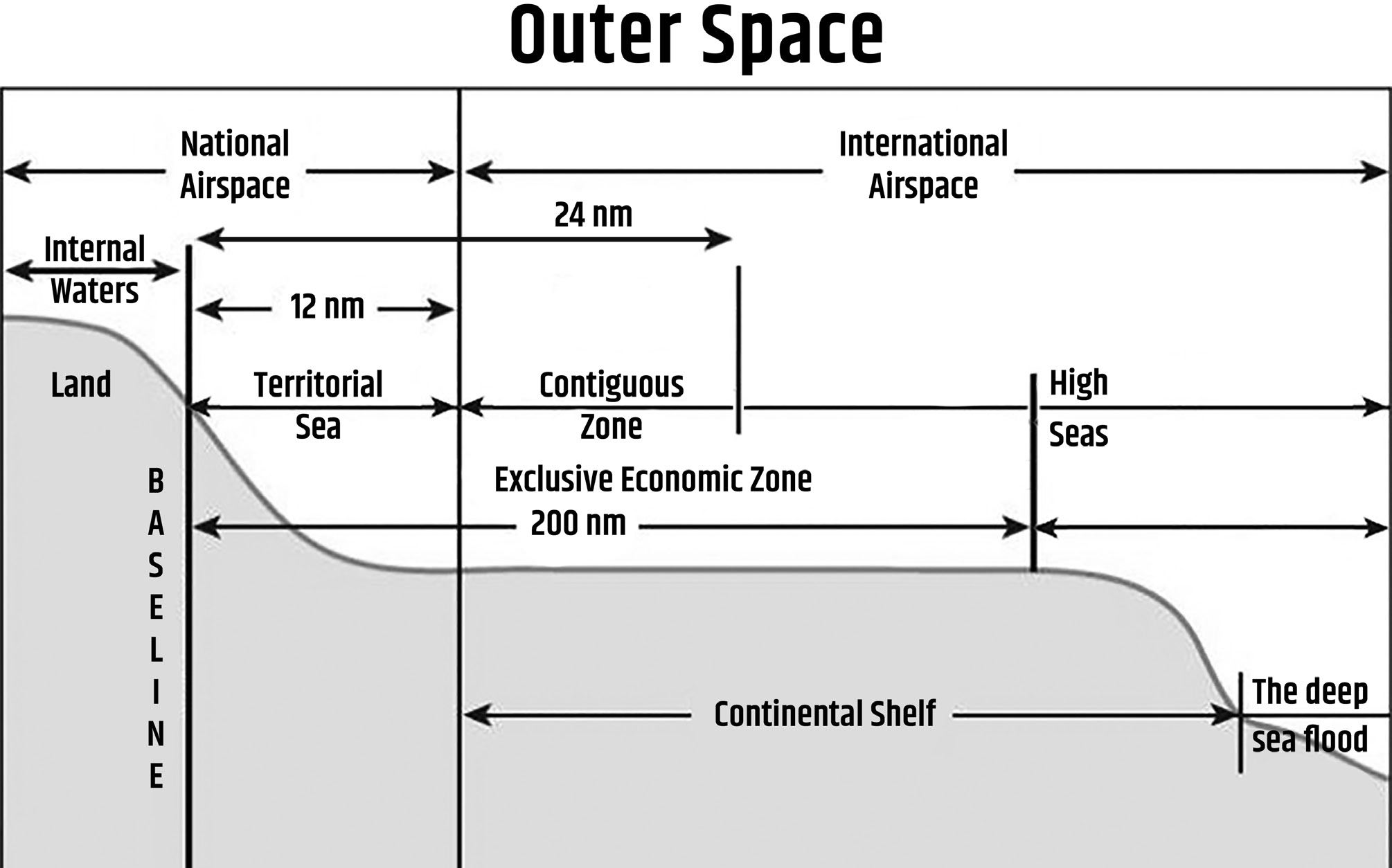
• The Convention defines important maritime zones, including Internal Waters, Territorial Waters, Archipelagic Waters, Contiguous Zones, Exclusive
Economic Zones (EEZs), and the Continental Shelf.
• Mineral resource exploitation in deep seabed areas beyond national jurisdiction is regulated by the International Seabed Authority, based on the "Common Heritage of Mankind" principle.
• UNCLOS also grants landlocked states the right of access to and from the sea, without being subject to transit taxes by neighboring states.
• According to convention, Ships and aircraft of all countries are allowed “transit passage” through straits used for international navigation.
• Coastal States have sovereign rights in a 200-nautical mile exclusive economic zone (EEZ) with respect to natural resources and certain economic activities, and exercise jurisdiction over marine science research and environmental protection.
• All other States have freedom of navigation and over flight in the EEZ, as well as freedom to lay submarine cables and pipelines.
• Land-locked and geographically disadvantaged States have the right to participate on an equitable basis in exploitation of an appropriate part of the surplus of the living resources of the EEZ’s of coastal States of the same region or sub-region.
• All marine scientific research in the EEZ and on the continental shelf is subject to the consent of the coastal State, but in most cases, they are obliged to grant consent to other States when the research is for peaceful purposes.
• Disputes can be submitted to the International Tribunal for the Law of the Sea established under the Convention, to the International Court of Justice, or to arbitration.
• The Tribunal has exclusive jurisdiction over deep seabed mining disputes.
World Bank
WORLD BANK
The World Bank is a component of the World Bank Group, which is part of the United Nations system

The aim of World Bank is to
Goal to End Extreme Poverty: The World Bank aims to reduce the global population living in extreme poverty to just 3% by 2030.
Promoting Shared Prosperity: The goal is to raise the incomes of the poorest 40% of the population in every country.
• Supporting Sustainable Development: The World Bank is committed to fostering development that is both environmentally and economically sustainable.
• Focus on Foreign Investment and Trade: All World Bank decisions are designed to encourage foreign investment, international trade, and capital investment.
• Engagement with Middle-Income Countries (MICs): The World Bank actively collaborates with middle-income countries (MICs) as both clients and shareholders. MICs represent over 60% of the IBRD's portfolio.
• Partnership with the World Health Organization: Alongside the WHO, the World Bank manages the International Health Partnership (IHP+), a coalition of partners working to improve health outcomes in developing countries
• Clean Air Initiative (CAI): The World Bank's Clean Air Initiative (CAI) promotes innovative solutions for improving air quality in cities. Through global partnerships, the initiative focuses on sharing knowledge and experiences to advance air quality efforts in select regions.
• Reports released - Commodity markets outlook, Doing business report, Global economic prospects, Globalfinancial development report, International debt statistics, World development report, World development indicators, Poverty and shared prosperity.
• WORLD BANK GROUP
• The World Bank Group is a family of five international organizations that provide leveraged loans to developing countries.
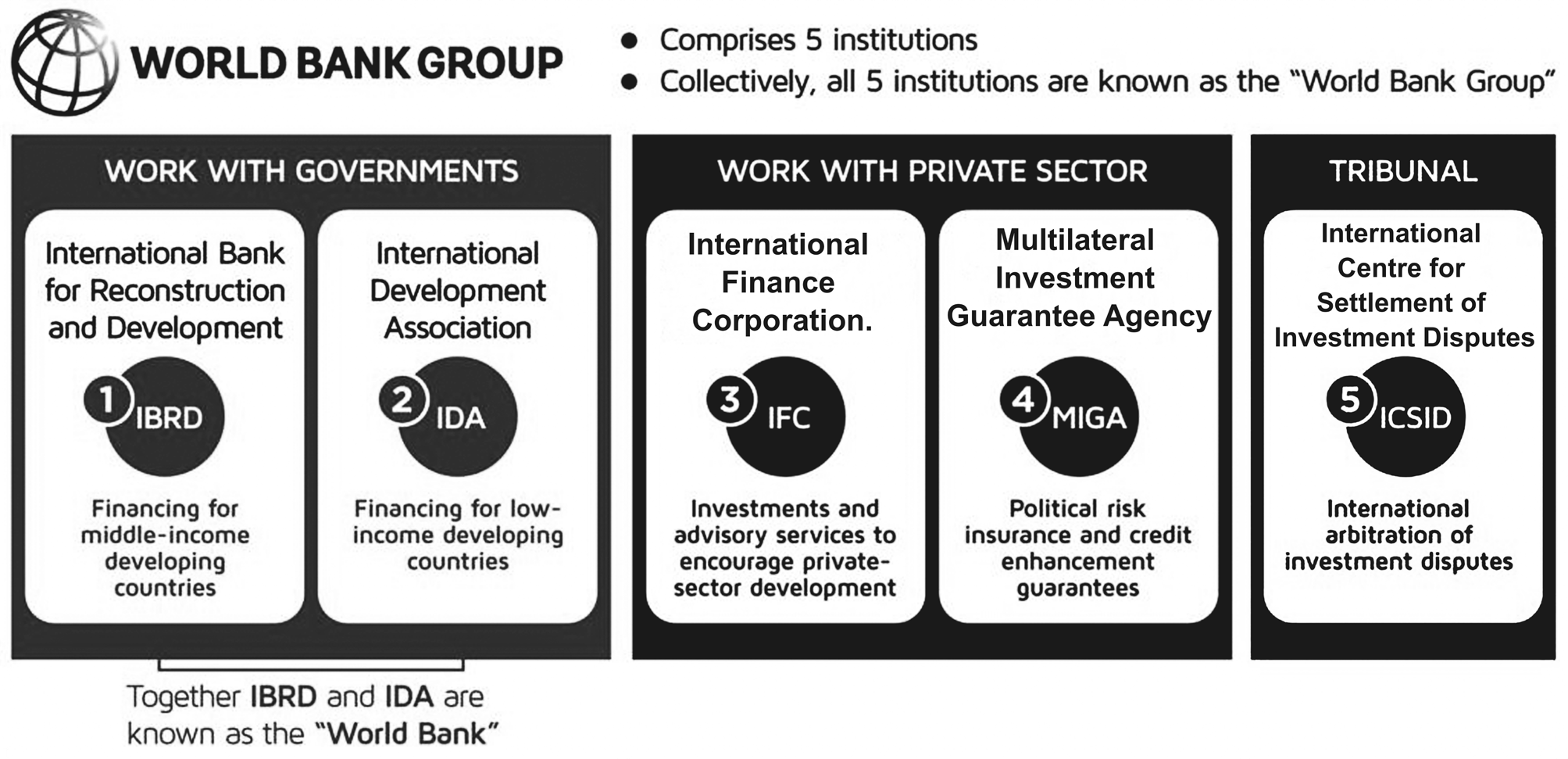
• Working Together as One: While each of the five institutions has its own membership, governing boards, and agreements, they collaborate closely to support partner countries.
• Key Institutions and Their Roles:
• IBRD and IDA: These institutions offer loans at favorable rates to member countries and provide grants to the world’s poorest nations.
• IFC, MIGA, and ICSID: These entities focus on strengthening the private sector in developing countries through financing, technical assistance, political risk insurance, and dispute resolution services for private enterprises, including financial institutions.
• Institution Highlights:
• IFC (Established in 1956): Primarily supports the private sector with various types of financing, often without sovereign guarantees.
• ICSID (Established in 1965): Helps governments reduce investment risks by providing dispute resolution services for international investments.
• MIGA (Established in 1988): Offers insurance against various types of risks, including political risks, primarily aimed at the private sector.
World Trade Organization
WORLD TRADE ORGANIZATION (WTO)
The WTO is the sole intergovernmental organization responsible for regulating international trade.
It officially began operations under the Marrakesh Agreement, replacing the General Agreement on Tariffs and Trade (GATT).
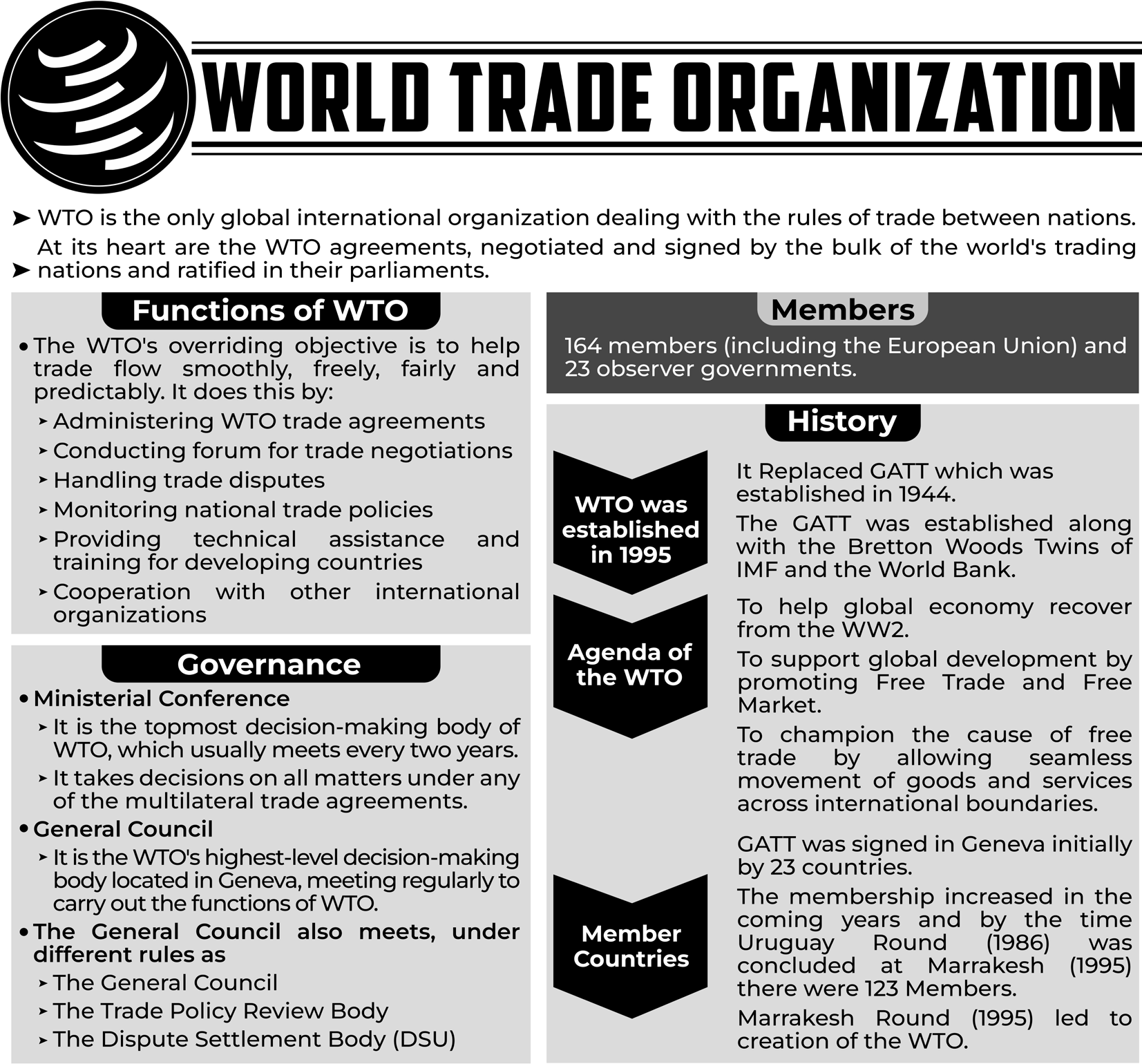
The WTO oversees the regulation of trade between member countries by offering a framework for negotiating trade agreements and a process for resolving disputes.
These agreements are signed by government representatives and must be ratified by their respective parliaments.
The WTO has166 members and 23 observer governments, with Afghanistan the latest to join.
WTO members do not need to be fully independent states; they only need to be a customs territory with full autonomy over their external commercial relations, such as Hong Kong.
The WTO is working to conclude negotiations on the Doha Development Round, launched in 2001 with a focus on issues affecting developing countries.
However, due to various challenges, new WTO negotiations beyond the Doha Round have been difficult to initiate. (The Doha Round, which began in November 2001 in Qatar, aimed to reduce trade barriers and promote global trade. Despite several ministerial meetings, progress stalled due to disagreements, primarily between developed and developing countries. Key areas of contention include agriculture, non-tariff barriers, industrial tariffs, services, and trade remedies. Developing nations like India, China, South Africa, and Brazil have led the push. While the Bali Ministerial Declaration in 2013 marked the first agreement under the Doha Round, the process has since reached an impasse, leaving the future of the Doha Round uncertain.)
• The highest decision-making body of the WTO is the Ministerial Conference, which typically meets every two years.
• The WTO operates under five key principles: non- discrimination, reciprocity, binding and enforceable commitments, transparency, and safety values.
• The operation of the WTO dispute settlement process involves case-specific panels appointed by the Dispute
Settlement Body (DSB), the Appellate Body, The Director- General and the WTO Secretariat, arbitrators, and advisory experts.
12th Ministerial Conference: Outcomes
12th Ministerial Conference of the WTO was held in June 2022 and a series of deals on contemporary issues was agreed to under the “Geneva Package”.
• Curtailing harmful fishing subsidies on illegal, unreported and unregulated (IUU) fishing for the next four years.
• There would be no limitation on subsidies granted or maintained by developing or least developed countries for fishing within their exclusive economic zones (EEZ).
• Also, technical assistance and capacity building shall be provided to such countries through the WTO Fisheries Funding Mechanism.
• Global Food Security: Binding decision to exempt food purchased by the UN’s World Food Programme (WFP) for humanitarian purposes, from any export restrictions to address food shortages.
• Covid-19 vaccine: Temporary waiver of certain requirements under the Agreement on Trade-Related Aspects of Intellectual Property Rights (TRIPS) concerning the use of compulsory licencesTo produce covid-19 vaccines for 5 years.
• Sanitary and Phytosanitary (SPS) Declaration: The Declaration commits WTO members to launching a work programme to identify new challenges in the implementation of the WTO’s SPS Agreement.
Challenges faced by the WTO in recent times
• Ineffective against China’s policies: The WTO has not been able to counter China’s tariff manipulation and unfair trade practices.
• Changed Global Economic distributions: Developing countries like India play a large role in the trading regime in the current era.
• Dysfunctional WTO appellate body: The US has systematically blocked the appointment of new Appellate Body members (judges) which it believes has resulted in unfavorable rulings for the US in its trade disputes.
• Lack of inclusiveness: With an increasingly global trading system, exclusion of some countries makes it a less effective organization. Countries such as Iran, Iraq, Lebanon and Uzbekistan have not joined WTO yet.
• Effect of COVID-19 Pandemic: COVID-19 pandemic has forced countries to impose comprehensive export bans and restrictions resulting in disruptions in the global supply chains. There is potential for more trade disputes to arise in the future.