Whatsapp 88106-52225 For Details
Get Free IAS Booklet
Get Free IAS Booklet
RISE OF THE MARATHAS: A CONFLUENCE OF FACTORS
The rise of the Marathas in the 17th century is a fascinating chapter in Indian history. Their emergence as a powerful force, carving out their own kingdom from the declining Mughal Empire, was fueled by several key factors:
Political and Social Landscape
• Weakening Mughal Empire: The Mughal Empire under Aurangzeb faced internal rebellions and administrative inefficiencies. This created a vacuum of power in the Deccan plateau, which the Marathas, strategically located, were able to exploit.
• Decentralized Maratha society: Unlike the rigid caste hierarchy of other kingdoms, Maratha society was relatively fluid and egalitarian. This facilitated social mobility and leadership opportunities, allowing talented individuals like Shivaji to rise to prominence.
• Bhakti movement: The Bhakti movement provided a sense of unity and religious fervor among the Marathas. This fueled their desire for self-rule and resistance against religious discrimination. Key spiritual leaders such as Tukaram, Ramdas, Vaman Pandit, and Eknath were instrumental in promoting social unity among them.
Military Prowess and Strategy
• Guerilla warfare: The Marathas adopted highly effective guerrilla tactics, using their familiarity with the Deccan’s rugged terrain to their advantage.
• Their light cavalry, known as “Marathas on ponies (Bhimthadi horses),” were highly mobile and adept at hit-and- run attacks, disrupting Mughal supply lines and communication.
conquer and provided safe havens for Maratha troops and resources.
• Naval power: The Marathas developed a strong navy, controlling key ports and trade routes along the western coast. This allowed them to expand their influence, collect revenue, and challenge Mughal dominance in the region.
• Balaji Vishwanath built naval bases at Konkan, Khanderi and Vijayadurg. Dockyard facilities were also developed.
Leadership and Vision
• Shivaji: The charismatic figure of Shivaji is often considered the architect of the Maratha empire. His strategic genius, military skills, and administrative reforms laid the foundation for Maratha success. He adopted policies based on social justice and religious tolerance, attracting diverse communities to his cause.
• Succession and decentralization: After Shivaji’s death, the Marathas adopted a system of decentralized rule, with strong regional leaders known as sardars. This flexible structure allowed for quick decision-making
and adaptation to changing circumstances.
Economic Factors
• Land revenue system: The Marathas implemented an efficient land revenue system known as “chauth,” collecting a quarter of the produce from villages under their control. This provided them with a stable source of income and helped finance their military campaigns.
• Trade and commerce: The Marathas actively participated in trade and commerce, controlling key routes and ports. This generated additional revenue and strengthened their economic base.
• Fortification expertise: The Marathas constructed a network of strategically located hill forts, like Raigad and Shivneri, which served as both defensive strongholds and administrative centers.
The rise of the Marathas was not a single event but a culmination of various factors - political, social, military, economic, and individual leadership. Their strategic adaptation, unwavering determination, and effective use of their strengths propelled them to become a dominant force in Indian history.
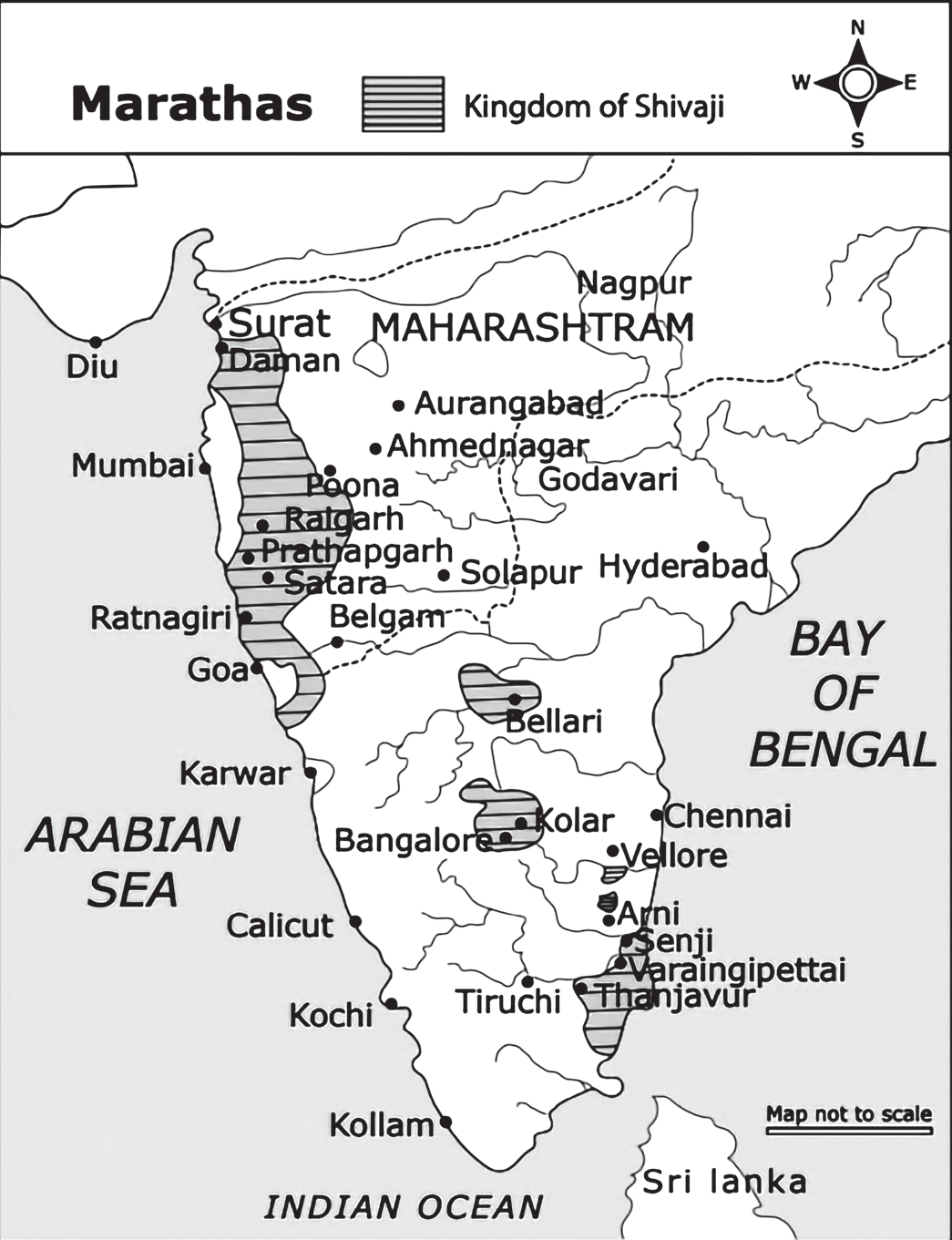
SHIVAJI: THE LION OF THE MARATHAS (1627-1680)
Shivaji Bhonsle, the founder of the Maratha Empire, was a legendary figure who carved out a kingdom from the declining Mughal Empire. His life and conquests were marked by daring strategies, audacious victories, and unwavering determination.
Early Life and Conquests (1627-1659):
• Birth and Inheritance: Born in 1627 at the impregnable Shivneri Fort, Shivaji inherited the Poona jagir from his father in 1637.
• Swift Conquests: Shivaji’s early years were Shivaji's characterized by rapid Shivneri Fort, Maharashtra
• early years were territorial expansion. He captured strategically important forts like Kondana, Torna, and Raigad from the Bijapur Sultanate, establishing a strong base for his future kingdom.
• Afzal Demise: In 1659, Shivaji's audacious victory over the Bijapuri general Afzal Khan in a treacherous meeting cemented his reputation as a shrewd and fearless leader. This victory instilled confidence in the Marathas and attracted more followers to his cause.
• Bagh nakh (or wagh nakh), the weapon used by Shivaji against Afzal Khan
. Mughal Challenges and Resilience (1659-1665)
Shaista Khan’s Onslaught: Despite his initial success, Shivaji faced challenges from the powerful Mughal Empire. In 1660, Mughal general Shaista Khan occupied Poona, forcing Shivaji to retreat.
Daring Raid and Mughal Setback: However, Shivaji’s resilience shone through in his audacious raid on Shaista Khan’s camp in 1663. This daring attack not only inflicted significant losses on the Mughals but also tarnished Shaista Khan’s reputation, leading to his recall by Emperor Aurangzeb
Treaty of Purandar: In 1665, under pressure from Aurangzeb, Shivaji signed the Treaty of Purandar, conceding several forts to the Mughals. However, treaty also recognized his right to collect chauth (tax) from certain parts of the Bijapur kingdom.
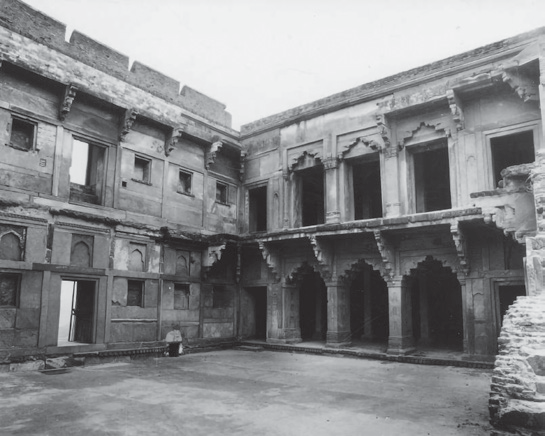
• Imprisonment and Escape: Despite the treaty, Aurangzeb’s suspicion of Shivaji led to his imprisonment in Agra. However, in a daring escape worthy of legend, Shivaji managed to return to his kingdom in 1666, further solidifying his image as a resourceful and audacious leader.
Later Campaigns and Legacy (1666-1680)
• Reclaiming Lost Territories: Undeterred by the Mughal threat, Shivaji continued to expand his kingdom, reclaiming lost territories and even plundering the wealthy port city of Surat in 1664. This raid showcased the Maratha navy growing power and challenged Mughal dominance in the deccan.
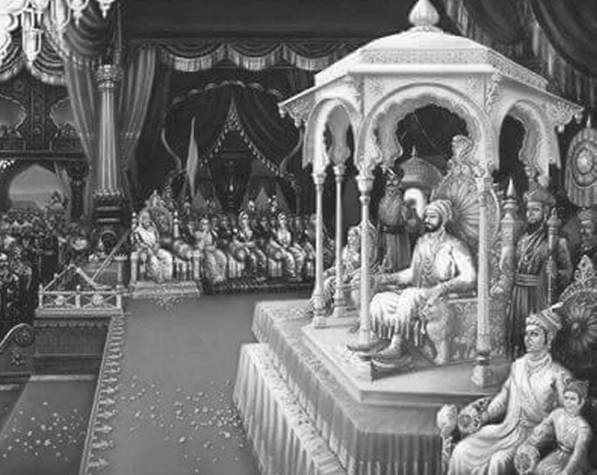
• Coronation and Maratha Empire: In 1674, Shivaji held a grand coronation ceremony at Raigad Fort, officially declaring himself the Chhatrapati (king) of the Maratha Empire. This marked a pivotal moment in Maratha history, solidifying their independence and asserting their power on the Indian political landscape.
• Legacy: Shivaji’s legacy extends far beyond his military conquests.He established a well- organized administrative system, promoted religious tolerance, and championed the cause of the Maratha people. He is remembered as a symbol of Maratha pride resistance against Mughal rule, and an inspiration for future generations of Indian freedom fighters
characterized byrapid
territorialexpansion. He
characterized byrapid
territorialexpansion. He
SHIVAJI’S ADMINISTRATION: BUILDING A ROBUST MARATHA EMPIRE
Shivaji, the founder of the Maratha Empire, wasn’t just a brilliant military strategist; he was also an astute administrator who laid the foundation for a thriving kingdom. His administrative framework, marked by efficiency, innovation, and strategic vision, played a crucial role in the Marathas’ success.
Administrative Structure
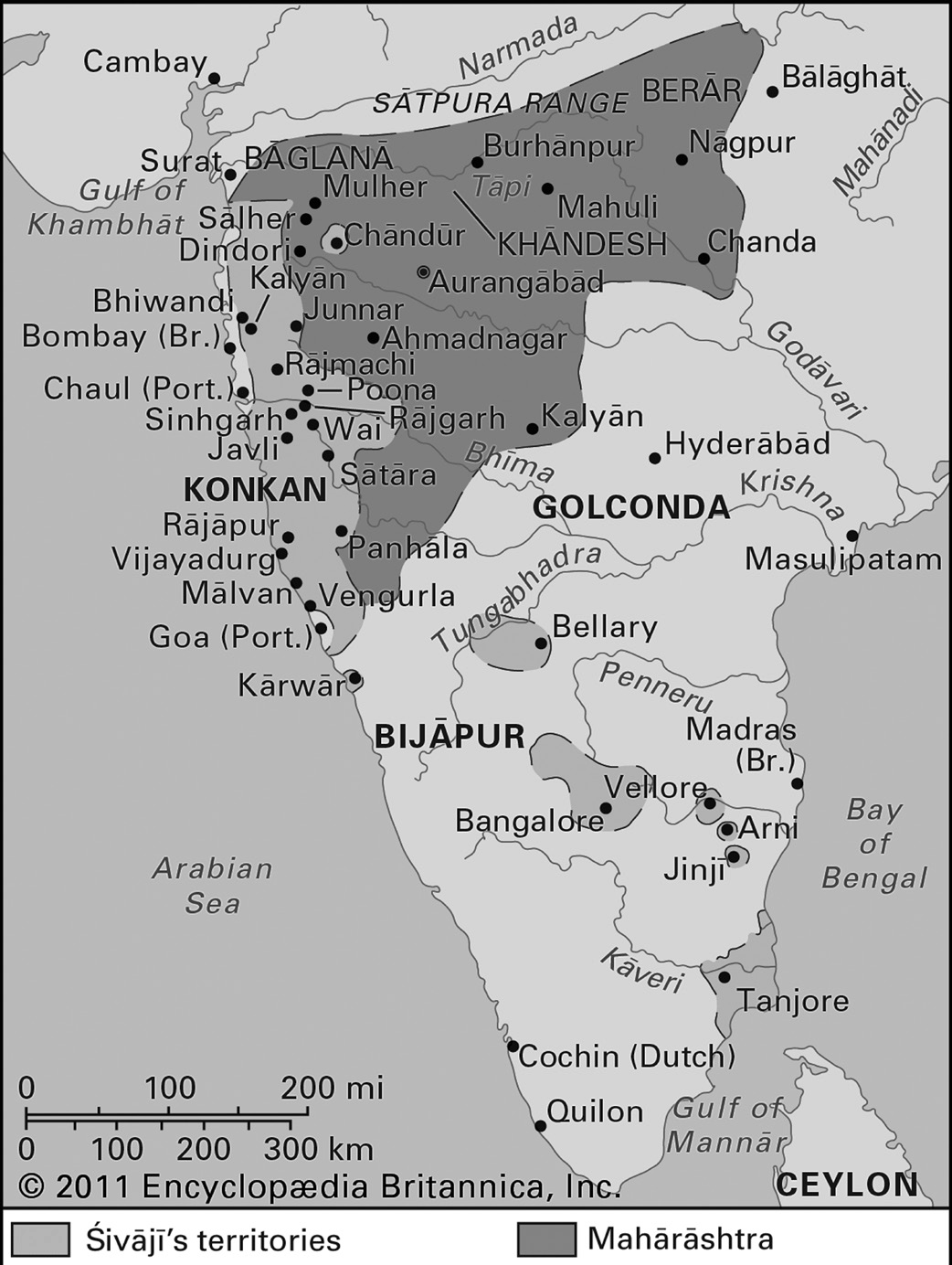
• Provinces and Subdivisions: Shivaji divided his realm (Swaraj) into three provinces – each governed by a viceroy. These provinces were further subdivided into prants, parganas, and villages, ensuring effective administration at all levels.
• Ashtapradhan (Council of Eight Ministers): At the heart of his administration was the Ashtapradhan, a council of eight ministers directly accountable to Shivaji. Each minister had a specific portfolio, ensuring a well-rounded and efficient governance.
Central Figures

Peshwa (Prime Minister): Initially responsible for finance and general administration, the Peshwa later evolved into the Prime Minister, wielding significant authority and becoming the de facto head of the government.
Other Ministers: The remaining ministers of the Ashtapradhan each held crucial roles:
Majumdar (Revenue and Finance Minister)
Wagenavis (Home Affairs)
Dabir (Foreign Affairs)
Surnavis (Royal Correspondence)
Pandit Rao (Religious Affairs)
Sar-i-Naubat (Military Commander – honorary position)
Nyayadhish (Justice)
Administrative Practices:
• Influences: Shivaji’s administrative reforms were influenced by the Deccan sultanates, particularly Malik Amber of Ahmadnagar.
• Revenue System: The Marathas adopted a land measurement system using the “kathi” measuring rod, categorizing lands based on their type and productivity.
• Redistribution of Power: Shivaji curtailed the authority of existing officials (deshmukhs and kulkarnis) and appointed his own revenue officials called karkuns, ensuring loyalty and efficiency.
Taxation System:
• Chauth and Sardeshmukhi: These taxes, levied on neighbouring territories controlled by the Mughals or Deccan sultanates, were strategic tools.
• Chauth: A one-fourth share of the land revenue, paid to the Marathas by neighbouring rulers to avoid their raids.
• Sardeshmukhi: An additional levy of ten percent imposed on lands where the Marathas claimed hereditary rights within Mughal territories.
Military Organization:
• Well-organized Army: Shivaji’s army, comprising 30,000 to 40,000 cavalry, was supervised by havaildars and consisted of two divisions:
• Bargirs: State-equipped and salaried cavalry.
• Silahdars: Cavalry supported by nobles.
• Infantry: The Mavli foot soldiers played a vital role in Maratha campaigns.
• Navy: Recognizing its strategic importance, Shivaji established and maintained a navy to control key trade routes and launch surprise attacks.
Fortification Strategy:
• Fort Network: Forts played a crucial role in Maratha defense and expansion. By the end of his reign, Shivaji had expanded his network to around 240 strategically located fortresses.
• Triple-Command System: Each fort was overseen by three officers of equal rank, preventing betrayal and ensuring effective control.
THE SUCCESSORS OF SHIVAJI: A LEGACY OF RESILIENCE AND COMPLEXITY
Following the remarkable reign of Shivaji, the Maratha Empire faced a period of transition and turmoil under his successors. Each ruler grappled with unique challenges, leaving their own mark on the Maratha narrative.
Sambhaji (1680-1689): Assertiveness and Tragedy:
• Succession Struggle and Alliances: Sambhaji’s ascent was marred by a brutal conflict with his brother Rajaram for the Maratha throne. His alliance with Akbar II, the rebellious son of Aurangzeb, further complicated his relationship with the Mughal emperor.
• Military Campaigns and Legacy: Despite his brief reign, Sambhaji’s assertive leadership and innovative military strategies, including guerrilla warfare and naval attacks, kept the Mughal forces at bay. He successfully defended key Maratha territories, leaving a legacy of defiance and resistance.
• Tragic End and Mughal Capture: Unfortunately, Sambhaji’s boldness proved costly. In 1689, he was captured by the Mughals and brutally executed. His death marked a significant turning point in the Mughal-
Maratha conflict.
Rajaram (1689-1700): Resilience in Exile:
• Fleeing the Mughals: With the Mughal onslaught intensifying, Rajaram was forced to flee from Raigad to Jinji in 1689. He continued to lead the Maratha resistance from exile, demonstrating resilience in the face of adversity.
• Guerrilla Tactics and Strategic Retreat: Utilizing guerrilla tactics and hit-and-run attacks, Rajaram kept the Mughals at bay despite limited resources. However, the fall of Jinji in 1698 forced him to further retreat.
• Shifting Power and an Uncertain Future: Rajaram’s untimely death in 1700 left the Maratha kingdom at a crossroads. His legacy lies in his
unwavering determination to defend his father’s legacy even under immense pressure.
Tarabai (1700-1707): A Queen’s Resolve:
• Regent and Defender of the Maratha Throne: As Rajaram’s widow and the regent for her young son Shivaji II, Tarabai faced the daunting task of safeguarding the
Maratha kingdom. She exhibited exceptional political acumen, negotiating with Mughal forces and forging alliances to protect her son’s claim to the throne.
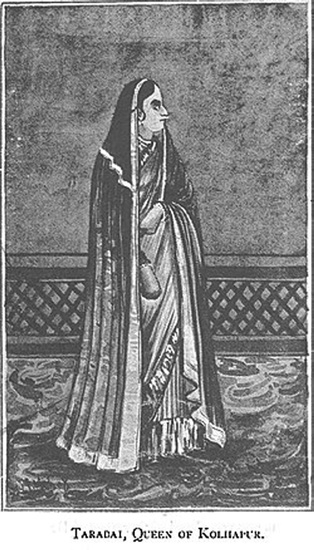
Internal Conflict and Mughal Influence: Tarabai’s reign was marked by internal conflicts within the Maratha ranks, particularly with the descendants of Rajaram. Despite these challenges, she fiercely resisted Mughal expansion and maintained Maratha control over key territories.
A Legacy of Strength and Perseverance: Tarabai’s reign served as a testament to the strength and determination of Maratha women. Her unwavering commitment to her son and the Maratha cause earned her a significant place in their history.
Shahu (1707-1749): Expansion and Internal Divisions:
Released by the Mughals: Following his release from Mughal captivity in 1707, Shahu emerged as a powerful leader. He signed the Treaty of Satara with the Mughals, establishing his legitimacy as the Maratha Chhatrapati and regaining control over key territories.
Expansion and Internal Conflict: Under Shahu’s reign, the Maratha Empire reached its zenith, expanding into Central and North India. However, internal divisions arose with the descendants of Rajaram contesting his authority, leading to a fragmented Maratha landscape.
A Complex Legacy: Shahu’s reign was marked by both expansion and internal discord. He is remembered for his skillful diplomacy with the Mughals and his efforts to consolidate Maratha power, but also for the internal conflicts that eventually weakened the empire.
THE RISE OF THE PESHWAS: A PIVOTAL CHAPTER IN MARATHA HISTORY
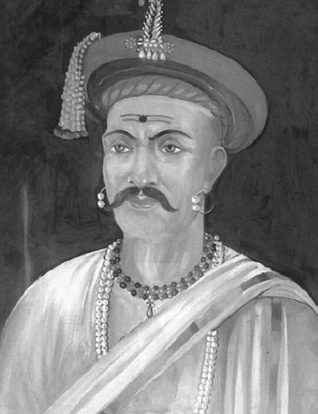
The ascent of the Peshwas, particularly Balaji Vishwanath, Balaji Baji Rao, and Baji Rao I, marked a transformative era for the Marathas. It wasn’t just about individual leadership; it was a confluence of factors that propelled the Maratha Empire to new heights of power and influence.
Factors Facilitating the Peshwa Rise:
• Shahu’s Delegation of Authority: Recognizing his own limitations, Chhatrapati Shahu wisely entrusted governance and military matters to skilled individuals like the Peshwas.
• Peace and Consolidation: The efforts of Tara Bai and the Ashtapradhan in curbing Maratha internal conflicts and fostering peace within Maharashtra created a stable environment for the Peshwas to rise.
• Balaji Vishwanath’s Contributions: His transition from revenue official to Peshwa was crucial. His diplomatic skills secured recognition for Shahu and tax rights from the Mughals, solidifying his position as a key figure.
Contributions of Each Peshwa:
• Baji Rao I (1720-40): He decentralized power by establishing a confederacy among Maratha chiefs, empowering regional families and shaping the Maratha socio-political landscape.
• Balaji Baji Rao (1740-61): He navigated complex relations with the Mughals, securing agreements and defending the Mughal Empire for revenue rights. His valiant efforts at Panipat, though unsuccessful, displayed his bravery.
Later Peshwas and the Shift in Power:
• Madhav Rao I (1761-72): He aimed to reclaim lost power after Panipat. Victories against Hyderabad and initial successes against Mysore marked his reign. He ultimately reestablished Maratha control in several regions before his untimely death.
• Narayan Rao (1772): His brief reign was marred by his murder. His son, Sawai Madhav Rao II, was declared Peshwa but faced challenges.
• Baji Rao II (1796-1818): He became the last Peshwa, marking the end of the era.
Peshwa Administration:
• Central Secretariat: This efficient system managed finances, overseeing revenue and expenditure at all levels, ensuring transparency and centralized control.
• Provinces: Governors managed these large administrative units, ensuring proper accounting and resource allocation.
• Village Administration: Self-sufficient village structures, operating under the Peshwa’s administration, formed the bedrock of the system.
Internal Fragmentation and Power Struggles:
• Decentralized Confederacy: The Maratha confederacy, built on the strength of individual chieftains, became its own undoing. Power struggles and territorial disputes among these leaders weakened the collective unity and direction, hindering their ability to present a united front against external threats
A Comprehensive Analysis of the Maratha Decline: A Cascade of Factors
The Marathas, once a formidable power in the Indian subcontinent, witnessed a significant decline after the Third Battle of Panipat in 1761. This downfall wasn’t simply a singular event; it was an intricate tapestry of internal struggles, external threats, and strategic missteps Loss of Visionary Leadership: The demise of figures like Baji Rao I and Balaji Baji Rao created a leadership vacuum. Without a strong central figure to guide and unify the Marathas, their strategic decision-making suffered, leading to miscalculations and missed opportunities.
Military Overextension and Exhaustion:
Years of Relentless Warfare: Constant battles against the Mughals, Nizams, and other regional powers stretched the Maratha military resources to their limits. The Third Battle of Panipat, in particular, inflicted heavy casualties and demoralized the troops.
Neglect of Military Modernization: While other powers like the British embraced advancements in weaponry and tactics, the Marathas remained largely reliant on traditional methods. This lack of adaptation left them vulnerable to superior firepower and strategies.
Economic Strain and Financial Mismanagement:
Burden of Constant Warfare: The continuous military campaigns resulted in a significant strain on the Maratha treasury. The inability to secure sustainable revenue sources and manage finances effectively further weakened their economic base.
Corruption and Mismanagement: Allegations of corruption and mismanagement within the administration further eroded public trust and depleted resources, making it difficult to sustain military campaigns and maintain order.
External Pressures and Geopolitical Shifts:
Rise of British Colonialism: The emergence of the British East India Company posed a significant threat to Maratha dominance. The British, with their superior military technology, disciplined forces, and strategic alliances, steadily chipped away at Maratha territories.
Lack of Strategic Alliances: Unlike the British, who actively forged alliances with regional powers, the Marathas often faltered in building strategic partnerships. This isolation left them vulnerable to manipulation and exploitation by their adversaries.
Strategic Errors and Miscalculations:
Underestimating Opponents: The Marathas sometimes underestimated the strength and determination of their rivals, leading to losses in crucial battles like Panipat.
This underestimation prevented them from adopting appropriate strategies and tactics.
• Internal Political Interference: Political interference in military campaigns, often driven by personal agendas and power struggles, hampered effective decision- making and coordination, further weakening their military effectiveness.
The Maratha decline wasn’t a single event but a culmination of various factors, both internal and external. From internal power struggles and economic strain to the rise of British colonialism and strategic miscalculations, the Marathas found themselves facing a multitude of challenges that ultimately led to their decline from power. While their legacy of courage and resistance remains etched in Indian history, understanding the reasons behind their downfall offers valuable insights into the complexities of power, leadership, and adaptation in an ever-evolving political landscape.
THIRD BATTLE OF PANIPAT (1761): A TURNING POINT IN MARATHA HISTORY
The Third Battle of Panipat, fought on January 14, 1761, between the Maratha Confederacy and the invading Afghan army led by Ahmad Shah Abdali, remains a pivotal moment in Indian history.
Key factors that contributed to the Maratha defeat:
Internal Disunity: The Maratha confederacy, although vast and powerful, lacked a unified leadership at this time. Internal rivalries and power struggles weakened their ability to present a coordinated front against a formidable opponent.
Military Overextension: The Marathas had been engaged in continuous warfare for years, stretching their resources and manpower thin. The Third Battle of Panipat came at a time when their military was already fatigued and
depleted.
Underestimating the Enemy: The Marathas might have underestimated Ahmad Shah Abdali’s military strength and determination. This led to tactical errors and miscalculations that cost them dearly.
Superior Afghan Artillery: Abdali’s army possessed superior firepower in the form of zamburak and jezail mounted artillery, which inflicted heavy casualties on the Marathas.
Strategic Blunders: The Maratha camp had strategic disagreements over the battlefield location and the timing of the attack. These internal conflicts hampered their ability to effectively respond to the Afghan offensive.
Consequences of the Battle:
Decline of Maratha Power: The Third Battle of Panipat dealt a severe blow to the Maratha Empire. Their influence and territorial control significantly diminished in the subsequent years.
Rise of British Colonialism: The power vacuum created by the Maratha decline provided an opportunity for the British East India Company to expand its territories and influence.
Shifting Geopolitical Landscape: The battle marked a turning point in the political landscape of India, with the emergence of new powers and alliances.