The Big Bang
THE BIG BANG: A BRIEF HISTORY OF THE UNIVERSE
The Big Bang theory is the prevailing cosmological model for the universe. It explains how the universe began from a very hot, dense state and has been expanding and cooling ever since.
Stage 1: The Initial Singularity: The universe began as an incredibly small, hot, and dense point, often referred to as a singularity. This singularity contained all the matter that would eventually form the stars, planets, and galaxies we see today.
Stage 2: The Rapid Expansion: The singularity then underwent a massive explosion, known as the Big Bang around 13.7 billion years ago. This explosion set the universe on an exponential expansion that continues to this day. During this initial expansion, the universe cooled and some of the energy from the explosion was converted into matter.
Stage 3: The Formation of Atoms: Within the first three minutes of the Big Bang, the universe had cooled enough for protons and neutrons to combine into the first atoms. These atoms were primarily hydrogen and helium, the two lightest elements.
Stage 4: The Transparent Universe: After about 300,000 years, the universe had cooled enough for light to travel freely through it. This allowed the first photons, or particles of light, to be emitted, making the universe transparent for the first time.
The Ongoing Expansion: The universe’s expansion has continued to slow down over time, but it is still ongoing today. This expansion is driven by a mysterious force known as dark energy, which makes up about 68% of the universe’s total energy density.
Evidence of Big Bang Theory
The Big Bang theory is supported by a wide range of evidences. The crucial piece of evidence is the cosmic microwave background radiation, which is like a faint glow spread throughout the universe. This radiation was discovered in the 1960s and is like the afterglow of the Big Bang, providing strong support for the idea that the universe began from an extremely hot and dense state.
Another piece of evidence comes from the observation that galaxies are moving away from each other. Imagine dots on an inflating balloon - as the balloon expands, the dots move apart. Similarly, the galaxies in our universe are moving away from each other, suggesting that the universe is expanding. This expansion supports the idea that everything was once concentrated in a tiny, hot, and dense point - the starting point of the Big Bang.
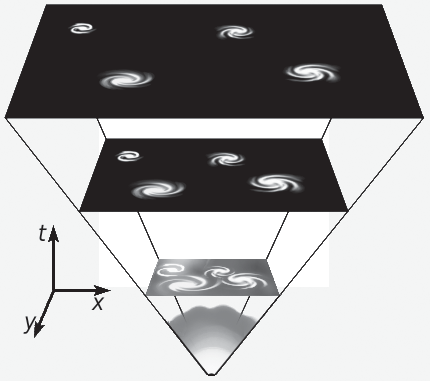
Additionally, scientists have observed the abundance of light elements like hydrogen and helium in the universe. The Big Bang theory successfully predicts the amounts of these elements that should have formed in the early moments of the universe, and the observed abundances match these predictions.
Star Formation and Evolution
STAR FORMATION AND EVOLUTION
Stars are the most widely recognized astronomical objects, and represent the most fundamental building blocks of galaxies. The age, distribution, and composition of the stars in a galaxy trace the history, dynamics, and evolution of that galaxy. Moreover, stars are responsible for the manufacture and distribution of heavy elements such as carbon, nitrogen, and oxygen, and their characteristics are intimately tied to the characteristics of the planetary systems that may coalesce about them. Consequently, the study of the birth, life, and death of stars is central to the field of astronomy. Early in the history of the universe, before stars and planets existed, giant clouds of hydrogen and helium began to form. Slowly, these clouds collected enough mass for their own gravity to form. This created extremely dense balls of gas. In other words, they formed stars.
When a new star is formed, its core is exposed to very strong gravitational forces. These forces are so great that the star is in danger of collapsing in on itself. Luckily, nuclear fusion provides the energy the star needs to push back against the collapsing core. Nuclear fusion is a process where the nuclei of two or more elements combine to produce nuclei of heavier elements. Nuclear fusion also releases energy.
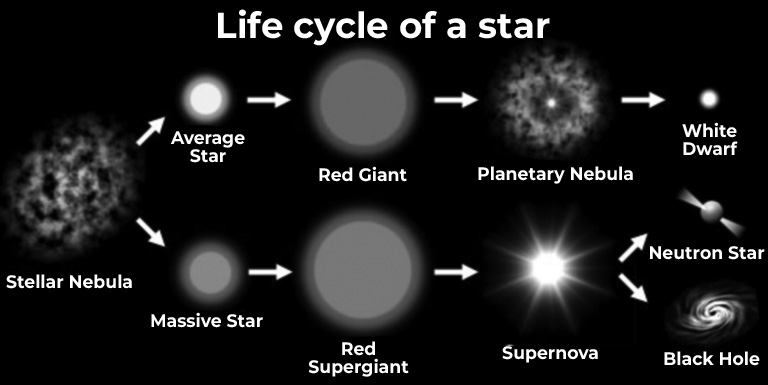
In the core of a newly formed star, hydrogen nuclei begin to fuse into helium. The inward pull of gravity and the outward push of nuclear fusion eventually balance out. For a time, hydrogen fusion prevents the collapse of the star.
Star Formation and Death
Stars are born within the clouds of dust and scattered throughout most galaxies. A familiar example of such as a dust cloud is the Orion Nebula. As the cloud collapses, the material at the center begins to heat up. Star formation begins with protostars, which are clouds of dust and gas that begin to contract due to their own gravity. They collapse fairly rapidly to stellar dimensions and become pre-main-sequence star-like objects. The process of star formation depends strongly on magnetic fields and rotation in the collapsing gas cloud. There has been much theoretical progress in the last two decades in understanding the basic features of star formation. Many of these features have been confirmed by observation, especially by infrared instruments, which detect the radiation from low-temperature dust in nebulae around the newly formed stars. Once the main sequence is reached, energy is generated in the star as hydrogen converts into helium by means of the proton-cycle for smaller stars and the carbon cycle for larger stars. All stars in the universe shine by energy released from the fusion of light elements into heavier elements.
The fate of all stars is governed by the irresistible force of gravity. At the low-mass end, stars are dim, red, and slow to evolve. The coolest-sequence stars have not yet evolved off the main sequence in the entire age of the universe. Every star more massive than the Sun, goes through a phase of mass loss, either involving a stellar wind or a more violent explosion. Stars below 1-2 solar masses end their lives quietly, as cooling into white dwarf embers. Massive stars are rare, and they evolve quickly toward a spectacular demise. Supernovae are responsible for the production of neutron stars and probably black holes, and they recycle rare and important heavy elements into the universe.
Note- The Chandrasekhar limit: Why only some stars become supernovas?
The Chandrasekhar limit determines whether a star ends its life as a smoldering white dwarf, or explodes in a supernova to become a neutron star or black hole. The Chandrasekhar value for a white dwarf star is generally considered to be 1.4 solar masses.
Evolution of Atmosphere
EVOLUTION OF ATMOSPHERE
The atmosphere acts as a shield and protects our planet from the harmful ultra-violet rays coming from the Sun. The atmosphere also absorbs terrestrial radiation from the Earth’s surface and thus keeps the Earth warm. The predominant components of the Earth’s atmosphere today are primarily nitrogen and oxygen.
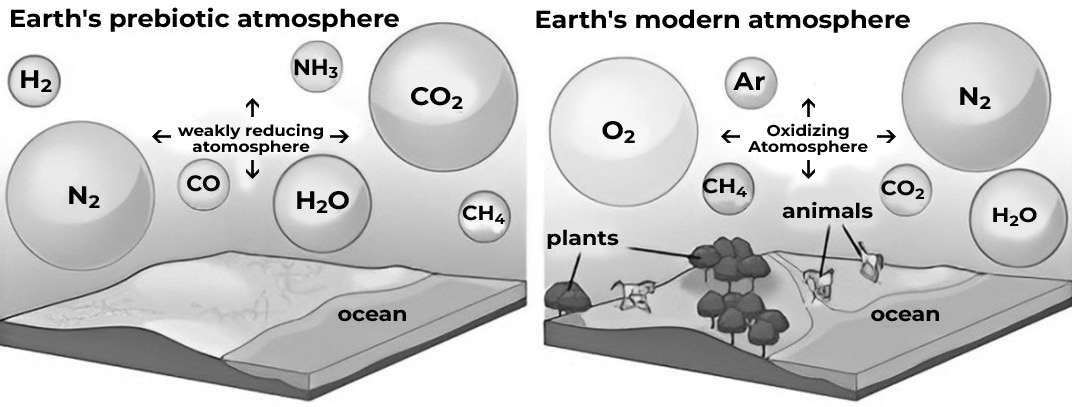
In the initial stage, the Earth experienced the loss of its original atmosphere. The second stage involved the contribution of the Earth’s hot interior to the atmospheric evolution. Subsequently, living organisms modified the atmosphere’s composition through photosynthesis.
The early atmosphere, initially composed of hydrogen and helium, is believed to have been removed due to solar winds. This phenomenon affected not only Earth but also all terrestrial planets, resulting in the loss of their original atmospheres due to solar wind impact.
As the Earth cooled, gases and water vapor were released from the solid interior, initiating the development of the current atmosphere. The early atmosphere consisted mainly of water vapor, nitrogen, carbon dioxide, methane, ammonia, and minimal free oxygen. The release of gases from the interior, known as degassing, was supplemented by continuous volcanic eruptions that added water vapor and gases to the atmosphere.
During the cooling process, released water vapor began to condense. Carbon dioxide dissolved in rainwater, and decreasing temperatures led to more condensation and rainfall. Accumulated rainwater formed oceans, which were established within 500 million years of Earth’s formation, indicating their antiquity of around 4,000 million years.
Approximately 3,800 million years ago, life started to evolve, and about 2,500-3,000 million years ago, the process of photosynthesis emerged. Initially confined to oceans, life gradually contributed oxygen to the oceans through photosynthesis. Over time, oceans became saturated with oxygen, and around 2,000 million years ago, oxygen began to inundate the atmosphere.
EVOLUTION OF THE HYDROSPHERE
The hydrosphere is all the water on Earth, including oceans, lakes, rivers, and groundwater. It was formed over billions of years from rainwater collecting into depressions on the planet.
The early hydrosphere was salty, but freshwater sources developed over time. As the Earth cooled, water vapor in the air turned into rain, creating oceans, lakes, and rivers.
Plate tectonics, the movement of Earth’s plates, has shaped the hydrosphere by creating mountains and ocean trenches, which affect ocean currents and weather patterns.
Life forms, especially marine organisms, have also influenced the hydrosphere. Photosynthetic organisms release oxygen into the water, while other life forms create ecosystems and nutrient cycles.
Today, Earth’s hydrosphere is 97% saltwater and 3% freshwater, mostly stored in glaciers and ice caps. Human activities like pollution and climate change are affecting the health of the hydrosphere.
EARTH’S GEOLOGICAL TIME SCALE
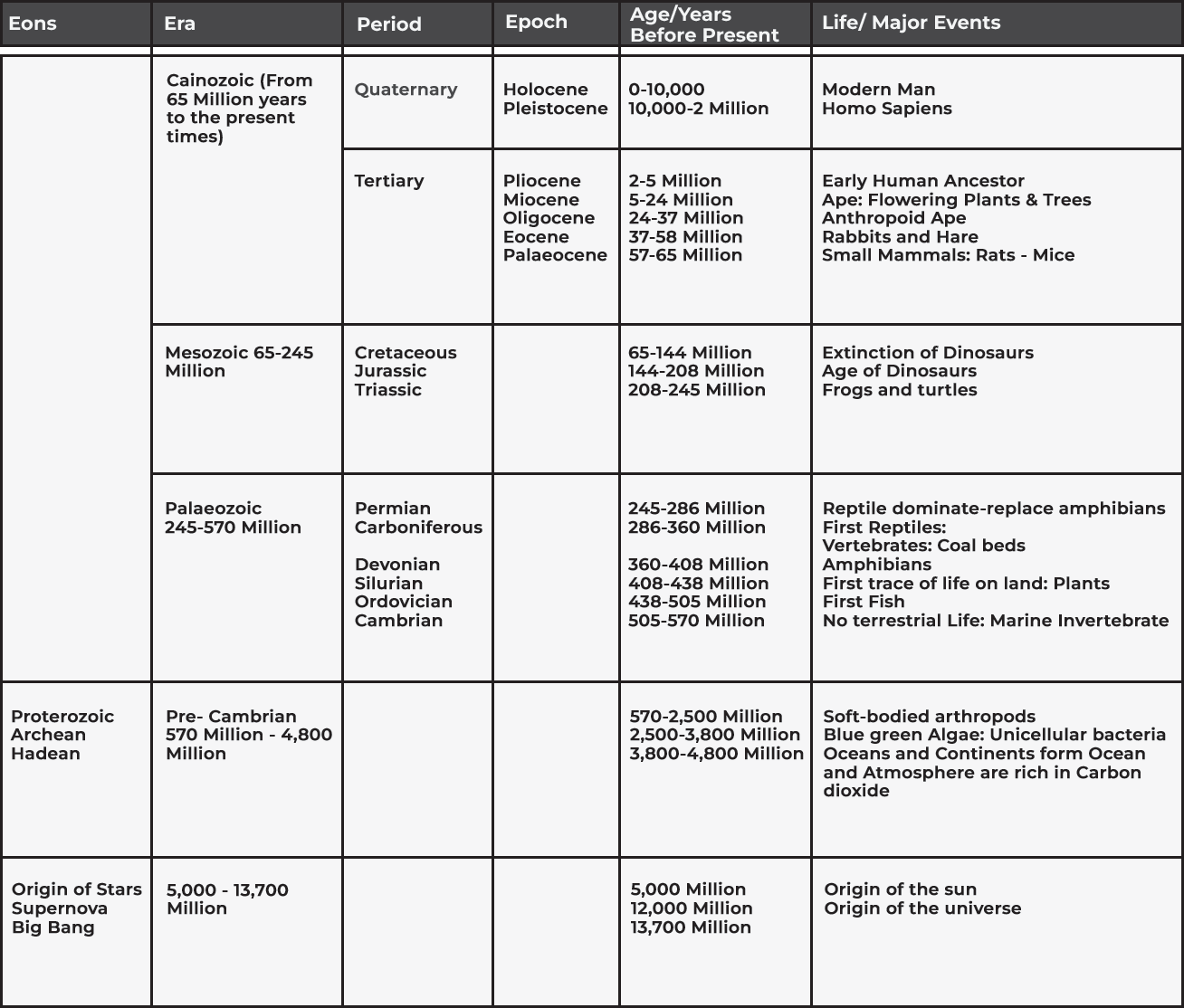
The Earth’s Geological Time Scale is a framework that scientists use to divide Earth’s history into different intervals based on significant events and changes. It helps us to understand the sequence of geological and biological events that have shaped our planet. One crucial event in this timeline is the origin of life.
Geological Time Scale
• Hadean Eon (4.6 billion to 4 billion years ago)
The Earth forms, undergoing intense heat and bombardment from space. Conditions are harsh, with molten surfaces and a lack of stable crust.
• Archean Eon (4 billion to 2.5 billion years ago)
The first continents form, and primitive life, likely single- celled organisms, appears. The atmosphere starts to contain water vapor, carbon dioxide, and methane.
• Proterozoic Eon (2.5 billion to 541 million years ago)
Oxygen begins to accumulate in the atmosphere due to photosynthetic organisms. Eukaryotic cells (cells with a nucleus) emerge. The first multicellular organisms appear later in this eon.
• Phanerozoic Eon (541 million years ago to the present)
This eon is divided into three eras: Paleozoic, Mesozoic, and Cenozoic.
Paleozoic Era (541 million to 252 million years ago)
Early marine life evolves, and the first land-dwelling organisms appear. Fish, amphibians, and early reptiles emerge. The era ends with the Permian– Triassic extinction event, one of the most significant mass extinctions.
Mesozoic Era (252 million to 66 million years ago)
Dinosaurs dominate the land, while mammals, birds, and flowering plants emerge. The era ends with the Cretaceous–Paleogene extinction event, leading to the extinction of dinosaurs.
Cenozoic Era (66 million years ago to the present)
Mammals diversify, and primates, including early humans, appear. Ice ages occur, and modern flora and fauna continue to evolve.
ORIGIN OF LIFE
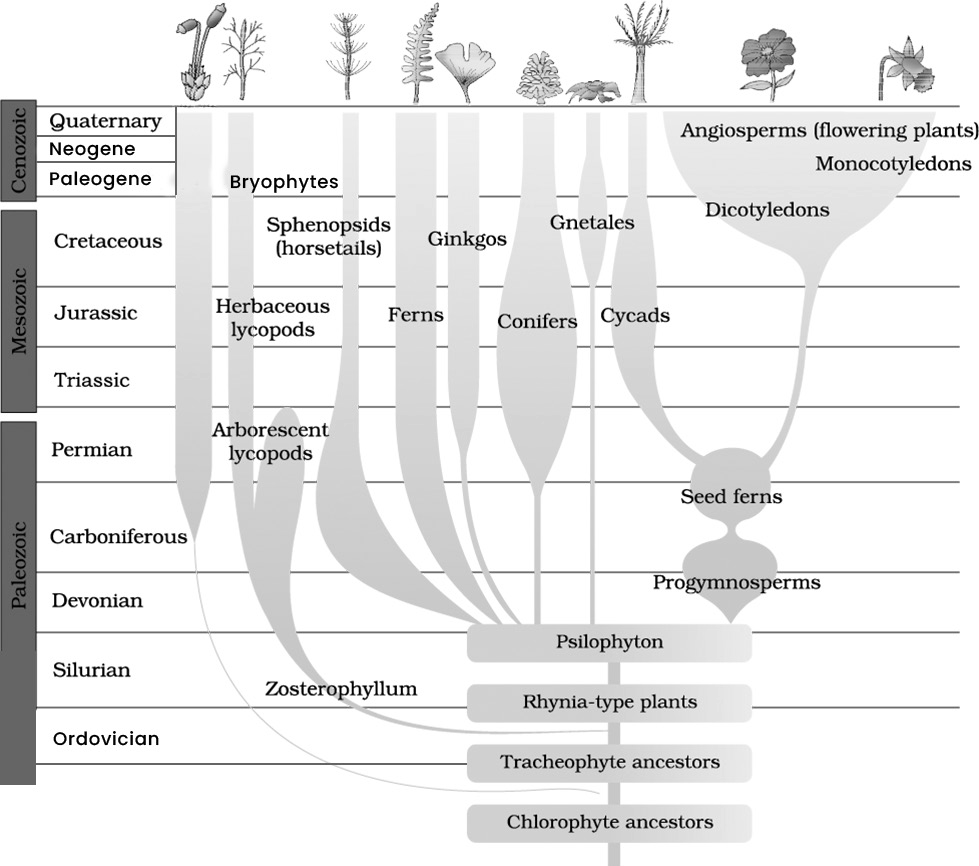
Life emerged around 500 million years after Earth’s formation.
1. Non-Cellular Beginnings: Approximately 3 billion years ago, giant molecules—RNA, proteins, polysaccharides— formed potential precursors to life. These molecular aggregates may have reproduced, laying the groundwork for cellular life.
2. Advent of Cellular Life: Around 2000 million years ago, the first cellular life forms emerged. The transition from non-cellular structures to cells with membranous envelopes remains an enigma. Some exhibited the remarkable ability to release oxygen, possibly through processes akin to photosynthesis.
3. Diversification of Life: Progressing through time, single- celled organisms evolved into multi-cellular life forms. By 500 million years ago, invertebrates thrived, followed by the emergence of jawless fish, sea weeds and early plants.
4. Transition to Land: Plants were the pioneers of land, paving the way for animals. Around 350 million years ago, lobefins evolved into the first amphibians, bridging the gap between land and water.
5. Age of Reptiles: Amphibians gave way to reptiles around
200 million years ago. Dinosaurs, the dominant land reptiles, coexisted with giant ferns, contributing to the formation of coal deposits.
6. Dinosaurs’ Demise: About 65 million years ago, dinosaurs disappeared, leaving behind speculations about their extinction—climatic changes or evolution into birds. Small reptiles from that era persist today.
7. Rise of Mammals: The first mammals emerged as small- sized creatures resembling shrews. Viviparous and protective of their young, mammals displayed increased intelligence, eventually taking over as reptiles declined.
8. Hominid Evolution: Around 15 million years ago, primate ancestors like Dryopithecus and Ramapithecus roamed. Fossils discovered around 3-4 million years ago in Africa reveal hominid features, marking the dawn of early human-like beings.
9. Homo Genus: Homo habilis, with a brain capacity of 650-800cc, appeared around 2 million years ago. Homo erectus followed, about 1.5 million years ago, displaying a larger brain (900cc) and a likely shift to a meat-based diet. Neanderthals, with a brain size of 1400cc, lived 100,000- 40,000 years ago.
10. Arrival of Homo sapiens: Homo sapiens emerged in Africa, diversified into distinct races, and spread across continents. The period between 75,000-10,000 years ago witnessed the rise of modern Homo sapiens during the ice age.
11. Dawn of Civilizations: Around 18,000 years ago, prehistoric cave art emerged, marking early human expression. Agriculture commenced approximately 10,000 years ago, initiating the era of settled human communities. The subsequent chapters unfold within the realm of human history, documenting the growth and decline of civilizations.