Ocean Salinity
OCEAN SALINITY
Ocean salinity is a measure of the concentration of salt in seawater and is typically expressed as the ratio of salt (in grams) to the volume of water (in liters). It is commonly defined as the total amount of solid material in grams contained in one kilogram of seawater and is expressed in parts per thousand (‰). The salinity of the ocean not only influences the marine organisms and plant communities but also has significant effects on various physical properties of the oceans, including temperature, density, pressure, waves and currents.
One of the notable effects of ocean salinity is its impact on the freezing point of seawater. The freezing point of seawater decreases as salinity increases, meaning that more saline water freezes at lower temperatures compared to less saline water. This phenomenon has implications for oceanic processes, such as the formation of sea ice and the distribution of cold-water masses.
Source of salinity
The salinity of the ocean primarily originates from two sources: runoff from land and hydrothermal vents in the seafloor.
Runoff from Land
Rocks on land serve as the primary source of salts dissolved in seawater.
When rainwater falls on land, it becomes slightly acidic due to interactions with the atmosphere.
This slightly acidic rainwater erodes the rocks, releasing various ions.
These ions are then carried away by streams and rivers, eventually flowing into the ocean.
Some of the dissolved ions are utilized by marine organisms and are removed from the water, but others remain, leading to an increase in their concentration over time.
Hydrothermal Vents
Hydrothermal fluids, rich in dissolved minerals and salts, emanate from vents in the seafloor along mid-ocean ridges and other volcanic areas.
These fluids originate from the heating of seawater that has penetrated the ocean crust and interacts with hot rocks.
As the heated water percolates through the ocean crust, it dissolves minerals and salts from the rocks.
When these hydrothermal fluids are released into the ocean, they contribute to the overall salinity of seawater.
Factors/Determinants affecting the salinity of oceans
Several factors influence the salinity of oceans, leading to variations in salinity levels across different locations and times.
Evaporation
Salinity tends to be higher in areas with high rates of evaporation.
There is a direct positive relationship between the rate of evaporation and salinity. Higher evaporation rates lead to greater salt concentration.
Tropical seas, such as the Red Sea and Persian Gulf, experience some of the highest rates of evaporation, resulting in elevated salinity levels.
Precipitation
Precipitation and salinity have an inverse relationship. Regions with higher levels of precipitation generally have lower salinity.
Equatorial regions, despite being hot like the subtropics, often have lower salinity due to heavy precipitation.
Ocean Currents
Ocean currents play a crucial role in distributing dissolved salts in ocean waters.
Warm currents near the equator tend to push salts away from eastern ocean margins and accumulate them near western margins.
On the other hand, ocean currents in temperate regions can increase salinity along eastern margins. For example, the Gulf Stream in the North Atlantic Ocean increases salinity along the western margins of the Atlantic.
Influx of Fresh Water
Areas where major rivers meet the oceans typically have lower salinity due to the influx of fresh water.
River mouths such as the Amazon, Congo, and Ganges exhibit lower surface salinity compared to the ocean’s average.
Similarly, during summers in polar regions, melting glaciers contribute fresh water to the surrounding oceans, reducing surface salinity.
Ice Formation
Ice formation in high-latitude areas of oceans increases water salinity.
When seawater freezes, the salt is excluded from the ice, resulting in higher concentrations of salt in the remaining liquid water.
Distribution of Salinity
The average salinity in the oceans and seas is approximately
35 parts per thousand (ppt), but this value varies both spatially and temporally across different bodies of water. This variation occurs horizontally (across the surface) and vertically (with depth) within the oceans, seas and lakes. Additionally, salinity can differ from enclosed seas to partially closed seas to open seas.
To study the spatial distribution of salinity, two main approaches are employed
Horizontal distribution and
Vertical distribution.
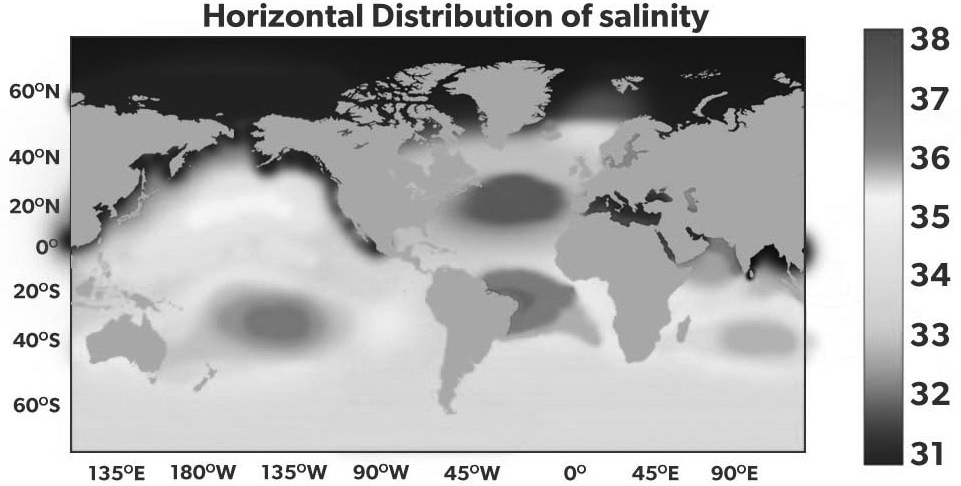
Horizontal Distribution of Salinity
Horizontal distribution of oceanic salinity is studied in relation to latitudes but regional distribution is also considered wherein each ocean is separately described. Similarly, the pattern of spatial distribution of salinity in enclosed seas, partially enclosed seas and open seas is also considered.
Latitudinal distribution
The distribution of oceanic salinity with respect to latitude follows several patterns:
Equatorial Zone
Despite high temperatures and evaporation rates near the equator, excessive rainfall reduces the relative proportion of salt, resulting in lower salinity. Typically, salinity near the equator is around 35 parts per thousand (ppt).
Tropical Zone (20 -30 N and S Latitudes)
Between 20 and 40 latitudes, particularly in the northern hemisphere, high temperatures and evaporation rates combined with low rainfall result in maximum salinity. Salinity in this zone is often around 36 ppt.
Temperate Zone
Between 40 and 60 latitudes in both hemispheres, salinity decreases due to lower evaporation rates and increased rainfall. Salinity in this zone typically ranges from 31 to 33 ppt.
Sub-Polar and Polar Zones
In polar zones, salinity decreases further due to the influx of melted water from ice. On average, salinity in the northern and southern hemispheres is around 34 and 35 ppt, respectively.
Based on the latitudinal distribution of salinity, four main
zones of oceanic salinity can be identified
Equatorial zones with relatively low salinity (due to excessive rainfall).
Tropical zone with maximum salinity (due to low rainfall and high evaporation).
Temperate zone with lower salinity.
Sub-polar and polar zone with minimum salinity (due to negligible evaporation and increased meltwater).
Marginal areas of oceans near continents tend to have lower salinity due to freshwater input from rivers.
Salinity in open seas varies with latitude, influenced by ocean currents. However, latitudes have less control over salinity distribution in inland seas.
Partially enclosed seas in higher latitudes are influenced more by the influx of meltwater than by latitude alone, resulting in lower salinity compared to open seas at similar latitudes. For example, the Baltic Sea has lower salinity than the North Sea despite similar latitudinal extents.
Salinity Variations in Inland Seas and Lakes
Inland seas and lakes have their salt content regulated by various factors including evaporation rate, temperature, influx of river water and the presence or absence of outlets.
The rate of evaporation and temperature play crucial roles in determining the salinity of inland seas and lakes.
Higher evaporation rates and temperatures lead to increased salinity as water evaporates, leaving behind concentrated salt.
Freshwater influx from rivers into lakes and inland seas reduces salinity by diluting the salt content.
Whenever a river flows out of a lake or inland sea, it carries salt away from the water body, further reducing salinity.
The presence or absence of outlets affects the salinity of inland seas and lakes.
In areas without outlets, salts accumulate over time, leading to higher salinity.
In contrast, outlets allow for the removal of salts, resulting in lower salinity.
The northern part of the Caspian Sea has relatively low salinity (around 14‰) due to the significant volume of freshwater brought by rivers such as the Volga and Ural.
However, the southern part of the Caspian Sea, like the Gulf of Karabugas, experiences much higher salinity (up to 170‰) due to higher evaporation rates and lower freshwater input.
Some notable examples of inland seas and lakes with extreme salinity levels include
Great Salt Lake in the USA, known for its exceptionally high salinity (up to 220‰).
The Red Sea, with a salinity of around 240‰.
Lake Van in Turkey, which has a salinity of approximately 330‰.
The Dead Sea, famous for its extremely high salinity (around 238‰), making it one of the saltiest bodies of water on Earth.
Vertical Distribution of Salinity
The vertical distribution of salinity in the ocean is influenced by various factors and exhibits complex patterns:
Salinity at the ocean surface can be affected by inputs of freshwater from sources like rivers or melting ice, as well as by losses due to evaporation. Therefore, both increases and decreases in surface salinity are observed.
There is no definitive trend of salinity distribution with depth, as it varies depending on the location of the sea. Examples show instances where salinity increases with depth, while in other cases, it decreases. For instance, at the southern boundary of the Atlantic, surface salinity might be 33‰, increasing to 34.5‰ at 200 fathoms (1200 feet) depth, and further to 34.75‰ at 600 fathoms. However, surface salinity might be 37‰ at 20 S latitude but decrease to 35‰ at greater depth.
In high latitudes, salinity typically increases with depth from 300 meters to 1000 meters due to denser water below, but becomes more or less constant beyond 1000 meters.
In low latitudes, salinity often decreases between 300 meters to 1000 meters but stabilizes beyond 1000 meters, indicating a zone of rapid change known as the halocline.
At the equator, surface salinity is low due to high rainfall and equatorial currents, but higher salinity is found below the surface before decreasing again towards the bottom.
Generally, the upper layer of oceanic water exhibits maximum salinity, while salinity decreases with increasing depth. This transition between high and low salinity zones is known as the halocline.
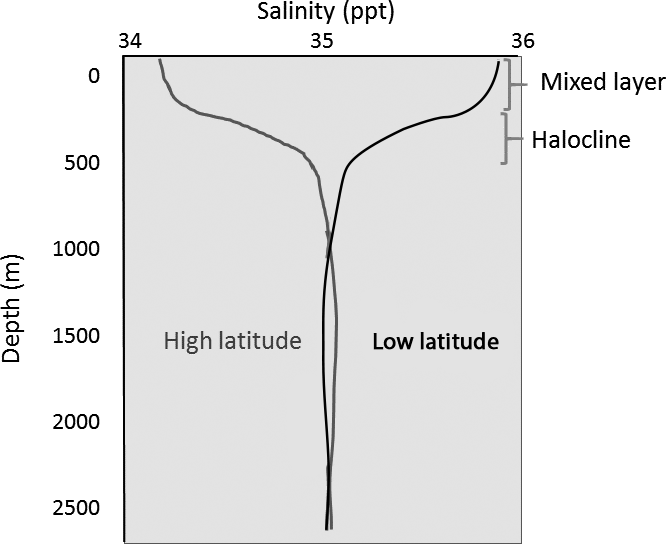
(Fig- Relationship between depth and salinity of an ocean)
Coral Reefs
CORAL REEFS
Coral reefs are incredibly diverse ecosystems found in various parts of the world. Coral polyps, the organisms primarily responsible for reef formation, come in various shapes and sizes, from large colonies to solitary individuals.
These polyps have a symbiotic relationship with microscopic algae called zooxanthellae, which live within their tissues and provide them with energy through photosynthesis.
There are thousands of coral species, each adapted to different environmental conditions. Some thrive in warm, shallow, tropical seas, while others can be found in the cold, dark depths of the ocean.
Prominent examples of coral reefs include
• Great Barrier Reef: Located off the coast of Australia.
• New Caledonia Barrier Reef: Situated in New Caledonia.
• Red Sea Coral Reef: Found in the Red Sea.
• Rainbow Reef: Located in Fiji.
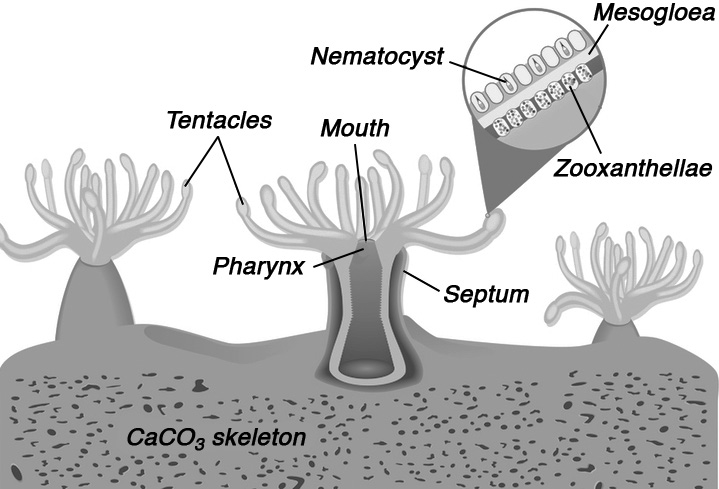
Fig-Description o f a Coral
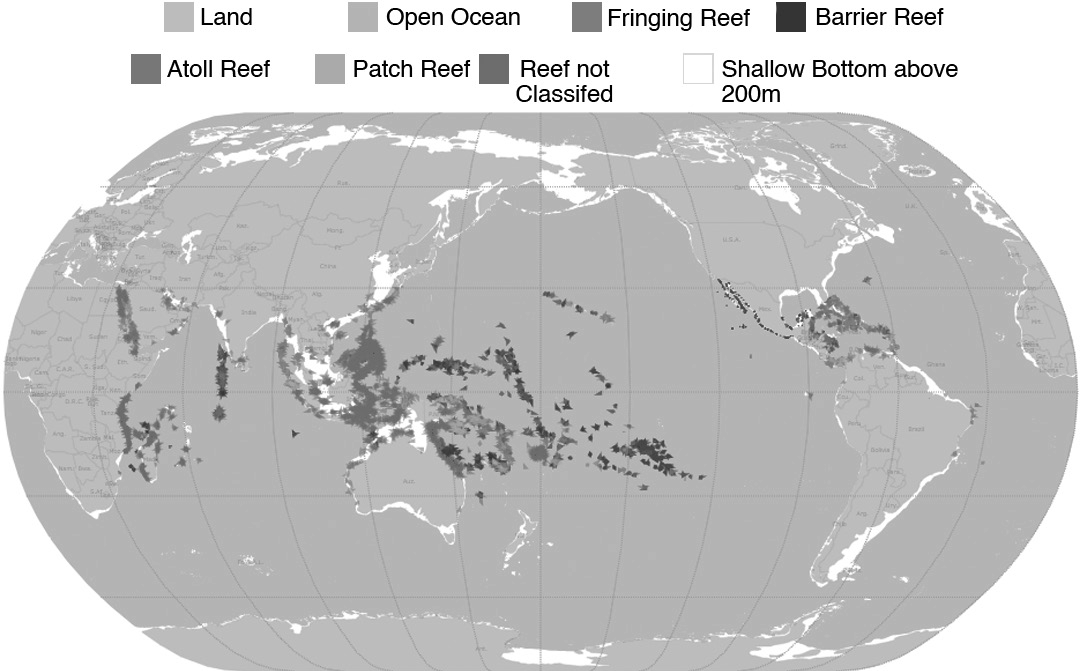
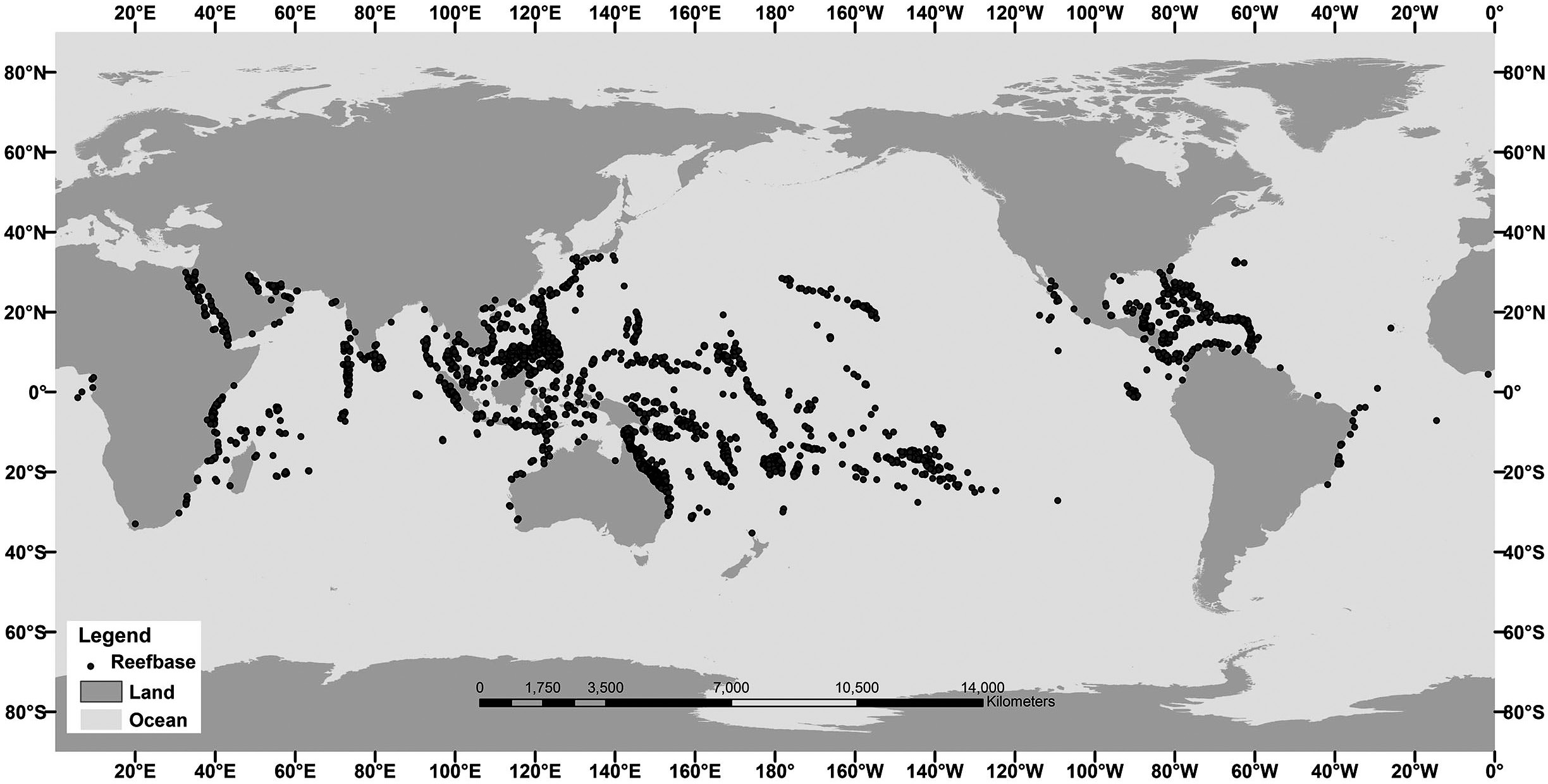
Fig-Distribution o f Corals Worldwide
Coral Reef as Rainforest of the Sea
• Coral reefs are often likened to the “rainforests of the sea” due to the incredible diversity of life they support and the vital ecological functions they fulfill.
• The intricate structures created by corals provide habitat for a vast array of marine organisms. These habitats offer shelter, food, breeding grounds and nurseries for fish and other organisms.
• Around 25% of the ocean’s fish species depend on healthy coral reefs for their survival. These reefs serve as essential areas for fish to seek shelter, find food, reproduce and raise their offspring. The nooks and crannies formed by corals offer protection from predators and serve as ideal environments for fish to thrive.
• Coral reefs harbor a rich diversity of marine life, including various species of sponges, oysters, clams, crabs, sea stars, sea urchins and numerous types of fish. This diversity contributes to the overall health and resilience of coral reef ecosystems.
• Coral reefs are ecologically connected to adjacent habitats such as seagrass beds, mangrove forests and mudflats. These interconnected ecosystems support a wide range of marine life and contribute to the overall productivity and biodiversity of coastal areas.
• Coral reefs serve as focal points for marine activity, attracting a wide variety of organisms seeking food, shelter and breeding opportunities. Their high biological productivity and diversity make them vital hubs of activity for marine life.
Importance of Coral Reefs
• Coral reefs are incredibly important ecosystems, providing numerous benefits to both marine life and human societies:
• Coral reefs are among the most biologically diverse ecosystems on Earth, supporting approximately 25% of all marine life, including over 4,000 species of fish. They play a crucial role in supporting the habitats of various flora and fauna in the sea.
• Ecologically, coral reefs are comparable to tropical rainforests in terms of species diversity and biological productivity in the ocean. They enable the formation of associated ecosystems, providing essential habitats, fisheries, and livelihoods.
• Coral reefs are climatologically important as they provide an accurate long-term record of climate change. They extend our understanding of seasonal climate variability in remote tropical oceans.
• Coral reefs serve as habitat, feeding, spawning and nursery grounds for over 1 million aquatic species, including commercially harvested fish species. They are a vital source of food for people living near coral reefs, especially on small islands.
•
Coral reefs offer opportunities for recreation and tourism, such as fishing, scuba diving and snorkeling, contributing billions of dollars to local economies worldwide.
• Coral reefs protect coastal infrastructure and prevent loss of life from storms, tsunamis, floods and erosion by acting as natural barriers.
• Coral reefs are sources of new medicines that can be used to treat diseases and other health problems, offering potential benefits to human health.
• The net economic value of the world’s coral reefs is estimated to be tens of billions of U.S. dollars per year, highlighting their significant economic importance.
• Corals have long been valued for their beauty and are often used as souvenirs, home decor and jewelry. However, many people are unaware that these structures are created by living organisms, and the rapid decline of coral reefs is a cause for concern.
Types of coral reefs
The structure of coral reefs is primarily formed by the calcareous skeletons of corals, which are soft-bodied, radially symmetrical marine invertebrates belonging to the phylum Cnidaria. These corals, also known as polyps or hydroids, secrete calcium carbonate to build their skeletons. Over time, millions of these coral skeletons become cemented together, forming the framework of coral reefs.
Coral reefs can vary significantly in structure and complexity and they are roughly divided into three major types:
Fringing Reef
Fringing reefs grow close to the shore and extend outward into the sea like a submerged platform. They are the most common type of reef and form borders along the shoreline and surrounding islands.
An example of a fringing reef is the Great Barrier Reef in Australia, which is the largest and most famous barrier reef in the world.
Barrier Reef
Barrier reefs are similar to fringing reefs in that they border a shoreline; however, they are separated from the land by an expanse of water, creating a lagoon between the reef and the shore.
Atolls:
Atolls are roughly circular or oval-shaped rings of reefs surrounding a central lagoon and are common in the Indian and South Pacific Oceans.
They form when a fringing reef continues to grow upward from a volcanic island that has sunk entirely below sea level. This creates a ring-shaped structure with an open lagoon in the center.
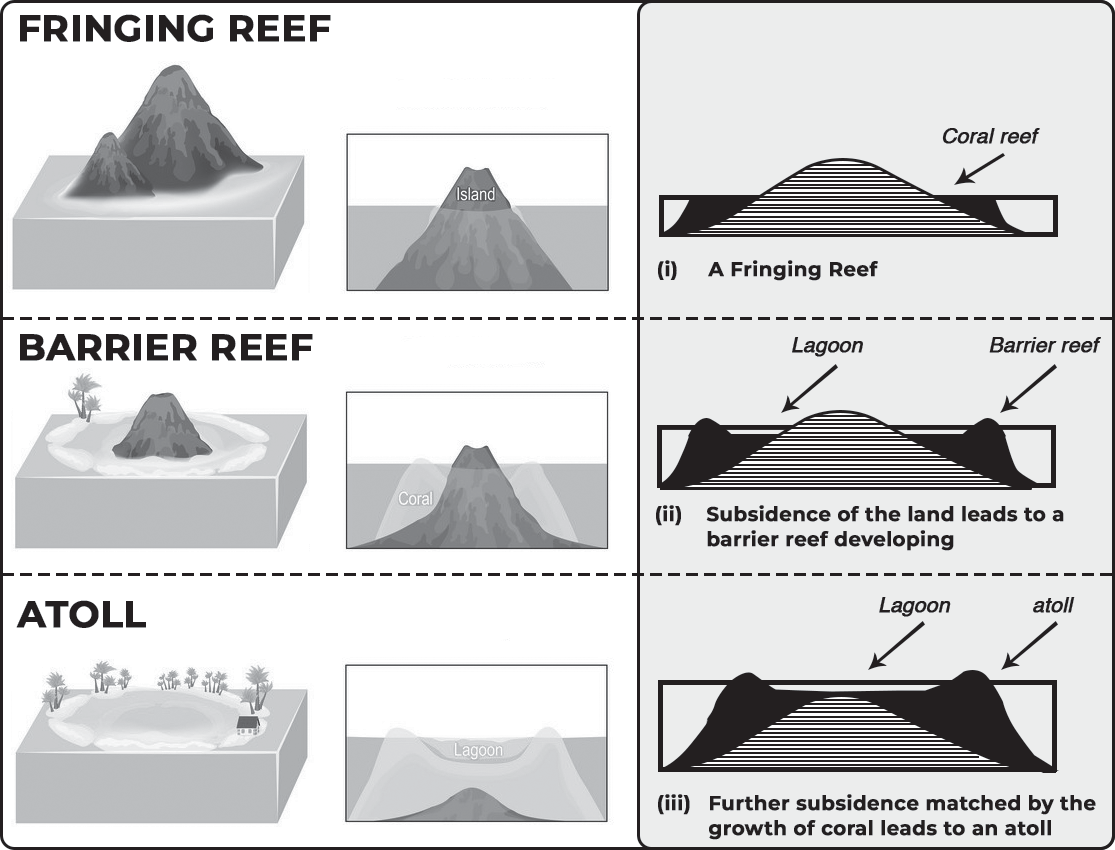
(Fig- Classification of coral reef)
How Do Coral Reefs Form?
Coral reefs form through a gradual process that spans thousands to millions of years.
Coral reefs begin to form when free-swimming coral larvae attach to submerged rocks or other hard surfaces along the edges of islands or continents.
As the corals grow and expand, reefs take on one of three major characteristic structures: fringing, barrier or atoll.
• Fringing reefs: These are the most common type and project seaward directly from the shore, forming borders along the shoreline and surrounding islands.
• Barrier reefs: Similar to fringing reefs but separated from the adjacent land mass by a lagoon of open water. They are situated at a greater distance from the shore.
• Atolls: Circular or oval-shaped reefs with a central lagoon. They form when a fringing reef continues to grow upward from a sinking volcanic island, leaving a ring of coral around a central lagoon.
Coral reefs, including barrier reefs and atolls, are not only beautiful but also among the oldest habitats in the ocean.
Depending on growth rates, it can take up to 10,000 years for a coral reef to form from a group of larvae.
Barrier reefs and atolls can take from 100,000 to 30,000,000 years to fully form.
Reefs exhibit characteristic horizontal and vertical zones of corals, algae and other species influenced by factors such as bottom topography, depth, wave and current strength, light, temperature and suspended sediments.
Major divisions common to most reefs include the reef flat, reef crest or algal ridge, buttress zone and seaward slope.
Corals initially settle and grow around an oceanic island, forming a fringing reef. Over thousands of years, if conditions are favorable, the reef expands.
As the interior island subsides, the fringing reef transitions into a barrier reef.
Eventually, if the island completely subsides beneath the water, leaving a ring of growing coral with an open lagoon, it forms an atoll.
The process of atoll formation may take millions of years to occur.
Distribution of coral reefs
Corals are distributed throughout the world’s oceans, inhabiting both shallow and deep waters. However, reef-building corals, which rely on a symbiotic relationship with algae, are predominantly found in shallow, clear waters that allow for sufficient light penetration for photosynthesis. Various species of corals can be found in oceans worldwide, ranging from tropical to polar regions. Reef-building corals are particularly abundant in the tropical and subtropical regions of the Western Atlantic and Indo-Pacific oceans, typically within latitudes 30 N and 30 S.
This region includes areas such as Bermuda, the Bahamas, the Caribbean Islands, Belize, Florida and the Gulf of Mexico. These locations harbor diverse coral reef ecosystems, supporting a wide range of marine life.
The Indo-Pacific region stretches from the Red Sea and the Persian Gulf across the Indian and Pacific oceans to the western coast of Panama. It encompasses a vast area with extensive coral reef formations. Corals grow on rocky outcrops in some areas of the Gulf of California.
DISTRIBUTION OF CORAL REEFS IN INDIA
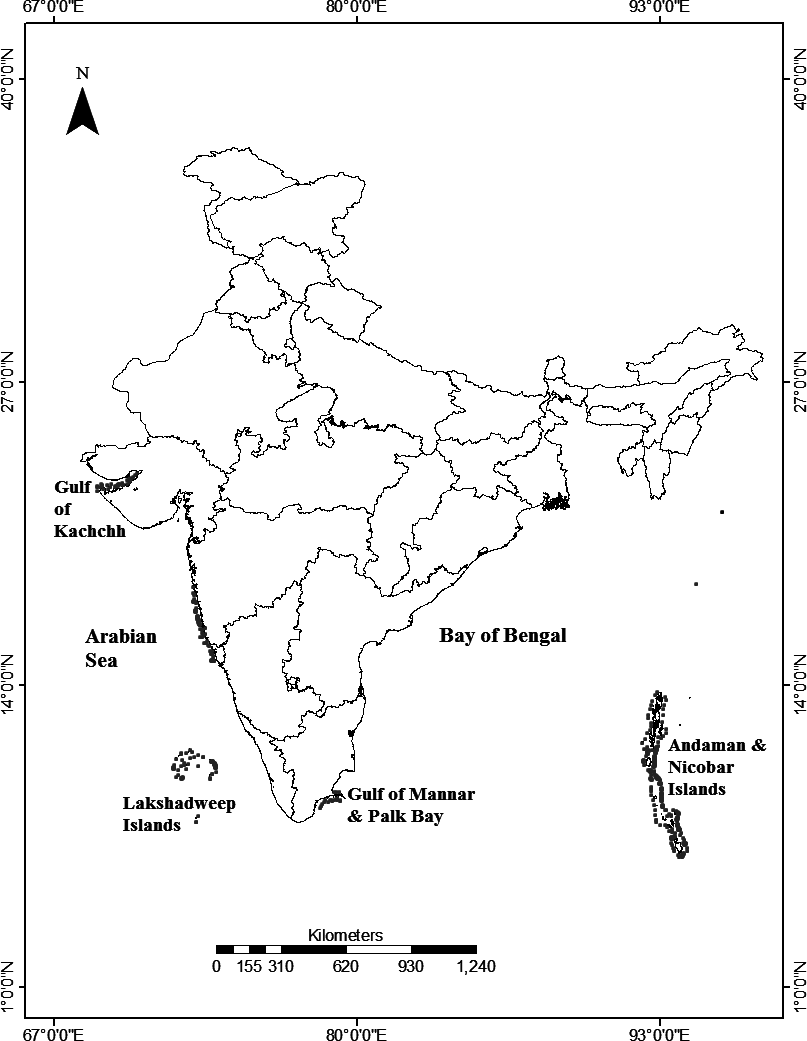
• India, with its extensive coastline spanning over 7,500 kilometers and subtropical climatic conditions, has limited areas with coral reefs due to various factors.
• The absence of coral reefs in the Bay of Bengal is attributed to several factors, including the substantial influx of freshwater and silt carried by rivers into the bay.
• Heavy monsoonal rains and high human presence along the coastline further inhibit reef growth in this region.
• The mainland coast of India features two distinct areas with coral reefs:
• Gulf of Kutch in the northwest, which hosts some of the most northerly reefs globally.
• Palk Bay and the Gulf of Mannar in the southeast,
characterized by numerous fringing reefs around small islands.
• Coral reefs are also found in the Andaman & Nicobar Islands, Lakshadweep Islands, and Malvan region.
• Patchy coral formations have been recorded in intertidal areas along the central west coast, including Ratnagiri, Malvan, Redi, and the Gaveshani Bank located 100 kilometers west of Mangalore.
• Hermatypic corals, which are reef-building corals, have been reported along the shore from Quilon in the Kerala coast to Enayam in Tamil Nadu.
• Coral occurrences are also noted on the east coast between Parangipettai, south of Cuddalore, and Pondicherry; however, these communities have not been thoroughly surveyed.
Corals and Zooxanthellae Relationship
• The relationship between corals and zooxanthellae is crucial for the health and productivity of coral reefs.
• Reef-building corals harbor photosynthetic cells called zooxanthellae within their tissues. Corals provide a protected environment and essential compounds for photosynthesis to the zooxanthellae. In return, zooxanthellae produce oxygen, assist in waste removal, and supply the coral with glucose, glycerol, and amino acids through photosynthesis. The relationship facilitates tight nutrient recycling in nutrient-poor tropical waters. Up to 90% of the organic material produced by zooxanthellae through photosynthesis is transferred to the coral tissue, driving coral growth and productivity.
• When corals become stressed, they may expel their
Coral bleaching
zooxanthellae, resulting in a stark white appearance known as coral bleaching. Prolonged coral bleaching can lead to the death of the coral if the polyps go without zooxanthellae for too long.
• Corals utilize the products of photosynthesis from zooxanthellae to produce proteins, fats, carbohydrates, and calcium carbonate.
• The intimate relationship with zooxanthellae allows corals to respond to the environment similar to plants, requiring clear water for sunlight penetration.
• Reef corals thrive in clear, nutrient-poor waters where sunlight can reach their zooxanthellae.
• Despite requiring clear water, coral reefs are remarkably productive and diverse marine environments, showcasing an interesting paradox.
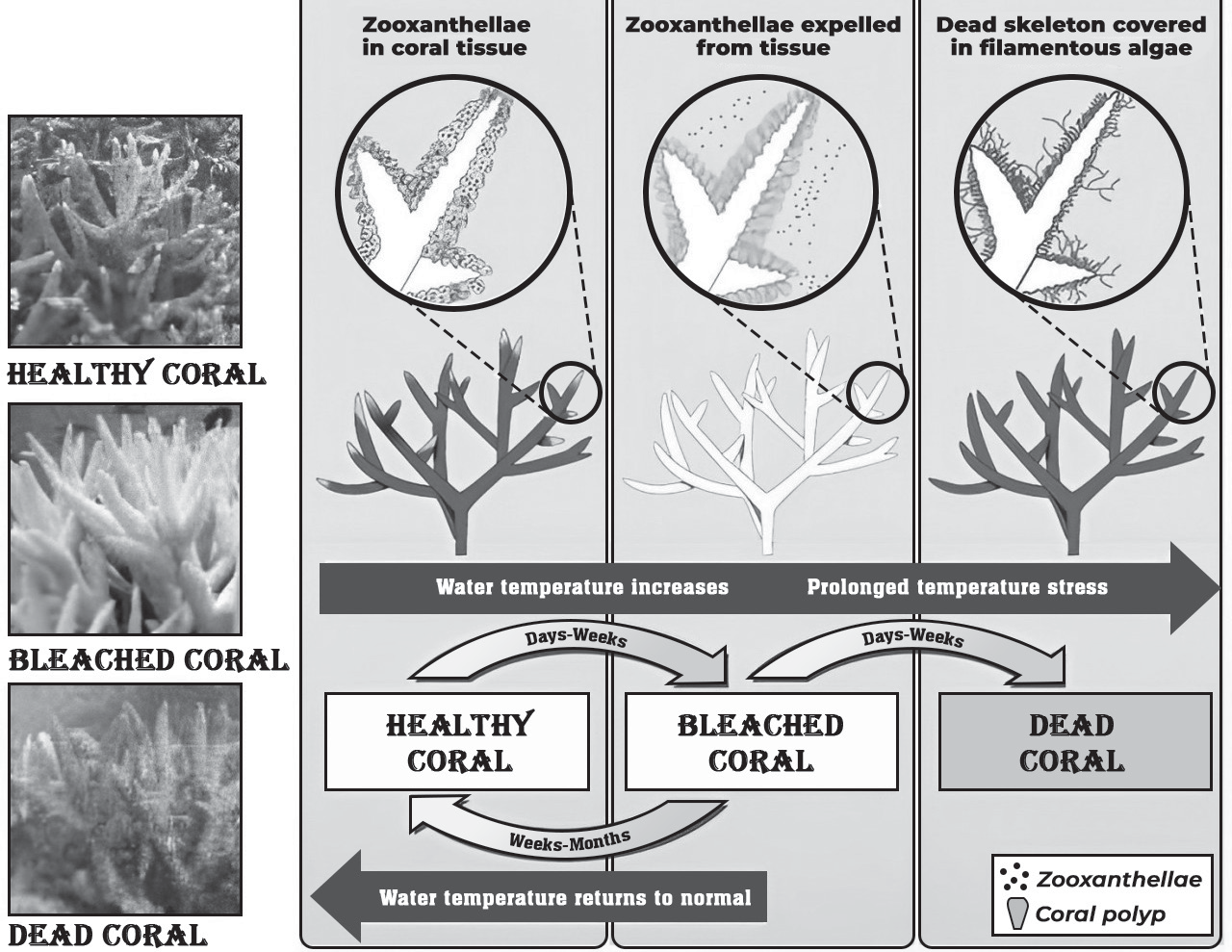
(Fig- Illustration of Coral bleaching)
• Around 30% of the affected reefs experienced coral mortality due to the severity of heat stress. Corals and their vibrant colors are attributed to microscopic algae called zooxanthellae. However, when corals experience stress due to environmental changes like temperature fluctuations, light exposure, or nutrient variations, they expel these algae, resulting in a phenomenon known as coral bleaching.
• Climate change-induced warming of ocean waters is the primary cause of coral bleaching. Even a slight increase in water temperature, as little as 2 degrees Fahrenheit, can trigger coral to expel their algae.
• Storm-generated precipitation and runoff can dilute ocean water rapidly and carry pollutants, leading to bleaching in near-shore corals.
• High solar irradiance during periods of elevated temperatures can contribute to bleaching in shallow- water corals.
• Exposure to air during extreme low tides can induce
bleaching in shallow corals, further exacerbating their stress.
• Ocean acidification, caused by the uptake of carbon dioxide from the atmosphere, can weaken corals by hindering their ability to build shells and skeletons from calcium carbonate.
• Once corals die from bleaching, reefs struggle to recover, impacting their ability to reproduce and sustain diverse marine life. The widespread occurrence of coral bleaching, affecting approximately 75% of the world’s tropical coral reefs between 2014 and 2017, highlights the severity of the issue.
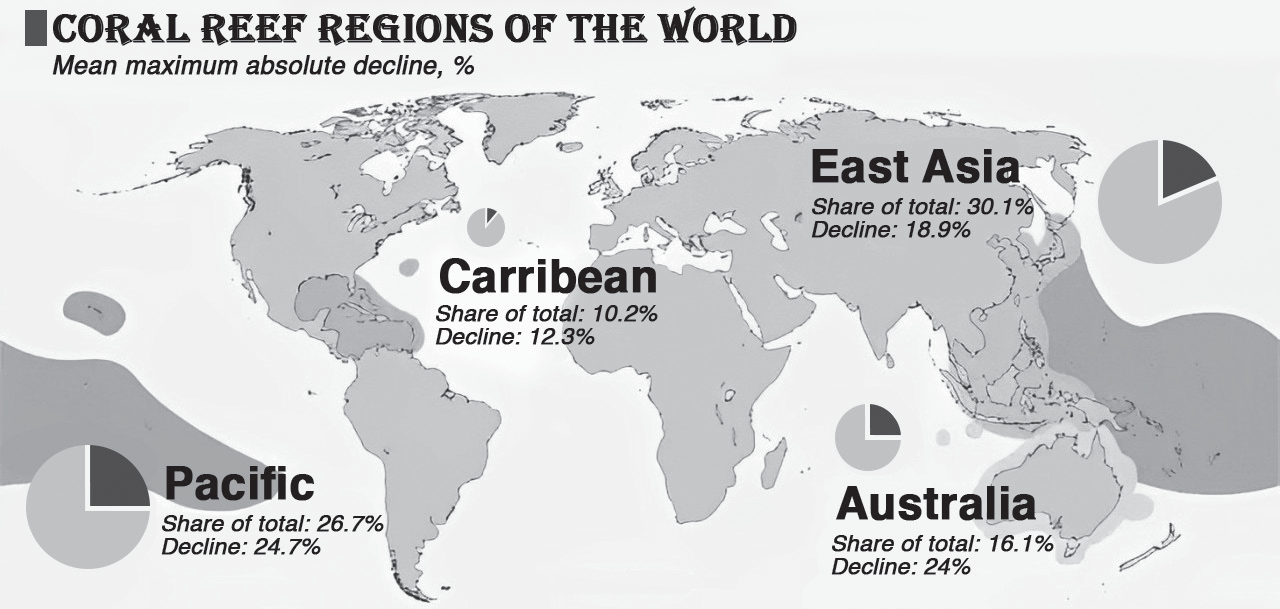
Impact of coral bleaching
• Impact on wildlife
• Impact on humans
• Impact on wildlife
Coral reefs support some of the most biodiverse ecosystems globally, providing habitats for thousands of marine species including sea turtles, fish, crabs, shrimp, jellyfish, sea birds, starfish, and more.
These ecosystems serve as critical spawning grounds, shelters, and sources of protection from predators for various marine organisms.
Coral reefs also support the foundation of ocean food chains, playing a vital role in marine ecosystems.
As coral bleaching leads to the collapse of reef ecosystems, many already vulnerable species face the threat of extinction.
Impact on humans
Coral bleaching has significant implications for human livelihoods, food security, and safety.
• Coral reefs act as natural barriers, absorbing the force of waves and storm surges, thereby protecting coastal communities. Without them, reliance on costly and less effective manmade seawalls increases, causing environmental damage.
• The depletion of coral reefs exacerbates the overfishing crisis by disrupting the food web and depriving fish and crustacean species of essential spawning and developmental habitats.
• Communities dependent on marine resources for income and sustenance are particularly vulnerable, as the loss of coral reefs affects their access to protein sources and livelihood opportunities.
• Reef tourism, a major economic driver generating billions of dollars annually and supporting numerous jobs, is threatened by bleached coral reefs, which deter tourists and undermine the tourism industry’s viability.
Spatial and Temporal Tange of Coral Reef Bleaching
• Coral reefs, vital for ecological and economic functions in tropical coastal regions, are experiencing global decline due to various stressors, with coral bleaching being a significant contributor. To understand the ecological impacts of this decline, it’s crucial to gather data at biologically relevant spatial scales, focusing on the spatial dynamics of coral bleaching.
• In Kaneohe Bay, Hawaii, three major bleaching events occurred in 1996, 2014, and 2015. The 2014 event was particularly severe, followed by another widespread bleaching event in 2015. Despite high recovery rates in most areas of the bay, reefs affected by freshwater kills in 2014 showed slower recovery.
• Surveys to monitor coral bleaching typically involve in situ diver surveys or remote sensing techniques. While diver surveys provide detailed colony-level information, reef structure and bleaching patterns can vary greatly over small spatial scales, potentially making these assessments unrepresentative of overall reef condition. Additionally, some reefs are difficult to access due to remoteness, adverse weather conditions, or challenging reef topography.
• Therefore, efforts to monitor and understand coral bleaching must consider the limitations of survey methods and strive to gather data at relevant spatial scales to accurately assess the health and recovery of coral reef ecosystems.
PHYTOPLANKTON AND FISHING
• The marine food chain operates through a process known as trophic transfer, where energy and nutrients are passed from one organism to another.
• Phytoplankton: These are microscopic plants that float near the surface of the ocean, where they can access sunlight for photosynthesis. Phytoplankton are the
primary producers in the marine food chain, converting sunlight into energy and serving as the base of the food chain.
• Zooplankton: These are slightly larger, more mobile organisms that feed on phytoplankton. Zooplankton include a variety of organisms, ranging from single-celled creatures like copepods and krill to larger organisms like jellyfish. They are considered herbivores because they primarily consume phytoplankton.
• Krill and small fish: Zooplankton serve as food for organisms higher up in the food chain, including krill and small fish. Krill are small, shrimp-like crustaceans that form a crucial part of the diet for many marine animals, including whales, seals, and seabirds. Small fish also feed on zooplankton as part of their diet.
• This sequence continues up the food chain, with larger fish, marine mammals, and apex predators preying on the smaller organisms lower down in the chain.
• Plankton, particularly phytoplankton, play a crucial role in marine ecosystems as they are the primary producers at the base of the food chain. However, excessive plankton growth, known as a bloom, can lead to environmental problems. When certain types of phytoplankton bloom, they can release toxins into the water, leading to phenomena like red tides or harmful algal blooms.
• Red tides, named for the reddish coloration they often impart to the water, occur when there’s a rapid increase in the population of harmful algae. These algae can produce toxins that are harmful to marine life, including fish, shellfish, mammals, and birds. Consumption of contaminated shellfish by humans can also lead to illness or even death.
• Harmful algal blooms can have devastating effects on marine ecosystems, causing mass mortalities of fish and other organisms, disrupting food webs, and leading to economic losses for fisheries and coastal communities.
• The survival of plankton is essential for maintaining the balance of marine ecosystems. However, factors such as climate change and rising sea temperatures can pose serious risks to plankton populations. Warmer waters can alter the distribution and abundance of plankton species, leading to shifts in marine food webs and ecosystem dynamics.
Significance of Plankton
• Measurement of Ocean Fertility: Plankton biomass serves as an index of ocean fertility, providing an estimation of total organic production. This information helps in identifying areas with potential for fisheries.
• Impact on Fish Production: Changes in plankton productivity affect the production of fish. Understanding the conversion of plankton into fish biomass is crucial for fisheries management.
• Food Source: Plankton are a primary food source for many marine organisms, including fish. Variations in plankton composition influence the feeding habits of fish.
• Role in Fish Spawning: The structure of plankton communities indicates their importance in supporting fish spawning.
• Conditions for Successful Fisheries: Successful fisheries depend on favorable conditions that ensure an adequate supply of food for fish and lower prey density.
• Survival of Fish Larvae: The ability of fish larvae to survive beyond the larval stage without significant mortality is crucial for the size of resulting fish stocks.
• Predation on Larval Stages: Predation of fish larvae by zooplankton can significantly impact the quality of fish stocks and subsequent fisheries.
• Indicator of Year Class Strength: The percentage of starved larvae serves as an indicator of potential year class strength, which is important for fisheries management.
• Plankton as Bioindicators: Certain species of plankton are used as bioindicators to assess the status of fisheries. This concept is increasingly important and applicable in modern fisheries management practices.
About Phytoplankton
• Phytoplankton, also known as micro-algae, are a vital component of marine ecosystems. They share similarities with terrestrial plants, such as containing chlorophyll and requiring sunlight for photosynthesis. In a balanced ecosystem, phytoplankton serve as a crucial food source for various sea creatures, including shrimp, snails, and jellyfish.
• However, when there’s an excess of nutrients available, phytoplankton can undergo rapid growth, leading to the formation of harmful algal blooms (HABs). These blooms can produce toxic compounds that have detrimental effects on marine life, including fish, shellfish, mammals, birds, and even humans.
• There are two main classes of phytoplankton: dinoflagellates and diatoms.
• Dinoflagellates: These microorganisms utilize a whip-like tail, known as a flagellum, to move through the water. Their bodies are covered with complex shells, providing them with structural support and protection.
• Diatoms: Diatoms also possess shells, but they are composed of a different substance, and their structure is rigid and made of interlocking parts. Unlike dinoflagellates, diatoms do not rely on flagella for movement; instead, they rely on ocean currents to transport them