Whatsapp 88106-52225 For Details
Get Free IAS Booklet
Get Free IAS Booklet
Atmospheric pressure, also known as barometric pressure, refers to the force exerted per unit area by the weight of the air in the Earth’s atmosphere. It is akin to the pressure exerted by a stack of heavy books on a table, with the weight of the books symbolizing the weight of the atmosphere pressing down on the Earth’s surface.
VERTICAL & HORIZONTAL DISTRIBUTION OF PRESSURE
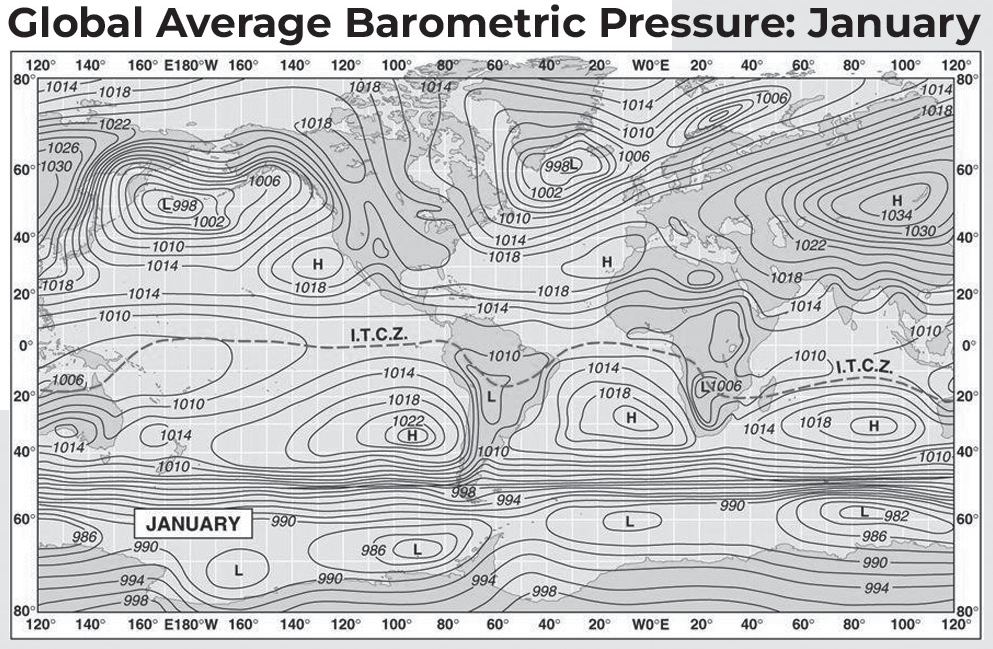
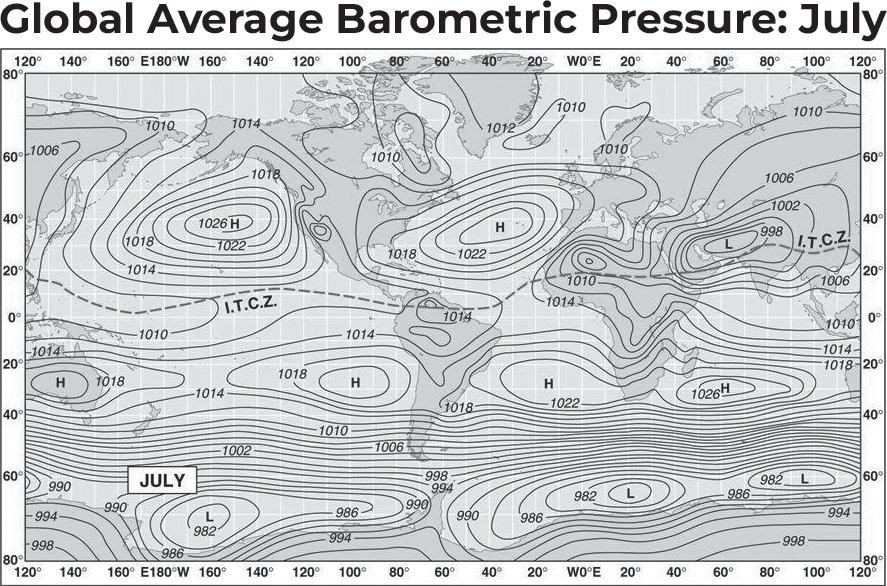
Horizontal Pressure Variation
Horizontal pressure variation across the Earth’s surface is illustrated using isobars, which are lines connecting locations with equal pressure values, similar to contour lines on a topographic map. The spacing between isobars reflects the rate and direction of change in air pressure, termed the pressure gradient.
TRICELLULAR MERIDIONAL MODEL OF ATMOSPHERIC CIRCULATION
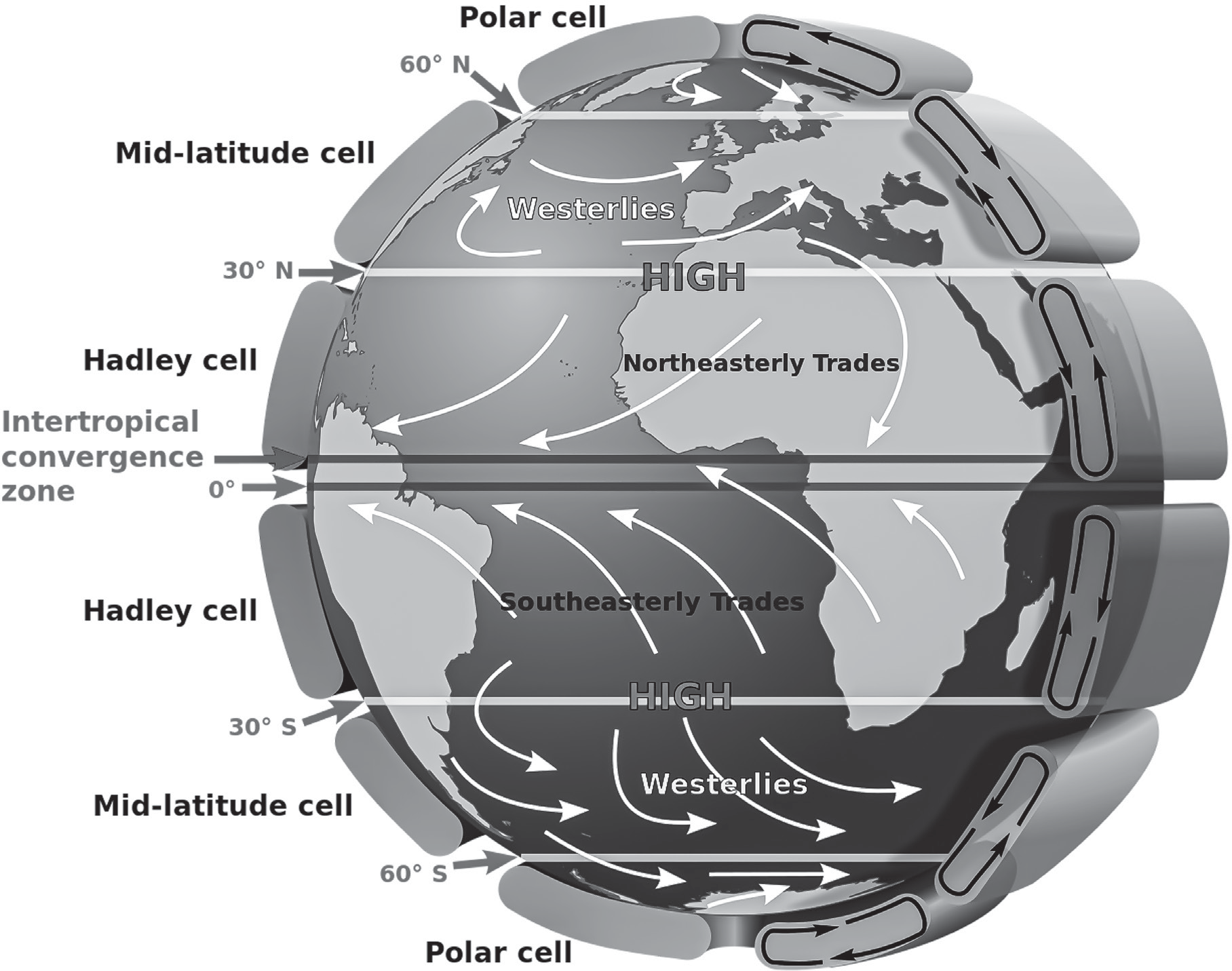
(Fig- Convergence and divergence of the wind and atmospheric air circulation)
Hedley Cell or Trade Wind Cell
• Location: The Hadley Cell extends from approximately
10 to 30 latitudes in both the Northern and Southern Hemispheres. It is a thermally induced circulation pattern driven by the intense solar insolation experienced at these latitudes.
• The Hadley Cell is thermally direct, meaning it is driven by temperature differences caused by solar heating. Intense solar insolation at the equator heats the air, causing it to rise vertically.
• The rising air at the equator forms the ascending branch of the Hadley Cell. As the air rises, it cools adiabatically, eventually reaching the tropopause, where it diverges towards the poles as the anti-trade winds.
• The cooled air descending from the tropopause at approximately 30 latitude forms the descending branch of the Hadley Cell. This descending air creates an area of high pressure known as the subtropical high-pressure zone.
• The air descending from the subtropical high-pressure zone flows back towards the equator as the trade winds, completing the circulation loop of the Hadley Cell.
Ferrel cell / Polar Front Cell / Mid Latitude cell
Location: The Ferrel Cell extends from approximately
35 to 60 latitude in both the Northern and Southern Hemispheres. It occupies the mid-latitude regions between the Hadley Cell and the Polar Cell.
Unlike the Hadley Cell, the Ferrel Cell is thermally indirect, meaning it is primarily driven by dynamic forces rather than temperature differences. It is induced by the interaction between the air masses with different temperatures.
Within the Ferrel Cell, warm air from lower latitudes ascends near the polar front, which is a zone of transition between polar cold air masses and warmer air masses from lower latitudes.
The polar front is a significant feature of the Ferrel Cell, and it typically develops when the westerly winds from the mid-latitudes meet the polar cold winds in the subpolar regions. This interaction creates a zone of strong temperature gradient and atmospheric instability.
Circulation Pattern: completed by the westerly winds blowing towards the poleward side, creating the prevailing westerlies.
Polar Cell
• Location: Extending from approximately 65 to 90 degrees latitude in both the Northern and Southern Hemispheres, the
Polar Cell occupies the polar regions near the poles.
• Unlike the Ferrel Cell, the Polar Cell is thermally direct, meaning it is primarily driven by temperature differences. It is strongest during the winter months when temperature contrasts between the polar regions and lower latitudes are most pronounced.
• Within the Polar Cell, there is sinking air near the poles due to the cold temperatures. This sinking air forms high-pressure areas at the poles.
• The sinking air at the poles creates easterly winds that move towards the subpolar low-pressure areas.
• At the subpolar lows, the easterly winds from the Polar Cell interact with the westerly winds from the Ferrel Cell. This interaction results in atmospheric instability and rising air, completing the circulation of the Polar Cell.
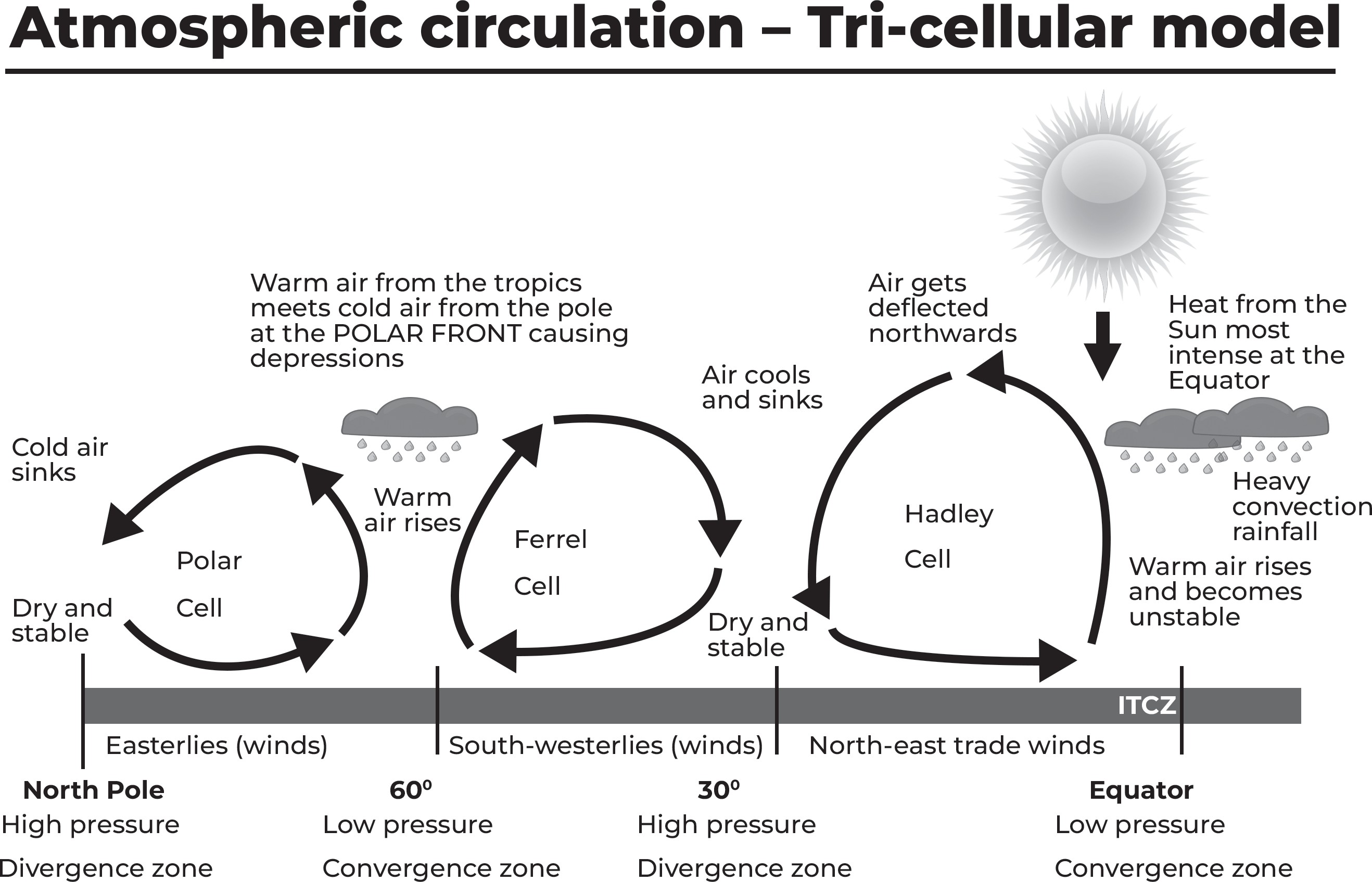
(Fig- Illustration of Tricellular cell model)
Significance of the tricellular meridional circulation
• Maintains Heat Balance: One of its primary functions is to maintain the latitudinal heat balance of the Earth by redistributing heat from the equator towards the poles and vice versa. This helps regulate global temperatures and climate patterns.
• Formation of Jet Streams: The tricellular circulation is responsible for the formation of jet streams, which are fast-flowing, narrow air currents in the upper atmosphere. These jet streams play a crucial role in influencing weather patterns and steering storms.
• Formation of Doldrums and ITCZ: It contributes to the formation of doldrums or the Intertropical Convergence Zone (ITCZ), a belt of low pressure near the equator
characterized by calm winds and frequent thunderstorms. The ITCZ plays a significant role in global weather patterns and precipitation distribution.
Formation of Cyclones: The tricellular circulation system is instrumental in the development of various types of cyclones, including tropical cyclones, temperate cyclones and anticyclones. These cyclones have profound impacts on regional weather patterns and can cause extreme weather events.
Formation of Deserts: Subtropical highs, which are part of the tricellular circulation, contribute to the creation of arid conditions and desert environments. The interaction between easterly and westerly winds can lead to the formation of fronts, influencing the climate of subpolar regions.
Precipitation: Convective currents within the Hadley cells, one component of the tricellular circulation, are responsible for heavy precipitation along equatorial regions. This contributes to the lush vegetation and diverse ecosystems found in tropical rainforests.
TRICELLULAR MERIDIONAL MODEL OF ATMOSPHERIC CIRCULATION
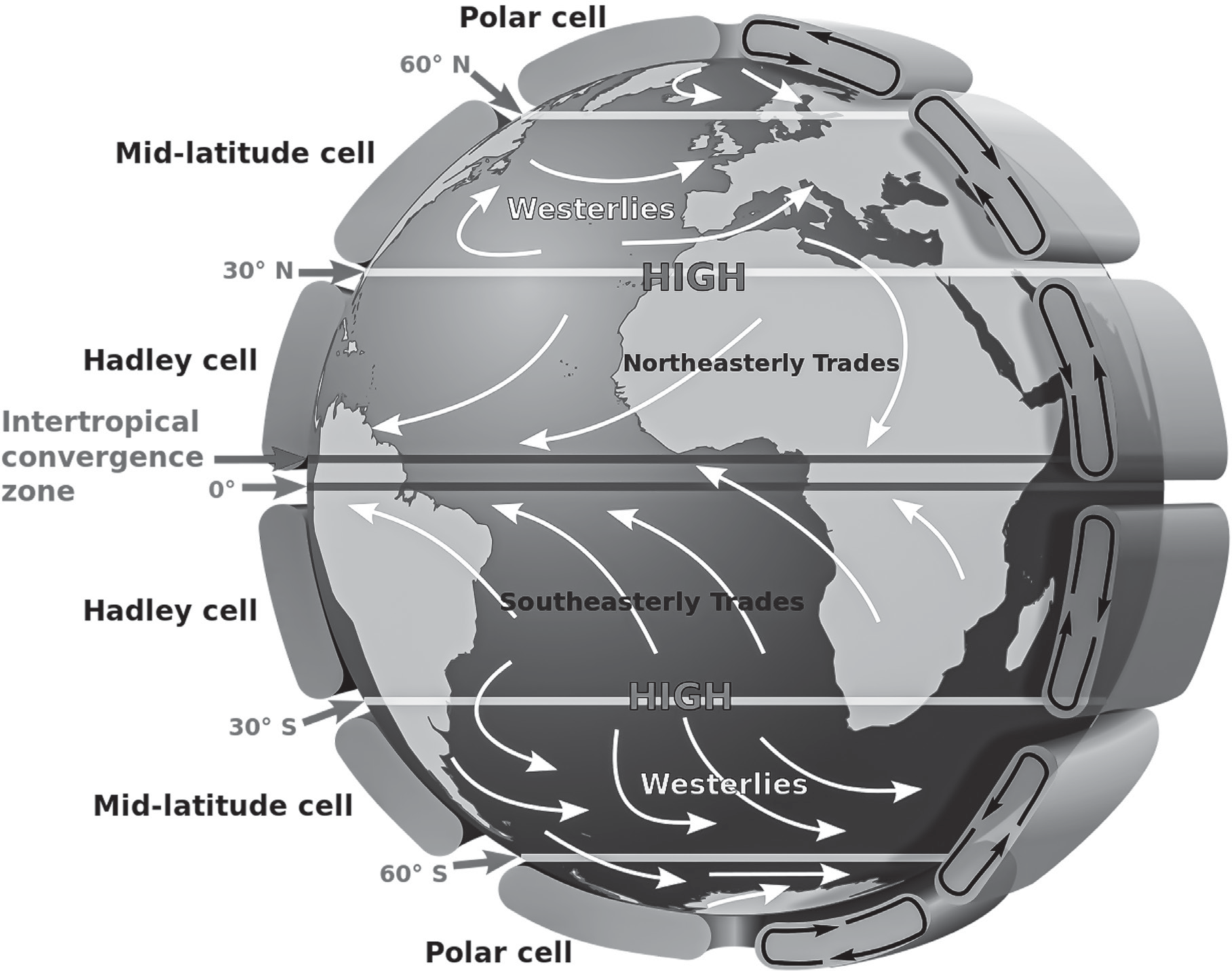
(Fig- Convergence and divergence of the wind and atmospheric air circulation)
Hedley Cell or Trade Wind Cell
• Location: The Hadley Cell extends from approximately
10 to 30 latitudes in both the Northern and Southern Hemispheres. It is a thermally induced circulation pattern driven by the intense solar insolation experienced at these latitudes.
• The Hadley Cell is thermally direct, meaning it is driven by temperature differences caused by solar heating. Intense solar insolation at the equator heats the air, causing it to rise vertically.
• The rising air at the equator forms the ascending branch of the Hadley Cell. As the air rises, it cools adiabatically, eventually reaching the tropopause, where it diverges towards the poles as the anti-trade winds.
• The cooled air descending from the tropopause at approximately 30 latitude forms the descending branch of the Hadley Cell. This descending air creates an area of high pressure known as the subtropical high-pressure zone.
• The air descending from the subtropical high-pressure zone flows back towards the equator as the trade winds, completing the circulation loop of the Hadley Cell.
Ferrel cell / Polar Front Cell / Mid Latitude cell
Location: The Ferrel Cell extends from approximately
35 to 60 latitude in both the Northern and Southern Hemispheres. It occupies the mid-latitude regions between the Hadley Cell and the Polar Cell.
Unlike the Hadley Cell, the Ferrel Cell is thermally indirect, meaning it is primarily driven by dynamic forces rather than temperature differences. It is induced by the interaction between the air masses with different temperatures.
Within the Ferrel Cell, warm air from lower latitudes ascends near the polar front, which is a zone of transition between polar cold air masses and warmer air masses from lower latitudes.
The polar front is a significant feature of the Ferrel Cell, and it typically develops when the westerly winds from the mid-latitudes meet the polar cold winds in the subpolar regions. This interaction creates a zone of strong temperature gradient and atmospheric instability.
Circulation Pattern: completed by the westerly winds blowing towards the poleward side, creating the prevailing westerlies.
Polar Cell
• Location: Extending from approximately 65 to 90 degrees latitude in both the Northern and Southern Hemispheres, the
Polar Cell occupies the polar regions near the poles.
• Unlike the Ferrel Cell, the Polar Cell is thermally direct, meaning it is primarily driven by temperature differences. It is strongest during the winter months when temperature contrasts between the polar regions and lower latitudes are most pronounced.
• Within the Polar Cell, there is sinking air near the poles due to the cold temperatures. This sinking air forms high-pressure areas at the poles.
• The sinking air at the poles creates easterly winds that move towards the subpolar low-pressure areas.
• At the subpolar lows, the easterly winds from the Polar Cell interact with the westerly winds from the Ferrel Cell. This interaction results in atmospheric instability and rising air, completing the circulation of the Polar Cell.
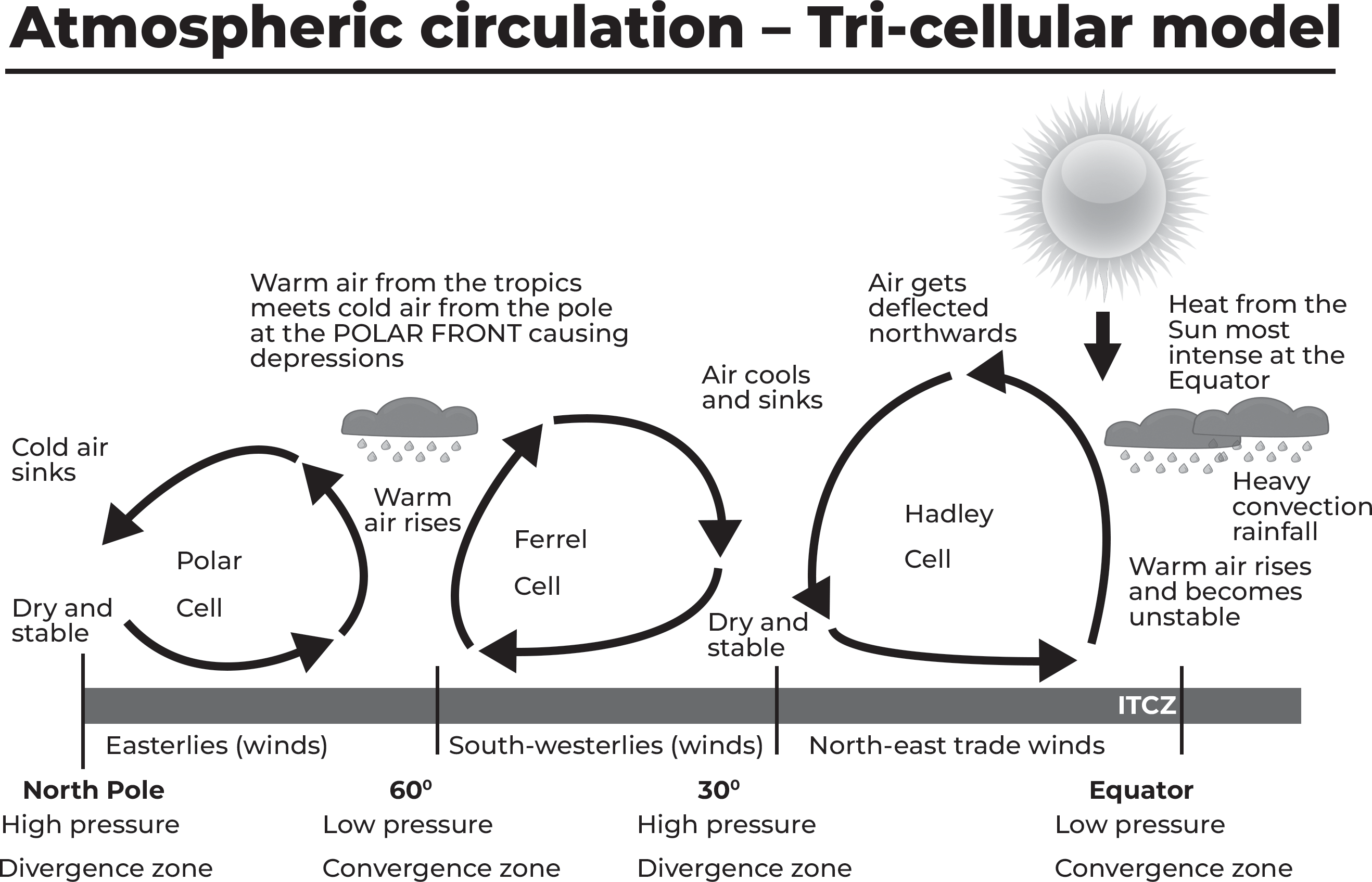
(Fig- Illustration of Tricellular cell model)
Significance of the tricellular meridional circulation
• Maintains Heat Balance: One of its primary functions is to maintain the latitudinal heat balance of the Earth by redistributing heat from the equator towards the poles and vice versa. This helps regulate global temperatures and climate patterns.
• Formation of Jet Streams: The tricellular circulation is responsible for the formation of jet streams, which are fast-flowing, narrow air currents in the upper atmosphere. These jet streams play a crucial role in influencing weather patterns and steering storms.
• Formation of Doldrums and ITCZ: It contributes to the formation of doldrums or the Intertropical Convergence Zone (ITCZ), a belt of low pressure near the equator
characterized by calm winds and frequent thunderstorms. The ITCZ plays a significant role in global weather patterns and precipitation distribution.
Formation of Cyclones: The tricellular circulation system is instrumental in the development of various types of cyclones, including tropical cyclones, temperate cyclones and anticyclones. These cyclones have profound impacts on regional weather patterns and can cause extreme weather events.
Formation of Deserts: Subtropical highs, which are part of the tricellular circulation, contribute to the creation of arid conditions and desert environments. The interaction between easterly and westerly winds can lead to the formation of fronts, influencing the climate of subpolar regions.
Precipitation: Convective currents within the Hadley cells, one component of the tricellular circulation, are responsible for heavy precipitation along equatorial regions. This contributes to the lush vegetation and diverse ecosystems found in tropical rainforests.