Submarine Relief Features
SUBMARINE RELIEF FEATURES.
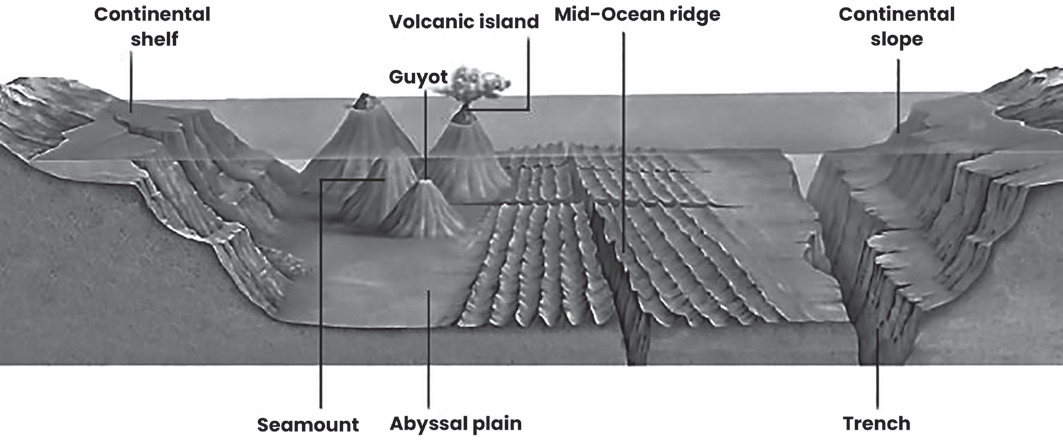
The ocean floor, hidden beneath the vast expanse of ocean water, is home to a diverse range of geological features collectively known as submarine relief. These features include: Mountains, Basins, Plateaus, Ridges, Canyons and Trenches.
The Ocean basins are broadly divided into four major sub- divisions. Four main relief features are-
a) Continental Shelfb) Continental Slope
c) Abyssal Plainsd) Ocean Deep
CONTINENTAL SHELF
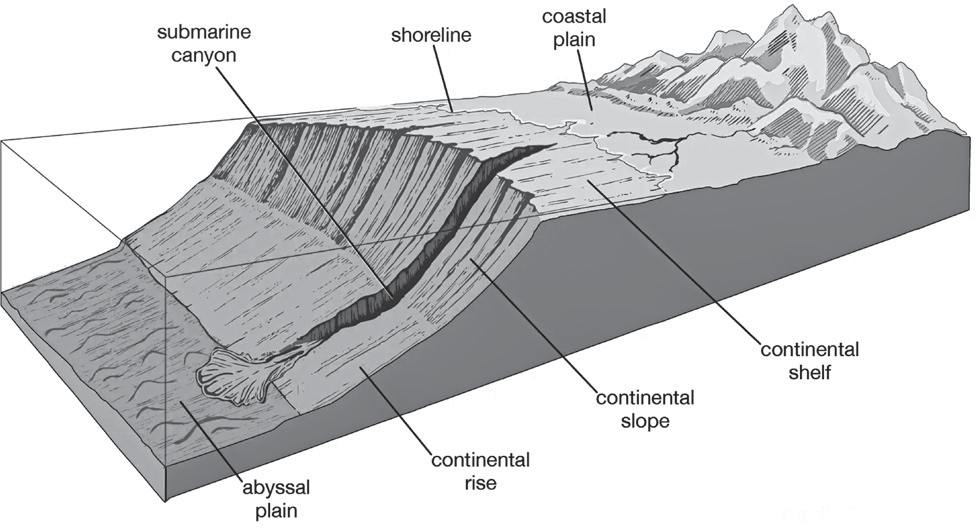
Continental shelves are shallow submerged extensions of continents that gradually slope seaward until a steep drop-off point. These shelves vary in depth, ranging from 120 to 370 meters, and in width spanning from a few kilometers to over 100 kilometers.
For example, off the eastern coast of India, the continental shelf is much wider than that of the western coast. Similarly, while Western Europe’s shelf extends 320 kilometers from the Cape of Land’s End, it is absent in some continents, particularly where fold mountains run parallel or close to the coast, such as along the eastern Pacific Ocean.
The formation of continental shelves is attributed to various factors. Most continental shelves were once part of landmasses but have since been submerged by rising sea levels. Some scientists suggest that these shelves formed through the erosional action of waves, while others argue that they were created by the accumulation of sediment carried by rivers and deposited on offshore terraces. In areas previously covered by glaciers, continental shelves may have developed due to the deposition of glacial sediments.
Continental shelves are of great importance due to their role in supporting marine life and providing valuable resources. They serve as a habitat for diverse marine species, serving as a source of fish, minerals and energy resources. The shallow waters of continental shelves facilitate sunlight penetration, promoting the growth of plankton, which are essential components of the marine food chain. Additionally, continental shelves like Bombay High and the Godavari basin are vital for oil and natural gas extraction, while coral reefs and lipoclastic materials are common features found on these shelves.
SUBMARINE CANYONS
Continental shelves often feature submarine canyons that extend to the continental slope. These canyons are akin to gorges found on land, characterized by steep-sided valleys carved by underwater landslides.
One such example is the Godavari Canyon, which reaches a depth of 502 meters. These canyons are formed as a result of the force exerted by moving sediments during storms or earthquakes, causing the dislodgement of sediments collected on the continental shelves.
CONTINENTAL SLOPE
The continental slope is a gradual descent from the shallow continental shelf to the deep abyssal plain, sloping at an average of 2.5 degrees and reaching depths of up to 3,600 meters. In certain areas, such as off the coast of the Philippines, the continental slope can be even steeper and deeper.
Its main characteristics include increasing steepness as the distance from the coastline increases and minimal sediment deposition, resulting in less marine life compared to the continental shelf.
The continental rise is located at the base of the slope and is characterized by heavy sedimentary deposits. This belt of sedimentation varies in width, with some regions having a narrow rise and others extending up to 600 kilometers wide. The continental rise serves as the transition zone between the continental slope and the abyssal plain.
ABYSSAL PLAIN
Abyssal plains, located in the deep ocean, are characterized by their exceptionally flat terrain and lack of distinct features. Covering a significant portion of the ocean floor between depths of 3000 meters to 6000 meters, these plains were once thought to be featureless, but modern technology has revealed their complexities, including extensive plateaus, hills, guyots, and seamounts.
The floor of abyssal plains is primarily covered with sediments, with those closer to continents containing land-derived sediments, while others harbor abundant marine life and are covered with sediments known as
oozes. In some open ocean areas where life is scarce, the sediment is often red clay, originating either from volcanic activity or composed of tiny particles transported by wind and rivers.
SUBMARINE RIDGES
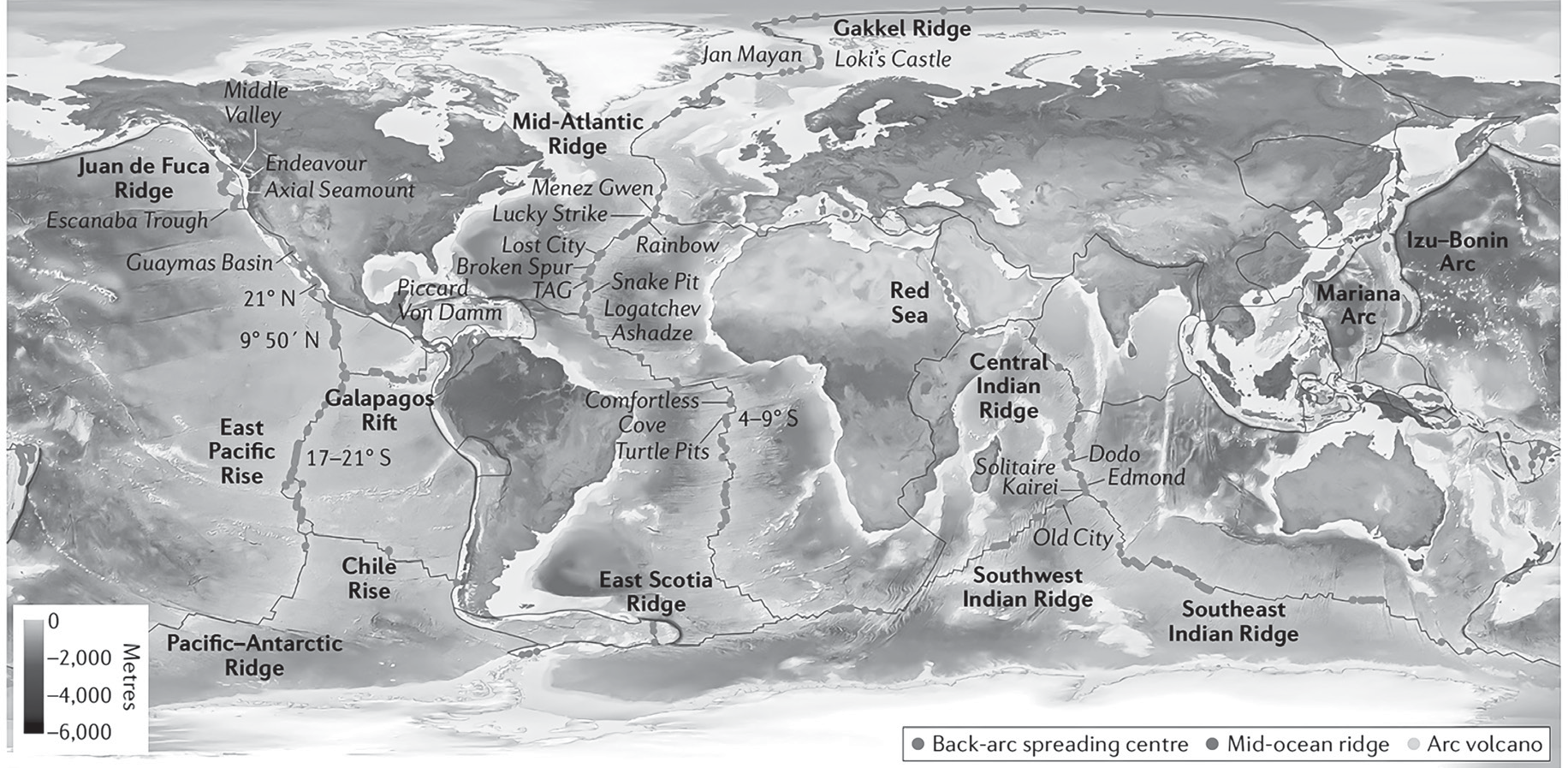
Submarine ridges, also known as mid-oceanic ridges, are linear features occurring in the middle of oceans, representing underwater mountain systems. They form a global interconnected system that spans across oceans, intersected by faults. These ridges are often associated with frequent earthquakes, and volcanism is common, leading to the formation of various relief features.
One of the most significant mid-oceanic ridges is the Mid-Atlantic Ridge, which stretches in an S-shape across the Atlantic Ocean. Some peaks of this ridge rise above the water’s surface, forming islands. Other notable submarine ridges include the East Pacific Ridge and the Carlsberg Ridge.
Submarin e ridges of the World
SEAMOUNTS AND GUYOTS
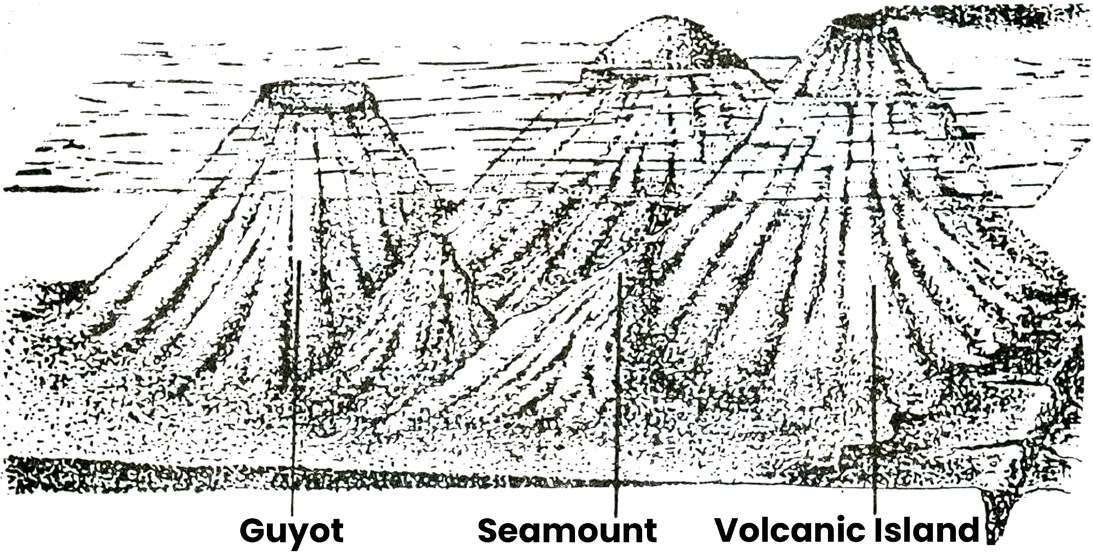
Seamounts are the peaks of submerged volcanoes that rise from the ocean floor. Some seamounts extend above the sea level, forming isolated islands. Examples of such islands include Hawaii and Tahiti, which are the exposed peaks of volcanic seamounts.
A guyot is a type of underwater volcano that rises above the ocean floor but has a flattened top due to erosion. Notably, guyots are submerged beneath the water’s surface.
OCEAN DEEPS AND SUBMARINE TRENCHES
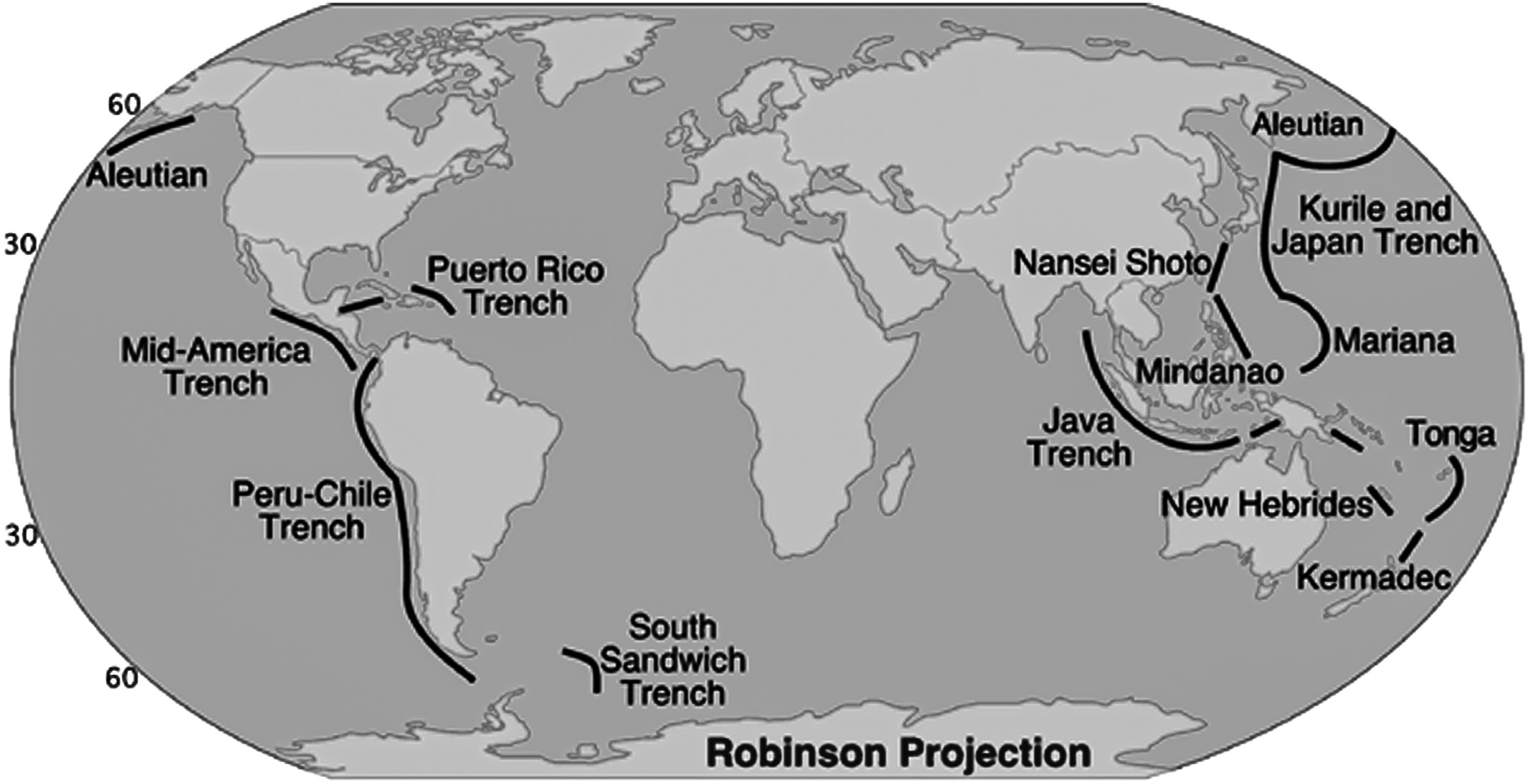
The ocean deeps, also known as submarine trenches, are the deepest parts of the ocean floor. They are characterized by long, narrow, steep-sided depressions with flat floors. Contrary to expectations, these trenches are often located near continents bordered by fold mountains and are associated with volcanic and earthquake activity. Submarine trenches can be found in all major oceans and are significant for generating powerful earthquakes and tsunamis.
The Mariana Trench, located in the Pacific Ocean, is the deepest known part of the oceans. It surpasses even the height of Mount Everest when measured from its summit to the ocean floor.