The Earth As Geosphere
THE EARTH AS GEOSPHERE
There are different ideas about how the Earth and our Solar System came to be. We know that Earth is unique because it’s the only planet known to support life, earning it the nickname “the living planet.” The Sun is crucial because it provides the energy that sustains life and drives various processes on Earth.
Earth as a living system. It’s made up of four main parts:
•Lithosphere: This is the solid outer layer of the Earth, including the land, rocks, and soil.
•Atmosphere: This is the layer of gases that surrounds the Earth, like the air we breathe.
•Hydrosphere: This includes all the water on Earth, such as oceans, rivers, lakes, and groundwater.
•Biosphere: This is the part of Earth where life exists, including all living organisms and their interactions with the environment.
The Lithosphere
The lithosphere is crucial for life on Earth because it provides habitats and essential resources. It includes the Earth’s solid outer layer and is made up of the crust and upper part of the mantle.
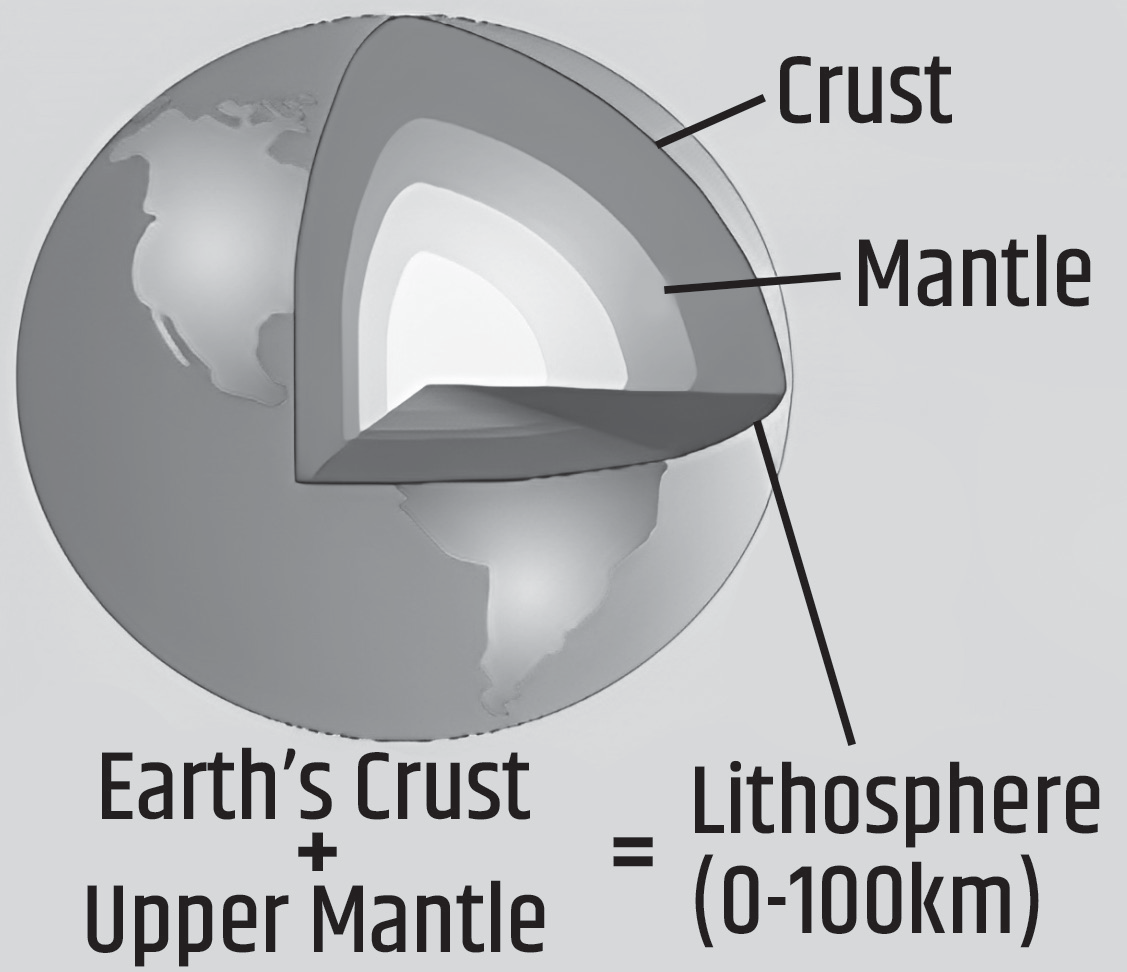
•The lithosphere provides soil, sediment, salts in the sea, and nutrients that support life.
The lithosphere is essential for life on Earth because it supports the atmosphere and holds water in various forms. It’s vital for the survival of all plants, animals, and other life forms. The lithosphere is made up of the crust and upper part of the mantle.
• The crust can be divided into two types: continental crust, which forms the landmasses, and oceanic crust, which makes up the ocean floors.
The lithosphere is about 100 kilometers thick on average. However, its thickness varies greatly between oceanic and continental areas. Over the ocean, it can be just a few kilometers thick, while under continents, it can be up to 300 kilometers thick. The lithosphere is made up of different types of rocks, including igneous, sedimentary, and metamorphic rocks.
The Atmosphere
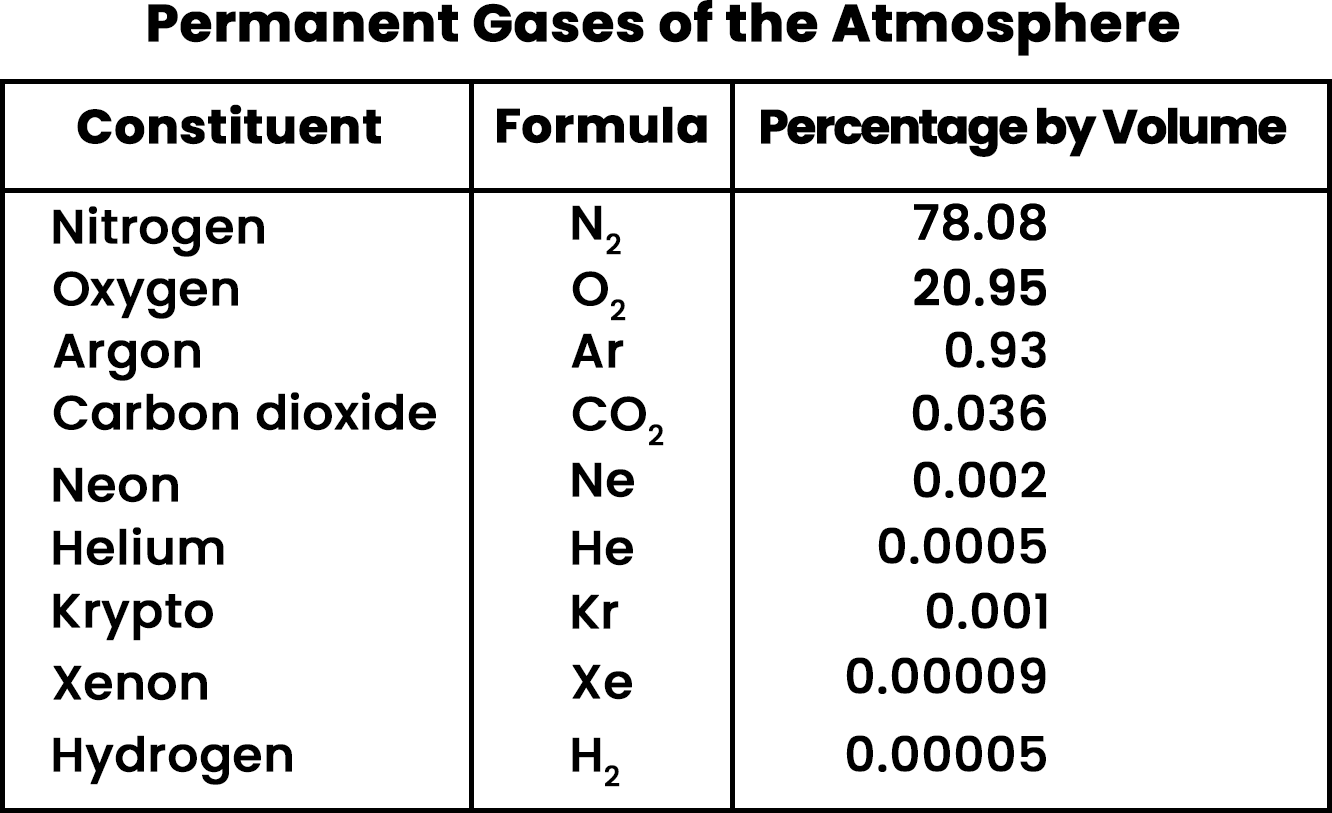
The atmosphere is a crucial part of the Earth’s environment. It surrounds our planet and is composed of different gases, water vapor, and dust particles. The two main gases in the atmosphere are nitrogen (about 78%) and oxygen (about 20%). There are also trace amounts of other gases like argon, carbon dioxide (CO2), helium, and neon. As we move away from the Earth’s surface, the concentration of these gases decreases.
The atmosphere is vital for life on Earth. It gives us air to breathe and protects us from the Sun’s harmful rays and space debris. It’s always active, driven by the Sun and Earth’s rotation. Without it, life as we know it wouldn’t have been possible. The atmosphere interacts with the Earth’s land, water, and life forms, as well as with outer space. These interactions create climate and weather patterns that affect our daily lives.
The Hydrosphere
Earth is known as the blue planet because it has a lot of water on its surface. About three-quarters of Earth’s surface is covered by water. Water exists in three forms: as vapour in the air (water vapour), as liquid in rivers, lakes and underground, and as solid ice in polar regions.
There are two main types of water on Earth’s surface
•Freshwater: This makes up about 3% of Earth’s water and is found in glaciers, lakes, rivers, and underground.
•Saltwater: This accounts for about 97% of Earth’s water and is found in seas and oceans.
Water on Earth is always moving and changing. It’s stored in glaciers, lakes, rivers, seas, and oceans. The part of Earth where water is stored as ice is called the cryosphere. When water in liquid form evaporates into the atmosphere, it eventually falls back to Earth as precipitation, such as rain, snow, or hail. This process of water moving from the Earth’s surface to the atmosphere and back again, is called the hydrological cycle.
The Biosphere
We’ve learned about three important parts of the Earth: the lithosphere (solid outer layer), the atmosphere (air around us), and the hydrosphere (water). These are all non-living components.
The biosphere, which is the living part of Earth. It includes living organisms and the areas where they live, which are provided by the lithosphere, atmosphere, and hydrosphere. For example, the atmosphere gives us oxygen to breathe, the hydrosphere provides water, and the lithosphere is where we live. Together, these components create the physical environment that supports life. Life forms develop in specific systems called ecosystems.
Shape of the Earth: The Oblate Spheroid
The Earth is not a perfect sphere. Its shape is an oblate spheroid. This just means that it flattens at the poles and widens out at the equator. E.g. Mount Chimborazo is the highest point on Earth because of the equator bulge height advantage. But if you compare height above mean sea level, then Mount Everest is the tallest mountain. While Mount Chimborazo has a peak elevation of 6,263 m, Mount Everest towers at 8,848 m tall.
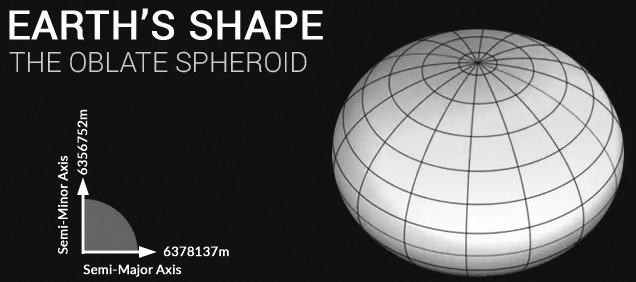
Reason for the Bulge of Earth
•Centrifugal force: Earth bulges at the equator because of the centrifugal force during rotation. Like spinning a pizza, the mass pushes outwards and flattens out along the axis of rotation. This phenomenon occurs because the rotational speed at the equator is greater than at higher latitudes.
•Gravity: The Earth’s gravity, pulls inward on its mass, causing the poles to flatten.
•Internal density variations: The Earth’s interior is not uniform in density, with denser materials concentrated towards the core. This uneven distribution of mass can also contribute to the Earth’s oblate shape.
Natural equilibrium:
Over millions of years, Earth has settled into a balanced shape where these forces, like gravity and spinning, are in harmony. This balance results in Earth being shaped like an oblate spheroid.
Tides: The gravitational pull of the Moon and Sun also creates tides, which can slightly deform the Earth’s shape.