Water Resources.
INTRODUCTION
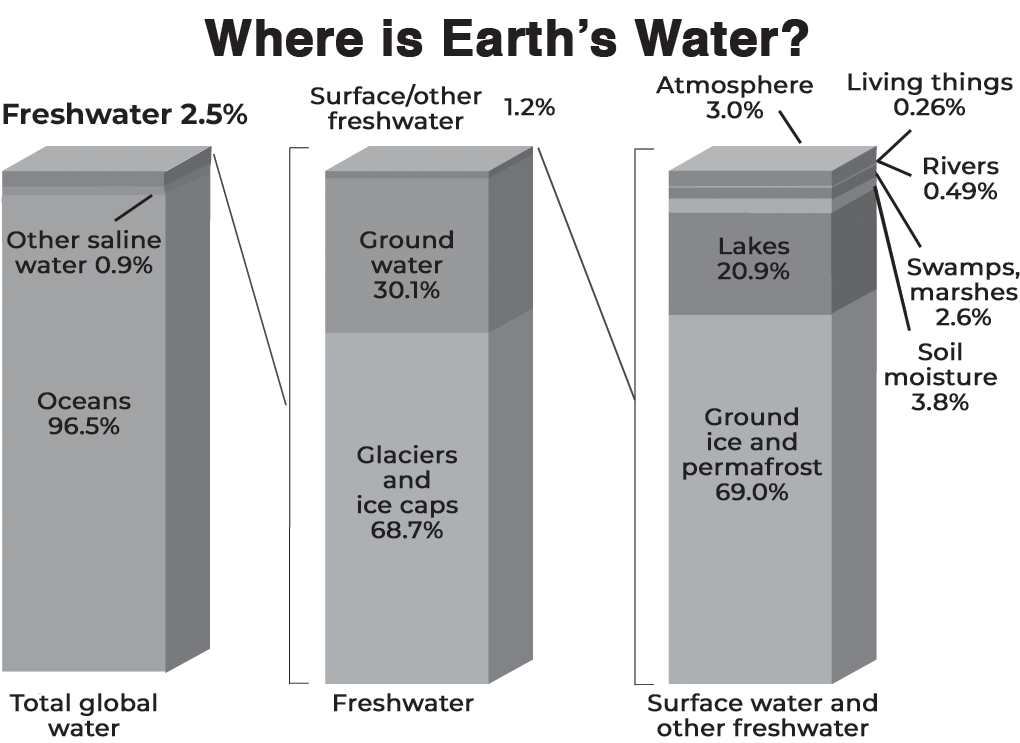
The Earth is predominantly covered by water, with approximately 71 percent of its surface covered by water bodies, primarily oceans. Oceans hold about 96.5 percent of all Earth’s water, making them the largest reservoir of water on the planet. However, water also exists in various other forms and locations, including water vapor in the atmosphere, rivers, lakes, icecaps, glaciers, soil moisture, aquifers and even within living organisms.
The provided bar chart illustrates the distribution of Earth’s water, highlighting that the vast majority of it is saline water found in the oceans. Only a small fraction,
about 2.5 percent, is freshwater, which is essential for sustaining human, plant and animal life.
Breaking down freshwater further, the chart demonstrates that the majority of it is locked up in ice caps and glaciers, as well as in groundwater. Surface water, which includes rivers and lakes, accounts for a relatively small portion of freshwater resources, with most of it being frozen in ice. Among surface freshwater sources, lakes hold a significant portion, followed by rivers, which provide a crucial water source for human consumption and various activities. Despite rivers constituting a small fraction of surface freshwater, they play a vital role in supplying water for human needs.
Earth’s surface-water bodies are generally considered renewable resources as they are replenished through the water cycle. However, their availability is heavily influenced by other components of the water cycle.
SURFACE WATER RESOURCES
Surface water refers to any body of water found on the Earth’s surface, encompassing both saltwater in oceans and freshwater in various natural and artificial water bodies. These water bodies include lakes, reservoirs (artificial lakes created by humans), ponds, streams (ranging from large rivers to small creeks), canals (artificial waterways) and freshwater wetlands.
There are three main types of surface water
Perennial (Permanent): Perennial surface water remains present throughout the year and is sustained by groundwater sources during periods of low precipitation. These water bodies include perennial rivers, lakes and ponds that maintain a constant water level year-round.
Ephemeral (Semi-Permanent): Ephemeral surface water exists temporarily and is typically present only during certain times of the year, such as during rainy seasons or snowmelt periods. Examples of ephemeral surface water include small creeks, lagoons and temporary water holes that may dry up during dry seasons.
Man-Made: Man-made surface water refers to water bodies created by human activities, such as dams and constructed wetlands. These artificial structures are designed to store, regulate, or divert water for various purposes, including irrigation, hydroelectric power generation, flood control and recreation.
Surface water and groundwater are interconnected reservoirs that interact with each other. Surface water can infiltrate the ground and recharge groundwater aquifers, while groundwater can also discharge and replenish surface water bodies through springs and seeps.
Fresh Water
Freshwater on the land surface is an essential component of the water cycle and plays a crucial role in sustaining everyday human life. It is primarily stored in various surface-water bodies such as rivers, lakes, reservoirs, creeks and streams. Freshwater is defined as water containing less than 1,000 milligrams per liter of dissolved solids, predominantly salt.
The volume of water in rivers and lakes is constantly changing due to various factors such as inflows and outflows. Inflows are primarily from precipitation, overland runoff, groundwater seepage and tributary inflows, while outflows include evaporation, groundwater recharge and human withdrawals.
The amount and distribution of surface water vary over time and space, influenced by natural processes as well as human activities.
Glaciers played a significant role in shaping the landscape and contributing to the formation of large freshwater reservoirs, such as the Great Lakes. During the last ice age, glaciers and snowpacks covered vast areas of land, impacting hydrological conditions and landscape features.
Life on Earth had to adapt to different hydrological conditions during the last ice age, influencing the distribution of species and ecosystems. The layout of surface-water bodies today is also influenced by geological changes before and after the ice age.
OCEAN RESOURCES
Ocean deposits consist of unconsolidated sediments that accumulate on the ocean floor, exhibiting variation in composition and characteristics depending on their sources and depositional processes. These sediments originate from various geological processes, including: Weathering and Erosion of continental rocks and Volcanic eruptions.
The decay and decomposition of marine organisms, including both plants and animals, also contribute to ocean deposits. Organic remains such as shells, skeletal fragments, and plant debris accumulate on the seabed over time.
Studying ocean deposits is crucial for understanding Earth’s geological history and processes. By analyzing the composition, texture, and distribution of sediments, scientists can infer past environmental conditions, tectonic activity and depositional environments.
Sources of Ocean Deposit
These ocean deposits are derived from two major sources:
• Terrigenous Sources
• Pelagic Deposits
Terrigenous Sources
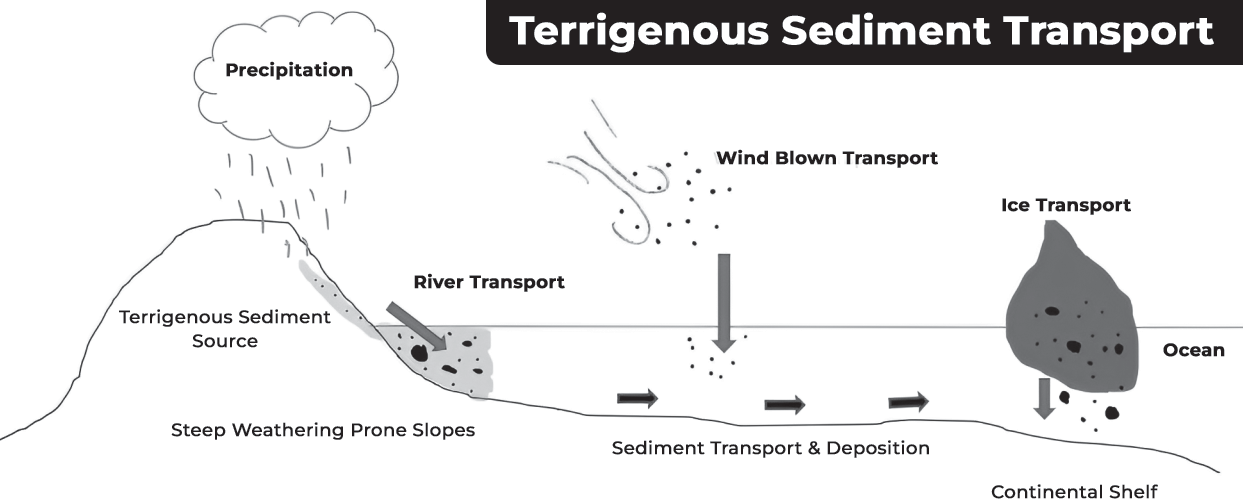
• Terrigenous sources contribute significantly to the composition of ocean deposits, encompassing various processes and materials originating from continental landmasses.
• Weathering processes acting on continental rocks, such as mechanical breakdown and chemical decomposition, produce sediments ranging from fine to coarse particles. These sediments are transported to the oceans by rivers, streams, winds, glaciers, oceanic currents and waves.
• Terrigenous deposits are sediments derived from continental sources and deposited along continental margins.
• The size and shape of these sediments vary, influencing their distribution from the coast seaward. Larger particles like boulders, cobbles, and pebbles are deposited near the coast, while finer sediments are deposited farther offshore.
• Terrigenous deposits are categorized based on particle size into mud, sand and gravel. Mud comprises the finest particles, predominantly consisting of quartz minerals. Mud deposits may exhibit different colors, such as blue, green, or red, depending on the composition of their constituents. Sand consists of coarser particles, while gravel contains even larger particles.
• In volcanic regions, ocean deposits on continental shelves and slopes primarily consist of volcanic products. These products, including pyroclastic volcanic materials and lava, undergo chemical and mechanical weathering before being transported to the ocean by water and wind actions.
• Some ocean deposits originate from organic sources, such as shells and skeletons of marine organisms.
• Chemical and mechanical processes transform these organic materials into mud and sand, primarily composed of calcium carbonate.
Unlike typical terrigenous deposits, organic deposits consist mainly of calcium carbonate.
Pelagic deposits
Pelagic deposits encompass a significant portion of the ocean floor and are characterized by both organic and inorganic materials. Pelagic deposits cover approximately 75% of the total sea floor, making them the most dominant type of ocean sediment.
Organic Material - Ooze
Organic material in pelagic deposits is present in the form of a semi-fluid mud known as ooze, which contains the shells and skeletons of various marine organisms.
Calcareous Ooze: When the shells are primarily composed of calcium carbonate, the ooze is termed calcareous. Calcareous ooze can be further classified into pteropod ooze or globigerina ooze. It is prevalent in many parts of the Indian and Atlantic Oceans.
Siliceous Ooze: If the shells are composed of silica, the ooze is referred to as siliceous. Siliceous ooze can be of the diatom or radiolarian type and is found in the southern fringes of the Indian and Atlantic Oceans.
Inorganic Material - Red Clay
Inorganic components of pelagic deposits manifest as red clay, primarily of volcanic origin. Red clay is composed predominantly of silicon and aluminum dioxide, with additional constituents including iron, manganese, phosphorus and radium. It is the most widespread pelagic deposit, covering 38% of the ocean floor. The Pacific floor, in particular, is extensively covered by red clay, exceeding half of its total area.
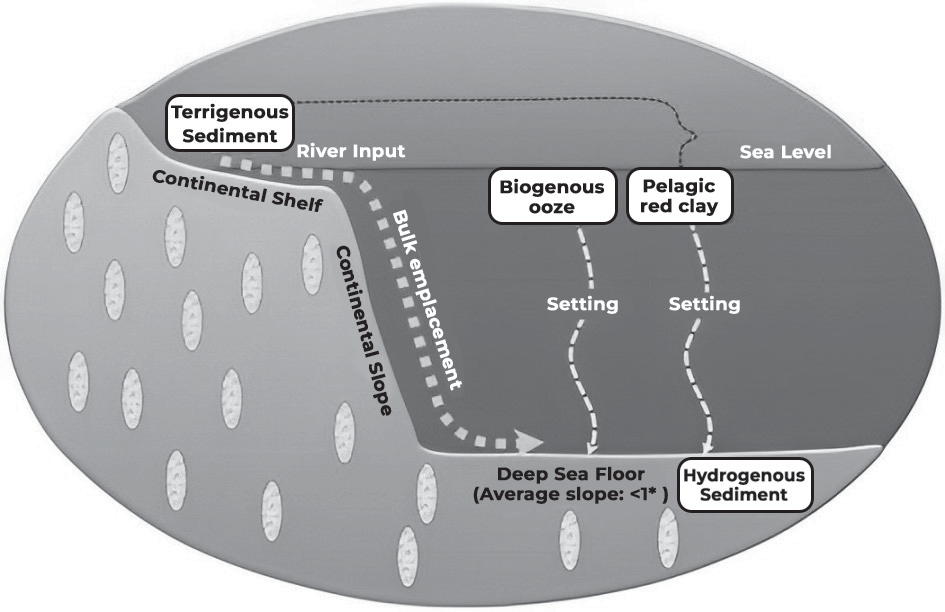
(Fig-Oceanic deposit)
Mineral Resources
Marine mineral resources encompass various valuable elements and compounds that can be extracted from the ocean floor.
Polymetallic Nodules and Ferromanganese Crusts
Polymetallic manganese nodules and cobalt-rich ferromanganese crusts are abundant resources found on the ocean floor.
These nodules and crusts contain valuable metals such as cobalt, zinc, manganese, and rare earth materials, which are essential for various technological applications including smartphones, laptops, and hybrid cars.
Salt (Sodium Chloride)
Salt is abundant in seawater, constituting approximately 3% of its composition.
While salt can be directly extracted from the oceans through evaporation, the majority of salt production comes from mining large salt beds formed from ancient evaporated seas.
Potassium
Potassium salts occur in evaporite sequences along with common salt and are mined from these deposits.
Although potassium concentrations in seawater are generally low, mining operations extract potassium salts from evaporite deposits.
Magnesium
Magnesium, dissolved in seawater at a concentration of about
1,000 parts per million, is directly extracted from seawater
electrolytically.
Additionally, magnesium metal and salts are extracted from ancient ocean deposits such as magnesite and dolomite.
Sand, Gravel, Limestone, and Gypsum
Sediments eroded from land accumulate in ocean basins, forming sand and gravel deposits.
Limestone and gypsum are also formed through biological and geological processes in marine environments.
These materials are mined extensively for various construction purposes and industrial applications.
Manganese Nodules
Manganese nodules, found on the deep ocean floor, contain significant quantities of metals including iron, manganese, copper, cobalt, and nickel.
Despite their abundance, economic extraction from the deep ocean floor remains a challenge.
Phosphorites
Phosphate-rich crusts and granules are precipitated in shallow marine environments, representing potential future reserves.
These resources serve as analogs to terrestrial phosphate deposits and may become increasingly important if land- based deposits are depleted.
Mineral Deposits by Location in the Sea
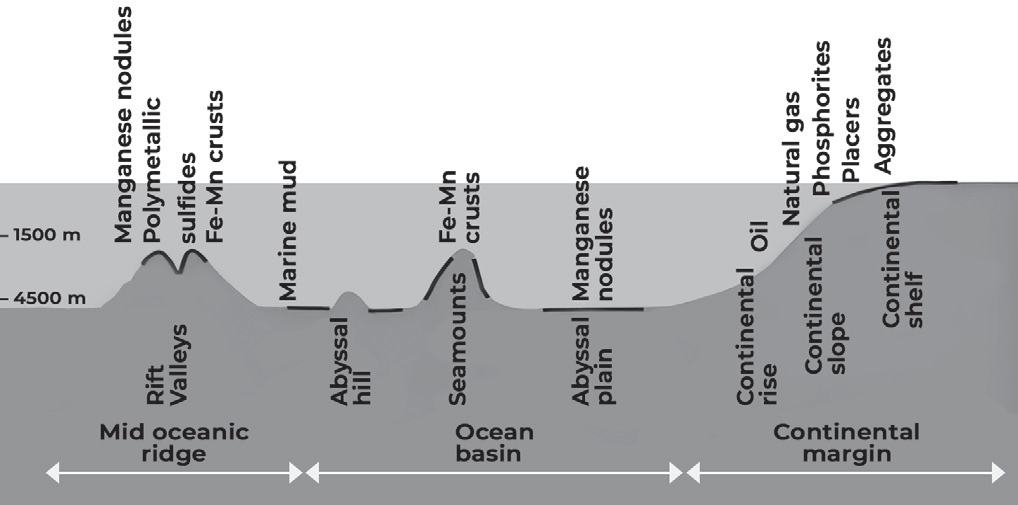
Mineral Deposits on Continental Shelves and Slopes
Mineral deposits found on continental shelves and slopes are diverse and include various valuable resources essential for industrial and commercial applications.
Monazite
Monazite reserves are abundant in coastal areas of India, the United States, Brazil, Sri Lanka, Australia and New Zealand.
India holds the largest reserve of monazite globally, primarily in placer deposits along the Kerala coast.
Rutile
Rutile, a titanium dioxide mineral, is found in significant quantities in Australian coastal areas, comprising about 29% of the world’s rutile mineral reserves.
Rutile is used for various applications, including coatings on welded rods.
Magnetite
Magnetite deposits are associated with volcanic rocks and are found in continental shelves characterized by vulcanicity.
Coastal areas along the circum-Pacific volcanic belt, such as the western coasts of North and South America and the eastern coasts of Asia, contain magnetite reserves.
Japan’s coastal areas are estimated to hold significant magnetite reserves, approximately 36 million tonnes.
Cassiterite
Cassiterite, a type of tin mineral, is formed due to weathering of granites.
Coastal areas of Thailand, Malaysia and Indonesia hold substantial reserves of cassiterite.
Gold
Gold deposits are found in continental shelves of Alaska and Oregon (USA), Chile, South Africa and Australia.
However, commercial extraction of gold from these deposits is often not feasible due to high extraction costs.
Phosphorites
Phosphorites, mixed with muds and sands, are found in nodule form on continental shelves and slopes.
These deposits are used in the manufacturing of fertilizers.
Global reserves of phosphorites are estimated at 50 million tonnes, primarily found in continental shelves of Mexico, Peru, Australia, Japan and South Africa.
Minerals of Deep Ocean Bottom Deposits
Deep ocean bottom deposits contain manganese nodules, which are significant mineral resources. These nodules are primarily found in the Pacific Ocean, with the largest deposits located up to depths of 4000 meters. Manganese nodules consist of various minerals such as nickel, copper, cobalt, lead, zinc, iron and silicon, but they are predominantly composed of iron and manganese. The Blake Plateau, located off the southeastern United States and the continental borderland off southern California, is the second-largest area with manganese nodules.
Two prevalent techniques for extracting manganese nodules are
• Air lift technique
• Continuous bucket line system
However, commercial mining of manganese nodules has not been developed extensively due to the prohibitively high costs associated with mining operations in deep ocean environments.
Subsurface Minerals
Subsurface minerals, predominantly found in the oceanic crusts of continental shelves, include mineral oil and natural gas. Many countries have initiated commercial production of petroleum and natural gas from offshore reserves, making them the most developed marine mineral resources. There is significant potential for their further expansion and development in the future.
Mineral oil and natural gas combined account for 90 percent of all marine mineral resources. Offshore oil fields have been developed in various continental shelves worldwide, including the Mexican Gulf, Persian Gulf, North Sea, North Alaska, South Californian coast, Arctic Sea, India, Brazil, Australia, Taiwan and Japan. Additionally, offshore oilfields are being developed in regions like Indonesia, East Africa, Northwest Africa, Tasmania, and East Asia.
Offshore mineral oil reserves have been explored in the offshore regions of the Konkan coast (Maharashtra), Gujarat coast, Malabar and Coromandel coasts, Krishna- Cauvery delta coast, and Sundarbans in India. Among these, three offshore oil fields in India are particularly significant in terms of production: Bombay High, Bassein and Aliabet.
Bombay (Mumbai) High offshore oil fields, located 176 km northwest of Mumbai, cover an area of 2,500 square kilometers. With an estimated oil reserve of 200,000,000 tonnes, production began in 1976, drilling oil from a depth of 1400m.
Bassein offshore oilfields, situated south of Mumbai High, hold the potential for higher production compared to Mumbai High oilfields if fully developed.
Aliabet offshore oilfields, located 45 km from Bhavnagar in the Gulf of Khambhat, are another significant offshore oil exploration area.
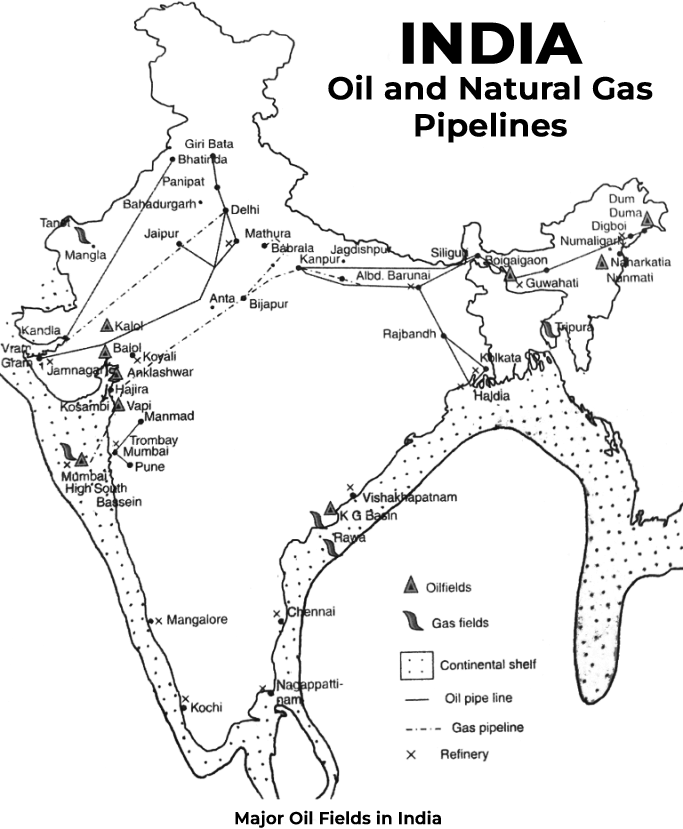
Metal Deposits Associated with Volcanism and Seafloor Vents
Submarine investigations of oceanic rift zones have unveiled the presence of valuable deposits of zinc and copper, often accompanied by lead, silver, and gold, forming at the sites of hot hydrothermal emanations known as black smokers. These metal-rich deposits, ranging from chimney-like structures to pancake-like formations, emerge where deeply circulating seawater dissolves metals from the underlying rocks and issues out onto the cold seafloor along major fractures.
While the deposits forming today remain untouched due to their remote locations, similar ancient deposits are actively mined across the globe.
Placer Gold, Tin, Titanium and Diamonds
Placer deposits are accumulations of durable and insoluble minerals eroded from their original sources and deposited along river courses or at the ocean margins. Among these deposits, those containing gold, tin, titanium and diamonds are particularly significant.
Currently, many of the world’s tin reserves and a substantial portion of gem diamonds are recovered through dredging near-shore ocean sediments where minerals carried into the sea by rivers have settled. While gold has been historically extracted from such deposits, notably in Nome, Alaska, modern mining focuses mainly on beach and near-shore sediments due to the higher costs and environmental considerations associated with marine mining.
Water
Despite holding more than 97 percent of all the water on Earth within its total volume of over 500 million cubic kilometers, the world’s oceans are characterized by a 3.5-percent salt content, rendering the water unsuitable for most human needs.
While the extraction of fresh water from ocean water has been practiced for years, it only provides a small fraction of the water used, remaining relatively expensive compared to land-based water resources. Technological advancements, particularly in reverse osmosis, have improved the efficiency of fresh-water extraction. However, geographic constraints and reliance on global energy costs present significant obstacles to large-scale extraction efforts.
Energy Resources in the Ocean
The ocean represents a major source of renewable energy. Different technologies employ different strategies to harvest that energy. The main sources of ocean energy are:
Tidal streams
Ocean currents
Tidal range (rise and fall)
Waves
Ocean thermal energy
Salinity gradients
Tidal energy
Tidal energy is a form of renewable energy generated by harnessing the natural rise and fall of ocean tides and currents. Various technologies, such as turbines and paddles, are utilized to capture this energy. However, tidal energy production is still in its early stages of development.
To date, the amount of power generated from tidal energy has been relatively small. There are only a handful of commercial-sized tidal power plants operating globally. The first notable facility was established in La Rance, France, while the largest is the Sihwa Lake Tidal Power Station in South Korea. In contrast, the United States currently lacks tidal plants and has limited sites suitable for economically viable tidal energy production.
Countries such as China, France, England, Canada, and Russia exhibit greater potential for utilizing tidal energy due to their geographic and environmental conditions.
There are three primary methods for harnessing tidal energy
Tidal streams: These are fast-flowing bodies of water created by tidal movements.
Barrages: Large dams constructed across tidal estuaries or rivers to capture tidal energy.
Tidal lagoons: These are ocean water bodies partly enclosed by natural or manmade barriers, where tidal energy can be captured.
Ocean currents
Ocean currents are driven by regional variations in temperature and salinity, as well as the Coriolis effect resulting from the Earth’s rotation. These currents flow continuously in one direction with minimal variability, making them a highly reliable and non-intermittent source of energy.
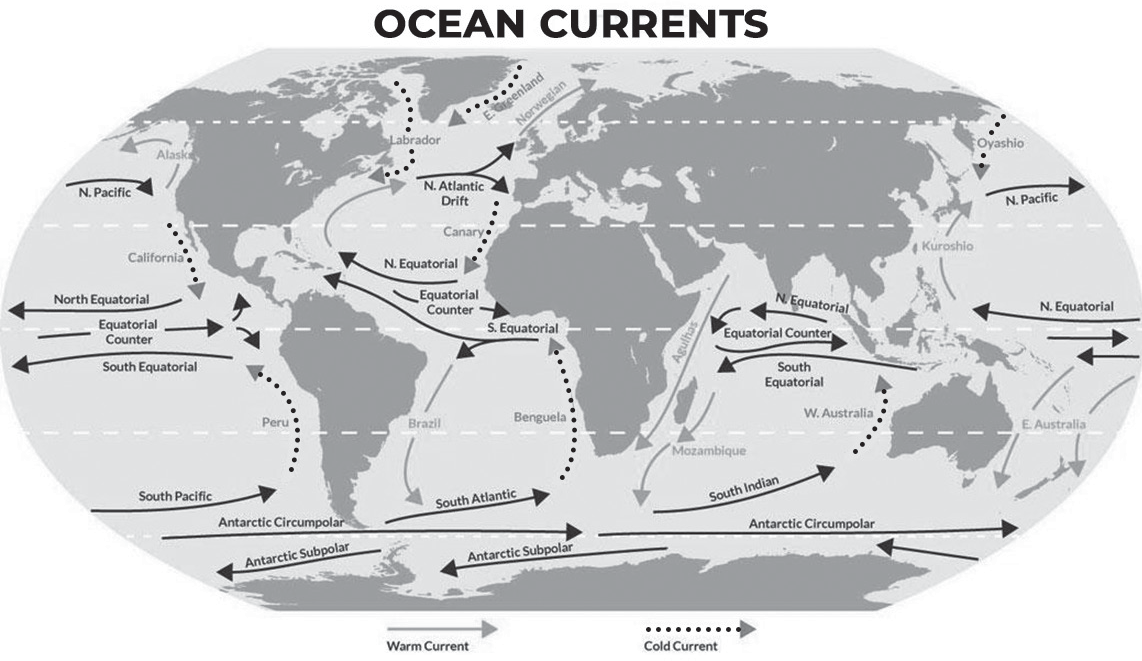
High load factors: Ocean currents offer high-capacity factors ranging from 70 to 95 percent. This means that energy production remains consistently high, resulting in greater energy output per installed megawatt. As a result, the cost of energy is lowered compared to other sources with lower capacity factors.
Renewable baseload power: The continuous and reliable nature of ocean currents makes them suitable for providing sustainable and renewable baseload power to the grid. Unlike some renewable sources like wind and solar, which can be intermittent, ocean currents offer a consistent source of energy generation.
Potential for large-scale projects: The vast scale of open ocean currents presents opportunities for significant project scale. Technologies that harness currents with lower velocities, as identified by the Intergovernmental Panel on Climate Change (IPCC), hold promise for widespread deployment and utilization.
Tidal Range Energy
Tidal range energy refers to the potential energy generated by the height variations in sea level caused by gravitational forces from celestial bodies such as the moon, the sun, and other astronomical bodies acting on oceanic water bodies. These tidal effects are intricate, and most major oceans and seas exhibit internal tidal systems.
The rise and fall of the tide, known as the tidal range, present an opportunity to harness energy. This involves capturing the high tide behind a barrage or fence, delaying its release, and then utilizing the potential energy as it flows out before the next tidal cycle begins.
The global theoretical power capacity of tidal power, which includes both tidal range energy and tidal currents, has been estimated to be approximately 7,800 terawatt- hours (TWh) per year.
Ocean thermal energy
Ocean thermal energy conversion (OTEC) is a technology that harnesses the temperature differences, or thermal gradients, between the warmer surface waters and cooler deep waters of the ocean to produce energy.
The sun’s energy heats up the surface water of the ocean, particularly in tropical regions, creating a significant temperature difference between the warm surface water and the colder deep water.
OTEC systems utilize this temperature gradient to produce electricity. Warm surface water is pumped through an evaporator containing a working fluid, such as ammonia or a low-boiling-point fluid. The heat from the warm water causes the working fluid to vaporize.
The vaporized working fluid expands and drives a turbine connected to a generator, producing electricity.
After passing through the turbine, the vaporized working
fluid is condensed back into a liquid state in a condenser. Cold ocean water from deeper in the ocean is pumped through the condenser to cool the working fluid and facilitate condensation.
In addition to electricity generation, OTEC systems can also be configured to produce desalinated water. The condensed water from the condenser can be used for desalination purposes, providing a valuable source of freshwater.
Salinity Gradient
Salinity gradient power generation is a renewable energy source that operates continuously, providing a stable source of energy complementing other variable renewable sources like wind, wave and solar.
The most advanced technology for salinity gradient power generation is Reverse Electro-dialysis (RED). This method harnesses the energy from the difference in salt concentration between seawater and fresh water.
Reverse Electro-dialysis (RED) employs stacks of alternating anion and cation exchange membranes. These membranes separate the seawater and fresh water while allowing ions to pass through. As the ions move through the membranes, they create an electric potential difference, or voltage gradient, across the stack.
The voltage gradient generated by the ion movement can be harvested as electricity. Electrodes placed at the ends of the membrane stack capture the electric current created by the ion exchange process, producing usable electrical power.
Salinity gradient energy is highly available and predictable, as it relies on the continuous difference in salt concentration between seawater and fresh water. This makes it a reliable baseload energy source, capable of providing consistent power output around the clock.
Wave energy
Wave energy, a renewable energy form, is derived from the motion of ocean waves. Various methods are used to harness this energy, typically involving the deployment of electricity generators on the ocean’s surface.
Wave energy, also known as wave power, refers to the process of capturing energy from the movement of ocean surface waves.
Wave energy is captured and then utilized for various purposes, including electricity generation, water desalination and water pumping. The captured energy can be converted into electricity through different mechanisms.
Wave energy represents a significant global resource form of ocean energy. Its potential for harnessing renewable energy is substantial, offering a sustainable alternative to traditional fossil fuel-based energy sources.
Various technologies are employed to harness wave
energy, such as wave energy converters (WECs). These devices are designed to capture the kinetic and potential energy present in ocean waves and convert it into usable electrical power.
Biotic Ocean resources
Marine ecosystems are described as complex and dynamic natural units. They encompass a wide range of organisms and environmental factors that interact in intricate ways.
Marine ecosystems offer various goods (such as fish, shellfish, seaweed, etc.) and services (such as climate regulation, nutrient cycling, coastal protection, etc.) that are valuable to humans.
Human activities, both direct (like fishing) and indirect (like pollution), have significant impacts on marine ecosystems. These impacts can affect the health and integrity of marine ecosystems, thereby influencing the availability of goods and services they provide.
Need for an Ecosystem Approach to Management (EAM): Given the interconnectedness of various components within marine ecosystems and their vulnerability to human activities, it’s crucial to manage them holistically. EAM involves considering the entire ecosystem, its structure, and function, rather than focusing solely on individual species or resources.
Management of marine ecosystems should be integrated across different sectors and activities. This means coordinating efforts among fisheries management, conservation, pollution control, and other relevant areas to ensure a comprehensive approach.
Adopting an EAM is essential for ensuring the long- term availability of goods and services from marine ecosystems. By considering the ecosystem as a whole and managing it sustainably, we can strive to maintain its health and integrity over time.
EAM should incorporate research that connects human activities with their impacts on marine ecosystems. Strategies and tools developed for managing terrestrial ecosystems should be evaluated for their effectiveness when applied to marine ecosystems.
There is a need to distinguish and understand the separate impacts of different stressors, both anthropogenic (human- caused) and natural, on marine ecosystems. It involves identifying and quantifying the specific contributions of various stressors to ecosystem changes.
Dead Zones
Dead zones refer to areas within the world’s oceans and lakes, characterized by extremely low levels of dissolved oxygen, making it challenging for most organisms to survive.
THE UNITED NATIONS CONVENTION ON THE LAW OF THE SEA
The United Nations Convention on the Law of the Sea (UNCLOS), adopted in 1982, serves as a comprehensive framework for regulating various activities in the world’s oceans and seas. It covers a wide range of issues including navigation, marine resources, environmental protection, scientific research and more. The Division for Ocean Affairs and the Law of the Sea (DOALOS), part of the United Nations Office of Legal Affairs, plays a crucial role in supporting the implementation and understanding of UNCLOS.
DOALOS serves as the secretariat for UNCLOS, providing information, advice, and assistance to member states. This support aims to enhance understanding of the Convention and related agreements, promote wider acceptance, ensure uniform and consistent application and facilitate effective implementation.
The Division monitors developments related to UNCLOS, the law of the sea, and ocean affairs. It submits annual reports to the United Nations General Assembly, informing member states about these developments and any emerging issues.
DOALOS assists in the United Nations Open-ended Informal Consultative Process on Oceans and the Law of the Sea. This forum reviews developments related to UNCLOS and facilitates discussions among member states to address challenges and explore opportunities for cooperation.
In response to specific needs, such as the conservation and sustainable use of marine biological diversity beyond national jurisdiction (BBNJ), intergovernmental conferences are convened under the auspices of UNCLOS. These conferences aim to develop legally binding instruments to address emerging issues within the framework of the Convention.
The United Nations General Assembly plays a significant role in shaping the direction of UNCLOS-related initiatives. Resolutions passed by the General Assembly, such as the decision to develop an international legally binding instrument on BBNJ, guide the focus and priorities of UNCLOS implementation efforts.
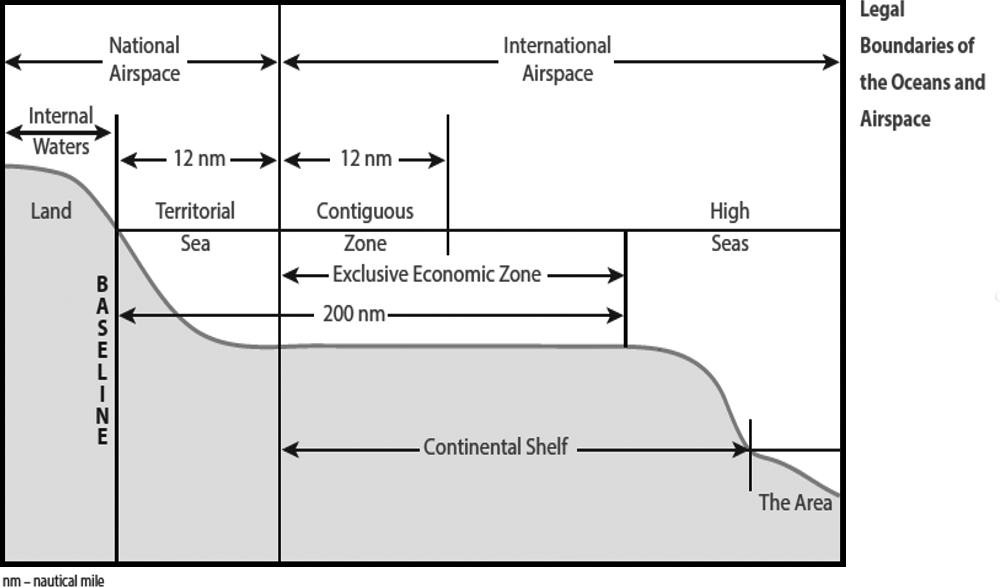
UNCLOS Maritime Zones
Salient Features Associated with UNCLOS
Territorial Sea: UNCLOS legally sanctions a “12 nautical miles zone” as the territorial sea of a coastal state. Within this zone, other ships, including warships, are allowed innocent passage.
Exclusive Economic Zones (EEZs): UNCLOS establishes EEZs of 200 nautical miles, granting coastal states sovereign rights to explore and exploit natural resources in the seas, seabed and subsoil within this zone.
High Seas: Beyond EEZs, the high seas are demarcated as the “common heritage of humankind.” The International Seabed Authority (ISA), established in 1994, regulates and controls mining exploration and operations in the international seabed.
Seabed Mineral Exploration: States can obtain licenses for seabed mineral exploration in international waters from the ISA. India, for example, has received licenses for polymetallic nodules exploration in the Central Indian Ocean Basin (CIOB) and has had its exclusive rights extended by five years.
Deep-sea Mining Regulation: UNCLOS prohibits deep- sea mining until a mining code and sharing mechanisms are agreed upon. The ISA is tasked with developing these regulations.
Transit Passage: Key narrow straits essential for maritime routes are given international status for “transit passage.” However, local coastal states maintain sovereign rights over them.
Dispute Settlement Mechanism: UNCLOS establishes a dispute settlement mechanism for member countries to resolve conflicts related to maritime boundaries and other issues.
Problems and criticisms
The introduction of Exclusive Economic Zones (EEZs) has led to concerns about unequal distribution of resources, with countries possessing large coastlines or extensive archipelagos benefiting the most. This has been perceived as favoring historically powerful colonial and imperialist nations, such as the UK, France, and the US, as well as countries like Russia, Australia, Indonesia, Japan, Canada, Brazil and New Zealand.
Critics argue that UNCLOS does not adequately address historical injustices perpetuated by colonial powers. Many of the countries benefiting from EEZs are former colonial powers that forcibly acquired territories and displaced indigenous populations through violence and exploitation.
The exploitation of marine resources within EEZs, particularly by powerful nations, raises environmental concerns such as overfishing, habitat destruction and pollution. There are criticisms that UNCLOS lacks sufficient provisions for protecting marine ecosystems and biodiversity.
While UNCLOS provides a dispute settlement mechanism, resolving conflicts over maritime boundaries and resource exploitation can be complex and contentious. Some disputes remain unresolved, leading to tensions between neighboring states.
Critics argue that UNCLOS lacks effective enforcement mechanisms, which can undermine compliance with its provisions. This can result in illegal fishing, unauthorized resource extraction, and other violations of maritime law.
Indigenous communities often face marginalization and exclusion from decision-making processes related to marine resource management, despite UNCLOS principles of equity and sustainable development.
expansion of dead zones in coastal oceans since the 1960s has had significant consequences for marine ecosystems’ health.
Dead zones present a grave danger to marine life, especially fish, as they struggle to adapt to sudden fluctuations in their environment. Furthermore, the elevated levels of nutrients and resulting algal blooms contribute to water contamination, jeopardizing the safety of drinking water sources for nearby human populations. Additionally, these algal blooms adversely affect shorebirds, disrupting their food sources and further compromising the delicate balance of the marine ecosystem. In essence, the expanding dead zones represent an escalating threat to both marine ecosystems and the communities reliant upon them for sustenance and livelihoods