Whatsapp 88106-52225 For Details
Get Free IAS Booklet
Get Free IAS Booklet
IMMUNITY
The body’s ability to safeguard itself from pathogens is known as immunity. Our bodies come into contact with many pathogens on a daily basis, yet only a small number of them cause illness. The body can produce antibodies to fight these pathogens and shield the body from illnesses, which is why we refer to this defense mechanism as Immunity.
Immunity is of two types-
Innate Immunity or Natural or Non-specific Immunity
Acquired Immunity or Adaptive Immunity
Innate Immunity
Innate immunity is a type of immunity that is present in an organism from birth and activates promptly when a pathogen attacks. It consists of natural defensive systems such as neutrophils, natural killer cells, salivary enzymes, and undamaged skin. Prior to exposure to pathogens or antigens, this immunity generates a first defense against diseases at birth. The body creates antibodies on its own to provide long-term immunity because it lacks many natural defences against pathogens. Our body has few natural barriers to prevent the entry of pathogens. There are four types of natural barriers which are given below:
Physical barriers: These include skin, body hair, cilia, eyelashes, respiratory tract, and gastrointestinal tract that forms the first line of defense against pathogens. The skin provides fair or dark complexions and acts as a physical barrier, while the mucus coating in the nose and ear traps pathogens before they enter.
Physiological barriers: The stomach uses hydrochloric acid to break down food molecules, killing most germs that enter the body before further processing. Saliva in the mouth and tears in the eyes also have antibiotic properties, preventing pathogen growth even when exposed to them all day.
Cellular barriers: Certain pathogens are able to penetrate our bodies despite the physiological and physical barriers. Leukocytes (WBC), neutrophils, lymphocytes, basophils, eosinophils, and monocytes are the cells that make up this barrier. The blood and tissues contain all of these cells.
Cytokine barriers: Our body’s cells are more intelligent than we realize. When a virus invades a cell in human body, for example, the cell automatically releases
proteins known as interferons, which wrap the infected cell and shield the surrounding cells from infection.
Acquired Immunity
Acquired immunity is pathogen-specific and memory- based, resulting in a low-intensity primary response when the body encounters a pathogen for the first time. This response intensifies with subsequent encounters due to the body’s memory of the first encounter. Primary and secondary immune responses are facilitated by B-lymphocytes and T-lymphocytes, with B-lymphocytes producing antibodies to fight pathogens. T-cells, also known as T-helper cells, assist B cells in producing antibodies,thereby forming the basis of T-helper immunity.
Antibodies, such as IgA, IgM, IgE, and IgG, are produced in the body and are found in the blood. This humoral immune response is one of two types of acquired immune responses:antibody-mediated and cell-mediated immunity (CMI). T-lymphocytes mediate CMI, which helps them kill their own infected cells, preventing the spread of the infection.
How do B cells know which cells are body’s own cells and which are pathogens?
B cells use a receptor to identify foreign-originating proteins attached to cell membranes, determining the cell’s response. These proteins, known as Anti-Body Generating Proteins or Antigens, help B cells decide whether to produce antibodies, as they determine if the cell is foreign-originating and determine the cell’s response.
Active and Passive Immunity
Active immunity is the production of antibodies in the host body when exposed to antigens, such as living or dead microbes or proteins. This type of immunity is slow and takes time to fully respond. Passive immunity involves directly giving ready-made antibodies to protect the body against foreign agents. Mother’s milk, colostrum secreted during lactation, and the placenta during pregnancy are examples of passive immunity. Injecting microbes during immunization or gaining access to the body during natural infection induces active immunity.
Auto Immunity
Auto means ‘self’ and memory-based acquired immunity evolved in higher vertebrates to differentiate foreign organisms from self-cells. Higher vertebrates can distinguish foreign molecules and organisms, which is a focus of
experimental immunology. However, sometimes, due to genetic or unknown reasons, the body attacks self-cells, resulting in damage and an auto-immune disease, such as Rheumatoid arthritis, which affects many people in society.
VACCINATION
When scientists first encountered Chickenpox and Smallpox, they got the idea for the world’s first vaccine. Smallpox is a deadly infection which in most cases was lethal. Whereas chickenpox was relatively much milder. The scientists then, believe it or not, actually advised the populations to get themselves infected with chickenpox. This was because the protein on either of those pathogens, which was used by the B cells to generate an immune response in the body (antibody production) was the same protein. By infecting oneself with Chickenpox, a person could lead to the immune response in their body ready for smallpox pathogen if and when they encountered it. This is the principle behind vaccination.
Viruses
Before moving ahead with other topics under Vaccination, let us discuss some more about Viruses.
weight.
Characteristics of Viruses:
Borderline between living and non-living
Non-cellular organisms that are characterised by having an inert crystalline structure outside the living cell.
Have a protein and genetic material that is infectious.
That infect plants have single stranded RNA and viruses that infect animals have either single or double stranded RNA or double stranded DNA.
Bacterial viruses or bacteriophages (viruses that infect the bacteria) are usually double stranded DNA viruses.
The protein coat of the virus is called capsid made of small subunits called capsomeres, protects the nucleic acid.
These capsomeres are arranged in helical or polyhedral
geometric forms.
Viruses can cause many diseases in plants and animals.
Viroid: In 1971, T.O. Diener discovered a new infectious agent that was smaller than viruses and caused potato spindle tuber disease. It was found to be a free RNA; it lacked the protein coat that is found in viruses, hence the name viroid. The RNA of the viroid was of low molecular
Active and Passive Vaccination
In vaccination, a preparation of antigenic proteins of pathogen or inactivated/weakened pathogen (vaccine) are introduced into the body. The antibodies produced in the body against these antigens would neutralise the pathogenic agents during actual infection. The vaccines also generate memory – B and T -cells that recognise the pathogen quickly on subsequent exposure and overwhelm the invaders with a massive production of antibodies.
If a person is infected with some deadly microbes to which quick immune response is required as in tetanus. We need to directly inject the preformed antibodies, or antitoxin (a preparation containing antibodies to the toxin). Even in cases of snakebites, the injection which is given to the patients, contain preformed antibodies against the snake venom. This type of immunisation is called passive immunisation.
| Active Vaccination | Passive Vaccination | |
| Immunization with | Antigen | Pre formed antibodies |
| Time until protection occurs | Weeks and months | Hours and days |
| Duration of protection | Ideally for a lifetime | Few weeks only |
| Role of Host immune system | Develops own protective immunity | Only effector mechanisms are activated by administered antibodies |
| Cells Participating | Ideally all the cells of Immune system | No cells except for the effector cells are activated |
| Immunological Memory | Yes | No |
Adverse Effects Following Immunization (AEFI)
There is no such thing as a “perfect” vaccine which protects everyone who receives it and is entirely safe for everyone. A perfect vaccine would be one which provides 100% protection against a pathogen without any side effects. This does not happen in reality. Thus, all vaccines have some downsides or side effects.
Effective vaccines (i.e., vaccines inducing protective immunity) may produce some undesirable side effects which are mostly mild and clear up quickly. These are vaccines that provide robust protections (high immunogenicity) with low side effects or harm to the person.
AEFIs can be related to the vaccine itself (product or quality defect-related reactions), to the vaccination process (error or stress related reactions) or can occur independently from vaccination (coincidental) and are classified as
Vaccine product-related reaction
Vaccine quality defect-related reaction
Immunization error-related reaction
Immunization anxiety-related reaction
Coincidental reaction
TYPES OF VACCINES
Based on the methods of administration:
• Intra Muscular Vaccines- given in large muscle groups
• Intra Veinous Vaccines- given directly in the veins and enters bloodstream
• Subcutaneous Vaccines- given in the fatty tissues of the arm just below the skin
• Nasal Vaccines
• Oral Vaccines- Drops that can be taken. E.g., Polio
Based on how the vaccines are made:
Inactivated Vaccines
• These use a dead version of the disease-causing bacterium. Inactivated vaccines rarely give the same level of immunity (protection) as live vaccines.
• As a result, booster doses of these vaccines are frequently required to provide long-term protection against illnesses.
• They are used against
•
Hepatitis A
• Flu (shot only)
• Polio (shot only)
• Rabies
Live Attenuated Vaccines
Live vaccines include a weakened (or attenuated) version of the germ that causes the disease. Because these vaccines are so comparable to the natural infection that they help prevent, they elicit a robust and long-lasting immune response. Most live vaccinations require only one or two doses to provide lifelong protection against a germ and the disease it causes.
Limitations
Containing a small quantity of the weakened live virus, they may cause sickness in some persons, especially those with a damaged immune system.
They need to be kept cool, so they don’t travel well.
Live attenuated vaccines are used to protect against
Measles, mumps, rubella (MMR combined vaccine)
Rotavirus
Smallpox
Chickenpox
Yellow fever
Subunit Vaccine
A subunit vaccine is one that has only the pathogen’s pure antigenic that is, the portions required to trigger a defense in the immune system.
Unlike live attenuated or inactivated vaccines, “subunit” vaccines only contain the antigenic components of the pathogen, such as proteins, polysaccharides, or peptides.
The vaccine is safer and more stable than vaccines containing complete pathogens since it doesn’t contain “live” pathogen components, which may spread the disease.
• Additional benefits include being appropriate for people with impaired immune systems and being a well- established technology.
• Drawbacks include requiring more time to research which antigenic combinations would be most effective, potentially needing adjuvants and booster doses, and being more complicated to make than certain other vaccines.
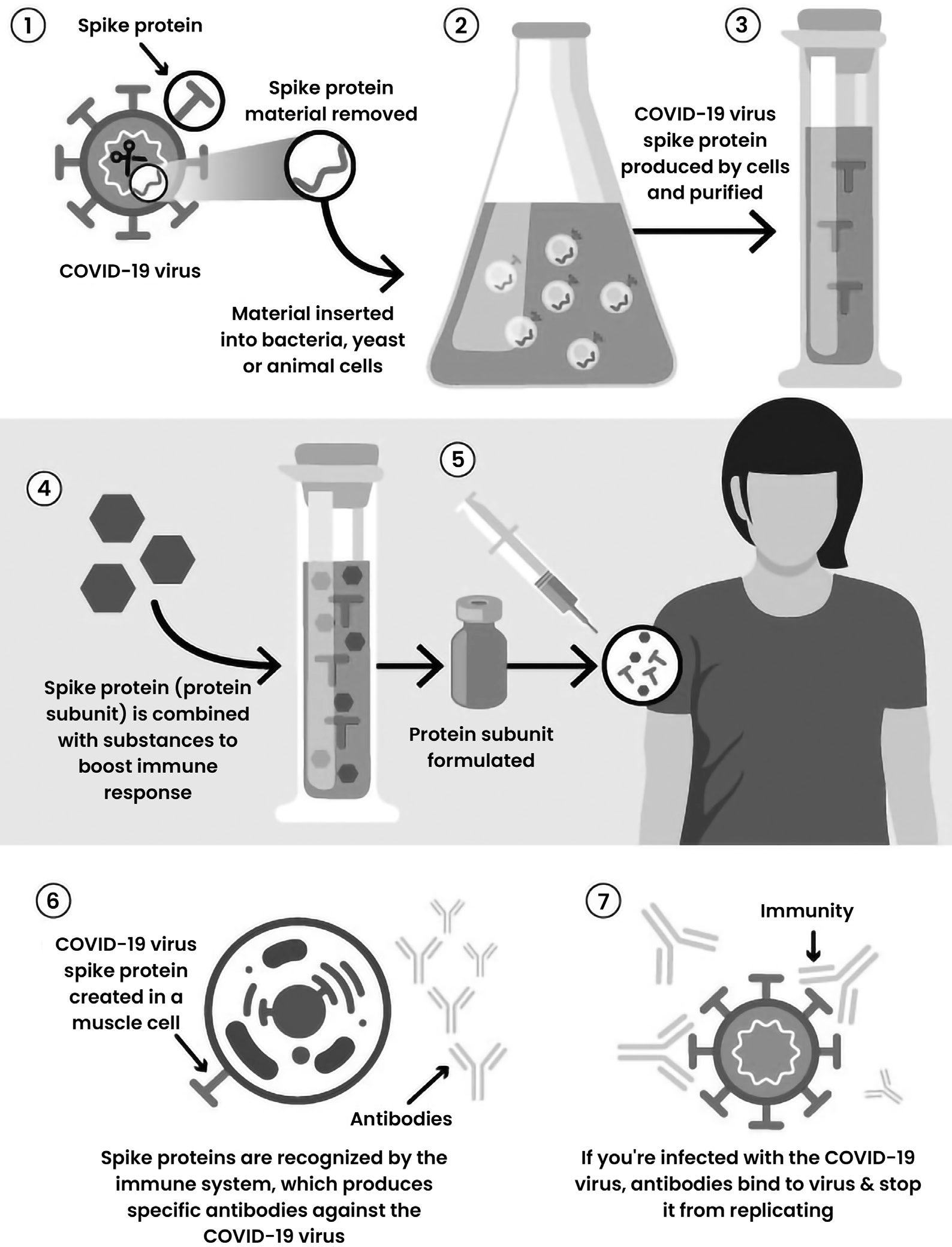
Th e process of production of a subunit vaccine, ① to ④, with an example of COVID-19. The effects, ⑤ to ⑦.
Recombinant Vector Vaccines
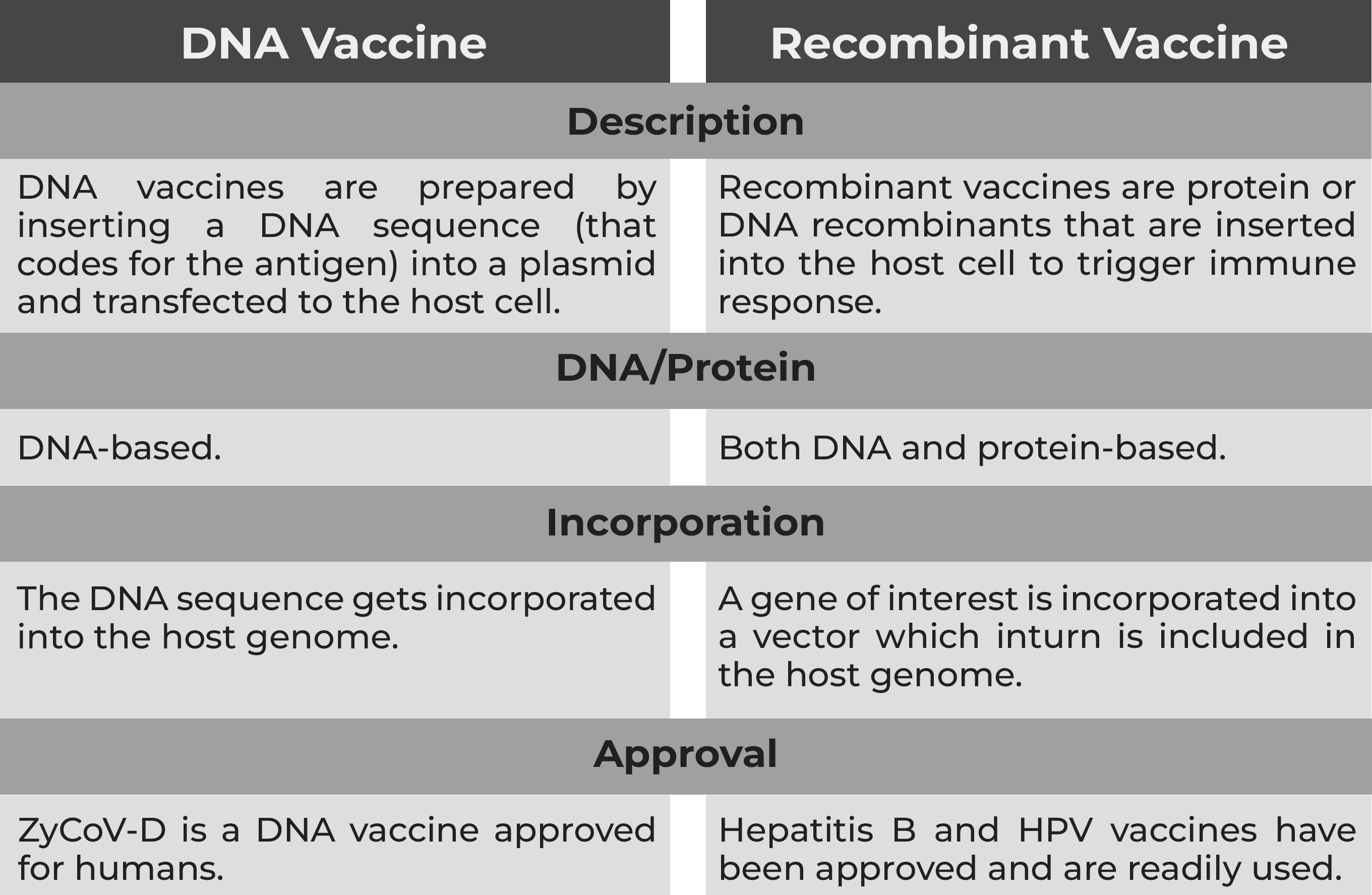
• Recombinant + Vector + Vaccine = We are using a vector or a carrier (a plasmid or a virus) and using the Recombinant DNA technology on it to create a vaccine.
• We basically remove the disease-causing DNA from the viruses or the plasmid and give it the part of DNA that codes for a particular antigen. This virus or plasmid is allowed to infect the human body. This will lead to the integration of the viral DNA with human DNA causing us to code for the Antigen required. When the cells that have this antigen die, the antigens produced by the process above will be released into the blood.
This will lead to B cells looking at the antigen and produce antibodies against it to ensure protection.
• Uses a safe virus or bacteria to deliver specific sub parts of a pathogen. For example- the spike protein of coronavirus
• Immune response is generated without causing a disease.
• Genetic instructions of making such a protein are inserted into a safe virus (through RDNA Technology)
• Several different viruses have been used as vectors, including influenza, vesicular stomatitis virus (VSV), measles virus, and adenovirus, which causes the common cold. Adenovirus is one of the viral vectors used in some COVID-19 vaccines being studied in clinical trials.
• Viral Vector vaccines produce immunity from both B and T cells.
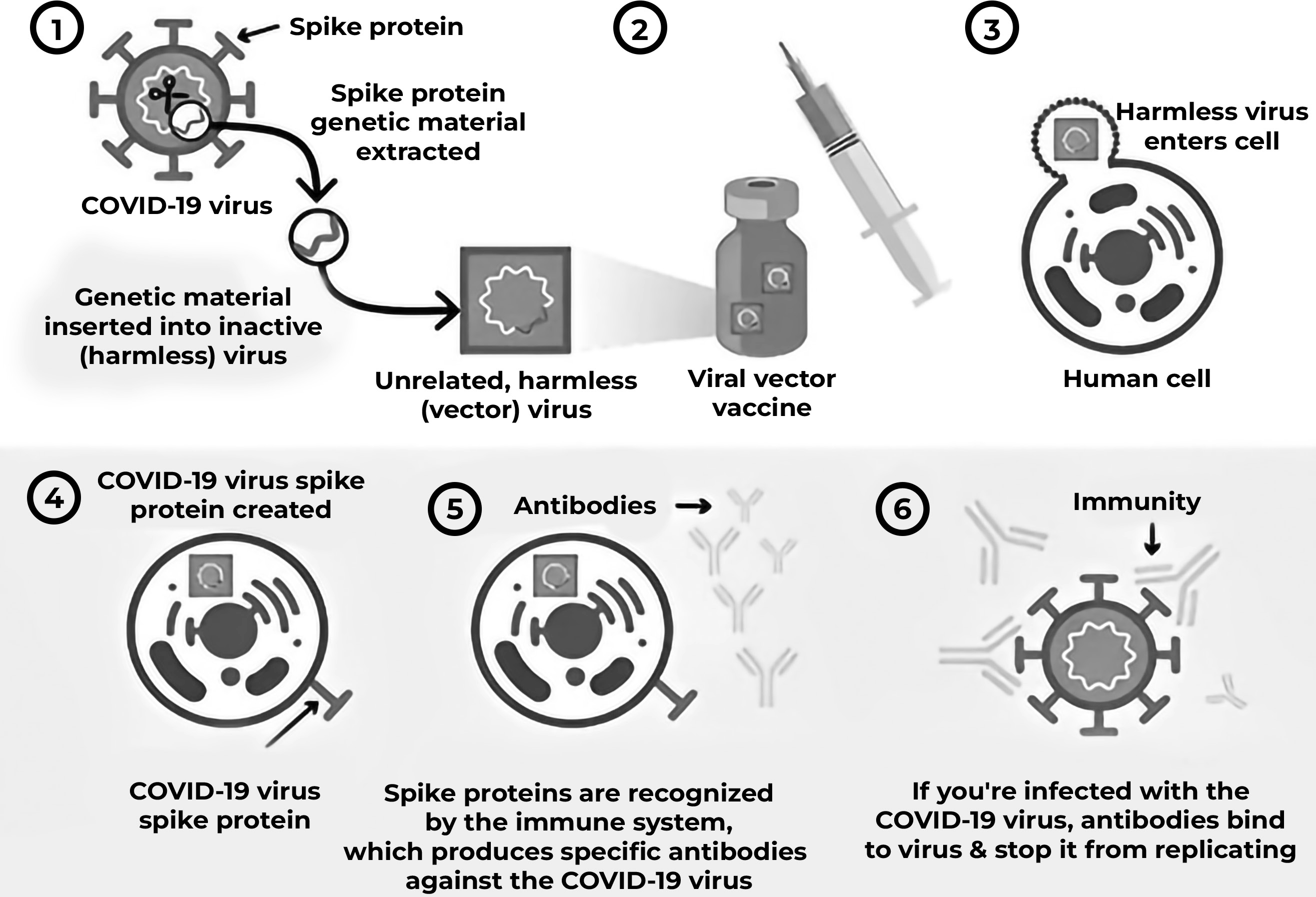
Viral vector vaccine
Conjugate Vaccine
• A conjugate vaccine is a type of subunit vaccine which combines a weak antigen with a strong antigen as a carrier so that the immune system has a stronger response to the weak antigen.
• Most vaccines contain a single antigen that the body will recognize. However, the antigen of some pathogens does not elicit a strong response from the immune system, so a vaccination against this weak antigen would not protect the person later in life.
• In this case, a conjugate vaccine is used in order to invoke an immune system response against the weak antigen. In a conjugate vaccine, the weak antigen is covalently attached to a strong antigen, thereby eliciting a stronger immunological response to the weak antigen.
• Most commonly, the weak antigen is a polysaccharide that is attached to strong protein antigen. However, peptide/protein and protein/protein conjugates have also been developed.
Polysaccharide Vaccines
• This method of making vaccines exist only, because sometimes extracting the spike protein to elicit the response from the B cells is not possible as the spike proteins are very minute. Thus, we extract the polysaccharide compound which will have the spike protein.
• Polysaccharides are poly carbohydrates
• Vaccines that consist of Poly carbohydrate molecule that generates immune response
•
Generally, vaccines are made of protein, that’s why polysaccharide vaccines are special (as they are made of carbohydrates)
Nucleic Acid Vaccines
• Using genetic material from a pathogen to stimulate an immune response.
• Could be done using DNA (DNA vaccine) or RNA (RNA vaccine).
mRNA Vaccines
An mRNA vaccine is a particular kind of vaccination that stimulates the immune system by using an identical copy of the messenger RNA (mRNA) molecule. Immune cells employ the antigen-encoding mRNA molecules that the vaccination gives to them as a template to make foreign proteins that would otherwise be produced by cancer cells or pathogens like viruses. These protein molecules trigger an immune response known as adaptive immunity,which trains the body to recognize and eliminate the associated infection or cancerous cells. The COVID-19 pandemic was largely fought with the help of these vaccinations.
Basically, scientists looked inside the coronavirus to figure out the mRNA sequence that was coding for the spike protein of the virus. If we could identify the RNA sequence used by the virus, we could isolate it and administer it to humans. The B cells would again look at the foreign protein and make antibodies to fight it. This will provide protection from the virus.
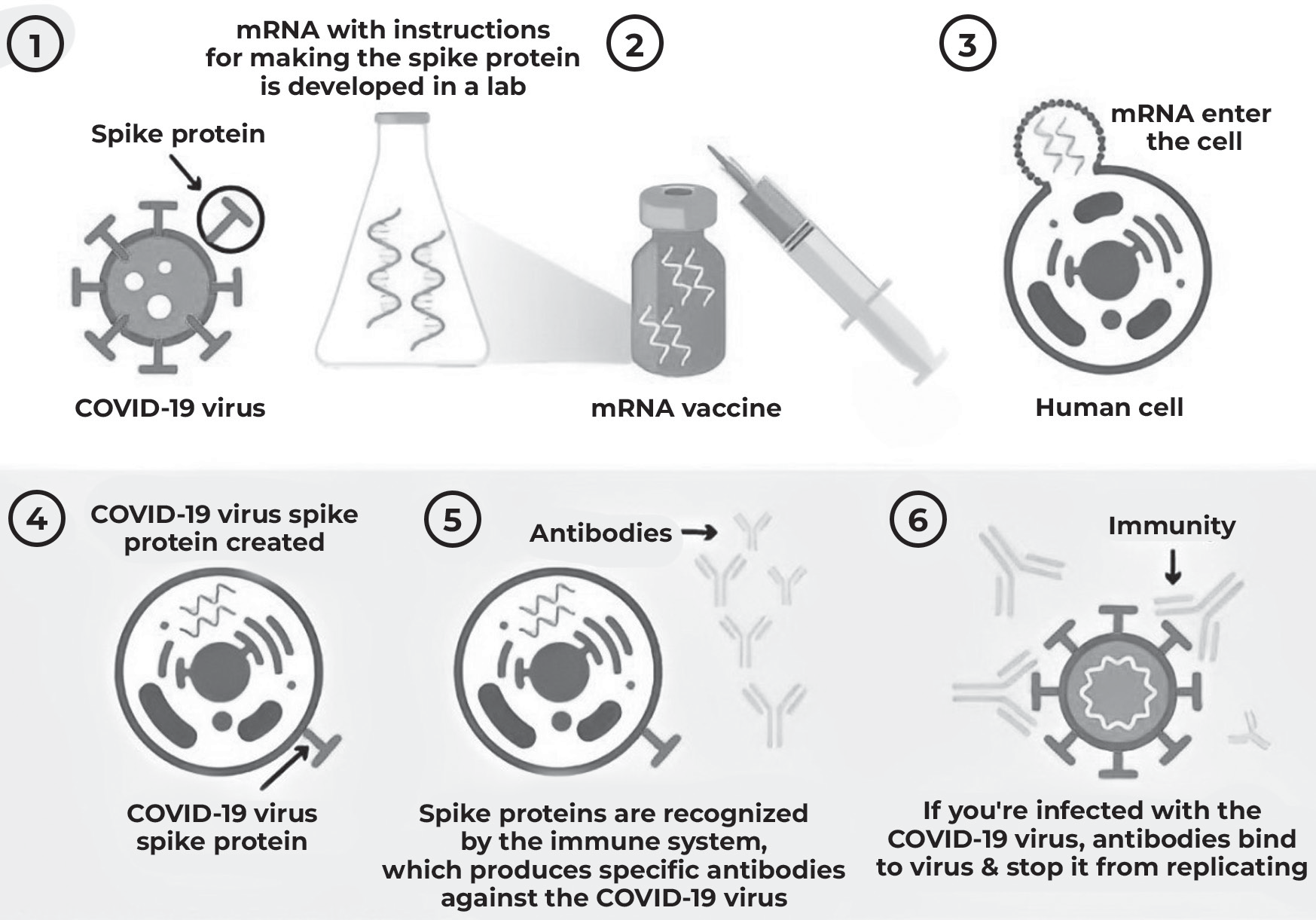
mRNA vaccine
DNA Vaccine
• Piece of DNA encoding the antigen is inserted into the bacterial plasmid.
• DNA plasmids are inserted intra muscularly and driven into cells with help of electroporation.
• DNA based vaccines are more stable: they don’t require ultra-cold storage so they are more cost effective.
Vaccines in India
Covishield (By Oxford and Astra Zeneca): It is a viral vector vaccine
In this type of vaccine, genetic material from the COVID-19 virus is placed in a modified version of a different virus (viral vector).
When the viral vector gets into your cells, it delivers genetic material from the COVID-19 virus that gives your cells instructions to make copies of the S protein.
Once your cells display the Spike proteins on their surfaces, your immune system responds by creating antibodies and defensive white blood cells.
If you later become infected with the COVID-19 virus, the antibodies will fight the virus.
Zycov -D
Developed by Zydus Cadilla
World’s first DNA vaccine against COVID19, it has been granted emergency use authorization.
Developed in partnership with Department of Biotechnology under Mission Covid Suraksha
Can be administered without a needle: special intra dermal system called tropis that uses precise stream of jet to penetrate the skin.
For adults and those above 12 years old
3 doses needed.
iNCOVACC
Bharat biotech has developed it as the world’s first intranasal vaccine for COVID-19.
Received emergency use authorization.
Adenovirus vector-based vaccine
Pneumococcal Vaccines
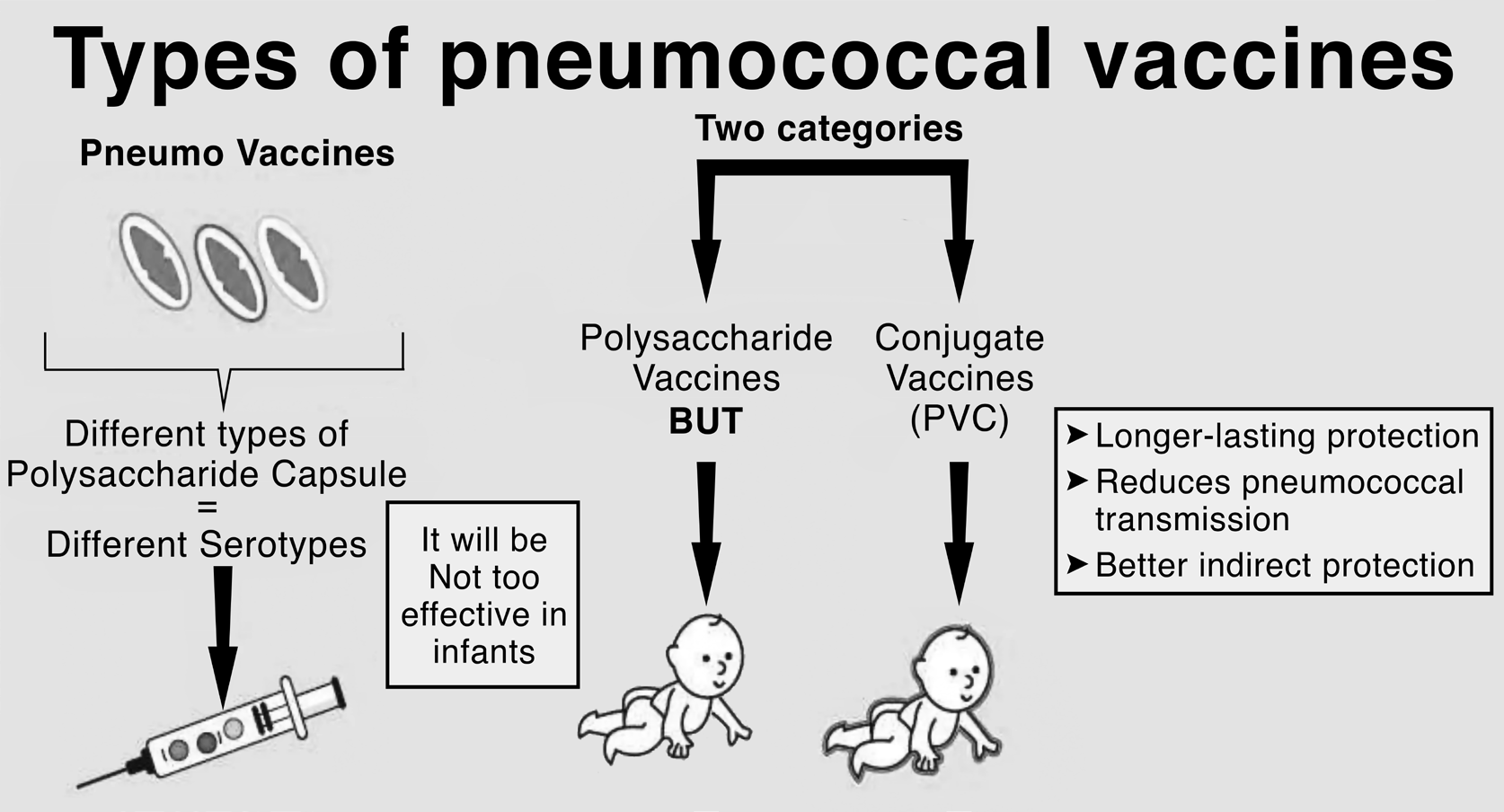
Pneumococcal Conjugate Vaccine has been included under Universal Immunisation Programme.
PCV: provides protection against Streptococcus Pneumonia, which causes pneumonia, meningitis, sinusitis, bronchitis and middle ear infection.
If only polysaccharide is present (bacterial capsule), the immunogenicity provided is less.
So, carrier protein is attached to make the immunogenicity higher so that it elicits stronger immune response.
This makes it a conjugate vaccine having both carbohydrate and protein related antigens.
BCG vaccines (Bacillus Calmette Guerin)
It has been 100 years since the BCG vaccine was first used in humans in 1921 against tuberculosis (TB). Only licensed vaccine available.
Helps prevent severe childhood tuberculosis.
Mycobacterium Tuberculosis is the causative organism, transmission is through respiratory pathway.
Efficacy of the vaccine is higher farther from the equator because tropical regions have many environmental strains of Mycobacterium that lead to interference with vaccine action.
Also used for Other mycobacterial diseases like leprosy, Buruli ulcer and immunotherapy against urinary bladder cancer and malignant melanoma.
Toxoid Vaccines
A toxoid is an inactivated toxin (usually an exotoxin) whose toxicity has been suppressed either by chemical (formalin) or heat treatment, while other properties, typically immunogenicity, are maintained. Toxins are secreted by bacteria, whereas toxoids are altered form of toxins; toxoids are not secreted by bacteria. Thus, when used during vaccination, an immune response is mounted and immunological memory is formed against the molecular markers of the toxoid without resulting in toxin-induced illness. Such a preparation is also known as an anatoxin. Examples: Diphtheria Toxoid Vaccine
Tetanus Vaccine
Active Tetanus Vaccination: Tetanus Toxoid is given during childhood it is also given to those who have an injury with uncertain immunization history
Passive Vaccination: this is a high-risk case and the vaccine is given to those who don’t have immunity and need immediate help
HPV Vaccine
HPV vaccine is a preventive immunization using virus- like particles (VLPs) from HPV L1 capsid protein to induce neutralizing antibodies against high-risk HPV types causing cervical cancer and warts.
Definition and Types: HPV vaccines target human papillomavirus, a sexually transmitted virus linked to 99% of cervical cancers, anal/oral cancers, and genital warts. Main types include bivalent (HPV 16/18, Cervarix), quadrivalent (6/11/16/18, Gardasil/Cervavac), and 9-valent (6/11/16/18/31/33/45/52/58, Gardasil-9).
Mechanism of Action
Vaccines contain noninfectious VLPs resembling HPV capsid, produced via recombinant DNA in yeast, triggering strong humoral immunity with antibody titers 10-100 times higher than natural infection. Antibodies neutralize virus entry into cells, preventing infection without viral DNA.
History and Milestones
First approved in 2006 (Gardasil by FDA); WHO endorsed in 2009. By 2020, 107 countries introduced HPV vaccination; 2019 saw record LMIC introductions. Global strategy targets 90% coverage by 2030 for cervical cancer elimination.
India's Achievements
India launched Cervavac (quadrivalent, Serum Institute/ Dept of Biotechnology) in 2022—first indigenous HPV vaccine, affordable at ~₹200/dose vs imports. Targets HPV 6/11/16/18; approved by DGCI post Phase III trials. States like Sikkim, Punjab, Delhi piloted; national integration pushed via Mission Suraksha. Biotech startups grew from 50 to 9,000; prior DNA Covid vaccine success.
Global Coverage and Impact
WHO regions: Americas/Europe lead at 85%/77% introductions; LMICs at 67% first-dose coverage (2019). South Asia HPV coverage rose to 9% (2025); India at 0% routine in 2022 but scaling via Gavi/PAHO. Models predict 7M+ cervical deaths averted in India by 2120 at 90% coverage.
FATS
Lipids are a group of organic compounds found in living organisms. They vary in their structures and functions. Because of their hydrophobic and non-polar nature, lipids are soluble in organic solvents. Lipids are primarily made up of hydrocarbon chains connected to glycerol via ester linkage. We broadly classify lipids into two categories–simple lipids and compound lipids. Various types of lipids are included within these two major categories of lipids. These include fats, triacylglycerols, wax, phospholipids, steroids, etc. Fatty acids are obtained as a result of hydrolysis of fats. Naturally occurring fatty acids are generally synthesized from two carbon units and hence, contain even number of carbon atoms. Synthesized from 2 carbon units, fatty acid chains may be saturated (having no double bonds) or unsaturated (having one or more double bonds).
| Saturated Fats | Unsaturated Fats | Transfats |
| They are solid at room temperature | They are liquid at room temperature | They are solid at room temperature |
| Even naturally occurring Saturated fats and its products are bad for you | Plant oils are good for you | They are formed artificially by hydrogenation of unsaturated fats. Also found in certain natural sources. |
| No double bonds | Have double bonds | Have very few double bonds and are generally not good for you |
| Animal origins | Mono Unsaturated Fatty Acids, Poly Unsaturated Fatty Acids, Omega 3 fatty acids, Omega 6 fatty acids | Partial hydrogenation of oil produces Transfat. This is done to increase the self-life of products |