Ikshavaku or Solar Dynasty
Ikshavaku or Solar dynasty
After the decline of Eastern Chalukyas, Ikshvaku took their place.
Theyhave leftbehind many monuments at Nagarjunakonda and Dharanikota.
They distributed land grants.
They mentioned land grants on copper plate inscription
Vakatakas
Introduction:
• In the south of Vindhyas, major turmoil and changes started happening after 300 A.D.
• The new kingdoms were Vakatakas who succeeded Satavahanas, Chalukyas who became independent of Kadambas, and Pallavas who conquered the Cholas.
• In the region of Kanchipuram, Pallava appeared. In Badami, Chalukyan took the reign and in Madurai, Pandyas regained their dominance. This all happened around the 7th century.
• Brahimi and Prakrit languages were used by these dynasties.
• All these dynasties started making stone temples related to Shaivism and Vaishnavism.
Vakatakas:
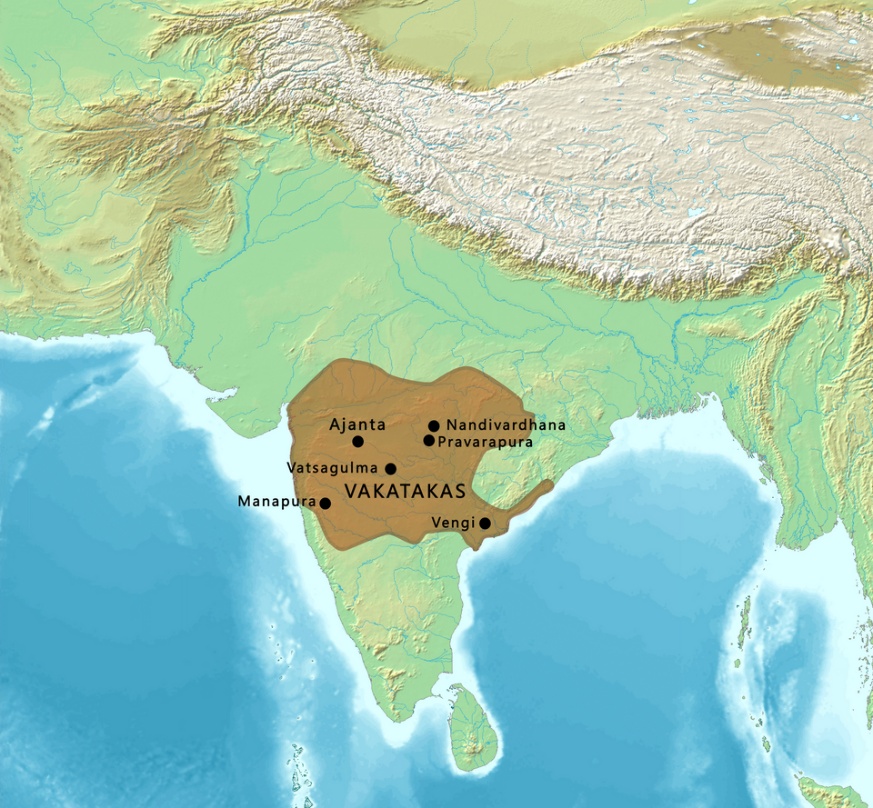
| Basim/Vatsagulm Branch (Secondary Branch) (330-500 A.D.) | |
| Sarva Sen (330-355 A.D.) | Hewastheyounger son of Pravar Sen I. He established this branch. |
| Vindhya Sen (355-400 A.D.) | |
| Pravar Sen II (400-415 A.D.) | |
| Dev Sen (450-475 A.D.) | |
| Hari Sen (475-500 A.D.) | He was the most powerful ruler of this branch. The Vakatak dynasty ended after his death. |
| Vakataka Dynasty | |
| Vindhya Shakti (250-270 A.D.) | Heestablishedan independent Vakatak kingdom. |
| Pravar Sen I (270-330 A.D.) | He was the real founder of this dynasty. The Vakatak dynasty split into two branches after his death. |
| Pravarpur or Nandivardhan Branch (Main Branch) (330-480 A.D.) |
| Rudra Sen I (330-355 A.D.) |
| Prithvi Sen I (355-380 A.D.) |
| Rudra Sen II (380-385 A.D.) |
| Diwakar Sen (385-400 A.D.) |
| Prabhavati Gupt (385-405 A.D.) |
| Damador Sen (400-440 A.D.) |
| Narendra Sen (440-460 A.D.) |
| Prithvi Sen II (460-480 A.D.) After his death, Hari Sen of the Basim branch conquered and absorbed this main branch into his Basim branch. |
• They were the most important successors of the Satavahanas in the Deccan and contemporaneous with the Guptas in northern India.
• They were the most important successors of the Satavahanas in the Deccan and contemporaneous with the Guptas in northern India.
• The Vakataka dynasty was a Brahmin dynasty and they issued land grants to Brahmins.
• They propagated the Vedic religion.
• Their ruling power was majorly situated in Maharashtra.
• Founder of the dynasty: Vindhyashakti (250 – 270 A.D.)
• He probably ruled from Purika.
• He performed a number of Vedic sacrifices and revived Brahmanical rituals.
• He is described as a Dvija on the Ajanta inscriptions of the time of Harisena and is praised for his military accomplishments.
The Vakataka rulers forged several matrimonial alliances with other dynasties of their times.
One of the key alliances was with Prabhavatigupta of the Gupta dynasty (Vaishnavites), which was then ruling north India.
Prabhavatigupta, the daughter of Gupta emperor Chandragupta II, was the chief queen of the Vakataka ruler Rudrasena II. After the sudden death of her husband, she assumed power as queen and served as regent for about 10 years, until her son Pravarasena II came of age and succeeded to the throne.
Chalukyas
Chalukyas:
• There are two Chalukya families: Chalukyas of Badami (Vatapi) and Chalukyas of Kalyani.
• The Chalukya dynasty emerged as a strong power with its founder Pulikesin I (c. 535- 566 A.D.) fortifying a hill near Badami.
• He declared independence from the Kadmabas. It is said that he conducted yagnas and performed the Ashvamedha sacrifice.
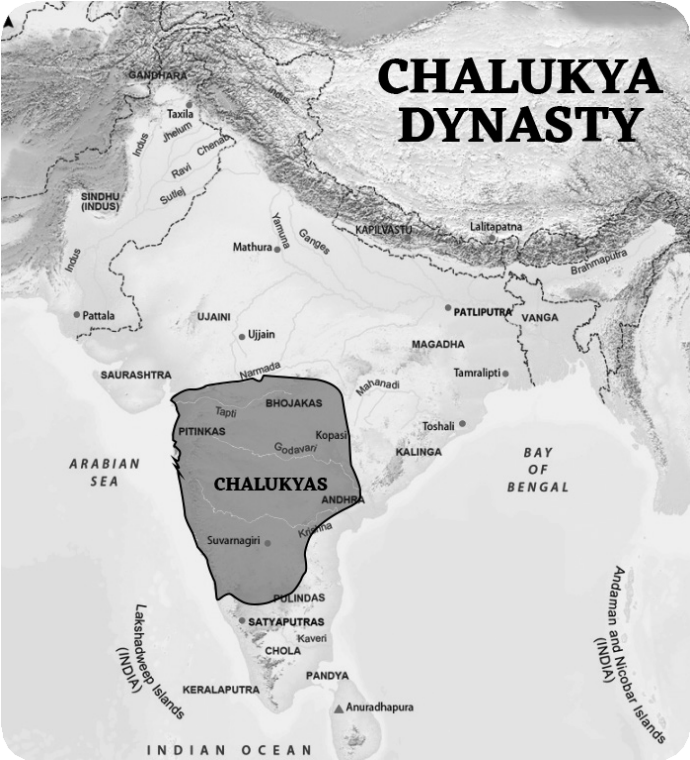
• The capital Badami was founded by Kirtivarman (566- 597 A.D.).
• Pulikesin I’s grandson Pulikesin II (609-642 A.D.), after defeating Mangalesha, proclaimed himself as king, an event that is described in the Aihole inscription.
• One of the most outstanding victories of Pulikesin II was the defeat of Harshavardhana’s army on the banks of the Narmada. This was mentioned by Ravi Kriti in Aihole Prashasti Inscription.
• The kings of Malwa, Kalinga, and eastern Deccan accepted his suzerainty.
• His victories over Kadambas of Banvasi, and Gangas of Talakad (Mysore) are also worthy of note. However, his attempt to attack Kanchipuram was thwarted by Mahendravarma Pallava.
• This led to a prolonged war between the Chalukyas and the Pallavas. Narasimha Varman I (630-668), the Pallava King, attacked and occupied Badami.
• Administration: The king was the head of the administration. In dynastic succession, primogeniture was not strictly followed.
• Generally, the elder was to be appointed as Yuvaraja while the king was in office.
• They became popular after Vakatakas.
• They were overthrown by Rashtrakutas.
• The Chalukya kings claimed to rule in accordance with dharma shastra and niti shastra. Pulakeshin I (543–566) was highly knowledgeable in Manu-sastra, Puranas, and Itihasas.
• Chalukya rulers adopted titles like Maharajan, Sathyasrayan, and Sri-Pritivi-Vallaban.
• Among the Chalukya kings, titles such as Bhattarakan and Maharajadhirajan gained widespread popularity. In the Pallava kingdom, kings adopted grand titles such as Dharma Maharajadhiraja, Dharma Maharaja, and Maharaja.
• Hirahadgalli Plates: It describes that Kings performed Agnistoma, Vajapeya and Ashvamedha sacrifices.
• The wild boar served as the royal emblem of the Chalukyas, symbolizing the Varaha avatar of Vishnu, in which he is believed to have saved the Goddess of the Earth.
• The bull, associated with Shiva, represented the Pallavas.
• Dantidurga of the Rashtrakuta dynasty defeated the last Chalukyan king, Kirti Varman II. However, the Chalukyas resurfaced after nearly two centuries around 972-73 AD, known as the Kalyani or Western Chalukyas. Tailapa II founded this revived empire, which had originally been a vassal state under the Rashtrakutas
| Chalukyas of Badami (543 - 753 A.D) | |
| Pulakeshin I (543-566 A.D.) | |
| Kirti Varman I (566-597 A.D.) | |
| Mangalesh (597-609 A.D.) | |
| Pulakeshin II (609-642 A.D.) | Hedefeated Harshavardhan andhalted his expansion towardsthe south. His conquest is mentioned in the Aihole inscription (634 A.D.) made by his court poet Ravikirti. He ruled from his capital of Badami (Vatapi), present- dayBijapur, Karnataka. |
| Vikramaditya I (655-680 A.D.) | |
| Vinayaditya (680-696 A.D.) | |
| Vijayaditya (696-733 A.D.) | |
| Vikramaditya II (733-746 A.D.) | |
| Kirti Varman II (746-753 A.D.) |
Provincvial Administration:
• Maha-sandhi-vigrahak: Higher official.
• Amatya and Samaharta: Revenue minister and Minister of Exchequer.
• Vishayam, Rastram, Nadu and Grama: Political divisions of the Chalukyan administration.
• Vishayapatis, Samantas, Gramophis and Mahatras: High officials in Chalukyan administration.
• Vishaya was divided into Pukti. Its head was Pogapati.
• Nala-Kavundas: Revenue officials of the village.
• Gramini/Karana: Village accountant.
• Mahajanam: Law and order official.
• Mahapurush: For maintaining order and peace, this official was appointed.
• Religion: Shaivism and Vaishnavism were popular.
• Kartikeyan, the war of God, was also famous.
• Ravikirti, a Jain scholar was present in the court of Pulkesin II.
• Languages used: Sanskrit, Prakrit and Kannada.
• In painting, Chalukyas adopted the Vakataka style.
Royal Women:
• The Chalukya dynasty of Jayasimhan I line appointed royal ladies as provincial governors. They also issued coins in some instances.
• Vijya Bhattariga, a Chalukya princess, issued inscriptions.
• While Pallava queens did not directly participate in the administration, they played a significant role in religious and cultural activities, such as constructing shrines, installing deity images, and making endowments to temples.
• An inscription in the Kailasanatha temple at Kanchipuram mentions the image of Queen Rangapataka, the wife of King Rajasimha.
Religion:
• The Chalukyas were patrons of both Shaivism and Vaishnavism, constructing temples dedicated to Lord Shiva and Lord Vishnu.
• They invited Brahmin groups from the Gangetic region to settle in their kingdom, where they performed regular pujas, festivals, and ceremonies in the temples
• Prominent Chalukya rulers, including Kirtivarman (566- 597 A.D.), Mangalesa (597-609 A.D.), and Pulikesin II (609-642 A.D.), conducted yagnas.
• They bore titles such as Parama-Vaishana and Parama- Maheswara.
• Kartikeyan, the war god, held a prominent position in Chalukya worship, and Shaiva monasteries became key centers for spreading Shaivism.
• The Chalukyas also supported heterodox sects, generously donating land to Jain centers.
• Ravikirti, the poet-laureate of Pulikesin II, was a noted Jain scholar.
Literature and Education:
Chalukyas used Sanskrit in pillar inscriptions such as in Aihole and Maha-kudam. A seventh-century inscription of a Chalukya king at Badami mentions Kannada as the local prakrit, meaning the people’s language, and Sanskrit as the language of culture.
A chieftain of Pulikesin II authored a grammar work
Saptavataram in Sanskrit.
Chalukyan Architecture:
Historically, in Deccan, Chalukyas introduced the technique of building temples using soft sandstones as medium.
Cave 1 is devoted to Shiva, and Caves 2 and 3 are dedicated to Vishnu, whereas cave 4 displays reliefs of Jain Tirthankaras.
Their temples are grouped into two: Excavated cave temples and Structural temples. Badami is known for both Structural and Excavated cave temples.
• Pattadakal and Aihole are popular for structural temples. The Chalukyans developed the Vesara style of temple architecture. This is a mixture of Dravida and Nagara-style architecture.


160 Emergence of New Kingdoms in Deccan


:

Image: Vastuchitra, Aihole
Lad Khan temple, Jaina temple of Megutti and temples in Badami and Aihole were important artistic contributions of Chalukya Kings.
Pattadakal has ten temples. The most celebrated of which are the Papanatha temple, the Virupaksha temple (built by the Queen Lok Mahadevi of Vikramaditya) and the Sangameshwara temple.
Built in 634 A.D., Aihole, the headquarters of the famous medieval Ayyavole merchants’ guild was an important commercial center.
About seventy temples are located in Aihole.
There are four caves in Badami. The largest cave temple built by Mangalesa is dedicated to Vishnu.
The reclining posture of Vishnu on the snake bed and Narasimha are exquisite examples of Chalukya art.
Pattadakal, a quiet village in Bagalkot district of Karnataka, is famous for its exquisite temples.
Pattadakal was a centre for performing royal rituals. The Virupaksha temple was built at the order of Queen Lohamahadevi to commemorate the conquest of Kanchipuram by her husband Vikramaditya II.
Paintings:
• Paintings are found in a cave temple dedicated to Vishnu in Badami.
• Chalukyas adopted the Vakataka style in painting.
• Many of the paintings are of incarnations of Vishnu. The most popular Chalukya painting is in the palace built by King Mangalesan (597-609 A.D.). It is a scene of a ball being watched by members of the royal family and others
Eastern Chalukyas or the Chalukyas of Vengi
Eastern Chalukyas or The Chalukyas of Vengi
| Chalukyas of Vengi or Eastern Chalukyas (624 - 1189 A.D.) |
| Kubja Vishnu Vardhan I (624-641 A.D.) Brother of Pulakeshin II and his Viceroy. He established the Vengi branch as a new kingdom. |
| Jai Simha I (641-673 A.D.) |
| Indra (673 A.D.) |
| Vishnu Vardhan II (673-682 A.D.) |
| Mangi Yuvaraja (682-706 A.D.) |
| Jai Simha II (706-718 A.D.) |
| Kokkili (718–719 AD, six months) |
| Vishnuvardhana III (719 – 755 AD) |
| Vijayaditya I Bhattaraka (755 – 772 AD) |
| Vishnuvardhana IV Vishnuraja (772 – 808 AD) |
| Vijayaditya II (808-847 A.D.) |
| Vijayaditya III (847-892 A.D.) |
| Bhima I (892-921 A.D.) |
| Vijayaditya IV (921 A.D.) |
| Amma I Vishnuvardhana VI (921 – 927 A.D.) |
| Tala I (927 A.D.) |
| Yuddhamalla II (927-935 A.D.) |
| Amma I Vishnuvardhana VI (921 – 927 AD) |
| Bhima III Vishnuvardhana VII (935 – 947 AD) |
| Amma II Vijayaditya VI (947 – 970 AD) |
| Danarnava (970 – 973 AD) |
| Jata Choda Bhima (973 – 999 AD) (usurp.) |
| Shaktivarman I Chalukyacandra (999 – 1011 AD) |
| Vimaladitya (1011–1018 AD) |
| Rajaraja Narendra I Vishnuvardhana VIII (1018–1061 AD) |
| Shaktivarman II (1061–1063 AD) |
| Vijayaditya VII (1063–1068 AD, 1072–1075 AD) |
| Rajaraja II (1075–1079) Cholas broke their alliance and annexed the Eastern Chalukyan kingdom in 1076 A.D |
| Virachola Vishnuvardhana IX (1079–1102) |
Western Chalukyas or the Chalukyas of Kalyani
Western Chalukyas or The Chalukyas of Kalyani:
| Chalukyas of Kalyani or Western Chalukyas (957 - 1200 A.D.) |
| Tailap II (957-997 A.D.) Prabandh Chintamani written by Merutung mentions that Tailap II made six unsuccessful expeditions against Munj Parmar, the king of Malwa. He defeated Rashtrakut king Kharaka II in 973 He took over the rule after defeating Rashtrakutas. Manyakhet became the capital during Talipa. |
| Satyashraya (997-1008 A.D.) |
161

| Vikramaditya V (1008-1015 A.D.) |
| Jai Simha II (1015-1042 A.D.) |
| Someshvara I (1042-1068 A.D.) |
| Someshvara II (1068-1076 A.D.) |
| Tribhuvanmalla Vikramaditya VI (1076-1126 A.D.) He was the most powerful king of this dynasty. Vikramank Devcharit written by Bilhan mentions his exploits. Vigyaneshwar was his minister and had authored Mitakshara. He started the Vikram Samvat. |
| Someshvara III (1126-1138 A.D.) Someshvar II transferred the capital to Kalyani. |
| Jagdekmalla II (1138-1151 A.D.) |
| Tailap III (1151-1164 A.D.) |
| Jagdekmalla III (1164-1183 A.D.) |
| Someshvara IV (1183-1200 A.D.) |
Schools of Hindu Law
Mitakshara is one of the oldest schools of Hindu law, practiced across most of India, except in the states of West Bengal and Assam. Dayabhaga, another significant school of Hindu law, is primarily followed in Assam and West Bengal. Both schools address property rights for individuals from various castes, as well as the inheritance rights of males and females.
Mitakshara is considered an orthodox school, which has been criticized for its restrictive approach to women's property rights, offering them limited inheritance rights. In contrast, Dayabhaga is a more liberal school, granting women greater inheritance rights compared to Mitakshara, although it still exhibits some bias

Pallavas
• Pallavas:
| Earlier Pallavas (275 - 560 A.D.) |
| Simha Varman I (275-300 A.D.) |
| Skanda Varman I (300-335 A.D.) |
| Vishnu Gopa (335-350 A.D.) |
| Kumar Vishnu I (350-370 A.D.) |
| Skanda Varman II (370-385 A.D.) |
| Vira Varman (385-400 A.D.) |
| Skanda Varman III (400-436 A.D.) |
| Simha Varman II (436-460 A.D.) |
| Skanda Varman IV (460-480 A.D.) |
| Nandi Varman I (480-510 A.D.) |
| Kumar Vishnu II (510-530 A.D.) |
| Buddha Varman (530-540 A.D.) |
| Kumar Vishnu III (540-550 A.D.) |
| Simha Varman III (550-560 A.D.) |
| Later Pallavas (560 - 897 A.D.) |
| Sivaskanda Varman (560-575 A.D.) |
| Simha Vishnu (575-600 A.D.) |
| Mahendra Varman I (600-630 A.D.) |
| Narsimha Varman I (630-668 A.D.) |
| Mahendra Varman II (668-672 A.D.) |
| Parmeshwar Varman I (672-695 A.D.) |
| Narsimha Varman II (695-722 A.D.) |
| Parmeshwar Varman II (722-730 A.D.) |
| Nandi Varman II (730-795 A.D.) |
| Danti Varman (795-846 A.D.) |
| Nandi Varman III (846-869 A.D.) |
| Aparajit Varman (869-897 A.D.) |
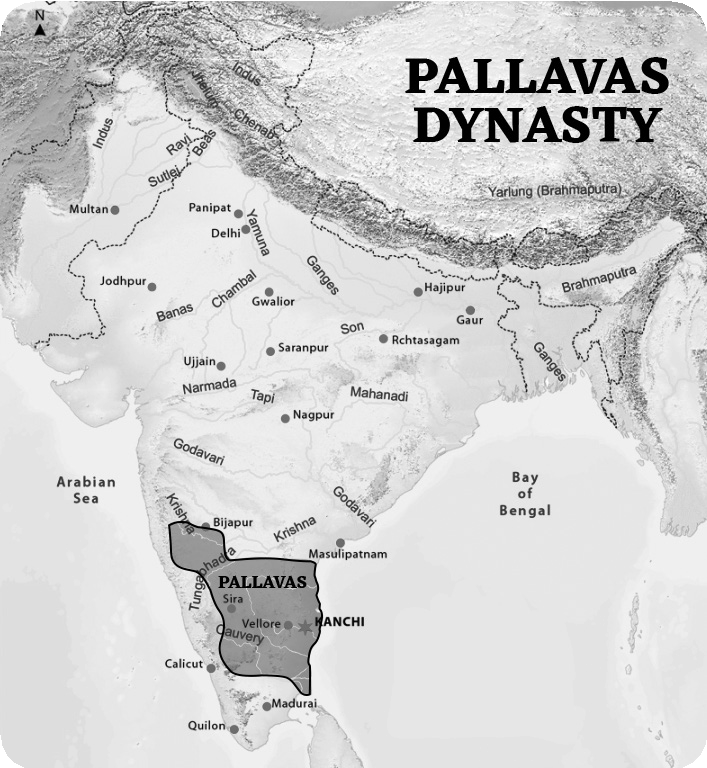
After Ikshvakus, Pallavas came into the ruling system. Their region extended to Tamil Nadu and Andhra Pradesh.
Capital: Kanchi
Pallavas initially were in regular conflict with Kadambas
of Karnataka.
The Pallava-Chalukya conflict continued during the subsequent decades, with some intermittent peace.
The Pallavas were associated with Tondaimandalam, the land between the north Pennar and north Vellar rivers
• The founding Pallava ruler was Simhavishnu. Simhavishnu is believed to have conquered the Chola country up to the Kaveri and consolidated his dynastic rule, started by his father Simhavarman. Simhavishnu, vanquishing the Kalabhras, conquered the land up to the Kaveri, thereby coming into conflict with the Pandyas. He propagated Vaishnavism. He adores the title Avanisimha which means lion of the Earth.
• Simhavishnu’s successor Mahendravarman I (590- 630 A.D.), whom Appar (Nayanar Saint), converted from Jainism to Saivism, was a patron of arts, and a poet and musician in his own right.
• Mahendravarman-I had many titles like Gunabhadra,
• Lalitankura and Shatrumalla.
• Pulkesin -II defeatedhim. During Mahendravarman’s reign, the army of Pulikesin II annexed the northern part of Pallava kingdom and almost reached the Pallava capital of Kanchipuram.
• Narasimhavarman -I defeated Pulkesin II. He took over Badami (Vatapi) and adopted the title of Vatapikondan.
• Huen Tsang visited Kanchi during the period of Narasimhvarman.
• Mamallapuram city was built by Narasimhvarman-I.
• Subsequently, during the reign of Narasimhavarman I (630-668 A.D.), the Pallavas managed to settle scores by winning several victories over the Chalukyas with the aid of their ally Manavarman, a Sri Lankan prince, who later became ruler of the island kingdom.
• During the reign of his grandson, Paramesvaravarman I (670-700 A.D.), Vikramaditya of the Chalukya kingdom invaded the Pallava country.
• Paramesvaravarman fought against him with the support of the Gangas and Pandyas. As a result, the Pallavas came into conflict with the Pandyas in the south.
• In the early ninth century, the Rashtrakuta king, Govind III, invaded Kanchi during the reign of Pallava king Dantivarman.
• Dantivarman’s son Nandivarman III aided by western Gangas and Cholas, defeated the Pandyas at the battle of Sripurambiyam or Thirupurambiyam.
• Aparajita, grandson of Nandivarman III, lost his life in a battle fought against Aditya I of the Chola kingdom who invaded Tondaimandalam.
This sealed the fate of the Pallavas. Thereafter, control over Tondaimandalam passed into the hands of the Cholas
Pallava Administration:
• Under the Pallavas, kinship was held to be of divine origin and was hereditary.
• The king took high-sounding titles, some of which, such as Maharajadhiraja, were borrowed from north Indian traditions.
• The king was assisted by a group of ministers, and in the later Pallava period this ministerial council played a prominent part in state policy.
• Some of the ministers bore semi-royal titles and may well have been appointed from among the feudatories.
• Sabha: Basic assembly in village
• Urrar: Informal gathering of the entire village.
• Nadu: Group of villages.
• Eripatti: Tank Land.
• Sudesi, Nanadesi, Ainurruvar: Guilds founded by traders.
• Ayyavole-parameswariyar: Members of the guild.
Village Life
• In the village, the basic formal unit of administration was the assembly called Sabha, which decided upon all matters relating to the village, including endowments, land, irrigation, cultivation of crops, criminal justice, census and other records.
• The Sabha worked closely with the Urar, an informal assembly of the entire village.
• Higher up was a district council that worked with nadu or district administration.
• The village headman was the link between the village assembly and the official administration.
• Village courts handled petty criminal cases. At a higher level, in towns and districts, courts were presided over by government officials.
•
The king remained the supreme arbiter of justice who looked at appeals and his decision was final.
Tank Irrigation
• A special category of land, Eripatti or tank land, was donated by individuals, to maintain the village tank (built by the villagers), which stored the rainwater to be used during annual long, dry spells.
• Almost all Pallava period inscriptions on rural affairs called for regular maintenance of the tank. Water was distributed by canals that had sluices installed to control the water level and stop overflowing at the source.
• The water distribution was supervised by a special tank committee of the village.
• The tank water was shared by all cultivators. Water taken in excess of allotted to a particular cultivator was taxed.
• After tank irrigation, wells were considered next in importance.
Revenue and Taxation
• Most information on land revenues and taxation is found in copper plates having records of the land grants.
• Revenue came almost exclusively from rural sources, mercantile and urban institutions being largely unplanned. Two categories of taxes were levied on the village.
• The land revenue paid by the cultivator to the state varied from 1/6th to 1/10th of the produce and was collected by the village and paid to the state collector.
• In the second category were local taxes, also collected in the village but utilized for services in the village itself. The tax money was spent repairing irrigation works, illuminating the temple, etc.
• When the state land tax was inadequate, the revenue was supplemented by additional taxes on draught cattle, toddy drawers, marriage-parties, potters, goldsmiths, washermen, textile manufacturers, weavers, brokers, letter-carriers, and the makers of ghee.
• The loot and booty obtained in war added to the revenue of the state. Pallava considered war to be very important and a series of sculptures depicting the important events connected with the reign of Nandivarama Pallava, notably Pallava troops attacking a fort are seen in the Vaikunta Perumal temple at Kanchipuram. This fort is depicted in the sculptures as having high ramparts with soldiers attacking it and elephants standing near it.
Trade
• Kanchipuram was an important trading center in the Pallava period. Merchants (traders of commodities) had their own organizations such as Manigramam. The merchants had to obtain a license to market their goods.
• Barter system generally prevailed but later the Pallavas issued gold and silver coins.


• In foreign trade, spices, cotton textiles, precious stones and medicinal plants were exported to Java, Sumatra, Cambodia, Sri Lanka, China and Burma. Mamallapuram was an important seaport.
• Traders founded guilds and called themselves as Sudesi, Nanadesi, Ainurruvar and others. Their main guild functioned at Aihole. Foreign merchants were known as Nanadesi. It had a separate flag with the figure of a bull at the centre, and they enjoyed the right to issue vira-sasanas. The jurisdiction of this guild stretched over the entire south-east Asia. The chief of this guild is registered in the inscriptions nemely Pattanswamy, Pattnakilar, and Dandanayaka. Its members were known as Ayyavole-parameswariyar.
• Maritime Trade
• Three major kingdoms: Kambuja (Cambodia), Champa (Annam), and Srivijaya (the southern Malaya peninsula and Sumatra).
• On the West Coast, the initiative in the trade with the West was gradually passing into the hands of the foreign traders settled along the coast, mainly Arabs.
• Indian traders were becoming suppliers of goods rather than carriers of goods to foreign countries, and communication with the West became indirect, via Arabs, and limited to trade alone.
Society
• Brahmins as learned scholars in literature, astronomy, law and others functioned as the royal counselors. Not only were they in the teaching profession, but they were also involved in agriculture, trade and war.
• They were exempted from paying taxes and capital punishment.
• The next important social group which ruled the state was called Sat-nakshatras (quality kshatriyas).
• Not all the kshatriyas were of warring groups; some of them were involved in trading as well. They also enjoyed the right to read the Vedas, a privilege denied to lower varnas.
• The trading group maintained warriors for protection and founded trade guilds. The people who were at the bottom of society worked in agriculture, animal husbandry, and handicraft work.
• People engaged in scavenging, fishing, dry-cleaning and leather works were positioned outside the varna system.
• The caste system was prominent in this era.
• Most scholars agree that Aryanisation or the northern influence on the south picked up pace during the Pallava period. This is evident from the royal grants issued by the kings. The caste structure was firmly established. Sanskrit came to be held in high esteem.
• Kanchipuram continued to be a great seat of learning.
Religion
Religion: Bhakti Movement under Alvars and Nayanars
Hiuen-Tsang is reported to have seen at Kanchi one hundred Buddhist monasteries and 10,000 priests belonging to the Mahayana school.
•
The Jains had developed a few educational centres near Madurai and Kanchi, and religious centres such as the one at Shravanabelagola in Karnataka. But a vast majority of the Jaina monks tended to isolate themselves in small caves, in hills and forests.
• The followers of the Vedic religion were devoted to the worship of Siva. Mahendravarman was the first to adopt the worship of Siva. But he was intolerant of Jainism and destroyed some Jain monasteries.
• Under Mahendravarman I, Aryanisation is evident in the education which was controlled by Jains and Buddhists, but gradually the Brahmins superseded them and large gifts of land were given to them.
• The Pallavas of Kanchipuram and the Pandyas of Madurai patronised many of the great Nayanars and Alvars, Saiva and Vaishnava poet-saints respectively, who were supported by the elite and the wealthy merchant class. The saints simplified the use of Tamil through music, bringing the local and regional ethos into the mainstream. Alvars (total 12) and Nayanars (total 63), came from different strata of Tamil society, such as artisans and cultivators.
• Alvars:
• Women saints, such as Andal, were also significant figures. Andal, an Alvar saint, is known for her heartfelt hymns dedicated to Vishnu, with Krishna as the central figure in her devotion. Her songs express her deep and unwavering love for Krishna.
• These hymns were later compiled into the Nalayira Divviyaprabandham by Nadamuni at the close of the ninth century. Nadamuni, who served as a priest at the Ranganatha temple in Srirangam, is credited with gathering these 4,000 hymns into a cohesive work.
• Periyalvar, who lived in Srivilliputtur during the rule of the Pandyan king Maravarman Srivallabha in the ninth century, focused primarily on themes surrounding Krishna’s childhood in his compositions.
• Nammalvar, from Kurugur (modern-day Alvar Tirunagari in Thoothukudi district), is regarded as the most revered among the Alvars. He authored four significant works, including the Tiruvaymoli.
• Nayanars:
• Karaikkal Ammaiyar (also known as Tilakawathi) and the Pandya queen Mangayarkkarasiyar were influential female Nayanar saints.
• Prominent male Saiva poets include Tirunavukarasar (Appar), Tirugnanasambandar, Sundarar, and Manikkavasagar.
• Towards the end of the tenth century, Nambi Andar Nambi compiled their hymns into an anthology of eleven books. The first seven books, collectively known as Thevaram, feature the hymns of Sambandar (Books I-III), Appar (Books IV-VI), Sundarar (Book VII), and Manikkavasagar (Book VIII).


165
• Sekkilar’s Periyapuranam is the twelfth thirumurai of the Saiva canon. It is a hagiography of the sixty-three Nayanars but contains an undercurrent of historical information as well. This collection of 12 books is named Panniru Tirumurai.
• Buddhism and Jainism lost their appeal in this period.
Monasteries, Mutts and Temples
• Monasteries continued to be the nucleus of the Buddhist educational system and were located in the region of Kanchi, and the valleys of the Krishna and the Godavari rivers. Buddhist centers were concerned with the study of Buddhism, particularly as this was a period of intense conflict between orthodox and heterodox sects.
• But Buddhism was fighting a losing battle.
• Royal patronage, which the Buddhists lacked, gave an edge to the protagonists of Vedic religions.
• Apart from the university at Kanchi, which acquired a fame equal to that of Nalanda, there were a number of other Sanskrit colleges.
• Sanskrit was the recognized medium and was also the official language at the court, which led to its adoption in literary circles.
• In the eighth century the mathas (mutts) became popular.
• This was a combination of a rest house, a feeding centre, and an education centre, which indirectly brought publicity to the particular sect with which it was associated.
• Adivarah temple contains a portrait of Simhavishnu.
• Narasimhavaraman II rule is marked by peace and prosperity, literary activity, and the construction of temples such as the shore temple at Mamallapuram and the Kailasanatha temple at Kanchi. The great Sanskrit scholar Dandin lived in his court.
• Mahendravaraman composed ‘Matthavilasa Prahasanam’
in Sanskrit.
• ‘Kirtarjuniya’ was composed by Bhairavi and Dandin wrote ‘Dashkumaracharita’.
• Mandagapattu Inscription: Belongs to Mahendravarman – I
Various Styles of Temples During the Pallava Period
Ellora, Ajanta and Mammallapuram Cave Architecture:
Mahendravarman I is credited with the introduction of rock-cut temples in the Pallava territory.
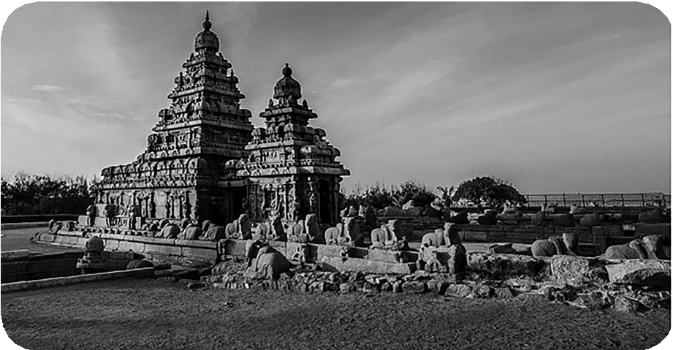
• The iconic Shore Temple of Pallavas at Mamallapuram (Mahabalipuram) was constructed during the reign of Rajasimha (700-728 A.D.).
• The temple complex consists of three shrines, with the most prominent ones dedicated to Shiva and Vishnu.
• The exterior walls of the Vishnu shrine, as well as the interior of the boundary wall, are richly carved and sculpted with intricate details.
• Unlike other structures in the region, the Shore Temple is a unique five-storeyed rock-cut monolith. The monolithic vimanas are a distinctive feature of Mamallapuram.
• The Rathas at Mamallapuram are collectively known as the Panchapandava Rathas. The Arjuna Ratha is adorned with finely crafted sculptures of Shiva, Vishnu, Mithuna, and Dwarapala.
• Of the five Rathas, the Dharmaraja Ratha stands out as the most exquisite, featuring a three-storeyed vimana with a square base.
• The Bhima Ratha is designed in a rectangular plan and showcases beautiful sculptures of Harihara, Brahma, Vishnu, Skanda, Ardhanarisvara, and Shiva as Gangadhara.
• One of the most significant carvings in Mamallapuram is the Descent of the Ganga, also referred to as 'Bhagirata’s Penance' or 'Arjuna’s Penance,' which remains a masterpiece of art.
Paintings:
• Ajanta caves are the repository of rich mural paintings. Paintings of the early phase are mostly in caves nine and ten, which belong to the period of the Satavahanas.
• The creators of the Ajanta paintings employed innovative techniques in their work.
• To begin, they coated the ridged surface of volcanic rock with a plaster made from a mixture of vegetable fibers, paddy husk, rock grit, and sand. Over this, a thin layer of lime was applied to prepare the surface for the pigment. More recently, it was discovered that a stretch of cloth was also used to reinforce the surface before applying the pigment.
• The colors used in the paintings were derived from natural materials and minerals. Key colors include black, red, white, yellow, blue, and green.
• The paintings are noted for their aesthetic details, such as garlands, necklaces, headgear, earrings, and the precise depiction of human hand movements.
• The story panels are both captivating and educational. The paintings primarily depict scenes from the Jataka tales, as well as significant episodes from the life of Buddha.
• Mural paintings in Ellora are found in five caves, but they are preserved only in Kailash temple. Some murals in Jain temples are well preserved. Not only animals, birds, trees, flowers are pictured elegantly, but human emotions and character - greed, love, compassion-are depicted with professional skill.


.
Various styles of temples during the Pallava period:
• Mahendravarman Style (Mandapa Style): Rock cut temples like Panch Pandav Gufa temple, Bhairavakonda (Arcot), and Anantesvara temple at Guntur.
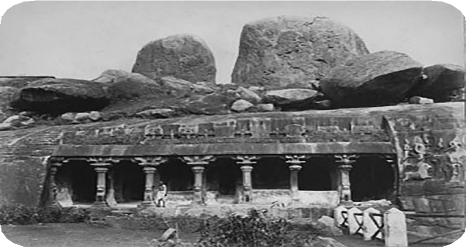
Panch Pandav Gufa
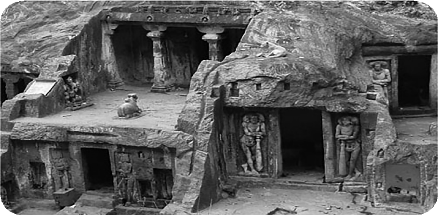

Bhairavakona Temple
• Nandivarman Style: In this style, the Vimana of the temple became shorter, and the use of bricks became more predominant. Notable examples of this architectural shift are the Mukteshvara and Matangeshvara temples at Kanchi.

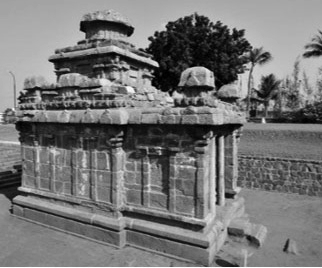
Kailasanathar temple
• Narsimha Style (Mamalla or Mahamalla Style): The temple complex in this group consists of rathas, or monolithic temples carved from single rock boulders, located at Mamallapuram. These rathas are commonly referred to as the Seven Pagodas, though there are actually eight in total: Dharmaraja, Bhima, Arjuna, Sahadeva, Draupadi, Ganesha, Pidari, and Yalaiyankuttai.
• Rajasimha Style: It was promoted by Narasimhavarman II. Its examples are - Mahabalipuram (Shore temple and Mukunda temples), Panamalai in south Arcot and Kailashanatha temple at Kanchi.
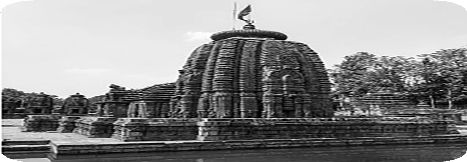
Mukteshwara Temple
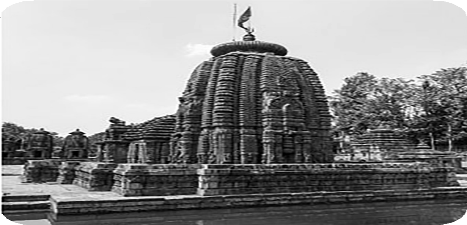
Mukteshwara Temple
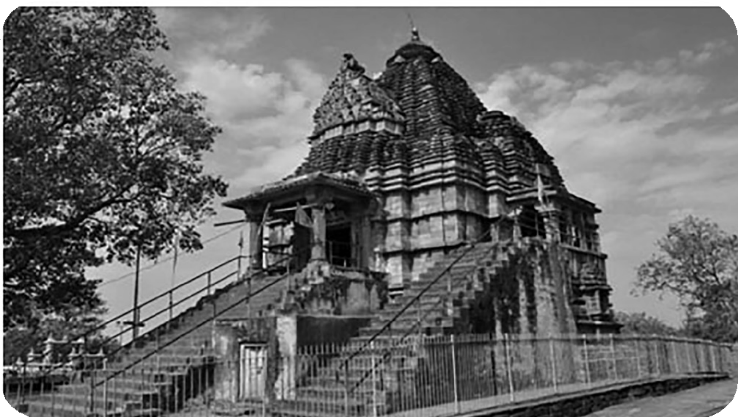

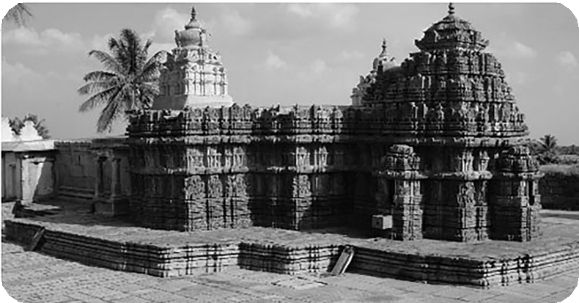
Lakshm i Narasimha temple Matangeshwara Temple
Kadamba Ganga and Eastern Ganga
Kadamba:
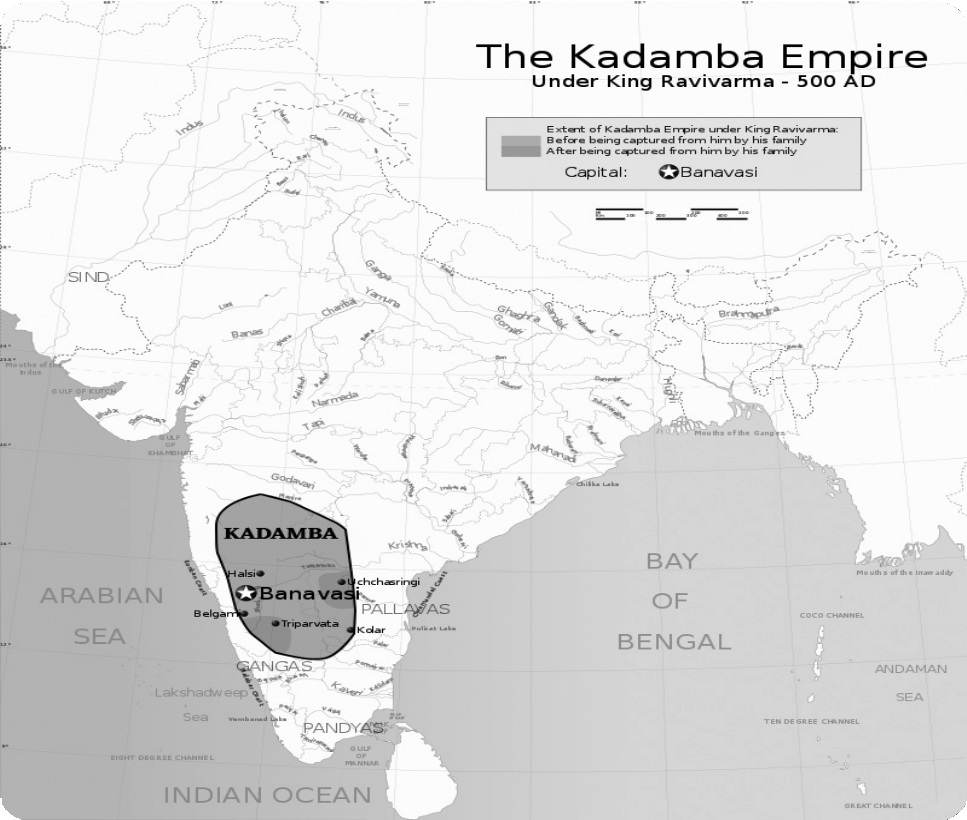
• Mayurasharma was the founder of this dynasty.
• He performed Ashvamedhas and Rajasuya yagna.
• The Talagunda inscription is considered the most reliable source of information about the family of Mayurasharma and the origin of the Kingdom.
• Capital: Vaijayanti in Karnataka.
• They favored Brahmanism.
The Gangas:
• The Gangas were contemporaries of the Pallavas.
• They ruled over South Karnataka.
• Their kingdom was situated between the Pallavas in the east and the Kadambas in the west.
• To distinguish them from the Eastern Gangas, who ruled in Kalinga from the fifth century, they are referred to as the Western Gangas or the Gangas of Mysore.
• The dynasty was founded by King Konganivarma Madhava, who established Kolar as his capital around 350 and ruled for approximately twenty years.
By the time of Harivarma in 390 A.D., the Gangas had consolidated their kingdom with Talakad as their capital. Their move from the early capital Kolar may have been a strategic one with the intention of containing the growing Kadamba power.
They made land grants to Jaina.
Land grants made to Brahmins were exempted from Taxes. They were known as Brahamadeyas.
This led to the rise of Brahmins as an important class in the society.
• Kalabhras opposed the Brahamadeyas system. They revolted against the Brahmins and the ruling class in the 6th century.
• The revolt of Kalabhras was put down by joint collaboration of Pallavas and Chalukyas.
The Eastern Gangas
• Founded by Indravarman.

Today, they are best known for constructing the Jagannath Temple in Puri and the Konark Sun Temple in Odisha. They also built the Madhukeshwara Temple at Mukhalingam, the Nrusinghanath Temple at Simhachalam, the Arasavalli Sun Temple in the former Kalinga region, and the Ananta Vasudeva Temple in Bhubaneswar
Wars , Socio Religious and Administration During Period
The regular tensions and wars between Pallavas and Chalukyas:
• Pallavas and Chalukyas were in regular conflict from 6th to 8th centuries. Even Pandyas also joined this conflict, thus forming a tripartite struggle for control over the region.
• Doab of Krishna and Tungabhadra was the major reason for the struggle.
Aihole Inscription shows the constant struggle in which Pulkesin-II was involved in this region.
• Pulkesin II defeated the Kadamba and Ganges dynasties.
•
Narasimha Varman II of the Pallava dynasty defeated Pulkesin-II.
• Narasimha Varman II defeated Cholas, Cheras, Pandyas and Kalabhras. He adorned the title of Vatapikondan.
Societal and Religious Structure During this Period
• Priest was the most important post in the society.
• Brahmanism, Jainism, and Buddhism religions were significant.
The caste system and the Varna system were prominent.
King took the title of Dharma-Maharaj.
Rural and Urban Administration during this period:
The administration was divided into three forms: Ur, Sabha, and Nagaram.
Ur was mainly meant to describe villages.
Sabha was a place that lies in between Ur and Nagaram.
Nagaram is equivalent to present-day Urban cities. Merchants and Traders used to reside in Nagaram