Ancient Era Inscriptions
Ancient Era Inscriptions
Inscriptions: Some information written on the stones, metallic plates etc.
Epigraphy: The science of studying Inscriptions.
Paleography: The science of analyzing writings and languages used in inscriptions.
Languages Used in Ancient Inscriptions
Pictographic writings were used in the Harappan Inscriptions.
Prakrit language was used in the earliest inscriptions.
Sanskrit language gained dominance in the inscriptions writing after 2nd Century AD.
Languages in Ashokan Inscriptions
• The first inscriptions of Ashoka were found during Firoz Shah Tuglaq’s Rule. Two important places from which it was found were Topra (Haryana) and Meerut (Uttar Pradesh).
• James Prinsep was the first person to decipher Ashokan Inscriptions in 1837.
• Brahmi language was the main linguistic element in Ashokan inscriptions.
• This language used to be written from left to right.
• This language was majorly present in all the inscriptions across India.
• Kharosthi Language was used in Ashokan inscriptions.
• This language was written from right to left.
• Majorly present in North-West part of the subcontinent.
• Armaic language along with Karsothi is found in Ashokan Inscriptions.
• Majorly present in Afghanistan and Pakistan.
• This language was written from right to left.
Importance of Inscriptions
• Political Aspect: Inscriptions convey about the political ruling class and their ideologies of that era. (E.g.: Samudra Gupta’s Allahabad Inscription provides a valuable source of information on Samudragupta’s military campaigns, administrative policies, and cultural patronage).
• Economic Aspect: These convey the trade relations of the ruling class with other regions. (E.g.: Chola Inscriptions depicts trade pacts with kingdoms of Malayan peninsula).
• Cultural Aspect: Inscriptions are also used to depict Ragas and various elements of music. (E.g.: Kudumiyamalai Inscription).
• Social Aspect: Inscriptions were also used to bring social code for the people in the past. (E.g.: Ashokan in his Rock edict-1 prohibits the killing of animals and encourages people to plant trees and care for the environment)
• Strategic Aspect: Ashoka in his 13th edict described the Kalinga War.
• Religious Aspect: The religion which was being followed by society can be understood by the inscriptions. (E.g.: Ashoka’s inscription introducing Dhamma).


Various Sources for Studying History

• Institutional Aspect: Inscriptions are also the source of understanding historical land tax system and agricultural canals system. (E.g.: Rudra Daman records of completion of Sudarshan Lake during the Chandragupta era; Land grants epigraphs of Satvahana and Kshatrapas in Nasik)
List of Important Inscriptions

5
| Bhittari Stone Pillar Inscription | By Skandagupta (C455-467), In Sanskrit at Ghazipur, Uttar Pradesh, Describes creation of Vishu statute. |
| Talagunda Stone Pillar Inscription | By King Santivarman dated 5th Century CE, Written in Sanskrit at Karnataka, Describes Kadamba dynasty and times of King Santivarma. |
| Mandsore stone pillar Inscription | By Malwa king Yashodharman in 6th Century CE, In Sanskrit at Madhya Pradesh, In praise of King Yashodharman. |
| Eran Inscriptions | Dated 510 CE, In Sanskrit Language at Malwa, Madhya Pradesh, Boar Inscription: Confirms that Hunas invaded Gupta Empire briefly and mentions king Tomrana, Stone Pillar inscription contains first evidence of Sati. |
| Madhuben Inscription | By Harshvardhan in 631 CE, Sanskrit copper plate inscription at Madhuban, Uttar Pradesh, Describes Harsha’s genealogy, titles and donation of villages to Brahmins. |
| Aihole Inscription | Eulogy composed by poet Ravi Kirti in 634CE, In Sanskrit Language at Aihole in Karnataka, Depicts winning of Pulkesin-II, over Harshvardhana. |
| Gwalior Prashasti Inscription | By Mihir Bhoj of Gurjara-Pratihara dynasty in 9th Century CE, In Sanskrit at Gwalior Fort, Madhya Pradesh, In praise of Mihir Bhoja’s military victories and patronage. |
| Deopara Prashasti/ Devapada Inscription | By Lakshmana Sena in 12th century CE, Discovered in Bangladesh, The alphabet is precursor to Bengali, Decribed that Sena king Bijay Sen is the real founder of the Sena Empire. |
Sources Belonging to Archaeological Survey
Sources Belonging to Archaeological Survey
Important Terms
Archaeology: The science of systematic digging of the mound and analysis of the findings from it so to re-create history.
Mound: Subsequent civilization lives in a place and their occupational debris start collecting on the top of previous civilization. This is called as mound.
Stratigraphy: The study of the various layers of the mound.
Horizontal Diggings: When digging of the mound is done horizontally studying each layer. This is an expensive process not always leading to the necessary results.
Vertical Diggings: When digging of the mound is done vertically studying the entire mounds. This is less expensive and gives holistic analysis of the entire mound.
Megaliths: The dead are buried along with their personal belongings at a place. This place is covered or decorated with big stones.
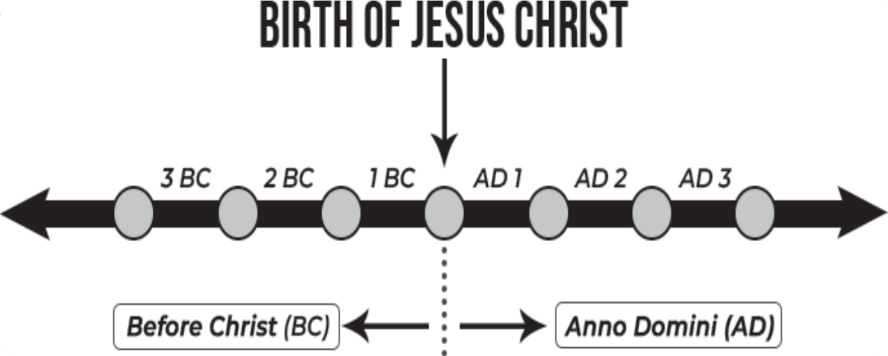
BC/BCE: Before Christ/ Before Common Era: It means those years, which came before the birth of Christ.
AD/CE: Anno Domini/Common Era: It means those years which came after the birth of the Christ. The present era we are living in also comes under AD/CE
Circa or ca or c.: Around or approximately
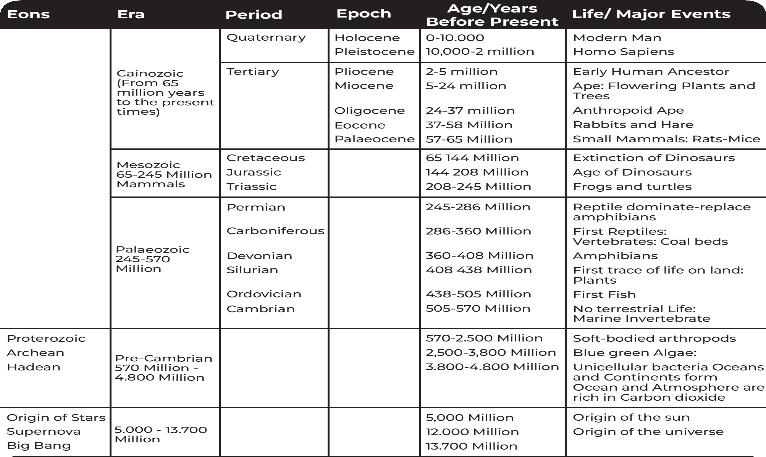
BP: Before present
Various Sources for Studying History
Geological Time Scale
Divisions of Historical Timeline
Ancient Pottery and Coins As An Indicator of Culture
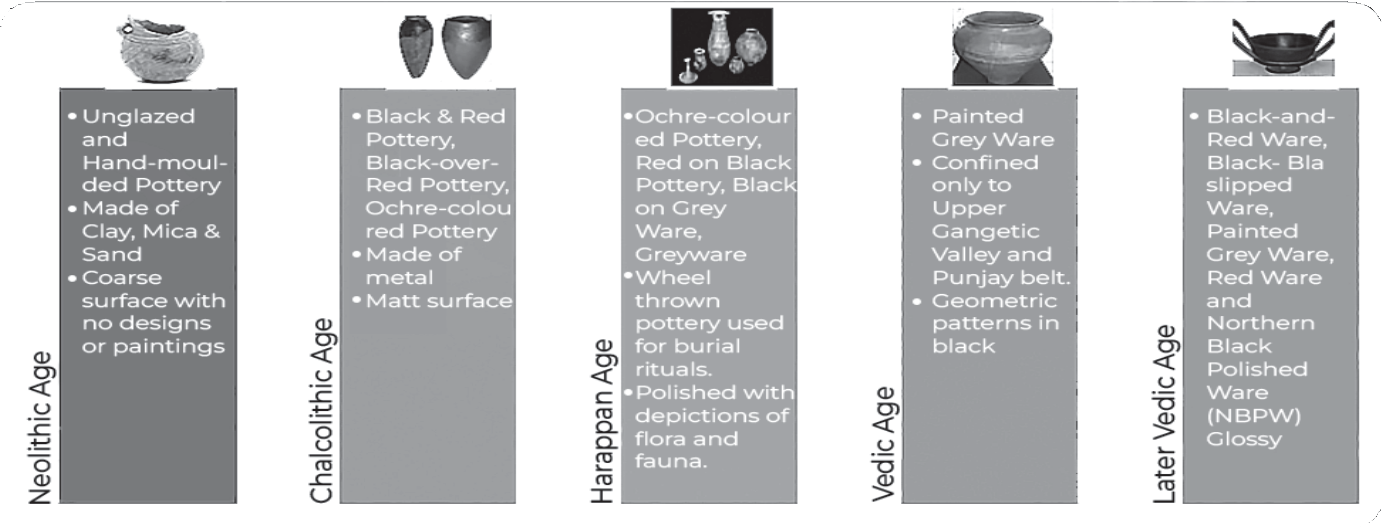
Ancient Pottery Development as an Indicator of Culture

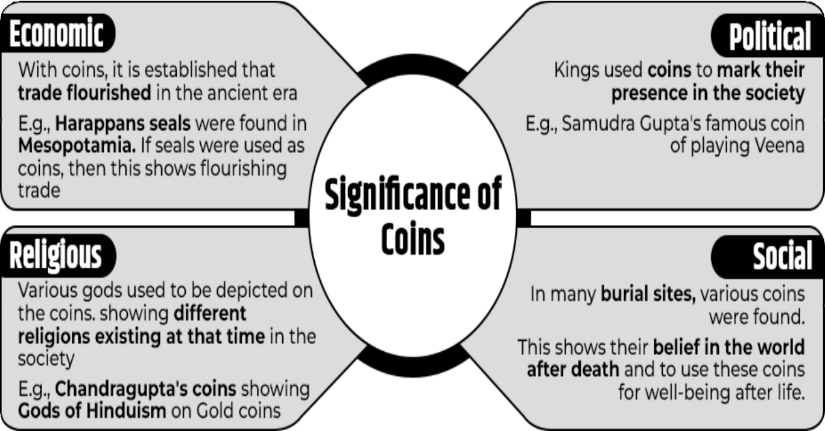
Ancient Coins
Numismatics: The study of coins is called numismatics.
• The ancient era coins were made up of metals. The technique to make paper wasn’t there during ancient era.
• The oldest coins were punch marked.
• Images of Gods and Kings were marked on the coins.
• Metals which were used to make coins: Gold, Silver, Lead and Copper.
• Indo-Greeks were the first one to issue gold coins in India at large scale
Various Sources for Studying History
3
Ancient Period Literary Sources
Ancient Period Literary Sources: Important Aspects
Writing style was developed since Harappan times i.e.,
from 2500 B.C.
We have the earliest literary sources available from the 4th century AD.
Birch bark and palm leaves were used as base to write upon.
Literary Sources
• Rig Veda: Oldest literary source and written in Vedic Sanskrit. It mostly consists of Prayers.
• Atharva Veda: Contains Prayers and magic rituals.
• Upanishads: Contains philosophical discussions.
• Mahabharata: Written by Veda Vyasa. It consists of about 100,000 verses. Also known as Jaya Samhita/Bilarata/ Satasahasari Samhita.
• Ramayana: Another epic and written by Valmiki in Sanskrit. It contains 24,000 verses.
• Buddhist texts: Folk tales belonging to Buddha’s life; written in Pali language, were known as Jatkas The three pitakas are Sutta Pitaka, Vinaya Pitaka and Abhidhamma Pitaka.
• Jain texts: Belongs to Mahavira era, written in Prakrit language. The sacred books of the Jain religion are known as Twelve Angas, Twelve Upangas, Six Chedasutras, Four Mulasutras , Two Culikkasutras.
• Dharma sutras and Shastras: They were secular literature majorly depicting laws and rules of the society.
• Arthashastra: Kautilya wrote this book; written in Sanskrit, it depicts economy and polity of the ruling class during that era.
• Sangam Literature: It convened during Pallava period. It is the congregation of Singers. Three meetings happened during this era, and this is entirely called as Sangam period. The literary texts like Silappadikaram by Ilango Adigal, Manimekalai by Chitalai Chittanar and Jeevak Chintamani by Thiruktadevar are some of the famous Sangam texts.

Various Sources for Studying History
| Autho | Text |
| Banabhatta | Harshcharita (Gives description of the Harshvardhan era) |
| Sandhyakar Nandi | Ramacharitam (Depicts the victory of Pala king Ramapala) |
| Bilhana | Vikramadevacharita (An account of Chalukuyan king Vikramaditya) |
| Kalahan | Rajatarangini (A chronicle of kings of Kashmir) |
Analysis of Various Foreigner’s Accounts
• Roman and Greek Accounts of India:
• The Histories: Herodotus who was known as Father of History described various aspects of India in this account. He explained the social, economic, cultural happenings during that time in India. He was amazed by the development of ports and trade activities in India.
• Indika: Written by Megasthenes (Father of Indian history) who was the ambassador of Selucus Nicator. He wrote a detailed account of Chandragupta Maurya’s reign. He explained that the king has maintained central authority over the entire kingdom. However, a decentralized system was also present where governors of provinces were given certain powers.
• The Periplus of Erithrean Sea: It described the trade relations between India and Roman empire. It says that India was in surplus while Europe was facing various losses while doing trade from India. The goods and products of India were immensely popular in Europe and the trade was flourishing.
• Naturalis Historia: Written by Pliny, it describes trade between India and European countries.
• Ptolemy’s Geography describes the economic relations between India and Roman era countries. Ptolemy described India as “ The sink of the world’s Gold’
• Chinese Accounts of India:
• Fu-kwo-ki: Written by Fa-Hein, it gives a detailed account of the reign of Chandragupta-II. He described that peace prevailed in the kingdom, he also gave detailed account about the religion and punishment system during Gupta empire.
Some Notable Works and Authors
•
Si-Yu-Ki: This detailed description of Harshvardhan reign was written by Hiuen Tsang.
• Various types of houses were built using wood, bricks, and dung. The city's streets were circular and often unsanitary. New cities emerged where the old ones had fallen into ruin. Prayag and Kannauj, the capital, were significant cities where he observed the assemblies.
• Nalanda, Valabhi, Jaggadala, odantapuri, vikarmshila, taxila etc. were the important centres of Buddhist learning.
• He wrote that criminal law was harsh, with punishments such as imprisonment and trial by ordeal being enforced. Despite this, the roads remained unsafe, and he was robbed on more than one occasion.
• The emperor also maintained a large and well- equipped army. In his view, the government was generous when it came to tax and revenue collection.
• Feudalism was prevalent in the society.
• Tradesmen had to pay light duties at ferries and barrier stations.
• Brahmanical system of religion was prominent, and Sanskrit was the language of the cultured classes.
• It-Sing also wrote about socio-economic aspects of Indian subcontinent. He also described social, political, cultural and religious happenings during that era. He said that varna system was very rigid and inter-caste marriage was not allowed.
• Arab Accounts of India:
• Tariq-e-Hind: Written by Al-Biruni, who came along with Mahmud of Ghazni, talks about social, religious and political happenings in India at that time. He said that Varna system was rigid and criticiqued it.
• Muruz-ul-Zahab: Written by Al Masaudi.
• Inscriptions made by Foreigners:
• Garuda Pillar Inscription: Written by Greek ambassador Heliodorous, it shows the significance of Bhagwata religion.
• Boghaz Koi inscription: It conveys the movement of Aryan tribes.


| Noted Historian | Description of Work |
| A Code of Gentoo Laws | English translation of Manusmriti, First work of Hindu Law translated to English. |
| Sir William Jones | Translated Abhigyanshakuntalam into English. |
| Charles Wilkins | Translated Bhagwadgita into English. |
| Father Hameleden (1681-1732) | A German Jesuit missionary, he was the 1st European to master Sanskrit and Malayalam. He compiled Malayalavyakarnam and Siddharoopam. |
Various Sources for Studying History 7
Role of Geographical Factors
Role Of Geographical Factors
Geographical features were crucial in shaping the development of Ancient India. They had a significant impact on economic and technological activities, as well as trade interactions with distant regions, spanning from the Harappa period to the Satavahana era.
Rivers: Rivers have been central to the establishment of various civilisations and some of the mighty empires.
The Indus Valley civilization developed along the Indus River and its tributaries.
The Vedas mention ancient rivers like the Saraswati and the Ganga. Vedic civilization thrived along the rivers of Punjab before gradually shifting eastward to the Ganga- Yamuna river system.
The fertile plains of the Ganga River system supported agricultural surplus, driving social, political, and economic growth.
Rivers were also vital for transportation, facilitating the movement of armies and goods. For instance, Pataliputra was referred to as Jaladurga (water fort) due to its river- based transport system.
In later periods, rivers continued to play a crucial role in trade and transportation Mountains:
The mountain ranges, including the Himalayas, served as natural barriers against foreign invasions and also created a cultural divide.
• Kautilya’s Arthashastra mentions that the mountain ranges were sources for extracting various resources.
• The Vindhyas served as a natural cultural divide between North and South India, fostering the growth of distinct and thriving cultures in both regions.
Land and Sea trade routes:
• Trade routes like Uttarapatha and Dakshinapatha played a key role in fostering both economic and cultural exchanges.
• The vast oceans connected ports, enhancing trade and facilitating economic, cultural, and political interactions.
• These land and sea routes also contributed to the spread of diverse ideas, philosophies, and religions.
• For instance, Buddhism spread along the Silk Routes to Central Asia and China, while sea trade routes carried it to Sri Lanka and Southeast Asia.
Forests: The forest resources supplied abundant timber, which was crucial for building palaces and contributed to political growth.
Passes: Several key passes have facilitated continuous interaction with Western, Central, and Northern Asia throughout history.
These passes also allowed foreign invasions into India, particularly from the northwest. One notable example is the Khyber Pass, which was used by Alexander the Great.


Various Sources for Studying History
Monsoon: The monsoon played a key role in establishing trade relations with the Arabs and Graeco-Romans. This trade, in turn, fostered cultural exchanges between the regions. In conclusion, the Indian subcontinent, with its distinct natural barriers, serves as a prime example of how geography
| Neolithic Age | Unglazed and Hand-moulded Pottery |
| Chalcolithic Age | Black & Red Pottery, Black-over-Red Pottery, Ochre-coloured Pottery |
| Harappan Age | Ochre-coloured Pottery, Red on Black Pottery, Black on Grey Ware, Greyware |
| Vedic Age | Painted Grey Ware |
| Inscriptions | Description |
| Aihole Inscription | Written by Ravi Kirti; Depicts winning of Pulkesin-II |
| Prayag Prashasti | Belongs to Lord Buddha |
| Piprahwa Vase Inscription | Written by Harishen; court poet of Samudra Gupta |
In conclusion, the Indian subcontinent, with its distinct natural barriers, serves as a prime example of how geography shaped the development of this ancient civilization.