Crisis Vs Disaster
Crisis vs Disaster
Meaning of the term ‘crisis’ is ‘an unstable or crucial time or state of affairs in which a decisive change is impending; especially, one with the distinct possibility of a highly undesirable outcome’.
In the context of public policy, an event or occurrence can be termed as a crisis situation if it poses a threat to human life and property or causes or threatens to cause large-scale disruption of normal life.
Thus, ‘crisis’ may be defined as “an emergency situation arising out of natural or human activity which poses a threat to human life and property or leads to large scale disruption of normal life”.
This emergency situation may arise suddenly or it may be an outcome of a simmering problem or issue, which was not ‘nipped in the bud.’
The United Nations defines humanitarian crisis as “an event or series of events that represents a critical threat to the health, safety, security, or well-being of a community or other large group of people usually over a wider area.
A crisis may degenerate into a disaster if it is not properly managed resulting in avoidable loss of human life and property on a large scale.
Hazard
Hazard
Hazard is defined as a phenomenon or natural condition having the potential of causing loss of lives, injury and destruction of properties. Overall, it has the possibility of economic disruptions and environmental damage.
• Hazard is called a disaster only when it really affects a certain population.
• A hazard, as defined by the UNISDR, refers to any dangerous phenomenon, substance, human activity, or condition that has the potential to cause loss of life, injuries, health issues, property damage, disruption
of livelihoods and essential services, social instability, economic setbacks, or environmental harm.
• Natural Hazards A natural hazard is a naturally occurring process or phenomenon that can result in fatalities, injuries, health complications, destruction of property, loss of livelihoods and essential services, economic and social disturbances, or environmental degradation.
• Natural hazards fall under the broader category of hazards and refer to both actual hazardous events and pre-existing conditions that could lead to future disasters. These events vary based on their intensity, speed of onset, duration and geographical impact.
•
For instance, earthquakes typically occur suddenly and affect limited areas, whereas droughts develop gradually, persist for extended periods, and cover vast regions.
• Sometimes, hazards occur in combination, such as flooding triggered by a hurricane or a tsunami resulting from an earthquake.
Classification of Natural Hazards As Per Desinventar Sendai
Classification of Natural Hazards as per DesInventar Sendai
DesInventar Sendai is an upgraded version of a well- established and widely utilized software that incorporates all necessary indicators and data for tracking progress on Targets A to D of the Sendai Framework for Disaster Risk Reduction. These targets align with corresponding indicators from Sustainable Development Goals (SDGs) under Goals 1, 11, and 13.
The Disaster Information Management System within DesInventar categorizes disasters resulting from natural hazards into five primary groups and serves as a global tool for monitoring the Sendai Framework targets.
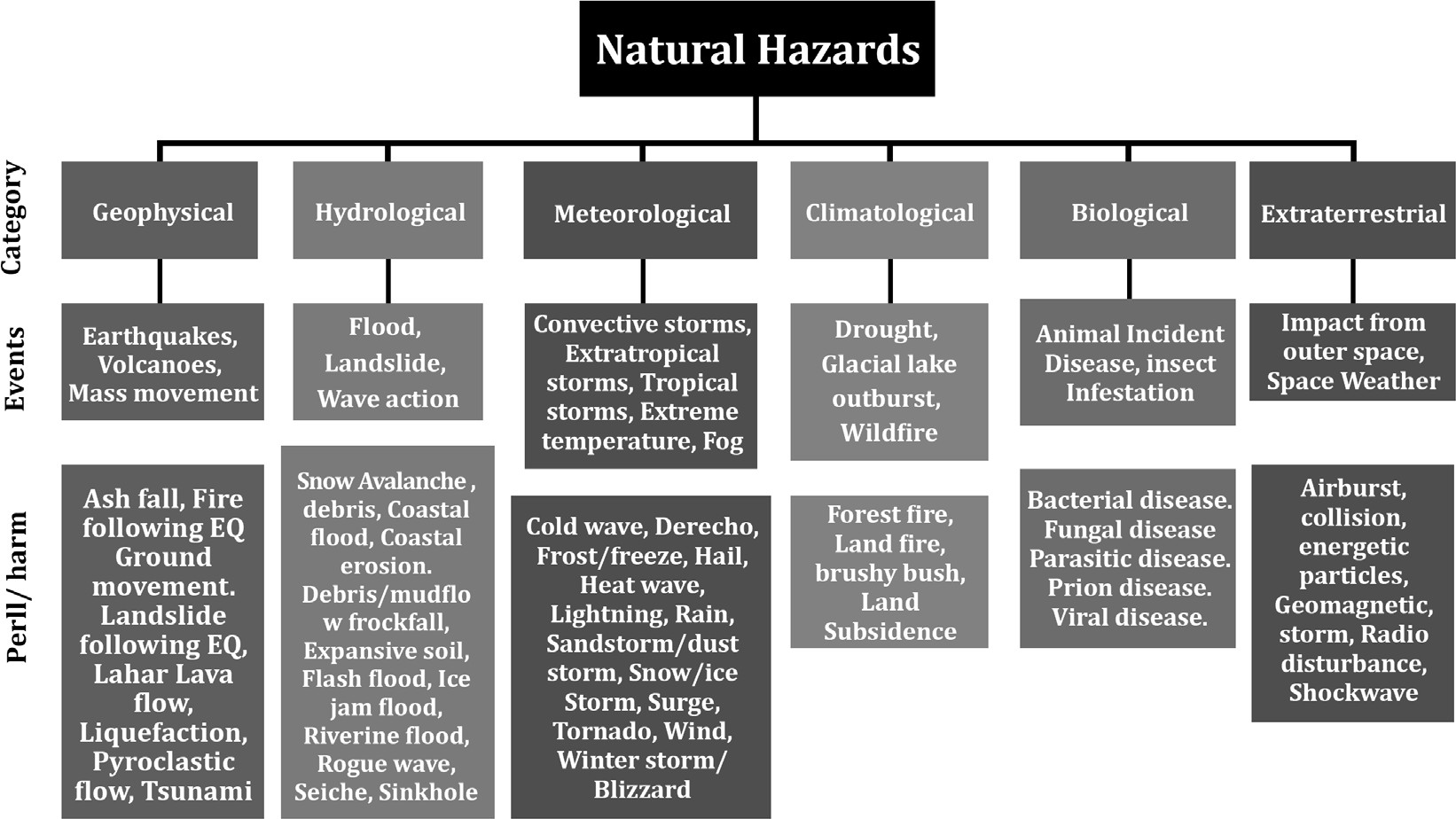
Figure: categories of natural hazards
Natural Processes or Natural Hazards: Natural processes, also known as natural hazards, serve as the primary triggers for natural disasters. These hazards are generally classified into six broad categories, each defined and described as follows:
Geophysical: Also referred to as geological hazards, these originate from the Earth's solid crust. Examples include earthquakes, volcanic eruptions, and dry mass movements.
Hydrological: This category pertains to hazards linked to the occurrence, movement, and distribution of freshwater and saltwater, both on and beneath the Earth's surface.
Floods, landslides, and wave action (including scour) are key events associated with this type of hazard.
Meteorological: These are short-duration events lasting from a few minutes to several days, caused by atmospheric conditions at micro- (<1 km) to meso-scale (2–2000 km) levels. Global climate change can amplify their effects.
Convective storms (e.g., tornadoes), extra-tropical storms (30°–60° latitude), tropical storms (within 30° latitude), fog, and sudden temperature extremes fall under this category.
Climatological: This hazard is linked to climate variability over extended periods, from intra-seasonal to multi-decade timescales, occurring at meso- to macro- scales (>2000 km).
It includes droughts, wildfires, glacial movements, and glacial lake outbursts.
Biological: These hazards originate from biological substances such as toxins, molds, or vectors carrying infectious diseases that pose risks to humans and other living organisms.
Examples include locust swarms, algal blooms, venomous wildlife infestations, and vector- borne diseases like plague, malaria, dengue, and COVID-19.
Extraterrestrial: This hazard arises from sources beyond Earth's atmosphere, including asteroid, meteorite, and comet residues, as well as human-made space debris that enter the atmosphere or impact the Earth's surface.
It may also result from solar flares and interplanetary disturbances, which can disrupt Earth's magnetosphere, thermosphere, or ionosphere
Various Types of Natural Hazards
Various Types of Natural Hazards
Hydrometeorological Hazard: This refers to atmospheric, hydrological, or oceanographic processes or phenomena that have the potential to cause loss of life, injuries, health issues, property damage, livelihood disruptions, economic and social instability, or environmental degradation.
Hydrological: Events resulting from deviations in the natural water cycle or water body overflows due to wind set-up.
Meteorological: Events caused by atmospheric processes occurring over short timeframes, ranging from minutes to days, and at small to meso-scales.
Climatological: Events linked to long-term climate processes that span from intra-seasonal variations to multi-decadal climate shifts.
Common hydrometeorological hazards include tropical cyclones (hurricanes, typhoons), thunderstorms, hailstorms, tornadoes, blizzards, heavy snowfall, avalanches, coastal storm surges, floods (including flash floods), droughts, heatwaves, and cold spells.
These conditions can also contribute to secondary hazards such as landslides, wildfires, locust infestations, disease outbreaks, and the transport of toxic substances or volcanic ash.
Geological Hazard: A natural process or event of geological origin that can lead to fatalities, injuries, health complications, property destruction, disruption of livelihoods and essential services, economic turmoil, or environmental harm.
Geological hazards encompass internal Earth processes such as earthquakes, volcanic eruptions, and related geophysical occurrences like mass movements, landslides, rockslides, surface collapses, and mud or debris flows.
Hydrometeorological factors often influence these geological processes.
Tsunamis, although triggered by underwater earthquakes or geological events, are primarily oceanic processes that manifest as coastal water- related hazards.
Biological Hazard: A hazard originating from organic sources or biological vectors, including exposure to pathogenic microorganisms, toxins, or bioactive substances, which can result in illness, injury, death, environmental damage, or socio-economic disruption.
Examples include epidemic outbreaks, plant and animal contagions, insect infestations, and animal plagues.
Socio-natural Hazard: These hazards arise due to the interaction between natural hazards and human- induced environmental degradation. Increased frequency or intensity of events like landslides, flooding, land subsidence, and drought can result from the overexploitation or deterioration of land and natural resources.
This term describes situations where human activities contribute to an increased frequency or intensity of certain hazards beyond their natural occurrence.
Research indicates a rising burden of disasters linked to these hazards. Effective land and environmental resource management can help mitigate and prevent socio-natural hazards.
Technological Hazard: These hazards stem from technological or industrial activities, including accidents, hazardous procedures, infrastructure failures, or specific human actions that may lead to loss of life, injuries, health impacts, property destruction, livelihood
disruptions, economic instability, or environmental harm.
Examples include industrial pollution, nuclear radiation, toxic waste contamination, dam failures, transportation accidents, factory explosions, fires,
and chemical spills.
In some cases, technological hazards may be triggered by the effects of natural hazard events.
Disaster
Disaster
Disaster: According to the UNISDR, a disaster is a significant disruption in the functioning of a society, leading to extensive human, material, or environmental
losses that surpass the affected community's ability to manage using its own resources.
• Disasters are commonly understood as the outcome of multiple interacting factors, including:
• The type of hazard involved,
• The level of exposure to the hazard,
• The existing vulnerabilities within the affected area, and
• The capacity or preparedness measures in place to mitigate or respond to the adverse impacts.

Table: Classification of Natural Disasters
The consequences of disasters may involve loss of life, injuries, and diseases, along with various adverse effects on physical, mental, and social well-being. Additionally, disasters can lead to property damage, asset destruction, disruption of essential services, economic and social
instability and environmental deterioration.

Figure: Dimensions of Disaster Risk
•
• A disaster takes place when a hazard affects vulnerable individuals or communities in a specific area. It occurs when their limited ability to mitigate the potential adverse effects exceeds their capacity to respond and recover.
DEFINITION OF DISASTER AS PER DISASTER MANAGEMENT ACT, 2005
A catastrophe, mishap, calamity, or severe event occurring in any region due to natural or human-induced causes, accidents, or negligence, leading to significant loss of life, human suffering, property damage or destruction, and environmental harm. Such an event is of such scale or severity that it exceeds the affected community’s ability to manage and respond effectively.

Figure: Basic Categories of Disasters
• Capacity: Refers to the combined strengths, attributes, and resources available within a community, society, or organization that can be utilized to achieve specific objectives.
• It encompasses infrastructure, physical resources, institutions, societal coping mechanisms, human knowledge, skills and collective attributes such as social networks, leadership, and management. Capacity is also sometimes referred to as ‘capability’.
• Capacity assessment is the process of evaluating a group's existing capabilities in relation to set goals, identifying gaps that require further action.
(Natural Hazard × Vulnerability Risk)
Capacity
= DISASTER RISK

Figure: Disaster Risk Equation
Levels of Disasters
Levels of Disasters
Disasters are mainly caused by natural hazards, human activities, or a combination of both. Human-induced factors can significantly worsen the effects of natural disasters. On a global scale, the UN Intergovernmental Panel on Climate Change (IPCC) has reported that human-caused climate change has notably increased the frequency and severity of extreme weather events.
Disaster management and planning at different levels should consider the vulnerability of disaster-prone areas and assess the ability of authorities to respond and manage the situation effectively.
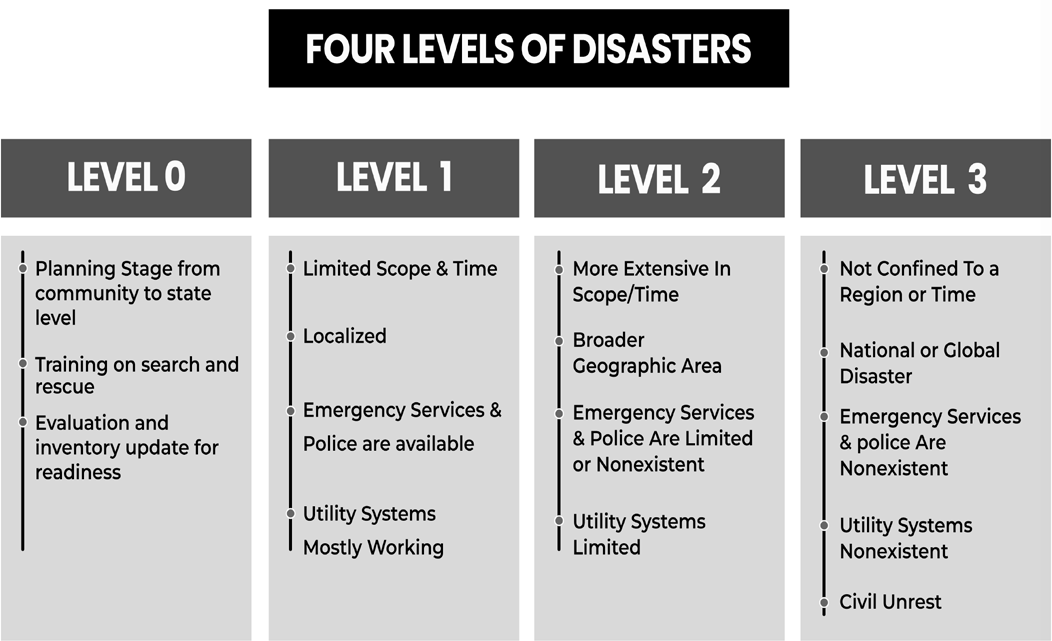
Figure: Levels of Disasters
The High Power Committee on Disaster Management, in its 2001 report, classified disaster situations into L0, L1, L2 and L4.
Level L0: This refers to the phase of normalcy, which should be utilized for disaster risk reduction efforts.
Level L1: A minor disaster that can be effectively managed using resources and capabilities at the district level. However, state authorities remain prepared to assist if necessary.
Level L2: Represents moderate disaster situations that require resource mobilization and intervention at the state level, including the deployment of state agencies for disaster management. Central agencies must stay on alert for immediate support if needed.
Level L3: Corresponds to a catastrophic or large-scale disaster that exceeds the capacity of state and district authorities.
• The classification of disaster situations from L0 to L3 is not mentioned in the Disaster Management Act of 2005. Additionally, the Act does not include provisions for designating any disaster as a "national calamity" or a "national disaster."
Slow Onset and Rapid Onset Disasters
Slow Onset and Rapid Onset Disasters
Disasters can be categorized into slow onset disasters and rapid onset disasters.
• Slow onset disasters, also referred to as creeping emergencies, develop gradually over time. Since prevention plays a crucial role in the disaster management cycle, slow onset disasters such as global warming and desertification must be adequately addressed in disaster preparedness. These events progressively weaken ecosystems and increase society’s vulnerability to natural hazards.
• Examples of slow onset disasters include climate change (global warming), desertification, soil degradation, and droughts.
• Climate change is described as a statistically significant shift in the average state of the climate or its variability, persisting for decades or longer. This change can result from natural processes, external influences, or human activities that alter atmospheric composition or land use.
• Global warming, primarily driven by the greenhouse effect, is a major contributor to climate change. It causes glacier melting, rising sea levels and threatens low-lying coastal areas such as the Sundarbans, Bangladesh, and the Maldives.
• Over the past century, global temperatures have increased by approximately 0.6 degrees Celsius.
• Historically, climate changes were triggered by variations in Earth’s rotational angle and distance from the Sun. However, the current trend is significantly influenced by human-generated greenhouse gases.
• Recent instances of unexpected and unseasonal rainfall and droughts have been linked to global warming. Addressing this issue requires urgent and coordinated international action.
• Unlike rapid onset disasters, the effects of slow onset disasters are not immediately visible. However, over time, they erode societies’ ability to sustain themselves. Development policies and their implementation significantly influence the occurrence of slow onset disasters. Rapid onset disasters, on the other hand, occur suddenly and have immediate impacts. Examples include earthquakes, cyclones, floods, and tsunamis.
Categories of Disasters
Categories of Disasters
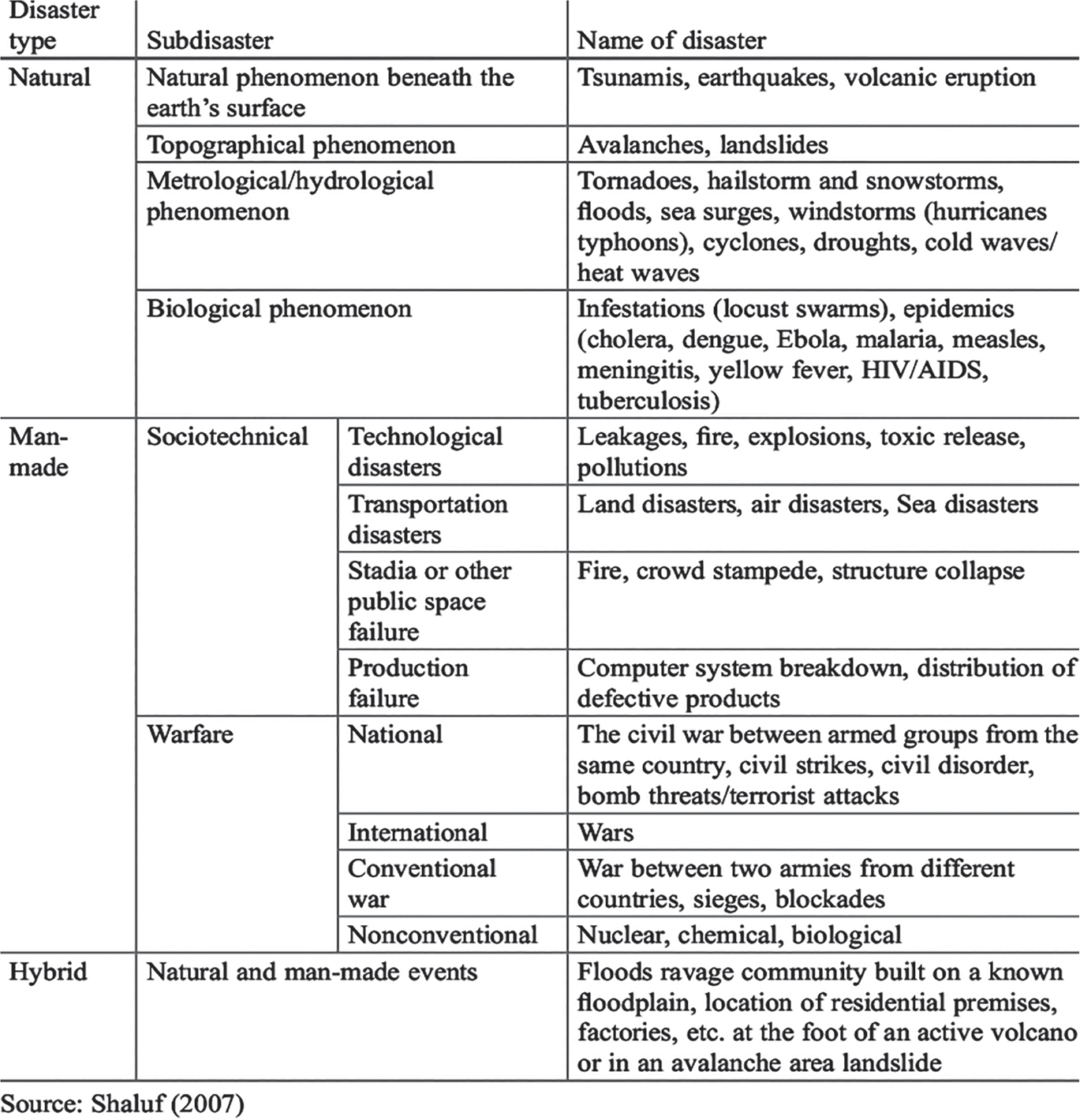
Disasters are classified into Natural Disasters, Man‐Made Disasters, and Hybrid Disasters. There are also subsequent disasters apart from the above types of disasters.

Figure: Broad Categories of Disasters
• Natural Disasters are devastating events caused by natural hazards, which stem from internal (subsurface), external (topographical), meteorological/ hydrological, and biological factors. These disasters occur beyond human control and are often referred to as ‘Acts of God’.
• Man-made Disasters arise due to human actions or decisions and can be either sudden or prolonged.
• Long-term disasters are typically linked to national or international conflicts.
• Sudden man-made disasters, also called socio- technical disasters, occur in four key organizational settings:
• Industrial accidents, such as plant and factory failures.
• Transport system failures.
• Accidents in public spaces.
• Production failures affecting goods or services.
• Hybrid Disasters are a combination of natural phenomena and human actions. The common factor among all disasters is their intensity and impact on people, infrastructure, and the environment.
• Secondary Disasters: Sometimes, a natural or man- made disaster can lead to subsequent disasters, such as mass displacement of people or haze formation. These follow-up disasters have significant social and economic consequences.
Natural Disasters
Natural Disasters
• Geophysical
Main Event: Earthquake/Mass movement of earth materials
Secondary Disasters:
Landslides occurring after an earthquake
Urban fires initiated by earthquakes
Liquefaction: the process by which partially water- saturated soil loses its solidity and behaves like a liquid due to an earthquake
Movement of earth materials, typically down slopes
Surface displacement of earthen materials as a result of ground shaking from earthquakes
Examples: 2001 Gujarat Earthquake: Magnitude 7.7; triggered urban fires and ground fissures, 2005 Kashmir Earthquake: Magnitude 7.6; caused massive landslides in hilly regions, 2015 Nepal–India Border Earthquake (Uttarakhand & Bihar impact): Triggered landslides in Himalayan terrain.
Main Event: Volcano Secondary Disaster:
Displacement of surface materials due to ground shaking
caused by volcanic eruptions.
• A geological phenomenon occurring near an opening or vent on the Earth's surface, involving the eruption of lava, ash, hot vapor, gases, and pyroclastic material.
• Deposition of volcanic ash.
• Lahar – A flow of hot or cold earthen material down the slopes of a volcano, occurring either during or between eruptions.
• Lava flow.
• Pyroclastic flow – A high-speed surge of extremely hot gases, ash, and other volcanic materials, exceeding 1,000 degrees Celsius and traveling at speeds over 700 km/h down the volcano's slopes during an eruption.
Examples: Barren Island Volcano (Andaman Sea, Andaman & Nicobar Islands):
Only active volcano in India, Recent eruptions (2021, 2022) produced lava flows, ash clouds, and pyroclastic activity.
Narcondam Volcano (Andaman & Nicobar Islands):
Dormant; no recent eruptions.
Main Event: Tsunami Secondary Disaster:
• Tsunamis are challenging to classify, as they are
primarily an oceanic phenomenon that manifests as a coastal water-related hazard.
A sequence of waves with long wavelengths in deep ocean waters, generated by the displacement of large volumes of water due to underwater earthquakes, volcanic eruptions, or landslides.
Tsunami waves move rapidly across the ocean but slow down upon reaching shallow waters, causing the waves to increase in height and become steeper.
Example: The 2004 Indian Ocean tsunami struck India’s east coast (Tamil Nadu, Andhra Pradesh, Andaman & Nicobar), caused by an underwater earthquake, leading to massive loss of life and coastal damage.
• Hydrological
Main Event: Floods, Landslides, Wave Action Secondary Disaster:
An avalanche is a rapid descent of a large mass of loosened
snow, ice, or earth material down a mountainside due to gravitational force.
• Coastal erosion refers to the temporary or permanent loss of sediments or landmass along coastal areas due to wave action, wind forces, or human activities.
• Coastal flooding occurs when water levels along the coast rise above normal due to tidal variations or storms, leading to inundation that may persist for days or even weeks.
• Debris flow, mudflow, and rockfall are types of landslides triggered by heavy rainfall or the rapid melting of snow and ice, causing large volumes of vegetation, mud, or rocks to move downslope due to gravity.
• A flash flood is a hydrological event in which heavy or excessive rainfall within a short period generates immediate runoff, leading to flooding within minutes or a few hours after the rainfall.
• A flood is a general term for water overflowing onto normally dry land, including riverine flooding (when water spills over stream channels), coastal flooding (higher-than-normal water levels along coasts, lakes, or reservoirs), and flash floods (localized water accumulation at or near the site of rainfall).
• Wave action refers to wind-driven surface waves that form on bodies of water such as oceans, rivers, and lakes. The size and intensity of these waves depend on wind strength and the distance over which they travel (fetch).
Examples: Floods – Kerala (2018), Assam (2022); Landslides
– Malin, Maharashtra (2014), Kedarnath (2013); Coastal flooding – Cyclone Yaas (2021).
• Meteorological
Main event: Hazards are caused by short-lived, small- to medium-scale extreme weather and atmospheric conditions that can persist for minutes to several days.
Secondary Disaster:
• Cyclone, storm surge, tornado, convective storm, extratropical storm, and strong winds.
• Cold wave, derecho (a widespread, long-lasting windstorm with straight-line winds).
• Extreme temperature variations, fog, frost, freezing conditions, and hailstorms.
• Heatwave.
• Lightning and heavy rainfall.
• Sandstorm and dust storm.
• Winter storm and blizzard.
Examples: 2005 Mumbai Floods – >1,000 deaths from heavy rainfall; 2015 Andhra Pradesh & Telangana Heatwave –
~2,000 deaths; 2020 Cyclone Amphan – ~100 deaths and ₹1 lakh crore losses.
• Climatological Hazards
Main Event: Extreme or unusual weather patterns associated with long-term, meso- to macro-scale atmospheric processes, spanning from intra-seasonal to multi-decadal climate variability.
Secondary Disaster:
• Drought
• Extreme hot/cold conditions
• Forest/Wildfire
• Glacial Lake Outburst Flood (GLOF)
• Subsidence
• Biological
Examples: Drought – Maharashtra, Karnataka, Telangana, Andhra Pradesh (2015–16), affecting ~330 million people; GLOF – Chamoli, Uttarakhand (2021), >200 deaths and major infrastructure loss.
Main Event: Exposure to germs and toxic substances
Secondary Disaster:
• Epidemics: viral, bacterial, parasitic, fungal, or prion (or misfolded protein agent) infections
• Insect infestations
• Animal stampedes
Examples of biological disasters in India: COVID-19 Pandemic (2020–22) – 4 crore+ cases, 5 lakh+ deaths, economic and health crisis; Locust Attack (2020) – major crop destruction in Rajasthan, Gujarat, MP, UP.
Man-made Disasters
Man-Made Disasters
Man-made disasters are non-natural catastrophic events that can either occur suddenly or develop over time. Sudden man-made disasters include structural failures, such as building or mine collapses, when they happen independently without any external influence. Additionally, disasters related to air, land, and sea transportation are also categorized as man-made, as per the International Red Cross.
Industrial and Chemical Disasters
Industrial Disasters: These disasters arise due to chemical, mechanical, civil, electrical, or other operational failures
caused by accidents, negligence, or incompetence within an industrial facility. Such incidents can lead to damage within the plant or extend beyond its premises, impacting lives, property, and the environment.
Chemical Disasters: These disasters result from emissions, fires, or explosions involving hazardous chemicals during industrial operations such as handling, storage, or transportation. They can also be triggered by natural events, leading to severe consequences both within and outside the affected facility, potentially causing loss of life, property damage, and environmental harm.
Examples: Ahmedabad Chemical Factory Blast (2022), Hapur Chemical Plant Explosion (2022), GAIL Pipeline Explosion (2014), and the Bhopal Gas Tragedy (1984), among others.
Stampede
• In the context of a stampede, the terms "mob" or "crowd" describe a large, active, and polarized group of people that is diverse yet exhibits a collective mindset. The defining characteristics of such a gathering include uniformity in thought and action among participants, along with impulsive and often irrational behavior. Stampede incidents can arise in various social and cultural settings.
• Notable Stampedes in India:
• Ram Janki Temple, Kunda (2010)
• Sabarimala, Kerala (2011)
• Mata Vaishno Devi Shrine, Jammu and Kashmir
(2022)
• Maha Kumbh Mela (2025)
Road Accidents
• With the rapid expansion of road transportation, there has been a simultaneous increase in road accidents, presenting a significant challenge. These accidents result in immense human suffering and economic losses, including premature deaths, injuries, and reduced productivity. The societal impact of road accident-related fatalities and injuries is often overlooked. Annually, approximately 1.5 lakh people lose their lives on Indian roads, averaging 1,130 accidents and 422 deaths per day, or roughly 47 accidents and 18 deaths per hour.
Rail Accidents
• A railway disaster refers to a severe train accident or a major untoward incident occurring within railway premises or due to railway operations. Such events, caused by either natural or human-made factors, can result in significant casualties, serious injuries, and substantial disruptions to railway services. Addressing these situations often requires large-scale intervention from both government and private organizations.
Examples of Major Rail Accidents in India:
• Triple-train collision in Odisha (2023) – Nearly 300 fatalities.
• Jnaneswari Express derailment (2010)
•
Rafiganj train wreck (2002)
Air Accidents
• Air accidents typically fall into four categories:
• Mid-air collisions
• Forced landings
• Crashes due to technical malfunctions
• Crashes in mountainous terrains caused by poor visibility
Although air accidents can occur anywhere and at any time, the 30-40 km radius around airports is considered particularly vulnerable due to congested flight paths. Statistics show that most air accidents occur during takeoff or landing. Additionally, crashes in remote or inaccessible areas such as forests, mountains, and open seas pose significant challenges for rescue operations.
Examples of Major Air Accidents in India:
• Kerala plane crash (2020)
• Mangalore air crash (2010)
• Mi-17V5 helicopter crash (2021)
Mine Disasters
Under the Mines Act of 1965, a disaster is defined as an incident leading to the loss of more than ten lives. Mining accidents, which frequently occur during the extraction of minerals, especially coal and hard rock mining, result in numerous fatalities worldwide every year.
Notable Mining Disasters in India:
Chasnalla Colliery disaster (1975) – A sudden water inrush from an abandoned mine flooded an operational deep shaft, leading to 375 fatalities.
Meghalaya mining accident (2018)
Epidemics
• Infectious diseases pose a significant public health challenge in India. While certain diseases like tuberculosis and malaria are endemic, meaning they are consistently present in specific regions, others occasionally reach epidemic proportions.
• An epidemic refers to a sudden surge in the number of disease cases within a specific population, surpassing the expected levels. These outbreaks strain public health resources, disrupt routine healthcare services, and lead to substantial economic losses.
• Common Epidemic Diseases:
• Viral infections – Meningitis, measles, dengue, polio,
typhoid fever, etc.
• Bacterial infections – Cholera, diarrhea, etc.
• Key Factors Contributing to Epidemics:
• Lack of clean and safe drinking water
• Contaminated water sources
• Poor sanitation and hygiene awareness
• Consumption of unhygienic food
• Overcrowding and biological factors influenced by ecological conditions
• Notable Epidemic Outbreaks in India:
• Plague outbreak (1994) – After nearly 25 years without reported cases, a major plague outbreak occurred in Beed district (Maharashtra) and Surat (Gujarat), causing an economic loss estimated at $1.7 billion.
• Coronavirus pandemic (2019)** – A global health
crisis originating in late 2019.
Tomato flu outbreak (2022) – First detected in Kollam district, Kerala
Hybrid Disasters
Hybrid Disasters
There are disasters that result from both human error and natural forces. This type of disaster is known as a hybrid disaster. Examples of hybrid disasters can be summarized as follows:
The extensive clearing of jungles causing soil erosion and subsequently heavy rain causing landslides;
The location of residential areas, factories, etc., at the
foot of an active volcano, or in an avalanche area; and
Floodplain disasters.
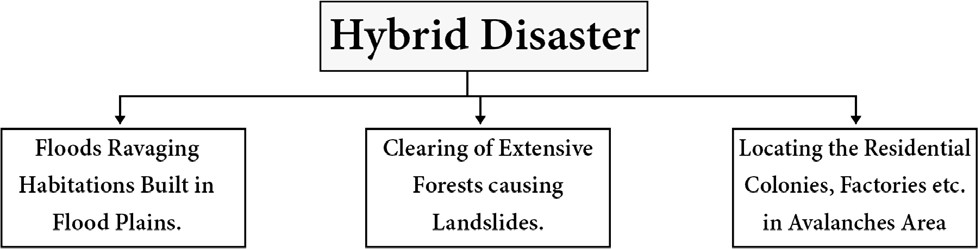
Figure: Examples of Hybrid Disaster
Floods and Their Impact
Throughout history, human settlements have flourished near waterways due to the numerous advantages they provide. These include efficient transportation, thriving commerce, energy generation, reliable water supply, fertile soil for agriculture, and effective waste disposal. However, despite these benefits, residing near rivers also comes with significant risks. Among all natural hazards, floods have been responsible for the highest loss of life and property, causing widespread destruction and displacing numerous families and communities.
• Example: Alexander County in the United States experienced severe flood consequences. It was reported that approximately 417 residential and commercial structures were located within the floodplain, with an estimated population of 1,376 at risk. The potential damages from a catastrophic 100-year flood event could include:
• Structural damage to buildings and infrastructure
•
Non-structural damage such as destruction of vehicles, boats, and other assets
• Relocation costs for displaced residents
• Loss of wages due to disrupted economic activities
Subsequent Disasters and Their Impacts
Subsequent Disasters and Their Impacts
According to the International Federation of Red Cross and Red Crescent Societies (2003), subsequent disasters are those that arise as a consequence of either natural or human-induced disasters. These disasters can be classified into different categories based on their causes and effects.
• Flood-Related Subsequent Disasters: Heavy rainfall and flooding can lead to further disasters, such as landslides and dam failures.
• Dam Failure: A dam can collapse due to multiple factors, including earthquakes, nearby oil drilling, or structural defects in its construction.
• Earth dams are particularly vulnerable, as excessive rainfall can cause reservoirs to overflow. When water spills over the top, it erodes the dam, creating deep channels that weaken the structure, leading to complete failure. The sudden release of water from a collapsed dam can devastate low-lying villages, causing severe casualties and destruction.
• Forest and Wildfire-Related Subsequent Disasters: Forest fires result in significant economic, environmental, and social losses by destroying timber, agriculture, and wildlife. They may be triggered by natural causes such as volcanic eruptions and lightning or human activities like land clearing for agriculture.
• Haze: One of the major secondary disasters caused by forest fires is haze, a dense atmospheric aerosol concentration that obscures visibility and distorts scenes.
• Historical Example: From September to November 1997, several Southeast Asian countries, including Malaysia, Singapore, Brunei, the Philippines, Thailand, and Indonesia, experienced extreme air pollution due to large-scale forest fires in Indonesia. These fires were primarily caused by slash-and-burn agricultural practices used by small-scale farmers and commercial plantations of rubber and palm oil.
• Displacement of Populations: The number of displaced
individuals worldwide has consistently increased over the past decade. This population doubles every 7–8 years, with no signs of decline. Currently, around 37 million people are displaced, having fled their homes due to wars, economic struggles, or natural disasters.
• Internally Displaced Persons (IDPs): Over 22 million people remain displaced within their own country due to armed conflict, violence, human rights violations, or disasters.
• Refugees and Asylum Seekers: Approximately 15 million refugees have been forced to leave their home country due to conflicts or, increasingly, natural disasters.
• Migrants: A significant yet often overlooked group, migrants are individuals displaced by reasons other than armed conflict, such as natural disasters, economic hardships, or territorial changes.
Differences Between Natural Hazard and Disaster
Differences between Natural Hazard and Disaster
Strictly speaking, there is no such thing as a natural disaster, but there are natural hazards, such as cyclones and earthquakes.
The difference between a hazard and a disaster is an important one. A disaster takes place when a community is affected by a hazard (usually defined as an event and even psychological factors that shape people’s life and that overwhelms that community’s capacity to cope).
In other words, the impact of the disaster is determined by the extent of a community’s vulnerability to the hazard. This vulnerability is not natural; it arises from human factors. It is shaped by economic, social, cultural, institutional, and political conditions, as well as the environment in which people live.
| Natural Hazard | Disaste |
| 1. Hazards are dangerous physical conditions or events. | 1. Most of the disasters occur rapidly, instantaneously and indiscriminately. |
| 2. Hazards have the potential of damaging different forms of lives. | 2. Disasters are largely viewed from a human perspective causing severe damage to human life and property. |
| 3. Hazard represents a latent threat to damage biotic and abiotic components of the environment. | 3. Disaster disrupts the normal functioning of society and the physical environment. |
| 4. Hazards may or may not turn into disasters. | 4. All disasters cause damage to property and loss of lives. A large number of people are affected. |
| 5. External aid is not required to damage biotic and abiotic components of the environment. | 5. It affects the society and socio, economic and physical environment to such an extent that external aid becomes necessary. |
| 6. Earthquakes, floods, cyclones, volcanic eruptions, landslides, droughts etc are called natural hazards before they cause loss of life and damage to property. | 6. Earthquakes, floods, cyclones, volcanic eruptions, landslides, droughts etc are called natural disasters after they cause loss of life and damage to property. |
| 7. People are not affected. | 7. People are affected. |
| 8. Hazards also occur in areas not occupied by human beings. | 8. Hazards turn into disasters when they occur in the inhabited areas with infrastructures, buildings, telecommunications etc. |
| 9. Hazards are processes of the genesis of extreme events. | 9. Disasters are the responses to the aftermath of natural hazards. |
Theories of Origin About Natural Disasters
Theories of Origin about Natural Disasters
Theories of origin of disasters have evolved over time, showing advancements in human understanding of the physical natural phenomena and their interaction with the social systems and infrastructure built by humankind. An understanding of these theories is necessary for natural disaster planning, preparedness and mitigation.Four major theories of disaster include:

Figure: Theoretical Paradigms on Natural Disasters
• Disasters as Divine Retribution – An Act of God: Historically, disasters have often been perceived as divine punishment for human misdeeds, a belief still present in some communities today.
• A recent study confirmed that many people across the world continue to see disasters as acts of God, and such beliefs tend to be reinforced after a major catastrophe.
• This fatalistic approach leads individuals to accept the devastating consequences as inevitable, discouraging proactive disaster preparedness and mitigation efforts.
• The lack of preparedness and poor land-use planning in many regions may stem from this belief.
• However, since the 18th century, experts in disaster risk management (DRM) have progressively distanced themselves from this perception.
• Disasters as Physical Events – An Act of Nature: With advancements in scientific thought following the Renaissance, the view of disasters shifted from being supernatural to being explained by natural forces.
• The Lisbon earthquake of 1755 was one of the earliest disasters to prompt a shift toward the understanding of disasters as natural, geophysical events rather than divine punishment.
• While this perspective was widely accepted in the early 20th century, it merely replaced divine will with the forces of nature as the root cause.
• This approach led to engineering solutions to counteract natural disasters, such as:
• Dams in the Middle East, dating back 4,000 years
• Earthquake-resistant structures in China, built around 2,000 years ago
•
However, despite engineering advancements, the growing loss of human life and economic damage led to the realization that disasters were not solely caused by nature but also by human activity and how societies interact with natural hazards.
• Disasters as the Interaction Between Nature and Human Systems: The idea that disasters arise from the interaction between natural hazards and human systems was first introduced by Carr.
• A disaster only occurs when a natural hazard
intersects with human activity—for example:
• A strong earthquake in a remote, uninhabited region
remains a hazard but does not turn into a disaster.
• After analyzing repeated flood-related economic losses in the U.S., White suggested that disasters also have a social dimension:
• Short-term economic interests lead to the development of flood-prone areas, which results in greater financial losses when flood protection systems fail.
• He promoted the concept of ‘human ecology,’ emphasizing responsible land-use planning and the interconnection between natural and human systems.
• McHarg expanded on this idea with ‘ecological design,’ advocating for urban planning that integrates natural landscapes to minimize disaster impacts.
• Case Studies:
• The 2011 Fukushima nuclear disaster in Japan
• The impact of Hurricane Sandy in 2012 on Staten Island
• Studies concluded that implementing ecological design principles could have significantly reduced economic losses in both cases.
• Disasters as a Complex Web of Natural, Social, and Economic Factors: By the late 20th century, research showed that certain nations and populations were far more vulnerable to disasters than others. Two key observations emerged:
• 1. Fatalities were disproportionately higher in Least
Developed Countries (LDCs).
• 2. Although total economic losses were lower in LDCs, the per capita cost was over 20 times higher than in developed countries.
• LDCs often experience a vicious cycle of underdevelopment, where frequent natural disasters divert scarce financial resources—often obtained through loans—away from infrastructure and development projects toward disaster relief and reconstruction.
• It is worthwhile to point out that the use of the term ‘natural disasters’ is for ‘convenience’ while being fully aware that non-natural factors are mainly responsible for turning a natural hazard to a disaster.
Aggravating Factors of Disasters
Aggravating Factors Of Disasters
The severity of disaster impacts is typically assessed in terms of loss of life, destruction of property, and financial costs, all of which are influenced by the socio-economic conditions of the affected community. The suffering of disaster victims is often amplified by several aggravating factors.
Poverty
• Research on disasters consistently shows that wealthier individuals are less affected and recover more rapidly, whereas poverty increases vulnerability to disaster impacts.
• People living in poverty are often forced to reside in high-risk areas, such as river floodplains.
• Droughts primarily affect small-scale farmers, while famine is often a result of inability to purchase food, rather than an actual food shortage.
• Crisis-driven migration, caused by poverty and disasters, creates significant challenges in both immediate relief efforts and long-term development planning.
Population Growth
• There is a direct correlation between increasing population density and the extent of disaster-related losses.
• Higher population levels mean more people and structures in disaster-prone areas, leading to greater devastation when disasters strike.
• The growing population also leads to increased competition for limited resources, such as jobs and housing, which can fuel conflicts.
Rapid Urbanization
• The combination of population growth and migration has resulted in rapid urbanization, particularly as rural communities move to cities in search of better economic opportunities.
• Poorly planned urban expansion has pushed low- income families into hazardous areas, such as steep hillsides and riverbanks, making them more susceptible to disasters like landslides and floods.
Shifts in Cultural Practices
• Societies are in a constant state of transition, and these changes often lead to disruptions in social stability and technological adaptability.
• Examples of these transitions include:
• Nomadic groups settling in fixed locations
• Rural populations migrating to cities
• Communities shifting from non-industrialized to industrialized economies
• Such transitions can weaken traditional coping mechanisms, leaving societies more vulnerable to disasters.
Environmental Degradation
Environmental degradation refers to the declining capacity of ecosystems to support social and ecological needs.
Human activities that contribute to environmental degradation include:
Deforestation, desertification, and biodiversity loss
Soil erosion and depletion of water sources
Air, water, and land pollution
Climate change, rising sea levels, and ozone depletion
Many disasters are either triggered or intensified by environmental destruction. For instance:
• Deforestation accelerates rain runoff, increasing the risk of soil erosion and flooding.
• Destruction of mangrove forests weakens coastal defenses, making communities more vulnerable to storm surges and strong winds.
• Drought severity is often worsened by overgrazing, deforestation, poor land management, and overuse of water resources.
Lack of Awareness and Information
• A lack of awareness often turns a natural hazard into a full-scale disaster.
• Ignorance about safe construction methods and risk- prone locations increases disaster vulnerability, even when economic conditions are not a limiting factor.
• Despite having traditional knowledge of disaster risks and responses, many communities lack critical, up- to-date information on immediate survival strategies during a crisis.
War and Civil Conflict
• War and civil unrest are significant hazards that can create or intensify disasters.
• Factors contributing to conflict-driven disasters include:
• Competition over scarce resources
• Ethnic and religious tensions
• Ideological differences
• Civil strife and armed conflicts disrupt disaster response efforts, leaving affected populations more vulnerable to suffering and displacement.
Development Vs Environment
Development vs Environment
Development activities often exacerbate the destructive impact of natural disasters. A notable example is the 1995 floods in Rohtak (Haryana), where large sections of the town remained waterlogged for months even after the floodwaters had receded. The primary cause of damage was not the flooding itself but rather persistent waterlogging, which resulted from the area's unique topography and inadequate land-use planning. In many cases, haphazard land-use decisions are made under immense pressure due to high demand for limited land resources, leading to poor urban planning and increased disaster vulnerability.
In Punjab, excessive use of chemical-based canal irrigation has led to widespread salinization, waterlogging, and groundwater contamination.
In other regions of India, large-scale infrastructure projects such as dams have resulted in the displacement of millions of people, while also submerging vast areas of forests and fertile lands. Additionally, these massive reservoirs may have contributed to or intensified seismic activity in earthquake-prone areas like Koyna, Maharashtra.
The country continues to witness recurring disasters— for instance, droughts in Odisha, desertification in Gujarat and Rajasthan, and environmental degradation in upstream regions of Uttar Pradesh and Bihar. Floods in the plains are becoming increasingly destructive, exacerbated by population pressures and ecological deterioration.
The unchecked deforestation, degradation of mountain ecosystems, over-extraction of groundwater, and changes in farming patterns have resulted in frequent floods and droughts. The destruction of forests prevents groundwater recharge and leads to runoff that worsens flooding. In the Himalayas, the increasing number of landslides in recent years can be directly linked to deforestation and the unregulated construction of roads under the guise of development. Additionally, man-made structures such as canals, dams, and embankments have significantly worsened the flooding situation across India.
The loss of mangroves and coral reefs has made coastal areas more susceptible to disasters such as cyclones and storm surges. The commercialization of coastal regions, especially for tourism, has led to unplanned development, increasing the likelihood of disasters. This vulnerability was starkly highlighted during the 2004 tsunami.
Environmental Risks in Delhi
Health Impacts: Every ninth school student in Delhi suffers from asthma due to severe air pollution. The city is ranked as the fourth most polluted in the world. Poor environmental conditions in informal settlements have resulted in frequent epidemics, such as the 1995 dengue outbreak, which claimed 423 lives.
Pollution Sources: Delhi's air pollution primarily originates from three sectors: transportation, domestic use, and industries. Vehicles contribute the most (72%), with rapid urbanization leading to a surge in vehicle ownership. The city’s population, currently around 13.8 million, is expected to rise to
22.42 million by 2021, mainly due to high migration rates driven by better job prospects. The number of registered vehicles has increased ninefold since 1970- 71, leading to heavy congestion and pollution.
Traffic and Safety Hazards: Delhi has one of the
highest road accident fatality rates in the world, reflecting the poor state of urban infrastructure and lack of risk management in urban planning.
Housing and Land Use Issues: The demand for housing has led to the conversion of fertile agricultural land into residential zones, negatively affecting farming employment and productivity. Meanwhile, large areas of cultivable wasteland remain unutilized, with plans for future industrialization.
Water Scarcity and Political Tensions: To meet its growing water needs, Delhi may need to tap into groundwater sources from Uttar Pradesh, including Meerut, which could create political tensions in the future.
Lack of Environmental Data and Management: Delhi lacks a centralized system for monitoring environmental quality, managing pollution, and assessing the effectiveness of urban policies. Without addressing these knowledge gaps, achieving a sustainable future for Delhi will remain a challenge.
• Safety Factor for Human Existence
• The quality of life of an individual is determined largely by socio-economic and the physical environment. From a different perspective, enhancing quality of life necessitates minimising frequency and intensity of disturbances to average human existence.
• The core issue therefore, is to reduce the vulnerability of the community through safety of social structures, the physical structures and the economic assets to avoid hazards in form of accidents, illnesses and other factors that could contribute to mortality.
• Need for Action
• Need is a paradigm shift in urban planning, development and management processes from sectoral manner to integrated manner.
• Safe City Concept, particularly due to its participatory approach, would try to bring about strategic integration of various urban sub-sectors and present an integrated development framework.
• National Commission on Urbanisation Working Group on Physical Planning in India, stated that, “it also provides for checking costs compared to the benefits of alternative packages of projects aiming at pragmatic goals and permits a much tighter and more efficient implementation control and evaluation of large-scale innovations”.
• Risk Reduction efforts need to be based upon as much in urban governance and management as in urban planning.
• Good urban governance includes the state, but transcends it by including the private sector and civil society. All three are critical for sustaining human development.
• Differences between modernist (or rationalist) and post-modernist (or subjective) approaches to planning
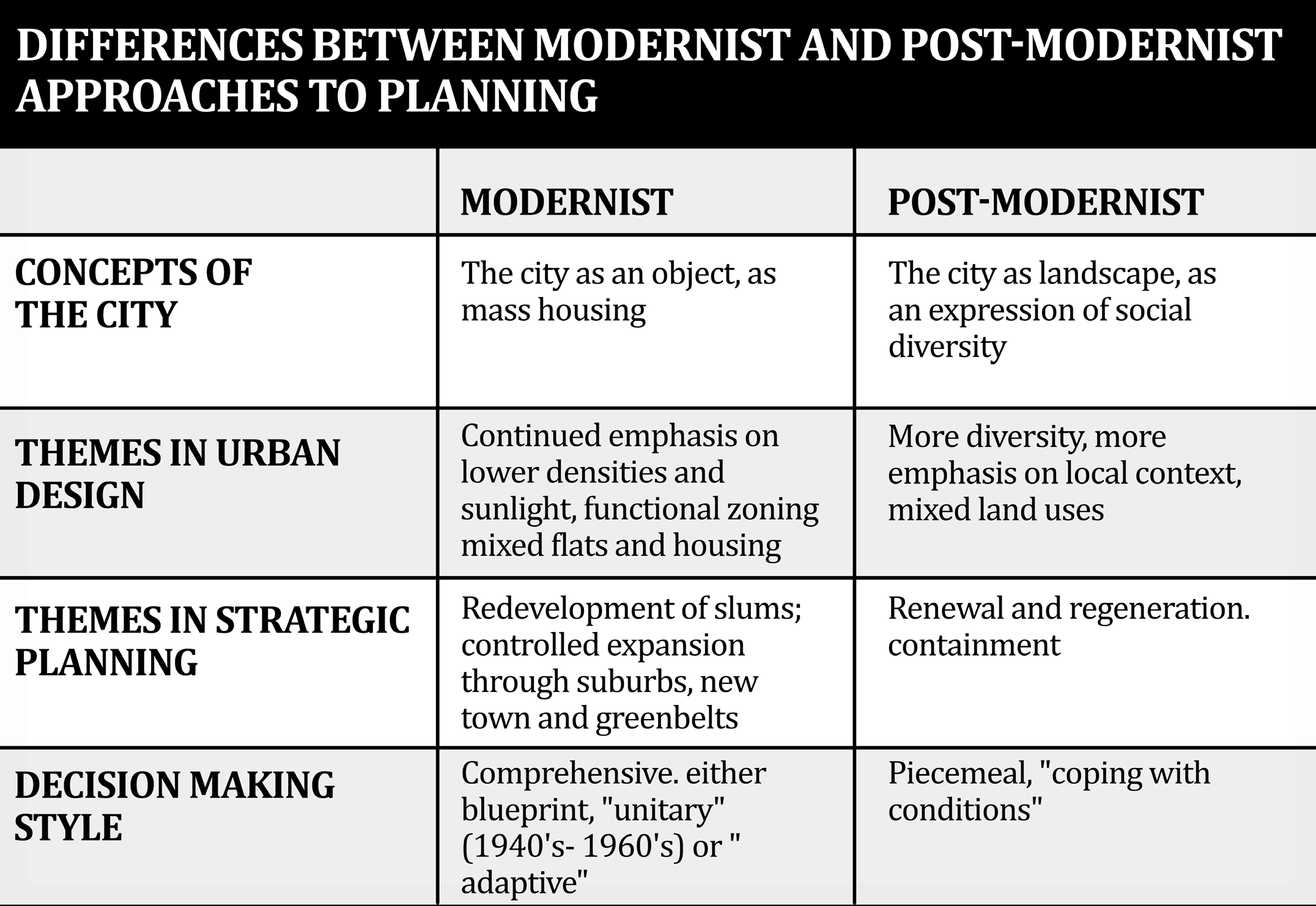
Figure: Modernist and Post-Modernist Approaches to Urban Planning
Conclusion
Thus, environmental concerns are therefore gaining importance in development, since environmental factors adversely impact the frequency and intensity of disastrous events. Sustainable development is being considered largely in terms of sustainable city growth. More than rural development, it is urban development that has to be stabilised/regulated through well-meaning/planned policies.
Urban populations are growing rapidly in the absence of well-planned and structured settlements and ever- increasing risk of natural as well as technological disasters. In such an alarming situation, the only viable way to a safer living is through preparedness to face disasters with concerted efforts on part of the government agencies, voluntary organisations, and most importantly, the community itself.