Allied Agricultural Sectors
FDI In Agriculture
With 157.35 million hectares under agriculture, India holds the second-largest agricultural land in the world. Additionally, India is among the fifteen leading exporters of agricultural products in the world. With a rising population, globalization, a rapidly growing economy and surge of demand, it is no surprise that India stands to gain from increased foreign investments in the agriculture sector. This promotion and approval of Foreign Direct Investment (FDI) in India is done by Department of Industrial Policy & Promotion
According to the circulars issued in 2011, FDI up to 100% is permitted, under the automatic route, subject to certain conditions mentioned in Consolidated FDI Policy, in the following agricultural activities:
Floriculture, horticulture, apiculture and cultiv-ation of vegetables and mushrooms under controlled conditions
Development and production of seeds and planting material
Animal husbandry: fish farming, aquaculture, under controlled conditions
Services related to agriculture and its allied sectors
Other than these activities, foreign investments of up to 100% under the government route are permitted in the tea sector, including tea plantations.

Challenges for FDI Inflow in Indian Agriculture
Main problems in the agricultural sector, as listed by the World Bank, are
• India’s large agricultural subsidies are hampering productivity-enhancing investment.
• Overregulation of agriculture has increased costs, price risks
and uncertainty.
• Infrastructure & Growth: Inadequate infrastructure and sluggish economic growth create hurdles.
• Policy & Regulations of FDI: Lack of transparency and consistency in FDI policies, along with regulatory hurdles.
• Import Duties & Restrictions: High import duties on food items (e.g., 60% on honey) and limitations like APMC rules hinder market access to MNCs.
• APMC rules restrict the ability of any player to deal directly with a farmer.
• Storage is be subject to the Essential Commodities Act.
Agricultural extension services
The Sub-Mission on Agricultural Extension (SMAE) under Green Revolution Krishonnati Yojana aims to improve India’s agricultural extension system. Extension system means those services which provide farmers with improved access to information, technology and expertise leading to enhanced productivity. Its key components are:
• Institutional Reforms: Establishing Agricultural Technology Management Agencies (ATMAs) at the district - level for decentralized extension services.
• Mass Media Support: Utilizing radio (AIR) and television networks (Doordarshan) to disseminate information on latest farming practices.
•
Agri-Clinics and Agri-Business Centres (AC&ABCs): Creating opportunities for agricultural graduates to provide extension services and support self-employment.
• Kisan Call Centers (KCCs): Toll-free helplines offering farmers answers to their queries on agriculture and allied sectors. A Kisan Knowledge Management System (KKMS) has been created at the backend to capture details of the farmers calling.
• Human Resource Development: Strengthening National Institute of Agricultural Extension Management (MANAGE) at Hyderabad for improved training of extension personnel.
• Gender Equity: Supporting the National Gender Resource Centre in Agriculture (NGRCA) to promote gender inclusion in extension services.
Agriculture and Its Role in Economy
AGRICULTURE OVERVIEW
As per the provisional estimation the rapid growth has been seen in agriculture sector with growth rate of 10.4% in 2024–25.
India has the world’s largest cattle herd (buffaloes), largest area planted to wheat, rice, and cotton, and is the largest producer of milk, pulses, millets and spices in the world. It is the second-largest producer of fruit, vegetables, tea, farmed fish, cotton, sugarcane, wheat, rice, cotton and sugar.
Agriculture sector in India holds the record for second- largest agricultural land in the world generating employment for about half of the country’s population. Thus, farmers become an integral part of the sector to provide us with means of sustenance.
• Land Use Statistics: According to Land Use Statistics 2021– 22, the nation’s total land area is 328.7 million hectares, of which 219.19 million hectares are grossly cropped with a cropping intensity of 155.4% and 141.01 million hectares are the reported net sown area. The net area sown works out to be 42.4% of the total geographical area. The net irrigated area is 77.916 million hectares.
• Gross Value Added (GVA) of Agriculture & Allied Sector: Gross Value Added (GVA) of Agriculture and Allied Sector has been growing at a rate of 4.4 percent per annum over the last seven years. Ministry of Statistics & Programme Implementation reported the agriculture
and allied sectors contribute 17.59% to India’s Gross Value Added (GVA) at current prices in the fiscal year 2023-24.
• The Indian food processing industry accounts for 32% of the country’s total food market, one of the largest industries in India and is ranked fifth in terms of production, consumption, export and expected growth.
MARKET SIZE
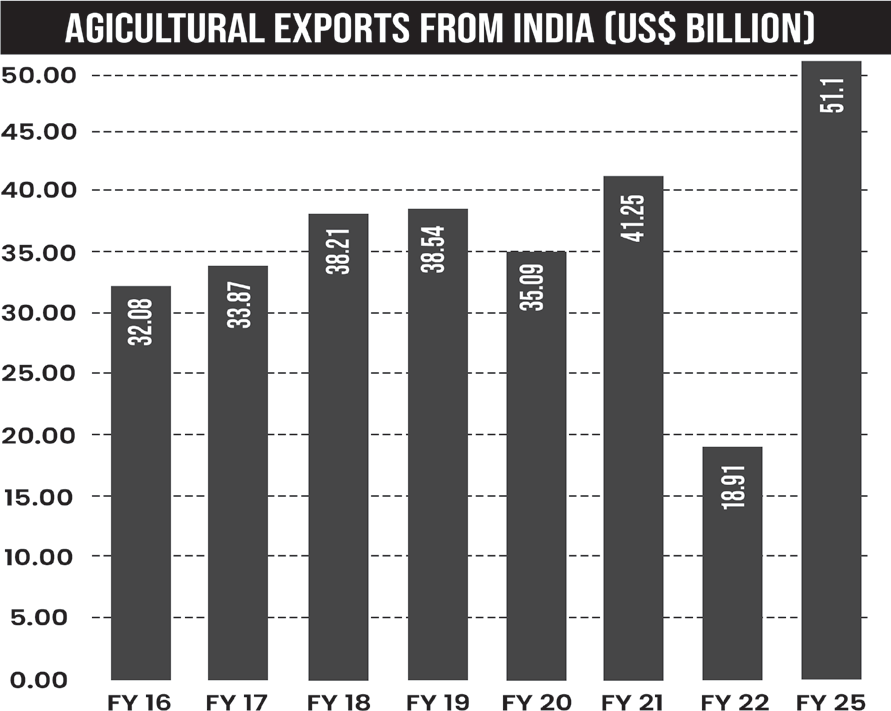
The agriculture industry in India is estimated at USD 372.94 billion in 2024, and is expected to reach USD 473.72 billion by 2029, growing at a CAGR of 4.90% during the forecast period (2024-2029). The Indian agri-tech sector is predicted to increase to US$ 24 billion by 2025. Indian food and grocery market is the world’s sixth largest, with retail contributing 70% of the sales. The export of agricultural and processed food products stood at $21.6 billion in the 11 months till February 2024. For 2022-23 (Kharif only), total foodgrain production in the country is estimated at 153.43 million
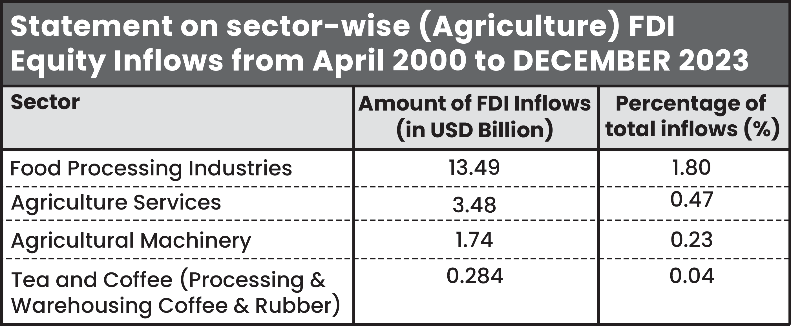
tonnes. According to recent data, the agriculture and allied sectors contribute 17.59% to India’s Gross Value Added (GVA) at current prices in the fiscal year 2023-24. Between April 2000-December 2023, FDI in agriculture services stood at US$ 4.43 billion
The Government of India set a target to achieve exports of worth $2 trillion by 2030 and increased it to $21 trillion by 2047.
Government Initiatives
Some of the recent major Government initiatives in the sector are as follows
• Kisan Drones for crop assessment, digitization of land records, and spraying of insecticides and nutrients.
• 731 Krishi Vigyan Kendras: Have been established at the district level across the country to ensure that newer technologies such as improved variety seeds of crops, new breeds/ strains of livestock and fish, and improved production and protection technologies reach farmers.
• ‘Dairy Sahakar’ for cooperatives in milk production by Ministry of Cooperatives.
• Krishi UDAN 2.0 by Ministry of Civil Aviation which proposes assistance and incentive for the movement of agri-produce by air transport, largely focusing on Northeast and tribal regions, and is expected to benefit farmers, freight forwarders, and airlines.
• Digital Agriculture Mission 2021-25 for agriculture projects based on new technologies such as artificial intelligence, blockchain, remote sensing and GIS technology, drones, robots, and others.
• Pradhan Mantri Krishi Sinchai Yojana (PMKSY) It
aimed at the development of irrigation sources for providing a permanent solution to drought.
• 100% FDI in the marketing of food products and in food product E-commerce under the automatic route.
• Income Support: Provided to farmers through PM KISAN Scheme, crop insurance is assured through the Pradhan Mantri Fasal Bima Yojana and irrigation facilities are ensured under Pradhan Mantri Krishi Sinchai Yojana.
• e-NAM initiative: Markets across the length and breadth of the nation are now open to farmers, to enable them to get more remunerative prices for their produce. Online, Competitive, Transparent Bidding System with 1.74 crore farmers and 2.39 lakh traders put in place under the National Agriculture Market (e-NAM) Scheme.
• Scheme Pradhan Mantri Annadata Aay Sanrakshan Abhiyan (PM-AASHA) ensures Minimum Support Price (MSP) to farmers for various Kharif and Rabi crops while also keeping a robust procurement mechanism in place.
• PM Matsya Sampada Yojana sub-scheme with a targeted investment of Rs. 6,000 crores will be introduced to support fisheries sector, fishermen and micro and small businesses, as well as to increase market share and value chain efficiencies.
Union Budget 2023-24: Key Provisions for Agriculture
• Provision for agricultural in budget 2026
• Allocation of Rs.1.30 lakh crore in (2026-27)
• A provision of ₹9,967 crore has been made for agricultural education and research
• Under the PM KISAN government allocated an amount of ₹18,640 crore to 9.32 crore farmers.
Role of Agriculture in Indian Economy
Agriculture is key in all economies no matter what their degree of advancement. It meets a portion of the basic human needs by giving food and non-food needs. It gives;
• Food Items like Rice, Wheat, Coarse Grains and Pulses,
• commercial Crops like Oilseeds, Cotton and Sugarcane, Tea and Coffee, contribute to Indian exports.
• Plantation Crops like organic products, vegetables, blossoms, flavors, cashews and coconut.
• Allied Products: Related products like milk and dairy items, poultry items, and fisheries are generated by farmers
significance
• Contribution to GDP: The agricultural sector plays a pivotal role in the contribution to the GDP of the country since independence. About 59 percent of the country’s total GDP was provided by the agricultural sector between 1950-1951.
•
Employment: Largest employer, employing over 50% of the population
• Source of Food: India is the world's most populous country and has achieved self-sufficiency in food grain production.
• Industrial Contribution: There is a constant need for raw materials and most of the industries of the country collect their sources of raw materials from the agricultural sector.
• Government Revenue Source: The nation’s state and Union governments rely heavily on the agricultural sector for their financial support. E.g. railways make money from agricultural freight.
• Role of Agriculture in Economic Planning: Strong agricultural performance stimulates overall economic growth by creating a robust business environment for transportation, manufacturing and trade sectors.
Trends in Agriculture: In the post-liberalization era there is increased production, increased investment, and diversification of the sector, use of modern techniques, development of horticulture and floriculture, increasing volume of exports and development of the food processing industry. Agriculture is moving beyond staple crops to include high-value products like fruits, vegetables, spices, and flowers. Horticulture production has increased significantly in recent years, India’s horticulture production for 2023-24 is estimated to be about 355.25 million tonnes. New agricultural strategies and technologies are being introduced in previously neglected regions. Initiatives like dryland farming, horticulture, and animal husbandry are promoting growth in these areas.
FDI in Agriculture and Agricultural Extension Services
FDI In Agriculture
With 157.35 million hectares under agriculture, India holds the second-largest agricultural land in the world. Additionally, India is among the fifteen leading exporters of agricultural products in the world. With a rising population, globalization, a rapidly growing economy and surge of demand, it is no surprise that India stands to gain from increased foreign investments in the agriculture sector. This promotion and approval of Foreign Direct Investment (FDI) in India is done by Department of Industrial Policy & Promotion
According to the circulars issued in 2011, FDI up to 100% is permitted, under the automatic route, subject to certain conditions mentioned in Consolidated FDI Policy, in the following agricultural activities:
Floriculture, horticulture, apiculture and cultiv-ation of vegetables and mushrooms under controlled conditions
Development and production of seeds and planting material
Animal husbandry: fish farming, aquaculture, under controlled conditions
Services related to agriculture and its allied sectors
Other than these activities, foreign investments of up to 100% under the government route are permitted in the tea sector, including tea plantations.
Challenges for FDI Inflow in Indian Agriculture
Main problems in the agricultural sector, as listed by the World Bank, are
• India’s large agricultural subsidies are hampering productivity-enhancing investment.
• Overregulation of agriculture has increased costs, price risks
and uncertainty.
• Infrastructure & Growth: Inadequate infrastructure and sluggish economic growth create hurdles.
• Policy & Regulations of FDI: Lack of transparency and consistency in FDI policies, along with regulatory hurdles.
• Import Duties & Restrictions: High import duties on food items (e.g., 60% on honey) and limitations like APMC rules hinder market access to MNCs.
• APMC rules restrict the ability of any player to deal directly with a farmer.
• Storage is be subject to the Essential Commodities Act.
Agricultural extension services
The Sub-Mission on Agricultural Extension (SMAE) under Green Revolution Krishonnati Yojana aims to improve India’s agricultural extension system. Extension system means those services which provide farmers with improved access to information, technology and expertise leading to enhanced productivity. Its key components are:
• Institutional Reforms: Establishing Agricultural Technology Management Agencies (ATMAs) at the district - level for decentralized extension services.
• Mass Media Support: Utilizing radio (AIR) and television networks (Doordarshan) to disseminate information on latest farming practices.
•
Agri-Clinics and Agri-Business Centres (AC&ABCs): Creating opportunities for agricultural graduates to provide extension services and support self-employment.
• Kisan Call Centers (KCCs): Toll-free helplines offering farmers answers to their queries on agriculture and allied sectors. A Kisan Knowledge Management System (KKMS) has been created at the backend to capture details of the farmers calling.
• Human Resource Development: Strengthening National Institute of Agricultural Extension Management (MANAGE) at Hyderabad for improved training of extension personnel.
• Gender Equity: Supporting the National Gender Resource Centre in Agriculture (NGRCA) to promote gender inclusion in extension services.
Various Types of Agriculture Farming in India
Various types of Agriculture Farming in India
India have a long agricultural history, which dates back approximately ten thousand years. Today, India has the 2nd highest crop output in the world. Due to India’s location,
.
different areas experience varying climates that significantly impact agricultural productivity. Monsoons play a critical role, with farmers relying heavily on these seasonal rains for successful harvests. Ultimately, the type of farming practiced in a particular region depends on the land’s natural characteristics, the prevailing climate, and the availability of irrigation facilities, all factors carefully considered by Indian farmers.
| Subsistence farming | The farmer along with his family cultivates grains for themselves or for sale at the local market. The entire family works on the farm and most of the agricultural work is done manually here. |
| Shifting Agriculture | Land is obtained by clearing a forested area and then crops are planted. While the land loses its fertility, another area of land is cleared and the crops are shifted there. This practice is known by different names in different regions of India. For example, it is called Jhum in Assam, Ponam in Kerala, Podu in Odisha, Bewar, masha, penda, and bera in Madhya Pradesh. But since it causes extensive soil erosion, the government has tried to discourage this practice of cultivation by tribal population. |
| Intensive agriculture | Seen in densely populated areas in India, it is an attempt to maximise the output of the land. |
| Extensive agriculture | Modern type of farming that relies largely on machinery as opposed to a human labour force and raises one crop per year. |
| Commercial Agriculture | Goal of commercial agriculture is high yield, so that produce can be exported to other countries for profit making. Wheat, cotton, sugarcane and corn are some commercial crops. |
| Plantation Agriculture | Crops which require a lot of space and a long growing period, such as rubber, tea, coconut, coffee, cocoa, spices, and fruits. Plantations are only capable of producing a single crop. Plantation agriculture is practised in Kerala, Assam, Karnataka, and Maharashtra. |
| Dry land farming | Practised in the more arid and desert-like areas of the country, including northwest and central India. Crops such as gram, jowar, bajra and peas have lower water requirements and can therefore be grown in these conditions. |
| Wetland farming | Areas affected by heavy monsoon rains and subsequent flooding or Well-irrigated areas, such as those in northeast India and the western ghats are suitable for rice, jute, and sugarcane farming. |
| Terrace Agriculture | The hill and mountain slopes are cut to form terraces and the land is used in the same way as in permanent agriculture. Due to scarcity of the availability of flat land, terraces are made to provide a small patch of level land. |
| Mixed Farming | System of growing agricultural crops as well as the raising of livestock. |
| Multiple Farming | Growing more than one crop in the same field. Usually, two different crops with varying periods of maturity are shown so that they compete with growth period and nutrients. For e.g. wheat and gram, wheat and mustard etc. This type of farming system is followed in regions where abundant rainfall is expected and good irrigation facilities are available. It helps in maintaining the fertility of soil by nitrogen fixation. |
Cropping Patterns
Cropping patterns refer to the sequence and organization of crops grown in a specific area each year. These patterns are influenced by several factors
Natural Conditions: Soil type, temperature, rainfall, and climate all play a significant role in determining which crops thrive in a particular region.
Economic Considerations: Farmers primarily base their cropping decisions on profitability. Factors like irrigation availability, power supply, landholding size, crop prices, farmer income, insurance options, and investment opportunities all influence their choices.
Government Policies: Laws related to land use, food security, specific crops (paddy, cotton, oilseeds), and subsidies can incentivize or discourage the cultivation of certain crops. The government may also intervene to manage issues like inflation, droughts, or floods.
Types of Cropping Patterns
The common types of crop patterns include the following
• Monocropping
• Mixed Cropping
• Inter Cropping
Monocropping: Monocropping is the cultivation of only one agricultural species on a piece of land. Monocropping has been shown to have a negative impact on soil fertility and structure. Chemical fertilizers are necessary to increase output. This is how pests and diseases propagate.
Mixed Cropping: When two or more crops are planted simultaneously on the same piece of land, it’s known as mixed cropping. The use of this strategy reduces the danger of one of the crops failing and provides insurance against crop failure due to unusual weather conditions. Water requirements and maturation times should differ for crops grown close to one another.
Advantages of Mixed Cropping
• It improves crop yield.
• Low risk of pest infestation and crop failure.
• Multiple crop varieties can be harvested.
• Proper utilization of soil.
• More than one crop is harvested together.
Intercropping: The technique of concurrently growing several crops in the same row arrangement on a single plot of land is known as intercropping. Usually, one row of the main crop is planted followed by three rows of intercrops. This boost per-square-foot productivity. For Example- corn, soybean, and wheat are grown simultaneously. Intercropping can be seen in the following examples:
• Row Intercropping: It facilitates the effective use of land and helps keep weeds under control in the early stages of the main crop.
• Strip Intercropping: Practice of farming two or more crops in wide strips and keeping them separate from each other.
• Relay Intercropping: After the first crop has flowered but not been harvested, a second crop is sown.
Advantages of Intercropping
• The fertility of the soil is kept.
• Pests and diseases are kept in check.
• Maximum use of resources.
• Growing a variety of crops saves space and time.
• Maximum utilization of soil nutrients.
Crop Rotation
This strategy involves planting different crops on equal acres in a preplanned succession. Crop rotation comes in three different forms: one-year, two-year, and three-year rotations. Legumes are utilized in crop rotation programs to boost soil
fertility. Crops that require a lot of fertilizer are frequently cultivated after legumes. Low-input crops are typically planted after more resource-intensive ones. It helps boost soil fertility, inhibit pests and reduce use of chemical fertilizer.
How Crops are selected for the Crop Rotation?
• A crop that manages the essential and deficient nutrient concentration in the soil.
• Help in holding the soil and preventing soil erosion.
• Help in increasing the Soil Organic Matter.
• Help in improving the fields and surrounding ecosystem.
Major cropping patterns of India
The advantage of India’s diverse climate is that multiple cropping patterns are possible, allowing for year-round cultivation with irrigation. India’s cropping patterns have changed significantly. There’s been a shift away from cereals (like rice and wheat) towards non-cereals (like oilseeds). This hasn’t necessarily led to more high-value crops though, and overall growth in crop output hasn’t been substantial.
Agriculture Census in India
Agriculture Census is conducted by Department of Agriculture, Cooperation, and Farmers Welfare in the country at five yearly intervals. It aims at collecting information related to structural characteristics of operational holdings in the country. It is the main source of information on number, area and other basic characteristics of operational holdings such as land use, cropping pattern, irrigation, tenancy status, input use etc.
Types of Landholdings
The concept of agricultural holding adopted in India differs from the Food and Agricultural Organisation’s standards because the Indian census does not include lands that are extensively used in poultry, livestock, and fishing.
• Marginal Holdings: Size 1 hectare or less.
• Small Holdings: Size 1 to 2 hectares.
• Semi-Medium Holdings: Size 2 to 4 hectares.
• Medium Holdings: Size 4 to 10 hectares
• Large Holdings: Size above 10 hectares.
Initiatives taken by the Government
• Agristack: The Ministry of Agriculture and Farmers’ unified platform for the end-to-end service of the food chain.
• Digital Agriculture Mission (2021-2025) by the government for advanced technology like artificial intelligence, blockchain, remote sensing, drones, and robots.
• The National e-Governance Plan in Agriculture (NeGP-A), 2011 to achieve rapid development in the country to provide essential information to the farmers.
Green Revolution and Agriculture 4.0
Green Revolution
The Green Revolution refers to the significant rise in food grain output achieved through the adoption of High-Yielding Variety (HYV) seeds. This agricultural intensification strategy, implemented from the 1960s onwards, replaced traditional practices with:
HYV seeds: Genetically engineered seeds with higher yield potential.
Agrochemicals: Chemical fertilizers and pesticides to boost yields and protect crops.
Irrigation expansion: Increased access to water for reliable crop growth.
Mechanization: Adoption of tractors, threshers, and other farm machinery to improve efficiency and reduce labor dependence.
Financial assistance: government provided loans at a low interest rate to small farmers and subsidized fertilizers so that small farmers could also have access to the needed inputs
Multi-cropping: sowing two or more rounds of crop on the same land in one year.
This shift from organic inputs and basic tools to modern technology resulted in a rapid and substantial increase in food grain production, particularly for wheat and rice. In the years 1998-1999, the Green Revolution covered a total area of 78 million hectares, that is, 55 percent of the net sown area.
Success of Green Revolution in two phases
First Phase (mid-60s to mid-70s), and in this phase use of HYV seeds was in more affluent states like Tamil Nadu, Andhra Pradesh, Punjab, etc. benefiting the wheat growing areas.
Second Phase (mid-70s to mid-80s), and in this phase, the technology of HYV spread to a large number of states and provided benefits to more variety of crops.
Positive Impacts of Green Revolution
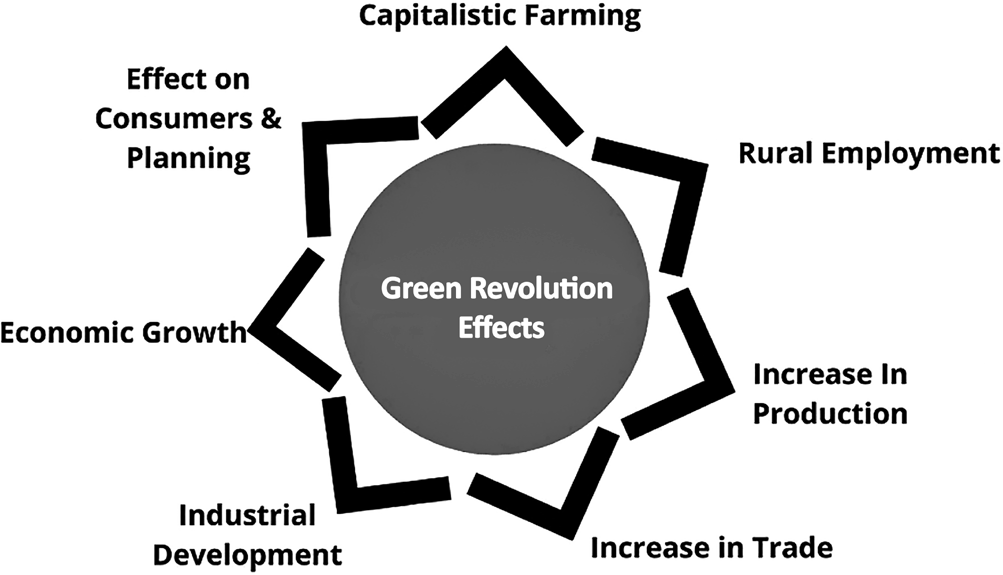
• Increased Food Production: The Green Revolution led to a dramatic rise in food grain output, making India self- sufficient and reducing dependence on imports.
• Higher Land Yields: HYV seeds and improved practices significantly increased crop yields per hectare. For example, the yield per acre of wheat grew by 3.7 times between 1960-61 to 2016-17.
• Reduced Food Prices: Increased supply due to higher yields led to lower food prices for consumers.
• Improved Farmer Income: Increased production potentially boosted farmer profits, especially for those who could adopt the new technologies.
• Reduced Deforestation: Increased food production potentially reduced the need to clear new land for agriculture.
• Consistent yields: HYVs ensured reliable harvests even in unfavorable seasons.
• Reduced greenhouse gas emissions: The high yield approach have improved carbon sequestration.
Shortcomings or Risks of Green Revolution
Loss of Biodiversity: Reliance on a few HYV crops reduced agricultural diversity, making the system more vulnerable to pests and diseases.
Soil Degradation: Overuse of chemical fertilizers and intensive farming practices depleted soil nutrients and organic matter.
Health Risks: Increased use of pesticides raised concerns about human health and environmental pollution.
Risk of Pest Attack: The crops grown through HYV seeds were more likely to get destroyed by pests than normal crops. Therefore, small farmers are at a high risk of losing everything in a pest attack due to this technology.
Water Depletion: Expansion of irrigation for HYV crops put a strain on water resources, especially groundwater.
Environmental concerns: Inefficient absorption of chemical fertilizers by crops and wasteful application lead to unused fertilizers then entering surface water (rivers, lakes, ponds) and causing groundwater pollution. They have also robbed the soil of its nutrients leading to soil degradation.
Regional Social inequalities: Benefits were not evenly distributed as north Indian states of Haryana and Punjab, which already had good facilities, improved but poorer states of Bihar were left behind. Further the measures favoured wealthier farmers with access to resources and land as they could afford all the expensive inputs.
Need for Green Revolution 2.0: Indian agriculture, once heavily dependent on monsoon rains, now faces a bigger threat from rising temperatures, especially during the crucial rabi (winter-spring) season. While irrigation can mitigate the impact of a failed monsoon, farmers have limited options to cope with heat spikes in February and March, which can damage crops like wheat. Green Revolution 2.0 must:
• Focus on developing heat-resistant, high-yielding crop varieties
• Crops which require less water and nutrients.
• Farmers need better crop planning and market intelligence to make informed decisions about planting, managing crops under stress, and selling their produce.
Organic fertilizers and framing practices will be key as they enrich the soil with nutrients and improves the overall quality of the soil like soil texture, soil aeration and water holding capacity. Precision farming techniques including use of Artificial intelligence will be important to make Indian farmers future ready and efficient. Empowering women farmers and fostering inclusive agricultural value chains can create a more just and prosperous rural landscape. Green Revolution 2.0 is not merely about boosting production; it’s about reimagining our relationship with the land. It’s about
building an agriculture that is not just productive, but also equitable, sustainable, and resilient.
Agriculture 4.0: Future of Indian Agriculture
Agriculture 4.0 is expected to make farms more productive, efficient, safe, and environmentally friendly. It’s an advanced version of precision farming that uses technology to improve farming methods. It aims to increase yield and quality of crops while reducing environmental impact. This is achieved through technologies like Internet of Things (IoT), big data, AI, and robotics. These technologies allow for targeted use of resources like water, fertilizer, and pesticides. It also has the potential to reduce food waste and improve food security. Future farms will be more productive owing to the employment of robotics, temperature and moisture sensors, aerial photos, and GPS technology.
Examples
Grape farmers in India who have begun spotting and geo-locating crop diseases or pestilence, allowing them to control infestations earlier and in a more precise manner. This also leads to lower use of harmful pesticides on the crop.
Soil mapping software is used by several new farmers to determine the optimum level of fertilizer use in their farms. They are also using drones which allow spraying pesticides in a more targeted manner.
Several Indian farmers have also begun to use AI/ Machine Learning -powered technologies to forecast crop yield, weather conditions and price trends in mandis. A few farmers have also begun testing self-driving tractors and seed-planting robots to free their farms from the vagaries of labour shortages.
Fertilizer
Fertilizer
Fertilizer is any organic or inorganic, natural or artificial supply of one or more chemicals needed for the growth of the plant. Fertilizers enhance the productivity of agriculture. They are composed of basically two types of nutrients
• Macronutrient: Six macronutrients are needed for plant growth. These are Nitrogen(N), Phosphorus(P), Potassium(K), Calcium (Ca), Magnesium (Mg), Sulphur(s).
• Micronutrient: They are Boron(B), Chlorine(cl), Copper (Cu), Iron (Fe), Zinc (Zn), etc.
Types of Fertilizers
Phosphatic- super phosphate
Potassic- Potassium nitrate, chile saltpeter
Nitrogenous- Urea, ammonium nitrate. It is 3/4th of the total fertilizer used in India.
Benefits of Fertilizers
Nutrient Delivery: Fertilizers provide essential elements like nitrogen (N), phosphorus (P), and potassium (K) that may be deficient in soil.
Nitrogen: Crucial for chlorophyll formation, promoting healthy leaves and overall plant growth.
Phosphorus: Strengthens plant structure, aiding root development and seed production.
Potassium: Regulates stomata (pores) that control gas exchange and water balance.
Improved Plant Health: Fertilizers can enhance a plant’s ability to retain water, potentially leading to:
• Increased drought tolerance.
• Improved resistance to pests and diseases due to a plant’s overall vigor.
Agricultural Benefits
• Increased Crop Yields: Fertilizers can significantly boost crop production by promoting faster growth and multiple cropping practices. This is crucial for ensuring food security for growing populations.
• Soil Specificity: Different fertilizers cater to specific soil needs. For example, phosphorus and potassium are vital for lateritic soils, while nitrogen is essential for alluvial soils.
• Hybrid Seed Optimization: Fertilizers can unlock the full potential of high-yielding hybrid seeds.
• Food Self-Sufficiency: Fertilizers play a vital role in achieving self-sufficiency in food grain production.
Problems Related to Fertilizer
• India’s consumption of fertilizer is low because of less awareness, lack of proper distribution, and lack of supply.
• Chemical fertilizer is not accessible due to higher costs.
• The imbalance in the use of fertilizer is very wide. The ideal use of fertilizer as defined by the Hanumantha Rao committee is NPK 4:2:1 but what is really being used is 11.8:4.6:1 during 2022-23.
• There is a regional imbalance in the use of fertilizer as well. While some areas overuse it, others are not able to access enough.
• Excessive use of nitrogen-based fertilizers can lead to environmental pollution. Nitrogen runoff can contaminate water sources and contribute to eutrophication, a process that harms aquatic ecosystems.
• A sharp increase in the global prices of urea, di-ammonium phosphate (DAP), and muriate of potash (MoP) in the last year may cause India’s fertilizer subsidy costs to reach Rs 2 trillion in 2022-23, according to a statement made by an official in the fertilizer ministry.
Indian Fertilizer Sector
India’s soils are generally deficient in nitrogen, phosphate, and potassium, because of which yields are low. Hence fertilizers are used on a large scale. The fertilizer policy has
prioritized major (macro) nutrients. The Government of India has regulated fertilizer sales, prices, and quality since its independence and declared it to be an essential commodity. Retention Pricing Scheme was initially used for nitrogen fertilizers in 1977. Later, it was expanded to incorporate phosphatic and potassium fertilizers (Including Imported fertilizers).
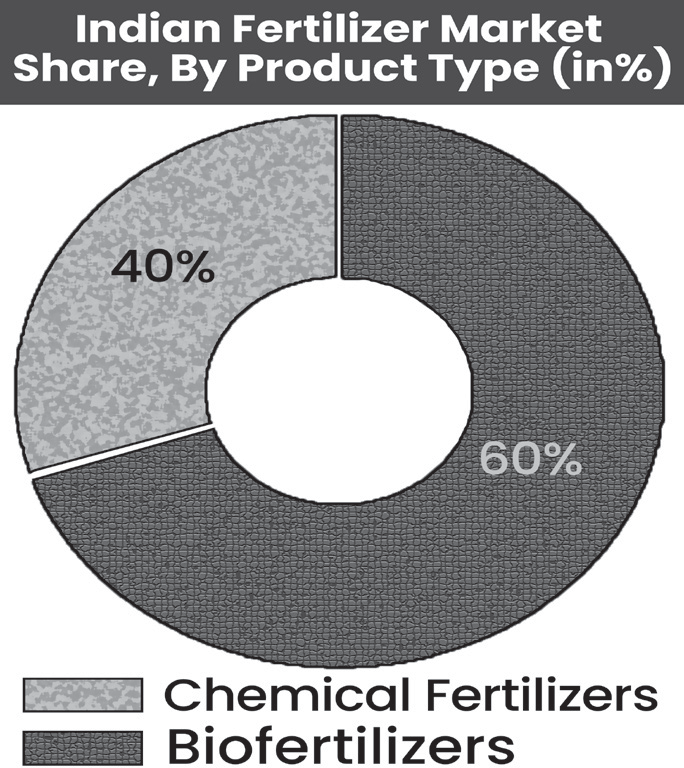
• India is the second-largest consumer and third-largest producer of Fertilizers globally.
• ₹1,91,836.29 crore were allocated for the fertilizer sector in FY 2024-25 to support the farmers for the better crop yield to reduce the burden from the marginalized farmers. To enhanced the fertilizer production six new fertilizer plants were established throughout the country in last six years.
What is Biofertilizer?
Biofertilizers are essentially colonies of living microorganisms that benefit plant growth. They supply the soil with essential nutrients that support plant growth and soil fertility. These microorganisms can be:
• Bacteria: Like Azotobacter and Rhizobium
• Fungi: Mycorrhizal fungi form a symbiotic relationship with plant roots
• Cyanobacteria (blue-green algae)
Biofertilizers are completely natural and don’t cause soil pollution or harm beneficial insects. However, compared to chemical fertilizers, biofertilizers may take longer to show results as they establish themselves and colonize the rhizosphere (the zone around plant roots). They can also have a shorter shelf life compared to chemical fertilizers.
What is a Urea Subsidy?
• Urea Subsidy enables farmers to purchase Urea at a price lower than the MRP (Maximum Retail Price). Farmers are given Urea at a legally mandated Maximum Retail Price (MRP). The recommended retail price (MRP) for
a 45-kilogram bag of Urea is Rs. 242 per bag, while the recommended retail price (MRP) for a 50-kilogram bag of Urea is Rs. 268 per bag. These prices do not include any fees or taxes that may be imposed (exclusive of charges towards neem coating and taxes as applicable).
• Even though the farmer is the one who eventually benefits, the fertilizer subsidy is given to the corporation that makes fertilizer.
• Benefits of Urea: It has superior nitrogen content and lost cost manufacturing. It is also non-flammable and risk- free to store. It can be applied to various varieties of soils and crops.
Nutrient Based Subsidy Scheme (NCBS)
• With the exception of urea, each grade of subsidised phosphoric and potassium (P&K) fertilisers receives a set amount of funding under the programme, which is determined annually based on the nutrients each fertiliser grade contains.
Under the Ministry of Chemicals & Fertilisers, the Department of Fertilisers is in charge of overseeing the programme.
• Benefits
• Reduce the subsidy outlay, reducing the Government of India’s subsidy burden.
• Prevent Urea from being diverted for industrial usage.
• Drawbacks
• NBS subsidy payments are being delayed. As a result, fertilizer firms place a greater emphasis on Urea than on other fertilizers.
• Phosphoric and potassium fertilizer costs have risen.
• Farmers use too much Urea. As a result, the optimal NPK ratio is thrown off.
Aim of the Nutrient Based Scheme
• The plan seeks to guarantee that a sufficient supply of P&K is available to farmers at legally regulated costs to maintain agricultural development and ensure balanced nutrient application to the soil.
Nutrient-Based Scheme Allocations
• The Nutrient Based Subsidy Scheme (NBS) enables producers, marketers, and importers to set fair MRPs for Phosphatic and Potassic (P&K) fertilizers.
• The MRP is determined by considering the local and foreign costs of P&K fertilizers, the country’s inventory levels, and the currency exchange rate.
One Nation One Fertilizer Scheme (ONOF)
One Nation One Fertilizer is a central government scheme introduced by the ministry of chemicals and fertilizer to
bring uniformity in fertilizers. Fertilizers in India are a major subsidized. Similarly, Government has come up with “Pradhan Mantri Bhartiya Janurvarak Pariyojana”. All the fertilizers will be sold under the name of BHARAT emphasizing “Single brands for fertilizer and logo”.
• All the urea bags will be with a bar code which will be read through the bar code reader and linked with the POS machine.
• Under ONOF, the company is permitted to show its name, logo, brand, and even product information only on one-third space of the bags.
• The remaining two-thirds of the space is used for the Bharat brand and mentions Pradhan Mantri Bhartiya Janurvarak Pariyojana Logo.
• The single brand name for Urea, Di Ammonium Phosphate DAP, Muriate of potash, and nitrogen phosphorus potassium will be Bharat urea, Bharat DAP, Bharat MOP, and Bharat NPK respectively.
• It will be applied to all Fertilizer companies, fertilizer marketing companies, and state trading entities.
• It is equally applicable to all private and public sector companies.
• Only after a fertiliser bag is sold via a pos machine with a bar code reader under DBT will a subsidy be provided.
• Government asked companies to not procure old design bags from September 15 as new bags under One Nation One fertilizer has begun from 2 October 2022.
Main Aim of the One Nation One Fertilizer Scheme
• Prevent diversion- It will stop the diversion of the use of urea for industrial purposes.
• Easy monitoring- It will help to know the real-time movement, availability, and sales of fertilizers.
• This new scheme will save Rs 3000 crore a year by cutting transportation and subsidy costs
• Since the government is spending a lot of money on subsidies, it wants to claim the credit. They want to decide where and at what price the company will sell.
Drawbacks of the One Nation One Fertilizer Scheme
• Reducing fertilizer quality due to commoditization.
• Disincentivizing brand promotion and advertising by fertilizer companies.
• Limiting fertilizer companies’ decision-making power due to government control over pricing.
• Discouraging private companies from the fertilizer sector due to a reduced role as manufacturers.
Neem Coated Urea 2015
Fertiliser that has neem oil coated on it is called neem coated urea. Neem oil is a natural pesticide that is derived from
the neem tree. The coating helps to protect the urea from being broken down by microorganisms in the soil, which can result in a more efficient release of nitrogen for plant growth. Additionally, the neem oil coating can help to repel insects and other pests, making it a more sustainable and eco- friendly option for farmers.
Neem coated urea has been demonstrated to improve Nitrogen Use efficiency (NUE) and consequently increases crop yield especially in Paddy crop in which NUE is as low as 30% and in wheat where NUE is reported around 50%. Coating with neem oil also prevents caking of urea and also reduces the chances of powder formation during transportation & handling. Repellent action of neem also controls many insect-pests and wild animals in fields applied with neem coated urea.
What is Nano Urea
An innovative agri-input based on nanotechnology; Nano Urea gives plants nitrogen. When compared to conventional urea prill, it has a desirable particle size of about 20-50 nm and more surface area (10,000 times over 1 mm urea prill) and number of particles (55,000 nitrogen particles over 1 mm urea prill). It is environmentally friendly as it uses less energy for production. It increases NUE being better for the soil, air, water and farmer’s profitability.
Problems with subsidies for fertiliser
• Government Burden: Fertilizer subsidies are a significant burden on the Indian government, accounting for roughly 0.8% of GDP. After food subsidies, fertiliser subsidies are the second-largest type of subsidies.
• Distorted Market: Urea, a key fertilizer, is heavily subsidized but suffers from price controls and limited import options. This creates an incentive for misuse and black-market activity.
• Overuse and Environmental Damage: The low price of urea encourages overapplication, leading to soil degradation and impacting long-term agricultural productivity.
• Ineffective Targeting: Subsidies often benefit large farmers and inefficient producers more than the small farmers they’re intended to help.
• Discouraging Efficiency: The current system discourages fertilizer companies from innovation and efficient production due to guaranteed subsidies.
Reforms
• Market Liberalization: De-channelization of urea imports would introduce more competition and allow for quicker responses to demand fluctuations.
• Nutrient-Based Subsidies: Bringing urea under the Nutrient Based Subsidy program currently in place for DAP and MOP would allow domestic producers to continue receiving fixed subsidies based on the nutritional
content of their fertilizer, while deregulating the market would allow domestic producers to charge market prices.
• Direct Transfers: Implementing direct cash transfers to farmers could reduce leakages and ensure subsidies reach their intended recipients. Biometric identification at point-of-sale systems could further tighten control.
• Capped Subsidies: Setting limits on the number of subsidized fertilizer bags per household can target support towards smaller farmers who need it most.
• Strategic Investments: Exploring and encouraging Indian firms to locate plants in countries such as Iran following the example of the Fertiliser Ministry’s joint venture in Oman, which allowed India to import fertilizer at prices almost 50 per cent cheaper than the world price.
• PM PRANAM Scheme: Launched in the Union Budget 2023-24 to incentivise reduction of chemical fertilisers in lieu of alternative natural fertilizers. Provides grants to states/UTs based on the amount they save by reducing spending on existing fertilizer subsidies. These grants will be used to create alternative fertilizer production units and reward farmers at panchayat levels.
Soil Health Card Scheme
The Government of India launched Soil Health Card Scheme on February 19, 2015 with the motto “Swasth Dharaa, Khet Haraa.” Healthy Earth, Green Farm. Under the scheme, the government issues soil cards to farmers which carries crop- wise recommendations of nutrients and fertilizers required for individual farms thus helping farmers to improve productivity through proper use of inputs. In 2017, the App was launched also on 5th December i.e. World Soil Day. It is a Geo tagging app developed for the Rashtriya Krishi Vikas Yojana and contains farmers’ details including name, Aadhaar card number, mobile number, gender, address etc.
What is a Soil Health Card?
A farmer can obtain a printed report, known as a SHC, for every holding they own. The card contains the status of the soil with respect to 12 parameters, namely N, P, K (Macro-nutrients); S (Secondary nutrient); Zn, Fe, Cu, Mn, Bo (Micro nutrients); and pH, EC, OC (Physical parameters).
Based on the available soil information after testing, the SHC contains an advisory on the recommended nutrients and fertilizer dosage and soil correction measures required for realizing optimal yields.
Department of Agriculture & Cooperation under the Ministry of Agriculture and Farmers’ Welfare implements it in coordination with the State and Union Territory Governments.
The soil card is issued to a farm once in 3 years.
Seed Sector and MSP
Seed Sector
The percentage of the total cropped area that was planted
with certified seeds as opposed to farm-saved seeds is known as the Seed Replacement Ratio, or Seed Replacement Rate (SSR). Crop to crop, this ratio ranges from 7% for staple crops to a maximum of 70% for some fruits and vegetables. For rice and wheat, it ranges from 9 to 18%. The seed industry faces multifaceted pressures. Climate variability disrupts production cycles, impacting yields and resilience. Resource scarcity (water, land) strains the industry’s ability to meet rising demand for quality seeds. Complex regulations delay new variety releases, hindering innovation. Balancing intellectual property protection with open innovation remains a challenge. Finally, evolving consumer preferences for nutrition, taste and sustainability necessitate ongoing seed variety adaptation.
Major Reforms undertaken in Seed Sector
Sub-Mission on Seeds & Planting Materials: To produce and supply quality seeds to farmers to enhance production and productivity in the country through Seed Village Programme, Establishment of Seed Processing- cum- Seed Storage Godowns at Gram Panchyat Level, National Seed Reserve, Boosting Seed Production in Private Sector and Strengthening of Quality Control Infrastructure Facilities.
Plant Genome Saviour Community Awards to farmers: by the Protection of Plant Varieties and Farmers’ Right Authority from the National Gene Fund.
Seeds Act 1966: Along with the Seed Regulation Order of 1983, form the legal framework for ensuring the quality of seeds available to Indian farmers and sets up advisory bodies, seed certification agencies, seed testing facilities, foreign seed certification agencies’ recognition, appellate authorities, etc.
Minimum Support Price
In the interest of food security the Union Government annually sets the Minimum Support Price (MSP) for key agricultural products. The MSP acts as a crucial tool, assuring farmers of a predetermined fair price before the sowing season, fostering increased investment and production in agricultural commodities.
Features of MSP
• Minimum Support Price (MSP) is the price at which the government procures crops directly from farmers.
• The government declares minimum support prices (MSPs) for 22 specified crops and fair and remunerative price (FRP) for sugarcane.
• The Crops covered includes
• 14 Kharif crops: Arhar , Bajra , Groundnut- in - Shell, Jowar , Maize , Moong , Niger seed ,Paddy , Ragi , Soyabean, Sunflower, Sesamum, Urad and Cotton
• 6 Rabi crops: Wheat , Barley , Gram , Rapeseed& Mustard , Masur , Safflower
• 3 Commercial crops: Jute , Copra, Sugarcane
• Moreover, the minimum support prices (MSPs) for toria and de-husked coconut are determined based on the MSPs established for rapeseed/mustard and copra, respectively.
• Alternative way of classification of Crops covered under MSP
• Cereals (7): paddy, wheat, barley, jowar, bajra, maize and ragi
• Pulses (5): gram, arhar/tur, moong, urad and lentil
• Oilseeds (8): groundnut, rapeseed/mustard, toria, soyabean, sunflower seed, sesamum, safflower seed and nigerseed
• Others: Raw cotton, Raw jute, Copra, De-husked coconut, Sugarcane (Fair and remunerative price)
• Determining MSP: MSP is established based on the recommendations of the Commission for Agricultural Costs and Prices (CACP). The Cabinet Committee on Economic Affairs (CCEA), chaired by the Prime Minister, approves and announces the final MSP decision.
• CACP formulates MSP recommendations for 23 crops, considering factors like cultivation costs, supply and demand dynamics, and market trends , parity vis-à-vis other crops etc
• The current formula employed by the government for calculating the cost of production= (A2+ FL ) x
1.5 times. It was recommended by MS Swaminathan Commission.
• A2 encompasses the actual costs incurred by farmers on seeds, fertilizers, pesticides, hired labor, depreciation on machinery, interest on working capital etc
• FL represents the imputed value of unpaid family labor.
• The Swaminathan Committee had also recommen- ded the C2 method for calculating the cost of production, but the government has not adopted it. The C2 formula would include various costs such as imputed rent on owned land, imputed interest on farmers’ capital, etc., in addition to the A2 + FL formula.
Need of MSP
• Lifting Farmers from Low-Income Traps:
• Assured Value and Market Stability: By guaranteeing fixed prices, MSP provides farmers with a reliable income, shielding them from the unpredictable nature of market price fluctuations.
• Informed Decision-Making: Announced pre-sowing season, MSP empowers farmers to make informed choices about crop selection, optimizing economic benefits and minimizing risks.
• Benchmark for Private Sector: MSP sets a benchmark, guiding private players in the agricultural sector,
fostering stability, and ensuring fair competition aligned with government-set price standards.
• Encouraging Investment: Farmers, assured of a minimum price, are motivated to invest more in cultivation.
• Ensuring Supply: The fixed MSP encourages consistent crop production, averting shortages in subsequent years.
• Consumer Benefit: Stable prices benefit consumers, ensuring a reliable and affordable supply of agricultural goods.
Issues with MSP
• Low Awareness: Only 6% of Indian farmers benefit from MSP, as per the Shanta Kumar Committee.
• Non-remunerative Price: In many states, farmers struggle to cover cultivation costs through MSP.
• Distorted Procurement Focus:
• The concentrated MSP procurement on select crops like wheat, rice and sugarcane has contributed to an imbalanced agricultural landscape, sidelining the cultivation of essential crops such as pulses, oilseeds, and coarse grains.
• This distortion not only fuels inflation but also intensifies the strain on water resources.
• Regional imbalance: Inadequate procurement infrastructure in eastern states contributes to regional imbalances.
• Economic Impact: MSP poses a significant strain on fiscal resources.
• Exclusion of Vegetables and Fruits: MSP is not announced for essential commodities like vegetables and fruits.
Way Forward
• Increasing Awareness: Utilize new media channels for disseminating MSP information.
• Early MSP Announcement: Announce MSP well in advance of the sowing season for effective farmer planning.
• Crop Diversification: Implement MSP for other crops to encourage diversification. (coarse cereals, pulses, oilseeds etc.)
• Decentralized Procurement: Establish decentralized procurement to reduce transportation costs for farmers in remote areas.
• Warehouses/Silos: Expand storage facilities to minimize wastage.
• MSP for Vegetables and Fruits: Extend MSP to include vegetables and fruits for comprehensive farmer support.
Fair and Remunerative Price
According to the Sugarcane (Control) Order, 1966, which was issued under the Essential Commodities Act (ECA),
1955, sugarcane’s “FRP” is established. It is the minimum price that sugar mills must pay farmers for sugarcane. The Commission for Agricultural Costs and Prices (CACP) makes recommendations, which the Cabinet Committee on Economic Affairs (CCEA) then fixes after consulting with state governments and gathering input from associations in the sugar industry.
Determination of FRP
• In order to ensure that higher sugar recoveries are adequately rewarded and considering variations amongst sugar mills, the FRP is linked to a basic recovery rate of sugar, with a premium payable to farmers for higher recoveries of sugar from sugarcane. It considers the following:-
• cost of production,
• demand-supply situation,
• return to the growers from alternative crops and the general trend of prices.
• domestic & international prices,
• recovery of sugar from sugarcane;
• inter-crop price parity etc.
• Under the FRP system, the farmers are not required to wait till the end of the season or for any announcement of the profits by sugar mills or the Government. The new system also assures margins on account of profit and risk to farmers, irrespective of the fact whether sugar mills generate profit or not and is not dependent on the performance of any individual sugar mill.
• Additionally, each state releases a price known as the State Advisory Price (SAP), which is typically higher than the sugarcane Statutory Minimum Price (SMP).
Why has the FRP increased over time?
• Growth of ethanol as a biofuel sector in the last 5 years has amply supported the sugarcane farmers and sugar sector, as diversion of sugarcane/sugar to ethanol has led to better financial positions of sugar mills.
• The Ethanol Blended with Petrol (EBP) Programme has saved foreign exchange as well as strengthened energy security of the country and has reduced dependence on imported fossil fuel.
• By 2025, it is targeted to divert more than 60 LMT of excess sugar to ethanol, which would solve the problem of high inventories of sugar and will also generate employment opportunities in rural areas.
• India is now playing a crucial role in the global sugar economy as it is the second largest exporter of sugar in the world.
• In the sugar season 2021-22, India has also become the largest producer of sugar.
• It is expected that India would become the third largest ethanol producing country in the world by 2025-26.
Agriculture Export Policy 2018
India is a leading global producer of cereals, milk, sugar, fruits & vegetables, spices, eggs and seafood. India supports a large population (17.84%) and livestock (15%) with limited land (2.4%) and water (4%) resources. Agriculture employs nearly 50% of India’s population. However, studies indicate significant losses (8-18%) in fruits, vegetables, and fisheries due to poor post-harvest practices, lack of cold chain facilities, and limited processing capabilities. This is why the Export Policy 2018 was introduced with a focus on export-oriented production, export promotion, better farmer realization and synchronization within policies.
Objectives
• To achieve a stable trade policy regime and double agricultural exports from the current level of approximately US$ 30 billion to US$ 60 billion by 2022, with a target of US$ 100 billion in the following years.
• To diversify our export basket, destinations and boost high value and value added agricultural exports including focus on perishables.
• To promote novel, indigenous, organic, ethnic, traditional and non traditional Agri products exports.
• To provide an institutional mechanism for pursuing market access, tackling barriers and dealing with sanitary and phytosanitary issues.
• To strive to double India’s share in world agri exports by integrating with the global value chain at the earliest.
• Give farmers the chance to profit from export prospects in foreign markets.
Policy Recommendations
• Strategic: Discussions with public and private stakeholders to bring structural changes both general and commodity specific measures that may be urgently taken and at little to no financial cost. Building robust infrastructure is critical, including roads, efficient port facilities for faster trade, storage & distribution networks, processing plants, and advanced testing labs. And adopting a holistic approach to coordinate with various agencies/ ministries involved.
Operational: To empower small farmers and double their income, the focus should shift towards cluster- based group enterprises. This, combined with value- added exports (organic, processed products, etc.), skill development, strong branding, and public-private partnerships, can boost agricultural exports. Additionally, quality control measures and support for agri-startups are crucial for success