Companies Act and Msme
Companies Act
The Ministry of Corporate Affairs (MCA) is primarily concerned with the administration of the Companies Act 2013, The Limited Liability Partnership Act, 2008 & other allied Acts, rules & regulations framed mainly for regulating the functioning of the corporate sector in accordance with law.
Key Features of Companies Act 2013
It insists on appointing a minimum of 1 female director on the company’s board (for companies in a specific class).
The act requires companies in a specific class to spend a specified amount on initiatives or activities that reflect CSR (Corporate Social Responsibility) on an annual basis.
It has launched the National Company Law Tribunal as well as the National Company Law Appellate Tribunal for replacing the Company Law Board in addition to the Board for Industrial and Financial Reconstruction.
It also gives permission to international mergers, either way i.e., a foreign organization merging into an Indian Company, and vice versa. However, such mergers would take place only after permission has been duly obtained by the RBI.
The Act lays down that a private ltd. company can now have a maximum of 200 shareholders as opposed to 50 that was permitted in the Companies Act, 1956.
The Act has also introduced a new type of Pvt. Company
– One Person Company. Such a company can have just 1 director as well as 1 shareholder. The previous act required a minimum of 2 shareholders as well as 2 directors for establishing a Pvt. Company.
The Act has given a proposal for E-Governance in case of numerous company procedures such as maintenance as well as electronic inspection of documents, keeping the books of accounts in electronic format, placement of company’s financial statements on their website, etc.
Each company must have a minimum of 1 director who must have stayed in the country (India) for at least 182 days and not less.
The liquidation and rehabilitation procedure of the organizations dealing with financial problems have become time-bound as per the new act.
CORPORATE SOCIAL RESPONSIBILITY
India is the first country in the world to make corporate social responsibility (CSR) mandatory, following an amendment to the Companies Act, 2013 in April 2014. Businesses can invest their profits in areas such as education, poverty, gender equality, and hunger as part of any CSR compliance.
Amid the COVID-19 (coronavirus) outbreak, the Ministry of Corporate Affairs has notified that companies’ expenditure to fight the pandemic will be considered valid under CSR activities. Funds may be spent on various activities
related to COVID-19 such as promotion of healthcare including preventive healthcare and sanitation, and disaster management.
The amendment notified in the Companies Act, 2013 requires companies with a net worth of INR 5 billion (US$70 million) or more, or an annual turnover of INR 10 billion (US$140 million) or more, or net profit of INR 50 million (US$699,125) or more, to spend 2 percent of their average net profits of three years on CSR.
Prior to that, the CSR clause was voluntary for companies, though it was mandatory to disclose their CSR spending to shareholders. CSR includes but is not limited to the following
Projects related to activities specified in the Companies Act; or
Projects related to activities taken by the company board as recommended by the CSR Committee, provided those activities cover items listed in the Companies Act.
Businesses must note that the expenses towards CSR are not eligible for deduction in the computation of taxable income. The government, however, is considering a re- evaluation of this provision, as well as other CSR provisions recently introduced under the Companies (Amendment) Act, 2019 (“the Act”).
CSR amendments under the Companies (Amendment) Act, 2019
Until now, if a company was unable to fully spend its CSR funds in a given year, it could carry the amount forward and spend it in the next fiscal, in addition to the money allotted for that year.
The CSR amendments introduced under the Act now require companies to deposit the unspent CSR funds into a fund prescribed under Schedule VII of the Act within the end of the fiscal year. This amount must be utilized within three years from the date of transfer, failing which the fund must be deposited in to one of the specified funds.
The new law prescribes for a monetary penalty as well as imprisonment in case of non-compliance. The penalty ranges from INR 50,000 to INR 2.5 million whereas the defaulting officer of the company may be liable to imprisonment for up to three years, or a fine up to INR 500,000 or both.
The government, however, is reviewing these rules after the industry objected to the strict provisions, especially with respect to the jail terms for CSR violations, and is yet to operationalize them.
The methodology of CSR
CSR is the procedure for assessing an organization’s impact on society and evaluating their responsibilities. It begins with an assessment of the following aspects of each business
Customers;
Suppliers;
Environment;
Communities; and,
Employees.
The most effective CSR plans ensure that while organizations comply with legislation, their investments also respect the growth and development of marginalized communities and the environment. CSR should also be sustainable – involving activities that an organization can uphold without negatively affecting their business goals.
Organizations in India have been quite sensible in taking up CSR initiatives and integrating them into their business processes. It has become progressively projected in the Indian corporate setting because organizations have recognized that besides growing their businesses, it is also important to shape responsible and supportable relationships with the community at large.
Companies now have specific departments and teams that develop specific policies, strategies, and goals for their CSR programs and set separate budgets to support them. Most of the time, these programs are based on well-defined social beliefs or are carefully aligned with the companies’ business domain.
CSR trends in India
Since the applicability of mandatory CSR provision in 2014, CSR spending by corporate India has increased significantly. In 2018, companies spent 47 percent higher as compared to the amount in 2014-15, contributing US$1 billion to CSR initiatives, according to a survey.
Listed companies in India spent INR 100 billion (US$1.4 billion) in various programs ranging from educational programs, skill development, social welfare, healthcare, and environment conservation, while the Prime Minister’s Relief Fund saw an increase of 139 percent in CSR contribution over last one year.
The education sector received the maximum funding (38 percent of the total) followed by hunger, poverty, and healthcare (25 percent), environmental sustainability (12 percent), rural development (11 percent). Programs such as technology incubators, sports, armed forces, reducing inequalities saw negligible spends.
Taking into account the recent amendments to CSR provisions, industry research estimates CSR compliance to improve and range between 97 to 98 percent by FY 2019-20.
Micro Small and Medium Enterprises (MSMEs)
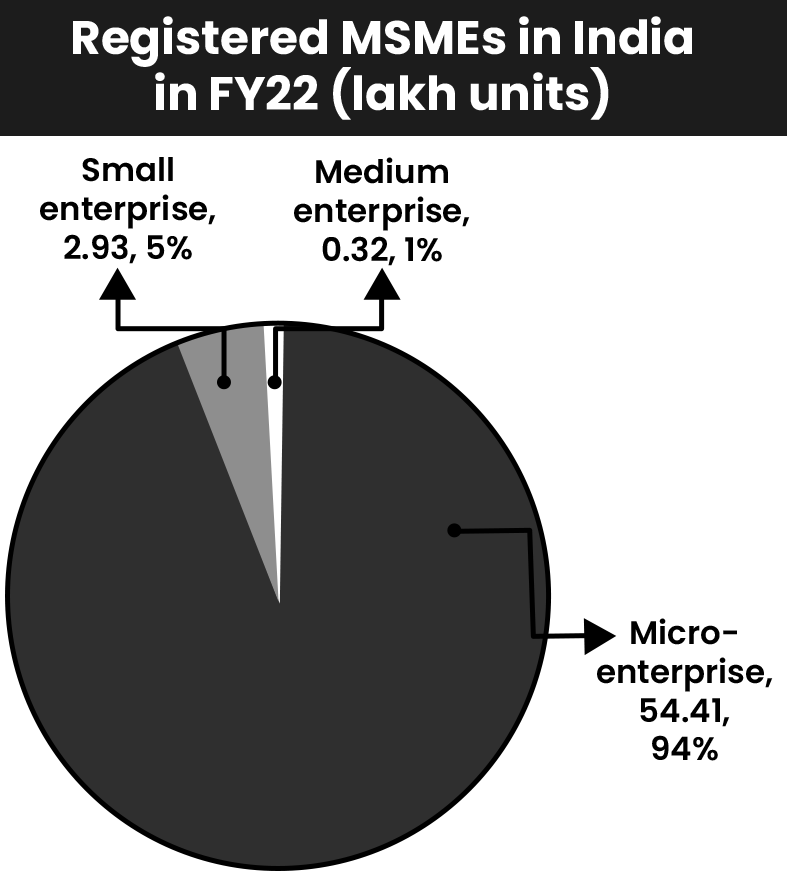
The Micro Small and Medium Enterprises (MSMEs) sector is a major contributor to the socio-economic development of the country. In India, the sector has gained significant importance due to its contribution to the Gross Domestic Product (GDP) of the country and exports.
Classification
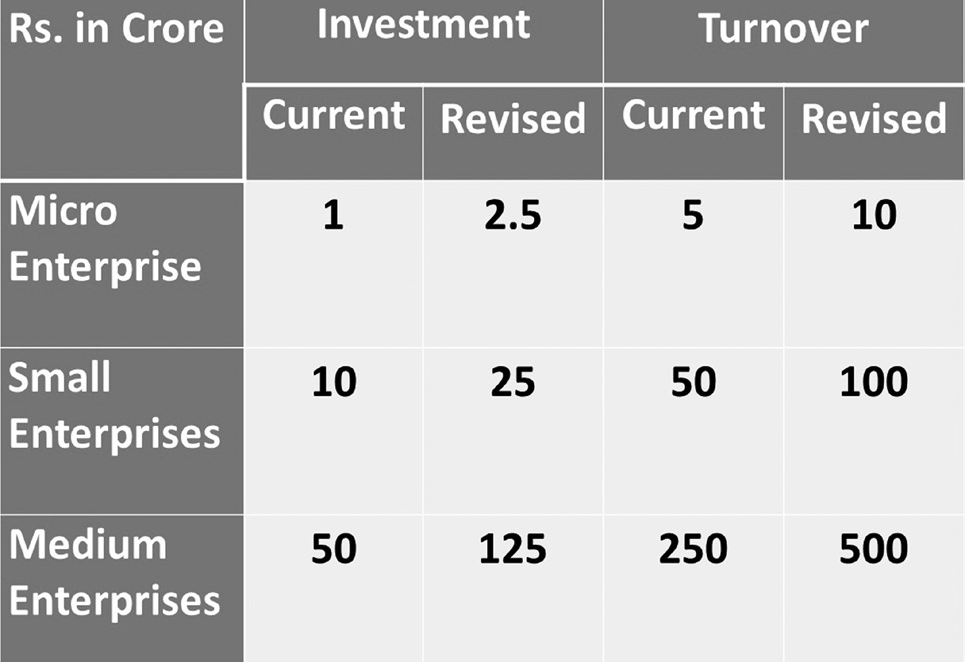
Earlier, the definition based on the Micro, Small, and Medium Enterprise Development (MSMED) Act 2006,
manufacturing and services units were considered under different categories. With the new definition announced in 2020, the difference between manufacturing based MSMEs and Services based MSMEs has been removed. Another vital change that was introduced with the MSME classification is the inclusion of turnover in the definition of MSME. Earlier, MSMEs were determined based on investments.
Below is the revised or new MSME classification
Market Size
MSMEs are being encouraged to market their products on the e-commerce site, especially through Government e-Marketplace (GeM), owned and run by the government, wherefrom Ministries and PSUs (public sector undertakings) source their procurement.
Statutory Bodies
MSME Ministry has four statutory bodies namely
Khadi and Village Industries Commission (KVIC) who are responsible for promoting and developing khadi and village industries for providing employment opportunities in rural areas, thereby strengthening the rural economy.
Coir Board in charge of promoting overall development of the coir industry and improving living conditions of workers in this industry.
National Institute for Micro, Small and Medium Enterprises, (NI-MSME) in-charge of enterprise promotion and entrepreneurship development, enabling enterprise creation, performing diagnostic development studies for policy formulation, etc.
Mahatma Gandhi Institute for Rural Industrialisation (MGIRI) responsible for accelerating rural industrial- isation for sustainable village economy, attracting professionals and experts to Gram Swaraj, empowering traditional artisans, encouraging innovation through pilot study/field trials and R&D for alternative technology using local resources.
BENEFITS OF THE MSME SECTOR TO THE INDIAN ECONOMY
The Indian MSME sector provides several benefits to the Indian society as well as the economy. Some of the benefits are given below:
MSME Sector’s Contribution to Indian Economy: The industry greatly strengthens the national economy. According to the Ministry of Statistics & Program Implementation, the MSME sector contributed 30% of the nation’s GDP’s Gross Value Added (GVA) in FY 20. Over the previous three years, the share has hovered around 30%. In FY 20, the sector’s share of India’s manufacturing gross value output remained at 36.9%, unchanged from FY 19. This percentage denotes the sector’s contribution to India’s economic expansion.
MSME Contribution to Export in India: One of the main exporters in the nation is the MSME sector. 49.5% of India’s overall exports in FY 21 were product exports tied to specific MSME, up from 49.8% in FY 20. The main exports from the Indian MSME sector are castor oil, grains, clothes, textiles, and various kinds of shoes.
Employment Generation: The MSME sector is one of the country’s major employers. Setting up an MSME would provide owners with a job, helping them avoid hunting for jobs elsewhere. It also enables them to create employment opportunities for others. The industry has played a significant role in creating job possibilities in the nation’s distant and rural areas. Data from the Ministry of MSMEs’ Udyam Portal shows that, as of FY 22, 93,94,957 individuals were employed by MSMEs that were registered on the portal.
Connecting Remote Areas to Rest of the Country: MSMEs in isolated and underdeveloped regions aid in tying these regions into the national and international economy by supplying essential raw materials and completed items that are in high demand worldwide. Many MSMEs are based in rural areas and supply supplementary commodities to global huge multinational corporations.
Improving Standard of Living: The MSME sector in India is crucial to bringing people out of poverty and raising their standard of living since it connects impoverished areas and creates jobs. As a result, the industry contributes
to lowering regional disparities throughout the nation and raising citizen equality.
Key Challenges Faced by MSMEs in India
Poor Ease of Doing Business Environment for Entrepreneurs: A poor business environment for startups is one of the major challenges faced by MSMEs in India. This is majorly due to numerous regulations, complex procedures, and bureaucratic redtapism.
Indian MSMEs are lagging on the technological front: One major reason why rival firms outperform Indian MSMEs is the lack of advanced technology. As Indian MSMEs fail to exploit the technological benefits; a lower consumer demand has become as customers switch to better options.
Scant Infrastructural Facilities: A good infrastructure base is a prerequisite for the success of any business. But Indian MSMEs are grappling with extremely insufficient infrastructure.
Financial backwardness remains a major deterrent: The financial backwardness in Indian MSMEs is a three-fold issue that encompasses: lack of financial knowledge, liquidity crunch, and a high cost of credit. Financial literacy among the Indian MSME sector is still quite low.
Working Capital Shortage: The enormous labour shortage especially due to the migration crisis is a major problem of MSMEs. It has been obstructing the recovery of the MSME sector post-pandemic. In addition, lack of skilled and trained manpower is another issue that needs to be addressed by providing on-work training and encouraging skill acquisition.
Outdated Practices and Knowledge Base: To keep up with the market trends, businesses need to be up-to- date with upcoming managerial, marketing, sales, and entrepreneurial skills.
Government Initiatives to Promote the MSME Sector
Considering the importance of the MSME sector in the socio-economic development of India, the government has announced several reforms to grow the sector and promote exports. Some of these reforms are mentioned below
Prime Minister’s Employment Generation Programme (PMEGP): The PMEGP scheme provides financial assistance for establishing small businesses and creating employment opportunities in urban and rural areas. It aims to generate sustainable employment opportunities for India’s youth as well as prospective traditional artisans. Financial assistance will be provided in the form of a bank-financed subsidy programme. Margin money subsidy on bank loans in the range of 15-35% will be provided for manufacturing projects not exceeding Rs. 50 lakh and for services sector projects not exceeding Rs. 20 lakhs. For beneficiaries meeting certain criteria, the subsidy will be 35% for projects in rural areas and 25% for projects in urban areas.
Interest Subsidy Eligibility Certificate (ISEC)- The scheme was introduced as a funding mechanism for khadi programme undertaken by khadi institutions in the country. It mobilises funds from banking institutions with an aim to fill the gaps between availability of funds from budgetary sources and the actual fund requirements.
Financial Support to MSMEs in ZED Certification Scheme- Supporting the ‘Make in India’ initiative, the aim of the scheme is to inculcate Zero Defect & Zero Effect (ZED) practices in manufacturing done by Indian MSMEs. Under the scheme, the Government of India (GoI) provides up to 80% subsidy to MSMEs.
A Scheme for Promoting Innovation, Rural Industry & Entrepreneurship (ASPIRE)
Scheme of Fund for Regeneration of Traditional Industries (SFURTI)- It aims to organize the traditional industries and artisans into clusters to make them competitive and provide support for their long-term sustainability and economy of scale; and provide sustained employment for traditional industry artisans and rural entrepreneurs.
Entrepreneurship and Skill Development Programme (ESDP) Scheme: The scheme aims to promote the establishment of new MSMEs and enhance the existing MSMEs’ capacity, encouraging an entrepreneurship culture among the citizens of the country.
National Manufacturing Competitiveness Progra-mme (NMCP): The National Manufacturing Competitiveness Council (NMCC) has finalised a five-year national manufacturing programme. Ten schemes have been drawn up including schemes for promotion of ICT, mini tool room, design clinics and marketing support for SMEs.
Road Ahead
The Government of India has envisioned doubling the Indian economy to US$ 5 trillion in five years. In order to achieve this goal, career opportunities for the young population have to be generated and MSMEs have the potential to serve as a key employment generator.
Therefore, the government has taken up promotion of MSMEs in order to create new jobs in the sector. Further, the government aims to enhance MSME’s share in exports and its contribution to GDP.
In order to achieve these targets, the government should invest in providing more back-end services to improve performance of the MSME sector as it supplies goods and services to big industrial enterprises.
Lack of technology-based production activities and low investment in R&D activities are bottlenecks hindering the sector to become competent. Globally available technology could be subsidised by the government so that the product quality of MSME players can be improved using the existing resources. This also requires the help of academic institutions
in the form of providing research and development (R&D) services for product innovation.
Production Linked Incentive Scheme
Production Linked Incentive Scheme or the PLI scheme was first launched in March 2020, to incentivize mainly labor- intensive industries on incremental sales from domestic production. The scheme encouraged foreign companies to set up their operations in India and also encouraged domestic manufacturers in expanding their operations, which would consequently increase employment and help reduce India’s imports and cut down the trade deficit by a significant margin.
Sectors included in PLI scheme to boost manufacturing
In 2020, the central government introduced the Production Linked Incentive (PLI) scheme for 14 sectors with a total incentive outlay of Rs 1.97 lakh crore.
The 14 sectors are mobile manufacturing, manufacturing of medical devices, automobiles and auto components, pharmaceuticals, drugs, specialty steel, telecom & networking products, electronic products, white goods (ACs and LEDs), food products, textile products, solar PV modules, advanced chemistry cell (ACC) battery, and drones and drone components.

Highlights of Production Linked Incentive Scheme (PLI)
The PLI scheme can also bring back old designs and product customs that can contribute heavily to the diversity, while also empowering forgotten artistry buried due to colonialism.
The framework of the PLI scheme is to reward increased production.
Due to the niche and specificity of PLI linked sectors, that mostly involve careful and attentive focus on man force and creating, PLI can enhance building systems to adjust to climate change and even essentially reverse it in the many years to come.
Success
The success of PLI schemes is largely attributed to China+1
strategy, which further came to the fore with the pandemic originating from china and subsequent lockdowns that affected supply chain management. With increased sanctions on china, and the Indian rupee depreciating against the Chinese yuan, the world is seeing India as a potential manufacturing option and positive schemes like the PLI scheme are only adding to the benefit of the economy.
PLI schemes boast of around INR 2 trillion investment to boost the manufacturing capacity of India. It is estimated by NITI Aayog that, if successful in execution, PLI schemes can create up to $500 billion in manufacturing output and 200000 quality jobs in India. With the introduction of PLI schemes, registration of manufacturing companies has shot up by a significant amount with the number being highest even in the
last 7 years. Existing manufacturing industries are also adding capacities at a rapid pace. With this spurt in manufacturing, the scheme is said to have the potential to add 4% to GDP annually if utilized to full capacity. The scheme aims to have India’s manufacturing as % of GDP at 25% at the end of the year 2025. According to Credit Suisse, India’s GDP growth will have a 0.8% increase because of the manufacturing spurt due to PLI schemes. In the latest reports, India’s Total Exports grew 20.4% YoY in Nov 2022.
Drawbacks
PLI schemes are coming out with mixed results for different sectors with many of the schemes being very generic in nature and there is not anything revolutionary in it for some sectors. Eg. Food, Pharma, Textiles, etc. It is also lopsided to mobiles, batteries, and automobiles which consist of mainly EVs with more than 50% incentives towards stated sectors. Low FDI inflow is one of the major drawbacks of the scheme. Barring a few sectors which include electronics, other sectors have seen negligible interest from global organizations. In addition, there are no common parameters for evaluation on the scale of value addition by companies that have received or are likely to receive incentives under the scheme.
Absence of a centralized system to track the progress of the scheme. Organizations with low market cap, low experience in a given sector, and low spread in
technology are taking part in schemes in multiple sectors due to attractive incentives for many companies, which is hazardous for the PLI ecosystem. India’s semiconductor chip crisis, which was the key area of focus in PLI schemes also drew one of the least attentions from the market. Overall, the industries have concerns regarding low incentives, high requirements of sales to avail incentives, and high requirements of investments. India’s weak manufacturing infrastructure also plays a key barrier in the full utilization of PLI schemes.
Industry in the Indian Economy
Industry holds a prominent position in the Indian economy, accounting for 31 percent of GDP, and employing over
12.1 crore people. The sector’s significance is demonstrated by the different direct and indirect connections it has with other industries, which support employment and economic growth. In the first place, it lessens dependency on imports and guarantees that domestic production can meet domestic demand, improving trade and current account balances as a result. Second, industrial growth has multiplier effects, which translates into employment growth. Some industries, such as textiles and construction, have high employment uncertainties. Third, industrial growth spurs growth in services sectors such as banking, insurance, logistics, etc.
Industrial production is a means to increase industrial income in the country. As measured by industrial GVA, growth in industrial income has kept pace with overall GVA growth in the economy since the pre-pandemic year of FY20. Manufacturing GVA, which contributes more than 50 per cent of industrial GVA, has grown at an even higher rate when compared to overall GVA.
Evolution of Industrial Policy Resolution
India had some industrial development before 1948, but it wasn’t strong. British rule hindered its growth, even harming the once-thriving cotton textile industry.
The 1948 Industrial Policy aimed to fix this and give India a solid foundation for industrial development, which really took off when the economy liberalized in 1991.
The main goals of this have been:
Consistent growth in production
More jobs
Making the best use of India’s workforce
Competing effectively in the global market
Industrial Policy 1948
This was the first policy that was implemented after gaining independence. It ushered in a mixed economic model in the country. Existing industries in India were categorized into the following sectors
Strategic industries such as rail transport, atomic energy along with arms and ammunition
Basic industries such as iron and steel, mineral oil, coal, etc.
Controlled private sectors such as cement, paper, textile, etc.
The private and cooperative sector
For the implementation of Policy resolutions, the Industries (Development and Regulation) Act, 1951 was passed.
Industrial Policy 1956
The Industrial Policy Resolution of 1956 was enacted with the intention of the state dominating the economy. This resolution served as the foundation for the Second Five Year Plan, an attempt to establish the framework for a socialist social structure and advance equity. Three categories were created for industries by this resolution
Schedule A: Included 17 industries that were entirely under the control of the State.
Schedule B: Included 12 industries that had both public and private ownership.
Schedule C: Included all other industries which did not fall within the ambit of the previous two categories.
Although there was a category of industries left to the private sector, the sector was kept under state control through a system of licenses.
New industries were prohibited unless they secured a government license. The goal of this policy was to advance industry in underdeveloped areas.
Even an existing industry had to obtain a license for expanding output or for diversifying production (producing a new variety of goods).
The Policy of 1956 led to an enormous expansion of the public sector to restrict private monopolies.
Industrial Policy 1977
The 1977 Policy Statement drew harsh criticism for failing to include any specific actions aimed at promoting socioeconomic development. Nonetheless, the proliferation of cottage and small industries had been the Policy’s primary focus.
Industrial Policy 1980
This Policy focused on the promotion of economic federation and restoration of the Monopolies and Restrictive Trade Practices (MRTP) Act.
In addition to acknowledging the need for better public sector administration, the IPR, 1980 included some clarifications and expansions.
Optimum utilization of installed capacity
Higher productivity and more employment
Special consideration for industrially underdeveloped units in order to eliminate regional imbalances
Encouragement of industries focused on exports as well as import substitution
Giving agro-related sectors preferential treatment in order to strengthen the economy’s reliance on agriculture.
Industrial Policy 1991
The Industrial Policy of 1991 opened up India’s economy to the world, in the backdrop of a severe economic crisis. It was this policy that led to an acceleration of economic growth in our country
The public sector, with the exceptions of railways and atomic energy, was opened up for the private sector.
Industrial licensing was abolished barring hazardous chemicals industries, defense, aerospace, industrial explosives, cigarettes, and tobacco.
Substantial government stakes were sold off from public sector enterprises.
Foreign Direct Investment was permitted.
The Monopolies and Restrictive Trade Practices (MRTP) Act was amended to give relaxations.
Public Sector Undertakings and Tools to Measure Industries
PUBLIC SECTOR UNDERTAKINGS
What is Public Sector Undertaking (PSU)?
PSU stands for Public Sector Undertakings in India and these are government-owned corporations. These Public sector companies represent the ‘Group of Companies’, owned by the union government of India, or one of the many states or territorial governments, or both. PSUs or public sector undertakings in India are very crucial elements that contribute to the economic progress of the nation. These are the companies whose majority paid share capital i.e., 51 per cent or more is owned by the Government of India.
Why PSUs Were Introduced?
Post-Independence India was dealing with serious socio- economic and financial issues due to a long time of slavery, income gap, imbalance of regional economic, and a lot of unemployment. Also, insufficient industrial base, not enough investments, and poor infrastructure facilities with untrained human resources, technological struggle all together tried to cripple the basic framework of running a successful public sector. Thus, the Public Sector in India was looked upon as the tool for making a self-reliant India and contributing towards the steady economic growth.
Public Sector Undertakings Classification
Public Sector undertakings (PSU) can be classified into three following categories
Central Public Sector Enterprises (CPSEs) – Public sector companies that are under the direct control of the Central Government or of other CPSEs by 51% or more than 51% of capital share ownership. They are further divided
Strategic Central Public-sector Enterprises (CPSEs)– Include the Arms & Ammunition and the defence equipments, defence aircraft, and other items related to defence, and in the field of atomic energy and railways transport.
Non-strategic CPSE – The rest of the CPSEs
Public Sector banks (PSBs)–Banks that are under the direct control of the Central Government or of other PSBs by 51% or more than 51% of capital share ownership.
State Level Public Enterprises (SLPEs)– Companies that are under the direct control of the State Government or other SLPEs by 51%or more than 51% of capital share ownership.
TYPES OF PSUS
There are three types of public sector companies based on various factors such as turnover stock exchange and annual revenue
Maharatna
Navratna
Mini-Ratna
The Department of Public Enterprises awards these statuses (Maharatna, Navratna, Miniratna) based on a company’s financial success and growth. This increased autonomy allows PSUs to compete better with private companies in India and abroad.
Maharatna Companies
Maharatna Companies have the highest status under this system and requires to have following
A company must already be a Navratna company (which has its own set of criteria).
The company should have an average annual turnover of INR 20,000 crore during the last three years. The average annual net worth should be INR 10,000 crore.
The Maharatna company’s status empowers the board to take investment decisions up to INR 5,000 crores as against the previous limit of 1,000 crores, without seeking government approval.The Maharatna companies are free to decide on investment matters up to 15% of their net worth in a project.
There are 13 Maharatna PSU companies in India as listed below
• Bharat Heavy Electricals Limited
• Bharat Petroleum Corporation Limited
• Coal India Limited
• GAIL India Limited
• Hindustan Petroleum Corporation Limited
• Indian Oil Corporation Limited
• NTPC Limited
• Oil & Natural Gas Corporation Limited
• Power Finance Corporation
• Power Grid Corporation of India Limited
• Steel Authority of lndia Limited
• Rural Electrification Corporation Limited
• Oil India Ltd
• Hindustan Aeronautics Limited
Navratna Companies
For being a Navratna Company, you will have to fulfil these criteria
It should be a Miniratna category-1 company and have
Schedule ‘A’ status
The record of at least three ‘Excellent’ or ‘very good’ Memorandum of Understanding (MoU) ratings during the last five years.
Being a Navratna company, it empowers PSEs to invest up to 15% of their net worth or INR 1,000 crore on a single project without asking for government approval. A Navratna company can spend up to 30% of their net worth not exceeding INR 1,000 cr. A Navratna company can decide to enter into joint ventures, form alliances, and float subsidiaries abroad.
There are 16 Navratna Public Sector Companies
1. Bharat Electronics Limited (BEL)
• Central Warehousing Corporation (CWC)
• Container Corporation of India Limited (CONCOR)
• Engineers India Limited (EIL)
• Housing & Urban Development Corporation Limited (HUDCO)
• Indian Railway Catering and Tourism Corporation Limited (IRCTC)
• Indian Railway Finance Corporation Limited (IRFC)
• Indian Renewable Energy Development Agency Limited (IREDA)
• IRCON International Limited
• Mahanagar Telephone Nigam Limited (MTNL)
• Mazagon Dock Shipbuilders Limited (MDL)
• National Aluminium Company Limited (NALCO)
• National Fertilizers Limited (NFL)
•
NBCC (India) Limited
• NHPC Limited
• NLC India Limited
NMDC Limited
Miniratna Companies: Miniratnas are divided as Category-I and Category-II
Miniratna Category-I
To achieve the Miniratnas Category-I status, the CPSE should have made a profit during the last three years continuously.
The amount of pre-tax profit should have been INR 30 crores or more in at least one year of the last three years of counting and should have a positive net worth.
Miniratnas can enter into joint ventures or set subsidiary companies or overseas offices.
Miniratna Category – II
The companies under Miniratna category-II, have controlling rights to incur the capital expenditure of up to INR 300 crore or up to 50% of their net worth, whichever is lower, without government approval.
TOOLS TO MEASURE PERFORMANCE OF INDUSTRIES
Index of industrial production
Index of Industrial Production (IIP) measures the quantum of changes in the industrial production in an economy and captures the general level of industrial activity in the country.
It is a composite indicator expressed in terms of an index number which measures the short-term changes in the volume of production of a basket of industrial products during a given period with respect to the base period.
The current base year for the IIP series in India is 2011-12.
The Index of Industrial Production is compiled and published every month by the Central Statistics Office (CSO) of the Ministry of Statistics and Programme Implementation with a time lag of six weeks from the reference month. i.e., at the time of release of IIP data, quick estimates for the relevant month along with revised and final indices of previous two months respectively, (on the basis of updated production data) are released.
The general scope of IIP, as recommended by the United Nations Statistics Division includes Mining & Quarrying, Manufacturing, Electricity, Gas steam, Air conditioning supply, Water supply, Sewerage, Waste management and Remediation activities.
But, in India, due to constraints of data availability and other resources, the index is compiled using figures of mining, manufacturing and electricity sectors only.
IIP is used as a core ingredient in the compilation of annual and quarterly national accounts and forecasts of GDP.
Index of Eight Core Industries
Electricity, steel, refinery products, crude oil, coal, cement, natural gas, and fertilizers are the eight main sectors of the Indian economy.
These industries greatly influence the majority of other industries and have a substantial impact on the Indian economy. In the Index of Industrial Production (IIP), which shows the growth rates of various industry groupings over a certain time period, the eight industries have a combined share of 40.27 percent.
The Department for Promotion of Industry and Internal Trade (DPIIT), the Ministry of Commerce & Industry, and the Office of the Economic Adviser (OEA) produce and release the Index of Eight Core Industries (ICI) each month prior to the release of the IIP.
The ICI measures the individual and collective performances of the production in these eight core industries, providing an indication of the production performance of the industries that are considered to be of a “core” type.
Annual Survey of Industries
The Annual Survey of Industries (ASI) is the principal source of Industrial statistics in India. It provides statistical information to assess and evaluate objectively and realistically, the changes in the growth, composition and structure of the organized manufacturing sector comprising of activities relating to manufacturing, processes, repair services, gas and water supply and cold storage. From 1976-77 round, data under ASI was collected under two schemes viz. (i) Census Sector (ii) Sample Sector.
The Labour Bureau processes, compiles and disseminates data on the Labour Part of the ASI. The main objectives of the Annual Survey of Industries (Labour Part) data which the Labour Bureau compiles are to build a systematic database on Absenteeism; Labour Turnover; Earnings; Employment, and Labour Cost in Manufacturing Industries, and to analyse various components of Labour Costs such as Wage/ Salary; Bonus; Provident Funds; Welfare Expenses, etc. in Manufacturing Industries.
Fourth Industrial Revolution
Fourth Industrial Revolution
The concept of the Fourth Industrial Revolution was coined in 2016 by Klaus Schwab, the founder of the World Economic Forum.
“The Fourth Industrial Revolution creates a world in which virtual and physical systems of manufacturing cooperate with each other in a flexible way at the global level”. The Fourth Industrial Revolution, however, is not only about smart and connected machines and systems. Its scope is much wider. Occurring simultaneously are waves of further breakthroughs in areas ranging from gene sequencing to nanotechnology, from renewable energies to quantum computing. It is the fusion of these technologies and their interaction across the physical, digital and biological domains that make the Fourth Industrial Revolution fundamentally different from previous revolutions.
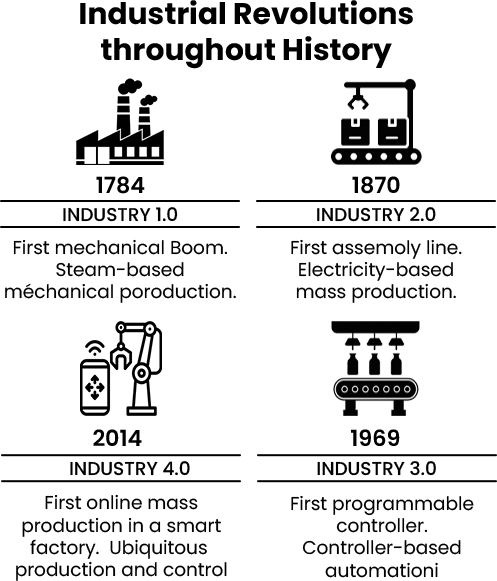
First Industrial Revolution: It occurred at the end of the 18th century, in 1784, when steam was harnessed for mechanical production. The invention of the first mechanised loom was a watershed.
Second Industrial Revolution: In 1870, mass production powered by electricity was first introduced. The assembly line was invented and the industrial sector speeded up exponentially.
Third Industrial Revolution: In 1969, advances in computing led to machine programming, which opened the door to progressive automation.
Technologies of the Fourth Industrial Revolution
Artificial Intelligence is set to be one of the key technologies in the sweeping transformation of the economy, society and the labour market.
Internet of things: Internet of things technology, which is designed to establish a connection between the physical and digital worlds, has revolutionised numerous sectors. In fact, billions of devices are already interconnected and more and more devices are becoming smart.
Cobots: Robotics is constantly evolving and the cobots, specially designed to interact physically with humans in collaborative environments, will be key to industry. Among other things, they optimise production and save employees from doing monotonous and dangerous tasks.
Augmented reality and virtual reality: Augmented reality and virtual reality, technologies that combine the real world and the digital world using computer science, enrich the visual experience of both users and consumers by generating immersive experiences.
Big data: Information is power. The full-blown Fourth
Industrial Revolution will allow us to change data into information. Big data allows massive data management and interpretation for business purposes, which is particularly relevant when devising business strategies or making decisions.
3D and 4D printing: These days we have the means to develop prototypes or products for sale quickly, accurately and economically with 3D and 4D printing. This technology is becoming increasingly important in design, architecture, engineering, etc.
Effects and Advantages of the Fourth Technological Revolution
All revolutions have benefits and drawbacks, challenges and opportunities, uncertainties and certainties. In the case of the Fourth Industrial Revolution, the advantages are evident: increased productivity, efficiency and quality in processes, greater safety for workers by reducing jobs in dangerous environments, enhanced decision making with data-based tools, improved competitiveness by developing customised products that satisfy consumers’ needs, etc.
As far as the drawbacks are concerned, the experts point to many: the dizzying speed of change and the need to adapt, burgeoning cyber risks that force us to ramp up cybersecurity, high dependence on technology and the so-called digital gap, lack of qualified staff, etc. Regarding the latter, it is worth remembering that the deep impact of Industry 4.0 on employment is one of the biggest challenges for the Fourth Industrial Revolution. At the start of the process, a McKinsey Global report confirmed that up to 800 million jobs will have disappeared by 2030 as a result of automation. However, this may also be an opportunity, because, as novel technologies emerge, so will new professions that will create millions of jobs in new sectors.
Retail Industry in India
Retail Industry in India
The Indian retail industry has emerged as one of the most dynamic and fast-paced industries due to the entry of several new players.
It accounts for over 10% of the country’s gross domestic product (GDP) and around 8% of the employment.
India is the world’s fifth-largest global destination in the retail space.
The sizeable middle class and nearly unexplored retail market in India are the main enticing factors for international retail behemoths seeking to move into newer markets, which will help the Indian retail business grow more quickly.
The retail sector in India is expected to reach a whopping US$ 2 trillion in value by 2032, according to a recent analysis by the Boston Consulting Group (BCG).
India is the world’s fifth-largest global destination in the retail space. In FDI Confidence Index, India ranked 16 (after the US, Canada, Germany, United Kingdom, China, Japan, France, Australia, Switzerland, and Italy).
Government may change Foreign Direct Investment (FDI) rules in food processing in a bid to permit E-commerce companies and foreign retailers to sell Made in India consumer products.
Government of India has allowed 100% FDI in online retail of goods and services through the automatic route, thereby providing clarity on the existing businesses of E-commerce companies operating in India.
India’s retail trading sector attracted US$ 4.29 billion FDIs between April 2000-September 2022.
India ranks among the best countries to invest in retail space. Factors that make India so attractive include the second largest population in the world, a middle-income class of households, increasing urbanization, rising household incomes, connected rural consumers and increasing consumer spending.
FMCG, apparel & footwear, and consumer electronics are the largest retail segments, constituting 65%, 10%, and 9% respectively of the retail market.
Digital-led challenges
However, the digital transformation is also leading up to consumer behaviour which may emerge as a major challenge for the retail industry.
Secondly, the retailers have to sail through the labyrinth of tech solutions in the market to find the perfect one for themselves. Business owners need to understand what the software offers and whether it fits the needs of their business model.
Thirdly, many retail businesses struggle with efficiency, effectiveness, and quantifying the results of their marketing strategies, including paid media, local SEO, enterprise SEO, content strategy and social media.
Opportunities-led growth
Over the past two years, the COVID-19 pandemic has led to changes in consumer preferences and attitudes; this has changed how consumers buy and use products and services. Consumers are no longer differentiated between offline and online consumption channels making large corporations’ experiment with various strategies to create seamless retail experiences integrated across all channels. Retailers will use digital channels to increase customer reach in tier II and tier III cities while spending less on physical estate. Small-sized retailers will benefit from the continued popularity of third-party e-commerce platforms or marketplaces as they continue to rule the D2C market and beyond. However, the industry’s long-term prospects are promising, supported by rising affluence, favourable demographics, the entry of foreign competitors, and increased urbanization
Special Economic Zone , Coastal Economic Zone
Special Economic Zone (SEZ)
Special Economic Zone (SEZ) is a specifically delineated duty-free enclave and shall be deemed to be foreign territory for the purposes of trade operations and duties and tariffs. In other words, SEZ is a geographical region that has economic
laws different from a country’s typical economic laws. Usually, the goal is to increase foreign investments. SEZs have been established in several countries, including China, India, Jordan, Poland, Kazakhstan, Philippines and Russia.
Special Economic Zones - An overview:
India was one of the first in Asia to recognize the effectiveness of the Export Processing Zone (EPZ) model in promoting exports, with Asia’s first EPZ being set up in Kandla in 1965.
With a view to overcome the shortcomings experien-ced on account of the multiplicity of controls and clearances, absence of world-class infrastructure and to attract larger foreign investments in India, the Special Economic Zones (SEZs) Policy was announced in April, 2000.
This policy intends to make SEZs an engine for economic growth supported by quality infrastructure complemented by an attractive fiscal package, both at the Centre and the State level, with the minimum possible regulations.
The Special Economic Zones Act, 2005, was passed by Parliament in May, 2005 which received Presidential assent on June 23, 2005. The SEZ Rules, came into effect on February 10, 2006, providing for drastic simplification of procedures and for single window clearance on matters relating to Central as well as State governments.
The main objectives of the SEZ Act are
Generation of additional economic activity.
Promotion of exports of goods and services.
Promotion of investment from domestic and foreign sources.
Creation of employment opportunities.
Development of infrastructure facilities.
The SEZ Act, 2005 envisages a key role for the State Governments in Export Promotion and creation of related infrastructure.
The category ‘SEZ’ covers a broad range of more specific zone types, including, but not limited to
Free Trade Zones (FTZs)
Export Processing Zones (EPZs)
Free Zones (FZs)
Industrial Estates (IEs)
Free ports
Urban enterprise zones
Incentives for setting up a business in an Indian SEZ
Some incentives for setting up a sourcing or manufacturing platform within an Indian SEZ include
Duty free import and domestic procurement of goods for the development, operation, and maintenance of your company/SEZ unit.
•
100% Income Tax exemption on export income for SEZ units under Section 10AA of the Income Tax Act for the first 5 years, 50% for the next 5 years thereafter.
• Income tax exemption on income derived from the business of development of the SEZ in a block of 10 years in 15 years under Section 80-IAB of the Income Tax Act. (Sunset Clause for Developers has become effective from 01.04.2017).
• Exemption from customs/excise duties for development of SEZs for authorized operations.
• Exemption from the Goods and Service Tax (GST) and levies imposed by the state government (supplies to SEZs are zero rated under the IGST Act, 2017, meaning they are not taxed).
• Exemption from Minimum Alternate Tax (MAT).
• Single window clearances for all state and federal government approvals.
• Exemption in electricity duty and tax on sale of electricity by certain states in India.
• Presence of customs officer in the SEZs to facilitate and expedite the trade processes.
• Some states also offer land to SEZ developers at concessional rates to promote industries in accordance with the state’s prevailing Industrial Policy.
Sagarmala Project
Maritime sector in India has been the backbone of the country’s trade and has grown manifold over the years. To harness India’s 7,500 km long coastline, 14,500 km of potentially navigable waterways and strategic location on key international maritime trade routes, the Government of India has embarked on the ambitious Sagarmala Program which aims to promote port-led development in the country.


Components of Sagarmala Programme
Port Modernization and New Port Development: Developing new greenfield ports and debottling and increasing the capacity of already-existing ports.
Improvement of Port Connectivity: Increasing the ports’ accessibility to the hinterland and maximising the time
and cost of cargo movement by utilising multimodal logistics solutions, such as domestic waterways (inland water transport and coastal shipping).
Creating port-proximate industrial clusters and Coastal Economic Zones can lower the cost and duration of logistics for both domestic and export cargo. This is known as port-linked industrialization
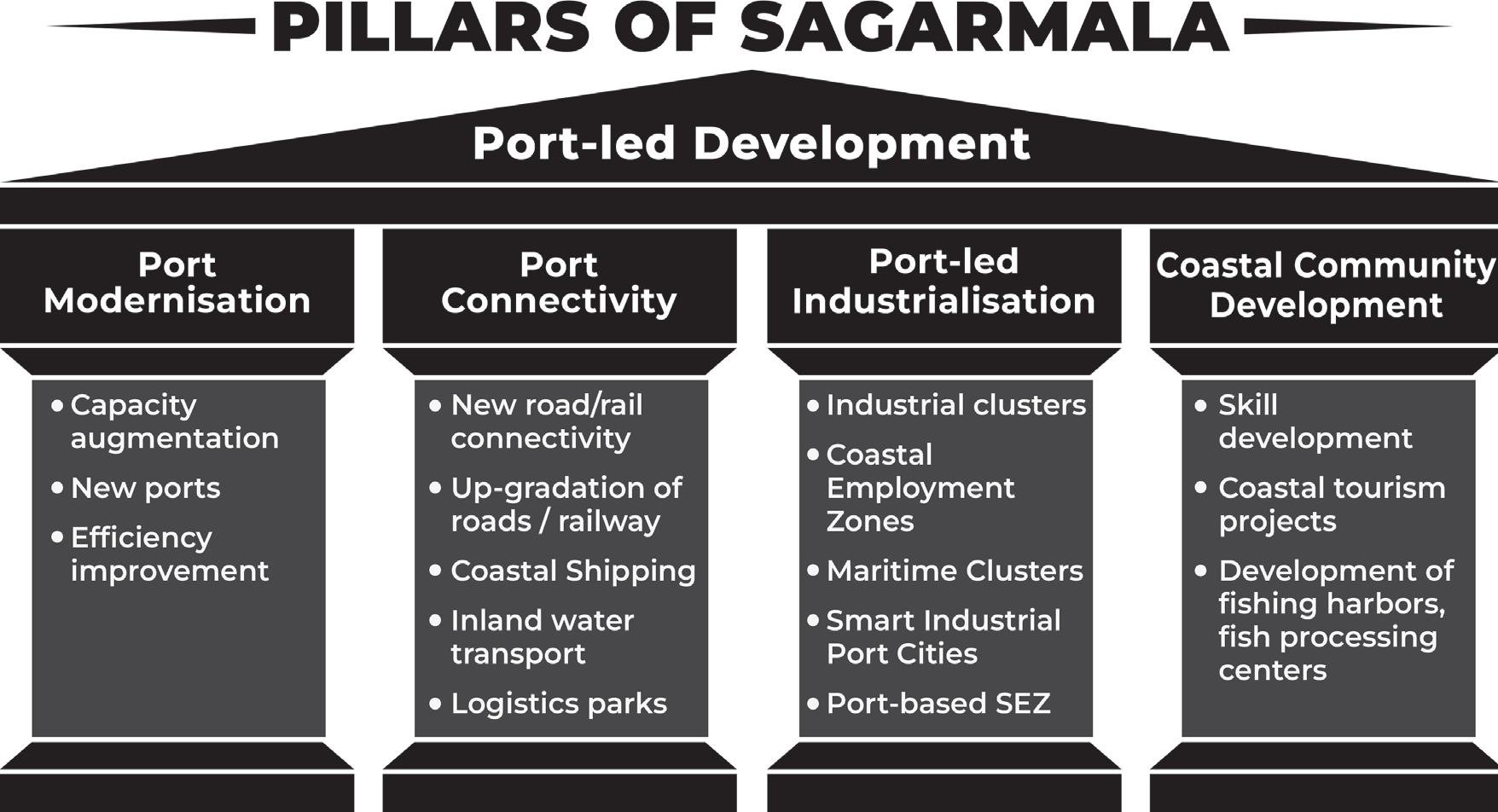

Coastal Community Development: Encouraging the sustainable growth of coastal communities by means of activities such as fisheries development, coastal tourism, skill development, and livelihood generation.
Coastal Shipping and Inland Waterway Transport: Encouragement to transport goods by environmentally responsible, sustainable coastal and inland waterway modes.
Coastal Economic Zones
The Ministry of Shipping has introduced the Coastal Economic Zone (CEZ). The CEZs are categorized to develop the country’s economic status by initiating port- led industrialization. The zones are set up to create a business-friendly environment by making the import and export easy and fast on the environmental clearances.
It consists of a group of coastal districts or districts with strong linkage to ports in the region to utilize the synergies with planned industrial corridor projects.
In order to support manufacturing and create jobs, 14 such industrial clusters will be developed, and CEZ will be one of them.
Each CEZ will consist of multiple CEUs and more than one industrial cluster can be housed within a CEU. Within each industrial cluster there can be several manufacturing units. To accelerate the CEU development process, it is proposed that CEUs be prioritized in locations where land parcels are available in areas close to a deep draught port and with strong potential for manufacturing.
Coastal Economic Units (CEUs): CEUs will be specific industrial estate projects with a demarcated
boundary similar to the DMIC nodes. The CEUs will house the industrial clusters / projects proposed within the CEZ.
Under the auspices of NITI Aayog, an Inter-Ministerial Committee (IMC) was established to oversee the development of CEZs in India.
Multi-Modal Logistics Parks (MMLPs)
Multi-Modal Logistics Parks (MMLPs) is a logistic programme by the government to develop Multi-Modal Logistics Parks across different logistics centers in the country.
The initiative is led by National Highways Logistics Management Limited under Ministry of Road Transport and Highways (MoRTH) and the National Highways Authority of India (NHAI).
These MMLPs will be developed in a hub-and-spoke model (a hub-and-spoke network connects every location through a single intermediary location called a hub) to improve the country’s freight logistics sector.
MMLP development is expected to give tremendous benefits to the transportation sector. Among them are
• Reduced freight expenses overall.
• Lower costs for warehousing.
• Decreased traffic and pollution from cars.
• Improved traceability and tracking of shipments during transportation.
The MMLPs additionally offer value-added services like
customs clearances, IT services, storage, and warehousing solutions.
Design of Multi-Modal Logistics Parks (MMLPs)
The Cabinet Committee on Economic Affairs (CCEA) had authorized MoRT&H to develop 35 Multi Model Logistics Parks (MMLP) across the country.
These 35 MMLPs being implemented by MoRTH are to be developed under Public Private Partnership (PPP) on Design, Build, Finance, Operate and Transfer (DBFOT) mode.
A total five MMLPs at Jogighopa, Chennai, Bengaluru, Nagpur and Indore are expected to complete in FY 2025- 26 and FY 2026-27 which will improve logistic efficiency by decreasing the cost of logistic. It is seen as great achievement in the field of logistics
The National Highways and Logistics Management (NHLML), which is a special purpose vehicle (SPV) and fully owned by the National Highways Authority of India (NHAI), plans to construct the majority of the proposed MMPLs in public private partnership (PPP) mode. The parks will have a 50:50 funding model.
Need for the MMLPs
According to the Asian Development Bank (ADB), India’s Logistics sector is having high cost and lower efficiency compared to other countries. This has reduced the overall efficiency in the economy and increased the cost structure of all commodities.
Compared to other countries road freights in India are higher, while the average speed of freight vehicles is about 50%–60% lower. Following factors adversely affect freight movement in India according to the ADB.
Skewed modal transportation mix: In India, 60% of freight moves by road, which is significantly larger than in many developed economies. Coastal movement and inland waterways are at a nascent stage. Rail transport is marginal, in spite of being 45% cheaper per ton–km than road, due to adverse pricing and rake booking practices and lack of intermodal facilities to enable easy transfer.
Underdeveloped material handling infrastructure: Warehousing landscape is highly unorganized with the presence of a large number of small, private, and unorganized warehouses, providing little or no value- added services. The economies of scale associated with integrated and large warehousing facilities or multimodal logistic parks (MMLPs) is not available to all participants in the value chain, including the small and medium enterprises.
Inefficient fleet mix: Small and inefficient trucks with gross vehicle weight rating of 16–25 metric tons (MT) have lower payloads. Absence of logistics hubs to act as zones for freight consolidation and disaggregation results in higher point-to-point freight movement on
lower sized vehicles, compared to more efficient line haul freight.
• Outdated/inefficient service model: Efficiency is also compromised as many firms try to compete through the factor advantage of low wages which have led to hiring poorly skilled personnel thereby eschewing investments in information technology and equipment technology, and consequently sacrificing productivity gains and service quality.
Fragmented institutional and governance structure: Different parts of the logistics value chain currently are being managed by different ministries including Road Transport and Highways, Shipping, Railways, Civil Aviation, Commerce and Industry, Finance, Home Affairs, and Department of Posts. In addition, a large number of government agencies including Central Drug Standard Control Organization, Food Safety and Standards Authority of India, and Plant and Animal Quarantine Certification Service provide relevant trade clearances and impact the value chain. Globally, leading countries that have achieved efficiency in logistics, like Germany, Japan, the Republic of Korea, and Malaysia, follow a completely integrated approach towards logistics, and the government provides coordinated oversight to the entire logistics value chain
Various Sectors of Manufacturing Industry
VARIOUS SECTORS OF MANUFACTURING INDUSTRY
Steel Sector
• One of the primary forces behind industrialization has been the use of metals. Steel has traditionally occupied a top spot among metals. Steel production and consumption are frequently seen as measures of a country’s economic development because it is both a raw material and an intermediary product. Therefore, it would not be an exaggeration to argue that the steel sector has always been at the forefront of industrial progress and that it is
the foundation of any economy. The Indian steel industry is classified into three categories - major producers, main producers and secondary producers.
India is the world’s second-largest producer of crude steel, it has increased to 7.9% in a duration of 2014-2024. It was recorded with 5.2% in 2014.
Production of 168.4 MT crude steel in 2025-26 and 152.2 in 2024-25
Government supported via provision of 100% FDI under automatic route. This resulted in attracting ₹1,60,000 crore (USD 18.67 billion) between April 2000 and June 2025 by metallurgical industries.
The growth in the Indian steel sector has been driven by the domestic availability of raw materials such as iron ore and cost-effective labour. Consequently, the steel sector has been a major contributor to India’s manufacturing output.
The Indian steel industry is modern, with state-of-the- art steel mills. It has always strived for continuous modernisation of older plants and up-gradation to higher energy efficiency levels.
Investments
The steel industry and its associated mining and metallurgy sectors have seen major investments and developments in the recent past.
According to the data released by the Department for Promotion of Industry and Internal Trade (DPIIT), between April 2000-December 2022, Indian metallurgical industries attracted FDI inflows of US$ 17.22 billion.
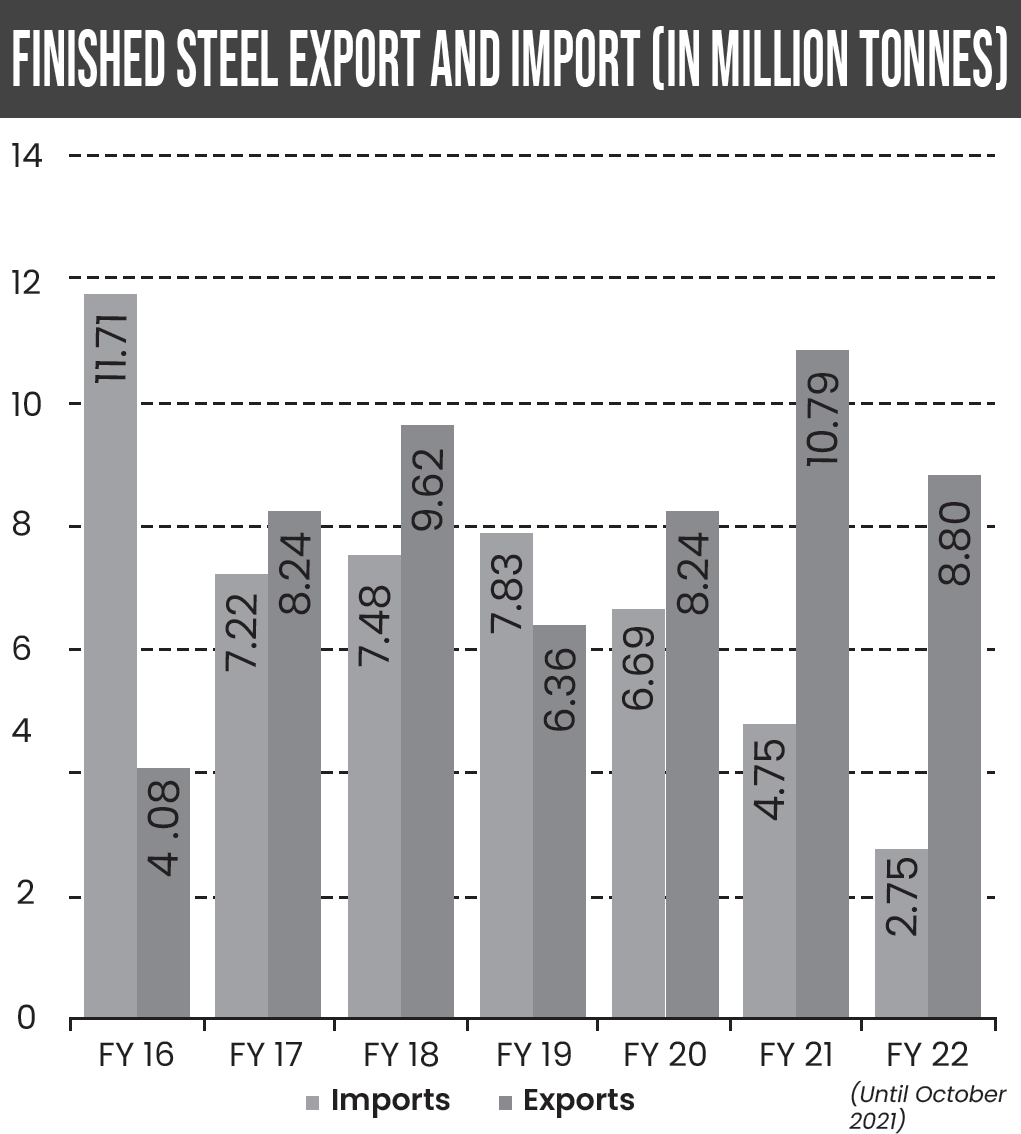
In FY22, demand for steel was expected to increase by 17% to 110 million tonnes, driven by rising construction activities.
Market Size
Government Initiatives
Some of the other recent Government initiatives in this sector are as follows:
• In July 2021, the Union Cabinet approved the Production- Linked Incentive (PLI) scheme for specialty steel.
• In 2020, ‘Mission Purvodaya’ was launched to accelerate the development of the eastern states of India (Odisha, Jharkhand, Chhattisgarh, West Bengal and the northern part of Andhra Pradesh) through the establishment of an integrated steel hub in Kolkata, West Bengal.
• The Union Cabinet, Government of India approved the National Steel Policy (NSP) 2017, as it intends to create a globally competitive steel industry in India. NSP 2017 envisage 300 million tonnes (MT) steel-making capacity and 160 kgs per capita steel consumption by 2030-31.
• The Ministry of Steel is facilitating the setting up of an industry driven Steel Research and Technology Mission of India (SRTMI) in association with the public and private sector steel companies to spearhead research and development activities in the iron and steel industry at an initial corpus of Rs. 200 crore (US$ 30 million).
Pharmaceuticals Sector
• India is the largest provider of generic drugs globally and is known for its affordable vaccines and generic medications.
• The Indian pharmaceutical industry ranks 3rd globally by volume and 11th by value, with more than 3,000 companies and 10,500 manufacturing units.
• FY25, the sector’s annual turnover reached Rs. 4.72 lakh crore, with exports growing at a CAGR of 7% over the last decade (FY15 to FY25). Generic drugs, over-the-counter medications, bulk drugs, vaccines, contract research & manufacturing, biosimilars, and biologics are some of the major segments of the Indian pharma industry.
• India has the greatest number of pharmaceutical manufacturing facilities that are in compliance with the US Food and Drug Administration (USFDA) and has 500
API producers that make for around 8% of the worldwide API market.
Indian pharmaceutical sector supplies over 50% of global demand for various vaccines, 40% of generic demand in the US and 25% of all medicine in the UK.
The domestic pharmaceutical industry includes a network of 3,000 drug companies and ~10,500 manufacturing units. India enjoys an important position in the global pharmaceuticals sector.
The country also has a large pool of scientists and engineers with a potential to steer the industry ahead to greater heights.
Presently, over 80% of the antiretroviral drugs used globally to combat AIDS (Acquired Immune Deficiency Syndrome) are supplied by Indian pharmaceutical firms. India is rightfully known as the “Pharmacy of the World” due to the low cost and high quality of its medicines.
According to a recent EY FICCI report, as there has been a growing consensus over providing new innovative therapies to patients, Indian pharmaceutical market is estimated to touch US$ 130 billion in value by the end of 2030. Meanwhile, the global market size of pharmaceutical products is estimated to cross over the US$ 1 trillion mark in 2023.
Market Size

EXPORTS
• Pharmaceutical is one of the top ten attractive sectors for foreign investment in India. The pharmaceutical exports from India reach more than 200 nations around the world, including highly regulated markets of the USA, West Europe, Japan, and Australia. India supplied around 45 tonnes and 400 million tablets of hydroxychloroquine to around 114 countries globally.
• India’s drugs and pharmaceuticals exports stood at (US$ 30.5 billion) for FY25 from (US$ 25.3 billion) for FY23, as per the data by Pharmexcil
• Export momentum has also remained strong every month, with Drugs and Pharmaceuticals exports rising by approximately
2.70 per cent from USD 2.59 billion in January 2025 to USD 2.66 billion in January 2026. Further, medical device exports have grown significantly from USD 2.5 billion in 2020-21 to USD 4.1 billion in 2024-25, with exports to 187 countries in FY25.
• Indian drugs are exported to more than 191 countries in the world, with US being the key market. Generic drugs account for 20% of the global export in terms of volume, making the country the largest provider of generic medicines globally.

Government Initiatives
Some of the initiatives taken by the Government to promote the pharmaceutical sector in India are as follows
• As per the Union Budget 2023-24
• A mission to eliminate sickle cell anemia by 2047 will be launched. It would involve raising awareness, conducting a comprehensive screening of seven crore individuals in the impacted tribal regions between the ages of 0 and 40, and providing counselling through coordinated efforts.
• For innovation in the pharmaceutical sector, through centres of excellence, a new initiative to encourage pharmaceutical research and innovation will be implemented. The government persuades business to spend money on R&D in a few chosen priority fields. At the grassroots level, government has also announced on building 157 nursing colleges in co- location with government medical colleges.
• The Union Cabinet, on April 26, 2023, approved the National Medical Devices Policy, 2023. The National Medical Devices Policy, 2023 is expected to facilitate an orderly growth of the medical device sector to meet the public health objectives of access, affordability, quality and innovation.
Ayushman Bharat Digital Mission (ABDM)
• Under the ABDM, citizens will be able to create their ABHA (Ayushman Bharat Health Account) numbers, to which their digital health records can be linked. This will enable creation of longitudinal health records for individuals across various healthcare providers and improve clinical decision making by healthcare providers.
• The trial of ABDM is completed in the six Union Territories of Ladakh, Chandigarh, Dadra & Nagar Haveli and Daman & Diu, Puducherry, Andaman and Nicobar Islands and Lakshadweep with successful demonstration of technology platform developed by the NHA.
Scheme for Development of Pharma industry –
Umbrella Scheme
The Department of Pharmaceuticals has prepared an Umbrella Scheme namely ‘Scheme for Development of Pharma industry’. Which comprises of the following sub schemes
Assistance to Bulk Drug Industry for Common Facilitation Centres
Assistance to Medical Device Industry for Common Facilitation Centres
Assistance to Pharmaceutical Industry (CDP-PS)
Pharmaceutical Promotion and Development Scheme (PPDS)
Pharmaceutical Technology Upgradation Assistance Scheme (PTUAS).
TEXTILE SECTOR
• India’s textiles sector is one of the oldest industries in the Indian economy, dating back to several centuries. The industry is extremely varied, with hand-spun and hand-woven textiles sectors at one end of the spectrum, with the capital-intensive sophisticated mills sector at the other end. The fundamental strength of the textile industry in India is its strong production base of a wide range of fibre/yarns from natural fibres like cotton, jute, silk and wool, to synthetic/man-made fibres like polyester, viscose, nylon and acrylic.
• In order to attract private equity and employee more people, the government introduced various schemes such as the Scheme for Integrated Textile Parks (SITP), Technology Upgradation Fund Scheme (TUFS) and Mega Integrated Textile Region and Apparel (MITRA) Park scheme.
Market Size

Government Initiatives
The Indian government has come up with several export promotion policies for the textiles sector. It has also allowed 100% FDI in the sector under the automatic route.
Other initiatives taken by the Government of India are
In February 2023, the union government approved 1,000 acres for setting up a textile park in Lucknow.
The establishment of 7 (seven) PM Mega Integrated Textile Region and Apparel (PM MITRA) Parks with a total investment of US$ 541.82 million (Rs. 4,445 crore) for the years up to 2027–28 was approved by the government.
In June 2022, the Kerala government announced that it would provide free training to 1,975 candidates under the SAMARTH scheme of the textile industry.
• The Sustainable Textiles for Sustainable Development (SusTex) project by the United Nations Climate Change entity enhances the employment and working circumstances of textile artisans while promoting the sustainable production and use of environmentally friendly textiles.
• The Ministry of Textiles has also been implementing the Handloom Marketing Assistance (HMA), a component of National Handloom Development Programme (NHDP) all across India. HMA provides a marketing platform to the handloom weavers/agencies to sell their products directly to the consumers and develop and promote the marketing channel through organizing expos/events in domestic as well as export markets.
National Technical Textiles Mission
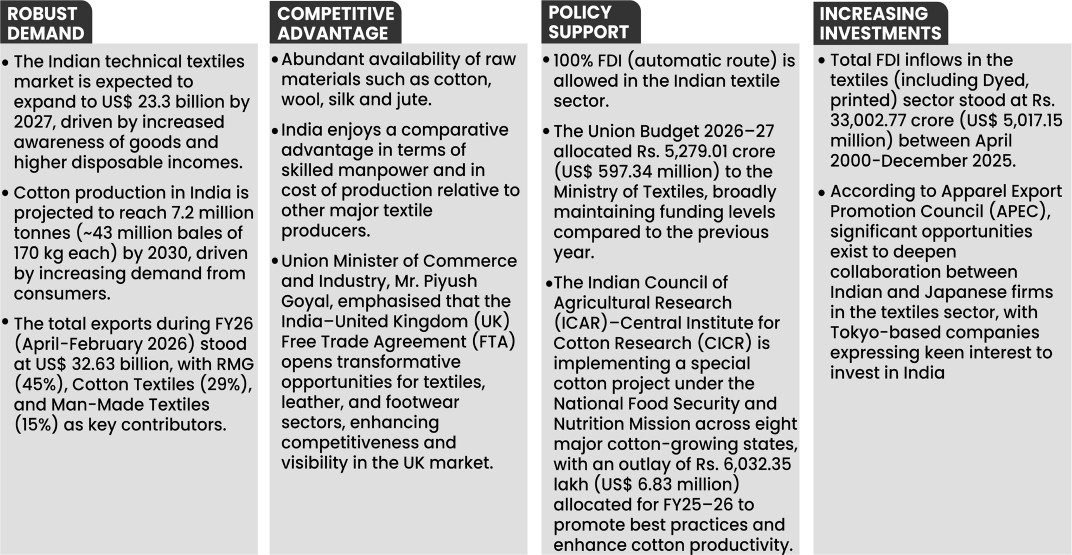
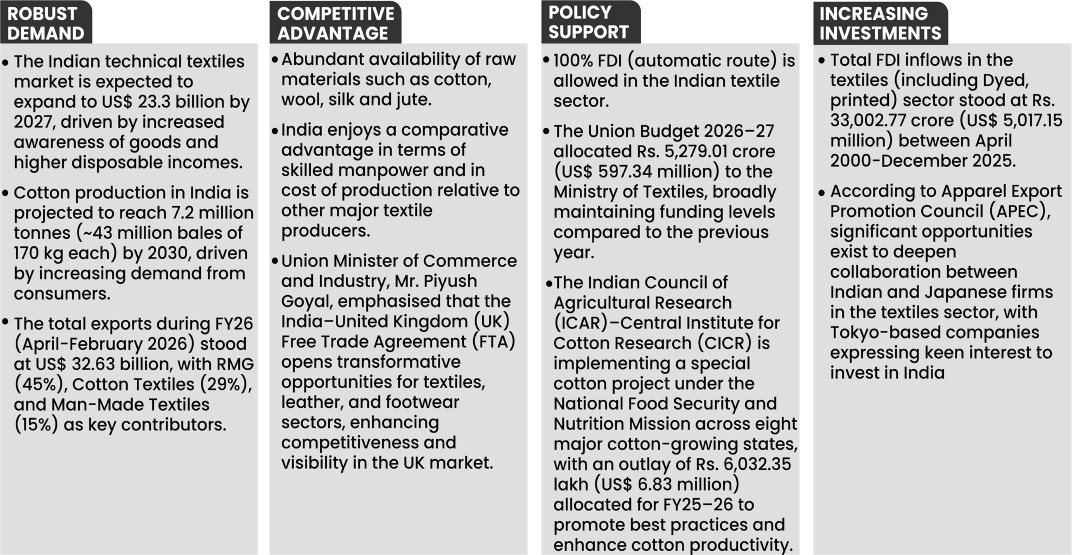
Textile materials that are manufactured for their technical performances and functional properties rather than aesthetic and decorative features fall under the technical textiles category. These products are broadly classified into 12 different categories- Agrotech, Oekotech, Buildtech, Meditech, Geotech, Clothtech, Mobiltech, Hometech, Sportstech, Indutech, Protech, Packtech. To position India as a global leader in Technical Textiles, the Ministry of Textiles launched this scheme.
With a view to position the country as a global leader in Technical Textiles, National Technical Textiles Mission (NTTM) has been approved with a four-year implementation period from FY 2020-21 to 2023-24.
The Mission will have four components
• Component-I (Research, Innovation and Development)
- The fundamental research activities will be based on ‘pooled resource’ method and will be conducted in various Centre for Scientific & Industrial Research (CSIR) laboratories, Indian Institute of Technology (IIT) and other scientific/ industrial/ academic laboratories of repute.
Jute Textile Industry
Component –II (Promotion and Market Development)
- The penetration level of technical textiles is low in India. The Mission will aim at increasing average growth rate through market development, market promotion, international technical collaborations, investment promotions and ‘Make in India’ initiatives.
Component – III (Export Promotion) - The component aims at export promotion of technical textiles. An Export Promotion Council for Technical Textiles will be set up for effective coordination and promotion activities in the segment
Component- IV (Education, Training, Skill Development) - Education, skill development and adequacy of human resources in the country is not adequate to meet the technologically hallenging and fast-growing technical textiles segment. The Mission will promote technical education at higher engineering and technology levels related to technical textiles and its application areas covering engineering, medical, agriculture, aquaculture, and dairy segments.

• Factors Responsible for the Concentration of Jute Industry in the Hooghly Basin
• Proximity of Jute-Producing Areas to the Hooghly Basin.
• Inexpensive Water Transport Provided by the Hooghly River.
• Well-Connected Network of Railways, Waterways, and Roadways for Raw Material Transportation.
•
Abundant Water Resources for Processing Raw Jute.
• Availability of Affordable Labor from West Bengal and Adjoining States.
• Access to Banking, Insurance, and Port Facilities in Kolkata for Exporting Jute Goods.
Government Initiatives for Jute Industry
Minimum Support Price (MSP) for Raw Jute and Mesta: The government sets MSP for raw jute and mesta every
year to protect the interests of jute farmers. The MSP aims to encourage the production of higher-grade jute and motivate farmers to produce better-quality raw jute.
National Jute Board (NJB): The National Jute Board, established under the National Jute Board Act, 2008, has been working since April 1, 2010, to develop an integrated approach to jute cultivation. NJB’s objectives include increasing jute yield, improving the quality of raw jute, promoting better marketing practices, and standardizing raw jute and jute products.
Jute Corporation of India (JCI) Ltd: JCI, a government enterprise founded in 1971, plays a crucial role in implementing the MSP policy for jute producers. It serves as a stabilizing agency in the raw jute market, ensuring fair prices for jute farmers.
Jute Packaging Material (Compulsory Use in Packaging Commodities) Act, 1987: This act mandates the use of jute packaging material in the supply and distribution of certain commodities to promote raw jute and jute packaging material production. This initiative supports jute producers and those involved in the industry.
Jute Technology Mission: This initiative is a key component of the National Jute Policy and supports
various programs in the jute sector. It aims to improve jute cultivation and retting processes. Additionally, it provides assistance to small and marginal jute growers, focusing on enhancing yield and fiber quality.
Challenges for Jute Industry
• World Market Rivalry: The Indian jute industry confronts intense competition from countries like Bangladesh, Thailand, Brazil, Egypt, and others, which offer jute products at very competitive prices.
• Competition from Substitutes: Jute products face formidable competition from substitutes, primarily synthetic fibers. The usage of hemp and plastic bags, for example, has adversely impacted India’s jute industry.
• Outdated Machinery: Much of the jute industry in India relies on outdated machinery. This not only leads to high production costs but also hampers overall productivity in the sector
• Fluctuations in Jute Cultivation Due to Rainfall, Prices, and Competition from Other Crops.
• Dependance on Imported Jute and Mesta Yarn
• Challenges in Maintaining the Competitiveness of Indian Jute Products.
Cotton Textile Industry

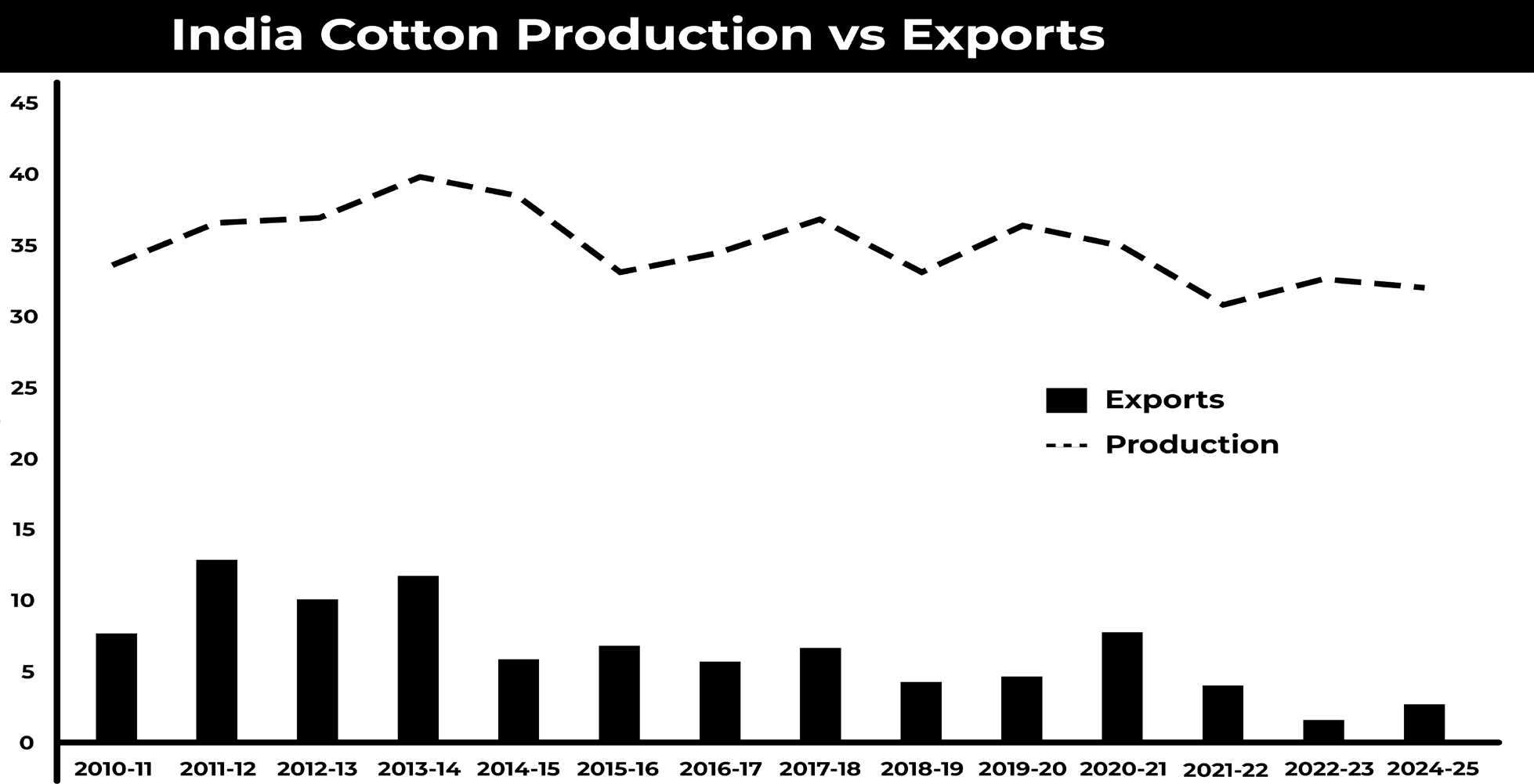
Cotton is a unique raw material that doesn’t lose weight during manufacturing, allowing other factors such as power supply, labor, capital, and market demand to determine the industry’s location. Currently, there is a trend to position the industry near markets as market demand dictates the type of cloth to be produced, and finished product demand is highly variable.
Cotton Textile Manufacturing Regions of the World:
Major textile manufacturing regions include India, China, Bangladesh, Pakistan, the United States, and various African countries, with India being one of the prominent players in this sector.
Cotton Textile Industry in India: The cotton textile industry in India has a significant presence, with a substantial increase in cotton production over the years. Cotton production in India surged from 119 lakh bales in 1991-92 to 345 lakh
bales in 2016-17, marking a remarkable growth of 190%. This substantial production has led India to become one of the leading players in the global cotton market. Nearly two-thirds of India’s cotton production is concentrated in the states of Maharashtra, Gujarat, Andhra Pradesh, and Telangana, collectively known as the Cotton Basket of India. Maharashtra leads in terms of area under cultivation with 41.2 lakh hectares, followed by Gujarat at 27.1 lakh hectares, and Telangana at 17.9 lakh hectares. Together, these three states contribute to 72% of the country’s total cotton production.
Cotton cultivation in India encompasses both rainfed and irrigated areas, with approximately 62% of the cotton produced in rainfed regions and 38% on irrigated lands. India boasts the growth of all four known species of cultivated cotton, contributing to the country’s diverse cotton industry.
The cotton industry in India is geared towards apparel exports, significantly impacting the textile sector. Cotton- based apparel accounts for approximately 51% of India’s overall apparel exports, with roughly 74% of apparel exported from India being cotton-made.
Furthermore, cotton is freely exportable from India, with major export destinations including the United States, Bangladesh, China, Vietnam, Pakistan, Indonesia, Taiwan, and Thailand, among others. Bangladesh has been India’s largest importer of cotton since FY 2015.
India holds a prominent position in the global cotton market, serving as the second-largest exporter worldwide after the USA and the second-largest consumer after China.
Government Initiatives for the Cotton Sector in India
• Amended Technology Upgradation Fund Scheme (ATUFS): The government has implemented the ATUFS, which aims to promote modernization and technological advancements in the cotton-spinning industry, facilitating increased efficiency and productivity.
• Market Access Initiative (MAI) Scheme: Under this scheme, the government provides rebates on state and central taxes and levies integrated into production, offering support to cotton exporters, thus enhancing the competitiveness of the sector in the global market.
• Schemes for Skill Development: Initiatives like SAMARTH (Scheme for Capacity Building in the Textile Sector) are introduced to address the shortage of skilled workers in the textile sector by training 10 lakh individuals, thereby bolstering the workforce and enhancing expertise.
• Mega Investment Textiles Parks (MITRA): The government’s MITRA scheme, launched in the 2021- 22 Union Budget, focuses on establishing seven textile parks over three years. These parks are intended to drive significant investments and growth in the cotton sector.
• Collaboration with Industry Bodies: The Confederation of Indian Textile Industry (CITI) collaborates with cotton
farmers in Rajasthan, Madhya Pradesh, and Maharashtra, working with around 90,000 farmers across 1700 villages to improve cotton yield and sustainable production.
• Cotton Corporation of India (CCI): The CCI, established in 1970, plays a pivotal role in stabilizing cotton prices through price support measures, procuring raw cotton for textile mills, and ensuring a consistent supply of raw materials for the textile industry. Additionally, the government has introduced financial assistance schemes for cotton farmers to purchase quality seeds, contributing to the sector’s growth and sustainability. New textile parks and initiatives to promote natural fibers like cotton further emphasize the government’s commitment to the cotton industry’s development.
ELECTRONIC SECTOR
E-commerce
E-commerce is the buying and selling of goods and services over the internet. It is conducted over computers, tablets, smartphones, and other smart devices. It can be a substitute for physical stores, though some businesses choose to maintain both.
Types of E-commerce models
Business-to-Consumer (B2C): B2C e-commerce companies sell directly to the product end-user. Instead of distributing goods to an intermediary, a B2C company performs transactions with the consumer that will ultimately use the goods.
Business-to-Business (B2B): Similar to B2C, an e-commerce business can directly sell goods to a user. However, instead of being a consusmer, that user may be another company. B2B transactions often entail larger quantities, greater specifications, and longer lead times.
Business-to-Government (B2G): Some entities specialize as government contractors providing goods or services to agencies or administrations. Similar to a B2B relationship, the business produces items of value and remits those items to an entity.
Consumer-to-Consumer (C2C): Established companies are the only entities that can sell things. E-commerce platforms such as digital marketplaces connect consumers with other consumers who can list their own products and execute their own sales.
Consumer-to-Business (C2B): Modern platforms have allowed consumers to more easily engage with companies and offer their services, especially related to short-term contracts, gigs, or freelance opportunities.
Consumer-to-Government (C2G): Less of a traditional e-commerce relationship, consumers can interact with administrations, agencies, or governments through C2G partnerships. These partnerships are often not in the exchange of service but rather, the transaction of obligation.
Indian E-commerce Industry
• In recent years India has experienced a boom in internet and smartphone penetration. The number of internet connections in 2021 increased significantly to 830 million, driven by the ‘Digital India’ programme. Out of the total internet connections, ~55% of connections were in urban areas, of which 97% of connections were wireless.
• The smartphone base has also increased significantly and is expected to reach 1 billion by 2026. This has helped India’s digital sector and it is expected to reach US$ 1 trillion by 2030.
• This rapid rise in internet users and smartphone penetration coupled with rising incomes has assisted the growth of India’s e-commerce sector.
• India’s e-commerce sector has transformed the way business is done in India and has opened various segments of commerce ranging from business-to- business (B2B), direct-to-consumer (D2C), consumer-to- consumer (C2C) and consumer-to-business (C2B).
• After China and the US, India had the third-largest online shopper base of 150 million in FY21 and is expected to be 350 million by FY26.
Growing Demand
• India’s social commerce has the potential to expand to
US$16–20 billion in FY25, growing at a CAGR of 55-60%.
• India’s e-commerce market is expected to reach US$ 111 billion by 2024 and US$ 200 billion by 2026.
• India’s electronic sector recorded rapid growth with six time increase from 2014-15 to with historical production of worth ₹11.3 lakh crore in 2024–25.
• India is the second-largest mobile phone manufacturer of the world with production of ₹2 lakh crore in 2024–25
Attractive Opportunities
• India’s e-commerce market is expected to reach US$ 350 billion by 2030.
Policy Support
• 100% FDI is allowed in B2B e-commerce.
• 100% FDI under the automatic route is permitted in the marketplace model of E-commerce.
Government Initiatives
• The Indian government has launched several projects since 2014. These include Digital India, Made in India, Start-up India, Skill India, and Innovation Fund.
• In a bid to systematise the onboarding process of retailers on e-commerce platforms, the Department for Promotion of Industry and Internal Trade (DPIIT) is reportedly planning to utilise the Open Network for Digital Commerce (ONDC) to set protocols for cataloguing, vendor discovery and price discovery.
• National Retail Policy: The government had stated that
offline retail and e-commerce needed to be managed in an integrated manner and had identified five areas in its proposed national retail policy: ease of doing business, rationalization of the licence process, digitisation of retail, focus on reforms, and an open network for digital commerce.
E-commerce businesses were instructed to include the nation of origin with product listings by the Consumer Protection (e-commerce) Rules 2020, which were announced by the Consumer Affairs Ministry. The companies will also be required to disclose the criteria used to determine which products are included on their platforms.
Government e-Marketplace (GeM) and Union Bank of India inked a Memorandum of Understanding (MoU) to enable a transparent, cashless, and paperless payment mechanism for a range of services.
To promote digitization, the government launched a number of programs under the Digital India movement, including Umang, Start-up India Portal, Bharat Interface for Money (BHIM), etc.
The government required permanent account numbers (PANs) for international businesses running e-commerce platforms in India in October 2020, revising the equalization levy regulations of 2016. The sale of goods or the provision of services through a non-resident ecommerce operator was subject to a 2% tax in the FY21 budget.
Significant government investment in the deployment of 5G fiber networks will support increased e-commerce in India.
Manufacturing Sector in India
Manufacturing is emerging as an integral pillar in the country’s economic growth, thanks to the performance of key sectors like automotive, engineering, chemicals, pharmaceuticals, and consumer durables.
The Indian manufacturing industry generated 16-17% of India’s GDP pre-pandemic and is projected to be one of the fastest growing sectors.
India is the third most sought-after manufacturing destination in the world and has the potential to export goods worth US$ 1 trillion by 2030.
The Indian manufacturing sector is steadily moving toward more automated and process-driven manufacturing, which is projected to improve efficiency and enhance productivity.
By 2025, the Indian government wants to see 25% of the country’s production come from manufacturing through various programs and initiatives.
Due to factors like power growth, long-term employment prospects, and skill routes for millions of people, India has a significant potential to engage in international markets. Several factors contribute to their potential.
• First off, these value chains are well positioned to benefit from India’s advantages in terms of raw materials, industrial expertise, and entrepreneurship.

• Second, they can take advantage of four market opportunities: expanding exports, localising imports, internal demand, and contract manufacturing.
• India’s target to increase the share of GDP is 25% by 2035 and become the third largest economy with $35 trillion economy by 2047
Agro Based Industries
Sugarcane and Sugar Industry in India

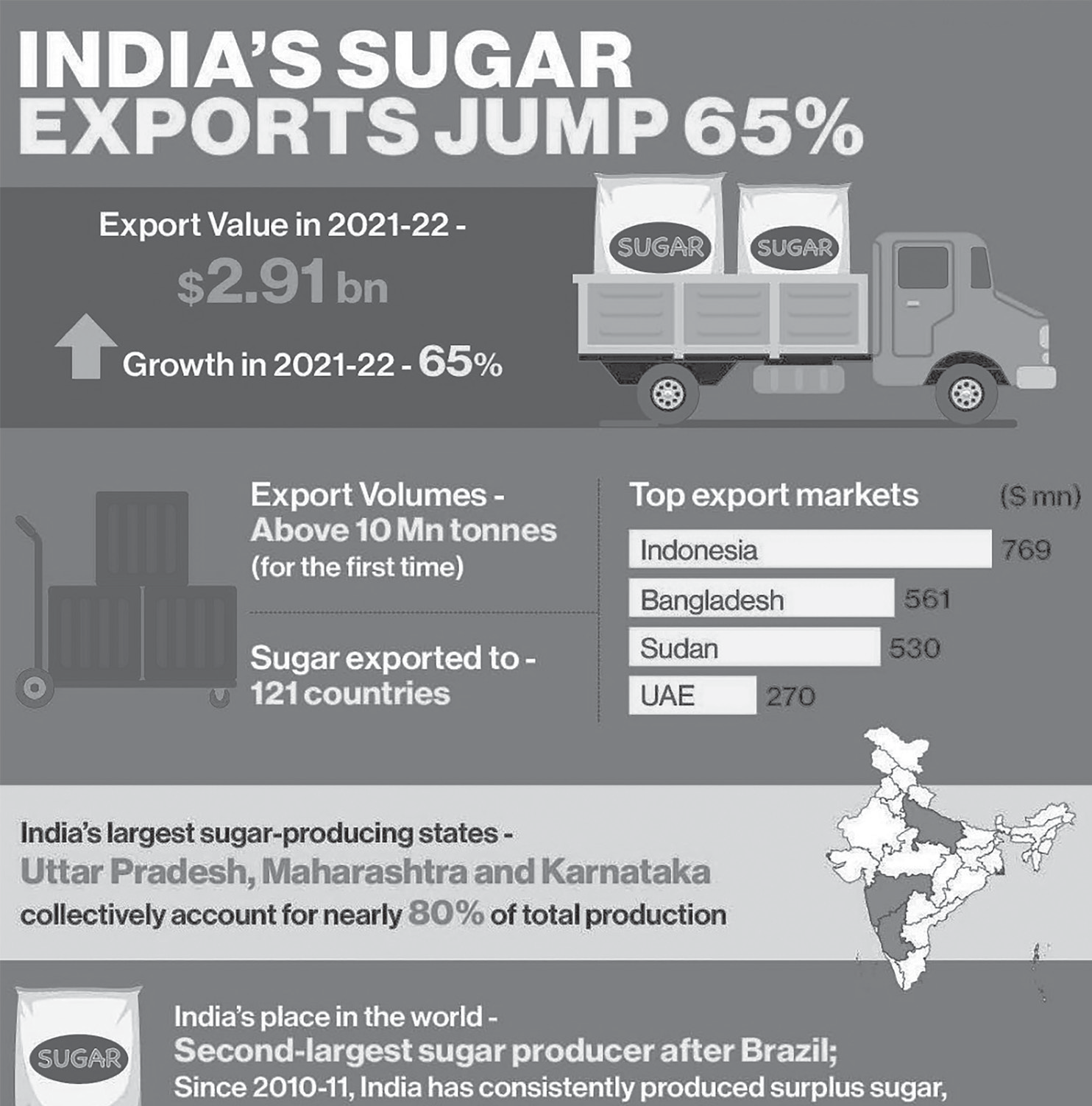
Sugarcane is the second largest cash crop in India after cotton. India is the second largest producer of sugar worldwide and is tipped to soon overtake Brazil, the number one producer. The sugar produced in India is more than our domestic demand
and is exported thereby contributing to our forex reserves and helping in growing our GDP. This industry is responsible for directly employing nearly 5 crore people. It also produces biofuel which is a cleaner option and is being mixed with petrol to reduce greenhouse gas emissions. Its byproducts like bagasse and molasses are used in paper industry and as cattle feed respectively.
Geographic Spread: Even though however more sugarcane is grown in Northern India more sugar is produced from the peninsular region. This is because higher sugar content
is found in the South Indian sugarcane and also because sugar mills in Maharashtra; which are owned by co- operative societies tend to be better managed and have better machinery while the mills in UP are old and often use outdated technology affecting the production of sugar.
North India: Dominated by Uttar Pradesh, followed by Bihar, Haryana, and Punjab.
South India: Led by Maharashtra, with Karnataka, Tamil Nadu, and Andhra Pradesh following closely.

Challenges of the Sugar Industry in India
• Lacking Economies of Scale: Sugarcane is a perishable raw commodity and cannot be transported long distances. This means that mills have to be close to the farms which is why they are small. This means that they cannot reap the benefits of economies of scale.
• Crop Volatility: There is no consistency of the sugarcane production as farmers may choose to produce another cash crop.
• Low Yields & Conversion: Inefficient production methods result in high costs compared to global averages however the output of sugarcane per hectare in India is also low.
• Seasonal Unemployment: Sugarcane’s seasonality creates unemployment gaps for farmers and mills.
• Environmental Concerns: Intensive sugarcane cultivation can deplete soil quality and also water tables since it is a water intensive crop.
• 2014 Crisis: These problems became much more significant in 2014 when there was a bumper crop and the market was suddenly flooded with sugarcane. Many farmers started demanding a higher price as compensation for their efforts while the glut meant that the mill owners were unable to match their demands.
Reforms in the Sugarcane Sector
• Dr. C Rangarajan Committee, 2012 suggested deregulation of Sugarcane industry and provided the following
• Removal of export bans and distance restrictions between mills as the requirement of the minimum distance between mills was leading to a monopoly by mill owners.
• Freedom for selling by-products.
• Encouragement of private and public sector participation in mill administration
• Fair & Remunerative Price (FRP): Commission for Agricultural Costs and Prices sets minimum sugarcane price based on stakeholder consultations. States can set higher State Advised Prices (SAP) which shall be paid by mills to farmers.
• Biofuel Policy (2018): Encourages using surplus sugarcane for ethanol production, which helps boost revenues for farmers by increasing demand.
• Revenue Sharing Systems: Implemented by some states to improve mill efficiency and benefit sharing.
• Productivity Research: Government-funded research focuses on improving sugarcane yield.
• Ethanol Blending In India: Ethanol blending involves mixing ethanol with petrol, reducing greenhouse gas emissions compared to pure gasoline. Studies show that grain-based ethanol can cut emissions by 44% to 52%
compared to gasoline. Emerging technologies could increase this reduction to nearly 70% in the coming years.
India’s Ethanol Blending Target: The government expresses confidence in achieving the 20% target of ethanol blended petrol by 2025. The plan is being implemented in two phases, initially covering 15 cities and later expanding nationwide.
Sugarcane production in the country has increased from 4053.99 lakh tonnes in 2020-21 to 4546.11 lakh tonnes in 2024-25
Tea Industry in India
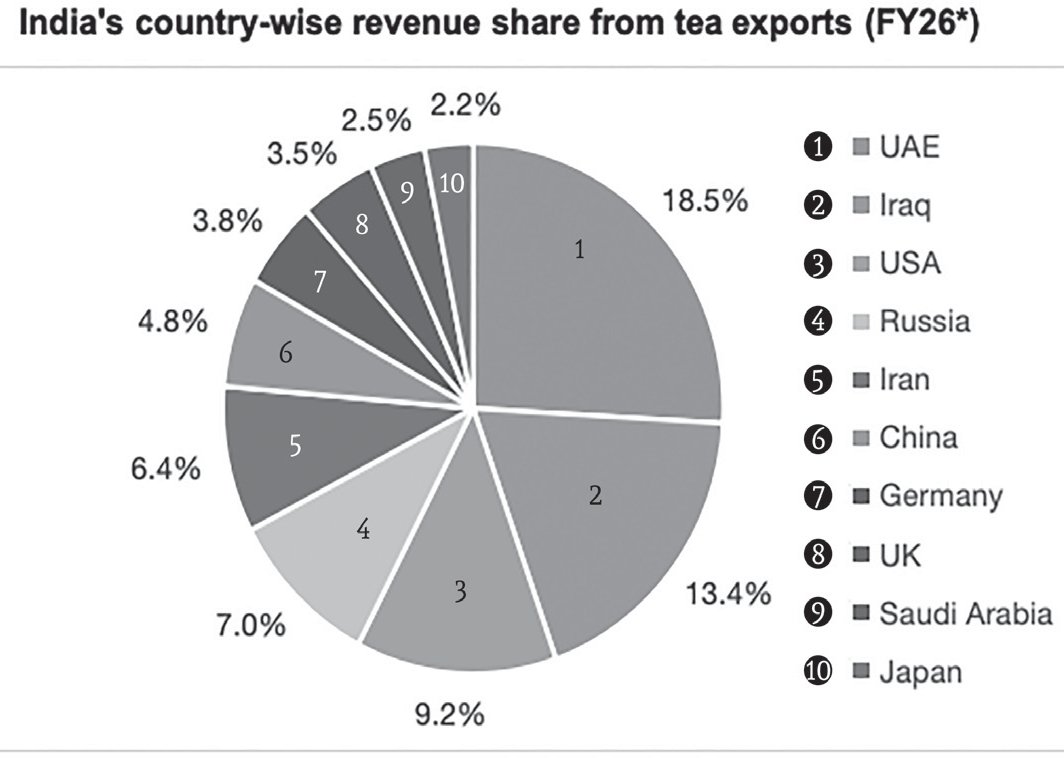
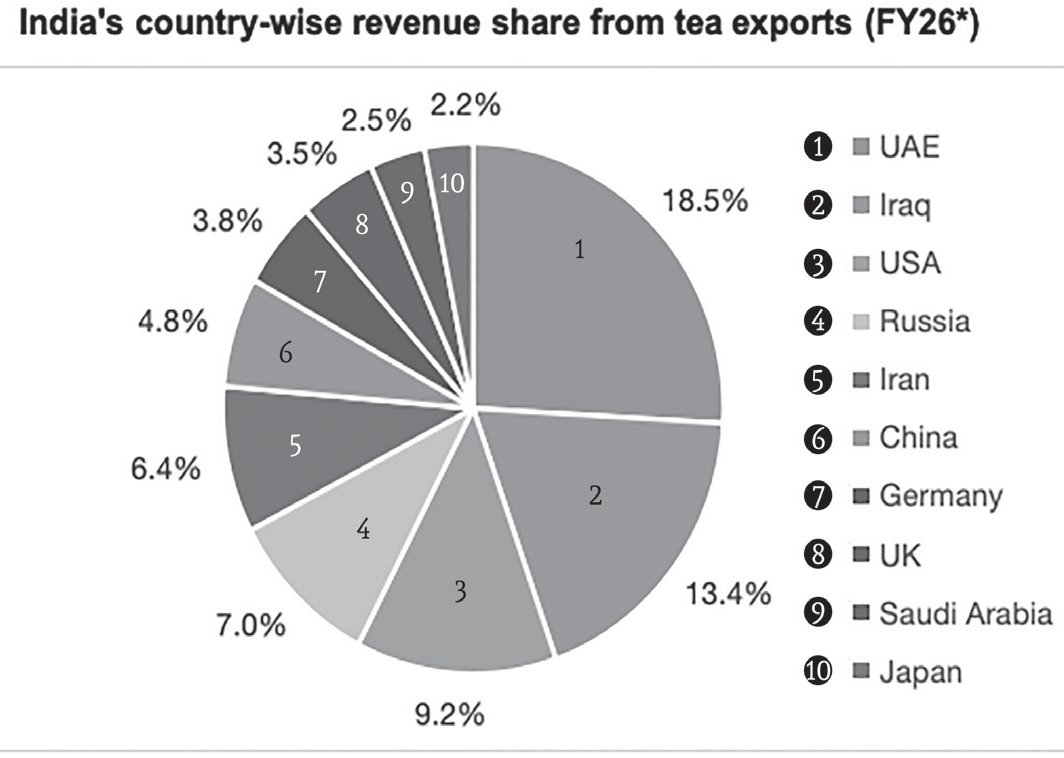
India exports tea to more than 25 countries throughout the world. Following states contribute to India’s tea production
Assam: Known for its robust and malty black tea, Assam is the largest tea-producing state in India.
Darjeeling: Famous for its high-quality Darjeeling tea, this region is located in the Himalayan foothills.
Darjeeling tea is globally recognized for its unique aroma and flavor.
Grown at elevations ranging from 600 to 2,000 meters, the cool climate and high altitudes contribute to the distinctive qualities.
The Darjeeling tea industry faces challenges such as labor shortages and climate change effects.
Nilgiri Hills: Located in Tamil Nadu and parts of Kerala and Karnataka, these hills produce a variety of teas, including Nilgiri tea.
Southern States: Kerala and Karnataka also contribute to India’s tea production, with the Western Ghats region being a prominent area.
EASE OF DOING BUSINESS
The Ease of Doing Business (EoDB) index is a ranking system established by the World Bank Group. In the EODB index, ‘higher rankings’ (a lower numerical value) indicate better,
usually simpler, regulations for businesses and stronger protections of property rights. The research presents data for 190 economies and aggregates information from 10 areas of business regulation
• Starting a Business of all
• Dealing with Construction Permits
• Getting Electricity
• Registering Property
• Getting Credit
• Protecting Minority Investors
• Paying Taxes
• Trading across Borders
• Enforcing Contracts
• Resolving Insolvency
Rankings and weights on each of the mentioned parameters are used to develop an overall EoDB ranking. A high EoDB ranking means the regulatory environment is more conducive for starting and operating businesses.
INDIA – Ease of Doing Business Ranking
India has emerged as one of the most attractive destinations not only for investments but also for doing business. India jumped 79 positions from 142nd (2014) to 63rd (2019) in ‘World Bank’s Ease of Doing Business Ranking 2020’. This remarkable improvement in India’s EoDB index rating is the result of positive reforms. Aside from these noteworthy advancements, India is ranked 13th out of 190 economies in terms of protecting minority investors and 25th out of terms of getting credit.
• Construction Permits: India’s ranking on this parameter has improved from 184 in 2014 to 27 in 2019. This improvement has been mainly on the account of a decreasing the number of procedures and time taken for obtaining construction permits in India.
• Getting Electricity: India’s ranking on this parameter has improved from 137 in 2014 to 22 in 2019. It takes just 53 days and 4 procedures for a business to get an electricity connection in India
Government Initiatives
The Government is spearheading the initiatives under Ease of Doing Business and Reducing Compliance Burden which are aimed at creating a conducive business environment. These initiatives aim to extend benefit to all entities/sectors/ industries of the economy, including startups.
The key focus areas of the initiatives are
• Simplification of procedures related to applications, renewals, inspections, filing records, etc.,
• Rationalization by repealing, amending or subsuming redundant laws,
Digitization by creating online interfaces eliminating manual forms and records, and
Decriminalization of minor technical or procedural defaults.
In addition to ongoing schemes of various Departments and Ministries, the Government has taken various steps to boost domestic and foreign investments in India. These include the introduction of Goods and Services Tax, reduction in corporate taxes, financial market reforms, consolidation of public sector banks, enactment of four labour codes, Foreign Direct Investment (FDI) policy reforms, reduction in compliance burden, policy measures to boost domestic manufacturing through public procurement orders, Phased Manufacturing Programme, to name a few. To promote FDI in the country, the Government has put in place an investor-friendly policy, wherein most sectors except certain strategically important sectors are open for 100% FDI under the automatic route. Further, the policy on FDI is reviewed on an ongoing basis, to ensure that India remains an attractive and investor friendly destination. Changes are made in the policy after having consultations with stakeholders including apex industry chambers, associations, representatives of industries/groups and other organizations.
Furthermore, the Government has unveiled National Single Window System (NSWS) to provide a single platform to enable the identification and obtaining of approvals and clearances needed by investors, entrepreneurs, and businesses in India. NSWS is providing a single interface to apply for all Government to Business (G2B) clearances from various Ministries/Departments as well as eliminating duplication of work by auto-populating form fields across diff erent approvals based on single investor profile.
MAKE IN INDIA
Make in India is a major national programme of the Government of India designed to facilitate investment, foster innovation, enhance skill development, protect intellectual property and build best in class manufacturing infrastructure in the country.
The principal aim of this endeavour is to draw in global investments and fortify India’s manufacturing industry.
The Department for Promotion of Industry and Internal Trade (DPIIT), under the Ministry of Commerce and Industry of the Government of India, is in charge of it.
The Make in India initiative is crucial to India’s economic development since it seeks to leverage the country’s talent pool, provide new job opportunities, and strengthen the country’s secondary and tertiary sectors.
The programme also aims at improving India’s rank on the Ease of Doing Business index by eliminating the unnecessary laws and regulations, making bureaucratic processes easier, making the government more transparent, responsive and accountable.
The “Make in India” initiative is based on four
pillars, which have been identified to give a boost to entrepreneurship in India, not only in manufacturing but also other sectors.
• New Processes: ‘The aim is to de-license and de- regulate the industry during the entire life cycle of a business.
• New Infrastructure: Availability of modern and facilitating infrastructure is a very important requirement for the growth of industry. Government intends to develop industrial corridors and smart cities to provide infrastructure based on state-of-the-art technology with modern high-speed communication and integrated logistic arrangements.
• New Sectors: ‘Make in India’ has identified 25 sectors in manufacturing, infrastructure and service activities and detailed information is being shared through interactive web-portal and professionally developed brochures. FDI has been opened up in Defence Production, Construction and Railway infrastructure in a big way.
• New Mindset: Industry is accustomed to see Government as a regulator. ‘Make in India’ intends to change this by bringing a paradigm shift in how the Government interacts with industry. The Government will partner industry in the economic development of the country. The approach will be that of a facilitator and not a regulator.
Start-Up ecosystem in India
The Indian startup ecosystem is built on several key pillars, including government support, access to capital, a growing talent pool, and a supportive culture for entrepreneurship. The government has implemented a range of policies and initiatives aimed at encouraging startups, such as the Startup India campaign launched in 2016. Following are some other key benefits
• Improved funding access: More venture capitalists, angel investors, and overall funding are available compared to the past.
• Talented workforce: India has a growing pool of skilled professionals like engineers and developers. Returning Indians with global experience add further value.
• Supportive environment: Entrepreneurship is increas- ingly viewed as a viable career option, with events, co- working spaces, and incubators fostering this culture.
• Incubators and accelerators: These organizations offer resources, mentorship, funding, and networking opportunities for startups. Some of the most prominent incubators and accelerators in India include the Indian Angel Network, 500 Startups, and the Microsoft Accelerator.
• Venture capital firms: They provide crucial funding for growth and expansion, along with strategic advice. Some of the most active venture capital firms in India include Sequoia Capital, Accel Partners, and SAIF Partners
Start- Up India
The Start-up India initiative was announced by the Prime Minister of India on 15th August, 2015. The flagship initiative has an objective to build a strong eco-system for nurturing innovation and Startups in the country that will drive sustainable economic growth and generate large scale employment opportunities.
Further to this, an Action Plan for Startup India was unveiled by the Prime Minister of India on 16th January 2016. The action plan comprises 19 action items spanning across areas such as “Simplification and handholding”, “Funding support and incentives” and “Industry-academia partnership and incubation”.
Salient features of Startup India action plan
Compliance Regime based on Self-Certification with an objective to reduce the regulatory burden on Startups thereby allowing them to focus on their core business and keep compliance cost low.
Startup India Hub with an objective to create a single point of contact for the entire Startup ecosystem and enable knowledge exchange and access to funding.
Rolling out of Mobile App and Portal with an objective to serve as the single platform for Startups for interacting with Government and Regulatory Institutions for all business needs and information exchange among various stakeholders.
Legal Support and Fast-tracking Patent Examination at Lower Costs with an objective to promote awareness and adoption of IPRs by Startups and facilitate them in protecting and commercializing the IPRs by providing access to high quality Intellectual Property services and resources, including fast-track examination of patent applications and rebate in fees.
Relaxed Norms of Public Procurement for Startups with an objective to provide an equal platform to Startups across sectors vis-à-vis the experienced entrepreneurs/ companies in public procurement.
Faster Exit for Startups with an objective to make it easier for Startups to wind up operations.
• Providing Funding Support through Fund of Funds with a Corpus of Rs. 10,000 crores with an objective to provide funding support for development and growth of innovation driven enterprises.
• Credit Guarantee fund for Startups with the objective to catalyze entrepreneurship by providing credit to innovators across all sections of society.
• Tax Exemptions on Capital Gains with an objective to promote investments into Startups by mobilizing the capital gains arising from sale of capital assets.
• Tax Exemptions to startups for 3 Years with an objective to promote the growth of Startups and address working capital requirements.
• Tax Exemption on Investments above Fair Market Value with an objective to encourage seed-capital investment in Startups.
• Organizing Startup Fests for Showcasing Innovation and Providing a Collaboration Platform with an objective to galvanize the Startup ecosystem and to provide national and international visibility to the Startup ecosystem in India.
• Launch of Atal Innovation Mission (AIM) with an objective to serve as a platform for promotion of world- class Innovation Hubs, Grand Challenges, Startup businesses and other self-employment activities, particularly in technology driven areas.
• Harnessing Private Sector Expertise for Incubator Setup with an objective to ensure professional management of Government sponsored/funded incubators, Government will create a policy and framework for setting-up of incubators across the country in public private partnership.
• Building Innovation Centers at National Institutes with an objective to propel successful innovation through augmentation of incubation and R&D efforts.
• Setting up of 7 New Research Parks Modelled on the Research Park Setup at IIT Madras with an objective to propel successful innovation through incubation and joint R&D efforts between academia and Industry.
• Promoting Startups in the Biotechnology Sector with an objective to foster and facilitate bio-entrepreneurship.
• Launching of Innovation Focused Programs for Students with an objective to foster a culture of innovation in the field of Science and Technology amongst students.
• Annual Incubator Grand Challenge with an objective to support creation of successful world class incubators in India.
Skill Development and Entrepreneurship Landscape
• The country, however, has a big challenge ahead as it is estimated that only 4.69%of the total workforce in India has undergone formal skill training as compared to 68%
in UK, 75% in Germany, 52% in USA, 80% in Japan and 96% in South Korea.
On demand side, a skill gap study has been conducted by NSDC over 2010-2014, which indicates that there is an additional net incremental requirement of 109.73 million skilled manpower by 2022 in twenty-four key sectors.
The public’s perception of skilling, which is seen as the final resort for people who have not been able to advance or have chosen to leave the traditional academic system, is one of the main issues facing the nation today.
India’s states have different problems when it comes to skill development and demography. To meet the issues posed by the shifting demographics, there needs to be a common sense of urgency.
The numerous grant-based, free training programs that are now offered, while essential, have several drawbacks, particularly with regard to quality and employability.
There are numerous evaluation and certification programs in the nation, which produces uneven results and perplexes employers.
One of the main areas of worry is the availability of high- quality trainers. The creation of programs for training trainers is not given enough attention, and there are no established career paths for trainers.
One of the biggest challenges of skill development in our country is that 93% of the workforce is in the informal/ unorganised sector. Consequently, it is difficult to map existing skills in the unorganised sector and gauge the skilling requirement in the sector. On the other hand, the rate of job growth in the informal sector is estimated to be twice that in the formal sector.
Women constitute almost half of the demographic dividend. The key challenge here is to increase their participation in the country’s labour force, which is directly linked to economic growth of the country.
In India, only 0.09 companies were registered for every 1,000 working age people among the lowest rates of G20 countries in 2011.
National Skill Development and Entrepreneurship Policy 2015 attempts to address these concerns. It tries to bring the world of education and training closer to the world of work so as to enable them to together build a Strong India.
National Policy for Skill Development and Entreprene- urship 2015
The National Policy on Skill Development was first formulated in 2009 and it provided the framework for skill development activities in the country. Over the years, changes in the macro environment, and the experience gained through implementation of various skill development programmes in the country have necessitated changes in the policy. Accordingly, the National Skill Development Policy, 2015 was formulated, and it supersedes the Policy of 2009.
Vision: To create an ecosystem of empowerment by Skilling on a large Scale at Speed with high Standards and to promote a culture of innovation-based entrepreneurship which can generate wealth and employment so as to ensure Sustainable livelihoods for all citizens in the country.
Mission: The mission is to
• Create a demand for skilling across the country;
• Correct and align skilling with required competencies;
• Connect the supply of skilled human resources with sectoral demands;
• Certify and assess in alignment with global and national standards; and
• Catalyse an ecosystem wherein productive and innovative entrepreneurship germinates, sustains and grows leading to creation of a more dynamic entrepreneurial economy and more formal wage employment.
Objectives
• The core objective of the Policy is to empower the individual, by enabling her/him to realize their full potential through a process of lifelong learning where competencies are accumulated via instruments such as credible certifications, credit accumulation and transfer, etc.
• The core objective of the entrepreneurship framework is to coordinate and strengthen factors essential for growth of entrepreneurship across the country.
Financing
• The National Skill Development Fund (NSDF) has been set up by the Government of India with the objective of encouraging skill development in the country.
• A public Trust set up by Government of India is the custodian of the Fund. The Fund acts as a receiver for all donations, contribution in cash or kind from all contributors (including Government, multilateral organizations, corporations etc) for furtherance of the objectives of the Fund.
• All Government schemes across sectors will be encouraged to apportion a certain percentage (10%) of the scheme budget towards skilling of human resources in local regions in the required sector.
• To attract funds from industry, companies will be encouraged to spend at least 25% of their Corporate Social Responsibility (CSR) funds on skill development initiatives directly or through NSDF.
• A Credit Guarantee Fund for skill development and a ‘National Credit Guarantee Trustee Company’ (NCGTC) has been set up to support the initiative of loans for the purpose of skilling and will be used to leverage credit financing in the skill landscape.
Initiatives for Investments in India
The Government of India is making continuous efforts under Investment Facilitation for implementation of Make in India action plans to identify potential investors.
These include the National Infrastructure Pipeline, Reduction in Corporate Tax, easing liquidity problems of NBFCs and Banks, policy measures to boost domestic manufacturing.
The Government of India has also promoted domestic manufacturing of goods through public procurement orders, Phased Manufacturing Programme (PMP), Schemes for Production Linked Incentives of various Ministries.
Further, the National Single Window System (NSWS) has been soft-launched in September 2021 to improve the ease-of-doing-business by providing a single digital platform to investors for approvals and clearances.
To promote local industry by providing them preference in public procurement of Goods, Works and Services, the Public Procurement (Preference to Make in India) Order 2017 was also issued.
Recognising the importance of semiconductors in the world economy, the Government of India has launched a USD 10 billion incentive scheme to build a semiconductor, display, design ecosystem in India.
The Government has also launched a programme for multimodal connectivity to manufacturing zones in the country, called the Prime Minister’s Gatishakti programme, which will ensure logistical efficiency in business operations through the creation of infrastructure that improves connectivity. This will enable faster movement of goods and people, enhancing access to markets, hubs, and opportunities, and reducing logistics cost.
The One-District-One-Product (ODOP) initiative is another manifestation of the ‘Make in India’ vision for facilitating promotion and production of the indigenous products from each district of the country and providing a global platform to the artisans and manufacturers of handloom, handicrafts, textiles, agricultural and processed products, thereby further contributing to the socio-economic growth of various regions of the country.
To address the import of low-quality and hazardous toys and to enhance domestic manufacturing of toys, several strategic interventions have been taken by the government. Some key initiatives include increase of Basic Custom Duty from 20% to 60%, implementation of Quality Control Order, mandatory sample testing of imported toys, granting more than 850 BIS licenses to domestic toy manufacturers, development of toy clusters etc.
Smart Manufacturing
• ‘Smart manufacturing’ synonymously used with ‘Industry 4.0’, shortened to I4.0 or simply I4 is a technology-driven approach that encompasses fully-integrated, collaborative manufacturing systems that employ internet-integrated machinery to monitor manufacturing processes in real- time via an open infrastructure.
• Smart manufacturing involves interoperable systems, intelligent automation, multi-scale dynamic simulation and includes 3D printing, big data processing, advanced industrial robotics with networked sensors, industrial internet of things (IIoT), and distributed manufacturing technologies with strong cybersecurity.
• These cyber-physical systems entail synergy of production and digital technologies to enable rapid adaptability and design changes, using data analytics that enables newer areas of innovation to optimize manufacturing by creating enhanced quality products, accelerating productivity, increasing energy efficiency, and sustaining safety.
Market drivers
• The Prime Minister launched the Centre for the fourth industrial revolution in 2018.
• The Ministry of Heavy Industry & Public Enterprises launched ‘Samarth Udyog Bharat 4.0’ as an Industry 4.0 initiative.
• The National Association of Software and Services Companies (NASSCOM) inaugurated centers for AI and data science in Bengaluru and Hyderabad to develop emerging disruptive technologies such as AI/ML and leverage the power of data science.
• CII Smart Manufacturing Platform is tasked in making India an Industry 4.0 enabled country, while working with the government agencies (central & state), technology providers, user industries, consulting and audit agencies, education & research institutions, and international organisations to promote and develop excellence in Industry 4.0 among Indian industry.
Challenges for the Indian manufacturing industry
• Redefining the manufacturing organization of the future: The growth prospects powered by technological innovations, the lessons learned during the pandemic, and potential future challenges like market competition and climate changes, are factors that are compelling manufacturing companies to redefine their vision of a “manufacturing organization of the future.”
• Focused solution themes to achieve top-line and bottom- line aspiration.
• Continuous, incremental, and accelerated monetiz- ation: The transformation initiative should be resilient enough to sustain the constant cost pressure and monetize the operations.