Maldives Importance for India
MALDIVES IMPORTANCE FOR INDIA
Security
Geostrategic Importance: Located just 700 km from
India’s Lakshadweep Islands and 1,200 km from the Indian mainland, the Maldives holds significant strategic importance. The growing Chinese presence in the archipelago could have major security implications for India.
Indian Ocean Region Dominance: A strong Chinese presence in the Maldives would provide China with a foothold in the Indian Ocean region, enabling them to exert influence over crucial maritime trade routes. Additionally, vital energy supplies from Gulf nations to India pass through this region, further highlighting its strategic importance.
Regional Imbalance: India enjoys significant access and influence in many Indian Ocean island states, including the Maldives, Seychelles, and Mauritius, which has been a point of contention for China. The growing relationship between China and the Maldives could act as a counterbalance to India’s regional influence.
Economic
Indian Expatriates: There are around 25,000 Indian expatriates living in the Maldives, engaged in various professional sectors. Ensuring their security is an important concern for India.
Blue Economy: The Indian Ocean is a major global route for energy and trade. The Maldives sits strategically between two crucial chokepoints, the Strait of Malacca and the Gulf of Aden. This makes the archipelago a vital "toll gate" for maritime trade, and the sustainable management of marine resources is key to India's success in the blue economy.
Tourism: India and the Maldives maintain strong tourism links, with Indian tourists accounting for approximately 10% of the visitors to the Maldives each year.
Currency Swap: On 22nd July 2019, the Reserve Bank of India (RBI) and the Maldives Monetary Authority (MMA) signed a Bilateral USD Currency Swap Agreement. In December 2022, India extended a $200 million currency swap facility to the Maldives under the SAARC Currency Swap Framework, further strengthening economic ties.
Trade: India emerged as Maldives’ 2nd largest trade partner in 2022 & the largest in 2023.
The trade between India and Maldives amounted to USD 85.4 million in FY 2024-25(till Feb’24), with India’s exports at USD 84.69 million and Maldives’ exports at USD 0.7 million.
The trade between India and Maldives amounted to USD 548.97 million in FY 2023-24, with India’s exports at USD 543.83 million and Maldives’ exports at USD 5.4 million


Health: India is a preferred destination for Maldives citizens seeking health services, which boosts Indian healthcare sector and medical tourism.
Political
Political chaos: Uncertainty in the Maldives presents a potential environment for the rise of extremism and religious fundamentalism, as well as an increase in illegal activities such as smuggling and drug trafficking. Reports suggest that groups like the Islamic State (IS) and Lashkare-Taiba have also established footholds in the region.
Defense and Security Cooperation
Since 1988, defence and security has been a major area of cooperation between India and Maldives. India has adopted a very flexible and accommodating approach to meeting Maldivian requirements for defence training and equipment.Action Plan for Defence was also signed in 2016 to consolidate defence partnership. India provides the largest number of training opportunities for the Maldivian National Defence Force (MNDF), meeting around 70% of their defence training requirements — either on the islands or in India’s elite military academies.
India-Maldives defence cooperation also extends to the areas of Joint Exercises, Maritime Domain Awareness, gifting of hardware, infrastructure development, etc.
Key projects in the defence sector include the Composite Training Centre (CTC) for MNDF, the Coastal Radar System (CRS), and the construction of a new Ministry of Defence Headquarters
SAARC factor
SAARC holds particular significance for India as it encompasses all of India’s neighboring countries while excluding China. Recently, however, China has been making inroads into SAARC nations, diminishing India’s influence within the bloc. Examples include Pakistan’s China-Pakistan Economic Corridor (CPEC), Sri Lanka’s Hambantota port, and potentially the Maldives, which could be China’s next focus.
Introduction to India and Maldives Relation
INTRODUCTION
India and Maldives share ethnic, linguistic, cultural, religious and commercial links and enjoy close, cordial and multi-dimensional relations.
India was among the first to recognise Maldives after its independence in 1965 and to establish diplomatic relations with the country.
India established formal diplomatic relations with Maldives after the independence of Maldives from the British rule in 1966.
The prompt aid provided by India during the 1988 coup plot, known as 'Operation cactus', played a crucial role
in fostering trust and cultivating enduring and amicable bilateral relations with the Maldives.
As per India’s “Neighbourhood First Policy,” India “stands ready to fully support the Government of
Maldives in its socio-economic development” and Maldivian government has reiterated its “India First” policy” to work closely with the government of India on all issues
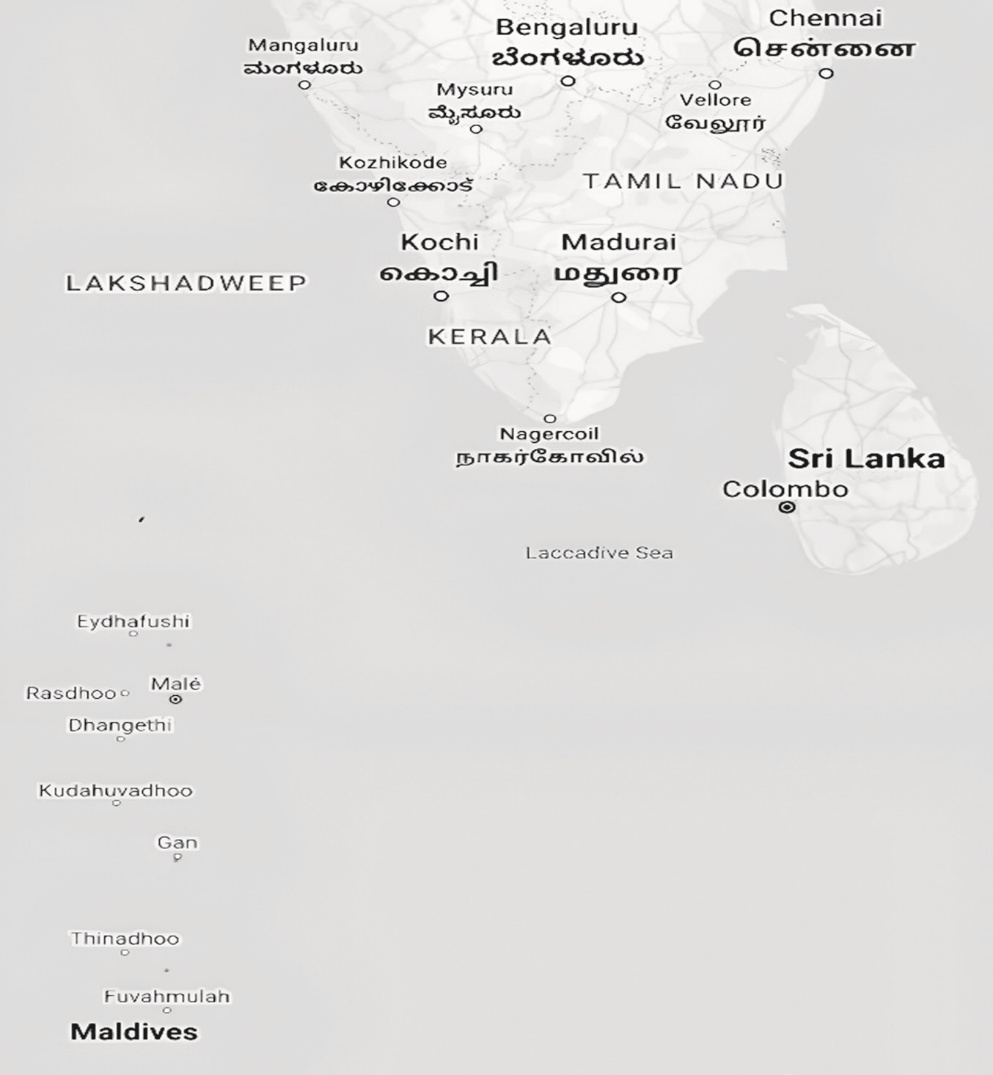
| Maldives is an Islamic country. Tourism and Fishing are its major sources of income. In 2008, India helped it to obtain democracy. Before that, it was autocracy under Gayoom, then democracy under Nasheed, again recent autocracy under Yameen with final democratic election in September in which President Solih took the leadership. |
Maldives is important for India because of its geostrategic location on Sea Lanes of Communications, security of Indian Ocean, vast Exclusive Economic Zone, piracy issues, and cultural, historical linkage with India.
Significance of India for Maldives
Significance of India for Maldives
Essential Commodities: India supplies Maldives with its everyday essentials; rice, fuits, spices, vegetables, poultry, medicine and life saving drugs
Education: Every year, Maldivian students come to Indian higher educational institutions.
Economic dependency: of the Rs 50 crore total trade between India and Maldives in 2022, Rs 49 crore was India’s exports to Maldives. India emerged as Maldives’ second largest trade partner in 2022.
Disaster Relief Assistance: When a tsunami struck the islands in 2004, India was the first to send in help.
In 2014 Male had a drinking water crisis as the major desalination plant broke down, India overnight airlifted drinking water to the islands.
During the Covid-19 pandemic, India sent essential medicines, masks, gloves, PPE kits and vaccines for the island country.
China’s Influence on Maldives
China’s influence on Maldives
Chinese inroads: Chinese infrastructure projects in Maldives directly compete with Indian infrastructure companies’ business prospects.
China Maldives FTA: An FTA with China would have raised the issue of diverting Chinese products into India through Maldives. Maldivian government has not cleared its stand on future Chinese investments yet and may continue to engage deeply with China.
Maldives has emerged as an important ‘pearl’ in China’s “String of Pearls” construct in South China and Maldives.
Just six years after Beijing opened its embassy in Male in November 2011, Yameen signed the Maldives’ first bilateral free trade agreement with China.
China had already secured the Maldives’ backing for its Maritime Silk Route, which aims to connect the Chinese coast with Europe via the South China Sea and the Indian Ocean, during President Xi Jinping’s visit to Male in the year 2014.
Beijing has also poured in millions of dollars for big ticket projects, including a bridge linking the capital and the main airport, called the “China-Maldives friendship bridge”.
Yameen responded by amending the Constitution in 2015 to allow foreign ownership of land in projects with investments of more than $1 billion for which 70 per cent of the land is reclaimed from the ocean.
With China owning 70 per cent of the country’s debt, the Maldives is now into serious debt trap.
Chinese companies were given contracts for several infrastructure projects in the Maldives, including the recently inaugurated Sinamale Bridge linking Male to Hulhule Island, and a 1,000-apartment housing project on Hulhumale, a suburb that Beijing built on reclaimed land.
BRI and MSR, 2017: Maldives endorsed China’s Belt and Road Initiative (BRI) and signed MoU on Maritime Silk Road (MSR), following which China has invested billions of dollars in Maldives building highways and housing as part of BRI.
China Maldives FTA, 2017: China and Maldives signed an FTA, which is China’s second FTA with a South Asian country after Pakistan, while there is no FTA between India and Maldives.
Chinese Debt Trap:
China debt-trapped Maldives during the presidency of Abdulla Yameen (2013-18). During this period, the Maldives borrowed heavily from China to fund infrastructure projects. According to previous estimates, the Maldives debt to China then stood at $3.4 billion, raising concerns over its ability to pay back.
The Last Decade India and Maldives
The Last Decade: India and Maldives
India and Maldives relations have seen many ups and downs caused by changing political situations in both countries and some external factors. During Maldivian Presidential elections in 2013 Abdulla Yameen defeated Mohamed Nasheed to become the President. During Yameen’s term, Maldives relations with India deteriorated while its closeness with China increased, which is highlighted by:
• Cancellation of GMR project, 2012: Maldives annulled the $500 million contract with GMR Group to develop a modern International Airport near Male, which was later given to a Chinese company.
• Cancellation of Indian PM’s trip, 2015: Due to turbulent political situation in Maldives, Indian Prime Minister cancelled his trip to Maldives.
• Island lease to China, 2016: Maldives signed a new law permitting developers to own islands on lease for development and subsequently, a Chinese company took control of FeydhooFinolhu, an uninhabited island close to Male and its international airport, on a development lease for 50 years.
• India’s concern about emergency, 2018: India’s ties with Maldives nose-dived after it criticised the Abdulla Yameen government for imposing a 45-day emergency earlier in 2018.
• Returns Indian helicopters, 2018: Maldives asked India to take back the two helicopters given to Maldives along with the training personnel who were there on the invitation of Maldivian Government.
• Denial of work permits, 2018: Maldives denied work permits to nearly 2000 Indians working there, while no action was taken against thousands of Bangladeshis who were over- staying beyond the work permit periods.
During all these negative developments in Maldives, India responded with patience and composure, trying to revive relations diplomatically. However, the election of Solih in 2018, as new President of Maldives has caused a thaw in India Maldives relations which can be gauged by:
• Despite opposition from Indian Ocean Rim Association, India convinced IORA Committee for Senior Officials in favour of Male, following which Maldives was inducted as the newest member of IORA recently.
• Maldives has asked India for a Dornier aircraft and the MEA has responded positively to its request.
• Maldives’ new government has decided to pull out of the free trade agreement (FTA) with China, realizing the onesided nature of the FTA.
Highlights of Visit of Solih to India in December 2018
India and Maldives signed the following agreements: • Agreement on the Facilitation of Visa Arrangements
MoU on Cultural Cooperation and for Establishing Mutual Cooperation to Improve the Ecosystem for Agribusiness.
Joint Declaration of Intent on Cooperation in the field of ICT and Electronics.
India and Maldives agreed to work together to create institutional linkages and to establish a framework of cooperation in the following areas:
Health cooperation issues particularly cancer treatment.
Mutual Legal Assistance on Criminal Matters.
Investment promotion.
Human Resource Development.
Tourism and climate change.
Private sector involvement in development of housing and infrastructure.
Water and sewerage systems in the outlying islands of Maldives.
Combating terrorism and piracy in the Indian Ocean.
Reforming the UN General Assembly and the Security Council.
India announced financial assistance of US $ 1.4 billion in the form of budgetary support, currency swap and concessional lines of credit for socio-economic development of Maldives.
Both agreed to strengthen cooperation to enhance maritime security in the IOR through coordinated patrolling and aerial surveillance, exchange of information and capacity building.
Maldives expressed its support for India’s candidature for permanent membership of UNSC and India’s candidature for a non-permanent seat for the year 2020-21.
India on its part welcomed Maldives’ re-entry into Commonwealth.
Prime Minister Narendra Modi visit to Maldives in 2019
India, Maldives Sign Six Key Agreements:
Prime Minister Narendra Modi visited Maldives after taking office in his second term.
It was marked by the signing of six key agreements between the two sides will facilitate cooperation in capacity building, cyber security, housing, disaster management and infrastructure development in the Maldives.
Defence & Trade deals-
The Memorandums of Understanding (MoU) covered areas such as hydrography, health, passenger and cargo services by sea, capacity building in customs and civil service training.
A technical agreement on sharing ‘White Shipping Information’ between the Indian Navy and the Maldives National Defence Force was also signed, enabling exchange of prior information on the movement of commercial, non-military vessels.
The two countries have agreed to start a ferry service between Kochi and the Maldives.
Prime Minister Narendra Modi visit to Maldives in 2025
On the historic occasion of the Maldives' 60th anniversary of independence and the development of diplomatic ties between the two countries, Prime Minister Modi traveled to the country.
Six MOUs in the areas of fisheries and aquaculture, meteorology, digital public infrastructure, UPI, Indian pharmacopoeia, and concessional lines of credit were exchanged between the two leaders.
The new Line of Credit offers Rupees 4850 crores [ approx USD 550 million] in support of infrastructure development and other activities in Maldives.
Both leaders also took stock of the progress in the implementation of the India-Maldives Joint Vision for a ‘Comprehensive Economic and Maritime Security
Partnership’, adopted during the State Visit of the President of Maldives to India in October 2024
India’s Key Role in Maldives
India’s key role in Maldives
Measles outbreak
India is helping Maldives to tackle a recent outbreak of measles, identified at a government hospital.
The outbreak comes less than three years after the World Health Organisation (WHO) declared the Maldives measles free in 2017.
India is also helping the Maldives in building a 100 bed Cancer Hospital in Hulhumale as part of its $800 million
Line of Credit.
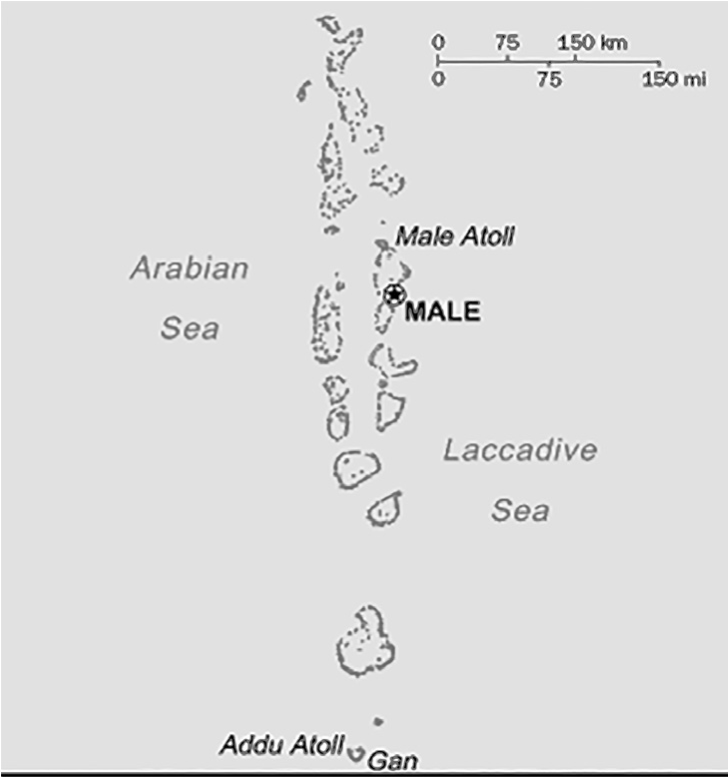
Addu Tourism Zone
India and Maldives signed five Memorandum of Understanding (MoUs) to establish the Addu tourism zone on the five islands of Addu coral Atoll in the Maldives.
Addu Atoll, also known as Seenu Atoll, is the southernmost atoll of the Maldives.
Projects will be a part of India’s High Impact Community Development Scheme (HICDP).
Addu Atoll, together with Fuvahmulah, extend the Maldives into the Southern Hemisphere.
Why Addu Tourism Zone?
Addu is one of the most beautiful sites of Maldives’26 coral atolls. It comprises more than two dozen of Maldives’ 1192 islands.
Addu is also an important site for tourism because it represents the southernmost point of South Asia. About 10% of actual Maldives residents are living here with unique culture and dialect.
India is expanding its tourism and infrastructure development limits through off-shore development works.
Addu Tourism Zone will bring national and international tourists and diplomats that will boost India’s and Maldives’ tourism sector.
Indian tourists are second-most among tourists coming to the Maldives to visit from all over the world. According to the official figures released by Maldives Tourism Minister Ali Waheed, 82,140 Indian tourists went to visit the Maldives in the first six months of 2019.
Recent Maldives-india Row
RECENT MALDIVES-INDIA ROW
Maldives-India relations have been strained since President Mohamed Muizzu's election in September, following his demand for India to withdraw all troops from the archipelago for which the deadline was set for March 15th, 2024.
President Muizzu, known for his anti-India and pro-China stance, gained power through his "India Out" electoral campaign, referencing Indian troops on Maldivian soil. He visited China and Turkey on his first official visit after assuming office, instead of India, breaking tradition.
Muizzu also urges China to regain its top spot in tourist arrivals.
The Maldives govt. has decided not to renew its 2019 agreement with India for a hydrographic survey of its waters, which allowed India to study and chart reefs, lagoons, coastlines, and ocean currents.
The latest trigger has been undiplomatic words used by ministers in Maldives against the Indian Prime Minister Narendra Modi in particular and Indians in general.
This prompted a “Boycott Maldives” trend on social media with many Indians including celebrities tweeting against the island country and encouraging Indians to explore Lakshadweep and other Indian tourist destinations instead of the Maldives.
Even though Maldivian President Mohamed Muizzu’s government suspended the three ministers and distanced itself from the disparaging remarks, many Indian tourists cancelled their reservations and hotel bookings to the Maldives.
Challenges in India-maldives Relations
CHALLENGES IN INDIA-MALDIVES RELATIONS
Political instability: Political instability and domestic turmoil in the Maldives, exacerbated by recent government changes, pose significant challenges to longterm cooperation projects.
China's debt-trap diplomacy: China's growing economic presence in the Maldives, including investments in infrastructure and debt-trap diplomacy, challenges India's strategic interests in the region. Additionally, Chinese naval expansion and potential military ambitions in the Indian Ocean, supported by the Maldives, raise concerns for India.
Terrorism Hub: Political and socio-economic instability in the Maldives is driving the rise of Islamist radicalism, with Saudi Arabia being a major factor in radicalization, and the Maldives has one of the highest per capita ISIS terrorist numbers.
Economic Concerns: India and the Maldives face economic and environmental concerns due to a trade imbalance, which could lead to resentment and calls for diversifying trade partnerships.
Skepticism regarding India’s efforts: Local Maldivian media speculated that the UTF Harbour Project agreement, which involved developing and maintaining a coastguard harbor and dockyard at Uthuru Thilafalhu, would be turned into an Indian naval base.
WAY FORWARD
The partnership between India and the Maldives should focus on open communication, prioritizing common interests like maritime security, climate change, and economic development.
Respect for sovereignty and non-interference in domestic politics is crucial.
Strengthening people-to-people ties through cultural exchange programs and educational collaborations can foster empathy.
Addressing internal issues like corruption and instability is essential for a stable partnership.
Both countries should strive to project a positive image and avoid interference in domestic politics.
CONCLUSION
India-Maldives relations have evolved due to geopolitical dynamics, leadership changes, and regional interests. India has consistently built strong relationships with the Maldives, but any impulsive actions could harm the region more than India. Addressing these challenges can help navigate the complexities of their relationship and build a stronger, more resilient, and mutually beneficial partnership for the future. Te