Economic Crisis in Sri-lanka
Economic Crisis in Sri-Lanka
Mounting economic woes in neighbouring Sri Lanka, triggered by a severe shortage of foreign currency and the inability to pay for essential imports, including fuel, have deepened the crisis in the island nation. India, Sri Lanka’s only immediate neighbour, is treading a tightrope as it grapples with the challenges and opportunities that this crisis in Sri Lanka has presented.
What led to the Sri Lankan crisis?
The crisis in Sri Lanka was mainly triggered due to a shortage of foreign exchange (forex) reserves, which have plummeted by 70 percent over the last two years to just US$2 billion by the end of February 2022. The remaining forex reserves can barely sustain two months of imports. Meanwhile, the country has foreign debt obligations of about US$7 billion in 2022.
Sri Lanka has suffered the most due to the collapse of the tourism industry ever since the 2019 Easter Sunday suicide bombings, after which tourist arrivals in Sri Lanka dropped by 70 percent. This was further exacerbated by the pandemic-led travel restrictions. Additionally, during the pandemic, remittances from foreign workers, which is Sri Lanka’s largest source of US dollars, slumped by 22.7 percent to US$5.5 billion in 2021.
The country’s consumption patterns are also heavily dictated by the dependence on imports of essential goods like sugar, pharmaceuticals, fuel, pulses and cereals, which worsened the crisis. Coupled with a series of bad policy decisions like the ban on chemical fertilizers led to a drastic decline in domestic food production, pushing up food prices by 25 per cent.
How is the crisis in Sri Lanka impacting India?
India is not isolated from the impact of the economic crisis in Sri Lanka. Driven out by hunger and loss of jobs, there has been a surge of people from the island nation seeking refuge in India
Introduction to the Relationship Between India and Sri Lanka
The relationship between India and Sri Lanka is more than 2,500 years old.
Both countries have a legacy of intellectual, cultural, religious and linguistic interaction.
In recent years, the relationship has been marked by close contacts at all levels.
Trade and investment have grown and there is cooperation in the fields of infrastructure development, education, culture and defence.
In recent years, significant progress in implementation of developmental assistance projects has further cemented the bonds of friendship between the two countries.
The nearly three-decade long armed conflict between the Sri Lankan forces and the Liberation Tigers of Tamil Elam (LTTE) came to an end in May 2009. During the course of the conflict, India supported the right of the Sri Lankan Government to act against terrorist forces.

India’s consistent position has been in favour of a negotiated political settlement, which is acceptable to all communities within the framework of a united Sri Lanka and is consistent with democracy, pluralism and respect for human rights.
History of Civil War
HISTORY OF CIVIL WAR
When the civil war between Sri Lankan Tamils and the Sinhalese majority escalated in 1983, India played an active role in the conflict. In 1987, the Indo-Sri Lankan Accord was signed in an attempt to find a political solution to the ongoing crisis.
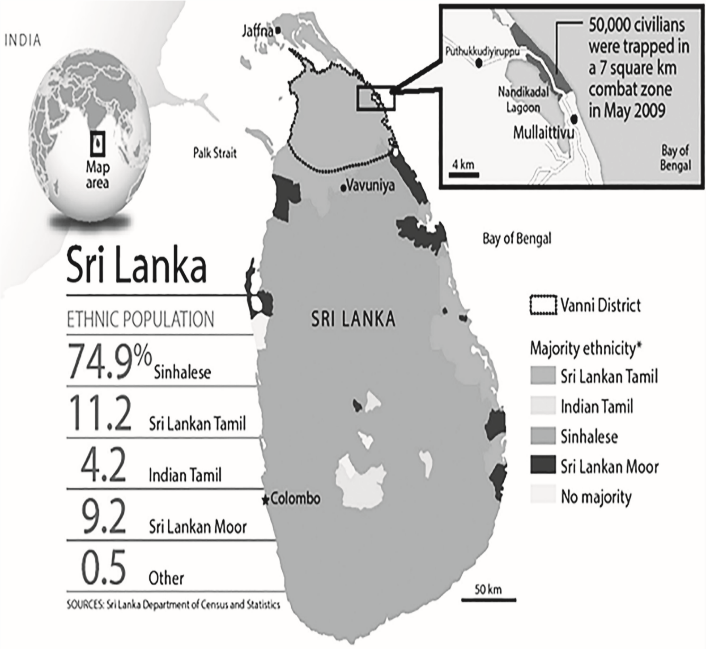
In the years following independence, the Sinhalese, who resented British favouritism toward Tamils during the colonial period, disenfranchised Tamil migrant plantation workers from India and made Sinhala the official language
In 1972, the Sinhalese changed the country’s name from Ceylon to Sri Lanka and made Buddhism the nation’s primary religion.
As ethnic tension grew, in 1976, the LTTE was formed under the leadership of Velupillai Prabhakaran, and it began to campaign for a Tamil homeland in northern and eastern Sri Lanka, where most of the island’s Tamils reside.
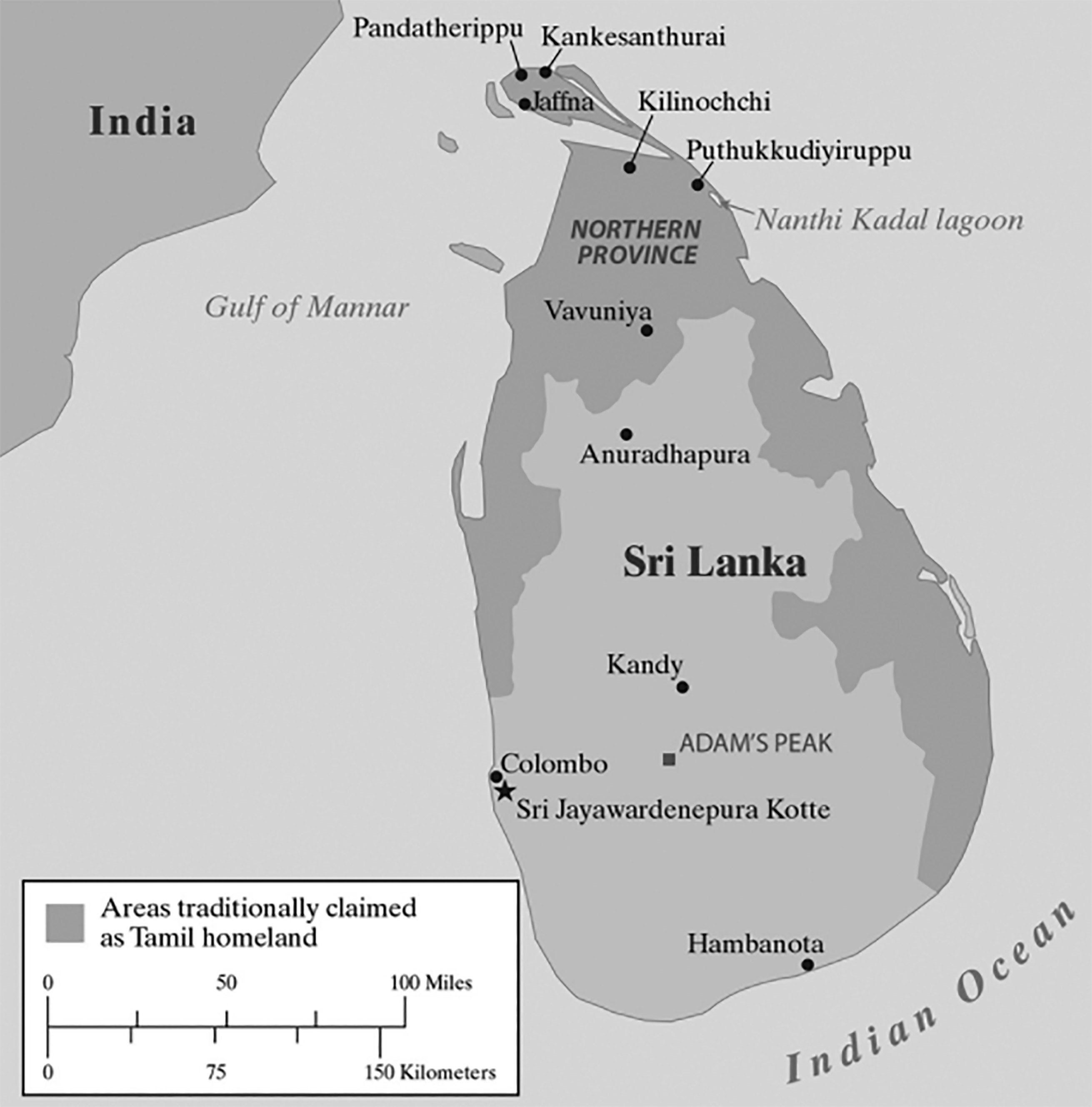
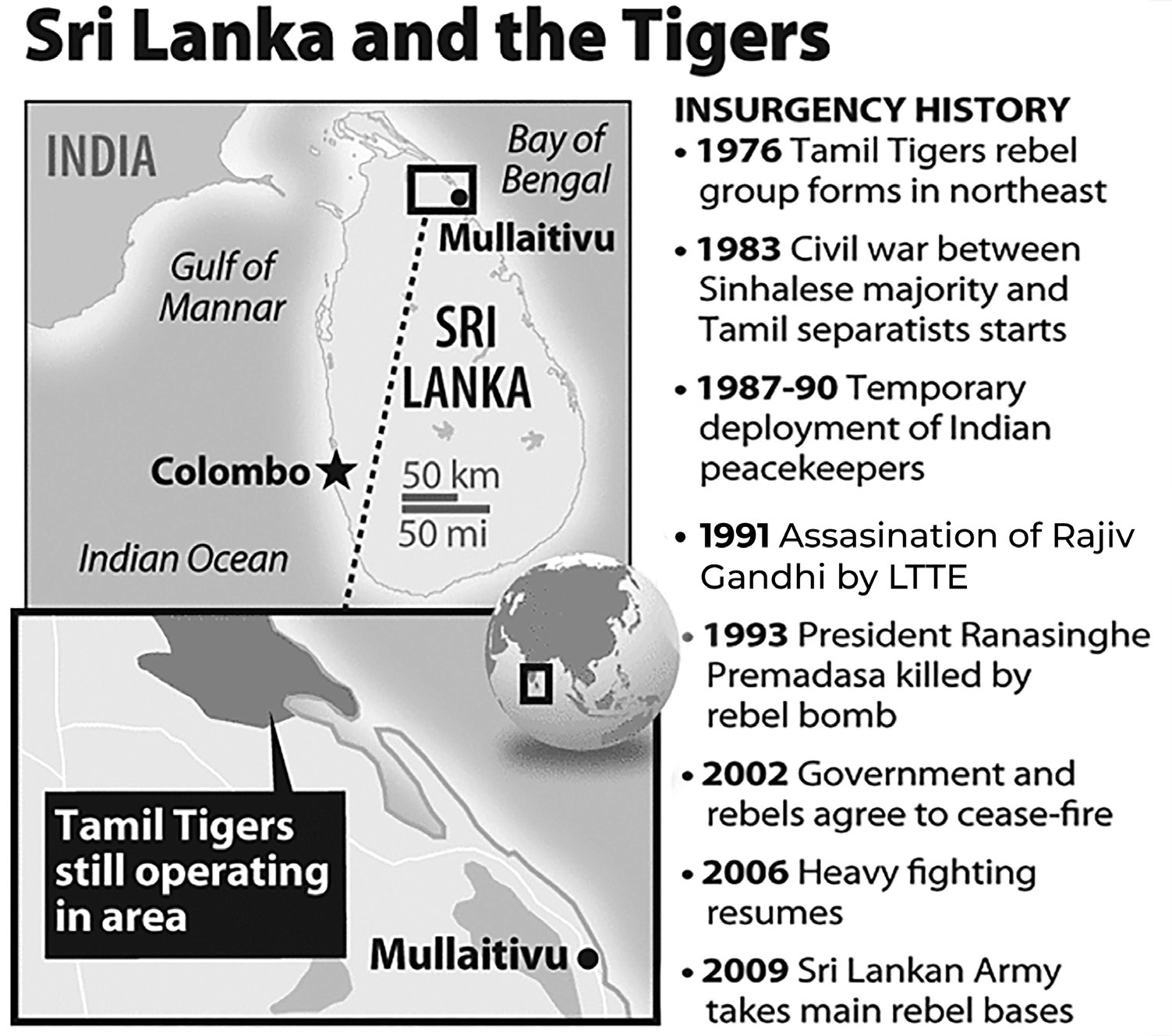
In 1983, the LTTE ambushed an army convoy, killing thirteen soldiers and triggering riots in which 2,500 Tamils died.
As Ethnic ties have bound southern India and Sri Lanka for more than two millennia. India is a home to more than 60 million of the world’s 77 million Tamils, while about 4 million live in Sri Lanka.
The Palk Strait, about 40 km (25 miles) wide at its narrowest point, separates the southern Indian state of Tamil Nadu and northern Sri Lanka, traditionally the main Tamil area of the Indian Ocean Island.
When war between Sri Lankan Tamils and the Sinhalese majority erupted in 1983, India took an active role.
Indo-Sri Lankan Accord was signed in 1987 to provide a political solution to Sri Lanka’s conflict.
Indo-sri Lanka Accord-1987 & Aftermath
Indo-Sri Lanka Accord-1987 & Aftermath
• The accord was signed to resolve the Sri Lankan Civil War by enabling the thirteenth Amendment to the Constitution of Sri Lanka and the Provincial Councils Act of 1987.
• It proposed a political solution to the Sri Lanka’s conflict by establishing a provincial council system and devolution of power for nine provinces in Sri Lanka.
• India offered military assistance under the Accord. Indian Peace Keeping Force (IPKF) was sent to Sri Lanka to help restore normalcy in the country.
• Though the accord of 1987 was a triumph of Indian diplomacy, it proved to be costly for India. India lost about 1200 soldiers and it costed Rs. 2 crore a day on IPKF in the height of its involvement.
• The worst part was that the Tamils turned against IPKF and a fighting broke out between the two.
• Rajiv Gandhi, the architect of India-Sri Lanka Accord of 1987 was assassinated in 1991 at the behest of LTTE (Liberation Tigers of Tamil Eelam) leader, Velupillai Prabhakaran.
• Finally, in 2009, 25 years of violence ended when Sri Lankan government seized the last area controlled by Tamil Tiger rebels.
• India at that point of agreed to reconstruct the war-torn areas and started many rehabilitation programs.
• India voted against Sri Lanka in 2009, 2012 and 2013 at the US-sponsored UNHRC resolution to investigate alleged human rights violations in Sri Lanka.
The 13th Amendment
THE 13TH AMENDMENT
• On 29 July 1987, Indo-Sri Lanka Accord was signed between Indian Prime Minister Rajiv Gandhi and Sri Lankan President J.R. Jayewardene which stated the devolution of powers to the provinces.
• Hence on 14 November 1987, the Sri Lankan Parliament passed 13th Amendment to the 1978 Constitution of Sri Lanka and the Provincial Councils Act No 42 of 1987 to establish provincial councils.
• The amendment aims at creating provincial councils in Sri Lanka and enable Sinhalese and Tamil as national languages while preserving English as the link language.
• However, there are practical problems in devolving land, the police and financial powers to the provinces and the Government has stressed that the structure that is implemented should be acceptable to all parts of the country.
• The agreement was aimed at finding a way forward on devolution of political powers to the then North-Eastern province, comprising the Tamil dominated areas of the island country.
Significance
The proposed devolutionary system in Sri Lanka is a significant achievement since the 1980s, addressing growing Sinhala-Buddhist majoritarianism. Once fully implemented, provincial councils will have selfgovernance over education, health, agriculture, housing, land, and police. This system aims to promote unity among all Sri Lankan communities, allowing them to live together as one.
Why is it contentious?
The 13th Amendment in Sri Lanka, signed by President Jayawardene, was opposed by Sinhala nationalist parties and the LTTE due to its perceived power imbalance. The Sinhala polity, including the leftist-nationalist Janatha Vimukthi Peramuna (JVP), saw the amendment as an imprint of Indian intervention. The Tamil polity, particularly its dominant nationalist strain, does not find the amendment sufficient in its scope or substance. However, some, including the Tamil National Alliance (TNA), see it as an important starting point for building upon the 13th Amendment, which was largely represented by the Tamils of the north and east in Parliament.
India’s Stance
India has urged Sri Lanka to address the Tamil community's legitimate aspirations by implementing the 13th Amendment to the Constitution of Sri Lanka. This is seen as critical for ensuring the protection of fundamental freedoms and human rights of all citizens, and India considers the full implementation of this amendment as essential for reconciliation with the minority Tamil community.
Geopolitical Significance of Sri Lanka
Geopolitical Significance of Sri Lanka
Sri Lanka's strategic location as an island state in the Indian Ocean has made it a key player in the geopolitics of the region, attracting the interest of several major global powers.
Historical examples of Western interest in Sri Lanka’s position include the British Defence and External Affairs Agreement of 1948 and the 1962 Maritime Agreement with the USSR.
During the presidencies of J.R. Jayewardene (1978-1989) and Ranasinghe Premadasa (1989-1993), Sri Lanka was selected as the site for a Voice of America transmitting station, which was suspected of being used for intelligence gathering and electronic surveillance over the Indian Ocean.
In recent years, the most controversial involvement has been China’s significant role during the tenure of President Mahinda Rajapaksa. China has been constructing state-of-the-art, massive modern ports along the Indian Ocean, including in Gwadar (Pakistan), Chittagong (Bangladesh), Kyaukphru (Myanmar), and Hambantota (Sri Lanka).
China's "String of Pearls" strategy aims to encircle India by establishing dominance across critical points in the Indian Ocean.
Since 2015, Sri Lanka has continued to rely heavily on China for projects like the Port City and other largescale infrastructure developments funded by Chinese investments.
Sri Lanka's strategically located ports, situated along some of the busiest maritime trade routes in the world, add to its geopolitical significance.
Sri Lanka’s Colombo Port is the 25th busiest container port in the world and the natural deep-water harbour at Trincomalee is the fifth largest natural harbour in the world.
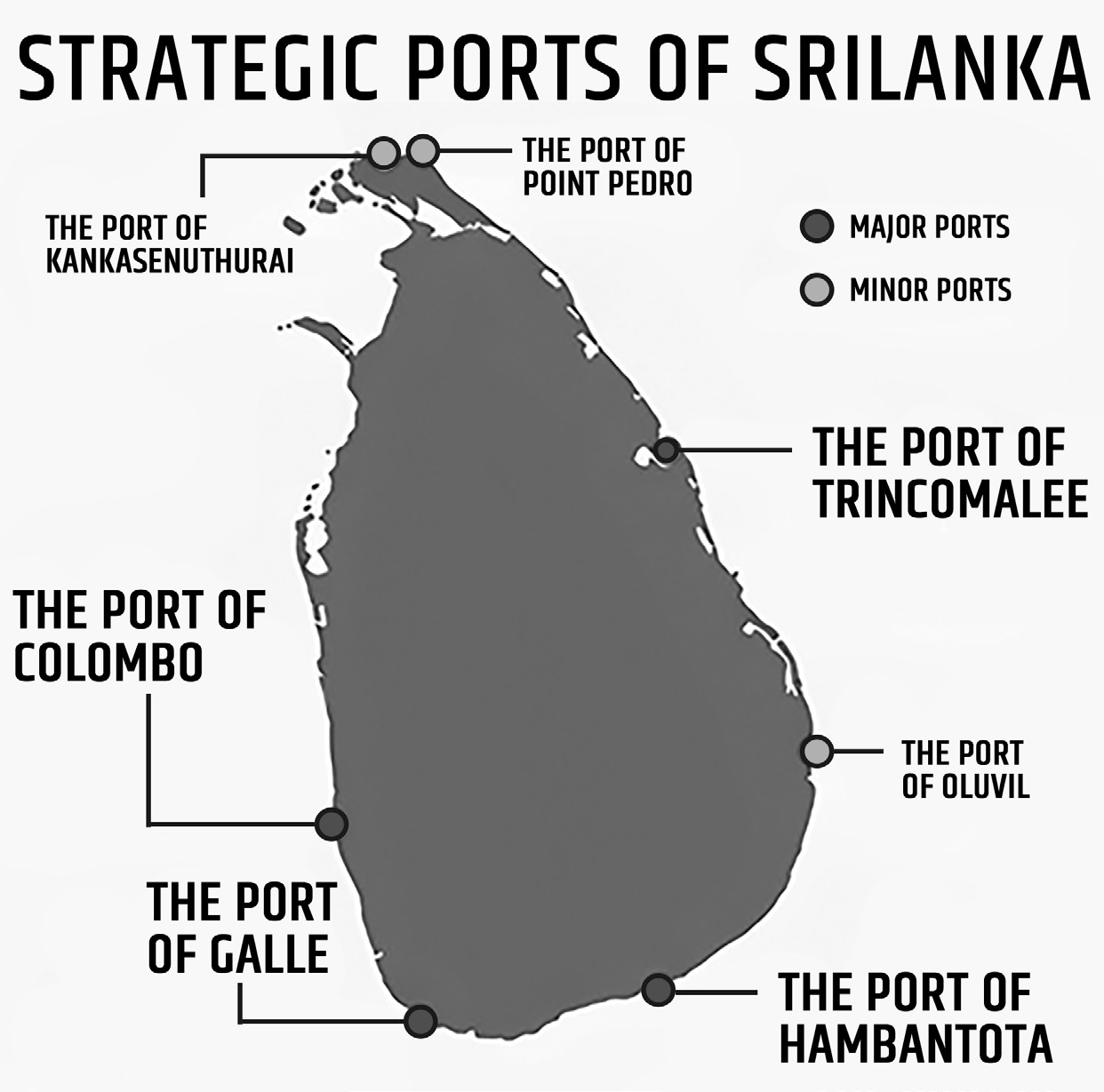
Port city of Trincomalee was the main base for Eastern Fleet and British Royal Navy during the Second World War.
Sri Lanka’s location can thus serve both commercial and industrial purposes and be used as a military base.
Geostrategic Significance of Sri Lanka
Geostrategic Significance of Sri Lanka
• Trade: It is situated on crucial water routes that connect to the Indian ocean, where 90% of India's trade takes place.
• Indo-Pacific Strategy: In reaction to Chinese aggression in the South China Sea, an effort was made to ensure free and open access for navigation.
Political Relations
• As a country that emerged from a civil war facing human rights allegations; the domestic politics and international relations of Sri Lanka are heavily geopolitical with foreign powers having vested interests.
• Political relations between India and Sri Lanka have been marked by high-level exchanges of visits at regular intervals.
• In February 2015, Sri Lanka’s newly elected President Maithripala Sirisena undertook his first official visit to India, and Indian Prime Minister paid a return visit to Colombo in March 2015. He was the first Indian prime minister to do a stand-alone visit to Sri Lanka in 28 years.
• In June 2019, the first overseas visit of Indian Prime Minister to Sri Lanka, in his second term, is an important symbolic gesture reflective of the special relationship between the countries.
Diplomatic Relations
• Sri Lanka is a member of regional groupings like BIMSTEC (Bay of Bengal Initiative for Multi-Sectoral Technical and Economic Cooperation) and SAARC in which India plays a leading role.
• India has also invited leaders of BIMSTEC member countries to attend the swearing-in of Prime Minister. This is in line with the government’s focus on its ‘Neighbourhood First’ policy.
• Sri Lanka has long been in India’s geopolitical orbit, but its relationship with China has strengthened in recent years.
• Former President Rajapaksa took Sri Lanka closer to China and side-lining Indian concerns including over the rehabilitation of Tamils displaced by the long-running Sri Lankan civil war.
Commercial Relations
• India and Sri Lanka enjoy a vibrant and growing economic and commercial partnership, which has witnessed considerable expansion over the years.
• The entry into force of the India-Sri Lanka Free Trade Agreement (ISFTA) in 2000 contributed significantly towards the expansion of trade between the two countries.
• India has traditionally been among Sri Lanka’s largest trade partners and Sri Lanka remains among the largest trade partners of India in the SAARC.
• India has always been among Sri Lanka’s main commercial partners. In FY 2024–2025, the merchandise trade between Sri Lanka and India totaled USD 5.97 billion, with USD 1.4 billion coming from Sri Lanka and USD 4.5 billion from India.
• India is also one of the largest contributors to Foreign Direct Investment (FDI) in Sri Lanka with cumulative investment of USD 2.25 billion till 2023. The FDI from India for the period Jan-Sep 2024 was USD 80.55 million
• Bilateral trade between India and Sri Lanka has increased by around 9 times between 2000-01 and 2018-19. India has always had a trade surplus with Sri Lanka.
• In January 2022, India agreed to a $400 million currency swap with the Central Bank of Sri Lanka (CBSL). The swap was intended to improve Sri Lanka's foreign reserves and financial stability.
• In 2022, India also provided Sri Lanka with $1.4 billion in support, including:
• A $0.5 billion loan delay
• Half a billion in a line of credit to help the country meet its fuel import needs
• India and Sri Lanka will increase trade, and India will continue support for Sri Lanka’s economy.
• A memorandum of understanding was signed to operationalise UPI digital payments in Sri Lanka and to designate the Indian Rupee as currency for trade.
India-sri Lanka Free Trade Agreement (isfta)
India-Sri Lanka Free Trade Agreement (ISFTA)
The primary framework for bilateral trade between India and Sri Lanka is the India-Sri Lanka Free Trade Agreement (ISFTA), which was signed in 1998 and came into effect in March 2000.
The ISFTA was designed to address the economic asymmetries between the two countries, consider local socio-economic sensitivities, implement safeguard measures to protect domestic interests, and ensure that revenue-generating tariff lines were not adversely affected in the short term.
In essence, India aimed to foster greater trade while not demanding strict reciprocity from Sri Lanka. This approach is reflected in the terms of the agreement, where India agreed to open more tariff lines upfront within a shorter three-year period, while Sri Lanka was given a longer time frame of eight years to do the same, with more gradual and smaller openings.
To qualify for ISFTA benefits, merchandise traded between India and Sri Lanka must meet the Rules of Origin criteria.
The proposed Comprehensive Economic Partnership Agreement (CEPA), which has yet to be signed, aims to build on the momentum generated by the FTA. It seeks to expand bilateral ties beyond trade in goods, promoting greater economic integration and boosting the synergy of both economies.
Investments between the two countries span a wide range of sectors, including petroleum retail, IT, financial services, real estate, telecommunications, hospitality & tourism, banking, food processing (such as tea and fruit juices), metal industries, tires, cement, glass manufacturing, and infrastructure development (railways, power, and water supply).
Tourism also plays a significant role in the economic connection between India and Sri Lanka, with India being the largest source of tourists for Sri Lanka. In fact, one in every five tourists to Sri Lanka is from India.
The proposed Economic and Technological Cooperation Agreement (ETCA) would further enhance trade in services, investments, and technological cooperation between the two nations. Once signed, the ETCA would encourage Indian investments in Sri Lanka, integrating the island's production facilities into the Indian and international value chains.
Additionally, India and Sri Lanka have agreed to establish a multi-product petroleum pipeline from southern India to Sri Lanka. This pipeline aims to ensure a reliable and affordable supply of energy resources to Sri Lanka, underscoring the critical role of energy in driving economic growth and development.
Cultural and Educational Relations
Buddhism is one of the strongest pillars connecting the two nations and civilizations from the time when the Great Indian Emperor Ashoka sent his children Arhat Mahinda and Theri Sangamitta to spread the teachings of Lord Buddha at the request of King Devanampiya Tissa of Sri Lanka.
The Cultural Cooperation Agreement signed by the two Governments on 29 November, 1977, forms the basis for periodic Cultural Exchange Programmes between the two countries.
The Indian Cultural Centre in Colombo actively promotes awareness of Indian culture by offering classes in Indian music, dance, Hindi and Yoga. Every year, cultural troupes from both countries exchange visits.
India and Sri Lanka commemorated the 2600th year of the attainment of enlightenment by Lord Buddha (Sambuddhathva Jayanthi) through joint activities.
The two Governments also celebrated the 150th Anniversary of Anagarika Dharmapala in 2014.
The India-Sri Lanka Foundation, set up in December 1998 as an intergovernmental initiative, also aims towards enhancement of scientific, technical, educational and cultural cooperation through civil society exchanges and enhancing contact between the younger generations of the two countries.
In 2015, India and Sri Lanka signed a Memorandum of Understanding (MoU) to establish Nalanda University. The MoU allows Sri Lanka to participate in the Nalanda University Project.
Under the Indian Technical and Economic Cooperation (ITEC) Program, India offers 402 fully-funded slots every year to officials in various Ministries of Government of Sri Lanka and also to other eligible citizens for short term training programs in a wide variety of technical and professional disciplines to enhance skill sets.
Indian institutes under the ‘Study in India’ Program provide technical expertise across a diverse range of courses and include programs in niche disciplines such as Ayurveda, Yoga, and Buddhist Studies.
In July 2020, the Government of India declared the Kushinagar Airport in India, the place of Lord Buddha’s Mahaparinibbana, as an international airport, to allow Buddhist pilgrims from around the world to visit the revered site associated with Lord Buddha with ease – first inaugural flight from Sri Lanka
Swami Vivekananda Cultural Centre (SVCC) – the cultural arm of the High Commission of India, Colombo, has been playing a key role in strengthening these ties and promoting people-to-people contacts between India and Sri Lanka since its inception in 1998.
In May 2012, through cooperative events, India and Sri Lanka marked the 2600th anniversary of Lord Buddha’s enlightenment (Sambuddhathva Jayanthi).
Since 2015, the High Commission of India has celebrated the International Day of Yoga (IDY) in Sri Lanka with tremendous enthusiasm, with the involvement of Sri Lankan leaders and the general public.
In 2019, various cultural activities were held in Sri Lanka to commemorate Mahatma Gandhi’s 150th birth anniversary.
Government of India formally launched the e-Tourist Visa (eTV) scheme for Sri Lankan tourists on 14 April 2015 to increase the people to people contact.
In early 2025, India also released the Sinhala translation of Jataka Tales and the Pali grammar book "Namamala."
Colombo University has established the Center for Contemporary Indian Studies (CCIS). Kelaniya and Sabaragamuwa University have established a long-term ICCR chair for Hindi
Indian Community
The People of Indian Origin (PIOs) in Sri Lanka include various communities such as Sindhis, Borahs, Gujaratis, Memons, Parsis, Malayalis, and Telugu speakers, many of whom settled in Sri Lanka after the partition. They are actively involved in a wide range of business ventures.
While their numbers are smaller compared to the Indian Origin Tamils (IOTs), PIOs are economically prosperous and hold prominent positions in various sectors.
The IOTs, on the other hand, are primarily employed in tea and rubber plantations across the Central, Uva, and Sabaragamuwa provinces. In recent years, however, many younger IOTs have migrated to Colombo in search of better employment opportunities.
A significant portion of IOTs in Colombo is involved in business activities. According to the 2011 government census, the IOT population in Sri Lanka is approximately 1.6 million.
Defence and Security Cooperation
Sri Lanka and India share a long-standing history of security cooperation, which has grown stronger in recent years.
The two countries have increasingly deepened their military ties, conducting joint military exercises under the banner of 'Mitra Shakti' and naval exercises known as SLINEX. India also provides defense training to Sri Lankan forces.
A trilateral maritime security cooperation agreement between India, Sri Lanka, and the Maldives was signed to enhance surveillance, improve anti-piracy operations, and reduce maritime pollution in the Indian Ocean region.
In April 2019, India and Sri Lanka signed an agreement to combat drug and human trafficking. Following the tragic Easter bombings in Sri Lanka, the Sri Lankan Prime Minister thanked the Indian government for its support, highlighting that Indian agencies had issued early warnings regarding radicalized suicide bombers targeting churches and the Indian High Commission in Colombo.
As part of its 'Neighbourhood-First Policy' and the 'SAGAR' (Security and Growth for All in the Region) doctrine, India places great importance on maintaining peace and security in the Indian Ocean region. Notably, 70% of India's cargo transits through the Colombo port, which is the largest trans-shipment port in South Asia.
In July 2023, Sri Lankan President Ranil Wickremesinghe visited India at the invitation of Prime Minister Narendra Modi. The visit aimed to further strengthen bilateral relations between the two nations. Several key agreements were signed during the visit :-
Joint Declaration of Intent on Animal Husbandry and Dairying: This agreement seeks to improve Sri Lanka’s dairy products, enhance milk selfsufficiency, and raise incomes for small-scale farmers through knowledge sharing, technical assistance, and capacity-building initiatives.
Memorandum of Understanding on Cooperation in Renewable Energy: India and Sri Lanka are set to collaborate on the development of renewable energy, leveraging India’s expertise as a global leader in the sector and Sri Lanka’s significant potential in this area.
Memorandum of Cooperation for Economic Development in Trincomalee: This agreement focuses on the economic development of Sri Lanka's Trincomalee district, with cooperation in areas such as infrastructure, industry, tourism, agriculture, and human resources.
Humanitarian Aid
In November 2025, Cyclone Ditwah made landfall on Sri Lanka's eastern coast. In November 2025, India initiated Operation Sagar Bandhu as a show of support for the people of Sri Lanka. India offered Sri Lanka all-encompassing help during Operation Sagar Bandhu, including emergency supplies, medical care, search and rescue support, infrastructure repair, etc
Issues and Conflicts
ISSUES AND CONFLICTS
Fishermen issue
Given the proximity of the territorial waters of both countries, especially in the Palk Straits and the Gulf of Mannar, incidents of straying of fishermen are common.
Indian boats have been fishing in the troubled waters for centuries and had a free run of the Bay of Bengal, Palk Bay and the Gulf of Mannar until 1974 and 1976 when treaties were signed between the two countries to demarcate International Maritime Boundary Line (IMBL).
However, the treaties failed to factor in the hardship of thousands of traditional fishermen who were forced to restrict themselves to a meagre area in their fishing forays.
The small islet of Katchatheevu, hitherto used by them for sorting their catch and drying their nets, fell on the other side of the IMBL.
Fishermen often risk their lives and cross the IMBL rather than return empty-handed, but the Sri Lankan Navy is on alert, and have either arrested or destroyed fishing nets and vessels of those who have crossed the line.
Cooperation in Fishermen issue
Both countries have agreed on certain practical arrangements to deal with the issue of bona fide fishermen of either side crossing the International Maritime Boundary Line.
Through these arrangements, it has been possible to deal with the issue of detention of fishermen in a humane manner.
India and Sri Lanka have agreed to set up a Joint Working Group (JWG) on Fisheries between the Ministry of Agriculture and Farmers Welfare of India and Ministry of Fisheries and Aquatic Resources Development of Sri Lanka as the mechanism to help find a permanent solution to the fishermen issue.
The delegation from both sides deliberated on the fisheries issue including:
co-operation on patrolling,
setting up of a Hotline between two Coast Guards,
introduction of effective tracking systems for fishing vessels,
release of boats in custody and handing over of arrested fishermen
fishermen association level talks, overseen by both Governments
Katchatheevu Island Dispute
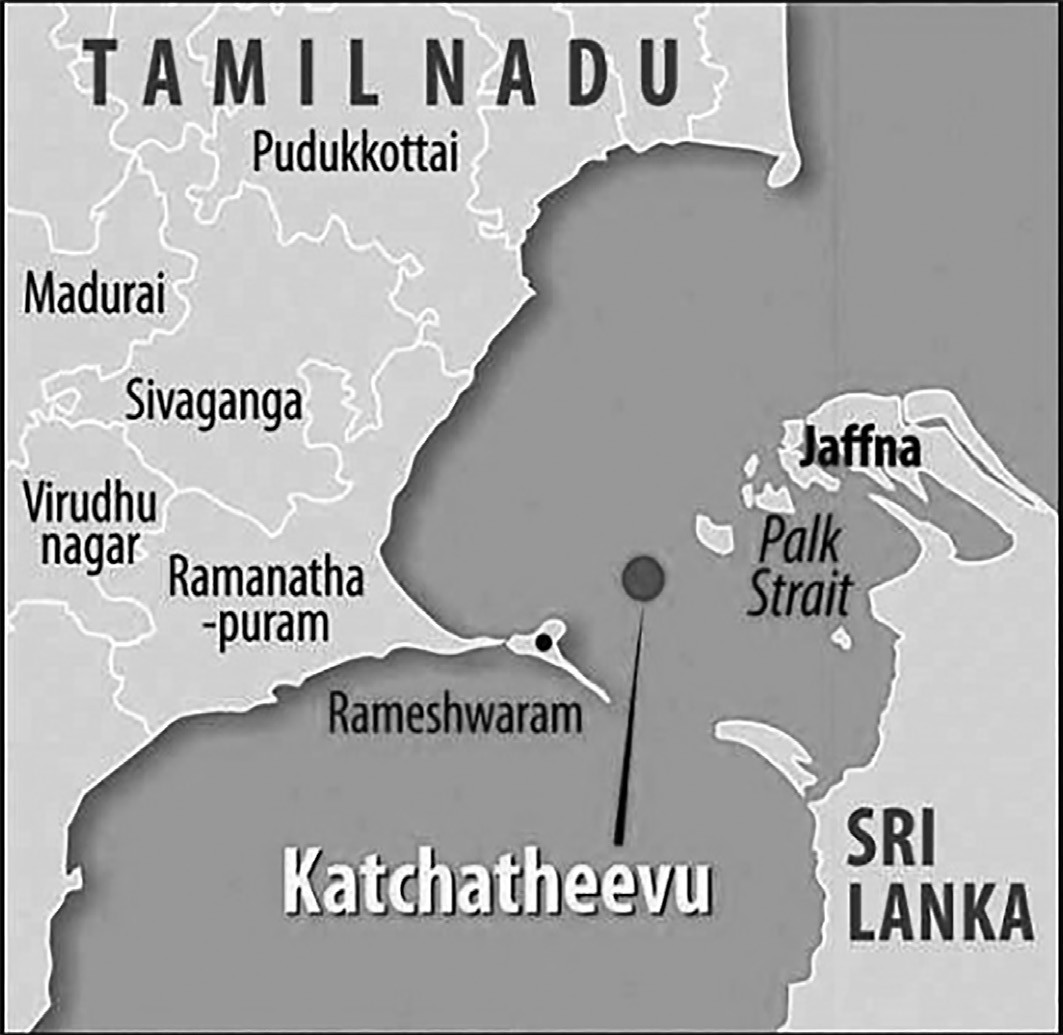
Katchatheevu is a controversial uninhabited 285-acre (1.15 km) island situated on the Sri Lankan side of the maritime boundary.
This island was with India till 1974 when it was ceded to Sri Lanka by then Prime Minister Indira Gandhi based on a conditional agreement called “Kachchativu island pact”.
Though ceded to Sri Lanka, the agreement, which did not specify fishing rights, allowed Indian fishermen to fish around Katchatheevu and to dry their nets on the island.
Later on, Sri Lanka declared Katchatheevu, a sacred land given the presence of a Catholic shrine.
The central government recognizes Sri Lanka’s sovereignty over the island as per the 1974 accord.
But Tamil Nadu claimed that Katchatheevu falls under the Indian territory and Tamil fishermen have traditionally believed that it belongs to them and therefore want to preserve the right to fish there.

Role of China in Nepal
Role of China
Under the previous regime, Sri Lanka looked to China for economic and diplomatic backing at a time when the West was threatening to sanction Colombo for crimes committed in its conflict with Tamil separatists.
China attaches centrality to Sri Lanka to amplify its Maritime Silk Road.
China has invested heavily in Sri Lanka’s infrastructure as part of its “string of pearls” policy aimed at establishing a naval presence across South Asia by building infrastructure and China is the largest investor in Sri Lanka.
China has also collaborated in satellite launching activities with Supreme SAT (Pvt.), Sri Lanka’s only satellite operator.
Sri Lanka also recently formally handed over its southern port of Hambantota to China on a 99-year lease which had become an obvious site of the India-China geopolitical tussle on the island, has in the past witnessed protests against projects involving both countries.
Recently, China donated a frigate to the Sri Lankan Navy. While the development itself was hardly surprising, it nonetheless highlighted the continuing increase in China’s influence in Sri Lanka.
Is Sri Lanka a Victim of Chinese ‘Debt Trap’?
Sri Lanka is often portrayed as a country that fell into a debt trap as a result of public investment projects financed by China.
The general belief seems to be that Sri Lanka was unable to pay off the loans obtained from China to construct Hambantota port in the first place, and therefore had no choice but hand over the port to Chinese control to pay off the debt.
China is also actively engaging itself in Sri lanka from building infrastructure, to assisting in maritime security, fighting terror to developing ports.
Chinese investments over the years in Sri Lanka amounted to over $8 billion adding pressure to Colombo’s external debt burden.
China’s acquisition of Hambantota port as a debt swap has raised concerns about Beijing’s Belt and Road Initiative
(BRI), which the United States (US) has cautioned as debt trap specially for smaller countries.
In order to allay Indian concerns that the Hambantota port will not be used for military purposes, the Sri Lankan government has sought to limit China’s role to running commercial operations at the port while it retains oversight of security operations.
The two countries have signed civil nuclear cooperation agreement which is Sri Lanka’s first nuclear partnership with any country.
India is also investing into Sri Lanka’s infrastructure development in the Northern and Eastern provinces, India is also planning to build Trincomalee Port to counterweight the Chinese developments at Hambantota Port.
Challenges for India From the Crisis
CHALLENGES FOR INDIA FROM THE CRISIS
Economic challenges
It must be noted that India relies considerably on the Port of Colombo for global trade given its status as a transhipment hub. 60 percent of India’s transhipment cargo is handled by the Colombo port. Any disruption in operations at the Port of Colombo makes India vulnerable to an increase in costs and congestion issues.
Humanitarian crisis
With India being the only immediate neighbor of Sri Lanka, the threat of large-scale humanitarian crisis could also impact India. With the shortage of food, medicines, and growing political instability, India finds itself placed in a position of immense responsibility to avert the crisis through all possible aid.
Refugee crisis
Whenever a political or social crisis has occurred in Sri Lanka, India has witnessed a large influx of ethnic Tamil community refugees from the Sinhala Land to India through the Palk strait and Gulf of Munnar. However, India may find it difficult to handle such an influx and needs a robust policy in place to handle the crisis.
How is India aiding Sri Lanka?
• India has extended financial assistance to the tune of US$2.4 billion, starting from late 2021, which includes
a US$400 billion Reserve Bank of India (RBI) currency ¾ Mutual recognition of each other’s concerns and swap, deferral of a US$500 million loan and a US$1.5- interests can improve the relationship between both billion credit line for importing fuel, food and medicines. countries.
As immediate relief, India has sent around four ¾ Both countries can work towards reducing trade consignments of 40,000 metric tons of diesel to mitigate imbalances and promoting greater economic the spike in power cuts in Sri Lanka. India has also sent cooperation. Identifying sectors with complementary
40,000 tons of rice in prompt shipments to the island interests and fostering investments can lead to nation.mutually beneficial outcomes.
• India again in 2022 extended multi-prolonged assistance of about USD 4 billion to Sri Lanka through multiple credit lines and currency support, in line with India's 'Neighbourhood First Policy'
WAY FORWARD
As both countries have a democratic setup there is scope for broadening and deepening the ties.
Both countries should try to work out a permanent solution to the issue of fishermen through bilateral engagements.
Comprehensive Economic Partnership Agreement (CEPA) must be signed to improve the economic cooperation between both countries.
India needs to focus more on connectivity to improve relations with Sri Lanka. Starting of ferry services between India and Sri Lanka can improve people to people linkages.
Mutual recognition of each other’s concerns and interests can improve the relationship between both countries.
Both countries can work towards reducing trade imbalances and promoting greater economic cooperation. Identifying sectors with complementary interests and fostering investments can lead to mutually beneficial outcomes.
While maintaining friendly ties with other countries is essential, both India and Sri Lanka should ensure that their bilateral relations remain strong and are not unduly influenced by external powers.
Collaborating on security matters and intelligence sharing can help address common threats and strengthen trust between the two nations.
India can continue to engage with Sri Lanka to ensure the welfare and rights of the Tamil community are respected and protected. Supporting efforts for ethnic reconciliation and devolution of power can be crucial to promoting stability and inclusivity in Sri Lanka.
Encouraging cultural exchanges, tourism, and educational ties can foster greater people-to-people connectivity and understanding between the citizens of both countries