Southeast Asia to Propagate Shaivism and Establish Temples
Southeast Asia to propagate Shaivism and establish temples. The Cholas also traded with Southeast Asia, and the Southeast Asian countries imported textiles, spices, and ivory from India. The Chola period saw significant maritime activity, and this helped in promoting trade and cultural exchange between India and Southeast Asia.
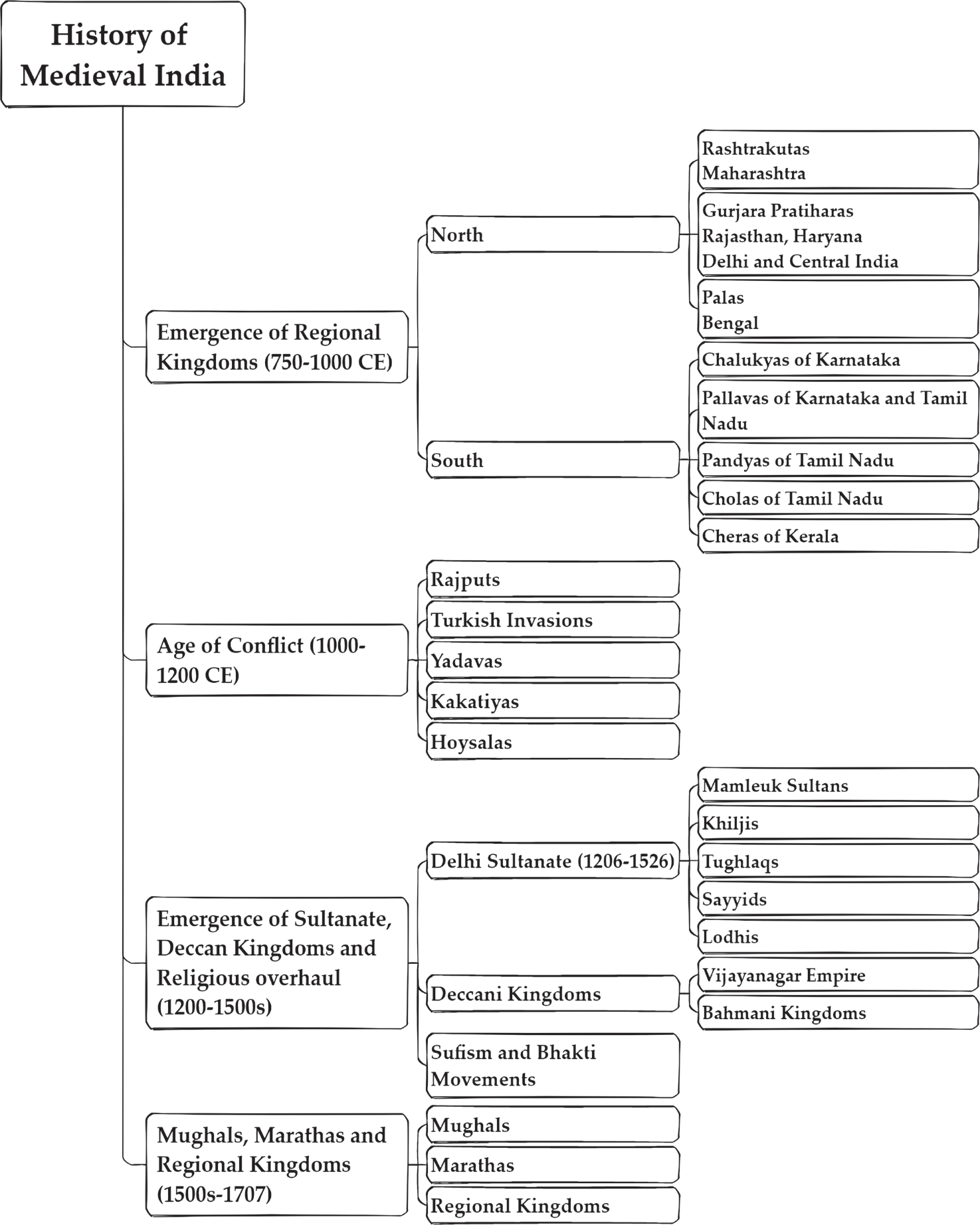
By the end of the ninth century, the Abbasid Caliphate was in decline, paving the way for a series of states ruled by Islamized Turks. The Turks had initially entered the Abbasid Empire as palace guards and mercenary soldiers during the ninth century, but over time, they rose to power, becoming the kingmakers. As the central authority weakened, provincial governors began to assert their independence, though the illusion of unity was maintained for a while by the caliph formally granting the title of amir-ul-umra (Commander of Commanders) to generals who carved out their own spheres of authority. These new rulers began using the title amir initially, and later, sultan.
The period was marked by instability, with Turkish tribes from Central Asia continuously raiding, Turkish mercenaries frequently switching loyalties, and conflicts between different Muslim sects and regions. Empires and states rose and fell rapidly. In such turbulent times, only a bold and capable warrior, skilled in both warfare and navigating political intrigue, could emerge to lead. The Turkish tribes were known for their ruthless plunder, utilizing swift raids and lightning-fast advances and retreats. Their superior horses and endurance allowed them to travel vast distances and strike unexpectedly.
At the same time, the disintegration of the Gurjara-Pratihara Empire led to political instability in northern India, shifting the focus towards new struggles for dominance. This diversion allowed the expansionist Turkish states to grow in power at the northwestern borders of India and in West Asia. Regions like Kabul, Qandahar, and Zabul were considered part of al-Hind (India) until the late ninth century. These areas were home to significant Buddhist and Hindu sites, including the renowned 53.5-meter statue of Buddha at Bamiyan. The region around the Oxus River was ruled by various dynasties, some claiming descent from Kanishka and was inhabited by a mixed population, including local tribes, Hunas, Turks, and exiled Iranians and Indians, such as Bhati Rajputs These kingdoms fiercely resisted Arab incursions aimed at tribute, plunder, and slavery, resulting in constant border skirmishes. By the end of the ninth century, Trans-Oxiana, Khurasan, and parts of Iran were under the rule of the Samanids, an Iranian dynasty. The Samanids faced relentless threats from non-Muslim Turkish tribes on their northern and eastern borders. This struggle led to the emergence of the ghazi, a new type of soldier. The ghazi was not only a warrior but also a missionary, fighting for both the defense of the state and the spread of Islam. Operating as auxiliary forces, ghazis compensated for their low pay through plunder, and their resourcefulness was crucial in helping the fledgling Muslim states fend off the Turkish tribes.
The collapse of the Pratihara Empire resulted in the rise of several Rajput kingdoms in northern India. Among the most powerful were the Gahadavalas of Kanavi, the Paramaras of Malwa, and the Chauhans of Ajmer. Smaller dynasties also emerged, such as the Kalachuris near modern-day Jabalpur, the Chandellas of Bundelkhand, the Chalukyas of Gujarat, and the Tomars of Delhi. Bengal remained under the control of the Palas, later succeeded by the Senas. The Gahadavalas, of Kanayi slowly pushed the Palas out of Bihar.
Turks were thus enabled to extend their conquest from the Punjab and Multan into the Ganga Valley and even to overrun Bihar and parts of Bengal. For nearly a century following their conquest, the Delhi Sultanate, the state established by these invaders, struggled to survive. It faced constant challenges, including foreign invasions, internal power struggles among Turkish leaders, and the determined efforts of displaced Rajput rulers and chiefs to reclaim their independence and, if possible, expel the Turks. Despite these obstacles, the Turkish rulers managed to prevail. By the century's end, they had expanded their control over Malwa and Gujarat, while also making inroads into the Deccan and southern India. As a result, the impact of Turkish rule in northern India began to reverberate across the entire subcontinent, bringing about profound transformations in society, governance, and cultural life.
The Delhi Sultanate emerged following Turkish incursions into India, leading to the establishment of centralized authority in the north. Its inception witnessed foreign invasions, internal conflicts, and Rajput resistance. Despite early challenges, the Sultanate stabilized, expanding its territories into regions like Malwa, Gujarat, and the Deccan. This period bore witness to transformative administrative and societal changes, marking a significant transition in Indian governance. The Delhi Sultanate not only left an enduring imprint on India's political landscape but also facilitated cultural exchanges, contributing to the synthesis of diverse traditions and fostering trade networks. The sultanate also produced many able rulers such as Aibak, Iltutmish, Balban, Alauddin Khilji and Mohammad Bin Tughlaq. Ultimately it declined due to internal strife and frequent succession disputes among nobles weakening central authority, leading to political fragmentation and the emergence of independent regional powers. Further, external threats from invading Mongols and the emerging Timurid empire added strain, disrupting stability and sapping the Sultanate's resources. Economic challenges such as the revenue decline, inefficient governance and excessive taxation, weakened the Sultanate's foundations. Simultaneously, social unrest and religious tensions added to the Sultanate’s woes.
For over two centuries, the Vijayanagara and Bahmani kingdoms were the dominant powers in southern India, controlling the lands south of the Vindhyas. These empires not only constructed impressive capitals and cities, adorned with grand buildings, but also fostered the growth of the arts, literature, law, order, and commerce. While northern India experienced fragmentation and turmoil, southern India and the Deccan enjoyed a period of relative stability under these powerful rulers. However, this era of stability came to an end with the decline of the Bahmani empire in the late fifteenth century, followed by the fall of the Vijayanagara empire more than fifty years later, after its defeat at the Battle of Bannihatti in 1565. During this period of upheaval, the Indian landscape underwent significant changes, first with the arrival of the Portuguese in southern India, seeking control over the seas, and then with the rise of the Mughal Empire in the north.
The downfall of the Vijayanagara Empire at the Battle of Bannihatti in 1565 sparked a renewed effort by the Deccan states to expel the Portuguese from the Deccan coast. As long as Vijayanagara had posed a threat to Bijapur in the south, maintaining peace with the Portuguese was crucial, as they controlled the vital horse trade. Conflict with the Portuguese would have redirected this trade in favor of Vijayanagara. In 1570, Ali Adil Shah, the Sultan of Bijapur, forged an alliance with the Sultan of Ahmadnagar, with the Zamorin of Calicut also joining forces. Together, they launched an attack on Portuguese positions in their territories. Adil Shah personally led an assault on Goa, while Nizam Shah laid siege to Chaul. However, despite their efforts, the Portuguese, supported by their powerful navy, successfully defended their holdings. As a result, the Portuguese maintained their dominance over the Indian seas and the Deccan coast.
Babur’s arrival in India in 1526 unfolded against the backdrop of intricate Central Asian politics. Hailing from Farghana, a small state in Trans-Oxiana, Babur was embroiled in a power struggle among Timurid princes for control over Samarqand. Despite his initial attempts to reclaim Samarqand, Babur faced repeated setbacks at the hands of rival factions and the formidable Uzbek leader, Shaibani Khan. Consequently, he shifted his focus to Kabul, which he conquered in 1504. Over the next fourteen years, Babur strategically bided his time, seeking opportunities to reclaim his lost territories. His attempts to forge alliances and recapture Samarqand with Iranian assistance were met with challenges, and he was repeatedly ousted by the Uzbeks. This tumultuous period marked Babur’s persistent efforts to regain his lost kingdom, eventually leading him to divert his ambitions towards India, setting the stage for the Mughal ascendancy on the Indian subcontinent.
The First Battle of Panipat in 1526 heralded Babur’s incursion into the Indian subcontinent. This clash, held near Panipat, was a decisive encounter between Babur’s forces, which were largely composed of Central Asian troops and artillery, and Ibrahim Lodi’s army, representing the Delhi Sultanate. Babur’s victory in this battle solidified his foothold in India and established the foundation of the Mughal Empire’s rule in the region. This triumph marked the end of the Delhi Sultanate and the beginning of the Mughal era in India.
Akbar, one of the most notable Mughal emperors, ruled India from 1556 to 1605. His reign marked a significant era in Indian history, characterized by administrative reforms, cultural advancements, and religious tolerance. Akbar implemented several policies aimed at fostering stability and consolidating his empire, including the Mansabdari system, which organized the imperial bureaucracy and military ranks based on merit rather than solely on birthright. He pursued a policy of religious tolerance, establishing the Din-i Ilahi, a syncretic faith that sought to incorporate the best aspects of various religions. Akbar’s court was a centre of art, culture, and learning, attracting scholars, poets, and artists from across the world. His reign is often hailed as a golden age, marked by economic prosperity, architectural achievements, and social harmony.
Aurangzeb, the sixth Mughal emperor, ascended to the throne in 1658 after a prolonged war of succession. His reign was characterized by its length, lasting from 1658 to 1707, and its controversial policies. Aurangzeb expanded the Mughal Empire to its greatest territorial extent but faced significant challenges, especially in dealing with diverse religious and cultural factions within his vast empire. His policies were marked by a return to stricter Islamic principles, which led to the demolition of Hindu temples, imposition of Jizya tax, and the suppression of practices considered non- Islamic. These measures alienated several communities and led to internal unrest and rebellions. Despite expanding the empire, Aurangzeb’s rule was also marred by constant battles for succession among his sons, which weakened the stability of the empire. His prolonged campaigns and the administration’s focus on military activities strained the treasury, leading to economic challenges. Aurangzeb’s policies towards religious minorities and his long, costly military campaigns contributed to the gradual decline of the Mughal Empire after his death.
The Marathas, under Chhatrapati Shivaji Maharaj, transformed into a potent force challenging Mughal dominance in the Deccan. Shivaji’s strategies and administrative innovations established an independent Maratha kingdom, marked by guerrilla warfare, the establishment of forts, and a formidable naval fleet. His demise in 1680 led to a period of continued expansion under successors like Rajaram I and Tara Bai, who staunchly resisted Mughal advances.
The caste system continued to be a dominant feature of social life, despite the challenges posed by Islam and the decline in political power of the Rajput rulers, who were traditionally responsible for preserving dharma, which included maintaining the four-fold societal structure (varnashrama/dharma). While figures like the Nath Panthi Jogis and the Bhakti saints strongly criticized the caste system, their influence was limited. Over time, an unspoken understanding developed: while saints criticized the caste system, their criticism rarely affected everyday or secular life, and the Brahmans accepted the idea that devotion could be the path to salvation for all castes, particularly the Shudras. Women saints such as Mira, along with others like Surdas, opened the path of bhakti to women, allowing them to transcend traditional roles of servitude to their husbands. Despite these changes, Brahmans continued to claim a special status, including the exclusive right to educate and preach.
As the caste system evolved, new subgroups emerged. This was partly due to the integration of tribal groups into Hinduism, the rise of new professions, and the strengthening of local and regional identities. Meanwhile, the varna status of different castes shifted depending on the economic and political strength of the groups involved.
The Bhakti and Sufi saints played a key role in fostering a deeper understanding of the core principles of both Hinduism and Islam, highlighting their many commonalities. This encouraged a spirit of greater mutual respect and tolerance. However, there were still groups advocating a more narrow and intolerant view, which at times influenced state policies, although such instances were relatively rare. The Bhakti and Sufi movements also brought significant changes in religious practice, shifting the focus from ritualistic observances to sincere devotion and inner faith. Additionally, they made notable contributions to the development of regional languages and literature. However, their intense focus on religious and spiritual matters did have a downside, as it led to a stagnation in the advancement of rational sciences, particularly in the fields of science and technology.
Overall, the status of women declined during this period. The practice of seclusion or purdah became more widespread and Hindu women were denied the right to remarry or inherit property from their fathers—rights that Muslim women were entitled to. In fact, even Muslim women began to lose access to these rights over time.
In the political and economic spheres, the most significant development was the political and administrative unification of India, initiated by the Turks and later strengthened by the Mughals. Although the Turkish and Mughal administrative systems primarily impacted northern India, their influence indirectly extended to other regions of the subcontinent as well.
The establishment of a standardized silver currency, the improvement of roads and rest houses (sarais) and the growing preference for urban living directly contributed to the flourishing of trade and handicrafts, which peaked in the seventeenth century.
During the Mughal era, political unity was paired with a conscious effort to form a unified ruling class that included both Muslims and Hindus. However, the ruling class remained distinctly aristocratic, with limited career opportunities for talented individuals from lower social classes. Additionally, it retained a primarily northern character. Although Aurangzeb made efforts to include a significant number of Marathas and Deccani nobles in the Mughal administration, the Deccanis were integrated, while the Marathas were not. This may have been due to regional, religious, and social biases, as, unlike the Bainuts in northern India, the Maratha leaders came from social groups that had never held political power or been part of the ruling class, and were not considered Kshatriyas.
A key achievement of the Turks was their defense of India against Mongol invasions during the thirteenth and fourteenth centuries. Later, the Mughals successfully protected India's northwest borders from foreign invasions for two centuries. To achieve this, the defense strategy focused on the Kabul-Ghazni line, with the Hindukush mountains forming a natural northern boundary. The political developments in Central and West Asia were closely monitored, and at times, the Mughals actively engaged in the region's politics.
| A BRIEF TIMELINE OF MEDIEVAL HISTORY | |
| Yea | Event |
| 712 | First invasion of Sindh by Mohammed-bin-Qasim (Arabs) |
| 836 | Accession of King Bhoja of Kannauj |
| 985 | Accession of Rajaraja I, the Chola rule |
| 998 | Accession of Sultan Mahmud Ghazni |
| 1001 | First invasion of India by Mahmud Ghazni who defeated Jaipal, the ruler of Punja |
| 1024 | Destruction of Somnath Temple by Mahmud Ghazni |
| 1191 | First battle of Tarain between Prithviraj Chauhan and Sultan Mohammad Ghori |
| 1192 | Second battle of Tarain |
| 1206 | Succession of Qutubuddin Aibak |
| 1210 | Death of Qutubuddin Aibak |
| 1221 | Mongol invasion -Chengiz Khan invaded India |
| 1236 | Succession of Razia Sultana to the sovereignty of Delhi |
| 1240 | Death of Razia Sultana |
| 1296 | Accession of Alauddin Khilji |
| 1316 | Death of Alauddin Khilji |
| 1325 | Accession of Muhammad-bin-Tughlaq |
| 1327 | Capital was transferred from Delhi to Devagiri (Daulatabad) by Muhammad-bin-Tughlaq |
| 1336 | Foundation of Vijaynagar empire in the South |
| 1351 | Accession of Firoz Shah Tughlaq |
| 1398 | Timur’s invasion of India |
| 1469 | Birth of Guru Nanak |
| 1494 | Accession of Babur in Farghana |
| 1497 | First expedition of Vasco da Gama to India |
| 1526 | First Battle of Panipat Babur defeated Ibrahim Lodhi and laid the foundations of the Mughal Empire |
| 1527 | Battle of Khanwa-Babur defeated Rana Sanga |
| 1530 | Death of Babur and the Accession of Humayun |
| 1539 | Battle of Chausa: Sher Shah Suri defeated Humayun |
| 1555 | Humayun recaptured the throne of Delhi |
| 1556 | Second Battle of Panipat |
| 1556 | Battle of Talikota |
| 1576 | Battle of Haldighati: Rana Pratap was defeated by Akba |
| 1582 | Din-i-Ilahi was founded by Akba |
| 1600 | English East India Company established |
| 1605 | Death of Akbar and accession of Jahangi |
| 1606 | Execution of Guru Arjun Dev Guru Arjun Dev was the 5th Guru of Sikhs |
| 1615 | Sir Thomas Roe visits Jahangi |
| 1627 | Birth of Shivaji |
| 1628 | Shahjahan becomes Emperor of India |
| 1631 | Death of Mumtaz |
| 1634 | The English permitted to trade in Bengal |
| 1659 | Accession of Aurangzeb, Shahjahan imprisoned |
| 1665 | Shivaji imprisoned by Aurangze |
| 1666 | Death of Shahjahan |
| 1675 | Execution of Guru Teg Bahadu |
| 1680 | Death of Shivaji |
| 1707 | Death of Aurangze |
| 1708 | Death of Guru Gobind Singh |
| 1739 | Nadir Shah invades India |
| 1757 | Battle of Plassey |
| 1761 | Third battle of Panipat |