Reign of Rajendra I
REIGN OF RAJENDRA I (1012-1044 A.D.)
Rajendra I carried forward the achievements of his father, Rajaraja I, by expanding the Chola Empire through numerous conquests and territorial consolidation.
Military Expansion: He strengthened Chola dominance over Sri Lanka, the Chera and Pandya regions, while also engaging in military confrontations with the Chalukyas.
Campaign in the North: Rajendra I ventured beyond the Ganges, defeated the rulers of Bengal, and founded the city of Gangaikondacholapuram.
In this new city, he constructed the celebrated Rajesvaram Temple and created an extensive irrigation reservoir known as Cholagangam on the city's western side.
Naval Achievements: Rajendra I led a victorious naval expedition to Kadaram (Sri Vijaya), temporarily occupying it and establishing significant strategic influence in the region.
He earned several titles, including Mudikondan, Gangaikondan, Kadaram Kondan, and Pandita Cholan. Like his father, Rajendra I was a fervent follower of Saivism, commissioning a temple for Lord Shiva in Gangaikondacholapuram and making substantial contributions to both this temple and the Lord Nataraja temple at Chidambaram. Despite his strong religious faith, Rajendra I practiced tolerance, extending respect to Vaishnavism and Buddhism.
Initial Rulers and Contributions
The Cholas, initially feudatories in Uraiyur, gained prominence in the 9th century. Their ascendancy marked the establishment of an empire across major parts of South India, Sri Lanka, and the Malay Peninsula.
Initial Rulers and Contributions
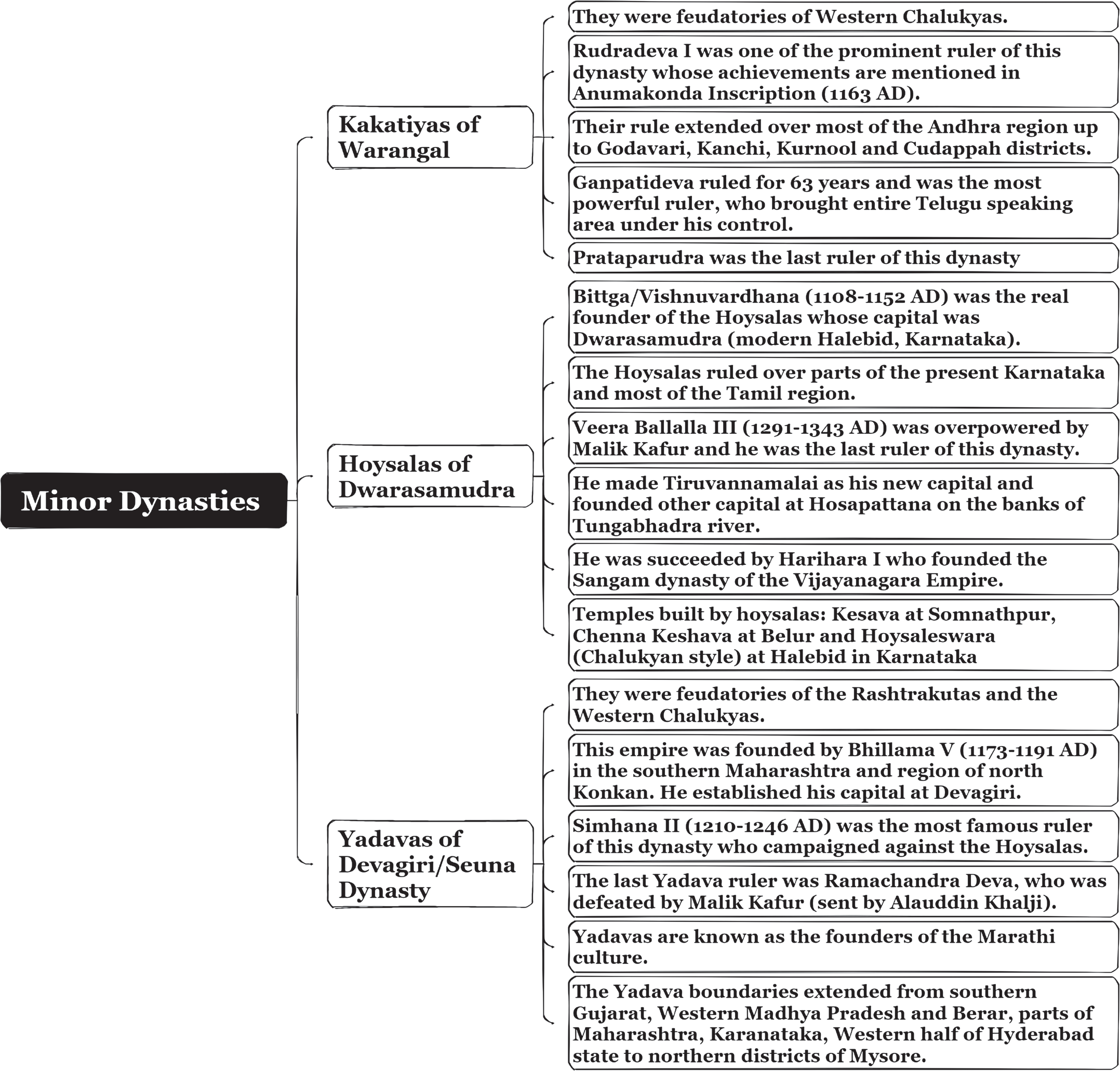
• Vijayalaya: Initiated the Imperial Chola line by capturing Tanjore from the Muttaraiyars in 815 A.D. He erected a temple dedicated to Durga.
• Aditya I: Significantly expanded Chola territories by terminating the Pallava kingdom and annexing Tondaimandalam.
• Parantaka I: Renowned for victories against the Pandyas, temple constructions, and the Takkolam battle against Rashtrakutas. He also provided the vimana of the famous Nataraja temple at Chidambaram with a golden roof. The two famous Uttiramerur inscriptions that give a detailed account of the village administration under the Cholas belong to his reign.
• After the reign of Parantaka I, the Chola empire lost its power and supremacy until the rise of Rajaraja Chola after thirty years.
LITERARY SOURCES FOR INFORMATION ABOUT THE CHOLA EMPIRE
Quazi-historical texts: Kalingattupparani and Kulothungancholan Pillai Tamizh
Epics: Muvarula and Kamban Ramayana
Grammatical Texts: Neminatam, Viracholiyam and Nannual.
Other Literary Works: Paddikovai and Takkayagapparani
Sangam Literature mentions Imperial Cholas of Tanjore as the Muvendhar
In the copper plate inscriptions Cholas trace their lineage to the Karikala (famous Chola ruler during the Sangam Age). In their genealogy an eponymous ruler Chola is mentioned as a progenitor. The names Koc-cengannan, Karikalan and Killi are mentioned as members of the lineage in these copper plates
Rajaraja I
RAJARAJA I’S REIGN (985 – 1014 A.D.)
Under Rajaraja I, the Chola Empire reached its peak, marked by impressive military victories and significant territorial expansion.
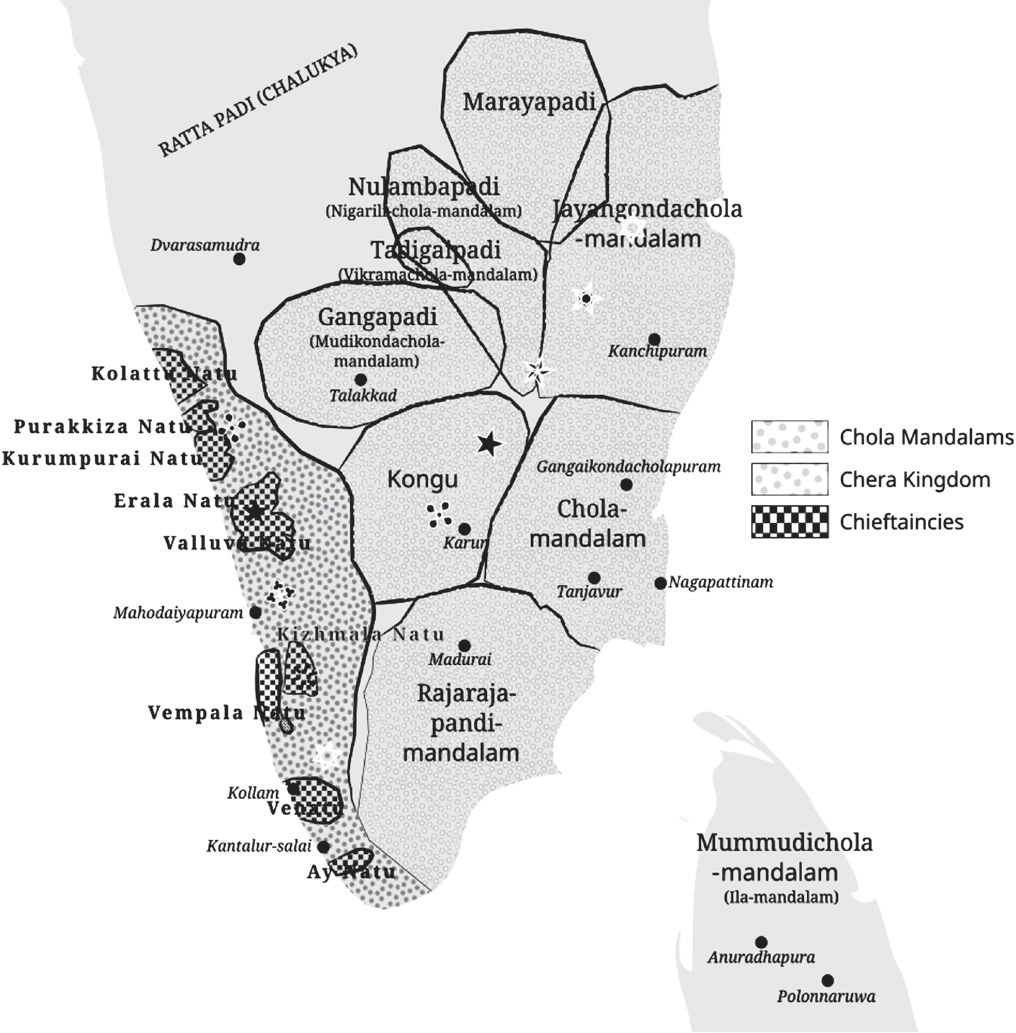

Chola empire during the reign of Rajaraja I
Military Achievements: Rajaraja I defeated the Cheras, Pandyas, Gangavadi, and Nolambapadi regions, strengthening his empire's reach.
His conquest of Sri Lanka led to the relocation of its capital from Anuradhapura to Polonnaruwa.
Geopolitical Expansion: The Chola Empire expanded to the Tungabhadra River, solidifying control over a vast territory.
Rajaraja I adopted several prestigious titles, including Mummidi Chola, Jayankonda, and Sivapadasekara.
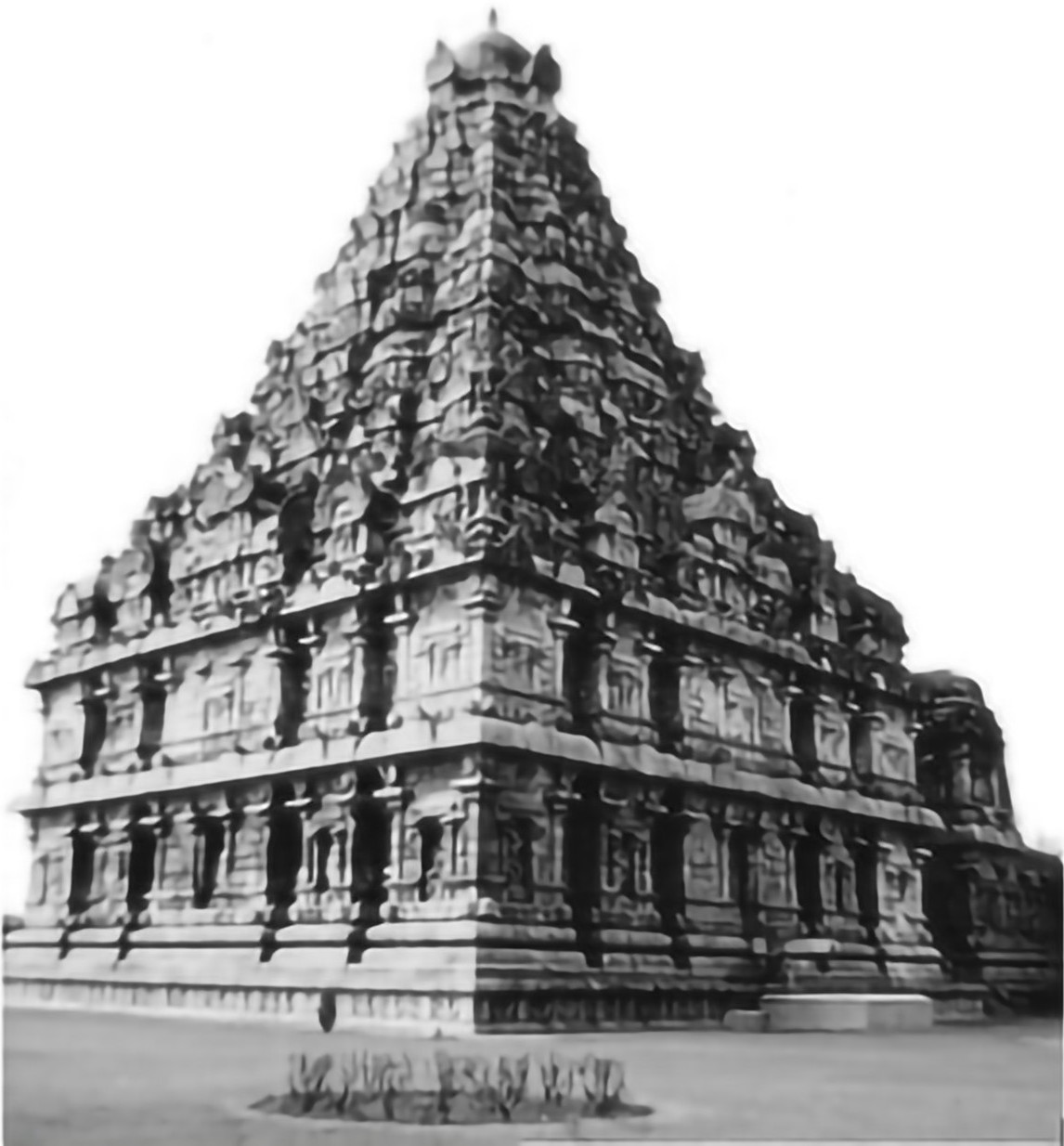
A dedicated follower of Shaivism, he completed the construction of the renowned Rajarajeswara (or Brihadeeswara) Temple in Tanjore in 1010 AD.
Additionally, he contributed to the construction of a Buddhist monastery at Nagapattinam.
Note: Rajaraja I appointed Rajendra I as his successor, and they co-ruled for two years. During this period, they led joint military campaigns against the Western Chalukyas.
ADMINISTRATION UNDER RAJARAJA CHOLA
Rajaraja I appointed several viceroys to oversee different regions of his empire, including Chola Pandya in Pandinadu, Chola Lankeswara in Sri Lanka, and Chola Ganga in the Gangavadi region of southern Karnataka. In less prominent areas, territories ruled by chiefs like the Irukkuvels, Ilangovels, Mazhavas, and Banas were incorporated into the Chola state, with their leaders being integrated into the administrative system as functionaries.
Rajaraja I was also called Ulakalanada Perumal for his efforts in standardizing taxes. He implemented a tax collection system where 100 Kalam (each Kalam equivalent to 28 kg) was collected from one veli, which was approximately 6.5 acres of land.
Administrative Structure and Governance
Administrative Structure and Governance
• Centralized Administration: A robust bureaucratic system and efficient governance. The administration was structured with a detailed system of officials, categorized into two main groups: perundanam (upper) and sirudanam (lower).
• Revenue and Taxation: The land revenue system was efficiently structured and known as puravuvarithinaikkalam.
• All land was meticulously surveyed and categorized to determine revenue assessments. The residential area of the village was referred to as ur nattam.
• Certain lands, including those owned by temples, were exempt from taxation.
| TAX | MEANING |
| Nulayam | Tax on cotton thread |
| Achchu Tari | Tax on patterned loom |
| Teri irai/ tari kadmai | Loom Tax |
| Panjupeeli | Tax on cotton yarn |
| Parutti Kadamai | Tax cotton |
| Tari Pudavai | Tax on cloth |
KEY FEATURES OF CHOLA ADMINISTRATION
• Chola state was presided by a herditary monarch.
• Titles adopted by king:
• Peruman/Perumagan (big man)
• Ulagudaiyaperumal and Ulagudaiyanayanar (the lord of the world)
• Chakkaravarti (emperor)
• Tirubhuvana Chakravarti (emperor of 3 worlds)
• It was a practice at the time of coronation to add the suffix deva to the name of the crowned kings.
• The kings claimed themselves comrade of God (Thambiran thozhar).
• Chola kings granted estates of land called Brahmadeyams and Chaturvedimangalam to Brahmins to enhance and establish their prestige.
• Military Might: Well-organized standing army, naval prowess, and focused military strategies.
The royal military forces were known as Kaikkolaperumpadai, with specifically tasked with guarding the king, called Velaikkarar. a
The Cholas placed great emphasis on army training, and military camps, known as kadagams, were established for this purpose.
The Chola rulers also gave significant importance to their naval forces.
Provincial Administration
DIVISION DESCRIPTION
Chola Empire -Divided into Mandalams
Mandalams- Further divided into Valanadus and Nadus
Valanadus -Overseen by Periyanattar
Nadus-Administered by Nattar
Villages-Numerous autonomous villages within each Nadu
Town (Nagaram)-Administered by the Nagarattar council
Types of land: Chola inscriptions mention several categories of land-
➤ Vellanvagai- land of non-Brahmana peasant proprietors
➤Brahmadeya- land gifted to Brahmanas
➤ Shalabhoga- land for the maintenance of a school
➤ Devadana, Tirunamattukkani-land gifted to temples
➤ Pallichchhandam- land donated to Jaina institutions
Village Administration:
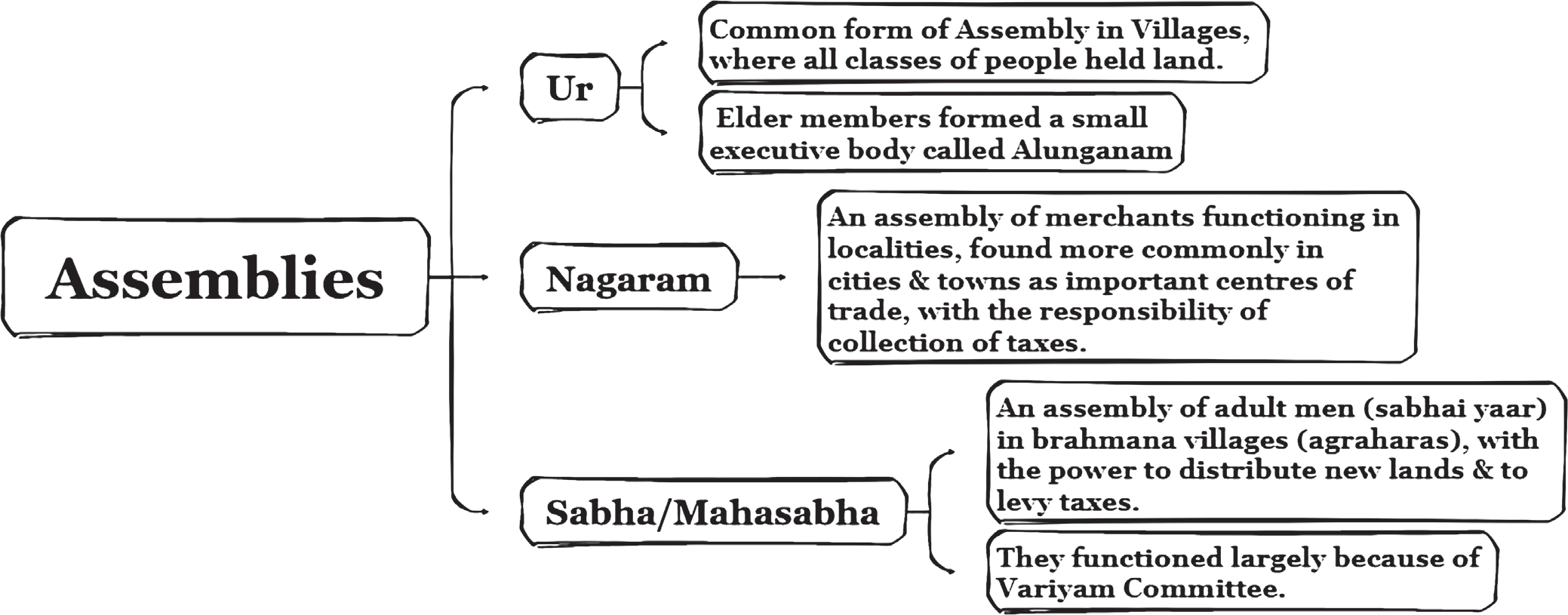
Two inscriptions from the reign of Parantaka I, discovered at Uttiramerur, offer insights into the organization and responsibilities of village councils. Villages were typically divided into wards, with each ward selecting its representatives for the Village Council. Members were nominated through the kudavolai system, and one individual from the nominated group was chosen to represent each ward for a one-year term.
WHAT WAS THE KUDAVOLAI SYSTEM?
The names of eligible candidates were inscribed on palm leaves and placed in a pot. A young boy or girl would draw thirty names for each ward. These individuals were then assigned to six different committees, or variyams, each responsible for a specific administrative function: samvatsaravariyam, erivariyam, thottavariyam, panchavariyam, ponvariya, and puravuvariya. The committee members, known as variyapperumakkal, would typically gather in a temple or beneath a tree to discuss matters and pass resolutions.
Socio-economic and Cultural Aspects
SOCIO-ECONOMIC AND CULTURAL ASPECTS
• Caste System and Society: Brahmins and Kshatriyas held significant influence, while social cooperation among various castes was apparent.
• The inscriptions of the later period of the Chola rule mention two major divisions among the castes – Valangai and Idangai castes.
VALANGAI AND IDANGAI CASTES DURING THE CHOLA RULE
The term "Valangai" or "right-hand" denotes a caste- based division that existed in Tamil Nadu from ancient times until the 19th and early 20th centuries. Since India gained independence, these distinctions have largely disappeared. The Valangai faction was primarily composed of agricultural castes, whereas the Idangai, or "left-hand" faction, consisted of castes engaged in manufacturing occupations, such as metalworkers and weavers.
The Valangai faction outnumbered the Idangai, with sixty castes compared to just six. Furthermore, the Valangai faction was more politically organized than the Idangai castes.
The condition of women saw little improvement during this period. The practice of 'sati' was common among royal families, and the devadasi system, where dancing girls were dedicated to temples, emerged during this time.
Religious Patronage
Both Saivism and Vaishnavism continued to thrive throughout the Chola era. The influence of mathas (religious institutions) was significant, shaping the spiritual and social landscape. Temples, besides their religious importance, became hubs of economic activity.
The period witnessed a flourishing agricultural and industrial sector, contributing to the prosperity of the region. Trade relations were strong, with thriving commercial exchanges extending to distant lands.
Vativaykkal was the criss-cross channel and a traditional way of harnessing rain water in the Kaveri delta.
Valanciyar (a group of traders) dug a tank for irrigation purpose called ainutruvapperari in Puddukottai
• Reclamation of forest lands and the construction and maintenance of irrigation tanks led to agricultural prosperity.
• The condition of women saw little improvement during this period. The practice of 'sati' was common among royal families, and the devadasi system, where dancing girls were dedicated to temples, emerged during this time.
• Religious Patronage
• Both Saivism and Vaishnavism continued to thrive throughout the Chola era. The influence of mathas (religious institutions) was significant, shaping the spiritual and social landscape. Temples, besides their religious importance, became hubs of economic activity.
• The period witnessed a flourishing agricultural and industrial sector, contributing to the prosperity of the region. Trade relations were strong, with thriving commercial exchanges extending to distant lands.
• The weaving industry, particularly the silk weaving at Kanchi flourished.
• The metal works developed owing to the great demand for images for temples and utensils.
• Commerce and trade were brisk with trunk roads or peruvazhis and merchant guilds.
• Gold, silver and copper coins were issued in plenty in various denominations.
• The Chola Empire maintained extensive trade relations with regions such as China, Sumatra, Java, and Arabia. Arabian horses were imported in large numbers to bolster the empire's cavalry.
• Education and Literature
• Besides the temples and Mathas serving as educational centres, several educational institutions also flourished.
• The inscription at Ennayiram, Thirumukkudal and Thirubhuvanai provide details of the colleges that existed in these places.
• Apart from the Vedas and Epics, subjects like mathematics and medicine were taught in these institutions.
The development of Tamil literature reached its peak during the Chola period
| WORK | WRITTEN BY | REMARKS |
| Sivakasintamani | Thiruthakkadevar and Kundalakesi | Belonged to the 10th Century |
| Ramayana | Kamban | Masterpiece of this age |
| Periyapuranam or Tiruttondarpuranam | Sekkila | Masterpiece of this age |
| Kalingattupparani | Jayankonda | Describes the Kalinga war fought by Kulottunga I |
| Moovarula | Ottakutha | Depicts the life of three Chola kings |
| Nalavenba | Pugalendi | - |
| Kalladam | Kalladana | These were works on Tamil Grammar. |
Art and Architecture
The Cholas excelled in Dravidian-style art and architecture, notably seen in their grand temples.
SEPULCHRAL TEMPLES
Sepulchral temples or “pallip-padai” were constructed as places of worship and remembrance at the burial sites of kings during this time period. These structures played a crucial role in preserving the legacy of the deceased rulers and providing a sacred space for the community to commemorate their contributions
Their signature architectural feature, the vimana, is prominent in these structures.
Early Chola temples like those in Narthamalai, Kodumbalur, and Srinivasanallur showcased their initial architectural prowess.
However, the pinnacle of their architectural achievement is the Brihadeeshwara temple in Tanjore, a masterpiece by Rajaraja I. This temple complex includes the vimana, ardhamandapa, mahamandapa, and the Nandimandapa pavilion.
Gangaikondacholapuram’s Siva temple, erected by Rajendra I, and later temples like Airavathesvara at Darasuram and Kampaharesvara at Tribhuvanam are other remarkable examples of Chola architecture.
In sculpture, the Cholas left an indelible mark. The walls of temples such as those in Tanjore and Gangaikondacholapuram display sizable and finely executed icons.
Chola bronze sculptures, notably the Nataraja or dancing Siva, are renowned worldwide for their artistry. Additionally, Chola paintings adorned the walls of temples like Narthamalai and Tanjore.
Incidents from the Periyapuranam, in the form of miniatures, are depicted on the base of the garbha griha (sanctum sanctorum) wall of the Darasuram temple.
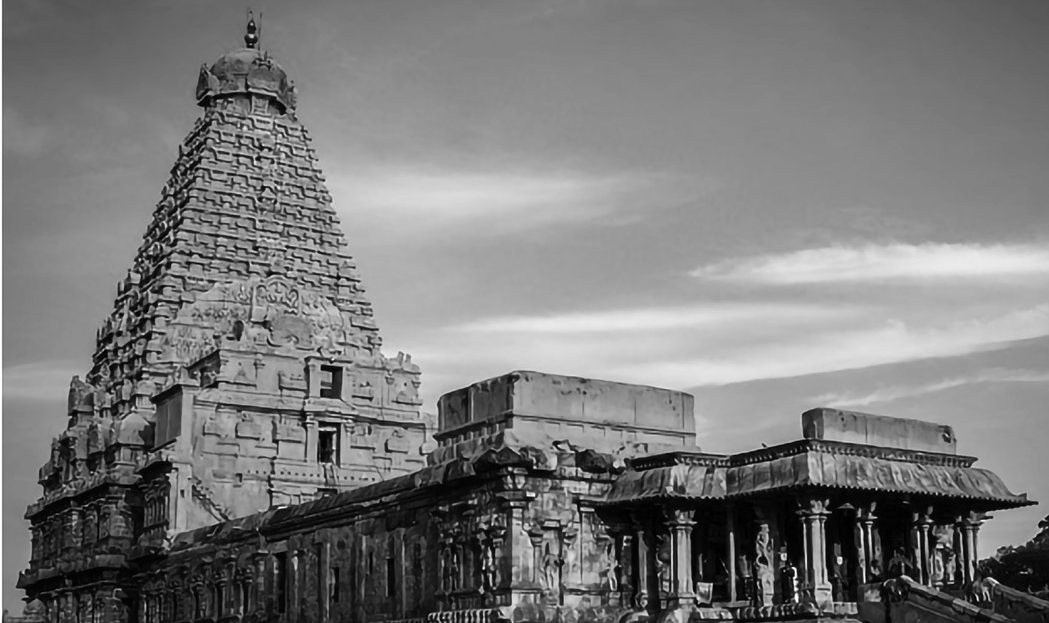
Brihadeeshwara Temple
The Temple at Gangaikondacholapuram