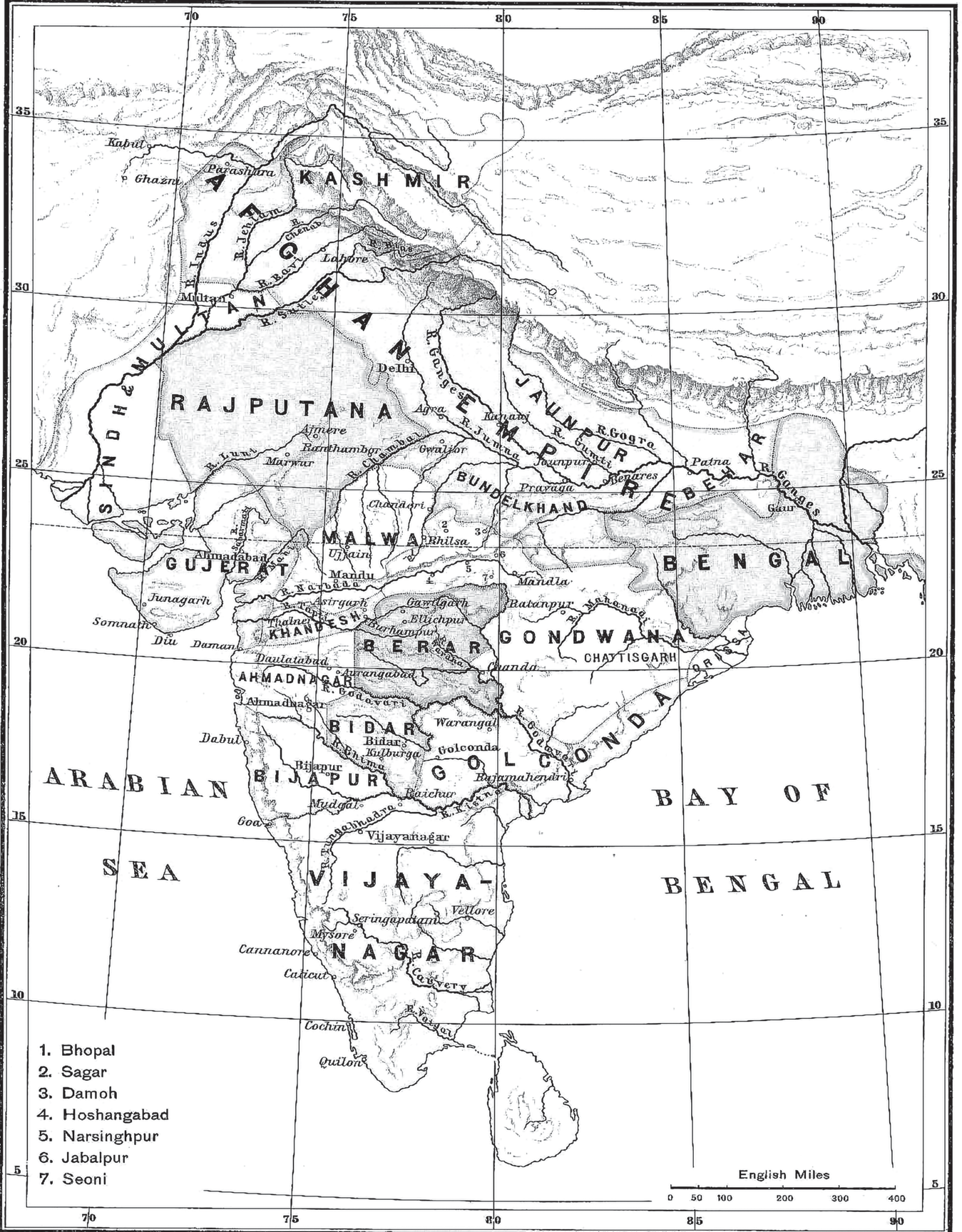
India in 1525 Ad
INDIA IN 1525 AD
BABUR (1526-1530): THE FOUNDER OF MUGHAL EMPIRE
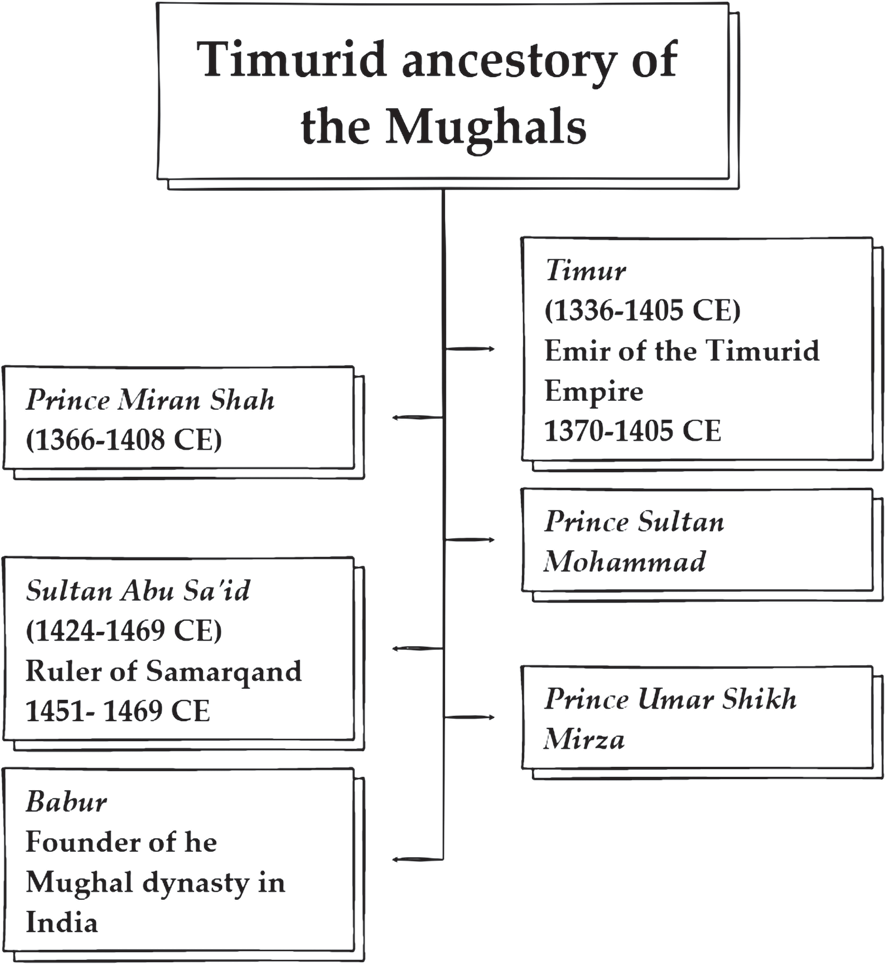
• Zaheeruddin Mohammad Babur, who became the founder of the Mughal Empire in 1526, hailed from Farghana
(Uzbekistan) and ascended the throne at a young age of twelve after his father’s demise in 1494.
• He was related to Timur from his father’s side and to Chengiz Khan through his mother. His rule was marked by instability in Central Asia and internal resistance from nobles.
• Despite brief victories, Babur faced desertions and lost territories like Samarqand and Farghana. He eventually seized Kabul in 1504, with aspirations to move towards Hindustan
• During Babur’s ambition to move towards India, internal conflicts among Afghan chiefs, including Daulat Khan Lodi, and the assertive attitude of the Rajput king Rana Sanga against Ibrahim Lodi’s authority prompted invitations to Babur to invade India.
• Between 1519 and 1524, Babur invaded several territories in present-day Pakistan.
First Battle of Panipat: Establishing Dominion
In 1526, Babur faced Ibrahim Lodi’s massive army at Panipat.
Despite a smaller force of 12,000 soldiers against Lodi’s estimated 100,000, Babur’s unique tactics and effective use of cannons (a novelty in warfare) secured his victory. Subduing Opposition: Consolidating Rule Post-Panipat, Babur aimed to suppress Rajput andAfghan resistance.He confronted Rana Sanga at Khanwa in 1527, resulting in the defeat of the Rajputs, diminishing the significant opposition in northern India. Battles with Medini Rai in Malwa (1527) and the Afghans in Ghagra (1529) further solidified Babur’s dominion.
Legacy and Demise
Although Babur was a formidable military leader, his reign came to an end in 1530.
A story surrounds Babur's death: it is said that when his son Humayun fell seriously ill, Babur, in his deep love for him, prayed, offering his own life if his son would recover. Humayun, miraculously, regained his health.
• Babur was not only a skilled military leader but also a learned scholar, fluent in Persian and Arabic. He wrote his autobiography, Tuzuk-i-Baburi, in the Turki language, which was later translated into Persian and other languages. The work provides valuable insights into his personal life and military campaigns.
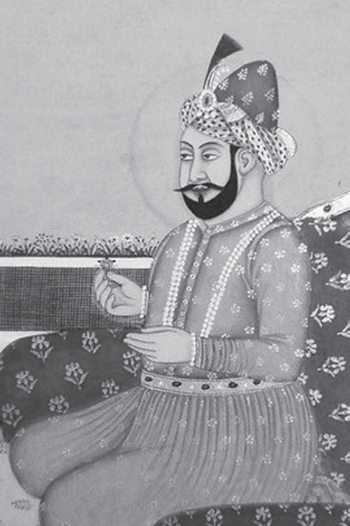
Humayun
HUMAYUN (1530- 1540; 1555-1556)
Succession and Challenges
• Following Babur’s death in 1530, his son Humayun ascended the Mughal throne.
• Despite his name meaning “fortune,” Humayun’s rule was marked by significant challenges, earning him the moniker of the most unfortunate ruler of the Mughal Empire.
• Unlike his military-inclined father, Humayun was more of a scholar than a soldier.
Weak Financial System and Afghan Threat
• Humayun grappled with a weak financial structure and the growing threat of predatory Afghans, particularly Sher Khan (later Sher Shah), who consolidated power in regions like Bihar and Uttar Pradesh.
Conflict with Bahadur Shah
• Humayun’s capture of Gujarat from Bahadur Shah marked a pivotal moment in his reign.
• Bahadur Shah, a formidable adversary, had taken over Ajmer and parts of eastern Rajasthan, establishing his court as a haven for those opposed to the Mughals.
• To counter this threat, Humayun strategically invaded Malwa, displaying remarkable military prowess and forcing Bahadur Shah to retreat successively from Chittor to Mandu, Champaner, Ahmedabad, and finally Kathiawar.
• Humayun’s relentless pursuit and conquest of Mandu and Champaner significantly weakened Bahadur Shah’s grip on Gujarat.
• Although Humayun’s control over Gujarat was short- lived due to local attachments to former rulers, the campaign was crucial.
• It eliminated Bahadur Shah as a substantial threat to the Mughal rule, allowing Humayun to redirect his focus and resources towards dealing with internal conflicts, particularly against Sher Khan and the Afghan adversaries, thus reshaping the strategic landscape and consolidating his authority.
Conflicts and Defeats
• In an attempt to counter the Afghan ascendancy, Humayun faced Sher Shah in battles.
• Despite an initial victory at Daurah in 1532 and the siege of Chunar, Humayun suffered a significant defeat at the Battle of Chausa in 1539.
• The following year, the Battle of Kannauj in 1540 saw Sher Shah’s complete triumph, leading to Humayun’s expulsion and Sher Shah’s independent rule.
Exile, Return, and the Mughal Recovery
• Humayun sought refuge outside India and married Hamida Banu Begum during his journey to Sind.
• His son Akbar was born in 1542 during their stay in Amarkot.
• Seeking assistance in Iran, Humayun later defeated his brothers, Kamran and Askari, aiming to reclaim the Mughal throne.
Recovery and Untimely Demise
• Humayun successfully retook the throne in 1555 by defeating the Afghans (Battle of Sirhind).
• However, within six months, his reign was cut short when he tragically fell from the staircase of his library in 1556.
Legacy and Final Rest
Gulbadan Begum chronicled Humayun’s life in the Persian-language biography “Humayunnama.”
Humayun’s burial took place in Delhi, marking the end of a reign marked by trials and temporary victories.
Note: During the reign of Humayun, a significant progress in the field of painting commenced. While returning from Persia, Humayun brought two famous Persian painters with him. They were Khwaja Abdus Samad and his son Mir Sayyid Ali. Under their guidance, the art of painting started flourishing in Mughal Courts
The Second Afghan Empire and Shershah
THE SECOND AFGHAN EMPIRE

• Following a 14-year gap, Sher Shah successfully re-established Afghan rule in India, succeeding the Lodis.
• His reign and that of his successors lasted for 15 years, known as the period of the second Afghan Empire.
Sher Shah Suri’s Reign (1540-1545)
• Sher Shah Suri, originally Farid,
hailed from a family of jagirdars under Jaunpur’s kingdom.
• His father, Hasan Khan Sur, held the jagir of Sasaram in Bihar during the Lodi dynasty’s rule.
• After defeating Humayun, he ascended to sovereign rule in 1540, adopting the title of Sher Shah.
Military Conquests
• Sher Shah led victorious campaigns in Malwa, Chanderi, and Rajasthan, defeating areas such as Marwar, Ranthambhore, Nagor, Ajmer, and more.
• He quelled rebellions in Bengal and expanded his dominion from Sindh and Punjab to Rajputana in the west and Bengal in the east.
Reforms and Achievements
Sher Shah implemented centralized governance with key ministerial positions:
• Diwan-i-Wizarat (Wazir): Managed Revenue and Finance
• Diwan-i-Ariz: Supervised the Army
• Diwan-i-Rasalat: Dealt with Foreign Affairs
• Diwan-i-Insha: Oversaw Communications
Administrative Structure
• Sher Shah’s empire was divided into forty-seven sarkars.
• Chief Shiqdar (law and order) and Chief Munsif (judge) were the two officers in charge of the administration in each sarkar.
• Each sarkar was divided into several parganas. Shiqdar (military officer), Amin (land revenue), Fotedar (treasurer) Karkuns (accountants) were in charge of the administration of each pargana.
• There were also many administrative units called iqtas.
• The land revenue administration was well organized under Sher Shah. Land survey was carefully done. All cultivable lands were classified into three classes – good, middle and bad. The state’s share was one third of the average produce and it was paid in cash or crop. His revenue reforms increased the revenue of the state.

Sher Shah’s Rupiya
• Sher Shah introduced a new silver coin called Rupiya and a copper coin called Dam. The names on the coins were given in Devanagari script. The ratio of exchange between Rupiya and Dam was fixed at 1 to 64.
Note: Abbas Sarwani, a historian, praised Sher Shah for his excellent administration, which created a safe environment where even the weakest person could travel with valuable items without fear of theft or robbery. This was due to the strict punishments Sher Shah was known to enforce.
In the words of Abbas Sarwani, "Even an old, frail woman could carry a basket of gold ornaments on her head during her journey, and no thief or robber would dare approach her because of the fear of the punishment Sher Shah would impose."
Infrastructure Development
• Sher Shah revolutionized communications by constructing four vital highways and extending the Grand Trunk Road from Chittagong in Bengal to Kabul in Afghanistan.
• Sher Shah enhanced communication by constructing four key highways :
Sonargaon to Sind
Agra to Burhampur
Jodhpur to Chittor
Lahore to Multan
• Rest houses (sarais) were built along these highways to provide convenience for travellers.
• He also restructured the police force, leading to a decrease in crime during his reign.
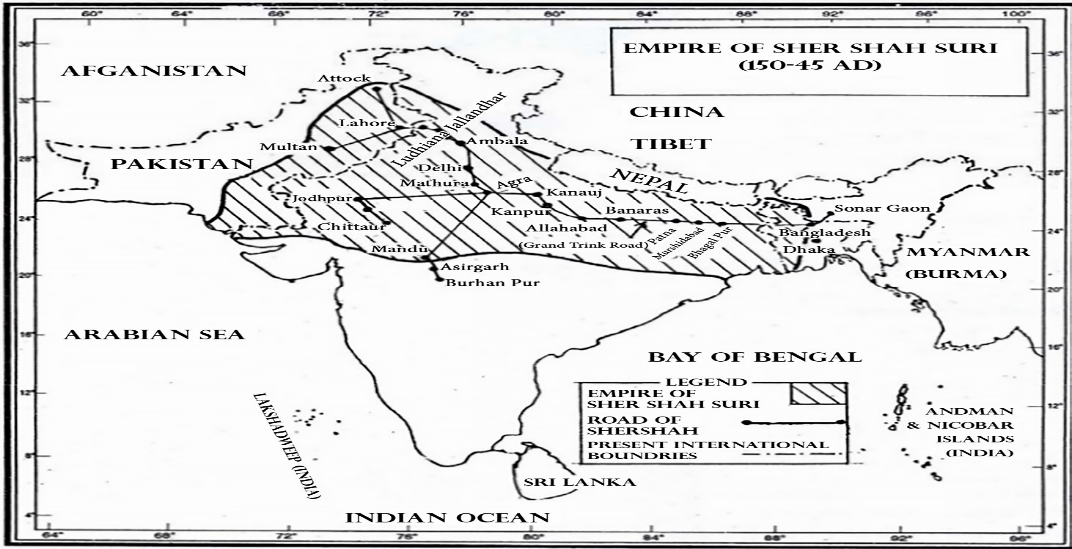
• Sher Shah began the construction of Purana Qila (Old Fort) in Delhi and his mausoleum in Sasaram.
Cultural Impact
During his reign, Malik Muhammad Jayasi authored the famous Hindi work “Padmavat,” contributing significantly to the cultural landscape.
Unfortunate Demise- While besieging the fort of Kalinjar in Bundelkhand, Sher Shah died in an accidental gunpowder blast in 1545, leaving a notable legacy
Akbar
AKBAR’S REIGN (1556-1605)
Early Years and Regency of Bairam Khan
At the age of 13, Akbar ascended to the Mughal throne following his father Humayun’s death in 1556. His initial years were under the regency of Bairam Khan, a loyal confidant of Humayun. Under Bairam Khan’s guidance, the
Mughal Empire expanded significantly, particularly with the victory in the Second Battle of Panipat against Hemu and the Afghan forces in 1556.
Military Exploits and Conquests
Akbar’s reign was characterized by an array of military campaigns and conquests:
• Territorial Expansion: The Mughal Empire expanded substantially, stretching from Kabul to Jaunpur, encompassing key territories like Gwalior and Ajmer.
• Conquests: Notable conquests included Malwa in 1562, the Gondwana region in 1564 after a fierce battle with Rani Durgavati, and Gujarat in 1573. The defeat of Rana Pratap Singh of Mewar in the Battle of Haldighati in 1576 solidified Mughal suzerainty over many Rajput rulers.
Further Conquests: Akbar annexed Bihar and Bengal in 1576, and later occupied the Khandesh region in 1591. Chand Bibi’s defence of Ahmednagar against Mughal forces demonstrated regional resistance.
• Two of Akbar's major contributions were the consolidation of the northwest and the establishment of a strategic frontier for the empire. His conquest of Sindh in 1590 also paved the way for trade along the Indus River, benefiting Punjab.
Rajput Policy and Alliances
Akbar adopted a conciliatory approach towards the Rajput rulers, forging alliances through matrimonial ties and political engagements:

• Marriages: His matrimonial alliance with Rajput princesses, including the daughter of Raja Bharamal of Amer, initiated a significant shift in the Mughal-Rajput relations.
• Administration: Many Rajput generals rose to prominence within the Mughal administration. Raja Bhagawan Das and Raja Man Singh were appointed to senior positions, symbolizing the assimilation of Rajputs into the Mughal governance
Religious Reforms and Policies
RELIGIOUS REFORMS AND POLICIES
Abolition of Pilgrim Tax and Jizya- Akbar abolished the pilgrim tax and the Jizya (tax levied on non-Muslims) in 1563 and 1564, respectively. These moves aimed to foster religious tolerance within his empire.
Integration of Hindus into Nobility- Akbar integrated Hindus into the nobility, assigning high Mansabs (ranks) to Rajput Rajas, showcasing his impartial approach regardless of religious affiliations.
Abul Fazl’s Explanation of Akbar’s Sovereignty Views- Akbar’s view of a ruler’s responsibility, as explained by Abul Fazl, blended Timurid, Persian, and Indian ideas of sovereignty. A true ruler was characterized by paternal love towards subjects, a large heart addressing everyone’s wishes, and devotion to God. This policy was termed ‘sulh-kul’ or ‘peace to all.’
Ibadat Khana at Fatehpur Sikri- Akbar built the Ibadat Khana or ‘Hall of Prayers’ at Fatehpur Sikri in 1575. Initially for Muslims, it later opened to people of all religions after discord among Muslim scholars.
Akbar’s Authority in Interpreting the Quran- Akbar issued a ‘mahzar’ declaring his right to choose interpretations of the Quran when qualified scholars disagreed. This declaration aimed to establish his authority in matters of religious interpretation and ensure unity amid sectarian conflicts.
Akbar’s Open-mindedness Towards All Religions- Akbar’s interactions with various religious leaders led him to realize the wisdom in all religions. He aimed to discover truth beyond religious boundaries, leading to the concept of ‘tauhid-i-Ilahi (din-i-ilahi)’ or ‘Divine Monotheism.’
Note: Birbal was the only Hindu noble who joined this new religion.
Formation of a Group Devoted to Akbar- Akbar selected a small group of loyal nobles called ‘murids.’ However, this concept did not compel people to forsake their religion but encouraged detachment from narrow beliefs, aligning with Sufi principles.
Translation and Educational Reforms- Akbar initiated a significant translation project, converting texts from Sanskrit, Arabic, Greek, etc., into Persian, promoting knowledge exchange. He also introduced educational reforms emphasizing moral teachings, mathematics, and secular subjects, although their success was limited due to prevailing superstitions and societal resistance.
Akbar’s religious policy focused on religious tolerance, dialogue among diverse faiths, and intellectual exchange, contributing to the idea of a harmonious and equitable society
Land Revenue Administration Under Akbar
LAND REVENUE ADMINISTRATION UNDER AKBAR
Emperor Akbar, in collaboration with Raja Todar Mal, instituted significant reforms in the land revenue system, aiming for greater efficiency and uniformity.
The Zabti or the Bandobast System
• Akbar reverted to annual assessment. The qanungos, who were hereditary holders of land as well as local officials conversant with local conditions, were ordered to report on the actual produce, state of cultivation, local prices, etc. However, these officials were often dishonest. And so, Akbar appointed karoris all over India. They were responsible for the collection of a crore of dams (Rs. 2,50,000).
Experimentation and Development: Akbar experimented with the land revenue system and refined it into the Zabti or Bandobast system. Raja Todar Mal further enhanced this system, culminating in the Dahsala System completed in 1580.
• Uniform Measurement: Todar Mal introduced a uniform land measurement system. Revenue assessment was based on the average yield of land over the past decade.
• Categorization of Land: Land was classified into four categories based on cultivation frequency:
• Polaj- cultivated annually
• Parauti- once in two years
• Chachar- once in three or four years
• Banjar- once in five or more years
• Mode of Payment: Revenue collection predominantly occurred in cash, streamlining the revenue collection process.
• Another system of Land Revenue Assessment- During Akbar’s rule, the Batai or Ghallabakhshi system was a prevalent method of land revenue assessment. It involved dividing the crop between peasants and the state in fixed proportions, typically during threshing, stacking, or even while crops stood in the field. This traditional approach, widespread before Akbar’s reign, offered flexibility in division stages and allocated consistent shares to both cultivators and the state, contributing to its adaptability and sustained usage across varied agricultural regions.
• The third and last system of land revenue assessment was the nasaq or kankut. It was a rough calculation of the amount payable by the peasant on the basis of what he had been paying in the past.
Other Features
Akbar advanced loans(taccavi) to the peasants for seeds, implements, etc. in times of need and recovered them in easy instalments.
He also asked the amils to act as a father to the peasants
Mansabdari System
MANSABDARI SYSTEM
Emperor Akbar’s Mansabdari system was an innovative administrative structure introduced to organize the nobility and military hierarchy.
Hierarchical Rank: Each officer was designated a rank, known as a mansab, which ranged from the lowest rank of 10 to the highest of 5000 for nobles. Royal blood princes held even higher ranks.
Two Components: The rank was divided into two aspects – Zat and Sawar. Zat determined an individual’s personal status, while Sawar indicated the number of cavalrymen they were required to maintain.
Maintenance Requirement: Every Sawar was obligated to maintain at least two horses, establishing a standardized obligation within the system.
Non-Hereditary Ranks: Mansab ranks were not hereditary, emphasizing merit-based appointments and promotions.
Centralized Authority: All appointments, promotions, and dismissals within the Mansabdari system were directly authorized by the emperor, consolidating central authority.
• In the Mughal system, individuals with ranks below 500 zat were referred to as mansabdars. Those with ranks between 500 and 2500 were known as amirs, while those with ranks of 2500 and above were given the title of amir- i-umda or umda-i-azam. However, the term mansabdar is often used to refer to all three categories collectively.
• The dagh (branding of the horse) and the chehra (descriptive roll of the soldiers) system also continued during Akbar’s rule.
• Apart from cavalrymen, bowmen, musketeers (bandukchi), sappers and miners were also recruited in the contingents.
• Akbar also kept a group of elite soldiers known as "ahadis." These were individuals of noble birth who either lacked the resources to form their own military units or had earned the emperor's favor through their actions
Navratnas of Akbar
NAVRATNAS OF AKBAR
Abul Fazl

• Authored the Akbar Nama.
• Knowledgeable in Arabic, Persian, Greek philosophy, and Sufism.
• An independent thinker, opposed conservative ulama views.
• Shaped and articulated ideas associated with Akbar’s reign.
Faizi
Renowned lyrical poet, known for ghazals reflecting love and philosophy.
Proficient in writing and profound scholarship.
Achieved the poet-laureateship, won Akbar’s favour and accompanied him on expeditions.
His birth name was Shaikh Abu al-Faiz ibn Mubarak, but he is best known by his pen name, Faizi. A renowned poet laureate, he was the brother of Abul Fazal.
Akbar honored him with the title of Malik-ush-Shu’ara (Court Poet).
Faizi translated the Sanskrit mathematical work Lilavati by Bhaskaracharya into Persian.
Tansen
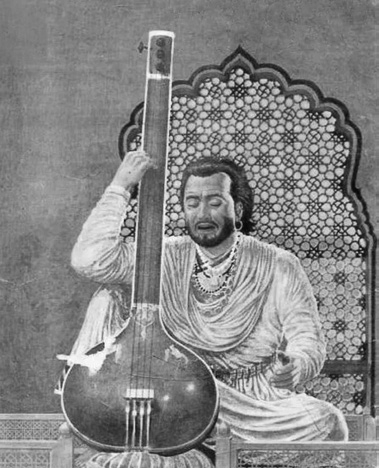
Tansen was a renowned court musician in the darbar of Raja Ram Chandra of Bandavagarh (Rewa).
He was given the title "Tansen" by Raja Vikramjit of Gwalior.
Revered as the "Sangit Samrat" (Emperor of Music), Tansen’s legacy is highlighted in Musical Heritage of India by Lalita Ramakrishna.
He composed several dhrupads in praise of gods like
Ganesha, Shiva, Parvati and Rama.
Additionally, he wrote songs dedicated to his royal patrons.
His work Kalpadruma contains 300 of his dhrupads in the Gauhar Bani style.
Some of the iconic ragas created by Tansen include
Multani, Bhairavi and Todi.
When Akbar heard of Tansen's extraordinary musical talent, he sent a firman to the king of Rewa to bring him to his court. Tansen was then honored as one of Akbar's Navaratnas and was given the title of 'Mian'.
Birbal
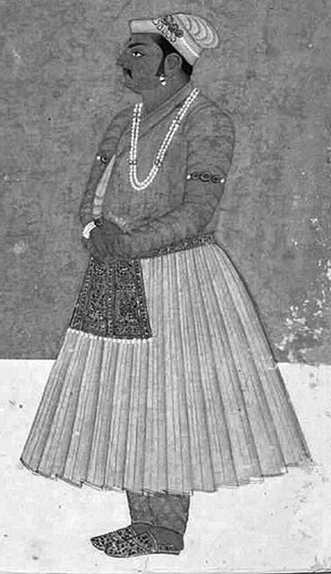
Birbal was renowned for his clever stories with Akbar, demonstrating both wit and intelligence.
He held the position of the court jester in Akbar’s court.
His real name was Maheshdas, and he earned the title "Raja Birbal" from Akbar.
A skilled poet, singer, and scholar, Birbal was fluent in Sanskrit, Persian, and Hindi.
• He also served Akbar in military and administrative capacities.
• Birbal met his end in battle while suppressing unrest among the Afghan tribes in North-west India.
Todar Mal
• He was the Finance Minister of the Mughal empire during Akbar’s reign and was one of the Navaratnas in Akbar’s court.
• He introduced standard weights and measures, a land survey and settlement system, revenue districts, and officers. This system of maintenance by Patwari is still used in the Indian Subcontinent which was improved by the British and the Government of India.
Raja Man Singh
• Raja Man Singh was the Raja of Amber
• He was a general in Akbar’s army and was the grandson of Akbar’s father-in-law Bharmal.
• He fought many battles including the historic battle of ‘Haldighati’ against Maharana Pratap.
• Served as army commander in Akbar’s forces and council members.
Abdul Rahim Khan-I-Khana
• A Diwan in Akbar’s court, known for Hindi couplets and astrological works.
• He was the son of Bairam Khan, Akbar’s trusted guardian and mentor.
• Known for his Urdu couplets and his books on astrology.
• He translated Babar’s memoirs, Baburnama from the
Chagatai language to the Persian language.
• He wrote two books on astrology- Khetakautukam and Dwatrimshadyogavali.
Fakir Aziao-Din
• An esteemed advisor in Akbar’s inner circle, highly regarded by the emperor.
• He was a Sufi mystic and an advisor.
• He used to advise Akbar on religious matters.
Mullah Do Piaza
• An advisor esteemed by Akbar, included among the Navratnas for intelligence, in competition with Birbal.
• Akbar’s reign was characterized by military triumphs, diplomatic alliances, and innovative religious policies that aimed at fostering inclusivity and tolerance. His Rajput alliances and religious reforms significantly influenced the socio-religious landscape of the Mughal Empire, shaping its ethos and governance
Jahangir
JAHANGIR’S REIGN (1605-1627)
Succession and Early Challenges
Jahangir, originally named Salim, ascended to the Khusrau’s revolt was quelled, leading to his capture, blinding, and Guru Arjan Dev’s execution.
Political Stagnation and External Engagements
During Jahangir’s rule, Ahmadnagar in the Deccan
declared independence under Malik Ambar.
However, there were no significant territorial expansions in the Deccan under Jahangir’s reign.
Notably, his rule marked the arrival of Englishmen such as William Hawkins and Sir Thomas Roe, with the latter securing permission from the Mughal Emperor to establish a British factory in Surat.
Marriage to Nur Jahan and Her Influence
In 1611, Jahangir married Mehrunnisa, known as Nur Jahan, who became a prominent figure in the Mughal court.
Nur Jahan exerted substantial influence, reshaping royal fashion based on Persian traditions and promoting Persian art and culture.
Her dominance led to significant political intrigues, which culminated in Prince Khurram, later known as Shah Jahan, rebelling against his father, Jahangir.
Nur Jahan’s Rise and Fall
Nur Jahan wielded immense power behind the throne for nearly a decade, but her influence waned after Jahangir’s death.
Her involvement in political affairs led to internal conflicts and eventually to the decline of her power and authority following Jahangir’s demise.
Death and Legacy
Jahangir passed away near Lahore while en route from Kashmir.
He was buried in Lahore, leaving behind a complex legacy marked by political intrigues, the influential role of Nur Jahan, and relatively stagnant territorial expansions during his reign.
The engagement with European powers, notably the British, began to shape the Mughal Empire’s relations with the Western world.
Jahangir’s rule was characterized by political challenges, including internal revolts and external engagements with European powers. The dominant influence of Nur Jahan and the complexities of succession within the royal family
influenced the political landscape during this period in Mughal history.
Jahangir and his love for paintings!
A remarkable progress was witnessed in the field of painting under the patronage of Jahangir.
Like his father, Jahangir was also a great lover and patron of the art of painting. He was a rich collector, a connoisseur and an art critic. In his autobiography Tujuk-i- Jahangiri, he claims that he could recognize paintings of various artists. He also claims that if a painting was produced by multiple artists, he could easily recognize which part of the painting was made by which painter.
• Bisan Das was the greatest portrait painter in the court of Jahangir. Mansur was the greatest painter of birds, animals and natural beauty in Jahangir’s court. Abul Hasan painted the scene of accession of Jahangir which was incorporated by Jahangir in his autobiography
Shah Jahan
SHAH JAHAN’S REIGN (1627-1658)
Ascension and Early Campaigns
• Following Jahangir’s death in 1627, Shah Jahan secured the throne with the support of nobles and the military.
• He embarked on an extended campaign in the northwest frontier, attempting to reclaim ancestral lands, especially Kandahar, but struggled to gain control over it.
• However, his Deccan policy witnessed more success as he defeated Ahmadnagar and annexed it, compelling Bijapur and Golkonda to
sign treaties with the Mughal Empire.
• Additionally, Shah Jahan managed to defeat Shahji Bhonsle, the father of Shivaji.
• He also engaged in campaigns in Central Asia, solidifying Mughal control over Kandahar.
Monumental Construction and Cultural Engagements
• The poignant loss of his wife, Mumtaz Mahal, in 1631 at Burhanpur prompted Shah Jahan to commission the construction of the magnificent mausoleum, the Taj Mahal, in her memory at Agra.
• This iconic structure remains an enduring symbol of love and architectural brilliance.

• Additionally, he was a contemporary of Louis XIV of France.
Legacy and Succession Conflict
The famous Peacock Throne was crafted during Shah Jahan’s rule, symbolizing opulence and grandeur in Mughal history.
However, the end of his reign was marked by a succession crisis among his four sons. Dara Shikoh, his eldest, was favoured by Shah Jahan.
The power struggle eventually erupted into a war of succession, with Aurangzeb emerging as the victorious claimant.
Imprisonment and Death
Aurangzeb imprisoned Shah Jahan and declared himself the Mughal emperor.
Shah Jahan spent his last years in confinement, as a royal prisoner in the Agra Fort, facing the grief of losing power and freedom.
He passed away in January 1666, broken-hearted, and was interred in the Taj Mahal, the architectural marvel that stood as a testament to his enduring love for Mumtaz Mahal.
European visitors to India
Shah Jahan’s reign witnessed a significant increase in European visitors to India, and their accounts offer invaluable insights into the Mughal Empire during its peak.
François Bernier: A French physician and traveler, Bernier spent 12 years in India (1658-1670). His detailed observations covered various aspects of Mughal society, including politics, religion, economy, and social customs. His book, “Travels in the Mughal Empire,” remains a valuable source for understanding the internal workings of the Mughal court and the socio-political climate of the time.
Jean-Baptiste Tavernier: A French gem merchant, Tavernier visited India six times between 1640 and 1666. His primary focus was trade, but he also recorded meticulous observations about Mughal architecture, craftsmanship, and cultural practices. His book, “Travels in India,” provides vivid descriptions of the Taj Mahal under construction and offers insights into the economic and cultural exchange between India and Europe.
Adam Olearius: A German scholar and diplomat, Olearius accompanied a Holstein embassy to the Mughal court in 1636. His book, “Travels to the East Indies,” offers valuable details about the court of Shah Jahan, including descriptions of court ceremonies, royal audiences, and the grandeur of the imperial city of Agra.
Peter Mundy: An English traveler and merchant, Mundy spent nearly 20 years in India (1624-1644). His detailed diaries provide insights into everyday life in Mughal India, including descriptions of markets, festivals, transportation systems, and the diversity of religions and cultures.
Niccolò Manucci: An Italian physician and adventurer, Manucci served at the Mughal court for over 40 years (1653- 1694). His book, “Storia do Mogor,” offers a unique perspective on the decline of the Mughal Empire under Shah Jahan and Aurangzeb. He provides vivid accounts of court intrigues, political struggles, and the changing social landscape of India.
Aurangzeb
AURANGZEB’S REIGN (1657-1707)
Ascension and Initial Successes
Upon assuming the title Alamgir, meaning World Conqueror, Aurangzeb embarked on a series of successful military campaigns in the early years of his reign.
He swiftly suppressed minor revolts, establishing control over the empire.
However, challenges arose in the latter part of his rule, notably from revolts by the Jats, Satnamis, and Sikhs, prompted by his rigid religious policies.
Religious Policy and Conflict
Aurangzeb’s puritanical religious inclinations led him to impose the jizya tax on Hindus and exhibit intolerance towards other faiths.
Influenced by the Naqshbandi Sufi order, he implemented stringent measures that antagonized various religious communities.
The execution of the ninth Sikh Guru, Tegh Bahadur, following the rebellion of Prince Akbar, stands as a stark example of his religious rigidity.
Deccan Policy and Maratha Conflict
His Deccan policy aimed to counter the growing Maratha influence, quell Shia kingdoms like Golkonda and Bijapur, and suppress his son Akbar’s rebellious activities.
Aurangzeb’s annexation of Golconda and Bijapur
appeared victorious but led to political blunders.
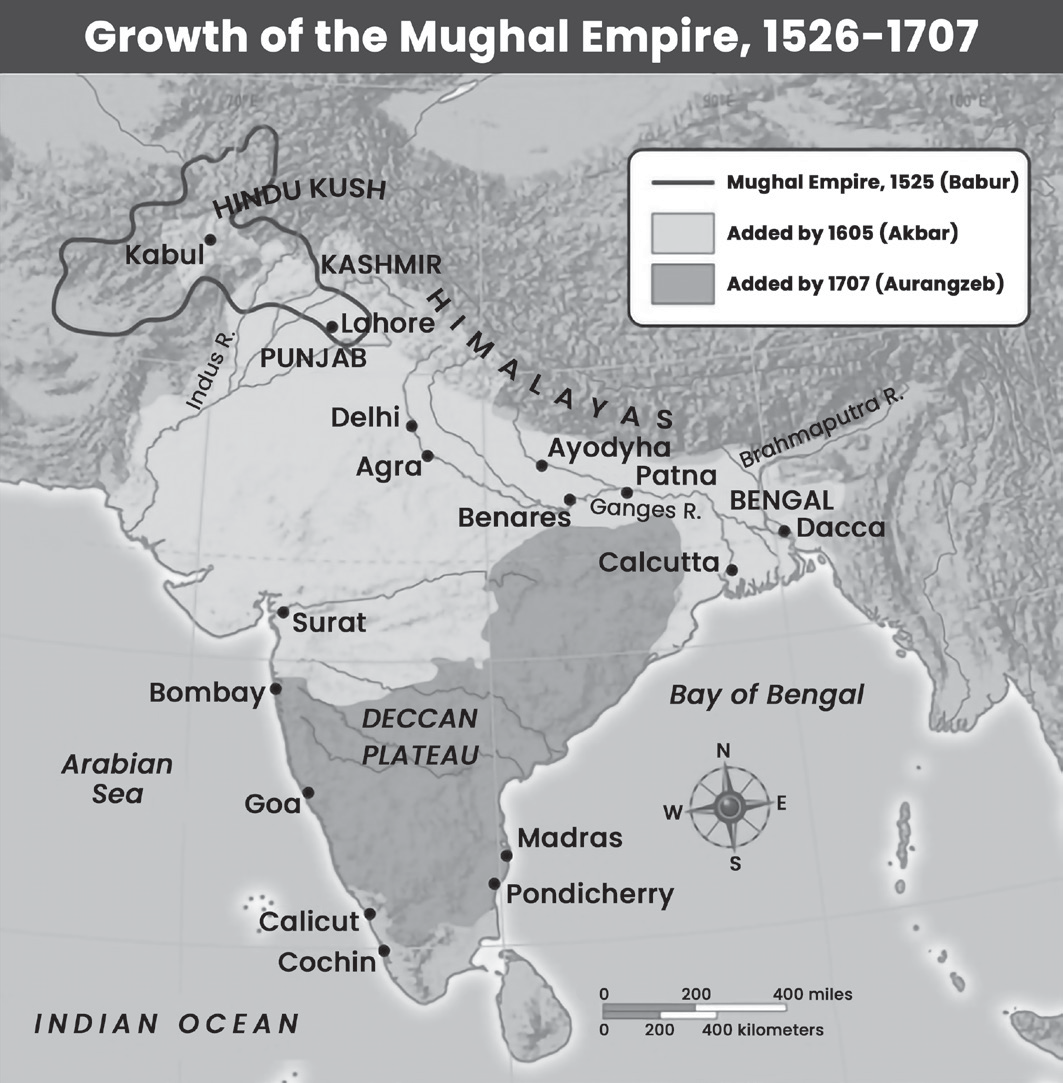
• The destruction of Deccan kingdoms removed the barrier between Mughals and Marathas, escalating direct confrontations.
MARATHA RESISTANCE AND LEGACY
• Shivaji, a formidable adversary, employed guerrilla warfare tactics against the Mughals.
• Though initially captured and taken to Delhi, Shivaji managed to escape and continued resisting Mughal forces.
• His death in 1680 didn’t deter Maratha resistance; his successors sustained the rebellion, challenging Aurangzeb until his demise in 1707.
End of an Era
• Aurangzeb’s death marked a significant shift in Indian history as the once-mighty Mughal Empire entered a period of decline.
• Weak successors after Aurangzeb struggled to maintain the empire, and within the next 150 years, the empire essentially ceased to exist.
Aurangzeb’s reign, despite early military triumphs, was marred by religious intolerance, conflict with diverse communities, and strategic errors that contributed to the empire’s eventual downfall.
Administration During the Mughal Period
ADMINISTRATION DURING THE MUGHAL PERIOD
The administrative structure of the Mughal Empire was a blend of pre-existing systems and innovations introduced by successive rulers, particularly Akbar.
Administrative Units and Territorial Division
The Mughals preserved many administrative aspects from the Sultanate and incorporated Shershah’s system.
Administrative units like Pargana (cluster of villages), Sarkar (group of Parganas), and divisions of Sarkars (akin to provinces or subas) were already in place under Shershah.
Suba (Province- largest administrative unit) Sarkar (a group of Parganas) Pargana (a cluster of villages)
In 1580, Akbar reorganized his empire into twelve subas (provinces), which included Bengal, Bihar, Allahabad, Awadh, Agra, Delhi, Lahore, Multan, Kabul, Ajmer, Malwa, and Gujarat. Each province was administered by a governor (subedar), supported by officials such as a diwan, a bakhshi, a sadr, a qazi, and a waqia-navis.
Key terms used by the Mughals
• Suba: The highest administrative unit divided into Sarkars, managed by a Subedar.
• Sarkar: District-level administrative unit comprising Parganas, led by a Faujdar.
• Pargana: Collective unit of villages, overseen by Shiqdar.
•
Subedar: Governor of a Subah, overseeing military, police, judiciary, and executive functions.
• Diwan: In charge of provincial finances, signing bills of payment, and revenue matters.
• Bakshi: Head of the provincial army, responsible for military affairs.
• Sadar: Overseer of the judicial charity department, ensuring fair justice.
• Qazi: Judicial overseer, handling cases in accordance with Hindu or Islamic law.
• Kotwal: City administrator, maintaining law and order within cities.
• Mir Bahr: Overseeing customs and taxation.
• Waqa-i-Nawis: In charge of the secret service.
• Faujdar: Leader of Sarkar, responsible for maintaining law and order in the area.
• Muqaddam,Patwari, Chowkidar: Village-level administrators handling administrative duties in villages
• Vakil: Chief adviser to the king, maintaining control over all central departments.
• Sadar-i-Sadur: Religious adviser disbursing royal charity and acting as Chief Justice.
• Khan-i-Saman: In charge of the royal household affairs.
• Muhtasib: Enforcing moral codes according to Muslim law.
• Daroga-i-Dak Chowki: Overseer of postal and intelligence departments.
• Mansabdars: Officers assigned ranks indicating personal status and cavalry size, assisting the emperor, and maintaining soldiers based on rank.
• Wazir: Revenue expert in charge of revenue department.
• Mir Bakshi: Head of the military department, recommending promotions and positions.
• Mir Saman: Responsible for managing the imperial household supplies, including ensuring the provision of all necessary items and resources for the residents of the harem or female quarters.
• Chief Qazi: Overseeing judicial and sometimes religious matters.
• Inam Lands: Grants to individuals, encouraging cultivation and social upliftment.
• Khalisa Lands: Income from khalisa villages went directly to the royal exchequer.
• Jagirs: Jagirs were allotted to nobles and members of the royal family including the queens.
• The Amalguzar was responsible for overseeing all types of land holdings, ensuring that the imperial rules and regulations for land revenue assessment and collection were consistently followed.
INSTITUTIONS INTRODUCED BY MUGHALS
Mansabdari System
The administrative system under this structure involved assigning a rank, or "mansab," to each officer, ranging from the lowest of 10 to a maximum of 5000 for nobles, with royal princes receiving even higher ranks.
These ranks were classified into two categories: "zat," which indicated an officer’s personal status, and "sawar," which represented the number of cavalrymen the officer was responsible for maintaining.
The mansab system was not hereditary; the emperor had full control over appointments, promotions, and dismissals of individuals within this structure.
Land Revenue System
Akbar drew inspiration from Alauddin Khilji and Sher Shah Sur’s revenue policies.
Raja Todarmal, the revenue minister in 1581, restructured the land revenue system known as “Zabti” or “Bandobast.”
The system involved measuring and categorizing land based on soil fertility:
Polaj: Cultivated every year
Parauti: Cultivated once every two years
Chachar: Cultivated once every three or four years
Banjar: Cultivated once in five or more years
The Mughal administrative system integrated existing practices with new methods, aiming for effective governance, revenue collection, and territorial organization.
Literature During the Mughal Period
LITERATURE DURING THE MUGHAL PERIOD
The Mughal era witnessed a remarkable blossoming of literature across various languages, notably Persian, Sanskrit, and several regional languages:
Persian Literature
• Persian served as the language of administration in the Mughal Empire.
• Babur penned the “Tuzuk-i-Baburi,” his autobiography in the Turkish language, which detailed India’s flora and fauna.
• Abdul Rahim Khan, in Persian, translated Baburnama, enriching Persian literature with its content.
• Abdul Fazl contributed significantly with the “Akbarnama” (the history of Akbar) and the “Ain-i- Akbari” (a book on administration).
• Jahangir authored his autobiography, “Tuzuk-i- Jahangiri,” while Mutamid Khan penned the biography “Iqbalnamah-i-Jahangir.”
Shah Jahan’s biography, “Padshanamah,” was written by two authors: Abdul Hamid Lahori and Inayat Khan, the latter also wrote “Shahjahan Namah.”

Contributions in Translations
Persian literature flourished through translations of Sanskrit works, supervised by figures like Abul Faizi and Dara Shikoh.
• Dara Shikoh translated the Bhagavad Gita and Upanishads into Persian, with his famous work “Majma- ul-Bahrain.”
• Badauni translated the Mahabharata into Persian as “Razanamah.”
• The Yoga Vasistha was translated into Persian several times during the Mughal period, as per the orders of Akbar, Jahangir, and Dara Shikoh. One notable translation, called JugBasisht, was completed by Nizam al-Din Panipati in the late 16th century AD.
Regional Languages and Other Contributions
• Regional languages like Bengali, Oriya, Rajasthani, and Gujarati flourished during this period.
• Hindi poets, particularly attached to the Mughal court, contributed significantly. Tulsidas stands out for his rendition of the Ramayana, the “Ramcharitmanas.”
• Jagannatha Panditaraja, a court poet of Shah Jahan, contributed to Sanskrit literature with works like “Ganga Lahari” and “Rasagangadharam.”
The Mughal period was a vibrant time for literature, witnessing significant translations, original works, and the development of multiple languages, which added to the rich tapestry of Indian literary heritage
Art During the Mughal Period
ART DURING THE MUGHAL PERIOD
The Mughal era was a vibrant time for art, especially painting, with each emperor contributing to its evolution and development.
Akbar’s Contribution
Akbar played a pivotal role in the evolution of Mughal painting, overseeing various projects and personally involving himself in the details.
He established an impressive court of painters and commissioned massive projects like the ‘Tutinama’ and ‘Hamzanama,’ which depicted tales and legends.
Akbar’s reign saw illustrations of manuscripts, the prominent being Razmnama which is the Persian translation of Mahabharata.
Jahangir’s Influence
Jahangir was influenced by European art, introducing a single-point perspective to Mughal painting, which altered its style significantly.
He instructed his painters to adopt the techniques used by European artists, leading to finer brushwork and lighter colours in Mughal paintings.
Jahangir’s commissions included ‘Jahangirnama,’ individual portraits, realistic portrayals of birds, animals, and flowers, emphasizing vibrant colours and three- dimensional effects.
• It was during Jahangir’s reign that manuscripts became less important and there was more focus on individual portraits. Under Jahangir, paintings acquired greater
charm, refinement, and dignity. Jahangir had a great
fascination for nature and took pleasure in the portraiture of birds, animals, and flowers.
Shah Jahan’s Reign
• Shah Jahan’s period saw a transition to more rigid and formal court paintings, although he collected a significant number of artworks for personal pleasure.
• His court showcased paintings focusing on aesthetic pleasure, gardens, and intimate scenes, including the ‘Padshanama.’
• Shah Jahan’s eldest son preferred natural elements like plants and animals in his artworks, reflecting a different aesthetic inclination.
The Mughal painting tradition was diverse and reflected the tastes and preferences of each ruler, amalgamating indigenous styles with external influences and leading to a rich artistic legacy
Check Architecture During the Mughal Period
ARCHITECTURE DURING THE MUGHAL PERIOD
The Mughal period in India marked a remarkable chapter in architectural history, characterized by the fusion of indigenous Indian styles with Islamic, Persian, and Central Asian influences.
Early Mughal Architecture
•
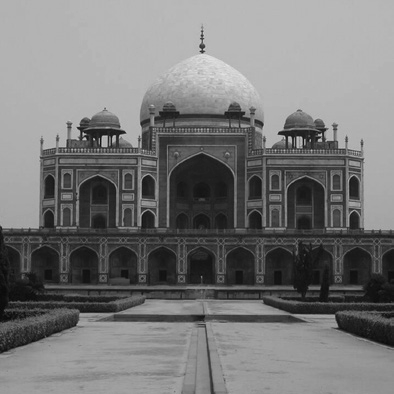
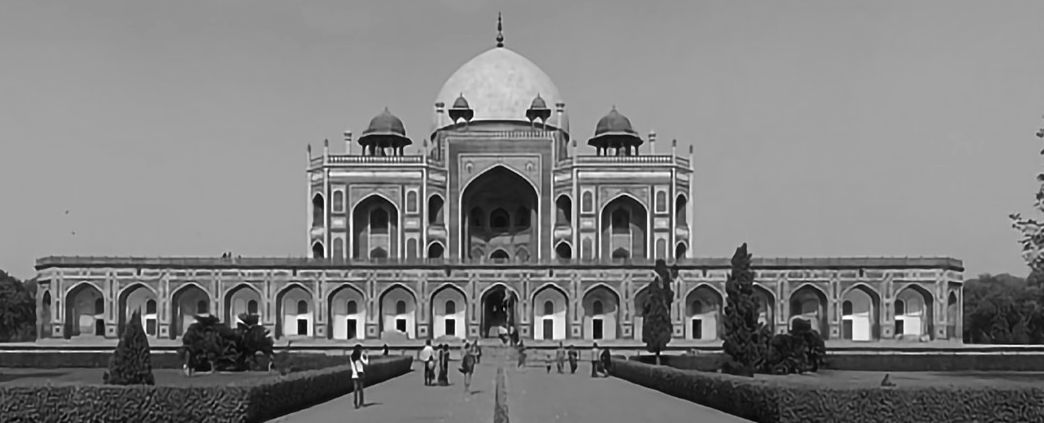
Humayun’s Tomb, commissioned during Humayun’s reign, is a magnificent example of Persian-style architecture with Indian influences. It comprises a garden, a main gateway, and a central tomb structure, serving as a precursor to the Taj Mahal.
• Forts at Agra and Fatehpur Sikri constructed during Akbar’s rule showcased the grandeur of Mughal architecture. The Buland Darwaza, a victory monument at Fatehpur Sikri, stands as an emblem of Akbar’s Gujarat conquest.
Synthesis of Styles at Fatehpur Sikri
• Fatehpur Sikri hosts several significant structures like the tomb of Salim Chishti, Jodha Bai’s Palace, Ibadat Khana, and Birbal’s House.
• These buildings symbolize the amalgamation of Persian and Indian architectural elements, featuring intricate designs and beautiful craftsmanship.
Jahangir’s Contributions
• Akbar’s Mausoleum at Sikandra near Agra was constructed during Jahangir’s reign, showcasing elements of Indo-Islamic architecture.
• The Tomb of Itimad-ud-daula, entirely made of marble, is another exquisite creation from this period, showcasing intricate designs and fine craftsmanship.
Shah Jahan’s Legacy
• Shah Jahan is renowned as the greatest builder among the Mughals. His architectural masterpieces extensively used marble and exquisite inlay work, known as Pietra dura.
• Red Fort and Jama Masjid in Delhi, grandiose and majestic in design, exemplify the opulence and grandeur of the Mughal Empire.
Above all, the Taj Mahal, an unparalleled wonder, is Shah Jahan’s magnum opus. This breathtaking mausoleum, built in memory of his beloved wife Mumtaz Mahal, stands as an epitome of love and architectural finesse.
The Mughal architectural legacy is not only a testament to the artistic brilliance of the era but also a cultural amalgamation that showcases the artistic prowess of the time.
Revenue Collection: They collected land revenue directly from the cultivators or peasants who tilled the land. They had the right to claim a share in the output produced by the peasants, apart from land revenues.
Local Governance: Zamindars often performed local administrative and law enforcement functions, handling judicial and police duties within their territories.
Position in Society: They were part of the nobility and constituted the ruling class. Their roles were crucial in the agrarian structure and local administration.
Jagirdars
Nature of Holding: Jagirdars were officials appointed by the king or emperor to manage specific territories known as jagirs. These territories were not owned by the Jagirdars; rather, they were assigned as compensation for their services.
Revenue Collection as Salary: Jagirdars collected taxes and revenues from the land, but a significant portion served as their salary or payment. The remaining revenue was directed to the imperial treasury.
Non-Hereditary Positions: Unlike Zamindars, Jagirdars did not have hereditary rights over the land they administered. Their positions were based on appointments and could be transferred from one jagir to another.
Military Obligations: Jagirdars were expected to meet military obligations, providing soldiers for the royal army and sometimes performing other administrative duties.
Key Differences
• Ownership: Zamindars owned land hereditarily, while Jagirdars were appointed officials overseeing territories as part of their service.
• Revenue Collection: Zamindars directly collected land revenue from peasants, while Jagirdars collected revenue, using a portion as their salary, and forwarding the remainder to the imperial treasury.
• Hereditary vs. Non-Hereditary: Zamindars had hereditary rights, whereas Jagirdars’ positions were not inherently passed down through generations.
• Local Governance: Zamindars handled local administrative and judicial functions, while Jagirdars focused primarily on revenue collection and military obligations.
Both Zamindars and Jagirdars played vital roles in the Mughal administration, contributing to the revenue collection and governance structure, albeit with distinct differences in their positions, rights, and responsibilities.
Mughals After Aurangzeb (1707–1857)
Decline Begins Post-Aurangzeb (1707)
• Aurangzeb died in 1707, marking the beginning of the Mughal Empire’s decline.
• He left behind a vast but weakened empire strained by continuous warfare, particularly in the Deccan.
• Succession disputes followed immediately after his death, weakening central authority.
Bahadur Shah I (1707–1712)
• Also known as Shah Alam I, he was the eldest son of Aurangzeb.
• Tried to maintain the empire but lacked the strength and resources to control rebellious provinces.
• Faced Maratha resurgence, Sikh uprisings, and Rajput assertions.
Jahandar Shah and Farrukhsiyar (1712–1719)
• Jahandar Shah's brief and ineffective rule was followed by Farrukhsiyar.
• Farrukhsiyar came to power with the help of the Sayyid Brothers (kingmakers), who later dominated Mughal politics.
• His reign saw instability, court conspiracies, and his eventual assassination.
Muhammad Shah "Rangeela" (1719–1748)
• Known more for his cultural patronage than governance.
• Under his reign, the empire weakened further.
• Faced the invasion of Nadir Shah of Persia in 1739, who plundered Delhi and took away the Peacock Throne and Kohinoor diamond.
Ahmad Shah Bahadur to Shah Alam II (1748–1806)
A series of weak emperors followed Muhammad Shah.
Ahmad Shah Bahadur (1748–1754) was defeated and blinded.
Alamgir II (1754–1759) was murdered in court intrigues.
Shah Alam II (1759–1806) saw the Battle of Buxar (1764), where he was defeated by the British East India Company and became their pensioner under the Treaty of Allahabad.
Mughal Symbolism under British Control
From the late 18th century, the Mughal emperor was a nominal ruler under British influence.
The British retained the Mughal name to legitimize their authority among Indians.
Real power lay with the East India Company and later the British Crown.
Akbar II and Bahadur Shah Zafar (1806–1857)
Akbar II was the titular ruler with no real power.
Bahadur Shah II (Zafar), the last Mughal emperor, was a poet and a symbolic leader.
He was declared the figurehead of the 1857 Revolt by Indian rebels.
End of the Mughal Empire (1857)
After the failure of the 1857 Revolt, the British exiled Bahadur Shah Zafar to Rangoon (Burma).
In 1858, the British formally abolished the Mughal Empire and took direct control of India under the British Crown