Third Five Year Plan
Third Five-Year Plan
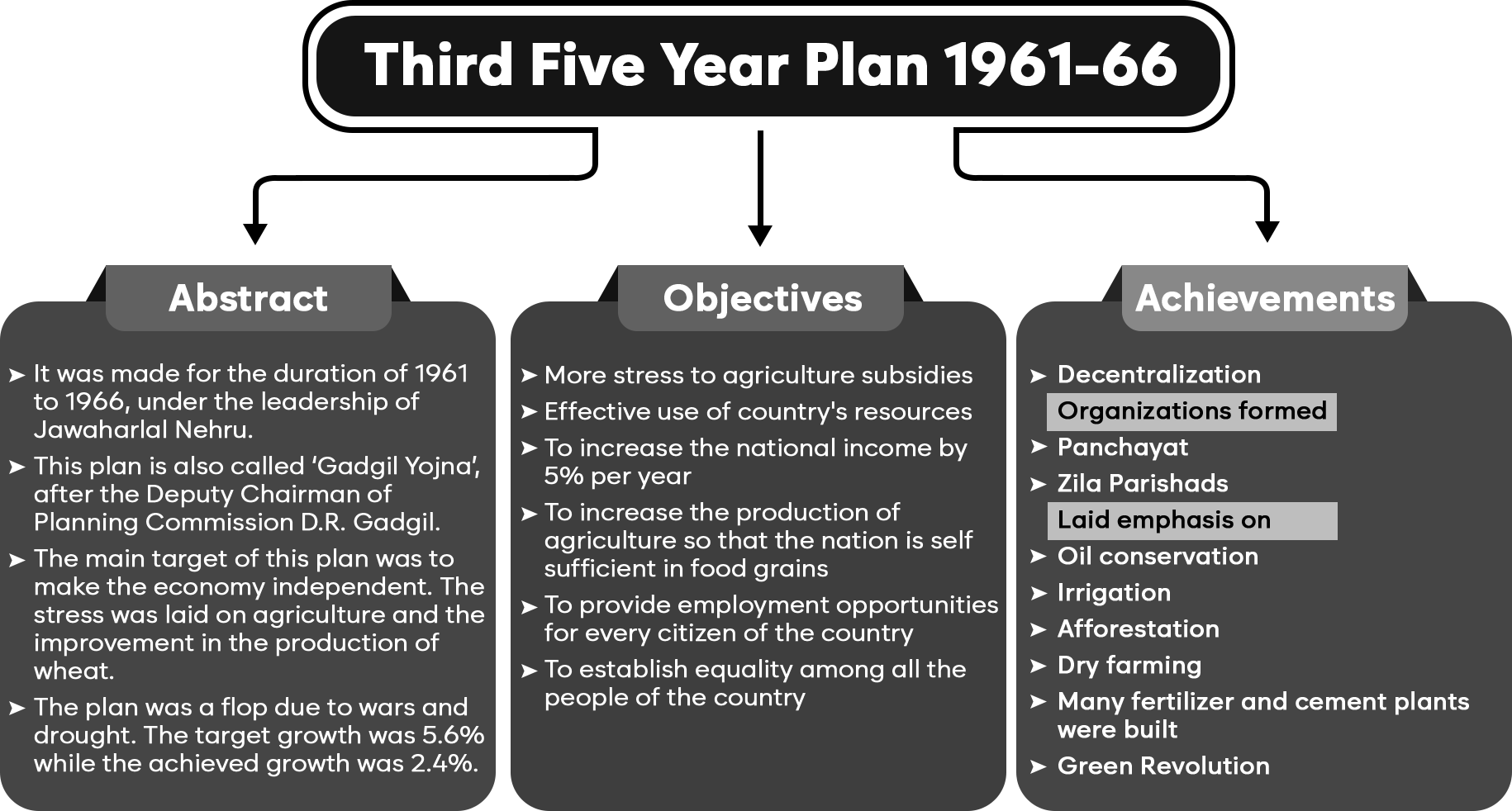
The underlying assumption for the third plan was that the Indian economy had entered a take-off stage. Thus, it aimed at making India a ‘self-reliant’ and ‘self- generating’ economy. The chief priority of this plan was agriculture, both to enhance food supply and support exports and industry.
Ideas of Development
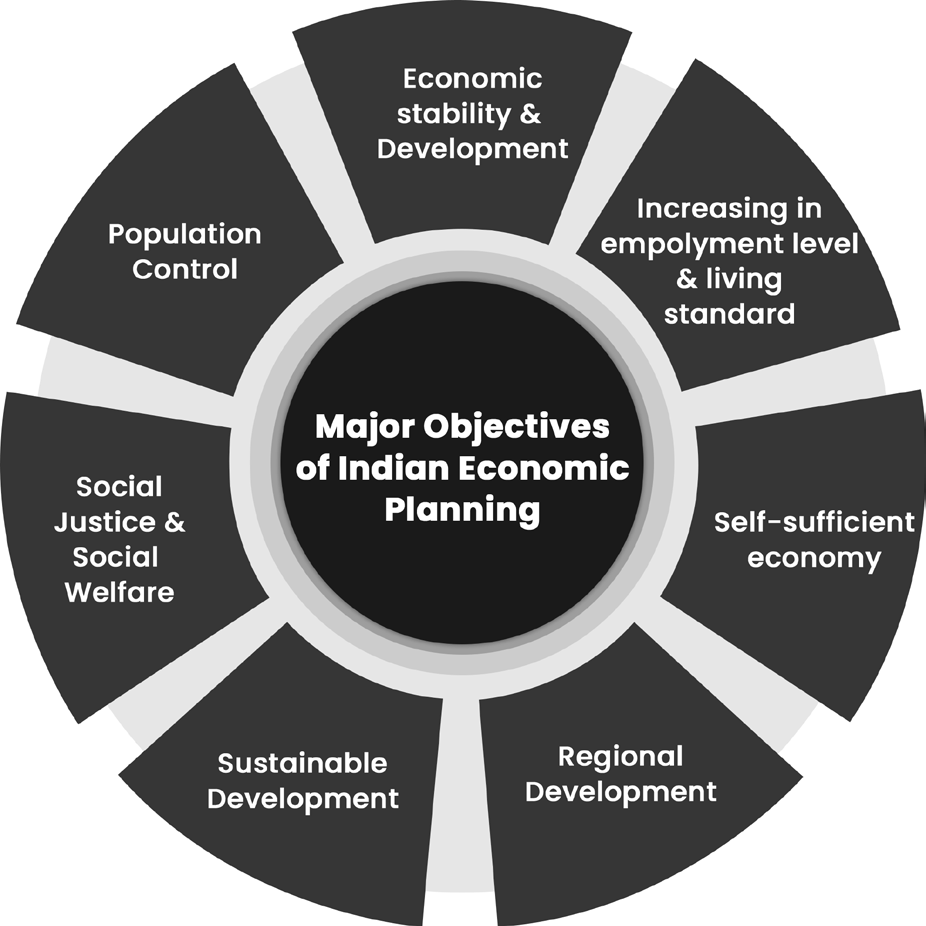
Factors that generated hopes for the revival of the Indian economy after centuries of colonial subjugation included
A mature indigenous entrepreneurial class (like the Birlas, Tatas, Singhania, Dalmia-Jains, etc.) which could serve as the agency for carrying out a substantial part of the post-independence planned development, was an asset to India.
After independence, India was fortunate to have a broad societal consensus on the direction of its development. Various groups, from Gandhians to Socialists, Capitalists to Communists, generally agreed on the following key objectives, despite occasional differences :
A comprehensive approach to economic development focused on self-reliance.
Accelerating industrialisation through import substitution, including capital goods industries.
Preventing domination by imperialist or foreign capital.
Implementing land reforms, particularly tenancy reforms.
Abolishing the zamindari system.
Encouraging cooperatives, especially for services like marketing and credit.
Ensuring that growth was pursued alongside equity, with a reformist model that prioritized welfare and pro-poor policies.
Implementing positive discrimination or reservations for the most marginalized groups in society, particularly Scheduled Castes and Tribes, for a specified period.
Most important, there was agreement that India was to make this unique attempt at planned rapid industrialisation within a democratic and civil libertarian framework.
Ideas of development
The first decade after Independence saw extensive debate about what development should look like for India. It was common, then as it is now, to look to the ‘West’ as the benchmark for measuring progress.
‘Development’ was largely equated with becoming more ‘modern,’ and ‘modern’ was synonymous with the industrialized countries of the West. This view was shared by both experts and the general public, who believed that every nation would follow a similar path of modernization, involving the dismantling of traditional structures and the rise of capitalism and liberalism.
Modernization was also tied to ideas of material growth, scientific rationality, and progress. This concept of development helped categorize countries into developed, developing, and underdeveloped.
On the eve of Independence, India faced two models of development: the liberal-capitalist model of Europe and the US, and the socialist model of the USSR.
Many in India, including leaders from the Communist and Socialist Parties, as well as figures like Nehru, were particularly drawn to the Soviet model. There were few supporters of the American capitalist model at the time.
This preference reflected the broad consensus that emerged during the nationalist movement. Leaders were clear that the economic policies of free India would differ significantly from the commercial priorities of the colonial government.
In the democratic India that followed, addressing poverty and redistributing wealth became the government’s primary responsibility. As a result, India adopted a mixed model of economic development, combining elements of both capitalist and socialist frameworks
Why does India completely reject the capitalist style of modernisation ?
During that era, it was common for people to refer to the ‘West’ as the standard for measuring development. India rejected such a model because the majority of the people were illiterate and the breakdown of traditional social structures that modernisation required was not feasible in India.
In December 1954, the Indian Parliament officially adopted the goal of a ‘socialist pattern of society’ as the guiding principle for the country’s social and economic policies. The vision that emerged was of a “mixed economy”, where both
the public and private sectors would not just exist side by side, but would work together, complementing each other. The private sector was expected to grow freely, but always within the larger framework of the national development plan.
Planning
Planning
As early as the late nineteenth century, in the economic thinking of the early nationalists such as M.G. Ranade and Dadabhai Naoroji, the state was assigned a critical role in the economic development of India.
The idea of planning as a process of rebuilding the economy earned a good deal of public support in the 1940s and 1950s all over the world. The experience of the Great Depression in Europe, the inter-war reconstruction of Japan and Germany, and most of all the spectacular economic growth against heavy odds in the Soviet Union in the 1930s and 1940s contributed to this consensus.
In 1938, Jawaharlal Nehru, a staunch advocate for planned economic development in India, led the formation of the National Planning Committee (NPC). Over the next decade, the committee worked on creating a comprehensive development plan for the country.
Indian business leaders, along with Nehru and the NPC, became early supporters of the public sector and partial nationalization. A major reason for their backing was outlined in the 1945 Bombay Plan, a blueprint for India’s economic future, created by leading business figures.
The Bombay Plan identified the lack of an indigenous capital goods industry as the primary reason for India’s reliance on foreign nations. It argued that the public sector needed to take the lead in developing key industries, particularly capital goods and heavy industries, which required significant investment and would take years to show returns.
Formation of Planning Commission
Formation of Planning Commission
After Independence, the Planning Commission was established in March 1950 through a resolution from the Government of India. Its role was advisory, with its recommendations becoming effective only after approval by the Union Cabinet.
The functions of the Planning Commission, as outlined in the 1950 resolution, were as follows
To assess India’s material, capital, and human resources, including technical personnel, and identify areas where resources were lacking relative to national needs.
To create a plan for the optimal and balanced use of the country’s resources.
To define the stages of the plan’s implementation based on priorities and propose resource allocations for each phase.
To highlight factors that could hinder economic development.
To identify the conditions necessary for the successful execution of the plan within India’s socio-political context.
To determine the machinery required to ensure the smooth execution of the plan’s various stages.
To regularly review progress and recommend necessary policy adjustments to ensure the plan’s successful implementation.
Early Initiatives
Following the example of the USSR, India adopted the Five-Year Plan (FYP) model. The Government of India prepares a document outlining its income and expenditure for the next five years. As part of this, the central and state governments divide their budgets into two categories: the ‘non-plan’ budget, used for routine annual expenses, and the ‘plan’ budget, allocated for long-term projects as per the priorities set in the plan.
A five-year plan allows the government to focus on broader goals and implement long-term economic interventions. When the draft of the First Five-Year Plan was released in December 1951, it sparked a great deal of excitement across the country. It prompted extensive discussions among a wide range of people—academics, journalists, government employees, industrialists, farmers, and politicians alike
The First Five
The First Five-Year Plan (1951–1956)
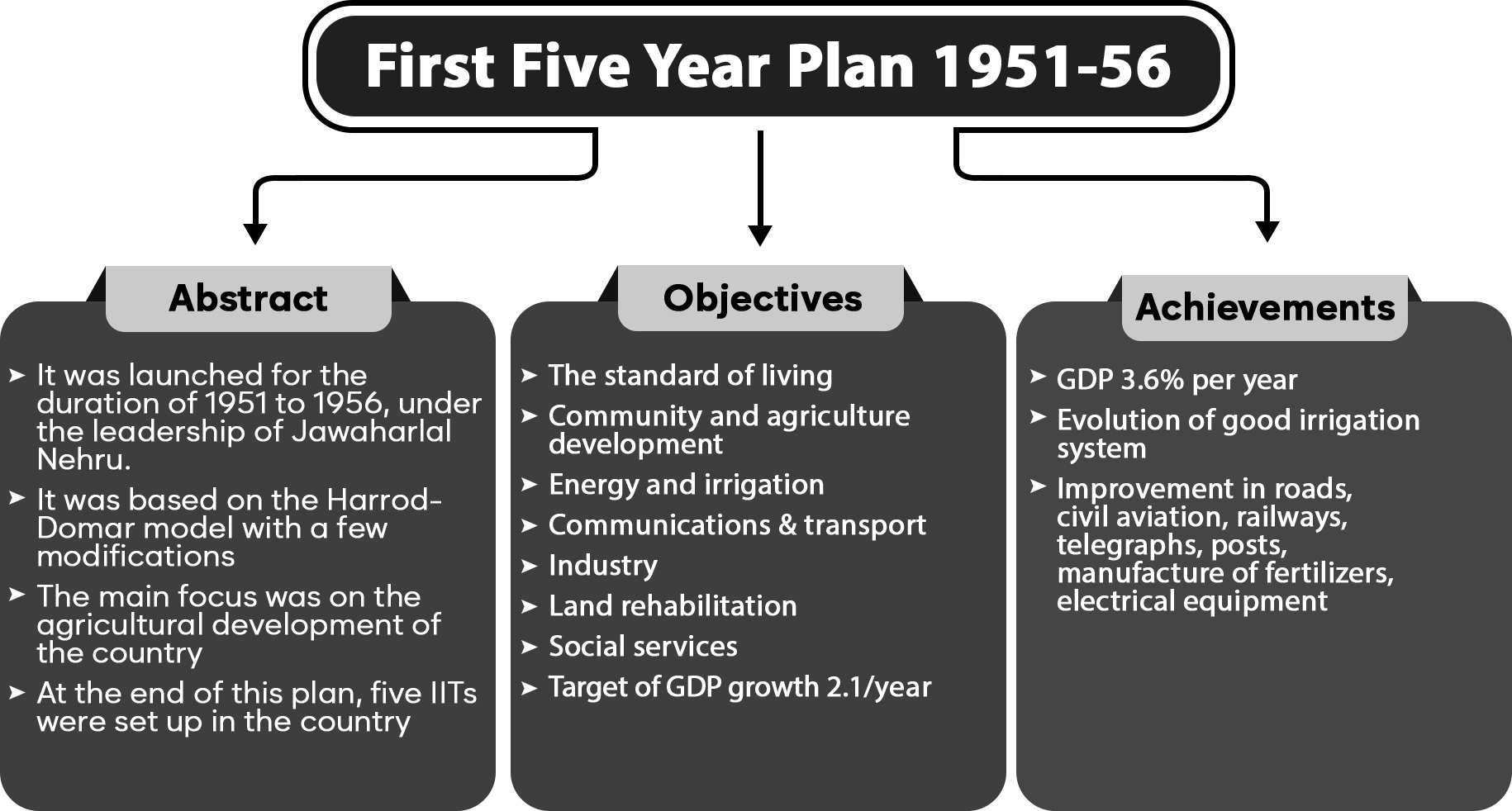
Based on the Harrod-Domar Model and aimed to break India’s cycle of poverty. K.N. Raj, a young economist involved in drafting the plan, advocated for a cautious approach, suggesting that rapid development in the first two decades might threaten the stability of democracy.
The plan focused primarily on the agrarian sector, including significant investments in dams and irrigation systems. The agricultural sector had suffered immensely due to
Partition and needed urgent attention. Large-scale projects, like the Bhakra Nangal Dam, were prioritized and came to symbolize the country’s modernization efforts, often referred to as the “Temples of Modern India” by Jawahar Lal Nehru. The plan identified the unequal distribution of land as a major barrier to agricultural growth and made land reforms a central goal of its strategy.
One of the key aims of the First Five-Year Plan was to increase national income. In the 1950s, India’s spending was at a very low level, so the plan aimed to increase savings. With the planners’ efforts, savings did rise, continuing until the Third Five-Year Plan, though they later declined sharply.
Second Five Year Plan
Second Five-Year Plan
The Second Five-Year Plan primarily focused on heavy industries and was crafted by a team of economists and planners, led by P. C. Mahalanobis.
While the first plan had advocated patience, the second aimed for rapid structural transformation, pushing for simultaneous changes across various sectors.
Before finalizing the plan, the Congress party passed a crucial resolution at its session in Avadi, near Madras, declaring that a ‘socialist pattern of society’ was its ultimate goal. This vision was reflected in the objectives of the Second Plan.
To protect domestic industries, the government imposed
significant tariffs on imports. This protected environment allowed both public and private sector industries to grow.
As savings and investments increased, industries such as electricity, railways, steel, machinery, and communications were largely developed within the public sector. This marked a significant shift toward industrialization in India’s economic development.
However, the plan faced several challenges. India was technologically behind and had to spend valuable foreign exchange to purchase technology from abroad. Additionally, with industry attracting more investment than agriculture, concerns about potential food shortages began to surface. Balancing industrial growth with agricultural needs became a difficult task for the planners.

Achievements of Plans From 1947
Achievements of Plans from 1947–65
Significant progress was made in the early stages of India’s development, especially during the first three Five-Year Plans, which took the country up to the mid- 1960s.
By this time, the overall economy had shown remarkable growth compared to the colonial period. Between 1951 and 1964–65, India’s Gross National Product (GNP) grew at an average rate of about 4 percent annually, excluding the final year of the Third Plan (1965–66), which was marked by an unprecedented drought and a war. This growth rate was roughly four times the rate seen during the last fifty years of colonial rule.
One of the major accomplishments in this period was the significant increase in savings and investment rates.
In agriculture, land reforms introduced after independence, combined with a vast network for agricultural extension and community development at the grassroots level, along with substantial investments in irrigation, power, and agricultural research, laid the foundation for considerable growth.
Industry also grew rapidly, outpacing agriculture with
a compounded annual growth rate of 7.1 percent from 1951 to 1965. The industrial boom was driven by import substitution, starting with consumer goods and later focusing on capital and intermediate goods after the Second Plan.
The early planners also prioritized the development of social infrastructure, especially in education and healthcare, areas that had been greatly neglected under British rule.
Nehru’s vision of “temples of modern India” included not only steel plants, power plants, and irrigation dams but also institutions of higher learning, particularly in science.
During the first Five-Year Plan, India established national laboratories and research institutes through the Council of Scientific and Industrial Research, which focused on research in fields like physics, chemistry, food technology, and more.
In 1948, the Atomic Energy Commission was established, laying the groundwork for India’s significant achievements in nuclear science. By this time, India’s scientific and technical workforce had grown from 190,000 to over 2.3 million.
Key controversies regarding 5-year plans: The strategy of development followed in the early years raised several important questions such as:
Agriculture vs. Industry
Many thought that the second Plan lacked an agrarian strategy for development and the stress on industry caused agriculture and rural India to suffer badly. Veteran Gandhian economists like J.C. Kumarappa proposed an alternative blueprint that put greater emphasis on rural industrialisation.
The stress of rapid industrialisation required the import of technology for which India has to spend precious foreign exchange to buy from the global market. It was the industry that attracted more investment than agriculture, even as the possibility of food shortage loomed large.
The failure was not that of policy, but its non- implementation, because the landowning classes had a lot of social and political power. Besides, the critiques argued that even if the government had spent more money on agriculture, it would not have solved the massive problem of rural poverty.
Public vs. Private Sector
The state-controlled key heavy industries provided industrial infrastructure, regulated trade and made some
crucial interventions in agriculture. Critics argued that the planners refused to provide the private sector with enough space and the stimulus to grow.
The enlarged public sector produced powerful vested interests that created enough hurdles for private capital by installing systems of licenses and permits for investment. With the restriction on imports of goods, production of such goods in the domestic market with little or no competition, in addition to no incentive to improve the quality of products.
The state-controlled more things than required, which led to inefficiency and corruption.
Then there were critics who thought that the state did not do enough. They pointed out that the state did not spend any significant amount on public education and healthcare.
Green Revolution
Green Revolution
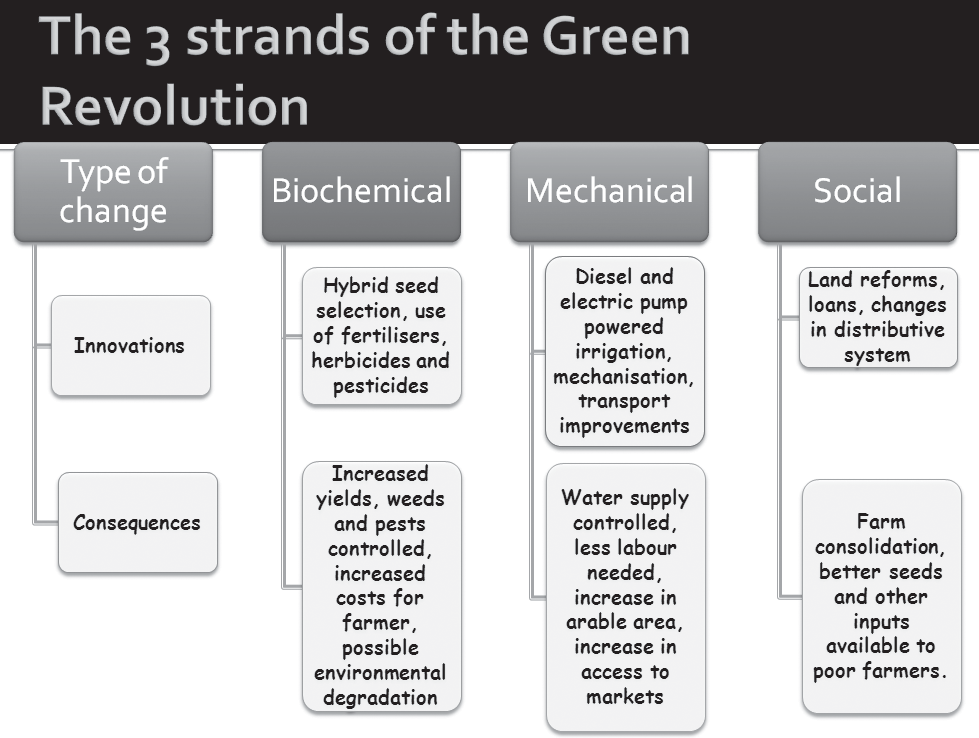
Green Revolution in India is known to reduce the dependence of India on foreign aid for the supply of food grains during agricultural crises like droughts, floods etc. and envisaged to make India a self- dependent and self-sustained nation in terms of food grains availability.
Prevailing conditions before the introduction of the Green Revolution
Indian agriculture in the early post-independence years mainly focused on institutional reforms, without giving much attention to improving the technological foundation needed to boost productivity.
Although agricultural output grew by an impressive 3% annually between 1949 and 1965, food shortages became a growing issue from the mid-1950s onwards. This was largely due to a combination of factors: the rapid population growth after independence, a steady rise in per capita income, and the massive financial commitments towards planned industrialization, all of which placed significant long-term pressure on agriculture.
By the mid-1960s, two consecutive monsoon failures in 1965 and 1966 further compounded the agricultural strain, contributing to a 17% decline in agricultural output and a 20% drop in food grain production.
Inflation, which had been under control until 1963, began to rise sharply, reaching 12% annually between 1965 and 1968, with food prices soaring by nearly 20% each year. This inflation was driven partly by the droughts and partly by the economic strain from the wars with China in 1962 and Pakistan in 1965, which led to a significant increase in defense spending.
To cope with the food crisis, India had to import larger quantities of food, with the United States being the primary supplier of food grains. However, after the 1965 Indo-Pak war and India’s stance on Vietnam, the U.S. suspended its food aid, refusing to renew the PL-480 wheat loan agreement on a long-term basis.
Given these dire circumstances in the mid-1960s, ensuring economic self-reliance and achieving food self-sufficiency became top priorities for the Indian leadership.
Initiatives before the green revolution to boost agriculture
There was a wrong perception prevailing during Nehru’s era that he had neglected the agriculture sector and instead focused too much on rapid industrialisation. But contrary to this perception, Nehru had placed great importance on creating the physical and scientific infrastructure essential for Indian agriculture.
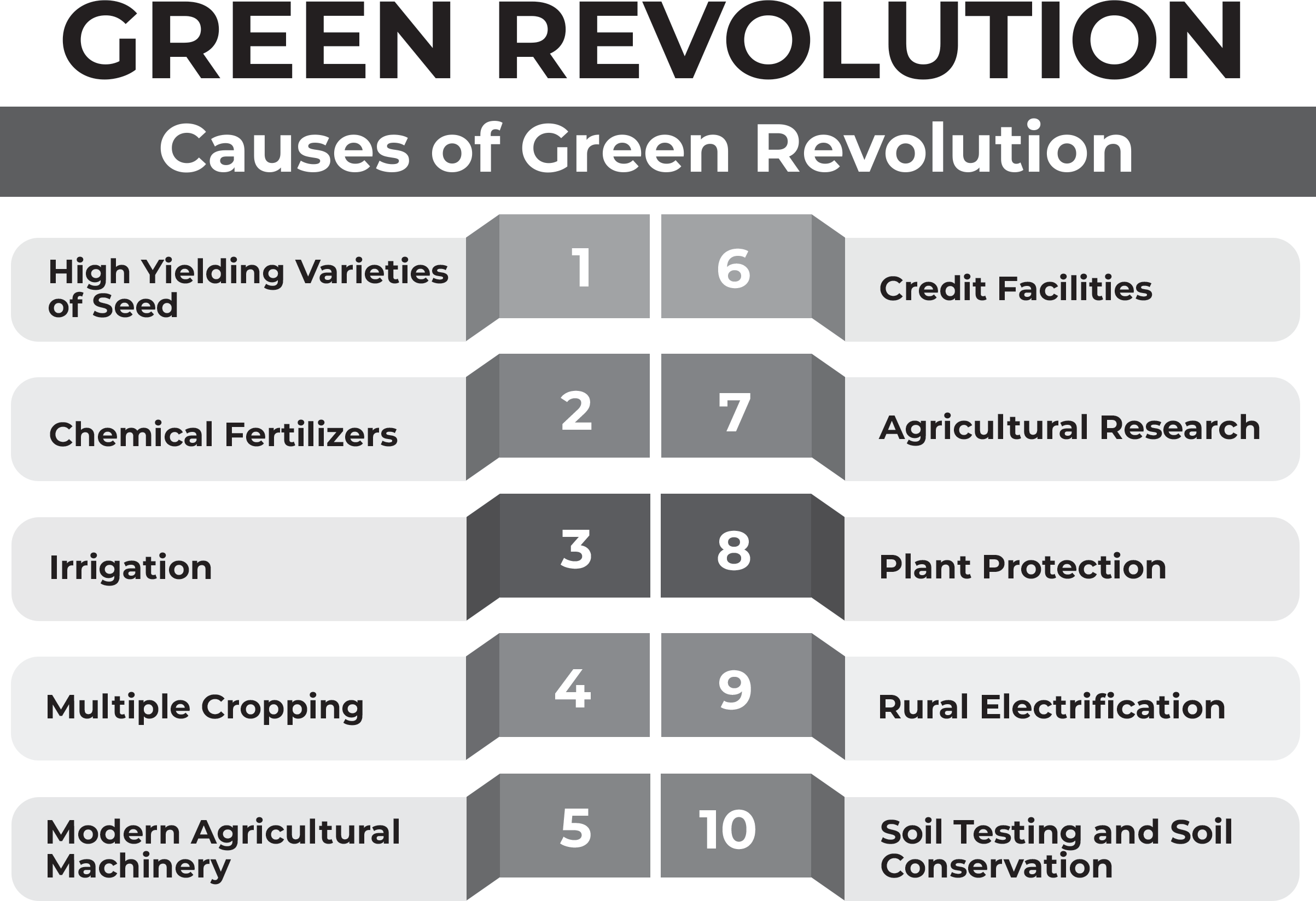
There were massive large-scale irrigation and power projects like Bhakra Nangal, various agricultural universities, research laboratories, and fertiliser plants were set up
Introduction of Green Revolution
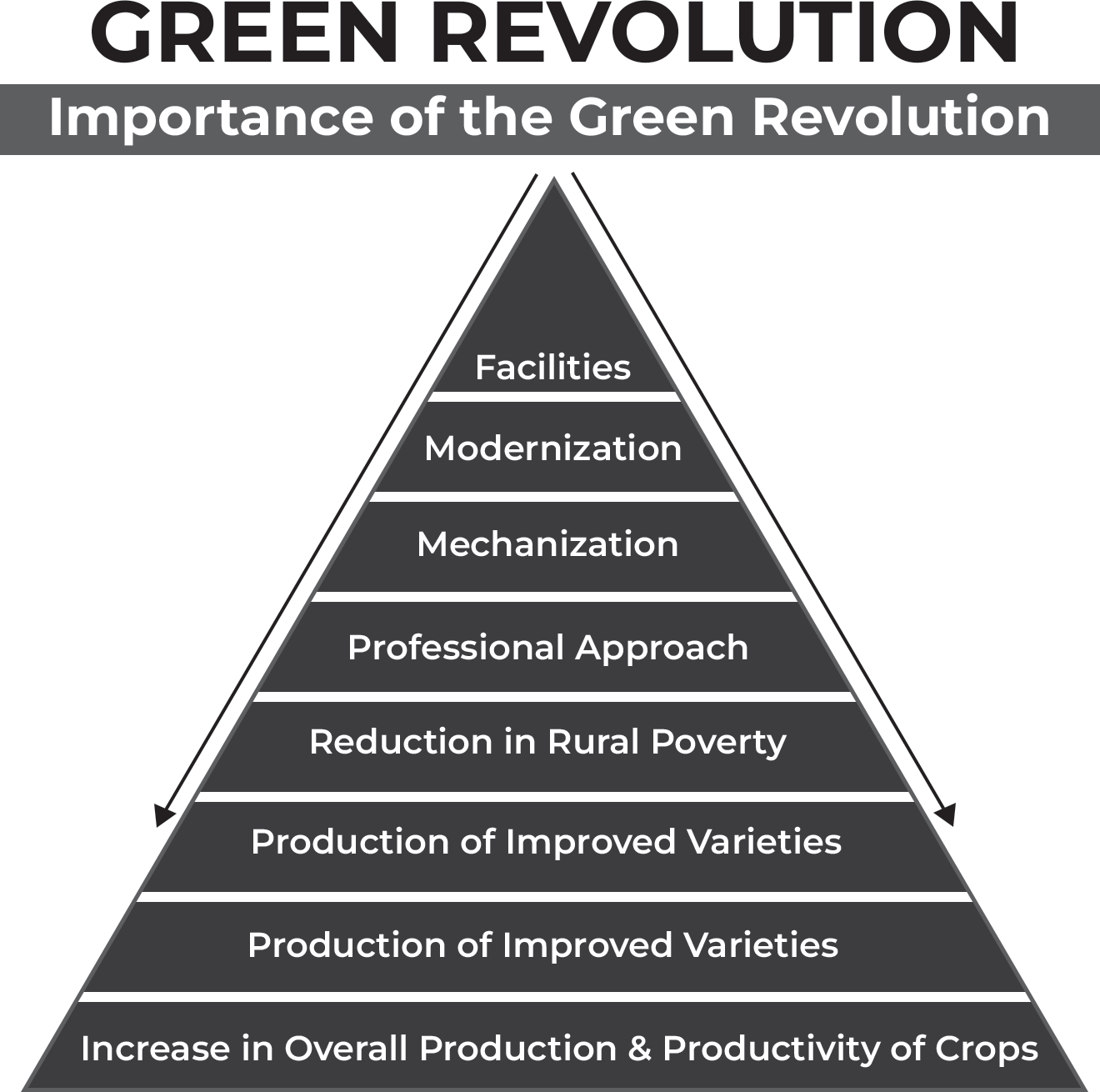
The Green Revolution in India unfolded in three distinct phases, with each phase bringing significant changes to agriculture in different regions of the country.
First Phase (1962-65 to 1970-73): The initial phase saw a sharp increase in wheat yields, particularly in the north-western regions of Punjab, Haryana, and Western Uttar Pradesh. This phase marked the beginning of the shift towards modern agricultural practices with the introduction of High Yielding Variety (HYV) seeds and other technologies.
Second Phase (1970-73 to 1980-83): The second phase extended the reach of HYV seed technology from wheat to rice. During this period, the technology spread across Uttar Pradesh, Andhra Pradesh (especially in coastal areas), parts of Karnataka, Tamil Nadu, and later Maharashtra and Gujarat. These regions also experienced a significant boost in agricultural production.
Third Phase (1980-83 to 1992-95): The third phase of the Green Revolution saw a broader geographical spread, reaching regions with previously low agricultural growth, such as Orissa, West Bengal, Madhya Pradesh, and Rajasthan. This phase brought encouraging results and helped improve agricultural productivity in these areas as well.
During the last phase, the Southern region registered a higher rate of growth than the Northern region. By the end of this phase, the ‘coefficient of variation’ of the output growth levels and yield [per hectare] level between the various states dropped substantially compared to earlier decades. By the end of the last phase, there was a considerable reduction in regional inequality with an increase in prosperity in rural India.
The adoption of the Green Revolution strategy of introducing a package of high-yield variety (HYV) seeds, fertilisers and other inputs in a concentrated manner to some suitable select areas paid immediate dividends in creating food security and poverty reduction. Between 1967–68 and 1970–71, food grain production rose by 35 per cent.
Significant government initiatives during Green Revolution Period
Government investment in agriculture rose significantly. Institutional finance in the agriculture sector doubled from 1968 to 1973.
The agricultural prices commission was set up in 1965 and efforts were made to assure the farmers a sustained remunerative price.
Public investment, institutional credit remunerative prices and availability of new technology at low prices raised the profitability of private investment by farmers.
The result of the government’s initiative was that the rate of increase in the gross irrigated area rose from 1 million hectares per annum in Pre-Green Revolution to about 2.5 million hectares per annum during the 1970s.
The Positive Impact of the Green Revolution
The positive impact of the Green Revolution
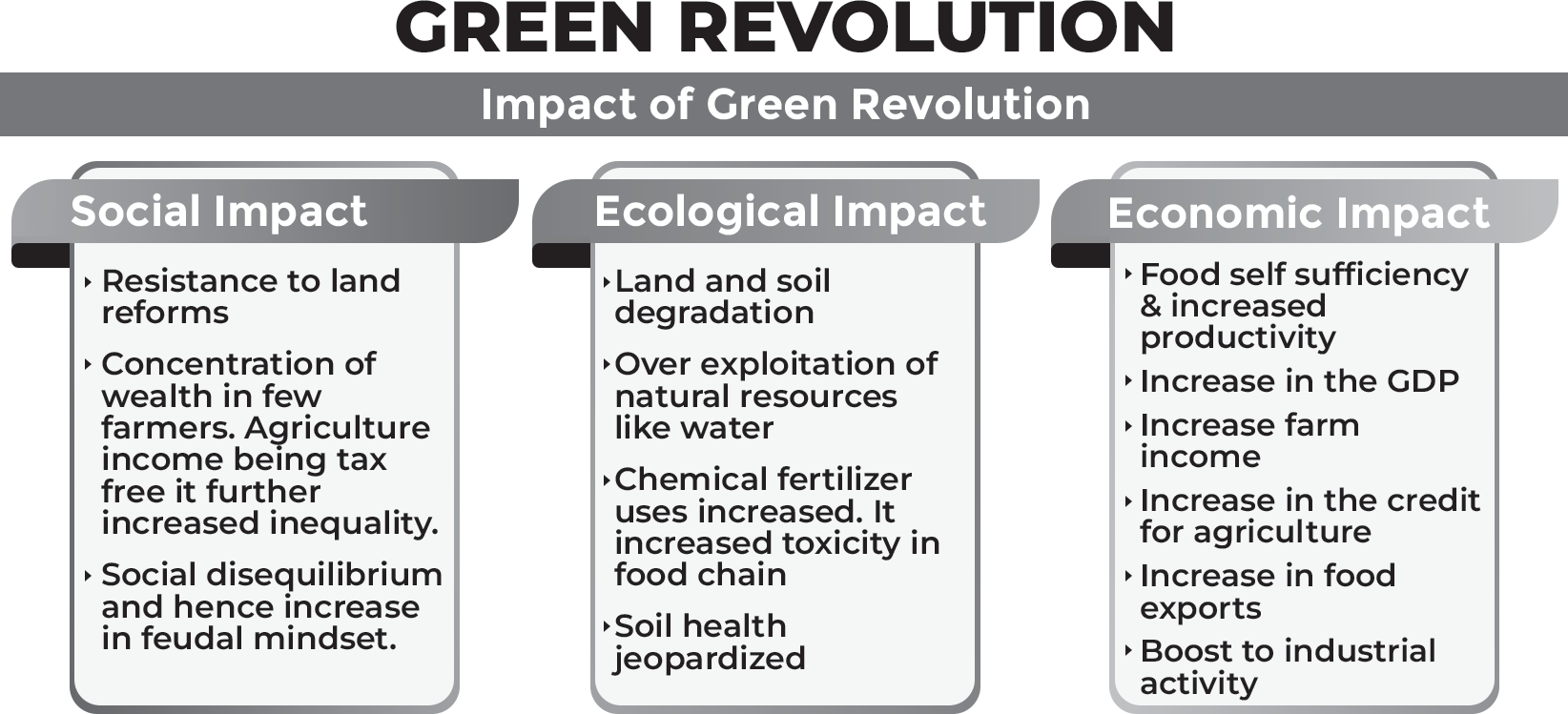
Net food imports fell from 10.3 million tonnes in 1966 to 3.6 million tonnes in 1970, putting an end to India’s ‘begging bowl’ image and creating considerable food security even to meet extreme crises.
Throughout the three phases of the Green Revolution, food grain production rose significantly. By the 1980’s not only was India self-sufficient in food with buffer food stocks of over 30 million tonnes, but also it was exporting food to pay back its earlier loans and also giving loans to deficit countries.
The economy was able to absorb the massive successive
droughts of 1987–88 without undue pressure on the prices of food or imports. The rural poverty index continued to show a decline in these crisis years as rural employment and incomes were maintained through government programmes using surplus food stocks.
The critical impact of the Green Revolution was that it maintained the agricultural growth rates, plus it generated a rapid increase in the marketable surplus of food grains.
The Green Revolution not only boosted employment in agriculture but also created job opportunities in non-agricultural sectors in rural and semi-urban areas. Industries related to agriculture, such as agro-processing, transport, and other allied sectors, flourished during this time.
As farmers’ incomes increased, there was a growing demand for factory-made consumer goods, including radios, TVs, watches, and sewing machines.
Additionally, the surplus food grain stocks enabled the government to initiate employment and poverty alleviation programs in economically backward regions.
Overall, the Green Revolution significantly reduced rural poverty by improving food availability, lowering food prices, generating jobs in both agriculture and related sectors, and increasing wages across the board
The Negative Impacts of the Green Revolution
The negative impacts of the Green Revolution
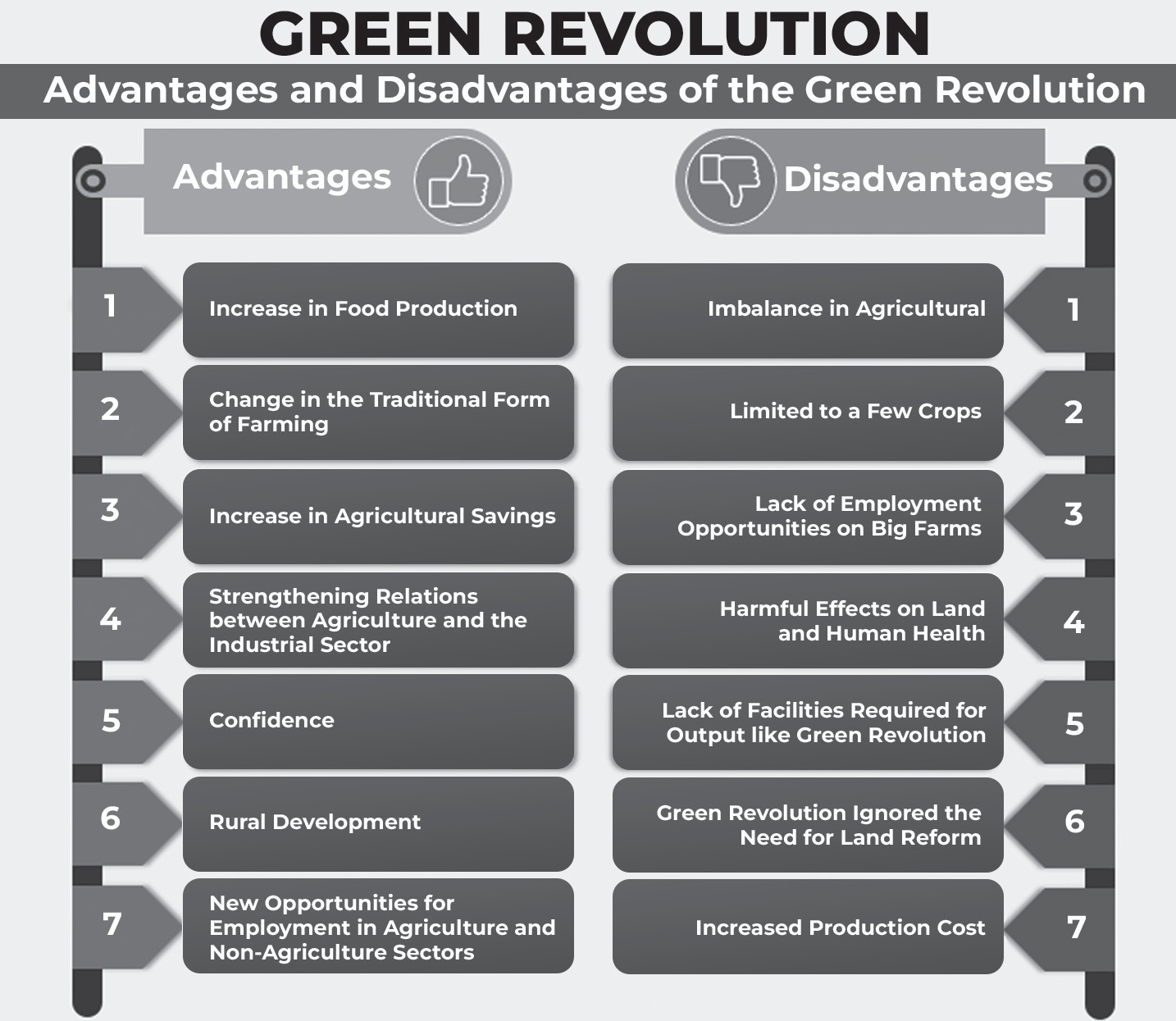
The Green Revolution led to significant class and regional
disparities, creating a fertile ground for left-wing groups to rally poor peasants and advocate for more radical approaches to secure their rights—laying the groundwork for Left-Wing Extremism.
Alongside, the rise of middle peasants with medium- sized landholdings marked a shift. These farmers, who benefited greatly from the revolution, eventually gained considerable political influence in various regions.
However, the environmental toll was substantial.
Repetitive cropping and increased intensity led to a decline in soil fertility.
The widespread use of tube wells caused a sharp drop in the water table, particularly in Punjab and Haryana.
The Green Revolution also triggered a massive loss of biodiversity, with many indigenous crop varieties disappearing.
The heavy use of fertilizers, pesticides, and herbicides led to soil contamination and toxicity.
Health problems surged due to the overuse of chemicals, including higher rates of cancer, renal failure, stillbirths, and congenital disabilities.
Unfortunately, tenants and sharecroppers without land security were the main losers in this scenario. To placate farmers in the Green Revolution areas, many political parties offered subsidized or free electricity, which was often misused, ultimately harming the broader health of the economy.
Land Reforms in India
Land Reforms in India
The Colonial Impact and the Reasons for Land Reforms:
Colonialism had a profoundly negative impact on Indian agriculture, which, like in other pre-industrial societies, accounted for the majority of the country’s output. It disrupted traditional agricultural practices without introducing any meaningful new approaches.
The commercialization of agriculture and the growing divide among peasants happened on an unprecedented scale. However, unlike other societies transitioning to capitalist economies, India did not see commercialization as a step towards capitalist production.
The features that emerged in Indian agriculture during colonial rule placed an immense burden on the majority of the peasantry.
The colonial state imposed heavy taxes on agriculture, worsening the situation.
It is no surprise, then, that by the end of colonial rule, Indian agriculture was showing clear signs of decline, after years of stagnation.
Research conducted soon after independence revealed that about 60% of family holdings were smaller than 5 acres, with 40% being under 2.5 acres. The issue of small holdings was made worse by their fragmentation into numerous small plots.
When India gained independence in 1947, the primary challenge was to address the long-standing distortions caused by colonialism and set the country’s agriculture on a path of growth.
Severalmeasuresweretakentoeasetheburdensonpeasant producers, eliminate the semi-feudal intermediaries, improve tenancy terms, provide affordable credit, boost agricultural investment, and promote scientific research in agriculture.
Land Reform measures
After Independence, the Indian National Congress appointed the Agrarian Reforms Committee under the Chairmanship of J.C. Kumarapppa, for making an in- depth study of the agrarian relations prevailing in the country. The committee submitted its report in 1949 which had a considerable impact on the evolution of agrarian reforms policy in the post-independence period.
Abolition of Intermediaries
Abolition of Intermediaries: (Zamindari System)
In the 1950s, following the Kumarappa Committee’s recommendations, most Indian states passed laws to abolish intermediary tenures, although their implementation varied by state.
In regions like West Bengal and Jammu & Kashmir, the abolition of intermediaries was accompanied by landholding ceilings. In other states, intermediaries were
allowed to retain land under their personal cultivation, as ceiling laws were only introduced in the 1960s.
This delay allowed intermediaries to legally or illegally transfer land, meaning large landholders continued to exert influence even after the formal abolition of zamindari.
However, it is estimated that between 1950 and 1960, approximately 20 million cultivators were brought into direct contact with the government. A major challenge to enforcing zamindari abolition laws was the absence of proper land records.
Weaknesses in Zamindari Abolition
Several issues hindered the success of zamindari abolition. In Uttar Pradesh, for example, zamindars were allowed to keep lands deemed to be under “personal cultivation.”
In states like Uttar Pradesh, Bihar, and Madras, until land ceiling laws were introduced, there were no limits on the land a zamindar could declare as personally cultivated.
This led to large-scale evictions of tenants to maximize land under personal cultivation. Additionally, landlords used the judicial system to delay the implementation of these laws, challenging their constitutionality, sometimes up to the Supreme Court.
The collaboration between landlords and lower-level revenue officials further skewed the law’s application, as many revenue officers were former rent collectors for zamindars.
Despite these challenges, by the 1960s, the large feudal estates were largely dismantled. The main beneficiaries were the occupancy tenants or upper tenants, who had direct leases from the zamindars and were now granted land ownership.
Tenancy Reforms
Tenancy Reforms
Following the abolition of zamindari, tenancy remained a major issue, particularly with oral and unrecorded agreements in many areas.
The second focus of land reforms was tenancy legislation, which varied across states based on political and economic conditions. Despite these differences, most states aimed to achieve three common objectives:
• To guarantee security of tenure for tenants who had cultivated land continuously for a set period.
• To reduce rents to a “fair” level, typically between
one-fourth and one-sixth of the gross produce.
• To grant tenants the right to acquire ownership of the land they cultivated, with certain restrictions.
Tenancy laws sought a balance between the interests of landowners, especially small landowners, and tenants. For instance, absentee landowners often retained the right to resume land for “personal cultivation,” while tenants were granted the right to acquire the land they worked, through a system of floors and ceilings.
In the late 1960s, Kerala initiated a program to grant land titles to hutment dwellers and tenants, with considerable success, backed by peasant organizations.
In 1977, the Left Front government in West Bengal launched “Operation Barga,” aimed at registering sharecroppers and securing their rights, including permanent occupancy and a 1:3 crop division between landowners and sharecroppers.
Limitations of Tenancy Reforms
While tenancy legislation provided security of tenure to many, its success was limited. A significant number of tenants remained unprotected, and in some cases, tenancy shifted underground.
Tenants were reclassified as “farm servants,” maintaining their same status but without legal protection. Additionally, many tenants were converted into sharecroppers, a status not covered under tenancy laws, leaving them vulnerable.
The informal, often oral nature of tenancies further compounded these issues, as unrecorded agreements meant tenants could not fully benefit from the protections offered by the law.
Ceilings on Land Holding
Consolidation of Holdings
In pursuance of this, many states had enacted legislation but not much progress could be made except in the States of U.P., Haryana and Punjab.
In other States, work continued for some years and lost momentum thereafter.
Farmers are emotionally attached to their ancestral land, and therefore, they are not willing to take advantage of the scheme of consolidation of holding.
Those farmers who own good-quality land do not favour the scheme for fear of getting inferior and poor-quality land after the consolidation.
Consolidation of holdings is a cumbersome process. The government officials who implement the scheme are generally slow and often corrupt.
In general, the scheme did not receive the desired support and cooperation from the farmers.
The cost of consolidation is realised by the farmers, which has an adverse effect on their resources and economy.
It has been observed that small farmers are generally allotted inferior quality land, and due to lack of money and power, they are neither able to please the officials nor get justice in the court.
Success/Achievements of Land Reforms
The most successful of all reforms was the abolition of intermediaries like zamindars.
There are enough studies to indicate that the quantum of absentee ownership in the 70s was much less serious than in the 50s. Absentee ownership had reduced much more in unirrigated areas, than in irrigated areas.
Land reforms led to the collapse of the feudal structure.
The cumulative effect of the abolition of zamindari, tenancy legislation and ceiling legislation motivated the cultivators to invest and improve agricultural practices.
In areas where land reform has not been implemented, the inequalities have persisted, caste oppression is most acute and has generally experienced low socio-economic development.
Judicial backing and progressive interpretations of constitutional provisions aided in land reforms.
Without abolishing the Rights to property as a fundamental right and providing for the exception of land reform legislations through the IX schedule it would have been an uphill task to recognize land holdings.
Consolidation of Holdings
The Bhoodan Movement
The Bhoodan Movement
Bhoodan was an effort at land reform aimed at institutional change in agriculture, focusing on land redistribution through a grassroots movement rather than just government legislation. The renowned Gandhian worker, Acharya Vinoba Bhave, drew on Gandhian principles such as constructive work and trusteeship to launch the movement in the early 1950s in Telangana, Andhra Pradesh.
Vinoba Bhave formed an all-India federation of constructive workers, the Sarvodaya Samaj, to lead the cause of nonviolent social transformation. He and his followers undertook padayatra (walking from village to village) to convince large landowners to donate at least one-sixth of their land as Bhoodan, or ‘land-gift,’ for redistribution to the landless and the poor.
In 1957, a new movement called Gramdan, or ‘donation of village,’ emerged alongside Bhoodan.
Vinoba Bhave aimed to abolish private land ownership through both Bhoodan and Gramdan, believing the movements would help achieve fair land redistribution, consolidate holdings, and promote collective farming.
Successes of the Movement
The movement was the first post-independence movement that sought to bring social transformation through a movement and not through government legislation.
It created a moral ambience that put pressure on the big landlords.
It also stimulated the political activity among the peasants and landless, providing a fertile ground for political propaganda to organise peasants.
Drawbacks
However, the movement failed to achieve its targeted objectives and the degree of success in respect of both land acquisition and land distribution was very limited. Of the total land of about 42.6 lakh acres received through Bhoodan, more than 17.3 lakh acres were rejected as they were found unfit for cultivation.
In most cases, the village landlords donated only those pieces of land that were either unfit for cultivation or were in dispute with tenants or the government. In fact, the landlords preferred to part away with their disputed lands as a compromise formula, for there was little hope under the existing law of being able to keep this land with them.
Further, the movement failed to realize its revolutionary potential.
After 1969, Gramdan and Bhoodan lost their importance due to the shift from being a purely voluntary movement to a government-supported programme.
In 1967, after the withdrawal of Vinoba Bhave from the movement, it lost its mass base.
Cooperatives
Cooperatives
A broad range of leaders from India’s national movement, including Mahatma Gandhi, Jawaharlal Nehru, Socialists, and Communists, all believed that co-operativization would significantly improve agriculture, particularly benefiting the poor.
In 1949, the Congress Agrarian Reforms Committee, or Kumarappa Committee, recommended that the state be empowered to enforce varying degrees of cooperation for different types of farming.
The First Plan took a balanced approach, recommending support for small and medium farms to form cooperative farming societies. It was expected that village panchayats, motivated party workers, and trained staff from the Community Development programme, launched in 1952, would aid this effort.
The Second Plan was more optimistic, stressing the importance of laying the groundwork for cooperative farming and aimed to bring a significant portion of agricultural land into cooperative farming over ten years.
In 1959, the Congress party passed the Nagpur Resolution, envisioning a future agrarian system based on joint cooperative farming, to be achieved within three years.
However, leaders like C. Rajagopalachari, N.G. Ranga, and Charan Singh opposed this move. In response, Prime Minister Nehru assured Parliament in February 1959 that no coercion would be used to introduce cooperatives.
The promotion of cooperative farming, often citing China’s success with corporatization, lost favor after Chinese aggression in Tibet in 1959 and subsequent border encroachments, making the Chinese model seem suspect.
As a result, the Congress shifted its focus toward promoting service cooperatives nationwide.
The Third Plan reflected this shift, proposing a more modest approach with a target of ten pilot cooperative farming projects per district. It also emphasized integrating cooperative farming with broader agricultural efforts, including credit, marketing, distribution, and processing through the community development movement
The Success of Cooperatives
The Success of Cooperatives: The Milk Cooperatives and Operation Flood
One of the most successful cooperative experiments in India occurred in the milk sector. What started in Kaira (Kheda) District, Gujarat, eventually led to the nationwide ‘White Revolution.’
Farmers in Kaira, who supplied milk to Bombay, felt exploited by milk traders. They approached Sardar Patel, a leader from their region, to address their concerns.
With the help of Patel and Morarji Desai, the farmers organized into a cooperative union and launched a “Milk Strike,” pressuring the Bombay government to buy milk directly from their union. They officially registered in Anand, Gujarat, in December 1946.
Tribhuvandas K. Patel, a Gandhian freedom fighter, persuaded the farmers to form milk cooperatives and later became the union’s chairman, holding the position for 25 years. Dr. Verghese Kurien served as the union’s CEO from 1950 to 1973.
In 1955, the union named its products “Amul,” which soon competed with multinational dairy companies like Glaxo and Nestle.
The “Anand Pattern” of the Kaira Cooperative Union expanded to other districts in Gujarat by 1974, leading to the formation of the Gujarat Cooperative Milk Marketing Federation Ltd. as the apex body for marketing.
Estimates suggest that 48% of rural household income in the region came from dairying due to the cooperative’s success.
The Kaira cooperative’s success made the nationwide spread of the movement inevitable. In 1964, Prime Minister Lal Bahadur Shastri encouraged all state Chief Ministers to set up cooperative dairies following the “Anand Pattern”. In 1965, the National Dairy Development Board (NDDB) was formed, with Verghese Kurien as its honorary chairman.
Operation Flood or White Revolution
Drawing heavily from the Kaira Union for personnel, expertise and much more, the NDDB launched “Operation Flood”, a programme to replicate the “Anand Pattern” in other milk sheds (regions producing milk that may be supplied to the area of demand) of the country.
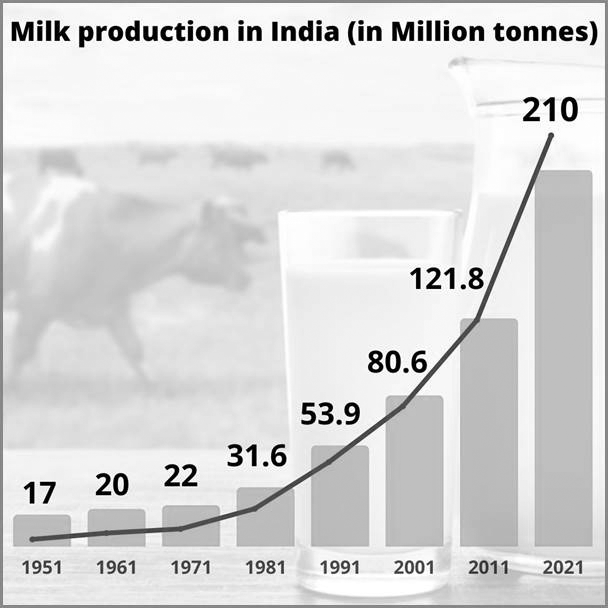
Operation Flood, launched on 13 January 1970, was the world’s largest dairy development program and a landmark project of India’s National Dairy. It transformed India from a milk-deficient nation into the world’s largest milk producer, surpassing the United States of America in 1998.
Operation Flood organised cooperatives of milk producers into a nationwide milk grid with the purpose of increasing milk production, bringing the producers and consumers closer by eliminating middlemen and assuring the producers a regular income throughout the year.
It was not just a dairy programme, but a path to development, generating employment & income for rural households and alleviating poverty. By 1995 there were 69,875 village dairy cooperatives spread over 170 milk sheds all over the country with a total membership of 8.9 million farmers.
A crucial feature of the cooperative movement associated
with the ‘Anand Pattern’ was the democratic mode of functioning of the cooperatives, with a conscious effort being made by the management to keep its ear to the ground and not overlook the interest of the humblest of the cooperative members including the ‘low’ caste and the landless.
Impact of Operation Flood
Impact of operation flood
The most noticeable impact of Operation Flood was the significant rise in milk production, which in turn boosted the income of milk producers, especially the poor.
It was estimated that 60% of those benefiting from the scheme were marginal or small farmers and landless labourers, making milk cooperatives a powerful tool for poverty alleviation.
The primary beneficiaries included landless individuals from Scheduled Castes (SC), Scheduled Tribes (ST), and other disadvantaged communities.
Operation Flood also played a key role in the growth of a domestic dairy equipment manufacturing industry.
It contributed to the development of a strong base of local expertise in areas like animal nutrition, health, artificial insemination, dairy engineering, and food technology.
One of the important outcomes of Operation Flood was the empowerment of women. With the support of NGOs like SEWA, around 6,000 women’s dairy cooperative societies were established.
The initiative also had a positive impact on other cooperative sectors, including those for fruit and vegetable producers, oilseed farmers, small-scale salt makers, and tree growers, all of which flourished under the guidance of the NDDB.
Limitations of Cooperativization
Limitations of Cooperativization
Economist Daniel Thorner, during his study of cooperatives between December 1958 and May 1959, identified several weaknesses within the movement. He categorized the cooperatives into two types:
• One group consisted of wealthy, landowning farmers who formed cooperatives to circumvent land reforms and access state incentives. These were essentially fake cooperatives where large farmers enrolled their labourers and ex-tenants as members.
• The second group was made up of state-sponsored cooperative farms, where government land was allocated to landless labourers and disadvantaged groups. These cooperatives failed to deliver the expected benefits of scale due to:
• The poor land quality, inadequate irrigation, and the fact that they were managed like government projects rather than genuine collective efforts. As a result, these cooperatives were often expensive and unsuccessful.
• Overall, service cooperatives performed better than farming cooperatives, though they still had significant drawbacks:
• Service cooperatives often reinforced caste-based hierarchies.
• Leaders of these cooperatives were primarily drawn from trader and money-lender communities.
• In the case of credit cooperatives, the landless were largely excluded from access to loans, as reported by the National Commission on Agriculture in 1971.
• Credit cooperatives also suffered from high loan defaults, with wealthy landowning communities being the largest defaulters, contrary to common belief that poor farmers were the primary offenders.
• A common issue with the cooperative movement was that it shifted away from encouraging grassroots participation and instead became a bloated government department filled with officials, clerks, and inspectors at various levels.
• This large bureaucracy, often disconnected from the cooperative ideals and influenced by local vested interests, ended up hindering the movement instead of fostering its growth.
Points To Remember
Factors that generated hopes for the revival of the Indian economy after centuries of colonial subjugation included:
• A mature indigenous entrepreneurial class.
A broad societal consensus on the nature and path of development to be followed after independence
Ideas of development
• On the eve of Independence, India had before it, two models of modern development: the liberal-capitalist model as in much of Europe and the US and the socialist model as in the USSR.
India adopted the mixed model of economic development, which has features of both the capitalist and socialist models.
Planning
• In 1938, under the leadership of Jawaharlal Nehru, National Planning Committee (NPC) was set up.
• Plan of Economic Development for India, popularly called the Bombay Plan, was authored by business leaders in 1945.
• The public sector would have to play a critical role in the development of capital goods industries and other basic and heavy industries, which required huge finances and had a long-time lag for returns.
• Formation of Planning Commission:
• Planning Commission was set up in March 1950 by a resolution of the Government of India.
• Functions:
• Formulate a plan for the most effective and balanced utilisation of the country’s resources.
• To indicate the factors that tend to retard economic development.
• Early Initiatives:
• As in the USSR, the Planning Commission of India opted for the five-year plan (FYP).
• Budget being divided into ‘plan’ and ‘non-plan’ budget.
• First Five-Year Plan (FYP): Based on the Harrod Domar Model, the Plan (1951–1956) sought to get the country’s economy out of the cycle of poverty. It addressed, mainly, the agrarian sector, including investment in dams and irrigation.
• Second Five-Year Plan: The Second FYP (1956-1961) stressed mainly heavy industries. It was drafted by a team of economists and planners under the leadership of P. C. Mahalanobis, thus also known as Nehru-Mahalanobis model.
• Third Five-Year Plan: Aimed at making India a ‘self reliant’ and ‘self-generating’ economy, the chief priority of this plan (1961-1966) was agriculture, both to enhance food supply and support exports and industry.
Green Revolution
• Prevailing conditions before the introduction of the green revolution:
Food shortages
• Massive Jump in population growth rates.
• Two successive monsoon failure
• Rate of inflation which was kept low (around 2%) rose sharply to 12%
• Two wars of 1962 (with China) and 1965 (with Pakistan) led to massive increase in defence expenditure.
• Initiatives before the green revolution to boost agriculture(During Nehru’s Era):
• There were massive large-scale irrigation and power projects like Bhakra Nangal.
• Various agricultural universities, research laboratories, and fertiliser plants were set up.
• Phases of Green Revolution:
• The first phase of the Green Revolution: This happened from 1962- 65 to 1970-73 with a sharp increase in the yield of wheat in the north-western region, which included Punjab, Haryana and Western Uttar Pradesh.
• The second phase of the Green Revolution: This happened from 1970-73 to 1980-83 with the extension of High Yielding Variety (HYV) seed technology from wheat to rice.
• The Third Phase of the Green Revolution: In the third phase, 1980-83 to 1992-95, the Green Revolution spread to the low growth areas like Orissa, West Bengal, Madhya Pradesh, and Rajasthan. During the last phase, the Southern region registered a higher rate of growth than the Northern region.
• Significant government initiatives during Green Revolution Period:
• Government investment in agriculture rose significantly.
• The Agricultural prices commission was set up in 1965.
The Green Revolution had a major impact on the rural poverty level, which declined sharply through food availability, and it resulted in a decline in relative prices of food, generating employment in the agricultural sector and agriculturally allied areas, rises in wages, etc.
Land Reforms in India
• The Colonial Impact and the Reasons for Land Reforms:
• Commercialization of agriculture
• An unbearable burden on the Indian peasantry.
• A high tax demand on agriculture.
• Small landholdings and fragmentation of land.
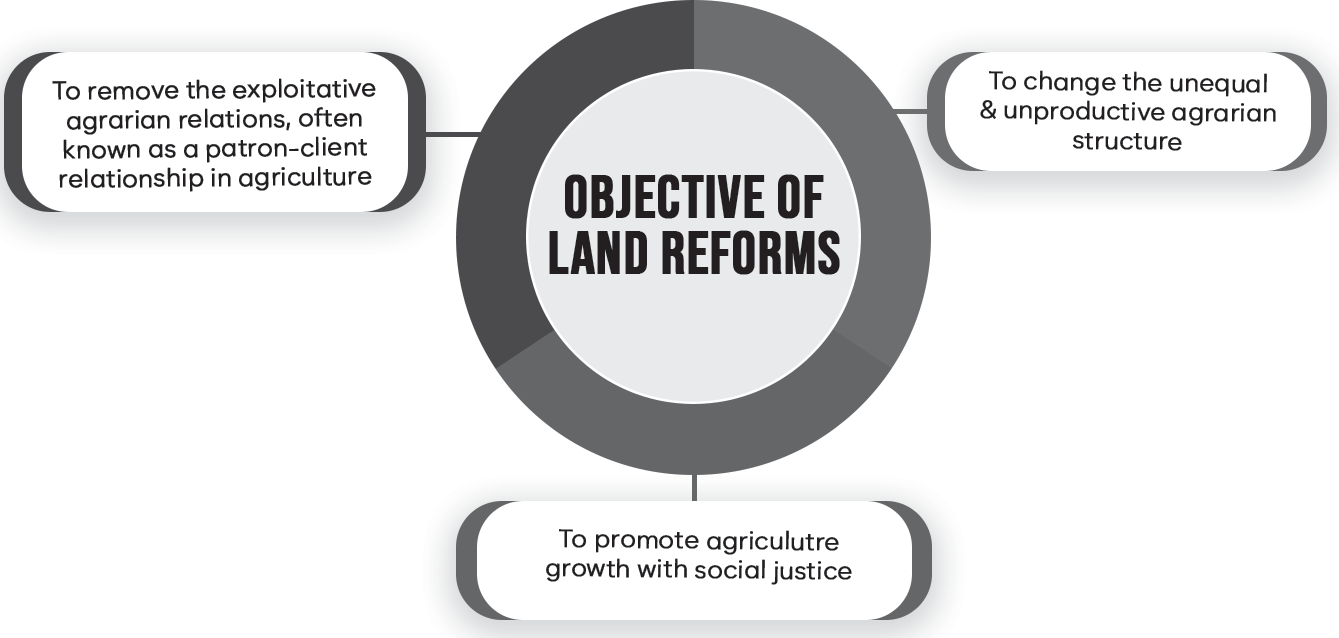
• Broad Objectives of the Land Reforms:
• To change the agrarian structure;
• To remove exploitative agrarian relations,
• To promote agriculture growth with social justice
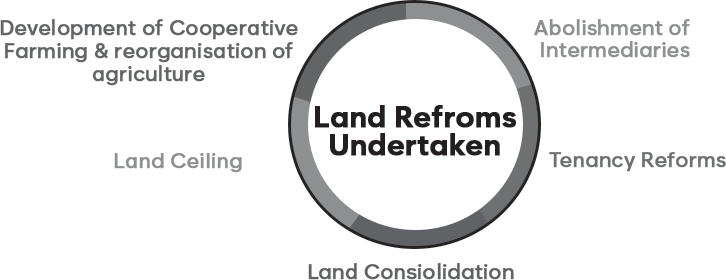
• Land Reform measures: After Independence, the Indian National Congress appointed the Agrarian Reforms Committee under the Chairmanship of J.C. Kumarapppa, for making an in-depth study of the agrarian relations prevailing in the country. These reforms are:
• Abolition of Intermediaries: (Zamindari System)
• Tenancy reforms
• Ceilings on Land Holding
• Consolidation of Holdings
• Success/Achievements of Land Reforms:
• The most successful of all reforms was the abolition of intermediaries like zamindars.
• Absentee ownership had reduced much more in unirrigated areas, than in irrigated areas.
• Land reforms led to the collapse of the feudal structure.
• The reforms motivated the cultivators to invest and improve agricultural practices
• The Bhoodan Movement
• Acharya Vinoba Bhave launched this movement in the early 1950s in the Telangana region of Andhra Pradesh. He persuaded the larger landowners to donate at least one-sixth of their lands as Bhoodan or ‘land-gift’ for distribution among the landless and the land poor
• Meanwhile, by 1957 another movement known as Gramdan or ‘donation of village’ came into being
Cooperatives
• The Congress Agrarian Reforms Committee also known as Kumarappa Committee recommended in 1949 for the state to be empowered to enforce varying degrees of cooperation for different types of farming.
• The Success of Cooperatives: The Milk Cooperatives and Operation Flood
• White revolution from Kheda district, Gujrat spread all over India.
• Gandhian freedom fighter Tribhuvandas K. Patel, convinced the farmers to form milk cooperatives, later became its chairman and remained so for 25 years. Dr Verghese Kurien was CEO of this Union from 1950 to 1973.
• Operation Flood or White Revolution: NDDB launched “Operation Flood”, a programme to replicate the “Anand Pattern” in other milk sheds of the country. A Democratic mode of functioning of the cooperatives, was adopted
• Impact of operation flood:
• Considerable increase in milk supply and increase in income of milk producers. Milk cooperatives proved to be a significant anti poverty measure.
• SCs, STs and deprived sections were the major beneficiaries.
• Instrumental in empowerment of the women.
• Had a spillover effect in other cooperatives.
• Limitations of Co-operativization:
• Daniel Thorner, found many weaknesses in the cooperative movements. He observed two types of cooperatives movements: One was of rich and landowning farmers. The other, second type of cooperative was state-sponsored cooperative farms
• Cooperatives soon became a huge overstaffed government department with officials, clerks, inspectors, and the like, replicated at the block, district, division and state levels