Introduction and Importance of Nanotechnology
INTRODUCTION
Nanotechnology is that branch of science and engineering field that focuses on designing, producing and using structures, devices, and systems by manipulating atoms and molecules at the nanoscale. The term nanotechnology (nano + technology) comes from nanometre which is 10-9 metres. Nanotechnology is usually conceptualized as the understanding and control of matter at the nano-scale. At this scale, the physical, chemical and biological properties of materials differ from that of bulk matter, which enable novel applications. To imagine the scale of nanomaterials, imagine the thickness of your hair or the thickness of a page of this book you are reading. These are nearly 70,000 nanometres thick! Special effects in nanotechnology due to the small size of the materials are usually electrical conductivity, colour effects, chemical reactivity, melting point, surface area, wettability etc.
Nanotechnology is the manipulation and manufacture of materials and devices on the scale of atoms or small groups of atoms. The “nanoscale” is typically measured in nanometres, or billionths of a metre (nanos, the Greek word for “dwarf,” being the source of the prefix), and materials built at this scale often exhibit distinctive physical and chemical properties due to quantum mechanical effects. Although usable devices this small may be decades away, techniques for working at the nanoscale have become essential to electronic engineering, and nanoengineered materials have begun to appear in consumer products. For example, billions of microscopic “nano whiskers,” each about 10 nanometres in length, have been molecularly hooked onto natural and synthetic fibres to impart stain resistance to clothing and other fabrics; zinc oxide nanocrystals have been used to create invisible sunscreens that block ultraviolet light; and silver nanocrystals have been embedded in bandages to kill bacteria and prevent infection.
Since Richard Feynman’s well-known statement made in 1959, “There is a plenty of room at the bottom,” nanotechnology has transformed how products are fabricated. Like other disruptive technologies, it is catalyzing economic growth. Early milestones include the first molecular device in 1974 and the scanning tunnelling microscope in 1981, demonstrating the potential of nanotechnology.
Importance of Nanotechnology
Nanotechnology is a promising field that can deliver novel products and processes across various sectors. Public sector research and development in nanotechnology are thriving in both developed and developing nations. It addresses pressing global problems such as environment, water purification, agriculture, energy, health and more. Nanotechnology applications are expected to benefit industries like pharmaceuticals, electronics, automobiles, textiles, chemicals, manufacturing, information technology, and biotechnology. This has motivated developing countries to channel their scarce resources for increased capacity and capability in nanotechnology. Public investments and strategic initiatives have been undertaken in countries like India, China, Brazil, South Africa and Korea.
Evolution of Nanotechnology in India
Evolution of Nanotechnology in India
The 9th Five-Year Plan (1998-2002) established national facilities and core groups to promote research in frontier areas of Science and Technology (S&T), including superconductivity, robotics, neurosciences and carbon and nano materials.
The Planning Commission supported numerous R&D programs under basic research.
The Department of Science and Technology (DST) launched the “Programme on Nanomaterials: Science and Devices” in 2000, which led to the establishment of an Expert Group on “Nanomaterials: Science and Devices.”
The government identified the need to initiate a Nanomaterials Science and Technology Mission (NSTM) in the 10th Five-Year Plan (2002-07).
The National Nanoscience and Nanotechnology Initiative (NSTI) was launched in October 2001 to create research infrastructure and promote basic research in nanoscience and nanotechnology.
The Eleventh Five-Year Plan (2007-2012) focused on projects involving nanomaterials and nano devices in health and disease.
The government allocated Rs. 1000 crore for the Nano Mission in 2007, launching a Mission on Nano Science and Technology (Nano Mission) in May 2007 to foster, promote, and develop all aspects of nanoscience and nanotechnology.
The Twelfth Five-Year Plan (2012-2017) approved the continuation of the Mission on Nano Science and Technology (Nano Mission) in its Phase-II at a total cost of Rs. 650 crores
Nanotechnology Research, Development and Innovation in India
Nanotechnology Research, Development and Innovation in India
The Indian government has been actively promoting nanotechnology R&D through various initiatives, including infrastructure and human resource development schemes,bilateral/multilateral/regional initiatives with other countries, and encouraging the PPP model to foster nano- based product development. The main departments which have been involved in nanotechnology RDI in India are discussed below:
Department of Science and Technology (DST)
The Department of Science and Technology (DST) is the focal agency in the Indian nanotechnology innovation system, which has launched several programs and schemes since the 1980s to foster R&D on both miniature-scale and nano-scale.
Major programs include the Intensification of Research in High Priority Areas (IRHPAS) launched by the DST during the sixth Five Year Plan (1980- 1985), the Committee on Emerging Technologies (1997), the National Programme on Smart Materials (NPSM) in 2000, the Nano Science and Technology Initiative (NSTI) in 2001, and the Nano Science and Technology Mission (NSTM) in 2007.
The DST has established units on nano science, centres for nanotechnology, and thematic units of excellence on computational material science.
The mission has also launched PG programmes in nanoscience and nanotechnology at various universities and colleges across India.
The Indian Institute of Technology (IIT) is conducting a research programme on Smart and Innovative Textiles (SMITA) to develop novel materials like nanofibres, nanofinishes, and phase change materials.
The what is DIT is also supporting the Nanotechnology Business Incubator (NBI) at NCL, nurturing start-up companies in computational modeling, therapeutic potential, and ocular and maxillofacial implants.
The Department of Information Technology (DIT) has launched bilateral joint research projects with over 25 countries and multilateral research projects with regional bodies.
Institute of Nano Science and Technology (INST)
Major achievements are made by INST in the field of nanotechnology. The scientist discovered a melatonin-based “darkness hormone” nano-system for the Parkinson’s disease by removing undesired mitochondria and increase the level of antioxidants resulting in better functioning of the brain
Department of Biotechnology (DBT)
The Department of Biotechnology (DBT) is actively
involved in nano biotechnology R&D, promoting interdisciplinary research, innovations, and translational development in various areas such as therapeutics, early disease detection, tissue-specific drug delivery, medical devices, and chemical detection sensors.
• The government recognizes nano-bio industries as a new-generation biotech industry.
• The DBT initiated a program on nanobiotechnology in 2007 to promote basic R&D in food/agriculture, animal husbandry, environment management, healthcare, and other allied areas.
• Department of Electronics and Information Technology (DeITy)
• The Department of Information Technology (DeITy) in India has established Centre for Materials for Electronics Technology (C-MET) in Pune, Hyderabad, and Trissur to focus on nanotechnology R&D activities, particularly in nanomaterials.
• These centres provide materials, fabricating facilities, prototyping facilities, technology transfer and consultancy services for interested entities and industries.
• The nanotechnology application in the ICT industry is a key emerging vertical market for the ITES industry.
• The government is keen to harness the potential of nanotechnology for revamping the electronics manufacturing sector.
• Key schemes include the Nanotechnology Development Programme (NDP) in 2004, a Special Incentive Package Scheme (SIPS) for Semiconductor Fabrication and Micro and Nanotechnology Manufacture Industry, and the National Policy on Electronics (NPE) to achieve a turnover of $400 billion by 2020.
• A Nanoelectronics Innovation Council and an Electronics Development Fund have been proposed to promote innovation, product development and commercialization of products in these sectors.
• Department of Industrial Policy and Promotion (DIPP)
• DIPP has established a Nano-Manufacturing Technology Centre (NMTC) and Academy of Excellence for Advanced Manufacturing Technology (AEAMT) at the Central Manufacturing Technology Institute (CMTI) in Bangalore.
• Department of Industrial and Scientific Research
• The CSIR, an autonomous body of the DISR, offers funding for projects, grants and fellowships in basic and applied sciences, including nanoscience and nanotechnology.
With 39 laboratories across the country, the CSIR conducts research in biological, chemical, physical and engineering fields, including some nano-related research.
• Centre for Nano and Soft Matter Sciences (CeNS)
• It has discovered a novel nano soft gold–liquid crystal hybrid material which remain in steady state under the high variation of temperature and advancing toward one step closer to advance electro- optics technology.
India’s Achievements in the Field of Nanotechnology
India’s achievements in the field of Nanotechnology
Water: Nano tube filter - water purification
Researchers at Banaras Hindu University have created a process for making carbon nanotube filters that efficiently take out heavy hydrocarbons from petroleum and impurities from water.
The filters are robust, reusable and heat-resistant hollow carbon cylinders composed of carbon nanotubes.
Larger pathogens including E. Coli and Staphylococcus aurous bacteria can be eliminated from water, as well as polio viruses as small as 25 nanometers.
As a result, the filters may become more versatile for use in microfluidics applications, which separate compounds for drug development, according to the researchers.
By producing clean drinking water and reducing the spread of waterborne illnesses, this use of nanotechnology could lessen the strain on missions related to drinking water.
Healthcare: Typhoid Detection Kit
Using a nanosensor created by Prof. A.K. Sood and his group at IISc, Bangalore, the DRDE, Gwalior has created a typhoid detection kit.
Salmonella typhi causes typhoid fever, which is a serious health issue in third-world nations because of inadequate sanitary conditions, antibiotic resistance, malnutrition and unsuitable water supplies.
An estimated 16 million cases worldwide occur each year, with 6 lakh deaths annually.
Typhoid fever accounts for two to five percent of mortality in India. Recombinant DNA technology and immunological methods have been used to develop a latex agglutination-based test for the quick identification of typhoid infection.
Applying a tiny electric charge has enhanced the test’s sensitivity by thirty times, making it possible to identify extremely low antigen concentrations in clinical samples.
Power: Gas flow induced generation of voltage from solids
It has been discovered through research and experimentation by IISc Physics Professor AK Sood and his student Shankar Ghosh that liquid flow in carbon nanotubes can produce electric current.
One of the most intriguing uses of the discovery is the
potential for a nanotube-equipped heart pacemaker- like device that would implant itself in a person and use blood to power itself.
The device will produce power on its own to regulate irregular cardiac rhythm instead of relying on batteries.
The technology’s exclusive rights have been given to American startup Trident Metrologies by the IISc. Prototypes will be developed and the gas flow sensors will be commercialized.
• Drug delivery system
• A research group at the University of Delhi has developed 11 patentable nanoparticle-based drug delivery systems, with four of these processes granted
U.S. patents.
• One significant achievement was the development of a reverse micelles-based process for hydrogel and ‘smart’ hydrogel nanoparticles, which enabled the synthesis of nanoparticles smaller than 100nm.
• Another technology, transferred to industry, focuses on nanoparticle drug delivery for eye diseases, using nanoparticles to improve the bioavailability of non- steroidal drugs on the cornea.
• This technology has been transferred to Chandigarh- based Panacea Biotech Ltd.
• Microwave CNTs Production unit
• DMSRDE in Kanpur is producing non-aligned, quasi-aligned and aligned carbon nanotubes (CNTs) with a 50-gram batch size, with a maximum operating temperature of 12000 C. These CNTs are expected to be used in various applications, including EM absorbers, composites, gas sensors, flow monitors, and field emission devices.
• Nano technology product survey: The DST and CII should jointly conduct a survey to prepare technological breakthroughs in nano technology products in India, focusing on the convergence of technologies in Bio-Nano and Info in Singapore and Korea.
Approaches to make Nanomaterials
There are two approaches for the manufacturing of nanomaterials:
• The “top-down” approach, which involves the breaking down of large pieces of material to generate the required nanostructures from them.
• The “bottom-up” approach, which implies assembling single atoms and molecules into larger nanostructures.
Generations of Nanotechnology
Nanomaterials
A nanometer is one millionth of a millimeter - approximately 100,000 times smaller than the diameter of a human hair. Nano-sized particles exist in nature and can be created from a variety of products, such as carbon or minerals like silver, but nanomaterials by definition must have at least one dimension that is less than approximately 100 nanometers. Most nanoscale materials are too small to be seen with the naked eye and even with conventional lab microscopes.
Here are some common types of nanomaterials and their applications:
Nanoparticles: Particles with nanoscale dimensions fall under this category. A multitude of materials, such as metals, metal oxides and polymers can be used to create them. Nanoparticles are used in electronics, imaging, catalysis, and medication delivery.
Carbon Nanotubes (CNTs): Made of carbon atoms, CNTs are cylindrical formations. Their mechanical, electrical and thermal qualities are outstanding. CNTs are used in drug delivery vehicles, composite materials, and nanoelectronics.
Graphene: Accomplished with a hexagonal lattice of carbon atoms, graphene is renowned for its exceptional electrical, thermal and strength conductivity. It finds use in energy storage, electronics, and composites as a reinforcing material. Scientists suggest 3D block of Graphenes composites can be used for bone tissue regeneration
Nanocomposites: Materials called nanocomposites are made of a matrix reinforced at the nanoscale. The mechanical, thermal and electrical properties of the composite are improved by the use of nanoparticles. The construction, automotive, and aerospace industries employ nanocomposites.
Nanowires and Nanorods: The elongated structures known as nanowires and nanorods have diameters that fall within the nanoscale. They are used as building blocks for nanodevices and in sensors and electronics.
Quantum Dots: Size-dependent electrical and optical characteristics are produced by semiconductor nanoparticles possessing quantum confinement properties. Solar cells, displays, and biological imaging all use quantum dots.
Nanofibers: Extremely fine fibers having nanoscale sizes. Applications for nanofibers include medication delivery, tissue engineering and filtration.
Nanoporous Materials: Substances like metal-organic frameworks and zeolites that have pores on the nanoscale. They are employed in the processes of separation, catalysis and gas storage.
Nanoparticles in Medicine: A lot of study has been done on nanomaterials for use in medication administration, imaging, and diagnostics.
Applications of Nanotechnology
APPLICATIONS OF NANOTECHNOLOGY
Energy storage, production, and conversion
• Novel hydrogen storage systems based on carbon nanotubes and other lightweight nanomaterials
• Photovoltaic cells and organic light-emitting devices
based on quantum dots
• Carbon nanotubes in composite film coatings for solar cells
• Nanocatalysts for hydrogen generation
• Hybrid protein-polymer biomimetic membranes
Agricultural productivity enhancement
• Nanoporous zeolites for slow-release and efficient dosage
of water and fertilisers for plants, and of nutrients and drugs for livestock
• Nanocapsules for herbicide delivery
• Nanosensors for soil quality and for plant health monitoring
• Nanomagnets for removal of soil contaminants
Water treatment and remediation
• Nanomembranes for water purification, desalination, and detoxification
• Nanosensors for the detection of contaminants and pathogens
• Nanoporouszeolites, nanopo rouspolymers, and attapulgite clays for water purification
Magnetic nanoparticles for water treatment and remediation
TiO2 nanoparticles for the catalytic degradation of water pollutants
Disease diagnosis and screening
Nanoliter systems (Lab-on-a-chip)
Nanosensor arrays based on carbon nanotubes
Quantum dots for disease diagnosis
Magnetic nanoparticles as Nanosensors
Antibody-dendrimer conjugates for diagnosis of HIV-1 and cancer
Nanowire and nanobelt nanosensors for disease diagnosis
Nanoparticles as medical image enhancers
Drug delivery systems
Nanocapsules, liposomes, dendrimers, buckyballs, nanobiomagnets, and attapulgite clays for slow and sustained drug release systems.
Food processing and storage
• Nanocomposites for plastic film coatings used in food packaging
• Antimicrobial nanoemulsionsfor applications in decontamination of food equipment, packaging, or food
• Nanotechnology-based antigen detecting biosensors for identification of pathogen contamination
Air pollution and remediation
• TiO2 nanoparticle-based photocatalytic degradation of air pollutants in self-cleaning systems
• Nanocatalysts for more efficient, cheaper, and better- controlled catalytic converters
• Nanosensors for detection of toxic materials and leaks
• Gas separation nanodevices
Construction
• Nanomolecular structures to make asphalt and concrete more robust to water seepage
• Heat-resistant nanomaterials to block ultraviolet and infrared radiation
• Nanomaterials for cheaper and durable housing, surfaces, coatings, glues, concrete, and heat and light exclusion
• Self-cleaning surfaces (e.g., windows, mirrors, toilets) with bioactive coatings
Health monitoring
• Nanotubes and nanoparticles for glucose, CO2, and cholesterol sensors and for in-situ monitoring of homeostasis
Vector and pest detection and control
• Nanosensors for pest detection
• Nanoparticles for new pesticides, insecticides, and insect repellents
Apart from the above, nanotechnology is being used in textiles, ICT, cosmetics and personal care products, electronics and home appliances, defence, etc., all across the world. All these applications of nanotechnology can be leveraged for social and economic development of the developing countries such as India.
Nano Urea Fertilizer
• Meaning: Nano urea is a liquid fertilizer developed by Indian Farmers Fertiliser Cooperative (IFFCO). It is an alternative to conventional urea.
• It is essentially urea in the form of a nanoparticle.
• Urea is a chemical nitrogen fertilizer, white in colour, which artificially provides nitrogen, a major nutrient required by plants.
• Aim: It aims to reduce farmers’ dependence on packaged urea.
• Fertiliser Control Order (FCO) 1985: It is based on existing rules that provisionally allow fertilizers to be used based on data from only two cropping seasons.
• The usual practice for recommending or rejecting a new fertilizer for commercial use required three seasons of independent assessment by the Indian Council of Agricultural Research (ICAR), but in the case of nano urea this was reduced to two.
• Central Public Sector Undertaking (CPSU): National Fertilizers Limited (NFL) and Rashtriya Chemicals and Fertilizers Limited (RCF) have signed Non-Disclosure Agreement & Memorandum of Understanding with IFFCO to transfer the technology of Nano Urea.
• India is the first country globally to start commercial production of Nano Urea Liquid and Nano Fertilizers.
• Import data: The country’s domestic urea production in 2023 is around 31.11 million tonnes. India’s urea imports in 2023 declined 21.3% year-on-year to 7.41 million tonnes on account of higher domestic production.
• The government will save foreign exchange of Rs 40,000 crore approximately per annum after replacing the conventional urea with the Nano Ureas.
Potential benefits
• It has a shelf life of a year and farmers need not be worried about “caking” when it comes in contact with moisture.
• Pricing: It comes in a half-litre bottle priced at Rs 240, and carries no burden of subsidy currently. By contrast, a farmer pays around Rs 300 for a 50-kg bag of heavily subsidised urea.
•
Efficiency: The conventional urea has an efficiency of about 25 percent; the efficiency of liquid nano urea can be as high as 85-90 per cent.
• Absorption: Liquid nano urea is sprayed directly on the leaves and gets absorbed by the plant. Fertilisers in nano form provide a targeted supply of nutrients to crops, as they are absorbed by the stomata, pores found on the epidermis of leaves.
• Lower subsidy Bill: It will reduce the country’s subsidy bill and it is aimed at reducing the unbalanced and indiscriminate use of conventional urea.
• Other benefits:
• Application of Nano Urea results in better crop productivity.
• This is regarded as an excellent alternative to chemical fertilisers because it promotes growth and reduces environmental pollution.
• Nano-fertilisers also reduce the crop cycle period and increase crop yield.
• The unique properties of nanoparticles, such as high absorption capacity, the increased surface to volume ratio and controlled-release kinetics to targeted sites, make them a potential plant growth enhancer.
Triboelectric Nanogenerators
• A triboelectric nanogenerator (TENG) is a self-powered device that makes use of mechanical energy in the form of vibrations present everywhere in different forms to generate electricity.
• Scientists from the Centre for Nano and Soft Matter Sciences (CNSMS) have fabricated a cost- effective, bio-compatible nanogenerator that can generate electricity from mechanical energy in the form of vibrations present everywhere.
• CNSMS is an autonomous institute under the Department of Science & Technology.
• The energy harvesting TENG works on the principle of creation of electrostatic charges (deficiency or excess of electrons which occurs on ungrounded or insulating surfaces)
• Applications include optoelectronics, self-powered devices, pacemakers and other biomedical applications
Nano Micelles
• Researchers also found that Nano micelles can be used for Cancer treatment
• Micelles are globe-like structures with a hydrophilic outer shell and a hydrophobic interior.
• This dual property makes them a perfect carrier for delivering drug molecules
• Advantages: Low toxicity, ability to minimize drug degradation, ability to permeate tissues easily for drug delivery, and lower adverse drug side effects.
• Hydrophilic and hydrophobic configuration matches with phospholipid bilayer thereby allowing targeted drug delivery
Gold Nano Particles
• Developed by National Centre for Polar and Ocean Research and the Goa University has successfully synthesized GNPs using psychrotolerant Antarctic bacteria.
•
GNPs are biocompatible, have high surface area, more stability, and are non-toxic
• GNPs are melted at much lower temperatures (300 C) than bulk gold (1064 C)
• Advantages of GNP
• Greater solar radiation absorbing ability: photovoltaic cells
• Unique optical properties: therapeutic imaging for better resolution
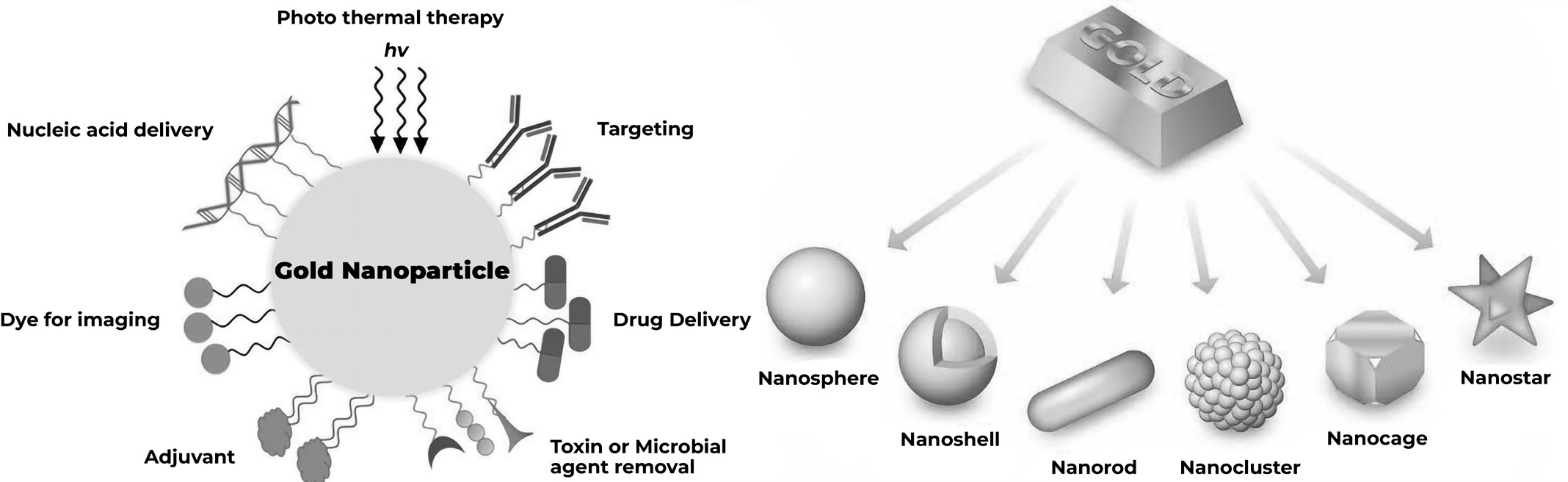
Applications o f gold nanoparticle and shapes.
Carbon Nanomaterials
• Graphene, carbon nanotubes (CNT) and fluorescent carbon quantum dots (CQDs) pertain to carbon materials family.
• They have attracted much attention in the scientific community and engineering due to their extraordinary physical, chemical, optical, mechanical, thermal properties.
• Graphene is the thinnest two-dimensional material comprised of a one-atom-thick planar sheet of sp2- bonded carbon atoms, while carbon nanotubes have a cylindrical nanostructure which also consisted of sp2- bonded carbon atoms.
• Graphene can be perceived as the basic structure of graphite, carbon nanotubes, and fullerene.
• Carbon nanotubes are tube-shaped carbon material and can be divided into two types: single-walled carbon nanotubes (SWCNTs) and multi-walled carbon nanotubes (MWCNTs).

P roperties and Applications of Carbon Nanoparticles
• Properties
• Carbon nanoparticles have extraordinary electrical conductivity, heat conductivity and mechanical
properties.
• They are composed of pure carbon, therefore, exhibiting high stability, good conductivity, low toxicity, environmental friendliness.
• Since a large part of the human body consists of carbon, it is generally thought as a biocompatible material.
• The good electrical conductivity, high surface area, and linear geometry make their surface highly accessible to the electrolyte.
•
Carbon-based nanomaterials also have strong anisotropic thermal conductivity.
• This property allows the carbon-based nanomaterials being used in advanced computing electronics where the temperature of uncooled chips can reach over 100℃.

Other Applications
• Sunscreens: Titanium dioxide and zinc oxide Nano particles help block UV radiations
• Non-flammable furniture: coating
• Fabrics and Body armour: lightweight, wettability: easy clean textiles
• Films on glasses, computers and camera displays
• Quantum dots and electrical effects: QLED TV
• Nano sensors: neutralize the effect of pollutants
• Wastewater treatments
• Nano membranes: desalinization
• Biofuel production: Nano-bioengineering of enzymes
• Solar panels: TENG
• Hydrogen economy and storage systems
• Nanotube scrubbers and electrostatic precipitators for better efficiency
• GNP: solar panels

• CNT: PV cell
• Graphene: production of green hydrogen
• Nano-herbicides and Nano-pesticides: targeted delivery and enhancement of productivity
• Nano-phosphorous fertilizer: Millet and cluster beans
• Silver Nano-particles: against phytopathogens
• Carbon Nanoparticles: seed germination
• Nickel / ferrite: Antifungals
• Zinc oxide/chitosan: Viral Diseases
• Precision farming: nano-sensors
• Antigen Antibody tests: ex: ELISA test
• Prosthetic Devices: nanocomposite materials
• Targeted drug delivery: nano-micelles
• Nano sensors: HIV and Cancer detection
• Nanohydrogel based eye drops
• Tank polymer and Camouflage
• Lightweight materials
• Precision guided missiles
• Quantum dots
• Graphene: used in flexible touch screens
• Optoelectronics
• CNT: replace silicon-based chips
Nanomaterials
Nanomaterials
A nanometer is one millionth of a millimeter - approximately 100,000 times smaller than the diameter of a human hair. Nano-sized particles exist in nature and can be created from a variety of products, such as carbon or minerals like silver, but nanomaterials by definition must have at least one dimension that is less than approximately 100 nanometers. Most nanoscale materials are too small to be seen with the naked eye and even with conventional lab microscopes.
Here are some common types of nanomaterials and their applications:
Nanoparticles: Particles with nanoscale dimensions fall under this category. A multitude of materials, such as metals, metal oxides and polymers can be used to create them. Nanoparticles are used in electronics, imaging, catalysis, and medication delivery.
Carbon Nanotubes (CNTs): Made of carbon atoms, CNTs are cylindrical formations. Their mechanical, electrical and thermal qualities are outstanding. CNTs are used in drug delivery vehicles, composite materials, and nanoelectronics.
Graphene: Accomplished with a hexagonal lattice of carbon atoms, graphene is renowned for its exceptional electrical, thermal and strength conductivity. It finds use in energy storage, electronics, and composites as a reinforcing material. Scientists suggest 3D block of Graphenes composites can be used for bone tissue regeneration
Nanocomposites: Materials called nanocomposites are made of a matrix reinforced at the nanoscale. The mechanical, thermal and electrical properties of the composite are improved by the use of nanoparticles. The construction, automotive, and aerospace industries employ nanocomposites.
Nanowires and Nanorods: The elongated structures known as nanowires and nanorods have diameters that fall within the nanoscale. They are used as building blocks for nanodevices and in sensors and electronics.
Quantum Dots: Size-dependent electrical and optical characteristics are produced by semiconductor nanoparticles possessing quantum confinement properties. Solar cells, displays, and biological imaging all use quantum dots.
Nanofibers: Extremely fine fibers having nanoscale sizes. Applications for nanofibers include medication delivery, tissue engineering and filtration.
Nanoporous Materials: Substances like metal-organic frameworks and zeolites that have pores on the nanoscale. They are employed in the processes of separation, catalysis and gas storage.
Nanoparticles in Medicine: A lot of study has been done on nanomaterials for use in medication administration, imaging, and diagnostics.
Why Nanotechnology Is the Future
Why Nanotechnology is the future?
Nanotechnology is a promising key enabling technology of the 21st century, contributing to various fields such as natural sciences, engineering, materials science, medicine, agriculture, and information/communications technologies.
It gained public exposure and awareness in the 1980s, and commercial applications began in the 1980s.
As society faces challenges in health, energy, climate, and environment, new technologies are being sought to offer solutions.
In 2017, the United Nations called for action for all countries in its Sustainable Development Goals (UN SDGs), recognizing that ending poverty and other deprivations are interconnected with improving health, environment and the economy to reduce inequality.
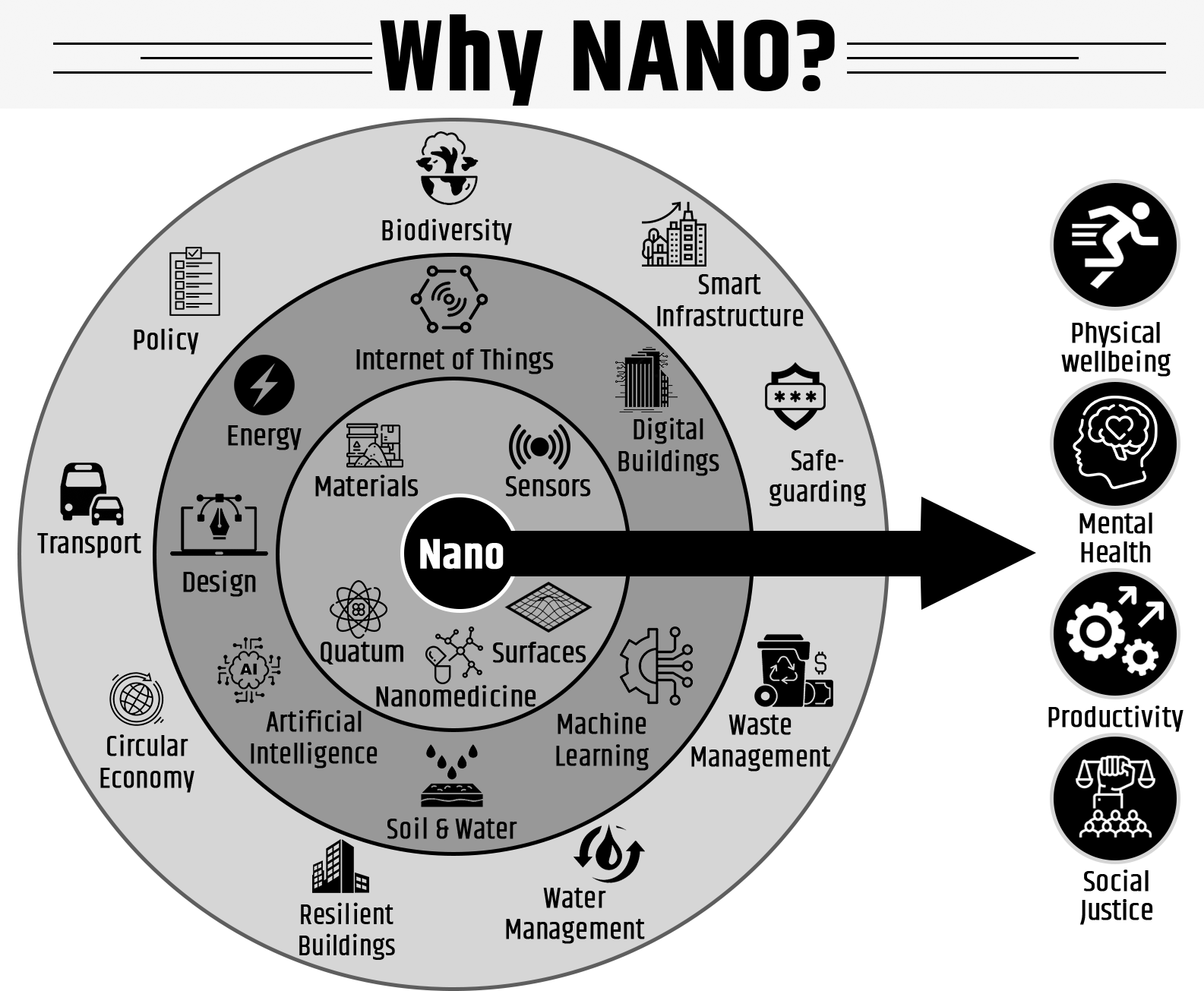
In November 2020, representatives from leading nanotechnology research institutes met for the virtual International Workshop on Nanotechnology for a Sustainable Future, hosted by the Waterloo Institute for Nanotechnology at the University of Waterloo, Canada.
This event led to the creation of the International Network for Sustainable Nanotechnology (N4SNano), a global forum to find solutions and invite new ideas. The main focus of this network is to bridge the gap between scientists and technologists with governments and policy-makers for the adoption of technology-based solutions to current problems.
Nanotechnology offers disruptive breakthroughs and innovations that can provide immediate solutions to society, environment, and the planet. Advances in energy, environmental protection, resource management, and healthcare are made through smart materials and connected devices. Nanoscience and nanotechnology have developed communication skills, bringing scientific, engineering and medical communities together, impacting related fields.
Risks with Nanotechnology
Risks with Nanotechnology
Certain risks of nanotechnology are:
Business risks involvedwith marketing of nanotechnology enabled products
• Risks related to the protection of intellectual property
• Political risks regarding the impact on the economic development of countries and regions
• Risks regarding privacy when miniature sensors become ubiquitous
• Environmental risks from the release of nanoparticles into the environment
• Safety risks from nanoparticles for workers and consumers
•
Futuristic risks like human enhancement and self- replication of nano machines
• The catch-all term “nanotechnology” is not sufficiently precise for risk governance and risk management purposes. From a risk-control point of view it will be necessary to systematically identify those critical issues, which should be looked at in more detail. This risk identification process is a task for all parties involved and it should remain a dynamic process which always takes into account new scientific, technological, societal and legal trends.
Conclusion
India has been actively developing nanotechnology since the early 2000s, with the belief that this emerging technology can help address societal challenges like drinking water and healthcare while achieving economic gains through growth in the nanotech-based industrial sector. The government has focused on infrastructure development for basic research and human resource development in the first phase of the Nano Mission (2007-2012). The second phase, 2012-2017, focuses on product development and commercialization for markets and consumers. Efforts have been made to establish a regulatory framework at the national level to address the risk and safety aspects of nanotechnology. India is also actively involved in multilateral/bilateral cooperation, providing Indian scientists access to sophisticated equipment and facilities in advanced countries. India’s involvement with international organizations like ISO, OECD, and IRGC is significant in developing standards, safe lab practices, and risk governance. This approach aims to ensure the safety of humans and the environment while minimizing unintended consequences from the use of nanotechnology