Causes of Renaissance
Causes of Renaissance:
The Renaissance was a complex cultural, intellectual, and artistic movement that occurred in Europe between the 14th and 17th centuries. It marked a significant shift from the medieval period to the early modern era. Several factors contributed to the onset and development of the Renaissance, and we’ve mentioned above many of them. Here’s a discussion of some of the key causes and contributing factors:
• Contact of the East and the West:
• The Renaissance was influenced by the rediscovery of classical texts from ancient Greece and Rome, which had been preserved and expanded upon in the Byzantine Empire and the Islamic world.
• During the Middle Ages, trade and cultural exchange with the East brought these texts back to Western Europe, sparking a renewed interest in classical learning and ideas.
• Fall of Constantinople to the Ottoman Turks (1453):
• The fall of Constantinople, a major center of Eastern Roman (Byzantine) culture and learning, to the Ottoman Turks had a profound impact.
Many Greek scholars and texts fled to Western Europe, bringing with them ancient Greek knowledge and contributing to the intellectual ferment of the Renaissance.
• Crusades:
The Crusades, a series of military campaigns that occurred during the medieval period, led to increased contact between the East and West.
As a result, Western Europeans were exposed to new ideas, technologies, and cultures, which influenced the development of Renaissance thought.
• Rise of the New Middle Class:
The Renaissance coincided with the rise of a new urban, educated middle class, often referred to as the bourgeoisie.
This class had the wealth and leisure to support and participate in intellectual and artistic endeavors, making significant contributions to the cultural flourishing of the period.
• Downfall of Feudalism:
The decline of feudalism and the weakening of traditional social structures allowed for more social mobility.
This change enabled individuals to pursue education and careers outside of traditional noble or religious roles.
• Rise of New Towns and Trade:
The growth of towns and trade during the late medieval period created a more urbanized and interconnected society.
This urban environment fostered the exchange of ideas and cultural developments, driving the Renaissance forward.
• Rise of National States:
The emergence of centralized nation-states in Europe brought political stability and patronage for artists, scholars, and thinkers.
Rulers and governments began to support and sponsor cultural and artistic endeavors, furthering the Renaissance.
• Humanism:
Humanism, an intellectual movement that emphasized the study of classical texts and a focus on human potential and achievements, played a central role in the Renaissance.
Humanists sought to combine classical wisdom with Christian teachings, leading to a broader understanding of the human experience.
• Printing Press:
The invention of the printing press by Johannes Gutenberg in the mid-15th century revolutionized the dissemination of knowledge.
The mass production of books and other printed materials made classical and contemporary works more widely accessible, contributing to the spread of Renaissance ideas
Classical Period
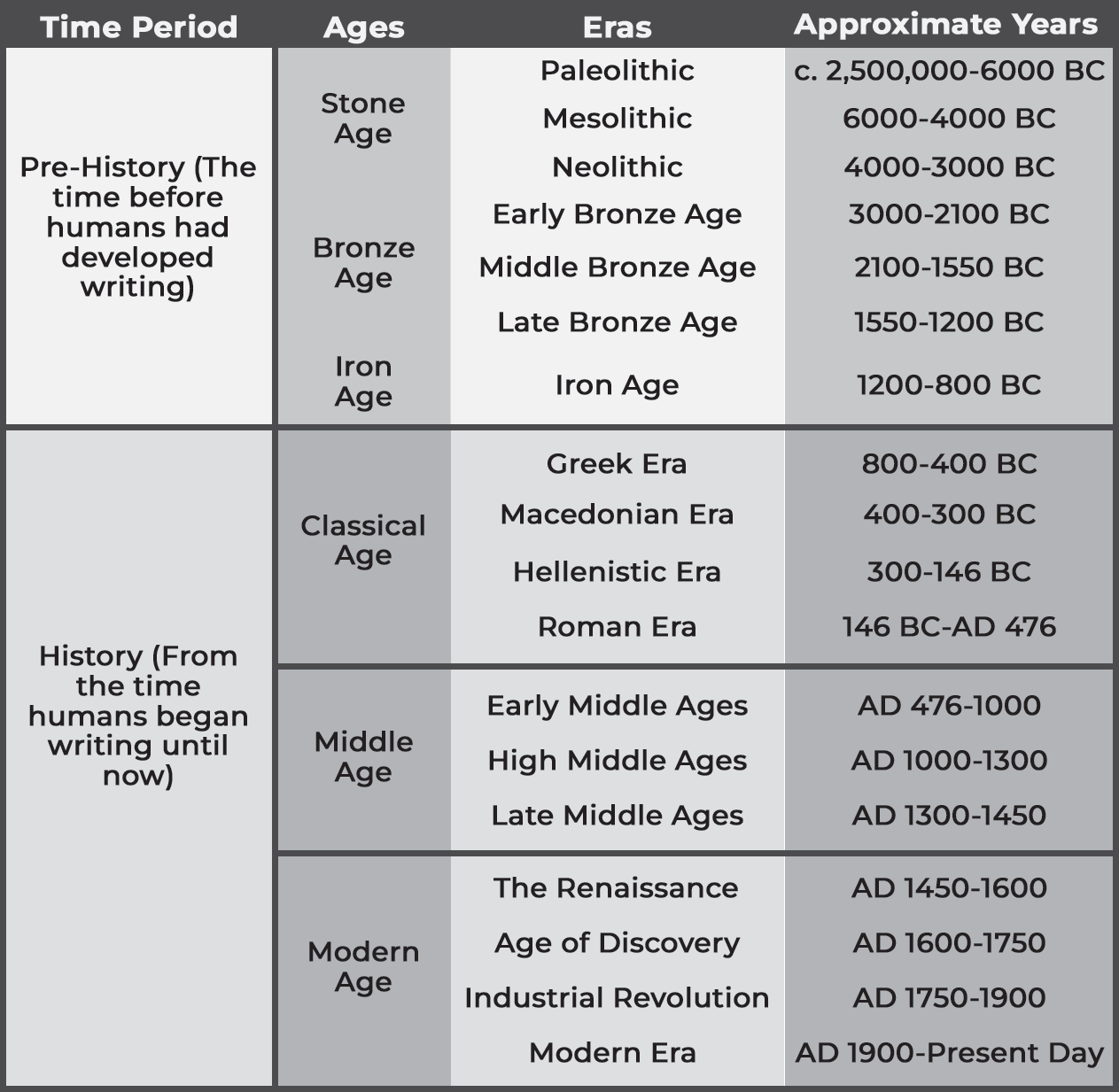
• The Renaissance in Europe was a significant intellectual movement for world history. It began in Italy, the birthplace of the Roman Empire. Following the fall of the empire in the 4th century, and the subsequent dark ages, the incredible art and ideas of Roman times were temporarily lost. They were later rediscovered in Italy in around the 12th century, leading to the Renaissance.
Classical Period
• Scholars generally acknowledge six cradles of civilization, i.e. Mesopotamia, Ancient Egypt, Ancient India, and Ancient China in the Old World (i.e. Afro- Eurasian region) and Caral-Supe of coastal Peru and the Olmec civilization of Mexico in the New World (i.e. Mesoamerican region).
• Other historic ancient civilizations, such as Greece and Rome, which have both been called the “Cradle of Western Civilization”. The word ‘Europe’ comes from the Phoenician word ‘erob’, meaning where the sun set.
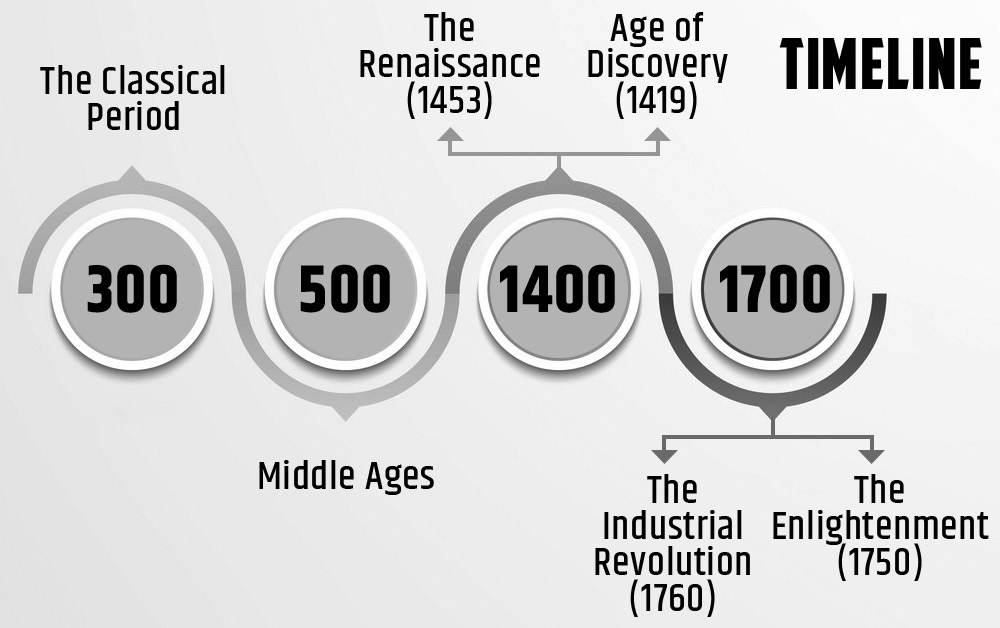
Ancient Greek Civilization (c.1200BC to the death of Alexander the Great, in 323 BCE)
• This period was marked by significant political, philosophical, artistic, and scientific achievements, leaving a lasting legacy that has profoundly shaped Western civilization.
• It followed the collapse of the Mycenaean civilization around 1200 BCE. Mycenae, located in the Peloponnese and known as “broad-streeted” and “golden” in Homer’s descriptions, was a prehistoric Greek city. According to legend, it was the capital of Agamemnon, the Achaean king who led the Greek forces in the sack of Troy. The story of the Trojan War, a central theme in ancient Greek literature, is immortalized in Homer’s Iliad.
• Ancient Greece, situated in the northeastern Mediterranean, spanned from the Greek Dark Ages (12th–9th centuries BCE) to the end of classical antiquity. It was a loose collection of city-states and territories that shared common cultural and linguistic traits.
• Key Features: First Olympic games were held in Greece in 776 BCE and use of coins began in Greece.
• There was establishment of the Roman Republic in 510 BCE. Democracy was established in Athens (Greece). Alexander of Macedonia conquered Egypt and parts of West Asia (336-323 BCE).
• Notable personalities include Aristotle, Socrates, Plato, Euripides, Pericles, Thucydides etc
Key Cultural Achievements of Greek Civilisation
• Scientific Approach: The ancient Greeks laid the groundwork for the Scientific Method, emphasizing observation, mapping, modelling, and inductive reasoning. Aristotle played a key role in this development, helping to organize knowledge into distinct disciplines such as physics, biology, zoology, and logic. Later, a specific focus on geometry emerged, shaping the study of mathematical theories.
• Philosophy: Greek philosophy is best captured in the works of Plato, who turned Socrates’ method of questioning into written dialogues. Aristotle, Plato’s student, wrote extensively on a wide range of topics, from biology to drama, laying the foundation for many fields of study.
• Political Systems: In the 5th century BCE, Athens introduced one of the earliest forms of democracy, creating a system where citizens could actively participate in decision-making—a revolutionary concept at the time.
• Mathematics: Greek mathematicians like Pythagoras, Euclid, and Archimedes made significant advances in geometry. Euclid’s Elements presented a logical, systematic approach to geometry, establishing the importance of proofs. Pythagoras is best known for the Pythagorean theorem, which relates the sides of a right-angled triangle.
• Astronomy: Ptolemy, a Greek astronomer in the 2nd century CE, proposed a geocentric model of the universe, where Earth was at the center surrounded by celestial spheres. However, astronomers like Aristarchus of Samos challenged this view with a heliocentric model, suggesting that the Sun was the center of the solar system.
• Medicine: Hippocrates, often called the “father of modern medicine,” made lasting contributions to healthcare. He founded a medical school and introduced a systematic, empirical approach to studying diseases and treatments. His legacy lives on through the Hippocratic Oath, which remains a key ethical standard for physicians.
• Performing Arts: Greek playwrights like Aeschylus, Sophocles, and Euripides explored profound themes in their tragedies, such as fate, morality, and human nature. Sophocles’ Oedipus the King is a powerful example of Greek drama, using irony to deepen its exploration of these themes.
• Architecture: Greek architects developed three classical orders—Doric, Ionic, and Corinthian—which set the standards for the design of columns and buildings. The Parthenon, a temple dedicated to Athena, is an iconic example, showcasing the Greeks’ mastery of balance, proportion, and architectural precision.
• Technology: The technological achievements of the ancient Greeks were remarkably advanced for their time. They created the first known analog computer, developed alarm clocks, and even had systems for central heating, demonstrating a level of innovation that still surprises us today.
Mesopotamian Civilization:
• City life first emerged in Mesopotamia, specifically in the region between the Euphrates and Tigris rivers, which is now part of modern-day Iraq. This area, known as Sumer in ancient times, is often considered the cradle of civilization.
• Mesopotamian civilization is renowned for its prosperity, vibrant city life, and remarkable contributions to literature, mathematics, and astronomy. Their writing system, along with their rich literary traditions, spread to other regions like the eastern Mediterranean, northern Syria, and Turkey by 2000 BCE. As a result, kingdoms across this vast area, including those of Egypt, communicated using Mesopotamian script and language.
• For Europeans, Mesopotamia held special significance due to its mention in the Old Testament, particularly in the Book of Genesis, where “Shimar” refers to Sumer as a land of brick-built cities. This connection sparked interest among European travellers and scholars, who viewed Mesopotamia as an ancestral land, often linking it to biblical narratives.
• When archaeology began to uncover the remains of ancient Mesopotamia, many scholars sought to verify the historical accuracy of the Old Testament. One of the most striking parallels between the Mesopotamian and Biblical stories is the flood narrative. In the Bible, the Flood was sent to destroy all life on Earth, but Noah was chosen to save life by building an ark. Similarly, in Mesopotamian tradition, a figure named Ziusudra, or Utnapishtim, is said to have built a boat to survive a great flood, carrying pairs of all species to safety.
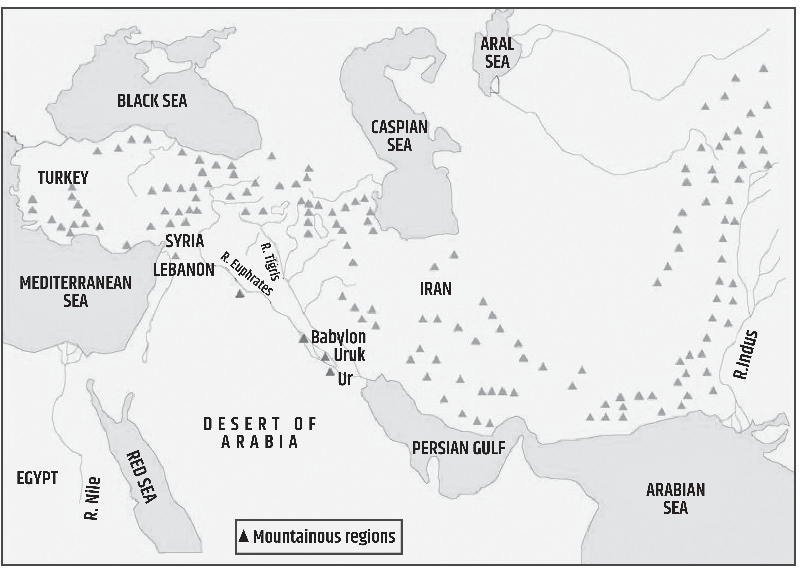
Map: Mesopotamian Civilisation
The Roman Empire:
• The Roman Empire spanned a vast area, covering much of Europe, a significant portion of the Fertile Crescent, and large parts of North Africa. Historians typically divide the empire’s history into two main phases: the “early” and “late” empire. The third century marks a key turning point, often seen as a historical divide between the two periods. Essentially, the time leading up to the third century is considered the early empire, while the period that follows is referred to as the late empire.
• Between the birth of Christ and the early seventh century, roughly until the 630s, two powerful empires dominated much of Europe, North Africa, and the Middle East: Rome and Iran. The Romans and Iranians were long- time rivals, often clashing in battles as they vied for power and influence. Their empires were located side by side, separated only by a narrow strip of land along the Euphrates River.
• A key difference between the two superpowers and their empires was the level of cultural, regional, and linguistic diversity. The Roman Empire was far more diverse, united by a single system of government. While the empire stretched across many regions, the official languages of governance were Latin in the west and Greek in the east. Despite the vast differences in culture and language, everyone within the empire was considered a subject of the same ruler—the emperor.
• In contrast, the Parthians and later the Sasanians, the dynasties that ruled Iran during this period, governed a population that was much more homogeneous. The majority of people were Iranian, and Persian was the dominant language spoken throughout the empire
Map: Roman Empire in 117AD
Key Characteristics of Roman Empire:
• Administration: The political structure of the Roman Empire revolved around three main pillars: the emperor, the aristocracy, and the army. From the reign of Caesar Augustus to the military turmoil of the third century, the Roman Empire was a principate, with Italy serving as the heart of the empire and Rome as its sole capital (27 BC to 286 AD).
• With the exception of Italy, which at the time was not classified as a province, all other regions of the Roman Empire were organized into provinces and subject to taxation. At its peak in the second century, the empire extended from Scotland in the north to Armenia in the east, and from the Sahara in the south to the Euphrates River—sometimes even reaching beyond these borders.
• Urbanization: The cities along the Mediterranean, such as Carthage, Alexandria, and Antioch, were the backbone of the Roman Empire. These urban centers allowed the government to collect taxes from the surrounding countryside, which was essential to the empire’s wealth.
• A Roman city wasn’t just an urban area but also had its own magistrates, city council, and surrounding villages under its jurisdiction. One city could not be part of another’s territory, though villages were often within a city’s reach. Villages could be elevated to city status or downgraded as a sign of imperial favor (or punishment). Public baths were a distinctive feature of Roman cities, and the urban population also enjoyed a range of entertainment.
• Society : Roman society was structured around various social groups. The elite included senators (referred to as patres, or ‘fathers’) and prominent members of the equestrian class. Below them were respectable citizens tied to powerful households, those who flocked to circuses and theatres, and slaves.
• The family unit was typically nuclear. Adult sons usually lived separately from their families, and it was rare for adult brothers to share a household. In marriage, the wife didn’t fully transfer her authority to her husband. Instead, she retained property rights from her natal family. While the wife’s dowry went to her husband, she remained a primary heir to her father and could become an independent property owner after his death. This gave women a relatively stronger legal position in society.
• Economy: The Roman Empire had a robust economic infrastructure, with extensive networks of harbors, mines, quarries, and olive oil factories. Key trade goods like wheat, wine, and olive oil were produced in vast quantities, mostly from Spain, Gaul, North Africa, Egypt, and, to a lesser extent, Italy, where the conditions for these crops were ideal.
• Technology: The Romans had advanced technologies, including water-powered mills and hydraulic mining techniques used in the Spanish gold and silver mines. Their well-organized commercial and banking systems, along with widespread use of money, reflected the sophistication of the Roman economy.
• Slavery: Slavery was deeply embedded in both Mediterranean and Near Eastern societies, and even the rise of Christianity as the state religion in the fourth century didn’t significantly challenge the institution. During the Republican period, large parts of Italy relied on slave labor. Under Augustus, there were still around 3 million slaves in Italy, out of a population of 7.5 million, keeping a substantial portion of the population in bondage.
• Literacy: Literacy was widespread to varying degrees across the empire. In Pompeii, for instance, which was buried by a volcanic eruption in 79 CE, there is strong evidence of casual literacy among the population.
• Cultural Diversity: The Roman Empire was home to a vast cultural diversity, visible in religious practices, local deities, languages, clothing styles, food, social organization, and even settlement patterns. In the Near East, Aramaic was spoken, while Coptic was used in Egypt, and Punic and Berber were common in North Africa. Celtic languages were spoken in Spain and the northwest regions.
Cultural Achievements during Roman Empire
Architecture: An arch is a curved, symmetrical structure that evenly distributes the weight of a building across multiple supports, preventing massive structures from collapsing under their own weight.
The Colosseum, or the Flavian Amphitheatre, is one of ancient Rome’s most iconic landmarks. Construction began in 72 CE and was completed by 80 CE. It hosted gladiatorial contests and various public spectacles, including dramas, animal hunts, and mock sea battles. Capable of holding between 50,000 and 80,000 spectators, with an average audience of about 65,000, the Colosseum is the largest amphitheatre ever built. It is also recognized as one of the New Seven Wonders of the World.
The Pantheon, initially a Roman temple and later a church, is renowned for its immense dome, which was the world’s largest for 1,300 years and remains the largest unreinforced concrete dome today.
Irrigation Technology: While aqueducts were first developed in places like India, Egypt, and Greece, the Romans significantly advanced the technology. They built aqueducts to bring water into their cities for drinking, irrigation, and other uses, while also diverting waste water to distant bodies of water. Rome’s first aqueduct was constructed in 312 BC, marking the beginning of their mastery in water management.
Legal System: The Twelve Tables are considered the foundation of Roman law. These twelve laws covered a range of issues, from property and divorce to theft and religious practices. The concept of “innocent until proven guilty,” which is central to modern legal systems, also has its roots in Roman law.
Julian Calendar: Julius Caesar, the Roman dictator, replaced the old Roman calendar with a new one based on the Egyptian solar calendar. He set the length of the year to 365.25 days, adding a leap day every four years to account for the extra fraction of a day. This Julian calendar started on January 1, 45 BC, and was later refined by the Gregorian calendar, which made a minor adjustment to the year’s length.
Roman Literature: Roman literature, written in Latin, encompasses a wide variety of genres, including essays, histories, poems, and plays. It was deeply influenced by ancient Greek culture and is considered to have reached its peak during the period from 81 BCE to 17 CE, known as the Golden Age of Roman Literature. Some of the most famous writers from this era include Cicero, Virgil, Horace, and Ovid. Ovid’s Metamorphoses, for instance, had a lasting impact on later authors such as Chaucer, Milton, Dante, and Shakespeare.
The Third Century Crisis:
• The first and second centuries were largely characterized by peace, prosperity, and economic growth. However, the third century marked the first signs of serious internal strain. A notable rock inscription by Shapur I, the Iranian ruler, tells of his victory over a Roman army of 60,000 and his capture of the eastern capital, Antioch.
• At the same time, several Germanic tribes or tribal confederacies, including the Alamanni, the Franks, and the Goths, began pressing against the Roman frontiers along the Rhine and Danube. Between 233 and 280, a series of invasions by these tribes stretched from the Black Sea to the Alps and southern Germany, repeatedly threatening the empire’s borders.
• In response, the Romans were forced to relinquish much of the territory beyond the Danube. The emperors of this time spent much of their reigns defending the empire against what the Romans referred to as “barbarians.” The rapid turnover of emperors—25 in just 47 years— illustrates the immense challenges the empire faced during this period.
• From the fifth century onward, the Western Roman Empire began to crumble, while the Eastern Roman Empire, later known as the Byzantine Empire, remained intact and prosperous. Though Rome remained the nominal capital of both halves, the imperial symbols were moved to Constantinople (modern-day Istanbul) in 476 AD, marking a significant shift.
• The traditional division between Classical antiquity and the Middle Ages is often marked by two key events: the acceptance of Christianity as the state religion of the Roman Empire in 380 AD and the eventual collapse of the Western Roman Empire under the rule of Germanic leaders.
European Middle Ages
The Europe in the “Middle Ages” | 500 to 1400/1500 CE
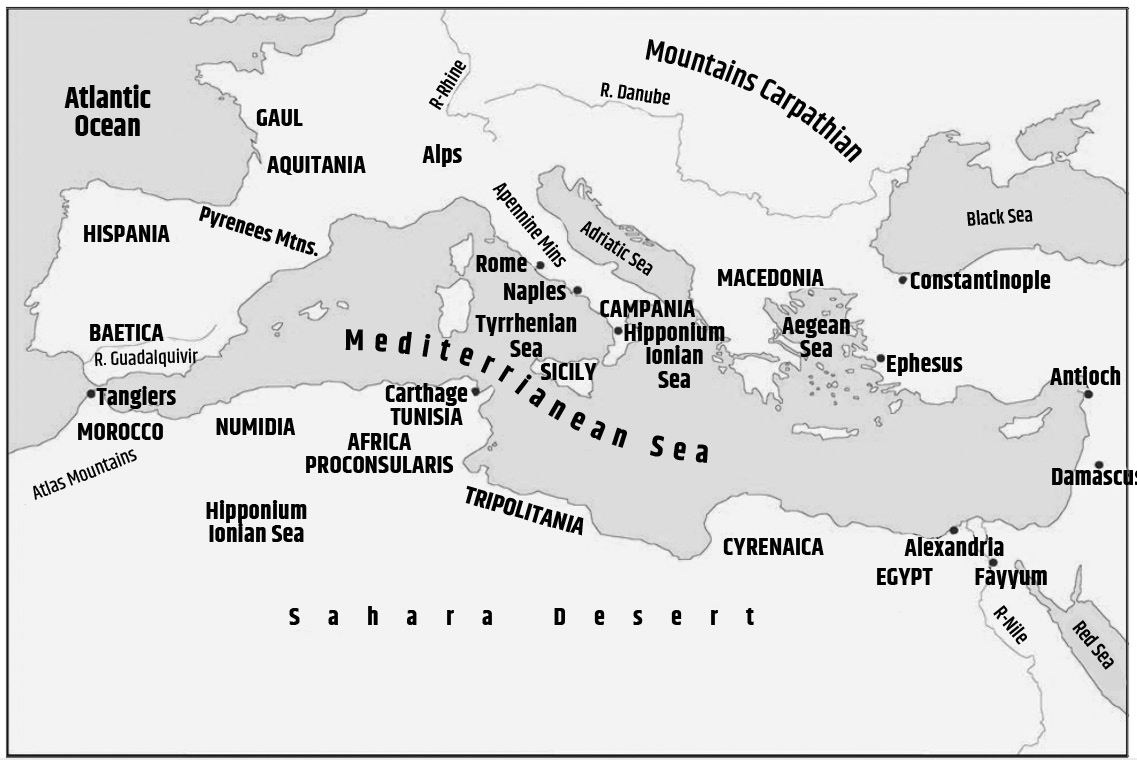
Map: Europe in the Middle Ages
The term “Middle Ages” refers to the era in Europe from 476 CE to the Renaissance in the 14th century, however experts argue it is incorrect since it indicates an interval between two more major epochs, referring to the “medieval period.
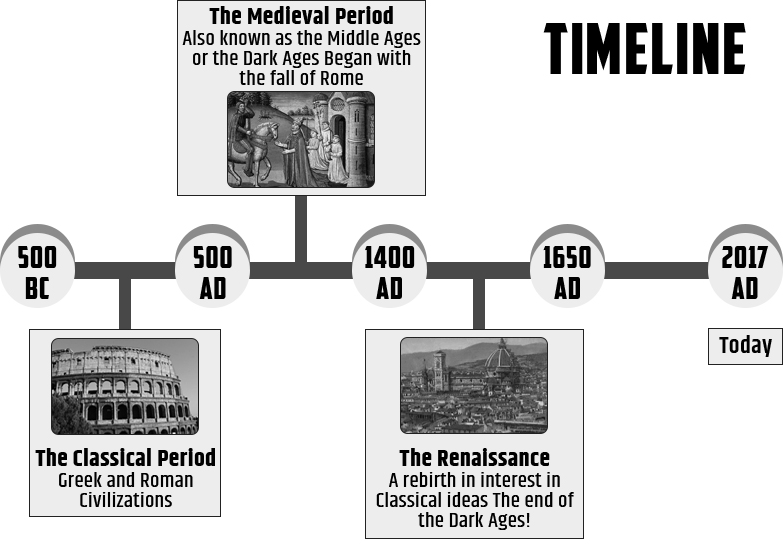
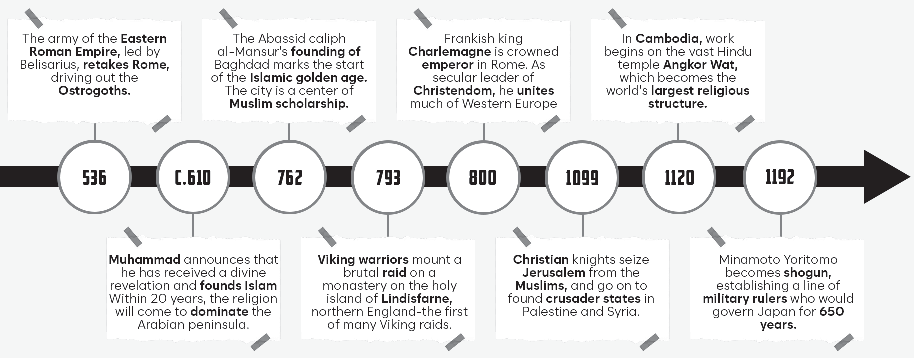
• Starting in the 14th century, European thinkers, writers, and artists began to celebrate the art and culture of ancient Greece and Rome. They labeled the period that followed as the “Middle Ages” or the “Dark Ages,” claiming that medieval society had abandoned the achievements of earlier civilizations in favor of “barbarism and religion.” This view dominated for centuries, but today, scholars acknowledge the Middle Ages as a dynamic and multifaceted era.
The Catholic Church in the Middle Ages
• After the fall of Rome, the Catholic Church emerged as the most powerful institution of the medieval period, with its leaders drawing authority from strategic alliances and the promise of protection.
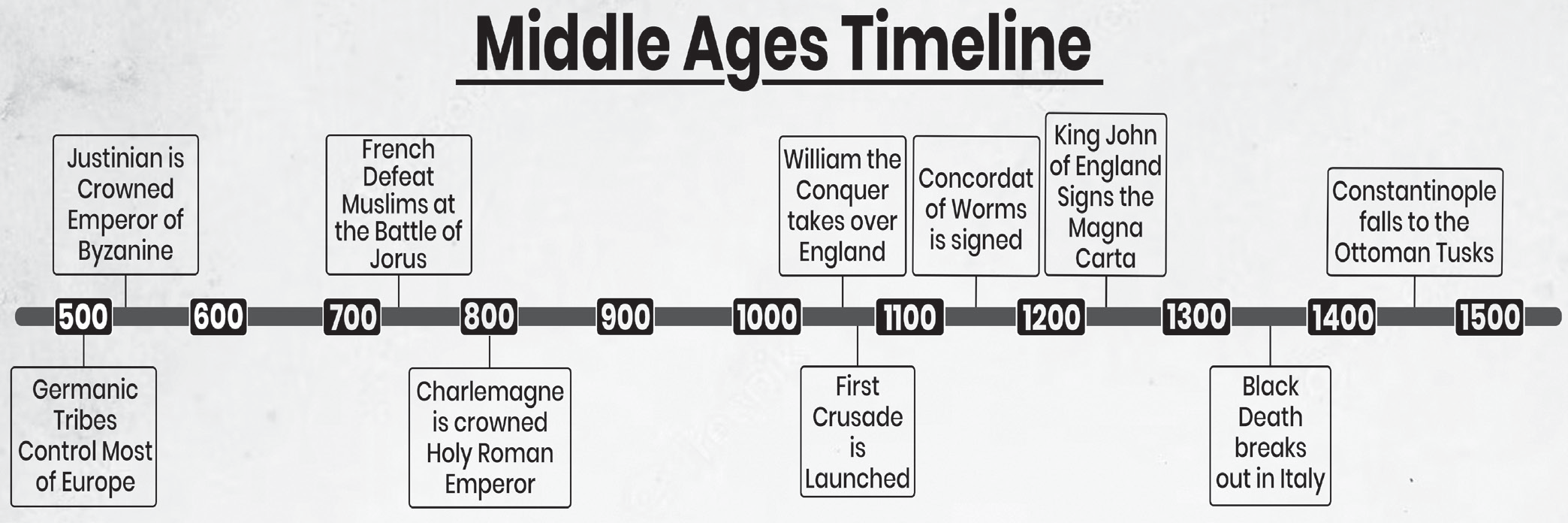
• In 800 CE, Pope Leo III crowned the Frankish king Charlemagne as “Emperor of the Romans,” effectively.
reviving the Roman Empire in the West for the first time since its collapse in the 5th century. His reign marked the beginning of what became known as the Holy Roman Empire.
• Many political entities across Europe aligned themselves with the Church’s interests. Meanwhile, ordinary people were required to pay a tithe—10% of their annual produce or earnings—to support the Church and its clergy. The Church itself, however, was largely exempt from taxation, enabling it to accumulate vast wealth and influence.
• By the 6th century, the Pope often wielded more power than kings, with the ability to enforce his authority across Christian Europe. Monasteries, originally founded as centers of learning and moral guidance, also served to aid the poor-but over time, corruption these institutions.
The Rise of Islam
• After the death of the Prophet Muhammad in 632 CE, the Islamic world expanded rapidly as Muslim forces united the Middle East under a single caliphate.
• At its height, the medieval Islamic world was more than three times the size of the Christian world.
• In major cultural and intellectual centers like Cairo, Baghdad, and Damascus, poets, scientists, and philosophers wrote thousands of influential works.
Classical texts from Greece, Iran, and India were translated into Arabic, while innovations such as the pinhole camera, soap, windmills, surgical instruments, and even a primitive flying machine were developed.
• The Quran, along with other sacred texts, was studied and taught by religious scholars and mystics, helping to spread Islamic thought and spirituality throughout the region.
The Crusades
• In the 11th century, the Catholic Church sanctioned the Crusades—military campaigns aimed at driving Muslim "infidels" from the Holy Land.
• Crusaders, identifiable by the red crosses they wore, believed that participating in these campaigns would earn them forgiveness of sins and eternal salvation.
• The Crusades began in 1095 and continued intermittently until the 15th century.
• In 1099, Christian forces successfully captured Jerusalem, leading to an influx of pilgrims from Western Europe. However, many of these pilgrims were robbed or killed during their journeys.
• In 1118, a French knight named Hugues de Payens founded the Knights Templar, a military order that earned papal backing and became known for its fierce combat abilities.
• The fall of Acre in 1291 marked the end of the last Crusader stronghold in the Holy Land, and in 1312, Pope Clement V officially disbanded the Knights Templar.
Impact of the Crusades
• The Crusades had no true victor; instead, they resulted in the deaths of countless individuals on both sides.
• Despite the violence, the Crusades helped unite ordinary Catholics across Europe, sparking a wave of religious enthusiasm—even among those who had previously felt disconnected from the official Church.
• Additionally, Crusaders encountered the rich intellectual traditions of the Islamic world, including its literature, science, and technology—exchanges that would leave a lasting influence on European thought and learning.
The Middle Ages: Economics and Society
• In medieval Europe, Feudalism was the system in which monarchs awarded enormous lands to noblemen and bishops, with landless peasants known as ‘serfs’ working on the lands.
• In exchange for labour, serfs were permitted to reside on the property and were given security in the event of an enemy attack.
• However, in the 11th century, agricultural improvements such as the heavy plough and three-field crop rotation made farming more effective, reducing the need for farm laborers.
• This resulted in an increasing population, attracting more people to towns and cities.
• The Crusades also opened up commercial lines to the East, introducing Europeans to imported products such as wine, olive oil, and textiles.
• Port cities prospered as the commercial economy grew, with 15 towns in Europe having a population of over 50,000 by 1300.
• In these cities, a new era was born: the Renaissance. The Renaissance was a time of great intellectual and economic change, but it was not a complete “rebirth”. It had its roots in the world of the Middle Ages.
Feudalism
Feudalism, derived from the word ‘feud’, referred to a social and economic system prevalent in Western Europe during the Medieval period (600-1500 AD). It divided society into rigid classes, lacked central authority, and relied on self-sufficient villages. This led to a decline in trade and towns. The Feudal Lords controlled society’s affairs, with the King being less powerful. Peasants were exploited, and ‘Serfdom’ (feudal labour) became a significant feature. The Church’s influence extended beyond religious matters in Europe
Renaissance
Renaissance
The modern period marked a significant shift, ending the Age of Faith and ushering in the Age of Reason. This era was defined by transformative movements like the Renaissance and the Reformation, which brought profound changes across cultural, intellectual, religious, social, and political life worldwide. The period also saw the rise of urbanization, faster transportation and communication, and the development of democratic systems, along with laws that emphasized equality and fairness.
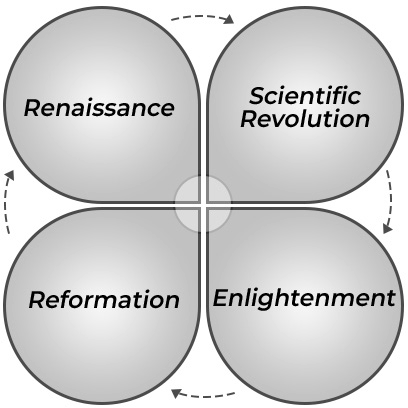
Meaning and Birth of Renaissance
The term “Renaissance,” meaning “rebirth,” refers to a period of great cultural renewal that began in Italy in the 14th century. During this time, Italy was made up of various small city-states, many of which were built on the foundations of ancient Roman ruins. The geographical location of these cities made them thriving hubs for trade and intellectual exchange.
Merchants from all over the world brought not just wealth, but fresh ideas that spurred new ways of thinking. With a new political and social structure in place, there was greater political freedom, creating an environment conducive to academic, artistic, and cultural growth. As a result, people had more time to devote to study and creative endeavours.

Impact of Renaissance
Impact of Renaissance:
• Beginning of Modern Age:
• Economic Development
• This was also a period of great economic expansion. Many commercial and financial techniques were developed for trade practices like bookkeeping, bills of exchange and public debt. This enabled Italy to become the center of the Renaissance.
• The major developments of this time were the revival of urban life, commerce based on private capital, banking, formation of nation states, explorations to find new routes and territories and the development of vernacular literature which was popularized by the printing press.
• This emerging mercantile society was less rigidly hierarchical and increasingly focused on secular goals. It stood in stark contrast to the earlier rural society, which was rooted in tradition and religious authority. Adventurers and explorers played a key role in expanding global trade, helping to lay the foundation for a new world economic system.
• The discovery of new trade routes brought a wide variety of goods from the Americas, Asia, and Africa to Europe. These imported commodities enriched everyday life and motivated Europeans to develop new methods for mass production in order to generate profit. As a result, merchants, entrepreneurs, and bankers began to collaborate, and capital gained significant influence—not only in political affairs but also in international relations.
• Development of New Ideas
• The ideas that emerged during the Renaissance, such as humanism, rationalism, and a spirit of inquiry, brought a profound shift in how people thought. There was a renewed fascination with the cultural achievements of ancient Greece and Rome, which inspired a new way of looking at the world.
• Human beings became the focal point for many of the era’s thinkers. They believed in the creative potential of individuals and the right to seek happiness and fulfillment in life, a stark contrast to the medieval Church’s stance, which discouraged worldly pleasures. This focus on human experience led to a growing interest in art, history, language, literature, and ethics.
• The Renaissance also marked the rise of nationalism in Europe, as people began to break free from the religious constraints and limitations of the medieval period. This new sense of identity and autonomy fueled a desire for independence and self-expression across the continent.
• The Protestant Reformation led to a major split within Christianity, giving rise to new religious denominations. At the same time, the Roman Catholic Church initiated its own internal reforms, known as the Catholic Reformation or Counter-Reformation. Together, these movements were part of a broader socio-religious and political transformation that played a key role in shaping the modern world.
• Development in Art & Literature
• The spirit of Humanism was also evident in the realms of art and literature during the Renaissance. One of the greatest achievements in art was in painting, where artists delved into the study of human anatomy and proportions. Their aim was to depict the human form with greater realism and accuracy, capturing the true essence of the human body.
• Some of the most famous artists of this time, such as Leonardo da Vinci, Michelangelo, Raphael, Botticelli, and Titian, made lasting contributions to the art world. In sculpture, there was a shift toward creating free-standing statues, distinct from their background or buildings. These sculptures were seen as independent works of art. Donatello, regarded as the first great Renaissance sculptor, brought this idea to life with his famous statue of David.
• As national identities grew stronger, so did the development of modern European languages like Italian, Spanish, French, German, and English. Writers began to embrace local languages in their works, moving away from Latin. This shift made literature more accessible to a broader audience.
• The use of vernacular languages and the advent of the printing press helped spread the works of Renaissance authors to many more people. Books like the Bible, which were now printed and available to the masses, could be read by a much larger number of people. Some of the most influential works produced in this period include Dante’s Divine Comedy, Erasmus’s In Praise of Folly, Machiavelli’s The Prince, and Cervantes’ Don Quixote. These works had a profound impact on literature and culture, shaping the course of European thought for centuries to come.
• Development of Political Philosophy
• In the early medieval period, political theory was influenced by the Church, which asserted that the state was established by God, and people must obey even tyrannical rulers. However, as popular uprisings and revolutionary ideas spread in the fourteenth century, the question of people’s rights against oppressive rule and exploitation became a significant issue.
• Medieval political theorists believed in limited ruler authority and did not conceive of state sovereignty, democracy, or popular sovereignty. They generally favored the idea of a single supreme ruler or overlord for Western Europe, either the Pope or the Holy Roman Emperor.
• During this period, Nicolo Machiavelli emerged as a prominent political philosopher, advocating a realistic and unscrupulous approach to politics.
• Machiavellianism, a term derived from his name, came to represent the belief that any means, no matter how unscrupulous, could be used to achieve political power. Machiavelli emphasized the state as an end in itself and favored absolutism to strengthen it, opposing limitations on the ruler’s authority.
• Development of Art and Architecture:
• In architecture, the Renaissance marked the decline of Gothic styles and the emergence of a new architectural approach influenced by ancient Roman architecture. Notable examples included the Cathedral Dome in Florence and St. Peter’s Church in Rome.
• Beginning of the Scientific Revolution
• The Renaissance also marked the beginning of modern science. Copernicus challenged the geocentric view of the universe with his heliocentric theory, confirmed by Galileo’s observations through the telescope.
• Significant discoveries were made in human anatomy, such as Vesalius’s detailed descriptions and Harvey’s work on blood circulation. The period produced many scientific advancements and innovations, marking the dawn of the scientific revolution.
• Reformation Movements:
Meaning of Reformative Movements:
The Reformation in Europe, which took place during the later part of the Renaissance, had two major aspects. First, the Protestant movement led to a significant division within Christendom. Second, many countries broke away from the authority of the Roman Catholic Church and established their own national churches. These developments prompted the Roman Catholic Church to initiate its own reforms, commonly known as the Catholic Reformation or Counter- Reformation.
Causes of Reformative Movement:
• By the late medieval period, the Catholic Church had become closely associated with superstition, corruption, and a growing obsession with wealth. It often prioritized blind faith over reason, using religious belief as a tool to extract money from its followers. This dynamic began to shift with the arrival of the Renaissance.
•
The rise of humanism, along with a renewed interest in reason—particularly among those influenced by Aristotelian philosophy—posed significant challenges to the Church’s authority.
• At the same time, the Church was plagued by internal conflicts.
• Long-standing power struggles between religious and secular authorities—such as the rivalry between supporters of the Holy Roman Emperor and those loyal to the Pope—erupted into open conflict during the early Renaissance. One major crisis, known as the Western Schism, saw three rival claimants to the papacy competing for legitimacy.
• Corrupt practices further undermined the Church’s credibility. These included the sale of indulgences (which promised to reduce time in purgatory for a price), concubinage among clergy, simony (the sale of church offices), and other abuses of power. Growing outrage over these issues eventually sparked the Protestant Reformation, a movement that called for deep and lasting reform.
Results of Reformation Movements:
• In 1517 AD, a German priest named Martin Luther openly challenged the authority of the Roman Catholic Church. He argued that the Bible was the sole source of religious authority and that salvation could be achieved through faith in Jesus Christ—not through blind obedience to the Church.
• Luther's beliefs sparked the Protestant Reformation in Western Europe, leading to a major split within Christianity between Protestants and Roman Catholics. He strongly opposed the sale of indulgences, asserting that salvation could not be purchased but must come through a personal relationship with Christ and sincere faith.
John Wycliffe advocated the supreme authority of Scriptures and the need to translate them into the languages of the people. This led to the first English translation of the Bible and challenges to the Church’s
authority and practices.
Although the Reformation in England was influenced by Lutheran ideas, it was also driven directly by King Henry VIII’s desire to annul his marriage to Catherine of Aragon. His chief minister, Thomas Cromwell, assisted Parliament in passing the Act in Restraint of Appeals and the Act of Supremacy. These acts established the king as the supreme head of the Church in England, enabling him to marry Anne Boleyn, a commoner.
Conclusion:
The Renaissance and Reformation were transformative periods that reshaped views on religion, society, politics, and culture. The Renaissance emphasized humanism, shifting focus from divine to human principles, celebrating the beauty and dignity of the human body, leading to new art, literature, and architecture. This shift also contributed to the development of modern science. The Reformation challenged Church authority, leading to national churches and Church reforms, while nation-states emerged in Europe and new political theories developed.