Non-alignment Movement
Non-Alignment Movement
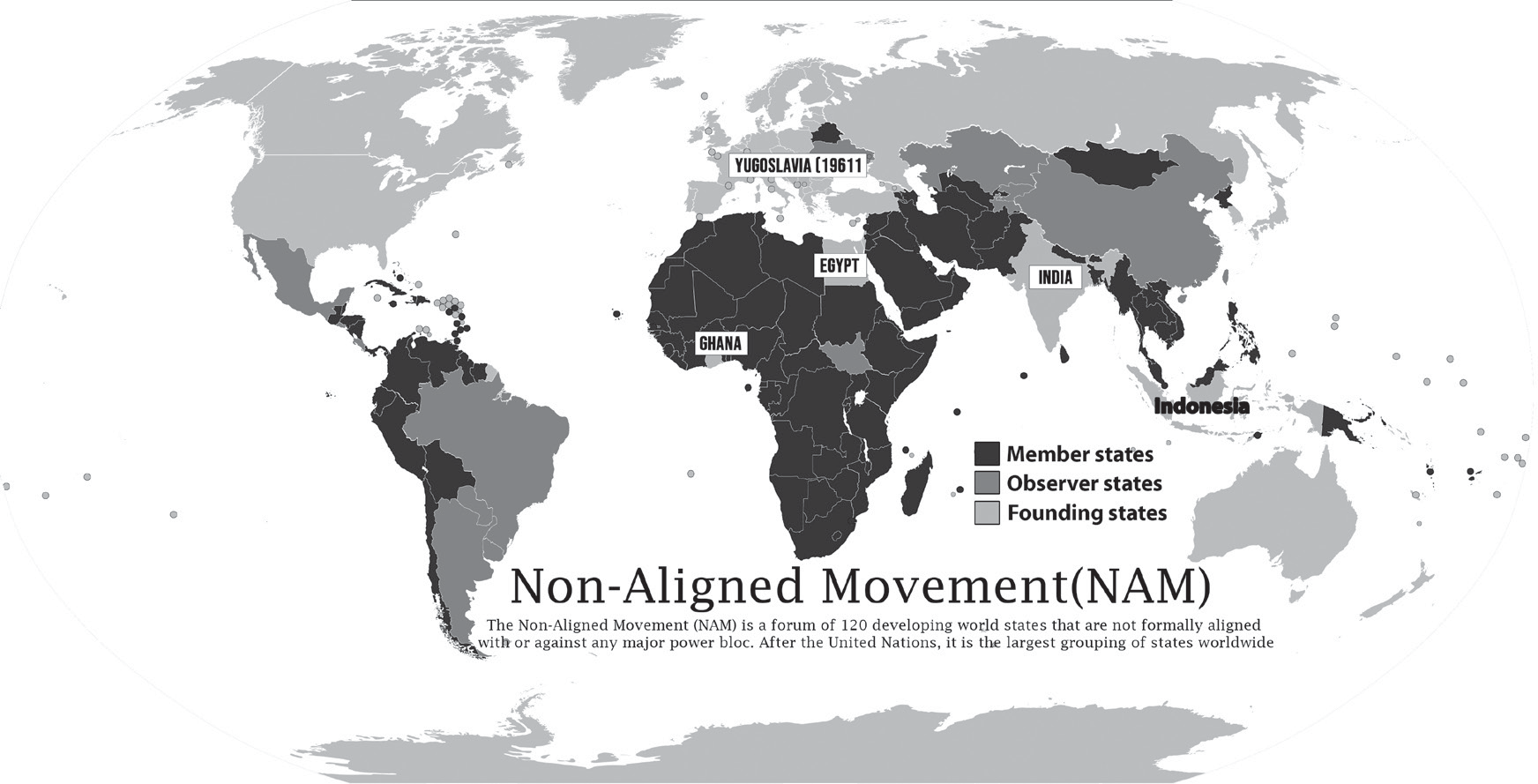
The Non-Alignment Movement (NAM) was a coalition of Third World countries that arose after World War II. Its main goal was to safeguard the newly gained independence and sovereignty of these nations. In its early years, NAM played a crucial role in advancing the decolonization process. Additionally, it has been significant in promoting global peace and security.
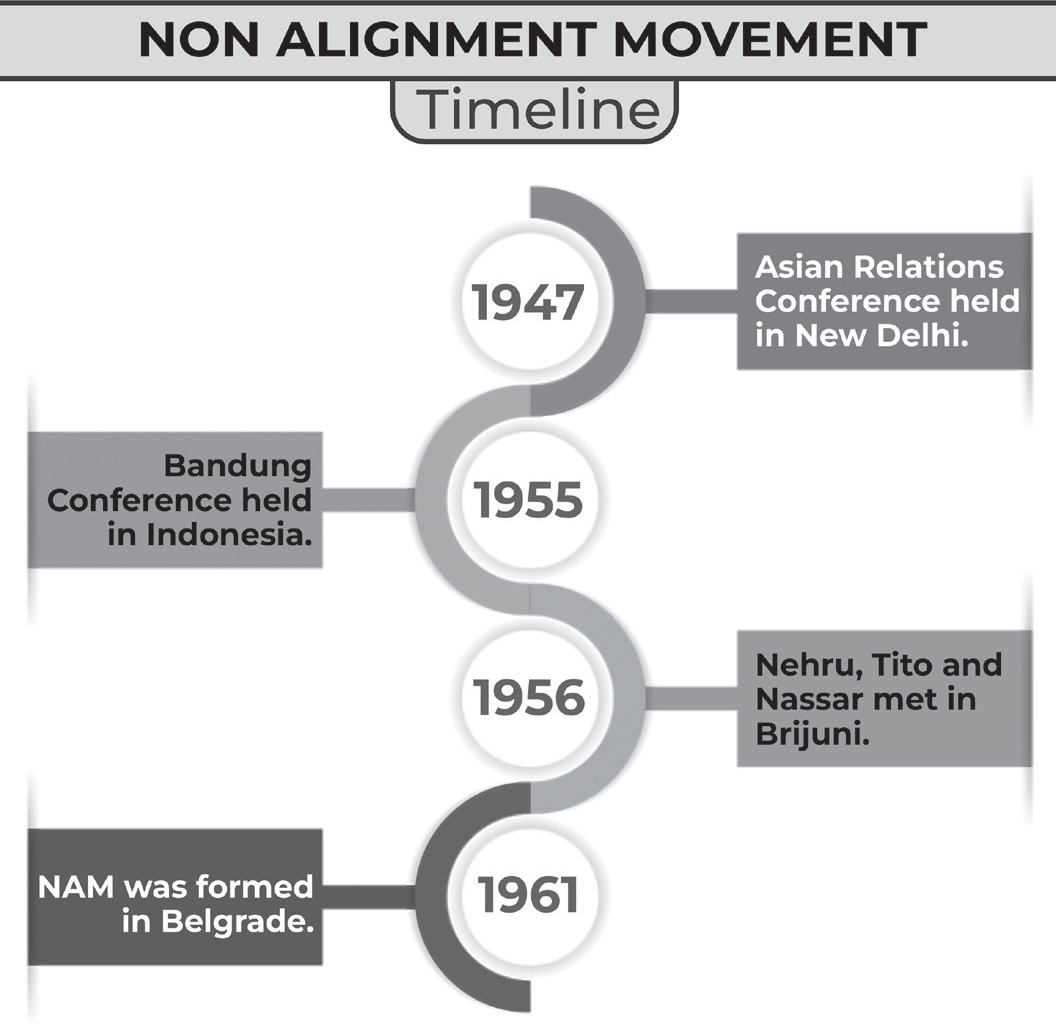
History and Evolution
Bandung Conference
• The Bandung Asian-African conference in 1955 is considered as most immediate antecedent to the creation of NAM. The meeting was attended by 29 Heads of states. These belonged to the first post- colonial generation.
• The objective was to identify and assess world issues and pursue joint policies in international relations. There was also another important reason. These countries had newly attained independence.
• Development and increasing standard of living was the main concern for them. Therefore, they did not want to be part of either the Western or Eastern block and become part of the Cold War.
• ‘Ten Principles of Bandung’ were proclaimed at the conference. Such principles were later adopted as the main goals and objectives of NAM.
Belgrade Summit
• Six years after the Bandung Conference, the Movement of Non-Aligned Countries was established at the First Summit Conference held in Belgrade from September 1 to 6, 1961. Delegates from 25 countries across Asia, Africa, Europe, and Latin America (including Cuba) participated in the conference.
The NAM was designated as a ‘movement’ rather than an organization to avoid the bureaucratic complexities associated with formal institutions. It was created to actively engage in international politics and take independent positions on global issues, representing the interests of its member countries.
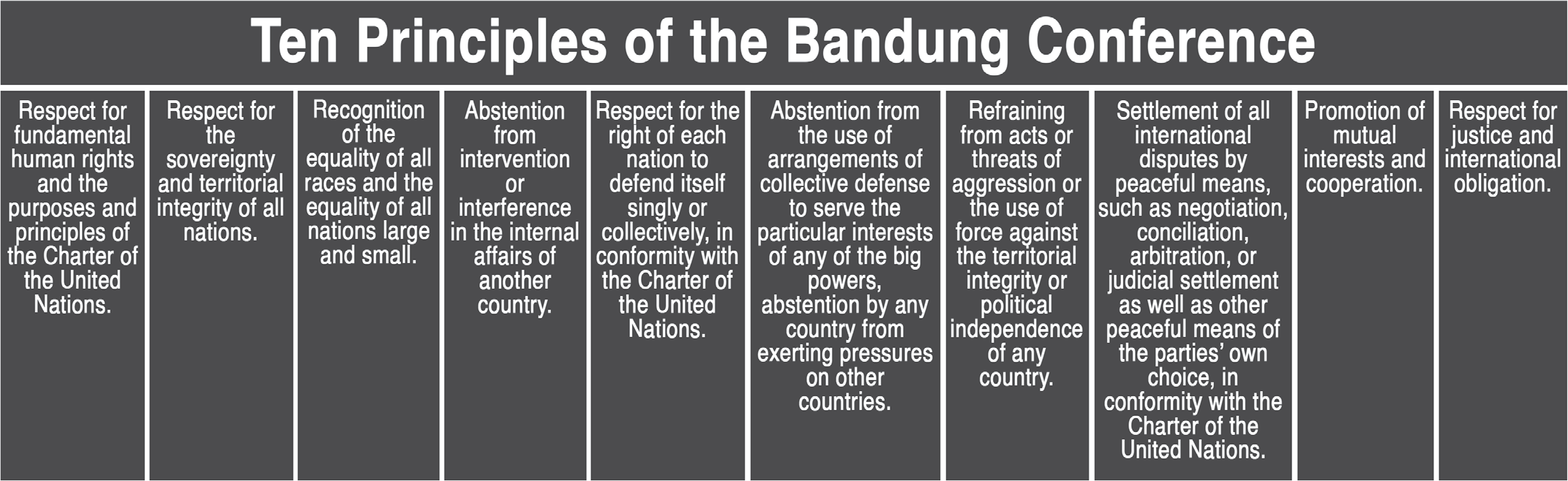
Early Objectives and Achievements
The Primary objective of NAM focused on the support of self-determination, national independence, sovereignty and territorial integrity of states, opposition to apartheid, non-adherence to multilateral military pacts, struggle against imperialism and colonialism, racism, foreign occupation, etc. Strengthening of United Nations, democratization of International Relations, socio-economic development as well as international cooperation on equal footing.
In the 1950s the movement played an important role in support of nations struggling for independence and against colonization. The Third World showed great solidarity under the leadership of NAM. The movement gained considerable diplomatic prestige.
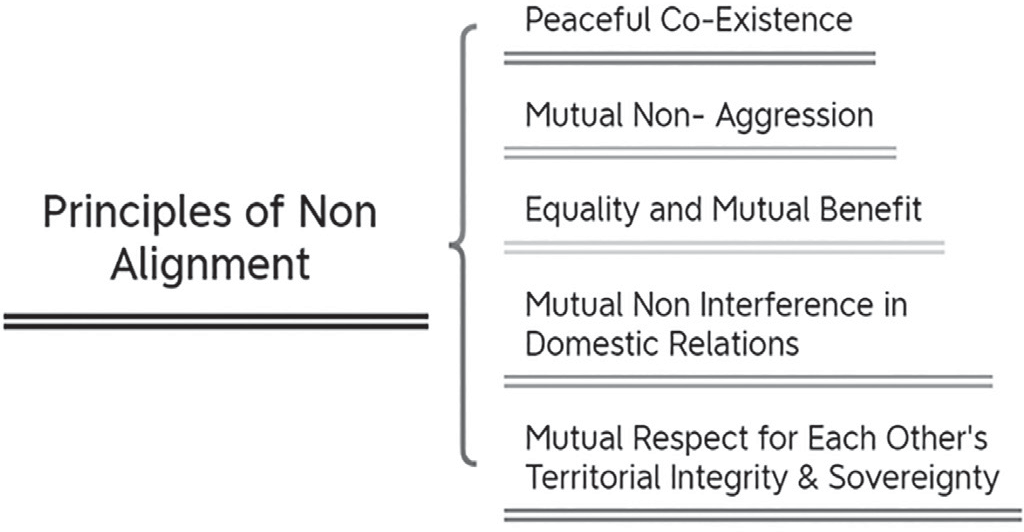
Evolution and Present Status of Movement
During the 1960s and 1970s, the Non-Aligned Movement grew to include nearly all countries in Asia and Africa. The movement's focus also broadened to address the economic and political rights of third-world nations. At the 1973 Algiers conference, the idea of a ‘New International Economic Order’ was introduced.
By the late 1980s, with the end of the Cold War and the collapse of the Socialist Bloc, many believed that the rivalry between opposing blocs was the main reason for NAM’s creation. As a result, scholars began questioning the movement’s continued relevance.
However, the core principles and goals of NAM remain important today. The disappearance of one bloc has not solved global challenges; instead, new issues such as terrorism and climate change have arisen, requiring international cooperation on a global scale.
Challenges before NAM in Today’s Multipolar World
The movement has succeeded in creating a strong front representing countries of the Third World. Current challenges for NAM include protecting international law, eliminating weapons of mass destruction, making the United Nations more effective, and defending Human Rights, Security, Stability, and Justice in the international economic system. Long-standing goals of peace, development, and economic cooperation remain to be realized.
Some other challenges include-
New geopolitical realities: The world has become more multipolar and complex since NAM was founded in 1961. New powers such as China and India are emerging, and traditional powers such as the United States and Russia are competing for influence. This makes it more difficult for NAM to maintain its unity and independence.
Emerging global challenges: NAM member states face a number of emerging global challenges, such as climate change, terrorism, and cyber warfare. These challenges are often transnational in nature and require collective action to address. However, NAM has struggled to develop effective responses to these challenges.
Internal divisions: NAM is a diverse group of countries with a wide range of interests. This can make it difficult to build consensus and take action on common issues. For example, NAM member states have been divided on issues such as the Russia-Ukraine war and the Syrian civil war.
Despite these challenges, NAM remains an important forum for developing countries to voice their concerns and coordinate their actions on global issues. In recent years, NAM has become more active on issues such as climate change and sustainable development. However, NAM needs to address the challenges it faces in order to remain relevant and effective in the 21st century.
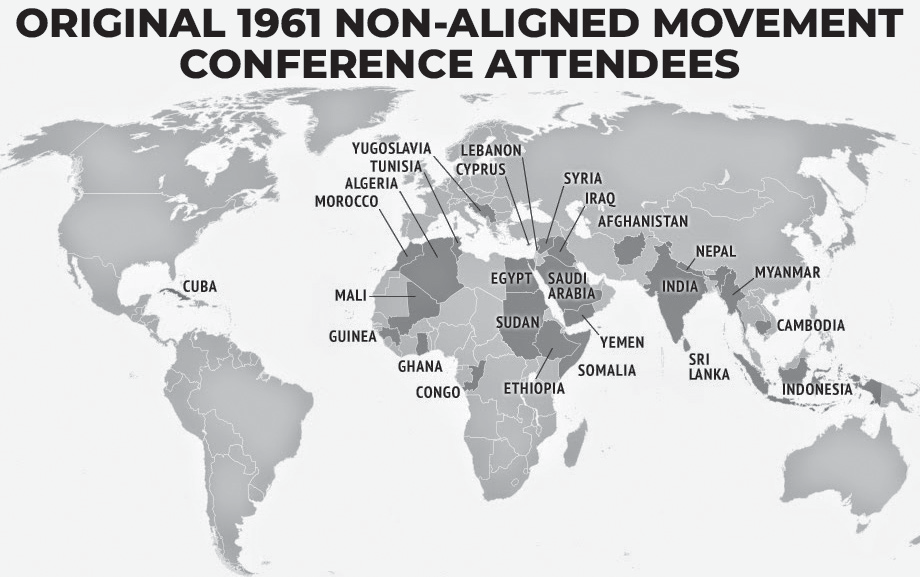
Meaning of the Cold War
Meaning of the Cold War
After World War II, the Allies—namely the United States and Soviet Russia—found themselves locked in what came to be known as the "Cold War." During the war, these two nations had been allies alongside Britain and France, united in their fight against the fascist regimes of Germany and Italy, as well as the Japanese empire. In 1941, they even signed a five-year non-aggression pact, and as late as the Yalta Conference in February 1945, there was still some cooperation between them. However, this situation changed rapidly after the war, and the United States and the Soviet Union soon became adversaries, facing each other in a tense “war-like” standoff commonly referred to as the Cold War.
Meaning of the Cold War
• The Cold War has been described as “peace time unarmed warfare” between new superpowers.
• It was a “diplomatic war” and not an armed conflict among the superpowers and was based on ideological hatred and political distrust.
• Flemming described the Cold War as “a war that is fought not on the battlefield, but in the minds of men; one tries to control the mind of others.”
• The Cold War was very different from a conventional war where enemies are clearly identified and battles are fought openly. During the Cold War, no formal declaration of war was made, and diplomatic relations between the opposing countries were still maintained.
• Although the Cold War involved some military clashes and loss of lives, it was primarily a psychological conflict aimed at weakening the opponent’s influence while expanding one’s own support base.
This period was marked by a bipolar rivalry between the United States and the Soviet Union, but it also included their respective allies and satellite states.
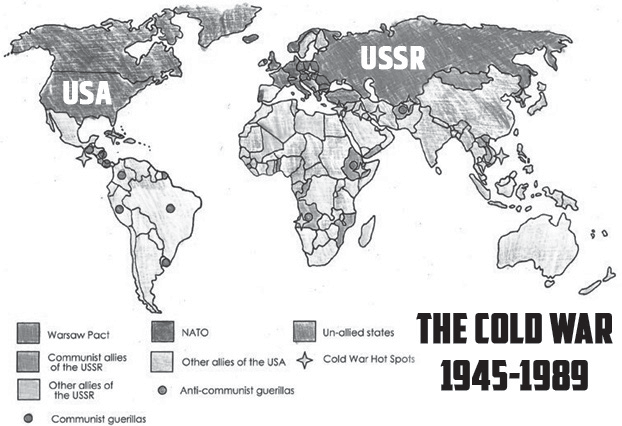
From the beginning of the 20th century both the USA and the USSR were on their way to becoming superpowers.
A comparison of the share of various countries in manufacturing in 1932, just after the Great Depression shows America the indisputable leader with nearly 32%, and the Soviet Union which came next with 11.5%. But other leading countries were not far behind-Britain (10.9%), Germany (10.6%), France (6.9%).
After World War II, Germany and Japan were militarily defeated, and Britain and France were left weakened and exhausted. It was then that the United States and the Soviet Union emerged as the two dominant superpowers.
Despite suffering tremendous losses during the war, the Soviet Union made rapid progress thanks to its socialist command economy. The remarkable rise of both the Soviet Union and the United States sparked a rivalry that eventually led to the Cold War.
The Soviet Union established the Cominform (Communist Information Bureau), launched ‘Radio Moscow,’ and supported communist parties in various countries. In response, the United States created the radio program ‘Voice of America’ and backed anti-communist political parties and movements worldwide.
The conflict between the two nations reflected a deeper struggle between competing ideologies: political and economic liberalism, embraced by the United States, and Marxism-Leninism, followed by the Soviet Union.
Factors Responsible for the Cold War
Factors responsible for the Cold War
After World War II, the USA and the USSR, the new superpowers, wanted to establish the supremacy of their position and ideology, and this conflict became the focal point of international relations.
America’s rise to the status of superpower was complete with the possession of nuclear weapons. Very soon Russia emerged as a challenger and rival to America’s position and in 1949 she also developed nuclear weapons and ended the American supremacy.
There was a long history of suspicion and mistrust between the Soviet Union and the Western countries. The Soviet Union never forgot that Western powers—Britain, France, and the USA—had attempted to overturn the Bolshevik Revolution and had intervened (along with Japan) in the Russian Civil War.
During World War II, this mutual distrust grew even stronger. After Germany invaded the USSR in 1941, the Western democracies delayed opening a second front against Germany. Although Britain and the USA promised to do so, the delay reinforced Soviet fears that the West wanted a prolonged conflict between Germany and the USSR, hoping both would weaken each other.
Phases of the Cold War
Phases of the Cold War
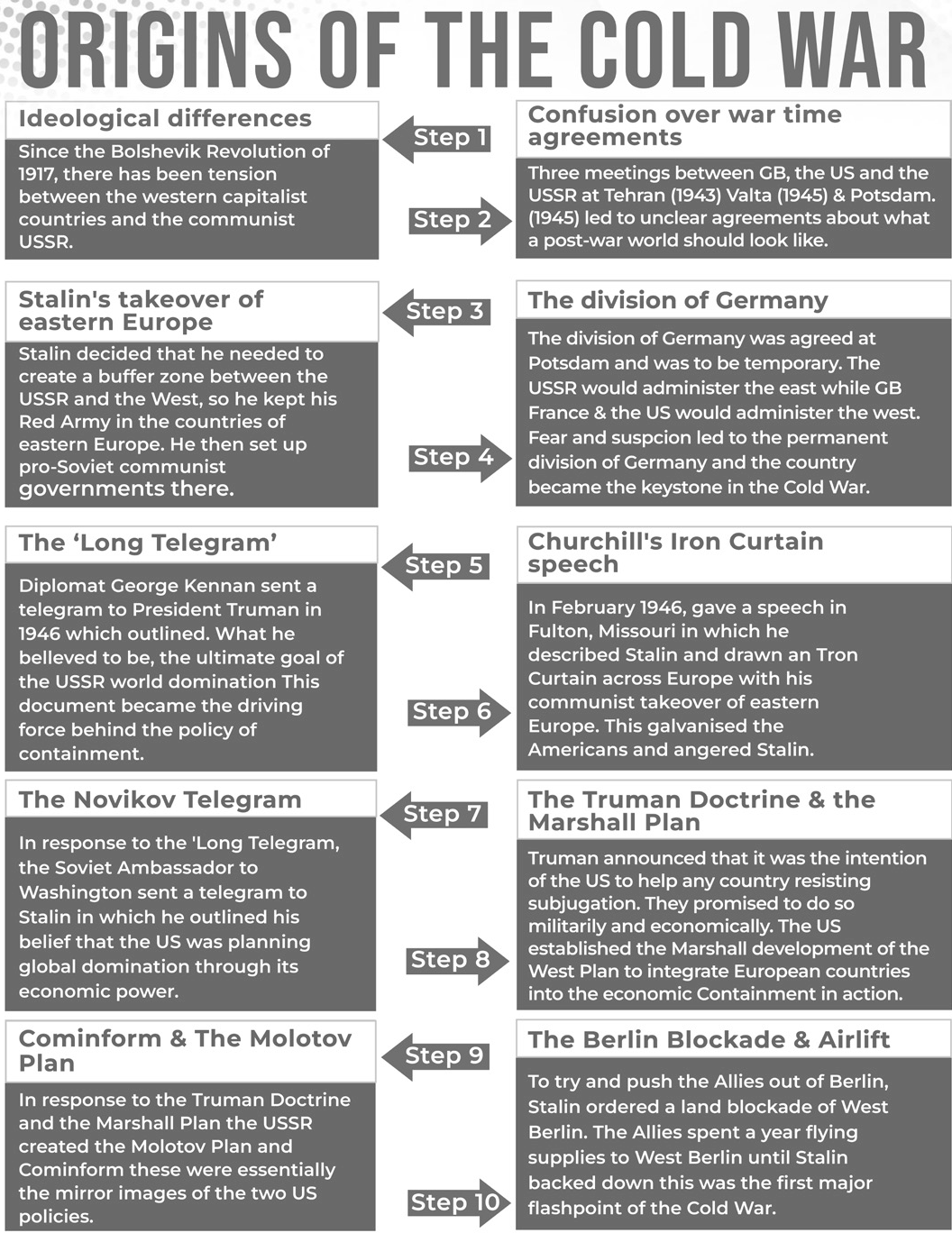
Pinpointing the exact start of the Cold War is challenging because it was never officially declared, and the hostilities were prolonged and indirect. After an initial period from 1945 to 1947, often called the ossification phase, the Cold War fully took shape, centered around establishing the postwar order in Europe. The beginning of the Cold War highlighted the failure of the major powers to consistently uphold the agreements made at the wartime conferences in Yalta and Potsdam.
First Phase
Sovietization of Poland
• In the early phase, the future of Poland became a critical issue, as all the major powers had significant interests in the country.
• France and Britain had declared war on Germany after Hitler’s forces crossed the Polish border in September 1939. For the Soviet Union, Poland had long been a historic adversary and a traditional western gateway for invasions into Russia.
When Soviet troops entered Poland in 1944, they handed power to the Lublin government, a pro-communist National Liberation committee. The fate of Poland was extensively debated at the Yalta Conference between Stalin, Churchill, and Roosevelt, but no agreement was reached on Poland’s exact borders
• Ultimately, Poland became part of the Soviet sphere of influence. This process of Sovietizing Poland marked a significant moment in the origins of the Cold War.
Conflict in the Balkans
• The Balkans became another major area of conflict. Britain and the Soviet Union agreed to divide the region into their respective spheres of influence. However, communist regimes were established in all Balkan countries except Greece, where British control prevailed.
• With the exception of Greece, all Eastern European countries fell under Soviet dominance, which led to a sharp deterioration in East-West relations, including tensions between the USA and the Soviet Union.
Role of Germany
• After Germany’s unconditional surrender to the Allied forces, the country was divided into four occupation zones controlled by the Soviet Union, the USA, Britain, and France.
• Although Berlin, Germany’s capital, was located within the Soviet zone, the city itself was similarly divided into four occupation zones following the same pattern as the rest of the country. This military occupation was intended as a temporary measure until a formal peace treaty could be agreed upon.
• The Potsdam Conference was convened to finalize the peace terms with Germany. However, the Allies were divided on key issues such as disarmament, demilitarization, and partitioning of Germany.
• The Soviet Union sought to keep Germany weak and impoverished to prevent any future threats to its interests, and demanded reparations of $20 billion from Germany. These demands, however, were rejected by the Western Allies.
• Eventually, the British, American, and French occupation zones were merged to form the Federal Republic of Germany, commonly known as West Germany. Following elections in this new state, a pro-Western government took office and began receiving substantial financial aid from the United States. Meanwhile, with Soviet support, the remaining zone was established as the German Democratic Republic, or East Germany.
• The Western Allies aimed to implement monetary reforms in Germany, but the Soviet Union opposed these plans, responding with what became known as the Berlin Blockade.
• Berlin Blockade: The Soviet Union imposed a complete ban on all transportation—by road, rail, and waterways— between Berlin and the Western zones. This blockade was also a protest against the Brussels Pact, a mutual defense agreement signed by Britain, France, and Belgium. The pact required member states to provide military support if any signatory was attacked by Germany or another
European power. Although the Soviet Union was not explicitly named, the pact was primarily intended to counter Soviet influence rather than Germany.
Conflict in Iran
• A crisis emerged in Iran when Soviet troops failed to withdraw by March 1946.
• During the war, Iran had served as a key route for Western aid to the Soviet Union and was also rich in oil resources.
• The Soviet Union demanded special rights to Iranian oil and refused to allow Iranian troops into areas under Soviet control. In response, the United States applied pressure through the United Nations Security Council, which eventually compelled Soviet forces to leave Iran.
Truman Doctrine
• In Turkey, the Soviet Union called for the internationalization of the Bosporus Strait, a move opposed by the Western allies.
• In Greece, the United States and the Soviet Union supported opposing factions, with Greek conservative forces requesting assistance from the U.S.
• Against this backdrop, U.S. President Truman introduced a policy that became known as the Truman Doctrine.
• The Truman Doctrine focused on ‘containment’—aiming to restrict communism to areas where it already existed and prevent its further spread. This marked a shift in American foreign policy from isolationism to active intervention, with the goal of halting the expansion of communism worldwide.
Marshall Plan
• There was a significant rise of communism in some of the western European countries also.
• The war-torn countries of Europe had hoped for improvement in their lot after the war but that did not happen.
• European national economies and industries were struggling and the members of the communist parties in these countries were increasing.
• It was in this background that the U.S. Secretary of State, Marshall, put forward his plan for European economic reconstruction which is known as ‘The Marshall Plan’.
• The Plan envisaged American transfer of more than ten billion dollars to Europe over a period of twenty years.
• It was hoped that such massive monetary infusion would help Europe recuperate from the ravages of the war and thus stabilize its material condition and political climate.
It was also believed that only a stable Europe would be able to resist the indigenous and external communist challenges. Significantly, the offer of aid was made to East European countries also
Revival of ‘Cominform’
• On its part the Soviet Union revived the ‘Cominform’ (Communist Information Bureau) in response to the Truman Doctrine and the Marshall Plan.
• It was founded with the intention to bring the communist governments in the Soviet sphere of influence in line with Moscow’s policies. Thus, it was an attempt to further consolidate Communism in Eastern Europe.
North Atlantic Treaty Organization
• The North Atlantic Treaty Organisation was signed on April 4, 1949. This treaty was signed in pursuance of the policy of “containment”.
• It was between the US and other European countries– Britain, France, Belgium, Canada, Denmark, Iceland, Italy, the Netherlands, Luxemburg, Norway and Portugal.
• The treaty was a military alliance against the Soviet Bloc.
• Article V of the NATO treaty is the central provision which states that an attack on any member of NATO would be considered as an act of aggression against all others. However, every member state had the right to decide on the kind of support it wanted to offer to other member states.
Developments in China: UN Boycott by Soviet Union
• Post-1945 developments in China and Korea led to the intensification of the Cold War.
• In China, the Communists gained power in 1949 under Mao Tse-Tung and the People’s Republic of China was established.
• The United States refused to recognise the People’s Republic of China, which was also denied entry into the United Nations; only Taiwan (‘Nationalist’ China) was recognized.
• The United States used its power of veto to keep communist China out of the U.N. and the Soviet Union effectively boycotted the U.N. because of this.
Korea: First Military Struggle of the Cold War
• After Japan’s defeat in World War II, Korea was divided into two zones: North Korea under Soviet control and South Korea under American control, as agreed at the Potsdam Conference.
• South Korea was effectively ruled by a dictatorship with strong backing from the United States, while North Korea established a pro-Soviet government.
• Neither the Soviet Union nor the USA recognized the opposing government. In 1950, North Korea invaded South Korea.
• The United Nations, led by capitalist countries in its
Security Council, condemned North Korea as the aggressor and formed a unified UN command to counter
the invasion.
• UN forces pushed North Korean troops out of South Korea and advanced deep into North Korean territory, reaching the border with China.
• In response, China joined the conflict on North Korea’s side and pushed UN forces back into South Korea.
• The fighting ended with an armistice in 1953, preventing a full-scale war. The Korean conflict became the first major military confrontation of the Cold War.
• Although the USA, USSR, and China did not engage directly in combat (with Soviet pilots even flying North Korean aircraft), they supported opposing Korean governments — South Korea (Republic of Korea) and North Korea (Democratic People’s Republic of Korea) — acting as proxy powers in the conflict.
Second Phase
• During the second phase, tensions between the superpowers eased somewhat, but the Cold War continued without ending.
• Both countries experienced leadership changes at the top: President Truman’s term ended in the USA in 1953, and Stalin died in the Soviet Union the same year.
• Stalin was succeeded by Nikita Khrushchev, who reversed many of Stalin’s policies. Khrushchev promoted a policy of easing tensions in Europe and acknowledged Soviet responsibility for some regional issues.
• However, Khrushchev also harshly suppressed anti- Soviet leaders and movements in Poland and Hungary, condemning liberals and Catholics advocating Polish and Hungarian nationalism as ‘fascists.’
• Soviet leaders during this period also commented critically on racial conflicts in the USA, which they said were inevitable consequences of capitalist inequality. For its part, the USA and its clients tried to stir up anti-Soviet feelings in the East European countries.
Revolts in Poland and Hungary
• The change of leaders in the USSR and Khrushchev’s denunciation of Stalinism inspired revolts in Poland and Hungary.
Rearmament of Taiwan
• The American policy before 1950 was not to interfere in Taiwan in the event of attack by the Communist China (Peoples’ Republic of China). But after the Korean War in 1950, the U.S. policy changed and after 1953 US President Eisenhower agreed to massive American rearmament of Taiwan.
Cuba Crisis
The Soviet Union sent numerous long-range missiles to Cuba. (Since 1949, the USA had established bomber and missile bases in countries like Norway and Turkey, close to the USSR.)
In response, the USA declared a naval blockade of Cuba, bringing the two superpowers to the brink of war.
At first, the Soviet Union condemned the blockade but later agreed to remove the missiles, provided the USA promised not to invade Cuba and would withdraw its medium-range nuclear missiles from Turkey.
The USA accepted the first condition and soon removed their missiles from Turkey, claiming they were outdated. This event marked the closest moment the superpowers came to nuclear war during the Cold War.
The Suez War of 1956
The conflict began with a planned Israeli invasion of Egypt on October 29, which was highly successful. Within a week, Israeli forces had seized the entire Sinai Peninsula.
Meanwhile, British and French forces bombed Egyptian airfields and landed troops at Port Said, located at the northern end of the Suez Canal. These attacks sparked international outrage. The United States, concerned about alienating Arab nations and pushing them closer to the USSR, refused to support Britain despite earlier suggestions of possible backing. At the United Nations, the US and the Soviet Union, for once, found common ground, demanding an immediate ceasefire and preparing to deploy a UN peacekeeping force.
Facing global pressure, Britain, France, and Israel agreed to withdraw, while UN troops were deployed to oversee the border between Egypt and Israel.
The episode was a complete humiliation for Britain and France, who failed to achieve their objectives, and a significant victory for Egyptian President Nasser.
The war failed to overthrow Nasser, and his prestige as the leader of Arab nationalism against interfering Europeans was greatly increased; for the ordinary Arab people, he was a hero.
The Egyptians blocked the canal, the Arabs reduced oil supplies to Western Europe, where petrol rationing was introduced for a time, and Russian aid replaced that from the USA.
The British action soon lost them an ally in Iraq, where Premier Nuri-es-Said came under increasing attack from other Arabs for his pro-British attitude; he was murdered in 1958.
• Britain was now weak and unable to follow a foreign policy independently of the USA.
• The Algerians were encouraged in their struggle for independence from France which they achieved in 1962.
The war was not without success for Israel: although she had been compelled to hand back all territory captured from Egypt, she had inflicted heavy losses on the Egyptians in men and equipment, which would take years to make good. For the time being the fedayeen raids ceased and Israel had a breathing space in which to consolidate. Following Britain’s humiliation, the Israelis now looked towards the USA as their chief supporter.
The Detente
• The relationship between the Soviet Union and the USA entered a new phase known as détente, a term that signifies a relaxation of tensions in the East-West conflict.
• Although the Cold War did not end during this period, there was a noticeable improvement in mutual understanding.
• Both nations took several steps to reduce hostility. In 1968, the UK, USA, and USSR signed the Nuclear Non- Proliferation Treaty (NPT).
• In 1972, the USA and the Soviet Union signed the Strategic Arms Limitation Treaty (SALT-I), which, while not reducing the number of weapons, helped slow the arms race.
Helsinki Conference
• In July 1975, representatives from 35 countries gathered in Helsinki, Finland.
• The signing of the Final Act at the conference was seen at the time as a symbolic end to Cold War hostilities.
• The Final Act established ten key principles, the most significant being that all participating nations agreed to recognize the European borders established after World War II.
• Thus, the division of Germany was accepted. The communist countries promised to allow their peoples “human rights” including freedom of speech and freedom to leave the country.
Impact of the Cold War on India
Impact of the Cold War On India
The Cold War had significant impacts on India, both politically and economically. India pursued a policy of non- alignment during the Cold War, which meant that it did not align itself with either the United States or the Soviet Union. This policy had several impacts on India:
Economic Constraints: Maintaining a non-aligned stance during the Cold War meant that India could not fully benefit from the economic assistance and trade opportunities offered by either the United States or the Soviet Union. This limited India’s access to resources and markets.
Technological Dependence: While India received technological assistance from the Soviet Union, it also became dependent on Soviet technology and equipment. This dependence made India vulnerable to changes in the geopolitical landscape, as disruptions in relations with the Soviet Union could affect its access to critical technology.
Regional Conflicts: The Cold War rivalry between the superpowers led to regional conflicts, such as the Indo- Pakistan wars. India found itself involved in these conflicts, often as a result of superpower support for Pakistan. These wars had a significant human and economic cost for India.
Arms Race: The superpower competition fueled an arms race in South Asia, with both India and Pakistan seeking to build up their military capabilities. This diverted resources away from development and contributed to regional instability.
Limited Diplomatic Options: India’s non-alignment policy sometimes limited its diplomatic options and made it difficult to take a clear stance on international issues. It had to carefully balance its relations with both superpowers, which could lead to diplomatic challenges.
Nuclear Proliferation: India’s decision to conduct nuclear tests in 1974 (Smiling Buddha) and later in 1998 (Pokhran- II) had negative repercussions. It led to international sanctions and strained relations with many countries, including the United States. India’s nuclear tests were driven in part by security concerns stemming from the Cold War dynamics in the region.
Regional Instability: The Cold War indirectly contributed to regional instability in South Asia, with the superpowers supporting various countries and factions in the region. This instability affected India’s security and its ability to promote peace and stability in its neighborhood.
Limited Economic Growth: While India did receive economic assistance from the superpowers, it did not experience the same level of economic growth seen in some other countries during the Cold War. The focus on military and geopolitical concerns often took precedence over economic development.
Limited Access to Global Institutions: India’s non- alignment stance sometimes hindered its access to global institutions and alliances. For example, it was not a member of any military blocs like NATO or the Warsaw Pact, which could have offered security assurances.
The New Cold War
The New Cold War
• Following the Helsinki Conference, the momentum of détente began to fade. By 1980, relations between the USA and the Soviet Union had deteriorated so much that it seemed the Cold War had reignited.
• This renewed tension became known as the New Cold War. Unlike the original Cold War, this phase was driven less by ideological conflict and more by the balance of power.
• During the New Cold War, a new power bloc emerged: the People’s Republic of China, which became a force that could neither be ignored nor defeated.
• A major turning point was the Soviet Union’s military intervention in Afghanistan in 1979.
• The New Cold War was characterized by both superpowers striving to extend their influence primarily beyond Europe, making conflicts outside Europe more significant than ever before.
• For the Soviet Union, détente meant accepting the status quo in Europe alone. In regions such as Indochina, Africa, and Afghanistan, both the USA and USSR supported rival factions.
End of the Cold War
The New Cold War ended with the rapid collapse of communism across several Eastern European countries. This wave of change started in Poland in 1988 and soon spread to Hungary, Bulgaria, Romania, and Czechoslovakia. Eventually, communism fell in its birthplace—the Soviet Union itself. By the close of 1991, the USSR had dissolved into independent republics, leaving Russia unable to wield the same level of influence as the former Soviet Union. This marked the definitive end of the Cold War.
Factors Leading to the Collapse of Soviet Communism and Soviet Union
Factors leading to the collapse of Soviet Communism and Soviet Union, 1985-1991
Economic Problems: The Soviet economy was stagnant and inefficient, burdened by a centrally planned system that could not keep up with the technological advancements and economic productivity of the West. Inefficiency, shortages, and declining living standards were widespread.
Perestroika and Glasnost: Mikhail Gorbachev’s reforms, known as perestroika (restructuring) and glasnost (openness), aimed to address economic and political problems. However, these reforms inadvertently led to greater political freedom, revealing the extent of corruption, censorship, and incompetence within the Soviet system, undermining the regime’s legitimacy.
Nationalism and Ethnic Tensions: The Soviet Union was a multi-ethnic state with numerous ethnic groups seeking greater autonomy or independence. Nationalism and ethnic tensions emerged in various republics, leading to demands for sovereignty and independence.
Baltic Independence: The Baltic states of Estonia, Latvia, and Lithuania played a crucial role in the disintegration of the Soviet Union. They declared their independence and were among the first to break away, inspiring other Soviet republics to follow suit.
Economic Stress: The Soviet Union faced a severe economic crisis, exacerbated by declining oil prices in the late 1980s, which were a major source of revenue for the state. This economic stress made it difficult to maintain the costly Soviet empire and subsidize its satellite states.
Military Spending: The Soviet Union dedicated a significant portion of its resources to maintaining a massive military establishment, including a large nuclear arsenal. The financial burden of the arms race with the United States strained the Soviet economy.
Political Stagnation: Prior to Gorbachev’s reforms, the Soviet political system had become stagnant under decades of rule by the elderly leadership. The lack of new ideas and leadership contributed to the overall decline of the regime.
Influence of the West: The Western world’s values, culture, and economic success were increasingly appealing to Soviet citizens. Information about the West, previously restricted, became more accessible due to glasnost. Western influence inspired desires for political freedoms and economic prosperity.
Coup Attempt: In 1991, a group of hardline communist officials staged a coup against Gorbachev in an attempt to reverse his reforms. This coup failed, but it further eroded the authority of the central government and led to greater demands for independence in many republics.
International Pressure: The end of the Cold War and the collapse of the Eastern Bloc had isolated the Soviet Union politically. The United States and other Western countries encouraged democratic reforms and independence movements in Soviet republics.
Moral and Ideological Crisis: The ideological foundations of communism had eroded, with many Soviet citizens losing faith in the system. The Chernobyl disaster in 1986 and the harsh Soviet response to natural disasters and environmental issues also eroded support for the government.
In December 1991, the leaders of Russia, Ukraine, and Belarus signed the Belavezha Accords, officially dissolving the Soviet Union and declaring the creation of the Commonwealth of Independent States (CIS). This marked the end of the Soviet Union and the conclusion of a process that had been building for several years.
Conclusion
In conclusion, the Cold War was a defining feature of the 20th century, shaping global politics, economics, and culture for nearly half a century. It was marked by intense ideological rivalry between the United States and the Soviet Union, leading to a protracted period of political tension, nuclear arms race, and proxy conflicts around the world. The Cold War had profound implications for international relations, resulting in the division of Europe into East and West, the spread of nuclear deterrence, and the establishment of military alliances like NATO and the Warsaw Pact. It also influenced domestic policies and societal norms, giving rise to McCarthyism in the United States and pervasive surveillance in the Soviet Bloc. The end of the Cold War in 1991 with the collapse of the Soviet Union marked a significant turning point in history, symbolizing the triumph of liberal democracy and market capitalism over communism and central planning. However, its legacies, including regional conflicts and diplomatic tensions, continue to reverberate in contemporary geopolitics, underscoring the complexity and enduring relevance of this period in world history