The World at War
The World at War
The immediate and apparent cause of the Second World War was Germany’s invasion of Poland on September 1, 1939.
This attack marked the official beginning of the war.
The German army advanced from the west and conquered Poland within three weeks. Although Britain and France declared war on Germany, Poland received no effective military assistance.
Taking advantage of the situation, the Soviet Red Army moved in to reclaim territories that had once been part of the Russian Empire. By 1940, the Soviet Union had taken control of the Baltic States—Estonia, Latvia, and Lithuania—and imposed a treaty on Finland. Since little actual fighting occurred during the first six months of the conflict, this phase is often referred to as the "Phony War."
On April 9, 1940, German forces launched attacks on Norway and Denmark, quickly conquering both. Soon after, the neutral nations of Belgium, the Netherlands, and Luxembourg also fell to German invasion.
This was followed by the invasion of France. On June 14, 1940, German troops entered Paris with little resistance. The French government soon surrendered, and Germany took control of the northern half of France. The southern part remained under French administration and became known as Vichy France, which collaborated with the Nazis. Hitler’s rapid conquests across Europe were referred to as "Blitzkrieg" or "lightning war" due to their speed and intensity.
Meanwhile, around 350,000 British, French, and Belgian troops who refused to surrender retreated to Dunkirk on France’s northern coast. From there, they were evacuated to Britain. Among them was French army colonel
Charles de Gaulle, who later launched the "Free France" movement from Britain to continue the fight against Nazi Germany.
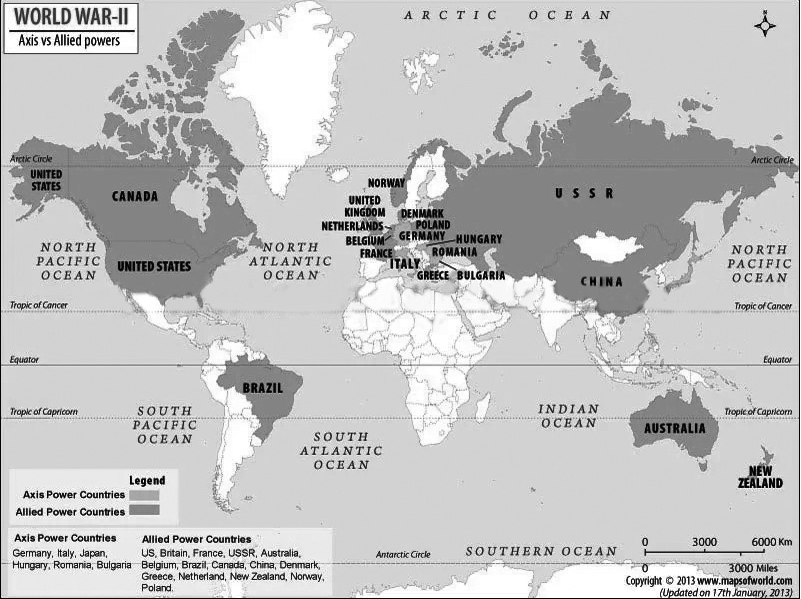
The Battle for Britain
After securing much of Western Europe, Hitler turned his focus toward Britain. The planned invasion, known as Operation Sea Lion, could only proceed if German forces managed to cross the English Channel—requiring the neutralization of both the Royal Air Force (RAF) and the Royal Navy.
Around this time, Britain saw a change in leadership. Prime Minister Neville Chamberlain, who had signed the Munich Pact, resigned. He was succeeded by Winston Churchill, who became the head of a coalition government.
In August 1940, the German Air Force (Luftwaffe) launched an aerial assault over Britain, targeting ports and major cities with heavy bombing raids. The RAF, flying Spitfires and Hurricanes, engaged the Luftwaffe in intense air battles.
The Germans escalated the campaign with night bombings on large cities, particularly London. These intense aerial battles between the RAF and the Luftwaffe
The expansion of war
On September 27, 1940, Germany, Italy, and Japan signed the Tripartite Pact in Berlin, pledging mutual support to one another in the event of an attack.
The three Axis powers also agreed to recognize Germany and Italy as the leaders in establishing a new order in Europe, while Japan would hold similar leadership in Asia. Additionally, countries like Hungary, Romania, and Bulgaria joined the pact.
The war expanded to other regions of Europe and Africa. Italy invaded Greece but encountered strong resistance. Nonetheless, German forces eventually captured Greece, Yugoslavia, and parts of North Africa. Italian and British troops engaged in battles over various territories in Africa, a conflict that would continue for another two years.
Germany turns against Soviet Union
A new phase of the war began when Hitler decided to invade the Soviet Union. The Non-Aggression Pact was abandoned, and Operation Barbarossa was launched on June 22, 1941, without any formal declaration of war.
The German army quickly advanced on three fronts— Leningrad, Moscow, and Kiev—taking the Soviet forces by surprise and forcing them to retreat. In response to the Soviet appeal for assistance, Britain and the USA provided support.
Hitler had hoped to conclude the campaign before winter set in. By early October, Moscow was surrounded, but the harsh Russian winter soon arrived. Neither German soldiers nor their equipment were prepared to withstand the extreme cold.
In December, the Soviet counter-offensive began, pushing the German forces back and ending the immediate threat to Moscow. Though Operation Barbarossa failed, the Germans would only accept total defeat after enduring another brutal winter and facing the determined resistance of the Soviet Red Army.
A Global War
Since the outbreak of war, the United States had been supportive of Britain, allowing it to purchase arms initially on a ‘Cash and Carry’ basis, and later through the ‘Lend-Lease’ program. In November 1941, this support was extended to the Soviet Union as well. However, the
U.S. remained opposed to directly entering the conflict.
That changed on December 7, 1941, when Japan launched a surprise attack on the American naval base at Pearl Harbor in Hawaii. The assault destroyed much of the American Pacific Fleet and resulted in the deaths of over 2,000 soldiers. The following day, December 8, the U.S. declared war on Japan, and shortly thereafter on Germany and Italy, turning the conflict into a truly global war.
After Pearl Harbor, Japanese forces advanced rapidly across the Far East, capturing Thailand, Malaya, Singapore, Hong Kong, the Philippines, and Burma by mid-1942. This marked the height of the fascist powers’ expansion.
The Battle of Stalingrad
During the summer of 1942, Hitler’s forces continued their offensive in the Soviet Union, once again hoping for a decisive victory. However, their advance was halted at Stalingrad.
By November, German troops had surrounded Stalingrad, but Soviet forces managed to encircle them in turn, cutting off all supplies to the German army.
The harsh Russian winter took a heavy toll, and by January 31, 1943, the German army had collapsed. Germany and its allies suffered nearly 250,000 casualties in the battle, which became a major turning point in the war. The Soviet Union also endured severe losses in both dead and wounded.
Spanish Civil War and Causes
Spanish Civil War (1936–39)
• The first instance of joint German-Italian military aggression occurred during the Spanish Civil War (1936–1939). This conflict had far-reaching consequences for the world and is often seen as a prelude to the Second World War.
• In 1936, a Popular Front government came to power in Spain, made up of socialists, communists, and other anti- fascist groups. They established a democratic republic. However, a faction of the Spanish army, led by General Franco, plotted to overthrow the government.
• Germany and Italy supported Franco's forces by supplying arms and military assistance. German aircraft conducted bombing raids on Spanish towns and villages, helping the rebels seize large parts of the country and terrorize civilians into submission.
• The Republican government sought international assistance, but Britain, France, and the United States adopted a policy of non-intervention. Only the Soviet Union responded with aid. Meanwhile, anti-fascists from around the globe formed the International Brigade to support the Republic.
• Pt. Jawaharlal Nehru visited Spain to express the solidarity of the Indian Freedom Movement with the Republican cause. The conflict had grown beyond Spain’s borders, as thousands of international volunteers gave their lives in defense of the Republic. The Spanish Civil War lasted for three years. By 1939, the fascists had taken control of Spain, and their regime was officially recognized by most Western nations.
Causes of war
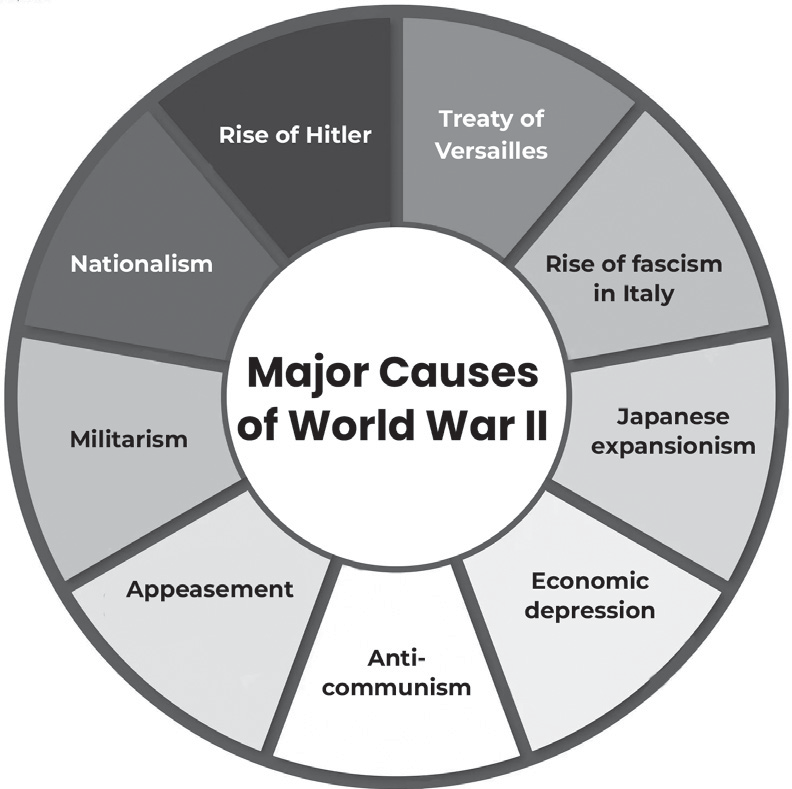
Treaty of Versailles
• After the First World War, the Paris Peace Conference of 1919 aimed to create a new world order based on justice, peace, and disarmament. However, the Treaty of Versailles, which emerged from these talks, imposed harsh terms on Germany rather than fostering reconciliation.
• The announcement of the treaty’s terms sparked intense anger in Germany. The country rejected the idea that it was solely responsible for the war, raising numerous objections and suggesting changes. While one minor change was accepted, the majority of Germany’s concerns were ignored, and on June 28, 1919, Germany was forced to sign the treaty.
• Germany lost all its overseas colonies and had its European territory significantly reduced. Nations like Poland, France, and Belgium gained land at Germany’s expense. The German military was severely limited, with the army and navy drastically reduced, and the country was forbidden from having an air force.
• The treaty also declared Germany guilty of war crimes and required it to pay enormous reparations to the victorious powers. The Treaty of Versailles left Germany humiliated and devastated, fostering a deep sense of resentment that contributed to the rise of sentiments of revenge, ultimately leading to the outbreak of the Second World War.
Failure of Disarmament
• At the Paris Peace Conference, it was agreed that lasting world peace could only be achieved if countries reduced their armaments to levels necessary solely for domestic security or defense.
• This meant that all offensive weapons were to be dismantled. The responsibility of developing a disarmament plan was assigned to the League of Nations.
• Under the Treaty of Versailles, Germany had already been disarmed. The victorious powers were expected to follow suit, but they showed little genuine willingness to do so.
• As a result, in October 1933, Germany announced its withdrawal from both the Disarmament Conference and the League of Nations.
• Later in 1935 Germany formally declared that it was no more bound by the military or disarmament clauses of the Treaty of Versailles.
• Other countries were already in possession of large quantities of armaments and big armed forces. The German decision heralded a massive armament race which led to an armed conflict. The failure of disarmament became yet another major cause of the Second World war.
World Economic Crisis
The global economic crisis began in 1929, triggered by the sudden halt of loans from American financial institutions to European countries.
Many of these nations, especially Germany, had been experiencing rapid industrial growth primarily funded by borrowed American money.
The crisis hit hardest between 1930 and 1932, severely affecting the economies of most countries either directly or indirectly.
Germany was the worst affected, with around 700,000 people losing their jobs. As a result, it announced that it could no longer continue making reparation payments.
Taking advantage of the economic turmoil, Germany, Japan, and Italy each pursued aggressive policies. They eventually formed the Fascist Bloc, which played a major role in leading to the outbreak of the Second World War.
Rome-Berlin-Tokyo Axis
• On the eve of the First World War, Europe had been divided into two opposing alliances. A similar pattern emerged again with the formation of a new alliance between Germany, Japan, and Italy.
• This alliance was formalized through the Anti-Cominter Pact signed between 1936 and 1937. Known as the Rome-Berlin-Tokyo Axis, this coalition of fascist powers pursued a policy of imperialist expansion.
• They glorified war and rejected peaceful resolutions to international disputes. These powers intimidated Western nations and targeted weaker countries such as China, Austria, Czechoslovakia, Albania, and Poland.
• Despite their aggressive actions being recognized, they largely went unpunished. Concerned by the behavior of the Axis powers, Britain and France moved closer diplomatically, and a failed attempt was made to form an Anglo-French-Soviet alliance.
The Problem of National Minorities
• The peace settlements following the First World War led to the creation of several new nation-states in Europe. However, many national minorities were left behind without adequate protection or recognition.
• U.S. President Woodrow Wilson had championed the principle of self-determination, but due to various strategic interests, this principle was not fully applied. As a result, significant German minorities ended up living among non-Germans in countries like Poland and Czechoslovakia.
• Similarly, Russian minorities remained in Poland and Romania. Even after the Minority Treaties signed at the Paris Peace Conference, around 750,000 Germans lived under foreign rule.
• Adolf Hitler exploited this situation, citing the mistreatment of German minorities in Czechoslovakia and Poland as justification for his aggressive policies.
• He annexed Austria, dismantled Czechoslovakia, and eventually invaded Poland. Thus, the minority issue became both a significant grievance and a pretext for launching war.
Appeasement by Britain and France
• The foreign policy of appeasing Nazi and Fascist dictators became a significant cause of the Second World War.
• Although the policy of appeasement began under Prime Minister Baldwin, it was actively pursued by Neville Chamberlain in 1938. Britain and France's willingness to support Mussolini during the Abyssinian War—while still claiming to uphold the League of Nations—along with their capitulation to Hitler at the Munich Conference, and their failure to defend smaller nations like Austria and Albania, clearly demonstrated their weakness. This approach encouraged aggression and ultimately laid the groundwork for the outbreak of war.
The Beginning of the End
The beginning of the end
Meanwhile, the war in North Africa became a confrontation between the Western Eighth Army, led by General Montgomery, and the German Afrika Korps, commanded by General Rommel, who had been sent by Hitler to support the Italian forces.
In August 1942, Rommel advanced toward Egypt. The decisive battle took place at El Alamein on Egypt’s northern coast in October 1942, resulting in Rommel’s retreat.
By the summer of 1943, the Allies had gained control of North Africa. In July, they launched an invasion of Sicily. Mussolini’s government was overthrown, and Italy surrendered unconditionally. However, German troops quickly moved into northern Italy, rescuing Mussolini, who then established a government under German protection.
On the Eastern Front, the Soviet Red Army forced Hitler’s forces to retreat along the very route they had confidently advanced two and a half years earlier.
Most Eastern European countries—Poland, Romania, Bulgaria, Czechoslovakia, and Hungary—were liberated, and fascist forces were expelled from Greece, Yugoslavia, and Albania.
In June 1944, the Allies opened a Second Front in Western Europe. On June 6, Allied troops landed on the beaches of Normandy on France’s northern coast in a meticulously planned and secret operation that caught the Germans by surprise. Under General Eisenhower’s command, the Allies broke through German defenses and by September had liberated Brussels, Paris, and Luxembourg.
Surrender By the fascist powers
By the spring of 1945, the end of war was in sight. The allied troops had taken over many cities in Italy. In April, there was an uprising in Fascist occupied areas. On April 28, Mussolini was captured and executed, thus putting an end to fascism in Italy.
The downfall of Germany was now certain. The Allied troop entered Germany from three directions – the south, the northwest and the east and as the Soviet army reached Berlin, Hitler committed suicide. On May 7, Germany surrendered unconditionally.
The fall of Japan
The war in Asia and the Pacific continued even after Germany’s surrender. Despite American and British victories in the Pacific and the Far East, Japan still held out On August 6, 1945, U.S. dropped the first atom bomb on the Japanese city of Hiroshima. Fifty thousand people were killed and large parts of the city were leveled to the ground. Two days later, a second bomb destroyed the city of Nagasaki and forced Japan to surrender.
The Second world war came to an end. More than 50 countries had been involved in war.
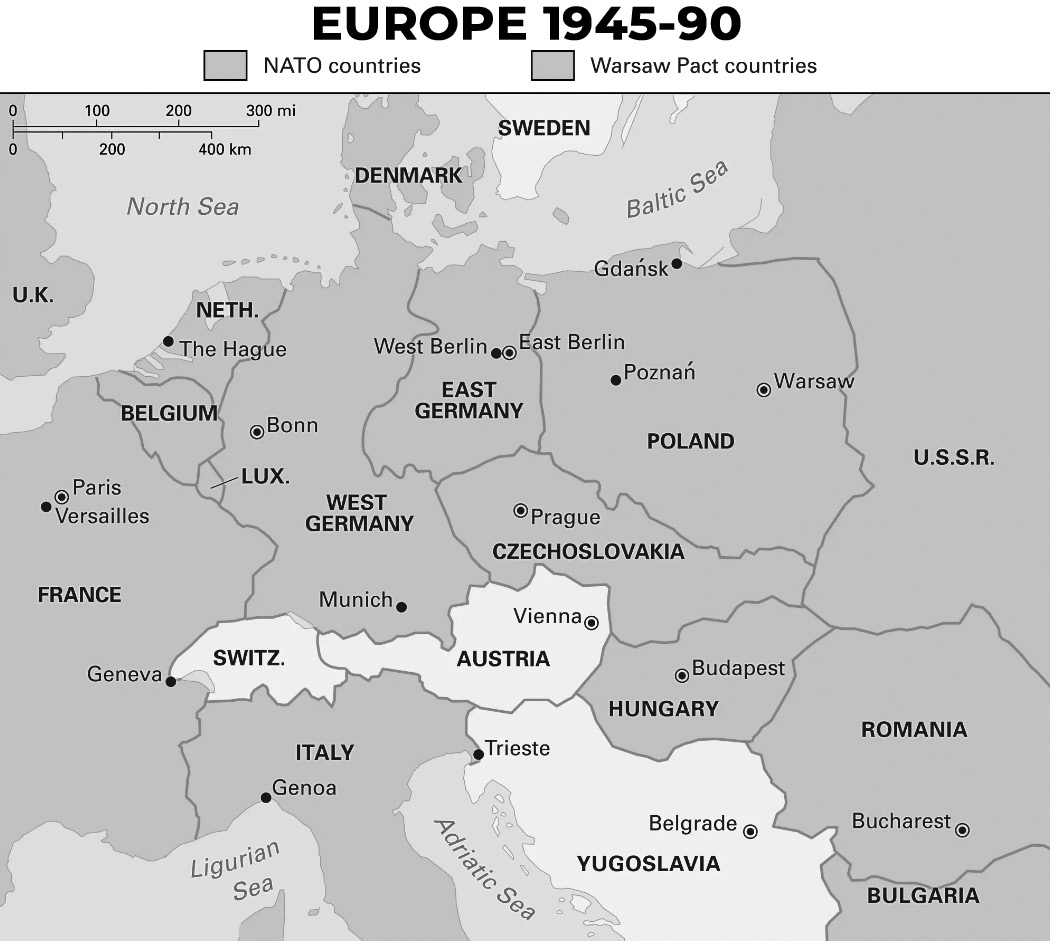
Map of Europe after Second World War
Peacemaking After Second World War
Peacemaking after Second World War
The Potsdam Conference
• The Potsdam Conference, also known as the Berlin Conference, was held in July–August 1945.
• It was attended by Stalin, Churchill, Chiang Kai-shek, and U.S. President Harry Truman, along with their high- level delegations.
• The conference resulted in several key decisions regarding the future governance of Germany, pending the signing of a formal peace treaty. Preparations also began for negotiating peace treaties with other defeated Axis powers.
• One of the most contentious issues discussed was the redrawing of borders between Germany, the Soviet Union, and Poland, which involved the forced expulsion of millions of Germans from disputed areas.
Peace Treaties
A 12-nation Paris Conference was held from July 29 to October 15, 1946. This was followed by other meetings of the Foreign Ministers Committee and the treaties were finally approved by the Committee at New York on December 12, 1946. Finally, these treaties were signed by the Allies on the one side and the five powers-Italy, Rumania, Bulgaria, Hungary and Finland on the other. Separate treaties were concluded with each of them.
The peace treaty with Italy resulted in the loss of several territories. France, Greece, and Yugoslavia gained land at Italy’s expense. Trieste was declared an independent port, placed under the administration of a governor appointed by the United Nations Security Council. Albania and Ethiopia regained their independence and became sovereign states once again. Italy also lost her colonies— Libya, Somaliland, and Eritrea. Additionally, her armed forces were significantly reduced, and she was required to pay substantial reparations within seven years.
• The treaty with Romania mandated the transfer of the provinces of Bessarabia and Bukovina to the Soviet Union and Dobruja to Bulgaria. Romania was also required to pay reparations to the Soviet Union, and restrictions were placed on the size of its military.
• Hungary was required to return several villages south of the Danube River to Czechoslovakia, which it had annexed in 1938. The province of Transylvania was restored to Romania. Hungary, too, had to pay reparations and was disarmed.
• Bulgaria, unlike the other Axis nations, did not lose territory. In fact, it gained Dobruja from Romania. However, Bulgaria was also required to pay reparations and reduce the size of its armed forces.
• Finland ceded several territories to the Soviet Union, including the Salla region, the Petsamo province, and the Porcalla Udd naval base. Like the other defeated nations, Finland was required to pay reparations and drastically reduce its military.
These five post-war treaties greatly favored the Soviet Union, which emerged with significant territorial and strategic gains. Another major beneficiary was Yugoslavia, which gained territory, influence, and emerged as the dominant power in the Balkans, rivaling Italy in the region
Impact of World War Ii
Impact of World War II
World War II was the deadliest international conflict in history, claiming the lives of 60 to 80 million people. Among them were 6 million Jews, who were systematically murdered by the Nazis during the Holocaust.
An estimated 50 to 55 million of the total deaths were civilians, while 21 to 25 million were military personnel. In addition to the staggering death toll, millions were wounded, and countless others lost their homes, property, and livelihoods as a result of the war.
The legacy of the war would include the spread of communism from the Soviet Union into Eastern Europe as well as its eventual triumph in China, and the global shift in power from Europe to two rival superpowers–the United States and the Soviet Union–that would soon face off against each other in the Cold War.
Rise of Several New Sovereign States:
Following World War II, the decline of European imperial powers and the growing momentum of national self-determination and liberation movements among colonized peoples played a crucial role in sparking a global process of decolonization. Anti-colonial and anti- imperialist movements began achieving remarkable success.
Many nations—especially across Asia and Africa— succeeded in breaking free from the chains of colonial rule, gaining their independence. This led to a significant increase in the number of sovereign states around the world. The emergence of newly independent countries in Asia and Africa, along with a resurgent Latin America, began to reshape the world map and transform international relations.
Loss of Relevance of Balance of Power:
From 1815 to 1914, the Balance of Power served as a key mechanism for maintaining stability in international relations. However, it suffered a major setback during the First World War. Although efforts were made to revive it in 1919—notably through the creation of the League of Nations—the system failed again with the outbreak of the Second World War in 1939.
After World War II, significant structural changes in the global system greatly diminished the effectiveness of the Balance of Power. The rise of two superpowers (the United States and the Soviet Union), the shift toward total war, the development of nuclear weapons, the establishment of the United Nations, and the accelerating decline of colonialism and imperialism, among other factors, rendered the traditional Balance of Power system largely obsolete.
The Birth of the Nuclear Age:
The Second World War ended with the United States using atomic bombs against Japan, marking the beginning of the nuclear age in international politics. For the first time, certain nations possessed weapons powerful enough to threaten the destruction of the entire world. This introduced a major divide between nuclear and non- nuclear states, with nuclear powers gaining a significant advantage in global power dynamics.
As political commentator Max Lerner noted, the two superpowers—the U.S.A. and the U.S.S.R.—acquired the capacity for "overkill," meaning they could each annihilate the world several times over. No other country, individually or collectively, had the power to defeat or destroy either of them. War had become total and catastrophic, and the world increasingly found itself influenced by the decisions and actions of these two dominant powers.
Increasing Interdependence among Nations:
Following the end of the Second World War, international relations began to take on a truly global dimension, where nations increasingly recognized that their national interests were closely intertwined with those of other countries, as well as with broader international goals such as peace, security, and development.
This growing awareness, along with rising global interdependence, played a crucial role in strengthening the commitment to peaceful and cooperative international relations.
Birth of the UNO:
The failure of the League of Nations to preserve peace after the First World War was largely due to the flaws in its Covenant and its limited representativeness. As a result, following the Second World War, world leaders agreed without hesitation to establish a new international body—the United Nations Organization (UNO)—which was officially founded on 24 October 1945.
The UNO was created to serve as a strong platform for international diplomacy, aiming to ensure global peace, security, and development through the collective efforts of all nations. The UN took on the responsibility of promoting friendly cooperation among member states and maintaining international peace and security. Additionally, the UN Charter introduced the principle of collective security, forming a new framework for managing power and conflict in global affairs.
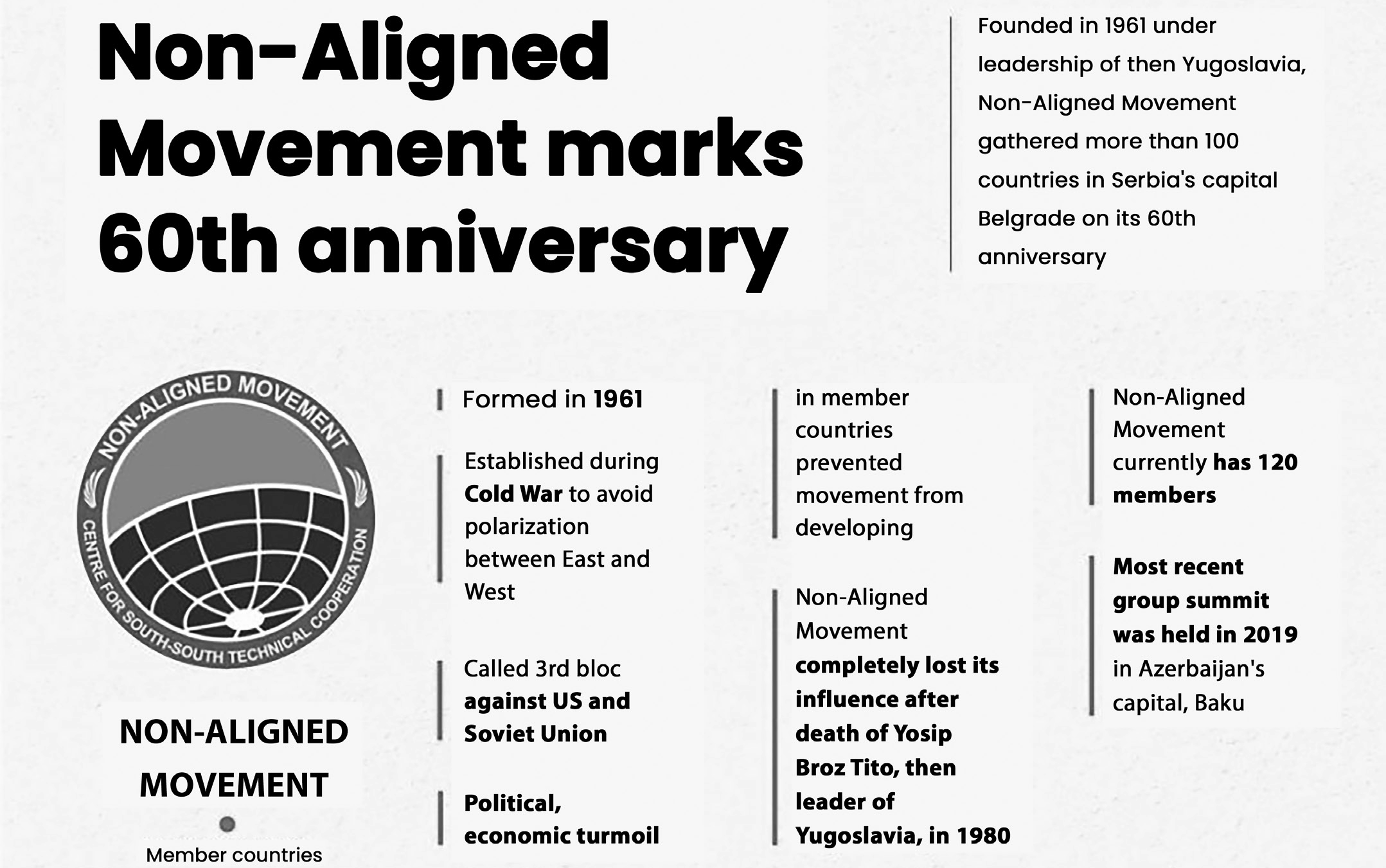
Conclusion
World War II, which spanned from 1939 to 1945, was a cataclysmic event that left an indelible mark on the world. It was a war of unprecedented scale and brutality, resulting in the loss of millions of lives and the widespread destruction of cities and economies. The war was driven by aggressive expansionism, totalitarian ideologies, and deep-seated geopolitical tensions. World War II ultimately led to the geopolitical tensions. World War II ultimately led to the
defeat of the Axis powers, the reshaping of the global order, and the establishment of the United Nations in an effort to prevent future conflicts. It also revealed the horrors of the Holocaust, prompting profound moral and ethical reflections. In its aftermath, the war accelerated decolonization, spurred economic recovery and innovation, and initiated the Cold War between the United States and the Soviet Union. World War II’s enduring legacy underscores the importance of diplomacy, international cooperation, and the preservation of peace in the face of global challenges. It serves as a stark reminder of the human capacity for both destruction and resilience and reinforces the imperative of striving for a world free from the scourge of war.